Elizabeth Woodville

  • The York Daughters: The Sisters of the Princes in the Tower

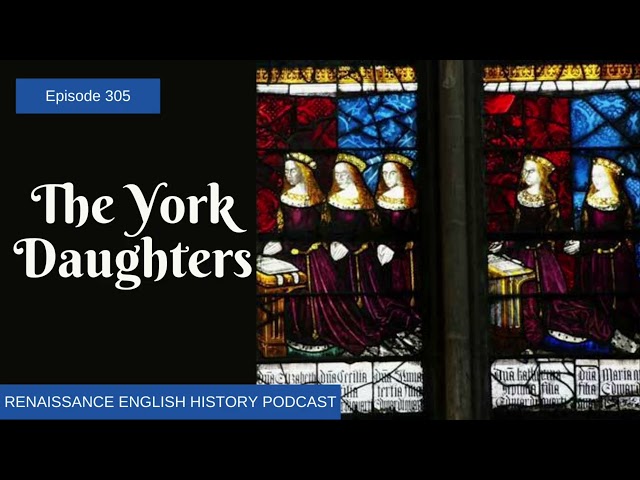
    The York Daughters: The Sisters of the Princes in the Tower

    The York Daughters were the remarkable yet often overlooked princesses of Edward IV and Elizabeth Woodville—women who carried the blood of the House of York into the Tudor age. While history remembers their brothers, the lost Princes in the Tower, the York Daughters—Elizabeth, Mary, Cecily, Anne, Catherine, Bridget, and Margaret—played a quieter but lasting role in shaping England’s royal destiny.

    Through marriages, alliances, and even vows of religious devotion, they helped bridge the fall of the Yorkist dynasty and the rise of the Tudors. From Elizabeth of York, who became queen and mother of the Tudor line, to Bridget of York, who lived a cloistered life of piety, their stories reveal how the legacy of York survived not through its fallen princes, but through its daughters.

    Transcript of Queens, Nuns, and Heiresses: The Sisters of the Princes in the Tower

    When people think of the children of Edward IV and Elizabeth Woodville, they almost always picture the lost princes Edward V and Richard, Duke of York, the boys who vanished into the Tower and became one of the great mysteries of English history. Their story has been retold, endlessly painted in tragedies, whispered in conspiracy theories, and debated in history books, Facebook groups, YouTube comments, and Reddit threads for centuries. Well, I guess not the last part for centuries, but you get the point.

    The truth is, though, that Edward and Elizabeth were not just the parents of two doomed sons and one daughter who became the queen of England. They were astonishingly prolific, and their household was filled with daughters. Girls who, unlike their brothers, lived long enough to leave their mark on the dynastic chessboard of the late 15th and early 16th centuries. These sisters carried the blood of the House of York into the Tudor world.

    One would become queen, the mother of the Tudor dynasty itself. Others married into powerful families like the Howards and the Courtenays, planting Yorkist claims that would trouble Henry VIII decades later. One became a nun, another died before her story even really began. Together, they shaped the survival and the transformation of the Yorkist identity after Bosworth in ways that are often overlooked.

    So last time we talked about the sisters of Edward IV. Today we are talking about the daughters, the princesses who lived in the shadow of their lost brothers but who carried the Yorkist blood forward into England’s future. And to understand their stories, we need to start with the extraordinary family of Edward IV and Elizabeth Woodville, the family that they built, and the moment that everything changed: the death of the king in 1483 and the frightened queen retreating with her daughters into sanctuary.

    Edward IV and Elizabeth Woodville had one of the most prolific royal marriages of the late 15th century. Between 1466 and 1480, Elizabeth gave birth to ten children who survived infancy, along with several others who died young. In an age when child mortality was expected, the fact that so many of the Yorkist children grew past the dangerous early years was striking. Even more unusual was the number of daughters who lived into adolescence or adulthood.

    While kings typically relied on a few daughters to cement alliances, Edward and Elizabeth found themselves with a bearable nursery of princesses. Elizabeth, Mary, Cecily, Anne, Catherine, Bridget, and Margaret of York represented an extraordinary dynastic resource. Each girl carried the prestige of the House of York and could have been used to tie England more closely to France, Spain, Scotland, or the powerful noble families within England.

    At the height of Edward IV’s reign when he appeared very secure on his throne, these daughters would have been considered valuable pawns in the international marriage market. They were raised with this in mind, finely dressed, schooled in languages, music, and piety, all the things expected of royal daughters. Their futures were expected to reinforce the Yorkist dynasty.

    That expectation collapsed in 1483. That was when Edward IV died suddenly in April. His heir was just twelve years old. Elizabeth Woodville, now widowed and vulnerable, gathered her daughters and her younger son Richard and fled into sanctuary at Westminster Abbey. The image of the queen and her children with a handful of servants huddled behind the thick abbey walls captures just how precarious the family’s position had become.

    Inside the sanctuary, the girls’ lives were turned upside down. They had been raised in royal palaces surrounded by attendants and tutors, enjoying lavish entertainments, and suddenly they were confined in the dim, echoing spaces of the abbey. To be fair, they had a comfortable place to live. It was not as if they were in a dungeon, but it was certainly not the same as having the run of a castle, and they had to remain within the walls to stay under sanctuary. I actually did a video a couple of months ago about what sanctuary really meant, so I will put a link to that.

    Anyway, they were living under the protection of the church but cut off from the outside world. The younger girls were still children, and their mother had to cope with their fear as rumors circulated about the fate of their brothers.

    It was here that the once glittering Yorkist nursery became a household under siege. The Italian observer Dominic Mancini, writing in 1483, described Elizabeth Woodville’s plight vividly. He noted her sudden retreat into sanctuary with her daughters and youngest son, writing that she was terrified by Richard’s seizure of power and sought safety in the abbey, placing herself and her children under the protection of the church.

    Now, his account described the atmosphere of fear and uncertainty, with the queen who was once surrounded by magnificence now reduced to anxiety and suspicion, cut off from her allies while Richard consolidated his rule. Mancini’s account is stark, but he gives us a sense of how contemporaries understood her fall.

    The Yorkist princesses, once destined to be queens and duchesses, were now huddled in fear with their mother while their uncle Richard seized the throne as Richard III. This was the time when they became bargaining chips in a world where their very survival was no longer guaranteed.

    Elizabeth of York: From Pawn to Queen

    So let’s start with Elizabeth of York. She was born in 1466, the eldest child of Edward IV and Elizabeth Woodville. From the moment of her birth, she was valuable not because she might one day inherit the throne—of course, as a girl she was not expected to do that—but because her hand in marriage could be used to secure alliances. Edward IV treated her as a political asset, and he raised her for a future that would bind Yorkist power to one of Europe’s great houses.

    In 1475, when she was just nine years old, she was formally betrothed to the French dauphin Charles as part of a peace treaty between Edward and Louis XI of France. This arrangement promised a glittering future: Elizabeth as Queen of France, her children ruling the most powerful kingdom in Europe. But the match was abandoned a few years later as shifting politics and French hesitation left the young princess once again unpromised.

    Her prospects grew murkier after her father’s death in 1483. With Richard III seizing the throne and her brothers locked away in the Tower, Elizabeth suddenly found herself at the center of a dynastic rumor. There were whispers that Richard, recently widowed, might marry her himself. Such a union would have been shocking. He was both her uncle and the man many suspected of disposing of her brothers.

    It shows just how essential Elizabeth’s body was to the political fate of England. By marrying her, Richard could have solidified his grip on the throne, uniting the Yorkist claim in himself. The marriage never happened. He actually had to come out publicly and deny rumors that he was even considering it. But the very possibility, the fact that we even talk about this, shows that her personal fate was seen as inseparable from the kingdom’s.

    Instead, Elizabeth’s destiny was decided in 1485 at the Battle of Bosworth. Henry Tudor’s victory over Richard left him a king with a very shaky claim. His legitimacy came not from his Lancastrian blood, which was not much, but from his ability to marry Elizabeth of York. Now, he did not like to think of it that way and had himself crowned before he married her, but their union in January 1486 symbolically healed the Wars of the Roses, the red rose of Lancaster with the white rose of York joined in the Tudor rose. For Henry, Elizabeth was the keystone that transformed him from a usurper into a dynastic founder.

    As queen, Elizabeth did not dominate her husband’s government, but she played a crucial role as the dynastic anchor of the new regime. Chroniclers described her as gentle, pious, and charitable. She was the model of a late medieval queen. She gave generously to religious houses, and she was remembered for interceding on behalf of petitioners. Several surviving accounts note her reputation for mercy. People would appeal to her when they felt that the king’s justice was too harsh. She seems to have acted as a softer counterbalance to Henry’s severity, a role many queens consort were expected to perform.

    Elizabeth was also central to the ceremonial life at court. She presided over the entertainments, including the tournaments and pageants that reinforced Tudor legitimacy. Her presence in courtly spectacle reminded audiences that the Tudors were joined to the House of York. We know she enjoyed dancing, music, and storytelling, and she fostered these entertainments as part of her queenship. In that way, she helped create a courtly culture that her son Henry VIII would later expand to even grander proportions.

    How she personally felt about all of this—doing it all for the Tudors—no one thought to record. One can imagine she had mixed feelings. But her greatest contribution to the dynasty was her children. Elizabeth bore Henry seven children, though only four survived to adulthood.

    Arthur, the firstborn, was raised as the heir, but he died young in 1502. Henry, Duke of York, became Henry VIII. Margaret Tudor married James IV of Scotland, uniting the Tudor line with the Scottish royal family, a union that would eventually bring the Scottish Stuarts to the English throne. And then Mary Tudor married the French king, Louis XII, briefly becoming the Queen of France before returning to England and marrying Charles Brandon, the Duke of Suffolk. Through these marriages, Elizabeth’s children carried their Yorkist blood into nearly every corner of European royalty.

    Elizabeth’s death in February 1503 was sudden and devastating. She had gone into confinement to deliver a daughter, Catherine, but both mother and child died. She was only 37. She actually died on her birthday. Accounts of Henry VII’s reaction reveal a rare glimpse of him as a grieving husband rather than just the calculating monarch. Chroniclers record that he shut himself away for days, refusing to eat or be comforted, and he wore mourning for months. For a king known for his control and reserve, his visible anguish shows just how central Elizabeth had been to his reign.

    Elizabeth of York went from being a child bride promised to France, to a pawn in her uncle’s ambitions, to the dynastic keystone of the Tudor monarchy. Her queenship gave Henry VII the legitimacy he needed. Her children linked England to Scotland and to France. And if the princes in the Tower represent the lost future of the House of York, Elizabeth of York represents its survival.

    Cecily of York: From Queenly Prospects to Scandalous Marriage

    Next up, Cecily. Cecily of York was born in 1469. She was the second daughter of Edward and Elizabeth Woodville. As the younger sister to Elizabeth of York, she also carried strong dynastic value in this world where royal daughters were prized for the allegiances they could form. Early in her life, her prospects, just like Elizabeth’s, seemed glittering.

    One of the first marriage negotiations attached to her name was a proposed match with James, Duke of Rothesay, the heir to James III of Scotland. If the union had gone forward, Cecily would have become the Queen of Scotland, binding the Houses of York and Stuart together. Something very similar later happened with her niece, her sister Elizabeth’s daughter Margaret, who married into Scotland.

    The treaty negotiations that followed Edward’s victory at the Battle of Tewkesbury in 1471 included the idea of sealing a peace with Scotland through Cecily’s marriage. Now, it never came to pass. Like everything, there were shifting politics and Scottish hesitation, but the very fact that the proposal was even made shows again how central Cecily’s marriage was to Yorkist diplomacy. After her father’s death and the fall of her brothers, Cecily’s prospects narrowed.

    By the early 1480s, while she was still a teenager, she was married to Ralph Scrope of Masham, a relatively minor northern nobleman. The Scropes were an old and loyal Yorkist family, but Ralph himself was far from the sort of prince or magnate one might have expected for a daughter of Edward IV. Some historians believe the match may have been made under Richard III’s short reign, binding Cecily to a loyal retainer of his.

    When Henry VII came to the throne in 1485, this marriage was annulled. The official reasoning is murky, but it likely shows Henry’s effort to house-clean Yorkist connections. He had zero interest in seeing a daughter of Edward IV securely tied to an old Yorkist family. Instead, he directed Cecily into a new match with John Welles, Viscount Welles. Welles was not only a trusted supporter of Henry but also his step-uncle, the son of Margaret Beaufort’s second husband.

    For Henry, the marriage tethered Cecily firmly to the Tudor circle, ensuring that she could be watched and her loyalties contained. Cecily and John Welles seemed to have had a respectable marriage, though their two daughters died young. Welles himself died in 1499, leaving Cecily a wealthy widow. It was after this that she made the decision that scandalized the court. Without the king’s permission, she married a Lincolnshire squire named Thomas Kyme.

    For a princess of the blood to marry so far beneath her rank, and to do it secretly, was an unmistakable act of defiance. Henry VII was furious. He confiscated much of her property and banished her from court. The couple retreated to Kyme’s estates in Lincolnshire, where they lived quietly, far from the royal stage.

    We do not know very much at all about Cecily’s later years. She occasionally appeared in records as a witness or a benefactor, but for the most part, she disappeared into the obscurity of provincial life. For a woman who had once been floated as the Queen of Scotland, her fate was extraordinary: a Yorkist princess reduced to the life of a country gentlewoman, remembered more for her scandalous marriage than for political triumphs, but she had a bloodline that ensured she could never entirely escape notice.

    Anne of York: A Quiet but Significant Life

    So now let us talk about Anne of York. Anne of York was born in 1475. She was the fifth daughter of Edward IV and Elizabeth Woodville. Unlike her elder sisters, Elizabeth and Cecily, who were caught up in international marriage plans and dynastic maneuverings, her story was quieter, though she did have some international opportunities as a child.

    She was briefly betrothed to Philip of Austria, the son of Maximilian of Habsburg, the Emperor, and the stepson of Margaret of York, her powerful aunt in Burgundy. The negotiations were ambitious, tying the Yorks to the Habsburg dynasty, but they lapsed after her father’s death, Edward.

    Under Richard III, new plans emerged in 1484. He formally promised that his nieces would be married to men of noble birth with respectable dowries. For Anne, Richard chose Thomas Howard, eldest son of the Earl of Surrey and heir to the Dukedom of Norfolk. The match was politically advantageous. The Howards had risen under Richard and, by binding them to Edward IV’s daughter, Richard showed them unusual favor.

    A contract was agreed in 1485, but Bosworth intervened before it could be carried out. The plan was not abandoned, though. After Henry’s victory, Elizabeth of York, now Queen, revived the marriage for her younger sister. By then, Anne and Thomas had known each other for years. The Howard men had long served at Edward’s court, but first the Howards had to prove their loyalty and dispel suspicion.

    The wedding between Anne and Thomas did not actually take place until 1495. The royal family attended, but Anne’s promised dowry of 10,000 marks, set aside by Edward IV, was never delivered. Instead, Elizabeth of York arranged for her sister to receive an annuity of 120 pounds a year, plus an additional 26 pounds from the Crown. These payments were designed to ensure her independence and maintain her household, which included servants and horses, since the Howard estates were diminished after Bosworth and Thomas’s father had yet to recover the Dukedom of Norfolk.

    The marriage was not a happy one. Thomas was unfaithful, openly conducting affairs with Anne’s lady-in-waiting, for example Bess Holland. Worse still, all of Anne’s children died young. Records suggest as many as four children, including a son named Thomas, who lived long enough to be christened but died in 1508.

    Anne’s health was poor, and she faded from court life after the death of her sister Elizabeth. She died in November 1511 at only 36 years old. She was first buried at Thetford Priory and later reinterred at Framlingham alongside her husband, who by then had become the powerful 3rd Duke of Norfolk.

    Catherine of York: Modest Marriage with Explosive Legacy

    Now, Catherine. She was born in 1479, one of the younger daughters of Edward IV and Elizabeth Woodville. By the time she reached marriageable age, her family’s fortunes had been reshaped by the Tudors. Unlike her elder sisters, who had once been treated as glittering dynastic prizes, Catherine’s marriage was more modest, though it would have long-reaching consequences for Tudor politics.

    In 1495, she married William Courtenay, heir to the Earldom of Devon. The Courtenays were a powerful family with deep roots in the West Country and a descent that tied them distantly to the royal house of Lancaster. The match was respectable, but certainly not on the scale of a foreign prince that Edward IV might have envisioned for his daughters. Still, it placed Catherine securely among the English nobility and linked her Yorkist bloodline to one of the kingdom’s most influential regional households.

    Her husband’s career, however, was turbulent—an understatement. Courtenay was implicated in the Perkin Warbeck conspiracy in the 1490s, which sought to place a Yorkist pretender on the throne in the name of Edward V’s lost son. Though his role was murky, suspicion lingered. Later, in 1504, he was imprisoned in the Tower on charges of treason, accused of plotting against Henry VII. Catherine, though untouched by the charges, saw her husband disgraced and their estates seized.

    After Henry VII’s death in 1509, the young Henry VIII released Courtenay, restored him to favor, and elevated him as the Earl of Devon. It was a dramatic reversal that once again made Catherine’s household one of the great magnate families of the realm.

    William died just a few years later in 1511, but their children carried forward the Yorkist connection. Their eldest son, Henry Courtenay, became Marquess of Exeter and one of the closest companions of Henry VIII in his early reign. He was even named a Knight of the Garter in 1511, a major mark of royal favor. But this intimacy did not protect him in the long run.

    By the 1530s, with Henry VIII increasingly suspicious of Yorkist bloodlines, Henry Courtenay was accused of treason and executed in 1539 during what is known as the Exeter Conspiracy. Through him, Catherine’s bloodline once again became entangled with the specter of Yorkist legitimacy, a reminder that even decades after Bosworth, the descendants of Edward IV could still be perceived as threats.

    Catherine herself lived until 1527, outliving her husband by more than 15 years. She saw her children grow into the Tudor world, though not without danger. Her marriage had begun as a relatively quiet match into a noble family, but its legacy proved politically explosive. Through Catherine, the Courtenays carried Yorkist blood straight into the dangerous heart of Tudor politics.

    Bridget of York: A Life of Piety and Seclusion

    Then we have Bridget, the youngest daughter. She was born in November 1480 at Eltham Palace. Unlike her elder sisters, whose lives were tied up in dynastic marriage negotiations, her future was set apart almost from the beginning. She was just two when her father died and her family’s fortunes collapsed.

    Growing up in the shadow of sanctuary and political upheaval, she was the only one of the York princesses destined not for marriage, but for religion. By the age of 10, Bridget was placed at Dartford Priory in Kent, the only house of Dominican nuns in England. It was an elite convent, wealthy and respected, where noble daughters were often sent, sometimes out of piety but often for politics too. Bridget took vows there and lived the rest of her life within the priory’s walls.
    Unlike her sisters Elizabeth, Cecily, Anne, and Catherine, she was removed from the intrigues of court and dynastic marriages, but her placement was still significant. Sending a royal daughter into the cloister not only advertised the family’s piety, it also quietly solved the problem of an extra princess whose marriage might create political complications. In Bridget’s case, her York blood was safely enclosed away from any foreign match that might threaten Tudor stability.

    We know little of Bridget’s day-to-day life. Records suggest that she was a valued member of the community, respected for her birth and her connections, but she did not play a wider political role. She never became abbess or anything like that. She remained there until her death in 1517 at the age of 37. She was buried in the priory grounds, though with the dissolution of Dartford under Henry VIII, her remains were likely lost.

    Bridget of York’s story is quieter than those of her sisters. It shows an important reality: not every royal daughter became a queen or a duchess. Some were steered into religious life, where they could embody piety and devotion while posing no threat to the throne.

    Mary of York: A Brief and Tragic Life

    Then we have Mary of York. She was the second daughter of Edward and Elizabeth. She was born in 1467 and, like her elder sister Elizabeth, grew up in the secure early years of her father’s reign, when the Yorkist dynasty seemed unshakeable. She was well provided for, and as a princess, her future would almost certainly have involved a politically valuable marriage, but she did not live long enough to play any role in dynastic politics.

    In May 1482, when she was just 14, she died suddenly at Greenwich Palace. The cause was not recorded, though illness was the most common fate for children and teenagers, even in royal households. Her death was a blow to her family. She was the first of Edward IV and Elizabeth Woodville’s children to die after infancy.

    She was buried at St. George’s Chapel, Windsor, one of the first of her siblings interred there. Her tomb was marked with a small brass plate and lay close to the resting place of her father, Edward IV. Though her life was brief and left little trace in the records, she mattered to her family. She was a princess of York, and her death showed that even in royal households, survival into adulthood was never guaranteed.

    The daughters of Edward and Elizabeth lived very different lives, but together they carried Yorkist blood far beyond the disappearance of their brothers in the Tower. Elizabeth of York secured the Tudor dynasty itself. Her marriage to Henry VII joined the Houses of York and Lancaster, and her children became the kings and queens of England and Scotland.

    Cecily, once nearly a queen of Scotland herself, slipped into obscurity in rural Lincolnshire, but her story shows how tightly the Tudors controlled Yorkist marriages to prevent rival claims. Anne’s marriage to Thomas Howard linked Edward IV’s line with the Howards, a dynasty that would dominate Tudor politics for the next century.

    Catherine, through her marriage to William Courtenay, became ancestress of the Courtenays of Exeter, a line that would rise up under Henry VIII before being cut down under suspicion of Yorkist loyalties. Bridget, set apart at the cloister at Dartford, embodied a different sort of dynastic solution: piety and removal from politics. Mary, who died at 14, reminds us just how dangerous even royal childhoods could be.

    What unites them all is survival. Their brothers’ lives ended in mystery, but the sisters lived on—sometimes at court, sometimes in obscurity, sometimes behind convent walls. Each was shaped by the tenuous legacy of their father’s throne. Some, like Elizabeth and Catherine, left Yorkist descendants. Others left no children, but their marriages and alliances still mattered in the careful balancing act of Henry VII’s reign. By the time of Henry VIII, the Yorkist daughters were no longer living figures, but memories woven into dynasties, into Howard ambition, into Tudor legitimacy. Through them, the Yorkist line did not completely vanish with the princes in the Tower. It lived on, reshaped and repurposed through the women whose stories are too often overshadowed by the mystery of their brothers.

    Related links:

    Sanctuary in Medieval England: The Story of Elizabeth Woodville
    Episode 303: The York Sisters
    Edward IV and Elizabeth Woodville: How One Secret Marriage Changed English History

  • The Greys: From Elizabeth Woodville to Lady Jane Grey

    The Greys: From Elizabeth Woodville to Lady Jane Grey

    The Greys were one of the most intriguing families in English history, a dynasty that seemed to appear at every turning point from the Wars of the Roses to the Tudor court. They produced queens, rebels, soldiers, and statesmen—figures who stood dangerously close to the English throne. Elizabeth Woodville, a Grey by birth, became a queen; Lady Jane Grey briefly ruled as the “Nine Days’ Queen”; and her sisters Katherine and Mary found their own lives entangled in scandal, imprisonment, and heartbreak. Across generations, the Greys rose from Bedfordshire gentry to near-royalty, their story revealing both the glittering rewards and deadly risks of ambition in Tudor England.

    Transcript of The Greys: From Elizabeth Woodville to Lady Jane Grey

    If you’ve spent any time at all in Tudor history, you have run into the Greys. They are the family that just keeps showing up at every turni ng point. Elizabeth Woodville was a Grey before she was a queen. Lady Jane Grey was briefly a queen herself, if only for nine days. Katherine Grey secretly married into the Seymours and wound up a prisoner in the Tower. Then there was Mary Grey, scandalizing Elizabeth I by marrying her household guard.

    And it was not just the famous women. The Greys were everywhere: nobles, courtiers, soldiers, and statesmen. It feels like no matter where you turn in late medieval and Tudor history, there is a Grey hovering in the background, sometimes in favor, sometimes in disgrace, but always a part of the story.

    So the question is, were all of these Greys related? The short answer is yes, at least most of them were branches of the same sprawling family tree with roots in the gentry of Bedfordshire and connections that reached the highest levels of Tudor politics. But the real story is not just the genealogy. It is how the Greys managed to weave themselves into the fabric of English royalty, sometimes as loyal supporters, sometimes as rivals, and sometimes as tragic victims.

    That is what we are going to explore in this episode: the saga of the Greys from their medieval beginnings to their moment in the spotlight with Lady Jane Grey, and the way their story sums up the perils of being almost royal.

    The Greys started out as a respectable but not especially glamorous gentry family from Bedfordshire. Their fortunes really began to rise in the 14th and 15th centuries when several branches of the family distinguished themselves through service to the crown and through very strategic marriages.

    One of the earliest and most famous was Reginald Grey, Baron Grey of Ruthin. If his name sounds familiar, it is probably because of Owain Glyndŵr, the Welsh leader who rose in rebellion against English rule at the start of the 15th century. Reginald Grey and Glyndŵr had a long-running feud over disputed land in Wales, and Grey’s attempt to seize land from Glyndŵr helped spark the uprising in 1400, helped to spark Glyndŵr’s revolt. One of the most serious challenges to English authority in medieval Wales. That gives you an idea of just how prominent the Greys had become by that time. They were no longer just minor knights. They were the kind of family that could help trigger a full-scale rebellion.

    From this base, the Greys expanded. Different branches of the family established themselves in various parts of the country. Some became soldiers, others diplomats, and several married into even more powerful houses. By the mid-15th century, when the Wars of the Roses were erupting between the houses of Lancaster and York, the Greys were well positioned to play their role.

    That brings us to the most famous early Grey of the Tudor story, Sir John Grey of Groby. He was a Lancastrian supporter who fought in the Wars of the Roses and was killed at the Second Battle of St. Albans in 1461. His widow was left with two young sons and very uncertain prospects. Her name was Elizabeth Woodville, and her decision to remarry would change the fortunes of both the Greys and the English crown.

    Elizabeth Woodville’s Impact

    What Elizabeth did when she decided to remarry was to set the Grey name on a collision course with royalty. Elizabeth herself was not without connections. Her father, Richard Woodville, had risen from the gentry to become Earl Rivers through his loyal service to the Lancastrians. More importantly, her mother was Jacquetta of Luxembourg, a noblewoman of high European birth descended from the Dukes of Luxembourg and connected to both Burgundian and French royalty.

    Jacquetta’s marriage to Richard Woodville had been something of a scandal. She married far beneath her station, but it gave Elizabeth a pedigree that was anything but ordinary. Even so, as a widowed mother with two sons, Elizabeth’s future was uncertain.

    Then came the fateful marriage in 1464. The story goes that Elizabeth stood under an oak tree by the road near Grafton, waiting to catch the attention of Edward IV as he passed by. Whether that detail is true or not, the fact remains that Edward noticed her, and he fell hard. Despite the fact that she was a commoner, a widow, and the daughter of a Lancastrian supporter, Edward married her in secret around May of 1464.

    It was a shocking match that infuriated his advisors, particularly Warwick the Kingmaker, who had expected him to marry a French or at least European princess. For the Greys, though, it was a turning point that bound their family name to the very heart of English royalty. Overnight, Elizabeth’s sons by John Grey were transformed from the children of a fallen Lancastrian knight to the half-brothers of the Yorkist royal family.

    Edward IV showed them particular favor. Thomas Grey, the elder boy, was given the title Marquess of Dorset, an extraordinary leap in status for someone whose father had been a middling knight only a few years earlier. The rise of the Woodvilles brought the Greys along with them, and that did not sit well with everyone at court. Old noble families resented the sudden elevation of what they saw as upstarts. Thomas Grey’s new title and rapid advancement were symbols of this resentment. The Greys became entangled in the factional politics of Edward’s reign, both as beneficiaries of his favor and as lightning rods for criticism.

    Elizabeth’s marriage to Edward also meant that the Greys were now woven into the royal line itself. Her sons were stepsons to the king and half-brothers to the royal princes. This closeness to the throne would prove to be both a blessing and a curse, as the family discovered when Edward IV died in 1483 and the crown passed to his young son. Or at least it was supposed to.

    When Edward died, the Greys were sitting near the top of the political ladder. Thomas Grey, now grown up, was one of the king’s chief advisors. His younger brother Richard held lands and offices. Their mother, Elizabeth, was the dowager queen and the mother of the new King Edward V.

    The Greys’ rise, as we said, had made them enemies. Edward IV’s brother, Richard, Duke of Gloucester, the future Richard III, moved quickly to seize power as protector for the young king. Richard struck hard at the Woodville-Grey faction. As Edward V made his way to London for his coronation, Richard intercepted him, arrested key members of the queen’s family, and soon after took the boy king into custody.

    Among those seized were Elizabeth Woodville’s son by her first marriage, Richard Grey, along with her brother Anthony Woodville, now Earl Rivers. Both men were executed in June of 1483 on charges of treason. This was a brutal reminder of just how tenuous the Greys’ position really was. One moment, half-brother to the king, the next condemned as a traitor.

    Thomas Grey managed to avoid his brother’s fate, but just barely. He initially aligned himself with Richard, but his loyalties shifted as rebellion began to brew. Later that year, he took part in the Duke of Buckingham’s uprising against Richard, and when that failed, he fled into exile. At first, he was kept under house arrest in France, suspected of being a bit too wobbly in his loyalties. Eventually, though, he pledged himself to Henry Tudor, the exiled claimant to the throne.

    When Henry invaded in 1485, Thomas Grey returned with him. He fought at the Battle of Bosworth, where Richard was killed and Henry crowned as Henry VII. Once again, the Greys had managed to survive by attaching themselves to the winning side. But Henry VII, ever cautious about overmighty nobles, did not entirely trust them. Thomas Grey was kept on a very short leash. His power was checked, and his ambitions were carefully managed.

    The lesson of this period was clear. The Greys’ proximity to the crown made them valuable allies and dangerous rivals, depending on which way the wind blew. They had climbed high, but the higher they went, the sharper the drop if fortune turned against them.

    The Greys Under Henry VII and Henry VIII

    Now, with Henry on the throne after Bosworth, the Greys were entering a new chapter. Thomas retained his title and his position, and his descendants continued to rise despite the suspicion of Henry VII. By the time of Henry VIII, the Dorset Greys were firmly established as part of the noble elite.

    The family’s fortunes peaked when Thomas’s grandson, Henry Grey, inherited the title. He later became Duke of Suffolk through his marriage to Frances Brandon, who, if you remember, was the daughter of Mary Tudor, Henry VII’s younger sister, and Charles Brandon. This marriage of Henry Grey to Frances Brandon tied the Greys directly to the Tudor bloodline and planted the seeds for Lady Jane Grey’s later claim to the throne.

    Another branch of the family, the Greys of Wilton, built their reputation through military service. Lords Grey of Wilton fought in France and later took part in Henry VIII’s wars in Scotland. The Wilton Greys often appear in chronicles of Tudor campaigns. They were reliable men of arms, if not usually the stars of court politics. Their military service ensured that the Grey name kept appearing in the background of Tudor events, even when the spotlight was elsewhere.

    Then there were the Ruthin Greys. They were descendants of Reginald Grey, who had quarreled with Owain Glyndŵr a century earlier. They also survived into Tudor times. This line produced barons who fought for Henry VII and Henry VIII. Though less famous than the Dorset or Wilton Greys, the Ruthins also show us that the Grey family was not just a single line by this point. It was a whole network of noble houses, all tracing back to the same medieval roots.

    By the 1540s, the Dorset line of the Greys had risen as high as they could go without actually wearing a crown themselves. Henry Grey, by now the 3rd Marquess of Dorset, cemented the family’s fortunes, as we said, by marrying Frances Brandon. Through that marriage, the Greys gained their direct blood tie to the Tudors. This marriage brought Henry Grey not only wealth and prestige, but also a new title.

    In 1551, he was created Duke of Suffolk, reviving a title that had lapsed after the death of Charles Brandon, his wife’s father. It was a stunning rise from Bedfordshire gentry to dukes tied by blood to the royal family in little more than a century. Henry and Frances had three surviving daughters: Jane, Katherine, and Mary Grey. Each would find herself entangled in questions of succession, dynastic marriage, and political danger.

    Lady Jane Grey’s Tragic Reign

    Lady Jane Grey was the eldest, and she was given the kind of humanist education normally reserved only for princesses. She studied Latin, Greek, and even Hebrew. Contemporaries marveled at her intellect and her intense Protestant faith. She was very much a child of the Reformation, a young woman whose learning and piety would later be used to argue that she was divinely suited to rule.

    When Edward VI, Henry’s young son, fell ill in 1553, the succession crisis brought the Greys into the center of the drama. According to Henry’s will, the crown should pass to his daughters Mary and Elizabeth if Edward died without heirs. But Edward’s powerful advisor, John Dudley, Duke of Northumberland, feared the return to Catholicism under Mary, and so did Edward himself.

    Edward’s “Device for the Succession” excluded his half-sisters and instead named Lady Jane Grey, his Protestant cousin, as heir. To secure this plan, Jane was married to Northumberland’s son, Guildford Dudley, in May of 1553. It was a dynastic masterstroke: the Dudleys and the Greys united, ready to keep Protestant control of the throne.

    So when Edward died on July 6, 1553, Jane was proclaimed queen just four days later. She was sixteen years old, deeply reluctant, and almost certainly a pawn in the schemes of her father and father-in-law. For nine days, she bore the title Queen of England. But Mary Tudor rallied support, and the people backed the daughter of Henry VIII over the granddaughter of his younger sister. Mary entered London in triumph on July 19, and Jane’s reign was over before it had even really begun.

    Lady Jane and her husband, Guildford, were imprisoned in the Tower, and at first Mary showed mercy. But when Jane’s father, Henry Grey, supported Wyatt’s Rebellion in 1554, Mary’s patience snapped. Jane and Guildford were executed in February that year. Henry Grey himself was executed soon after. Frances Brandon was spared, but her family’s fortunes were shattered. The title of Duke of Suffolk was forfeit. The Grey name was forever linked with rebellion and treason.

    Jane Grey became a Protestant martyr in the years that followed, immortalized in sermons, ballads, and eventually romantic Victorian paintings. But in her own time, her short-lived reign was the culmination of the Grey’s dangerous proximity to the throne.

    The Fates of Katherine and Mary Grey

    The downfall of Lady Jane might have seemed like the end of the family’s ambitions. Yet her sisters, Katherine and Mary, both inherited the Grey name and the dangers that came with it. Their bloodline still linked them to the Tudors, and that alone was enough to make them threats in the eyes of the crown.

    Katherine Grey, the middle sister, was considered by some Protestants to be the legitimate heir after Elizabeth I, since Henry VIII’s will had placed the Suffolk line above the descendants of his Scottish sister, Margaret. That meant Katherine was watched carefully from the moment Elizabeth came to the throne in 1558.

    In 1560, Katherine secretly married Edward Seymour, Earl of Hertford, without Elizabeth’s permission. Seymour was the son of the late Protector Somerset and the nephew of Queen Jane Seymour, Henry VIII’s third wife. The match united two powerful bloodlines and produced a son, which only made matters worse.

    When Elizabeth found out, she was furious. A secret marriage without the queen’s consent was bad enough, but when it involved a woman who could claim the throne and who had just produced a male heir, it became treason. Katherine and her husband were thrown into the Tower of London. Even after Katherine gave birth to a second child, Elizabeth refused to recognize the marriage as valid, declaring the children illegitimate. Katherine remained under house arrest for the rest of her life and died in 1568, just 27 years old, worn down by confinement and grief.

    And then there was Mary Grey, the youngest sister, facing her own troubles. She was small in stature. Contemporaries described her as a dwarf, and she was not considered the same dynastic prize that her sisters were. Perhaps because of this, she shocked everybody by marrying for love.

    In 1565, she wed Thomas Keyes, the Sergeant Porter of the Palace, a man well beneath her social rank. Elizabeth was no more forgiving of Mary than she had been of Katherine. The marriage was seen as reckless and inappropriate for someone of royal blood. Mary, like her sister, was imprisoned, though eventually released. She lived the rest of her life in obscurity, widowed and largely forgotten, dying in 1578 at the age of just 33.

    Between Jane’s execution, Katherine’s imprisonment, and Mary’s disgrace, the Grey sisters showed just how dangerous it was to be close to the throne without the queen’s approval. They were royal enough to be considered possible heirs, but never secure enough to live freely. Each sister paid a steep price for her bloodline: Jane with her life, Katherine with her freedom, and Mary with her happiness.

    Looking back across two centuries of history, the Greys story follows a striking pattern. They began as ambitious gentry in Bedfordshire, built their fortunes through loyal service and advantageous marriages, and rose spectacularly when Elizabeth Woodville married Edward IV. From that point on, their fortunes were bound to the crown. But proximity to royal power was always double-edged.

    Thomas Grey, Marquess of Dorset, found himself alternately favored and distrusted under Richard III, Henry VII, and Henry VIII. The Wilton and Ruthin branches carved out steadier, if less glamorous, careers through military service. Meanwhile, the Suffolk Greys—Jane, Katherine, and Mary—showed what could happen when a family got too close to the succession.

    Certain themes repeat again and again: ambitious marriages that tied the family to the crown, like Elizabeth Woodville to Edward IV and Henry Grey to Frances Brandon; shifting loyalties that reflected the instability of the era, like Thomas Grey moving from loyalty to Richard III to Henry Tudor; and tragic downfalls when fortune turned against them. Like Richard Grey being executed by Richard III and Jane Grey executed under Mary.

    The Greys never sat on the throne themselves, unless you count Lady Jane, but their story shows just how dangerous it was to hover on the edges. So there we have it. Were all of those Greys related? Yes, the Dorset, Suffolk, Wilton, and Ruthin branches all traced back to the same medieval family.

    But the real answer lies in what their stories tell us. The Greys were not just another noble house. They were a family that repeatedly found themselves almost royal, close enough to power to shape events, but never secure enough to survive them unscathed. From Reginald Grey sparking Owain Glyndŵr’s rebellion, to Elizabeth Woodville changing the course of the monarchy, to Lady Jane Grey’s nine-day reign and her sisters’ imprisonments, the Greys were always part of the drama. They show us that in Tudor England, ambition could carry you to the heights of power and then drop you into the Tower just as quickly.

    Earl Grey Tea Connection

    Now, a quick coda: those of you who are tea lovers might have wondered before if Earl Grey was related to any of these Greys. I know I have wondered that—maybe that is just me. Either way, if you have ever sipped a cup of Earl Grey, then yes, you have encountered yet another branch of this family.

    The blend is named for Charles Grey, 2nd Earl Grey, who served as Prime Minister in the early 19th century. His family, the Greys of Howick in Northumberland, traced their roots back to the same medieval Grey stock as the Dorset and Suffolk lines. By Charles’s time, the Greys were no longer toppling monarchs or marrying into the royal line. They were still shaping British history, this time through political reform, the abolition of slavery, and of course, lending their name to a tea that is now known around the world.

    Related links:

    Why Lady Jane Grey’s Rebellion Failed: How Mary I Took the Throne
    The Three Grey Sisters: Love, Treason, and Tragedy in Tudor England

  • The Nevilles: The Family That Made (and Lost) Kings

    The Nevilles: The Family That Made (and Lost) Kings


    The Nevilles were one of the most powerful and influential families in fifteenth-century England, shaping the course of the Wars of the Roses and leaving a legacy that haunted the Tudors for generations. Rising from northern landowners to royal kingmakers, the Nevilles married into the crown, financed rebellions, and helped decide who wore the English crown. From Richard Neville, the infamous “Kingmaker,” to Cecily Neville, matriarch of Yorkist royalty, the family’s story is one of ambition, betrayal, and dramatic downfall.

    Let’s uncover how the Nevilles rose to dominate English politics—and how the Tudors worked methodically to erase them from history.

    Transcript of The Nevilles: The Family That Made (and Lost) Kings

    If you had to pick one noble family that defined the chaos of fifteenth-century England, it might just be the Nevilles. For a while, they were practically a royal family in their own right — marrying into the crown, bankrolling rebellions, and deciding which king got to wear the crown that week.

    Richard Neville, the so-called Kingmaker, had so much power that he made Edward IV and then tried to unmake him again. His daughters married royal princes. His cousins’ descendants would launch one of the deadliest uprisings Elizabeth I ever faced. And yet, a hundred years after the Wars of the Roses, the mighty Neville name was basically extinct in English politics. Land gone. Titles forfeit. The last scions scattered in exile. So what happened?

    In this episode, we are going to dive into the dramatic rise and collapse of the Neville family, from their origins as northern lords to the powerful women who married into the royal bloodline, and the final desperate gamble of a doomed rebellion. This is the story of how a single family helped to shape England’s dynastic wars and how the Tudors made very sure that they would never do it again.

    The Nevilles did not start out as kingmakers. They were northern gentry, respectable, wealthy, but not royal-adjacent. That all changed in the late fourteenth century when Ralph Neville, 1st Earl of Westmorland made a marriage that would rewrite the family’s future. He married Joan Beaufort, daughter of John of Gaunt, who was the third surviving son of Edward III. That made Joan a royal cousin, and their children suddenly had Plantagenet blood.

    Joan was Ralph’s second wife, and her children, known as the Beaufort Nevilles got most of the good stuff: titles, land, and royal connections. And that is where things start to get complicated. Ralph had kids from his first marriage too, and when he passed over those older sons in favor of his Beaufort children, it kicked off a long-running rivalry between the two Neville branches.

    That division between the senior Westmorland line and the junior Warwick line would haunt the family for the next hundred years. While the Westmorlands stayed up north, the Warwick line moved in fast on national politics. The Crown needed strong men to keep order in the wilds of northern England, and the Nevilles fit the bill.

    They became sheriffs, wardens of the marches, justices, anything that gave them power over land, people, and local authority. The more the Lancastrian monarchy struggled, the more powerful these noble families became, filling in the power vacuum.

    Richard Neville: The Kingmaker

    By the time Richard Neville, the future Kingmaker, inherited the Earldom of Warwick through his wife, the Nevilles were one of the richest and most dangerous families in England. They were not just nobles anymore — they were a political force that kings had to take seriously at their peril.

    Richard Neville was not born an earl. He married one in 1449. He wed Anne Beauchamp, the only surviving child of the Earl of Warwick. When her father died, the title passed to her and, by extension, to Richard. With the Beauchamp inheritance came not just a title, but vast lands, castles, and influence.

    It turned Richard Neville into one of the most powerful nobles in England, and he did not plan to waste it. Warwick made his name during the early years of the Wars of the Roses, backing the Yorkist cause and helping to bring Edward IV to the throne. He bankrolled armies, negotiated alliances, and led military campaigns. For a while, he actually ran the country.

    Foreign ambassadors reported that no one dared act without Warwick’s permission. But Edward had ideas of his own, and when he secretly married Elizabeth Woodville, a Lancastrian widow from a large but relatively low-ranking family, Warwick felt humiliated. He had been in the middle of arranging a royal marriage to a French princess, and now he looked like a fool.

    It all went downhill from there. The Woodville family was elevated at court, crowding out Warwick’s allies. Edward increasingly resisted Warwick’s control. So Warwick did what he always did when things did not go his way, he changed sides in a move that still shocks even jaded historians.

    Students of this period know that Warwick turned against Edward, reconciled with his former enemy Margaret, and married his daughter Anne Neville to Margaret’s son, Prince Edward. Yes, that Prince Edward, the heir to the Lancastrian throne. The whole plan came crashing down for Warwick at the Battle of Barnet in 1471.

    Warwick was killed in the fighting. His body was stripped and displayed in London to prove that he was truly dead. His estates were divided, and his power base was shattered. The man who once made kings was now just another corpse on the battlefield.

    His legacy was not finished, because both his daughters had married into the royal family, and the chaos that they inherited was just beginning. Richard Neville did not have sons, but he had two daughters, and in the brutal marriage-market politics of fifteenth-century England, that was still enough to make plenty of trouble.

    Isabel and Anne Neville were not just assets, they were strategic weapons. And as it turned out, both ended up married to royal brothers in the House of York. Isabel, the elder, married George, Duke of Clarence, brother of Edward IV. This was a love match and a power grab. George was ambitious, and Warwick needed someone to help him undermine Edward. The two men cooked up a plan to make George king in Edward’s place. It did not work, but Isabel stayed married to Clarence as Warwick tried his next plan — using his younger daughter Anne to forge a new alliance.

    Anne was married to Prince Edward of Lancaster, like we said, the only son of Henry VI and Margaret of Anjou. It was a deeply uncomfortable arrangement. Anne was a Yorkist by birth, and Margaret had spent years fighting her family. Fun, fun Thanksgiving dinners.

    The wedding was meant to seal the deal between Warwick and the Lancastrians, but the alliance was a hot mess from the start, and Anne was probably around fourteen. Her new husband was said to be sickly, possibly unstable, and definitely not long for this world. Within months, Prince Edward was dead, killed after the Battle of Tewkesbury in 1471.

    Now Anne was taken prisoner by Edward IV’s forces and eventually ended up in the custody of her sister and brother-in-law, that is, Isabel and George. It was not a happy household. George did not want Anne to remarry. Why? Because if she married again and produced children, it would complicate the inheritance of the Warwick lands, which he wanted all to himself.

    Then came Richard, Duke of Gloucester, the future Richard III. He wanted Anne for his wife. He was also George’s younger brother, so George quite literally tried to hide Anne, allegedly disguising her as a servant in a London cookshop to keep Richard from finding her. It did not work. Richard tracked her down, and they were married sometime in 1472. By then, Isabelle and George’s marriage was fracturing.

    Isabelle had suffered several pregnancies, and in December 1476, she died shortly after giving birth to a stillborn child. The official cause was consumption or childbed fever. George, however, accused one of her ladies-in-waiting, Ankarette Twynyho, of poisoning her. He had the poor woman dragged out of her home and hanged without trial.

    Later accounts suggest that George may have poisoned Isabelle himself. Whatever the truth, George was spiraling. He was arrested in 1477, charged with treason, and executed in the Tower of London. Legend, of course, says that he was drowned in a butt of Malmsey wine, which may or may not be true, but it is the version everyone remembers.

    Meanwhile, Anne Neville was becoming Queen of England, crowned alongside her husband, Richard III, in 1483. But she also would not live very long. Their only child, Edward of Middleham, died young, and Anne followed in 1485, just months before Richard lost the Battle of Bosworth. She was likely no more than 20.

    The kingmaker’s grand dynastic plans ended with two dead daughters, no surviving grandchild, and a family fortune torn apart by royal politics and infighting. But we are not done with the Neville women just yet, because before Isabelle and Anne, there was Cecily.

    Cecily Neville: The Matriarch

    Before Anne and Isabelle married into royalty, there was one Neville woman who made royalty, and that was Cecily Neville, Duchess of York known later as the Rose of Raby after her birthplace in County Durham. Cecily was the youngest of Ralph Neville and Joan Beaufort’s 22 children. God bless her, 22 children.

    Unlike her more tragic descendants, Cecily lived a long, dramatic life and died peacefully in her bed. She married Richard, Duke of York in 1429, and together they had a whopping 12 children, though only a handful survived childhood.

    Among them were Edward IV, George, Duke of Clarence, and Richard III, which means that she was not just mother to kings, but also mother to traitors, exiles, and one man who may or may not have murdered his nephews in the Tower. He probably did. Family dinners must have been awkward.

    Cecily played her role as duchess with absolute seriousness. She was pious, intelligent, and fiercely proud of her family’s royal bloodline. When her husband began pressing his claim to the throne in the 1450s, she supported him. When he was killed at Wakefield in 1460, she did not retreat. Instead, she remained a force at court, shepherding her sons through the chaos of the civil war and into power.

    She was famously dismissive of Edward IV’s marriage to Elizabeth Woodville, sniffing that he had dishonored himself by marrying a widow. She may have even spread the rumor that Edward was illegitimate in order to boost Richard III’s claim, though we will never know that for sure.

    By the time Henry VII took the throne in 1485, Cecily was still very much alive and watching closely. She lived until 1495, dying at the very respectable age of 80, having seen not only her sons crowned and killed, but also her granddaughter, Elizabeth of York, marry the new Tudor king. In that way, Cecily became the unlikely matriarch of a newly united dynasty, though whether she approved of the match is anyone’s guess.

    Now, what happened to the Neville legacy under the Tudors? Well, by the time Henry claimed the crown at Bosworth, the main Neville power base had already been blown apart. Warwick the Kingmaker was dead. His daughters had either died young or been absorbed into rival houses, and Cecily’s line through her sons Edward and Richard had been nearly wiped out in the final stages of the Wars of the Roses.

    But there was one Neville branch still standing: the Westmorlands. This was the senior line descended from the sons of Ralph Neville’s first marriage, the ones who got cut out of the really juicy inheritance in favor of the Beaufort kids.

    They had kept their heads down during the Yorkist era, and as a result, they made it to the Tudor period with their lands intact and their titles still functional. Well, for a while anyway. The head of the family during Elizabeth I’s reign was Charles Neville, 6th Earl of Westmorland.

    He did not appreciate the direction that the kingdom was heading. He was a Catholic, and he had strong ties to the old noble families in the North. Like many of his generation, he quietly believed that Mary, Queen of Scots had a stronger claim to the throne than Elizabeth did.

    In 1569, Charles joined forces with Thomas Percy, 7th Earl of Northumberland, to launch what became known as the Rising of the North. It was a dramatic, half-baked rebellion aimed at deposing Elizabeth and restoring Catholic rule. Banners were raised with the five wounds of Christ. Priests were freed. Masses were held in cathedral towns. But they had no real backing, and once Elizabeth’s army started marching north, support melted away.

    The whole thing collapsed within weeks. Percy was captured and eventually executed. Charles Neville fled across the Channel and ended up living a miserable exile in the Spanish Netherlands. He lost everything, his title, his estates, his income. He died in poverty in 1601, still technically the Earl of Westmorland but without a shred of land to his name.

    The Tudors were nothing if not efficient. After the Rising of the North, they made sure that no Neville would ever again control that kind of power. Castles were garrisoned or dismantled. Family connections were picked apart, and the last fragments of the old Neville dynasty were quietly absorbed or erased.

    Despite the Tudor effort to bury them, the Nevilles had left fingerprints all over the 15th century. Their rise had shaped the Wars of the Roses. Their fall had helped to define the Tudors.

    Let’s talk very briefly. I said that Cecily gave birth to 12 children, but history usually just focuses on three: Edward, George, Duke of Clarence, and Richard III. That is fair. They became kings, traitors, or both.

    Several of Cecily’s other children did survive and married and left descendants who would tangle with the Tudors. Honestly, Tangling with the Tudors should be a band name or a podcast name or something. If you want to start something and call it Tangling with the Tudors, please feel free to use that. You’re welcome.

    Anyway, let’s take a quick look at what happened to the rest of her line and why Henry VIII had every reason to be paranoid. There were some forgotten sons. There was Edmund, Earl of Rutland, who was killed at age 17 alongside his father. His death was later dramatized in Shakespeare, but he, of course, left no heirs.

    Then there were also Thomas, William, and John. All of them died young, either in infancy or childhood. There were some daughters who lived, including Anne of York. She married Thomas Howard, who later became the second Duke of Norfolk. This marriage connected the Neville-York line to the powerful Howard family.

    Their grandson was Thomas Howard, 3rd Duke of Norfolk, who played a major role under Henry VIII and survived by sheer political slipperiness. And of course, he had a niece called Anne.

    Also, there was Elizabeth of York, not to be confused with her niece, Henry VII’s queen, Elizabeth of York. This older Elizabeth married John de la Pole, 2nd Duke of Suffolk. Their son, John de la Pole, was named heir by Richard III and then rebelled against Henry VII. He died at the Battle of Stoke in 1487.

    There was another son, Edmund de la Pole, who spent years in European exile claiming the throne. We have done episodes on the de la Pole family, which you can go back and listen to as well. Henry VIII had him extradited and imprisoned. It was actually one of the very first foreign diplomatic victories of Cardinal Wolsey to bring him back so that Henry VII could execute him in 1513.

    There was also Margaret of York. She married Charles the Bold, Duke of Burgundy. She became a critic of the Tudors, a bankroll of Tudor pretenders, and spent decades sheltering Yorkist exiles. Henry VIII never forgave her. There were also Ursula, Cecily, and Agnes. All died young or entered religious life. Little trace remains of them.

    So Cecily’s children and their descendants were everywhere, tied into the great families of England and continental Europe. While the Tudors tried to build a new dynasty, they were constantly looking over their shoulders at the lingering shadows of the Neville-York bloodline that Cecily had unleashed.

    The Nevilles started out as northern landowners. They ended up making kings, marrying queens, and setting off rebellions that still gave the Tudors nightmares decades later. They were everywhere in the late 15th century – at court, on the battlefield, and behind the scenes, twisting family loyalty and ambition into something close to national catastrophe.

    But for all their power, they couldn’t hold onto it. The Kingmaker’s gamble backfired. His daughters were pulled into the violent collapse of the Yorkist dynasty, and the senior line, the Westmorland Nevilles, finally threw their lot in with Mary Queen of Scots and lost everything.  

    The Tudors didn’t just beat the Nevilles; they dismantled them. Titles were revoked, estates seized, survivors fled or went quiet, and what remained of the Neville bloodline flowed into other families, some of them Tudor themselves. But the name was no longer dangerous. It was just history.

    But if you peel back enough layers in 16th-century politics, you keep finding those Nevilles in castles and court intrigue, in rebellious sermons and whispered plots. They were kingmakers and king-breakers. And even when they were gone, the threat of them lingered enough to make Henry VIII reach for his axe, which, of course, he wasn’t particularly reluctant to do.

    Related links:

    Edward IV and Elizabeth Woodville: How One Secret Marriage Changed English History
    The Percy Family Rebellion: 200 Years of Defying the English Crown
    Episode 57: Reconsidering Richard III
    Episode 198: The de la Pole family

  • Sanctuary in Medieval England: The Story of Elizabeth Woodville

    Sanctuary in Medieval England: The Story of Elizabeth Woodville


    Sanctuary in medieval England was more than just a legal loophole—it was a lifeline, a place of refuge where even queens could seek protection from political upheaval. One of the most dramatic and revealing examples of this practice was Queen Elizabeth Woodville, who twice sought safety behind the walls of Westminster Abbey during the turbulent Wars of the Roses. Her story sheds light on how sanctuary functioned in the late Middle Ages—not just as a religious right, but as a deeply political act.

    Let’s explore how sanctuary in medieval England worked, why Elizabeth turned to it, and what her experiences reveal about power, survival, and sacred space.

    Transcript of Sanctuary and a Queen: Elizabeth Woodville at Westminster Abbey

    Today, we are going to talk about sanctuary and Queen Elizabeth Woodville. Yesterday’s Tudor Minute—I think it was yesterday—was about the death of Elizabeth Woodville. And I was thinking about her time in sanctuary. You know, that’s something that, of course, shows up in all the historical fiction and in all the books about her. She actually even gave birth in sanctuary.  So I wanted to talk a little bit about what sanctuary was in the Middle Ages, as well as Elizabeth Woodville’s specific experience with sanctuary at Westminster Abbey.

    The concept of sanctuary in the Middle Ages conjures up very dramatic images—desperate fugitives pounding on church doors and clergy throwing open the gates just in time, royal soldiers fuming outside. But sanctuary wasn’t just for common criminals or political rebels. Sometimes queens themselves fled to the safety of the sacred walls—and that’s exactly what Elizabeth Woodville did, twice.

    The wife of Edward IV and the mother of the Princes in the Tower found herself holed up in Westminster Abbey, dragging in her children, her belongings, and a frankly absurd amount of treasure. So what exactly was sanctuary? How did it work? And what happened when the Queen of England turned up at the abbey door?

    In medieval England, sanctuary was a legal right rooted in religious tradition. A person accused of a crime could claim protection by fleeing to a church or a religious house. Once inside, they were untouchable—for a while. The idea was that the Church offered time and space to negotiate, repent, or, in some cases, escape justice entirely.

    The standard term of protection was 40 days, during which time the fugitive could either face trial or agree to leave the kingdom. That was how it was supposed to work, at least. But like many medieval customs—and even laws today—enforcement varied wildly depending on who you were, who was after you, and whether the political situation made you convenient or expendable.

    Sanctuary could be respected or it could be trampled. A prime example of that came after the Battle of Tewkesbury in 1471, when Edward IV’s men violated the sanctuary of Tewkesbury Abbey to drag out and execute Lancastrian leaders who were hiding inside.  Even the sacred space of the church couldn’t always protect you from royal anger.

    So when Elizabeth Woodville fled to Westminster Abbey in 1483, after her husband died, she was relying not just on legal protection, but on the prestige and political weight of the Abbey itself—thinking that people would be less likely to violate its sanctuary. Westminster Abbey versus Tewkesbury Abbey—which one are you going to violate the sanctuary of? That was part of her thinking.

    Westminster Abbey wasn’t just any church. It had been a site of royal coronations and burials for centuries. Its abbots were powerful, its privileges firmly defended, and its sanctuary rights particularly strong.

    The Abbey precinct included several buildings. Among them was the Abbot’s House complex, which included the Cheyneygates—a comfortable, even luxurious residence that overlooked the Great Cloister.

    Cheyneygates wasn’t a deep medieval crypt or anything like that, despite what certain TV dramatizations would have you believe. (I’m looking at you, The White Queen.) This was no dungeon. It was a well-appointed house within a powerful monastic community. Elizabeth wasn’t scuttling off to hide in rags in a basement cellar somewhere—she was seeking political cover, a place where she had strong ties and influence.

    Elizabeth Woodville’s first retreat into sanctuary came during one of the most chaotic moments of the Wars of the Roses. In the autumn of 1470, her husband, Edward IV, was forced to flee the country after the temporary restoration of Henry VI, orchestrated by the Earl of Warwick and Margaret of Anjou. This is called the Readeption of Henry VI.

    Elizabeth was extremely vulnerable now. She was alone in London, she was pregnant, and her enemies were back in power. On October 1st, she took sanctuary in Westminster Abbey, accompanied by her three daughters and her mother, Jacquetta of Luxembourg. Her older son, Edward—the future Edward V, one of the Princes in the Tower—was likely with his father at this point, taken away for safety.

    She knew this was about her survival. Her enemies probably wouldn’t hesitate to remove her entirely if they got the chance. She stayed at Westminster for several months, and on November 2, 1470, she gave birth to a son. The child was christened there with some ceremony, though not the usual fanfare that a royal birth might warrant under better circumstances.

    The second flight to sanctuary came more than a decade later—and under even more dangerous circumstances. In April 1483, Edward IV died suddenly. Their oldest son, Edward V, was now the new king, but he was still a young boy. Elizabeth and her Woodville relatives tried to control the succession, but Richard, Duke of Gloucester, moved swiftly. He seized the young king, arrested Elizabeth’s brother Anthony Woodville and her son Richard Grey (from her first marriage), and made it very clear that he was taking charge.

    Elizabeth didn’t wait. She gathered her remaining children and fled across the road into sanctuary at Westminster Abbey—again, not just in the main church, but specifically in Cheyneygates, the mansion attached to the Abbot’s house.

    Thomas More’s account paints the scene as almost slapstick chaos: carts loaded with treasure, servants rushing around, walls broken through to allow trunks to pass. Thomas Rotherham—who was Archbishop of York and Lord Chancellor at that time, even delivered the Great Seal of England to her—only to regret it the next day and send someone to retrieve it.

    She remained in Cheyneygates for months. It wasn’t a dungeon, as we’ve said—though later dramatizations like The White Queen imagine her languishing in some damp cellar. Cheyneygates was spacious, comfortable, even borderline luxurious. One upstairs chamber was still known centuries later as “My Lady’s Bedchamber”—probably hers.

    Eventually, she made a wary reconciliation with Richard III and allowed her daughters to leave sanctuary and join his household. This has kept historians speculating for 500 years: if Elizabeth truly believed that Richard had killed the Princes in the Tower, would she have allowed her daughters to join his household?

    Countless books have explored that very question, and it only adds to the ongoing intrigue surrounding whether or not Richard III was responsible for their deaths. But that is a different story—I’m not going to talk about that today.

    After Richard III’s fall and her daughter’s marriage to Henry VII, Elizabeth Woodville’s fortunes seemed, briefly, to stabilize. In 1486, she secured a formal lease on Cheyneygates—the same residence where she had once taken sanctuary. The lease was for 40 years, granting her the use of the mansion attached to the Abbot’s house, complete with chambers, outbuildings, and all the comforts expected of a former queen.

    The language of the lease is revealing. It acknowledged her past generosity to the Abbot during Edward IV’s reign and required her to maintain the property—including clearing out the drain and keeping up the roof. It wasn’t exile; it was a dignified retirement, in theory. Conveniently located across from Westminster Palace, it also allowed her to remain close to her daughter, now Queen Elizabeth of York.

    But the peace didn’t last, of course. Henry VII—ever cautious and suspicious of her Yorkist loyalties—soon removed her from court life. Whether it was political caution, personal distrust, or simply her own choice to retreat, the result was the same: she was quietly sent to, or moved to, or left for Bermondsey Abbey. A respectable but isolated residence for a woman who had once been at the very center of power.

    She died there in 1492, in reduced circumstances. Her will mentions little wealth or property. From a throne to a cloistered religious house—that old medieval wheel of fortune had spun once again.

    Cheyneygates was later renamed the Deanery after the Reformation. Ultimately, it was destroyed in the Blitz in 1941. Today, little remains except old floor plans, a few crumbling photos, and the memories baked into the cloisters of Westminster Abbey.

    But Elizabeth Woodville’s story lingers. Twice she fled to that space: first as a pregnant queen consort, abandoned politically while her husband was in exile—and again, thirteen years later, as the mother of a deposed boy king, with her enemies closing in.

    Sanctuary wasn’t just a legal technicality for her. For Elizabeth, it was a place of real consequence—a place to give birth, a place to defend her children, a place to plot, panic, and hold fast while all of England’s future played out just beyond the cloister walls.

    Related links:
    Episode 018: Elizabeth Woodville
    Edward IV and Elizabeth Woodville: How One Secret Marriage Changed English History
    Crowning Glory: The Fascinating History of Coronations in Westminster Abbey

  • Edward IV and Elizabeth Woodville: How One Secret Marriage Changed English History

    Edward IV and Elizabeth Woodville: How One Secret Marriage Changed English History


    Edward IV and Elizabeth Woodville shared one of the most surprising and controversial royal marriages in English history. Their secret wedding in 1464 defied every expectation of medieval kingship—no foreign alliance, no political strategy, and no royal approval. Elizabeth Woodville, a Lancastrian widow with two sons and no dowry, was an unlikely match for a young Yorkist king whose crown was far from secure. Yet Edward IV chose love—or at least personal preference—over diplomacy, igniting a political storm that rocked the English court, enraged his allies, and reshaped the royal succession.

    Let’s explore who Elizabeth Woodville was, how their marriage happened, why it shocked the nobility, and how it changed the course of English history.

    Transcript of Why Edward IV’s Marriage to Elizabeth Woodville Shocked the English Court

    Today we are going to talk about the marriage of Edward IV and Elizabeth Woodville. It’s one of those very famous marriages that changed the course of history. So we’re going to talk about how Edward met Elizabeth, who Elizabeth was, whether the marriage was valid, the reaction to the marriage—everything about it.

    You know how kings are supposed to marry for politics—secure an alliance, bring in a tidy dowry, ideally avoid marrying someone whose family fought against you in a civil war? Edward IV took one look at all of that and then just completely ignored it.

    Today, we’re going to look at the scandalous, dramatic, and politically disastrous marriage of Edward IV and Elizabeth Woodville: a king with everything to prove and a crown that wasn’t exactly nailed down, and a Lancastrian widow with two children, no dowry, and a family that everyone at court loved to hate. And yet, against all odds, they were married for nearly two decades and their union changed the course of history.

    So who was Elizabeth Woodville? Well, Elizabeth Woodville was not supposed to end up as a queen. She was the daughter of Sir Richard Woodville, a former knight who had risen through service to the Crown, and Jacquetta of Luxembourg, who had been married to the Duke of Bedford, uncle of Henry VI.

    Jacquetta’s noble pedigree was excellent. Richard’s—not so much. Jacquetta’s marriage to Richard was similar to Catherine of Valois when she married Owen Tudor. It was one of those love matches that happened after her first husband died, and so that’s how she ended up married to Richard Woodville. Together, the two of them had a famously large family—15 children in total. While Jacquetta’s royal blood gave the family some social weight, they were still seen as upstarts.

    Elizabeth Woodville’s first marriage had been to Sir John Grey of Groby, a Lancastrian who died fighting for Henry VI at the Battle of St. Albans. That left Elizabeth a young widow, probably in her early twenties, with two sons to support and some very sticky legal issues around their inheritance.

    She needed help and in 1464, she set out to ask the new king—as one does. Edward IV had only recently taken the throne after defeating Henry VI. He was young, charismatic—he had rizz, as my daughter likes to say or as the young’uns like to say. And at least officially, he was unmarried.

    According to later legend, Elizabeth met him beneath an oak tree at Whittlebury Forest, with her sons in tow, and pleaded for their lands to be restored. The story goes that Edward was instantly smitten, tried to seduce her, and was firmly rebuffed. In one version, she held a dagger to her throat and told him she’d rather die than dishonor herself.

    So—the tree did exist. The Queen’s Oak stood near Potterspury until it fell in 1997. Whether or not any of that is true, what we do know is that within a matter of weeks, Edward was making regular visits to the Woodville home at Grafton. Soon after that, they were secretly married.

    The wedding took place on May 1st, 1464—May Day, an auspicious date for lovers. It happened quietly at the Woodvilles’ home, possibly at the chapel at Groby, with only Elizabeth’s mother, Jacquetta, and a small number of attendants present.

    No royal proclamation, no council approval, no public ceremony. Just a king, a widow, and a priest. To say this was unconventional is a massive understatement. Kings did not marry commoners—especially not ones who came with baggage. Especially not ones who had children.

    Elizabeth was at least five years older than Edward. She was a mother of two. And—worst of all in the eyes of the Yorkist court—she was a Lancastrian. She brought no dowry, no foreign alliance, and no new lands. What she did bring was proven fertility and an extensive family who were very eager to benefit from her new status.

    Edward kept the marriage secret for several months. At the time, his chief advisor and cousin, Richard Neville, Earl of Warwick—the so-called Kingmaker—was deep in negotiations to arrange a diplomatic marriage between Edward and Bona of Savoy, the sister-in-law of the French king. So you can imagine how that conversation went when Edward finally told him that he’d already married a knight’s widow from Northamptonshire.

    When Edward finally revealed the marriage that autumn, his council was stunned—stupefied. Not just surprised—furious. Warwick, who had just returned from France thinking he was negotiating a royal wedding, now found out that the king had secretly married a Lancastrian widow.

    In political terms, it was a slap in the face. Warwick had built his entire strategy on diplomatic alliances and his own influence over Edward. Now, the king had bypassed him entirely and handed an enormous amount of influence to the Woodvilles.

    Within months, Elizabeth’s relatives began receiving titles, marriages, and offices. Her brother John married the Dowager Duchess of Norfolk, who was in her sixties. Another brother, Lionel, got a bishopric. Her sisters were paired off with nobles—sometimes at the expense of Warwick’s own kin or political allies.

    Even though much of this advancement came from Edward himself, the entire Woodville family was soon viewed as greedy, opportunistic, and dangerously powerful. And of course, there were whisperings that Elizabeth had bewitched the king. 

    That’s not metaphorical. She and her mother, Jacquetta, were accused—seriously and repeatedly—of using sorcery to ensnare Edward. The charge was, of course, never proven. Jacquetta was actually tried and cleared, but the idea stuck around. And when Richard III came to power nearly two decades later, he would recycle the same accusation.

    So, did they marry for love? Well… maybe. Edward was certainly impulsive and famously fond of women. He was said to be the most handsome man in Europe at the time, and contemporary accounts do suggest a very strong personal connection. But it would be naive to think there weren’t other considerations.

    Marrying Elizabeth helped Edward distance himself from Warwick and signal that he was going to rule in his own way. She might have been a Lancastrian, but her mother was from Luxembourg, and the marriage did help to win over some of the old Lancastrian loyalists.

    Still, this wasn’t how things were done. Royal marriages were public. They were political. By choosing a domestic bride—especially one without a title, a dowry, or any kind of powerful foreign relatives—Edward broke with every expectation of medieval kingship. And while the marriage may have worked on a personal level, the fallout would echo for years and years and years.

    Then there’s the infamous pre-contract allegation. In 1483, after Edward’s sudden death, his eldest son, Edward V, was set to inherit the throne. But before his coronation could happen, Edward’s younger brother, Richard, Duke of Gloucester, claimed that Edward IV’s marriage to Elizabeth had been invalid all along.

    According to this story, Edward had already been pre-contracted—essentially informally married—to another noblewoman, Lady Eleanor Butler, before he wed Elizabeth. If that’s true, it would have made all of Edward’s children illegitimate and ineligible for the crown, which would mean the crown would go to the next person in line—conveniently, Richard.

    The man who made this claim was Richard Stillington, Bishop of Bath and Wells—not exactly a household name. And conveniently, Eleanor Butler was already dead by this point, so she couldn’t confirm or deny it. Neither could Edward, of course, because he was also dead.

    The alleged pre-contract had never been raised during Edward’s reign—not in 1464 when the marriage was announced, not during the rebellion of Warwick and the Duke of Clarence in the 1470s, not even in Warwick’s earlier attempts to discredit Elizabeth and the Woodvilles. It only surfaced when Richard needed a reason to take the throne.

    It’s hard to avoid the conclusion that the pre-contract story was more political fiction than legal fact. But either way, it worked. Richard declared Edward’s sons illegitimate, had himself crowned Richard III, and locked the boys in the Tower of London, where they were last seen that summer.

    So was the marriage between Edward and Elizabeth valid? Legally, yes. Secret marriages weren’t ideal, but they weren’t invalid either. There was a priest, there were witnesses, and the couple stayed married for 19 years. If there had truly been a prior pre-contract, it could—and likely would have been dealt with long before Richard decided to weaponize it.

    What Edward’s marriage to Elizabeth did do, though, was prove just how disruptive a love match could be at the highest level of power. The resentment it caused helped to fuel decades of factionalism. It gave Warwick the Kingmaker a reason to turn traitor. It provided Richard III with the excuse he needed to seize the crown. And it set the stage for the Tudor dynasty, born out of Elizabeth’s daughter’s marriage to Henry VII.

    Despite the scandal, the gossip, and the political blowback, Edward never attempted to annul his marriage. He never wavered in keeping Elizabeth as his queen. And when he died, he asked to be buried beside her at Windsor. Whatever brought them together—love, fancying each other, politics, or all three—it was definitely a union that neither of them ever abandoned.

    Related links:
    Episode 018 – Elizabeth Woodville
    Episode 57: Reconsidering Richard III
    Jacquetta of Luxembourg: The Woman Behind the Tudors

  • Jacquetta of Luxembourg: The Woman Behind the Tudors

    Jacquetta of Luxembourg: The Woman Behind the Tudors


    Jacquetta of Luxembourg, a pivotal figure in medieval European history, is best remembered as the mother of Queen Elizabeth Woodville and a direct ancestor of England’s Tudor dynasty. Born into one of Europe’s most prestigious noble families around 1416, Jacquetta’s life was shaped by love, scandal, and resilience during a time of political turmoil.

    Her marriages, first to John of Lancaster, Duke of Bedford, and later to Sir Richard Woodville, cemented her legacy in the Wars of the Roses. Notably, her family claimed descent from the mythical water goddess Melusina, a connection that later fueled accusations of witchcraft.

    Jacquetta defied societal norms, marrying for love and navigating the treacherous politics of 15th-century England. Her story, intertwined with myth and historical events, showcases a woman whose influence shaped the future of the English monarchy. Today, Jacquetta of Luxembourg remains a fascinating figure, whose legacy endures through her descendants, including King Henry VIII and every subsequent English monarch.

    Transcript of Episode 273: Jacquetta of Luxembourg: The Woman Behind the Tudors

    Today, we are going to talk about Jacquetta of Luxembourg. So if you watch or read any of Philippa Gregory’s books about the White Queen, the Red Queen, all the various different colors of queens, you ran into Jacquetta and that is how I first learned about her when I read and watched the S. T. A. R. S. series. Gosh, how long ago was that? Like, a long, long time ago.

    I’ve said this before, a lot of people have kind of mixed thoughts about Philippa Gregory. And the one thing I’m not a fan of the way she treats Lady Margaret Beaufort. So there’s that right off the bat.

    I do love that she’s gotten so many people interested in Tudor history and wanting to dig deeper and wanting to learn more, and so that is definitely a positive. I’m not a fan when people get into arguments about historical things and they say in the Philippa Gregory book, I read blah, blah, blah, blah, blah, because, that kind of makes you cringe a little bit.

    But that’s not her fault that people do that, so I can’t blame her for that. Ha. Anyway, Jacquetta is one of those women that was so prominent and played such a huge role and is fortunately getting a lot more attention thanks to Philippa Gregory and some other research that’s been done too.

    It’s not just her. But we’re gonna do an episode on her today and talk about her. And of course she is outside of the Tudor period, but her granddaughter was the Queen of England and her great-grandson was Henry VIII. So she obviously has a role to play there.

    Jacquetta of Luxembourg, a woman whose story is packed with love, scandal, myth, and survival. Born into one of Europe’s oldest and most noble families, Jacquetta wasn’t content to simply play by the role society expected of her.

    Instead, she made her mark as a duchess, a scandalous bride, and eventually the mother of a queen. Jacquetta’s life was wrapped in legend. Her family claimed descent from Melusina, a water goddess said to have cursed her descendants. Whether that myth influenced the accusations of witchcraft that Jacquetta later faced, we can’t say for sure. But the connection adds another layer of intrigue to her story. And what a story it is!

    Jacquetta was the great-grandmother of Henry VIII, the mother of Elizabeth Woodville, and through her descendants a direct ancestor of every English monarch since the Tudors. She defied royal orders to marry for love.

    She saw her family rise to the heights of power, and she survived some of the most tumultuous decades in English history. Her journey was far from easy. Her life intersected with the great events of her time. From the Hundred Years’ War to the Wars of the Roses, she faced accusations of witchcraft at a time when such charges could mean death.

    Yet through it all, she remained resilient, ensuring her family’s legacy while navigating a world that often sought to destroy women like her. So in this episode, we’re going to talk about the life of Jacquetta, from her noble beginnings to her role in shaping the Tudor dynasty. We’ll talk about her ties to Melusina, to that legend, her controversial marriage to a knight, and the witchcraft accusations that threatened her.

    Jacquetta of Luxembourg was born around 1416 into one of the most prestigious families in Europe. Her father, Peter of Luxembourg, was the Count of Saint-Pol, Conversano, and Brienne, titles that stretched across modern-day France and Italy.

    Her mother, Margaret of Baux, came from a similarly illustrious background. If you follow her family tree, you’ll find it littered with connections to royalty, including descent from Charlemagne and England’s King John. Her heritage made her a valuable political pawn, but her story shows that she was far more than just a pawn.

    We don’t know a lot about her early years, of course, as a girl, but her childhood was undoubtedly shaped by the ongoing conflict of the Hundred Years’ War. France was caught between English and French claims to the throne, and power shifted constantly. The Luxembourg family was well placed in the middle of it all, allied with England during Jacquetta’s youth. It was a dangerous, uncertain time, but Jacquetta’s early exposure to these political dynamics likely prepared her for the upheavals that she would face later on in her life.

    Her uncle, John of Luxembourg, played a particularly influential role. He was a key military leader during the war and was infamous for his role in capturing Joan of Arc. For months, Joan was held at John’s castle before being handed over to the English who ultimately executed her. There is no record of Jacquetta meeting Joan, But it’s hard to imagine that she wouldn’t have heard about her.

    Joan’s rise and tragic fall sent a clear message to women. Step out of line and the consequences could be deadly. Her upbringing likely included a refined education, preparing her for the roles of wife and noblewoman. She would have learned skills like embroidery, music, and perhaps some basic reading and writing.

    Though, she did later demonstrate a more advanced understanding of literature and learning than many women of her time. This curiosity defined her, especially as she found herself in circles where books and ideas were valued. She lived at a time when the printing press was being invented and disseminated throughout Europe. Her son would actually bring the printing press to England, so she was definitely a part of that group.

    But Jacquetta’s family also carried with them a myth. The Luxembourgs claimed descent from Melusina, a water goddess, cursed to transform into a serpent from the waist down every Saturday. According to legend, Melusina married a mortal under the condition that he would never spy on her during her transformation.

    When he inevitably broke that promise, she left him. But not before cursing her descendants with tragedy and transformation. This legend wasn’t just a family story, it was a huge part of Jacquetta’s identity. The tale tied her lineage to the supernatural, painting her family as something otherworldly, both powerful and cursed.

    This myth might have been a point of pride, but it also set the stage for future accusations of witchcraft. After all, when a woman defied expectations or rose too high, myths and whispers could easily become weapons. Jacquetta’s life would reflect the themes of the Melusina legend. She faced moments of transformation, becoming a duchess, and then a commoner’s wife, and finally the mother of a queen.

    And, like her legendary ancestor, she experienced tragedy. including the loss of loved ones and the shadow of suspicion. Even as a young girl, Jacquetta must have felt the weight of her family’s legacy. She was part of this lineage that claimed divine and royal connections. This combination of myth, nobility, and then the harsh realities of war set the stage for the life that she would lead. A life where history and legend were deeply intertwined.

    Marriage to John of Lancaster

    At the age of 17, Jacquetta’s life changed dramatically when she married John of Lancaster,1st Duke of Bedford. John was one of the most powerful men in England, serving as regent of France for his young nephew, Henry VI. As the younger brother of Henry V, John was tasked with upholding English control in France. A mission that defined his life.

    Marrying Jacquetta was meant to strengthen his political position, but the union would shape Jacquetta’s life in ways she couldn’t have foreseen. The marriage took place in April of 1433, just five months after the death of John’s first wife, Anne of Burgundy. This quick remarriage caused some tension with John’s former Burgundian allies who saw it as disrespectful.

    Nevertheless, Jacquetta stepped into her role as the Duchess of Bedford with grace. At just 17, she became one of the highest ranking women in England and France, second only to Queen Catherine of Valois and the Dowager Queen in the English royal hierarchy. After their marriage, Jacquetta and John travelled to Paris, where she was introduced to the intricate world of English-controlled France.

    They initially lived in the Hôtel de Bourbon, a residence near the Louvre. It was here that Jacquetta was exposed to her husband’s famous library. which contained works on alchemy, religion, and natural sciences. This collection may have sparked Jacquetta’s own intellectual curiosity. The Duke’s interest in the mystical and intellectual realms perhaps later fueled suspicions about Jacquetta’s own practices, particularly when she was accused of witchcraft.

    Despite her elevated status, Jacquetta’s life with John was far from stable. The Hundred Years’ War raged on and the English grip on France was weakening. In 1435, John’s alliance with Burgundy collapsed when the Duke of Burgundy shifted his allegiance to the French crown. This political blow, combined with John’s deteriorating health, marked the beginning of the end for Jacquetta’s time as the Duchess of Bedford.

    On September 14, 1435, after just over two years of marriage, John died in Rouen. At 19, Jacquetta was a widow. But she wasn’t left empty-handed. John’s will granted her a significant dower, including a generous income and the right to remain a duchess. She also inherited John’s library.

    However, Jacquetta’s future was now under the control of Henry VI, who required her to seek royal permission before remarrying, a stipulation that would become pivotal in her next chapter.

    Jacquetta’s first marriage positioned her at the heart of English and French politics. Though brief, her time as the Duchess of Bedford introduced her to the complexities of power and survival. The knowledge she gained during these years would serve her well in the tumultuous decades to come. But it wasn’t long before Jacquetta’s independent spirit led her to make a choice that shocked the English court and cemented her reputation as a woman who followed her heart.

    Scandalous Second Marriage

    After the death of her first husband, Jacquetta might have expected to be used as a political pawn once again. At 19, she was a wealthy, entitled widow, and as a member of King Henry VI’s extended family, her future was tightly controlled by royal prerogative. Any future marriage required the king’s permission.

    But Jacquetta had other plans. Instead of waiting for a politically advantageous match, she followed her heart, marrying Sir Richard Woodville, a knight of relatively modest means. This match was not only unconventional, it was actually quite scandalous. Richard Woodville had served as a squire in Chamberlain to Jacquetta’s late husband.

    He was young, handsome, and charming, but he was not the kind of man a duchess was expected to marry. How their romance began is unclear, but given the time they spent together in France, it’s easy to imagine how they might have fallen in love. What we do know is that sometime in 1437, they married in secret, without the required royal permission.

    When news of their marriage reached the court, it caused an uproar. Jacquetta’s decision to marry beneath her station was seen as a defiance of social and political norms. The King’s Council, which had been considering Jacquetta’s value as a potential diplomatic bride, were furious. She and Richard were summoned to face the consequences for their actions.

    The couple was fined a thousand pounds, a staggering amount at the time, and stripped of Jacquetta’s dour lands. However, Jacquetta was no stranger to navigating the royal court, and she skillfully petitioned Henry VI for forgiveness. By October of 1437, they received a royal pardon, and Jacquetta’s lands were restored.

    Despite the rocky start, the marriage was a very strong and loving partnership. Unlike her first marriage, which had been a duty-bound union to a much older man, Jacquetta and Richard’s relationship was based on mutual affection. They settled at Grafton Regis in Northamptonshire, where they made their home.

    Over the years, they would have 14, seven sons and seven daughters. A remarkable number even for the time. Among them was Elizabeth Woodville, who would later marry King Edward IV and become the Queen of England. The Woodville family’s rise to prominence was slow but steady. Richard’s career flourished under Henry VI’s reign, and in 1448 he was elevated to the peerage as Baron Rivers, a title that lifted him into the nobility.

    Jacquetta’s influence at court, particularly through her close relationship with Margaret of Anjou, undoubtedly played a role in her husband’s advancement. The couple became loyal supporters of the Lancastrian cause, and Jacquetta often served in the Queen’s household in various roles. Their love story was not without its risks.

    By choosing Richard, Jacquetta had jeopardized her position and her wealth. The love match that scandalized the court ultimately produced a dynasty that would change England forever.

    the Wars of the Roses

    By the mid-15th century, England was at a breaking point. The Wars of the Roses, the dynastic struggle between the Lancastrian and Yorkist factions, dominated politics, splitting loyalties, turning allies into enemies.

    As a loyal supporter of the Lancastrian king and his formidable wife, Margaret of Anjou, Jacquetta found herself deeply entangled in this violent upheaval. Jacquetta and her husband stood firmly on the Lancastrian side, loyalty coming not only from political ties but also from personal relationships.

    Jacquetta had been a close confidant of Queen Margaret since the young French woman’s arrival in England in 1445. The two women shared similar noble backgrounds, and Margaret relied on Jacquetta for advice and support as she sought to maintain her husband’s fragile reign. Henry VI, known for his piety and gentleness, was ill-equipped to rule.

    His bouts of catatonia, his mental health left the kingdom in a state of disarray, and Margaret often stepped in to lead the Lancastrian faction. Jacquetta, with her experience and steady presence, was a vital ally in the Queen’s efforts to hold the kingdom together. But their alliance came at a cost. By the late 1450s, tensions between the Lancastrians and the Yorkists, led by Richard, Duke of York, had escalated into open conflict.

    In 1459, Richard Woodville was ordered by Queen Margaret to prepare a fleet at Sandwich to support the Lancastrian army. Jacquetta joined him there along with their eldest son, Anthony. But before they could act, Yorkist forces struck. It was a daring raid, led by the Earl of Warwick’s captain, Yorkist soldiers stormed the port and captured the Woodvilles and dragged them from their beds.

    Jacquetta and Anthony were sent back to England, but Richard was taken to Calais, where Warwick and Edward, Earl of March, later, Edward IV humiliated him publicly. Though released without charges, this event showed just how precarious the Woodvilles’ position had become. As the conflict deepened, the Woodville family remained staunchly Lancastrian.

    Jacquetta’s daughter, Elizabeth, married Sir John Grey, a committed Lancastrian knight. However, the 1461 Battle of Towton, a brutal clash that solidified Edward IV’s hold on the throne, proved devastating for the Lancastrian cause. John Grey was killed in battle, leaving Elizabeth a widow with two young sons.

    Around the same time, Jacquetta’s husband and eldest son were captured and imprisoned in the Tower of London, although Edward IV eventually pardoned them, likely thanks to Jacquetta’s own diplomacy. With the Yorkists now in power, Jacquetta faced an impossible situation. Her family had been loyal to the defeated Lancastrian regime, but survival required pragmatism.

    Jacquetta adjusted to the new reality, fostering a cautious relationship with Edward. This shift became even more critical in 1464, when her widow daughter Elizabeth married the Yorkist king in a secret ceremony. The union was a shock to the court, but for Jacquetta, it was a remarkable turn of fortune.

    Once again, her family was at the center of power and Jacquetta herself became the Queen Mother, a position of immense influence. However, Jacquetta’s sudden rise didn’t come without consequences. The Woodville family’s rapid ascent bred resentment among Edward’s court, particularly from his former allies like Richard Neville, Earl of Warwick.

    Accusations of Witchcraft

    In 1469, Warwick rebelled against Edward and seized control of the government. During this brief period of upheaval, Jacquetta’s husband and son were captured and executed by Warwick’s forces. Warwick’s Rebellion also saw Jacquetta accused of witchcraft. A man named Thomas Wake, likely acting under Warwick’s orders, accused her of using witchcraft to manipulate Edward into marrying Elizabeth.

    Wake claimed to have found lead figures, one resembling the king and another resembling Elizabeth, on Jacquetta’s estate. He alleged that these figures had been used in rituals to cast a spell on Edward, ensuring he would fall under Elizabeth’s control. The claim played into widespread fears about the supernatural and the idea that women, especially powerful ones, could wield dangerous, unseen forces.

    Jacquetta immediately denied the accusations and took swift action to defend herself. She appealed to the Lord Mayor of London and other influential figures, emphasizing her long-standing service to the Crown and the baselessness of the charge. Her strategy worked, at least temporarily. By early 1470, the charges were dropped because of lack of evidence.

    This was a remarkable outcome, given that witchcraft trials often ended with the accused burned at the stake. It’s possible that Jacquetta’s high status, powerful allies, and the return of Edward to power all contributed to her acquittal. But the accusations didn’t end with her vindication. Years later, after Jacquetta’s death, the charges resurfaced during the reign of Richard III.

    Richard, in his bid to legitimize his claim to the throne, declared Edward’s marriage to Elizabeth invalid, claiming it had been brought about through witchcraft. He implied that both Jacquetta and Elizabeth had used dark arts to ensnare the king. However, Richard produced no evidence, and the allegations were widely seen as a political ploy to discredit the Woodville family.

    The witchcraft accusations against Jacquetta were as much a reflection of her enemy’s desperation, as they were of the era’s fear of powerful women. Her connection to the myth of Melusina also likely added fuel to the fire. The legend of her family’s supernatural origins may have seemed harmless in peacetime, but during moments of political instability, it became a convenient excuse to target her.

    Legacy and Descendants

    Jacquetta Luxemburg’s legacy is most evident in her children and the roles they played, shaping England’s history. Her daughter, Elizabeth, became the Queen of England as the wife of Edward IV, while her son, Anthony, Lord Rivers, stood out as one of the most interesting figures of the late 15th century.

    Elizabeth’s marriage to Edward catapulted the Woodville family to prominence, a transformation that Jacquetta played a central role in orchestrating. As Elizabeth’s mother, Jacquetta became a powerful figure at court. using her position to secure advantageous marriages and opportunities for her children. However, this rise brought the family many enemies, and the Woodvilles were often accused of wielding undue influence over Edward.

    Anthony Woodville, Jacquetta’s oldest surviving son, emerged as a scholar, diplomat, and a patron of the arts. He was an early supporter of printing in England and is credited with translating and publishing several important works, including the Dictes and Sayings of the Philosophers, one of the first books printed in England.

    Anthony also played a crucial role in supporting his nephew, Edward V, after the death of Edward IV in 1483. As one of the key figures entrusted with the young king’s guardianship, Anthony represented the Woodville family’s continued influence. However, this position made him a target for Richard, Duke of Gloucester, who would later become Richard III.

    One of Richard’s first acts in his bid for the throne was to arrest Anthony and execute him without trial. Anthony’s death marked a turning point signaling the end of Woodville dominance and the rise of Richard III.

    Jacquetta’s other children made notable marriages, aligning themselves with powerful families across England. Mary, her daughter, married William Herbert, 2nd Earl of Pembroke. You will likely recognize the Herbert family name later on during Elizabeth’s reign. We talk about Mary Sidney Herbert, for example, the Countess of Pembroke, who was a poet, translator, and patron of the arts. So she, of course, comes from Jacquetta.

    There was also Catherine Woodville, who married Henry Stafford, 2nd Duke of Buckingham. And then Catherine remarried Jasper Tudor, uncle of Henry VII. Catherine’s first marriage, though, to Henry Stafford led to the Stafford family, all of those Dukes of Buckingham that we hear about later. There was Lionel Woodville, who became Bishop of Salisbury, and was highly regarded as a scholar and a clergyman.

    Through these connections, Jacquetta’s descendants became intertwined with the Tudor dynasty and the future of the English monarch. She died on May 30th, 1472, likely at her family home in Grafton Regis. She was about 56, and the exact circumstances of her death are unclear, but it’s evident that she had lived an extraordinary life with highs and crushing losses.

    Her final resting place is unknown, a mystery that does add a layer of intrigue to her story, much like the Melusina myth. Jacquetta’s life, of course, shows the turbulence of 15th-century England. But it also shows a figure who shaped the political and cultural landscape of her time, ensuring her family’s survival and success in a period where so much was beyond her control.

    So there we have it, a little bit about Jacquetta of Luxembourg. If you want to dig in more to her, there’s a very good book that I read called Royal Witches. It’s by Gemma Hollman. It’s called, it’s called Royal Witches: Witchcraft and the Nobility in Fifteenth-Century England. Highly recommend that you check that out.

  • Tudor Minute June 8, 1492: Elizabeth Woodville dies

    Tudor Minute June 8, 1492: Elizabeth Woodville dies

    Today we mark the death, in 1492, of Elizabeth Woodville, in Bermondsey Abbey. She was the mother of Elizabeth of York, and the princes in the Tower, and the grandmother to Henry VIII. But Henry didn’t remember his grandmother, of course.

    The relationship between Elizabeth Woodville and her son in law’s family continues to be the stuff of historical fiction writers – it’s possible that she angered Henry VII after supporting early rebellions against him, though why she would have done that and jeopardized her daughter’s position as queen is curious – if she did participate in any rebellion, it likely meant that she believed her sons were still alive.

    She had had a tumultuous life that paralleled the Wars of the Roses – she was widowed early on when her husband was killed in a battle. Then she caught the eye of Edward IV, and married him. Their marriage, while a love match, still revolved around the Civil Wars, and she fled to sanctuary more than once, actually giving birth in the Sanctuary of Westminster Abbey during one period. You can imagine that by the time her daughter was on the throne as Queen, she was likely tired, and wanted a quiet life, joining an Abbey, and leaving the court politics to others. Still, it leaves people wondering how she could have abandoned the court if there hadn’t been drama.

    That’s your Tudor Minute for today. Remember you can dive deeper into life in 16th century England through the Renaissance English History Podcast at englandcast.com where there is an older episode on Elizabeth Woodville.

    Suggested link:
    Episode 18: Elizabeth Woodville

    From the shop:
    Medieval Village Melete Pleated Midi Skirt
    Ps. All products are made on-demand and can take a few weeks to ship.

  • Elizabeth Tilney: Grandmother to Queens and Mistresses

    Elizabeth Tilney: Grandmother to Queens and Mistresses

    Five hundred years ago a woman who was born into the gentry (but not one of the leading noblewomen in the country by any mean) became the founding matriarch of England’s premiere family during the Tudor period. Elizabeth Tilney was the grandmother of two different wives of Henry VIII, as well as three of his mistresses.

    Elizabeth Tilney came from a landed family, and was born in the mid 15th century.

    She lived a pretty uneventful life early on, marrying when she was about 20 to a Sir Humphrey Bourchier. She had a son and two daughters, and went to court as a lady in waiting to Elizabeth Woodville. During the period when Elizabeth had to flee to sanctuary at Westminster Abbey thanks to Edward IV’s throne being threatened, she stayed with Elizabeth. That means she was present at the birth of the future Edward V.

    Sir Humphrey died at the Battle of Barnet fighting on the Yorkist side, and a year later Elizabeth Tilney (not Woodville – So. Many. Elizabeth’s) married into the Howard family. This family, who would become the Dukes of Norfolk, were constantly plotting and scheming throughout the reign of Henry VIII. The Howards had been supporters of Richard III, and when his queen Anne Neville was crowned, Elizabeth was right there in the audience.

    When things turned south for Richard at Bosworth, Thomas Howard had been on the losing side, and had to forfeit his lands and titles. He also had a forced vacation in the not-so-luxurious hotel known as the Tower of London. Elizabeth was able to keep her own lands that she had inherited, so she had the money to move to London and live near the Tower.

    Elizabeth and Thomas were incredibly fertile. They had nine children (plus the three Elizabeth had in her first marriage. That meant that she went through labor and delivery a whopping twelve times. God bless her and her poor beaten up lady-parts).

    Among this brood was Elizabeth Howard, the mother of Queen Anne Boleyn, and Lord Edmund Howard, the father of Queen Catherine Howard. There was also Thomas Howard, the third duke of Norfolk, who was involved in much of the intrigue involving his nieces in the court of Henry VIII.

    She was also the grandmother to Elizabeth Carew, and Mary Boleyn, two of Henry’s confirmed mistresses. Another granddaughter was Mary Howard, the Duchess of Richmond, who was supposedly also a mistress. Elizabeth Tilney moved in influential circles, and was the patron of poets. Henry VII’s poet laureate, John Skelton wrote The Garland of Laurel while staying at her home.

    I find women like this fascinating. On paper, there isn’t a lot known about her other than who she was in relation to the men to whom she was married. But there are a few clues about her personality.

    She fled with Elizabeth to Westminster Abbey when she could have stayed out and protected herself, like many nobles tried to do. She moved near to the Tower when her husband was imprisoned. Both of these make me think that she was incredibly loyal to those she loved and served. Also, given the fact that they had nine children, I can only assume that she loved Thomas Howard, which is fortunate for her. The fact that her lands weren’t taken away from her when Norfolk’s were after Bosworth shows me that either Henry VII was incredibly generous to her (something he’s not really known for) or she cleverly pursued her rights and petitioned to keep her land.

    Somehow she reached a point from being born into the lower ranks of the gentry, to being at a place where King Edward IV personally arranged her second marriage to one of the premiere nobles in the country. How did this happen? Was she incredibly beautiful? Witty? A master schemer?

    With women like Bess of Hardwick, who wrote a lot of letters and were constantly in court fighting for their rights, we have more information. I can only assume that Elizabeth Tilney was a similar woman to Bess, given that she had some parallel life experiences to Bess. Both of them became matriarchs of important lines of nobility, and while there is much less information about Elizabeth, I’m guessing these women were more alike than not.

    I love discovering medieval women like this, who seemed to come from out of nowhere to giving birth to these huge families that would have such an impact in Tudor life. What medieval or Tudor women do you love? Tell me in the comments, and maybe I can do an upcoming episode on her.

  • Margaret Beaufort, a woman with nerves (and cojones) of steel

    Margaret Beaufort, a woman with nerves (and cojones) of steel

    So I want to talk to you today about Margaret Beaufort.  This woman is insanely gutsy.  If you don’t know of her yet, please read this post.  She’s awesome.   She was Henry VII’s mother.  Henry VII was the founder of the Tudor dynasty, so in a way, she gave birth to the Tudors.  And how boring would life be without the Tudors, right?  

    Margaret Beaufort was probably born in 1443, and was the great granddaughter of John of Gaunt, the third son of Edward III.  Even though he was her great great grandfather, Edward III hangs over the Tudors, as he was living proof that you can, in fact, have too much of a good thing – he had five sons who survived to adulthood, and set the stage for the Wars of the Roses, which was appropriately known as the Cousin’s War at the time, because all of his decendents were fighting each other for the throne.

    It’s interesting that Henry VII’s claim to the throne on both his mother and father’s sides are traced back to illegitimate relationships, though ultimately his greatest claim to the throne would be that he defeated the reigning king, Richard III at Bosworth Field.  Margaret Beaufort, Henry’s mother, was descended from Edward III through his third son, John of Gaunt.  But it was from John’s third marriage to his long time mistress Katherine Swynford.  All of the Beaufort’s were barred from the throne because they were declared illegitimate, but people seem to be declared illegitimate and then legitimized all the time in medieval England, so it wasn’t going to stop anyone.  

    Margaret was an only child as her father died when she was still quite young, and since she was his only child, she was an heiress to his substantial fortune and land holdings.  She was fortunate to have spent her early childhood living at home with her mother, but she was still knocked around like a ping pong ball back and forth, officially married before she was a year old to the son of the Duke of Suffolk who had inherited her wardship – wardship was important because whoever had it had the right to get income from her lands.  

    The Duke of Suffolk was having a rough time as he was being blamed for some military disasters in France (another side thread to this all was that the Hundred Years’ War was in full force here, and not going very well for England at the moment), and when he was arrested, he quickly moved to have Margaret marry his son, in order to protect the status and wealth of his family.  This was actually not the calculated move that he thought it would be, as the House of Commons would bring charges against Suffolk saying that he had purposefully had his son marry Margaret because he presumed her to be next in line to the throne.  Eventually the marriage would be dissolved, and the little girl’s wardship would be given to Edmund and Jasper Tudor.

    The Tudor side of the family tree is also a bit scandalous.  After her husband Henry V died (and her son became King Henry VI as a young boy), Queen Catherine was still only 21 and decided to do something radical: marry her Welsh steward, Owen Tudor, and have six children with him.  Their children would have been half-siblings to the king, Henry VI, who, while still young, decided he wanted peace within his family, and gave most of his half-brothers earldoms.  He also gave little Margaret Beaufort’s wardship to Edmund and Jasper, and eventually married Edmund Tudor to her.  It’s interesting that Margaret would later say that she chose Edmund to be her husband, or rather, God and the saints told her to marry him.  The truth was she would have had no choice in the matter – women, even – and especially –  noble women couldn’t choose their husbands.  They were pawns in a game their fathers and uncles and brothers were playing, and they would not have had the opportunity to make their wishes known, or respected.

    The marriage would have taken place when she was twelve – the age of consent.  She gave birth to her son Henry Tudor a year later when she was only 13, and the birth nearly killed her.  She was left in such a bad state that she never had another child after Henry.  Edmund Tudor wound up dying in 1456, before his son, Henry Tudor (the future King Henry VII) was born, and Margaret was back on her own again.

    Margaret married again when she was 14, to a Sir Henry Stafford, who was close to 20 years her senior.  He was a Lancastrian supporter in the early stages of the Wars of the Roses, but switched sides midway through, and died fighting for the York cause.  Her marriage to Stafford was a happy one, and later when she was the mother of a King, she spent time and money restoring his house in his memory.

    After he died, Margaret was again on her own, this time in her late 20’s, and with the Yorkists in power again, her loyalties to them would be suspect.  She never stopped believing that her son Henry Tudor would become King of England, but with the Yorks ruling, she couldn’t afford to make that sentiment well known.  She married a man of property, Thomas, Lord Stanley.  Stanley’s main accomplishment during this time was that he had been able to navigate through all the changing monarchs without ever declaring his support for any of them.  He was a widower, and had children from his previous marriage, so he was ok with the fact that he probably wouldn’t have any with Margaret.  The marriage was a business partnership – she increases his status, and he gave her protection with the Yorkists.  Together they worked behind the scenes to plot and plan for an opportunity for Margaret’s son Henry Tudor to come back to England and make his claim to the throne.  

    Margaret was able to go back to court and serve Edward IV and Elizabeth Woodville, and she would also serve Anne Neville, Richard III’s wife, after he seized the throne when his older brother died.  Secretly, though, she was working with Edward’s widow, Elizabeth Woodville, to plot a return for her son, and to get Richard III out of the way.  Elizabeth Woodville certainly wasn’t a fan of her brother in law Richard III, particularly after he most likely murdered her two sons to clear the way for him to take the throne.  While working for Richard’s Queen Anne, she hatched a plan with Elizabeth Woodville, the previous Queen, that her son Henry Tudor would marry Elizabeth Woodville’s daughter Elizabeth of York.  Presumably this would unite the houses of York and Lancaster, and give both sides, who were getting fed up with Richard, something to support.  The children of the marriage would have legitimacy from both parents, and since their parents had united the two warring factions, they presumably wouldn’t face the same challenges to their inheritances (it also helped that much of the nobility was dead by this point).

    When Henry Tudor had raised his army and faced Richard III on Bosworth Field, his stepfather Lord Stanley kept true to his non-committing word, and stayed out of the battle, even though he had a son who was effectively being held hostage by Richard III.  Some say that he finally joined in at the very end, and that was enough to tip the forces towards Henry Tudor.  Stanley was the one who placed the crown on Henry VII’s head after the battle.

    Margaret stayed married to Lord Stanley, though later on she preferred to live alone.  Not surprising, once she was secure as the King’s Mother, after everything she’d been through.  She took a vow of chastity in 1499, even though she was still married, and she lived alone, though her husband did visit her often, demonstrating what a good friendship and partnership they had developed.  Henry VII’s first Parliament recognized her right to hold property in her own right, and she enjoyed independence that wasn’t afforded most women in her time.  There have always been rumors that she may have been the Mother in Law from Hell.  Elizabeth Woodville left court in 1487, and Margaret hadn’t liked accepting a lower rank than Elizabeth, despite the fact that Elizabeth had been a Queen, whereas Margaret was simply the mother of a King.  There is very little actual fact about the relationships between the women at court during this time.  What we do know was that Henry VII was devoted to his mother, and he also had a fairly happy and successful marriage to Elizabeth Woodville’s daughter, Elizabeth of York.

    Margaret outlived her son, but only by two months.  She did live long enough to see her grandson, Henry VIII become king, and one can only imagine how proud she must have been to see the dynasty that she fought so hard for carry on successfully.  Henry VIII’s was the first transfer of power in England in 80 years that was accomplished without bloodshed.  How amazing was she to stay patient and fight for what mattered to her so tirelessly for so long.  

    If you like my blog, follow my Tudor Minute on youtube – go to my channel at http://www.youtube.com/hteysko or check out the Renaissance English History Podcast at https://www.englandcast.com