Okay, picture this. Your family just lost a civil war. Your brothers are probably dead in the Tower, and nobody’s talking about it. Your uncle, who grabbed the throne when your father died, has just been killed at Bosworth. The new king has married your older sister, which is fine, that part worked out. But you’re still a Yorkist princess with royal blood, which in 1485 is basically a target painted on your back.
You could wait and see which husband gets picked for you, and hope he isn’t awful, and hope you survive the pregnancies, and hope you don’t end up on the wrong side of the next political crisis. Or you could go to Dartford Priory. That’s what Bridget of York, the youngest daughter of Edward IV, chose. And I need you to know before we go any further that this was not a consolation prize. It was a deliberate and arguably brilliant decision. Here’s the video, or keep scrolling for the written version.
Were Tudor women forced into convents?
When most people picture a Tudor noblewoman ending up in a convent, they imagine something like a prison sentence. She didn’t get a good marriage offer, she was inconvenient, so she got shipped off. And look, that definitely happened. Plenty of families used convents exactly that way, as somewhere to put daughters they couldn’t afford to marry off properly.
But that framing misses something big. Even for the women who didn’t choose it, the convent often turned out to be better than the alternative. And for the women who did choose it, they were choosing something remarkable.
What was life like at Dartford Priory?
Dartford, in Kent, was the only Dominican nunnery in England, and it had a reputation for scholarship and a strict religious life. To get in, you had to be able to read, or at least be capable of learning. This was not a dumping ground. It was a place that took its intellectual life seriously. Bridget’s grandmother, Cecily Neville, left her books in her will, including lives of holy women and saints. And Thomas More, who wasn’t exactly in the habit of handing out compliments, specifically praised Bridget’s virtue and devotion.
What did a convent offer Tudor women?
First, no husband and no pregnancies. In a world where childbirth killed women all the time, that’s huge. Bridget’s sister, Queen Elizabeth of York, Henry VII’s wife, died after childbirth at 37. Bridget, tucked away at Dartford, almost certainly outlived her. Just sit with that for a minute.
Second, and this one surprised me, there was real leadership. Abbesses ran real institutions. They managed estates, handled legal relationships, employed staff and oversaw the money. At Barking Abbey in Essex, one of the great royal nunneries, the nuns held offices with real responsibility, and those offices were reviewed every year. If you did well you got promoted, and if you didn’t, you got moved down. There was an actual career structure! One prioress at Barking held her post for 30 years.
And abbesses were elected. All the nuns voted. Candidates had to be at least 21, of legitimate birth and of good reputation, and what decided it was wisdom and ability. Women in medieval and Tudor England choosing their own leader on merit! You don’t find that in many places in this period.
Third, stability. These women had known each other for decades. They had a community, a daily structure, and a sense of purpose that didn’t depend on a husband’s fortunes or a king’s favor. Compare that with the alternative. You were married off young, pregnant every year or two, legally under your husband’s control, and if he ended up on the wrong side of politics, you went down with him. If he died, you depended on his family’s goodwill. The convent gave women something the outside world almost never did, which was continuity.
Why did Bridget of York become a nun?
Bridget is the clearest example I found of a woman who actively chose the convent, and I find her story oddly moving. When Henry VII was making marriage plans for his wife’s younger sisters, he apparently considered Bridget as a bride for the heir to the Scottish throne. And Bridget said no thank you, she wanted to be a nun. Henry’s mother, Lady Margaret Beaufort, supported her, and Bridget went to Dartford.
She spent pretty much her whole life there. She left only a handful of times, once for her mother’s funeral in 1492 and at least once for a sister’s. She wrote to her sister the queen, who sent her money for small expenses and wrote in 1502 asking after her health and asking her to pray for the family. When Elizabeth died the next year, those letters stopped. Bridget died sometime around 1513 to 1517 and was buried in the choir of the priory church.
She came in as a little girl whose family had been torn apart by 30 years of civil war. Her father was dead, her brothers were gone, and her family had been declared illegitimate and then legitimate again. She had every reason to be adrift. Instead she built a life. A quiet one, an enclosed one, but hers.
She wasn’t the only one. Her mother, Elizabeth Woodville, who had been queen twice and lost her sons in the Tower, ended her days at Bermondsey Abbey. (If you want more on Bridget and her sisters, I wrote about the York daughters too.)
Did nuns want to leave when the convents closed?
This is the part that I think reframes the whole story. When Thomas Cromwell’s commissioners visited the convents before the dissolution, they were supposed to be looking for immorality and corruption to justify shutting everything down. They asked the nuns, one by one, if they wanted to leave. And virtually none of them said yes.
These were not women waiting to be rescued. Prioresses fought to keep their houses open. Some paid Cromwell off, which bought them a year or two. Some were defended by their neighbors, who relied on the convent for schooling, medical care, charity and hospitality. And the commissioners often didn’t find much of the corruption they were looking for. They found communities of women who had built their lives there and didn’t want to go.
What happened to nuns after the dissolution of the monasteries?
We usually tell the dissolution as a religious story. Henry breaks with Rome, the monasteries close, the Reformation happens. That’s all true. But for women it meant something else as well. It wiped out the one institution that had given them an alternative to marriage. Between 1536 and 1541, Henry VIII closed more than 800 religious houses, and at the peak around 50 a month were being dissolved.
Monks at least had somewhere to go. They could become priests in the new Church of England, or teachers, chaplains or apothecaries. Nuns had no equivalent path, because the Church of England didn’t have nuns. The pensions were a bad joke. When Dartford surrendered, the prioress got about £66 a year, which sounds fine until you factor in the inflation of the 1540s and remember it never went up. A junior nun at Dartford got 100 shillings a year, which would have been really hard to live on within a decade, and nobody was topping it up.
And the detail that makes me angry every single time is that they weren’t allowed to marry. The Act of Six Articles in 1539 banned former monks and nuns from marrying. So they couldn’t stay in their convents, they couldn’t become clergy, and they couldn’t marry. Henry VIII had set things up so there was essentially no good outcome for the women he was throwing out.
The culture shifted too. Before the dissolution, a woman who chose not to marry had a place and a status and a community. Afterwards, celibacy became vaguely suspicious, and a woman who didn’t marry was failing at her main job in society. Convents had also provided some of the only education for girls in England, and after 1540 that was just gone, and it didn’t come back in any real way for a long time.
What happened to Dartford Priory?
Henry demolished it and built himself a palace on the same ground. Bridget’s grave was probably destroyed in the process, and we don’t know where she lies now. The gatehouse from Henry’s palace is still standing, and these days it’s used for wedding receptions. I’m not making that up.
I think we tend to read women’s history as a rescue story. Women were oppressed, some of them got rescued or rescued themselves, and that’s the happy part. The convent fits badly into that, because from the outside it looks like the thing women needed rescuing from. But what I keep coming back to is that when they were given the chance to leave, they didn’t want to. Bridget turned down a Scottish prince. The nuns of Dartford were asked if they wanted out, and they said no. These weren’t passive women. They looked at what the world outside offered, they looked at what the convent offered, and they made their choice.
Bridget missed the dissolution by about 20 years, which is probably the best thing that could have happened for her. She found her place and she kept it, and it was hers until the end.
Would you have liked life in a convent? I think I could have dealt with it, honestly. Tell me in the comments on the video. And if you love stories like this, I send one to your inbox every week. Sign up for the newsletter here.
There’s a moment in the late 1520s when English history balances on something surprisingly small. It isn’t a battle or a treaty. It’s a personal decision by a woman who understood court life very well. What if Anne Boleyn had agreed to become Henry VIII’s mistress? Not his wife, not his queen, just what he expected her to be when he first noticed her.
This isn’t a question about Anne failing to hold out. It’s about Anne choosing a different kind of survival. It’s the second in my What If series (the first one asked what would have happened if Katherine of Aragon had accepted the divorce). Here’s the video, or keep scrolling for the written version.
Why did Anne Boleyn refuse to be Henry VIII’s mistress?
By the time Henry fixed his attention on her, Anne had already watched what happened to royal mistresses, including her own sister. She’d seen Mary Boleyn rise fast and fall even faster. But she also knew that queens lived in the public eye in a way mistresses didn’t. Queens were judged, measured and discarded, with consequences that rippled out everywhere.
If Anne says yes, a whole chain reaction never needs to happen. There’s no reason to divorce Katherine of Aragon, no reason to drag a queen through years of public legal humiliation, and no reason to force the Pope’s hand or rebuild England’s religion around one man’s marriage. Henry still has a wife. He still has a legitimate heir in Princess Mary. And he still gets what he wants most in the short term, which is Anne.
That one decision removes the urgency, and urgency drove almost everything that followed. Instead of a kingdom whipped into a theological crisis, we get time. Time for Henry to indulge himself without consequences, time for Anne to have influence without exposure, and time for England to drift instead of rupture.
What did being a royal mistress actually mean?
To see how much this changes things, we have to be honest about what a royal mistress was in the early 16th century. She wasn’t hidden away. She was visible, acknowledged and rewarded, with lands, income, patronage and access. What she didn’t have was legal authority, or responsibility for the succession, and that mattered enormously.
As a mistress, Anne would have been protected from the single most dangerous thing at court, which was blame. Queens got blamed for miscarriages, political missteps and religious controversy. Mistresses didn’t.
Anne also had things most mistresses didn’t. She was educated, she’d spent years at continental courts, and she understood patronage and the value of being close to power. The comparison I keep coming back to is Diane de Poitiers in France. She’s a bit later, but she had enormous influence over policy, culture and religious patronage without ever wearing a crown, and she avoided the dangers of queenship. Anne could have done something very similar. She could have promoted reform-minded clergy and supported evangelical writers without putting the king on the spot, and Henry would never have had to defend her. No coronation to justify, no marriage to sanctify, and no new theology to explain why she mattered.
Her position would always depend on Henry’s interest, and that’s the risk she’d be taking. But it’s also a shield. If his attention wanders, she leaves with wealth, status and her family intact. No trial, no public reckoning, no need to turn her into a villain to make sense of a broken marriage.
Would Henry have got bored of Anne?
We have to face it. Henry tired of women. His pattern is pretty familiar: intense attraction, lavish gifts, a sense of destiny, and then distraction and a new face. So I think there are two plausible paths for Anne as his mistress.
In the first, Henry enjoys the chase, gets what he wants, and loses interest. Anne’s story is shorter but far safer. She’s rewarded, her family benefits, and when it ends she fades into the background with her reputation mostly intact, probably married off to a husband Henry picks for her. Mistresses were allowed to exit the stage.
The second path is more interesting. Anne was never passive. She read Henry’s psychology quickly and adjusted. As a mistress she wouldn’t need to keep up constant emotional intensity or play a providential queen. She could make herself useful instead, entertaining him intellectually and feeding his sense of himself as a learned ruler, until she was someone he relied on rather than someone he obsessed over. Relationships like that tend to last longer. And if it did end, it would end without a scene.
That’s where the gap between mistress and queen gets stark. When Henry tired of a queen, he needed an explanation that protected his authority, and that explanation tended to become an accusation of treason, adultery or failure. A mistress needed no explanation at all. She was expected to be temporary.
What if Anne had given Henry a son?
Everything shifts again if Anne has a son. But Henry had been here before, with Henry Fitzroy, his acknowledged illegitimate son by Bessie Blount. Fitzroy was openly recognized, lavishly educated and raised far above what was normal for an illegitimate child, and that gives us a pretty good idea of what Henry would do.
He probably doesn’t panic. The boy is acknowledged, provided for and raised near court, but placed behind Princess Mary. Could Parliament have legitimized him? Possibly. It had happened with the Beauforts, and there were rumors Henry might do it for Fitzroy. But even then, he’d likely come after Mary rather than replace her. He’d be a spare, not a solution. And Henry gets the reassurance he wanted most, proof that he could father sons, without blowing up the whole realm. Anne, meanwhile, as the king’s mistress and the mother of his son, becomes very hard to ignore, but her power is still unofficial.
What happens to Katherine of Aragon and Princess Mary?
This might be my favorite part of the thought experiment, because it’s about what doesn’t happen to Katherine. Without Anne demanding marriage, there’s no reason to destroy Katherine’s position to make room for someone else. Henry might be frustrated, but frustration alone was never enough to justify throwing out a crowned queen. So Katherine stays queen. She’s never put on trial or publicly rejected.
That matters hugely for Mary, too. She grows up as the undisputed heir, not a political inconvenience shuffled between households and stripped of her title. Katherine might still have retired to a religious house eventually, but she’d do it on her own terms, as a respected queen and not a defeated wife pushed out of court. Royal women across Europe did that all the time without scandal. And because Katherine is never humiliated, Henry never has to dress up his cruelty as righteousness. Mary grows up in a court that hasn’t taught her that faith and survival are opposites, and that changes the whole next generation.
Would England still have broken with Rome?
Not the way it did. Henry was conservative in his theology. He loved a debate, but he believed in the sacraments, hierarchy and ritual, and his break with Rome came from what he saw as necessity, not conviction. Take away the necessity and the religious temperature drops dramatically.
Anne could still nudge the religious culture as a mistress, promoting evangelical thinkers and encouraging Bibles in English, all of which was already going on in England under the radar. What doesn’t happen is enforcement. No Act of Supremacy, no demand that the whole kingdom pick a side right now, and no proving your loyalty to the king through theology. England starts to look more like the reforming Catholic kingdoms on the continent, where change was slow and uneven. Some monasteries reform, some decay and some survive longer. The crown doesn’t need to grab church wealth on the scale it did, so there are fewer displaced monks and fewer resentful land grabs. And Thomas Cromwell probably doesn’t rise so fast, because nobody urgently needs the machinery of revolution he built.
Henry’s later years in this version
Time still moves on, of course. Katherine’s health had been fragile for years (in real life she died in January 1536), so she probably isn’t around for a great deal longer in this version either. When she dies, the question of remarriage comes back, but under very different conditions. Henry is older, he knows he can father sons, and he’s lived for years without a queen dominating court politics.
So his next wife probably doesn’t look like any of the wives we know. Maybe she’s a respectable Catholic noblewoman, possibly foreign, chosen for stability rather than spectacle, and her name barely registers in the records. She might give him a son, but by then his health is declining and that’s far from guaranteed. If she doesn’t, the succession is complicated but not explosive. Mary is still first, with Fitzroy and Anne’s son, if there is one, somewhere behind her. Henry still worries, because Henry always worried, but he doesn’t blow up the system to calm his nerves.
Anne Boleyn survives
Step back and look at everything that’s missing from this version. No divorce trial dragging on for years. No public humiliation of a crowned queen. No execution of Anne Boleyn, and no need to turn her into a monster to justify getting rid of her. She lives, she gets old, and she becomes one more powerful woman who shaped things from behind the scenes and then stepped back. The dissolution of the monasteries, if it happens at all, happens slowly and unevenly. And England doesn’t learn to link loyalty with religious conformity quite so early or so brutally, so fewer families are torn apart by belief hardened into law.
None of this makes England peaceful. Tudor politics were never gentle. But the temperature drops, and history bends instead of breaking. Anne’s story gets a lot less romantic and a lot less useful to later propaganda, and England’s story probably gets steadier and less violent. It makes me wonder whether Anne’s biggest effect on English history came from the choice she didn’t make, the moment she said no to being his mistress.
What do you think would have happened? And which What If should I tackle next? I have a whole list, but I’d love your ideas in the comments on the video. You can find the rest of the series in my What If playlist.
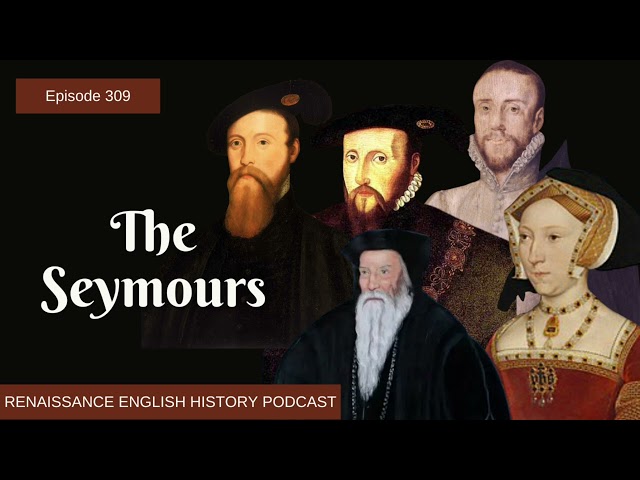
The Seymours were one of the most fascinating families of Tudor England, a dynasty that rose from modest gentry to the very heart of royal power. Best known for Queen Jane Seymour, Henry VIII’s third wife and the mother of his long-awaited son, the Seymours’ story is one of dazzling ambition, scandal, and tragedy. Their ascent began long before Jane caught the king’s eye, rooted in generations of loyal service and strategic marriages. From their quiet estate at Wolf Hall to the glittering but perilous world of the Tudor court, the Seymours transformed themselves into a family that shaped the fate of England, and paid dearly for it.
Transcript of The Family that Gave Henry VIII a Son and Lost Everything:
When we think of the Seymour family, we think of Henry VIII. We think of Queen Jane Seymour. We think of a family that went from relative obscurity to the very peak of power in the blink of an eye. But to understand the dizzying height of their ambition and the tragic depths of their fall, we have to go back to the beginning.
We have to go back to their humble roots, and that is what we are going to talk about today. We are going to trace the Seymours from their beginnings through to their fall, and even where they are today, and what happened to them after the Tudor period.
For generations, the Seymours were, for all intents and purposes, a family of solid gentry. The name itself, Seymour, is an English variation of the French name St. Maur, hinting at their Norman origins. They were well-established landowners in Wiltshire, their primary seat at Wolf Hall. They were knights and sheriffs, a respectable class of people who had no reason to believe that one of their own would one day be a queen of England, let alone the mother of a king. Their place in the world was solid, predictable, and frankly, a little bit boring.
The real shift began a generation before Jane, with her father, Sir John Seymour. Sir John was a career courtier and a soldier. He was knighted by Henry VII for his service and later fought alongside Henry VIII in the English campaigns in France. He was a man with a foot in the old world of military prowess and the new world of court influence. But his true political masterstroke was his marriage to Margery Wentworth.
Margery was no ordinary gentry woman. Through her mother, she was a cousin of Elizabeth of York, Henry VIII’s mother. Their marriage brought the Seymours into the orbit of the Tudor dynasty and, most importantly, into the same social circle as Thomas Howard, the future Duke of Norfolk. It was a strategic alliance that gave the Seymours the very thing they had lacked: powerful connections.
It allowed them to move from the quiet countryside of Wiltshire to the noisy, dangerous, and intoxicating world of the royal court. Lurking beneath the surface of this respectable family were the seeds of the very drama that would define their future. Even before Jane appeared, the family was touched by scandal.
Edward Seymour, Jane’s older brother, the future Duke of Somerset, was caught up in a domestic drama that would have major consequences for the family. Sometime before 1519, he married his first wife, Catherine Fillol. They had two sons, John and Edward, but for reasons that were never explicitly stated at the time, Edward repudiated his wife. Later, after the Seymours were at the height of their power, a scandalous and largely unsubstantiated rumor would emerge that Catherine had been having an affair with her own father-in-law, Sir John.
The truth of the matter is lost to history—it makes for some really good historical fiction. The outcome, however, was clear. When Edward was later created Duke of Somerset, his patent of nobility explicitly stated that his titles would pass to the heirs of his second marriage. This legal document was the most public acknowledgment of the old scandal that the family could make.
Jane Seymour: The Perfect Queen
This family—the very family that was the subject of whispers—would soon work to present a perfect, quiet, blemish-free antidote to Henry’s problems. They went all in on one bet: Jane Seymour. Jane, our future queen, was the ultimate observer. She had served both Queen Katherine and Anne Boleyn. Imagine that—she was the silent witness to Henry VIII’s “Great Matter,” standing a few feet from the woman Henry had risked a schism with Rome for, and a few feet from the woman he was about to dispose of.
While Anne was all sharp wit and fashionable French gowns, Jane cultivated a different image. She was demure, pious, quiet. She didn’t engage in the courtly games; she stayed in the background—a symbol of domesticity. This wasn’t coincidence. It was a deliberate strategy orchestrated by her brothers, Edward and Thomas. They knew exactly what Henry was looking for. After Anne’s fiery personality and inability to have a son, Henry was desperate for a quiet and compliant wife. Jane was the perfect opposite, and the Seymours expertly presented her as such.
A perfect example of this comes from a well-known anecdote: while he was still married to Anne, Henry sent Jane a gift of a purse filled with coins. It was a clear, if discreet, overture, but Jane, in a move that showed her deep understanding of the court’s politics, took the purse and, after kissing the coins, handed it back to the messenger. She said she was happy to accept a marriage gift from the king, but she could not take a single penny from him before then without tarnishing her honor.
It was an audacious and flawless political play, but the Seymours were not operating in a vacuum. Jane’s rise was actively aided by the faction at court that wanted to see Anne’s downfall. These were the conservative, Catholic-leaning nobles, many of whom had been allies of Catherine of Aragon. They despised Anne and the Reformation that she represented.
They included people like Anne’s own uncle, the Duke of Norfolk, Thomas Howard, who had grown to resent his niece’s influence. There was also the Imperial ambassador, Eustace Chapuys, a fervent ally of Katherine of Aragon. Though he was not particularly welcome to whisper directly to the king, he worked his influence through a network of spies and allies, including the notorious courtier Francis Bryan, a cousin of both Anne and Jane, known as the “Vicar of Hell.”
These were the people who placed Jane in Henry’s path, whispering to him about her virtue and humility, using her as a weapon against Anne. Jane’s very lack of baggage was her greatest strength. The moment that Anne Boleyn was executed in May 1536, Jane’s long game paid off. Henry married her just a week and a half later.
The Rise of the Seymour Brothers
The jackpot came with the birth of Prince Edward in October 1537. Jane gave Henry what he had craved for his entire reign—a male heir, a healthy male heir. The future of the Tudor dynasty was now literally a Seymour. Her victory, however, was also her end. She died just two weeks later, most likely from childbed fever.
Henry was, of course, heartbroken. He would later choose to be buried next to her. For the Seymours, her death was a devastating loss and a triumph all at once. Her brothers, Edward and Thomas, were now the most powerful men in England. Their nephew was the future king.
As soon as Henry VIII died, their position was sealed. Edward, Earl of Hertford, became Lord Protector—the de facto ruler of the entire kingdom. This was a massive political move because Henry had wanted to set up a regency council with no one in control, but Edward was able to use his power and political machinations to go completely against Henry’s own will and become Lord Protector. His brother Thomas was the Lord Admiral. They were at the top of the food chain, with more power than anyone had ever imagined for their family.
But power in the Tudor court was always a double-edged sword. In the wake of Henry’s death, that double-edged sword was about to cut deep. The Seymour family, now at the absolute pinnacle of power, was about to turn on itself.
At the center of this looming catastrophe were the two brothers: Edward, the eldest, who had the quiet cunning of a politician, and Thomas, the younger, who had the brazen, reckless ambition of a pirate. Edward was now the Lord Protector, the man who ruled England in the boy king’s name. Thomas was relegated to the title of Lord High Admiral, a position he found utterly inadequate. He was a man with a massive ego, a bottomless appetite for power, and saw his brother’s elevation as a personal slight.
The rivalry between the two brothers began to escalate almost immediately. Edward’s second wife, Anne Stanhope, a notoriously proud and ambitious woman, was a key factor. She was a constant source of tension, feuding openly with Catherine Parr over precedence and demanding a place among the royal family.
A particularly telling and petty feud erupted over the use of the queen’s jewels. After Henry’s death, Catherine Parr, the dowager queen, expected to retain a magnificent collection of jewelry. But Anne Stanhope, as the wife of the Lord Protector and the king’s aunt, insisted that she should have them. A back-and-forth ensued, with Thomas Seymour siding with Catherine. We’ll talk about why in a minute. Further deepening the rift between the brothers.
Thomas wanted his own power base. He wanted a queen, and his first play was Catherine Parr. Thomas had a romance with her before she became queen, and as soon as Henry died, Thomas wasted no time rushing to marry the dowager queen in a secret, hastily arranged ceremony just a few months after the king’s death.
It was a scandalous move that infuriated his brother and the rest of the Privy Council, who viewed it as a blatant power grab. It was also an act of pure emotional recklessness. His second play, then, was for the young Princess Elizabeth. Living in Catherine Parr’s household was her stepdaughter, the teenage Elizabeth. Thomas, a man who liked to flirt and had a seemingly insatiable desire to be at the center of royal power, could not resist.
He started to form almost a relationship with the young princess that, by any measure, was completely inappropriate. He would visit her room in his nightshirt, slap her on the behind, and engage in horseplay with her and her governess, Kat Ashley. Catherine Parr, surprisingly, initially joined in. Perhaps she thought it was all just innocent fun, but Thomas’s behavior became increasingly predatory. Elizabeth was eventually sent away from the household in disgrace.
The drama reached a terrible climax in September 1548, when Catherine gave birth to a daughter, Mary Seymour. The birth was followed by complications, and Catherine died two weeks later from childbed fever. Her death left Thomas with a young infant and, more importantly, without a key source of his political power. He was now free to pursue Elizabeth as a wife, but he was also a man on the ropes. With nothing left to lose, he spiraled into paranoia and reckless plotting.
He began conspiring against his own brother, manipulating the young King Edward with money and favors, and even attempting a late-night break-in at the king’s apartments in Hampton Court, where one of the casualties was Edward’s dog, who was shot. He was eventually caught and charged with treason. His brother Edward now faced a terrible choice: spare his brother or execute him and consolidate his own power. He chose the latter. On March 20, 1549, Thomas Seymour was executed.
So what happened to the young Mary Seymour, his daughter, born just six months before her father’s execution? The orphaned Mary was placed in the care of Katherine Willoughby, the Duchess of Suffolk. The duchess had been a friend of Catherine Parr’s, but raising her daughter was a difficult burden. She constantly wrote to the government complaining about the cost of Mary’s upkeep and the lack of funding. Eventually, funding was completely cut off, and Mary disappeared from the historical record entirely after 1550.
Historians can only speculate about what happened to her. The most likely and most mundane theory is that she simply died as an infant or young child, perhaps a victim of the same sweating sickness that plagued so many during the era and would take Katherine Willoughby’s own sons the next year. The more romantic and compelling theory, which is the subject of some historical fiction, is that she was raised in anonymity, secretly married, or perhaps even sent abroad to live out her life in obscurity. We will never know for sure, but her disappearance is a fitting symbol for a family that seemed to burn so bright and then vanished just as quickly.
Edward Seymour’s Political Struggles
So back to Edward Seymour, the Lord Protector. He had survived his brother’s plotting, but his position was far from secure. He was a new kind of ruler, a man who believed in social reform and was seen by some as sympathetic to the struggles of the common people. You could almost call him a progressive of the Tudor period—a man who saw the suffering of the lower classes and tried, somewhat ineffectively, to do something about it.
This was most evident in his response to Kett’s Rebellion in 1549, a major uprising in Norfolk sparked by peasant anger over land enclosures. While other nobles demanded immediate and bloody repression, Edward tried to negotiate with the rebels and even issued a proclamation that acknowledged their grievances. He saw the rebels as his “poor friends.”
This was an admirable, even forward-thinking stance, but in the context of the paranoid Tudor court, it was also his political death warrant. To his enemies, particularly John Dudley, Earl of Warwick, this was not compassion—it was weakness, an outright invitation to chaos. Dudley, a far more pragmatic and ruthless politician, saw Edward’s populism as a threat to the established order and to the property of the nobility.
He began to whisper to the other lords, pointing out that Edward’s leniency would only encourage more rebellions. He gathered a powerful coalition of nobles who were disgusted by Edward’s inability to control the situation and alarmed by his sympathy for the rebels. They accused him of treason, of inciting rebellion, and of failing to protect the realm.
In October 1549, less than a year after he had his own brother executed, Edward was arrested and stripped of his power. He would spend the next two years in and out of the Tower, clinging to what little influence he had left, but the end was inevitable. On January 22, 1552, he was led to the scaffold at Tower Hill.
His execution was not met with universal joy; in fact, many of the common people who had once seen him as their champion now mourned his passing. His death completed the devastating, bloody chapter of the Seymour siblings. Jane, Thomas, and Edward had risen to unthinkable heights. Both Thomas and Edward met their end on the executioner’s block, while Jane, of course, died giving birth to the next heir.
With both of the elder brothers gone, it might seem as if the Seymour story had come to a definitive and tragic end, but that would ignore the family lines that remained. The future of the Seymours now rested on the next generation. Specifically, it rested on the children of Edward Seymour.
First, there was the line from Edward’s first marriage—the sons he had repudiated years ago, John and the second Edward. We’ll talk about them second because an interesting twist happened. Let’s start first with the line from Edward’s second, more politically advantageous marriage to Anne Stanhope.
This line would be carried on by his eldest son, Edward, who for a time was the true heir to the dukedom. This Edward was known as the Earl of Hertford, and he would play a crucial role at the court of Elizabeth I. He was an incredibly ambitious man and, like his uncle Thomas, had set his sights on a royal marriage.
He secretly married Lady Catherine Grey, the sister of the ill-fated Lady Jane Grey. Catherine was, at the time, a potential successor to the throne, and their secret marriage was seen as a brazen power grab. When Elizabeth found out, she was furious. She had them both imprisoned in the Tower and declared their children illegitimate.
Catherine spent the remaining years of her life under house arrest, moved between various locations. She never saw her husband again and died in 1568 from tuberculosis—and, they said, heartbreak. Edward, the Earl of Hertford, remained imprisoned for nine years. The marriage would later be declared legitimate by a new monarch in 1608, decades after her death. The children, initially illegitimate, were also legitimized at this time, completing a tragic and torturous ordeal for the family.
The Next Generation of Seymours
The main line of the family was continued by Edward’s son with Catherine, who was also named Edward and inherited the title Viscount Beauchamp. It was this younger Edward—who had a father named Edward and a grandfather named Edward, so that’s not confusing at all—who broke the pattern and had a son named Francis, who would later be created Baron Seymour of Trowbridge, Francis, would be a key player in the next generation—a prominent royalist during the English Civil War. The descendants of this line would remain politically significant for centuries, serving in various capacities.
Interestingly, the Earl of Hertford, the second Edward Seymour—the one who married Catherine Grey—married twice more, both times in secret. So he was married three times in secret. He clearly had a thing about secret weddings.
But let’s go back and talk about the children from the older Edward Seymour’s first marriage—the marriage to Catherine Fillol, before Jane was queen, before any of that happened, the one he had repudiated. These were the stepbrothers of Edward Seymour, Earl of Hertford—the children by Anne Stanhope.
Those sons were John and Edward—because naming your kids Edward seems to have been a family tradition, right? Anyway, they had been sidelined for years, but there was an interesting twist of fate that brought the family’s story full circle. They were actually the ones who eventually inherited the family’s title and still hold it today.
This was because the patent of nobility specifically passed the dukedom to the heirs of the second marriage first—but that line died out. It wasn’t until 1750, with the death of the 7th Duke of Somerset, that the line from Anne Stanhope finally ran out of male heirs. At that point, the dukedom reverted, as the patent decreed, to the descendants of the first repudiated marriage. That is where the current Duke of Somerset, John Seymour, the 19th Duke of Somerset, comes from—the repudiated line with Catherine Fillol.
Over the centuries, the Seymours would serve in Parliament, hold military commissions, and occupy various other positions of influence. They never again reached the Tudor-era heights of being a king’s uncle or Lord Protector.
Adrienne Dillard on Anne Boleyn offers a fresh, unfiltered look at one of Tudor England’s most iconic and controversial figures. In this exclusive conversation, historical fiction author and Tudorcon favorite Adrienne Dillard joins us to unpack Anne Boleyn’s charisma, agency, and lasting impact on English history. From public backlash and court intrigue to the truth behind her family’s ambition and her role in the Reformation, Adrienne sheds light on both the myth and the reality. If you’ve ever wondered whether Anne was truly powerful or just caught in the current of change, this deep dive is for you.
Transcript of Was Anne Boleyn Brave or Just Lucky? A No-Holds-Barred Chat with Adrienne Dillard
Heather: I have a bit of a treat for you today. One of the perks of being a member or patron of this podcast is regular author chats. This is a chat we had with my dear friend Adrienne Dillard, who is a historical fiction author, longtime Tudorcon speaker, and all-around just brilliant human being. We talked about all things related to Anne Boleyn. This was in May, the month when Anne was executed.
Adrienne is the author of, among other books, The Raven’s Widow and Cor Rotto. She’s currently deep-diving into George Boleyn’s writings on the Knowles sisters, so this is definitely going to be good.
This conversation went everywhere—from Anne’s charisma and courage to the mob of angry Tudor women who chased her down the Strand, to whether Anne really changed history or just surfed the waves already forming around her.
Also, fair warning: this conversation contains confessions of fever dreams, mild soapbox moments, and some very honest takes on feminism, Henry VIII, and the Anne Boleyn fangirl industrial complex. So grab your tea or your wine and settle in for a juicy, slightly rebellious chat with the one and only Adrienne Dillard.
Heather: Adrienne Dillard, you have written books, you have spoken at Tudorcon. I always say this story about you, but I’m going to say it again. I just always remember you because your book on Jane Boleyn—I read it when I was really sick, and I was on the couch reading it, and then I had this horrible fever. I kept waking up through the night thinking that I was Jane Boleyn and George, and that I was being killed, and that I was with Katherine Howard, and it was just this fever dream all night.
I didn’t know what was going on. I was half awake and not awake, reading and dreaming at the same time. So I always associate you with that really sick time I had—but in a good way, because it was kind of trippy and kind of enjoyable, but also weird.
Adrienne: I love that I inspire nightmares. I think that’s a great life goal for a woman to have—to inspire nightmares.
Heather: I agree. Total professional goals— inspiring nightmares. Yeah. So talk to me a little bit. This has been a year-long shindig of a court, of a study group, whatever we want to call it, that people are in. And we’ve been looking at the top moments in Tudor history. This past month, we’ve been focused on the Great Matter. Because we have been looking at the Great Matter itself, the rise of Anne, then the Act of Supremacy, and now this last week was the Dissolution. So we have been digging deep into this stuff.
But I would like to speak to you specifically about Anne and how she basically upended England and English history, and how England is different because of her and her family and where she came from. There are a lot of myths about Anne and her family, and I want to break some of that down. So my first question to you is: what made Anne so special?
Adrienne: I think some people just have that thing, right? And nowadays, we tend to see them as celebrities, and a lot of that comes from charisma. I think one of the things we can say about Anne is that she had a lot of charisma—whether you were on her good side, her bad side, or even if you did not like her.
I think EustaceChapuys is a perfect example. He did not like Anne. He did not support her in any way, but he was still really impressed by her—impressed by her composure, impressed by the way she carried herself. One of the quotes I love the most is where he calls her braver than a lion.
That quote, in itself, sums Anne up perfectly. Whether you agree or disagree with the choices she made, whatever she was doing took great courage—for good or for bad. She was a really powerful woman. She was very influential, and she had the ear of the king. I do not buy into the idea that she was playing hard to get, but I am also not totally attached to the idea that she was just a helpless victim in all of this either.
We see time and again that she had agency and power. My own personal belief is that when Anne was turning Henry VIII down in the beginning, I think she was being sincere. Because look at what had happened to her sister. I think she was saying to the king, “I deserve a true marriage.”
And I think it was not until it became clear to her that Henry was going to do whatever it took to end his marriage to Katherine of Aragon and marry her. At that point, Anne was like, okay, then we are going to buy into this, and my family is going to buy into this. Because really, you could not marry higher than the king—the king was as high as it got.
And I think in Anne’s head it was like, okay, well, if we can get the Pope to sign off, and then when that did not happen, they were like, okay, well if we can get this new idea moving, this new path… Because really, the new religious changes dovetailed really well with making Anne queen.
You can see them as two separate issues, right? Because reform was already starting to happen in the church. So, I mean, the divorce—the Great Matter itself—and the Reformation are actually two separate issues, because the Reformation had already begun.
And it just so happened that this new marriage with Anne fit into that. The pieces fit together so well and dovetailed so neatly that they kind of get conflated. Because really, you had to have the Reformation in order to have the marriage. You almost could not have one without the other. So then they end up going together.
But I think that Anne came in and she was just… she was really well-educated, she was very smart, she was very opinionated. She had learned how to behave at court, and I think that is what made her really attractive.
Heather: And so you talked a little bit about the idea that she had agency. There is that myth that her father was almost like pimping her and her sister out. Tell me what you think about that.
Adrienne: I mean, no, I do not believe that at all. In fact, actually, I believe there is commentary—I do not know if it is actually in Thomas Boleyn’s own words—but there is commentary that Thomas did not actually want this match between Anne and the king.
He thought she was going to end up a mistress and then be discarded like Mary Boleyn was. So it really was not until it became a sure thing that Anne was going to become queen that they really put their efforts behind it.
I do not know. I mean, I feel like the jury is kind of out as far as how Mary became a mistress to the king. And of course, we cannot even date it for sure. We do not even know how long it lasted. Literally all we have to go on—and it is not even an actual confirmation—is kind of like, he says never with the mother. Right?
And then we have the dispensation. The dispensation says “perhaps,” if he had perhaps had a relationship within however many degrees. There is never any actual confirmation. I think there is enough circumstantial evidence that we could say yes, it did happen.
But I tend to think that Mary was clearly very different from Anne, and I think maybe it was something she got swept up in. At that time, Henry was young and attractive, and he was having relations with other women—there are all sorts of stories about him with different young ladies at court. So I think that is probably what happened. And then she got married to William Carey because it was like, okay, we are done with that, and we are going to set you on your path.
Heather: So talk to me about the response to Anne becoming queen and to their marriage. And maybe talk to me a little bit about—let’s back up—their timeline and how they eventually got married. So we are looking at 1532 as the trip to Calais, where they start having relations, right? And there was a secret—talk to me about the timeline then for that next year, leading up to the birth of Elizabeth. Let’s just say from September to September.
Adrienne: Yeah, so they were over in Calais, and that was kind of like their great triumph, right? Because François really greeted Anne as the queen. There was a whole lot of pomp and circumstance, and it was just seen as very blessed. And then these storms came and they were not able to leave. So of course everybody is kind of hunkered down.
Anne and Henry are really excited. They have just managed to accomplish what they did not think was going to happen. They got Francis’ buy-in, and so I am sure if they were already having some level of intimacy, they just kind of got to the point where they were like, it is happening. You know? Right. We do not have to wait. And they were excited. I think January is just too late. I mean, I think that would make Elizabeth too premature for me. Obviously, it is only a difference of a couple of months.
When they come back—they are back in England in January—they get married in secret. There are only a few witnesses, and we know George is one of them. We also know that there was a woman, one of Anne’s ladies, who was part of it as well. But yes, it was very, very secret.
To use an example, I was pregnant, and my son was born literally just a couple of days before Elizabeth’s birthday. And I fell pregnant with him in early December. So for me, I feel like January is just too late. Maybe, but Logan, my son was born right on time—he was right on his due date. That sticks in my mind a lot, and I think about that. That is what makes me think January was just too late.
Heather: Hannah was originally—she was early—but her original due date was the 21st of August. So like two or three weeks early. Two and a half. And that was Thanksgiving weekend. Funny how we know this stuff. So that was the end of November.
Adrienne: Right, right. Well, we were tracking, and so that is how I know. Right? And so, like, I know. And I think about that, and then I think about how it just very much fits. It does fit a narrative that they were there, she got pregnant, and by January she would have known. Or she would have at least been very late.
And then they needed to get married. Because if you think about it, it was still kind of a rush. Yes, they had accomplished a lot, and it was pretty sure that they were going to be able to get married and everything, but you would think that after as hard as they fought and as much time as they waited, they would have done it differently. And they did not.
So that is just my opinion. We do not have a smoking gun, but in my opinion, you know, there is a little jubilation when she finds out she is pregnant and all of the astrologers are saying, “Oh, it is going to be a boy.”
Heather: Yeah. And how did the crowds react? Because there are those stories of when she was being crowned, her processions had people laughing and saying “Ha ha,” and even, I think it is in The Tudors, one of the shows, they showed a mob attacking her before she was queen because they were so supportive of Katherine. Talk to me about how people viewed her.
Adrienne: That did happen. There was a mob. They had actually gone—and I know this specifically because I wrote this scene in The Raven’s Widow, and I remember just being shocked when I read the actual account of this.
One thing that is really interesting is that it is very clear Anne had the full support of the Boleyns. This ties back into that question you asked earlier. One of the things that really stands out to me is that they had homes very near to London so that Anne could be in London. They could attend the trial of Katherine, they could attend Parliament, and all of these things.
So, when this mob happened, Anne was staying at her father’s house on the Strand. He had a house on the Strand, and the Crown was actually paying for an apartment for Jane Boleyn and George so that they could live there and be near to court while Anne was at court.
So Jane and George were a huge presence in that early part and were really supportive of her. It is often said that Jane was not, but there are so many little details that I do not know if people have missed or if maybe they are not realizing that Jane was also part of that.
I found a lot of things that were attached to George, but Jane was also listed in there in some way. One of them is that Henry paid for an apartment for them to live in, which is really interesting.
Heather: Yeah, it is. So there were kind of mixed feelings within the populace at large about her.
Adrienne: Yes, exactly. So she was at this house on the Strand, and these women just showed up because they were all there, kind of planning out her household. A bunch of just regular civilians showed up and they were yelling at her, calling her a whore, calling her names, throwing stuff at her. They ran down to the river, got on a riverboat, and got away just in time.
But these things were happening, quite often, because the people were in support of Katherine. They were seeing how she was being treated in court and by Henry and his advisors. They could not act out against Henry, but they could act out against Anne.
Heather: Yeah, for sure. And it makes sense why they would be upset. Katherine was treated terribly, and so often in history people want to pit these women against each other. And I mean, in the end they were kind of against each other, but it is really Henry who is the monster here. You know, let us not forget.
Adrienne: Right? Yeah. And I mean, as much influence as Anne did have, ultimately there was not a thing that she could do. Even if she were to say, “You know what, no, no, no, never mind. This is too much. I don’t… you know, we’ve gone too far. I don’t want to…” there is no way that Anne could have said that to the king at any time.
Heather: Yeah, yeah. What are you gonna do? Yeah, it’s really sad. It’s really sad for all these women, getting mixed up with him. Bad move. I mean, not that they could have made a choice.
So tell me about then how like… so that was regular women and regular people where there was this kind of divide and people still supported Katherine. What about the nobility? Were the nobility quick to jump on supporting Anne and supporting the Boleyns, or… I mean, I’m thinking no, because there was still this conservative faction. Talk to me about that.
Adrienne: It was really kind of divided. Both Katherine and Anne had their supporters, and I think they were probably pretty equally split down the middle. You tended to see most of the newer nobles were for more of the Boleyn faction, and then you had the older, traditional conservative nobles who were for Katherine.
But at the same time, you had Norfolk, who was one of the oldest nobles at court, and he was related to Anne. Yes, he did support Anne for a time, but then when she drew some boundaries with him, he did not like that and thought, “Who are you to tell me?”
And so he defected to the other side. You could not assume who supported which side, because it really just depended, sometimes, on which way the wind was blowing and who had the king’s ear at that time.
Even, you know, we are discovering some stories that you have John Gage, who was the Constable of the Tower. He was actually the Constable of the Tower after Anne’s death, because Master Kingston was before him. But John Gage was actually trying to resign in protest of Anne and complained about her because he was conservative and he did not support the new Reformation changes.
But then, as we found out—like, I don’t know, five or six years ago—Dr. Kate McCaffrey from Hever discovered that John Gage and his wife had kept Anne Boleyn’s Book of Hours. That was the last place you would think it would be, but it was there.
And so I think that we have to remember that we are looking at official paperwork, right? And even today, sometimes the things we put in official paperwork are not necessarily the way we really feel.
So I think we can make our best guesses as to who was on whose side and why, but the reality is we are never actually going to know who the real movers were behind Anne’s downfall. We all think it was Thomas Cromwell, and certainly he had a big hand in it, but how much more of a hand did Henry have in it, or these other people who worked for Cromwell? I mean, it’s all very shadowy.
Heather: Truly, and it’s hard to know from 500 years away and looking at incomplete records and all of that. Nobody knows, and everybody is guessing, and you can put together some good guesses, some educated guesses, but yeah, it’s still a guess.
So you had said—the Reformation—I want to go back to this point you mentioned, that the Reformation was already happening beforehand. So I’m wondering, just playing some alternative history, if Katherine had had a son and there was no need to go outside, how do you think history might have gone without Anne?
Would England have hosted the Spanish Inquisition, the northern part? Or do you think, since Henry was the Defender of the Faith and all that, that the power of the Reformation would have taken over eventually anyway? What are your thoughts on that?
Adrienne: That is such a good question. And as a baptized and confirmed Lutheran, someone is saying that the Reformation would have happened anyway. I think…
Heather: I think Jonathan is also a baptized and confirmed Lutheran, so that’s fun. You’ve been like, the power of the Bible in the vernacular, and getting rid of the Popish stuff, and having a direct relationship with God and all of that was different. Overpower it.
Adrienne: Yeah, I think ultimately that would have won out. I mean, really, we give Anne and Henry so much credit for the Reformation, but really, they never changed. They were practicing Catholics, right? They only did away with the things that did not benefit them. I mean, Henry was crawling to the cross like two years before he died—well after he had broken from Rome.
And so, you know, really, the people surrounding Henry—I would say actually Thomas Cromwell did more for the Reformation than Henry did. I think what it was, is Henry had a problem. There were people around him that said, “Look what can go.” Right? But they were already deeply embedded. I mean, as we know, like Thomas Cranmer, he was deeply embedded in that already. You know, and it was the Boleyns who said, “Well actually, yeah, we are our friend.”
Heather: So that makes me wonder, like, if Henry hadn’t had that problem, would there have been a use for Thomas Cromwell? Would there—I mean, Thomas Wolsey wouldn’t have fallen, right? Because he wouldn’t have had to—so all of that. Would there have been a use for Cranmer? Would there be—who knows? It’s interesting to think about. So yeah.
Adrienne: I mean, I think—yeah, I think it ultimately would have happened, but I think that the players might have been a little bit different.
Heather: Gotcha. I like to think of that too, because I am an Episcopalian, so you know, it’s a little bit the same. Go Protestant. Yes. Team Bible in English. So, all right, I guess I just want to ask you about what she accomplished as queen and then, I guess, just her downfall. We can talk a little bit about that and how it changed England—and the idea that a queen could be killed—and what that did to England, if anything. And then we can wrap up with that. So tell me a little bit about her reign as queen.
Adrienne: Yeah, I mean, for being a queen consort, she actually had quite a lot of influence on Henry, particularly in the early days, before she was actually queen. You know, because really, she was not a queen, but she was in that role for longer than she actually was queen in the role.
So for me, I have a hard time separating the two, because in many ways, she was already wielding that power. And I think that she brought in a lot—like you said, with the Reformation and stuff like that. She brought in a lot of the literature and the players. I mean, she and George were bringing in literature from Protestants on the continent. And we know this because some of it still exists and is in the British Library, because it was confiscated from them.
They kind of had a tendency to know the right people. They knew the right people. And I want to say that they were very good at sizing up how people—like, how a person could help them best.
And I don’t say that in a selfish way—not like help them selfishly—but what they could get the best from a person. I think Anne was good at putting people, kind of influencing them into these roles of where they should be in the court. I think that she and her dad and her brother had a huge hand in that.
And she also—I think she sort of could—I’m trying to figure out how to phrase it, because Anne wasn’t a feminist. And I think there’s really a draw to want to call her that, but she wasn’t. But she did elevate women in many ways that she could. You know, she really was known for taking care of her women.
And I’m not talking about the nobles who attended on her. I’m talking about her gentlewomen, her maids who worked with her on a daily basis. She could be very, very generous to them. She helped with education, helped fund education, and she did a lot of things that were in the realm of what we would consider feminism today. But she was also a huge part of the patriarchy in that role too.
Heather: I have such an issue when people put those modern—well, we’ve talked about this before, haven’t we?—talked about these modern terminologies on people who wouldn’t have understood them. It’s not—I don’t know. It’s kind of like if, in 500 years, there’s some movement of some type, something we can’t even imagine right now because we haven’t thought about it.
And in 500 years they go back and say, “Oh, well Adrienne, she was clearly”—like “Read Adrienne’s book. She was clearly a WSA bus fusha,” or something. I don’t know.
Adrienne: Right.
Heather: Yeah. And it’s just kind of like—it bugs me to put that on people because I don’t think it’s fair to assign that.
Adrienne: Right. And it’s a completely different thing. A feminist today is not the same as what a feminist back then would have been. In fact, there was not really any possible way for someone to truly be a feminist in that world.
Heather: Yeah, and it changes. Feminism today is different than feminism in the 1930s, and different again from feminism during the suffragette era. It’s all different, right? I don’t know. So just to go back and say Anne was a feminist—
Adrienne: Yeah, I don’t like that either. We also have to consider the fact that these labels—even if she was a feminist—do not make her perfect. It does not mean that she maintained this perfect ideal. That’s one of the things about Anne—she truly is a gray character.
She did some really dumb things. Not because she was dumb—she was incredibly intelligent and clever—but she was human, right? And sometimes we do things that are illogical or rash or impulsive or whatever.
We always want to make her the saint or the sinner, but really it’s somewhere in the middle. Because yes, she did do a lot for women, but at the same time, she wasn’t doing anything that was outside the realm of what she should have been doing as queen.
Heather: Katherine of Aragon did a lot for women too, being like a warrior queen who wanted to go lead a battle in the Battle of Flodden and all of that. That was a really big step for women too. So again, pitting people against each other—anyway, I will now skip my soapbox.
Adrienne: Okay. I’m almost hesitant to say it because I’m nervous about the Anne Boleyn warriors coming for me, and this is going to be a controversial take. I think the reality is that Katherine had more accomplishments—things she did on her own, right?
But the accomplishments that we attribute to Anne are, one, often colored by one, our more modern thinking, and two, tied to the fact that we give her credit for a significant part of the Reformation that was actually being done by other people. And that’s not to say I don’t think Anne accomplished things, because I do. But they weren’t really outside the prescribed notions of what a queen should be doing.
So if we were to just look at it and ask, “Who was more accomplished, Katherine or Anne?” Well, it’s really easy to say Katherine, right? Because of Flodden, because she was pregnant, because she did all of those things.
Anne doesn’t really have that. But that does not mean that she didn’t accomplish things. Because she did. She elevated voices, she brought in more knowledge. She had invisible hands in things, but she wasn’t doing them alone. It was a groundswell that she was a big part of.
Heather: I’m excited to see if there are any Anne Boleyn warriors who get mad at this. I’m here for it. Actually, no, I won’t. I don’t read comments.
Adrienne: Me, I love Anne. It’s so funny because I came into this starting out with Anne, right? She was my entry into the world of the Tudors. And my perception of her has changed a lot as my research horizons have expanded. And I started to look outside of the Anne sphere. Because there is a lot more to Tudor history than just Anne.
Heather: There is, yeah. And we’ve just spent a lot of time talking about her because she is still important, obviously. But there is a lot more than just Anne. There were other people doing other things. Mind blown.
Anyway, you’ve been so generous. I want you to tell people where they can find you, all of the cool things that you’re up to, all of the amazing stuff, how they can buy your books, all of that kind of stuff.
Adrienne: Well, I recently, well not recently, a couple of months ago, deactivated Facebook because I just needed to be done. So I’m not really on Facebook anymore, but I am on Instagram. I have a TikTok, and mostly what I post are just funny videos of my cat.
But I’ve started to try to branch out, and I’m learning that medium a lot more. Let’s see. Oh, and I also have a website. You can find me at Adrienne-dillard.com, because Adrienne-dillard.com was already taken. Let’s see. You can find my books on Amazon. You can find them all on barnesandnoble.com. You can buy them from the Apple Store, wherever you get your books.
I’m working on a couple of different things right now. I’m continuing to research George Boleyn and his book, so I will be going back to the British Library next year to do some more research on his book The Torments of Marriage. I’m working on that.
I’m also working on a contemporary novel, and it’s called Project Archer. It’s sort of an autobiography, but it’s part true and part false. So there’s going to be a lot of my experiences in there, but it’s going to be a fictional story. Yeah, so that’s kind of interesting and new. I’ve almost got two chapters written, so I’m working on that.
And then, of course, I’m still researching my book on the Knollys sisters. I’m writing about Elizabeth and Lettice Knollys, and it’ll be called The Sisters Knollys. It’ll kind of center on Lettice and her relationship with Elizabeth, the Queen, and also Elizabeth Knollys’ relationship with the Queen, because they had very different relationships with her.
So it’ll be kind of fun because you’ll get to see a young Queen Elizabeth through the eyes of two of her closest relatives who had very different perspectives of her. And then there’s that kind of classic sister tussle.
Heather: Guys, I just love you so much. I need more Adrienne Dillard in my life. That’s just all I can say. You’re just such a joy. You’re just such a bright light of, like, I don’t know. You just are this light of joy, and I just love it. Thank you.
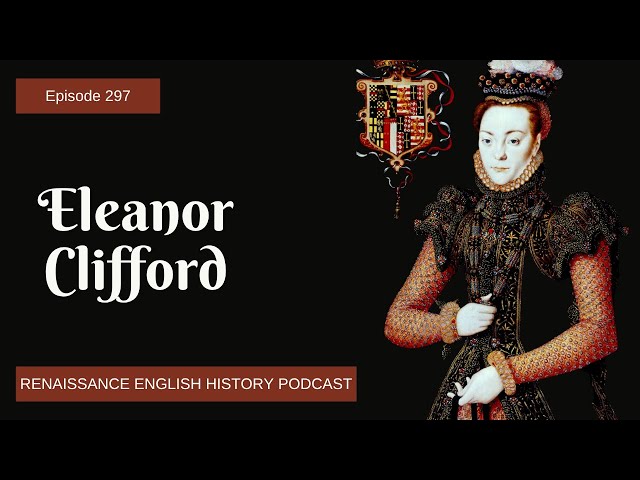
Eleanor Clifford, Countess of Cumberland, may not be a household name in Tudor history, but her life was anything but ordinary. Born Eleanor Brandon, she was the niece of King Henry VIII and daughter of Princess Mary Tudor and Charles Brandon, Duke of Suffolk. Married young into the powerful Clifford family, Eleanor became entangled in one of the most dangerous uprisings of the Tudor period—the Pilgrimage of Grace—where she was taken hostage by rebels threatening brutal violence.
Despite her royal blood, Eleanor Clifford lived far from the spotlight, navigating political unrest, personal tragedy, and courtly expectations with quiet resilience. Her story offers a rare and compelling glimpse into the life of a Tudor woman who stood at the edge of power—and sometimes, at the center of danger.
Transcript of Eleanor Clifford: An often overlooked niece of Henry VIII
In October 1536, the north of England was in open revolt. Tens of thousands of rebels had taken up arms under the banner of the Five Wounds of Christ, calling themselves pilgrims and demanding a return to the old ways. The king’s new religious policies had stirred up more than sermons. This was war.
And Eleanor Clifford, Countess of Cumberland, found herself caught right in the middle of it. She was at Bolton Abbey, a quiet monastic retreat about 10 miles from Skipton Castle. With her were her young son and two of her sisters-in-law. It was supposed to be a safe place, far from court, far from trouble.
But Eleanor, unfortunately, was not just any noblewoman. She was a niece of Henry VIII, and the rebels knew it. When they found her, they made zero effort at politeness. Eleanor and her family were taken hostage. The insurgents sent word to her father-in-law at Skipton Castle: surrender the fortress, or we will hand these women over to the camp followers. And the implication was not subtle.
It was violence against women as a political threat. And Eleanor, despite her royal blood, was expendable. The standoff did not last long. Her father-in-law, furious and alarmed, rode straight into the rebel camp and negotiated their release. Eleanor, her sisters-in-law, and her child were brought safely back to Skipton.
The siege was lifted five days later. She did not write about it. There is no first-person account, no dramatic testimony. But the fact that the rebels saw her as valuable enough to threaten, and the Earl risked so much to get her back, tells us something. Eleanor Brandon mattered, even if history has largely forgotten her.
So today, my friend, we are going to talk about Eleanor Brandon, a niece of Henry VIII who has been largely forgotten. Eleanor Brandon was born into the very heart of Tudor royalty, but her name rarely makes it into the footnotes, let alone the spotlight.
She was the daughter of Princess Mary Tudor, the king’s beloved younger sister, and Charles Brandon, Duke of Suffolk. That, of course, made her Henry VIII’s niece. Her sister Frances went on to be the mother of Lady Jane Grey. Her cousin, Margaret Douglas, caused scandals and flirted with treason. But Eleanor? Eleanor got married, moved north, and vanished from the courts’ daily drama. Good for her, I say.
But when you look a little closer, her life actually was not particularly quiet at all. She was married at fifteen in a ceremony attended by the king himself. She nearly died in a rebellion. She buried two of her three children, tragically. She lived far from the glitter of court, but she was close enough to its politics to appear in the king’s will.
She left behind one letter, just one that survives. But it is so intimate, so physical, and so immediate that you can practically hear her voice. And through that voice, we glimpse something rare: a woman at the edge of power, dealing with illnesses, marriage, motherhood, and mortal fear with zero spotlight on her.
She was not trying to change the world, but the world kept trying to press in on her anyway. So let’s talk about Eleanor Brandon, Countess of Cumberland, the king’s niece, and a Tudor woman that history has largely, mostly forgotten.
Eleanor Brandon was born sometime between 1519 and 1521, most likely at Westhorpe Hall, the Suffolk estate of her parents. Her mother, of course, was no ordinary duchess. She had once been the Queen of France, married briefly to the aging Louis XII, before returning to England and marrying Charles, the king’s closest friend, in secret.
Eleanor was their second daughter after Frances, and her name stood out. Tudor royal women were usually named Mary, Elizabeth, Anne, or Jane. But Eleanor’s name may have been a diplomatic nod to Eleanor of Austria, she was the sister of Charles V, Queen of Portugal, and later became the Queen of France.
If that is true, it was a name loaded with imperial significance and maybe a quiet signal of alliance, given that her father had been involved in negotiations with Charles V around the time of her birth. Like her sister, Eleanor would have received a very elite humanist education. Girls in families like theirs were expected to learn French and Latin, to read scripture, and to play music, perhaps the virginals or the lute.
There is evidence that Eleanor could write in French, and she seems to have inherited her mother’s sharp intelligence. Her sister Frances married Henry Grey in 1533, and that same year Eleanor was betrothed to Henry Clifford, heir to the Earl of Cumberland.
A Royal Marriage and Life in the North
The Cliffords were a well-connected northern family, and there was also a touch of Plantagenet blood running through Eleanor’s future mother-in-law, Margaret Percy. We actually just did a YouTube video this week on the Percy family and how they could not stop themselves from rebelling, so you can check that out.
Henry Clifford himself was tall, dark-haired, and unusually intellectual. He built an impressive personal library and dabbled in alchemy and astrology, which, of course, were eccentric hobbies for a man who was expected to lead border defenses.
They were married in 1535 at St. Mary Overy in Southwark, now Southwark Cathedral, Henry VIII actually went himself. Not every niece gets a king at her wedding, but Eleanor did, and her new life in the North was about to begin.
For most noble couples in the Tudor world, marriage did not mean immediate independence. You were usually tucked into your in-laws’ household until the title passed down, if it ever did. But Eleanor Brandon and Henry Clifford had something different.
In the months leading up to Eleanor’s arrival, Henry’s father, the first Earl of Cumberland, ordered a rapid-fire renovation to Skipton Castle in North Yorkshire. He added a long gallery and two new towers, one of them octagonal, which was a fashionable and expensive architectural choice at the time. The construction was finished in under four months.
It was not just practical, it was symbolic. The king’s niece was coming north, and the family meant to show that they were ready to receive her in royal style. It was rare, almost unheard of, for a young couple to have their own establishment while their parents were still alive. Henry and Eleanor were given real autonomy. They did spend some time at Skipton, but they seemed to have lived primarily at Brougham Castle in Westmorland, closer to the Scottish border.
It was a quieter location, far from court, farther still from the endless maneuvering of London politics, but it seems to have suited Eleanor, who even in those early years may have already been struggling with poor health.
This marriage was more than just a dynastic win. It seems to have been a functional, even affectionate match. Eleanor’s father, Charles Brandon, stayed closely involved, writing to the Earl of Cumberland about his daughter’s well-being and sometimes even stepping in to manage financial arrangements on her behalf.
He once gently complained that Eleanor and her husband were living in an unhealthy country house and pushed for them to be moved back to Brougham, where she seemed to thrive a bit better. This was a woman who was building a life on the edge of the kingdom, with real challenges lying ahead for her.
So Eleanor, like we said, may have been living far from court, but she was still expected to show up when duty called. In early 1536, just a few months after her wedding, she was summoned south to serve as Chief Mourner at the funeral of Katherine of Aragon. This was a political role. Choosing who stood where, who carried which banners, who wept in which pews—this all sent a message. So it is telling that Eleanor, and not her older sister Frances, was the one who represented the family that day at Peterborough Castle.
Frances may have been pregnant at the time or recovering from a recent birth, but there is still another possibility. Henry might have considered Eleanor the right level of royal for the occasion. Frances, as the senior niece, was perhaps tied too closely to court ambition. Eleanor was quieter, less politically entangled, more neutral—an acceptable presence at a queen’s funeral without making it feel like a dynastic statement.
Remember, at this time Henry was married to Anne Boleyn. Katherine was not on his good list. He did not want Katherine to have a state funeral that was too fancy, too much, because he was still really mad at Katherine and might have been a bit happy and relieved that she was gone. But he still needed to honor her as what he saw as the Princess Dowager, the Dowager Princess of Wales, and someone who was the aunt of Charles V. So he needed to give her a certain amount of pomp and circumstance—but maybe not enough for the senior niece, right?
After this visibility, Eleanor’s name actually vanishes from the official court record. She is not listed among the ladies at Prince Edward’s christening in 1537. She did not attend Jane Seymour’s funeral. She also was not among the elite women who welcomed Anne of Cleves in 1540. Her sister Frances, by contrast, was there for all of it.
Now, one explanation might be Eleanor’s health. Her father wrote more than once about her frequent illnesses and made specific requests to her in-laws for healthier accommodations. So it is possible that her absence was not her shirking duty or anything like that. It might have just been physical.
While her sister stayed close to court, Eleanor was increasingly rooted in the north, settled into a rhythm of family life, letter writing, and, as we will see next, moving through some devastating personal losses.
Then, in the autumn of 1536, Eleanor’s life took a terrifying turn, which we talked about in the opening. England’s north was rising up in protest against the king’s reforms. Monasteries were being dissolved. Traditional faith was under threat, and resentment toward the central government had reached a boiling point.
The Pilgrimage of Grace
It was called the Pilgrimage of Grace, and it became the largest rebellion of Henry VIII’s reign. Eleanor was now about 17, staying at Bolton Abbey, about 10 miles from Skipton, along with her young son and two of her sisters-in-law. The idea was to keep them out of harm’s way while Skipton was fortified. But it didn’t work, because the rebels found them.
They stormed the abbey and took the women and child captive. They sent this message to Eleanor’s father-in-law: surrender Skipton or your daughter-in-law, her child, and the other women will be handed over to the camp followers. The language was clear and brutal. The threat was to “violate and enforce them with knaves unto my lord’s great discomfort.”
There is zero ambiguity in that phrase. This was violence against women, deliberately threatened as a weapon of humiliation. These rebels knew exactly who Eleanor was. She was the king’s niece, and that made her valuable—symbolically and strategically.
This was not empty bluster. These same rebels had already dragged abbots from their monasteries and forced local landowners to swear oaths at knifepoint. There is a harrowing scene in Wolf Hall where Cromwell learns of a man he had sent north who was tied in pigskin and thrown to the dogs as punishment. While this is fictional, it is not out of step with the kind of brutality people were experiencing in the north at the time.
A lot of times we hear about things like rebellions and think, oh, that might have been like a protest or something. It was not like that at all. This was real violence, threatened and often enacted, and a lot of people experienced it. That is not to say I do not understand what the Pilgrimage of Grace was about. Clearly, I understand. They had a lot of good points, and there was a great deal of legitimate motivation behind it. But it was also a very violent rebellion. The reprisals were equally violent. Around 200 people were executed, and the leader was hanged in chains. It was not a good time for anybody.
So the Earl of Cumberland did not hesitate. He rode straight into the rebel camp at Bolton and demanded their release. Somehow, possibly thanks to his local connections and his status, he was able to pull it off. The women and the child were freed and returned to Skipton, and the rebels gave up their siege just five days later.
Eleanor never left a written account of what happened, but the records speak volumes. The rebels used her as leverage, and her father-in-law risked everything to save her. When her own father, Charles Brandon, heard the story, he wrote immediately to the Earl: if there was any way to bring Eleanor south to his household, “I trust she shall be out of danger.” She didn’t go south. She didn’t return to court. But this episode proved just how much her presence, even so far from London, still mattered.
Eleanor’s Later Years and Legacy
By the early 1540s, Eleanor had faded from the royal spotlight, but her role as wife and mother had taken center stage. She gave birth to three children. Her first two were sons, Henry and Charles, and both died young. Charles died in infancy, and Henry lived only to about age three. They were buried side by side in the Clifford family vault at Holy Trinity Church in Skipton, the same church where Eleanor herself would be buried just a few years later.
Only her daughter Margaret, born in 1540, survived into adulthood. It is likely that Eleanor named her after her mother-in-law, Margaret Percy. Margaret would go on to marry Henry Stanley, the future Earl of Derby, and have four sons. But despite the promise of that match, the marriage broke down, and Margaret later came under suspicion for allegedly predicting Elizabeth I’s death through astrology. But we will have to save that story for another time.
In 1542, Eleanor’s father-in-law died, and her husband officially became the second Earl of Cumberland. That made Eleanor the Countess, though it likely did not change much about her daily life. They were already well established at Brougham Castle and had long since taken on the responsibilities of the title.
She suffered another major loss in 1545 when her father, Charles Brandon, died. In his will, he left both Eleanor and Frances 200 pounds’ worth of plate. A decent sum, but not an extravagant one. He had, of course, remarried after Mary Tudor’s death and had other children, other sons, to consider at this point. But the fact that he left her this amount of plate still showed that Eleanor, for all her distance from court, was still very much his daughter.
She also remained on good terms with her stepmother, Katherine Willoughby. While her sister Frances pursued court favor and was very politically ambitious, Eleanor’s connections stayed domestic, rooted in family, in correspondence, and in gifts. A quieter version of Tudor womanhood.
The only surviving piece of Eleanor Brandon’s voice comes to us from a letter she wrote on February 14, 1547—Valentine’s Day—though she was not feeling at all romantic. She was sick and scared and writing from her lodge at Carlton.
She writes, in sincere departure from me, to her husband Henry: “I have been very sick and at this present my water is very red, whereby I suppose I have the jaundice and the ague both.” It is a blunt, physical letter. No courtly language, no flourishes. She describes pain in her side and her back, a total lack of appetite, and pleads with him to send for Dr. Stevens, “for he knoweth best my complexion for such causes.” She signs it simply, “By your assured loving wife, Eleanor Cumberland.”
It is the letter of a woman who has already felt the bite of life: childbirth, rebellion, the deaths of two sons. But the letter is personal. No servant speaks for her, and no title softens her plea. Just Eleanor, asking her husband to act quickly because she knew instinctively that this was not just a passing illness.
She did not recover. According to her descendant, Anne Clifford, Eleanor died toward the end of November 1547 at Brougham Castle. Other records give September 27 as the date. Either way, she was still only in her twenties. She was buried at Holy Trinity in Skipton, in the same vault as her sons. Years later, when the tomb was opened in the 17th century, observers noted that her skeleton was very tall and large-boned, and that her hair had retained the chestnut color so often associated with the Tudors.
That final letter tells us what no chronicle or court roll could. Eleanor Brandon was human, vulnerable, and conscious of her fragility. And in her last known words, she was not looking for any favor or glory, just some relief.
Eleanor’s death hit her husband hard. So hard, in fact, that some believe he died too. Anne Clifford, their descendant and one of the great chroniclers of the Clifford family history, tells us that after Eleanor’s death, Henry Clifford fell into what seemed like a deathly collapse.
He was laid out on a table, covered in velvet, and presumed dead until someone noticed the faintest signs of life. They quickly administered hot cordials inwardly and outwardly, and slowly he revived. But he was far from well. According to the story, he spent weeks being nursed with milk from a wet nurse, literally suckled back to health. Then he lived on ass’s milk for several months after that. It is one of those Tudor stories that sounds a little too strange to be true, but Anne Clifford clearly believed it. And either way, it shows just how deeply Eleanor’s loss affected him.
After that, Henry withdrew. He largely abandoned court life and focused on reading, collecting books, and his rather esoteric hobbies: alchemy and natural philosophy. He kept an impressive personal library at Skipton, and by the end of his life, his interests leaned more towards symbols and spirits than politics and power. Eleanor’s death seems to have changed her husband completely.
Margaret Clifford: Eleanor’s Daughter
Eleanor’s daughter, Margaret Clifford, born around 1540, inherited more than just a noble name. She inherited proximity to the throne, and in Tudor England, that was as much of a liability as it was a privilege. We have talked about that a lot.
After Eleanor’s death, Margaret became a political asset. John Dudley, Duke of Northumberland, tried to arrange a marriage between her and his son Guildford. Yes, that Guildford, who later would marry Lady Jane Grey. When that plan fell through, Margaret was betrothed to Guildford’s uncle, Andrew Dudley. That match also never happened, thanks to the spectacular collapse of the Dudley family after Lady Jane Grey’s nine-day reign.
Instead, Margaret married Henry Stanley, Lord Strange and the future fourth Earl of Derby, in 1555. Mary I and Philip of Spain were actually present at the wedding, which shows that Margaret was still firmly within the fold of royal favor. But the marriage eventually soured. The couple lived apart, and Margaret’s nearness to the throne made her dangerous in Elizabeth’s eyes.
She was actually accused of using astrology to divine the Queen’s death and identify her successor, which was considered treasonous. She spent several years under house arrest, a soft kind of imprisonment. She died in 1596, never fully trusted and never far from suspicion.
So Eleanor Brandon did not scandalize the court. She did not make a bid for the crown or end up in the Tower. She did not convert, flee, or plot. She simply lived and died young. She spent her adult life far from London in the castles of the north, out of the gossip and spectacle that immortalized so many of her relatives.
She left behind no grand political movement, no surviving portraits with firm attribution, and only one personal letter. There is a portrait that a lot of people think is of her. It is disputed. I am going to use it as the cover art for this episode because, when you look her name up and when you look at her on Wikipedia and in other references, that is still the portrait that is used. But I should note that it is disputed as well.
She was remembered more for her death than for anything she said or did while she was alive, but in her lifetime, Eleanor was eighth in line to the English throne. She was held hostage by rebels. Her name appeared in the King’s will. She bore children. She survived sieges, and she died loved.
She might not be a Tudor figurehead. She was part of the machinery that kept the dynasty turning, and her story is worth telling. So we will leave it there for now. Eleanor Brandon, Eleanor Clifford, a really interesting woman, and I hope you enjoyed this little dive into her life.
Tudor midsummer traditions were a vibrant blend of fire, folklore, faith, and festivities. Long before the age of beach trips and strawberry festivals, the Tudors marked the summer solstice with bonfires, magical herbs, and elaborate public pageants that lit up the streets of cities like London and York.
Rooted in both pagan customs and Christian feast days, midsummer in Tudor England was more than just a seasonal celebration—it was a sacred moment in the calendar, a time to honor the turning of the year, protect against illness and misfortune, and indulge in a little revelry. From fire-breathing dragons to enchanted plants gathered at midnight, Tudor midsummer traditions offer a fascinating window into the lives, beliefs, and imagination of the era.
Transcript of Bonfires, Fairies & Flaming Dragons: How the Tudors Celebrated Midsummer
It is midsummer, and it’s the longest day of the year. If you think that just means sunburns and overpriced strawberry festivals, well, not in Tudor England. The Tudors didn’t do anything halfway, especially not something that combined religion, fire, community, feasting, and the occasional flaming serpent.
Today, we are going to dive into how the Tudors celebrated the summer solstice, complete with bonfires, magical herbs, and more than a few tipsy devils on stilts. For the Tudors, the turning of the seasons wasn’t just a poetic metaphor—it was how life worked. Time was measured not by clocks or Google Calendar notifications, but by planting, growing, harvesting, and resting.
Midsummer—the summer solstice—came at a natural pause. Crops had been planted the days were at their longest. People had a moment to breathe before the harvest madness began. It was a time to feast, to gather, and to set things on fire for good luck, and, as we’ll see, to mix a bit of pagan mischief with Christian formality. Let’s get into it.
Happy summer solstice, friends. Before Christianity arrived on the scene with its saints and feast days, midsummer had already been a moment of enormous spiritual importance across pagan Europe. We know that they were marking the sun’s peak power at Stonehenge, for example.
This was the time when the sun was at its highest. It was a time of growth, of abundance, of fertility. Naturally, people lit fires. They danced, they feasted, they did everything they could to encourage the sun to stick around just a little bit longer. The early Church, ever the savvy marketer, didn’t ban these celebrations outright. Instead, they rebranded them.
June 24 became the Feast of St. John the Baptist, neatly tucked just a few days after the solstice. Now you could still have your midsummer party, but it was for St. John. The wild rites didn’t stop—they just came with a new name tag. This clever repurposing was the same playbook used with Easter, which, fun fact, gets its name from Ēostre, the Germanic fertility goddess.
By the Tudor period, midsummer was a glorious hybrid of old and new—officially religious, unofficially still very much about fire, flowers, and fun. Before we get to midsummer, the summer season in Tudor England had already kicked off with Corpus Christi, a celebration that took place on the Thursday after the eighth Sunday after Easter, which, yes, is about as specific as Tudor dating can ever get.
Corpus Christi had royal backing from the Pope as far back as 1317 and was meant to remind people of the holiness of the Eucharist. In practice, it was a pageant lover’s dream. Towns competed for the most extravagant processions, floats, clergy, banners, music, and biblical plays, all performed in the streets.
In York, the consecrated host was carried in a silver and crystal vessel under a protective canopy. In Coventry, they embroidered velvet banners with golden thread. The London Skinners’ Company pulled out all the stops with more than 200 clergy in their procession. The York cycle of mystery plays included 52 scenes and would have taken over 21 hours to perform in full.
That is assuming the audience had the stamina and a packed lunch. But all of this grandeur could not survive the Reformation. As Protestant reformers cracked down on what they saw as papist spectacle, Corpus Christi processions began to vanish. By the 1570s, they were gone. Party poopers. Still, midsummer survived a little bit longer.
And that brings us to one of the most iconic features of the Tudor summer season: the bonfire. Nothing says happy solstice like lighting things on fire. Bonfires were the center of midsummer festivities. They were built at sunset on the eve of St. John’s Day, burning late into the night.
They were not just decorative. People believed they were medicinal. You see, while the Tudors had no concept of germs as we do, they understood that bad smells and bad air—miasma—seemed to accompany disease. And of course, summer was when disease would be at its height, with the plague returning.
So they lit fires to purify the air, especially hoping that the smoke would drift over the fields to protect the crops. Some even positioned the bonfires specifically to catch the breeze and blow smoke where it was most needed.
And then there were the bones. Yes, literal bones. The word bonfire may actually come from the phrase “bone fire,” a reference to the custom of throwing old animal bones into the flames.
This was supposed to ward off evils, scare away dragons naturally, and bring good luck. One 15th-century monk grumbled about the practice, claiming it made the whole town stink, which, fair enough. John Stow, the chronicler of all things London, remembered the bonfires fondly, writing decades later with a hint of nostalgia, he described entire neighborhoods gathering wood, setting tables outside their homes with cakes and ale, and inviting friends and strangers to feast together.
In his words, it was a time of great familiarity, where even enemies reconciled over sweet bread and good drink. You could call it the Tudor version of a block party—if your block included bones, plague smoke, and very real life hazards.
Now, if you are thinking that the bonfires were intense, just wait for the marching witches. These were elaborate nighttime processions held in places like London, where up to 4,000 people might take part. Picture it: Morris dancers jingling, hobby horses prancing, and people on stilts towering over the crowds.
There were pageants, music, fireworks, and the occasional terrifying monster. Yes, literal monsters. In 1521, one midsummer parade included a massive float of Pluto, god of the underworld, featuring a serpent that spat fireballs into the crowd. What could possibly go wrong with that?
The Lord Mayor’s Guild in London went all out. That year, 1521, they staged five major pageants: the Castle of War, the Tree of Jesse, St. John the Evangelist, St. George, and of course Pluto. Some of these had clear religious roots, but others not so much. One float included naked boys dyed black to represent devils. And let’s just say OSHA definitely had no presence.
Sometimes they even set dragons on fire. The Drapers’ Guild once paraded a dragon, doused in aqua vitae—essentially early brandy—and then lit it up. Health and safety nightmares aside, it was all about creating spectacle. And in the days before Netflix, fire-breathing serpents were peak entertainment.
Though these events were not technically religious, they still came under scrutiny. Authorities worried about riots during especially intense political times, and by the mid-16th century, even the watch marches began to disappear. Henry VIII banned them in 1539 to save money, though no one really believed that was the only reason. A few years later, Lord Protector Somerset tried to revive them after banning the Corpus Christi festivities, but it was a short-lived comeback.
Even Elizabeth I, who adored pageantry, could not bring them back for good. She tried to get the Lord Mayor of London to revive the Midsummer Watch, but the city politely declined. It was probably just too expensive and too flammable.
But Midsummer was not just about pageantry and fire—it was also about magic. This was seen as one of the most powerful nights of the year for supernatural activity. The hours between dusk and dawn were especially potent, the time when the boundaries between worlds blurred and witches, fairies, and spirits were the most active.
Shakespeare’s A Midsummer Night’s Dream captures this energy perfectly, with Puck—also known as Robin Goodfellow—darting around causing mischief. The character of Puck has deep roots in English folklore. Originally called Puka, he was a trickster—part sun god, part spirit of chaos. Depending on who you asked, he could bless your crops or steal your socks, or maybe both. People believed that witches harvested their magical plants at Midsummer, when the sun gave the herbs their greatest power.
One popular plant was St. John’s Wort, which had little red flecks thought to symbolize the blood of the saint. It was worn in wreaths and hung in stables to protect animals from evil spirits. Then there were the fern spores, gathere d at midnight on Midsummer’s Eve, supposedly capable of granting invisibility—not even metaphorical invisibility, but literal, cloak-of-invisibility style vanishing. You had to catch the spores at just the right moment as the fern released them into the dark. If you did, you might never be seen again, which, depending on your social calendar, could be a blessing.
Aside from the fire and the magic, Midsummer was deeply connected to the natural world. People decorated their homes with flowers and greenery, especially circular garlands symbolizing the endless cycle of the seasons. Yellow, orange, and red flowers were especially popular—the colors of the sun. Birch branches, fennel, trefoil, and white lilies were commonly used. According to John Stow, every door was shadowed with green birch, long fennel, St. John’s Wort, white lilies, and suchlike.
Some herbs had spiritual meaning. Trefoil, with its three-part leaves, symbolized the Trinity, and Madonna lilies were associated with the Virgin Mary. Cattle were crowned with wreaths of St. John’s Wort, and animal pens were decorated to protect them. It was believed that the herbs picked at Midsummer were more powerful for medicine and for magic, so this was a prime time for making remedies, charms, and the occasional love potion.
And yes, divinations for love were especially popular. Young people might place their herbs under their pillows or try midsummer rituals to reveal the face of their future spouse. One imagines that a few just might have used the occasion to, you know, sneak off into the woods.
So what did midsummer mean to the Tudors? It meant bonfires in the streets, dragons and flames, mischievous spirits in hedgerows, and herbs gathered by moonlight. It was a time for healing, for magic, for reconciliation, and yes, some very good parties.
And while most of us are not going to start rolling flaming cartwheels down the hills or dyeing children to look like demons—please do not do that—you can bring a little bit of Tudor midsummer spirit into your day.
Light a candle. Go gather some sun-colored flowers. Make a toast to the longest day of the year. And if there is someone you have been meaning to make peace with, maybe midsummer is the perfect time to do that. Whatever you do, please keep your dragons away from the brandy.
Happy midsummer, my friend. So how are you celebrating midsummer? We are going to make fire in the fire pit tonight, and I got stuff to make s’mores, so that is what we are going to do for midsummer. What are you going to do? I would love to know.
Top 5 Tudor mistakes that changed the course of history include a mix of political missteps, personal misjudgments, and catastrophic power plays that still fascinate historians today. From botched rebellions and reckless diplomacy to deadly family decisions, these moments reveal just how perilous life could be in Tudor England. In a world where one wrong move could lead to execution or exile, the stakes were always high. This list explores the worst of the worst—decisions so bad they shaped the fate of individuals, dynasties, and nations.
Transcript of Top 5 Tudor Mistakes: Blunders That Cost Lives, Crowns, and Countries
Have you ever read a Tudor biography and found yourself shouting, “No, don’t do it! Don’t do it!” when the person you’re reading about is doing something that you know is not going to end well? Well, you’re not alone in that. The Tudor era is a goldmine of dramatic decisions and colossal miscalculations.
Some of these errors cost people their lives. Others damaged England’s position on the world stage. And some were just downright embarrassing. So today, we are going to count down five of the worst Tudor mistakes.
Some are personal disasters, like a father who managed to get his daughter executed after she had already been spared once. Others involve misguided diplomacy, espionage gone wrong, and rebellions that probably should have stayed as diary entries. Let’s dive into the top five Tudor mistakes.
I’m delighted that you are here with me, and today, like I said, we are going to count down the top five really bad decisions of the Tudor period. I would love to know what you think about this list when we get done. Are there ones that I included that you wouldn’t have? Or are there ones that you would have included that I didn’t? Let me know in the comments after the video.
5. Katherine Parr’s Dangerous Debate
Let’s get started with a really bad decision: to argue theology with your very broody husband, who was very changeable and also could have you killed. And that’s what Katherine Parr did. Katherine Parr was Henry VIII’s sixth and final wife, and unlike her immediate predecessor, she was really, really intelligent. And she somehow managed to live to tell the tale of being married to Henry, but just barely, by the skin of her teeth.
Katherine was a reform-minded Protestant who enjoyed debating religious doctrine. The problem, of course, was that her husband had zero tolerance for being contradicted, especially by a woman, and especially when he was in a bad mood, which was often, thanks to his festering ulcers and general paranoia.
Katherine also had a lot of enemies among the conservatives at court who wanted to bring her down and basically tear apart the Protestant movement anyway. So, you know, it really wasn’t a good time to be arguing theology in general when you’re queen, and especially not when you’ve got a husband like Henry.
According to John Foxe’s account, Katherine got into theological discussions with Henry and pushed her evangelical views a bit too far. The conservative Bishop Gardiner saw an opportunity and convinced Henry that she was becoming a subversive influence.
A warrant for her arrest was drawn up. Now, Katherine was tipped off just in time. She went into full damage control. She threw herself at Henry’s feet, claimed that she only ever argued to distract him from his pain and to benefit from his superior wisdom. She was, after all, a woman, and she desperately needed his guidance.
And that flattery hit the spot. When the guards arrived to arrest her, Henry actually sent them packing with a beating. Moral of the story: never assume that you can debate with Henry VIII, even if—and maybe especially when—you are his queen.
4. Essex’s Rebellion
Let’s talk about the number four spot: Essex’s Rebellion, a vanity project that kind of got out of hand. By the late 1590s, Robert Devereux, Earl of Essex, had fallen hard from favor. His campaign in Ireland had been an expensive catastrophe. Troops were dying of disease, morale was crumbling, and Essex quietly negotiated a truce with the rebel leader Hugh O’Neill—behind Elizabeth’s back, no less. And then, in a move that somehow managed to be both reckless and theatrical, he disobeyed orders and rushed back to England.
Still in his travel-stained gear, he burst into Elizabeth’s private chambers unannounced. For a queen obsessed with image and protocol, this was beyond shocking. She kept her cool, but Essex had crossed the line, and everyone knew it.
What followed was one of the most misguided coups in English history. In February 1601, Essex raised a pitiful rebellion—that really is the only word to describe it—hoping that the people of London would rally to his cause and help him overthrow Robert Cecil and reclaim his place by the Queen’s side.
Except they didn’t, and the whole thing fizzled out by dinnertime. Essex was arrested, tried, and executed. His mistake: arrogance, misreading the mood of the nation, and most fatally, thinking Elizabeth would forgive him one more time when she didn’t.
3. The Lopez Affair
Let’s talk about number three: the Lopez Affair, spy games, and scapegoating. Dr. Rodrigo Lopez was Queen Elizabeth’s personal physician. He was also a Portuguese-born crypto-Jew, a skilled courtier, and, just to complicate things, a part-time spy—a little side hustle going on. It was a career that required a lot of caution, and unfortunately, Lopez miscalculated just how dangerous Elizabeth’s court could be.
After the death of his patron, Francis Walsingham, Lopez kept playing the espionage game, juggling communication with Spanish and Portuguese agents, trying to broker peace talks between Elizabeth and Philip II, likely with dreams of retirement and a hefty reward.
Enter Robert Devereux, the aforementioned Earl of Essex, who we just talked about—bold, ambitious, and still eager to prove his loyalty. Essex accused Lopez of plotting to poison the queen, presenting it as a Spanish-backed conspiracy. Was there a real plot? Almost certainly not. But Lopez’s web of secretive dealings gave Essex just enough threads to twist into a rope.
Lopez was convicted of treason, and he was hanged, drawn, and quartered in 1594. He died protesting his innocence, crying out that he loved the queen as much as he loved Jesus Christ. That line, considering he was a crypto-Jew, only fueled antisemitic mockery. Lopez’s fatal mistake was not treason. It was thinking that he could outmaneuver the power players without protection.
His protection had died—Francis Walsingham was gone—and so too was the idea that Elizabeth’s court had room for independent operators. There were no independent contractors at Elizabeth’s court.
2. The Rough Wooing
All right, number two: the Rough Wooing. Henry VIII tries diplomacy with a sledgehammer. Let’s talk about a mistake that left scorch marks across Scotland. In 1542, James V had died, leaving behind his six-day-old baby, Mary, Queen of Scots. Henry VIII, ever the opportunist, saw a golden opportunity: marry his son Edward to baby Mary and unite the two kingdoms under English control. Easy peasy, lemon squeezy. He even got a treaty signed—the Treaty of Greenwich—which said that Mary would be sent to England when she was ten years old.
Now, Henry, being Henry, gets impatient. He demands that the baby be handed over immediately, which naturally enrages the Scots. Of course it does. They tear up the treaty before it is even ratified, and instead of dialing it back a little bit, like you might do, Henry does not. He goes full scorched earth. Literally.
He launched a brutal campaign through the Borders, burning, looting, pillaging, and general rampaging, known later as the Rough Wooing. Because, of course, there is no better way to get a girl to pay attention to you and marry you than to make war on her country.
It is a disaster. Far from winning hearts and minds, Henry’s violence pushed the Scots straight into the arms of the waiting French, and Mary was whisked off to France, betrothed to the Dauphin. England lost any real chance of a peaceful union.
This, of course, was not just a failed diplomatic plan. It was a flaming public relations nightmare that fueled resentment for generations. Now, of course, England would be united eventually under that same line when Mary’s son, James VI of Scotland, became James I of England and there was the Union of the Crowns a hundred years later. But it was not the way Henry had intended, and the Rough Wooing certainly cost England a lot in treasure, lives, and general goodwill.
1. Jane Grey’s Father’s Fatal Rebellion
Now, what I think is the number one dumb move of the Tudor period is Jane Grey’s dad starting a rebellion while she is in the Tower. Let’s talk about it. Lady Jane Grey had already lost everything—her crown, which she did not even want, her freedom, and most likely her future—when her father decided to make things worse.
After Mary I’s succession in 1553, Jane, who had reigned for just nine days, was imprisoned in the Tower of London. Although she had been the figurehead of the attempted Protestant succession, Mary seemed inclined to spare her. She recognized that Jane was young and was probably a pawn, manipulated by more powerful figures, including her own father, Henry Grey, Duke of Suffolk.
But then, in early 1554, Jane’s father decided to throw his lot in with Wyatt’s Rebellion, a rising meant to stop Mary’s marriage to Philip of Spain. It failed spectacularly. The rebels were scattered and Suffolk was captured. The fallout was swift. Jane was already a figurehead of one failed coup, and suddenly she became a liability. She and her husband, Guilford Dudley, were executed soon after.
It is hard to imagine a more dumb, self-defeating move. Your daughter is in the Tower awaiting judgment, and you launch a rebellion against the woman who is holding her fate in her hands. If Jane had any chance of survival at all, her father’s rebellion certainly sealed her doom.
I mean, it would have been really smart to go to Mary and say, “Hey, there’s this rebellion being planned. Hey, why don’t you also release my daughter?” But, you know, that did not happen. Bad decision-making. So many bad decisions all around.
Anyway, Tudor England did not have much room for error. One bad decision could cost you, or your daughter, their head and spark a war. These five blunders show how ambition, vanity, and really bad timing could unravel careers, cost lives, and change the course of history. So next time you are thinking about a decision, weighing options and thinking, “Ah, surely it will work out, it will be fine,” the Tudors thought that too.
Anyway, let me know in the comments which other bad mistakes or moves you would have included, and which you think should be added to the list. Maybe we will do a follow-up on this.
Henry VIII’s secret mission to Rome in 1527 marked a dramatic turning point in both his personal life and English politics. As his marriage to Katherine of Aragon grew increasingly untenable and his relationship with Anne Boleyn intensified, Henry began to doubt Cardinal Wolsey’s ability—or willingness—to secure the annulment he so desperately wanted.
In a bold and highly confidential move, Henry bypassed his chief minister entirely, sending his trusted secretary William Knight on a covert diplomatic mission to the Pope. This secret effort to obtain a papal dispensation, hidden even from Wolsey himself, revealed Henry’s growing mistrust and marked the beginning of the Cardinal’s slow fall from grace. The mission may have failed in Rome, but it succeeded in reshaping the power dynamics at the English court.
Transcript of Henry VIII’s Secret Mission to Rome: The Plot That Even Wolsey Didn’t Know About
Today, we’re going to talk about Henry VIII’s secret mission—a covert diplomatic move that he deliberately hid from Cardinal Wolsey early on. As Henry pursued his divorce from Katherine of Aragon, he began to suspect that Wolsey might not be the best man for the job. So he launched a quiet diplomatic effort that completely skirted around Wolsey’s authority.
In September 1527, Henry VIII quietly sent his newly appointed secretary, William Knight, on a highly sensitive mission to Rome. It was so secret, in fact, that he explicitly ordered Knight not to inform Cardinal Wolsey—the very man who had, until then, controlled every detail of Henry’s diplomatic and religious affairs.
Knight’s mission was to secure a special dispensation from the Pope—one that would allow Henry to marry a woman whose sister he had previously slept with. It was a legal sleight of hand designed to undo his marriage to Katherine without challenging the validity of the original papal dispensation that had allowed that union. So why did Henry go behind Wolsey’s back?
By the autumn of 1527, Henry’s confidence in Wolsey was faltering. Despite more than 20 years of loyal service, the Cardinal had failed to deliver an annulment. Worse, Henry began to suspect that Wolsey’s loyalties leaned more toward Rome than toward the king’s personal desires.
His relationship with Anne Boleyn was growing more serious—Henry wasn’t just trying to escape Katherine anymore. He was planning a future with Anne. That meant action—not delays, excuses, or papal hesitation. So he made a secret move.
William Knight, newly appointed as secretary, was discreet and still operating under Wolsey’s radar. The instructions were incredibly specific: travel to Rome, but stop first in France—because Wolsey was in France at the time. Henry wanted Knight to lull the Cardinal and others into a false sense of normalcy.
Then, once in Italy, Knight was to request a papal dispensation—not for a divorce, but for remarriage on the basis of affinity: in other words, permission to marry a woman whose sister he had previously had relations with. The woman, of course, was Anne Boleyn. The sister was Mary Boleyn.
And so Knight did as instructed: he traveled first to France, where he stayed just long enough to maintain the illusion. Then he continued on to Rome, carrying with him one of the earliest—and most secret—moves in Henry’s campaign to remarry.
Then, once the coast seemed clear, he headed toward Rome—but it didn’t stay quiet for long. Rumors began swirling, and Wolsey got wind of the plan—perhaps through court gossip, perhaps through his network of informants.
Either way, Henry panicked. He blamed the leak on someone close to him and ordered Knight to take an entirely revised version of the document instead—one that was even more explicit and more confidential.
Henry instructed that the new dispensation be shown only to Pope Clement and his most trusted advisors. No one else—not Wolsey, not any other cardinal—was to see it. He even insisted that it be delivered only to men whom he was certain would “never disclose it to no man living, for any craft, the Cardinal or any other confined.”
But even with this new version, things didn’t go as planned. Knight struggled to gain access to the Pope. Political pressure in Rome was intense—Clement was essentially being held hostage by Emperor Charles V after the Sack of Rome. Granting any dispensation, especially one so clearly engineered, was extremely risky.
Knight alone couldn’t get the job done. So by December, Wolsey finally realized the scope of the situation. Knight’s mission had stalled, and the Boleyns were making end runs around him. So Wolsey inserted himself—but not by removing Knight. Instead, he brought in reinforcements.
He turned to Gregory di Casale, an Italian diplomat born in Rome who had lived for a time in England and was now stationed at the Vatican. Casale had the charm, the connections, and the political savvy to succeed where Knight had not. He used both diplomacy and bribery—offering 10,000 ducats and a 3,000 crown salary (more than some bishops earned) to help open the right doors.
Meanwhile, the Boleyns continued their own maneuvering. John Barlow, Anne’s chaplain and a fiery reformist, tracked Knight down in Parma and acted as a courier between Knight and the English court.
Around the same time, they also turned to Robert Wakefield, a Hebrew scholar from Cambridge fluent in Latin, Greek, and Aramaic. Wakefield argued forcefully that Henry’s marriage to Catherine violated divine law, not just church law, and that the Levitical prohibition was binding on Christians. It was precisely the sort of scriptural support Henry needed.
Crucially, Wakefield had been identified and promoted—not by Wolsey, but by Thomas Boleyn. Wolsey’s grip on power was slipping. Ambassadors like the Spanish ambassador, de Mendoza, were already reporting that Anne Boleyn had overtaken Wolsey’s influence. Mendoza even noted that Anne was answering the king’s summons for visitors—a role that Wolsey once controlled.
Reformers and evangelicals were also beginning to suffer under Wolsey’s harsh measures, including Robert Barnes, who had already been punished once for preaching. This time, he was imprisoned for distributing Tyndale’s banned New Testament—and then staged a dramatic escape, leaving a pile of clothes and a suicide note beside the River Nene, before joining Luther in exile.
So, Knight’s mission had ultimately failed. By early 1528, Pope Clement had fled Rome for Orvieto, and no formal decision was forthcoming. But the real result had already happened: Henry acted without Wolsey. Anne was asserting herself politically, and the entire operation—though unsuccessful in Rome—marked the beginning of Wolsey’s slow and irreversible fall.
By the way, that whole story of Robert Barnes I found fascinating. I just kind of skipped over it with one sentence. Unfortunately, the historical record is really sketchy on how he escaped, because he was supposedly in custody—and then he got out of custody, left this pile of clothes and a note saying he was ending his life, and slipped across the Channel.
He made it to Antwerp, and then all the way to Wittenberg, to Luther himself. But how he got out of custody to leave those clothes and that note is something historians still don’t know. At the time, the record was more concerned with painting him as a heretic and less concerned with how he managed to escape the authorities.
Some scholars suggest that he wasn’t locked in a high-security prison like the Tower. He might have been just under scrutiny somewhere—a more relaxed area of confinement, maybe at a university or a religious house in Cambridge. He was apparently in Cambridge at the time, and that might have allowed him a bit more movement—at least enough to slip away.
It’s also possible he had help. He still had supporters, and Cambridge was a major hotbed of reform. So people might have helped him—and it’s even possible the authorities were complicit, or at least indifferent.
That’s Robert Barnes—and of course, he escaped to Wittenberg and became something of a Protestant celebrity there. And so, the English government wasn’t exactly keen on broadcasting the details of how he got out—but he did. I find it fascinating.
So, that’s a little bit about these early political maneuverings that were happening around the time Henry stopped trusting Wolsey completely and tried to go around him a bit. It was also the earliest inkling for Wolsey that he might be starting to lose his grip on power.
Bad Tudor bromances were more than just courtly drama—they were high-stakes relationships where betrayal could mean exile, disgrace, or even death. From Henry VIII’s volatile friendships to Elizabeth I’s emotionally charged alliances, the Tudor court was a minefield of loyalty, ambition, and personal power plays.
Let’s dive deep into the most infamous bromance breakups of the Tudor era—those fascinating, messy, and often fatal fallouts that reveal just how dangerous it was to get close to the crown. Whether you’re a Tudor history buff or just love a good friendship-gone-wrong story, these bad Tudor bromances deliver all the intrigue, betrayal, and backstabbing you could ask for.
Transcript of Bad Tudor Bromances: When Powerful Friendships Went Very, Very Wrong
Today, we’re going to talk about some Tudor bromance breakups. Unless you’ve been living under a rock lately, you’ll have noticed a pretty high-profile bromance breakup in the news over the past few days involving a president and a very wealthy man.
Without diving into the politics of that—because that’s beyond the scope of this channel—I thought it would be fun to take things back to Tudor England and look at some of the most high-profile bromance breakups of the period.
Let’s talk about bro breakups. Not the kind where someone unfollows you on Instagram or posts nasty things about you on Twitter, but the 16th-century kind—where betrayal might actually end with you losing your head. Literally.
The Tudor court was full of alliances, friendships, and high-stakes politics, all dressed up as loyalty. We talk about it all the time. But as we all know, in Tudor England, being close to power often meant being dangerously close to disaster. So today, in honor of a very public modern bromance implosion, we’re looking at the most dramatic, most awkward, and yes—occasionally most fatal—bromance breakups of the Tudor period.
Let’s start with the one that still makes historians wince: Henry VIII and Thomas More. The “It’s not you, it’s… well, actually, it is you” breakup.
Once upon a time, Henry VIII and Thomas More were the Renaissance version of intellectual besties. More was witty, cool, and principled. Henry loved having someone around who could match him in Latin puns and theological debates. He even made More Lord Chancellor after Thomas Wolsey fell from grace (more on that in a minute).
But then came Henry’s divorce—and his demand that everyone recognize him as the Supreme Head of the Church of England. More politely declined. He didn’t speak out against the king, but he also wasn’t going to sign on. Henry did not take that well.
At first, More was just frozen out. He was pushed into retirement, then imprisoned in the Tower, and finally executed in 1535. Henry was reportedly sad about it—which is a strange vibe when you’ve just had your old friend beheaded. Still, you can’t argue this wasn’t one of the most emotionally intense bro breakups of Henry’s reign. He cared. It didn’t stop him from sending More to the axe, but he cared.
Next up: Edward VI and the Duke of Somerset—Uncle Problems: Royal Edition.
When Edward VI became king at just nine years old, his uncle Edward Seymour, Duke of Somerset, stepped in as Lord Protector. For a while, Somerset basically ran the country, and young Edward seemed fine with that. He even called him “my most loving uncle.”
But then things started to shift. Somerset wasn’t great at making friends on the council. He made enemies. He made his fellow nobles furious because he had some populist beliefs that didn’t sit well with the elite. He actually favored ending land enclosures, for example—and we talk about that when we cover Kett’s Rebellion, which he basically bungled the response to.
Then his own brother tried to oust him. So Somerset had his brother executed. You know—just really awkward family dinners all around. Eventually, Edward grew frustrated. In his private journal, he noted Somerset’s downfall with all the emotion of an Excel spreadsheet:
“The Duke of Somerset had his head cut off today on Tower Hill between eight and nine in the morning.”
Of course, Edward’s diary isn’t exactly full of emotion in general. It just sort of lists the events that happened. And, to be fair, he had recently executed his other uncle. So you get the sense that Edward was ready to move on. It went from “my dear uncle” to “that guy we used to know.”
Next up: Henry VIII and Charles Brandon—Bro Code Violation: Royal Sister Edition.
This one is more fun—and less fatal, thank goodness. Charles Brandon was Henry’s childhood bestie. He was actually a little older than Henry, which made him super cool in Henry’s eyes. They trained together. Charles taught him jousting. They went hunting. They wrestled. Real testosterone-fueled bromance stuff. Henry loaded him up with titles, made him the Duke of Suffolk, and basically kept him at court as his wingman.
And then Charles went and married Henry’s sister, Mary Tudor in secret. Without asking permission. Cue the royal meltdown. Henry was furious. Marrying a royal without the king’s blessing was a massive overstep—even for someone in the inner circle. Brandon and Mary were hauled back to court, fully expecting to lose everything—or worse.
But Mary, clever as she was, talked Henry down. Brandon had to pay a massive fine, but Henry forgave him. Eventually, he was welcomed back. They stayed friends for the rest of Brandon’s life. He even carried Henry’s sword at Anne’s coronation. So while this was a classic “you married my sister behind my back” situation, it’s also one of the few Tudor bromance breakups with a genuine reconciliation. So that’s sweet. Charles Brandon: possibly the only man in Tudor England who pulled off a comeback like that after breaking the bro code and the law against Henry.
Next up: Robert Dudley and Sir Walter Raleigh — Two’s Company, Three Is a Power Struggle.
This one’s less a breakup and more a long, smoldering frenemy situation. Robert Dudley and Walter Raleigh were both Elizabeth’s favorites at different times. Dudley had been the Queen’s trusted companion for decades. He was her true love—handsome, polished, charming, and constantly speculated to be her maybe-sort-of boyfriend.
Then along comes Walter Raleigh—charismatic, poetic, swaggering. He had the gall to charm Elizabeth with his own flair: sending her gloves, planting potatoes, founding colonies—the nerve!
Dudley didn’t love the competition. There were veiled insults, political undercutting, and both men trying to one-up the other at court. While they weren’t openly hostile, there was definitely shade being thrown on the regular.
Raleigh later got into serious trouble for secretly marrying one of Elizabeth’s ladies, while Dudley stayed on the Queen’s good side until the end—even after he married her cousin. It’s like watching two alpha influencers compete for the same brand deal—just with more ruffs and fewer ring lights.
Okay, now: Thomas Cromwell and Thomas Howard, Duke of Norfolk — Enemies with Benefits (Until They Weren’t).
Cromwell and Norfolk were never exactly friends, but for a while, they needed each other. Cromwell was the ultimate self-made man, rising from a blacksmith’s son to Henry’s most powerful minister. Norfolk was old-school nobility—steeped in family pride and suspicious of Cromwell’s reformist zeal and upstart ways. But they could cooperate when it suited them—first to raise Anne Boleyn with Henry VIII, and then, when Anne needed removing, they both had their reasons to help.
Cromwell eventually pushed too far—especially with the disastrous marriage to Anne of Cleves. Norfolk saw his chance, pounced, and led the charge to bring Cromwell down. The irony, of course, is that Norfolk himself was arrested just a few years later and only escaped execution because Henry conveniently died the night before his sentence was to be carried out. Tudor Karma moves so fast.
Next up: Henry VIII and Cardinal Wolsey — The Mentor Who Couldn’t Deliver.
Wolsey was the man in Henry’s early reign. He made the Church dance, kept Europe talking, and probably poured the king’s wine at dinner. He helped build Henry’s image as a Renaissance prince—and did most of the paperwork to prove it.
But when Henry wanted his divorce from Katherine of Aragon, Wolsey couldn’t get the Pope to say yes—and Henry was not impressed. Wolsey was stripped of his power, sent away from court, and then, you know, accused of treason.
He died en route to London before he could be tried. So technically not a full execution, but let’s not pretend Henry was planning a warm welcome. It’s one of the sadder endings because Henry had leaned on Wolsey for so many years. But when the biggest favor of all went unfulfilled, it was over.
Next up: Henry VIII and Thomas Cranmer — The Bromance That Somehow Survived.
Let’s take a quick break from the drama for a rare sighting: a bromance that didn’t end in flames or on a scaffold. Thomas Cranmer, Archbishop of Canterbury, was one of Henry’s key allies during the Reformation. He helped annul Henry’s first marriage, supported his religious reforms, and quietly backed Protestant policies—even when the mood at court was turning.
At several points, Cranmer’s enemies tried to bring him down, but Henry always shielded him. He even gave Cranmer his royal ring once as a sign of protection and told Cranmer’s accusers to, you know, like—back off.
Somehow, Cranmer managed to keep Henry’s favor when so many others had failed. Maybe it was luck. Maybe it was loyalty. Or maybe Henry just liked the guy. Either way, Cranmer was one of the very few who stayed in the king’s good graces all the way to the end.
Henry even left him in a position of power for Edward VI’s reign. Of course, Cranmer’s story doesn’t end well under Mary—but that was a different monarch and a totally different vibe. So while it’s not a breakup, it’s worth including as the rare survivor in a landscape of shattered bromances. A unicorn, if you will, in the court of Henry VIII.
Finally: Elizabeth I and the Earl of Essex — When Flirting Becomes Treason. Now, Elizabeth technically wasn’t a “bro,” but she was a monarch, so we’re going to kind of put this one in the same column.
This is possibly the most dramatic Tudor bromance—or whatever we want to call this particular relationship. Robert Devereux was the Earl of Essex. He was young, handsome, reckless—and very aware of all three. Elizabeth adored him, at least at first. He was witty, daring, and just unpredictable enough to be interesting. He got titles. He got favors. He got away with a lot—until he didn’t.
He disobeyed her orders in Ireland. He burst into her bedchamber without permission—a major no-no. Even if you’re cute. Maybe especially when you’re cute. He openly criticized her decisions, surrounded himself with yes-men, and seemed to believe he understood what England needed better than the Queen herself.
Then, in 1601, he took things just a tad too far. He led a botched uprising in London, hoping to rally support and take control at court. It failed—spectacularly. He was arrested, tried, and executed. The tragedy here is that Elizabeth did actually love him. Not necessarily romantically—but he meant something to her.
Here’s where it gets even more complicated: He was Robert Dudley’s stepson. Yes, Robert Dudley—her first true love. So Essex was, in a way, her last link to Dudley. That made his betrayal cut even deeper. She never really recovered from it. It wasn’t just politics—it was personal. Very personal. So if Henry VIII’s bromance breakups were bloody and transactional, Elizabeth’s were something else entirely. Emotional. Tangled. Messy.
So, let’s recap. What have we learned today? If you’re going to be besties with a Tudor monarch, you might want to: keep your ambitions low, your opinions quieter and never ever marry their sister without asking first.
Whether it was petty jealousy, political backstabbing, or just the brutal reality of Tudor court life… these bromances weren’t built to last. But they do make great stories, don’t they?
Tudor controversies continue to captivate historians and enthusiasts alike, sparking debate centuries after the events unfolded. From the legitimacy of Lady Jane Grey’s brief reign to the execution of Mary, Queen of Scots, these pivotal moments raise questions about power, politics, and personal conviction.
Let’s dive into four of the most hotly debated Tudor controversies: Should Katherine of Aragon have stepped aside? Was Elizabeth I right to sign Mary’s death warrant? Did Thomas Seymour truly deserve execution? And was Henry VIII’s will ultimately meaningless? These enduring disputes offer more than just historical drama—they reflect timeless dilemmas that still resonate today.
Transcript of Tudor Controversies That STILL Spark Debate: Jane Grey, Seymour, and Mary, Queen of Scots
Should Lady Jane Grey have actually been called Jane I? This is one of the many, many topics that Tudor enthusiasts still debate centuries later. I put a poll up last week to ask people what they thought, and the results were pretty mixed. It’s clearly something we still have thoughts and opinions about, so thank you to everybody who filled that out.
There are so many moments like that in Tudor history—these kinds of sliding glass doors, what-ifs, and decisions that were made that we can still argue about. Reasonable people can still disagree, and it’s really fun to get into those debates, to look at those big controversies like: Was Elizabeth I right to have Mary, Queen of Scots, executed? Did Henry VII’s will actually matter? Should Thomas Seymour really have been executed? Should Katherine of Aragon have stepped aside?
These are big questions that actually change the arc of Tudor history, and there are still people on both sides who disagree, who argue for one side or the other. So today, we’re going to talk about four of the biggest controversies of Tudor England. I’ll tell you my opinion on them at the end—I’m not going to get into it while I’m reporting, but I will tell you at the end.
The first one we’re going to start with is: Should Katherine of Aragon have stepped aside? Katherine of Aragon was no stranger to sacrifice. She had been a Spanish infanta, raised to believe that her destiny was to be queen. She was the daughter of a warrior queen—Queen Isabella—and she held onto that belief. She was forceful about that belief.
But what if she had let go? What if, instead of digging in her heels during Henry’s Great Matter, she had actually just stepped aside? And there was, in fact, a precedent for this. A few decades earlier, Joan of France, Duchess of Berry, had been the wife of Louis XII. Their marriage was annulled, and she retired to a convent in Bourges.
Now, Joan had married Louis XII in an arranged marriage, but he annulled it so that he could marry Anne of Brittany. Joan went on to found the Order of the Annunciation and was later canonized as a saint. So that’s an example of what Katherine of Aragon’s path might have been, had she stepped aside.
Katherine had already given Henry a daughter. It was clear she wasn’t going to have any more living children, and she could probably understand that Henry needed a male heir. She knew what England had gone through with the Wars of the Roses. So if she had gracefully exited the stage—perhaps claiming a religious calling—Henry might have remarried without launching a full-scale rebellion against Rome.
So I think it’s one of those big ironies: Katherine was fighting so hard to keep England Catholic, to keep herself as queen, to keep England loyal to the Pope, that she actually kind of forced Henry into this rebellion. If she had let go, it’s very possible that England would have stayed Catholic. There wouldn’t have been a Thomas Cromwell. There wouldn’t have been a Cranmer. There wouldn’t have been a dissolution. No break from the Pope.
It’s an irony that’s kind of too big to ignore: in fighting to remain queen, Katherine may have set into motion the destruction of everything she was trying to protect. Stepping aside was never really going to be an option for her. She wasn’t just a wife—she was a princess of Spain, the daughter of Isabella and Ferdinand. Stepping aside would have meant branding Mary a bastard, and that was never going to happen.
So what do you think? Was Katherine right to have fought for her rights—for Mary’s rights? Or should she maybe have just stepped aside? Let me know.
All right, the second one: Should Elizabeth have actually executed Mary, Queen of Scots? This is one of the biggest controversies of Elizabeth I’s reign. This one’s really tricky because we know how it ends. Elizabeth reluctantly, finally, signs Mary’s death warrant in 1587—and Mary, Queen of Scots, loses her head and gains martyrdom. It took Elizabeth 19 years to get to that point, and for almost every one of those years, people were telling her that execution was the smart move.
The argument for execution was really straightforward: Mary had a legitimate claim to Elizabeth’s throne. We first have to look back at what Catholics believed about the marriage of Anne Boleyn to Henry VIII. Katherine of Aragon was still alive when Elizabeth was born, which meant that the marriage of Henry and Anne—in the eyes of Catholics, who did not think the marriage to Katherine had been dissolved—was bigamy.
The marriage between Henry and Anne was an illegitimate marriage, and so that meant Elizabeth was an illegitimate child. So if you believed that, you looked to the next person in line for the succession—and it just happened to be a Catholic like yourself: Mary, Queen of Scots.
Mary, Queen of Scots, was also the center of every major Catholic plot for two decades, especially the Babington Plot, which finally sealed her fate. As long as Mary lived, Catholic Europe had hope. But Elizabeth hesitated again and again. Killing a fellow monarch was unthinkable. Can you imagine if the roles had been reversed—if she were kept prisoner somewhere and someone killed her?
It wasn’t just about guilt—it was about precedent. It set the example that a fellow monarch could be executed for being a threat. And then how would that ever stop someone from potentially turning that logic on her? Even when she finally relented, Elizabeth still performed this great pantomime of outrage when the warrant was carried out, claiming she never meant for it to happen. Was she being sincere, or clever, or cowardly?
Either way, the execution did remove a threat. And though it created a martyr, it solved a problem. But it didn’t do it quietly. It actually directly led to the Armada. It ramped up the war with Spain, which cost thousands of other lives. So I don’t know—should she have executed Mary, Queen of Scots? What do you think?
Next: Should Thomas Seymour have been executed? Thomas Seymour was equal parts ambitious, charming, and really reckless. The brother of Jane Seymour and uncle to Edward VI, Thomas managed to marry the dowager queen, Katherine Parr, only a couple of months after Henry VIII’s death—which scandalized Princess Mary, for example. And if that wasn’t bold enough, he started getting a little too friendly with the teenage Princess Elizabeth while living under the same roof. But was that enough to get him executed?
The real issue wasn’t just Elizabeth—it was his attempt to break into the king’s chambers at Hampton Court, supposedly to check on the boy in the middle of the night. He also tried to manipulate his way into the regency. It was messy. It was desperate. It was not the least bit subtle.
His brother, Edward Seymour—the Lord Protector—used this as an excuse to get rid of him. There’s also the idea that he quite possibly shot the dog—Edward’s dog. And anybody who comes to Tudorcon or watches Tudorcon online, whether in person or virtually, will remember that we have this ongoing debate about whether or not Tom actually shot the dog. Every year, Janet Whitman brings her little stuffed dog, and it’s become one of those bits of Tudorcon lore.
Anyway, Edward said that Tom was committing treason. Tom was found guilty, and Thomas lost his head. Poor Edward VI—first having to execute one uncle, Tom Seymour, and then later having to execute Edward Seymour. That kind of trauma would’ve been enough to give Edward a headache—if not worse.
Of course, Thomas lost his head—but was it necessary? Some argue that he was more fool than traitor. He was dangerous, sure, but perhaps only to himself. Others say he was just one lucky break away from taking over the kingdom. Either way, he didn’t live long enough for any of us to find out. What do you think—should Tom Seymour have been executed?
And finally, the last question we’re going to look at today: was Henry VIII’s will meaningless? This comes back to whether or not Jane Grey should have been called Jane I. Henry VIII’s will was meant to be the final word on everything. He even had it signed with a dry stamp so that no one could claim he hadn’t approved it.
It laid out a clear succession: Edward, then Mary, then Elizabeth. After them, the heirs of his younger sister, Mary Tudor—not the Scottish line descended from Margaret. But here’s the thing—Parliament never ratified any of the sections beyond Elizabeth. That means the succession order had no legal force once Elizabeth died.
Edward tried to override it with his “Device for the Succession,” naming Lady Jane Grey—something Henry’s will did not allow. And then, when Elizabeth died in 1603, no one even glanced at the document. It was nearly 60 years old by that point. James VI of Scotland was crowned without any reference to it, despite being from the line of Margaret Tudor, whom Henry had explicitly left out. So was the whole thing performative? A way for Henry to feel like he was in control—even from beyond the grave?
It turns out that once the king dies, paper doesn’t matter as much as power. And Henry’s carefully written future actually never came to pass. So what do you think about any of these? I’ll tell you my opinion.
I’m an Episcopalian, so I’m actually quite happy that Katherine fought as hard as she did and that the Reformation came to pass in England—and came to pass the way it did. I still go to a church that uses the Book of Common Prayer, which came from Cranmer, so I’m a fan of that.
But I think that from Katherine’s perspective—if you were fighting to keep Catholicism and to keep England loyal to the Pope—she actually really failed at that. And it kind of reminds me of the Zen Buddhist idea that “what you resist persists,” and the concept of detachment.
She was so attached to her rights, so attached to England being loyal to the Pope and to her own role as queen, that she lost sight of what was actually happening: Henry was moving further and further away from Rome. And the whole thing just backfired spectacularly on her.
I think things could have been so different for her. Also, not having seen her daughter for years… If she had just stepped aside and said, “You know what? My bad—you’re right, it was consummated, I was married to Arthur, we probably shouldn’t do this,” and had tried to understand Henry’s position—that he really needed a male heir—and also that he was falling for Anne Boleyn (and he’s the king, so he can kind of do that)… things might have gone very differently. Plus, there was precedent—Claude of France had stepped aside just a few decades earlier.
Had Katherine done the same, she probably would have been given a very generous settlement. Look at what happened with Anne of Cleves—she got an amazing settlement. Katherine would likely have been sent to the convent of her choice. She was very religious anyway, so that might actually have suited her.
She would have been able to continue seeing her daughter. And she probably could have negotiated a really strong marriage for Mary. Instead, Mary never married until she was too old to have children.
It’s one of the great tragedies about Mary Tudor—that all she wanted for so long was a child. There were so many times when she was betrothed and it didn’t work out. My heart really goes out to Mary because she truly wanted to be a mother.
The way she took care of Elizabeth—even though she had every reason to hate her—yet they were very close, and she looked at Elizabeth the way a mother would look at her child. I really feel for Mary that she never had that experience herself.
I think Katherine actually wound up hurting Mary more—and hurting her own cause more—because then Mary had this whole vendetta to bring England back to Catholicism. And look at how poor Mary is remembered now—as “Bloody Mary.” The whole thing, I think, just backfired spectacularly on Katherine.
So from Katherine’s perspective, I see it as a failure. She probably should have stepped aside, and I think things might have worked out a lot better for her. But I also understand—she was the Spanish infanta. She was the daughter of Isabella and Ferdinand. She was not going to give up. And I get it.
But again, I come back to that idea: “What you resist persists.” She resisted so much, and it persisted—and it didn’t work out for her. But then again, I am an Episcopalian, so I’m a fan of the Book of Common Prayer, and it all worked out for me. And really—I am the center of the universe. So of course, my opinion is what matters most.
Everybody is the center of their own little universe, right? I’m the center of mine, and you are the center of yours. At least I’m open and honest about it. All right—my opinions on the other controversies aren’t as strong, I will say that.
Should Elizabeth have executed Mary Queen of Scots? I think it set a really bad precedent. I also think Elizabeth was too wishy-washy about it. I’m not a fan of the way she handled it. But again, I see her perspective.
Mary, Queen of Scots was not particularly smart in how she involved herself in some of these plots. She wasn’t especially politically savvy. Scotland was a mess, and honestly, I don’t know that there could have been any other way for her.
But it also seems like she brought some of this on herself by being involved in these plots and by supporting them. But again, if I were in her shoes, I don’t think I would’ve done anything differently. That’s the thing—when you walk in someone else’s shoes, of course they did what they did, because they did it. It all makes sense when you look at it like that.
I’m not a fan of the way Elizabeth handled it, but I’m also not a fan of how Mary, Queen of Scots handled it. So… I’m not a fan of either. I don’t think either party comes out looking particularly good in that scenario.
Tom Seymour—again, I don’t know what else you do. What do you do when someone is threatening the throne? If someone’s being treasonous, it kind of puts you in a corner. But was he actually treasonous? I don’t know. I don’t really have a strong opinion on that one, but I know a lot of people do. So I’d love to hear what your opinion is.
And was Henry VIII’s will meaningless? I mean, everyone’s will is ultimately kind of meaningless, because… you’re gone. You can’t enforce it. You just have to trust that the people around you are going to carry out your wishes. Hopefully, they do. But in Henry’s case, it was generations later. I don’t think the people determining the succession were still going back and consulting Henry VIII’s will.
And Henry VII certainly didn’t look back at the will of, I don’t know, William Rufus, or try to figure out what Edward III wanted. So, you know—you pass away, and things change. That’s what happens. That’s life. So yeah, I think Henry VIII’s will probably was meaningless. And honestly, I don’t know that it really matters that much.
You guys, I get kind of Zen about this stuff. I don’t get worked up about most of it. I do get worked up about how people treat Lady Margaret Beaufort—that one really gets me—but that’s pretty much the only thing in Tudor history I get fired up about.
I know—if you go on Facebook groups, people are arguing about this and that: “Well, if you believe this,” or, “If you believe that…” Ugh. I don’t know. Life is short, man. Go smell the flowers. These people have been dead for 400 years. Are we really getting that worked up about it?
What I do think, though, is that the reason we’re so fascinated by this history is because it reflects the times we live in now. I see so many parallels and similarities with what’s going on in our world today.
Things like, for example, the idea of the printing press making information available that wasn’t necessarily authorized—that didn’t come through the proper channels—was happening for the first time. And look at what that opened up for people. We see something very similar in the past 30 years with the internet and with social media.
And also, like, what can you trust, right? If somebody has a printing press in their basement and they’re putting out pamphlets—can you trust that? And if somebody posts something on Twitter, can you trust that? (I refuse to call it X. I just… I can’t do it. I got my first Twitter account in 2005, and you still had to use one of those flip phones and text updates to 40404. That was how you tweeted. I refuse to call it X after that.)
Anyway—if somebody posts something on X, does that make it true? If someone prints a pamphlet in their basement, does that make it true? How do you know what is truth? And I feel like that’s something people in the 16th century were grappling with—and it’s something we’re grappling with now, too. It’s really important.
Also, the class differences in the 16th century—there was a rise in the merchant class, the emergence of a real middle class. Classes were realigning. Political affiliations were shifting. And I see so much of that today too, with the rise of this whole new techno-class that we’ve never seen before. And the political realignment happening now—it’s fascinating. It so closely parallels what people back then were experiencing.
There were also major questions about the role of government. Think about the poor laws passed under Elizabeth, or the dissolution of the monasteries. When you dissolve the monasteries—which had been providing hospitals, schools, support for the poor—you didn’t replace it with anything. Not until the poor laws, which came about 40 years later.
So what is our role to each other? What obligations do we have? What is the social contract? Do we even have one? I think people today are grappling with those questions in new ways—ways they haven’t necessarily grappled with before.
And people were thinking about this back then as well—this shift away from serfdom, the end of serfdom. Moving from a system where the lord was responsible for the serfs and the serfs were tied to the land, to a new world with more mobility, a little bit more freedom. But with that freedom—what responsibilities do you have? What responsibility does the king have? What responsibility does the government have?
If people are now free to make their own way, does that mean there’s still a social contract? I don’t know. And this—this is the stuff I really nerd out on. So if you want to nerd out on that stuff with me too, leave me a comment and let me know, and we can nerd out on it together.
Either way, I’d love to know your thoughts on some of these controversies—and any other controversies you’d like to voice your opinion on. I’d be very interested! If there’s something new, we could even put up a poll and see what people think.
I think it’s really important to be able to practice having these kinds of debates, and to realize that reasonable people can disagree. I’ve said this before—probably many times—but I think it’s good practice for us to learn empathy. If we can have these arguments and walk in someone else’s shoes from 500 years ago, maybe we can bring some of that empathy back into the present. If we get really good at understanding people from the past, maybe we can start to understand where people who think differently from us today are coming from. So—that’s my spiel on that.