Margaret Beaufort

  • Edmund Beaufort: The Queen’s Favorite

    Edmund Beaufort: The Queen’s Favorite


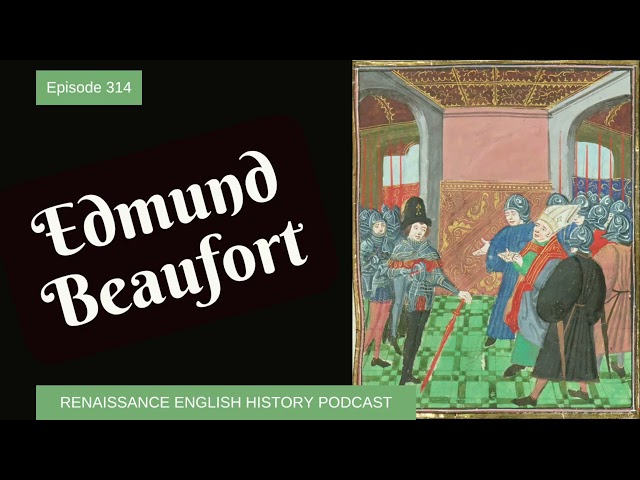
    Edmund Beaufort, Duke of Somerset, was one of the most controversial figures in fifteenth-century England—a royal favorite whose ambition, rumored affair with Queen Margaret of Anjou, and disastrous command in France helped ignite the Wars of the Roses. Born into the powerful Beaufort family, descendants of John of Gaunt and Katherine Swynford, Edmund Beaufort rose rapidly under King Henry VI, becoming a symbol of royal favor and political corruption in equal measure. His influence at court, his rivalry with Richard, Duke of York, and his violent death at the First Battle of St. Albans in 1455 marked not only the fall of a man but the beginning of decades of civil war that would reshape the English crown forever.

    Transcript of The Queen’s Favorite: Edmund Beaufort and the Rumor that Started a War 

    London, 1450. The air stinks of smoke, sweat, and fear. Angry crowds fill the narrow streets around Westminster, shouting for justice and blaming the queen’s favorite for everything that has gone wrong. England’s armies are collapsing in France. Normandy is lost. The coffers are empty, and the king says almost nothing. At the center of the rage stands one man, Edmund Beaufort, Duke of Somerset, handsome, charming, and proud. He is said to hold more than just the queen’s confidence. Margaret of Anjou, the fiery young wife of Henry VI, trusts him above every other lord in the kingdom, and that trust has become poison.

    The Londoners hiss his name like a curse. Pamphlets and rumors paint him as the queen’s lover, the man who sold out England’s glory for French peace treaties and royal favors. But was Edmund Beaufort truly the queen’s secret passion, or simply the scapegoat whose reputation lit the fuse of civil war?

    Today we are talking about another member of the Beaufort family. We have traced their history from the beginning under John of Gaunt and Katherine Swynford, through the medieval period and into the Tudor period. But today we are going to focus on one specific Beaufort, and that is Edmund Beaufort, Duke of Somerset.

    To understand why Edmund’s downfall carried such weight, you have to first know where he came from.The Beauforts, as we know, were born from scandal. Edmund’s grandparents were John of Gaunt, the mighty Duke of Lancaster, and his longtime mistress, Katherine Swynford. Their children were eventually legitimized after the couple married, but with one important clause: the Beaufort line was barred from ever claiming the throne. They were royal, yet not quite royal enough—a family that was always reminded that their bloodline began in sin.

    Still, the Beauforts rose. Edmund’s uncle, Cardinal Henry Beaufort, was England’s wealthiest cleric, a man who lent money to kings and could buy loyalty like others bought wine. His cousin, Margaret Beaufort, would one day give birth to the first Tudor king, though that future was far beyond the horizon at this point.

    Edmund grew up believing that he could redeem the family name. He was handsome, educated, and ambitious. He served in the Hundred Years’ War. He proved himself in battle, and he earned the confidence of the young King Henry VI. The king promoted him rapidly, showering him with titles, and Edmund seemed destined to be the Crown’s champion in France.

    But every Beaufort who rose too high made enemies. Their lineage was a reminder of royal indulgence, and their power felt like arrogance. Edmund, determined to prove his worth, would become the most visible target of all, a man who set out to defend the crown and instead came to symbolize its decay.

    By the late 1440s, England’s hold on France was slipping away like sand through open fingers. Henry V’s great victories under the Treaty of Troyes had once seemed to promise an English France forever, but those triumphs died with him. His son, Henry VI, inherited both crowns at nine months old and ruled with the temperament of a monk rather than a soldier.

    When Edmund Beaufort took command as Lieutenant of France in 1447, he was stepping into an impossible situation. The previous lieutenant, Richard, Duke of York, had been recalled despite his experience and popularity. Beaufort’s appointment looked less like a strategic choice and more like favoritism from the king and queen. From the start, York’s allies resented it, and when things went badly, they made sure everyone knew who was to blame.

    The truth was that France had become unwinnable. England’s army was underpaid, undermanned, and starving. Supplies never arrived. Reinforcements were promised but never sent. The French, revived under Charles VII and led by hardened captains like Jean de Dunois and La Hire, pushed back with ferocity.

    In 1449, the English lost Rouen, the capital of Normandy. The fall of the city and the surrender of Caen and Harfleur soon after marked the effective end of nearly a century of English conquest. Every defeat had Beaufort’s name attached to it in the chronicles, even though the failures were years in the making.

    When word reached London, the outcry was immediate. The merchants who had financed the wars demanded accountability. Parliament wanted answers. Instead of an inquiry, Henry VI responded by elevating Beaufort even higher, making him the Duke of Somerset. It was a disastrous move politically.

    At a time when England wanted someone to punish, the king rewarded the very man people were blaming. London erupted in fury. Pamphlets mocked Somerset as the traitor of Rouen. Ballads accused him of selling English garrisons for French bribes. And behind closed doors, the whispers grew louder that it wasn’t just royal affection keeping him safe, but the queen. To his enemies, Edmund Beaufort had become more than an incompetent commander. He was a symbol of corruption, the man who had lost England’s empire because he had bewitched its rulers.

    Who were these rulers? Margaret of Anjou arrived in England in April 1445. She was just fifteen. Henry VI was twenty-three. She had been sent from France to become Queen of England in a marriage that was supposed to help secure peace after decades of ruinous war. So, no pressure there.

    Margaret came from a complicated sort of royalty. Her father, René of Anjou, had a collection of titles that sounded impressive. He was King of Naples, King of Jerusalem, and King of Sicily. But most of these crowns existed more on parchment than on anyone’s actual head. So Margaret wasn’t bringing a giant dowry or a powerful army with her. What she brought was herself. She was young, educated, sharp, political, and French. All of those things would matter later.

    Henry VI, the king she married, was not his father. Henry V had been a warrior king who led armies personally. Henry VI preferred books, churchmen, and peace. He was gentle, devout, and passive in counsel. He did not command fear. By English standards in the 1440s, this was a problem.

    In those early years of her queenship, Margaret behaved in a pretty standard, conventional way for a 15th century queen consort. She supported pious causes, tried to promote harmony at court, and worked through expected channels. She wasn’t yet the loud political force that she would later become. That version of Margaret, the one we picture riding north in armor and raising armies, doesn’t really emerge until the 1450s.

    Now enter Edmund Beaufort. By around 1449 or 1450, England had suffered humiliating defeats in France, especially the loss of Normandy. Edmund Beaufort, who had been appointed Lieutenant of France, was blamed. Parliament and the London Commons wanted him punished. He was accused of incompetence, corruption, and outright betrayal. Henry VI did not punish him. In fact, Henry rewarded him. He was made Duke of Somerset, as we said, and Henry kept him in authority. That is the point where Margaret starts to matter in this story.

    After the fall of William de la Pole, Duke of Suffolk, another royal favorite brought down by fury over the war, Beaufort effectively became the chief minister. Margaret was seen as one of the few people at court who supported keeping him in power. She had helped defend him when there were loud calls to remove him.

    So by 1450, people were starting to link them. If you hated Somerset, you said the queen was protecting him. From there, the rumor machine warmed up. Enemies of the Lancastrian court began to say that Somerset’s influence did not just come from Henry’s favor, but from Margaret’s personal loyalty to him. The suggestion was obvious. They were not just political allies; they were intimate.

    By the early 1450s, Edmund Beaufort had become the face of royal policy. Margaret was publicly supporting him. Henry depended on him. Their enemies, especially Richard, Duke of York, and his circle, used that triangle to paint a very simple story for the public. The weak king was being controlled by the queen, and the queen was being controlled by Somerset.

    Whether or not this was actually true did not matter. It sounded true to angry taxpayers who had just watched England lose almost everything in France. That, more than anything, was what turned Margaret from a quiet, conventional queen consort into a suspected political operator in the eyes of the country. Her reputation shifted the moment people decided she and Somerset were a thing.

    So, it was the early 1450s, and England was running out of patience. The kingdom was losing French territories. Trade was collapsing, and taxes kept rising. Everywhere, people complained of corruption at court, and the man they blamed most was Edmund Beaufort.

    And then that tension boiled over in Jack Cade’s Rebellion of 1450. This uprising was not aimed squarely at Somerset. Its fury was more general, railing against bad government, taxes, and the officials who had led England into ruin. But his name was coming up often enough. The rebels demanded reform and the recall of Richard, Duke of York, whom they saw as an honest alternative to the king’s circle of favorites.

    When Cade’s men briefly occupied London, the message was clear. The government had lost the trust of its people. By 1452, York took the hint. He marched south with an army, declaring he wanted to rid the king of corrupt counselors, meaning, of course, Somerset. Henry VI forgave him publicly but kept Somerset in place, deepening the divide between Yorkists and Lancastrians. At court, the queen stood by Somerset, which only made the whispers louder.

    Then came 1453, the year everything broke. In the summer, Henry VI suffered a complete mental collapse. He fell into a trance-like silence and no longer recognized anyone, not even his pregnant wife. For months, England had no functioning monarch. When Prince Edward of Westminster was born that October, the boy’s arrival should have united the kingdom. Instead, it fed the rumor mill.

    Across the realm, people asked uneasy questions. Was the queen’s child actually the king’s? Had he been conceived before Henry’s breakdown or after? There were even whispers naming two possible fathers, Edmund Beaufort and James Butler, Earl of Ormond, both of whom had been close to Margaret.

    In truth, there is zero evidence to support any of that. Henry VI was mentally sound at the time of the conception, and when Margaret realized she was pregnant, she went on pilgrimage to give thanks, hardly the behavior of someone hiding a secret. Henry never doubted the boy’s paternity and publicly claimed Edward as his heir. But gossip, as we all know, does not need proof.

    By 1454, the idea of an adulterous queen and an illegitimate prince had hardened into political propaganda. York’s supporters painted Somerset as the power behind the throne, and perhaps behind the royal nursery too. Whether or not anyone truly believed it, the story stuck. It turned private suspicion into public hostility, dividing the nobility into two camps: those loyal to the queen and her allies, and those who saw themselves as rescuing England from them. The rumor did what years of bad policy had not managed. It made war feel inevitable.

    Now, back to Edmund Beaufort and the fall of the queen’s favorite. By 1455, England had reached its breaking point. The king was frail and unpredictable. The treasury was empty, and the court had split into open camps. On one side stood Queen Margaret and Edmund Beaufort. On the other, Richard, Duke of York, and the nobles who believed they were saving England from ruin.

    During Henry VI’s breakdown, York had been appointed Protector of the Realm. One of his first acts had been to send Somerset to the Tower, the surest sign that the political feud had become personal. But when the king unexpectedly recovered his senses in early 1455, everything reversed yet again. Henry dismissed York and restored Somerset to favor, just as if the last year of chaos had never happened.

    It was the final straw. York and his allies, the Nevilles, gathered their forces and marched south toward London. Margaret and Somerset raised the royal standards in response. Their armies met at the market town of St. Albans in May 1455, the first battle of what would become the Wars of the Roses.

    It was a short but brutal fight, fought through the narrow streets. Arrows flew from windows, and soldiers clashed in the marketplace. Somerset, commanding the royal troops, fought fiercely, but York’s men broke through. In the chaos, Somerset was cut down. Some accounts say that he was struck through the face by a poleaxe outside the Castle Inn.

    Now, apparently, folklore says that before the battle, Somerset had been warned by a soothsayer to shun castles, a cryptic prophecy that looked chilling in hindsight since, of course, he met his end outside the Castle Inn in St. Albans, where he was seeking refuge during the battle.

    When all the fighting ended, the king was found wounded and dazed. Some say he was sitting under a tree. Others say he was found in a tanner’s shop. Either way, he was found dazed while the corpses of his courtiers lay scattered around him. To the common people, it looked like justice. Somerset’s death was celebrated in London as the cleansing of a corrupt regime. His body was stripped and left in the street, a spectacle for those who had cursed his name for years.

    But for Margaret, it was the beginning of vengeance. She never forgave York for this. Within months, she emerged as the unrelenting heart of the Lancastrian cause, determined to avenge her friend, her ally, and the man that rumor had long made her lover.

    When her son, Prince Edward, grew older, he inherited her bitterness. He was raised to see York’s family as his enemies, and he died at the Battle of Tewkesbury in 1471, cut down as a teenager, the last legitimate male heir of the Lancasters. In that sense, the death of Edmund Beaufort at St. Albans did not just mark the start of a civil war. It marked the beginning of the end of a dynasty.

    So Edmund Beaufort’s death at St. Albans ended one man’s career but began thirty years of civil war. For York’s supporters, his fall proved that justice had been done, that England was finally free of the corrupt favorites who had squandered its empire. For Margaret of Anjou, it was murder. From that day forward, she ruled by fury. Every battle she fought, every alliance she made, she was, in part, remembering the man she had lost.

    Whether Edmund Beaufort truly shared the queen’s bed no longer mattered. By the time chroniclers began to write their histories, the story had hardened: the pious king, the ambitious queen, and the handsome noble who had ruined them both. It made a perfect morality tale, and it stuck. The rumor became stronger than the truth.

    Yet the irony is that the Beauforts endured. Edmund’s cousin, Margaret, lived long enough to see her son crowned Henry VII, founding the Tudor dynasty that ended the wars Edmund had helped ignite. The family born from John of Gaunt’s scandalous love affair, the Beaufort line would ultimately seize the crown itself. So when we look back at Edmund Beaufort, we see both the beginning and the end of something. A man who rose on royal favor, died for it, and left behind a rumor so powerful that it helped reshape English history.

    Related links:

    The Beauforts: The Illegitimate Family That Put the Tudors on the Throne
    Episode 250: Margaret of Anjou
    The Reign of King Henry VI by Ralph Griffiths
    The Wars of the Roses by A. J. Pollard

  • John of Gaunt and Katherine Swynford: The Scandalous Love Affair That Created the Tudors

    John of Gaunt and Katherine Swynford: The Scandalous Love Affair That Created the Tudors


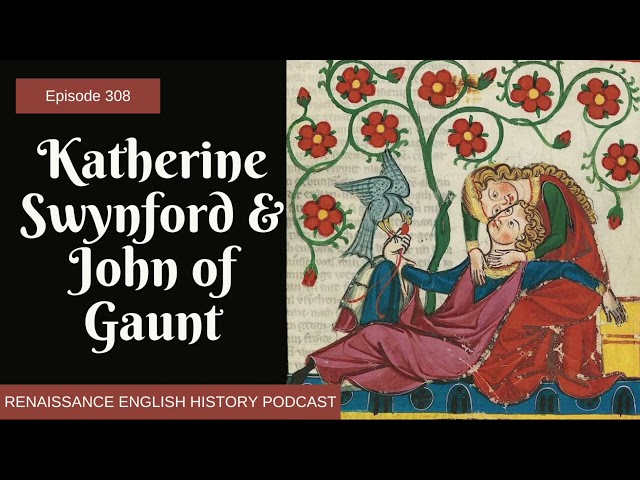
    John of Gaunt and Katherine Swynford share one of the most fascinating love stories in medieval England, a relationship that began in scandal but ultimately shaped the course of history. John of Gaunt, Duke of Lancaster and son of Edward III, was one of the most powerful men in Europe, while Katherine Swynford started her life at court as the daughter of a minor knight and later became governess to John’s children.

    Their affair, which produced the Beaufort line, was condemned in its own time, yet their descendants played a decisive role in the Wars of the Roses and gave rise to the Tudor dynasty. Without the union of John of Gaunt and Katherine Swynford, there would have been no Margaret Beaufort and no Henry VII, the first Tudor king.

    Transcript of The Scandalous Love Affair That Created the Tudors: John of Gaunt & Katherine Swynford:

    John of Gaunt was one of the most powerful men in Europe, a prince of England, Duke of Lancaster, son of Edward III. He commanded vast estates, immense wealth, and an influence that stretched well beyond his homeland. Yet despite all the trappings of status, his name is often remembered today not only for politics and wars but for love.

    In the 1370s, John began a relationship with Katherine Swynford, a woman far beneath him in rank, a lady-in-waiting and the widow of a modest knight. Their affair produced children outside of marriage, the Beauforts, whose position at court became the subject of gossip, anger, and eventually a papal ruling.

    For years, their love was a scandal, whispered about in Parliament and condemned by chroniclers. But in a dramatic turn, John married Katherine later in life, and their children were legitimized with one important restriction. Generations later, the Tudors would sit on the throne as direct descendants of this once illicit union. It is a story of passion and politics colliding with consequences that reached far beyond the private lives of John of Gaunt and Katherine Swynford.

    We are going way back in time, far beyond what we normally talk about, because we are going to talk about John of Gaunt and Katherine Swynford. Now, you might say, how does that relate to the Tudors? How it relates to the Tudors is that it is literally where the Tudors came from. So we are going to go back and talk about that relationship between Katherine Swynford and John of Gaunt. Let’s get started.

    To understand the affair, we need to first look at John of Gaunt himself. Born in 1340, he was the third surviving son of Edward III and Philippa of Hainault. The name Gaunt comes from his birthplace, Ghent, in modern Belgium. Though not the eldest, John’s fortunes rose quickly thanks to his advantageous marriage to Blanche of Lancaster in 1359. Blanche was the sole heiress of the vast Lancaster estates, and through her, John inherited enormous lands across England, making him one of the wealthiest nobles in Europe.

    As Duke of Lancaster, John’s income rivaled that of the crown itself. He maintained great households, patronized poets like Geoffrey Chaucer, and played an active role in the politics of his father’s reign. When Edward III’s health declined, and the Black Prince, John’s elder brother and heir to the throne, died in 1376, John of Gaunt stepped into a central role in government.

    During the minority of his young nephew, Richard II, John acted as a stabilizing figure, though not without controversy. He was accused of protecting corrupt officials, favoring foreign allies, and imposing harsh taxes. His immense wealth and perceived arrogance made him an easy target for public anger, and he became one of the most divisive figures of late 14th-century England.

    Yet despite his power and political importance, John’s personal life, and especially his connection to Katherine Swynford, would come to overshadow his reputation. The man who had been married into the highest echelons of nobility would risk scandal for a relationship that seemed wildly inappropriate for his station.

    So who was Katherine Swynford? Her story begins far from the wealth and grandeur of the Lancastrian estates. She was born around 1350, the daughter of Paon de Roet, a knight from Hainault who had come to England in the retinue of Queen Philippa, Edward III’s consort. Her family was noble but not wealthy, and Katherine’s prospects would depend on service in the households of greater lords.

    She grew up in the orbit of the royal court, where her elder sister, Philippa de Roet, married the poet Geoffrey Chaucer. That connection alone brought Katherine into circles of influence, but her own path was shaped by her marriage to Hugh Swynford, a minor knight from Lincolnshire. The couple settled at Kettlethorpe, a modest estate that was frequently in financial difficulty. He was often away on campaign, leaving Katherine to manage the household.

    Her fortunes changed when she entered the household of Blanche of Lancaster, John of Gaunt’s first wife. Katherine became governess to the duke and duchess’s children, including the future King Henry IV. This role gave her an unusual position of trust both within the Lancastrian family and at court. Chroniclers described her as beautiful, intelligent, and capable, qualities that undoubtedly caught John’s attention.

    When Hugh Swynford died in 1371, Katherine was left a widow in her early twenties, with children to support and little wealth to fall back on. It was in this vulnerable position that her relationship with John of Gaunt began to shift. Once simply the governess to his children, she became the focus of the duke’s passion and eventually his partner in one of the most notorious affairs of the late Middle Ages.

    For Katherine, the leap from the respectability of a knight’s widow to the intimate companion of one of Europe’s most powerful men was extraordinary. It was also dangerous because it embroiled her in a scandal that would follow her for the rest of her life.

    The Affair and Its Consequences

    The precise moment when John of Gaunt and Katherine Swynford crossed the line from trusted governess and duke to lovers is impossible to pin down, but most historians place the beginning of their affair in the early 1370s, not long after the death of Hugh Swynford in 1371. Katherine was a widow. She had limited means, and John was a man whose grief for his first wife, Blanche of Lancaster, left him vulnerable.

    Blanche had died in 1368, and by all accounts their marriage had been affectionate. The duke honored her memory for years afterwards, commissioning poems like Chaucer’s Book of the Duchess in her name. Yet in the void she left behind, his bond with Katherine deepened. By the mid 1370s, Katherine was not just the governess of John’s children, she was his companion.

    The relationship was not kept entirely in the shadows. Chroniclers such as Thomas Walsingham, who was quick to condemn court scandals, hinted at the affair with disapproval, calling Katherine’s influence over the duke a disgrace. The couple had several children together, later known collectively as the Beauforts: John, Henry, Thomas, and Joan.

    All born out of wedlock, these children were acknowledged by their father but carried the stain of illegitimacy that would complicate their futures. John of Gaunt’s political situation only added fuel to the controversy. In 1371, he had remarried, this time to Constance of Castile, a union intended to bolster his claim to the throne of Castile through her inheritance.

    The marriage was strategic but it was not affectionate, and throughout his decades with Constance, John continued his relationship with Katherine. The arrangement, a dynastic marriage on one hand and a passionate liaison on the other, was exactly the kind of hypocrisy that critics seized upon.

    The political climate of the late 1370s made matters worse. John’s prominence in government during Richard II’s minority made him a lightning rod for public anger. Accusations of corruption, mismanagement, and foreign favoritism swirled around him, and his private life, with Katherine’s role in it, became yet another charge against him.

    In 1376, during the Good Parliament, reform-minded members went so far as to denounce his household, singling out Katherine as a corrupting influence. For Katherine, the risks were immense. A noblewoman might hope to survive disgrace through family connections or wealth, but she had neither. Her position depended entirely on John’s protection.

    What began as a widow’s attempt to secure her future had grown into one of the most talked about affairs of the century, a relationship that seemed at times to imperil John’s political standing. Katherine found herself drawn into the fire, with chroniclers painting her as a dangerous influence, a woman who had bewitched the duke and led him into sin.

    One hostile writer even described her as a witch whose charms corrupted Lancaster’s judgment, a familiar slur leveled at women who dared to overstep their expected role. Yet despite the hostility, John did not abandon her. Their relationship continued openly, and their children, the Beauforts, were acknowledged and provided for.

    Public resentment only deepened, and in 1381 it exploded in the Peasants’ Revolt. Sparked by anger over poll taxes and years of war were also a generation on from the Black Death. So we are dealing with a shrinking population, fewer workers, and demands for more autonomy and higher wages. Rebels poured into London, attacking symbols of wealth and authority.

    John was in Scotland at the time, but the fury of the crowds fell on him all the same. His magnificent Savoy Palace, the jewel of the Lancaster estates, was stormed, looted, and burned to the ground. Chroniclers record that the rioters hurled his gold and silver into the Thames so that no one could profit from it. In that moment, John of Gaunt became the very embodiment of oppression in the eyes of the people.

    His private life was bound up in that resentment, and Katherine, already maligned as his mistress, bore the brunt of renewed hostility. To shield himself from further political damage, John formally renounced her after the revolt. Katherine was dismissed from his household and retreated to Kettlethorpe, the modest Lincolnshire estate she had inherited through her late husband.

    Separation and Reunion

    For Katherine, the separation was a bitter reversal. She had risen to the heights of intimacy with one of the most powerful men in Europe, only to be cast aside when his position became untenable. Yet even at a distance, John continued to support her and the children financially.

    The renunciation after the Peasants’ Revolt did not end their story, far from it. Their bond remained, waiting for the chance to return. For more than a decade, their love survived only in private, overshadowed by the fury of a kingdom that saw John as the enemy and Katherine as his scandalous accomplice.

    Everything changed in the 1390s. Constance of Castile died in 1394, and then after nearly two decades of scandal, separation, and whispered gossip, John of Gaunt and Katherine Swynford finally had their moment. In 1394, John’s second wife, Constance of Castile, died, leaving him free from the obligations of that long political marriage.

    Two years later, in January 1396, John stunned England by marrying Katherine. For many, the union was shocking. Katherine had been the subject of slander, blamed in Parliament for corrupting Lancaster’s household, and dismissed as an unsuitable companion. Now she was the Duchess of Lancaster, elevated to one of the most powerful positions in the realm.

    Chroniclers reacted with scorn, calling the marriage disgraceful. Others, though, began to soften their view, acknowledging the extraordinary endurance of their bond. The most consequential part of the marriage, though, was the legitimization of their children. With papal approval from Boniface IX, the Beauforts—John, Henry, Thomas, and Joan—were declared legitimate, but there was a crucial caveat. While they could inherit lands and titles, they were officially barred from ever claiming the throne of England.

    That exclusion was intended to prevent dynastic instability, but as history would prove, such restrictions were not easily enforced once ambition came into play. The marriage itself was brief. John died in 1399, just three years later. But by then the Beauforts had secured their place among the English nobility. Katherine lived for several years quietly after his death, respected as the Duchess of Lancaster, and she died in 1403.

    The Legacy of John and Katherine

    It is one of the great ironies of medieval history: an affair once condemned as shameful became the foundation for a dynasty. For through their son John Beaufort came Margaret Beaufort, the determined mother of Henry Tudor and the future Henry VII. Without John and Katherine’s marriage, the Tudors would never have claimed the throne.

    The true significance of John of Gaunt and Katherine Swynford’s relationship lies not only in their marriage, but in the generations that followed. Their children, once dismissed as illegitimate, became central figures in the shifting dynastic politics of the 15th century. The Beaufort line began with John, Henry, Thomas, and Joan, each of whom forged powerful alliances.

    Henry Beaufort became a cardinal and one of the most influential churchmen of the age. Thomas Beaufort rose to Duke of Exeter and was a key commander during the Hundred Years’ War. Their sister Joan married into the Neville family, tying the Beauforts to the rising northern magnates who would later play decisive roles in the Wars of the Roses.

    But it was through John the eldest that their legacy most profoundly shaped England. His granddaughter Margaret Beaufort inherited the Lancaster bloodline at a time when rival claims to the throne were tearing the country apart. Against all odds, she was able to position her son Henry Tudor as the Lancastrian claimant.

    When Henry defeated Richard III at Bosworth in 1485, he became Henry VII, the first Tudor monarch. In that moment, the love affair of John of Gaunt and Katherine Swynford became part of the origin story of a dynasty that would rule England for more than a century. Of course, the irony was striking. The papal bull that had legitimized the Beauforts had explicitly barred them from the succession.

    But history rarely obeys tidy legal rulings. Margaret Beaufort’s ambition, combined with her son’s victory, brushed aside those restrictions. By tracing his claim through her, Henry VII tied the Tudor crown to the line of a relationship that had once been condemned as scandalous.

    The impact of the Beauforts did not end with the Tudors’ arrival.Their bloodline continued through the centuries, weaving into the fabric of the English aristocracy. Even today, the Dukes of Beaufort trace their descent from John and Katherine, a reminder of just how far-reaching the consequences of their union became.

    What began as a love affair between a duke and his children’s governess, criticized, condemned, and seemingly destined to be forgotten, instead reshaped English history. Without Katherine Swynford, there is no Margaret Beaufort, and without Margaret there is no Tudor dynasty. So the story of John and Katherine is one of the great paradoxes of medieval England. That just goes to show you, my friend, that private passions can actually alter the fate of kingdoms.

    We will leave it there in our discussion of John of Gaunt and Katherine Swynford. There are, of course, lots of books about Katherine Swynford. I enjoyed Alison Weir’s book. It is a bit older, but I did like that one as it really dug into her life. If you want to explore Katherine’s life more, check out the link below.

    Related links:

    Mistress of the Monarchy: The Life of Katherine Swynford, Duchess of Lancaster by Alison Weir 
    The Beauforts: The Illegitimate Family That Put the Tudors on the Throne
    Episode 42: Tudor Times on Margaret Beaufort

  • The Beauforts: The Illegitimate Family That Put the Tudors on the Throne

    The Beauforts: The Illegitimate Family That Put the Tudors on the Throne

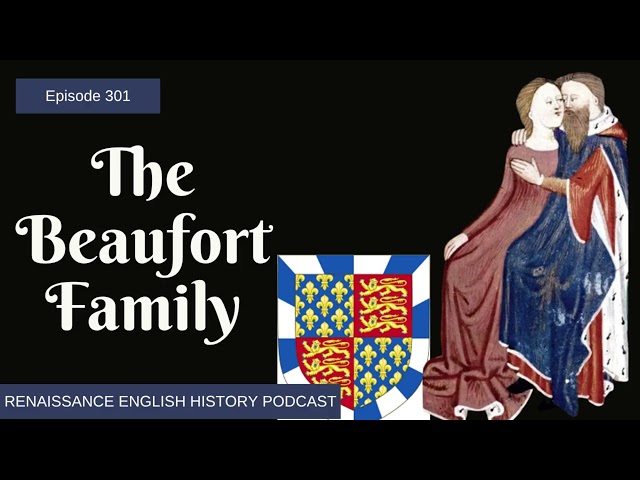
    The Beauforts were one of the most influential families in late medieval and Tudor England, rising from scandal to shape the destiny of a nation. Descended from John of Gaunt and his mistress Katherine Swynford, the Beauforts began as illegitimate children but were later legitimized by both Pope and Parliament, though barred from the royal succession.

    Despite this, they became cardinals, generals, queen consorts, and kingmakers, marrying into powerful houses like the Nevilles and playing central roles in the Wars of the Roses. Through the determination of Margaret Beaufort and her son Henry Tudor, the family placed the Tudors on the throne of England, securing their legacy. Today, the Beaufort name still survives among Britain’s nobility, a testament to a dynasty that was never supposed to rule but never faded into obscurity.

    Transcript of The Beauforts: The Illegitimate Family That Put the Tudors on the Throne

    If you are looking for a Tudor origin story with scandal, political maneuvering, and some truly complicated family trees, you can’t do much better than the Beauforts. Born from a royal affair and legitimized by both Pope and King, but with an asterisk, the Beauforts were royal, but quiet. Their bloodline connected them directly to Edward III, yet they were not always treated like royalty.

    They were not princes, but they were never just ordinary nobles either. They were something in between, close enough to power to shape it, but far enough removed to constantly have to prove their place. This family would produce cardinals and generals, rebels and queen consorts. They married into the Nevilles, battled the House of York, and eventually, through one very determined mother, put a Tudor on the throne.

    In this episode, we are tracing the Beauforts from their beginnings in scandal with John of Gaunt and Katherine Swynford, through the chaos of the Wars of the Roses, and right up to their curious survival as semi-royal dukes who still exist today. They have been erased, rewritten, and maligned, but they were never irrelevant. So let’s get into the story of the Beauforts, the family that refused to stay in the margins of history, no matter how many times someone tried to scribble them out.

    The Beauforts began as bastards. There is really no way around it. Their story starts not with a marriage, but with an affair, one that scandalized the English court for over a decade. John of Gaunt, Duke of Lancaster, was the third surviving son of King Edward III and arguably the most powerful man in England outside the Crown.

    By the 1370s, he was widowed from his first wife, Blanche of Lancaster, and married to his second, Constance of Castile, a match designed more for diplomacy than affection. But it was his mistress, Katherine Swynford, who held his heart. Katherine was the daughter of a knight from the Low Countries and the widow of one of Gaunt’s own retainers. She had served as a governess in his household, a respected position, but not exactly the standard résumé for a duchess.

    Their affair was public enough to provoke outrage among the nobility. Chroniclers reported that high-born women refused to share rooms with her at court. One described her as the great scandal of her time. Their relationship continued for a decade until the Peasants’ Revolt in 1381 forced Gaunt to distance himself. He issued Katherine a quitclaim, formally ending their connection. But the story did not end there.

    When Constance died in 1394, Gaunt did not remarry for politics. He returned to Katherine, and in 1396, at around 56 years old, he married her in Lincoln Cathedral. By then, they already had four surviving children: John, Henry, Thomas, and Joan. These children were born out of wedlock, so they were given the surname Beaufort, likely taken from one of Gaunt’s former titles associated with a now-lost lordship in Anjou.

    Legitimization and Political Maneuvering

    Despite later myths, they were not born in France and almost certainly never saw the actual castle. The name was chosen not for sentiment but for convenience. It allowed them to be recognized as his children without threatening the inheritance of his legitimate heirs. It was similar to “Fitzroy” for a king’s illegitimate child. The Beaufort name marked them as Gaunt’s relations, but not his successors, and that would come to matter a great deal.

    In 1396, not long after their marriage, John of Gaunt petitioned Pope Boniface IX to legitimize his children with Katherine Swynford. The Pope obliged, issuing a bull that declared them legitimate. A year later, Gaunt secured parliamentary approval under Richard II. The act officially recognized the four Beauforts as lawful children, and they were allowed to inherit lands, titles, and marry into noble families.

    Problem solved, right? Not exactly. When Gaunt’s legitimate son Henry Bolingbroke seized the throne as Henry IV in 1399, things got more complicated. In 1407, Henry issued a royal proclamation reaffirming the Beauforts’ legitimacy, but with a handwritten note added to the patent: excepta dignitate regali. They were legitimate, yes, but they were barred from the royal succession.

    It is not exactly clear who added that line. Some believe it was Henry IV himself; others argue it was a scribe. What is certain is that it was not part of the original act passed by Parliament, and it was not part of the papal bull either. As historian Nathen Amin and others have pointed out, this marginal note may have had no legal authority at all. It may not have been officially binding, but once it was there, it stuck.

    Decades later, that little phrase would become a favorite talking point for the enemies of Margaret Beaufort and her son, Henry Tudor. The Yorkists pointed to it as proof that the Tudors had no rightful claim to the throne. After all, how could a dynasty be built on a line that had been explicitly excluded?

    But the truth is murkier. The Beauforts were not just some side branch. They were deeply tied into the royal family, married into the most powerful noble houses, and held some of the highest positions in church and state, legitimate enough to be trusted, but not quite legitimate enough to rule. That blurry middle ground would follow the family for generations: never fully royal, never fully removed from the crown.

    The Beauforts’ Rise to Power

    Once legitimized, or mostly legitimized, at least, the Beaufort children wasted no time embedding themselves deep into England’s political and dynastic web. This was not a quiet generation. They were ambitious, well placed, and determined to prove that they belonged.

    The eldest son, John Beaufort, was granted the title Earl of Somerset in 1397. He had served in military campaigns in France and was created a marquess by Richard II, though that title was stripped by Henry IV, who did not love how close John had been to the deposed king. Still, the family’s position remained strong.

    John married Margaret Holland, a granddaughter of Joan of Kent. This was the same Joan who had married the Black Prince and was the mother of Richard II. John’s children, therefore, were connected to both the Lancastrian and the older royal line of Edward the Black Prince. Convenient.

    Then there was Henry Beaufort, who chose a different path: the Church. He became Bishop of Lincoln, then of Winchester, and eventually rose to Cardinal. Do not picture a quiet cleric in a cloister. Henry was one of the most politically active men of his time. He was a key figure during the minority of Henry VI, a patron of the arts, and at various points clashed with everyone from Thomas Arundel to Humphrey, Duke of Gloucester. Henry was a cleric with ambition and influence, and by the time of his death in 1447, he had outlived nearly all of his contemporaries and left a fortune behind.

    Thomas Beaufort, the third son, took a more traditional noble route. He served under Henry V, was made Duke of Exeter, though the title died with him since he left no legitimate heirs. Like his brothers, he was deeply loyal to the Lancastrian cause and served with distinction in the Hundred Years’ War.

    Finally, there was Joan Beaufort, the youngest, who might just have been the most influential of them all. She married Ralph Neville, Earl of Westmorland, and produced a staggering 14 children, including Cecily Neville, the mother of Edward IV and Richard III. So yes, the Beauforts were technically Lancastrian, but their blood also flowed in the veins of the House of York. In one generation, the Beauforts had gone from scandalous royal bastards to cardinals, dukes, and matriarchs of royal houses.

    They were not content to live in the footnotes. They were writing the next chapter of England’s dynastic story. By the middle of the 15th century, the Beauforts were no longer outsiders. They were entrenched in the highest levels of government, married into the nobility, and close to the crown. But the closer you are to power, as we have seen, the more dangerous things get.

    And during the Wars of the Roses, the Beauforts played in blood. The man at the center was Edmund Beaufort, 2nd Duke of Somerset, a grandson of John Beaufort. He inherited the title after his uncle died childless. Edmund was everything you would expect from a Lancastrian noble. He was proud, loyal, and deeply tied to Queen Margaret of Anjou. He became her closest advisor and protector to her young son, Edward of Westminster.

    To the Yorkists, he was the enemy, especially to Richard, Duke of York, who saw Edmund as an upstart Beaufort with too much influence and not enough experience. The rivalry exploded in 1455 at the First Battle of St. Albans, the very beginning of the Wars of the Roses. York’s forces charged through the town’s narrow streets, and in the chaos Edmund was killed, one of the first high-ranking casualties of the civil war. His body was later found slumped against a wall, surrounded by blood.

    But the feud did not die with him. His sons Henry, Edmund, and John took up the Lancastrian cause, and the violence escalated. In 1460 at the Battle of Wakefield, Queen Margaret’s forces struck back. Richard of York was killed, his head famously displayed on Micklegate Bar in York with a paper crown mockingly placed on top.

    The Beauforts had their revenge, for a little while. Because then, in 1471, the pendulum swung back once more. At the Battle of Tewkesbury, Henry Beaufort, now the 4th Duke of Somerset, led the Lancastrian forces in a desperate charge that failed. He was captured and executed the next day, not in battle, but dragged out of sanctuary and beheaded in front of a church. His younger brothers were also killed in the fighting.

    Margaret Beaufort: The Strategist

    Just like that, the male Beaufort line, the legitimate one, at least, was gone. All that remained of the once powerful Beaufort dynasty was Margaret Beaufort, daughter of Edmund Beaufort’s first cousin. She was a young widow with a son in exile and no real power of her own, at least not yet. But through her, the Beauforts would rise again and claim the throne that they had been denied. After the deaths of her uncles and cousins in the Wars of the Roses, the Beaufort name could have vanished into obscurity.

    Instead, it passed to a young girl, Margaret Beaufort, born in 1443 to John Beaufort, the first Duke of Somerset. Her father died shortly after her birth, leaving her a wealthy and politically valuable heiress. At just 12 years old, she was married off to Edmund Tudor, the much older half-brother of King Henry VI.

    Less than a year later, she became a widow, because Edmund had already died. She gave birth to Henry Tudor. The birth was traumatic, and she would never have another child. But Margaret was not just a vessel for dynastic survival. She was a strategist. And over the next three decades, she would align herself with both Yorkist and Lancastrian houses, carefully maneuvering through incredibly dangerous political terrain.

    She married twice more, with her final husband, Lord Thomas Stanley, eventually becoming the decisive figure at the Battle of Bosworth, where his troops turned the tide against Richard III. We talked about the Stanley family in a separate episode a couple of weeks ago. So while her son was in exile, Margaret was his voice in England. She built alliances, financed conspiracies, and stayed alive, no small feat during the reigns of Edward IV and Richard III.

    At that point, she was likely just negotiating for him to stay alive. Edward IV was healthy, he had children, and there did not seem to be any sign that Henry Tudor could potentially be king. But when Henry returned in 1485 and claimed the throne as Henry VII, it was not just a Tudor victory, it was Margaret’s triumph.

    She styled herself not as Queen Dowager or Regent, but as “My Lady, the King’s Mother,” a title she had Parliament officially recognize at court. She took precedence over everyone but the queen and often acted as a co-ruler in all but name. This made sense: Henry Tudor had been away living in exile, while Margaret was the one who was familiar with everything and knew the politics. Of course Henry relied on her.

    She also managed her own estates, maintained a separate household, and even signed documents in her own name, which was a significant achievement for a woman of her time. But Margaret also left a lasting legacy beyond politics. She was deeply devout and funneled her wealth into education and religion. She founded Christ’s College and St. John’s College at Cambridge, helping to shape the intellectual life of Tudor England. She also re-endowed religious houses, sponsored scholars, and supported early printers and translators of devotional texts.

    Her motto, Souvent me souvient (“I often remember”), reflected a life of careful calculation, long memory, and determination. And it was through her that the Beauforts became monarchy, legitimized not just by birth, but by power, faith, and persistence. After her triumph and the rise of her son Henry VIII, you might expect the Beaufort name to quietly retire from the historical stage.

    The Beaufort Legacy: From Illegitimacy to Nobility

    The male line had been extinguished at the Battle of Tewkesbury. The family’s political legacy had been passed to the Tudors, and with Margaret’s death in 1509, the same year as her son, it seemed like the Beaufort story had reached its final chapter.

    But not quite, because there was one more branch of the family, an illegitimate line born during the chaos of the Wars of the Roses. And this branch wasn’t finished. This line descended from Charles Somerset, the illegitimate son of Henry Beaufort, third Duke of Somerset, one of the Lancastrian leaders executed after the Battle of Hexham. Charles was born around 1460 and likely spent the early part of his life in obscurity or exile, away from the immediate danger of Yorkist revenge.

    But he also had powerful connections. He was raised in the household of Lady Margaret Beaufort and accompanied her son Henry into exile. After the victory at Bosworth, Charles was rewarded handsomely for his loyalty. He was knighted, granted lands, and quickly rose through the Tudor court. In 1506, he was created Baron Herbert, taking the title from his wife’s family.

    A decade later, in 1514, he became the Earl of Worcester, a remarkable climb for a man whose father had died a traitor and whose own birth had once disqualified him from polite society. The most surprising moment in this line came long after the Tudors had faded from power.

    In 1682, during the reign of Charles II, Charles Somerset’s descendant Henry Somerset, 3rd Marquess of Worcester, was elevated to the title of Duke of Beaufort. It was a revival of the old name, now reattached to a new lineage. This branch of the family had no legal connection to the original Beaufort dukedom, and its descent from a bastard son would once have made the whole proposition laughable.

    But by the 17th century, legitimacy was more flexible, especially if you had money, land, and royal favor. The old scandals had faded. The Beaufort name still carried aristocratic weight. And Charles II, not exactly a stickler for legitimate descent himself, had no objection to rewarding loyalty with a splash of dynastic flair.

    The Dukes of Beaufort have been part of the British nobility ever since. Their seat, Badminton House in Gloucestershire, remains one of England’s grandest estates. The family has held ceremonial posts in the royal household, married into major houses, and largely kept out of the political bloodbaths that defined their forebears.

    And they are still around. The 12th Duke of Beaufort, Harry Somerset, born in 1952, is a landowner, horse-racing enthusiast, and a distant cousin to the Windsors. He is no kingmaker, but he is the living legacy of a family that clawed its way back from illegitimacy, exile, and royal prohibition, and somehow ended up back in the upper crust of Britain’s ruling class.

    The Beauforts were never supposed to last, but dynasties built on scandal sometimes have the longest shelf life. And that is the story of the Beauforts, born into scandal, legitimized by royal decree, and then written out of the succession only to come back and put a king on the throne anyway. They were never supposed to rule. They were supposed to quietly fade into the background, but instead they shaped the fate of England, and they are still around today, tucked into the aristocracy like a historical Easter egg with a scandalous backstory.

    Related links:

    Episode 42: Lady Margaret Beaufort
    Nathen Amin on the Beaufort Family

  • The Doomed Dukes of Buckingham: Two Men, One Title, and Two Spectacular Downfalls

    The Doomed Dukes of Buckingham: Two Men, One Title, and Two Spectacular Downfalls


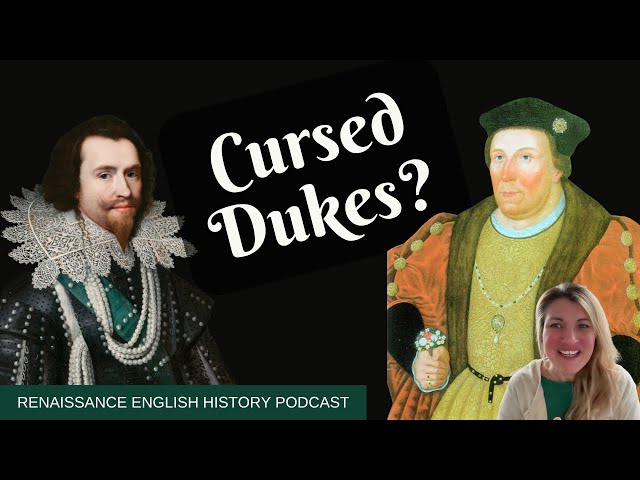
    The Doomed Dukes of Buckingham have become a chilling symbol of how power and proximity to the crown could lead to a bloody downfall in Tudor and Stuart England. This notorious title was held by two men a century apart—Edward Stafford, the 3rd Duke under Henry VIII, and George Villiers, the 1st Duke under James I—both of whom rose to dazzling heights before meeting violent ends.

    From treason trials and royal suspicion to assassination and public rejoicing, the story of the Dukes of Buckingham is more than coincidence. It’s a haunting legacy that raises the question: was the title cursed, or was ambition simply a dangerous game in royal circles?

    Transcript of The Doomed Dukes of Buckingham: Two Men, One Title, and Two Spectacular Downfalls

    So what is it about the Dukes of Buckingham anyway? You would think that being one of the top nobles in the country would come with all kinds of perks, right? There is the wealth, the power, the proximity to the crown. But for at least two men who held the title, it came with something else: a fast track to a very bloody end. One was executed for allegedly dreaming about having the crown himself, while the other, just over a hundred years later, was so unpopular that the public celebrated his assassination.

    Today we are going to dive into the strange and cursed history of the Dukedom of Buckingham, and how two men a century apart both rose to dazzling heights and then lost everything.

    We will also answer that persistent question: how can one be 3rd duke, and then a hundred years later, there is the first duke? Have you ever wondered about that? Like how the numbers work? We are going to answer that persistent question today as well.

    Edward Stafford, 3rd Duke of Buckingham

    Let us talk about a man who checked all the boxes for a tragic Tudor downfall. Royal birth? Check. Dazzling wealth? Check. And just enough pride to make the king nervous. Edward Stafford, 3rd Duke of Buckingham, was born in 1478 at Brecon Castle. His father, the second duke, had backed a failed rebellion against Richard III.

    We hear about Buckingham’s Rebellion. He was executed without a trial and had all of his titles stripped. That left young Edward with a poisoned inheritance: the name of a traitor, a dangerous amount of royal blood, and a family tangled in the thorniest branches of the Plantagenet family tree.

    His mother was Katherine Woodville, sister of Queen Elizabeth Woodville, making Edward a nephew to a king and first cousin once removed to  —not exactly obscure. After his father’s execution, Edward was shuffled around Herefordshire. He was kept hidden during Richard III’s reign, and he knew what it was to live in fear.

    That changed when Henry VII took the throne in 1485. At just seven years old, Edward was knighted at Henry’s coronation. His father’s attainder was reversed by Parliament, and the boy was able to inherit his dukedom back, at least in name.

    In practice, everything was still tightly controlled. His wardship, his lands, his future were handed over to Margaret Beaufort. Yes, the Margaret Beaufort, the King’s mother. It is said that he was educated in her household, which probably meant long hours of pious devotion and a close-up view of how power actually operated.

    As Edward grew up, he played the part expected of a nobleman. He was wealthy, strikingly handsome, and unmissable. At every major ceremony, he wore a gown worth 1,500 pounds, roughly half a million dollars today. At the wedding of Arthur, Prince of Wales, and Katherine of Aragon, and at the tournament afterwards, he served as Chief Challenger. Buckingham knew how to make an entrance.

    Under Henry VIII, his star continued to rise. He served as the Lord High Constable and the Lord High Steward at the 1509 coronation of Henry VIII. These were both grand ceremonial roles that he believed were his by hereditary right. He sat on the King’s Privy Council. He even got a license to turn his manor house at Thornbury into a moated castle-like estate. Just the sort of ostentatious move you make when you want the world to know exactly how important you really are.

    But that wealth and bloodline came with a price. Buckingham was one of the last English nobles with significant Plantagenet descent. He could trace his lineage back to John of Gaunt. He had more royal ancestors than was strictly safe under a Tudor king.

    Add to that his family alliances. His son married Margaret Pole’s daughter, tying him to the line of George, Duke of Clarence. And you start to see why Henry VIII might have had a reason to watch him a little more closely.

    Buckingham did not exactly keep a low profile. Early on, he ran into scandal when he found Sir William Compton in his sister Anne’s bedchamber. That ended in a dramatic scene of Compton taking the sacrament to prove his innocence, and Anne being shipped off to a convent. The rumor mill claimed that she had had an affair with Compton, with the King, or possibly both. And Buckingham was not amused.

    He remained a loyal subject in public. He served in France in 1513. He attended the Field of Cloth of Gold in 1520. He continued to perform his ceremonial duties, but he made no secret of his dislike for Cardinal Wolsey, who was rising fast as a royal favorite at the time.

    And worse, far worse, he started to talk freely and openly about the succession. Saying that Henry VIII, still without a male heir at this point, was cursed by his father’s illegitimacy. Of course, Henry VII was the son of Edmund Tudor. Edmund Tudor himself was the son of Owen Tudor, the squire to Catherine of Valois, the dowager queen. People say they wed in secret. Some people also said they never wed.

    So it is possible that people were saying Henry VIII came from an illegitimate line. Plus, there was the matter of the Beauforts being an illegitimate line as well. So Buckingham was saying that Henry VIII came from an illegitimate line. That is really not a good thing to say around the king, let alone say in public. You start talking about the king’s death, the weakness of his bloodline, and you are treading on very, very thin ice.

    In 1521, Buckingham was summoned to court and he was arrested. The charges: listening to prophecies about the king’s death, harboring ambitions for the throne, and plotting treason. Whether or not he actually conspired is still debated. Thomas More noted that the key evidence came from terrified servants, possibly tortured to extract confessions.

    Regardless, the sentence was death. On May 17, 1521, Edward Stafford was beheaded on Tower Hill. He was 43. His lands were seized, and his children were disinherited. The message was clear. It did not matter how royal your blood was or how long your family had held a title. One whisper of too much ambition, even the suggestion that you might be better suited to the throne, and your head could roll.

    George Villiers, 1st Duke of Buckingham

    Now, let’s fast forward a hundred years. The title of Duke of Buckingham is reborn, but with a new man, a new family, and a very different kind of downfall. George Villiers was not born into a great noble house. He was the son of a knight, raised in the Leicestershire countryside. He was handsome. He was charming. He was impeccably groomed. He was the kind of man who turned heads at court, especially the king’s head.

    In 1614, Villiers caught the eye of James I at a royal hunt. James was now in his fifties. He had a well-established habit of surrounding himself with young, attractive favorites. Villiers was not only beautiful, he was also ambitious and very, very good at court politics.

    He was installed as the Royal Cupbearer, a seemingly minor position but one that put him physically close to the king. From there, his rise was meteoric. He was knighted in 1615, made a Gentleman of the Bedchamber, and then quickly elevated to Baron, Viscount, Earl, Marquess.

    Finally, in 1623, the Duke of Buckingham. It was the first non-royal dukedom in decades because, after the previous Dukes of Buckingham and Norfolk had ended or were executed, monarchs had gotten skittish about handing out titles with that much power.

    But Villiers got it all. And he got more than just titles. His relationship with James I was extraordinarily close emotionally, and many historians believe physically. James called him Steenie after Saint Stephen, “because thou hast the face of an angel,” and once told his Privy Council, “Christ had his John, and I have my George.” Letters between them read like declarations of love. Villiers called the king “my dear dad and husband.” Not weird at all.

    But Buckingham was not just a royal favorite lounging about in silks and pearls, though he did that too. He inserted himself into diplomacy, he led military campaigns, and he wielded real political power. And the results were not impressive.

    As Lord High Admiral and de facto foreign minister, Villiers oversaw a string of disasters. The attempted Spanish Match in 1623 collapsed after he and the future Charles I stormed off from Madrid. A year later, Parliament tried to impeach him for corruption, and so Charles, now king, dissolved Parliament to protect him.

    And then there was the Cádiz Expedition in 1625, a military catastrophe so inept the troops got drunk in a wine warehouse and never even attacked the city. Villiers did not even go himself; he just picked the wrong guy to lead it.

    After that came a failed alliance with France, a bungled naval campaign to aid the Protestant Huguenots at La Rochelle, and another siege on the Île de Ré in 1627 that cost 5,000 English lives and achieved absolutely nothing. Zero. Diddly squat.

    Parliament tried again to remove him, and Charles dissolved them again. By now, Buckingham was hated, truly despised by nearly everyone outside the king’s inner circle. Nobles, commoners, even clergymen saw him as arrogant, corrupt, and dangerously incompetent. In 1628, his own physician was murdered by a mob. Pamphlets predicting Buckingham’s downfall were passed around like scandalous souvenirs.

    Then came John Felton. Felton was a disgruntled former officer who had served under Buckingham, been wounded, and denied a promotion. On August 23, 1628, Felton waited for the Duke in Portsmouth, where Buckingham was planning another campaign. As Villiers walked through the Greyhound Inn, Felton stabbed him in the chest with a dagger.

    According to reports, Buckingham pulled the blade out himself and staggered a few steps before collapsing. His last word, allegedly, was “villaine!” Felton did not run. He made no secret of what he had done. And when the news of Buckingham’s death reached London, the reaction was not grief, it was celebration.

    Ballads were sung. Felton’s name was toasted in taverns. In fact, the government put his body on display to shame him. Instead, crowds came to venerate it like a martyr’s shrine. The body of George Villiers was buried with full honors in Westminster Abbey in a lavish tomb. But in the public imagination, he was remembered not as a statesman or a diplomat, but as a symbol of unchecked royal favoritism and monumental failure.

    Now, with all these dramatic downfalls, you might be wondering how Edward Stafford could be 3rd Duke of Buckingham and George Villiers the 1st, if they both had the same title. Welcome to the world of the English peerage. The short answer is that when a noble title is forfeited—usually because someone gets executed for treason, as Edward Stafford helpfully demonstrated—the line is considered extinct unless it is restored to a legitimate heir.

    And in the Tudors’ case, they were generally not big on resurrecting titles once they chopped someone’s head off. Edward Stafford’s dukedom came from the Stafford family, and his execution in 1521 ended that line cold. His children were barred from inheriting most of his lands and titles. So that was it. Title gone.

    A hundred years later, when James I wanted to reward George Villiers, he chose to recreate the title of Duke of Buckingham. Same name, different family, fresh start. It was like rebooting a franchise. George Villiers became the 1st Duke of Buckingham in his creation of the title, because in the peerage system, each creation is treated as a standalone instance.

    The Crown can recycle title names, but it does not connect them unless there is a direct reinstatement of the original line. So Edward Stafford was 3rd and final Duke of one lineage. George Villiers was the first of another. They shared the title and name, but not blood and not fate. So is the title Duke of Buckingham cursed?

    It is hard to ignore the pattern. Edward Stafford, royal cousin, courtier, and one of the richest men in England, was executed for treason after being accused of dreaming too loudly about the throne. George Villiers, beloved of the king and puppet master of early Stuart politics, was stabbed to death in a tavern by a man hailed as a hero.

    Both rose fast, both flew too close to power, and both fell violently. Of course, plenty of dukes in other families met similarly grisly ends. This is England in the sixteenth and seventeenth centuries. The fact that both Dukes of Buckingham came to such spectacular ruin has left the title with a certain air of doom.

    And if nothing else, it makes for a fantastic cautionary tale. Proximity to power can always come with an axe, and honestly, if I were living in the Tudor period, I would want to stay as far away from dukedoms and peerage and all of that as I possibly could.

    Make me a nice merchant class. I will join the guild. I will become successful as an entrepreneur like Katherine Fenkyll, who we have done a kick-ass Tudor women video about. She inherited her husband’s drapery business and became super popular, super wealthy, had people working for her. Awesome. I will do that, but I do not want any of those titles. You all can keep that. Anyway, there we go. A little bit about the cursed Dukes of Buckingham.

    Related links:
    Did Margaret Beaufort Kill the Princes in the Tower? 
    Episode 49: Tudor Times talks about James I of England

  • Tudor Minute June 29, 1509: Lady Margaret Beaufort died

    Tudor Minute June 29, 1509: Lady Margaret Beaufort died

    Today in 1509 Lady Margaret Beaufort died. She was Henry VIII’s grandmother, and she lived long enough to watch her son, Henry VII, become King, and to see the first bloodless transfer of power in England in over fifty years when her grandson Henry inherited the throne and was crowned.

    Lady Margaret gets a lot of flack in popular fiction, which I’ve talked about here before, and I don’t like it. She was a woman who gave birth at the age of 12 in a horrific situation – her husband was already dead when her son Henry was born. She kept him alive, negotiating the court at an impossible time during the Wars of the Roses, and, and negotiated a way for him to become King when the opportunity arose. She loved her family, she supported education, and she was devout and devoted. So, RIP Lady Margaret.

    That’s your Tudor Minute for today. Remember you can dive deeper into life in 16th century England through the Renaissance English History Podcast at englandcast.com where there is an episode on Lady Margaret Beaufort.

    Suggested links:
    Episode 42: Lady Margaret Beaufort
    Episode 17: Lady Margaret Beaufort

    From my shop:
    Lady Margaret Beaufort Tudor Women Charm Necklace
    Ps. All products are made on-demand and can take a few weeks to ship.

    Lady Margaret Beaufort Charm Necklace
  • Tudor Minute May 31, 1443: Happy Birthday Lady Margaret Beaufort

    Tudor Minute May 31, 1443: Happy Birthday Lady Margaret Beaufort

    Today is the birthday of one of my favorite women in Tudor history – Lady Margaret Beaufort, born today in 1443. The mother of Henry Tudor, she paved the way for his invasion of England, negotiating the marriage of Henry with Elizabeth of York’s mother, Elizabeth Woodville, and pretty much masterminding the whole thing.

    Sadly, she is often remembered as being cold hearted, or even the mother in law from hell to Elizabeth. There was one comment in one record about her not walking properly behind Elizabeth, and suddenly that’s been woven into this drama. And that’s all it is – drama. There’s no evidence that she didn’t get along with Elizabeth of York, or that she was anything other than a loving mother and mother in law. Family was hugely important to her, having been without her son, and without much of a family her entire life as she tried to navigate her way through the Wars of the Roses. She was also a devout woman, and supported education, funding several colleges.

    That’s your Tudor Minute for today. Remember you can dive deeper into life in 16th century England through the Renaissance English History Podcast at englandcast.com where there is an episode on Lady Margaret.

    Suggested links:
    Episode 42: Lady Margaret Beaufort
    Tudor Learning Circle Book Club: Nicola Tallis on Margaret Beaufort
    Episode 17: Lady Margaret Beaufort

    From the shop:
    Lady Margaret Charm Bracelet
    Ps. All products are made on-demand and can take a few weeks to ship.

  • Throwback Episode 42: Lady Margaret Beaufort

    Throwback Episode 42: Lady Margaret Beaufort

    Lady Margaret Beaufort was Henry VII’s mother, so in a sense she gave birth to the Tudor Dynasty.  And now that I think about it, the birth of Henry Tudor is famous because it was so difficult for her…she was young (too young to be having children, and in the future when marriage negotiations were being made for her grandchildren, she insisted that her granddaughter’s marriage in Scotland not be consummated until she was older).  It apparently left her infertile as she never had children after Henry, despite years and years of seemingly happy marriages.

    The Tudor Dynasty’s birth wasn’t easy either, coming as it did on the battlefield.  So in a sense, the birth of Henry could be seen as a metaphor for the entire Tudor Dynasty.  Difficult.  Requiring patience and grit.

    Lady Margaret has a reputation.  She is often seen as this dowdy old lady who worked hard to have her son become King, and then had a hard time taking a back seat to his wife, and others who may have outranked her (Elizabeth Woodville as a former Queen versus Lady Margaret as the Mother of a King, for example.  Or her daughter in law, who was Queen.).

    A few weeks ago I spoke with the founder of Tudor Times, a leading repository of Tudor and Stuart information, about Margaret, and the picture that emerges is one of a woman with great wit, charm, grace, and love for family.  It’s not the picture I’ve had of her, and I’m happy to re-share it here, for your listening enjoyment.


    TRANSCRIPT

    Remember, if you like this show, there are two main ways you can support it. First (and free!) you can leave a review on iTunes. It really helps new people discover the show. Second, you can support the show financially by becoming a patron on Patreon for as little as $1 episode. Also, you can buy one of my journals, planners, or virtual tours!

    Hello, and welcome to a special show of the Renaissance English History Podcast, part of the Agora Podcast Network. I’m your host Heather Teysko, and today I’m investing Melita Thomas about Margaret Beaufort. Melita is a co-founder and editor of Tudor Times, a website devoted to Tudor and Stuart history in the period from 1485 to 1625. You can find it at tudortimes.co.uk.

    Melita, who has always been fascinated by history ever since she saw the 1970 series Elizabeth R with Glenda Jackson, also contributes articles to BBC History Extra and Britain magazine. Melita, thank you so much for being with us today, and for talking to us about Margaret Beaufort.

    Tell me, in just a little introduction, what do we need to know about Lady Margaret Beaufort?

    Melita Thomas: Margaret was one of the pivotal figures in the last years of the Wars of the Roses. She was a Lancastrian by birth and also in her first marriage, being descended from John of Gaunt, but she was also an important part of the Yorkist court. She had friends and family on both sides, like many of the people then, so her loyalties were often torn. What’s really important about her is the support she gave to her son, Henry Tudor, which enabled him to become king of England.

    Heather Teysko: It seems like she was such a strong woman who … She clung so firmly to this belief that her son should be the king. Where do you think she got that from?

    Melita Thomas: I’m not sure that Margaret spent her life thinking like that. I think it was more a reaction to the later events that she saw an opportunity to put her son forward and herself, really, because she was the heir in the sense that she had the Lancastrian blood, and Henry got it from her. There was no claim at all to the throne until Henry VI then Edward had died at Tewkesbury. After that, Edward IV seemed so firmly on the throne, it’s hard to imagine that Margaret could really have thought that there was any possibility of her son being king.

    It was risky for him to stay in England, of course, because he was a Lancastrian, but if Edward IV hadn’t died young, I think Margaret would just have accepted that the Yorkists had won. I think it was when Richard III undertook his coup and took the throne that Margaret spotted an opportunity, and I think that that was the defining note of her character, actually, that she could spot an opportunity and act on it absolutely decisively. She saw that opening, and she went for it, but I don’t think she spent her whole life obsessing about it.

    Heather Teysko: I see, but she was at Richard III’s court. Didn’t she carry Anne Neville’s train when she was crowned queen? What do you think it was like for Lady Margaret Beaufort, living underneath this king at court while she was at the same time trying to support her son and figure out a way for him to claim the throne?

    Melita Thomas: I think it must have been really, really scary for her. I think she had obviously spotted the opportunity, and leaving aside the whole question of how Richard got to the throne, because people have different opinions on that, at the time there were a lot of Yorkists who weren’t happy about it, so she knew that there might be support for a change, but to know who might support that change and who might actually betray her if she made any move must have been really difficult.

    She probably felt concern about Elizabeth Woodville, who she’d been quite close to, but then how quickly she came up with her plans to try to unseat Richard, it was probably pretty quickly. Whether it was as early as the actual coronation, and whether she walked down behind Anne Neville thinking, “This should be me,” is I guess a real question. You can imagine it, can’t you? There she’s carrying this huge ermine tray, walking along the blue cloth into Westminster Abbey, hearing all of the crowds shouting, and thinking, “This could be me. This should be me. This should be my Henry,” but at the same time thinking if she put a foot wrong, it would end very, very badly for them both, so scared, I think.

    Heather Teysko: What was Lady Margaret Beaufort’s early life like? This wasn’t something that included in the questions, but I’m just curious. She had the early marriage, and then I’m interested in how her relationship was with both Tudor brothers, and just a little bit about her childhood leading up to her marriage.

    Melita Thomas: Her father died in disgrace, which must have been a bit of a burden in those days, because it was thought that he’d committed suicide, which was terribly shocking, because he’d had such an unsuccessful campaign in France. She was only a year old at the time, so she wouldn’t have known him personally.

    Her mother was an heiress, and she already had several older half-brothers and sisters. Her mother then married again and she had several younger brothers and half-sisters. She was very close to them all throughout her life, so she had quite a happy childhood, I think.

    She was married it one of those child marriages that they went in for to John de la Pole, who was the son of Henry VI’s chief minister, but it was annulled when Suffolk was in disgrace. Sorry, he was the Duke of Suffolk. He was disgraced for possibly embezzling funds, so the marriage was annulled. Henry VI used the opportunity to provide for his half-brothers, Edmund and Jasper Tudor. He gave Margaret’s wardship to them, and marriage.

    What that meant was that they had the right to the income from her property, which she’d inherited on her father’s death, which was very valuable. Margaret had royal blood. She was descended from Edward III, and she had lots of money, so she was an absolutely ideal wife for the king’s half-brothers, who had no money of their own.

    Lady Margaret was married to Edmund when she was about 12, which seems desperately young nowadays, and even then it was considered a bit young. She, throughout her life, always mentioned her husband Edmund in her charitable foundations and her colleges, to have his soul prayed for, so perhaps there was an element of hero worship as well. Edmund was about 25 when she was a teenager.

    After Edmund died, she and Jasper seem to have had a very close working relationship. He protected her son. She was still his ward, but he arranged for another marriage for her rather than keeping her income for himself. When the marriage was arranged, she was present, so we can perhaps infer that Jasper actually asked her opinion. They seemed to have had a good brother-sister relationship, which is nice to think about, because she was so young and unprotected with a child. In later life as well, she seems to have spent time and effort keeping the relationship alive.

    Heather Teysko: What were Lady Margaret Beaufort’s other marriages like, then, after Edmund died?

    Melita Thomas: The second marriage was to a chap called Henry Stafford, who was about the same amount older than her as Edmund had been, so there was still a big age gap. Margaret was about 14 and he was probably about 28 at the time. He was a Lancastrian, too. His father was the Duke of Buckingham. He was also the nephew of Ceciy, Duchess of York, which just shows how they were all interconnected.

    They were together about 16 years, and they seem to have lived quite comfortably. Of course, romantic love was not a notion they really had as being related to marriage. It was everybody’s duty to love and care for their spouse, but not until after they were married. There’s no reason to think that Henry and Margaret weren’t happy together. She seems to have been unable to have children after Henry. She was too young when she had him. They lived mostly on her lands, because she was an heiress and Henry was a second son and didn’t have anything. So far as we can tell from the records, they had a quite comfortable noble marriage.

    Then her third husband was Thomas Stanley, and I’m really interested as to why she picked him, because she married him very quickly, within a year after Henry Stafford’s death. He was a very wealthy and powerful noble himself, and probably the closest to her in age. He was about six or seven years older than her.

    I think he must have been very fond of her, because when she was plotting against Richard III, he obviously knew. Lady Margaret Beaufort was supposed to be under house arrest in his care, but she was clearly busy communicating with Henry, so he must have turned a blind eye to it and let her get on with it. She was sending Henry money, which had he been fulfilling the terms of her house arrest, she shouldn’t have had access to her. Either she’d twisted him into thinking it was a very good idea, or perhaps he just loved her and wanted to help her.

    They seemed to grow apart a bit after Henry became king, but she again had prayers said for his soul, and the anniversary dates of the requiem masses at the schools she founded, and also St. John’s College, are the date of his death, which suggests she wanted to remember him.

    Heather Teysko: I’m interested in this. Again, I’m going off the list of questions. I’m interested in how she brought Henry to the throne. You mentioned the house arrest. Tell me a little bit about how she staged this event. It seems like such a massive undertaking, and I’m curious as to how it happened.

    Melita Thomas: Yeah, it’s quite difficult to believe that she managed such a feat. Although she had money, she didn’t have huge resources, and she didn’t have the ability to lead troops or anything that a man would have had, so it is pretty impressive. It was I guess a two-stage campaign, in that the summer of 1483, after Richard took the throne, there was an initial rebellion led by the Duke of Buckingham, who actually was her nephew by marriage. He had become a Yorkist and was a very close friend of Richard III, and had supported him, but at some point, and for some completely unknown reason, Buckingham decided to rebel against Richard, strongly encouraged by Margaret, who had a friend who was under arrest in Buckingham’s castle and persuaded Buckingham, presumably under instruction from Margaret, that he ought to lead a rebellion.

    It’s not clear whether Margaret told Buckingham that she thought he was a more appropriate king, and that therefore she would support him, or whether Buckingham really knew that Margaret had it in mind for her son to become king. It seems difficult to believe that Buckingham would have risked so much for Margaret’s son, because what would he have gained by it, so they were probably trying to double-cross each other, I think.

    As it turned out, Buckingham didn’t have very much support, and the rebellion failed, but Margaret’s part in it was known to Richard, who had her put under house arrest. He had her lands forfeited by Parliament in an act of attainder, but they were re-granted to her husband, which sounds a bit lenient, but Richard couldn’t afford to alienate Stanley, who had a lot of power.

    It’s quite amazing to think about it. How did she talk Buckingham into getting involved? How did she persuade him that it would be in his interest while not actually being caught? It does beggar belief, really. She was silver-tongued, I think.

    Heather Teysko: Yeah. Then tell me a little bit about how she brought Henry over and how that worked.

    Melita Thomas: In the first part of the rebellion, the Buckingham affair, Henry arrived. She’d sent him money, and he had been able to raise troops in Brittany, where he’d been in exile, partly helped by the Duke of Brittany but also a number of Yorkists had taken refuge in Brittany who had been unhappy with Richard’s coups. There was quite an alternative court going on in Brittany, and one member of it, for example, was Elizabeth Woodville’s brother and her son by her first marriage. There was a little clique of Yorkists there who were supporting Henry.

    He borrowed money, and was given money by the Duke of Brittany, brought a small fleet across, landed but became very suspicious when he saw people waiting on the shore saying that Buckingham had been successful. For whatever reason, he didn’t believe it, so he sailed off again. Then, in 1485, in August, he was lent money by the king of France, and Margaret smuggled money to him. Again, Stanley must have been turning a blind eye to this or perhaps funding it himself. He was able to hire enough ships and men to make a landing in Wales.

    All through his period as he marched through Wales, he was in communication with the Stanleys, and with his mother presumably, who no doubt had told him that there would be a lot of support when he arrived. There certainly was a reasonable amount of support, but I think by that stage, most people had got tired of the Wars of the Roses, and neither army at Bosworth was particularly large by the standards of the previous battles.

    Heather Teysko: I’m interested in Lady Margaret Beaufort’s relationship with Elizabeth Woodville and their deal to have their children get married. He married her in a ceremony before he’d even met her, didn’t he? Can you tell me a little bit about that?

    Melita Thomas: I think that Margaret and Elizabeth Woodville were probably friends. I know it sounds quite an anachronistic way of putting it, but Elizabeth Woodville was not enormously popular with her husband’s relatives, to put it no higher than that, so she was probably glad to have at her court people who perhaps were more flexible in their views of who was a suitable queen. I think maybe they just got on well.

    Lady Margaret Beaufort was godmother to one of Elizabeth’s children.

    When Edward IV died and Elizabeth took sanctuary in Westminster Abbey, the two women shared a doctor, which is how they passed messages between each other. The very fact that they were sharing a doctor previously does suggest a certain close person relationship, and I think it probably suggests that they knew each other well enough to know exactly what risks the other would take.

    I think there can be no doubt that the two women were highly ambitious, both quite willing to take a risk if they thought it could end well, but both quite canny in the way they planned and plotted things. It seemed like an obvious solution to the overall problem of the wars, and let’s not forget that they both lost close members of their family. Elizabeth Woodville lost her first husband, her father, her brother, her son in the wars. Margaret both lost her husband, her cousin. There was an awful lot of loss and pain in all of the families, and a really good solution was clearly to bring the two together through the marriage.

    What happened is that the two women agreed in principle, and Henry VII, he swore an oath in the cathedral at Vannes in Brittany that if he were to become king, he would marry Elizabeth of York, Elizabeth Woodville’s daughter, or if she were unavailable, she’d marry one of the sisters.

    Heather Teysko: How did her relationship with Elizabeth change after Henry became king? That also leads me to my question about whether or not she was really the mother-in-law from hell and her signing her name Margaret R. I’m just curious about how, in popular culture and in popular fiction and stuff, she’s often portrayed as someone who really wanted that crown for herself, and then when her son got it, not yielding precedence to Elizabeth Woodville, and walking beside her rather than behind her, and all these things you hear. I just wonder what truth there is to that, and also how that might have changed her relationships, and if you can just talk a little bit about that.

    Melita Thomas: I think it’s true that Lady Margaret Beaufort liked to put herself forward. I don’t think there can be any doubt that she grabbed every opportunity to be in the forefront of the court. However, she was also a stickler for etiquette, partly because the Tudors, they were a new dynasty, so they couldn’t be seen to be behaving in any way less than the most proper and sophisticated way.

    Margaret did spend quite a lot of time drawing up rules of etiquette. She would have been very careful to follow the rules of precedence, and Elizabeth Woodville was a dowager queen, so she did come first. I think it’s possible that once there was a bit of rivalry between them as to who was, the king’s mother or the queen’s mother, going to be the most important. Elizabeth Woodville retired quite soon after Henry VII came to the throne, to a convent. There’s been some discussion as to whether she was forced into it. She might have been. Henry VII was quite keen to maximize his income, so paying pensions to dowager queens wasn’t high on his list of priorities, but it’s also possible that Margaret was perhaps jostling for position a bit, or it might be that Elizabeth genuinely wanted to enter a convent. A lot of women did in those days. I think it’s possible that their friendship, having achieved what was intended, it worked better for Margaret maybe than it did for Elizabeth.

    I think as far as the mother-in-law from hell is concerned, that’s probably a bit harsh.

    Heather Teysko: Yeah, that’s true.

    Melita Thomas: I think Cecily Neville was probably the mother-in-law from hell, Elizabeth Woodville’s mother-in-law, because she openly disliked her daughter-in-law and undermined her, whereas I think Margaret was actually very fond of Elizabeth of York. Margaret was a woman with a lot of family feeling. As I mentioned before, she had quite a few half-brothers and sisters, and she looked after them and protected them and made good marriages for them. Her sister-in-law Cecily, who was Elizabeth of York’s sister, she was also very close to and even protected from Henry VII’s wrath when Cecily made a bad second marriage.

    I think she had a lot of family feeling, and I think she was quite fond of Elizabeth of York, and certainly of her grandchildren. There’s the odd comment that Elizabeth got a bit cheesed off at Margaret taking quite such an active role, but I think that was probably more in the way of it getting on her nerves rather than it was an unhappy situation for Elizabeth, because after all, without Margaret, Elizabeth wouldn’t have been queen. She’d have been married off to some small chap or sent to a convent, probably.

    Heather Teysko: Why did you choose Lady Margaret Beaufort as the person of the month?

    Melita Thomas: This is part of our wider remit at Tudor Times. We’re trying to look at lots of different aspects of history and not just talk about the same people, so we’d like to choose a mixture of men and women, and of English and Scottish people. Margaret was somebody who I became interested in, having seen quite a lot of fiction about her recently. I wanted to investigate how close that seemed to be to real life. Obviously fiction and nonfiction are different, but I actually wanted to find out what might be closer to the truth.

    The Wars of the Roses are a popular period, and I think one of the really interesting things about the Wars of the Roses that I’ve slightly touched on is how did they deal with these family relationships. They were all relatives and close to each other, and they lost husbands and brothers and sons. How did that affect them all and their attitude to life? I can admire some of the things that Margaret did later. She gave huge amounts of money to educational projects. Margaret was a clever woman. She wrote translations of religious works from French into English, and played quite a large part in the cultural life of the time as well.

    Heather Teysko: How do you think Lady Margaret Beaufort’s portrayal in fiction is different than how she was in real life?

    Melita Thomas: I don’t think you can deny that she had an eye for an opportunity, and would take a risk, and would not lightly give up what she thought to be hers, but I can’t see her as somebody who was … I can’t see her as the very single-minded person that she’s sometimes portrayed as. She was more pragmatic than that. I think that she would have looked for other options for bringing Henry VII back into favor rather than just thinking that the only way was for him to be king. Yes, I think she was more pragmatic than is sometimes shown, and I can’t get a handle on her as a murder, either. I think that that’s, in practical terms, extremely unlikely to have been possible.

    Heather Teysko: You’re referring there to the princes of the tower and the idea that perhaps she was behind their murder, which has been pointed out in some recent fiction books.

    Melita Thomas: It has, yes. To be fair, it was an idea that was first mooted in the 17th century, but she was accused of having done it by witchcraft, which even if she tried it, was hardly likely to have been successful. She wouldn’t have had the access to do it, just leaving aside whether to actually deliberately murder anybody is quite a leap for most people, and particularly most women, and most religiously minded women.

    Heather Teysko: Sure. What, as you were researching Lady Margaret Beaufort, surprised you the most about her? What did you find that really blew you away about her?

    Melita Thomas: I think what came to me is the point I made earlier, that she actually must have had charm. That’s certainly not the impression you get. One sees the pictures of her in old age with her wimple and her prayer book, and looking rather severe, but to be on good terms with so many people does suggest that she had charm, that she was likable. How sincere that charm was, that’s always a question, isn’t it, but she got on well with Elizabeth Woodville, Richard III. We assume he wasn’t making a point, making a Lancastrian carry Anne Neville’s train, but why choose her? It was quite an honor. Stanley was obviously fond enough of her to turn a blind eye to her plotting. Her other husband, Henry Stafford, seems to have been fond of her. Jasper Tudor supported her as much as he could. I think she was probably much more charming and nice to be with than we perhaps picture.

    I was also very, very impressed with the educational establishments. She founded two great Cambridge colleges which are still important today, and have played a huge amount in the intellectual life of England and later Britain. I think there’s a bit of an irony in that St. John’s College, which was one of her foundations, became a hotbed of Protestant learning in the 1520s and 30s. It might have made her hair stand on head, but perhaps not. She was a more all-around personality than just the tiger mother.

    Heather Teysko: That’s cool. That’s neat to know about her. Okay. I think I’ve gone through all my questions. Is there anything that you’d like to add that I haven’t asked you about her?

    Melita Thomas: If you’d like to know about Margaret, one book that I can highly recommend is called The King’s Mother. It’s by Jones and Underwood. That’s a really good academic picture of absolutely everything about her life. For a slightly more generalist but very interesting read, there’s Elizabeth Norton’s Margaret Beaufort, Mother of the Tudor Dynasty. There’s Sarah Gristwood’s Blood Sisters as well, which talks about Margaret’s relationships with the other women involved in the Wars of the Roses. To really see what she was all about, John’s College at Cambridge, the gatehouse there is absolutely sprinkled and littered with her badges, the Beaufort portcullis, the red rose of Lancaster, the symbols of her dynasty, which was obviously close to her heart.

    Heather Teysko: That is about it. I’m just so grateful to you for taking the time out today, I know you’re on holiday, and for sharing information with us about Lady Margaret Beaufort.

    Melita Thomas: Thank you very much for inviting me. She is a fascinating character, and I feel there’s still more to learn.

    Heather Teysko: Thank you again so much to Melita for sharing her research and her information and knowledge with us. You can learn more about Lady Margaret Beaufort, of course, by going to the Tudor Times website, or you can also go to englandcast.com, where I will put together the show notes for this episode with links to everything you need to know. Not everything. That would be really deep. I’ll put together show notes with links of all of the resources here.

    Thank you again for listening, and I will talk to you soon. Again, show notes at englandcast, all one word, englandcast.com. Thanks again.

    Remember, if you like this show, there are two main ways you can support it. First (and free!) you can leave a review on iTunes. It really helps new people discover the show. Second, you can support the show financially by becoming a patron on Patreon for as little as $1 episode. Also, you can buy one of my journals, planners, or virtual tours!

  • Jasper Tudor: The Loyal Uncle Who Built the Tudor Dynasty

    Jasper Tudor: The Loyal Uncle Who Built the Tudor Dynasty

      I hadn’t know much about Jasper, other than what I’ve read in historical fiction (there is a lovely train of thought that he was perhaps in love with Margaret Beaufort, his sister in law and mother to Henry VII).  But as usual, the fact is much more fascinating than the fiction.  Here are five Jasper Tudor Fun Facts, and then the podcast so you can learn more.

    1.  Jasper Tudor was born out of a secret marriage.  His mother had been the Queen of England, Katherine of Valois.  After her husband (Henry V) died, she secretly married a member of her household, a Welshman called Owen Tudor, and bore him two sons – Edmund and Jasper.  From this secret marriage came the entire Tudor dynasty.  Fortunately for the children, Katherine’s son by her first husband, Henry VI, was kind and gentle, and not only recognized his half brothers, but also provided handsomely for them, raising them to the peerage and giving them the wardship of a great heiress, Margaret Beaufort.
    2. It was from this wardship that the future Henry VII would be born.  Edmund married Lady Margaret, and got her pregnant right away.  She had a son, Henry.  Edmund died, but his brother, Jasper, would spend the rest of his life protecting his nephew from the civil wars known as the Wars of the Roses.
    3. Jasper was a bit like a 007 character.  There was one time when a castle was being besieged that he snuck in to be able to fight.  He once escaped another castle by dressing as a peasant and leaving in full daylight.  One imagines him living this adrenaline-filled life filled with daring adventures, all in the name of remaining loyal to his house of Lancaster, and protecting his nephew.
    4. He only married very late in life, after his nephew became King.  There have been rumors of an alleged relationship with Lady Margaret (see the White Queen series, for example).  But they have never been proven, and in fact they seem pretty far fetched.  She was a decade and a half younger than he was, and he never seems to have felt anything more than a brotherly affection for her.  But who knows.  Perhaps they were star crossed lovers who were never able to be together thanks to fate.
    5. It’s in part thanks to the fact that he never had children, he is largely forgotten today.  Yet he shouldn’t be.  He is largely to thank for the fact that the Tudors came to power.  He was present throughout the Wars of the Roses, and managed to not only survive, but keep his nephew alive in exile as well, no small feat.  The Earl of Warwick liked to think of himself as a Kingmaker, but it was Jasper Tudor, doing it quietly and simply out of loyalty, who was a Dynasty Maker.

    Listen to the podcast below, and let me know what you think about Jasper in the comments!  Would you have fallen for this daring adventurer?

    EDIT: This podcast came out almost 10 years ago, and Jasper Tudor is always being rediscovered, and we keep learning more about him. For example, I post above that he had no children. Recently, over on my YouTube channel, someone left me a comment saying they were related to Jasper through his daughter Helen. So I did some digging, and there are some theories about illegitimate children of Jasper Tudor, though none have been proven definitively.

    Also, a few years ago I interviewed the fabulous author Tony Riches on Owen and Jasper Tudor – that interview is below. Enjoy!

  • 5 Kick-ass Tudor Women You Probably Don’t Know (but should)

    One way of looking at the Protestant Reformation in England was that it was completely because of a woman that Henry VIII broke away from the Pope, for whom he had been such a staunch defender just a decade before.  If Henry hadn’t been so besotted with Anne Boleyn, and if she had been more gracious in becoming his mistress, then maybe we’d all still be reciting the rosary.  Of course that’s simplistic.  The King of England and the Pope had beef for centuries, and Henry saw an opportunity to get a lot of money and land by dissolving the monasteries when he broke away from the Church fold.  Henry’s wives tend to dominate the social history of the time, but there were other women who were making history, too, albeit less sensational.  Here are five worth knowing:

    margaret of beaufortMargaret Beaufort – Fighter for her family’s claim to the throne and all-around badass
    I wrote a lot about Margaret Beaufort yesterday, so I won’t rehash it all.  She was the sole heiress to a Lancastrian branch of the family that had a serious claim to the throne, even moreso after the early battles of the Wars of the Roses when the nobility began killing each other.  She sent her only son, Henry Tudor, abroad so he would stay alive and avoid the infighting of the Cousins’ War, and she pretended to be a good member of the Yorkist court while all the time working ceaselessly to position her son as the next King.  When he sailed for England and met Richard III on Bosworth Field, her husband’s forces probably tipped the battle in Henry’s favor.  When he became Henry VII, the founder of the Tudor dynasty, she was right there providing advice and taking an active interest in government.  In a world where men made policy, she made her son a King.

    Anne Askew
    Anne Askew

    Anne Askew – Protestant Preacher, ‘Heretic,’ and maker-of-important-people-uncomfortable
    Even though Henry VIII broke from Rome, he still wasn’t a Protestant in the traditional sense.  He didn’t want the liturgy changed.  He just wanted to be the head of a still-Catholic-seeming church in England.  Protestants were still regularly tortured and burned as heretics.  One of these was a woman from Lincolnshire who was highly educated, great at argument, and pious.  She was married off to a man originally intended for her sister, but her sister died before the marriage, and so she took her place.  She eventually sued for divorce for spiritual reasons, her husband kicked her out, and she moved to London and began preaching the gospel by heart.  At the time she was arrested, opponents of the King’s current, and last Queen, Katherine Parr, tried to link Anne with Katherine in an attempt to bring the Queen down.  But even though Anne was tortured on the rack – the only woman on record ever to have been tortured in the Tower – she never gave away any names, and never implicated the Queen.  After her torture, she had to be carried to the stake – where she was burned – on a chair because her injuries were so great.  The constable of the tower was so impressed with her, he refused to torture her, so others had to.  In part because of backlash against her execution, no more Protestants were killed under Henry VIII before he died.
    http://historysheroes.e2bn.org/hero/whowerethey/4265

    Isabella Whitney – Published Poet and Literary badass
    A middle class woman leaves her village in Cheshire to go to London and try to profit from her creativity – in this case, her writing.  A story we’d be familiar with, and still inspired by if it happened now.  But Isabella Whitney was born in the 1540’s, and is the first woman to have published secular poetry in England.  Most of what she wrote was satire, and in 1573 she wrote a Last Will addressed to London.  This is in response to an act of 1544 that made it illegal for certain people to write their own wills – namely the mad, people under 21, and wives.  Writing a will, and publishing it, puts her in the position of someone asserting her own power and independence, and then looking down on London to make sharp critiques about the city.
    https://www.wwnorton.com/college/english/nael/noa/pdf/27636_16u66Whitney.1_9.tp.pdf

    Elizabeth Barton – the Nun of Kent – Mystical badass
    Elizabeth Barton was born around 1506 and became a nun when, after she fell ill and recovered, she became certain that she could speak with angels.  A monk went to investigate, and either believed her, or believed that she was believable enough that he could make money off of her by admitting her to the local convent in Canterbury in 1526.  While at St. Sepulcher, her fame increased, but things really started to take off for her when Henry VIII began to think about divorcing Catherine of Aragon, and Elizabeth Barton spoke directly to the King in private, warning him to put aside thoughts of divorce.  He didn’t listen to her, and so she began to talk in public, saying that if he married Anne Boleyn, he would die within a month.  She was arrested for treason in July 1533, and was taken to the Tower.  It was while being questioned by Thomas Cranmer that she began to break and doubt her visions.  She made a public confession, though it’s believed to have been extracted through force, and was executed in November 1533 for high treason, along with the monks who supported her.
    http://www.luminarium.org/encyclopedia/nunofkent.htm

    Bess of HardiwckBess of Hardwick – my historical-girl-crush – entrepreneur and sticker-up-for-her-rights
    It’s no secret that I have a total history crush on Bess of Hardwick.  This woman was married four times, went from being the daughter of a yeoman farmer with so-so prospects to being the second wealthiest woman in England just after the Queen herself.  She did it through strategy, and sticking up for her rights when she needed to.  She was clever and protected her inheritances and dowries, and she always kept her finances separate from her husband’s so that she didn’t bail them out and they weren’t able to gamble with her money.  The woman was astute and knew how to build a dynasty.  She was the grandmother to Arbella Stuart, who had a good claim to the English throne, and she built homes, like Hardwick Hall, that still stand today.  I adore her.

    There are so many inspiring women in history, it’s hard to choose just five.  But I think this list is a good start.  What do you think?  Who would you include who’s not on it?

  • Margaret Beaufort, a woman with nerves (and cojones) of steel

    Margaret Beaufort, a woman with nerves (and cojones) of steel

    So I want to talk to you today about Margaret Beaufort.  This woman is insanely gutsy.  If you don’t know of her yet, please read this post.  She’s awesome.   She was Henry VII’s mother.  Henry VII was the founder of the Tudor dynasty, so in a way, she gave birth to the Tudors.  And how boring would life be without the Tudors, right?  

    Margaret Beaufort was probably born in 1443, and was the great granddaughter of John of Gaunt, the third son of Edward III.  Even though he was her great great grandfather, Edward III hangs over the Tudors, as he was living proof that you can, in fact, have too much of a good thing – he had five sons who survived to adulthood, and set the stage for the Wars of the Roses, which was appropriately known as the Cousin’s War at the time, because all of his decendents were fighting each other for the throne.

    It’s interesting that Henry VII’s claim to the throne on both his mother and father’s sides are traced back to illegitimate relationships, though ultimately his greatest claim to the throne would be that he defeated the reigning king, Richard III at Bosworth Field.  Margaret Beaufort, Henry’s mother, was descended from Edward III through his third son, John of Gaunt.  But it was from John’s third marriage to his long time mistress Katherine Swynford.  All of the Beaufort’s were barred from the throne because they were declared illegitimate, but people seem to be declared illegitimate and then legitimized all the time in medieval England, so it wasn’t going to stop anyone.  

    Margaret was an only child as her father died when she was still quite young, and since she was his only child, she was an heiress to his substantial fortune and land holdings.  She was fortunate to have spent her early childhood living at home with her mother, but she was still knocked around like a ping pong ball back and forth, officially married before she was a year old to the son of the Duke of Suffolk who had inherited her wardship – wardship was important because whoever had it had the right to get income from her lands.  

    The Duke of Suffolk was having a rough time as he was being blamed for some military disasters in France (another side thread to this all was that the Hundred Years’ War was in full force here, and not going very well for England at the moment), and when he was arrested, he quickly moved to have Margaret marry his son, in order to protect the status and wealth of his family.  This was actually not the calculated move that he thought it would be, as the House of Commons would bring charges against Suffolk saying that he had purposefully had his son marry Margaret because he presumed her to be next in line to the throne.  Eventually the marriage would be dissolved, and the little girl’s wardship would be given to Edmund and Jasper Tudor.

    The Tudor side of the family tree is also a bit scandalous.  After her husband Henry V died (and her son became King Henry VI as a young boy), Queen Catherine was still only 21 and decided to do something radical: marry her Welsh steward, Owen Tudor, and have six children with him.  Their children would have been half-siblings to the king, Henry VI, who, while still young, decided he wanted peace within his family, and gave most of his half-brothers earldoms.  He also gave little Margaret Beaufort’s wardship to Edmund and Jasper, and eventually married Edmund Tudor to her.  It’s interesting that Margaret would later say that she chose Edmund to be her husband, or rather, God and the saints told her to marry him.  The truth was she would have had no choice in the matter – women, even – and especially –  noble women couldn’t choose their husbands.  They were pawns in a game their fathers and uncles and brothers were playing, and they would not have had the opportunity to make their wishes known, or respected.

    The marriage would have taken place when she was twelve – the age of consent.  She gave birth to her son Henry Tudor a year later when she was only 13, and the birth nearly killed her.  She was left in such a bad state that she never had another child after Henry.  Edmund Tudor wound up dying in 1456, before his son, Henry Tudor (the future King Henry VII) was born, and Margaret was back on her own again.

    Margaret married again when she was 14, to a Sir Henry Stafford, who was close to 20 years her senior.  He was a Lancastrian supporter in the early stages of the Wars of the Roses, but switched sides midway through, and died fighting for the York cause.  Her marriage to Stafford was a happy one, and later when she was the mother of a King, she spent time and money restoring his house in his memory.

    After he died, Margaret was again on her own, this time in her late 20’s, and with the Yorkists in power again, her loyalties to them would be suspect.  She never stopped believing that her son Henry Tudor would become King of England, but with the Yorks ruling, she couldn’t afford to make that sentiment well known.  She married a man of property, Thomas, Lord Stanley.  Stanley’s main accomplishment during this time was that he had been able to navigate through all the changing monarchs without ever declaring his support for any of them.  He was a widower, and had children from his previous marriage, so he was ok with the fact that he probably wouldn’t have any with Margaret.  The marriage was a business partnership – she increases his status, and he gave her protection with the Yorkists.  Together they worked behind the scenes to plot and plan for an opportunity for Margaret’s son Henry Tudor to come back to England and make his claim to the throne.  

    Margaret was able to go back to court and serve Edward IV and Elizabeth Woodville, and she would also serve Anne Neville, Richard III’s wife, after he seized the throne when his older brother died.  Secretly, though, she was working with Edward’s widow, Elizabeth Woodville, to plot a return for her son, and to get Richard III out of the way.  Elizabeth Woodville certainly wasn’t a fan of her brother in law Richard III, particularly after he most likely murdered her two sons to clear the way for him to take the throne.  While working for Richard’s Queen Anne, she hatched a plan with Elizabeth Woodville, the previous Queen, that her son Henry Tudor would marry Elizabeth Woodville’s daughter Elizabeth of York.  Presumably this would unite the houses of York and Lancaster, and give both sides, who were getting fed up with Richard, something to support.  The children of the marriage would have legitimacy from both parents, and since their parents had united the two warring factions, they presumably wouldn’t face the same challenges to their inheritances (it also helped that much of the nobility was dead by this point).

    When Henry Tudor had raised his army and faced Richard III on Bosworth Field, his stepfather Lord Stanley kept true to his non-committing word, and stayed out of the battle, even though he had a son who was effectively being held hostage by Richard III.  Some say that he finally joined in at the very end, and that was enough to tip the forces towards Henry Tudor.  Stanley was the one who placed the crown on Henry VII’s head after the battle.

    Margaret stayed married to Lord Stanley, though later on she preferred to live alone.  Not surprising, once she was secure as the King’s Mother, after everything she’d been through.  She took a vow of chastity in 1499, even though she was still married, and she lived alone, though her husband did visit her often, demonstrating what a good friendship and partnership they had developed.  Henry VII’s first Parliament recognized her right to hold property in her own right, and she enjoyed independence that wasn’t afforded most women in her time.  There have always been rumors that she may have been the Mother in Law from Hell.  Elizabeth Woodville left court in 1487, and Margaret hadn’t liked accepting a lower rank than Elizabeth, despite the fact that Elizabeth had been a Queen, whereas Margaret was simply the mother of a King.  There is very little actual fact about the relationships between the women at court during this time.  What we do know was that Henry VII was devoted to his mother, and he also had a fairly happy and successful marriage to Elizabeth Woodville’s daughter, Elizabeth of York.

    Margaret outlived her son, but only by two months.  She did live long enough to see her grandson, Henry VIII become king, and one can only imagine how proud she must have been to see the dynasty that she fought so hard for carry on successfully.  Henry VIII’s was the first transfer of power in England in 80 years that was accomplished without bloodshed.  How amazing was she to stay patient and fight for what mattered to her so tirelessly for so long.  

    If you like my blog, follow my Tudor Minute on youtube – go to my channel at http://www.youtube.com/hteysko or check out the Renaissance English History Podcast at https://www.englandcast.com