Mary Tudor

  • Elizabeth I’s Potential Heirs: Katherine Grey, Henry Hastings, and Mary Stuart

    Elizabeth I’s Potential Heirs: Katherine Grey, Henry Hastings, and Mary Stuart


    Elizabeth I’s potential heirs represented three very different paths for England’s future. When Elizabeth I took the throne in 1558, she refused to name a successor, leaving courtiers and foreign powers to speculate who might inherit her crown. Katherine Grey embodied the Tudor bloodline and lawful claim, Henry Hastings offered Protestant stability and caution, and Mary Stuart carried the dangerous glamour of dynastic and Catholic ambition. Together, their stories reveal how Elizabeth’s silence on succession became one of her most powerful—and perilous—political strategies.

    Transcript of Three Who Might Have Ruled – Katherine Grey, Henry Hastings, and Mary Stuart:

    In November 1558, England gained a new monarch and a new problem. Elizabeth Tudor, twenty-five years old, unmarried, and childless, stepped into the role of queen with the weight of a dynasty balanced on a very thin thread. Her accession was met not with jubilation alone, but also with calculation from those who had survived the rapid-fire shifts of power.

    Under Henry VIII, Edward VI, Jane Grey’s nine days, and Mary I, they had learned one lesson very clearly: a crown without a clear next heir was not a blessing, it was a peril. The memory of 1553 still lingered. Edward VI had barely been in his grave before two rival queens, Jane Grey and Mary Tudor, had raised standards in their names.

    Armies had marched, proclamations were issued and revoked, and ordinary people had been forced to declare where their loyalties lay before the dust had even settled on Edward’s tomb. Nobody wanted a repeat performance, especially not with the added complication of foreign powers now watching England’s throne with more interest than ever.

    Yet from her very first council meetings, Elizabeth made one thing very clear: she would not name an heir. The succession question was not an administrative matter; it was leverage, and she intended to keep it close. Almost immediately, whispers began moving through court chambers and family estates alike.

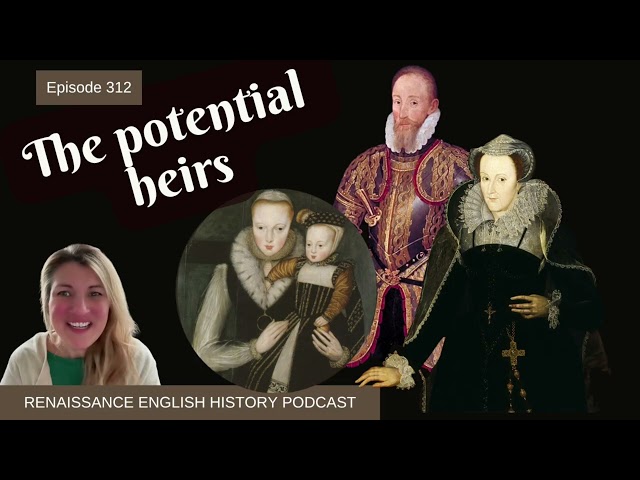
    If Elizabeth died suddenly, who then was next? Three names rose again and again: Lady Katherine Grey, Henry Hastings, Earl of Huntingdon, and Mary, Queen of Scots. Each had a different claim. Each was backed by a different faction. Each was waiting for the crown’s silence to break.

    Today, we are going to talk about the heirs of Elizabeth I, especially very early in her reign. We will look at those early years, up until the mid-1560s, and consider who the presumed heirs were when people had not yet grown used to the fact that their queen was not going to marry. Everyone was very concerned about what would happen if she perished, and the main names that were thrown around and considered.

    Lady Katherine Grey: A Controversial Claim

    To understand why these three names rose above the others, it is necessary to go back and look at the paperwork left behind by Henry VIII. In 1544, Parliament passed the Third Succession Act, reaffirming the rights of Henry’s daughters Mary and Elizabeth to inherit after their brother Edward.

    But it also granted the king an unusual power, the right to designate the succession beyond his children. Henry’s final will, confirmed before witnesses and sealed with the Great Seal, did exactly that. After his own children, he named the heirs of his younger sister, Mary Tudor, through her daughters Frances Brandon and Eleanor Brandon.

    That meant that the Brandon descendants, the Grey sisters through Frances, and the Hastings line through Eleanor, were legally next in line. Conspicuously absent were the descendants of Margaret Tudor, Henry VII’s older sister, whose line had merged with the Scottish crown through James IV and James V.

    By leaving them out, Henry effectively declared that the throne of England should remain distinctly English and not fall under Scottish or, worse, French influence. This created a split in logic that would define Elizabeth’s reign: English law versus dynastic blood. By statute, Katherine Grey and Henry Hastings were legitimate successors. By lineage and international recognition, Mary, Queen of Scots, had the superior claim.

    So Elizabeth inherited a throne and also a legal contradiction, and around that contradiction, power began to gather. If one were to follow Henry VIII’s will to the letter, Lady Katherine Grey should have been the most obvious heir to Elizabeth. She was the granddaughter of Mary Tudor, Henry’s beloved younger sister, through her daughter Frances Brandon. On parchment, it looked very neat and settled, but in reality, her claim was wrapped in discomfort, scandal, and bitter memory.

    The Grey family had not yet recovered from its most infamous moment: the nine-day reign and execution of Lady Jane Grey, Katherine’s older sister. Jane’s brief and tragic brush with the crown had turned the Grey name into a warning. Her death in 1554, carried out by Mary I after Wyatt’s Rebellion, created a Protestant martyr figure and a ghost that haunted Elizabeth’s early reign. To acknowledge Katherine too openly as heir would not just raise a lawful successor, it would resurrect Jane.

    The other issue with Katherine Grey was that there were mutters that Charles Brandon, Duke of Suffolk, her grandfather, had technically still been married to Anne Browne when he married Mary Tudor. The legality of that union was later resolved, but in an age obsessed with marriage contracts and sacrament, the shadow of doubt lingered. The whisper of illegitimacy clung to the Brandon and Grey line just enough to make things uncomfortable.

    Katherine’s fortunes under Mary I were far more favorable than many might have expected. Despite the consequences of her sister Jane Grey’s brief reign and tragic end, Mary did not hold Katherine responsible. She served at court, attended key ceremonies, and was one of the chief ladies-in-waiting. Most notably, she acted as Chief Mourner at Mary’s funeral. Katherine was treated with every respect as one of the queen’s blood, a recognition of her place in the royal hierarchy. This ceremonial role physically placed Katherine at the head of the mourning procession, signaling to ambassadors and courtiers alike that she ranked highly among the surviving Tudor women.

    But everything shifted once Elizabeth ascended the throne. Mary had included Katherine; Elizabeth conspicuously diminished her status. At Elizabeth’s earliest court celebration, Katherine was positioned behind women of lower birth, a visible sign of the queen’s intention to lessen her profile. De Feria reported to Spain that “the queen does not favor Lady Katherine and keeps her at a distance,” which summed up Elizabeth’s chilly treatment.

    Elizabeth’s unease with Katherine was deeply personal as well as political. Katherine represented lawful succession and the potential for producing heirs. Elizabeth, unmarried and constantly pressured on the matter of marriage and succession, found her cousin’s fertility and royal legitimacy a pointed contrast.

    Ambassadorial letters from these years often speculated on the likelihood that God might provide England with another heir if Elizabeth did not marry, a sentiment echoed in multiple reports, though not always in those exact words. Diplomatic observers noted that Elizabeth’s mood soured whenever Katherine was mentioned in court discussions. Venetian and Papal envoys described the queen’s coldness and dismissive attitude toward Katherine.

    In Tudor politics, even a smile could signal exclusion, and Elizabeth’s polite gestures were frequently understood to mask deeper reservations. Though Katherine herself rarely took an active political role, her passive position made her an ideal object of political schemes and plotting.

    Katherine’s situation became significantly more controversial in 1560 and 1561 when she secretly married Edward Seymour, son of the former Protector Somerset and nephew of Jane Seymour. Both brought powerful dynastic claims. Their union was politically dangerous and performed without Elizabeth’s permission, which was tantamount to treason. When Katherine was discovered to be pregnant, all hell broke loose. De Feria’s dispatches recorded concern that “Lady Katherine grows great with child, and the court murmurs that she will give England what the Queen has not.”

    Elizabeth’s response was immediate and severe. Upon discovering Katherine’s secret marriage, Elizabeth ordered both Katherine and Edward to be imprisoned in the Tower, where they were kept apart. Katherine gave birth to her first son, Edward Seymour, in the Tower in September 1561.

    Despite the harsh conditions, the couple managed to meet secretly, resulting in Katherine’s second pregnancy. Her second son, Thomas, was born there in 1563, but due to outbreaks of plague in London, they were later placed under house arrest. Katherine was kept in the custody of her uncle, Lord John Grey, at Pirgo in Essex, while Edward was confined elsewhere. These births caused considerable discussion, as each represented a potential Tudor heir born without the Queen’s consent.

    Henry Hastings: The Protestant Hope

    Now let us turn to Henry Hastings, Earl of Huntingdon, the Protestant candidate. If Katherine Grey represented the legal heir and Mary Stuart the glamorous dynastic threat, Henry Hastings, 3rd Earl of Huntingdon, stood for something far more measured—a controlled future shaped by counsel rather than crown.

    He was not a man of charisma or romantic speculation; he was no court superstar. To many observers, though, that was precisely his strength. Hastings was descended from George, Duke of Clarence, brother to Edward IV and Richard III, the Yorkist line that was older than the Tudors themselves. In a court that still remembered Bosworth and the usurpation of Richard III, that bloodline stirred quiet interest.

    An Italian observer noted with wry amusement that some in England “still speak of the House of York in a lower voice, as if it might rise again.” Hastings never invoked that lineage himself, but it hovered behind him like an ancestral banner. He had built a reputation as serious, pious, and disciplined. The Spanish ambassador, who reported on the personal habits of the English nobility with cutting precision, described Hastings as “the most virtuous of lords, a sober man who seeks to offend no party.”

    It was not a compliment so much as a warning. Hastings was clean, and clean men were hard to discredit. His household at Ashby-de-la-Zouch was run with almost Puritan severity. There was a lack of pageantry; it was seen as a godly house where they dined more on scripture than on luxury. To Protestant reformers like Cecil, that actually made him an ideal successor—staunch in faith, yet politically cautious.

    He could be trusted to maintain the Protestant settlement without the flamboyance or foreign entanglement that Mary Stuart embodied. There were factional advantages too. Hastings had married Katherine Dudley, sister of Robert Dudley, Elizabeth’s favorite and true love. That alliance made Protestants hopeful that, should Elizabeth die without issue, Dudley—and by extension, Cecil’s council—might rule through a compliant Huntingdon.

    One French report put it bluntly: “If this Earl were King, England should be governed by those who made him.” Unlike Katherine Grey or Mary Stuart, Hastings drew no emotional commentary. Ambassadors did not describe him as dangerous or tragic; instead, they called him safe.

    Importantly, Hastings never openly lobbied for his own claim. That aloofness actually helped him. Katherine Grey had married dangerously. Mary Stuart had let France proclaim her Queen of England. Hastings, by contrast, appeared modest and controllable. He simply kept his head down.

    He served Elizabeth loyally and let other men whisper on his behalf. People generally thought he was a safe bet who would do little harm—which sounded like salvation. He offered loyalty without ambition, which made him useful to powerful men who preferred a monarch who could reign by counsel, not personal will.

    No songs were written about Henry Hastings. No romantic plots spiraled around his name. But while the court gossiped about Grey and trembled at Mary Stuart, the Protestant establishment kept his name quietly polished, ready to bring forward if Elizabeth left England without an heir and without direction.

    Mary Queen of Scots: The Dynastic Threat

    So Henry Hastings represented the quiet Protestant insurance policy, and Mary, Queen of Scots, was the exact opposite. There was nothing modest or quiet about her. While Hastings’ name appeared in council calculations and Protestant contingency planning, Mary’s name rang across Europe like a challenge.

    Hastings was described by ambassadors as harmless. Mary was spoken of in terms of destiny. To many outside England, she was not a possible heir; she was the rightful Queen of England, waiting only for God or politics to remove Elizabeth. Mary was the granddaughter of Margaret Tudor, Henry VIII’s older sister.

    And unlike the Grey or Hastings claim, her lineage could be traced in a straight, unbroken line from a lawful Tudor marriage. More importantly, she was already a crowned queen, an anointed monarch of Scotland since infancy, and for a brief window, her claim seemed unstoppable. As wife to Francis II of France, she stood poised to become Queen of France, Queen of Scotland, and, in French eyes, Queen of England.

    From the moment Elizabeth took the throne, French coinage and court ceremony began referring to Mary as Queen of England. It was an insult recorded with alarm in English diplomatic letters. The Spanish ambassador observed that “the French speak more of the Scottish queen’s right than of their own king’s glory,” noting that Mary’s claim had become a rallying cry, not just a legal argument.

    Mary herself understood the value of spectacle. She cultivated image and presence, something neither Katherine Grey nor Henry Hastings ever did. She was described as graceful, learned, and exceedingly conscious of her station. Her letters to Elizabeth were outwardly courteous but always written from one sovereign to another, not from a supplicant or a dependent.

    The Bishop of Ross, Mary’s representative, noted that she would never address the Queen of England as a lesser, but always as one equal born. And the Spanish ambassador de Quadra reported that “Elizabeth fears that the Scottish queen carries herself too much as queen of all realms.”

    Mary asked repeatedly for a personal meeting with Elizabeth, hoping to secure recognition or at least a public statement confirming her place in the succession. Elizabeth always delayed, evaded, or redirected. The two queens would never meet, and religion only sharpened the divide.

    Mary was Catholic, tied to the powerful Guise faction in France. Then Elizabeth made a move that turned Mary’s court ice cold: she sent aid to the Huguenots, the Protestant rebels fighting Mary’s French relatives. It was seen as a deliberate act of hostility that ended any hope of diplomatic warmth between them. At the time, it was believed that the Scottish queen would never forgive the English aid to heretics, and Mary seemed to believe that the Queen of England was making war upon her very blood.

    Mary’s presence in European politics had real emotion, where Hastings inspired caution and Katherine inspired uneasy sympathy, Mary stirred passion—hope among Catholics, dread among Protestants, and a dangerous fascination in between. Foreign envoys did not ask if she would make a move on England; they asked when. And when Elizabeth played her long game of ambiguity and delay, Mary’s claim gathered momentum outside her control—a train already moving, powered by crowns, churches, and rumor.

    Margaret Douglas and the Lennox Claim

    So then, let us talk about a minor player: Lady Lennox, Margaret Douglas. Katherine Grey was languishing under her house arrest. Henry Hastings remained a quiet contingency. There was a fourth presence hovering at the edges of the succession question—not an official heir, not yet dangerous, but unmistakably alert to opportunity. And that would be Margaret Douglas, Countess of Lennox, the daughter of Margaret Tudor, Henry VII’s older sister, by her second marriage to Archibald Douglas, the Earl of Angus.

    That birth gave her a direct Tudor bloodline. She was first cousins with Elizabeth I, and unlike Mary Stuart, she lived in England, watched the court daily, and studied Elizabeth with the cold patience of someone who believed fortune could still turn in her favor. She had spent time in the Tower under both Henry VIII and Mary I, usually for overreaching in marriage politics.

    She had a secret marriage in the summer of 1536 that was portrayed very vividly in Wolf Hall. I actually did several videos on that secret marriage on my YouTube channel, so I will not go back and go through all the details right now. She fell in love and had this secret liaison with Lord Thomas Howard, a younger son in the powerful Howard family, and Henry VIII was very upset about that and punished them both severely. Thomas Howard actually died in the Tower because of that liaison, that relationship.

    Henry Darnley: A Prince Born of Two Royal Lines

    So Margaret Douglas was no stranger to marriage politics. Her son, Henry Darnley, was the product of deliberate dynastic pairing. Of course, his mother had direct Tudor blood as the daughter of Margaret Tudor, and his father, Matthew Stewart, Earl of Lennox, descended from James II of Scotland, making Darnley a Stewart prince by birth.

    In him, two royal lines met: Tudor and Stewart. Margaret raised him with full awareness that this made him uniquely viable. Unlike Mary Stuart, Darnley had been born in England, raised speaking the language of the English court, and could be presented as a domestic Tudor heir rather than a foreign Catholic monarch.

    Elizabeth recognized immediately that Margaret Douglas was raising a marriageable male heir who could, if matched with Mary Stuart, unite the Scottish and English succession claims into one bloodline. This was not an official claim. It was more like a threat that lingered, just floating in the wind.

    So from the moment she took the throne, Elizabeth ruled not just as a queen but as the single barrier between order and another succession crisis. She understood immediately that naming an heir would create more danger than security. The moment one candidate was acknowledged, every other faction would rally against them, and England would once again fracture into competing loyalties.

    Elizabeth employed ambiguity as policy. When Katherine Grey produced two sons in captivity, Elizabeth refused to see them, and foreign ambassadors reported that she would not even speak their names. To acknowledge them was to make them real. Katherine existed, but politically she was treated as something closer to a legal problem than a living kinswoman.

    Henry Hastings, meanwhile, was kept close to court but never elevated. He received positions of responsibility without influence. Present but neutralized, Cecil and the Protestant council kept him quietly positioned like a spare key, useful only if all else failed. Hastings was allowed proximity but never a platform.

    Mary, Queen of Scots, was handled with distance. Elizabeth delayed every request for a meeting, drawing it out with polite deferrals, keeping Mary always in motion but never in reach. When foreign diplomats pressed her, Elizabeth issued the same careful line: “I know no heir but the one God shall send me.” It was less a statement of faith than a weaponized refusal, a way to shut down conversation without giving anything away.

    By refusing to designate a successor, Elizabeth turned every potential heir into a figure of uncertainty rather than legitimacy. Katherine Grey became a prisoner, not an heir. Hastings became a possibility, never a promise. Mary Stuart became a threat, not a certainty. This was Elizabeth’s strategy, and it kept her throne firmly hers.

    By the early 1560s, none of these three main heirs were advancing, and none were disappearing either. Katherine Grey was still confined, still producing Tudor sons out of sight. Henry Hastings was moving with silent discipline through the court, useful but deliberately unexciting. Mary Stuart circled from Scotland, her letters gracious but edged like a blade. Everyone was waiting for Elizabeth to move first, and she never did.

    Stillness became its own form of pressure. As the 1560s unfolded, the succession question became less about ambition and more about endurance. Each potential heir remained in play, but none with momentum. Katherine Grey was turning into a quiet tragedy. Shut away, her children were growing up as political inconveniences rather than princely assets. She had done what a Tudor woman was meant to do: she had produced heirs, and for that she was punished.

    Henry Hastings continued to serve Elizabeth with faultless loyalty, neither favored nor dismissed, existing in that strange limbo reserved for men who are useful so long as they never ask for more. His house remained orderly, his reputation spotless, which made him seem almost too perfect, too managed. A spare monarch waiting in a cupboard, never taken out.

    And Mary, Queen of Scots, was the heir of conversations, of rumors, of foreign correspondence, a queen who could not step onto English soil without changing the entire game. Through it all, Elizabeth outlasted the tension by refusing to blink. The court held its breath, and she never exhaled.

    Looking back, it is tempting to see all three of them—Katherine, Henry, and Mary, Queen of Scots—as pieces in a game that Elizabeth had already won. But in the first years of her reign, nothing felt secure, and none of them knew how long Elizabeth would live or whether England would once again be thrown into frantic allegiance-making at the death of a monarch. They waited in their prisons, council chambers, and foreign courts while Elizabeth mastered the art of ruling by absence, keeping the future deliberately unwritten.

    Katherine died in custody. Hastings faded into dutiful obscurity, and Mary walked straight into the tragedy that would end on the scaffold at Fotheringhay. In the end, none of them wore the crown they circled. The question that haunted the 1560s—who comes after Elizabeth—would be answered not by any of those early heirs, but by a child born outside of this story, in the next generation entirely.

    So there we have it, a little bit on the uneasiness of the presumed heirs in the 1560s.

    Related links:

    Episode 085: Tudor Times on Mary, Queen of Scots
    The Greys: From Elizabeth Woodville to Lady Jane Grey

  • Lady Jane Grey’s Failed Rebellion: How Mary I Claimed the Crown

    Lady Jane Grey’s Failed Rebellion: How Mary I Claimed the Crown


    Lady Jane Grey’s failed rebellion in July 1553 is one of the most dramatic power struggles in Tudor history. Declared queen at just sixteen, Jane reigned for only nine days before being overthrown by Mary Tudor, who claimed the throne with remarkable speed and without a battle.

    Far more than a teenage tragedy, the collapse of Jane’s brief reign reveals the dangers of political overreach, the power of legitimacy, and the miscalculations of those who tried to engineer England’s succession. Understanding why Lady Jane Grey’s rebellion failed helps us see how Mary I, once dismissed as powerless and irrelevant, rose to become England’s first crowned queen regnant.

    Transcript of Why Lady Jane Grey’s Rebellion Failed: How Mary I Took the Throne

    On July 10, 1553, a young woman was declared Queen of England, England’s first Queen regnant. Her name was Lady Jane Grey, and just nine days later, she was a prisoner in the Tower. What happened in those nine days was more than a failed coup. It was a last-ditch attempt by Edward VI’s government to preserve Protestant power, and it collapsed with breathtaking speed.

    But what is even more remarkable is who took the throne instead: Mary Tudor, a woman the political establishment had written off as outdated, dangerously Catholic, and politically irrelevant. Yet Mary won without an army, without a formal base of power, just with her name, her father’s legacy, and the backing of a population that frankly was not interested in watching another political gamble tear the country apart.

    This episode is not just about Jane, though her story is central. It is about how the machinery behind her brief reign came apart almost immediately. It is about Northumberland’s miscalculations, the power of legitimacy, and how Mary, the daughter of Katherine of Aragon, turned a quiet escape into a triumphant march to the throne.

    The nine days that Jane was queen tell us a lot about Tudor politics: who actually held power, how fast public opinion could turn, and what happened when you tried to force a dynasty into a direction it did not want to go.

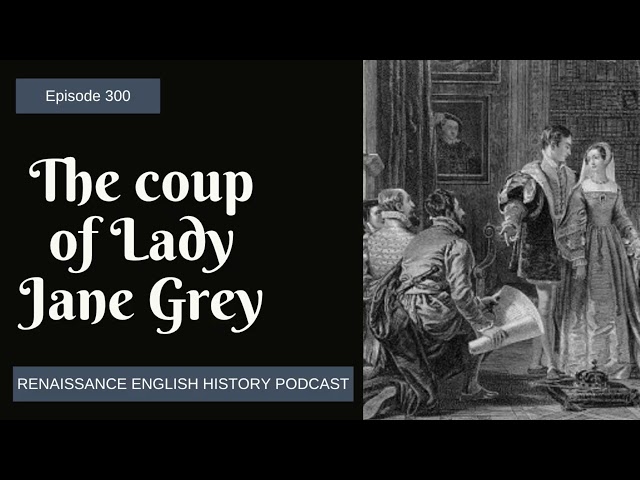
    This week, we are talking about Lady Jane Grey, the Nine Days Queen, and not just about Jane, but about the failed coup and how Mary Tudor was able to overcome the threats against her and claim the throne without any bloodshed. So let’s get right into it.

    By early 1553, it was clear that Edward VI was dying. He was only fifteen, but the effects of tuberculosis, or what his contemporaries called consumption, were impossible to ignore. His coughing fits worsened, his weight dropped, and his council began to panic.

    Edward, despite his youth, was deeply committed to Protestant reform. He had been raised under the influence of Archbishop Cranmer, and he took his role as a godly prince seriously. The idea that his crown might pass to Mary Tudor, his Catholic half-sister, horrified him. And that is where the Device for the Succession comes in.

    Lady Jane Gray’s Ascension and Immediate Challenges

    Edward began drafting the document himself in early 1553. Now, originally it stated that the crown would pass to the heirs male of Lady Jane Grey. When it became clear that Edward did not have enough time to wait for Jane to produce an heir, the wording was revised to name Jane herself as the heir outright. Now, who exactly was Lady Jane Grey?

    Lady Jane Grey was the daughter of Frances Grey, the Duchess of Suffolk. She was, in turn, the daughter of Mary Tudor, Henry VII’s younger sister, the Queen of France for a short time, who was married to Charles Brandon. Lady Jane Grey herself would have been like a great-niece to Henry VIII.

    The problem with this arrangement was that it ignored both Mary and Elizabeth, Henry’s daughters, who had each been restored to the line of succession in their father’s will. Yes, both had technically been declared illegitimate during their father’s lifetime, but Henry’s final act had reinstated them. Edward, by naming Jane, was overriding his father’s settlement and an act of Parliament.

    It was a bold move, and he was not working alone. John Dudley, the Duke of Northumberland, had recently married his son, Guildford Dudley to Jane. The timing was, of course, not a coincidence with Edward’s failing health. Dudley was positioning his family as the power behind the next monarch. Jane was educated, pious, and Protestant, but more importantly, she had no power base of her own, so she was controllable.

    Jane herself does not seem to have been consulted. Later reports suggest that when she learned of the plan, she collapsed in tears or fainted. She insisted that she never sought the crown, but, and this is key, she also accepted it. Whether through pressure, duty, or fear is hard to say.

    The Privy Council, likely under heavy pressure from Dudley and perhaps genuinely afraid of a Catholic queen, signed off on the plan. Even Cranmer, who had been close to Henry and knew better than anyone the legal problems with bypassing Mary, eventually added his own signature.

    On paper, it looked neat. Protestant rule was preserved. The Dudley family was secured. A calm handover of power was planned. But outside the court bubble, very few people even knew who Lady Jane Grey was. She had no public support, no military backing of her own, and no real claim that people recognized. It was a succession engineered entirely from the top down. It was about to come apart almost as quickly as it was declared.

    So, on July the 10th, 1553, Lady Jane Grey was officially proclaimed the Queen of England. She was escorted by barge to the Tower of London, the traditional residence, of course, of monarchs before they were crowned, and she took up residence as queen.

    That same day, the Privy Council issued formal orders. Jane’s name was entered into the official records. Bishops were told to preach in her name. Coins were minted. Prayers were rewritten. Outside the walls of the Tower, the mood was uncertain in London. People heard the proclamation and responded with dead silence.

    There were no celebrations in the streets, no church bells, no bonfires. Even those who supported the Protestant cause were not quite sure what to make of this obscure teenage girl being named queen over both Henry VIII’s daughters. It also did not help that Mary Tudor had already made her first move.

    Mary Tudor’s Counterclaim and Rising Support

    Just a few days earlier as Edward lay dying, Mary had been tipped off about the plan to block the succession. She rode hard for East Anglia, heading straight to the place where she knew she had allies: Framlingham Castle. Meanwhile, back in London, the new regime was already showing some cracks.

    One of Jane’s first acts was to refuse the demand that her husband, Guildford, be declared king. This infuriated the Dudley family, especially her mother-in-law, the Duchess of Northumberland, who apparently shouted at Jane in front of the court. Jane held her ground, insisting that Guildford would be a duke, not a king.

    That single moment exposed the entire house of cards. It was immediately clear that Jane was not as pliable as Dudley had hoped. Her refusal to elevate Guildford undermined the idea that the Dudleys could rule through her, and it began to drive a wedge between the new queen and the faction that had installed her.

    Meanwhile, the Privy Council was growing uneasy. Their signatures were on the device, yes, but many of them had longstanding ties to Mary. Some had even served with her mother, Katherine of Aragon, decades before. Others had personal reservations about the legality of Jane’s claim. Most of all, they were watching how the country reacted, which was a big nothing burger. No outpouring of support, no groundswell of loyalty, just a deep and uneasy silence.

    Northumberland, who had been the architect of the whole succession plan, now had to scramble to build support for Jane on the ground, but his influence was waning. The farther from London he went, the more Mary’s name and her legitimacy carried weight.

    Jane, for her part, continued to carry herself as a queen with dignity. She spent time in prayer. She attended to state matters with seriousness. She thought that perhaps God had actually put her in this position, so she was going to accept it and do the best she could. She followed through on the daily business of queenship and getting ready to be crowned. But she had no experience, no allies outside of her husband’s faction, and no real power. She had the title, but Mary had the loyalty of the people, and things were about to turn very quickly in Mary’s favor.

    So, while Jane was being moved into the Tower and proclaimed queen with all of the outward trappings of monarchy, Mary Tudor was already in motion. On July 9th, 1553, before Jane had even been publicly proclaimed, Mary received word that Edward had died and that her enemies planned to cut her out of the succession.

    She did not wait to see if the Council would honor her claim. She rode hard for East Anglia, the region where she held her estates, her longstanding supporters, and something far more valuable: her power base. She arrived at Framlingham Castle, a strong fortress in Suffolk that had been part of the Howard family holdings. And there Mary made her stand.

    This is where it gets interesting, because Mary did not have an army, at least not yet. She had a name, and in 1553, that was more powerful than anyone had predicted. Mary did not send out fiery manifestos or call for rebellion. She issued carefully crafted proclamations, emphasizing her legitimacy.

    She was Henry VIII’s daughter. She was born in wedlock. She was named in his will, and she was confirmed by statute as the next in line after Edward. Whatever people thought about her religion, and there were concerns about her Catholicism, she was by all reasonable standards the rightful heir. And people responded. Nobles and gentry began to flock to her, many of whom had nothing to gain from supporting Jane.

    In fact, many of them had quietly stayed out of politics completely during Edward’s reign, watching the religious changes with growing discomfort. Mary, to them, represented not just legitimacy but also a return to order, a queen whose claim was rooted in law and blood, not paperwork drafted by a dying boy and a power-hungry council.

    She also had the support of ordinary people in East Anglia, a region still thick with traditional Catholic sentiment. Crowds gathered to cheer her on. Towns raised men to serve her, and by mid-July, Mary, who had fled without a military escort, now had a growing armed force behind her.

    The Collapse of Jane’s Regime

    The Privy Council in London began to sweat. John Dudley, realizing the threat, persuaded the Council to let him march out to confront her. He set out with a small force, expecting to rally more support as he moved north, except that support did not materialize.

    Worse, his own troops began to desert, some slipping away to join Mary’s forces, others simply melting back into the countryside. No one wanted to fight a popular royal woman who was, by most standards, the rightful heir, especially not in defense of a girl that no one had chosen.

    Mary, from her position at Framlingham, now issued orders like a queen. She appointed commanders, raised troops, and sent letters, all while Jane sat in the Tower waiting for a coronation ceremony that was never going to come. What started as a defensive retreat had turned into a full-fledged counterclaim, and back in London, things were falling apart.

    So I just want to pause for a moment and say this: over on my YouTube channel a couple of weeks ago, I put up a poll and asked you all what you thought, whether Jane should be called Jane I, since she was kind of the queen, or whether no, because she was never crowned, she never, you know, ruled properly. I did make the point that, of course, Edward V was never crowned, because he was in the Tower held by Richard III, and yet we still consider him Edward V. So the whole “having a coronation ceremony” doesn’t mean so much to me. But I wondered what you all thought. Should she be called Jane I, or no, because she never ruled properly? And 668 of you voted in that poll, and it’s really split down the middle.

    Yes, she should be called Jane I won with 56 percent of the vote. And “no, not crowned, never ruled properly” came in second, of course, because there were only two choices. So that took 44 percent of the vote. According to those of you who voted on YouTube, she should be called Jane I, for whatever that’s worth. I just think that’s a fun little thing to think about. What do you think? Should she have been called Jane I? Should we refer to her now as Jane I? I’d love to know what you think about that.

    By mid-July, the political gamble that had placed Lady Jane Grey on the throne was in free fall. John Dudley had left London on July 14th to march north and confront Mary’s growing forces in East Anglia. He had only a small army, somewhere around 3,000 men, and no real enthusiasm behind him.

    His march was slow, and it was plagued by desertions and hesitation. Towns that should have welcomed him offered zero support. Some quietly closed their gates. Others made it clear that their loyalties were leaning toward Mary. And Dudley knew exactly what was happening. According to one report, he turned to a companion and said bitterly, “The people press to see us, but not one says God speed us.”

    Meanwhile, back in London, the Privy Council was losing its nerve. At first, they had followed Dudley’s lead, issuing Jane’s proclamation, swearing oaths, and going through all the motions. But as the news from East Anglia trickled in, and as Mary’s support kept growing, they started looking for their exit plan.

    Some of the councillors were secretly corresponding with Mary already, hedging their bets. Others, including the Earl of Arundel, began openly pressing for the council to reverse course. Jane’s father, Henry Grey, Duke of Suffolk, had been left behind in London, effectively acting as her political regent. But he had no control over the council and no real military authority. He was also indecisive and prone to panicking, not exactly a strong figure to rally around.

    The real turning point came on July 19th. That morning, the Privy Council, which had been meeting at Baynard’s Castle, quietly left the city and regrouped at the house of the Earl of Pembroke. There they drafted and signed a formal proclamation declaring Mary Tudor the rightful Queen of England.

    The news spread instantly. Bonfires were lit. Bells rang across London. Crowds flooded the streets to celebrate, some out of relief, others out of genuine joy. Even many Protestants who were wary of Mary’s Catholicism were just glad the whole thing was over.

    The Aftermath: Jane’s Imprisonment and Execution

    Jane, well, she was still in the Tower when the announcement reached her, not as queen now, but as a prisoner. The same royal fortress that had welcomed her as a monarch nine days earlier had now become her jail cell.

    Later that day, Northumberland, still in Cambridge and now fully aware that he had been abandoned, publicly declared for Mary. He threw his cap in the air, swore allegiance, and tried to save himself, like that was really going to work. Spoiler alert: it didn’t work. He was arrested within 24 hours and taken back to London, and he would be executed a few weeks later on August 22nd.

    In the Tower, Jane was formally deposed. Her name was removed from official documents. The crown she had worn briefly, a smaller version of the State Crown made for the coronation, was taken away. Her husband Guildford was also imprisoned, and so were her parents, though her mother Frances would later be released.

    It was all over. The coup hadn’t just failed. It had completely disintegrated. And it had done so not because Mary had more soldiers, or better strategy, or stronger propaganda, or anything like that.

    It had failed because the heart of Tudor power, the nobility, the legal system, and the public, just did not accept Jane’s claim. She was smart, educated, devout, and serious, but she had no real support. Mary, on the other hand, had the thing that mattered most in Tudor England: a father named Henry VIII.

    Looking back at those nine days, it is tempting to see Lady Jane Grey as a tragic figure caught in the middle of someone else’s power play, and she was that. But the failure of her reign was not just bad luck. It was the result of serious miscalculations at every level: political, legal, and personal.

    First and foremost, legitimacy still mattered in Tudor England. Edward’s device for the succession was clever, but it was not enough. It was never ratified by Parliament. It contradicted both Henry’s will and an Act of Succession passed during Henry’s lifetime. By the letter of the law, Mary was the rightful heir, and that carried enormous weight with people, even those who might have preferred a Protestant monarch.

    Mary was Henry’s daughter. Everyone remembered her mother, Katherine of Aragon, who had been queen for over twenty years. Whatever doubts existed about her religion, her bloodline was beyond dispute.

    The second problem was the Dudley name. Jane may have been intelligent and pious, but she was deeply tied to the most hated man in England at the time. John Dudley had risen quickly under Edward VI, sidelining rivals and dominating the court. Many in the nobility distrusted him. Some outright hated him. Installing his daughter-in-law on the throne looked like a power grab, not a legitimate succession. Even those who supported Jane’s religion recoiled at the idea of Dudley effectively ruling through her.

    Then there was public perception. Jane was barely known outside of court circles. She had not spent time building a public persona or visiting the provinces. Mary, on the other hand, had lived quietly but was still a known quantity. She had a network of household servants, nobles, and former allies from her mother’s faction, and they all remembered her.

    There were also some critical strategic blunders. Northumberland underestimated just how quickly Mary could rally support. He overestimated how loyal his troops would be, and most fatally, he left London, effectively giving the Privy Council room to reverse course without having to face him directly.

    And finally, Jane’s own position was deeply compromised from the start. Her refusal to name her husband Guilford king, angered the faction that had put her on the throne. She was not in control, and everybody knew that. The fact that she had to fight her in-laws before even being crowned made it clear to the council that this was not a unified regime.

    In the end, Jane never had a foundation to stand on. The political scaffolding around her collapsed almost immediately because it was brittle, self-serving, and completely disconnected from what the country actually wanted. Mary, for all her faults, understood power better, and she had one thing her opponents could not manufacture: a claim that people actually believed.

    So after the Privy Council declared for Mary, Jane’s fate changed instantly. She was no longer the queen. She was a traitor. She was still only sixteen. She had reigned for just nine days, and now she was a prisoner.

    At first, Mary, of course, showed surprising restraint. Jane was young, intelligent, clearly a pawn in someone else’s game. Mary ordered that she be held but not mistreated. She was given a decent apartment. She was allowed books and even had occasional visitors. There is no evidence that Mary initially intended to execute her.

    John Dudley, of course, had no such leniency. As mentioned, he was executed a month after he was arrested, on August 22nd, just over a month after Jane had been proclaimed queen. He died insisting that he had only followed the king’s will, a claim that nobody was really moved by.

    Jane’s own father, Henry Grey, was also released. Despite being deeply involved in the coup, he was forgiven, likely because Mary wanted to avoid creating too many martyrs. It was a generous act, and as it turned out, it was a mistake. In January 1554, just six months into Mary’s reign, Jane’s father joined Wyatt’s Rebellion, an uprising sparked by outrage over Mary’s plans to marry Philip of Spain. The rebellion, of course, failed, but the implications were clear: Jane’s family was still dangerous, and Mary could no longer afford to be merciful.

    Jane and Guilford were both sentenced to death, and on the morning of February 12th, 1554, Guilford was executed first. Jane actually watched his body return to the Tower from her window. A short time later, she herself was taken to the scaffold on Tower Green. Her final words were quiet, steeped in religious conviction.

    She declared herself a faithful Christian, asked for forgiveness, and forgave her executioners. Her body was buried near that of Anne Boleyn in the chapel of St. Peter ad Vincula, another young woman executed at the command of a Tudor monarch.

    In the centuries that followed, Jane’s reputation was reshaped. Protestant writers in Elizabeth’s reign turned her into a martyr. She was included in Foxe’s Book of Martyrs as a symbol of purity and reform crushed by Catholic tyranny. That image stuck in literature, portraiture, and eventually in pop culture.

    But the real Jane was much more complicated. She was clever, she was principled, and she was politically aware, but deeply vulnerable to the ambitions of those around her. She did not start the coup. She did not want the crown. But when offered it, she also did not refuse. And that choice, made under pressure in a world she could not control, would cost her everything.

    And so Lady Jane’s nine days on the throne are often reduced to a tragic blip,  a teenage girl used and discarded by men chasing power. And while there is indeed some truth in that, the story is more than just pathos. Jane’s reign failed because the people who installed her underestimated Mary, misunderstood the meaning of legitimacy, and overestimated how far fear and control could go without true support.

    Mary, who had no army, no position, no official title, took back the throne through sheer determination, lineage, and the fact that enough people still believed in her right to rule. Jane did not fail because she was weak or foolish. She failed because the entire framework around her was built on sand.

    And yet, she remains one of the most memorable figures of the Tudor period,  not because of what she herself did, but because of what she represented: a regime that tried to rewrite the rules of succession overnight, and a teenage girl caught in the middle when it all collapsed.

    Related links:

    Episode 016: Lady Jane Grey
    The Forgotten Grey Sisters: Love, Treason, and Tragedy in Tudor England

  • The Three Grey Sisters: Love, Treason, and Tragedy in Tudor England

    The Three Grey Sisters: Love, Treason, and Tragedy in Tudor England


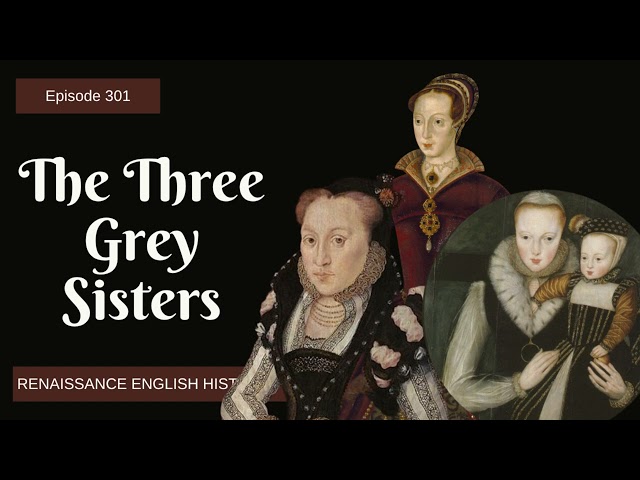
    The three Grey sisters – Jane, Katherine, and Mary were granddaughters of Henry VII’s sister and heirs to a dangerous legacy. Born into a world of shifting power and fragile succession, they lived their lives under constant scrutiny at the Tudor court.

    Jane Grey, remembered as the Nine Days’ Queen, was executed as a teenage martyr. Katherine Grey’s secret marriage brought her love but also years of imprisonment and the loss of her children. Mary Grey, the youngest, defied expectations with a forbidden match that condemned her to a lifetime of isolation. Together, the three Grey sisters show how Tudor women could be celebrated, controlled, or destroyed simply for being too close to the crown.

    Transcript of The Forgotten Grey Sisters: Love, Treason, and Tragedy in Tudor England

    In Greek mythology, the Graeae were three sisters born old, with gray hair, a single eye, and a single tooth between them. They lived on the edge of the known world in a bleak and misty land, somewhere between life and death. Not quite monsters, but not quite human either. They had knowledge that others needed, but no real power of their own.

    And in the most famous story about them, Perseus steals their shared eye, leaving them blind and groping in the dark. The Tudors, of course, had their own Grey sisters, Jane, Katherine, and Mary. They were not born with gray hair or tucked away in caves, but they were linked, like their mythological namesakes, by their strange and precarious position close to the throne, never secure, watched, judged, manipulated, and ultimately punished for who they loved and how they lived.

    Last week we talked about the most famous of the trio, Lady Jane Grey, the Nine Days’ Queen, the teenage scholar who died a political martyr on the scaffold in 1554. But Jane was not an only child, and her story was not a standalone tragedy.

    She was the oldest of three sisters, all granddaughters of Henry VII’s younger sister, Princess Mary Tudor. Because of that royal blood, each of them – Jane, Katherine, and Mary, lived under the weight of the crown that none of them ever asked for. This week, we are going to follow the story of all three Grey sisters, from Jane’s execution to Katherine’s doomed love affair with a Seymour to Mary’s forbidden marriage to a palace gatekeeper. Along the way, we will talk about how Tudor ideas of succession, marriage, and female obedience shaped their fates.

    The Greys were not just side characters in someone else’s story. After Edward VI’s death, they became the focal point of a succession crisis that haunted Elizabeth I for decades. Even though they never wore a crown, the Greys were central to the larger story of female power and vulnerability in a world that did not quite know what to do with ambitious or even just slightly inconvenient women. So let us meet the other Grey sisters, the ones who did not get nine days on a throne, but still managed to threaten it.

    Lady Jane Grey: The Nine Days’ Queen

    Before we talk about the younger sisters, let us take a moment to revisit Jane, the most famous of the three, but often the least understood. Lady Jane Grey was born into ambition. Her mother, Frances Brandon, was the daughter of Princess Mary Tudor, one-time Queen of France and Henry VII’s younger sister, which gave Jane a direct claim to the English throne. Unfortunately for her, people at court knew it.

    She was brilliant, precociously learned, raised to read Latin, Greek, and Hebrew, and corresponded with reformers across Europe. Her education was not just an intellectual polish. In a court ruled by religious swings and dynastic tensions, Jane’s Protestant credentials and her royal blood made her both dangerous and useful.

    She, of course, became a pawn in the final year of Edward VI’s reign, when the Protestant king, dying at just 15, tried to keep the throne out of the hands of his Catholic half-sister Mary. His solution was to skip over both Mary and Elizabeth and name Jane, his cousin, devout Protestant, and safe political ally, as his heir.

    Of course, it was not just Edward’s idea. Jane’s marriage to Guilford Dudley, the son of John Dudley, Duke of Northumberland, was timed perfectly to align Northumberland’s ambitions with the king’s new will. Jane was then about 16. She had no say in any of this. She was married off, declared queen upon Edward’s death, and immediately caught in a storm she could not control.

    Her reign lasted just over a week, nine days to be exact, before Mary I successfully claimed the throne. That was what we talked about in last week’s episode, how that came about. Jane and her husband were imprisoned, and though she might have lived quietly out of public life, the Wyatt Rebellion in 1554 sealed her fate, even though she had literally nothing to do with it, since she was already in prison.

    The rebellion aimed to overthrow Mary and place Jane back on the throne, and that was enough. She was executed that February alongside Guilford. Before she died, she wrote a long letter to her sister Katherine, a kind of theological farewell, warning her to prepare her soul and stay strong in her Protestant faith.

    But while Jane died young, Katherine and Mary had to live through court politics, personal betrayals, and imprisonment. There was also the unpredictable fury of Queen Elizabeth. In Katherine’s case, it all began with love. If Jane was the Grey sister remembered for martyrdom, her younger sister Katherine would be remembered, at least by those who knew her, for love and heartbreak and prison, and two sons born in the Tower of London. It is a lot.

    Katherine Grey: Love, Heartbreak, and Imprisonment

    Katherine was born around 1540, the second of three daughters of Frances Brandon and Henry Grey. Like Jane, she had royal blood, a solid education, and a dangerously high place in the line of succession. But where Jane was intense and cerebral, Katherine seems to have been warmer, more affectionate, and less interested in theology and politics. That did not make her life any easier.

    At the age of 12, Katherine was married off to Henry Herbert, teenage heir to the powerful Earl of Pembroke. It was part of the same flurry of marriages orchestrated by the Duke of Northumberland, who had just placed Jane on the throne. The idea was to bind key noble families together into one unified Protestant power bloc.

    Katherine married Henry Herbert on the same day Jane married Guilford Dudley, in a lavish triple ceremony that was more about strategy than sentiment. But somehow Katherine and Henry fell for each other. Despite their youth, they reportedly cared deeply for one another. When Mary Tudor came to power, however, Northumberland’s plans collapsed.

    Jane was deposed and executed. Katherine’s father was executed as well. And although Katherine herself was not charged with treason, her marriage was now politically toxic. The Herberts moved quickly to cut ties. They pushed for an annulment, hoping to quietly erase the alliance. Katherine and Henry resisted, claiming that they had consummated the marriage, a claim that, if true, would have made the annulment much harder to secure.

    But Katherine was not pregnant, and the Herberts were powerful, so the annulment went through. Still, Katherine did not disappear. Her mother Frances made peace with Queen Mary, and Katherine returned to court. Under Mary’s reign, and even more under Elizabeth, Katherine’s position grew increasingly precarious.

    She was, after all, one of the senior surviving Protestant claimants to the throne. Elizabeth had no children. Mary, Queen of Scots, was Catholic. That left Katherine in the mix, which might have been a strategic asset if Katherine had not done something deeply unstrategic. She fell in love. The object of her affection was Edward Seymour, Earl of Hertford, the son of Anne Stanhope and the late Edward Seymour, Lord Protector Somerset.

    Now this Edward Seymour was, of course, connected, noble, and Protestant, and their romance blossomed quickly during Elizabeth’s early reign. Katherine called him her Ned, and he wrote her poems. Their relationship grew under the watchful eyes of the court, but they tried to be discreet because both of them knew what was at stake.

    Elizabeth had no tolerance for royal marriages without her permission, especially not for potential heirs. Still, Katherine and Ned made their plans: first a secret betrothal, and then, in 1560, a secret wedding. Elizabeth had left the court for a hunting trip, and Katherine, claiming illness, stayed behind.

    With Ned’s sister Jane Seymour as the only witness, the two were married by a clergyman in Ned’s house on Cannon Row. Afterwards, they consummated the marriage and then returned to court as though nothing had happened. No big deal. But of course, something had happened. Things were about to get far more complicated.

    Within a few months, Jane Seymour died. The only witness to the marriage was gone. The priest, whose name had not been recorded, disappeared. And then Katherine discovered she was pregnant. Oops. She tried to write to Ned, who was sent abroad, but got no reply. With the queen still unaware of the marriage, Katherine tried to keep her pregnancy a secret, but gossip spreads fast at court.

    Eventually she turned to Robert Dudley, the queen’s favorite, and begged for help. Dudley promised to intervene on her behalf, then went directly to Elizabeth and told her everything. Elizabeth exploded. She was furious, not just about the secret marriage, but about the threat that it posed. Katherine was her cousin.

    If she had a son, that child would be seen as a legitimate Protestant heir. Elizabeth, who had lived through the Wyatt Rebellion and seen how easily royal women could become pawns in succession plots, was in no mood to tolerate another one. Katherine was imprisoned in the Tower of London. When Ned returned to England, he was thrown in the Tower as well. They were kept apart, interrogated, and denied visitors.

    In September 1561, Katherine gave birth to a baby boy, Edward Seymour, Lord Beauchamp, behind the Tower walls. Despite the grim setting, Katherine and Ned were happy to be reunited in spirit. They passed notes, bribed guards, and were even occasionally allowed to see one another.

    And that is how Katherine got pregnant again. Oopsies. In 1563, she gave birth to a second son, Thomas, and this time the scandal was too much. Elizabeth had Sir Edward Warner, the sympathetic lieutenant of the Tower, removed. The couple were separated, and their children were sent away. Hartford was fined 15,000 pounds, an astronomical sum, and both of them were shuffled between remote houses under constant supervision.

    The remainder of Katherine’s life was one long string of prisons, five different houses over seven years, each one more isolating than the last. She never saw her eldest son again. Her health declined, and she grew increasingly despondent. By the time she was 27, she had effectively stopped eating. She died at Cockfield Hall in 1568, leaving behind her two sons, three rings for her husband, and a final message engraved in gold: “While I lived, yours.” After her death, Elizabeth refused to recognize the marriage, and the boys were considered illegitimate, a decision only reversed years later under James I. Katherine Grey married for love, and she was loved deeply in return. That love, far from freeing her, became her prison. And in Elizabeth’s court, even affection could be treason.

    Mary Gray: The Forgotten Sister

    Now, what about Mary? Mary Grey was the youngest of the Grey sisters, the least politically important, the most physically unusual, and the one history often forgets. But her story is every bit as poignant as her sisters’ and just as emblematic of what it meant to be a woman with royal blood under Elizabeth.

    She was born in 1545, nearly ten years younger than Jane and five years younger than Katherine. Where Jane was brilliant and devout, and Katherine was warm and romantic, Mary was known for her sharp wit, her deep loyalty, and a kind of stubbornness that got her through a quietly brutal life.

    She was, by all accounts, very small. Contemporary descriptions ranged from “crook-backed” to “the least of all the court.” Modern historians have speculated that she may have had scoliosis, dwarfism, or another condition that affected her growth. Estimates put her height at around four feet tall.

    Now you have to remember, this was a time when physical appearance was seen as a reflection of moral and spiritual worth. Mary’s stature made her an object of ridicule and, in the eyes of her contemporaries, all but excluded her from the throne, despite her impeccable lineage. She still carried royal blood. She was still the granddaughter of Mary Tudor. And so, like her sisters, she had to live a tightly controlled public-facing life at court,  a possible heir, but never a safe one.

    After Jane’s execution and Katherine’s disgrace, Mary kept her head down. She served quietly at Elizabeth’s court as a maid of honour, gaining a reputation for intelligence and discretion. Then, like her sister Katherine before her, she fell in love with entirely the wrong man.

    His name was Thomas Keyes. He was over six feet tall, twice Mary’s age, a widower with several children, and a member of the gentry, not the nobility. He served as Elizabeth’s Sergeant Porter, in charge of the palace gates. In a court obsessed with bloodlines and status, he was an astonishingly unsuitable match for the queen’s cousin.

    Naturally, Mary married him in secret. The wedding took place in 1565 while Elizabeth was away attending the wedding of another cousin. This time, unlike Katherine, Mary ensured that there were many witnesses. She wanted to make the marriage legally watertight, and it was, which ironically made it harder for her to escape the consequences.

    When Elizabeth found out, we can all guess how she felt. She was livid. The queen’s own cousin had married a man she had not approved of, a commoner, and had done so in a way she could not legally undo. Mary was placed under house arrest at the home of Sir William Hawtrey at Chequers. Keyes, as a commoner, was sent to the Fleet Prison, where the cells were so small that he could not fully stretch out his legs. His health quickly deteriorated.

    Mary wrote pleading letters to William Cecil asking for leniency. So did Keyes. He even offered to annul the marriage, but they had been too careful. There were no legal grounds to dissolve it, and Elizabeth refused to relent. The couple would never see each other again.

    Mary spent nearly a decade under house arrest, shuffled between unwilling caretakers. She was sent to her step-grandmother, the Duchess of Suffolk, and then to the home of the wealthy merchant Sir Thomas Gresham, who found her presence such a burden that he wrote desperate letters begging to be rid of her. She had little furniture, no attendants, and even fewer allies.

    Then, in 1571, Keyes died. Mary took the news hard. She asked to raise his orphaned children and began referring to herself as his widow. She even had a portrait made showing her wedding ring prominently, saying, “I married for love, and I am not sorry about it.”

    At last, in 1573, Elizabeth relented. Mary was allowed to live independently in London with limited access to court. She reconnected with her old friends, helped to raise her stepchildren, and was briefly restored as a maid of honour, but her health never fully recovered. In 1578, on her thirty-third birthday, Mary Grey died. She was buried in Westminster Abbey in her mother’s tomb with the honors due to a queen’s cousin. She died in favor, but she was never in favor with the man she loved.

    The three Grey sisters, Jane, Katherine, and Mary, did not rule, but their lives were shaped by the throne as much as any monarch’s. They lived in its shadow, edged close to its power, and were punished for even the faintest suggestion that they might reach for it.

    Like the Graeae Sisters of mythology, those strange otherworldly sisters who shared a single eye and had knowledge others feared, these Grey sisters were often seen less as individuals and more as potential threats. They were watched, moved like pieces on a board, and punished for what they might become.

    Jane was used as a figurehead, crowned by those who hoped she would secure their power and discarded once her usefulness ended. She died young, her intellect and faith intact, but she never truly lived. Katherine fell in love twice and paid for it with years of imprisonment, forced separation from her children, and ultimately her life. Her sons were declared illegitimate and her marriage erased. Eventually, she gave up entirely.

    Mary, the youngest, tried to live quietly. She married for love, hoping that her unthreatening position and unsuitable husband would spare her Elizabeth’s wrath. Instead, she was separated from her husband for the rest of his life, isolated and moved from house to house like an inconvenience no one could quite figure out how to manage.

    In the end, none of them succeeded in love, ambition, or family, at least not in life. In death, the stories shift. Katherine’s marriage was finally recognized under James I and her sons reinstated. Mary, though buried under the name Grey, never stopped calling herself Keyes’s widow. Jane, though she reigned for just nine days, became a Protestant martyr, a symbol that far outlived her. Three sisters, one royal bloodline and three lives marked not by the crowns they wore, but by the ones they never even touched.

    Related links:

    Why Lady Jane Grey’s Rebellion Failed: How Mary I Took the Throne
    Episode 016: Lady Jane Grey

  • Eleanor Clifford: Henry VIII’s often overlooked niece

    Eleanor Clifford: Henry VIII’s often overlooked niece


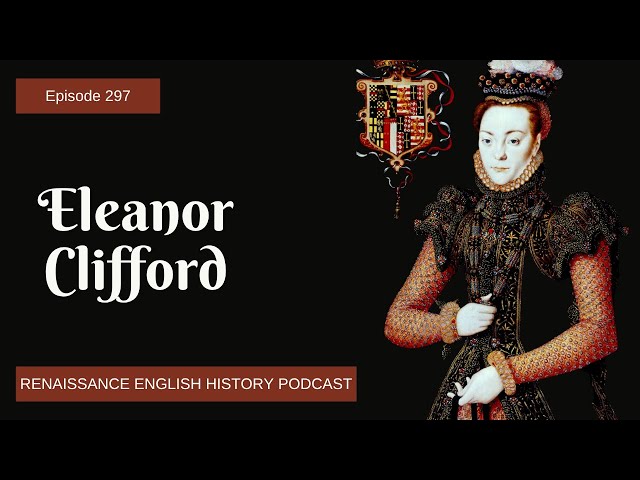
    Eleanor Clifford, Countess of Cumberland, may not be a household name in Tudor history, but her life was anything but ordinary. Born Eleanor Brandon, she was the niece of King Henry VIII and daughter of Princess Mary Tudor and Charles Brandon, Duke of Suffolk. Married young into the powerful Clifford family, Eleanor became entangled in one of the most dangerous uprisings of the Tudor period—the Pilgrimage of Grace—where she was taken hostage by rebels threatening brutal violence.

    Despite her royal blood, Eleanor Clifford lived far from the spotlight, navigating political unrest, personal tragedy, and courtly expectations with quiet resilience. Her story offers a rare and compelling glimpse into the life of a Tudor woman who stood at the edge of power—and sometimes, at the center of danger.

    Transcript of Eleanor Clifford: An often overlooked niece of Henry VIII

    In October 1536, the north of England was in open revolt. Tens of thousands of rebels had taken up arms under the banner of the Five Wounds of Christ, calling themselves pilgrims and demanding a return to the old ways. The king’s new religious policies had stirred up more than sermons. This was war.

    And Eleanor Clifford, Countess of Cumberland, found herself caught right in the middle of it. She was at Bolton Abbey, a quiet monastic retreat about 10 miles from Skipton Castle. With her were her young son and two of her sisters-in-law. It was supposed to be a safe place, far from court, far from trouble.

    But Eleanor, unfortunately, was not just any noblewoman. She was a niece of Henry VIII, and the rebels knew it. When they found her, they made zero effort at politeness. Eleanor and her family were taken hostage. The insurgents sent word to her father-in-law at Skipton Castle: surrender the fortress, or we will hand these women over to the camp followers. And the implication was not subtle.

    It was violence against women as a political threat. And Eleanor, despite her royal blood, was expendable. The standoff did not last long. Her father-in-law, furious and alarmed, rode straight into the rebel camp and negotiated their release. Eleanor, her sisters-in-law, and her child were brought safely back to Skipton.

    The siege was lifted five days later. She did not write about it. There is no first-person account, no dramatic testimony. But the fact that the rebels saw her as valuable enough to threaten, and the Earl risked so much to get her back, tells us something. Eleanor Brandon mattered, even if history has largely forgotten her.

    So today, my friend, we are going to talk about Eleanor Brandon, a niece of Henry VIII who has been largely forgotten. Eleanor Brandon was born into the very heart of Tudor royalty, but her name rarely makes it into the footnotes, let alone the spotlight.

    She was the daughter of Princess Mary Tudor, the king’s beloved younger sister, and Charles Brandon, Duke of Suffolk. That, of course, made her Henry VIII’s niece. Her sister Frances went on to be the mother of Lady Jane Grey. Her cousin, Margaret Douglas, caused scandals and flirted with treason. But Eleanor? Eleanor got married, moved north, and vanished from the courts’ daily drama. Good for her, I say.

    But when you look a little closer, her life actually was not particularly quiet at all. She was married at fifteen in a ceremony attended by the king himself. She nearly died in a rebellion. She buried two of her three children, tragically. She lived far from the glitter of court, but she was close enough to its politics to appear in the king’s will.

    She left behind one letter, just one that survives. But it is so intimate, so physical, and so immediate that you can practically hear her voice. And through that voice, we glimpse something rare: a woman at the edge of power, dealing with illnesses, marriage, motherhood, and mortal fear with zero spotlight on her.

    She was not trying to change the world, but the world kept trying to press in on her anyway. So let’s talk about Eleanor Brandon, Countess of Cumberland, the king’s niece, and a Tudor woman that history has largely, mostly forgotten.

    Eleanor Brandon was born sometime between 1519 and 1521, most likely at Westhorpe Hall, the Suffolk estate of her parents. Her mother, of course, was no ordinary duchess. She had once been the Queen of France, married briefly to the aging Louis XII, before returning to England and marrying Charles, the king’s closest friend, in secret.

    Eleanor was their second daughter after Frances, and her name stood out. Tudor royal women were usually named Mary, Elizabeth, Anne, or Jane. But Eleanor’s name may have been a diplomatic nod to Eleanor of Austria, she was the sister of Charles V, Queen of Portugal, and later became the Queen of France.

    If that is true, it was a name loaded with imperial significance and maybe a quiet signal of alliance, given that her father had been involved in negotiations with Charles V around the time of her birth. Like her sister, Eleanor would have received a very elite humanist education. Girls in families like theirs were expected to learn French and Latin, to read scripture, and to play music, perhaps the virginals or the lute.

    There is evidence that Eleanor could write in French, and she seems to have inherited her mother’s sharp intelligence. Her sister Frances married Henry Grey in 1533, and that same year Eleanor was betrothed to Henry Clifford, heir to the Earl of Cumberland.

    A Royal Marriage and Life in the North

    The Cliffords were a well-connected northern family, and there was also a touch of Plantagenet blood running through Eleanor’s future mother-in-law, Margaret Percy. We actually just did a YouTube video this week on the Percy family and how they could not stop themselves from rebelling, so you can check that out.

    Henry Clifford himself was tall, dark-haired, and unusually intellectual. He built an impressive personal library and dabbled in alchemy and astrology, which, of course, were eccentric hobbies for a man who was expected to lead border defenses.

    They were married in 1535 at St. Mary Overy in Southwark, now Southwark Cathedral, Henry VIII actually went himself. Not every niece gets a king at her wedding, but Eleanor did, and her new life in the North was about to begin.

    For most noble couples in the Tudor world, marriage did not mean immediate independence. You were usually tucked into your in-laws’ household until the title passed down, if it ever did. But Eleanor Brandon and Henry Clifford had something different.

    In the months leading up to Eleanor’s arrival, Henry’s father, the first Earl of Cumberland, ordered a rapid-fire renovation to Skipton Castle in North Yorkshire. He added a long gallery and two new towers, one of them octagonal, which was a fashionable and expensive architectural choice at the time. The construction was finished in under four months.

    It was not just practical, it was symbolic. The king’s niece was coming north, and the family meant to show that they were ready to receive her in royal style. It was rare, almost unheard of, for a young couple to have their own establishment while their parents were still alive. Henry and Eleanor were given real autonomy. They did spend some time at Skipton, but they seemed to have lived primarily at Brougham Castle in Westmorland, closer to the Scottish border.

    It was a quieter location, far from court, farther still from the endless maneuvering of London politics, but it seems to have suited Eleanor, who even in those early years may have already been struggling with poor health.

    This marriage was more than just a dynastic win. It seems to have been a functional, even affectionate match. Eleanor’s father, Charles Brandon, stayed closely involved, writing to the Earl of Cumberland about his daughter’s well-being and sometimes even stepping in to manage financial arrangements on her behalf.

    He once gently complained that Eleanor and her husband were living in an unhealthy country house and pushed for them to be moved back to Brougham, where she seemed to thrive a bit better. This was a woman who was building a life on the edge of the kingdom, with real challenges lying ahead for her.

    So Eleanor, like we said, may have been living far from court, but she was still expected to show up when duty called. In early 1536, just a few months after her wedding, she was summoned south to serve as Chief Mourner at the funeral of Katherine of Aragon. This was a political role. Choosing who stood where, who carried which banners, who wept in which pews—this all sent a message. So it is telling that Eleanor, and not her older sister Frances, was the one who represented the family that day at Peterborough Castle.

    Frances may have been pregnant at the time or recovering from a recent birth, but there is still another possibility. Henry might have considered Eleanor the right level of royal for the occasion. Frances, as the senior niece, was perhaps tied too closely to court ambition. Eleanor was quieter, less politically entangled, more neutral—an acceptable presence at a queen’s funeral without making it feel like a dynastic statement.

    Remember, at this time Henry was married to Anne Boleyn. Katherine was not on his good list. He did not want Katherine to have a state funeral that was too fancy, too much, because he was still really mad at Katherine and might have been a bit happy and relieved that she was gone. But he still needed to honor her as what he saw as the Princess Dowager, the Dowager Princess of Wales, and someone who was the aunt of Charles V. So he needed to give her a certain amount of pomp and circumstance—but maybe not enough for the senior niece, right?

    After this visibility, Eleanor’s name actually vanishes from the official court record. She is not listed among the ladies at Prince Edward’s christening in 1537. She did not attend Jane Seymour’s funeral. She also was not among the elite women who welcomed Anne of Cleves in 1540. Her sister Frances, by contrast, was there for all of it.

    Now, one explanation might be Eleanor’s health. Her father wrote more than once about her frequent illnesses and made specific requests to her in-laws for healthier accommodations. So it is possible that her absence was not her shirking duty or anything like that. It might have just been physical.

    While her sister stayed close to court, Eleanor was increasingly rooted in the north, settled into a rhythm of family life, letter writing, and, as we will see next, moving through some devastating personal losses.

    Then, in the autumn of 1536, Eleanor’s life took a terrifying turn, which we talked about in the opening. England’s north was rising up in protest against the king’s reforms. Monasteries were being dissolved. Traditional faith was under threat, and resentment toward the central government had reached a boiling point.

    The Pilgrimage of Grace

    It was called the Pilgrimage of Grace, and it became the largest rebellion of Henry VIII’s reign. Eleanor was now about 17, staying at Bolton Abbey, about 10 miles from Skipton, along with her young son and two of her sisters-in-law. The idea was to keep them out of harm’s way while Skipton was fortified. But it didn’t work, because the rebels found them.

    They stormed the abbey and took the women and child captive. They sent this message to Eleanor’s father-in-law: surrender Skipton or your daughter-in-law, her child, and the other women will be handed over to the camp followers. The language was clear and brutal. The threat was to “violate and enforce them with knaves unto my lord’s great discomfort.”

    There is zero ambiguity in that phrase. This was violence against women, deliberately threatened as a weapon of humiliation. These rebels knew exactly who Eleanor was. She was the king’s niece, and that made her valuable—symbolically and strategically.

    This was not empty bluster. These same rebels had already dragged abbots from their monasteries and forced local landowners to swear oaths at knifepoint. There is a harrowing scene in Wolf Hall where Cromwell learns of a man he had sent north who was tied in pigskin and thrown to the dogs as punishment. While this is fictional, it is not out of step with the kind of brutality people were experiencing in the north at the time.

    A lot of times we hear about things like rebellions and think, oh, that might have been like a protest or something. It was not like that at all. This was real violence, threatened and often enacted, and a lot of people experienced it. That is not to say I do not understand what the Pilgrimage of Grace was about. Clearly, I understand. They had a lot of good points, and there was a great deal of legitimate motivation behind it. But it was also a very violent rebellion. The reprisals were equally violent. Around 200 people were executed, and the leader was hanged in chains. It was not a good time for anybody.

    So the Earl of Cumberland did not hesitate. He rode straight into the rebel camp at Bolton and demanded their release. Somehow, possibly thanks to his local connections and his status, he was able to pull it off. The women and the child were freed and returned to Skipton, and the rebels gave up their siege just five days later.

    Eleanor never left a written account of what happened, but the records speak volumes. The rebels used her as leverage, and her father-in-law risked everything to save her. When her own father, Charles Brandon, heard the story, he wrote immediately to the Earl: if there was any way to bring Eleanor south to his household, “I trust she shall be out of danger.” She didn’t go south. She didn’t return to court. But this episode proved just how much her presence, even so far from London, still mattered.

    Eleanor’s Later Years and Legacy

    By the early 1540s, Eleanor had faded from the royal spotlight, but her role as wife and mother had taken center stage. She gave birth to three children. Her first two were sons, Henry and Charles, and both died young. Charles died in infancy, and Henry lived only to about age three. They were buried side by side in the Clifford family vault at Holy Trinity Church in Skipton, the same church where Eleanor herself would be buried just a few years later.

    Only her daughter Margaret, born in 1540, survived into adulthood. It is likely that Eleanor named her after her mother-in-law, Margaret Percy. Margaret would go on to marry Henry Stanley, the future Earl of Derby, and have four sons. But despite the promise of that match, the marriage broke down, and Margaret later came under suspicion for allegedly predicting Elizabeth I’s death through astrology. But we will have to save that story for another time.

    In 1542, Eleanor’s father-in-law died, and her husband officially became the second Earl of Cumberland. That made Eleanor the Countess, though it likely did not change much about her daily life. They were already well established at Brougham Castle and had long since taken on the responsibilities of the title.

    She suffered another major loss in 1545 when her father, Charles Brandon, died. In his will, he left both Eleanor and Frances 200 pounds’ worth of plate. A decent sum, but not an extravagant one. He had, of course, remarried after Mary Tudor’s death and had other children, other sons, to consider at this point. But the fact that he left her this amount of plate still showed that Eleanor, for all her distance from court, was still very much his daughter.

    She also remained on good terms with her stepmother, Katherine Willoughby. While her sister Frances pursued court favor and was very politically ambitious, Eleanor’s connections stayed domestic, rooted in family, in correspondence, and in gifts. A quieter version of Tudor womanhood.

    The only surviving piece of Eleanor Brandon’s voice comes to us from a letter she wrote on February 14, 1547—Valentine’s Day—though she was not feeling at all romantic. She was sick and scared and writing from her lodge at Carlton.

    She writes, in sincere departure from me, to her husband Henry: “I have been very sick and at this present my water is very red, whereby I suppose I have the jaundice and the ague both.” It is a blunt, physical letter. No courtly language, no flourishes. She describes pain in her side and her back, a total lack of appetite, and pleads with him to send for Dr. Stevens, “for he knoweth best my complexion for such causes.” She signs it simply, “By your assured loving wife, Eleanor Cumberland.”

    It is the letter of a woman who has already felt the bite of life: childbirth, rebellion, the deaths of two sons. But the letter is personal. No servant speaks for her, and no title softens her plea. Just Eleanor, asking her husband to act quickly because she knew instinctively that this was not just a passing illness.

    She did not recover. According to her descendant, Anne Clifford, Eleanor died toward the end of November 1547 at Brougham Castle. Other records give September 27 as the date. Either way, she was still only in her twenties. She was buried at Holy Trinity in Skipton, in the same vault as her sons. Years later, when the tomb was opened in the 17th century, observers noted that her skeleton was very tall and large-boned, and that her hair had retained the chestnut color so often associated with the Tudors.

    That final letter tells us what no chronicle or court roll could. Eleanor Brandon was human, vulnerable, and conscious of her fragility. And in her last known words, she was not looking for any favor or glory, just some relief.

    Eleanor’s death hit her husband hard. So hard, in fact, that some believe he died too. Anne Clifford, their descendant and one of the great chroniclers of the Clifford family history, tells us that after Eleanor’s death, Henry Clifford fell into what seemed like a deathly collapse.

    He was laid out on a table, covered in velvet, and presumed dead until someone noticed the faintest signs of life. They quickly administered hot cordials inwardly and outwardly, and slowly he revived. But he was far from well. According to the story, he spent weeks being nursed with milk from a wet nurse, literally suckled back to health. Then he lived on ass’s milk for several months after that. It is one of those Tudor stories that sounds a little too strange to be true, but Anne Clifford clearly believed it. And either way, it shows just how deeply Eleanor’s loss affected him.

    After that, Henry withdrew. He largely abandoned court life and focused on reading, collecting books, and his rather esoteric hobbies: alchemy and natural philosophy. He kept an impressive personal library at Skipton, and by the end of his life, his interests leaned more towards symbols and spirits than politics and power. Eleanor’s death seems to have changed her husband completely.

    Margaret Clifford: Eleanor’s Daughter

    Eleanor’s daughter, Margaret Clifford, born around 1540, inherited more than just a noble name. She inherited proximity to the throne, and in Tudor England, that was as much of a liability as it was a privilege. We have talked about that a lot.

    After Eleanor’s death, Margaret became a political asset. John Dudley, Duke of Northumberland, tried to arrange a marriage between her and his son Guildford. Yes, that Guildford, who later would marry Lady Jane Grey. When that plan fell through, Margaret was betrothed to Guildford’s uncle, Andrew Dudley. That match also never happened, thanks to the spectacular collapse of the Dudley family after Lady Jane Grey’s nine-day reign.

    Instead, Margaret married Henry Stanley, Lord Strange and the future fourth Earl of Derby, in 1555. Mary I and Philip of Spain were actually present at the wedding, which shows that Margaret was still firmly within the fold of royal favor. But the marriage eventually soured. The couple lived apart, and Margaret’s nearness to the throne made her dangerous in Elizabeth’s eyes.

    She was actually accused of using astrology to divine the Queen’s death and identify her successor, which was considered treasonous. She spent several years under house arrest, a soft kind of imprisonment. She died in 1596, never fully trusted and never far from suspicion.

    So Eleanor Brandon did not scandalize the court. She did not make a bid for the crown or end up in the Tower. She did not convert, flee, or plot. She simply lived and died young. She spent her adult life far from London in the castles of the north, out of the gossip and spectacle that immortalized so many of her relatives.

    She left behind no grand political movement, no surviving portraits with firm attribution, and only one personal letter. There is a portrait that a lot of people think is of her. It is disputed. I am going to use it as the cover art for this episode because, when you look her name up and when you look at her on Wikipedia and in other references, that is still the portrait that is used. But I should note that it is disputed as well.

    She was remembered more for her death than for anything she said or did while she was alive, but in her lifetime, Eleanor was eighth in line to the English throne. She was held hostage by rebels. Her name appeared in the King’s will. She bore children. She survived sieges, and she died loved.

    She might not be a Tudor figurehead. She was part of the machinery that kept the dynasty turning, and her story is worth telling. So we will leave it there for now. Eleanor Brandon, Eleanor Clifford, a really interesting woman, and I hope you enjoyed this little dive into her life.

    Related links:
    Sarah Bryson on Charles Brandon
    The House That Couldn’t Stop Rebelling: The Percy Family’s 200-Year War with the Crown
    Episode 108: Mary Tudor, the French Queen
    Episode 011: The Pilgrimage of Grace

  • Katherine Willoughby: A Tudor Survivor and Protestant Champion

    Katherine Willoughby: A Tudor Survivor and Protestant Champion


    Katherine Willoughby was one of the most fascinating and influential women of the Tudor period, yet she’s often overlooked in mainstream history. A noblewoman, reformer, and close friend of Queen Katherine Parr, Katherine Willoughby lived through some of the most turbulent decades in English history. Her life was marked by political intrigue, personal tragedy, and unwavering faith. From navigating the dangerous courts of Henry VIII and Mary I to going into exile for her Protestant beliefs, Katherine Willoughby’s story is one of resilience, intelligence, and courage.

    Let’s explore her remarkable life, her legacy, and why her story still resonates today.

    Transcript of Katherine Willoughby: A Tudor Survivor and Protestant Champion

    Today we’re going to talk about a woman who—I don’t know why—hasn’t come up more on my podcast, why I haven’t done more with her: Katherine Willoughby. She makes these kinds of ancillary appearances with Katherine Parr and Charles Brandon, but I don’t think I’ve ever done a full video or a full episode on her. That’s really quite negligent on my part.

    Katherine Willoughby was a remarkable woman of the Tudor period. She’s remembered for her resilience, her intelligence, and her influence. The Tudor court in the 1540s was no joke—it was super dangerous. She was a Protestant, a very strong Protestant, and somehow she managed to survive and thrive. She even managed to survive under the court of Mary I—though, of course, she had to leave. We’ll talk about that. But she lived a remarkably long life.

    Her friendship with Katherine Parr, the last wife of Henry VIII, is something that’s still remembered. They were kind of besties—often remembered together. There were also actually rumors that she might have been someone Henry wanted to marry if things hadn’t worked out with Katherine Parr. So, she was a remarkable, remarkable woman.

    Let’s go back to her beginnings, though. She was born in 1519 to William Willoughby—he was the 11th Baron Willoughby de Eresby—and Maria de Salinas. You may have heard Maria de Salinas’s name; she was a lady-in-waiting who came to England with Katherine of Aragon, married William and had Katherine Willoughby.

    Katherine was their only child, and her father’s substantial estate made her one of the wealthiest heiresses in England. William had estates in Lincolnshire, Norfolk, and Suffolk. Katherine’s mother, Maria, had traveled—like I said—to England as part of Katherine of Aragon’s entourage, so there were very deep ties to the royal household there as well.

    Maria de Salinas remained loyal to Katherine of Aragon, even as Katherine was being put aside—basically sent into exile—when Henry was getting involved with Anne Boleyn. Maria stayed close to her, even defying Henry VIII’s orders to stay away. She continued visiting Katherine and stood by her, which shows she was also a very strong woman who wasn’t going to be told what to do. That strength was clearly reflected in her daughter.

    Katherine’s father died tragically in 1526, when she was only seven. This was her first major challenge. She became the subject of an inheritance dispute with her uncle, Sir Christopher Willoughby, who contested her right to inherit her father’s estates—because she was a girl.

    Her mother, Maria, fought vigorously to secure Katherine’s inheritance, engaging in lawsuits in both the Court of Chancery and the Star Chamber. This battle really highlights how precarious a position women—especially wealthy aristocratic women—in Tudor England held. Being rich gave you a lot of power and privilege, but that could be taken away. People could—and did—challenge it. You needed strong guardians to protect your rights, especially if you were a minor, and even more so if you were female.

    Katherine’s wardship was eventually purchased by Charles Brandon, Duke of Suffolk—Henry VIII’s bestie. At the time, Charles Brandon was married to Henry VII’s sister, Mary Tudor. Initially, he intended for Katherine to marry his son, Henry, Earl of Lincoln. But then Mary Tudor died, and Charles Brandon saw an opportunity. He decided to marry Katherine himself to secure her fortune. So, originally, Katherine was meant to be betrothed to Brandon’s son. But after Mary Tudor’s death, Brandon stepped in and said, “Well, I’ll just marry her myself and get that money.”

    So, Katherine was just 14 years old when they got married. Charles Brandon was nearly 50 at this point. But the marriage wasn’t necessarily all bad for Katherine Willoughby. It was a significant step up for her in terms of rank. It was also going to protect her inheritance, and it was a strategic alliance for Brandon, who secured her considerable wealth.

    Despite the very significant age gap and the potential for scandal, the marriage actually proved to be a very interesting and successful partnership—both personally and politically. Katherine’s marriage to Charles Brandon brought her to the heart of the Tudor court. She was now the wife of the king’s close friend and ally, and she was frequently in the presence of Henry VIII and his inner circle.

    Katherine quickly adapted to the complexities of court life, navigating all the politics, alliances, and rivalries with remarkable skill. She was initially raised, of course, as the daughter of Maria de Salinas—a very devout Catholic. But her religious views began to shift toward Protestantism. This transformation was influenced by the growing reformist ideas at court and her own personal experiences. The Reformation was gaining momentum, and Katherine found herself increasingly aligned with the new religious thinking.

    Her marriage to Charles Brandon was reportedly a very happy one. They had two sons—Henry and Charles—born in 1535 and 1537, respectively. As the Duchess of Suffolk, she held a significant role at court. She attended major events and was a regular at royal celebrations and ceremonies. Her beauty, intelligence, and wit made her a prominent and admired figure.

    Despite the age difference between her and Brandon. Like I said, her marriage to Charles Brandon was characterized by mutual respect. They really seemed to have a partnership—something Brandon hadn’t necessarily enjoyed with Mary Tudor or the other women he had been engaged to or involved with earlier in his life. Charles Brandon had a lot of really iffy involvements.

    I think—someone will correct me in the comments if I’m wrong—I’m pretty sure there was a woman Charles Brandon was going to marry, and then he decided not to, in order to marry that woman’s mother, who had more money. Or maybe it was the other way around. Either way, he had some very, very iffy, sketchy romantic dealings in the early part of the 16th century.

    There were also rumors about him at the court of Margaret of Austria, which have made their way into several historical fiction books as well—that they had a little fling going on when Anne Boleyn was there as a young child. So Charles Brandon had a very, kind of—shall we say—tumultuous relationship history.

    But he seemed—maybe because of his older age—he seemed to settle in with Katherine, and they really seemed to have an interesting partnership and mutual respect for each other. Given the age difference—which feels gross to us now and even for the time was unusual—it wasn’t unheard of in that period. So we need to remember that as context.

    Together, they actually managed to maintain their favor with Henry VIII. Charles Brandon was the only person who could really talk to Henry VIII honestly and still keep his head, right? That’s how we remember him today. And Katherine Willoughby was similar—she maintained her favor with Henry VIII despite some challenges, especially once she became close friends with Katherine Parr.

    Katherine Parr became Henry VIII’s sixth wife in 1543. Both women shared a strong commitment to the Protestant faith and quickly became allies in the religious reform sweeping through England. Their bond was strengthened by shared experiences and mutual support. Katherine Parr had been a widow by that point a widow and as she entered her marriage with Henry, she and Katherine Willoughby found support in one another.

    Now, Katherine Parr’s influence on the king was instrumental in protecting many reformers from persecution. This was the period after Thomas Cromwell had been executed, and in this seesaw of religious control, Stephen Gardiner and the Catholic faction were on the rise again, gaining more power without Cromwell or the Protestant faction there to check them.

    Katherine Parr really provided a moderating influence on Henry, helping to protect some of the reformers at court from persecution. The two women created a network of like-minded people at court, advocating for religious reform and supporting one another. Their friendship was not just a personal connection—it was a strategic alliance that helped them navigate the dangerous waters of Henry VIII’s court.

    So Henry’s temper and political maneuvers often posed threats to the safety of those around him, including Katherine Parr. As we know, she was almost arrested and possibly persecuted as a heretic. The two Katherines stood by each other, looking out for one another. Katherine Willoughby was one of the people who warned Katherine Parr that she was in danger.

    Their shared commitment to their faith and to one another provided a source of strength and stability in a highly volatile environment. That alliance was critical during the final turbulent years of Henry’s reign. As the king’s health declined, he was in a terrible mood, and all the political factions were vying for power.

    Charles Brandon died in 1545, and Katherine became a prominent widow at court. Now free of her husband’s influence, she used her status and considerable wealth to support the Protestant cause. Her home became a sanctuary for reformers and scholars—a hub of intellectual and religious activity.

    Her patronage extended to many of the leading figures of the Reformation. She provided financial support, shelter, and a platform to those advocating for religious change. People like John Foxe, in his Acts and Monuments, celebrated her contributions to the reformed faith. Foxe’s work, of course, chronicled the sufferings of Protestant martyrs, and he highlighted Katherine’s pivotal role in the Protestant movement in England.

    At this point, Katherine was no longer just the wife of a powerful man—she was a formidable figure in her own right. Her advocacy for religious reform and her support for the Protestant cause helped shape the religious landscape of England.

    There were setbacks and struggles as well. For example, when Anne Askew was put to death, the entire plot around her was seen by many as a possible attempt to bring down Queen Katherine Parr. Anne Askew and Katherine Parr moved in the same Protestant circles, and it was believed that if the authorities could get to Anne, they might be able to implicate Katherine Parr. Katherine Willoughby would also have been in danger at that point, but Anne Askew never gave up their names, and both women came through the episode unscathed.

    Under Edward VI, Katherine Willoughby would’ve been safe—Edward was a strong Protestant and continued the Reformation, even pushing it to a whole new level. But then he died, and we got Mary I, who was of course a committed Catholic. That shift put Katherine’s life in immediate danger in 1553. She was famous for her outspoken Protestant beliefs and her influential position at court.

    Oh—and I forgot to mention this earlier when we were talking about Stephen Gardiner in the 1540s. Katherine Willoughby actually had a dog that she named “Gardiner” after Stephen Gardiner, and she reportedly loved giving it orders—saying she was bossing Gardiner around. That’s the kind of sharp wit and humor she had!

    So yes, she was very well known as a committed Protestant, and she knew that she and her family were in real danger. As a result, they fled England. By this point, she had remarried—and this time, she married for love. Her second husband was Richard Bertie, who had been a member of her household staff. It’s a story somewhat reminiscent of Owen Tudor marrying Katherine of Valois—one of those rare Tudor love matches.

    He had been part of her staff—apparently she trusted him deeply because he had been her gentleman usher. That was his role, and over time, they fell in love and married for love. It was a true love match. So, they went into exile. They fled to Poland. Katherine and her husband Richard found refuge under the protection of King Sigismund II, who offered them safety and support during their time away from England.

    One of the things that might have made it easier for Katherine to leave was the devastating loss of her sons during the outbreak of sweating sickness in 1551. Both boys had been students at Cambridge. When the outbreak began, Katherine initially arranged for her sons and their cousin to go to Kingston, several miles from St. John’s College, where they were studying.

    But after their cousin George Stanley died, she had her sons moved to Buckden, a little farther away. Tragically, on the same day—July 14, 1551—both Henry and Charles Brandon died of the sweating sickness within half an hour of each other. It’s incredibly sad. One of their tutors wrote:

    “They both together were in one house, lodged in two separate chambers, and almost at one time both sickened and both departed. They both died Dukes, both well learned, both wise, and both right godly.”

    It was a profound loss. And it may have made it easier for Katherine to go into exile—knowing she wasn’t leaving her children behind. I mean, truly, how do you even keep going after that? It’s like—what’s the whole point of life then, right? So… all right. Off to Poland. Whatever. That was the greatest tragedy of her life.

    Life in exile, of course, was incredibly difficult. We can’t even begin to imagine what it would have been like to just leave everything behind and go to a foreign country. But Katherine was resilient. She remained steadfast in her Protestant faith. She continued to support and inspire the reformist cause from abroad. She and Richard ended up living in various parts of Europe, but they maintained their religious practices and stayed closely connected to the broader Protestant network at the time.

    So then Mary I dies at the end of their exile, and Elizabeth I becomes queen. She’s a Protestant, and Katherine and her family are able to return to England. Once she came back, she resumed her support for Protestant causes.

    She was actually quite disappointed that the Elizabethan Settlement—I’ve talked before about how it was kind of the perfect compromise because neither side was particularly happy with it—didn’t go far enough in its Protestantism. She had hoped it would lean more toward the Puritan side, but it did not. Still, she remained a respected figure, continuing to advocate for further religious reform.

    She died in 1580, leaving behind a legacy of courage, resilience, and unwavering commitment to her beliefs. Her story is a powerful example of how one woman navigated the treacherous waters of Tudor politics and religion, standing firm in her convictions and making a lasting impact on history.

    What you thought about Katherine Willoughby. What do you think of her? Is she inspiring? Does she make you want to get up and follow your own dreams and beliefs even more?

    Related links:
    Two Katherines of the Tudor Era: A Story of Friendship and Faith
    María de Salinas: The Unyielding Confidante of Catherine of Aragon
    Sarah Bryson on Charles Brandon
    Tony Riches on Charles Brandon, Mary Tudor, and Katherine Willoughby

  • Henry VIII vs. daughter Mary: How Close Did He Come to Executing Her?

    Henry VIII vs. daughter Mary: How Close Did He Come to Executing Her?


    Henry VIII vs daughter Mary was more than a family disagreement—it was a dangerous standoff with life-or-death stakes. In 1536, Mary Tudor refused to acknowledge her father’s authority as Supreme Head of the Church of England, defying both royal will and religious reform. Her refusal to sign the Oath of Supremacy put her in the same perilous position as others who had gone to the scaffold for less. Once his cherished daughter, Mary had become a political liability.

    This episode explores just how close Henry came to executing his own child—and why Mary ultimately chose submission over martyrdom.

    Transcription of Henry VIII vs. Mary: How Close Did He Come to Executing Her?

    Something exciting is happening, which is that Wolf Hall: The Mirror and the Light is on in the US, finally. So I actually did back in November and December when it was on in the UK, I did a series of reaction videos and breakdowns and things like that.

    But I’m gonna do another set looking at different topics just because it is so popular. I’m watching it again. It’s so amazing. Just like the books, everything about Wolf Hall is just the best.

    When I was doing this first video reaction back in November, which seemed like such a long time ago, I looked at the execution scene of Anne Boleyn and how realistic was it.

    I had this whole issue around them showing that Henry was getting married to Jane at the exact same time. I get it was for dramatic effect, but it was bad enough as it was. You didn’t have to make it exactly at the same time. Anyway, today I’m gonna talk about something different.

    Which is the relationship between Henry and Mary, his daughter, and whether or not there was really any threat to Mary Tudor. So would Henry VIII really have killed his own daughter?

    So in 1536 when the series starts, Mary Tudor was isolated. She was out of favor. She was refusing to take the Oath of Supremacy that named her father as the Head of the Church.

    After Anne Boleyn‘s fall, Mary had hoped for reconciliation, but instead things actually wound up getting even more dangerous for her. So how close did she come to execution and would Henry have actually done it? Let’s discuss.

    So Mary had suffered deeply duringAnne Boleyn’s rise. She’d been declared illegitimate, she’d been stripped off of her household. She was forcibly separated from her mother. Anne’s execution in May of 1536 seemed like it might change everything. Mary hoped that Henry would soften, maybe even restore her to the line of succession.

    And certainly there were those, like the show shows, the Pole family who was hoping as well that she would get restored. But instead, Thomas Cromwell stepped in. He made it clear if Mary wanted peace, she’d have to submit not just to her father, but to his new role as the Supreme Head of the Church of England.

    The political had become personal and Cromwell’s pressure campaign would push her to the brink. The Oath of Supremacy wasn’t just a signature, and this is what Bishop Fisher and Thomas More had found out. It was a renunciation, and that’s why they could not sign it in good conscience.

    By taking the Oath of Supremacy, Mary would have had to deny the Pope’s authority and acknowledge Henry as the Head of the Church, and even worse, accept that her parents’ marriage had never been valid.

    That meant calling herself a bastard, which for a devout Catholic, for the daughter of Katherine of Aragon, this wasn’t just painful, this was perilous to her spirit. To her, the Pope was God’s voice on earth. Signing the oath would be a betrayal of her conscience and her faith and her mother’s memory.

    For a time, Mary refused and that refusal put her life in danger. Cromwell didn’t rely on subtlety. Mary was placed under a tight watch, denied visits from friends and allies, and bombarded with letters, insisting that she submit.

    Some were laced with direct threats. If she refused, she could be tried for treason. And in 1536, treason meant death. Henry had already executed Thomas More and Bishop Fisher for refusing the same oath.

    Anne Boleyn, his wife, had gone to the block just weeks earlier. Mary knew full well what her father was capable of. Cromwell told the Imperial Ambassador Eustace Chapuys that Mary’s stubbornness could cost her life. Was it a bluff? Some historians think so, but to marry isolated and frightened, the threat probably felt very, very real.

    And she had every reason to believe that they would follow through. Would Henry have really crossed the line though? Few monarchs ever had, but not none.

    Peter the Great of Russia, this was later, but Peter the Great of Russia would famously have his son Alexei, tortured and executed in 1718 for defying him. That was two centuries later, like I said. But it does show that there was sort of an idea that this could be done, that the monarch had to put monarch ideas before family ideas.

    And then you look at even just within living memory, whoever killed the Princes in the Tower, if they were killed, I know that’s like its whole thing, but that somebody hurt those boys. Somebody threatened those boys, and I know it wasn’t their father, but it was their uncle, potentially. And I know people have ideas.

    Again, I’m not trying to start like a whole Princes in the Tower thing. We have done that on this channel before. That’s not this, but just the idea that the precedent that killing young children, killing people who were innocent, who hadn’t even done anything, much less refusing an oath, it was there.

    But in Tudor England, killing your own child would’ve been shocking and unprecedented. Killing your daughter wasn’t just cruel. It was politically dangerous. And in Mary’s case, it would’ve made her a Catholic martyr, infuriated Europe and possibly even triggered a war. But what was Henry even thinking?

    Well, by the summer of 1536, he was determined to stamp out any opposition to his supremacy. Mary, once his beloved pearl of the world, which he called her, had become a liability. Her refusal to submit was a challenge to everything that Henry had built. But executing Mary also risked political backlash.

    Henry likely saw her as a pawn, not a threat that he needed to eliminate. If she submitted, he won. If she didn’t, he might not flinch, but ideally she would break first. He didn’t need her blood, he needed her obedience. Cromwell’s job was to get it.

    Had Henry executed Mary the fallout would’ve been immediate. Her cousin, Charles V ruled the Holy Roman Empire and was still furious about the treatment of Katherine of Aragon. Killing Mary could have sparked a war, or at the very least, drawn England deeper into isolation. Even Henry as bold as he was, had to consider how far he could push before Europe pushed back.

    So was the threat real? Almost certainly. Would he have gone through with it? Maybe, but we’ll never know because Mary blinked first. She signed the submission with tears falling down her cheeks, her hand trembling. She saved her own life. It’s one of the few times that Henry didn’t have to choose between power and blood, but make no mistake, he came dangerously close.

    So what do you think? Would Henry have actually killed his daughter?

  • Katherine Grey: The Forgotten Tudor Princess

    Katherine Grey: The Forgotten Tudor Princess

    Let’s explore the life of Katherine Grey, the lesser-known sister of the Nine Days’ Queen and the often-forgotten cousin of Queen Elizabeth I.

    She was born in 1540 and she was the second daughter of Henry Grey, 1st Duke of Suffolk and Frances Brandon. So her mother was the niece of Henry VIII, thus connecting Katherine to the royal lineage and painting a potential path to the throne.

    So she comes from Henry’s sister, Mary Tudor, Queen of France. The one who married the king of France and then he died and she secretly married Charles Brandon. That’s Mary and Charles Brandon and they had a daughter Frances and then Katherine was Frances’s daughter. So she would have been Henry VIII’s great-niece, I suppose.

    She comes from that line. Her older sister was Lady Jane Grey who of course was manipulated into taking the throne after the death of Edward VI. However, Jane’s rule was very short-lived. She was overthrown by Mary Tudor, imprisoned and later executed in this tragic event. It cast a shadow over the Grey family and the younger Katherine.

    Yet, despite her sister’s execution, Katherine and her younger sister, Mary were not entirely out of the picture under Henry VIII’s will. They remained potential heirs to the throne, adding layers of complexity to their relationship with their royal cousin, Elizabeth.

    When Elizabeth ascended to the throne in 1558, the dynamics of the court shifted dramatically. Although Elizabeth never officially named an heir, the Grey sisters were recognized as potential successors. A fact that did not go unnoticed by courtiers, especially those aspiring to power.

    So both Katherine and Mary were seen as attractive prospects for marriage, Katherine in particular, attracted the interest of many suitors, which only fueled Elizabeth’s unease. Of course, we know Elizabeth was quite kind of jealous of the attention that other women at court got. She was unmarried and childless and this of course deepen the significance of the Grey sisters’ presence at court.

    In 1560 Katherine’s life took a dramatic turn when she secretly married Edward Seymour, Earl of Hertford. This unauthorized marriage became one of the most controversial events in Elizabethan court life, igniting a firestorm when Katherine became pregnant.

    Elizabeth felt completely betrayed by Katherine’s secret marriage and swift pregnancy.

    She saw it as a direct challenge to her reign. As a consequence, both Katherine and Edward were imprisoned in the Tower of London. Katherine’s first child Edward was born in the Tower of London. In fact, Katherine lived most of her remaining years in confinement.

    Her existence, far removed from the glamor and grander of court life that she once knew. Even so, her spirit remained unbroken despite the harsh conditions. She had a second son named Thomas in 1563. This also made Elizabeth very, very mad because of course the jailers at the tower were allowing her to see her husband. Clearly. And so Elizabeth got very mad about this.

    So tragedy struck when Katherine Grey died at only 27 years old in 1568. The once vibrant and potential heir to the throne ended her life in captivity, having never fully realized her royal connections.

    Katherine Grey in history is often overshadowed by her sister, Jane and her cousin Elizabeth. Yet her life was marked by its own unique blend of rebellion, love and tragedy. Her actions were defiant and daring for the time. Also not a lot of forethought. But she greatly shaped the Elizabethan era casting ripples that still influence our understanding of this fascinating period.

    It was one of the first times that one of Elizabeth’s women got married without her permission. Elizabeth was still young when this happened. And of course, this would set the stage for the way Elizabeth treated her women who got married throughout the rest of her reign. Katherine Grey was a fascinating woman.

  • Treasures of the Tudor Era: A Glimpse into Royal Elegance

    Treasures of the Tudor Era: A Glimpse into Royal Elegance

    Let’s dive deep into the treasures of the Tudor era, the opulence of its court, and explore a curated collection of exquisite items that once graced the halls of Henry VIII, Anne Boleyn, and Elizabeth I. From intricate rings to priceless pearls, each artifact tells a tale of romance, power, and grandeur.

    So today we are talking about items that belong to the Tudors. We actually have a lot of items still in museums that have come down through the ages that we can trace the provenance back to the Tudors, and we’re going to look at a couple of them today.

    Lock of Hair

    The first item we have is a lock of hair belonging to Katherine Parr. Supposedly, this lock of hair was taken the night she died on September 5, 1548. It was sold by Bonham’s London in January 2008 for 2,160 to a Charles Hudson.

    Lock of Hair Katherine Parr Treasure of Tudor

    The lock is mounted in an oval frame with an ink inscribed paper that states “Hair of Queen Catherine Parr, last consort of Henry, the night she dyed September 5th 1548 was in the Chapel of Sudeley Castle, near Winchcombe.”


    Mary Tudor Pearl

    There are actually three pearls that are very famous and look very similar that are often confused. This is the Mary Tudor Pearl, not the Pelegrina or La Peregrina pearl, two separate ones. La Pelegrina and the other La Peregrina, and then the Mary Tudor pearl.

    Mary Tudor Pearl Treasure of Tudor

    This one is featured in at least three portraits of Mary I. It’s about 64 and a half carats. It’s from 1526. The Tudor pearl disappeared in the late 16th century, and then a similar pearl was sold at auction in 2004 by the London jewelers Symbolic and Chase and was called the Pearl of Kuwait.

    The owners have made claims that it’s actually the Tudor pearl because it’s very similar in shape and size, and this pearl is currently on loan to the Smithsonian. The Tudor pearl was found around 1526 was given to Isabella of Portugal. When Isabella died in 1539, she left it to her daughter, Juana of Austria. It was then sent to Mary as part of the negotiations for her marriage to Juana’s brother, Philip of Spain, and is seen in contemporary portraits suspended from a circular golden brooch.

    Here’s a funny little fun fact about this pearl and Mary and the other pearls that they’re often confused with. So a portrait of Mary I from 1554 by Hans Eworth shows the Tudor pearl, and that was actually owned by Elizabeth Taylor and Richard Burton. Now they mistakenly believed that it depicted La Peregrina pearl. Burton had recently given Elizabeth Taylor La Peregrina pearl for Valentine’s Day.

    Then the Burtons discovered that the British National Portrait Gallery didn’t actually have an original painting of Mary, so they donated their portrait of Mary with the Tudor pearl to the National Portrait Gallery.


    Boleyn Cup


    Next up, the Boleyn Cup, a silver gilt masterpiece from 1535. It shows Anne Boleyn’s crest, a crowned falcon, atop of a tree stump with red and white flowers. It was once a possession of Anne, which then found its way to her daughter, Elizabeth. And then, as a thank-you gift, Elizabeth actually gave it to her physician, who then donated it to St. John the Baptist Parish Church in Cirencester, Gloucestershire, where it is still on display today.

    Anne Boleyn Cup Treasure of Tudor

    Chequers Ring

    Next up, the very famous Chequers Ring, which was once worn by Elizabeth I, a rare artifact that survives from her actual inventory. Made of mother-of-pearl set with gold and studded with rubies, the ring showcases an intricately designed locket with Two portraits inside – Elizabeth and another woman, which is historically thought to be Anne Boleyn, Elizabeth’s mother.

    Chequers Ring Elizabeth I Treasure of Tudor


    Supposedly, Robert Carey removed the ring from Elizabeth I’s finger on her death and presented it to James I. Over time, it eventually reached Arthur Lee, who gifted it alongside his Chequers country house to the nation, and now it’s a treasured artifact at Chequers,  publicly displayed for the first time in 2003 at the National Maritime Museum.


    Anne Boleyn Wall Clock

    Next up, this gilt bronze wall clock, adorned with the royal coat-of-arms and intricate engravings, features a unique birdcage style lantern mechanism. Its historical authenticity is debated, with evidence suggesting that some of the parts were assembled over time, and allegedly Henry VIII gave this clock to Anne Boleyn in 1532 on their wedding day. Later, it became part of Horace Walpole’s collection at Strawberry Hill until 1842 when Queen Victoria bought it at an auction.

    Anne Boleyn wedding Wall Clock Treasure of Tudor

    Coleridge Collar

    Next, this enigmatic Coleridge collar made of gold has a provenance shrouded in controversy. It’s believed to be a 16th-century chain of office given by Henry VIII to Sir Edward Montagu in 1546 when he became Lord Chief Justice of the Common Pleas. Then again, it could also be a 17th-century replica.

    William Coleridge, a former owner, sold it in 2006 as a copy for 35,000 pounds based on advice from Sotheby’s, yet in a twist, it was later auctioned by Christie’s in 2008 as an original for over 300, 000. A subsequent lawsuit by Lord Coleridge against Sotheby’s in 2012 resulted in his loss and considerable legal expenses. So who knows?

    Coleridge Collar Henry VIII Treasure of Tudor

    Pistol-shaped Whistle Pendant

    Finally, this pistol-shaped whistle pendant, intricately engraved with foliage, also houses some cosmetic tools. That spoon is actually an earwax spoon, kind of gross, but there you go. So Henry VIII used to have trinkets like this, trinkets I say, they’re golden, right? But he would have them sewn into his costumes for masks, and many of these he would just kind of hand out as he was going around during the mass. He’d have them sewn in.

    Pistol-shaped Whistle Pendant henry VIII Treasure of Tudor


    Apparently in 1510, a goldsmith was paid 266 pounds to make new trinkets, including small hearts and roses in gold, because all the other charms that had been in his other costumes had been stolen or given away by Henry. And this particular one was apparently, legend says, Henry VIII’s first gift to Anne Boleyn.

    Can you imagine just going around a party and somebody hands you this golden trinket, like a Pandora charm or something like that, bigger than that, but, you know, that would be really cool.

  • Tudor Minute February 18, 1516: Happy Birthday Mary Tudor

    Tudor Minute February 18, 1516: Happy Birthday Mary Tudor

    Today is the birthday of Mary Tudor, named after Henry VIII’s sister, the Princess Mary.

    Mary is sadly remembered as Bloody Mary, but much of that is through the lens of her sister’s successful reign – which was possible in large part because Elizabeth learned from the mistakes that Mary made (incidentally, Elizabeth killed as many Catholics as Mary killed Protestants – so the old saying that history is written by the victors holds true here).

    I have a very soft spot in my heart for Mary, and want to point out that her reign had some upshots – she became England’s first Queen Regnant who ruled in her own right, preserving the Tudor dynasty so her sister Elizabeth could rule after she died. As Anna Whitelock wrote: “Her reign redefined the contours of the English monarchy and proved that queens could rule as kings.” 

    That’s your Tudor Minute for today. Remember you can dive deeper into life in 16th-century England through the Renaissance English History Podcast at englandcast.com, where there is an episode on Mary Tudor.

    Suggested links:
    Episode 23 Mary Tudor (Mary I)
    Episode 074: Edward, Mary, and France
    Episode 089: Edward and Mary and Religious Whiplash

  • Tudor Minute September 30, 1553: Mary I’s coronation procession

    Tudor Minute September 30, 1553: Mary I’s coronation procession

    Today in 1553 Mary I proceeded through London on the way to her coronation. 

    From https://www.historylearningsite.co.uk/tudor-england/marys-coronation/: 

    Two people had a very prominent place at the coronation procession held on September 30th – Mary’s half-sister Elizabeth and Anne of Cleves. How much Elizabeth was there simply because she was family is difficult to know. She was briefly incorrectly associated with disloyalty and was known to be a Protestant. One’s mother had been divorced to make way for the mother of the other. It is difficult to believe that there was a great deal of affection between Mary and Elizabeth, though in this era, the public display of such affection was rare even if it did exist as it was not the ‘done thing’ amongst royalty. Anne was there, so it is believed, as she was someone who had suffered the same public humiliation as Mary’s mother – divorce. Now Mary had the opportunity to make amends and to give a very public display of unity between the new queen and her former half-mother.

    In her coronation procession, Mary was driven through London in a carriage drawn by six horses. She wore a purple gown with ermine edges. A small “circlet of gold” was worn on her head and observers claim that it had so many valuable jewels in it that its value was inestimable and that she had to hold up her head with her hands, as the weight of the circlet was so great.

    Mary’s carriage was accompanied by knights, bishops, lords, and immediately in front of her carriage was the Privy Council. Various senior nobles were in front of her carriage – The Lord Chancellor, the Earl of Oxford, and Knights of the Bath.

    Immediately behind Mary’s carriage was another with Princess Elizabeth and Anne of Cleves in it. Behind this carriage rode a number of “gentlewomen”.

    All along the route of the coronation procession, pageants were performed, including ones by performers from Genoa and Florence. A writer described a conduit at Cornhill as “running with wine”. In the city, the carriage containing Mary stopped and the Recorder of London read out a speech to her professing the loyalty of the people of London and he gave to Mary a gold thread purse that contained 1,000 gold coins. Near to St. Paul’s, an oration was read out to her in English and Latin.

    From here Mary’s procession continued to Whitehall. On October 1st, Mary went by the Thames to the old Whitehall Palace. From here she went on foot to St. Peter’s Church where she was crowned and anointed by Stephen Gardner, the Bishop of Winchester. The whole coronation ceremony lasted until late afternoon.

    That’s your Tudor Minute for today. Remember you can dive deeper into life in 16th century England through the Renaissance English History Podcast at englandcast.com.

    Suggested links:
    Tudor Summit: Melita Thomas on Mary Tudor
    Episode 23 Mary Tudor (Mary I)

    From the shop:
    Celebrate Elizabeth I’s birthday month with stuff from the Celebrations of Elizabeth I Collection.
    Featuring: Elizabeth I Pattern T-Shirt
    Ps. All products are made on-demand and can take a few weeks to ship.