Faith and the Reformation

  • The Martin Marprelate Mystery

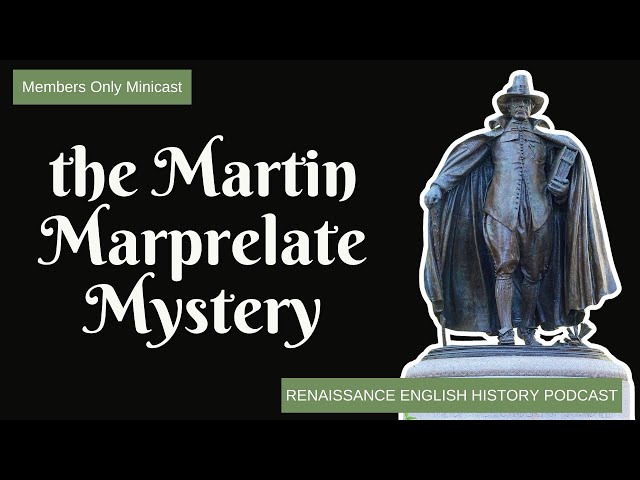
    The Martin Marprelate Mystery


    The Martin Marprelate mystery is one of the most intriguing and controversial chapters in Elizabethan religious history. In the late 1580s, a series of anonymous satirical tracts published under the pseudonym Martin Marprelate, boldly attacked the Church of England’s hierarchy with biting wit and fearless dissent. These underground publications, which defied censorship and ignited fierce public debate, left both the government and church authorities scrambling to identify and silence the culprits.

    Who was behind these incendiary writings? How were they printed and distributed in secret? Let’s explore the origins, suspects, and lasting impact of the Marprelate tracts, unraveling the truth behind The Martin Marprelate mystery.

    Transcript of The Martin Marprelate Mystery

    So in this mini-cast, we are going to delve into the enigmatic and rebellious world of Martin Marprelate and the controversy that surrounded him. In the late 1580s, an anonymous figure under the pseudonym Martin Marprelate unleashed a series of scathing tracts that shook the very foundations of the Anglican Church.

    These tracts, filled with biting satire and sharp criticism, attacked the episcopacy and the established church hierarchy, leaving a significant mark on English religious history. Today, we’re going to talk about the origins, the context, and the mystery behind this notorious figure and his controversial writings.

    To understand the Martin Marprelate controversy, we must first set the scene in England during the late 16th century. The appointment of John Whitgift as Archbishop of Canterbury in 1583 marked the beginning of a strict crackdown on the Presbyterian movement within the Church of England. Whitgift, determined to maintain religious uniformity, initiated an era of intense censorship and suppression of dissenting voices.

    In 1586, the Star Chamber issued an edict that granted Archbishop Whitgift the authority to license and control all printing presses in the country. This move aimed to stifle any opposition and ensure that only approved religious and political ideas were disseminated.

    The Emergence of Martin Marprelate and Theories of Authorship

    It was within this climate of repression and control that the Marprelate tracts emerged, boldly challenging the ecclesiastical authorities and risking severe consequences for their creators. The true identity of Martin Marprelate has been shrouded in mystery, sparking speculation and debate among historians.

    One of the earliest suspects was John Penry, a passionate Welsh preacher known for his vehement criticism of the Church. However, the authorship of the tracts has been attributed to various individuals over the years. John Dover Wilson, in his 1912 book, suggested that the first three tracts were penned by the Welsh soldier Roger Williams, with Penry and the Warwickshire squire Job Throckmorton responsible for the later ones.

    Leland Carlson’s research in 1981 pointed to Throckmorton as the primary author, and further contributions to the debate came from Katharine Longley and Patrick Collinson, who proposed George Carleton; and Henry Martyn Dexter, who argued for Henry Barrowe. Recent scholarship—particularly Joseph Black’s comprehensive work—has provided the most authoritative answer.

    Job Throckmorton, with assistance from John Penry, was the main author behind the Marprelate Tracts. This collaboration involved not only writing, but also the clandestine printing and distribution of the incendiary pamphlets—evading the ever-watchful eyes of the authorities. The daring and ingenuity of these individuals ensured that the Marprelate Tracts left an indelible legacy in the history of English religious dissent.

    Secret Printing Operations and Key Players

    The production of the Marprelate Tracts was an audacious and highly secretive operation. John Penry, a Welsh Puritan, played a crucial role in this underground work. The logistics of printing and distributing these incendiary pamphlets required careful planning and constant vigilance to evade the authorities.

    Central to this covert operation was Robert Waldegrave, a skilled printer sympathetic to the Puritan cause. Waldegrave’s expertise and willingness to defy the law made him an invaluable asset. The press used to print the tracts was frequently relocated to avoid detection by government agents. This mobile press moved from place to place, operating in secret locations across the country. Notable sites included the home of Mistress Crane at East Molesey, Sir Richard Knightley’s estate at Fawsley, and the Whitefriars in Coventry, owned by John Hales. Each move was a calculated effort to stay one step ahead of the authorities, allowing the tracts to be produced and disseminated despite intense scrutiny.

    Penry’s dedication to the cause extended beyond the logistics of printing—he was instrumental in coordinating the distribution network that ensured the tracts reached their intended audience. This involved a network of sympathizers who helped circulate the pamphlets, further complicating the government’s efforts to suppress them. The clandestine nature of the operation added to the mystique and impact of the Marprelate Tracts, making them a significant thorn in the side of the Anglican establishment.

    The government was, of course, alarmed by the boldness and virulence of the Marprelate Tracts and responded with equal fervor. Recognizing the need to counter the influence of these pamphlets, the authorities hired professional writers to produce counter-tracts. Notable among these were Thomas Nashe, Robert Greene, and John Lyly, who were tasked with crafting witty and persuasive responses to Martin Marprelate’s attacks.

    One of the most colorful figures in this pamphlet effort was the renowned “Cavaliero Pasquale,” a pseudonym used by one of the anti-Marprelate writers. Although traditionally believed to be Thomas Nashe, some scholars have cast doubt on this attribution. Regardless of the true identity, Pasquale’s contributions were marked by sharp wit and a biting tone aimed at discrediting Martin Marprelate and defending the Anglican hierarchy.

    Francis Bacon, a prominent philosopher and statesman, also engaged in the pamphlet war. His work An Advertisement Touching the Controversies of the Church of England was a measured piece that critiqued both the Puritans and the bishops, reflecting Bacon’s desire for a more balanced approach to the religious disputes of the time.

    The Satirical Style and Impact

    Martin Marprelate’s tracts were characterized by a distinctive and irreverent style that set them apart from other religious writings of the period. They were a heady mix of nonsense, satire, protest, irony, and gossip, delivered with a pungent wit that resonated with common people. Martin’s primary target was the episcopacy, which he lambasted with mockery and derision, portraying Anglican dignitaries as corrupt and out of touch.

    The first tract, The Epistle, set the tone with its bold and provocative content. It attacked specific prelates with personal abuse and ridicule, attracting significant attention and sparking widespread debate. The tracts that followed—such as The Epitome, Certain Mineral and Metaphysical Schoolpoints, and Hay Any Work for Cooper—continued in this vein, combining serious theological arguments with a satirical edge that made them both entertaining and thought-provoking.

    The reception of the Marprelate tracts was mixed. While they were celebrated by Puritans and those critical of the Anglican Church, they were condemned by the authorities and loyalists. The tracts’ popularity and their ability to stir public opinion underscored the power of the written word and the growing influence of print in shaping religious and political discourse in Elizabethan England.

    The Marprelate tracts were printed in a series of clandestine locations, each chosen to evade the watchful eyes of the authorities. The first tract, The Epistle, was printed in October 1588 at the home of Mistress Crane in East Molesey. Mistress Crane, born Elizabeth Hussey, was the widow of Anthony Crane, a master of the Queen’s household. Her support and the secrecy of her home made it an ideal starting point for the tracts’ production.

    After East Molesey, the press was moved to Sir Richard Knightley’s estate at Fawsley near Northampton. Knightley was a known sympathizer of the Puritan cause, providing a safe haven for the Marprelate press. The press then relocated to the Whitefriars in Coventry, the home of John Hales and his wife, Frideswide Wood.

    The constant movement was necessary to stay ahead of the authorities, who were relentless in their pursuit of the subversive printers. Further relocations included sites like Wolston and Hasely, where the tracts continued to be printed despite increasing pressure from the government. Each move involved significant risk and required the cooperation of various Puritan sympathizers who were committed to the cause of reforming the Church.

    In response to the Marprelate tracts, the authorities commissioned a wave of counter-literature aimed at discrediting Martin Marprelate and defending the Anglican establishment. John Lyly’s Pap with a Hatchet was one of the most notable responses, characterized by its wit and satire. Lyly’s work sought to undermine the credibility of the Marprelate tracts by mocking their style and content.

    Thomas Nashe was another prominent writer of the period. He contributed with An Almond for a Parrot. Like Lyly, Nashe employed humor and satire to counter the influence of Martin Marprelate. There were  also anti-Marprelate plays performed in 1589. Though these works have unfortunately been lost to history, they likely followed the same satirical and mocking tone as the written counter-tracts, aiming to engage and persuade the public through performance.

    The Final Pamphlets and a Lasting Legacy

    The final tracts by Martin Marprelate continued the aggressive critique of the Anglican hierarchy. The Just Censure of Martin Junior was among the last pamphlets produced, attributed to Martin’s supposed sons. More Work for Cooper, intended as a sequel to Hay Any Work for Cooper, was interrupted by the seizure of the press. Despite the crackdown, John Penry managed to issue The Protestation of Martin Marprelate in September 1589, the last of the Marprelate series.

    Henry’s relentless activism eventually led to his capture and execution in 1593, charged with inciting rebellion. Through his writings, the legacy of the Marprelate tracts endured beyond their immediate impact. During the English Civil War, Leveller pamphleteer Richard Overton embraced Marprelate’s rebellious spirit, publishing tracts under the name Martin Marpriest.

    This continuation of the Marprelate legacy highlights the enduring appeal of their satirical critique. The significance of the Marprelate tracts in the history of English satire cannot be overstated. Critics like C. S. Lewis recognized the originality and influence of these pamphlets, noting their innovative use of humor and wit to challenge authority.

    The controversy was a defining moment in the history of English religious and political discourse. Through a series of bold and satirical tracts, Martin Marprelate and his collaborators challenged the authority and corruption of the Anglican Church, leaving a lasting legacy in both religious reform and literary history. The tracts’ clever use of humor and satire not only entertained but also provoked critical thought, making them a powerful tool for dissent and change.

    Related links:

    Episode 62: Printing from Caxton to Shakespeare
    John Day: Early Printer

  • Henry VIII’s Secret Mission to Rome: How He Went Behind Wolsey’s Back

    Henry VIII’s Secret Mission to Rome: How He Went Behind Wolsey’s Back


    Henry VIII’s secret mission to Rome in 1527 marked a dramatic turning point in both his personal life and English politics. As his marriage to Katherine of Aragon grew increasingly untenable and his relationship with Anne Boleyn intensified, Henry began to doubt Cardinal Wolsey’s ability—or willingness—to secure the annulment he so desperately wanted.

    In a bold and highly confidential move, Henry bypassed his chief minister entirely, sending his trusted secretary William Knight on a covert diplomatic mission to the Pope. This secret effort to obtain a papal dispensation, hidden even from Wolsey himself, revealed Henry’s growing mistrust and marked the beginning of the Cardinal’s slow fall from grace. The mission may have failed in Rome, but it succeeded in reshaping the power dynamics at the English court.

    Transcript of Henry VIII’s Secret Mission to Rome: The Plot That Even Wolsey Didn’t Know About

    Today, we’re going to talk about Henry VIII’s secret mission—a covert diplomatic move that he deliberately hid from Cardinal Wolsey early on. As Henry pursued his divorce from Katherine of Aragon, he began to suspect that Wolsey might not be the best man for the job. So he launched a quiet diplomatic effort that completely skirted around Wolsey’s authority.

    In September 1527, Henry VIII quietly sent his newly appointed secretary, William Knight, on a highly sensitive mission to Rome. It was so secret, in fact, that he explicitly ordered Knight not to inform Cardinal Wolsey—the very man who had, until then, controlled every detail of Henry’s diplomatic and religious affairs.

    Knight’s mission was to secure a special dispensation from the Pope—one that would allow Henry to marry a woman whose sister he had previously slept with. It was a legal sleight of hand designed to undo his marriage to Katherine without challenging the validity of the original papal dispensation that had allowed that union. So why did Henry go behind Wolsey’s back?

    By the autumn of 1527, Henry’s confidence in Wolsey was faltering. Despite more than 20 years of loyal service, the Cardinal had failed to deliver an annulment. Worse, Henry began to suspect that Wolsey’s loyalties leaned more toward Rome than toward the king’s personal desires.

    His relationship with Anne Boleyn was growing more serious—Henry wasn’t just trying to escape Katherine anymore. He was planning a future with Anne. That meant action—not delays, excuses, or papal hesitation. So he made a secret move.

    William Knight, newly appointed as secretary, was discreet and still operating under Wolsey’s radar. The instructions were incredibly specific: travel to Rome, but stop first in France—because Wolsey was in France at the time. Henry wanted Knight to lull the Cardinal and others into a false sense of normalcy.

    Then, once in Italy, Knight was to request a papal dispensation—not for a divorce, but for remarriage on the basis of affinity: in other words, permission to marry a woman whose sister he had previously had relations with. The woman, of course, was Anne Boleyn. The sister was Mary Boleyn.

    And so Knight did as instructed: he traveled first to France, where he stayed just long enough to maintain the illusion. Then he continued on to Rome, carrying with him one of the earliest—and most secret—moves in Henry’s campaign to remarry.

    Then, once the coast seemed clear, he headed toward Rome—but it didn’t stay quiet for long. Rumors began swirling, and Wolsey got wind of the plan—perhaps through court gossip, perhaps through his network of informants.

    Either way, Henry panicked. He blamed the leak on someone close to him and ordered Knight to take an entirely revised version of the document instead—one that was even more explicit and more confidential.

    Henry instructed that the new dispensation be shown only to Pope Clement and his most trusted advisors. No one else—not Wolsey, not any other cardinal—was to see it. He even insisted that it be delivered only to men whom he was certain would “never disclose it to no man living, for any craft, the Cardinal or any other confined.”

    But even with this new version, things didn’t go as planned. Knight struggled to gain access to the Pope. Political pressure in Rome was intense—Clement was essentially being held hostage by Emperor Charles V after the Sack of Rome. Granting any dispensation, especially one so clearly engineered, was extremely risky.

    Knight alone couldn’t get the job done. So by December, Wolsey finally realized the scope of the situation. Knight’s mission had stalled, and the Boleyns were making end runs around him. So Wolsey inserted himself—but not by removing Knight. Instead, he brought in reinforcements.

    He turned to Gregory di Casale, an Italian diplomat born in Rome who had lived for a time in England and was now stationed at the Vatican. Casale had the charm, the connections, and the political savvy to succeed where Knight had not. He used both diplomacy and bribery—offering 10,000 ducats and a 3,000 crown salary (more than some bishops earned) to help open the right doors.

    Meanwhile, the Boleyns continued their own maneuvering. John Barlow, Anne’s chaplain and a fiery reformist, tracked Knight down in Parma and acted as a courier between Knight and the English court.

    Around the same time, they also turned to Robert Wakefield, a Hebrew scholar from Cambridge fluent in Latin, Greek, and Aramaic. Wakefield argued forcefully that Henry’s marriage to Catherine violated divine law, not just church law, and that the Levitical prohibition was binding on Christians. It was precisely the sort of scriptural support Henry needed.

    Crucially, Wakefield had been identified and promoted—not by Wolsey, but by Thomas Boleyn. Wolsey’s grip on power was slipping. Ambassadors like the Spanish ambassador, de Mendoza, were already reporting that Anne Boleyn had overtaken Wolsey’s influence. Mendoza even noted that Anne was answering the king’s summons for visitors—a role that Wolsey once controlled.

    Reformers and evangelicals were also beginning to suffer under Wolsey’s harsh measures, including Robert Barnes, who had already been punished once for preaching. This time, he was imprisoned for distributing Tyndale’s banned New Testament—and then staged a dramatic escape, leaving a pile of clothes and a suicide note beside the River Nene, before joining Luther in exile.

    So, Knight’s mission had ultimately failed. By early 1528, Pope Clement had fled Rome for Orvieto, and no formal decision was forthcoming. But the real result had already happened: Henry acted without Wolsey. Anne was asserting herself politically, and the entire operation—though unsuccessful in Rome—marked the beginning of Wolsey’s slow and irreversible fall.

    By the way, that whole story of Robert Barnes I found fascinating. I just kind of skipped over it with one sentence. Unfortunately, the historical record is really sketchy on how he escaped, because he was supposedly in custody—and then he got out of custody, left this pile of clothes and a note saying he was ending his life, and slipped across the Channel.

    He made it to Antwerp, and then all the way to Wittenberg, to Luther himself. But how he got out of custody to leave those clothes and that note is something historians still don’t know. At the time, the record was more concerned with painting him as a heretic and less concerned with how he managed to escape the authorities.

    Some scholars suggest that he wasn’t locked in a high-security prison like the Tower. He might have been just under scrutiny somewhere—a more relaxed area of confinement, maybe at a university or a religious house in Cambridge. He was apparently in Cambridge at the time, and that might have allowed him a bit more movement—at least enough to slip away.

    It’s also possible he had help. He still had supporters, and Cambridge was a major hotbed of reform. So people might have helped him—and it’s even possible the authorities were complicit, or at least indifferent.

    That’s Robert Barnes—and of course, he escaped to Wittenberg and became something of a Protestant celebrity there. And so, the English government wasn’t exactly keen on broadcasting the details of how he got out—but he did. I find it fascinating.

    So, that’s a little bit about these early political maneuverings that were happening around the time Henry stopped trusting Wolsey completely and tried to go around him a bit. It was also the earliest inkling for Wolsey that he might be starting to lose his grip on power.

    Related links:
    Episode 180 Cardinal Wolsey Part 1
    Stories of Tudor Annulments
    Great Escapes: Wild Tudor Prison Breaks (That Weren’t at the Tower)

  • Cromwell and Cranmer: Acts of Loyalty

    Cromwell and Cranmer: Acts of Loyalty


    Cromwell and Cranmer were two of the most pivotal figures in the English Reformation, working together to lay the legal and theological foundations of the Church of England. While Henry VIII often takes the spotlight, it was Cromwell and Cranmer who, behind the scenes, implemented the critical reforms that would forever change English religious life.

    Cromwell, with his sharp political maneuvering, and Cranmer, with his deep theological insights, formed an unlikely but effective partnership. However, when Cromwell fell from grace in 1540, it was Cranmer who risked everything to defend him, demonstrating a remarkable act of loyalty.

    This story of Cromwell and Cranmer reveals the depth of their relationship and their enduring influence on the course of English history.

    Transcript of Cromwell & Cranmer: Acts of Loyalty:

    Today, we’re going to talk about the relationship between Thomas Cranmer and Thomas Cromwell. This is another kind of Wolf Hall-adjacent video. Last night in the U.S. was the finale of The Mirror and the Light on PBS. This was actually the second time I’ve watched it—I saw it when it aired in the U.K. in the fall and did a whole series of Wolf Hall reaction videos, which you can check out.

    So yes, this was my second time watching it, and I cried a lot the first time. I cried again this time. There’s just something about the pacing and the way it builds up. That ending, showing all of the different activities and reactions—Katherine Howard getting dressed in her wedding gown, Princess Mary’s look of mild disgust, Rafe Sadler crying and having his breakdown, even Call-Me-Risley was having a hard time. Just all of these people reacting as Cromwell is being led to the scaffold—it gets you.

    One thing I realized the last time I did those reaction videos is that I haven’t talked a whole lot about the relationship between Thomas Cranmer and Thomas Cromwell. These two men were really the architects of Henrician Reformation—Henry’s break with Rome. One laid down the legal framework, and the other the theological one.

    In the finale, they show Cranmer writing a letter in support of Cromwell. Cromwell is actually kind of surprised by it—he says it’s about as good as he could have hoped for. The show does a great job illustrating the support Cranmer gave Cromwell at the end and his emotional reaction. So I thought I’d take a few minutes to talk about these two men and how Thomas Cranmer reacted to Thomas Cromwell’s arrest and execution. Let’s get into that.

    When people think about the English Reformation, they usually picture Henry VIII, who was of course larger th  an life. But behind him stood two much quieter men who, in their own way, did more than anyone else to actually build the new Church of England.

    And that would be Cromwell and Cranmer—the two Thomases. I think I did an episode very early on in my podcast, I think it was around episode seven or something from 2009, and it was called A Tale of Two Thomases: Cranmer and Cromwell. I think I did another one, A Tale of Two Thomases: Part Two, and it was Wolsey and More.

    Anyway, Cromwell and Cranmer—the two Thomases. These men didn’t start off as natural allies. Cromwell came from the rough streets of Putney, the son of a brewer or a blacksmith, depending on who you asked. He made his way up through the hard school of European mercenary camps, merchant banking, and then legal work.

    Cranmer, by contrast, was a Cambridge scholar—mild, bookish, and very cautious by nature. Their paths first really crossed in the 1530s during Henry’s increasingly desperate efforts to annul his marriage to Katherine of Aragon, so, very early 1530s, Cranmer—who had been involved in theological studies about marriage and divorce—caught Henry’s eye when he proposed using university scholars to back up Henry’s case instead of relying on the Pope.

    Cromwell, who was already working under Cardinal Wolsey and then directly for Henry after Wolsey’s fall, saw Cranmer’s usefulness immediately. They weren’t close friends—they didn’t spend evenings drinking together or playing cards—but they trusted each other’s judgment. And more importantly, they needed each other.

    Cromwell could manipulate Parliament and the law to force through the changes Henry wanted. Cranmer could give those changes the religious cover—he was the theological side of things. They shared something even deeper: they shared a belief that England needed religious reform, and that it had to happen carefully if it was going to survive Henry’s unpredictable moods.

    The English Reformation wasn’t something that happened with a lightning strike. You didn’t just go to bed one night and wake up the next morning Protestant. It took decades—four monarchs, actually. You could make a case that even the English Civil War was a continuation of the Protestant Reformation in England.

    And there were phases. There was the first phase with Cromwell and Cranmer—and that’s what we’re going to talk about. Then there was the Elizabethan Settlement, the Counter-Reformation under Mary I, and Edward’s Protestant moves. So, it happened in multiple stages. It was a very dynamic process. It didn’t just happen overnight.

    Cromwell and Cranmer were behind nearly all of the initial steps in the 1530s. Cromwell was Henry’s Vicegerent in Spirituals—the man put in charge of church affairs. He handled the dirty work: forcing monasteries to close, reorganizing church finances, and writing laws like the Act of Supremacy in 1534 that formally declared Henry the Head of the Church of England.

    Meanwhile, Cranmer laid the intellectual groundwork. As the Archbishop of Canterbury, he quietly steered English religious thought away from Rome. It was Cranmer who oversaw the annulment of Henry’s marriage to Katherine of Aragon. It was Cranmer who helped ease Henry’s shifting  theological positions into something vaguely Protestant—without ever making Henry feel like he was becoming a Lutheran.

    They worked almost in tandem. Cromwell managed the politics and the practicalities. Cranmer crafted the religious arguments. And together, they pushed forward reforms like placing the English Bible in parish churches, making changes to liturgy, and initiating doctrinal shifts such as the rejection of papal authority.

    You can even see this dynamic in the Great Bible that Henry released. In its imagery, Henry receives the word from the Lord and then passes it—on one side to Cranmer, who gives it to the clergy, and on the other side to Cromwell, who passes it to the nobility. From there, it trickled down through the different layers of society to the people at the bottom. Neither man moved faster than Henry allowed, but behind the scenes, they were building something far more radical than Henry probably even realized.

    In the summer of 1540, after years of carefully surviving Henry’s moods, Cromwell finally misstepped. The marriage he arranged between Henry and Anne of Cleves was a disaster from the moment Henry met her.

    By that point, Cromwell had also made too many enemies. Powerful nobles resented his low birth and rapid rise, and conservatives at court were eager to roll back his Protestant-leaning reforms. On June 10th, Cromwell was arrested during a council meeting—dragged away without even being allowed to speak in his own defense.

    Most of his so-called allies scattered immediately. But Cranmer, normally the most cautious man at court, took an enormous risk. He wrote a letter directly to Henry VIII, almost pleading for Cromwell’s life. In the letter, he didn’t just defend Cromwell’s character—he reminded Henry of how much Cromwell had done for him, pointing out that no one had served the king’s wishes with more energy or loyalty.

    But it was also like, “You know, I believed him to be this—but if he’s really that, then who can you even trust anymore?” In fact, I’ll read you part of the letter now. He says:

    “I heard yesterday in your Grace’s Council that he [Cromwell] is a traitor. Yet who cannot be sorrowful and amazed that he should be a traitor against your Majesty? That he, who was so advanced by your Majesty; he, whose surety was only by your Majesty; he, who loved your Majesty—as I ever thought—no less than God; he, who studied always to set forward whatever was your Majesty’s will and pleasure; he, who cared for no man’s displeasure to serve your Majesty; he, that was such a servant, in my judgment, in wisdom, diligence, faithfulness, and experience, as no prince in this realm ever had; he, that was so vigilant to preserve your Majesty from all treason, that few could be so secretly conceived but he detected the same in the beginning. If the noble princes of memory—King John, Henry II, and Richard II—had had such a counsellor about them, I suppose that they should never have been so traitorously abandoned and overthrown as those good princes were. I loved him as my friend, for so I took him to be; but I chiefly loved him for the love which I thought I saw him bear ever towards your Grace, singularly above all others. But now, if he be a traitor, I am sorry that I ever loved him or trusted him, and am very glad that his treason is discovered in time. But yet again, I am very sorrowful—for whom shall Your Grace trust hereafter, if you must not trust him? Alas, I bewail and lament Your Grace’s chance herein. I pray God continually, night and day, to send such a counsellor in his place—whom Your Grace may trust, and who, for all his qualities, can and will serve Your Grace like he did, and who will have so much solicitude and care to preserve Your Grace from all dangers, as I ever thought he had.”

    For a man like Cranmer, who was so cautious, that was a really big deal—to have said all of that, to have defended Cromwell’s character, and to have reminded Henry how much Cromwell had done for him. In some ways, Cranmer was almost putting his own neck on the line for this man who had been branded a traitor. Cranmer was really the only person who stuck up for Cromwell like that.

    Henry ignored it, of course. Cromwell was executed on July 28, 1540. Cranmer’s letter remains, and it’s a record of true loyalty at a court where most people were really only ever loyal to their own survival. Of course, like Cromwell said in the episode itself, he has to temper all of the good stuff with: “But if it’s not true, then he’s a traitor.” Then, of course, he says, essentially, I’m very glad you found out about it—but he certainly went out of his way to list all the good that Cromwell had done first.

    So after Cromwell’s death, Cranmer must have known he was more exposed than ever. The man who had protected the reformers—who could steer Henry’s anger away from them—was gone. Cranmer survived, but he did so in a much more precarious world.

    Still, that letter to Henry shows something very rare—not just political calculation, but something real. Cranmer and Cromwell had built the English Reformation side by side, brick by brick. In the end, Cranmer couldn’t save him. But he sort of tried—when almost no one else did. And in Henry’s world, that kind of loyalty was almost unheard of.

    So I’d love to know what you think: was Cranmer’s loyalty genuine, or was it a survival strategy? Should he have done more? Could he have done more? Let me know in the comments what you think. And I’d also love to know what you thought about the series as well. I just love it—it’s just poetry. It’s so beautiful.

  • Dissolution of the Monasteries: Fate of Monks and Nuns

    Dissolution of the Monasteries: Fate of Monks and Nuns


    The dissolution of the monasteries was one of the most seismic events in English history, reshaping religious life, society, and the landscape itself between 1536 and 1540. Ordered by Henry VIII and carried out by Thomas Cromwell, the Dissolution saw over 800 monasteries, priories, abbeys, and convents across England closed, stripped, and dismantled. But beyond the ruined buildings, this period left thousands of monks, nuns, and friars suddenly displaced—cut off from their communities, vocations, and way of life.

    In this post, we’ll explore what really happened during the dissolution of the monasteries and what it meant for the people who lived through it.

    Transcript of What Happened to England’s Monks and Nuns?

    Today, we’re going to talk about the dissolution of the monasteries—very briefly. The dissolution is a massive topic, right? Books—many, many books—have been written about it, so we’re not going to dig in deep. This is just a quick skim.

    I’ve done fuller episodes on this over the years, especially back in 2017 when it was the 500th anniversary of the 95 Theses. I did a big series on the Reformation, including a full episode on the Dissolution. I’ve also done lots on Cromwell and his role in it. So if you want to dig deeper, I’ll put links to some of those episodes below.

    Today, we’re just going to talk briefly about some of the famous priories and monasteries that were dissolved, as well as what happened to the monks and nuns whose livelihoods were taken away.

    Between 1536 and 1540, more than 800 religious houses across England were closed, stripped, and scattered. It was one of the most dramatic transformations in English religious life—and it wasn’t just about breaking with Rome. Henry VIII wanted power. He wanted wealth. And Cromwell delivered both.

    Monasteries were more than places of prayer. They were hospitals, libraries, schools, homes, even hotels for weary travelers. Their destruction wasn’t a neat, quiet thing. It was loud. It was public. It was brutal. For generations, they had shaped the spiritual rhythm of English life—and suddenly, they were just gone, dismantled brick by brick, altar by altar, with the king’s blessing.

    Let’s talk about some of the famous monasteries and abbeys that fell. We’ll start with Glastonbury Abbey. Actually, people have noticed I have a lot of Glastonbury stuff around behind me—those are paintings of Glastonbury. I’ve got some cards you can’t see, but whatever. I’ve got some paintings over here. I love Glastonbury. It’s one of my favorite places.

    Nowadays, it has this kind of woo-woo, new-age-y feel to it—which is really cool, too. It’s a neat mix of the mystical and the historical. I really love it. Anyway—Glastonbury Abbey. It was ancient, wealthy, and steeped in legend.

    It was rumored to be the resting place of King Arthur. Its abbot, Richard Whiting, was in his eighties when Cromwell’s commissioners came. He refused to surrender—and that sealed his fate. In 1539, he was dragged to Glastonbury Tor (which is the tower I have paintings of back there—it’s that tower on the hill). He was hanged, drawn, and quartered as a traitor—at over eighty years old. thank you very much.

    The abbey’s treasures were seized, its library was scattered, and its sacred spaces were left to rot. This was sacrilege to many people. Obviously, this went beyond politics. It was just sacrilegious.

    Then there’s Fountains Abbey in Yorkshire. It had been one of the wealthiest Cistercian houses in Europe. Its lands stretched for miles. Its buildings were grand. The monks surrendered in 1539 without any violence. The abbey did not survive. The buildings were gutted, the valuables were hauled off, and the estate was handed to one of Henry’s men. Today it stands in ruins—but the scale still impresses.

    Tintern Abbey—another one—was set in a river valley in Wales. It was dissolved in 1536 and was one of the earliest casualties of the Dissolution. Initially, there was this idea that only the most corrupt houses would be targeted—or the smallest ones that weren’t really making a profit. But then it moved on to everything.

    Like, they didn’t really have a consistent process. It was just, “Oh, there’s money here, there’s wealth, it’s an abbey or a monastery—let’s get rid of it.” So there wasn’t really any kind of method to it at all.

    Tintern was one of the first. Its monastic life ended quietly. The ruins survived, and by the 18th century it had become a favorite subject for poets and painters—transformed from a spiritual center into a symbol of picturesque decay.

    Waltham Abbey had royal connections and deep historic roots. It was said to be the resting place of Harold Godwinson. It closed in 1540. Its buildings survived for a while, but over time they were also dismantled.

    And the final one we’ll mention is Lewes Priory. It wasn’t just dissolved—it was obliterated. Cromwell’s agents used gunpowder to destroy what remained, leaving very little behind. It was one of the most dramatic erasures of a religious house.

    So what happened to all of the people who were living there—the monks and the nuns?  Well, for the monks, there were a couple of different options. What happened next depended on your age, your rank, and your obedience.

    Abbots who cooperated were often rewarded with very generous pensions. Some lived out their days in relative comfort. The average monk—especially the younger ones—got far, far less.

    Many were given just very small stipends and told to fend for themselves. A few found work as schoolmasters or chaplains. Some tried to carry on their religious lives privately, or they became secular clergy under the new Church of England. Others simply vanished into lay life, taking up farming or a trade.

    For men who had spent decades in quiet routine, the upheaval was jarring—and often humiliating. Not everyone went quietly. A handful of abbots refused to surrender their houses, like we said with Glastonbury, they were arrested, tried for treason, and executed.

    In addition to Glastonbury’s Richard Whiting, there was also Reading’s Hugh Cook and Colchester’s John Beche. They died as criminals in the eyes of the crown—martyrs to some, rebels to others.

    Now, nuns had a very different outcome. They were in a much worse position. They weren’t eligible for full pensions, and because they were nuns, they weren’t allowed to marry under church law.

    With no roles left in a reformed church, many had to go live with relatives. Some gathered in informal communities of ex-nuns. A few appealed for housing support. Most faded from the record—their lives effectively erased.

    Friars were the most vulnerable—especially the Franciscan friars. They were left absolutely destitute. Their orders did not own property, so they had nothing to fall back on. Some begged, some preached quietly, and others just disappeared completely. There was no safety net for them at all.

    Now, that’s just talking about the monks and the nuns. Then there were the communities they served—people who had relied on these houses of worship, these monastic houses, for centuries. Like I said, they were schools, hospitals—they gave out alms to the poor. They were an essential part of the community.

    And suddenly, Henry just sold off their land and the buildings to the highest bidder. His henchmen—his people who were loyal to him—got to buy all of those properties. This was also right when the wool trade was starting to take off even more and become more profitable.

    So they started enclosing all the lands to graze sheep. All of this common land was gone. And those new landowners weren’t about to start handing out alms or providing the same services that the monasteries had before.

    It was a real gap—a real hole—for people in their communities. And it took a long time to figure out who was going to replace those services and how they were going to be replaced. It was a massive period of transition for towns and villages that had relied on these spaces. Yeah—a massive upheaval for people all around, just so that Henry could have more money, land, wealth, power, and be in charge of the Church.

    Anyway, the ruins of many of these monasteries still stand, but the people are gone. Of course, the monks, the nuns, the friars didn’t just lose their buildings—they lost communities. They lost their vocations. They lost purpose.

    Cromwell’s reform wasn’t just about power or profit—it was about control. It left behind a country that had been spiritually uprooted, piece by piece, stone by stone. So there we have it—a little bit about the Dissolution of the Monasteries and some of how people were affected by it.

    Related links:
    Medieval Monks and Nuns weren’t as Promiscuous as We All Think They Were
    Episode 088: The Henrician Reformation

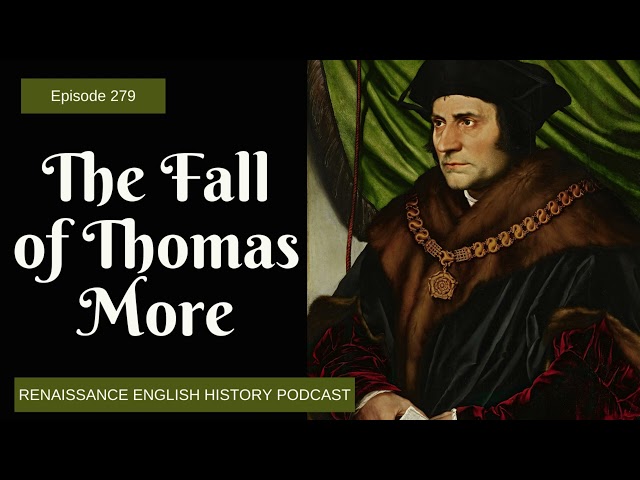
  • The Fall of Thomas More: Henry VIII’s Friend Turned Traitor?

    The Fall of Thomas More: Henry VIII’s Friend Turned Traitor?


    The fall of Thomas More is one of the most dramatic and tragic episodes of the Tudor era. Once a trusted advisor and close companion to Henry VIII, More’s steadfast loyalty to the Catholic Church ultimately led to his downfall. As the king sought to break from Rome and establish his supremacy over the Church of England, More’s refusal to compromise his beliefs sealed his fate.

    His story is a cautionary tale of loyalty, power, and conviction in the face of absolute monarchy. But was he a principled martyr or a rigid idealist? This deep dive into the fall of Thomas More explores the man behind the legend and the fateful choices that led to his execution.

    Rough transcript of The Fall of Thomas More: Henry VIII’s Friend Turned Traitor?

      Today, we’re going to talk about the downfall of Thomas More. There are a lot of opinions about Thomas More. Some people consider him to be a martyr. Other people think he was stubborn and doesn’t deserve to be so venerated. So we’re going to talk today about Thomas More’s relationship with Henry, how deep it went, and what went so horribly wrong. So let’s discuss.

    Thomas More and Henry VIII were once the closest of companions. They were bound by a shared love of learning, theology, and sharp debate. More was no ordinary courtier. He was one of the most brilliant minds of his age, a lawyer, philosopher, and statesman whose intellect Henry both admired and respected.

    They exchanged letters. They engaged in lively theological discussions. Henry invited More to spend time with him at court. He relished the company of a man whose wisdom he trusted. More, for his part, saw himself as a loyal subject, bound by duty to serve the king while staying true to his principles.

    But loyalty to Henry VIII was a dangerous thing. It was expected to be absolute. Unwavering and, above all, adaptable, Henry’s needs would change and those who failed to change with them, who clung to their own beliefs rather than bending to the king’s will, were discarded, often violently. Thomas More believed an unshakable truth rooted in the authority of the Church and the Pope.

    Henry, however, believed in his own supremacy. Particularly, when the Pope refused to annul his first marriage. At first, Thomas More tried to walk a careful line, staying silent rather than opposing Henry’s break with Rome outright, but silence was not enough.

    In 1534, Henry demanded that all of his subjects swear an oath recognizing him as the supreme head of the Church of England. More refused. That refusal, more than anything else, sealed his fate. Henry had once called More a friend. Now, he called him a traitor, and for that, More would pay with his life. Let’s talk about Thomas More. Thomas More was not born into nobility, but his intellect, his deep religious convictions set him apart from an early age.

    Thomas More’s Early Life and Education

    He was born in 1478, the son of a successful London lawyer. He received an excellent education first at St. Anthony’s School, and then he went to Oxford. It was there that he developed a passion for classical learning, philosophy, and theology, subjects that would define his life. His father insisted that he train in law, and though More followed that path, his interest remained broad.

    More’s devout Catholicism wasn’t just a private matter, it shaped his entire worldview. As a young man, he actually even considered joining the priesthood. He spent time with the Carthusian monks and he adopted some of their rigorous spiritual discipline. Though he ultimately chose to pursue a legal and political career, he did remain deeply pious.

    He attended mass daily. He also wore a hair shirt as an act of penance. His faith wasn’t something that he took lightly. It was the foundation of his identity. Even before Henry became king, More had ties to the royal family. He was already an esteemed, well respected lawyer and scholar when he first encountered the young Prince Henry, who was himself being raised with a humanist education that emphasized the classical learning in theology and statecraft.

    More wasn’t his official tutor. That role belonged to men like John Skelton and John Skelton, Lord Mountjoy. We did an episode years ago on Tudor tutors. The tutors of the Tudors. I should go back and revisit that. Anyway, he was part of the circle of intellectuals, though, that surrounded Henry’s education.

    The prince, with his sharp mind and deep interest in theology, was naturally drawn to More’s wit, wisdom, and humanist ideals. When Henry unexpectedly became the heir to the throne in 1502, after the death of his older brother, Arthur, More may have played a role in shaping the prince’s understanding of governance and philosophy.

    By the time Henry ascended to the throne in 1509, Thomas More was already one of the kingdom’s most respected thinkers. It was during these early years that More’s influence was at its peak. He and Henry shared their love of learning, and More encouraged the king’s early reputation as a scholar ruler.

    At this point, Henry was still a fierce defender of Catholicism. More undoubtedly would have reinforced the young king’s belief in papal authority and the importance of church doctrine. Ironically, the very beliefs that would later put them at odds when Henry sought to break from Rome. Henry often sought out More for discussions on governance, philosophy, and in 1518 he brought More into royal service as a member of his Privy Council.

    From there, More’s rise was rapid. He was knighted in 1521. He became the Chancellor of the Duchy of Lancaster. In 1529, Henry made a fateful decision. Cardinal Wolsey, of course, had failed to secure the annulment of Henry’s marriage to Katherine of Aragon, and Cardinal Wolsey was on the way out, his star was fading.

    More was appointed Lord Chancellor. This was the highest legal office in England. Wolsey had been that before. He was the first layman to hold the position, which showed Henry’s trust in him. But while More was loyal to the king, his greater loyalty was always going to be to the church. And as Henry’s battle with Rome escalated, More found himself in an impossible position.

    Conflict with Henry VIII: The Break with Rome

    Thomas More had always been a loyal subject, but his loyalty had limits. As Lord Chancellor, he was responsible for enforcing the king’s laws, but when those laws clashed with his faith, he couldn’t compromise. And Henry VIII was no longer simply a king, he was a man who was obsessed with securing his legacy.

    His marriage to Katherine of Aragon had not produced a male heir, and he was convinced that his lack of sons was divine punishment. By the late 1520s, he was determined to annul his marriage and take Anne Boleyn as his queen. But the Pope, under pressure from Katherine’s nephew, Charles V, refused to grant the annulment.

    More didn’t see this as a marital dispute. This was actually seen as a direct challenge to the authority of the church. Henry thought that he had the right to determine his own affairs, even if it meant breaking with Rome. More was a staunch defender of papal supremacy, and he couldn’t accept this. But, rather than openly defy the king, he chose a path of careful silence.

    He didn’t speak against the annulment, but he didn’t support it either. In More’s mind, his silence should have been enough to keep him out of danger. Henry, though, saw this silence as resistance. By 1531, Henry had forced the English clergy to acknowledge him as the supreme head of the Church of England as far as the law of Christ allows.

    This wasn’t yet a full break from Rome, but it was a clear step toward Henry asserting his authority over the Church. More was deeply troubled by this shift, but he was still Lord Chancellor, and he tried to get through this without openly defying the king. Then, in 1532, the tension grew when Henry pressured the clergy into accepting the submission of the clergy, which effectively placed the English church under royal control.

    This was a direct attack on papal authority, something that More could not support. In May of 1532, More resigned as Lord Chancellor. He cited ill health. In reality, he knew that he could no longer, in good conscience, serve a king who was moving toward a full break with Rome. By stepping down, he hoped to retreat from public life and avoid further conflict.

    The Final Stand: Refusal to Swear the Oath

    But Henry was not about to let his former friend slip away so easily. More’s quiet refusal to support the king’s religious policies didn’t go unnoticed, and his absence from Anne Boleyn’s coronation in 1533 was a bold, if silent, act of defiance. It was clear that he had chosen his side. Henry was now fully committed to asserting his authority over the church, and he could not tolerate any challenge even from a man he had once trusted.

    More had tried to avoid direct confrontation, but Henry’s England had no room for neutrality. And, soon his silence would not be enough to save him. By 1534, Henry had achieved what once had seemed unthinkable. He had broken England away from the authority of Rome and declared himself the supreme head of the Church of England.

    With Anne now as his queen and Katherine of Aragon cast aside, Henry was determined to solidify his power and silence any opposition. Parliament passed the Act of Succession, requiring all subjects to recognize Henry’s marriage to Anne. and accept any children that they had as legitimate heirs. But it wasn’t just a statement on succession.

    This was an ideological test, a demand for total loyalty. To enforce it, Henry required his subjects to swear an oath, affirming both legitimacy of Anne’s children and his supremacy over the church. The wording was carefully crafted. Swearing the oath meant acknowledging that the Pope had no authority in England.

    This was an outright rejection of Rome, and he was making his subjects agree to it. This was where More, who had spent years walking the tightrope between loyalty to the king and loyalty to his faith, could no longer maneuver. When called on to take the oath in April 1534, Thomas More refused. He didn’t openly condemn Henry or his new marriage, but neither would he swear to something that denied the Pope’s authority.

    His legal training made him cautious. He avoided outright treasonous speech, knowing that he could be imprisoned or executed Henry’s supremacy. Instead, he simply stayed silent. believing that his lack of affirmation should not be treated as a rebellion. But Henry, of course, saw things quite differently.

    Imprisonment and Trial

    Silence to him was defiance. If More, one of the most respected legal minds in England, refused the oath, what would stop others from questioning Henry’s authority? More’s refusal was dangerous. It set a precedent. It showed that loyalty to Rome could still exist in England. And on April 17, 1534, Thomas More was arrested and taken to the Tower of London.

    At first, he was treated with some leniency. He was allowed visits from his family and access to books. But, as the months passed, his condition worsened. Henry and his ministers, particularly Thomas Cromwell, were determined to break him. More’s family pleaded with him to take the oath, to say the words that could save his life.

    But Henry himself may have still hoped for More’s submission. He had once admired the man, and executing him would be a public stain on his reign. But More would not yield. He had given everything in service to Henry, his wisdom, his loyalty, his legal expertise. But he would not give up his conscience.

    And for that, he would pay the ultimate price. Locked away in the Tower of London, Thomas More found himself in a grim but strangely familiar position. He had prosecuted men for heresy, seen others sent to their deaths for defying the Church, and now he was the one awaiting a fate decided by a king who had once called him a friend.

    But if Henry thought imprisonment would break More’s will, he underestimated the depth of his resolve. Like we said, at first, his imprisonment wasn’t harsh. He was allowed books. He had writing materials. His daughter also visited him, and she pleaded with him to take the oath. He had no illusions about what lay ahead, but he still refused to outright denounce the king.

    Instead, he carefully crafted his words, staying just within the legal boundaries to avoid outright treason while holding firm to his principles. More’s letters from the tower reveal his state of mind. He was calm, he was feeling deeply religious, and even slightly, darkly humorous at times. Writing to Margaret, he reassured her that he was at peace with his decision.

    And he urged her not to grieve. His faith remained unshaken, and if anything, it seemed to strengthen as his imprisonment stretched on. Meanwhile, Henry VIII hesitated. More’s execution wasn’t a decision that he took lightly. Unlike Anne Boleyn or other perceived enemies, More had been a trusted advisor, an intellectual equal, a man that Henry had genuinely admired.

    The King had hoped that More’s imprisonment alone would be enough to force his submission, that he would bend rather than break. Over the course of months, Henry sent envoys to persuade More, offering him multiple chances to swear the oath in private without public humiliation. Each time, More refused.

    In June of 1535, Bishop John Fisher, More’s fellow prisoner and a similarly steadfast opponent of Henry’s policies was executed. Fisher’s death was a warning, a signal that Henry’s patience was wearing thin. The king had once been reluctant to execute a cardinal of the church, just as he hesitated to execute More.

    But once that first domino fell, the next would soon follow. More knew Fisher’s fate was a harbinger of his own. If Henry was willing to send a bishop to the scaffold, there would be no mercy for him. But he still would not yield. His silence, once his greatest defense, had become his death sentence. The trap had closed, and soon, More would face the final reckoning.

    More was brought to trial on July 1, 1535 at Westminster Hall before a jury packed with Boleyn’s father, brother and uncle. The proceedings, of course, were a mere formality. The verdict had already been decided. The main charge was treason. More was accused of denying the king’s supremacy over the church.

    But proving this was difficult. More had said nothing that could be used against him. Enter Richard Rich, one of Cromwell’s most ambitious allies. Rich took the stand and testified that during a private conversation in the Tower, More had stated that Parliament had no authority to make Henry the head of the church.

    More immediately denied this, declaring that Rich’s testimony was a blatant lie, adding, with biting sarcasm, that he would never have shared such a thought with a man of Rich’s character. But, of course, truth mattered little in a trial where the outcome was already written. Rich’s perjury was enough. The jury, likely under immense pressure, found More guilty of treason.

    With the verdict decided, More finally broke his silence. Since he was condemned regardless, he spoke openly at last. No king, he declared, could rightfully claim to be the head of the church. That authority belonged to the Pope alone. He had remained silent not out of uncertainty, but out of prudence. Now, with nothing left to lose, he made his opinion clear.

    Execution and Legacy

    The sentence was death by hanging, drawing, and quartering, the most brutal punishment for traitors. But Henry, perhaps already uneasy about executing a man he had once held in such high esteem who was loved around the world, commuted the sentence to beheading. Even at the end, More’s execution was made to look like an act of reluctant necessity rather than outright vengeance.

    His fate was set. In a matter of days, Thomas More would walk to the scaffold. On the morning of July 6, 1535, Thomas More was led from the Tower of London to Tower Hill, where his execution would take place. The streets were lined with spectators. Some came to mourn, others simply to witness the fall of a man who once was so close to the king.

    More was composed and he walked with dignity even as he approached his final moments. According to reports, when he climbed the scaffold, he reassured the executioner, telling him not to fear his task. In a final act of defiant wit, he adjusted his beard a bit before laying his head on the block. He remarked “This hath not offended the king.”

    Moments later, with a single stroke of the axe, Thomas More was dead. His execution sent shockwaves through Europe. Charles V, Holy Roman Emperor, was said to be appalled, lamenting that Henry had executed the only man in England worthy of the name of a statesman. Erasmus, More’s longtime friend, mourned the loss deeply, writing that England had killed her wisest man.

    The Catholic Church, which had already begun to see More as a symbol of resistance against Henry’s break with Rome, would later canonize him as a saint. But did More see himself as a martyr? He never actively sought death, and he spent much of his time in the Tower trying to walk this tightrope of the legal pitfalls that might condemn him.

    Yet when the end became inevitable, he embraced it with the resolve of a man who believed he was dying for his faith. In his final speech, he declared, “I die the king’s good servant, but God’s first.” To the Catholic world, this was proof of his sanctity. To Henry, it was the ultimate defiance. More’s body was buried in an unmarked grave, but his severed head was displayed on London Bridge, a grim warning to others who would challenge the king’s supremacy.

    Later, his devoted daughter, Margaret Roper, recovered it and preserved it as a relic. Even in death, More remained a powerful symbol of resistance. Thomas More remains one of history’s most complex figures. To some, he is a saint and a martyr, a man who died for his principles. To others, he was a rigid idealist, unwilling to bend, even when his life was at stake.

    His legacy is further complicated by his earlier role as a persecutor of heretics. He was not simply a victim of oppression, but he was also a man willing to enforce his own strict beliefs on others. But regardless of how he is judged, his influence is enduring. His writings, particularly Utopia, are widely studied.

    His steadfast resistance to Henry’s religious policies has cemented him as one of the most famous figures of the Reformation, and in 1935 he was finally canonized as a saint, officially recognized as a defender of the faith. In the end, his story was not just a story of a friendship turned fatal, it was a warning of the dangers of unchecked power and the price of unwavering conviction.

    We will leave it there for now. Thomas More. What do you think about him? Let me know. Leave me a comment wherever you’re listening to this. I would love to know. I personally have mixed opinions about him. I don’t love how he persecuted others for their beliefs, and he surely shouldn’t have been surprised that came back to haunt him then, given that he had done it himself. Life and people are complicated and we don’t always have to understand them or agree with them to appreciate their story and have empathy.

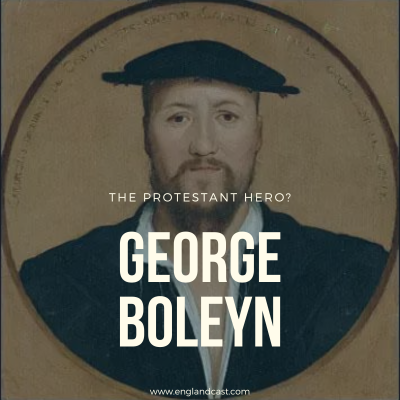
  • George Boleyn’s Protestantism from Adrienne Dillard

    George Boleyn’s Protestantism from Adrienne Dillard

    This post comes from the highlights of Adrienne Dillard’s talk on George Boleyn’s Protestantism at Tudorcon 2023.

    George Boleyn, often remembered as the ill-fated brother of Anne Boleyn, played a far more significant role in the Tudor court than most people realize. Recent research by historian Adrienne Dillard has uncovered new insights into George’s life, from his feminist beliefs to his diplomatic skills and influence on religious reform in England.

    One of the most fascinating discoveries is a manuscript owned by George, which included Lamentations of Mattheolus, a notorious anti-women text, but also La Livre d’Elise, a feminist rebuttal. This reveals that George, far from being a misogynist, may have had feminist leanings, influenced by his education at the court of Margaret of Austria.

    George played a crucial role in shaping Henry VIII’s religious policies, particularly through his introduction of A Supplication for the Beggars. This influential text argued against the church’s control, aligning with the king’s goal of asserting his authority over the clergy.

    George’s diplomatic efforts were equally impressive. His ability to navigate tense negotiations with King Francois I of France on behalf of Henry VIII earned him respect even among his political rivals.

    Though George Boleyn is often overshadowed by his sister’s legacy, his contributions to religious reform and diplomacy were pivotal in shaping the Tudor court. To explore more about George’s fascinating life, don’t miss Adrienne Dillard’s full talk in the Tudorcon 2023 video collection.

    To explore these fascinating stories and more, you can gain full access to the Tudorcon 2023 video collection. Learn directly from expert historians about the intricacies of Tudor life, politics, and power—right from the comfort of your home.

  • November 21 – RIP John Knox

    November 21 – RIP John Knox

    Hey, this is Heather from the Renaissance English History Podcast, and this is your Tudor Minute for November 24.

    Today in 1572 John Knox died. A Sottish clergyman, Knox is remembered as the founder of Presbyterianism, but he was also known for his outspoken stance against Mary I. He wrote a book called The First Blast of the Trumpet Against the Monstrous Regimen of Women in which he attacked women rulers like Marie of Guise, and Mary I. He wrote this while he was in exile, during the reign of Mary I, in Geneva. but unfortunately for him, Mary died the same year, and Elizabeth was none too pleased with his treatment of women rulers. She refused to give him safe passage when he was traveling through to Scotland in 1559.

    That’s your Tudor Minute for today. Remember you can dive deeper into life in 16th century England through the Renaissance English History Podcast at englandcast.com. – and here’s an episode about John Knox: https://www.englandcast.com/2017/06/episode-78-john-knox/

  • Tudor Minute November 20: RIP Sir Christopher Hatton

    Tudor Minute November 20: RIP Sir Christopher Hatton

    Hey, this is Heather from the Renaissance English History Podcast, and this is your Tudor Minute for November 20.

    Today in 1591 Sir Christopher Hatton died. He is remembered for being the Lord Chancellor of England, and he was a favorite of Elizabeth. He first caught Elizabeth’s attention in the early 1560’s – he was an excellent dancer, was personable, charming, and intelligent. He became a Gentleman of the Privy Chamber in 1564, and by 1572 he was appointed captain of the Yeoman of the Guard. He is said to have been a Roman Catholic in all but name, yet he treated religious questions in a moderate and tolerant way.

    Mary Queen of Scots encouraged the rumors that he was Elizabeth’s lover, and Elizabeth did refer to him as her sheep on more than one occasion. Hatton was a member of the court which tried Anthony Babington in 1586, and was one of the commissioners who found Mary, Queen of Scots, guilty of treason in the following year. He vigorously denounced the Queen of Scots in Parliament.

    That’s your Tudor Minute for today. Remember you can dive deeper into life in 16th century England through the Renaissance English History Podcast at englandcast.com.

    Episode Link: Catholics in Elizabethan England
    https://www.englandcast.com/2017/06/throwback-episode-catholics-elizabethan-england/

  • Throwback Episode #22: The Northeast Passage

    Throwback Episode #22: The Northeast Passage

    Episode 22 of the Renaissance English History Podcast – back from 2014 before I knew how to edit out mouth noises, lol – was on the Northeast Passage and Muscovy Company.

    James Evans Merchant Adventuers
    Merchant Adventurers, by James Evans

    Book Recommendation: Merchant Adventurers: The Voyage of Discovery that Transformed Tudor England by James Evans. Buy it on Amazon here!

    Hello and welcome to the Renaissance English History Podcast.  I’m your host, Heather Teysko.  This week I’m going to start talking about trade and exploration in Renaissance England.  Mostly because it’s back to school time, and it always seemed like we studied explorers and early colonial American history in the fall when I was in school, and I’m feeling nostalgic for some number 2 pencils.

    I was doing some research for an episode I’m planning on trade, and I came across the Muscovy Company, which must be the most unknown of the different Companies of Merchants around – a sad little sibling to the East India Company, for example.  But the Muscovy Company had a heyday that lasted nearly 100 years, and only completely fell apart during the Russian Revolution (about which I know next to nothing – add that to the list of things I want to learn about!).

    So in the mid 1500’s everybody’s giong exploring, right?  The Spanish and Portuguese are going crazy in South America, the French are trading furs in Canada, the Dutch have New York; everybody sea faring nation seems to be getting a piece of the newly discovered lands in the Atlantic Ocean.  Except for the English, who are lagging thanks to their religious turbulence, a King that – while he may or may not have been crazy thanks to a blood disorder – was certainly more interested in his marital life and recapturing the glory of war with France than with claiming land in the Americas.  Oh, there were some early English explorers like John Cabot, and certainly Henry was aware of what was going on in the world, but England lagged woefully behind the other countries.

    So in the mid 1500’s everybody’s suddenly got Exploration Fever..  The other countries were busy looking for the NorthWest Passage, and England got clever and decided to look for a NorthEAST passage.  Sneaky.  

    220px-DeathOfSirHughWilloughby

    The Death of Hugh Willoughby by an unknown artist

    In 1551 some merchants and explorers formed theCompany of Merchant Adventurers to New Lands (in full: ‘Mystery and Company of Merchant Adventurers for the Discovery of Regions, Dominions, Islands, and Places unknown’) to look for a Northeast Passage.  Willoughby lead a group of three ships northwards.  They were delayed by bad winds, but eventually reached a point off the northern part of Norway where they suffered from more winds, and storms.  Willoughby’s ship, and a second ship were separated from the third, which was captained by Richard Chancellor.  He apparently got stuck in ice, was completely unprepared for the cold, and the frozen corpses of his men were found the next year by Russian fisherman.

    But Chancellor survived, managed to get back to Norway, and set out again, eventually making it to the White Sea.  Locals were amazed at his huge Western style ships, and helped him get toArkhangelsk.  Ivan the Terrible heard about the ship, and summoned Chancellor to Moscow to meet with him, a journey of another 600 miles in the snow.  Chancellor described Moscow as much larger than London, but built mostly out of wood, and less sturdy.  But the palace of Ivan the Terrible was luxurious, and the Czar seemed willing to talk about trading with England.  Russia didn’t have a secure route to the Baltic Sea yet, and all of the other routes were contested by both the Polish-Lithuanian Commonwealth and the Swedish Empire.  

    willoughby voyage

    Chancellor gets back to London, carrying with him a letter from Ivan inviting trade, as well as some Russian furs.  Queen Mary I (aka “bloody Mary” for her proclivity to kill Protestants) rechartered the Merchant Adventurers company the Muscovy Company in 1555, and Chancellor decides to tempt fate and go back to Russia again.  The Muscovy Company became the diplomatic link between London and Moscow, and several years later Ivan actually proposed the idea of marriage to Queen Elizabeth (she declined, one assumes politely).

    Chancellor died in 1556 when he was returning from Russia and was shipwrecked off the coast of Scotland.  He had on board with him the first ambassador from Russia to England, Osip Nepeya, but the ambassador survived and after being held hostage in Scotland for a number of months, finally made it to London.

    In 1577 Queen Elizabeth gave the Muscovy Company a monopoly on whaling in the waters around Spitsbergen, which it claimed based on the idea that Hugh Willoughby had discovered and claimed them on his fatal journey.  After Chancellor’s death, the Muscovy Company funded several other attempts to find the Northeast passage.  One of those attempts made it through the Kara Gates to the Kara Sea in the Arctic Ocean.  They also funded two trips of Henry Hudson in his search for a northeast passage.

    By the mid 17th Century, the English Civil War disrupted trade, and suddenly the Dutch swooped into the vacuum and started becoming the main traders with the Russians.  By 1917 it had ceased operations, though it still exists as a charity, and supports the St. Andrew’s Anglican Church in Moscow.  In 1994 the current Queen Elizabeth visited the original company headquarters, not far from the Kremlin.

    [advertisement insert here: if you like this show, and you want to support me and my work, the best thing you can do (and it’s free!) is to leave a rating or review on iTunes. It really helps others discover the podcast. Second best is to buy Tudor-themed gifts for all your loved ones at my shop, at TudorFair.com, like leggings with the Anne Boleyn portrait pattern on them, or boots with Elizabeth I portraits. Finally, you can also become a patron of this show for as little as $1/episode at Patreon.com/englandcast … And thank you!]

  • Music and the Feast of St. Michael

    Music and the Feast of St. Michael

    We are approaching one of the most popular feasts in the Christian liturgical year, that of St. Michael and All Angels, on September 29. For Christians, St. Michael is often seen as a great archangel who defeated Satan in the war in heaven. He is seen as the protector of Christians in darkness, and so as the earth turns and the nights become longer, it is fitting that St. Michael takes up his position to guard the world through winter, when evil forces are said to be stronger because there is less light to weaken them.

    For our Tudor friends, this was also one of the “quarter days.” Quarter days were one of four days spaced about 3 months apart, generally around a solstice or equinox, when rents were paid, new servants hired, and often new magistrates were hired. For the September quarter day, held on the Feast of St Michael, it was also the time when the harvest was meant to be complete. For some universities it’s the start of a new term – the Michaelmas term – and it’s also a marker in the legal year.

    Our Tudor friends would also often partake of the bounty of the season with fairs and feasts. This was basically the best things would be all year – fresh food stocked up for winter, fattened animals, and a period of rest after a season of very hard work. It was a traditional time to eat a goose, and indeed there are still some goose fairs in England, with a particularly famous one in Nottingham. There’s a saying that if you eat a goose on Michaelmas Day, you will have abundance all year long.

    After Henry VIII split from the church, these fairs became less associated with St Michael, and are simply called Harvest fairs now. They are also called Wakes, which comes from the term Wake Fairs, when you would stay awake late in order to celebrate long into the night.

    Interestingly, this is also the last day that blackberries can be eaten. Traditional belief is that when St. Michael expelled Satan from heaven, he landed in a blackberry bush. So any blackberries eaten after that day will be tainted by Satan. Many people would bake a blackberry pie on Michaelmas day.

    You can celebrate Michaelmas yourself by enjoying the abundance of Autumn. Eat seasonal foods, and listen to music for a Tudor Feast, the album embedded above. There’s also this new album from the Choir of Westminster Abbey with music from across multiple centuries dedicated to St. Michael.

    Want to learn more about seasonal celebrations in Medieval and Tudor England? Check out the book Stations of the Sun: A History of the Ritual Year in Britain by Ronald Hutton.