Nan Cobham remains one of the most enigmatic figures in Tudor history. Mentioned only once in a surviving letter from 1536, she is named alongside Lady Worcester as one of the first accusers of Anne Boleyn. Beyond that brief reference, Nan Cobham disappears from the historical record, leaving historians to speculate about her true identity and role in the queen’s downfall.
Was she a lady-in-waiting in Anne’s privy chamber, a midwife present during the queen’s final miscarriage, or simply an informant drawn into Cromwell’s web of intrigue? Whatever the truth, Nan Cobham’s name endures as a faint but fascinating trace of the hidden women whose voices shaped one of the most dramatic moments in Henry VIII’s reign.
Transcript of Who Was Nan Cobham? The Mystery Accuser in Anne Boleyn’s Fall:
It’s May of 1536. Anne Boleyn is in the Tower, and the machinery of her downfall is already grinding forward. We often focus on Cromwell’s strategy or Henry’s sudden coldness, but there’s a quieter moment tucked into a letter that hints at a more intimate betrayal behind the accusation.
John Husee, writing to Lady Lisle, casually noted that the first accuser of Anne was Lady Worcester and Nan Cobham, with one maid more. Lady Worcester, we can trace through family records, but what about Nan Cobham?
She appears once in the surviving sources and then vanishes. That single mention is all we have of her. There are no surviving trial records naming her, no confession or testimony preserved in the legal papers. Whether the records were destroyed, suppressed, or never even formally written down, Nan’s role exists purely in that one line of correspondence.
And yet she must have been close enough to Anne to have been called as a witness, or at least considered an informant by Cromwell’s investigators, and that makes her significant. In a palace full of courtiers, only a very small inner circle of women had the kind of access that could have been weaponized against the queen. So who was she?
The nickname “Nan” offers the first clue. It was the familiar form of Anne or Agnes, but crucially, it wasn’t how a titled woman would normally be referenced in official correspondence. Husee was writing to Lady Lisle, a noblewoman. If Nan had been a peeress, a legitimate Lady Cobham, he almost certainly would have written her title.
That detail nudges us away from the idea that she was Anne Bray, Baroness Cobham, who was present at Anne’s coronation and whose husband sat on the jury that condemned the queen. But the Cobham name still lingers around the edges of the court. The Brooke and Bray families, both tied to the Cobham title, had several female relations in and around royal service.
A Mrs. Cobham is recorded receiving a New Year’s gift from Henry VIII in 1534, and an Anne Cobham, a widow, was later granted lands in 1540 after the dissolution of Syon Abbey. These could be the same woman, or not. Records rarely make it that easy. Some historians have tried to link Nan Cobham to a flesh-and-blood figure by tying her to Catherine Parr’s household, because a woman by that name is listed among Parr’s ladies in 1547.
If that’s the same person, it’s fascinating. It would mean that Nan not only survived the political firestorm of Anne Boleyn’s fall, but actually remained within the royal household through two more queens. That puts her in the same category as Jane Parker, women who cooperated with Cromwell’s inquiry and were rewarded through continued placement at court rather than being punished.
Then there’s Retha M. Warnicke’s theory in The Rise and Fall of Anne Boleyn. She suggested that Nan may have been Anne’s midwife, and therefore present during the queen’s final miscarriage, which some have speculated was abnormal. Warnicke used this as part of a broader argument about rumors of deformity and witchcraft, but there’s no contemporary source saying that Anne’s pregnancy was anything other than the loss of a male child. All of that talk about deformity and witchcraft came later. The midwife idea survives more because it’s evocative than because it’s well evidenced.
More grounded is the idea that Nan Cobham was simply one of the many lesser gentlewomen in Anne’s privy chamber, women who were placed there through connections, marriage alliances, or family favors. Ladies like Margery Horsman, who appears frequently in correspondence around Anne Boleyn’s imprisonment, show how much influence these chamber women could actually wield. Cromwell himself wrote to English ambassadors that Anne’s own ladies could not contain what they knew, and that their words were damning enough to shake the king.
Lady Worcester may have been the spark, but Nan Cobham, listed second, was part of the confirmation. An agreement, a repeated conversation behind closed doors, could be enough to support the narrative Cromwell needed.
The fact that her identity is lost only sharpens the mystery. One line in a letter, a woman without a confirmed surname or title, yet she stands in the shadows behind one of the most dramatic trials in English history. Her name surfaced once and then nothing. Unless some stray household roll or overlooked letter surfaces in an archive somewhere, Nan Cobham will stay that way: an unnamed witness in one of the most consequential whisper campaigns in Tudor history.
So, my friend, what do you think? Do you have any thoughts about who Nan Cobham was? I know there are lots of theories out there. I’d like to hear yours if you have one.
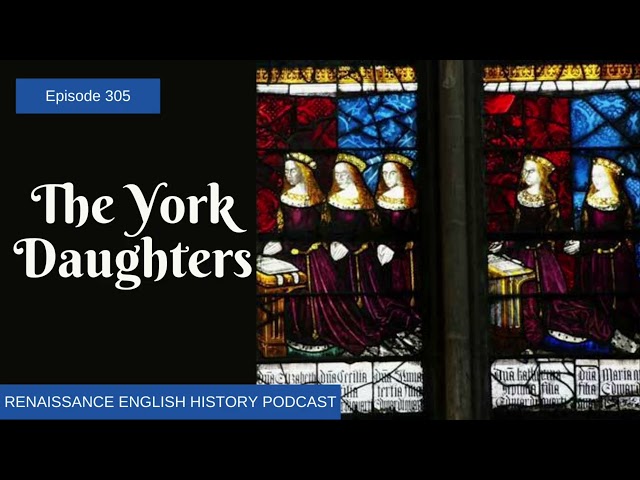
The York Daughters were the remarkable yet often overlooked princesses of Edward IV and Elizabeth Woodville—women who carried the blood of the House of York into the Tudor age. While history remembers their brothers, the lost Princes in the Tower, the York Daughters—Elizabeth, Mary, Cecily, Anne, Catherine, Bridget, and Margaret—played a quieter but lasting role in shaping England’s royal destiny.
Through marriages, alliances, and even vows of religious devotion, they helped bridge the fall of the Yorkist dynasty and the rise of the Tudors. From Elizabeth of York, who became queen and mother of the Tudor line, to Bridget of York, who lived a cloistered life of piety, their stories reveal how the legacy of York survived not through its fallen princes, but through its daughters.
Transcript of Queens, Nuns, and Heiresses: The Sisters of the Princes in the Tower
When people think of the children of Edward IV and Elizabeth Woodville, they almost always picture the lost princes Edward V and Richard, Duke of York, the boys who vanished into the Tower and became one of the great mysteries of English history. Their story has been retold, endlessly painted in tragedies, whispered in conspiracy theories, and debated in history books, Facebook groups, YouTube comments, and Reddit threads for centuries. Well, I guess not the last part for centuries, but you get the point.
The truth is, though, that Edward and Elizabeth were not just the parents of two doomed sons and one daughter who became the queen of England. They were astonishingly prolific, and their household was filled with daughters. Girls who, unlike their brothers, lived long enough to leave their mark on the dynastic chessboard of the late 15th and early 16th centuries. These sisters carried the blood of the House of York into the Tudor world.
One would become queen, the mother of the Tudor dynasty itself. Others married into powerful families like the Howards and the Courtenays, planting Yorkist claims that would trouble Henry VIII decades later. One became a nun, another died before her story even really began. Together, they shaped the survival and the transformation of the Yorkist identity after Bosworth in ways that are often overlooked.
So last time we talked about the sisters of Edward IV. Today we are talking about the daughters, the princesses who lived in the shadow of their lost brothers but who carried the Yorkist blood forward into England’s future. And to understand their stories, we need to start with the extraordinary family of Edward IV and Elizabeth Woodville, the family that they built, and the moment that everything changed: the death of the king in 1483 and the frightened queen retreating with her daughters into sanctuary.
Edward IV and Elizabeth Woodville had one of the most prolific royal marriages of the late 15th century. Between 1466 and 1480, Elizabeth gave birth to ten children who survived infancy, along with several others who died young. In an age when child mortality was expected, the fact that so many of the Yorkist children grew past the dangerous early years was striking. Even more unusual was the number of daughters who lived into adolescence or adulthood.
While kings typically relied on a few daughters to cement alliances, Edward and Elizabeth found themselves with a bearable nursery of princesses. Elizabeth, Mary, Cecily, Anne, Catherine, Bridget, and Margaret of York represented an extraordinary dynastic resource. Each girl carried the prestige of the House of York and could have been used to tie England more closely to France, Spain, Scotland, or the powerful noble families within England.
At the height of Edward IV’s reign when he appeared very secure on his throne, these daughters would have been considered valuable pawns in the international marriage market. They were raised with this in mind, finely dressed, schooled in languages, music, and piety, all the things expected of royal daughters. Their futures were expected to reinforce the Yorkist dynasty.
That expectation collapsed in 1483. That was when Edward IV died suddenly in April. His heir was just twelve years old. Elizabeth Woodville, now widowed and vulnerable, gathered her daughters and her younger son Richard and fled into sanctuary at Westminster Abbey. The image of the queen and her children with a handful of servants huddled behind the thick abbey walls captures just how precarious the family’s position had become.
Inside the sanctuary, the girls’ lives were turned upside down. They had been raised in royal palaces surrounded by attendants and tutors, enjoying lavish entertainments, and suddenly they were confined in the dim, echoing spaces of the abbey. To be fair, they had a comfortable place to live. It was not as if they were in a dungeon, but it was certainly not the same as having the run of a castle, and they had to remain within the walls to stay under sanctuary. I actually did a video a couple of months ago about what sanctuary really meant, so I will put a link to that.
Anyway, they were living under the protection of the church but cut off from the outside world. The younger girls were still children, and their mother had to cope with their fear as rumors circulated about the fate of their brothers.
It was here that the once glittering Yorkist nursery became a household under siege. The Italian observer Dominic Mancini, writing in 1483, described Elizabeth Woodville’s plight vividly. He noted her sudden retreat into sanctuary with her daughters and youngest son, writing that she was terrified by Richard’s seizure of power and sought safety in the abbey, placing herself and her children under the protection of the church.
Now, his account described the atmosphere of fear and uncertainty, with the queen who was once surrounded by magnificence now reduced to anxiety and suspicion, cut off from her allies while Richard consolidated his rule. Mancini’s account is stark, but he gives us a sense of how contemporaries understood her fall.
The Yorkist princesses, once destined to be queens and duchesses, were now huddled in fear with their mother while their uncle Richard seized the throne as Richard III. This was the time when they became bargaining chips in a world where their very survival was no longer guaranteed.
Elizabeth of York: From Pawn to Queen
So let’s start with Elizabeth of York. She was born in 1466, the eldest child of Edward IV and Elizabeth Woodville. From the moment of her birth, she was valuable not because she might one day inherit the throne—of course, as a girl she was not expected to do that—but because her hand in marriage could be used to secure alliances. Edward IV treated her as a political asset, and he raised her for a future that would bind Yorkist power to one of Europe’s great houses.
In 1475, when she was just nine years old, she was formally betrothed to the French dauphin Charles as part of a peace treaty between Edward and Louis XI of France. This arrangement promised a glittering future: Elizabeth as Queen of France, her children ruling the most powerful kingdom in Europe. But the match was abandoned a few years later as shifting politics and French hesitation left the young princess once again unpromised.
Her prospects grew murkier after her father’s death in 1483. With Richard III seizing the throne and her brothers locked away in the Tower, Elizabeth suddenly found herself at the center of a dynastic rumor. There were whispers that Richard, recently widowed, might marry her himself. Such a union would have been shocking. He was both her uncle and the man many suspected of disposing of her brothers.
It shows just how essential Elizabeth’s body was to the political fate of England. By marrying her, Richard could have solidified his grip on the throne, uniting the Yorkist claim in himself. The marriage never happened. He actually had to come out publicly and deny rumors that he was even considering it. But the very possibility, the fact that we even talk about this, shows that her personal fate was seen as inseparable from the kingdom’s.
Instead, Elizabeth’s destiny was decided in 1485 at the Battle of Bosworth. Henry Tudor’s victory over Richard left him a king with a very shaky claim. His legitimacy came not from his Lancastrian blood, which was not much, but from his ability to marry Elizabeth of York. Now, he did not like to think of it that way and had himself crowned before he married her, but their union in January 1486 symbolically healed the Wars of the Roses, the red rose of Lancaster with the white rose of York joined in the Tudor rose. For Henry, Elizabeth was the keystone that transformed him from a usurper into a dynastic founder.
As queen, Elizabeth did not dominate her husband’s government, but she played a crucial role as the dynastic anchor of the new regime. Chroniclers described her as gentle, pious, and charitable. She was the model of a late medieval queen. She gave generously to religious houses, and she was remembered for interceding on behalf of petitioners. Several surviving accounts note her reputation for mercy. People would appeal to her when they felt that the king’s justice was too harsh. She seems to have acted as a softer counterbalance to Henry’s severity, a role many queens consort were expected to perform.
Elizabeth was also central to the ceremonial life at court. She presided over the entertainments, including the tournaments and pageants that reinforced Tudor legitimacy. Her presence in courtly spectacle reminded audiences that the Tudors were joined to the House of York. We know she enjoyed dancing, music, and storytelling, and she fostered these entertainments as part of her queenship. In that way, she helped create a courtly culture that her son Henry VIII would later expand to even grander proportions.
How she personally felt about all of this—doing it all for the Tudors—no one thought to record. One can imagine she had mixed feelings. But her greatest contribution to the dynasty was her children. Elizabeth bore Henry seven children, though only four survived to adulthood.
Arthur, the firstborn, was raised as the heir, but he died young in 1502. Henry, Duke of York, became Henry VIII. Margaret Tudor married James IV of Scotland, uniting the Tudor line with the Scottish royal family, a union that would eventually bring the Scottish Stuarts to the English throne. And then Mary Tudor married the French king, Louis XII, briefly becoming the Queen of France before returning to England and marrying Charles Brandon, the Duke of Suffolk. Through these marriages, Elizabeth’s children carried their Yorkist blood into nearly every corner of European royalty.
Elizabeth’s death in February 1503 was sudden and devastating. She had gone into confinement to deliver a daughter, Catherine, but both mother and child died. She was only 37. She actually died on her birthday. Accounts of Henry VII’s reaction reveal a rare glimpse of him as a grieving husband rather than just the calculating monarch. Chroniclers record that he shut himself away for days, refusing to eat or be comforted, and he wore mourning for months. For a king known for his control and reserve, his visible anguish shows just how central Elizabeth had been to his reign.
Elizabeth of York went from being a child bride promised to France, to a pawn in her uncle’s ambitions, to the dynastic keystone of the Tudor monarchy. Her queenship gave Henry VII the legitimacy he needed. Her children linked England to Scotland and to France. And if the princes in the Tower represent the lost future of the House of York, Elizabeth of York represents its survival.
Cecily of York: From Queenly Prospects to Scandalous Marriage
Next up, Cecily. Cecily of York was born in 1469. She was the second daughter of Edward and Elizabeth Woodville. As the younger sister to Elizabeth of York, she also carried strong dynastic value in this world where royal daughters were prized for the allegiances they could form. Early in her life, her prospects, just like Elizabeth’s, seemed glittering.
One of the first marriage negotiations attached to her name was a proposed match with James, Duke of Rothesay, the heir to James III of Scotland. If the union had gone forward, Cecily would have become the Queen of Scotland, binding the Houses of York and Stuart together. Something very similar later happened with her niece, her sister Elizabeth’s daughter Margaret, who married into Scotland.
The treaty negotiations that followed Edward’s victory at the Battle of Tewkesbury in 1471 included the idea of sealing a peace with Scotland through Cecily’s marriage. Now, it never came to pass. Like everything, there were shifting politics and Scottish hesitation, but the very fact that the proposal was even made shows again how central Cecily’s marriage was to Yorkist diplomacy. After her father’s death and the fall of her brothers, Cecily’s prospects narrowed.
By the early 1480s, while she was still a teenager, she was married to Ralph Scrope of Masham, a relatively minor northern nobleman. The Scropes were an old and loyal Yorkist family, but Ralph himself was far from the sort of prince or magnate one might have expected for a daughter of Edward IV. Some historians believe the match may have been made under Richard III’s short reign, binding Cecily to a loyal retainer of his.
When Henry VII came to the throne in 1485, this marriage was annulled. The official reasoning is murky, but it likely shows Henry’s effort to house-clean Yorkist connections. He had zero interest in seeing a daughter of Edward IV securely tied to an old Yorkist family. Instead, he directed Cecily into a new match with John Welles, Viscount Welles. Welles was not only a trusted supporter of Henry but also his step-uncle, the son of Margaret Beaufort’s second husband.
For Henry, the marriage tethered Cecily firmly to the Tudor circle, ensuring that she could be watched and her loyalties contained. Cecily and John Welles seemed to have had a respectable marriage, though their two daughters died young. Welles himself died in 1499, leaving Cecily a wealthy widow. It was after this that she made the decision that scandalized the court. Without the king’s permission, she married a Lincolnshire squire named Thomas Kyme.
For a princess of the blood to marry so far beneath her rank, and to do it secretly, was an unmistakable act of defiance. Henry VII was furious. He confiscated much of her property and banished her from court. The couple retreated to Kyme’s estates in Lincolnshire, where they lived quietly, far from the royal stage.
We do not know very much at all about Cecily’s later years. She occasionally appeared in records as a witness or a benefactor, but for the most part, she disappeared into the obscurity of provincial life. For a woman who had once been floated as the Queen of Scotland, her fate was extraordinary: a Yorkist princess reduced to the life of a country gentlewoman, remembered more for her scandalous marriage than for political triumphs, but she had a bloodline that ensured she could never entirely escape notice.
Anne of York: A Quiet but Significant Life
So now let us talk about Anne of York. Anne of York was born in 1475. She was the fifth daughter of Edward IV and Elizabeth Woodville. Unlike her elder sisters, Elizabeth and Cecily, who were caught up in international marriage plans and dynastic maneuverings, her story was quieter, though she did have some international opportunities as a child.
She was briefly betrothed to Philip of Austria, the son of Maximilian of Habsburg, the Emperor, and the stepson of Margaret of York, her powerful aunt in Burgundy. The negotiations were ambitious, tying the Yorks to the Habsburg dynasty, but they lapsed after her father’s death, Edward.
Under Richard III, new plans emerged in 1484. He formally promised that his nieces would be married to men of noble birth with respectable dowries. For Anne, Richard chose Thomas Howard, eldest son of the Earl of Surrey and heir to the Dukedom of Norfolk. The match was politically advantageous. The Howards had risen under Richard and, by binding them to Edward IV’s daughter, Richard showed them unusual favor.
A contract was agreed in 1485, but Bosworth intervened before it could be carried out. The plan was not abandoned, though. After Henry’s victory, Elizabeth of York, now Queen, revived the marriage for her younger sister. By then, Anne and Thomas had known each other for years. The Howard men had long served at Edward’s court, but first the Howards had to prove their loyalty and dispel suspicion.
The wedding between Anne and Thomas did not actually take place until 1495. The royal family attended, but Anne’s promised dowry of 10,000 marks, set aside by Edward IV, was never delivered. Instead, Elizabeth of York arranged for her sister to receive an annuity of 120 pounds a year, plus an additional 26 pounds from the Crown. These payments were designed to ensure her independence and maintain her household, which included servants and horses, since the Howard estates were diminished after Bosworth and Thomas’s father had yet to recover the Dukedom of Norfolk.
The marriage was not a happy one. Thomas was unfaithful, openly conducting affairs with Anne’s lady-in-waiting, for example Bess Holland. Worse still, all of Anne’s children died young. Records suggest as many as four children, including a son named Thomas, who lived long enough to be christened but died in 1508.
Anne’s health was poor, and she faded from court life after the death of her sister Elizabeth. She died in November 1511 at only 36 years old. She was first buried at Thetford Priory and later reinterred at Framlingham alongside her husband, who by then had become the powerful 3rd Duke of Norfolk.
Catherine of York: Modest Marriage with Explosive Legacy
Now, Catherine. She was born in 1479, one of the younger daughters of Edward IV and Elizabeth Woodville. By the time she reached marriageable age, her family’s fortunes had been reshaped by the Tudors. Unlike her elder sisters, who had once been treated as glittering dynastic prizes, Catherine’s marriage was more modest, though it would have long-reaching consequences for Tudor politics.
In 1495, she married William Courtenay, heir to the Earldom of Devon. The Courtenays were a powerful family with deep roots in the West Country and a descent that tied them distantly to the royal house of Lancaster. The match was respectable, but certainly not on the scale of a foreign prince that Edward IV might have envisioned for his daughters. Still, it placed Catherine securely among the English nobility and linked her Yorkist bloodline to one of the kingdom’s most influential regional households.
Her husband’s career, however, was turbulent—an understatement. Courtenay was implicated in the Perkin Warbeck conspiracy in the 1490s, which sought to place a Yorkist pretender on the throne in the name of Edward V’s lost son. Though his role was murky, suspicion lingered. Later, in 1504, he was imprisoned in the Tower on charges of treason, accused of plotting against Henry VII. Catherine, though untouched by the charges, saw her husband disgraced and their estates seized.
After Henry VII’s death in 1509, the young Henry VIII released Courtenay, restored him to favor, and elevated him as the Earl of Devon. It was a dramatic reversal that once again made Catherine’s household one of the great magnate families of the realm.
William died just a few years later in 1511, but their children carried forward the Yorkist connection. Their eldest son, Henry Courtenay, became Marquess of Exeter and one of the closest companions of Henry VIII in his early reign. He was even named a Knight of the Garter in 1511, a major mark of royal favor. But this intimacy did not protect him in the long run.
By the 1530s, with Henry VIII increasingly suspicious of Yorkist bloodlines, Henry Courtenay was accused of treason and executed in 1539 during what is known as the Exeter Conspiracy. Through him, Catherine’s bloodline once again became entangled with the specter of Yorkist legitimacy, a reminder that even decades after Bosworth, the descendants of Edward IV could still be perceived as threats.
Catherine herself lived until 1527, outliving her husband by more than 15 years. She saw her children grow into the Tudor world, though not without danger. Her marriage had begun as a relatively quiet match into a noble family, but its legacy proved politically explosive. Through Catherine, the Courtenays carried Yorkist blood straight into the dangerous heart of Tudor politics.
Bridget of York: A Life of Piety and Seclusion
Then we have Bridget, the youngest daughter. She was born in November 1480 at Eltham Palace. Unlike her elder sisters, whose lives were tied up in dynastic marriage negotiations, her future was set apart almost from the beginning. She was just two when her father died and her family’s fortunes collapsed.
Growing up in the shadow of sanctuary and political upheaval, she was the only one of the York princesses destined not for marriage, but for religion. By the age of 10, Bridget was placed at Dartford Priory in Kent, the only house of Dominican nuns in England. It was an elite convent, wealthy and respected, where noble daughters were often sent, sometimes out of piety but often for politics too. Bridget took vows there and lived the rest of her life within the priory’s walls. Unlike her sisters Elizabeth, Cecily, Anne, and Catherine, she was removed from the intrigues of court and dynastic marriages, but her placement was still significant. Sending a royal daughter into the cloister not only advertised the family’s piety, it also quietly solved the problem of an extra princess whose marriage might create political complications. In Bridget’s case, her York blood was safely enclosed away from any foreign match that might threaten Tudor stability.
We know little of Bridget’s day-to-day life. Records suggest that she was a valued member of the community, respected for her birth and her connections, but she did not play a wider political role. She never became abbess or anything like that. She remained there until her death in 1517 at the age of 37. She was buried in the priory grounds, though with the dissolution of Dartford under Henry VIII, her remains were likely lost.
Bridget of York’s story is quieter than those of her sisters. It shows an important reality: not every royal daughter became a queen or a duchess. Some were steered into religious life, where they could embody piety and devotion while posing no threat to the throne.
Mary of York: A Brief and Tragic Life
Then we have Mary of York. She was the second daughter of Edward and Elizabeth. She was born in 1467 and, like her elder sister Elizabeth, grew up in the secure early years of her father’s reign, when the Yorkist dynasty seemed unshakeable. She was well provided for, and as a princess, her future would almost certainly have involved a politically valuable marriage, but she did not live long enough to play any role in dynastic politics.
In May 1482, when she was just 14, she died suddenly at Greenwich Palace. The cause was not recorded, though illness was the most common fate for children and teenagers, even in royal households. Her death was a blow to her family. She was the first of Edward IV and Elizabeth Woodville’s children to die after infancy.
She was buried at St. George’s Chapel, Windsor, one of the first of her siblings interred there. Her tomb was marked with a small brass plate and lay close to the resting place of her father, Edward IV. Though her life was brief and left little trace in the records, she mattered to her family. She was a princess of York, and her death showed that even in royal households, survival into adulthood was never guaranteed.
The daughters of Edward and Elizabeth lived very different lives, but together they carried Yorkist blood far beyond the disappearance of their brothers in the Tower. Elizabeth of York secured the Tudor dynasty itself. Her marriage to Henry VII joined the Houses of York and Lancaster, and her children became the kings and queens of England and Scotland.
Cecily, once nearly a queen of Scotland herself, slipped into obscurity in rural Lincolnshire, but her story shows how tightly the Tudors controlled Yorkist marriages to prevent rival claims. Anne’s marriage to Thomas Howard linked Edward IV’s line with the Howards, a dynasty that would dominate Tudor politics for the next century.
Catherine, through her marriage to William Courtenay, became ancestress of the Courtenays of Exeter, a line that would rise up under Henry VIII before being cut down under suspicion of Yorkist loyalties. Bridget, set apart at the cloister at Dartford, embodied a different sort of dynastic solution: piety and removal from politics. Mary, who died at 14, reminds us just how dangerous even royal childhoods could be.
What unites them all is survival. Their brothers’ lives ended in mystery, but the sisters lived on—sometimes at court, sometimes in obscurity, sometimes behind convent walls. Each was shaped by the tenuous legacy of their father’s throne. Some, like Elizabeth and Catherine, left Yorkist descendants. Others left no children, but their marriages and alliances still mattered in the careful balancing act of Henry VII’s reign. By the time of Henry VIII, the Yorkist daughters were no longer living figures, but memories woven into dynasties, into Howard ambition, into Tudor legitimacy. Through them, the Yorkist line did not completely vanish with the princes in the Tower. It lived on, reshaped and repurposed through the women whose stories are too often overshadowed by the mystery of their brothers.
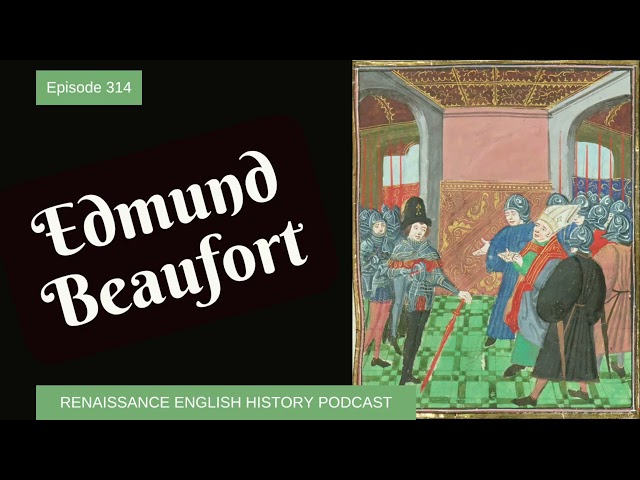
Edmund Beaufort, Duke of Somerset, was one of the most controversial figures in fifteenth-century England—a royal favorite whose ambition, rumored affair with Queen Margaret of Anjou, and disastrous command in France helped ignite the Wars of the Roses. Born into the powerful Beaufort family, descendants of John of Gaunt and Katherine Swynford, Edmund Beaufort rose rapidly under King Henry VI, becoming a symbol of royal favor and political corruption in equal measure. His influence at court, his rivalry with Richard, Duke of York, and his violent death at the First Battle of St. Albans in 1455 marked not only the fall of a man but the beginning of decades of civil war that would reshape the English crown forever.
Transcript of The Queen’s Favorite: Edmund Beaufort and the Rumor that Started a War
London, 1450. The air stinks of smoke, sweat, and fear. Angry crowds fill the narrow streets around Westminster, shouting for justice and blaming the queen’s favorite for everything that has gone wrong. England’s armies are collapsing in France. Normandy is lost. The coffers are empty, and the king says almost nothing. At the center of the rage stands one man, Edmund Beaufort, Duke of Somerset, handsome, charming, and proud. He is said to hold more than just the queen’s confidence. Margaret of Anjou, the fiery young wife of Henry VI, trusts him above every other lord in the kingdom, and that trust has become poison.
The Londoners hiss his name like a curse. Pamphlets and rumors paint him as the queen’s lover, the man who sold out England’s glory for French peace treaties and royal favors. But was Edmund Beaufort truly the queen’s secret passion, or simply the scapegoat whose reputation lit the fuse of civil war?
Today we are talking about another member of the Beaufort family. We have traced their history from the beginning under John of Gaunt and Katherine Swynford, through the medieval period and into the Tudor period. But today we are going to focus on one specific Beaufort, and that is Edmund Beaufort, Duke of Somerset.
To understand why Edmund’s downfall carried such weight, you have to first know where he came from.The Beauforts, as we know, were born from scandal. Edmund’s grandparents were John of Gaunt, the mighty Duke of Lancaster, and his longtime mistress, Katherine Swynford. Their children were eventually legitimized after the couple married, but with one important clause: the Beaufort line was barred from ever claiming the throne. They were royal, yet not quite royal enough—a family that was always reminded that their bloodline began in sin.
Still, the Beauforts rose. Edmund’s uncle, Cardinal Henry Beaufort, was England’s wealthiest cleric, a man who lent money to kings and could buy loyalty like others bought wine. His cousin, Margaret Beaufort, would one day give birth to the first Tudor king, though that future was far beyond the horizon at this point.
Edmund grew up believing that he could redeem the family name. He was handsome, educated, and ambitious. He served in the Hundred Years’ War. He proved himself in battle, and he earned the confidence of the young King Henry VI. The king promoted him rapidly, showering him with titles, and Edmund seemed destined to be the Crown’s champion in France.
But every Beaufort who rose too high made enemies. Their lineage was a reminder of royal indulgence, and their power felt like arrogance. Edmund, determined to prove his worth, would become the most visible target of all, a man who set out to defend the crown and instead came to symbolize its decay.
By the late 1440s, England’s hold on France was slipping away like sand through open fingers. Henry V’s great victories under the Treaty of Troyes had once seemed to promise an English France forever, but those triumphs died with him. His son, Henry VI, inherited both crowns at nine months old and ruled with the temperament of a monk rather than a soldier.
When Edmund Beaufort took command as Lieutenant of France in 1447, he was stepping into an impossible situation. The previous lieutenant, Richard, Duke of York, had been recalled despite his experience and popularity. Beaufort’s appointment looked less like a strategic choice and more like favoritism from the king and queen. From the start, York’s allies resented it, and when things went badly, they made sure everyone knew who was to blame.
The truth was that France had become unwinnable. England’s army was underpaid, undermanned, and starving. Supplies never arrived. Reinforcements were promised but never sent. The French, revived under Charles VII and led by hardened captains like Jean de Dunois and La Hire, pushed back with ferocity.
In 1449, the English lost Rouen, the capital of Normandy. The fall of the city and the surrender of Caen and Harfleur soon after marked the effective end of nearly a century of English conquest. Every defeat had Beaufort’s name attached to it in the chronicles, even though the failures were years in the making.
When word reached London, the outcry was immediate. The merchants who had financed the wars demanded accountability. Parliament wanted answers. Instead of an inquiry, Henry VI responded by elevating Beaufort even higher, making him the Duke of Somerset. It was a disastrous move politically.
At a time when England wanted someone to punish, the king rewarded the very man people were blaming. London erupted in fury. Pamphlets mocked Somerset as the traitor of Rouen. Ballads accused him of selling English garrisons for French bribes. And behind closed doors, the whispers grew louder that it wasn’t just royal affection keeping him safe, but the queen. To his enemies, Edmund Beaufort had become more than an incompetent commander. He was a symbol of corruption, the man who had lost England’s empire because he had bewitched its rulers.
Who were these rulers? Margaret of Anjou arrived in England in April 1445. She was just fifteen. Henry VI was twenty-three. She had been sent from France to become Queen of England in a marriage that was supposed to help secure peace after decades of ruinous war. So, no pressure there.
Margaret came from a complicated sort of royalty. Her father, René of Anjou, had a collection of titles that sounded impressive. He was King of Naples, King of Jerusalem, and King of Sicily. But most of these crowns existed more on parchment than on anyone’s actual head. So Margaret wasn’t bringing a giant dowry or a powerful army with her. What she brought was herself. She was young, educated, sharp, political, and French. All of those things would matter later.
Henry VI, the king she married, was not his father. Henry V had been a warrior king who led armies personally. Henry VI preferred books, churchmen, and peace. He was gentle, devout, and passive in counsel. He did not command fear. By English standards in the 1440s, this was a problem.
In those early years of her queenship, Margaret behaved in a pretty standard, conventional way for a 15th century queen consort. She supported pious causes, tried to promote harmony at court, and worked through expected channels. She wasn’t yet the loud political force that she would later become. That version of Margaret, the one we picture riding north in armor and raising armies, doesn’t really emerge until the 1450s.
Now enter Edmund Beaufort. By around 1449 or 1450, England had suffered humiliating defeats in France, especially the loss of Normandy. Edmund Beaufort, who had been appointed Lieutenant of France, was blamed. Parliament and the London Commons wanted him punished. He was accused of incompetence, corruption, and outright betrayal. Henry VI did not punish him. In fact, Henry rewarded him. He was made Duke of Somerset, as we said, and Henry kept him in authority. That is the point where Margaret starts to matter in this story.
After the fall of William de la Pole, Duke of Suffolk, another royal favorite brought down by fury over the war, Beaufort effectively became the chief minister. Margaret was seen as one of the few people at court who supported keeping him in power. She had helped defend him when there were loud calls to remove him.
So by 1450, people were starting to link them. If you hated Somerset, you said the queen was protecting him. From there, the rumor machine warmed up. Enemies of the Lancastrian court began to say that Somerset’s influence did not just come from Henry’s favor, but from Margaret’s personal loyalty to him. The suggestion was obvious. They were not just political allies; they were intimate.
By the early 1450s, Edmund Beaufort had become the face of royal policy. Margaret was publicly supporting him. Henry depended on him. Their enemies, especially Richard, Duke of York, and his circle, used that triangle to paint a very simple story for the public. The weak king was being controlled by the queen, and the queen was being controlled by Somerset.
Whether or not this was actually true did not matter. It sounded true to angry taxpayers who had just watched England lose almost everything in France. That, more than anything, was what turned Margaret from a quiet, conventional queen consort into a suspected political operator in the eyes of the country. Her reputation shifted the moment people decided she and Somerset were a thing.
So, it was the early 1450s, and England was running out of patience. The kingdom was losing French territories. Trade was collapsing, and taxes kept rising. Everywhere, people complained of corruption at court, and the man they blamed most was Edmund Beaufort.
And then that tension boiled over in Jack Cade’s Rebellion of 1450. This uprising was not aimed squarely at Somerset. Its fury was more general, railing against bad government, taxes, and the officials who had led England into ruin. But his name was coming up often enough. The rebels demanded reform and the recall of Richard, Duke of York, whom they saw as an honest alternative to the king’s circle of favorites.
When Cade’s men briefly occupied London, the message was clear. The government had lost the trust of its people. By 1452, York took the hint. He marched south with an army, declaring he wanted to rid the king of corrupt counselors, meaning, of course, Somerset. Henry VI forgave him publicly but kept Somerset in place, deepening the divide between Yorkists and Lancastrians. At court, the queen stood by Somerset, which only made the whispers louder.
Then came 1453, the year everything broke. In the summer, Henry VI suffered a complete mental collapse. He fell into a trance-like silence and no longer recognized anyone, not even his pregnant wife. For months, England had no functioning monarch. When Prince Edward of Westminster was born that October, the boy’s arrival should have united the kingdom. Instead, it fed the rumor mill.
Across the realm, people asked uneasy questions. Was the queen’s child actually the king’s? Had he been conceived before Henry’s breakdown or after? There were even whispers naming two possible fathers, Edmund Beaufort and James Butler, Earl of Ormond, both of whom had been close to Margaret.
In truth, there is zero evidence to support any of that. Henry VI was mentally sound at the time of the conception, and when Margaret realized she was pregnant, she went on pilgrimage to give thanks, hardly the behavior of someone hiding a secret. Henry never doubted the boy’s paternity and publicly claimed Edward as his heir. But gossip, as we all know, does not need proof.
By 1454, the idea of an adulterous queen and an illegitimate prince had hardened into political propaganda. York’s supporters painted Somerset as the power behind the throne, and perhaps behind the royal nursery too. Whether or not anyone truly believed it, the story stuck. It turned private suspicion into public hostility, dividing the nobility into two camps: those loyal to the queen and her allies, and those who saw themselves as rescuing England from them. The rumor did what years of bad policy had not managed. It made war feel inevitable.
Now, back to Edmund Beaufort and the fall of the queen’s favorite. By 1455, England had reached its breaking point. The king was frail and unpredictable. The treasury was empty, and the court had split into open camps. On one side stood Queen Margaret and Edmund Beaufort. On the other, Richard, Duke of York, and the nobles who believed they were saving England from ruin.
During Henry VI’s breakdown, York had been appointed Protector of the Realm. One of his first acts had been to send Somerset to the Tower, the surest sign that the political feud had become personal. But when the king unexpectedly recovered his senses in early 1455, everything reversed yet again. Henry dismissed York and restored Somerset to favor, just as if the last year of chaos had never happened.
It was the final straw. York and his allies, the Nevilles, gathered their forces and marched south toward London. Margaret and Somerset raised the royal standards in response. Their armies met at the market town of St. Albans in May 1455, the first battle of what would become the Wars of the Roses.
It was a short but brutal fight, fought through the narrow streets. Arrows flew from windows, and soldiers clashed in the marketplace. Somerset, commanding the royal troops, fought fiercely, but York’s men broke through. In the chaos, Somerset was cut down. Some accounts say that he was struck through the face by a poleaxe outside the Castle Inn.
Now, apparently, folklore says that before the battle, Somerset had been warned by a soothsayer to shun castles, a cryptic prophecy that looked chilling in hindsight since, of course, he met his end outside the Castle Inn in St. Albans, where he was seeking refuge during the battle.
When all the fighting ended, the king was found wounded and dazed. Some say he was sitting under a tree. Others say he was found in a tanner’s shop. Either way, he was found dazed while the corpses of his courtiers lay scattered around him. To the common people, it looked like justice. Somerset’s death was celebrated in London as the cleansing of a corrupt regime. His body was stripped and left in the street, a spectacle for those who had cursed his name for years.
But for Margaret, it was the beginning of vengeance. She never forgave York for this. Within months, she emerged as the unrelenting heart of the Lancastrian cause, determined to avenge her friend, her ally, and the man that rumor had long made her lover.
When her son, Prince Edward, grew older, he inherited her bitterness. He was raised to see York’s family as his enemies, and he died at the Battle of Tewkesbury in 1471, cut down as a teenager, the last legitimate male heir of the Lancasters. In that sense, the death of Edmund Beaufort at St. Albans did not just mark the start of a civil war. It marked the beginning of the end of a dynasty.
So Edmund Beaufort’s death at St. Albans ended one man’s career but began thirty years of civil war. For York’s supporters, his fall proved that justice had been done, that England was finally free of the corrupt favorites who had squandered its empire. For Margaret of Anjou, it was murder. From that day forward, she ruled by fury. Every battle she fought, every alliance she made, she was, in part, remembering the man she had lost.
Whether Edmund Beaufort truly shared the queen’s bed no longer mattered. By the time chroniclers began to write their histories, the story had hardened: the pious king, the ambitious queen, and the handsome noble who had ruined them both. It made a perfect morality tale, and it stuck. The rumor became stronger than the truth.
Yet the irony is that the Beauforts endured. Edmund’s cousin, Margaret, lived long enough to see her son crowned Henry VII, founding the Tudor dynasty that ended the wars Edmund had helped ignite. The family born from John of Gaunt’s scandalous love affair, the Beaufort line would ultimately seize the crown itself. So when we look back at Edmund Beaufort, we see both the beginning and the end of something. A man who rose on royal favor, died for it, and left behind a rumor so powerful that it helped reshape English history.
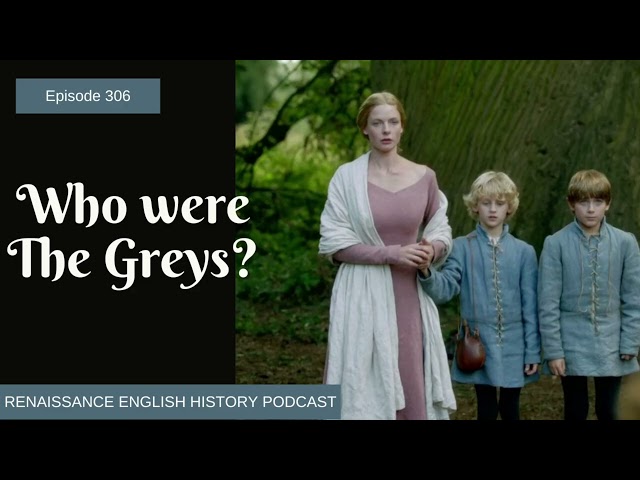
The Greys were one of the most intriguing families in English history, a dynasty that seemed to appear at every turning point from the Wars of the Roses to the Tudor court. They produced queens, rebels, soldiers, and statesmen—figures who stood dangerously close to the English throne. Elizabeth Woodville, a Grey by birth, became a queen; Lady Jane Grey briefly ruled as the “Nine Days’ Queen”; and her sisters Katherine and Mary found their own lives entangled in scandal, imprisonment, and heartbreak. Across generations, the Greys rose from Bedfordshire gentry to near-royalty, their story revealing both the glittering rewards and deadly risks of ambition in Tudor England.
Transcript of The Greys: From Elizabeth Woodville to Lady Jane Grey
If you’ve spent any time at all in Tudor history, you have run into the Greys. They are the family that just keeps showing up at every turni ng point. Elizabeth Woodville was a Grey before she was a queen. Lady Jane Grey was briefly a queen herself, if only for nine days. Katherine Grey secretly married into the Seymours and wound up a prisoner in the Tower. Then there was Mary Grey, scandalizing Elizabeth I by marrying her household guard.
And it was not just the famous women. The Greys were everywhere: nobles, courtiers, soldiers, and statesmen. It feels like no matter where you turn in late medieval and Tudor history, there is a Grey hovering in the background, sometimes in favor, sometimes in disgrace, but always a part of the story.
So the question is, were all of these Greys related? The short answer is yes, at least most of them were branches of the same sprawling family tree with roots in the gentry of Bedfordshire and connections that reached the highest levels of Tudor politics. But the real story is not just the genealogy. It is how the Greys managed to weave themselves into the fabric of English royalty, sometimes as loyal supporters, sometimes as rivals, and sometimes as tragic victims.
That is what we are going to explore in this episode: the saga of the Greys from their medieval beginnings to their moment in the spotlight with Lady Jane Grey, and the way their story sums up the perils of being almost royal.
The Greys started out as a respectable but not especially glamorous gentry family from Bedfordshire. Their fortunes really began to rise in the 14th and 15th centuries when several branches of the family distinguished themselves through service to the crown and through very strategic marriages.
One of the earliest and most famous was Reginald Grey, Baron Grey of Ruthin. If his name sounds familiar, it is probably because of Owain Glyndŵr, the Welsh leader who rose in rebellion against English rule at the start of the 15th century. Reginald Grey and Glyndŵr had a long-running feud over disputed land in Wales, and Grey’s attempt to seize land from Glyndŵr helped spark the uprising in 1400, helped to spark Glyndŵr’s revolt. One of the most serious challenges to English authority in medieval Wales. That gives you an idea of just how prominent the Greys had become by that time. They were no longer just minor knights. They were the kind of family that could help trigger a full-scale rebellion.
From this base, the Greys expanded. Different branches of the family established themselves in various parts of the country. Some became soldiers, others diplomats, and several married into even more powerful houses. By the mid-15th century, when the Wars of the Roses were erupting between the houses of Lancaster and York, the Greys were well positioned to play their role.
That brings us to the most famous early Grey of the Tudor story, Sir John Grey of Groby. He was a Lancastrian supporter who fought in the Wars of the Roses and was killed at the Second Battle of St. Albans in 1461. His widow was left with two young sons and very uncertain prospects. Her name was Elizabeth Woodville, and her decision to remarry would change the fortunes of both the Greys and the English crown.
Elizabeth Woodville’s Impact
What Elizabeth did when she decided to remarry was to set the Grey name on a collision course with royalty. Elizabeth herself was not without connections. Her father, Richard Woodville, had risen from the gentry to become Earl Rivers through his loyal service to the Lancastrians. More importantly, her mother was Jacquetta of Luxembourg, a noblewoman of high European birth descended from the Dukes of Luxembourg and connected to both Burgundian and French royalty.
Jacquetta’s marriage to Richard Woodville had been something of a scandal. She married far beneath her station, but it gave Elizabeth a pedigree that was anything but ordinary. Even so, as a widowed mother with two sons, Elizabeth’s future was uncertain.
Then came the fateful marriage in 1464. The story goes that Elizabeth stood under an oak tree by the road near Grafton, waiting to catch the attention of Edward IV as he passed by. Whether that detail is true or not, the fact remains that Edward noticed her, and he fell hard. Despite the fact that she was a commoner, a widow, and the daughter of a Lancastrian supporter, Edward married her in secret around May of 1464.
It was a shocking match that infuriated his advisors, particularly Warwick the Kingmaker, who had expected him to marry a French or at least European princess. For the Greys, though, it was a turning point that bound their family name to the very heart of English royalty. Overnight, Elizabeth’s sons by John Grey were transformed from the children of a fallen Lancastrian knight to the half-brothers of the Yorkist royal family.
Edward IV showed them particular favor. Thomas Grey, the elder boy, was given the title Marquess of Dorset, an extraordinary leap in status for someone whose father had been a middling knight only a few years earlier. The rise of the Woodvilles brought the Greys along with them, and that did not sit well with everyone at court. Old noble families resented the sudden elevation of what they saw as upstarts. Thomas Grey’s new title and rapid advancement were symbols of this resentment. The Greys became entangled in the factional politics of Edward’s reign, both as beneficiaries of his favor and as lightning rods for criticism.
Elizabeth’s marriage to Edward also meant that the Greys were now woven into the royal line itself. Her sons were stepsons to the king and half-brothers to the royal princes. This closeness to the throne would prove to be both a blessing and a curse, as the family discovered when Edward IV died in 1483 and the crown passed to his young son. Or at least it was supposed to.
When Edward died, the Greys were sitting near the top of the political ladder. Thomas Grey, now grown up, was one of the king’s chief advisors. His younger brother Richard held lands and offices. Their mother, Elizabeth, was the dowager queen and the mother of the new King Edward V.
The Greys’ rise, as we said, had made them enemies. Edward IV’s brother, Richard, Duke of Gloucester, the future Richard III, moved quickly to seize power as protector for the young king. Richard struck hard at the Woodville-Grey faction. As Edward V made his way to London for his coronation, Richard intercepted him, arrested key members of the queen’s family, and soon after took the boy king into custody.
Among those seized were Elizabeth Woodville’s son by her first marriage, Richard Grey, along with her brother Anthony Woodville, now Earl Rivers. Both men were executed in June of 1483 on charges of treason. This was a brutal reminder of just how tenuous the Greys’ position really was. One moment, half-brother to the king, the next condemned as a traitor.
Thomas Grey managed to avoid his brother’s fate, but just barely. He initially aligned himself with Richard, but his loyalties shifted as rebellion began to brew. Later that year, he took part in the Duke of Buckingham’s uprising against Richard, and when that failed, he fled into exile. At first, he was kept under house arrest in France, suspected of being a bit too wobbly in his loyalties. Eventually, though, he pledged himself to Henry Tudor, the exiled claimant to the throne.
When Henry invaded in 1485, Thomas Grey returned with him. He fought at the Battle of Bosworth, where Richard was killed and Henry crowned as Henry VII. Once again, the Greys had managed to survive by attaching themselves to the winning side. But Henry VII, ever cautious about overmighty nobles, did not entirely trust them. Thomas Grey was kept on a very short leash. His power was checked, and his ambitions were carefully managed.
The lesson of this period was clear. The Greys’ proximity to the crown made them valuable allies and dangerous rivals, depending on which way the wind blew. They had climbed high, but the higher they went, the sharper the drop if fortune turned against them.
The Greys Under Henry VII and Henry VIII
Now, with Henry on the throne after Bosworth, the Greys were entering a new chapter. Thomas retained his title and his position, and his descendants continued to rise despite the suspicion of Henry VII. By the time of Henry VIII, the Dorset Greys were firmly established as part of the noble elite.
The family’s fortunes peaked when Thomas’s grandson, Henry Grey, inherited the title. He later became Duke of Suffolk through his marriage to Frances Brandon, who, if you remember, was the daughter of Mary Tudor, Henry VII’s younger sister, and Charles Brandon. This marriage of Henry Grey to Frances Brandon tied the Greys directly to the Tudor bloodline and planted the seeds for Lady Jane Grey’s later claim to the throne.
Another branch of the family, the Greys of Wilton, built their reputation through military service. Lords Grey of Wilton fought in France and later took part in Henry VIII’s wars in Scotland. The Wilton Greys often appear in chronicles of Tudor campaigns. They were reliable men of arms, if not usually the stars of court politics. Their military service ensured that the Grey name kept appearing in the background of Tudor events, even when the spotlight was elsewhere.
Then there were the Ruthin Greys. They were descendants of Reginald Grey, who had quarreled with Owain Glyndŵr a century earlier. They also survived into Tudor times. This line produced barons who fought for Henry VII and Henry VIII. Though less famous than the Dorset or Wilton Greys, the Ruthins also show us that the Grey family was not just a single line by this point. It was a whole network of noble houses, all tracing back to the same medieval roots.
By the 1540s, the Dorset line of the Greys had risen as high as they could go without actually wearing a crown themselves. Henry Grey, by now the 3rd Marquess of Dorset, cemented the family’s fortunes, as we said, by marrying Frances Brandon. Through that marriage, the Greys gained their direct blood tie to the Tudors. This marriage brought Henry Grey not only wealth and prestige, but also a new title.
In 1551, he was created Duke of Suffolk, reviving a title that had lapsed after the death of Charles Brandon, his wife’s father. It was a stunning rise from Bedfordshire gentry to dukes tied by blood to the royal family in little more than a century. Henry and Frances had three surviving daughters: Jane, Katherine, and Mary Grey. Each would find herself entangled in questions of succession, dynastic marriage, and political danger.
Lady Jane Grey’s Tragic Reign
Lady Jane Grey was the eldest, and she was given the kind of humanist education normally reserved only for princesses. She studied Latin, Greek, and even Hebrew. Contemporaries marveled at her intellect and her intense Protestant faith. She was very much a child of the Reformation, a young woman whose learning and piety would later be used to argue that she was divinely suited to rule.
When Edward VI, Henry’s young son, fell ill in 1553, the succession crisis brought the Greys into the center of the drama. According to Henry’s will, the crown should pass to his daughters Mary and Elizabeth if Edward died without heirs. But Edward’s powerful advisor, John Dudley, Duke of Northumberland, feared the return to Catholicism under Mary, and so did Edward himself.
Edward’s “Device for the Succession” excluded his half-sisters and instead named Lady Jane Grey, his Protestant cousin, as heir. To secure this plan, Jane was married to Northumberland’s son, Guildford Dudley, in May of 1553. It was a dynastic masterstroke: the Dudleys and the Greys united, ready to keep Protestant control of the throne.
So when Edward died on July 6, 1553, Jane was proclaimed queen just four days later. She was sixteen years old, deeply reluctant, and almost certainly a pawn in the schemes of her father and father-in-law. For nine days, she bore the title Queen of England. But Mary Tudor rallied support, and the people backed the daughter of Henry VIII over the granddaughter of his younger sister. Mary entered London in triumph on July 19, and Jane’s reign was over before it had even really begun.
Lady Jane and her husband, Guildford, were imprisoned in the Tower, and at first Mary showed mercy. But when Jane’s father, Henry Grey, supported Wyatt’s Rebellion in 1554, Mary’s patience snapped. Jane and Guildford were executed in February that year. Henry Grey himself was executed soon after. Frances Brandon was spared, but her family’s fortunes were shattered. The title of Duke of Suffolk was forfeit. The Grey name was forever linked with rebellion and treason.
Jane Grey became a Protestant martyr in the years that followed, immortalized in sermons, ballads, and eventually romantic Victorian paintings. But in her own time, her short-lived reign was the culmination of the Grey’s dangerous proximity to the throne.
The Fates of Katherine and Mary Grey
The downfall of Lady Jane might have seemed like the end of the family’s ambitions. Yet her sisters, Katherine and Mary, both inherited the Grey name and the dangers that came with it. Their bloodline still linked them to the Tudors, and that alone was enough to make them threats in the eyes of the crown.
Katherine Grey, the middle sister, was considered by some Protestants to be the legitimate heir after Elizabeth I, since Henry VIII’s will had placed the Suffolk line above the descendants of his Scottish sister, Margaret. That meant Katherine was watched carefully from the moment Elizabeth came to the throne in 1558.
In 1560, Katherine secretly married Edward Seymour, Earl of Hertford, without Elizabeth’s permission. Seymour was the son of the late Protector Somerset and the nephew of Queen Jane Seymour, Henry VIII’s third wife. The match united two powerful bloodlines and produced a son, which only made matters worse.
When Elizabeth found out, she was furious. A secret marriage without the queen’s consent was bad enough, but when it involved a woman who could claim the throne and who had just produced a male heir, it became treason. Katherine and her husband were thrown into the Tower of London. Even after Katherine gave birth to a second child, Elizabeth refused to recognize the marriage as valid, declaring the children illegitimate. Katherine remained under house arrest for the rest of her life and died in 1568, just 27 years old, worn down by confinement and grief.
And then there was Mary Grey, the youngest sister, facing her own troubles. She was small in stature. Contemporaries described her as a dwarf, and she was not considered the same dynastic prize that her sisters were. Perhaps because of this, she shocked everybody by marrying for love.
In 1565, she wed Thomas Keyes, the Sergeant Porter of the Palace, a man well beneath her social rank. Elizabeth was no more forgiving of Mary than she had been of Katherine. The marriage was seen as reckless and inappropriate for someone of royal blood. Mary, like her sister, was imprisoned, though eventually released. She lived the rest of her life in obscurity, widowed and largely forgotten, dying in 1578 at the age of just 33.
Between Jane’s execution, Katherine’s imprisonment, and Mary’s disgrace, the Grey sisters showed just how dangerous it was to be close to the throne without the queen’s approval. They were royal enough to be considered possible heirs, but never secure enough to live freely. Each sister paid a steep price for her bloodline: Jane with her life, Katherine with her freedom, and Mary with her happiness.
Looking back across two centuries of history, the Greys story follows a striking pattern. They began as ambitious gentry in Bedfordshire, built their fortunes through loyal service and advantageous marriages, and rose spectacularly when Elizabeth Woodville married Edward IV. From that point on, their fortunes were bound to the crown. But proximity to royal power was always double-edged.
Thomas Grey, Marquess of Dorset, found himself alternately favored and distrusted under Richard III, Henry VII, and Henry VIII. The Wilton and Ruthin branches carved out steadier, if less glamorous, careers through military service. Meanwhile, the Suffolk Greys—Jane, Katherine, and Mary—showed what could happen when a family got too close to the succession.
Certain themes repeat again and again: ambitious marriages that tied the family to the crown, like Elizabeth Woodville to Edward IV and Henry Grey to Frances Brandon; shifting loyalties that reflected the instability of the era, like Thomas Grey moving from loyalty to Richard III to Henry Tudor; and tragic downfalls when fortune turned against them. Like Richard Grey being executed by Richard III and Jane Grey executed under Mary.
The Greys never sat on the throne themselves, unless you count Lady Jane, but their story shows just how dangerous it was to hover on the edges. So there we have it. Were all of those Greys related? Yes, the Dorset, Suffolk, Wilton, and Ruthin branches all traced back to the same medieval family.
But the real answer lies in what their stories tell us. The Greys were not just another noble house. They were a family that repeatedly found themselves almost royal, close enough to power to shape events, but never secure enough to survive them unscathed. From Reginald Grey sparking Owain Glyndŵr’s rebellion, to Elizabeth Woodville changing the course of the monarchy, to Lady Jane Grey’s nine-day reign and her sisters’ imprisonments, the Greys were always part of the drama. They show us that in Tudor England, ambition could carry you to the heights of power and then drop you into the Tower just as quickly.
Earl Grey Tea Connection
Now, a quick coda: those of you who are tea lovers might have wondered before if Earl Grey was related to any of these Greys. I know I have wondered that—maybe that is just me. Either way, if you have ever sipped a cup of Earl Grey, then yes, you have encountered yet another branch of this family.
The blend is named for Charles Grey, 2nd Earl Grey, who served as Prime Minister in the early 19th century. His family, the Greys of Howick in Northumberland, traced their roots back to the same medieval Grey stock as the Dorset and Suffolk lines. By Charles’s time, the Greys were no longer toppling monarchs or marrying into the royal line. They were still shaping British history, this time through political reform, the abolition of slavery, and of course, lending their name to a tea that is now known around the world.
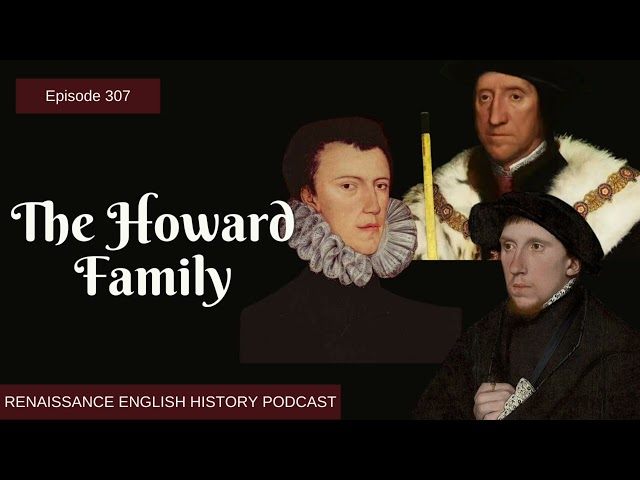
The Howard family was one of the most powerful and enduring dynasties in English history, rising from Norfolk gentry to become dukes, queens, poets, and statesmen at the heart of Tudor politics. Their story mirrors the rise and fall of the Tudor dynasty itself—from loyal service at Bosworth in 1485 to dominance under Henry VIII and survival through Elizabeth I’s reign. The Howards produced two queens of England, Anne Boleyn and Katherine Howard, and some of the most influential figures of their age. Yet their proximity to the throne brought both glory and ruin, as generations of Howards faced imprisonment, execution, and political exile before reclaiming their place among England’s highest nobility.
Transcript of The Howard Family: Power, Queens & Treason in Tudor England:
If you had to pick one family that perfectly illustrates both the rewards and the dangers of being close to the Tudor throne, the Howards would be at the top of that list. They were dukes, generals, poets, queens, and they were also prisoners, traitors, and victims of the executioner’s axe. They reached dazzling heights of influence only to fall into disgrace again and again.
Yet somehow, generation after generation, they clawed their way back into royal favor. The Howard story runs straight alongside the Tudor dynasty itself. When the Tudors rose at Bosworth in 1485, the Howards were there, and when the dynasty ended in 1603, the Howards were still at court. Their family produced two queens of England, Anne Boleyn and Katherine Howard, nieces of the formidable Duke of Norfolk.
Another Howard, Henry Howard, Earl of Surrey, was one of the most brilliant poets of the age. Yet nearly all of them faced imprisonment in the Tower of London, and several were executed on charges of treason. In this episode, we are going to trace the Howard family through the Tudor period, their early rehabilitation under Henry VII, their military glory under Henry VIII, the dangerous marriages and alliances that led them to the scaffold, and their survival against all odds into the reign of Elizabeth.
I do not know whether you have noticed a pattern going on here the last couple of weeks, but I have been doing this thing where I go through and trace one family through the period, and I realized that I had not yet done the Howards, which seems like a really big omission. I have done the Greys, and I think we did the Percys, and we have done some of the other families, the Nevilles, but we never actually did the Howards, so it is time to remedy that. Let us get into it now.
The Howards rose from an established Norfolk gentry family into the high nobility in the 15th century. The key link was a marriage: Sir Robert Howard wed Margaret Mowbray, the daughter of Thomas Mowbray, 1st Duke of Norfolk of the earlier Mowbray line. Their son, John Howard, served the Yorkist kings and was summoned to Parliament as Lord Howard in 1470. He became one of Richard III’s chief supporters.
When the Mowbray male line failed and the child heirs of Mowbray died in 1481, Richard III revived and granted the Dukedom of Norfolk to John Howard in 1483. He was recognizing both his service and his descent through Margaret Mowbray. When he died at Bosworth in 1485, he was holding that recreated title. For his loyalty to the fallen king, John Howard paid the ultimate price and his title was forfeited, but the Howards were nothing if not survivors.
John’s son, Thomas Howard, had also fought for Richard at Bosworth and was captured. He spent several years as a prisoner, but unlike other Yorkist loyalists, he managed to make his peace with the new Tudor king. Henry VII was cautious but pragmatic. He recognized that Thomas Howard came from a powerful noble family with long service to the crown. In 1489, Henry released him from the Tower and gradually restored him to favor. By 1489, Thomas had proved his loyalty enough that Henry made him the Earl of Surrey. He was trusted to help put down the Yorkshire Rebellion that same year, showing his military value to the new regime. Over the next two decades, he steadily rebuilt the Howard family’s position at court.
The full Dukedom of Norfolk was not immediately restored, but the Howards’ careful loyalty under Henry VII laid the foundation for their resurgence. When Henry VIII came to the throne in 1509, Thomas Howard was an experienced statesman and soldier, ready to take advantage of the new king’s thirst for war and glory. The Howard name, tainted by its loyalty to Richard in 1485, was now rehabilitated. From that point forward, the Howards were back in the thick of English politics, and their story under the Tudors truly begins.
When Henry VIII came to the throne in 1509, Thomas Howard, Earl of Surrey, was already in his sixties. He had spent decades proving his loyalty to the Tudors after Bosworth, and Henry rewarded that loyalty. In 1514, Howard was restored to the full Dukedom of Norfolk, regaining the title that his father had lost when he fell with Richard.
But the real moment that secured his family’s prestige came the year before, in 1513, at the Battle of Flodden. Flodden was one of the greatest military victories of Henry VIII’s reign, even though the king himself was not there. While Henry was campaigning in France, James IV of Scotland invaded Northern England with a large army. The defense of the realm fell to Thomas Howard, who was still technically only the Earl of Surrey at this point. He had been appointed Lieutenant General of the North.
On the 9th of September, 1513, the English and Scottish armies met near Branxton, Northumberland. The terrain was muddy and difficult, but Howard used his experience to draw the Scots into a disadvantageous position. The English billmen and archers eventually overwhelmed the Scottish pikemen, and the battle ended in a catastrophic defeat for Scotland. King James IV himself was killed on the battlefield, the last reigning monarch of the British Isles to die in combat.
For the Howards, the victory was transformative. Henry VIII could boast of triumphs in France, but the real glory at home belonged to Thomas Howard. He was hailed as the savior of the realm. His family’s honor was fully restored, and in recognition, Henry made him the Duke of Norfolk in 1514. His son, also named Thomas, was created the Earl of Surrey, beginning a long pattern of Howards recycling the same names over and over again.
The Howards had gone from traitors in 1485 to national heroes in less than 30 years. From this moment, they were among the most powerful families in England, and the next generation, led by the third Duke of Norfolk, would dominate Henry VIII’s court. When the second Duke of Norfolk died in 1524, his son became the third Duke of Norfolk.
The Third Duke of Norfolk’s Ambitions
Thomas Howard, the 3rd duke was very different from his father. Where the old Duke had been a seasoned soldier and a steady loyalist, the younger Norfolk was an ambitious court politician and one of the most formidable figures of Henry’s reign. The third Duke quickly established himself as a leading counselor. He was shrewd, pragmatic, and not above ruthlessness when it suited him. His position was strengthened by his family connections.
His sister, Elizabeth Howard, had married Thomas Boleyn, and their daughter, Anne Boleyn, would become the king’s second wife. Norfolk’s other niece, Katherine Howard, would later become Henry’s fifth queen. Few families could claim so many direct links to the royal bedchamber.
During the 1520s and 1530s, Norfolk became one of Henry’s chief military commanders and statesmen. He led campaigns in France. He negotiated with European powers. And he opposed Cardinal Wolsey, whose fall in 1529 created the space for Norfolk to expand his own influence. With Wolsey gone, Norfolk rose higher still, eventually becoming Lord Treasurer and consolidating both his wealth and political clout.
But he was not simply the king’s yes-man. Norfolk often represented the conservative Catholic faction at court, resisting the evangelical reforms promoted by men like Thomas Cromwell and Edward Seymour. He opposed some of Cromwell’s religious policies and resented the rise of new men of low birth who threatened the old nobility’s dominance.
Norfolk’s influence reached its peak during the years of Anne Boleyn’s queenship. As her uncle, he was positioned at the very heart of Henry’s household. Yet when Anne fell in 1536, Norfolk presided over her trial, a reminder that his loyalty was always first to his family’s survival and his own status, not to any individual.
Even after Anne’s execution, Norfolk remained indispensable. He helped to orchestrate Henry’s marriage to Anne of Cleves and then played a role in the downfall of Cromwell in 1540. The execution of Cromwell was one of Norfolk’s greatest victories, although it also marked the beginning of the family’s undoing.
His niece Katherine Howard briefly replaced Anne of Cleves as queen, but her scandalous downfall in 1542 nearly dragged the entire Howard family with her. By the 1540s, the Howards were at the height of their power but also dangerously close to destruction.
Howard Women and Their Influence
If the third Duke of Norfolk was the architect of Howard power, it was the Howard women who became the family’s most visible symbols at Henry’s court. Through them, the Howards tied themselves directly to the king’s bed and, for brief moments, to the throne itself. But those connections, of course, proved as deadly as they were dazzling.
The most famous Howard woman was Anne Boleyn. Through her mother, Elizabeth Howard, Anne was a niece to the third Duke of Norfolk. When Anne attracted Henry VIII’s attention in the late 1520s, Norfolk backed her rise. The family stood to gain enormously from a Howard queen, and for a time they did. But Anne’s failure to produce a male heir, combined with Henry’s shifting affections, led to her downfall.
Norfolk himself presided over her trial in 1536, which I can imagine strained his relationship with Anne’s mother. Christmas dinners would have been very awkward after that. Only a few years later, another Howard niece entered the king’s bed, Katherine Howard, the daughter of Norfolk’s younger brother Edmund, who was placed at court in her teens. In 1540, she caught Henry’s eye and, despite her youth, became his fifth wife. For the Howards, this was another triumph, and another disaster.
When Katherine’s past relationships came to light and she was accused of adultery during her marriage, the scandal brought the family to the edge of ruin. Katherine was executed in 1542, and the Howards once again faced the royal anger.
Not all Howard women met such grim fates. Mary Howard, the daughter of the third duke, married Henry VIII’s illegitimate son, Henry FitzRoy, Duke of Richmond. Widowed at just fifteen, she refused later offers of remarriage, a decision partly influenced by politics and partly by her own will. Mary carved out a role as a literary patron associated with her brother, Henry Howard, Earl of Surrey, one of the greatest poets of the Tudor period. Unlike her cousins Anne Boleyn and Katherine Howard, Mary avoided the king’s suspicion and outlived Henry VIII himself.
The Fall of the Howards
By the mid-1540s, the Howards had been through two queens, political triumphs, and countless near misses. But their luck finally ran out. In the last years of Henry VIII’s reign, the storm broke around Henry Howard, Earl of Surrey, the eldest son of the third duke. Surrey was one of the most dazzling figures at court. He was brave in battle, cultured, and a gifted poet whose works would influence English literature for centuries. But he was also reckless, proud, and dangerously outspoken.
Surrey mocked the new men like Edward Seymour and Thomas Cranmer, whose evangelical leanings clashed with his own conservative outlook. His arrogance, combined with the Howard name, made him a target for rivals eager to cut the family down to size.
In late 1546, Surrey was accused of treason. The charges were thin. He had incorporated the royal arms of Edward the Confessor into his own coat of arms, which was twisted into a claim that he aspired to the throne. More damning was his Howard blood, which made him a potential figurehead for conservative opposition if Henry VIII died and a boy king succeeded. Surrey was tried and executed in January 1547. He was only thirty years old.
Now his father, the third duke, was arrested soon after. Norfolk had spent decades maneuvering, surviving, and playing factions against one another. But this time he could not escape. He was condemned to death and scheduled for execution on the 29th of January 1547. Only Henry VIII’s own death the night before saved him. Literally, this man was one of the luckiest people in Tudor England.
He remained in the Tower through the reign of Edward VI. His life was spared, but his power was stripped away. The fall of the Howards at this point was total. From the heights of controlling queens, the household, military command, and the royal council, they had collapsed into disgrace and imprisonment in the Tower. Their enemies, the Seymours above all, stepped into the vacuum, ready to dominate the new King Edward VI.
During Edward’s reign, the Seymours, as uncles to the king, dominated government. Norfolk was imprisoned, and the Howard family kept a low profile. With Protestant reformers steering policy, the conservative Catholic Howard line had little room to maneuver. The duke’s grandchildren, including Surrey’s children, were effectively sidelined. The once-mighty Howards had gone from kingmakers to political outcasts.
Everything changed in 1553 with the accession of Mary. A Catholic queen determined to reverse the religious reforms of her brother’s reign, she needed loyal allies from the old nobility. Norfolk, now in his eighties, was released from the Tower after nearly six years of confinement. He regained his dukedom and his place on the Privy Council, restored as one of Mary’s trusted grandees.
Norfolk supported Mary’s marriage to Philip of Spain in 1554, a deeply controversial union that sparked Wyatt’s Rebellion. Though age prevented him from playing an active military role, his presence as a senior noble gave legitimacy to Mary’s policies. His survival was extraordinary. The same man who had presided over Anne’s trial, orchestrated Cromwell’s downfall, and nearly lost his head himself was now back at the heart of power under a Catholic queen.
The Howards Under Elizabeth I
Norfolk died in 1554, but his descendants remained active at court. The Howard name was rehabilitated once more. For a dynasty that had seemed broken beyond repair in 1547, the Howards had once again demonstrated their uncanny ability to survive. When Elizabeth came to the throne in 1558, the Howards once again found themselves in a powerful but dangerous position. The family had been pillars of Catholic conservatism under Henry VIII and Mary I. But Elizabeth’s settlement established Protestantism as the official religion. For the Howards, survival now meant figuring out how to deal with a queen who was suspicious of their loyalties but unable to ignore their rank and influence.
The central figure was Thomas Howard, 4th Duke of Norfolk, grandson of the third duke. Young, wealthy, and ambitious, Norfolk quickly became the premier nobleman of Elizabeth’s court. But his position was fraught. As the only duke in the realm, he was both indispensable and very dangerous in the queen’s eyes.
In the 1560s, Norfolk became entangled in the great dynastic question of Elizabeth’s reign: the fate of Mary, Queen of Scots. Norfolk flirted with the idea of marrying Mary, a union that could have united two great houses and potentially placed him at the center of English politics. But Elizabeth regarded the match as treasonous.
Norfolk was arrested in 1569 and released, then rearrested when evidence surfaced of his involvement in the Ridolfi Plot, a Catholic conspiracy to depose Elizabeth and replace her with Mary. In 1572, Norfolk was executed for treason, the highest-ranking nobleman to lose his head since the Duke of Buckingham more than fifty years earlier. His death once again decimated the Howard family’s standing, though cadet branches survived through the Earls of Arundel and Suffolk.
Despite Norfolk’s fall, other Howards remained active in Elizabeth’s world. There was Philip Howard, Earl of Arundel, who converted to Catholicism and was imprisoned in the Tower, where he eventually died in 1595. He was later canonized as a Catholic martyr. Meanwhile, other relatives distanced themselves from Catholic intrigue, ensuring that the Howard name would live on into the Stuart age.
Elizabeth never fully trusted the Howards, but she never eliminated them entirely. Their combination of ancient lineage, vast estates, and connections across Europe meant that even under suspicion, the Howards could not be erased. By the end of Elizabeth’s reign, the family had once again endured.
The family was bruised, reduced, and divided, but not destroyed. As mentioned earlier, the other branch, the Earls of Arundel, inherited the dukedom. Under James I and into the Stuarts, we talked about Philip Howard, who was the Earl of Arundel and Norfolk’s son, and he had already died in the Tower in 1595 for his Catholic faith.
His son, Thomas Howard, who became the 14th Earl of Arundel, was known as the Collector Earl. He was a towering figure in the early Stuart court, building one of the greatest art and antiques collections of the 17th century and helping to shape English taste and scholarship.
During the English Civil War, the Howard family split. Some supported Parliament, while others remained loyal to the Crown. Henry Howard, the sixth duke, carefully shifted allegiances as the conflict wore on, making sure that the family survived the violent upheavals that destroyed so many noble houses. The estates suffered, but their titles lived on, and with the restoration of Charles II in 1660, the Dukedom of Norfolk was formally reinstated to the Howards.
The Howard family remains at the pinnacle of the English peerage. The Dukes of Norfolk are the premier dukes of the realm. They hold the hereditary office of Earl Marshal, responsible for organizing coronations and state funerals. The family seat, Arundel Castle in Sussex, is still one of the great noble houses of England.
More than five centuries after Bosworth, the Howards are still here, a living link to the tumultuous Tudor world. They lived through treason charges, executions, civil war, and religious strife, but they survived, they adapted and held onto their place at the highest ranks of English society.
From Anne and Katherine Howard to the present duke, the family’s history is a thread that runs unbroken from the Wars of the Roses through the Tudors, the Stuarts, and right down to the 21st century. So there we go, my friend, a little bit about the Howard family, the Dukes of Norfolk, starting as Norfolk gentry and now the premier dukes in England.
The Seymours were one of the most fascinating families of Tudor England, a dynasty that rose from modest gentry to the very heart of royal power. Best known for Queen Jane Seymour, Henry VIII’s third wife and the mother of his long-awaited son, the Seymours’ story is one of dazzling ambition, scandal, and tragedy. Their ascent began long before Jane caught the king’s eye, rooted in generations of loyal service and strategic marriages. From their quiet estate at Wolf Hall to the glittering but perilous world of the Tudor court, the Seymours transformed themselves into a family that shaped the fate of England, and paid dearly for it.
Transcript of The Family that Gave Henry VIII a Son and Lost Everything:
When we think of the Seymour family, we think of Henry VIII. We think of Queen Jane Seymour. We think of a family that went from relative obscurity to the very peak of power in the blink of an eye. But to understand the dizzying height of their ambition and the tragic depths of their fall, we have to go back to the beginning.
We have to go back to their humble roots, and that is what we are going to talk about today. We are going to trace the Seymours from their beginnings through to their fall, and even where they are today, and what happened to them after the Tudor period.
For generations, the Seymours were, for all intents and purposes, a family of solid gentry. The name itself, Seymour, is an English variation of the French name St. Maur, hinting at their Norman origins. They were well-established landowners in Wiltshire, their primary seat at Wolf Hall. They were knights and sheriffs, a respectable class of people who had no reason to believe that one of their own would one day be a queen of England, let alone the mother of a king. Their place in the world was solid, predictable, and frankly, a little bit boring.
The real shift began a generation before Jane, with her father, Sir John Seymour. Sir John was a career courtier and a soldier. He was knighted by Henry VII for his service and later fought alongside Henry VIII in the English campaigns in France. He was a man with a foot in the old world of military prowess and the new world of court influence. But his true political masterstroke was his marriage to Margery Wentworth.
Margery was no ordinary gentry woman. Through her mother, she was a cousin of Elizabeth of York, Henry VIII’s mother. Their marriage brought the Seymours into the orbit of the Tudor dynasty and, most importantly, into the same social circle as Thomas Howard, the future Duke of Norfolk. It was a strategic alliance that gave the Seymours the very thing they had lacked: powerful connections.
It allowed them to move from the quiet countryside of Wiltshire to the noisy, dangerous, and intoxicating world of the royal court. Lurking beneath the surface of this respectable family were the seeds of the very drama that would define their future. Even before Jane appeared, the family was touched by scandal.
Edward Seymour, Jane’s older brother, the future Duke of Somerset, was caught up in a domestic drama that would have major consequences for the family. Sometime before 1519, he married his first wife, Catherine Fillol. They had two sons, John and Edward, but for reasons that were never explicitly stated at the time, Edward repudiated his wife. Later, after the Seymours were at the height of their power, a scandalous and largely unsubstantiated rumor would emerge that Catherine had been having an affair with her own father-in-law, Sir John.
The truth of the matter is lost to history—it makes for some really good historical fiction. The outcome, however, was clear. When Edward was later created Duke of Somerset, his patent of nobility explicitly stated that his titles would pass to the heirs of his second marriage. This legal document was the most public acknowledgment of the old scandal that the family could make.
Jane Seymour: The Perfect Queen
This family—the very family that was the subject of whispers—would soon work to present a perfect, quiet, blemish-free antidote to Henry’s problems. They went all in on one bet: Jane Seymour. Jane, our future queen, was the ultimate observer. She had served both Queen Katherine and Anne Boleyn. Imagine that—she was the silent witness to Henry VIII’s “Great Matter,” standing a few feet from the woman Henry had risked a schism with Rome for, and a few feet from the woman he was about to dispose of.
While Anne was all sharp wit and fashionable French gowns, Jane cultivated a different image. She was demure, pious, quiet. She didn’t engage in the courtly games; she stayed in the background—a symbol of domesticity. This wasn’t coincidence. It was a deliberate strategy orchestrated by her brothers, Edward and Thomas. They knew exactly what Henry was looking for. After Anne’s fiery personality and inability to have a son, Henry was desperate for a quiet and compliant wife. Jane was the perfect opposite, and the Seymours expertly presented her as such.
A perfect example of this comes from a well-known anecdote: while he was still married to Anne, Henry sent Jane a gift of a purse filled with coins. It was a clear, if discreet, overture, but Jane, in a move that showed her deep understanding of the court’s politics, took the purse and, after kissing the coins, handed it back to the messenger. She said she was happy to accept a marriage gift from the king, but she could not take a single penny from him before then without tarnishing her honor.
It was an audacious and flawless political play, but the Seymours were not operating in a vacuum. Jane’s rise was actively aided by the faction at court that wanted to see Anne’s downfall. These were the conservative, Catholic-leaning nobles, many of whom had been allies of Catherine of Aragon. They despised Anne and the Reformation that she represented.
They included people like Anne’s own uncle, the Duke of Norfolk, Thomas Howard, who had grown to resent his niece’s influence. There was also the Imperial ambassador, Eustace Chapuys, a fervent ally of Katherine of Aragon. Though he was not particularly welcome to whisper directly to the king, he worked his influence through a network of spies and allies, including the notorious courtier Francis Bryan, a cousin of both Anne and Jane, known as the “Vicar of Hell.”
These were the people who placed Jane in Henry’s path, whispering to him about her virtue and humility, using her as a weapon against Anne. Jane’s very lack of baggage was her greatest strength. The moment that Anne Boleyn was executed in May 1536, Jane’s long game paid off. Henry married her just a week and a half later.
The Rise of the Seymour Brothers
The jackpot came with the birth of Prince Edward in October 1537. Jane gave Henry what he had craved for his entire reign—a male heir, a healthy male heir. The future of the Tudor dynasty was now literally a Seymour. Her victory, however, was also her end. She died just two weeks later, most likely from childbed fever.
Henry was, of course, heartbroken. He would later choose to be buried next to her. For the Seymours, her death was a devastating loss and a triumph all at once. Her brothers, Edward and Thomas, were now the most powerful men in England. Their nephew was the future king.
As soon as Henry VIII died, their position was sealed. Edward, Earl of Hertford, became Lord Protector—the de facto ruler of the entire kingdom. This was a massive political move because Henry had wanted to set up a regency council with no one in control, but Edward was able to use his power and political machinations to go completely against Henry’s own will and become Lord Protector. His brother Thomas was the Lord Admiral. They were at the top of the food chain, with more power than anyone had ever imagined for their family.
But power in the Tudor court was always a double-edged sword. In the wake of Henry’s death, that double-edged sword was about to cut deep. The Seymour family, now at the absolute pinnacle of power, was about to turn on itself.
At the center of this looming catastrophe were the two brothers: Edward, the eldest, who had the quiet cunning of a politician, and Thomas, the younger, who had the brazen, reckless ambition of a pirate. Edward was now the Lord Protector, the man who ruled England in the boy king’s name. Thomas was relegated to the title of Lord High Admiral, a position he found utterly inadequate. He was a man with a massive ego, a bottomless appetite for power, and saw his brother’s elevation as a personal slight.
The rivalry between the two brothers began to escalate almost immediately. Edward’s second wife, Anne Stanhope, a notoriously proud and ambitious woman, was a key factor. She was a constant source of tension, feuding openly with Catherine Parr over precedence and demanding a place among the royal family.
A particularly telling and petty feud erupted over the use of the queen’s jewels. After Henry’s death, Catherine Parr, the dowager queen, expected to retain a magnificent collection of jewelry. But Anne Stanhope, as the wife of the Lord Protector and the king’s aunt, insisted that she should have them. A back-and-forth ensued, with Thomas Seymour siding with Catherine. We’ll talk about why in a minute. Further deepening the rift between the brothers.
Thomas wanted his own power base. He wanted a queen, and his first play was Catherine Parr. Thomas had a romance with her before she became queen, and as soon as Henry died, Thomas wasted no time rushing to marry the dowager queen in a secret, hastily arranged ceremony just a few months after the king’s death.
It was a scandalous move that infuriated his brother and the rest of the Privy Council, who viewed it as a blatant power grab. It was also an act of pure emotional recklessness. His second play, then, was for the young Princess Elizabeth. Living in Catherine Parr’s household was her stepdaughter, the teenage Elizabeth. Thomas, a man who liked to flirt and had a seemingly insatiable desire to be at the center of royal power, could not resist.
He started to form almost a relationship with the young princess that, by any measure, was completely inappropriate. He would visit her room in his nightshirt, slap her on the behind, and engage in horseplay with her and her governess, Kat Ashley. Catherine Parr, surprisingly, initially joined in. Perhaps she thought it was all just innocent fun, but Thomas’s behavior became increasingly predatory. Elizabeth was eventually sent away from the household in disgrace.
The drama reached a terrible climax in September 1548, when Catherine gave birth to a daughter, Mary Seymour. The birth was followed by complications, and Catherine died two weeks later from childbed fever. Her death left Thomas with a young infant and, more importantly, without a key source of his political power. He was now free to pursue Elizabeth as a wife, but he was also a man on the ropes. With nothing left to lose, he spiraled into paranoia and reckless plotting.
He began conspiring against his own brother, manipulating the young King Edward with money and favors, and even attempting a late-night break-in at the king’s apartments in Hampton Court, where one of the casualties was Edward’s dog, who was shot. He was eventually caught and charged with treason. His brother Edward now faced a terrible choice: spare his brother or execute him and consolidate his own power. He chose the latter. On March 20, 1549, Thomas Seymour was executed.
So what happened to the young Mary Seymour, his daughter, born just six months before her father’s execution? The orphaned Mary was placed in the care of Katherine Willoughby, the Duchess of Suffolk. The duchess had been a friend of Catherine Parr’s, but raising her daughter was a difficult burden. She constantly wrote to the government complaining about the cost of Mary’s upkeep and the lack of funding. Eventually, funding was completely cut off, and Mary disappeared from the historical record entirely after 1550.
Historians can only speculate about what happened to her. The most likely and most mundane theory is that she simply died as an infant or young child, perhaps a victim of the same sweating sickness that plagued so many during the era and would take Katherine Willoughby’s own sons the next year. The more romantic and compelling theory, which is the subject of some historical fiction, is that she was raised in anonymity, secretly married, or perhaps even sent abroad to live out her life in obscurity. We will never know for sure, but her disappearance is a fitting symbol for a family that seemed to burn so bright and then vanished just as quickly.
Edward Seymour’s Political Struggles
So back to Edward Seymour, the Lord Protector. He had survived his brother’s plotting, but his position was far from secure. He was a new kind of ruler, a man who believed in social reform and was seen by some as sympathetic to the struggles of the common people. You could almost call him a progressive of the Tudor period—a man who saw the suffering of the lower classes and tried, somewhat ineffectively, to do something about it.
This was most evident in his response to Kett’s Rebellion in 1549, a major uprising in Norfolk sparked by peasant anger over land enclosures. While other nobles demanded immediate and bloody repression, Edward tried to negotiate with the rebels and even issued a proclamation that acknowledged their grievances. He saw the rebels as his “poor friends.”
This was an admirable, even forward-thinking stance, but in the context of the paranoid Tudor court, it was also his political death warrant. To his enemies, particularly John Dudley, Earl of Warwick, this was not compassion—it was weakness, an outright invitation to chaos. Dudley, a far more pragmatic and ruthless politician, saw Edward’s populism as a threat to the established order and to the property of the nobility.
He began to whisper to the other lords, pointing out that Edward’s leniency would only encourage more rebellions. He gathered a powerful coalition of nobles who were disgusted by Edward’s inability to control the situation and alarmed by his sympathy for the rebels. They accused him of treason, of inciting rebellion, and of failing to protect the realm.
In October 1549, less than a year after he had his own brother executed, Edward was arrested and stripped of his power. He would spend the next two years in and out of the Tower, clinging to what little influence he had left, but the end was inevitable. On January 22, 1552, he was led to the scaffold at Tower Hill.
His execution was not met with universal joy; in fact, many of the common people who had once seen him as their champion now mourned his passing. His death completed the devastating, bloody chapter of the Seymour siblings. Jane, Thomas, and Edward had risen to unthinkable heights. Both Thomas and Edward met their end on the executioner’s block, while Jane, of course, died giving birth to the next heir.
With both of the elder brothers gone, it might seem as if the Seymour story had come to a definitive and tragic end, but that would ignore the family lines that remained. The future of the Seymours now rested on the next generation. Specifically, it rested on the children of Edward Seymour.
First, there was the line from Edward’s first marriage—the sons he had repudiated years ago, John and the second Edward. We’ll talk about them second because an interesting twist happened. Let’s start first with the line from Edward’s second, more politically advantageous marriage to Anne Stanhope.
This line would be carried on by his eldest son, Edward, who for a time was the true heir to the dukedom. This Edward was known as the Earl of Hertford, and he would play a crucial role at the court of Elizabeth I. He was an incredibly ambitious man and, like his uncle Thomas, had set his sights on a royal marriage.
He secretly married Lady Catherine Grey, the sister of the ill-fated Lady Jane Grey. Catherine was, at the time, a potential successor to the throne, and their secret marriage was seen as a brazen power grab. When Elizabeth found out, she was furious. She had them both imprisoned in the Tower and declared their children illegitimate.
Catherine spent the remaining years of her life under house arrest, moved between various locations. She never saw her husband again and died in 1568 from tuberculosis—and, they said, heartbreak. Edward, the Earl of Hertford, remained imprisoned for nine years. The marriage would later be declared legitimate by a new monarch in 1608, decades after her death. The children, initially illegitimate, were also legitimized at this time, completing a tragic and torturous ordeal for the family.
The Next Generation of Seymours
The main line of the family was continued by Edward’s son with Catherine, who was also named Edward and inherited the title Viscount Beauchamp. It was this younger Edward—who had a father named Edward and a grandfather named Edward, so that’s not confusing at all—who broke the pattern and had a son named Francis, who would later be created Baron Seymour of Trowbridge, Francis, would be a key player in the next generation—a prominent royalist during the English Civil War. The descendants of this line would remain politically significant for centuries, serving in various capacities.
Interestingly, the Earl of Hertford, the second Edward Seymour—the one who married Catherine Grey—married twice more, both times in secret. So he was married three times in secret. He clearly had a thing about secret weddings.
But let’s go back and talk about the children from the older Edward Seymour’s first marriage—the marriage to Catherine Fillol, before Jane was queen, before any of that happened, the one he had repudiated. These were the stepbrothers of Edward Seymour, Earl of Hertford—the children by Anne Stanhope.
Those sons were John and Edward—because naming your kids Edward seems to have been a family tradition, right? Anyway, they had been sidelined for years, but there was an interesting twist of fate that brought the family’s story full circle. They were actually the ones who eventually inherited the family’s title and still hold it today.
This was because the patent of nobility specifically passed the dukedom to the heirs of the second marriage first—but that line died out. It wasn’t until 1750, with the death of the 7th Duke of Somerset, that the line from Anne Stanhope finally ran out of male heirs. At that point, the dukedom reverted, as the patent decreed, to the descendants of the first repudiated marriage. That is where the current Duke of Somerset, John Seymour, the 19th Duke of Somerset, comes from—the repudiated line with Catherine Fillol.
Over the centuries, the Seymours would serve in Parliament, hold military commissions, and occupy various other positions of influence. They never again reached the Tudor-era heights of being a king’s uncle or Lord Protector.
The Parrs were one of the most fascinating yet often overlooked families of Tudor England. Unlike the mighty Howards or Seymours, the Parrs rose from the northern gentry of Westmorland to stand at the very heart of royal power. Their story is one of steady ambition, loyalty, and calculated marriages that carried them from Kendal’s windswept hills to the court of Henry VIII. Through generations of service and shrewd alliances, the Parrs transformed from local administrators into influential courtiers, culminating in the rise of Queen Catherine Parr—the last wife of Henry VIII and one of the most remarkable women of the Tudor age.
Transcript of From Kendal Gentry to Queen Katherine Parr:
When we think of the families that shaped Tudor England, the same names tend to dominate—the Howards, the Seymours, the Boleyns, the Nevilles, the Percys. But one clan that is often overlooked is the Parrs, a family who rose not from the ancient nobility, but from the sturdy ranks of the northern gentry.
The Parr family fortunes were tied to the northwest of England, particularly to Kendal in Westmorland. The castle still overlooks the town in ruined form. It is often associated with the Parrs today, but they were never actually the lords of it in their own right. Kendal Castle was the seat of the Barons of Kendal, originally held by the de Ros family. The Parrs entered prominence as retainers and tenants of these barons, gradually building up their landholdings through loyal service and a series of shrewd and lucky marriages.
By the 14th century, the Parrs were firmly established among the gentry of Westmorland. Sir William Parr, who died in 1405, served the crown in northern campaigns and anchored the family’s reputation as reliable administrators in a region frequently unsettled by raids from across the Scottish border.
Over the generations, the Parrs gained estates through marriage connections, most importantly through links with de Ros family, who still controlled the Kendal barony. These marriages never gave the Parrs the castle itself, but they did make them some of the most prominent tenants in the area. They were wealthy, visible, and increasingly influential.
The Wars of the Roses gave the Parrs their first real taste of national-level politics. Like many northern families, they were drawn into the rivalry between York and Lancaster. Some Parrs supported the Yorkist cause, while others showed loyalty to Lancaster. This was not unusual. For families without the resources of the Percys or the Nevilles—hedging one’s bets was a strategy for survival. After battles like Towton in 1461 or Hexham in 1464, fortunes could change overnight, and the Parrs, by keeping a foot in both camps—much like the Stanleys—managed to emerge intact no matter who claimed the upper hand.
By the end of the 15th century, the family had positioned itself well. Their loyalty to Richard III did not prevent them from making the transition smoothly to Henry VII’s rule after Bosworth in 1485. They were not wealthy magnates, nor were they ancient aristocracy, but they were solidly placed in the gentry class, with enough estates and enough loyalty to be useful to the Tudors.
It is worth noting that by the time Catherine Parr was born in 1512, Kendal Castle itself was already falling into decline. The family seat associated with her childhood was not the ruined fortress in Westmorland, but rather their household at Blackfriars in London, close to court. The link between Catherine and Kendal Castle is a romantic one made by later generations when the ruins became tied in local memory to the queen who bore the name of Parr.
The Parrs’ real story in the late medieval period is not one of seizing castles or founding dynasties, but of survival and gradual progress. They were never the dominant house in the north—that honor went to the Nevilles and the Percys—but they managed to keep themselves relevant and respected. Through marriage into the de Ros family, loyal service to the Nevilles, and a reputation for steadiness and loyalty, they survived the shifting political winds of late medieval England and emerged ready to take their place on the Tudor stage.
Sir Thomas Parr: From Gentry to Royal Court
The real turning point for the Parr family came with Sir Thomas Parr, born around 1483. He embodied the family’s shift from northern gentry to figures of real significance at the royal court. Thomas was the great-grandson of Sir William Parr of Kendal, and he inherited not only lands in Westmorland but also a sense that the family’s future lay closer to the crown than to the windswept castles of the north. Thomas Parr’s career unfolded under Henry VIII, where he found a place in the king’s household. He held offices in the north, but more importantly, he gained connections with the great Neville family, cementing the Parrs’ link to one of the most powerful northern dynasties. His loyalty and service earned him a knighthood, and while he never became one of the kingdom’s leading magnates, he was respected as a capable and ambitious courtier.
Thomas’s marriage proved even more influential. He married Maud Green, a woman of strong courtly connections who was serving as a lady-in-waiting to Queen Katherine of Aragon. This match tied the Parrs firmly into the circle of the Tudor court and gave their children a direct link to royal service from birth. Maud herself was a woman of learning and piety, remembered for her devotion to Katherine of Aragon and her interest in education. Through her, the Parr children were raised with an emphasis on reading, religious study, and the humanist ideals that were just beginning to spread through England.
Thomas and Maud had three surviving children: Catherine, William, and Anne. Each of them would leave their mark on Tudor history, but their paths were shaped by the environment their parents created. At their household in Blackfriars, the children had access to teachers, books, and the intellectual atmosphere of the court. Unlike many provincial gentry families, the Parrs were raising their heirs in the heart of the kingdom’s political and cultural life.
Sir Thomas died in 1517 when his children were still quite young. This might have spelled disaster for a family whose fortunes rested on his courtly position, but Maud Green Parr took the reins. As a widow, she made sure to continue her children’s education and cultivated their connections at court. Her role as a mother and patroness cannot be overstated. She positioned her son William to serve the king, secured Anne’s placement as a lady-in-waiting, and laid the foundation for Catherine’s eventual rise to queenship.
In the Parr story, it was the marriage that opened doors. Thomas Parr brought the respectability of a northern gentry line, while Maud Green contributed her direct service to Queen Catherine and her close ties at court. Together they placed their children into a world far removed from Kendal’s windswept hills—one of humanist teachers, royal favor, and opportunity. Without Maud’s connections and Thomas’s ambition, Catherine, William, and Anne Parr might never have stepped so confidently into the Tudor world.
Catherine Parr: From Noblewoman to Queen
So let’s talk about Catherine. Born in 1512, she was the oldest child of Sir Thomas and Maud. Her childhood was shaped by her mother’s strong courtly ties and commitment to education, which was very different from most northern gentry daughters. Catherine was fluent in several languages and well read in scripture and humanist thought—unusually well prepared to take on roles of influence in a period when women were rarely encouraged to step far beyond the domestic sphere.
Her path to Henry’s throne, however, was anything but direct. She married four times before her death in 1548, and each marriage reveals a stage in both her personal development and the family’s steady climb. Her first marriage was to Sir Edward Burgh, the son of a Lincolnshire gentleman. The match was advantageous enough to cement alliances, but it was not particularly dazzling. Catherine’s father had already passed away by this time, and her mother was still working to secure her children’s futures. Catherine lived with Burgh at his family’s modest estate, but he died within a few years, leaving her widowed in her early twenties. Far from being a setback, this gave her a degree of independence and control over her next marriage choice.
Her second marriage was a step upward. She became the wife of John Neville, Lord Latimer, a wealthy widower nearly twice her age. As Lady Latimer, she presided over large estates in the north, cared for Neville’s children, and became deeply involved in the responsibilities of an aristocratic household.
But this marriage also brought her dangerously close to rebellion. During the Pilgrimage of Grace in 1536, when northern Catholics rose up against Henry VIII’s religious reforms, rebels stormed Latimer’s house and forced him to join their cause. Catherine endured terrifying months when her home was overrun and she and her stepchildren were held under guard. Latimer later managed to reconcile with the crown, but the episode gave Catherine firsthand experience of the dangers of politics and religion in Henry’s England.
Widowed again in 1543, Catherine returned to court, and there she caught the eye of Henry VIII, who by then was in his early fifties, obese, and increasingly ill. Catherine, though, wasn’t just a convenient bride. She was intelligent, compassionate, and deeply devout—qualities that Henry valued as he sought stability in his final years. Their marriage in July 1543 made her queen consort, and with it, Catherine stepped into one of the most dangerous roles in England.
As Queen, Catherine showed remarkable political and personal skill. She worked to reconcile Henry with his daughters Mary and Elizabeth, helping to restore them to the line of succession. She also acted as regent in 1544 when Henry led a campaign in France, overseeing the kingdom in his absence—a role rarely entrusted to a queen consort. It had previously been given to Katherine of Aragon, who won the Battle of Flodden. Catherine Parr’s household became a hub for scholars, reformers, and writers. She published two devotional works, Prayers or Meditations and later Lamentations of a Sinner, making her the first queen of England—and the first woman in England—to publish under her own name.
Catherine’s religious leanings, however, almost cost her everything. By the late 1540s, factions at court were bitterly divided between conservative and reformist groups. Bishop Stephen Gardiner and Lord Chancellor Thomas Wriothesley saw Catherine as a threat, accusing her of heresy. A warrant for her arrest was even drawn up in 1546, but Catherine’s quick thinking saved her.
She was warned in advance about the threat and presented herself to Henry not as a reformist rival, but as a humble wife who only argued scripture to distract him from his pain. Flattered, Henry embraced her, and when the soldiers came to arrest her, he publicly rebuked them—which must have been very confusing for them, I’m sure. “Wait, hang on. You approved this? What?” Anyway, Catherine had outmaneuvered her enemies with a performance that probably saved her life.
After Henry’s death in January 1547, Catherine married for the fourth time, to Thomas Seymour, the ambitious brother of Henry’s third wife, Jane Seymour. This marriage was risky. Thomas was politically dangerous and openly flirted with the young Princess Elizabeth, who was living in Catherine’s household. Catherine became pregnant for the first and only time, but she died in September 1548 at Sudeley Castle, likely of childbed fever, leaving behind an infant daughter, Mary Seymour, who disappears from the historical record soon after.
Catherine’s life is often summed up with that rhyme about Henry’s six wives: “Divorced, beheaded, died; divorced, beheaded, survived,” with Catherine holding the final word. But “survived” doesn’t fully capture her. She was more than Henry’s last wife. She was a patron of learning, a religious writer, a peacemaker in a fractured family, and a survivor in a court that consumed most who entered it.
William Parr: The Marquess of Northampton
For the Parr family, she was the crowning achievement of generations of ambition and endurance. While Catherine’s place in history was secured through her marriage to Henry, her younger brother William Parr tried to carve out his own path to prominence. Born in 1513, William inherited the family estates after their father’s death and was shaped by his mother Maud’s determination to secure influential positions for her children. His career shows both the opportunities and pitfalls of Tudor politics for ambitious men without the backing of a great noble house.
His early career was promising. He served Henry VIII in military and court capacities, eventually earning the title of Baron Parr of Kendal in 1539. His fortunes really began to climb under Edward VI, whose Protestant leanings matched his own. In 1547, he was elevated to Marquess of Northampton, a significant title that placed him among the leading peers of the realm.
His Protestant sympathies, coupled with his sister Catherine’s influence as Queen Dowager, gave him access to power at the very highest level. But his personal life nearly destroyed him. His marriage to Anne Bourchier, the heiress of the Earl of Essex, should have been a triumph. The match brought him wealth, prestige, and ties to an ancient noble family, but the union quickly soured.
In 1541, Anne scandalized society by eloping with a lover and bearing an illegitimate child. William sought a parliamentary annulment, which was granted in 1552, but the disgrace lingered. It was a rare case where a noblewoman’s actions threatened the standing of her husband. Despite the personal turmoil, William remained central to Edward VI’s regime.
He supported the Duke of Northumberland’s attempts to secure the succession for Lady Jane Grey, another Protestant cause. When Mary claimed the throne in 1553, William paid the price for his allegiance. He was arrested for treason, stripped of his titles, and imprisoned in the Tower. For many noble families, such a fall would have ended their story.
But like his sister Catherine, William had a knack for survival. When Elizabeth I came to power in 1558, William’s fortunes were restored. His Protestant faith, once a liability under Mary, was now a valuable asset. Elizabeth reinstated him as Marquess of Northampton, and he regained his place among the kingdom’s leading nobles.
Though he died childless in 1571, his career mirrored all the normal swings of Tudor politics—meteoric rise, disastrous fall, and careful, calculated restoration. For the Parr family, William represented the male counterpart to Catherine’s queenship, a man who reached the peak of noble rank and influence, but whose personal and political missteps kept him forever in his sister’s shadow.
Anne Parr: The Countess of Pembroke
Still, his story shows just how far the Parrs had come from their gentry roots in Kendal. They now produced not only a queen but one of the realm’s highest-ranking peers. If Catherine gave the family a queen and William gave them a marquess, their younger sister Anne made sure that the Parr legacy continued through one of the most powerful noble houses of Tudor England.
Born in 1515, Anne grew up alongside her siblings in the courtly household shaped by their mother, Maud. Like Catherine, she was well-educated and destined for a life close to the crown. She first entered court as a lady-in-waiting to Katherine Howard and later to her own sister when Catherine became queen.
This dual service placed Anne at the very heart of the Tudor court during some of its most turbulent years. While not as politically outspoken as Catherine, her position was one of influence. Proximity to the queen meant proximity to power, and Anne knew how to move through those corridors carefully.
In 1538, Anne made a brilliant marriage to Sir William Herbert, a rising soldier and courtier who would later become the Earl of Pembroke. Herbert was ambitious, loyal to Henry VIII, and ruthless enough to seize opportunity when it appeared. His marriage to Anne Parr bound him to a family already on the rise, and the match proved mutually beneficial.
By the reign of Edward VI, Herbert was one of the kingdom’s most powerful men, serving on the Regency Council and commanding immense estates. As Countess of Pembroke, Anne presided over a household that became a hub of culture and patronage. The Herberts were known for their support of the arts, and Anne herself was remembered as a gracious and intelligent noblewoman.
Anne and William Herbert had three children. The most notable was Henry Herbert, 2nd Earl of Pembroke. He married Mary Sidney, sister to the poet Sir Philip Sidney, and brought the Parr bloodline into one of the most brilliant literary circles of Elizabethan England. Mary Sidney Herbert became a renowned writer and translator in her own right, a patron of poets, and a central figure in the cultural life of the Elizabethan court. Through this union, the Parr legacy extended far beyond politics. The family that had once been tenants at Kendal Castle now stood at the very heart of the Elizabethan literary renaissance.
Anne Parr herself died in 1552, before her son and daughter-in-law achieved their later prominence. Through her, the Parr family became entwined not only with the politics of Tudor England but also with the flowering of its culture. So Catherine Parr gave the dynasty a queen, and Anne Parr ensured that the family would live on in the poetry, patronage, and intellectual brilliance of the Sidney-Herbert circle.
By the mid-16th century, the Parrs had risen higher than any of their Kendal forebears could have dreamed. Unlike the Howards or the Seymours, their prominence was brief, and within a generation, the name itself had almost vanished from the ranks of the peerage. The male line ended with William, the Marquess of Northampton, who died in 1571 without legitimate heirs. With him, the titles granted to the Parrs lapsed, and the family name ceased to carry weight in the nobility. His estates were dispersed, and the heraldic arms of the Parrs of Kendal became the stuff of history rather than current politics.
The real survival of the family came through Anne Parr’s marriage to William Herbert. Long after the Parrs themselves were gone, the Herberts played major roles in the later Tudor and early Stuart courts. The Herbert Earls of Pembroke became noted patrons of literature, and the third earl was famously one of the dedicatees of the 1623 First Folio of Shakespeare.
As for the Parr estates in Westmoreland, Kendal Castle itself had already fallen into decline by the 16th century, as mentioned, and was abandoned not long after Catherine’s death. By the English Civil War in the 1640s, the Parr name no longer featured in the struggles between the king and Parliament.
The Herbert family, though, very much did. Philip Herbert, who was then the fourth Earl of Pembroke, was an active parliamentarian, serving as Lord Chamberlain and signing the death warrant of Charles I supporters, though he later attempted to shift allegiances when the monarchy was restored.
Today, there are no titled nobles bearing the Parr name. The line as a distinct force in the period ended with William Parr in the 16th century. What survives are the ruins of Kendal Castle, Catherine Parr’s memory as Henry’s last queen, and the lasting prominence of the Herberts, who, through Anne Parr, made sure that Kendal’s most famous family would endure far into the Stuart era and beyond.
Elizabeth I’s potential heirs represented three very different paths for England’s future. When Elizabeth I took the throne in 1558, she refused to name a successor, leaving courtiers and foreign powers to speculate who might inherit her crown. Katherine Grey embodied the Tudor bloodline and lawful claim, Henry Hastings offered Protestant stability and caution, and Mary Stuart carried the dangerous glamour of dynastic and Catholic ambition. Together, their stories reveal how Elizabeth’s silence on succession became one of her most powerful—and perilous—political strategies.
Transcript of Three Who Might Have Ruled – Katherine Grey, Henry Hastings, and Mary Stuart:
In November 1558, England gained a new monarch and a new problem. Elizabeth Tudor, twenty-five years old, unmarried, and childless, stepped into the role of queen with the weight of a dynasty balanced on a very thin thread. Her accession was met not with jubilation alone, but also with calculation from those who had survived the rapid-fire shifts of power.
Under Henry VIII, Edward VI, Jane Grey’s nine days, and Mary I, they had learned one lesson very clearly: a crown without a clear next heir was not a blessing, it was a peril. The memory of 1553 still lingered. Edward VI had barely been in his grave before two rival queens, Jane Grey and Mary Tudor, had raised standards in their names.
Armies had marched, proclamations were issued and revoked, and ordinary people had been forced to declare where their loyalties lay before the dust had even settled on Edward’s tomb. Nobody wanted a repeat performance, especially not with the added complication of foreign powers now watching England’s throne with more interest than ever.
Yet from her very first council meetings, Elizabeth made one thing very clear: she would not name an heir. The succession question was not an administrative matter; it was leverage, and she intended to keep it close. Almost immediately, whispers began moving through court chambers and family estates alike.
If Elizabeth died suddenly, who then was next? Three names rose again and again: Lady Katherine Grey, Henry Hastings, Earl of Huntingdon, and Mary, Queen of Scots. Each had a different claim. Each was backed by a different faction. Each was waiting for the crown’s silence to break.
Today, we are going to talk about the heirs of Elizabeth I, especially very early in her reign. We will look at those early years, up until the mid-1560s, and consider who the presumed heirs were when people had not yet grown used to the fact that their queen was not going to marry. Everyone was very concerned about what would happen if she perished, and the main names that were thrown around and considered.
Lady Katherine Grey: A Controversial Claim
To understand why these three names rose above the others, it is necessary to go back and look at the paperwork left behind by Henry VIII. In 1544, Parliament passed the Third Succession Act, reaffirming the rights of Henry’s daughters Mary and Elizabeth to inherit after their brother Edward.
But it also granted the king an unusual power, the right to designate the succession beyond his children. Henry’s final will, confirmed before witnesses and sealed with the Great Seal, did exactly that. After his own children, he named the heirs of his younger sister, Mary Tudor, through her daughters Frances Brandon and Eleanor Brandon.
That meant that the Brandon descendants, the Grey sisters through Frances, and the Hastings line through Eleanor, were legally next in line. Conspicuously absent were the descendants of Margaret Tudor, Henry VII’s older sister, whose line had merged with the Scottish crown through James IV and James V.
By leaving them out, Henry effectively declared that the throne of England should remain distinctly English and not fall under Scottish or, worse, French influence. This created a split in logic that would define Elizabeth’s reign: English law versus dynastic blood. By statute, Katherine Grey and Henry Hastings were legitimate successors. By lineage and international recognition, Mary, Queen of Scots, had the superior claim.
So Elizabeth inherited a throne and also a legal contradiction, and around that contradiction, power began to gather. If one were to follow Henry VIII’s will to the letter, Lady Katherine Grey should have been the most obvious heir to Elizabeth. She was the granddaughter of Mary Tudor, Henry’s beloved younger sister, through her daughter Frances Brandon. On parchment, it looked very neat and settled, but in reality, her claim was wrapped in discomfort, scandal, and bitter memory.
The Grey family had not yet recovered from its most infamous moment: the nine-day reign and execution of Lady Jane Grey, Katherine’s older sister. Jane’s brief and tragic brush with the crown had turned the Grey name into a warning. Her death in 1554, carried out by Mary I after Wyatt’s Rebellion, created a Protestant martyr figure and a ghost that haunted Elizabeth’s early reign. To acknowledge Katherine too openly as heir would not just raise a lawful successor, it would resurrect Jane.
The other issue with Katherine Grey was that there were mutters that Charles Brandon, Duke of Suffolk, her grandfather, had technically still been married to Anne Browne when he married Mary Tudor. The legality of that union was later resolved, but in an age obsessed with marriage contracts and sacrament, the shadow of doubt lingered. The whisper of illegitimacy clung to the Brandon and Grey line just enough to make things uncomfortable.
Katherine’s fortunes under Mary I were far more favorable than many might have expected. Despite the consequences of her sister Jane Grey’s brief reign and tragic end, Mary did not hold Katherine responsible. She served at court, attended key ceremonies, and was one of the chief ladies-in-waiting. Most notably, she acted as Chief Mourner at Mary’s funeral. Katherine was treated with every respect as one of the queen’s blood, a recognition of her place in the royal hierarchy. This ceremonial role physically placed Katherine at the head of the mourning procession, signaling to ambassadors and courtiers alike that she ranked highly among the surviving Tudor women.
But everything shifted once Elizabeth ascended the throne. Mary had included Katherine; Elizabeth conspicuously diminished her status. At Elizabeth’s earliest court celebration, Katherine was positioned behind women of lower birth, a visible sign of the queen’s intention to lessen her profile. De Feria reported to Spain that “the queen does not favor Lady Katherine and keeps her at a distance,” which summed up Elizabeth’s chilly treatment.
Elizabeth’s unease with Katherine was deeply personal as well as political. Katherine represented lawful succession and the potential for producing heirs. Elizabeth, unmarried and constantly pressured on the matter of marriage and succession, found her cousin’s fertility and royal legitimacy a pointed contrast.
Ambassadorial letters from these years often speculated on the likelihood that God might provide England with another heir if Elizabeth did not marry, a sentiment echoed in multiple reports, though not always in those exact words. Diplomatic observers noted that Elizabeth’s mood soured whenever Katherine was mentioned in court discussions. Venetian and Papal envoys described the queen’s coldness and dismissive attitude toward Katherine.
In Tudor politics, even a smile could signal exclusion, and Elizabeth’s polite gestures were frequently understood to mask deeper reservations. Though Katherine herself rarely took an active political role, her passive position made her an ideal object of political schemes and plotting.
Katherine’s situation became significantly more controversial in 1560 and 1561 when she secretly married Edward Seymour, son of the former Protector Somerset and nephew of Jane Seymour. Both brought powerful dynastic claims. Their union was politically dangerous and performed without Elizabeth’s permission, which was tantamount to treason. When Katherine was discovered to be pregnant, all hell broke loose. De Feria’s dispatches recorded concern that “Lady Katherine grows great with child, and the court murmurs that she will give England what the Queen has not.”
Elizabeth’s response was immediate and severe. Upon discovering Katherine’s secret marriage, Elizabeth ordered both Katherine and Edward to be imprisoned in the Tower, where they were kept apart. Katherine gave birth to her first son, Edward Seymour, in the Tower in September 1561.
Despite the harsh conditions, the couple managed to meet secretly, resulting in Katherine’s second pregnancy. Her second son, Thomas, was born there in 1563, but due to outbreaks of plague in London, they were later placed under house arrest. Katherine was kept in the custody of her uncle, Lord John Grey, at Pirgo in Essex, while Edward was confined elsewhere. These births caused considerable discussion, as each represented a potential Tudor heir born without the Queen’s consent.
Henry Hastings: The Protestant Hope
Now let us turn to Henry Hastings, Earl of Huntingdon, the Protestant candidate. If Katherine Grey represented the legal heir and Mary Stuart the glamorous dynastic threat, Henry Hastings, 3rd Earl of Huntingdon, stood for something far more measured—a controlled future shaped by counsel rather than crown.
He was not a man of charisma or romantic speculation; he was no court superstar. To many observers, though, that was precisely his strength. Hastings was descended from George, Duke of Clarence, brother to Edward IV and Richard III, the Yorkist line that was older than the Tudors themselves. In a court that still remembered Bosworth and the usurpation of Richard III, that bloodline stirred quiet interest.
An Italian observer noted with wry amusement that some in England “still speak of the House of York in a lower voice, as if it might rise again.” Hastings never invoked that lineage himself, but it hovered behind him like an ancestral banner. He had built a reputation as serious, pious, and disciplined. The Spanish ambassador, who reported on the personal habits of the English nobility with cutting precision, described Hastings as “the most virtuous of lords, a sober man who seeks to offend no party.”
It was not a compliment so much as a warning. Hastings was clean, and clean men were hard to discredit. His household at Ashby-de-la-Zouch was run with almost Puritan severity. There was a lack of pageantry; it was seen as a godly house where they dined more on scripture than on luxury. To Protestant reformers like Cecil, that actually made him an ideal successor—staunch in faith, yet politically cautious.
He could be trusted to maintain the Protestant settlement without the flamboyance or foreign entanglement that Mary Stuart embodied. There were factional advantages too. Hastings had married Katherine Dudley, sister of Robert Dudley, Elizabeth’s favorite and true love. That alliance made Protestants hopeful that, should Elizabeth die without issue, Dudley—and by extension, Cecil’s council—might rule through a compliant Huntingdon.
One French report put it bluntly: “If this Earl were King, England should be governed by those who made him.” Unlike Katherine Grey or Mary Stuart, Hastings drew no emotional commentary. Ambassadors did not describe him as dangerous or tragic; instead, they called him safe.
Importantly, Hastings never openly lobbied for his own claim. That aloofness actually helped him. Katherine Grey had married dangerously. Mary Stuart had let France proclaim her Queen of England. Hastings, by contrast, appeared modest and controllable. He simply kept his head down.
He served Elizabeth loyally and let other men whisper on his behalf. People generally thought he was a safe bet who would do little harm—which sounded like salvation. He offered loyalty without ambition, which made him useful to powerful men who preferred a monarch who could reign by counsel, not personal will.
No songs were written about Henry Hastings. No romantic plots spiraled around his name. But while the court gossiped about Grey and trembled at Mary Stuart, the Protestant establishment kept his name quietly polished, ready to bring forward if Elizabeth left England without an heir and without direction.
Mary Queen of Scots: The Dynastic Threat
So Henry Hastings represented the quiet Protestant insurance policy, and Mary, Queen of Scots, was the exact opposite. There was nothing modest or quiet about her. While Hastings’ name appeared in council calculations and Protestant contingency planning, Mary’s name rang across Europe like a challenge.
Hastings was described by ambassadors as harmless. Mary was spoken of in terms of destiny. To many outside England, she was not a possible heir; she was the rightful Queen of England, waiting only for God or politics to remove Elizabeth. Mary was the granddaughter of Margaret Tudor, Henry VIII’s older sister.
And unlike the Grey or Hastings claim, her lineage could be traced in a straight, unbroken line from a lawful Tudor marriage. More importantly, she was already a crowned queen, an anointed monarch of Scotland since infancy, and for a brief window, her claim seemed unstoppable. As wife to Francis II of France, she stood poised to become Queen of France, Queen of Scotland, and, in French eyes, Queen of England.
From the moment Elizabeth took the throne, French coinage and court ceremony began referring to Mary as Queen of England. It was an insult recorded with alarm in English diplomatic letters. The Spanish ambassador observed that “the French speak more of the Scottish queen’s right than of their own king’s glory,” noting that Mary’s claim had become a rallying cry, not just a legal argument.
Mary herself understood the value of spectacle. She cultivated image and presence, something neither Katherine Grey nor Henry Hastings ever did. She was described as graceful, learned, and exceedingly conscious of her station. Her letters to Elizabeth were outwardly courteous but always written from one sovereign to another, not from a supplicant or a dependent.
The Bishop of Ross, Mary’s representative, noted that she would never address the Queen of England as a lesser, but always as one equal born. And the Spanish ambassador de Quadra reported that “Elizabeth fears that the Scottish queen carries herself too much as queen of all realms.”
Mary asked repeatedly for a personal meeting with Elizabeth, hoping to secure recognition or at least a public statement confirming her place in the succession. Elizabeth always delayed, evaded, or redirected. The two queens would never meet, and religion only sharpened the divide.
Mary was Catholic, tied to the powerful Guise faction in France. Then Elizabeth made a move that turned Mary’s court ice cold: she sent aid to the Huguenots, the Protestant rebels fighting Mary’s French relatives. It was seen as a deliberate act of hostility that ended any hope of diplomatic warmth between them. At the time, it was believed that the Scottish queen would never forgive the English aid to heretics, and Mary seemed to believe that the Queen of England was making war upon her very blood.
Mary’s presence in European politics had real emotion, where Hastings inspired caution and Katherine inspired uneasy sympathy, Mary stirred passion—hope among Catholics, dread among Protestants, and a dangerous fascination in between. Foreign envoys did not ask if she would make a move on England; they asked when. And when Elizabeth played her long game of ambiguity and delay, Mary’s claim gathered momentum outside her control—a train already moving, powered by crowns, churches, and rumor.
Margaret Douglas and the Lennox Claim
So then, let us talk about a minor player: Lady Lennox, Margaret Douglas. Katherine Grey was languishing under her house arrest. Henry Hastings remained a quiet contingency. There was a fourth presence hovering at the edges of the succession question—not an official heir, not yet dangerous, but unmistakably alert to opportunity. And that would be Margaret Douglas, Countess of Lennox, the daughter of Margaret Tudor, Henry VII’s older sister, by her second marriage to Archibald Douglas, the Earl of Angus.
That birth gave her a direct Tudor bloodline. She was first cousins with Elizabeth I, and unlike Mary Stuart, she lived in England, watched the court daily, and studied Elizabeth with the cold patience of someone who believed fortune could still turn in her favor. She had spent time in the Tower under both Henry VIII and Mary I, usually for overreaching in marriage politics.
She had a secret marriage in the summer of 1536 that was portrayed very vividly in Wolf Hall. I actually did several videos on that secret marriage on my YouTube channel, so I will not go back and go through all the details right now. She fell in love and had this secret liaison with Lord Thomas Howard, a younger son in the powerful Howard family, and Henry VIII was very upset about that and punished them both severely. Thomas Howard actually died in the Tower because of that liaison, that relationship.
Henry Darnley: A Prince Born of Two Royal Lines
So Margaret Douglas was no stranger to marriage politics. Her son, Henry Darnley, was the product of deliberate dynastic pairing. Of course, his mother had direct Tudor blood as the daughter of Margaret Tudor, and his father, Matthew Stewart, Earl of Lennox, descended from James II of Scotland, making Darnley a Stewart prince by birth.
In him, two royal lines met: Tudor and Stewart. Margaret raised him with full awareness that this made him uniquely viable. Unlike Mary Stuart, Darnley had been born in England, raised speaking the language of the English court, and could be presented as a domestic Tudor heir rather than a foreign Catholic monarch.
Elizabeth recognized immediately that Margaret Douglas was raising a marriageable male heir who could, if matched with Mary Stuart, unite the Scottish and English succession claims into one bloodline. This was not an official claim. It was more like a threat that lingered, just floating in the wind.
So from the moment she took the throne, Elizabeth ruled not just as a queen but as the single barrier between order and another succession crisis. She understood immediately that naming an heir would create more danger than security. The moment one candidate was acknowledged, every other faction would rally against them, and England would once again fracture into competing loyalties.
Elizabeth employed ambiguity as policy. When Katherine Grey produced two sons in captivity, Elizabeth refused to see them, and foreign ambassadors reported that she would not even speak their names. To acknowledge them was to make them real. Katherine existed, but politically she was treated as something closer to a legal problem than a living kinswoman.
Henry Hastings, meanwhile, was kept close to court but never elevated. He received positions of responsibility without influence. Present but neutralized, Cecil and the Protestant council kept him quietly positioned like a spare key, useful only if all else failed. Hastings was allowed proximity but never a platform.
Mary, Queen of Scots, was handled with distance. Elizabeth delayed every request for a meeting, drawing it out with polite deferrals, keeping Mary always in motion but never in reach. When foreign diplomats pressed her, Elizabeth issued the same careful line: “I know no heir but the one God shall send me.” It was less a statement of faith than a weaponized refusal, a way to shut down conversation without giving anything away.
By refusing to designate a successor, Elizabeth turned every potential heir into a figure of uncertainty rather than legitimacy. Katherine Grey became a prisoner, not an heir. Hastings became a possibility, never a promise. Mary Stuart became a threat, not a certainty. This was Elizabeth’s strategy, and it kept her throne firmly hers.
By the early 1560s, none of these three main heirs were advancing, and none were disappearing either. Katherine Grey was still confined, still producing Tudor sons out of sight. Henry Hastings was moving with silent discipline through the court, useful but deliberately unexciting. Mary Stuart circled from Scotland, her letters gracious but edged like a blade. Everyone was waiting for Elizabeth to move first, and she never did.
Stillness became its own form of pressure. As the 1560s unfolded, the succession question became less about ambition and more about endurance. Each potential heir remained in play, but none with momentum. Katherine Grey was turning into a quiet tragedy. Shut away, her children were growing up as political inconveniences rather than princely assets. She had done what a Tudor woman was meant to do: she had produced heirs, and for that she was punished.
Henry Hastings continued to serve Elizabeth with faultless loyalty, neither favored nor dismissed, existing in that strange limbo reserved for men who are useful so long as they never ask for more. His house remained orderly, his reputation spotless, which made him seem almost too perfect, too managed. A spare monarch waiting in a cupboard, never taken out.
And Mary, Queen of Scots, was the heir of conversations, of rumors, of foreign correspondence, a queen who could not step onto English soil without changing the entire game. Through it all, Elizabeth outlasted the tension by refusing to blink. The court held its breath, and she never exhaled.
Looking back, it is tempting to see all three of them—Katherine, Henry, and Mary, Queen of Scots—as pieces in a game that Elizabeth had already won. But in the first years of her reign, nothing felt secure, and none of them knew how long Elizabeth would live or whether England would once again be thrown into frantic allegiance-making at the death of a monarch. They waited in their prisons, council chambers, and foreign courts while Elizabeth mastered the art of ruling by absence, keeping the future deliberately unwritten.
Katherine died in custody. Hastings faded into dutiful obscurity, and Mary walked straight into the tragedy that would end on the scaffold at Fotheringhay. In the end, none of them wore the crown they circled. The question that haunted the 1560s—who comes after Elizabeth—would be answered not by any of those early heirs, but by a child born outside of this story, in the next generation entirely.
So there we have it, a little bit on the uneasiness of the presumed heirs in the 1560s.
The Dudleys were one of the most ambitious and resilient families in English history, rising from Norman barons to Tudor kingmakers. Across five centuries, they served every Tudor monarch, sometimes as trusted advisers, sometimes as scapegoats for royal ambition. From the halls of Dudley Castle to the court of Elizabeth I, the Dudleys shaped England’s politics, wars, and even its image abroad.
Their story stretches from the Domesday Book to the Renaissance, weaving together loyalty, power, and tragedy in equal measure. In this episode, we trace how the House of Dudley built, lost, and rebuilt its influence—leaving fingerprints on everything from Henry VII’s treasury to Elizabeth’s navy.
Transcript of The Dudleys: The Family Behind the Tudors:
Picture two Dudley scenes. In 1510, Edmund Dudley climbs the scaffold on Tower Hill, the sacrificial price of Henry VIII’s early popularity. In 1588, Robert Dudley stands beside Elizabeth at Tilbury, the Queen’s words ringing over the camp and into history. Same surname, two very different outcomes.
Rival courtiers called them a tribe of traitors. It stuck because it was useful. Yet Tudor monarchs kept reaching for Dudleys when things got hard. Need cash for a shaky new dynasty? Call Edmund. Need a steady admiral, a field commander, or a council bruiser who can move a policy through? John Dudley’s your man. Need someone who can stage a queen’s triumph so that the realm believes it? Robert plans Tilbury like a theater director.
So, if you haven’t guessed it yet, this episode is going to follow the Dudleys from their medieval base at Dudley Castle through the high-wire politics of Henry VIII to Elizabeth I—and into the afterlife of the name once the Tudors end.
Just a note that there are two main sources for this episode. There’s Joanne Paul’s The House of Dudley, and there’s also an older Staffordshire History, about 150 years old or so. It’s available on the Internet Archive and preserves the Domesday details for the family seat. I’ll put links to both of those in the notes below, wherever you’re listening to this.
All right, let’s get into it. Start with the land in the Domesday Book. The entry for Dudley is blunt:
“William Fitz Ansculf held Dudley, where there was a castle. Earl Edwin had held this manor before. The record notes one hide of land, ploughland, three villeins, ten bordars, a smith, and woodland two miles long. It also states that the estate had been worth four pounds in the time of King Edward and only three pounds at the time of the survey.”
The point is simple: long before Edmund tallied bonds for Henry VII, Dudley was a defensible hill with a working economy and a name that stuck to the people who controlled it. The castle’s Norman footprint sits on an older legend about a Saxon founder called Dud, or Dodo, repeated by antiquaries like Camden.
But the Domesday line is the secure anchor. A castle already there, a workforce already counted, a value already asses sed by the King’s commissioners. From that base, the later Dudleys stepped into national politics, carrying an identity tied to their land and service. If you stand on the ruins of Dudley Castle today, it is hard to imagine just how old the stones really are.
After William Fitz Ansculf held the manor at the time of the Domesday Book, his descendants, the Paganell family, kept their grip on it for nearly a century. In the 12th century, Gervase Paganell rebuilt the castle in stone and fortified it against Welsh incursions, a reminder that the Midlands were still border country then and open to raids from the west and restless barons from the north.
By the early 13th century, the Paganell heiress married into the de Somery family, lords loyal to King John and later to Henry III. Ralph de Somery and his son Roger were regular witnesses to royal charters and served as justices and sheriffs for Staffordshire. When Roger de Somery died in 1272, leaving two daughters, the castle and estates were split between them. But the castle of Dudley itself went with Margery de Somery, who married John de Sutton, a match that created the enduring line of the Suttons of Dudley.
The Suttons were classic Plantagenet retainers, minor Marcher barons who survived by fighting in royal wars and marrying strategically. Sir John de Sutton I fought in Scotland under Edward II. His son, John II, served Edward III in the early French campaigns and obtained a license to crenellate Dudley Castle in 1341. The paperwork turned it from a manorial hall into a true fortress. The license still survives in the Patent Rolls, a neat summary of both privilege and surveillance. You could strengthen your walls, but only with the king’s permission.
By the late 1300s, the Suttons were recognized as Barons Dudley, sitting in Parliament and lending men and money to the Crown. Sir John V, summoned as Lord Dudley in 1440, served in France with John Talbot, Earl of Shrewsbury, one of Henry VI’s greatest commanders. Chroniclers noted him as a man valiant in arms and wise in counsel.
When Talbot fell at Castillon in 1453, ending the Hundred Years’ War, Lord Dudley was captured but soon released. He returned to England to face a new war, closer to home. During the Wars of the Roses, the family loyalties zigzagged like so many others did. The elder Lord Dudley fought first for Lancaster at St. Albans in 1455, then pragmatically reconciled with Yorkist rule. His son, another John Dudley, Knight of the Garter, served Edward IV and Henry VII in turn, an expert survivor who managed to keep his lands, his titles, and his head through forty years of dynastic upheaval.
By the time Henry VII took the throne in 1485, the Sutton Dudleys were established barons with estates across Staffordshire, Worcestershire, and Shropshire. Lord John Dudley received grants and royal favor for his service to the new Tudor king. His younger sons spread into professional life, one becoming Bishop of Durham, another, Sir John Dudley, the father of Edmund Dudley, an ambitious young lawyer who would take the family’s accumulated credibility and turn it into royal power.
So when Edmund appeared in Henry VII’s council chamber, he was not a sudden arrival from nowhere. He was the product of four centuries of careful positioning, generations of barons who had learned that survival at court depended on timing and service. The Dudleys began as Norman tenants, became marcher warlords, and entered the Tudor age fluent in the one language every monarch understood—service that paid.
The Rise of Edmund Dudley
So let’s talk about Edmund Dudley himself. He was born around 1462 to Sir John Dudley, the son of the Baron Dudley, and Cecily Grey. Edmund grew up in a gentry household that could trace its pedigree straight to the Lords of Dudley Castle. His uncle William Dudley, Bishop of Durham, helped him gain a footing in London life, likely steering him into the legal profession. The family’s old knightly instincts—fighting, governing, commanding—found a modern outlet in the counting house and the council chamber.
By 1504, Edmund had become indispensable to Henry VII: legally trained, ambitious, and unbothered by public hatred. He joined Richard Empson in enforcing the King’s fiscal policies. Together they perfected the Tudor system of bonds and recognizances, a legal web that kept the nobility obedient and the treasury full. He also prospered personally. He wore satin trimmed in gold thread, and his Candlewick Street home glittered with plate and gilded candlesticks—an accountant’s palace.
When Henry VII died in 1509, Edmund was at the peak of his influence. Then came the purge to mark a new era of mercy. The youthful Henry VIII sacrificed his father’s agents. Edmund was imprisoned in the Tower, the same fortress where his descendants would later wait for their own deaths, and executed on August 17, 1510. The fortune he had raised for the Crown vanished in a few short years spent on jousts and pageantry. From Norman warriors to Tudor lawyers, the Dudleys had adapted perfectly to every age—until one of them became too perfect at it.
When Edmund Dudley’s head fell on Tower Hill in 1510, his son John was only six years old. The child of a disgraced minister should have been marked for obscurity, but the Dudley knack for recovery was practically hereditary. His mother, Elizabeth Grey, Viscountess Lisle’s daughter, remarried quickly and well. Her new husband was Arthur Plantagenet, Henry VIII’s own uncle.
By his teens, John had become a polished courtier and a promising soldier under the mentorship of Charles Brandon, Duke of Suffolk. He fought in France and was knighted in 1523 for gallantry in the field. Henry VIII admired men who could both fight and flatter, and John did both with grace. Cardinal Wolsey used him on diplomatic errands, and Cromwell later relied on him in the ruthless business of enforcing royal policy.
In the 1530s, he joined Gray’s Inn to study law, the same path his father had taken, but the court, not the courtroom, remained his real profession. By the end of Henry’s reign, John Dudley was the Lord Admiral of England, a position that placed him at the heart of the navy that Henry was building.
When the king died in 1547, Dudley was one of the most powerful men in the realm. The boy king Edward VI, only nine years old, needed protectors. His uncle, Edward Seymour, Duke of Somerset, took that title on for himself. For a few years Dudley served loyally, but he watched and he waited. And when Somerset overreached, Dudley moved, raising troops, marching on London, and arresting his one-time ally. The coup of 1549 made him effectively the ruler of England, with the modest-sounding title Lord President of the Council. Yet power bred peril.
In 1553, Edward VI lay dying, and Dudley faced the one problem that had haunted every Tudor — succession. The king’s half-sister Mary stood next in line, but she threatened the Protestant reforms that Dudley had championed. When Edward altered his will to favor his cousin Lady Jane Grey, it happened just weeks after she had married Guildford Dudley, John’s own son.
Whether the scheme began with the king’s idealism or the father’s ambition, the result was the same: a nine-day’ reign and a family catastrophe. When Mary Tudor marched on London, the council deserted Dudley. He was captured, condemned, and executed in August 1553, the second Dudley statesman to die by a Tudor’s order—and not the last. Within a year, his son Guildford and daughter-in-law Jane Grey followed him to the scaffold. As ever, the family story refused to end there.
The Resilience of the Dudley Women
When John Dudley’s body was carried away from Tower Hill in 1553, the Dudley men seemed finished. But in true family fashion, it was the women who began rebuilding the ruins. Jane Guildford Dudley, John’s wife, had weathered every turn of fortune beside him: the meteoric climb under Edward VI, the pageantry of her children’s marriages, and finally, the nightmare of the Tower. While her husband and son awaited execution, Jane Dudley wrote pleading letters to anyone who might still listen.
Letters went to Queen Mary’s household, to courtiers, and to Philip of Spain’s arriving retinue. She begged for the lives of her poor sons, of her best gentleman that ever living woman was matched with. Her persistence worked a little. Mary I had little reason to show mercy to the family who had tried to dethrone her, but she also needed allies for the coming marriage to Philip II.
Jane Dudley offered loyalty where others offered suspicion. When Philip’s Spanish entourage arrived, the dowager Duchess of Northumberland quietly allied herself with them, sending small gifts and promises of support. The effort was shrewd. Within months, pardons were drawn up for three of her surviving sons—Ambrose, Robert, and Henry—dated the very day of her death. She died exhausted, but she had kept the family alive.
The younger Dudleys learned the lesson well. When Philip II went to war with France, Ambrose and Henry joined his army at St. Quentin to prove their loyalty. Henry was killed, but the gesture mattered. Robert Dudley would carry the same instinct to survive through service into the next reign.
Jane’s daughters also kept her network alive. Mary Dudley Sidney became one of Elizabeth I’s closest ladies-in-waiting. She would nurse the Queen through the smallpox crisis of 1562 and nearly die of it herself.
Meanwhile, Katherine Dudley Hastings married into the powerful Huntingdon family, securing Protestant credentials for the next reign. Between them, the Dudley women transformed disgrace into access. By the time Elizabeth took the throne in 1558, Ambrose and Robert were already waiting in the wings. They had been restored to favor by Parliament, and their sister stood beside the new Queen. The name that had meant treason under Mary would soon mean power again, and this time it would stand at the heart of Elizabeth’s court.
Robert Dudley and Elizabeth I
The Dudleys entered Elizabeth’s reign bruised but intact. When the Queen rode through London for her coronation in January 1559, Robert Dudley rode beside her horse. His family’s bloodstained past was forgotten in the excitement of the new era, and within months he was named Master of the Horse. This was a position that required daily proximity to the Queen and, of course, for many was evidence of just how close Robert was with Elizabeth. He was the perfect court favorite: tall, athletic, and extravagantly charming.
He had learned to read the moods of power as fluently as his father ever had—probably more fluently. But Elizabeth’s favor was dangerous. When his wife, Amy Robsart, was found dead in 1560 at their Oxfordshire home, her neck broken apparently from a fall down the stairs, the scandal exploded. Robert’s enemies whispered murder, and Elizabeth had to distance herself even while keeping him close.
Kenilworth became the great symbol of Robert’s ambition and artistry. Elizabeth granted him the castle in 1563, and he transformed it into one of the grandest showpieces in England. When she visited in July 1575, he staged a seventeen-day festival of pageants, masques, and fireworks, a Renaissance spectacle designed to blend flattery and politics in perfect proportion.
If Elizabeth ever considered marriage, this was his moment—but it passed. Robert’s loyalty never wavered, though. During the Spanish Armada crisis in 1588, Elizabeth made him Lieutenant General of the Army at Tilbury, where she delivered her immortal speech to the troops, declaring that never a prince commanded a more noble or worthy subject than Dudley. Within weeks, he was dead, worn out by illness and years of service. Elizabeth kept the last letter he wrote to her in a little casket beside her bed for the rest of her life.
Robert’s older brother Ambrose Dudley had risen more quietly but no less steadily. Loyal, measured, and respected by his peers, he held the title Earl of Warwick, a deliberate hearkening back to their ancestors’ 15th century title. Ambrose was married three times: first to Anne Whorwood, then to Elizabeth Tailboys, and finally to Anne Russell, the daughter of the Earl of Bedford.
He served in France and Ireland, governed Warwickshire, and maintained the family’s honor while his brother courted danger at court. When Robert died in 1588, Ambrose was the heir to the title, but he left no surviving children. Robert’s illegitimate son by Lady Sheffield, Sir Robert Dudley, inherited Kenilworth by will in 1587, but James I blocked the claim, pretending to doubt his legitimacy. The younger Robert fled to Italy, where he lived as a scholar, engineer, and explorer, refusing ever to return to England.
With Ambrose’s death in 1590, the Dudley male line in England ended. The family that had risen from Norman barons to Tudor kingmakers—three generations serving the monarchs—vanished from the peerage, but they left an indelible mark: the Tudor dynasty’s most brilliant and most dangerous allies, remembered forever as the family behind the throne.
The Final Chapter of the Dudleys in England
When Ambrose Dudley, Earl of Warwick, died in 1590, the proud Dudley line that had shadowed the Tudors for centuries seemed extinguished. No sons, no grandsons, no heirs left in England. But in the spirit of his family’s persistence, one Dudley refused to fade quietly into the background—and that was Sir Robert Dudley, the illegitimate son of Robert, Earl of Leicester, and Lady Douglas Sheffield.
He inherited much of his father’s talent and restlessness, and all of his sense of injustice. Although his father had tried to provide for him, Elizabeth I never recognized his legitimacy, and under James I, the problem only deepened. When Robert attempted to claim his father’s estates, including Kenilworth, the Crown blocked him. The court declared that his parents’ secret marriage was invalid and his claim a fiction.
Facing humiliation, he left England for good. In 1605, he settled in Florence, where his fortunes reversed yet again. The Grand Duke of Tuscany, recognizing a fellow engineer and strategist, welcomed him as a military adviser. Dudley introduced English shipbuilding techniques, improved harbor defenses, and helped to transform Leghorn (Livorno) into a thriving free port. Emperor Ferdinand II rewarded him with continental versions of his ancestral honors, creating him Duke of Northumberland and Earl of Warwick in 1620. Later, Pope Urban VIII granted him Roman nobility, confirming his place among the Italian elite.
From his villa near Florence, he reinvented himself as a scholar and a scientist. His monumental Dell’Arcano del Mare (The Secret of the Sea) was the first maritime atlas to include global magnetic declination lines. It was printed around 1646 and is still considered one of the great mapmaking achievements of the 17th century. The English barony may have vanished, but the Dudley imagination thrived in exile.
When Sir Robert died in 1649, the same year Charles I lost his head, his descendants were firmly planted in Italian soil. His daughters had married into Florentine noble families, and his titles lived on in the ducal court of Tuscany. In England, Dudley Castle passed to the Ward family and then fell into ruin during the Civil War. Its walls were demolished by Parliamentarian forces in 1647, and locals later scavenged the stones for building material. The site became a romantic ruin, visited by painters and poets who could still trace the outlines of the Great Hall where generations of Dudleys had once plotted, dined, and dreamed.
By the 18th century, genealogists were already debating which modern Dudleys could claim descent from the great House of Dudley. Some pointed to minor Staffordshire branches, others to immigrants in New England. No one, however, could quite match the power or audacity of the Tudor age, when the Dudleys were the indispensable partners and occasional casualties of royal ambition.
From Domesday to Florence, five centuries of power, service, and scandal had played out under one name. If the Tudors were the actors at the center of the English stage, the Dudleys were the stagehands who helped to build the set, move the props, and sometimes steal the scene. They were never quite safe, never quite secure, but always essential.
From Norman knights to Tudor courtiers, they survived by reading the moment, shifting from sword to statute, from battlefield to council chamber, and finally from English court to Florentine one. In the end, their story is not just about ambition or downfall; it is about how power consumes its own servants.
The Dudleys served every Tudor monarch, and almost every one of them paid a price for that loyalty. Yet century after century, they kept finding new ways to matter. Soldiers, administrators, engineers, mapmakers, adapting long after their titles were gone. The stones of Dudley Castle are empty now, and the family line that once filled its halls lies scattered across Europe, but their fingerprints are still on the world they helped to build, from Henry VII’s treasury to Elizabeth’s navy to the shipping charts of the Mediterranean.
Rosamund Clifford, often remembered as Fair Rosamond, is one of medieval England’s most enduring legends—a woman whose beauty, love affair with King Henry II, and tragic fate have fascinated writers for centuries. Though her story is often told as a tale of jealousy, secrecy, and poison, the truth behind Rosamund Clifford is far more complex. She was a real 12th-century noblewoman, the daughter of Walter de Clifford, whose brief life inspired countless Tudor chronicles, Elizabethan poems, and romantic ballads.
From the mythic labyrinth of Woodstock to her tomb at Godstow Abbey, Rosamund Clifford’s story bridges history and legend, revealing how the Tudors transformed a royal mistress into a timeless symbol of beauty, desire, and moral warning.
Transcript of Fair Rosamund: Henry II’s Mistress and the Tudors Who Reimagined Her:
Rosamond Clifford, better known as Fair Rosamond, is one of those names that lingers on the edges of English history. If you’ve heard of her, it’s probably as the tragic mistress hidden in a labyrinth, discovered by a jealous queen, and forced to drink poison. It’s a story that sounds more like a medieval romance than a chronicle of real life. And indeed, most of the famous details, such as the labyrinth, Eleanor’s pursuit, and the poisoned cup, only appear in chronicles and ballads centuries later.
Rosamond was a real person in the 12th century, the daughter of a marcher lord from Herefordshire who became the mistress of Henry II. But the bare facts of her life are thin. What survives of her memory is less about who she actually was and more about what later generations, particularly our Tudor friends, wanted her to represent.
By the 16th century, Rosamond’s story had been woven into chronicles like those of Richard Grafton, Raphael Holinshed, and John Stowe. She had been reborn in Elizabethan poetry, most famously in Samuel Daniel’s Complaint of Rosamond. And her legend was sung in ballads sold in the streets.
To the Tudors, Rosamond Clifford was not just a medieval mistress. She was a romantic heroine, a moral warning, and a symbol of the dangerous power of beauty. So today, we are going to talk about Rosamond Clifford, yes, but also about how the Tudors saw Rosamond and how they created the image that we still have of her.
Most people who know the name of Rosamond Clifford know her through legend. The story usually goes like this: Henry II hid his mistress, the beautiful Fair Rosamond, in a maze at Woodstock Palace. When his queen, Eleanor of Aquitaine, discovered the secret, she tracked Rosamond down, forced her to choose between a dagger and a poisoned cup, and watched her die.
It’s a gripping tale of beauty, jealousy, and revenge, the kind of story that sticks in the imagination, but almost none of it is true. The labyrinth, the thread, the poison cup. These details only appear in chronicles and ballads written long after Rosamond’s death. There is zero evidence that Eleanor and Rosamond ever met at all.
What we can say with more certainty is that Rosamond Clifford was a real woman of the 12th century. She was the daughter of Walter de Clifford. She became the mistress of Henry II, and it is there, in the very faint records of her life, that her story begins. She was born in the middle of the 12th century, around 1150. Like I said, she was the daughter of Walter de Clifford, a marcher lord in Herefordshire. The Clifford family held lands along the turbulent Welsh border, where loyalty to the crown was tested in constant skirmishes and shifting alliances.
Rosamond’s early life is obscure. Like most women of her class, her name surfaces only when she entered the orbit of powerful men. By the mid-1160s, she may have attracted the attention of Henry II. Later chroniclers claimed she became his mistress, although no contemporary sources document when or how the relationship began.
Henry seems to have acknowledged her publicly as his mistress only in 1174, but details of their time together remain scarce. The famous tales of the labyrinth at Woodstock Palace, Eleanor tracking Rosamond with a thread, and the p oisoned cup appear nowhere in 12th-century records. These stories first emerge in written sources several generations after her death, reflecting popular romance and legend rather than any confirmed historical event.
There is zero contemporary evidence that Eleanor and Rosamond ever met at all, let alone that Eleanor murdered her rival. These episodes are entirely literary inventions. What the records do show is that Rosamond withdrew from public life before her death. She retired to Godstow Abbey near Oxford, a Benedictine convent, where she died around 1176, still a young woman only in her twenties.
Henry II continued to favor her memory. Contemporary accounts suggest her grave was treated with unusual honor, adorned with costly trappings. Those stories of lavish silks and constant candlelight may have been embellished over time.
Her tomb became controversial in 1191. Hugh of Lincoln, the reforming bishop later canonized as a saint, visited Godstow and was appalled by the devotion shown at Rosamond’s grave. He declared that the nuns should not keep a harlot within the Church of God, as a later chronicler paraphrased his ruling, and ordered her body to be moved out of the church into the cemetery. This act turned Rosamond into a public moral example.
Although later ballads and tales sometimes claimed that she bore Henry’s children, there is no reliable evidence that supports this detail. Her historical reality is very faint: the daughter of Walter de Clifford, the mistress of Henry II, retired to a convent and buried in scandal. But this slender biography provided fertile ground for legend.
Within a generation of her death, Rosamond Clifford’s story had begun to transform. Chroniclers and storytellers embroidered her memory with scenes that owed more to romance literature than to history. This is, of course, when we start to have the troubadours and the whole language of courtly love and courtly romance coming to England from places like Aquitaine. So Rosamond fits in perfectly with this.
The most famous invention was the labyrinth at Woodstock Palace. Henry supposedly built an elaborate maze to conceal Rosamond from Queen Eleanor’s jealousy. Eleanor, in turn, discovered the secret, following a thread into the heart of the labyrinth where she confronted her rival.
In some versions, as I said, she offered Rosamond a choice between the dagger or the poison, and in others, Rosamond’s death was swift, the result of Eleanor’s fury. None of these stories are contemporary. They surfaced generations later in a culture shaped by medieval interest in courtly love, dangerous queens, and tragic beauty.
The legend attached itself to real places. Visitors to Woodstock were shown Rosamond’s Bower, and the site became a landmark of English romance. By the late Middle Ages, Rosamond’s story was widely known, repeated in sermons and examples as a warning against illicit love. By the time the Tudors inherited the story, it was already a tradition. It would have been 350 or 400 years old by that point. Rosamond was the hidden mistress, the queen was her persecutor, and her death was the price of her beauty.
So let’s talk about the Tudors and the chroniclers who wrote down Rosamond’s story. They did not invent her legend, but they enshrined it in the histories that defined England’s past.
This is the first time we start to see things being written down and published with the printing press, of course, and Rosamond’s story was important for them to record. It was important for people. Obviously, people had been talking about it, and the fact that it was published so often, and we have so many records of it, shows just how significant she was for the Tudors.
There were people like Robert Fabyan, writing in the early 16th century. He included her in his popular civic chronicle. For him, Rosamond was Henry II’s mistress hidden in a labyrinth from Eleanor’s jealousy. The story was presented as an established fact.
Then Richard Grafton, in his 1569 Chronicles at Large, expanded the story. He emphasized Eleanor’s cruelty and the elaborate secrecy of the labyrinth, shaping the story into something more dramatic and moralizing.
Raphael Holinshed, who wrote the Holinshed’s Chronicles that became a standard reference for Elizabethans, described Eleanor following the thread into the labyrinth and confronting Rosamond, dealing with her in such sharp and cruel wise that she lived not long after. Holinshed admitted that this was simply the common report of the people, but its inclusion in his massive chronicle gave the tale authority.
Finally, John Stow’s 1580 Chronicle of England added a crucial detail: he named Rosamond explicitly as the daughter of Walter, Lord Clifford. Earlier accounts treated her more like a character in a romance. Stow’s genealogical note grounded her in a real family, cementing her status as a historical figure rather than a nameless legend.
Through these Tudor historians, Rosamond’s story was canonized. Fabyan popularized it, Grafton dramatized it, and Holinshed broadcast it nationally. Then Stow tied it to a real lineage. By the end of the century, her story was part of the official narrative of English history.
The chroniclers made Rosamond part of the national record, Tudor poets and balladeers gave her emotional life. The most famous literary testament was Samuel Daniel’s The Complaint of Rosamond from 1592. Here, Rosamond speaks as a ghost, lamenting her downfall and warning others of the dangers of beauty and courtly desire. Daniel presented her as a victim, seduced by a king, ruined by her own attractiveness, and consigned to eternal regret. He writes:
“Out from the horror of infernal deeps My poor afflicted ghost comes here to plain it, Attended with my shame that never sleeps, The spot wherewith my kind and youth did stain it; My body found a grave where to contain it, A sheet could hide my face, but not my sin, For fame finds never tomb t’ enclose it in.”
And then he goes on:
“So I, through beauty made the woeful’st wight, By beauty might have comfort after death; That dying fairest, by the fairest might Find life above on earth, and rest beneath. She that can bless us with one happy breath, Give comfort to thy muse to do her best, That thereby thou mayst joy, and I might rest.“
For Elizabethan readers, Daniel’s Rosamond was not simply a historical figure; she was a moral lesson. The poem placed her within the popular Elizabethan genre of female complaints, giving voice to women who had suffered love, betrayal, or disgrace. She was a tragic heroine who blurred the line between romance and warning. Her voice echoed other Tudor anxieties about women at court, people like Anne Boleyn, Katherine Howard, and even Mary, Queen of Scots.
Alongside Daniel’s poem circulated popular ballads like A Lamentable Ballad of Fair Rosamond. These cheap prints dramatized Rosamond’s imprisonment in the labyrinth and her murder by Eleanor. They added flourishes unknown to earlier accounts, towers, poison cups, and Henry’s tears, shaping Rosamond into a melodrama for mass consumption. Performed in taverns and marketplaces, these ballads ensured that her story wasn’t just courtly literature but also popular entertainment. So in Tudor hands, Rosamond could be a ghostly moralist, a tragic beauty, or a cautionary example. The flexibility of her image helped her endure.
Rosamond’s story was reinforced not only by the chronicles and poems of the Tudor period but also by the survival of her burial place. Unlike many figures who drifted into pure legend, Rosamond had a tomb that visitors could actually see. She was buried at Godstow Abbey, just north of Oxford in 1176. Henry II himself is thought to have contributed to her memorial, and the tomb was treated with unusual honor.
Later writers described it as lavishly decorated, hung with silks, and constantly supplied with candles, though of course, as we said, these details may have been exaggerated over time. What matters is that her grave stood out. Pilgrims and casual visitors alike came to see it, turning Rosamond into a kind of shrine figure despite her scandalous reputation.
That honor was short-lived. In 1191, when Bishop Hugh of Lincoln visited Godstow, he was horrified by the devotion shown to a royal mistress. He ordered Rosamond’s body to be moved outside into the graveyard, stripping her of the dignity of a place inside the abbey church. The act was remembered for centuries as a moral example: beauty and royal favor could not protect a woman from posthumous disgrace.
Even so, Rosamond’s grave continued to attract attention. The site lingered in local memory, and by the Tudor period, it had become a minor landmark of English romance. Visitors to Oxfordshire were told stories of Fair Rosamond, and Godstow remained tied to her name.
The dissolution of the monasteries added another layer to the memory. Godstow Abbey was suppressed in 1539, and its buildings began to fall into ruin. Rosemond’s tomb was destroyed, or at least dismantled, part of the sweeping changes that tore down shrines, relics, and monastic traditions across England.
But instead of erasing her story, the destruction of Godstow seemed to give it new force. The ruins of the abbey were described in Elizabethan times with a sense of nostalgia,the crumbled stones of a vanished world where a king’s mistress once had been laid to rest. Travelers continued to seek out Rosamond’s resting place. In the 1590s, the German visitor Paul Hentzner recorded the epitaph still faintly visible at Godstow. The Latin lines had read:
Hic jacet in tumba Rosamundi non Rosamunda, Non redolet sed olet, quae redolere solet.
Translated as “Here in the tomb lies the rose of the world, not a pure rose. She who used to smell sweet still smells, but not sweet.”
It was a cruel inscription, playing on her name, Rosamundi, the rose of the world, while undercutting it with Rosamunda, not a pure rose. The rhyme drove home a blunt moral lesson: beauty fades, flesh decays, and even the most celebrated mistress cannot escape corruption. For Elizabethan visitors, the epitaph gave Rosamond’s story a physical punch.
The Tudor fascination with ruins also played a role. By Elizabeth’s reign, the landscapes of England were dotted with the remains of monasteries torn down in her father’s reforms. Godstow was one of many, but it carried an extra resonance because of Rosamond. Writers and travelers alike connected the fallen stones with her legend, as if the abbey itself was sharing something about the fragility of worldly glory.
So while Rosamond’s life was thinly recorded, her memory survived in a way that few other royal mistresses managed. The chronicles gave her a place in history, the ballads gave her a voice in song, and her ruined grave at Godstow gave her a lasting presence in the English landscape.
Rosamond Clifford’s historical life was faint, a Marcher lord’s daughter, mistress to Henry II, retired to a convent, buried at Godstow, and posthumously condemned by a bishop. Yet her afterlife in legend was vivid. In the centuries that followed, and especially in Tudor England, Rosamond Clifford’s shadowy historical reality faded as she became the vivid heroine and sometimes the victim of legend, morality tale, and national story.
Chroniclers enshrined her history, poets gave her a tragic voice, ballads carried her into taverns and marketplaces, and her epitaph reminded visitors of the fleetingness of beauty. For the Tudors, Rosamond Clifford wasn’t just a 12th-century mistress; she was a symbol of desire, of danger, and of the already existing fascination with England’s romantic past.