James I

  • The Doomed Dukes of Buckingham: Two Men, One Title, and Two Spectacular Downfalls

    The Doomed Dukes of Buckingham: Two Men, One Title, and Two Spectacular Downfalls


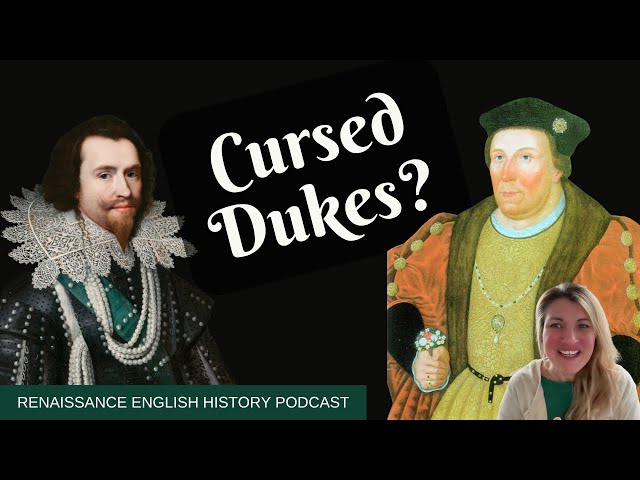
    The Doomed Dukes of Buckingham have become a chilling symbol of how power and proximity to the crown could lead to a bloody downfall in Tudor and Stuart England. This notorious title was held by two men a century apart—Edward Stafford, the 3rd Duke under Henry VIII, and George Villiers, the 1st Duke under James I—both of whom rose to dazzling heights before meeting violent ends.

    From treason trials and royal suspicion to assassination and public rejoicing, the story of the Dukes of Buckingham is more than coincidence. It’s a haunting legacy that raises the question: was the title cursed, or was ambition simply a dangerous game in royal circles?

    Transcript of The Doomed Dukes of Buckingham: Two Men, One Title, and Two Spectacular Downfalls

    So what is it about the Dukes of Buckingham anyway? You would think that being one of the top nobles in the country would come with all kinds of perks, right? There is the wealth, the power, the proximity to the crown. But for at least two men who held the title, it came with something else: a fast track to a very bloody end. One was executed for allegedly dreaming about having the crown himself, while the other, just over a hundred years later, was so unpopular that the public celebrated his assassination.

    Today we are going to dive into the strange and cursed history of the Dukedom of Buckingham, and how two men a century apart both rose to dazzling heights and then lost everything.

    We will also answer that persistent question: how can one be 3rd duke, and then a hundred years later, there is the first duke? Have you ever wondered about that? Like how the numbers work? We are going to answer that persistent question today as well.

    Edward Stafford, 3rd Duke of Buckingham

    Let us talk about a man who checked all the boxes for a tragic Tudor downfall. Royal birth? Check. Dazzling wealth? Check. And just enough pride to make the king nervous. Edward Stafford, 3rd Duke of Buckingham, was born in 1478 at Brecon Castle. His father, the second duke, had backed a failed rebellion against Richard III.

    We hear about Buckingham’s Rebellion. He was executed without a trial and had all of his titles stripped. That left young Edward with a poisoned inheritance: the name of a traitor, a dangerous amount of royal blood, and a family tangled in the thorniest branches of the Plantagenet family tree.

    His mother was Katherine Woodville, sister of Queen Elizabeth Woodville, making Edward a nephew to a king and first cousin once removed to  —not exactly obscure. After his father’s execution, Edward was shuffled around Herefordshire. He was kept hidden during Richard III’s reign, and he knew what it was to live in fear.

    That changed when Henry VII took the throne in 1485. At just seven years old, Edward was knighted at Henry’s coronation. His father’s attainder was reversed by Parliament, and the boy was able to inherit his dukedom back, at least in name.

    In practice, everything was still tightly controlled. His wardship, his lands, his future were handed over to Margaret Beaufort. Yes, the Margaret Beaufort, the King’s mother. It is said that he was educated in her household, which probably meant long hours of pious devotion and a close-up view of how power actually operated.

    As Edward grew up, he played the part expected of a nobleman. He was wealthy, strikingly handsome, and unmissable. At every major ceremony, he wore a gown worth 1,500 pounds, roughly half a million dollars today. At the wedding of Arthur, Prince of Wales, and Katherine of Aragon, and at the tournament afterwards, he served as Chief Challenger. Buckingham knew how to make an entrance.

    Under Henry VIII, his star continued to rise. He served as the Lord High Constable and the Lord High Steward at the 1509 coronation of Henry VIII. These were both grand ceremonial roles that he believed were his by hereditary right. He sat on the King’s Privy Council. He even got a license to turn his manor house at Thornbury into a moated castle-like estate. Just the sort of ostentatious move you make when you want the world to know exactly how important you really are.

    But that wealth and bloodline came with a price. Buckingham was one of the last English nobles with significant Plantagenet descent. He could trace his lineage back to John of Gaunt. He had more royal ancestors than was strictly safe under a Tudor king.

    Add to that his family alliances. His son married Margaret Pole’s daughter, tying him to the line of George, Duke of Clarence. And you start to see why Henry VIII might have had a reason to watch him a little more closely.

    Buckingham did not exactly keep a low profile. Early on, he ran into scandal when he found Sir William Compton in his sister Anne’s bedchamber. That ended in a dramatic scene of Compton taking the sacrament to prove his innocence, and Anne being shipped off to a convent. The rumor mill claimed that she had had an affair with Compton, with the King, or possibly both. And Buckingham was not amused.

    He remained a loyal subject in public. He served in France in 1513. He attended the Field of Cloth of Gold in 1520. He continued to perform his ceremonial duties, but he made no secret of his dislike for Cardinal Wolsey, who was rising fast as a royal favorite at the time.

    And worse, far worse, he started to talk freely and openly about the succession. Saying that Henry VIII, still without a male heir at this point, was cursed by his father’s illegitimacy. Of course, Henry VII was the son of Edmund Tudor. Edmund Tudor himself was the son of Owen Tudor, the squire to Catherine of Valois, the dowager queen. People say they wed in secret. Some people also said they never wed.

    So it is possible that people were saying Henry VIII came from an illegitimate line. Plus, there was the matter of the Beauforts being an illegitimate line as well. So Buckingham was saying that Henry VIII came from an illegitimate line. That is really not a good thing to say around the king, let alone say in public. You start talking about the king’s death, the weakness of his bloodline, and you are treading on very, very thin ice.

    In 1521, Buckingham was summoned to court and he was arrested. The charges: listening to prophecies about the king’s death, harboring ambitions for the throne, and plotting treason. Whether or not he actually conspired is still debated. Thomas More noted that the key evidence came from terrified servants, possibly tortured to extract confessions.

    Regardless, the sentence was death. On May 17, 1521, Edward Stafford was beheaded on Tower Hill. He was 43. His lands were seized, and his children were disinherited. The message was clear. It did not matter how royal your blood was or how long your family had held a title. One whisper of too much ambition, even the suggestion that you might be better suited to the throne, and your head could roll.

    George Villiers, 1st Duke of Buckingham

    Now, let’s fast forward a hundred years. The title of Duke of Buckingham is reborn, but with a new man, a new family, and a very different kind of downfall. George Villiers was not born into a great noble house. He was the son of a knight, raised in the Leicestershire countryside. He was handsome. He was charming. He was impeccably groomed. He was the kind of man who turned heads at court, especially the king’s head.

    In 1614, Villiers caught the eye of James I at a royal hunt. James was now in his fifties. He had a well-established habit of surrounding himself with young, attractive favorites. Villiers was not only beautiful, he was also ambitious and very, very good at court politics.

    He was installed as the Royal Cupbearer, a seemingly minor position but one that put him physically close to the king. From there, his rise was meteoric. He was knighted in 1615, made a Gentleman of the Bedchamber, and then quickly elevated to Baron, Viscount, Earl, Marquess.

    Finally, in 1623, the Duke of Buckingham. It was the first non-royal dukedom in decades because, after the previous Dukes of Buckingham and Norfolk had ended or were executed, monarchs had gotten skittish about handing out titles with that much power.

    But Villiers got it all. And he got more than just titles. His relationship with James I was extraordinarily close emotionally, and many historians believe physically. James called him Steenie after Saint Stephen, “because thou hast the face of an angel,” and once told his Privy Council, “Christ had his John, and I have my George.” Letters between them read like declarations of love. Villiers called the king “my dear dad and husband.” Not weird at all.

    But Buckingham was not just a royal favorite lounging about in silks and pearls, though he did that too. He inserted himself into diplomacy, he led military campaigns, and he wielded real political power. And the results were not impressive.

    As Lord High Admiral and de facto foreign minister, Villiers oversaw a string of disasters. The attempted Spanish Match in 1623 collapsed after he and the future Charles I stormed off from Madrid. A year later, Parliament tried to impeach him for corruption, and so Charles, now king, dissolved Parliament to protect him.

    And then there was the Cádiz Expedition in 1625, a military catastrophe so inept the troops got drunk in a wine warehouse and never even attacked the city. Villiers did not even go himself; he just picked the wrong guy to lead it.

    After that came a failed alliance with France, a bungled naval campaign to aid the Protestant Huguenots at La Rochelle, and another siege on the Île de Ré in 1627 that cost 5,000 English lives and achieved absolutely nothing. Zero. Diddly squat.

    Parliament tried again to remove him, and Charles dissolved them again. By now, Buckingham was hated, truly despised by nearly everyone outside the king’s inner circle. Nobles, commoners, even clergymen saw him as arrogant, corrupt, and dangerously incompetent. In 1628, his own physician was murdered by a mob. Pamphlets predicting Buckingham’s downfall were passed around like scandalous souvenirs.

    Then came John Felton. Felton was a disgruntled former officer who had served under Buckingham, been wounded, and denied a promotion. On August 23, 1628, Felton waited for the Duke in Portsmouth, where Buckingham was planning another campaign. As Villiers walked through the Greyhound Inn, Felton stabbed him in the chest with a dagger.

    According to reports, Buckingham pulled the blade out himself and staggered a few steps before collapsing. His last word, allegedly, was “villaine!” Felton did not run. He made no secret of what he had done. And when the news of Buckingham’s death reached London, the reaction was not grief, it was celebration.

    Ballads were sung. Felton’s name was toasted in taverns. In fact, the government put his body on display to shame him. Instead, crowds came to venerate it like a martyr’s shrine. The body of George Villiers was buried with full honors in Westminster Abbey in a lavish tomb. But in the public imagination, he was remembered not as a statesman or a diplomat, but as a symbol of unchecked royal favoritism and monumental failure.

    Now, with all these dramatic downfalls, you might be wondering how Edward Stafford could be 3rd Duke of Buckingham and George Villiers the 1st, if they both had the same title. Welcome to the world of the English peerage. The short answer is that when a noble title is forfeited—usually because someone gets executed for treason, as Edward Stafford helpfully demonstrated—the line is considered extinct unless it is restored to a legitimate heir.

    And in the Tudors’ case, they were generally not big on resurrecting titles once they chopped someone’s head off. Edward Stafford’s dukedom came from the Stafford family, and his execution in 1521 ended that line cold. His children were barred from inheriting most of his lands and titles. So that was it. Title gone.

    A hundred years later, when James I wanted to reward George Villiers, he chose to recreate the title of Duke of Buckingham. Same name, different family, fresh start. It was like rebooting a franchise. George Villiers became the 1st Duke of Buckingham in his creation of the title, because in the peerage system, each creation is treated as a standalone instance.

    The Crown can recycle title names, but it does not connect them unless there is a direct reinstatement of the original line. So Edward Stafford was 3rd and final Duke of one lineage. George Villiers was the first of another. They shared the title and name, but not blood and not fate. So is the title Duke of Buckingham cursed?

    It is hard to ignore the pattern. Edward Stafford, royal cousin, courtier, and one of the richest men in England, was executed for treason after being accused of dreaming too loudly about the throne. George Villiers, beloved of the king and puppet master of early Stuart politics, was stabbed to death in a tavern by a man hailed as a hero.

    Both rose fast, both flew too close to power, and both fell violently. Of course, plenty of dukes in other families met similarly grisly ends. This is England in the sixteenth and seventeenth centuries. The fact that both Dukes of Buckingham came to such spectacular ruin has left the title with a certain air of doom.

    And if nothing else, it makes for a fantastic cautionary tale. Proximity to power can always come with an axe, and honestly, if I were living in the Tudor period, I would want to stay as far away from dukedoms and peerage and all of that as I possibly could.

    Make me a nice merchant class. I will join the guild. I will become successful as an entrepreneur like Katherine Fenkyll, who we have done a kick-ass Tudor women video about. She inherited her husband’s drapery business and became super popular, super wealthy, had people working for her. Awesome. I will do that, but I do not want any of those titles. You all can keep that. Anyway, there we go. A little bit about the cursed Dukes of Buckingham.

    Related links:
    Did Margaret Beaufort Kill the Princes in the Tower? 
    Episode 49: Tudor Times talks about James I of England

  • Elizabeth I’s Spy Network: The Hidden Web that Safeguarded a Queen

    Elizabeth I’s Spy Network: The Hidden Web that Safeguarded a Queen


    Elizabeth I’s spy network played a crucial role in securing the throne during one of the most turbulent periods in English history. Faced with constant threats from Catholic powers, assassination plots, and internal rebellion, Queen Elizabeth I relied on a sophisticated web of spies orchestrated by key figures like William Cecil, Robert Cecil, and Francis Walsingham. This intelligence network not only protected the Protestant queen from countless dangers but also laid the foundations for modern espionage.

    In this episode, we’ll dive deep into the origins, operations, and lasting legacy of Elizabeth I’s spy network, uncovering how it safeguarded a nation and changed the course of history.

    Transcript of Elizabeth I’s Spy Network: The Secret Network that Protected a Queen

    Today we are going to talk about spies—specifically, Elizabeth I’s spy network. I’ve talked a little bit about some of the figures involved. We discussed Francis Walsingham in an episode I did back, gosh, close to 10 years ago. It was a 2015 episode, I think, on Francis Walsingham. You know what I realize? I have never done a full episode on William Cecil or Robert Cecil, so I’ve added that to my list.

    In this episode, we are going to unravel the complex web woven by three pivotal figures: William Cecil, Lord Burghley, his son Robert Cecil, and the enigmatic spymaster Francis Walsingham. Together, they orchestrated a network of spies whose efforts were not only crucial for the queen’s security, but also pivotal in shaping the course of English history. We’ll dissect the plots they uncovered, explore the espionage techniques they employed, and consider the enduring impact of their secretive endeavors long after the Virgin Queen’s reign.

    Just some background: Elizabeth ascended to the throne in 1558, a period teeming with political intrigue and religious upheaval. England was an isolated Protestant nation on the fringes of a largely Catholic Europe, making her a beacon of heresy in the eyes of her rivals.

    The excommunication by Pope Pius V in 1570 not only deepened her conflict with the Catholic monarchs, but also marked her for assassination—because the Pope basically said, if you want to assassinate her, no biggie. This made an effective spy network not just valuable, but vital.

    Espionage during Elizabeth’s reign evolved beyond mere political necessity—it became an art form. Led by the Cecils and Francis Walsingham, the network extended its tendrils across Europe, infiltrating enemy courts and intercepting communications.

    This web of spies wasn’t just about gathering intelligence; it was about ensuring survival. They used ciphers, secret correspondences, and double agents, transforming statecraft into a battleground of wits and secrecy.

    We’ll also talk about the specific threats that spurred this network’s creation, like the Ridolfi Plot, which sought to replace Elizabeth with Mary, Queen of Scots. Actually, a number of plots sought to replace Elizabeth with Mary, Queen of Scots, but we will gain a clearer view of the often precariousness of Elizabeth’s reign. Each plot foiled was not merely a victory, but a necessity, preventing invasions, uprisings, and rebellion.

    William Cecil: The Architect of Espionage

    So, let’s start by looking at each of these three figures. We’re gonna start with William Cecil. I’m gonna talk the longest about him. William Cecil, 1st Lord Burghley, was Elizabeth I’s principal advisor for most of her reign, and his mastery of espionage played a pivotal role in safeguarding her throne.

    Born in 1520 in Lincolnshire, William Cecil was educated at St. John’s College, Cambridge. He received rigorous training in administration and the classics, but his entry into royal service began under Edward VI, where his administrative talents were first recognized.

    It was his staunch Protestant beliefs and strategic acumen that caught the eye of Elizabeth I, whom he met during her time as Princess, particularly during her house arrest under Mary I’s reign.

    William Cecil’s tenure as an influential political figure under Edward VI saw him holding positions like Chancellor of the Order of the Garter and Secretary of State. But the landscape drastically changed with Edward’s death and the succession crisis that followed.

    Cecil became entangled in the Duke of Northumberland’s controversial plot to place Lady Jane Grey on the throne—a scheme devised to prevent the Catholic Mary from becoming queen. Initially, Cecil was resistant; he wrote letters to his wife saying he was going to try to stay away from it, but he eventually succumbed to the pressure. He signed documents that promoted Jane’s brief, ill-fated reign. He justified his participation as obedience to King Edward’s command—a move that exemplified his pragmatic approach to survival in treacherous times.

    That survival, and his position, became precarious under Mary I, because he was a known Protestant and had previous political maneuvers against her cause. Pretty much everybody involved in the plot to bring Jane to the throne ended up imprisoned in the Tower or executed.

    Despite his earlier involvement in the Protestant government, Cecil adeptly navigated the Catholic revival under Mary. He wasn’t primarily targeted, mostly because he didn’t have a very high profile or high rank during most of the very divisive policies that were put into place.

    And he did adapt. He outwardly conformed to the restored Catholic practices—he attended mass and publicly reconciled with the Catholic Church. His survival strategy included distancing himself from active opposition, and he also engaged in some subtle intrigue against Northumberland once Mary’s ascension seemed inevitable.

    Cecil’s cautious yet opportunistic tactics allowed him to maintain a semblance of loyalty to Mary, which he leveraged by presenting himself as a cooperative figure to the incoming regime. So, he was able to emerge from Mary’s reign pretty unscathed, which left him poised to reclaim a central role when Elizabeth ascended.

    Cecil then served Elizabeth once she became queen, and he was motivated by both the precariousness of Elizabeth’s position—she was a Protestant monarch, plus she was a woman in a very male-dominated society—so he established her spy network as the cornerstone of her internal and external security strategies.

    He recognized early on that information was power, particularly in a period rife with religious conflicts and political instability. This foresight led him to orchestrate an intelligence system that not only protected Elizabeth but also helped to stabilize her reign during its most vulnerable moments.

    Robert Cecil: The Successor

    Towards the end of Elizabeth’s reign, as William Cecil aged and his health declined, his son, Robert, gradually began to assume more responsibilities. Robert officially took over as Secretary of State in 1596, and he was well-prepared, having been deeply involved in the intelligence operations under his father’s guidance.

    This early transition ensured a smooth succession, enabling him to maintain and enhance the espionage network critical to Elizabeth’s security. The full assumption of his father’s responsibilities was seamless by the time William died in 1598. Supported by his proven competence and the queen’s trust in his capabilities.

    Robert brought a more methodical approach to intelligence. He capitalized on the expanding network his father had established. Under his watch, the network matured, utilizing more sophisticated methods of code-breaking and covert operations. His tenure saw the orchestration of espionage activities that were crucial during pivotal moments, like when James I was negotiating the Treaty of London, which ended the war with Spain in 1604.

    Robert’s adeptness at espionage not only maintained but strengthened the security apparatus his father had built, ensuring the crown’s stability as Elizabeth’s reign ended and James’s began. In fact, that network built for Elizabeth would ultimately save the life of James I. Robert Cecil himself was the principal discoverer of the Gunpowder Plot.

    I should add here that this will be another episode to look at, because Robert’s involvement with the Gunpowder Plot is very shady. There are a lot of conspiracy theories suggesting that he himself was involved in it—that he was a double agent, or even that he planned it himself to make Catholics look bad. Who knows? That’s something I’ll have to dig into deeper in a future episode.

    But for now, we’re just concerned with the fact that he took the spy network his father built and expanded it, and ultimately, James I can thank him for saving his life, Parliament’s, and everybody else who was targeted in the Gunpowder Plot.

    Francis Walsingham: The Ruthless Spymaster

    Then we have Francis Walsingham, perhaps Elizabeth’s most notorious spymaster, often remembered for his unyielding dedication to the protection of the queen. His tenure as principal secretary was marked by a ruthless efficiency in intelligence gathering and counter-espionage.

    He witnessed the St. Bartholomew’s Day Massacre in 1572 as the English ambassador in France, which of course, would have affected him deeply. He returned to England, resolved to protect Protestant England from similar atrocities. He was galvanized. He expanded the use of espionage to include not only defensive but also aggressive tactics, employing spies to infiltrate and undermine opposition groups across Europe.

    His crowning achievement was the interception of the letters that led to the exposure of the Babington Plot in 1586, which of course sought the assassination of Elizabeth and the installation of Mary, Queen of Scots, on the English throne. It led to Mary’s death.

    His network’s ability to crack codes, utilize double agents, and even use torture when needed—although quite controversial—proved indispensable in maintaining the Queen’s safety and Protestant England’s sovereignty.

    So now let’s talk about the spy network in action. It was a sophisticated system crucial for the security of a Protestant state. Like I said, the network’s efficiency hinged on a meticulous structure of recruitment, information gathering, and innovative espionage techniques. The recruitment of spies was a targeted and strategic process.

    Walsingham and his colleagues often recruited from among merchants, diplomats, and even English students stationed abroad, leveraging their positions to gather intelligence. These spies were not only chosen for their loyalty to the crown, but also for their ability to blend into foreign courts and societies.

    The network also included double agents and informers within the domestic Catholic factions, providing a steady stream of intelligence about internal threats. Information gathering was diverse and adapted to various contexts.

    Spies used traditional methods like intercepting letters and eavesdropping, but they also engaged in more direct intelligence gathering by infiltrating enemy ranks and reporting back on military movements or political plans.

    One notable technique was the use of ciphers and encoded messages to communicate securely. Couriers carried these encrypted messages across borders, reducing the risk of sensitive information falling into enemy hands.

    The spy network also employed cutting-edge technologies of the time. Cipher discs and codes were developed by mathematicians and cryptologists, enabling the encoding and decoding of messages.

    Walsingham famously established a dedicated team just for deciphering intercepted communications, a precursor to modern cryptographic teams. Additionally, the network used early forms of invisible ink, derived from natural substances like lemons, with which they could write secret messages that could only be revealed under specific conditions.

    Counter-espionage was equally sophisticated. It involved monitoring known Catholic sympathizers and intercepting their communications. Walsingham’s agents were adept at turning enemy spies, using them to feed false information back to their original employers.

    This method effectively confused and undermined opposing spy operations, leading to the thwarting of several plots against the queen. The effectiveness of Elizabeth’s spy network wasn’t just in the collection of information, but in the ability to preempt and neutralize threats before they could escalate. This proactive approach to intelligence would become a hallmark of modern espionage practices, reflecting the advanced techniques and strategic foresight of Cecil and Walsingham.

    Thwarted Plots: Redolfi, Throckmorton, and Babington

    So now, let’s talk about three of the main thwarted plots. We’ll start with the Redolfi Plot of 1571. This was a well-orchestrated attempt by Roberto Redolfi, an Italian banker and ardent Catholic, who, of course, wanted to replace Elizabeth with Mary, Queen of Scots, and restore Catholicism to England.

    Redolfi conspired with the Duke of Norfolk, a prominent noble, and foreign powers, including Spain and the Pope. The plan involved marrying Mary, Queen of Scots, to Norfolk, raising a Catholic army with Spanish support, and then, of course, assassinating Elizabeth.

    The plot was uncovered due to the meticulous surveillance of Catholic nobles practiced by Walsingham’s network. Letters detailing the conspiracy were intercepted, and under intense questioning, the implicated parties confessed. Norfolk was executed, and the plot significantly heightened Elizabeth’s distrust of Mary, setting the stage for her ongoing imprisonment.

    Twelve years later, we have the Throckmorton Plot. Spearheaded by Francis Throckmorton, a Catholic conspirator who again planned to free Mary, Queen of Scots, and instigate a Spanish invasion of England. There’s kind of a pattern emerging here.

     The plot envisioned Spanish forces landing in England, supported by an uprising of English Catholics. Walsingham’s network infiltrated this plot through the use of double agents and surveillance. Throckmorton was arrested, and a search of his residence yielded incriminating evidence, including detailed plans of the invasion and a list of Catholic sympathizers.

    His confession, obtained under torture, provided further details that helped in arresting many involved, demonstrating, again, the ruthless efficiency of Walsingham’s counterintelligence operations.

    Then, the Babington Plot, just three years later. This is, of course, the most famous plot, foiled by Elizabeth’s spy network, led by Anthony Babington. It was a complex scheme that, guess what? Once again, sought the assassination of Elizabeth and the installation of—guess who?—Mary, Queen of Scots. That’s right.

    It’s like so unoriginal. They just keep using the same playbook. After it was foiled once, you’d think maybe they’d find another Catholic they could install. I don’t know. But, uh, Mary, Queen of Scots, was the most obvious choice, and she had a lot of loyalty, so there you go.

    Anyway, Walsingham’s agents, including the ingenious use of a double agent, Gilbert Gifford, managed to intercept letters between Babington and Mary, which were smuggled in beer barrels. These letters contained explicit details on the plot. Walsingham had them decoded from a cipher.

    The evidence was undeniable, leading to the arrest and execution of Babington and his co-conspirators. And then the involvement of Mary in this plot, as evidenced by her approval of the assassination plan in the letters, led to her trial and eventual execution, marking a significant victory for Elizabeth’s security apparatus.

    In fact, in the letter… um, I’ll have to put it on YouTube or something. The person who deciphered the letter that Mary had written, giving her approval, after he deciphered it, actually drew a little picture of a gallows at the bottom, because he knew that would be the end of Mary.

    These plots showcase the sophistication and effectiveness of Elizabeth’s spy network. The discovery and neutralization of the threats was not merely due to luck. They were the result of an expansive and well-maintained network of spies, the use of cutting-edge technology, like we said, and the strategic use of information. Each thwarted plot reinforced the network’s methods and the necessity of such a system for maintaining the security of the state and the safety of the queen.

    Legacy of Elizabeth’s Spy Network

    So, the spy network established during Queen Elizabeth’s reign represents a seminal period in the history of intelligence. Its profound impact on English history cannot be overstated. It not only secured the Protestant Reformation in England, but also safeguarded the throne during a time when political and religious upheaval could easily have led to the collapse of Elizabeth.

    The successful thwarting of multiple high-stakes plots demonstrated the vital role of intelligence in national security and governance. It set a precedent that we still use today in modern intelligence practices.

    The legacy of the Cecils and Francis Walsingham extends beyond their immediate success in espionage. Their innovative approaches to intelligence, systematic use of informers, development of cryptographic techniques, and strategic misinformation paved the way for contemporary intelligence work.

    Today agencies worldwide employ strategies first conceptualized and implemented in Elizabethan England. The idea that a well-organized and proactive intelligence network can decisively influence national and international affairs finds its roots in the work of these Elizabethan figures.

    Related link:
    Mary Queen of Scots’ Cipher, and the art of hiding messages
    Ciphers, Secrets, and Spies in The Court of Elizabeth I by Carol Ann Lloyd

  • Tudor Mysticism and Magic: Alchemy, Prophecy, and the Occult in Tudor England

    Tudor Mysticism and Magic: Alchemy, Prophecy, and the Occult in Tudor England


    Tudor mysticism and magic played a significant role in shaping the beliefs and daily lives of people during the Tudor era. From astrology and alchemy to folk charms and prophetic visions, the mystical arts were deeply intertwined with both royal decisions and common practices. Monarchs like Elizabeth I consulted astrologers for guidance, while cunning folk offered magical remedies and protection to their communities. The fascination with the supernatural influenced medicine, politics, and religion, leaving a lasting legacy in English history.

    Explore how Tudor mysticism and magic shaped the Renaissance world and continue to captivate imaginations today.

    Rough transcription of Episode 283: Tudor Mysticism and Magic: Alchemy, Prophecy, and the Occult in Tudor England

    We are gonna talk about mysticism and spirituality in Tudor England. So picture this, A tall bearded man sits alone in a candlelit study. Ink-stained fingers hovering over a velvet journal. Before him, a polished obsidian mirror gleams in the low light, and beside it, a crystal orb catches the flicker of the flame.

    The man is muttering in Latin, occasionally pausing to peer into the mirror, as if expecting someone or something to answer back. This would be Dr. John Dee. Astrologer. Alchemist. Mathematician, sometime advisor to Queen Elizabeth I and the owner of the largest library in Europe. He is waiting for an angel to speak to him.

    Welcome to Tudor England, where magic wasn’t just the stuff of village gossip or fairytale nonsense. It was woven into the very fabric of courtly life and scholarly inquiry. You could be a learned physician, a pious housewife, or even the Queen of England herself, and still consult the stars before making a decision.

    So in this episode, we are going to dive into the world of Tudor mysticism, alchemy, astrology, angel summoning, and everyday folk magic. We will meet characters who straddled the line between genius and charlatan. Learn how prophecies could shake the throne and discover the wise women who offered love potions and healing charms to their neighbors.

    The Blurred Lines Between Science, Religion, and Magic

    So let’s get started. It’s hard for us today living in a world of lab reports and weather apps to imagine just how porous the line was between science, religion, and magic in the pre-modern time. That’s something I think about a lot because I really feel like we’ve lost a lot of that magic of everyday life after the enlightenment, when everything now has an answer and everything can be explained through science.

    In the 16th century, it wasn’t strange to believe both in angels and astronomy, to say your prayers and your incantations, the spiritual and the supernatural were not at odds. They were cousins. A devout Christian might seek the help of a local cunning woman when a child fell ill. A well-educated scholar might study the hermetic texts alongside the Bible.

    Magic was seen by many as another way to understand the divine. If God created the heavens and the earth, then why wouldn’t the stars contain messages? Why wouldn’t the natural world offer up secrets hidden in roots and minerals? Importantly, belief in the mystical wasn’t limited just to unlettered villagers.

    Elizabeth, I first herself is said to have relied on astrological counsel from John Dee when choosing her coronation date. Educated nobles dabbled in the occult, not in spite of their learning, but because of it. They believed this arcane knowledge was part of God’s grand design, but it wasn’t just courtiers and philosophers.

    For the average Tudor subject, magic was part of the every day – a strange dream, a sudden sickness, an unexpected death. These might be read as omens or even the work of witches. In a 1552 sermon, Hugh Latimer lamented how people turned to sorcerers, whom we call wise men rather than the church for comfort.

    Alchemy: The Quest for the Philosopher’s Stone

    Let’s get started talking about alchemy and the quest for the philosophers. Stone alchemy in Tudor England wasn’t just about bubbling cauldrons and secret symbols. It was a serious business of unlocking the mysteries of the universe. At its heart, alchemy aimed to do two things. Transform base metals into gold and discover the elusive elixir of life, but beyond the glitter of gold.

    Many alchemists believed that they were on a sacred journey, one that mirrored the transformation of the soul itself. Turning lead into gold was just the surface. Real alchemy, they believed was about purifying the self and attaining divine wisdom. It attracted all kinds, monks, scholars, nobles, and yes, more than a few opportunists.

    Monarchs were some of the most enthusiastic supporters. Of course they were. If they could get gold from lead, that would be amazing, right? Even as far back as Henry VI, English King’s licensed alchemists to try their luck at transmutation. By the time of Elizabeth, alchemy had found a firm place in courtly circles, John Dee himself spent years pouring over cryptic texts and conducting alchemical experiments.

    Convinced that somewhere in all of that smoke and mercury was the divine blueprint of creation. Meanwhile, Mary Sidney or Mary Herbert, Countess of Pembroke turned Wilton house into a kind of mystical think tank, complete with an alchemy lab and the help of Adrian Gilbert, Raleigh’s half-brother.

    Then there’s Edward Kelley, the most colorful alchemist of the lot. He claimed to possess red powder that could produce gold. Whether by sleigh of hand or sheer confidence, he convinced enough people to win an invite to the court of Emperor Rudolf II in Prague. There, he was knighted and given everything he needed to turn lead into gold, except of course the actual ability to do it.

    When the gold failed to appear, Kelley ended up imprisoned and eventually died under very murky circumstances. Kelley wasn’t the only one walking the tightrope between miracle and scam. One alchemist dazzled Henry VIII with promises to multiply gold only to vanish with a healthy advance of royal coin. The king was reportedly furious. One suspects he didn’t stay swindled for long.

    In Tudor England, alchemy invited equal parts reverence and skepticism, and it spoke to a world hungry for secrets. Secrets that might, if decoded properly, unlock both the mysteries of matter and the soul. What about prophecies? Prophecies in Tudor England weren’t just whispered in candlelit corners.

    They shaped politics, stirred rebellions, and kept monarchs awake at night. Whether printed in pamphlets or muttered by mystic predictions carried real weight. A prophecy didn’t need to be true. To be powerful, it only had to be believed. Take the case of Elizabeth Barton, Holy Maid of Kent.

    She was a humble servant girl turned visionary nun, and she began experiencing religious trances in the 1520s and was soon delivering messages that she claimed were divinely inspired. Her fame spread rapidly. At first, her visions were innocuous enough, pious warnings and calls for repentance, but then she turned her gaze toward Henry VIII’s marital plans.

    Barton publicly prophesied that if the king divorced Katherine of Aragon, he would die within a month. This wasn’t just religious fervor, this was political dynamite. Barton’s warnings gave ammunition to those opposed to the divorce, and for a moment, her visions threatened to derail Henry’s plans. She had visitors like Thomas More and Thomas Cromwell.

    All of these nobles from court were visiting her and asking her about her prophecies and taking her really seriously. But that didn’t last long. In 1534, she was arrested, tried, and of course executed for treason. Barton was buried at Greyfriars, but a very unfortunate distinction.

    Her head was displayed on London Bridge, and this is the only record that we have of a woman’s head being displayed on London Bridge. Normally, that was men having that punishment, but her crime was so serious that they thought that they needed to send this chilling message to anyone else who was tempted to predict a monarch’s doom further north.

    Another prophetic figure took root in legend Mother Shipton. Said to have been born in a Yorkshire cave In 1488, Ursula Southeil became England’s most famous soothsayer. Though her prophecies weren’t published until decades after her death. Stories about her spread like wildfire.

    She published a pamphlet called The Prophecies of Mother Shipton, and one of the most enduring prophecies there was that Cardinal Wolsey would see York, but never reach it. Cardinal Wolsey was the Archbishop of York, but he had never actually visited York, and this was eerily fulfilled when he wound up dying before he did ever get to York. So that was true.

    The line between state sanctioned prophecy and popular superstition was always thin. Court astrologers might advise unsafe travel dates while ballads circulated, predicting the downfall of kings. One could be seen as respectable science, the other treasonous poetry. Yet the appeal was the same.

    In an unpredictable world, prophecy offered a glimpse of order, whether spoken by a nun or a village crone or a printed almanac. It let people believe just for a moment, that the future wasn’t entirely unknown.

    Astrology: Guiding Lives and Decisions

    What about astrology in Tudor life? In Tudor England, if you wanted to know the best time to get married, start a journey, or even crown a queen, you didn’t consult a calendar. Oh no. You would consult the stars. Astrology wasn’t a fringe belief. It was a respected field of knowledge taught alongside mathematics and medicine. The stars, it was believed weren’t just twinkling lights in the heavens. They were cosmic signposts placed there by God to help humanity make sense of earthly affairs.

    The same charts that tracked planetary movements for astronomy were also used to predict personality traits, illnesses, and political fortunes. There wasn’t a clear line between science and astrology. Both were tools for decoding divine order. Educated people might cast horoscopes for newborns or use star charts to travel or guide their warfare, or determine the most auspicious moment to begin a major undertaking.

    At the highest levels of government, astrology played a remarkably public role. Dr. John Dee, we mentioned him earlier, the ever present figure in Tudor mysticism was consulted by Elizabeth I, herself. In fact, it was Dee who chose the date of her coronation, January 15th, 1559. He believed the alignments of the planet on that day would bless her reign and ensure stability that decision based, not on politics, but on planetary positions.

    It tells you everything you need to know about how seriously astrology was taken, but it wasn’t just a courtly indulgence. Almanacs filled with astrological forecasts flew off the presses and into the hands of merchants, farmers, and travelers. These handy guides told you when to plant your crops, when to avoid signing contracts, which days were lucky or disastrously cursed for ordinary people.

    Astrology offered a way to make sense of an uncertain world. It suggested that fate wasn’t entirely random. That if you understood the heavens, you could better navigate the earth. Of course, not everyone was convinced. Some clergy warned that astrology verged on heresy or paganism, and a few scholars scoffed at its more dramatic claims. But by and large, Tudor England embraced astrology. It lived at the crossroads of faith and reason, magic and method, just like the age itself.

     John Dee and Angel Summoning

    Have you ever tried to talk to an angel? John Dee and Edward Kelley, and lots of other people did. So we’ve mentioned him a lot. If Tudor England had its own Merlin, it was surely Dr. John Dee, scholar, astrologer, mathematician, philosopher, part-time Angel summoner.

    Dee was one of the most extraordinary minds of the Elizabethan era. He studied at Cambridge, lectured in Europe, advised navigators on mapping the globe, built what was the largest private library in England at the time. But despite his dazzling credentials, he wasn’t content with earthly knowledge.

    He believed there were secrets beyond books, divine truths hidden from human eyes, accessible only through the supernatural. And so in the 1580s, he set out to speak with angels. Dee believed that angels could reveal the fundamental building blocks of the universe, what he called the language of creation.

    To reach them he needed a spiritual intermediary, someone who could serve as a seer. Enter Edward Kelley, who was a man of mysterious origins, missing ears, possibly due to an earlier conviction for forgery and no shortage of charisma. Together, the two men embarked on a series of intense ritual sessions.

    Kelley would gaze into a crystal ball or more often a polished obsidian mirror and report the visions and the voices that emerged. Dee, ever the meticulous scholar recorded every word. What they received, they believed was angelic communication, a new language later called Enochian, full of strange letters in complex syntax.

    It was, they thought the original language spoken by Adam, pure, powerful, and sacred. Through it, they hope to gain not only spiritual insight, but practical knowledge. How to heal the sick, uncover universal truths, perhaps even transmute metals. But the messages weren’t all golden.

    In 1587 while in Bohemia, Kelly announced a shocking directive from the Angel Uriel. The men were meant to share all of their possessions, their wives included. Dee was horrified. He loved his wife Jane deeply, but believing the command to be divine and fearing the consequences of disobedience. He agreed the two couples reportedly exchanged their partners, and nine months later, Jane Dee gave birth to a son.

    Whether Kelley was manipulating Dee or had come to believe his own visions is anyone’s guess, but the scandal fractured their relationship. John Dee returned to England, shaken and spiritually depleted. Kelley remained abroad and managed to reinvent himself as an alchemist, which we mentioned earlier. Rudolf II welcomed Kelly into court and failed to make gold and was imprisoned, and he had a desperate escape attempt and reportedly leapt from a castle window to his death.

    As for Dee, he came home to a changed world. The mood in England had shifted. His home library at Mort Lake had been looted. Elizabeth gave him a minor post as a warden of Christ’s College Manchester, but it was a far cry from the royal favor he had enjoyed 30 years before.

    Under James I, no friend to magicians at all. In fact, James I was obsessed with witch-hunting and did not like anything supernatural. Dee faded from view dying in poverty around 1608, and yet his legend endured.

    Later writers transformed him into a kind of literary wizard. Shakespeare’s Prospero, some say owes more than a little to John Dee. There is a series of mysteries, the Agents of the Crown Series that stars John Dee.

    One interesting thing about John Dee is the code that he signed his name as, was 007. He was the original 007, and I think that kind of speaks to just this man of mystery and who he was. The series Agents of the Crown, it’s actually really good and highlights that side of John Dee. So if you want to dig into some fun historical fiction with John Dee, I recommend that book.

    Everyday Magic: The Cunning Folk

    What about everyday magic? Not every Tudor mystic wore scholarly robes or corresponded with angels. Most, in fact, lived in cottages and walked on muddy roads, offering their services to neighbors in need. These were the cunning folk wise women and men who practiced practical magic. You might call them village magicians.

    They were also known as charmers, lessers, and sometimes just the person you went to when nothing else worked. They didn’t conjure spirits or summon planetary forces. Instead, they healed wounds with herbal tices. Found lost objects using rituals passed down orally or whispered over sick child with protective rhymes.

    A farmer whose cattle fell ill might ask a cunning man whether he’d been cursed. A young woman might pay a few coins for Love Spell. In many villages, these people were the first resort, not a last one.

    The church was not thrilled. Like I said, preachers like Hugh Latimer grumbled that too many Christians were skipping the clergy and heading straight to the local wise woman when trouble struck. But the reality was cunning folk filled a gap. They were part healer, part counselor, part spiritual advisor. Long before such roles had formal titles.

    At the same time, fear of mouthism harmful witchcraft was growing. In 1542, Henry VIII passed the Witchcraft Act that made even minor magical acts like casting a log charm or searching for treasure with incantations punishable by death.

    Under Elizabeth I, a revised 1563 act made it illegal to conjure spirits or cause harm through sorcery, though first time offenders could avoid execution unless their magic caused death. The goal was to root out dangerous witches, not village healers. And indeed, most witch trials did not target cunning folk.

    Records show that communities often defended their wise neighbors, even when tensions ran high, but the line was thin, a charm that didn’t work, a healing that failed a neighbor’s suspicion. It didn’t take much for someone to be accused. Consider the chilling tale of Agnes Waterhouse hanged in 1566 and remembered as one of England’s first executed witches.

    She confessed to keeping a familiar spirit, a white cat named Satan that allegedly spoke to her in a strange voice and demanded blood stories like these of demon pets, wax effigies, and night flying witches stirred real terror. In 1589, rumors even claimed that someone had cursed Queen Elizabeth with a wax doll stuck full of pins.

    Still, for most Tudors magic wasn’t diabolical. It was just daily life. A sprig of rue tucked behind the door. A charm whispered over a fever, a secret name etched into a spoon, all little acts of reassurance. In a world where medicine was crude, death was common, and the supernatural felt very close at hand. Court magicians may have chased angels and gold, but the village cunning woman simply offered help. And for many, that was magic enough.

    Modern Parallels and Conclusion

    What about any kind of modern parallels? I dabble in woo myself. I wouldn’t say I’m totally woo, but I have tarot cards and I engage in a little bit of woo from time to time. I would say I’m further than woo-curious, but definitely not in the deep end of woo. But my husband is actually doing a PhD in metaphysics, so he is all in on the woo.

    And we actually have on our coffee table a wonderful book that was a gift to me from one of my patrons, a facsimile of an original collection of John Dee’s work. It’s a very old book. That was a wonderful gift from one of my patrons who knew I liked John Dee. So that is very prominent in our house.

    So there’s a lot of parallels to our own world, of course, today, whether you’re totally into the woo or not, Tudor England stood at a strange crossroads where science met superstition and the learned elite could consult both God and the stars without batting an eye.

    Magic and mysticism weren’t fringe. They were integrated into daily life, royal policy, even healthcare. And though the world would shift into the age of reason after the enlightenment. This era’s fascination with the unseen never really faded in many ways. It still lives on today.

    Many people carry crystals in their pockets and check their horoscopes on their phones. Tarot cards, astrology apps, reiki sessions, angel numbers are all part of a spiritual resurgence that looks oddly enough, a little bit Tudor in flavor

    During the covid 19 pandemic, interest in psychics and astrologers soared. Just as Tudor villagers turn to wise women during plagues and crises, we may no longer seek advice from scrying stones, but we’re still chasing clarity, comfort, and a little bit of mystery. 500 years after John Dee summoned angels in candlelight, we still gaze up at the stars and wonder what they mean. We still tell stories about witches, we still cross our fingers for luck.

    Do you ever feel weird if you go underneath the ladder? I totally feel weird, like I will avoid it at all costs. What about breaking a mirror? If you break a mirror, do you worry about that? We still whisper to the universe when we think no one’s listening, so maybe the real magic is how little the human heart has changed.

    So we will leave it there for this episode. What do you think about all of this? Are you someone who engages in these types of activity or do you scoff at them? Do you read your horoscope? Do you check, like if you’re dating somebody new, will you check to see if you’re a good match with them? I would love to know, wherever you are listening to this, leave me a comment and let me know what you think.

    I think it’s one of those things that, we think our society is so advanced and we have this age of enlightenment and age of reason and all of that. We’ve taken so much of the magic out of everyday life, and I feel like that’s really something that’s missing in our lives. So I like to bring a little bit of that magic back into my life.

  • Walter Raleigh and the Main Plot: Treason, Trial, and Tower Life

    Walter Raleigh and the Main Plot: Treason, Trial, and Tower Life


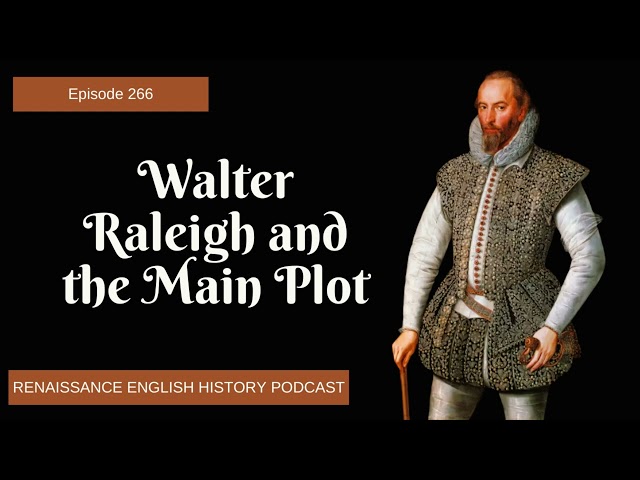
    Walter Raleigh and the Main Plot are inextricably linked to one of the most tumultuous periods of early 17th-century England. Once a favorite of Queen Elizabeth I, celebrated as a poet, explorer, and soldier, Raleigh’s fortunes changed dramatically under the reign of King James I. The so-called Main Plot—a murky conspiracy to overthrow James and replace him with his cousin, Arbella Stuart—ensnared Raleigh, leading to his arrest, trial, and eventual imprisonment.

    While evidence against Raleigh was tenuous at best, his association with alleged conspirators and his history of bold ambition made him an easy scapegoat in a court rife with paranoia. This dramatic chapter in Raleigh’s life marked the beginning of his tragic fall from grace, cementing his legacy as both a symbol of the Elizabethan Golden Age and a cautionary tale of ambition in a shifting political landscape.

     Transcript of Episode 269: Walter Raleigh and the Main Plot: Treason, Trial, and Tower Life:

    This is episode 269, I think, and we’re going to talk about Walter Raleigh and the Main Plot today which I have never covered before, and it’s about time. We are going to get right into this plot that was the downfall of Walter Raleigh. We’re going to talk about Walter Raleigh a little bit, who he was, and how he got involved in the Main Plot.

    Walter Raleigh was the kind of guy who seemed untouchable. In Elizabeth’s court, he was a favorite, he was a poet, explorer, soldier, and someone who always seemed to be at the center of something big. Whether it was planting colonies in the Americas, defeating the Spanish Armada, or charming Elizabeth herself, Raleigh had carved out a life that made him one of the most famous men of his day.


    Introduction to Walter Raleigh and the Main Plot

    But fame is a double edged sword, and when James I took the throne in 1603, Raleigh found himself on the wrong side of the king’s favor. This is the story of how Raleigh got caught up in one of the strangest political conspiracies of the early 17th century, the so called Main Plot. It’s a tangled web of ambition, paranoia, and fragile alliances that ultimately led to Raleigh’s imprisonment, trial, and eventual downfall.

    But to understand how a man like Walter Raleigh ended up accused of treason, we first need to look at who he was and why his star had already begun to dim by the time the plot unfolded.

    Walter Raleigh was born in Devon in 1552, the youngest of five brothers. His family had a strong Protestant faith, which shaped much of Raleigh’s career. In a time when religion was inseparable from politics, being a Protestant meant loyalty to Queen Elizabeth and a deep suspicion of Catholic powers like Spain. Raleigh’s loyalty paid off. He served as a soldier in the brutal campaigns in Ireland where his ruthlessness gained him a reputation as someone who could get the job done no matter how messy it was.

    In the 1580s, Raleigh had become one of Elizabeth’s favorites. He was dashing, ambitious, and endlessly resourceful. The Queen rewarded him with a knighthood, land, and lucrative trade monopolies. Raleigh used this wealth to fund expeditions to the New World, including the ill fated attempt to establish a colony at Roanoke. Even though the colony disappeared without a trace, Raleigh’s efforts cemented his image as a bold adventurer and defender of England’s interests against the Spanish expansion.


    Raleigh’s Fall from Grace

    But Raleigh’s term had its limits. In 1592, he secretly married one of Elizabeth’s ladies in waiting, Bess Throckmorton. Without the Queen’s permission, that was a no. Elizabeth was famously possessive of her favorites, and she was furious. Both Raleigh and his wife were briefly imprisoned in the Tower of London, and though he eventually regained some favor, the relationship between Raleigh and the Queen was never quite the same.

    When Elizabeth died in 1603, Raleigh’s position became precarious. The new king, James I, didn’t trust him. James was a Scottish king inheriting an English throne and he wanted peace with Spain, not conflict. Raleigh’s Protestant zeal, his involvement in anti Spanish policies, and his history of intrigue made him an outsider in James’s court. It didn’t help that Raleigh was arrogant and unpopular among many of the king’s closest advisors.

    By the time James I took the throne, England was a powder keg. Catholics, who had suffered under Elizabeth’s strict laws, hoped that James would be more tolerant. Protestants, however, were wary of any sign that James might bend toward Catholicism. Meanwhile, nobles jockeyed for influence in the new regime, with resentment simmering among those who felt left out.


    The Main Plot Unfolds

    It was in this tense atmosphere that the whispers of treason began to circulate. The Main Plot was a scheme to remove James from the throne and replace him with his cousin Arbella Stewart. While the details were murky, the alleged conspirators included Lord Cobham, Raleigh’s longtime associate, and a handful of other nobles.

    Cobham was supposedly seeking Spanish money to fund the plot. Which definitely raised alarm bells at court. Spain had long been England’s greatest enemy and even the suggestion of collusion with the Spanish crown was enough to bring the full weight of the law down on anyone involved. So what exactly was the Main Plot?

    Honestly, it’s a tricky question because even at the time it was hard to pin down. What we know is this. The plot was allegedly masterminded by Henry Brooke, Lord Cobham, with a vague plan to overthrow King James I. The idea was to replace James with his cousin Arbella Stewart, a descendant of Henry VII, who had a claim to the throne.

    Arbella, who was reportedly oblivious to the whole thing, was seen as a safer bet by some discontented nobles. Someone who might be more open to Catholic tolerance or at least less reliant on Scottish advisers, whom many English courtiers deeply resented. The plan, if you can even call it that, hinged on getting financial support from Spain.

    Cobham was supposedly going to travel to Brussels, meet with the Spanish ambassador, and secure 600, 000 crowns to fund the conspiracy, such as it was. What they would actually do with that money was anyone’s guess. The plotters seemed long on ambition but short on specifics, and this is where Walter Raleigh comes into the picture.


    Raleigh’s Arrest and Trial

    Raleigh’s connection with the plot was tenuous at best, but that didn’t matter once suspicion started swirling. Cobham was one of Raleigh’s closest allies, and the two had a complicated friendship marked by both loyalty and rivalry. When Cobham was arrested and questioned, he cracked under pressure. He claimed that Raleigh had encouraged him to seek Spanish support and had even received a letter detailing the plan.

    Cobham’s testimony was shaky and inconsistent, but it was enough to implicate Raleigh in the eyes of the King’s investigators. Raleigh was arrested in July 1603 and sent to the Tower of London. For a man like Walter Raleigh, whose life had been defined by action and adventure. Imprisonment must have been agonizing.

    But worse was yet to come. The trial, held in November 1603 at Winchester Castle, was less about uncovering the truth and more about setting an example. The prosecution was led by Attorney General Sir Edward Cook, who pulled no punches. Cook accused Raleigh of being a monster and comparing him to Cain and Judas.

    He painted Raleigh as a treacherous schemer, willing to betray his country for personal gain. The problem was the evidence was thin, there were no letters from Raleigh, no direct proof tying him to the plot, and Cobham himself had recanted his accusations multiple times. Raleigh, for his part, put up a spirited defense.

    He argued that Cobham’s testimony was unreliable and pointed out the lack of concrete evidence. In one memorable moment, Raleigh called out the absurdity on relying on hearsay. Do you condemn a man based on bare suspicions? The proof of the pudding is in the eating. It was a dramatic and clever line, but it wasn’t enough to save him.

    The jury deliberated only 15 minutes before finding Raleigh guilty of treason. The sentence was death by hanging, drawing, and quartering, a brutal punishment reserved for the worst crimes. Raleigh wasn’t the only one caught in the fallout of the Main Plot. Lord Cobham, along with several others, including Lord Grey of Wilton and Sir Griffin Markham were also found guilty of treason.

    Initially, they were all sentenced to death, but in a dramatic twist, James commuted most of their sentences. Cobham and Gray were imprisoned while Markham was exiled. As for Raleigh, he was spared immediate execution. James likely saw value in keeping such a skilled man alive, even if only as a political pawn.


    Life in the Tower

    Raleigh was sent back to the Tower, where he remained for 13 long years. If there’s one thing Walter Raleigh couldn’t do, it was sit still. Even locked away in the Tower of London, he found ways to make himself useful, or at least distract himself. For one, Raleigh turned to writing, pouring his relentless energy into a colossal project, The History of the World.

    It wasn’t just any history book. Raleigh covered everything from the creation of the world to the Roman Empire, weaving in his own observations on politics, power, and the human condition. It was ambitious, brilliant, and deeply cynical. Probably a reflection of Raleigh’s own bitterness about his fall from grace.

    But Raleigh wasn’t just scribbling away in a dark cell. He also dabbled in science, conducting experiments, and cultivating a small garden. Yes, Walter Raleigh had a garden, and in fact, the Tower that he was kept in was actually called the Garden Tower because of that. There’s even a legend that Raleigh discovered how to distill fresh water from seawater during this time, which came in handy later when he was released for one last expedition.


    The Final Expedition and Execution

    After thirteen years in the Tower, Raleigh was given a second chance, or so it seemed. In 1616, James I released him to lead an expedition to South America in search of El Dorado, the mythical City of Gold. It was a gamble for both Raleigh and the King. For Raleigh, it was a chance to redeem himself and prove his worth.

    For James, it was an opportunity to gain wealth without much risk. If Raleigh succeeded, great. If not, he was expendable. The expedition was a disaster. Raleigh’s men clashed with the Spanish, violating James peace treaty with Spain. To make matters worse, Raleigh’s son, Watt, was killed in one of these skirmishes.

    Raleigh returned to England empty handed, knowing he had sealed his fate. I don’t know why he even went back. He should have just kept his ship and stayed in South America or something, but anyway, he went back. By 1618, Raleigh’s enemies had their chance to finish him off. The Spanish ambassador demanded justice for Raleigh’s attack on their settlement, and James, eager to maintain good relations with Spain, obliged.

    Instead of a new trial, James invoked Raleigh’s 1603 treason conviction, which had never been formally overturned. Raleigh was executed on October 29, 1618 outside the Palace of Westminster. Ever the showman, he faced his death with courage and wit. His famous last words, Strike, man, strike, cemented his legacy as a figure of defiance and bravery.

    In the end, the Main Plot was less about overthrowing a king and more about the precariousness of life in James’s court. For Raleigh, it marked the beginning of his long, tragic fall from grace. Whether he was truly involved in the conspiracy or simply a convenient scapegoat remains a matter of debate.


    Legacy of Walter Raleigh

    But what’s clear is that Raleigh’s life and death captured the imagination of generations to come. The conspirators themselves faded into obscurity, their plans little more than a footnote in history, but Raleigh’s story endured. He became a symbol of the Elizabethan Golden Age, a man whose ambition, courage, and wit could never be quite snuffed out, even by the executioner’s axe.

    Even in death, Walter Raleigh refused to disappear quietly. His execution may have been the final chapter of his life, but it was just the beginning of his legend. In the centuries that followed, Raleigh became a romanticized figure, celebrated as a renaissance man who embodied the adventurous spirit of Elizabethan England.

    Much of this mythologizing comes down to timing. Raleigh’s exploits, his trial, his execution all happened during a transformative period for England. He was a link between two worlds, the bold, expansionist Elizabethan age and the more cautious, politically fraught Jacobean era. Raleigh’s fall from favor was a reminder that ambition, no matter how grand, could be as dangerous as it was rewarding.

    His writings, especially the History of the World, ensured that his voice would live on. Though he may have been bitter when he wrote it, the work was admired for its depth and its breadth, and it inspired readers well into the 18th century. Raleigh’s poetry, too, secured his place among great literary figures of his time, alongside contemporaries like Edmund Spencer and Christopher Marlowe.

    The Main Plot didn’t amount to much in the grand scheme of things. It was a messy, half baked scheme riddled with confusion and unreliable testimony. But it revealed a lot about the tensions of the time. James was a new king trying to assert control over a fractured court. And plots like this one, and the Gunpowder Plot, and the Bye Plot, only reinforced his sense of vulnerability.

    The Bye Plot was also known as the Priest’s Plot. That was a lesser known conspiracy in 1603 that ran parallel to the Main Plot. While they are separate conspiracies, the two became entangled in the minds of investigators and historians. The bi plot was actually orchestrated by a small group of disaffected Catholic priests and laymen who hoped to force King James I to grant greater tolerance or even full freedom of worship to Catholics.

    Unlike the Main Plot, which aimed to overthrow James, the bi plot had more limited ambitions, but its methods were extreme. They wanted to kidnap James and hold him until he agreed to their demands, because I’m sure he’s going to do that. That makes sense. The conspirators intended to ambush the king as he traveled between London and Windsor and then detain him until he issued a proclamation of religious tolerance.

    The kidnapping scheme gave the plot its nickname, the By Plot, derived from the conspirators private term for the act of passing by the usual course of law. It was led by two Catholic priests, William Watson and William Clark, with a small group of conspirators, including Sir Griffin Markham, who was a Catholic soldier.

    All of this doesn’t really matter except just to say that it was a time of a lot of plots and James felt very vulnerable. So Walter Raleigh’s life was full of contradictions. He was a bold adventurer who made enemies as easily as he made discoveries. He was a favorite of Queen Elizabeth, yet he fell from her good graces.

    He was a man of action who spent years trapped in a tower. And he was a supposed traitor who died with the dignity of a hero. The Main Plot may not have brought down a king, but it did bring down one of the most fascinating figures of the Elizabethan and Jacobean eras. Even now, 400 years later, Raleigh’s story continues to captivate because, like the man himself, it’s full of ambition, intrigue, and enough mystery to keep us guessing.

    So there we have it, a little bit about the Main Plot and Sir Walter Raleigh’s involvement in it.

  • Arbella Stuart: The Forgotten Tudor Heir

    Arbella Stuart: The Forgotten Tudor Heir

    Arbella Stuart, the Tudor-era royal often overlooked by history. Let’s dive into her captivating story of being born into a lineage of power and ambition, Arbella’s life was marked by political intrigue, imprisonments, and a daring escape.

    Amid the sprawling tapestry of English history, some figures though draped in royal image and standing at a crossroads of dynastic change, still remain largely in the shadows, and Arbella Stuart is one such figure. Born at a time of political upheaval and religious discord, her very existence was a testament to the tangled web of the Tudor bloodline and the looming question of succession. The absence of a direct heir from Elizabeth, threw the country into a quagmire of conspiracies, power plays, and anticipation, and Arbella Stuart was right at the center of that, and that’s who we’re going to talk about today.

    Within the swirling vortex of courtly intrigue, the name Arbella Stuart surfaced again and again. Here was a young woman whose veins carried the legitimate Tudor blood through her grandmother, Margaret Douglas, a direct descendant of the House of Tudor. Yet how many of us have actually heard her story? As we embark on this journey into Arbella’s life, we’re not just delving into the story of a potential queen, we’re unraveling a narrative that encapsulates the very essence of Elizabethan and Jacobian eras.

    From the cold stonewalls of the Tower of London to the courts and the greatest monarchs, from clandestine love letters to audacious escape attempts, Arbella’s story isn’t just about her claim to the throne. It’s about a woman who was both a pawn and a player in a grander game and the personal sacrifices that came with her royal birthright.

    In today’s episode, we’re going to travel back through time, shedding light on the enigma that is Arbella Stuart, retracing her footsteps, and unveiling a tail as captivating as any crowned monarch of England. To truly understand the weight of Arbella’s claim, we need to first step back and examine the Tudor family tree.

    Her Royal Lineage

    Arbella Stuart was born on October 3, 1575, in Hardwick Hall in Derbyshire. She was the child of Charles Stuart, 5th Earl of Lennox, and Elizabeth Cavendish. Her birthplace Hardwick Hall was the brainchild of Arbella’s grandmother, the formidable Bess of Hardwick. From her earliest days surrounded by such opulence and heritage, Arbella’s life was deeply intertwined with the rich tapestry of English royalty. It was clear from the beginning that her destiny would be anything but ordinary.

    Arbella’s paternal grandmother, Margaret Douglas, held a significant place in the family saga. Margaret was the daughter of Margaret Tudor, the eldest daughter of Henry VII, and sister to Henry VIII. This direct connection to the Tudors was solidified further through the marriage as Margaret Douglas wed Matthew Stewart, 4th Earl of Lennox. The Lennox connection was crucial too. It was a lineage that though initially from Scotland, intertwined deeply with England’s royal chronicles.

    The birth of Arbella’s father Charles Stuart, Earl of Lennox, further cemented this legacy when he married Elizabeth Cavendish. Arbella’s lineage boasted a dual heritage, one part Tudor through her grandmother Margaret Douglas, and one part English nobility, courtesy of the Cavendish, a prominent family in the Elizabethan court.

    Given this lineage, it’s not difficult to see why Arbella’s claim to the throne was taken seriously by many. At a time when the Tudor dynasty was waning with Elizabeth I, aging and childless, the realm was rife with anxiety about succession. Elizabeth’s reluctance, or perhaps inability to name an heir left a vacuum causing the English court and European monarchies to speculate and strategize. 

    In this soup, anyone with a drop of Tudor blood became a contender, and Arbella’s claim was as legitimate as any, given her proximity to the main Tudor line. Yet it’s essential to understand that Arbella’s claim was not just about blood, it was about the broader narrative of the era, the religious divide between Catholicism and Protestantism.

    With the Protestant Reformation still fresh, and England having broken away from the Catholic church, Arbella, viewed by some as potentially leaning towards Catholicism due to her Lennox lineage, represented an opportunity for Catholic forces in Europe. She was seen as a symbol of hope for those who wished to revert England back to Catholicism, making her both a beacon for some and a threat for others.

    Bess of Hardwick

    Bess of Hardwick born Elizabeth Hardwick is a figure who looms large, not just in Arbella’s story but in English history as a whole. We’ve done several episodes on her because she highly deserves them. Rising from relatively humble beginnings, Bess would go on to become one of the wealthiest and most influential women of her time, second only to Queen Elizabeth.

    Four marriages, each strategically aligned and ascending in status, catapulted Bess into the echelons of the English nobility. Her last marriage to George Talbott, 6th Earl of Shrewsbury cemented her position at the heart of England’s political and social circles. But Bess wasn’t just a woman of wealth and influence. She was a shrewd operator, a formidable matriarch, and a masterful builder.

    Her most famous architectural feat, Hardwick Hall, with its emblematic proclamation, Hardwick Hall –  more glass than wall, was a testament to her audacity and ambition. Its large windows, a luxury in the Elizabethan age, symbolized her transparent ambitions and vast wealth into this world of opulence, power plays, and political maneuvering, Arbella Stuart was born.

    And under the watchful eye of Bess, she was raised. Arbella’s parents died when she was young, leaving her in the guardianship of her grandmother. For Bess, Arbella was not just a beloved granddaughter, but also a living embodiment of potential and promise. Bess knew all too well the weight of Arbella’s royal lineage, and she was determined to ensure that her granddaughter was prepared for whatever destiny had in store. While Bess’ estate provided a safe haven, it was also a crucible for young Arbella.

    Bess instilled in her a sense of her royal identity, ensuring she received an education befitting a potential queen. Arbella was trained in languages, music, needlework, and scriptures. Equally, she was made aware of the political intrigues that surrounded her birthright.

    The Tudor court with its ever-shifting alliances and undercurrents, was a frequent topic of discussion. Yet for all the formality and expectations, Bess’ influence was not solely that of a stern matriarch shaping a royal heir. There were moments of tenderness shared between a grandmother and her charge. Through letters and accounts, we catch glimpses of their bond.

    Bess is concerned for Arbella’s health. Her letters were filled with advice, warnings, and occasional reprimands, but always underscored by deep-seated affection. In understanding Arbella’s formative years, one cannot overlook the pivotal role played by Bess. Her indomitable spirit and her political acumen, her unwavering belief in Arbella’s destiny would leave an indelible mark on the young Stuart heiress.

    Another figure that of course, loomed large over Abella would be Elizabeth I. With her resolute decision to neither marry nor name an heir, she had inadvertently cultivated a hotbed of speculation and conspiracy. As she aged and the future of the Tudor dynasty seemed uncertain. eyes inevitably turned towards anyone with a drop of Tudor blood.

    Catholics vs Protestants

    In this environment, Arbella’s claim rooted in her Tudor lineage made her a natural focal point. For the Protestant faction at court, the specter of Catholicism remained an ever-present threat.  The religious reformation had divided Europe and England’s break from the Roman Catholic Church was still a recent memory. This made any claimant with even a hint of Catholic sympathies, real or imagined, both a rallying point for Catholic hopes and a source of anxiety for the Protestant establishment. 

    Given the Lennox connection and its perceived Catholic leanings, there were those who saw Arbella as a potential Catholic queen, a restoration of the old faith on English shores. However, public perception wasn’t uniformly one-dimensional. For many, Arbella was a symbol of English stability. As Europe’s monarchies watched the English succession drama with bated breath, many within England yearned for a seamless uncontroversial transition.

    In Arabella, they saw continuity, a bridge between the Tudor past and a hopeful future. Yet the court was a place of whispers, a realm where rumor often held as much power as fact. Arbella’s every move, her friendships, her letters, and even her personal beliefs became fodder for speculation. Was she loyal to the Protestants or did she secretly harbor Catholic sympathies?  Did she have ambitions to claim the throne or was she content in her role as a potential heir?  

    James I

    James VI of Scotland‘s assent to the English throne as James I, added another layer of complexity. Though he was a cousin and by many accounts held Arbella in fond regard, her proximity to the throne naturally made their relationship fraught with political undercurrents to the public. Arbella’s life was a narrative of potential, a story that intertwined hope, ambition, and the looming question of “what if.”

    To courtiers, she was both an asset and an enigma. Someone to be watched, courted, and at times controlled. When James VI of Scotland was declared James I of England in 1603, uniting the crowns of both kingdoms, the political landscape underwent a seismic shift for Arbella.

    This period was one of profound personal and political ramifications. James’s ascension might have provided some clarity to the succession question, but it by no means eliminated the intrigues that surrounded Arbella. Initially, there was hope for her.  After all, James and Ella were first cousins. They shared a lineage that could have been a bridge to a close bond, and in many ways it was.

    James invited her to court and bestowed upon her a generous allowance, and for a while, it seemed that Arbella had found a secure place in the new Stuart Dynasty. However, the realities of royal politics are seldom straightforward. Arbella’s position close to the throne, yet not on it rendered her a figure of enduring interest and speculation.

    Her Clandestine Marriage

    Her every action, even her potential marital alliances became matters of state concern. Any suitor of Arbella was not merely courting a lady. He was potentially aligning with the claim to the throne.  This made her personal life a topic of national significance. One such romantic entanglement, her relationship with William Seymour, 2nd Duke of Somerset, a descendant of Lady Katherine Grey, was also a descendant of Henry VII, brought this to a head. 

    Their affection for each other was undeniable. However, their union would signify the joining of two claimants to the throne, something that was viewed with deep suspicion.  Their clandestine marriage in 1610, without the King’s permission led to their imprisonment. A love story, which in any other context might have been celebrated, became a symbol of political defiance.

    The marriage between Arbella and William Seymour was not just a personal matter, but a political conundrum. The merging of two claims to the English throne was not something that James I first could ignore, given the historical challenges of Tudor and Stuart succession.

    Upon discovering the clandestine union, James acted decisively. He saw this union as a threat to the stability of his reign. The newlyweds were promptly arrested. William was sent to the Tower of London while Arbella Stuart found herself confined to Sir Thomas Perry‘s house in Lambeth.

    Imprisonment and Attempt to Escape

    Arbella’s life once filled with the possibilities of royalty, was now marked by solitude and confinement. Yet her spirit remained undimmed. Separated from her husband, and under constant watch, she orchestrated a daring escape plan. By 1611, her situation had become increasingly desperate. Imprisoned and separated from her beloved, she found herself under the watchful eye of Sir James Croft at his house in Barnet.

    Despite the scrutiny, her spirit was not easily caged. In the time leading up to her escape, Arbella began a calculated performance. She feigned bouts of illness effectively reducing her guard’s vigilance as they believed her to be too weak to attempt an escape. This act also granted her some increased privacy, which she used to her advantage.

    Arbella and William, although physically separated, had managed to establish a secret line of communication. Using this, they meticulously planned their escapes to be executed simultaneously, hoping to reunite and flee England for a life on the continent.

    As part of this plan, Arbella’s maid played a pivotal role in risking her safety. The maid smuggled men’s clothing into the house in Barnet. On the appointed day in 1611, Arbella downed the male attire, a move that greatly reduced the chances of her recognition. With her appearance transformed and exploiting the decreased guard vigilance due to her illness, Arbella successfully evaded her captors.

    She traveled from Barnet to Blackwell, hoping to rendezvous with William. Simultaneously, William had orchestrated his own escape using a wig and a false beard to alter his appearance. He managed to elude his captors at the Tower of London and aim to reunite with Arbella.

    However, despite their meticulous planning, fate did not favor the pair. A series of delays and miscommunications marred their escape. They missed their rendezvous, and William, unaware of Arbella’s whereabouts, decided to continue on to Flanders.  Arbella’s ship delayed while she awaited William, was eventually pursued and intercepted by English authorities before she could reach the relative safety of Calais.

    Arbella was captured and brought back to England. Audacious attempt combined with the political implications of her union with William, led to a stricter and more punishing confinement in the Tower of London, the grim surroundings and her separation from William took a significant toll on her health and spirit, and in 1615, this potential heir to the English throne passed away in the confines of the tower. Her life is a tapestry of ambition, love, and tragedy.

  • Tudor Minute March 2, 1619: Anne of Denmark died

    Tudor Minute March 2, 1619: Anne of Denmark died

    Today in 1619 Anne of Denmark died. She was Queen of England, married to James I, and when she came to England she immediately began supporting artists and culture. She is remembered for supporting Inigo Jones, and the Banqueting Hall at Whitehall Palace.

    Interestingly, it was her voyage from Denmark that inadvertently led to one of the biggest witch hunts in history, as she faced a terrible storm, and James was convinced that it had been caused by witches. He instigated a large hunt for witches, which led to many women being killed, and suspicion and arrests throughout Scotland. 

    That’s your Tudor Minute for today. Remember you can dive deeper into life in 16th-century England through the Renaissance English History Podcast at englandcast.com where there is an episode on Anne of Denmark, as well as one on James and Witchcraft.

    Suggested links:

    Episode 059: Tudor Times on Anne of Denmark
    James I and Witchcraft

  • Tudor Minute May 7, 1603: James I arrives in London

    Tudor Minute May 7, 1603: James I arrives in London

    Today in 1603 James I arrived in London, nine days after the funeral of Elizabeth I. From 1601 onwards, as it became clear that James was going to be Elizabeth’s successor, many of her court kept up a secret correspondence with James. As the Queen was dying in 1603, her chief minister, Robert Cecil, sent James a draft proclamation of his accession in early March. Elizabeth died on 24 March, and James was proclaimed king in London later on that day.

    He left Edinburgh on 5 April promising to return once every three years – a promise that he did not keep. He progressed slowly through England, amazed by the wealth of his new land. He commented that he felt as if he had traded a stony couch for a deep feather bed. He arrived in London today, May 7, and was crowned in July.

    That’s your Tudor Minute for today. Remember you can dive deeper into life in 16th century England through the Renaissance English History Podcast at englandcast.com where there is an episode on the life of James I.

    Suggested links:
    Episode 49: Tudor Times talks about James I of England
    Episode 91: James I and Witchcraft

    From the shop:
    Elizabeth I’s Iconic Signature Collection
    Featuring: Elizabeth I Signature Tote Bag
    Ps. All products are made on-demand and can take a few weeks to ship.

  • Episode 49: Tudor Times talks about James I of England

    Episode 49: Tudor Times talks about James I of England

    This month’s joint episode with Tudor Times is about their Person of the Month, James I. Here are the resources mentioned.

    Remember, if you like this show, there are two main ways you can support it. First (and free!) you can leave a review on iTunes. It really helps new people discover the show. Second, you can support the show financially by becoming a patron on Patreon for as little as $1 episode. Also, you can buy one of my journals, planners, or virtual tours!

    TRANSCRIPT

    Heather Teysko: Hello and welcome to the Renaissance English History Podcast. I’m your host Heather Teysko, and I’m a storyteller who makes history accessible because I believe it’s a pathway to understanding who we are, our place in the universe and our connection to our own humanity. This is episode 49. It’s another joint episode with Melita Thomas of Tudor Times. This is the fourth joint episode that we’ve done together, and I’m so excited to do a lot more original content with them.

    Just a quick note that the Renaissance English History podcast is a proud member of the Agora Podcast Network. The Agora Podcast of the month this month is the History of China by Chris Stewart. You can check it out and learn more at the historyofchina.wordpress.com or look it up on iTunes, or Stitcher, or your listening service of choice.

    As always, you can get show notes and more information about the Renaissance English History Podcast at www.englandcast.com where you can also sign up for my mailing list. Mailing list subscribers receive extra MiniCast each month as well as book giveaways, news and lots of other cool stuff. For this particular episode as well, you can also get lots more information on James I at tudortimes.co.uk.

    Moving on from the admin bit, let’s talk about James I now. Introducing Melita. Melita is a co-founder and editor of Tudor Times, a website devoted to Tudor and Stuart history in the period from 1485 to 1625. You can find it at tudortimes.co.uk. Melita who has always been fascinated by history ever since she saw the 1970 series Elizabeth R with Glenda Jackson also contributes articles to BBC History Extra and Britain Magazine.

    Melita, can you tell us a bit about James’s life? I know it was a very full life. Can you just give us the highlights?

    Melita from TT: It certainly was a full life. He’s been rather neglected by historians in the past but his life was absolutely one Hollywood scene after another. The excitement started before he was born. When he was still in the womb, his mother’s apartments were broken into and her secretary was murdered in front of her eyes whilst one of the assassins held a gun to her pregnant belly, so James was already the center of excitement even while he was still a fetus. Fortunately for James and for Mary, he was born healthy although at a later stage in life it was noted that he didn’t walk terribly well, and he had possibly some sort of speech impediment which people have speculated may have been a birth problem related to the difficulties that Mary had when he was actually born.

    Following even on from that early fracas, his mother was deposed when he was about a year old and James became King of Scotland at the age of 13 months. He was unsurprisingly subject to a good deal of controversy in his youth as to whether he ought to be king. Many people wanted his mother restored and there are a number of tussles over who was going to rule Scotland. There was the queen’s party who thought Mary should be restored and the king’s party that wanted James as king under the regency originally of his half-uncle Murray.

    Of the four regents who ruled for James, two were assassinated including his aforementioned uncle, his grandfather. One died possibly of poison, the Earl of Mar who had been his guardian. And, the fourth was eventually executed by James himself. For the first 10 or 12 years of his life there was a civil war in Scotland that effectively the government won but there was always the possibility that it might go the other way.

    James was largely protected from this and he was brought up in a very, very strict educational environment. He was hugely well-educated. He spoke several languages. He could write in Latin. He had a very academic type of education. His chief tutor was a chap called George Buchanan who was also the tutor to the French philosopher, de Montaigne, which is quite an interesting link, and James was encouraged to hone his skills in rhetoric. He also wrote poetry and he wrote a number of books in later life, not particularly long books, but there’s his famous book about witchcraft called Daemonologie. He wrote a book for his son on how a king should rule called the Basilikon Doron, which was later published in several languages, translated into French, Italian, also Welsh interestingly for his Welsh subjects.

    Once he was about 13, James really started to take authority for himself, and he formulated a life plan that he never really deviated from in that he would, I suppose lies is the right word, but dissimulate. He would listen to both sides of the question. Each side thought he agreed with them and then he would just go ahead and do what he’d already planned to do, but he was very good at conciliation and compromise. He disliked violence intensely from this rather worrying youth that he’d had.

    Having started to take power at 13, he was then kidnapped, held by the Earl of Gowrie and his colleagues for about 18 months while he was pretty much forced to rule the country as they required. But, then by rather clever strategians, he managed to escape from Gowrie’s influence and promised that he was going to be a universal king who would rule without faction which he tried to do, not always successfully.

    He married in 1589 to a Danish princess, Anne, and he and Anne had seven children. They were reasonably happy together as arranged marriages go, but there was always a question about whether James certainly had homosexual leanings even if he didn’t actually have homosexual relationships. It’s a bit of a tricky subject that because his fondness for his male favorites was commented on at the time. He would kiss them and be physically affectionate and, yet, his actual statements on the topic of homosexual acts were very, very traditional Calvinist view you might say. He was very anti it. He believed that homosexual acts should be severely punished. Perhaps he didn’t see himself as a lover of men, but he had very warm emotional relationships and, to some extent, a physical relationship with them. It’s quite a conundrum really or perhaps he was just a man who was hugely physically affectionate which he couldn’t indulge in his childhood and it came out in a fondness for other men.

    His overall ambition was always to be king of England. That was what he wanted. This sometimes put him in a bit of moral quandary particularly when his mother had been tried and was going to be executed by the English government. He had little power to actually change what the English government was going to do, but on the other hand he felt obliged to remonstrate and to ask that his mother’s life be spared. The Scots having deposed Mary thought that the English are going to execute her, which perhaps seems a little paradoxical. James was the recipient of a pension from England which was very useful which he didn’t want to lose and also he was a committed Protestant and his mother was a Catholic. He had all sorts of conflicting feelings about the matter.

    He became King of England in 1603 and his view was that the two countries should unite, but he was the only person who had any interest in that idea at all. Even once he became King of England, the plots and the assassination attempts and so forth continued particularly of course the Gunpowder Plot, the most famous plot of all which he was fortunate to escape.

    Was a reasonably successful King of England. He brought peace with Spain after 20 years of war. He had reopened relationships really with Europe. He was less divisive in the Protestant-Catholic divide in Europe than Elizabeth had been, and he established much friendlier relationships with the Catholic countries of Europe than she had done. Although he was in no way going to encourage Catholicism, he was personally inclined to toleration and did not want to get involved in religious persecution.

    He was also successfully had … He left a son. He had an older son who died very sadly to James’s great grief, Henry Frederick, Prince of Wales, but he left a son. He left a daughter who was married to the king of Bohemia. And, of course, he is the ancestor of all subsequent kings and queens of Great Britain.

    Heather Teysko: His early life was so tumultuous, like you said, even before he was born and he didn’t know his father or his mother really. How do you think that affected him later? I know you talked about it a little bit perhaps with his relationships with men. How else did that come out at all or how do you think it would have affected him just this early tumult that he had?

    Melita from TT: I think it made him … Well, I think by nature he was probably a trusting man. But, I think the fear in his childhood, the constant plots, I think that made him untrusting against his nature. I think that explains why on a number of occasions when his friends betrayed him or let him down, he was endlessly forgiving. A lot of plots against him were … Perhaps it was weakness rather than virtue but he seemed always willing to accept that people did love him and did care about him. He’s very insecure emotionally so a good show of loving him or being fond of him was always very welcome.

    He was attached to his wife although they weren’t temperamentally particularly well-suited, and he was very attached to his own children. I think it’s probably made him lonely I suppose and perhaps also encouraged him in his idea of the absolute power of kings which was very contrary to the formal education that he had. George Buchanan, a rather nice quote, when he was a little boy, James was probably eight or nine, Buchanan had beaten him for insubordination, or not doing his Latin homework, or whatever it was. And, the Countess of Mar, he was in the care of the Earl and Countess of Mar, the countess complained that Buchanan had beaten him and said that he should not put his hands on the Lord’s anointed to which Buchanan replied that he had whipped the king’s ass and Lady Mar could kiss it if she felt like it.

    He was certainly not brought up with this idea of absolute power, but it was one he came by perhaps in the first relationship that he developed with somebody who hadn’t been appointed by his guardians. The Duke of Lennox, his cousin, was born and brought up in France, came to Scotland, was a good deal older than James but James completely hero-worshiped him and was very, very willing to listen to ideas about the power of kings perhaps as an antidote to the powerlessness of his childhood.

    Heather Teysko: What would that have been like for him? He was Elizabeth’s presumptive heir, but he was never formally acknowledged as such. It’s a very odd position to be in, isn’t it?

    Melita from TT: Elizabeth was an absolute genius at keeping people dangling, and James was no exemption. You think of all those men she almost married but never did. In a way, James was treated in exactly the same way. She would hint that he was her heir and then add that failure to do exactly what she wanted would mean him being struck off the list. They regularly corresponded. She always took a very dominant role, would criticize his actions, reprove them but then become absolutely enraged if he questioned anything that she did. She wouldn’t let him rest secure so she would toy with other possible options such as the Lady Arbella Stuart who was their mutual cousin, and she was being brought up in England, so every now and then Elizabeth would parade Arbella around just to keep James on his toes.

    The risk for James was also that he became the subject of plotting by some of Elizabeth’s nobles and ministers who were perhaps looking to the future or particularly in the 1590s when Elizabeth was losing her grip on power in some ways because a younger generation didn’t necessarily approved of her foreign policy, particularly in relation to Spain, so men like the Earl of Essex and his sister Lady Penelope Devereux wrote ingratiating letters to James during 1590s assuring him of their loyalty, and that they would support him in his bid for the throne if necessary, all completely treasonous. James was a sensible chap and he didn’t get too involved in that sort of correspondence. He would just politely thank them for their letters and ignore the hint because he was in a difficult position.

    When the plots that James’s mother Mary was accused of, the height in the early 1580s, a thing called the Active Association had been introduced by the English Parliament and that meant that anybody who profited or benefited from the assassination of the queen would be immediately struck out of the succession even if they had nothing to do with it. If James was in any way appearing to encourage anybody to think that Elizabeth should be got of the way, he would automatically be debarred from the throne so he had to be very circumspect.

    Heather Teysko: He must have been so good at just treading around all these different, I don’t know, relationships and how to manage all these different relationships to people. I don’t envy him. Anyway, so tell me a little bit about what he believed, his religious beliefs. You talked about it earlier with his book on witchcraft and his views. It seems like he had some very, like you said, almost Calvinist beliefs, and he obviously was involved with the King James Bible, so can you tell me a little bit about what he believed religiously?

    Melita from TT: James was brought up in the Reformed faith as it was instituted in Scotland by the Confession of Faith which was passed by the Scots Parliament in 1560. It was a Calvinist interpretation of Christianity, and he remained firmly in that form of Protestantism. He was a Calvinist. He defended it with his pen, if not necessarily with his sword. However, within the Church of Scotland, there was a more radical branch which believed that church government should be by presbyteries and superintendents. It’s all rather arcane but the principle was that the elders and ministers of the church should be chosen by the congregations whereas James wanted a very much more traditional type of church structure where the king chose the bishops, and it was imposed from the top, and there was control over the church by the state whereas the general assembly of the Church of Scotland believed that they ought to be effectively independent of the state.

    And, not only that, but the king and the civil authorities should actually be guided, to put it mildly, by the kirk. No self-respecting king was going to be very keen on that idea. There was a longstanding battle between the kirk, as it was called in Scotland, and James as to who’s in charge. This was reflected in England as well towards the end of the 16th century as the puritan branch of the Church of England wanted to move to the model that the Scots Presbyterians had. This was a constant source of conflict.

    He was pretty tolerant of other people’s religions. Catholicism was never prosecuted in Scotland or never persecuted in Scotland the way it was in England. In England, although a number of the nobles were still Catholic and everybody knew they were, they kept pretty quiet about it. In Scotland particularly in the north, in the highlands, Catholicism was stilly pretty widely practiced. But, it was a bone of contention throughout his reign.

    When he became king in England, he had allowed the English Catholics to believe that he would be more tolerant than Elizabeth had been in his favorite trick of allowing people to pretty much believe that he agreed with them even if he didn’t. The fact that he didn’t immediately institute any kind of tolerance was really one of the motivating factors behind the Gunpowder Plot. The Catholics felt that they had been let down, lied to, betrayed and their idea was that James should be overthrown, replace with his daughter as a puppet queen. She was a toddler at the time. That was part of their motivation.

    He always, as I say, wanted the traditional ecclesiastical hierarchy. He succinctly put it as no bishop, no king which of course became true in the days of his son Charles I when Scotland firmly rejected the Episcopalian model.

    But, one of the ideas he had to bring together the various factions was the new translation of the Bible, the King James Authorized Version as we call it now. In 1604, he summoned what was called the Hampton Court Conference to make a new translation of the Bible. There were various different Bibles being used throughout the British Isles. There was the Geneva Bible which was strongly Calvinist in tone. I mentioned the bishops [inaudible 00:21:05]. That had been very popular since the 1560s. There was the Bishops’ Bible which was based on the 1539 Bible but was more or less a translation directly from the Latin without much reference to original sources. And, there was the Douai Bible that was smuggled in by Catholics.

    In 1601, the Scottish General Assembly had moved to the idea of a new translation which they would have had a Presbyterian interpretation and James was eager to avoid that. The Hampton Court Conference was convened to undertake a new translation but to base it on the Bishops’ Bible. It was undertaken by committee and finally published in 1611. Although when I say finally, if you think seven years is not very long when you consider the huge scale of the task. The King James Authorized Version of the Bible is the bestselling book ever published in English and although there have been subsequent later translations and updates, it is still the cornerstone of the traditional Anglican church. So, a great contribution to literature whatever one’s religious views might be on it.

    Heather Teysko: Okay. Well, you mentioned the Gunpowder Plot twice now. You talked about just now the motivations of the plotters. For people who don’t know what the Gunpowder Plot is, which might be people in America who don’t celebrate every November the fireworks, and bonfires, and things like that, can you give me the brief overview of what the Gunpowder Plot is?

    Melita from TT: Yes. We still remember it.

    Heather Teysko: I know we could do lots of episodes on this as well.

    Melita from TT: Remember, remember the fifth of November, gunpowder, treason and plot. As I mentioned before, the Catholic party in England had hoped that with the succession of James there would be more tolerance to their religion. In particular, it was a capital offense to be a priest if you were ordained after the death of Queen Mary in 1558, and it was a capital offense to hear the mass said. There was a huge underground network of people who hid priests, who organized masses, who kept Catholicism alive during the years of Elizabeth’s reign. They hoped that they would be able to come out into the open but that was not James’s decision.

    There was a plot that was developed in the summer of 1605, and if you want to read some detail about this, I can’t recommend highly enough Jessie Childs book God’s Traitors which goes into this in huge detail and explains the religious and political background. The idea was that the young prince has Elizabeth who, as I said, was a few years old at the time would be kidnapped and that the Houses of Parliament or the House of Parliament would be blown up by gunpowder. We shouldn’t imagine Parliament as it is today, the buildings in Westminster Square. Parliamentary meetings usually took place in the Great Hall in Westminster or in the Palace of Westminster itself which burnt in the 19th century.

    The ringleaders were a chap … There was a chap called Robert Catesby. There was Thomas Percy who was a brother or cousin, I can’t remember which, of the Earl of Northumberland and a number of others. There are about eight or 10 of them in total. The most famous one is Guy Fawkes. Although he actually hadn’t been privy to the original plot. He got involved later. Anyway, these young men who were .. They were all cousins and closely related. They came up with this rather ludicrous plot really, and they rented a house next door to where the Parliament was due to sit, and they smuggled in loads and loads of barrels of gunpowder.

    Now, why anybody could think that you could smuggle in loads of barrels of gunpowder and that was a practical proposition, I’m not quite sure. However, they did managed to get some in. And, then, the plan was that Guy Fawkes would hide in the cellars with the gunpowder and set light to it. So far is known, he wasn’t a suicide bomber. The plan was that he would actually get out in time although again with 16th century, 17th century gunpowder that might have been unlikely.

    However, one of the plotters was concerned that this wouldn’t just blow up the king because in those days the king attended Parliament and probably the Prince of Wales. He was about 15 so he was likely to be in attendance in Parliament as well. But, would also blow up Catholic members of Parliament including this particular plotter’s own brother-in-law, Lord Monteagle. He wrote to Monteagle or sent him an anonymous letter so it’s not absolutely certain but this assumed that it was Monteagle’s brother-in-law. Sent him an anonymous letter saying, “Don’t attend Parliament. It’s not going to end well.”

    Anyway, Monteagle, although he was Catholic himself suspected that something was afoot, and he went to James, and said he received this letter and a search was ordered of the cellars underneath Parliament and there was Guy Fawkes found with his barrels of gunpowder.

    The other plotters got wind of the fact that he’d been found and they wrote [inaudible 00:27:28] for various places in the midlands that was safe houses. One of them is Coughton Court. But, they were eventually rounded up and executed. The downside of course was that whatever tolerance James might have been inclined to show was damaged because he then became much more anti-Catholic than he had previously been.

    Heather Teysko: What was it like for him ruling both England and Scotland? I’d like to hear a little bit about what the relationships between the countries were like then and just how things changed under one ruler.

    Melita from TT: From James’s point of view in some ways it was easier to rule England than to rule Scotland partly because England was a lot wealthier so finally he had some money in his pocket. He’d always been very poor and he was notoriously bad with money. Whenever he had it, he spent it. Not so much on himself as on his favorites. Queen Anne was ludicrously extravagant. He had more money and it was also easier in that the noble class which still very independent and Scotland had been more or less beaten into submission by the Tudors and didn’t give James a great deal of trouble.

    The Puritan element in the church which I mentioned before was growing, but it didn’t control the church as it had in Scotland with its uncomfortable ideas about democracy. James himself very much wanted the two countries to be truly united, but he was the only person with any interest in that as a concept. He announced that he will be known as the King of Great Britain and following his succession all of the princely houses of Europe address their letters to the King of Great Britain. There was a good deal of continuity in government in both places. He didn’t try to bring Scottish ministers into office in England nor did he put English men into office in Scotland which would have been very unpopular on both sides.

    He retained Elizabeth’s ministers, particularly Sir Robert Cecil. He instituted a council to govern Scotland and did promise that he would continually visit it although he only actually went back once in his 22 years in England. I think he was probably quite relieved that he had an easy life. The palaces of England were legion compared with the smallish number in Scotland. Many, many members of his court was Scottish and he did bring a whole entourage with him who remained with him so he still thought of himself as Scot in that sense.

    But, at a lower level, the English and the Scottish people did not in any way feel united. They shared a king but that was that. Even the church was different, as I said. The ecclesiastical structure was different. There was a change in the borders where previously there’ve been pretty much permanent low level board of warfare. It changed in that it was no longer state sponsored, but there was still a good deal of lawlessness perpetrated by the reavers as they were called. Interesting book about that. George MacDonald Fraser’s book The Steel Bonnets all about this period of the life in the borders in the early days of James. They were a bloody lot. That’s for sure. But, there was no real meeting of minds that in fact the civil war in the 1640s England and Scotland were at loggerhead. It wasn’t until more than 80 years after James’s death in the days of his great granddaughter Queen Anne that the countries were united under a single parliament.

    Heather Teysko: What about culture and the arts? He was a great fan of pageants, and pageantry, and everything like that, wasn’t he?

    Melita from TT: He was. Particularly his wife Anne of Denmark. She was particularly interested in masquerades, in ballets and that kind of mixing of cultures between dance, and music, and so forth. She’s also very interested in architecture.

    James enjoyed playgoing. Not long after he came to the throne, Shakespeare’s company, which had previously been sponsored by the Lord Chamberlain, became the king’s company and played in front of James on at least 150 occasions. He was also perhaps more interested in literature than he was in music. Unlike all of his Tudor and Stuart relatives, he had no ear for music at all and didn’t care a great deal for dancing although apparently when he was young, he wasn’t bad at it.

    His interest was literature. I mentioned the Daemonologie. That he wrote his book about witchcraft. His book about how people should rule, how kings should rule. He also wrote a number of sonnets, not more than okay. They’re not great poetry but he wrote a number of other things. He wrote a diatribe against tobacco which is quite amusing.

    Heather Teysko: Really?
    Melita from TT: He refers to it as loathsome. Yes, in very disparaging terms.
    Heather Teysko: My goodness.

    Melita from TT: He wrote a number of religious works, interpretations of parts of the Bible and, well, semi-religious, semi-political work. After the Gunpowder Plot, a new oath of allegiance was implemented that James required his subjects to swear to, and this was an oath saying that the pope had no power to depose a secular ruler. This oath caused a good deal of controversy across Europe actually, and there were a number of theologians both Protestant and Catholic who wrote about this oath, and James himself took up the pen to defend it and to make clear that his interpretation of the oath, it wasn’t about the Catholic religion. It was about the power, the secular power of popes over temporal kings. In fact, there were many Catholic kings who were very happy with this philosophy that the pope should not have power to have them deposed. He was quite a nimble writer shall we say.

    Heather Teysko: Interesting. Where else can we go to learn more about James? Obviously he’s the person of the month now so there’s your resources. What other resources can you recommend?

    Melita from TT: He hasn’t been the subject of many biographies. There’s John Matusiak’s book James I: Scotland’s King of England. That’s fairly recent. Matusiak writes in quite an entertaining style. A chap called Robert Stedall has written two books The Challenge to the Crown – Volume I: The Struggle for Influence in the Reign of Mary Queen of Scots 1542-1567, and The Survival of the Crown – Volume II: The Return to Authority of the Scottish Crown following Mary Queen of Scots’ Deposition from the Throne 1567-1603, which look in detail at the period of James’s youth and how we transformed the turbulence in the four regencies of his childhood into a reasonably stable government. Jessie Childs’ God’s Traitors: Terror and Faith in Elizabethan England that I mentioned before which deals with the Gunpowder Plot. Leanda de Lisle covers the English years in a lot of detail in After Elizabeth: The Rise of James of Scotland and the Struggle for the Throne of England. If you’re interested in the witchcraft angle, then Tracy Borman’s book The Witches is good. It looks at a particular witch hunt in England after James became king. Yes, those are all worth a look.

    Heather Teysko: Is there anything else that we should know about James that you’d like to share with us?

    Melita from TT: I think James had been very underrated. From a war-torn country, he created a stable Scottish state. He succeeded peacefully in England. He ended the war with Spain. He stopped the [inaudible 00:36:10]. He made alliances with both Protestant and Catholic countries. He sought compromise and negotiation wherever he could and, as before mentioned, he gave the English language the gift of the Authorized Version, regardless of one’s religious position, a great work of literature. Overall, I would say he had 56 or 57 years of pretty effective kingship.

    Heather Teysko: That’s great. Thank you again so much to Melita Thomas for taking the time to tell us all about James. Please go to their website tudortimes.co.uk for their person of the month information all about James, everything you wanted to know about James and more.

    You can also go to the resources available on the Englandcast site at englandcast.com. Thank you so much for listening. Talk to you soon.
    —
    Remember, if you like this show, there are two main ways you can support it. First (and free!) you can leave a review on iTunes. It really helps new people discover the show. Second, you can support the show financially by becoming a patron on Patreon for as little as $1 episode. Also, you can buy one of my journals, planners, or virtual tours!