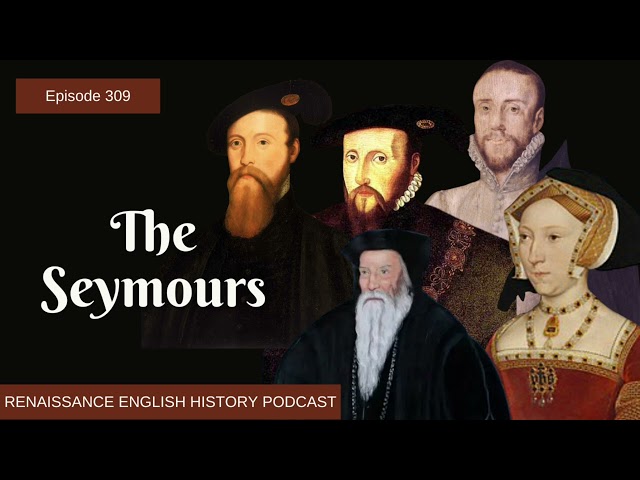
The Seymours were one of the most fascinating families of Tudor England, a dynasty that rose from modest gentry to the very heart of royal power. Best known for Queen Jane Seymour, Henry VIII’s third wife and the mother of his long-awaited son, the Seymours’ story is one of dazzling ambition, scandal, and tragedy. Their ascent began long before Jane caught the king’s eye, rooted in generations of loyal service and strategic marriages. From their quiet estate at Wolf Hall to the glittering but perilous world of the Tudor court, the Seymours transformed themselves into a family that shaped the fate of England, and paid dearly for it.
Transcript of The Family that Gave Henry VIII a Son and Lost Everything:
When we think of the Seymour family, we think of Henry VIII. We think of Queen Jane Seymour. We think of a family that went from relative obscurity to the very peak of power in the blink of an eye. But to understand the dizzying height of their ambition and the tragic depths of their fall, we have to go back to the beginning.
We have to go back to their humble roots, and that is what we are going to talk about today. We are going to trace the Seymours from their beginnings through to their fall, and even where they are today, and what happened to them after the Tudor period.
For generations, the Seymours were, for all intents and purposes, a family of solid gentry. The name itself, Seymour, is an English variation of the French name St. Maur, hinting at their Norman origins. They were well-established landowners in Wiltshire, their primary seat at Wolf Hall. They were knights and sheriffs, a respectable class of people who had no reason to believe that one of their own would one day be a queen of England, let alone the mother of a king. Their place in the world was solid, predictable, and frankly, a little bit boring.
The real shift began a generation before Jane, with her father, Sir John Seymour. Sir John was a career courtier and a soldier. He was knighted by Henry VII for his service and later fought alongside Henry VIII in the English campaigns in France. He was a man with a foot in the old world of military prowess and the new world of court influence. But his true political masterstroke was his marriage to Margery Wentworth.
Margery was no ordinary gentry woman. Through her mother, she was a cousin of Elizabeth of York, Henry VIII’s mother. Their marriage brought the Seymours into the orbit of the Tudor dynasty and, most importantly, into the same social circle as Thomas Howard, the future Duke of Norfolk. It was a strategic alliance that gave the Seymours the very thing they had lacked: powerful connections.
It allowed them to move from the quiet countryside of Wiltshire to the noisy, dangerous, and intoxicating world of the royal court. Lurking beneath the surface of this respectable family were the seeds of the very drama that would define their future. Even before Jane appeared, the family was touched by scandal.
Edward Seymour, Jane’s older brother, the future Duke of Somerset, was caught up in a domestic drama that would have major consequences for the family. Sometime before 1519, he married his first wife, Catherine Fillol. They had two sons, John and Edward, but for reasons that were never explicitly stated at the time, Edward repudiated his wife. Later, after the Seymours were at the height of their power, a scandalous and largely unsubstantiated rumor would emerge that Catherine had been having an affair with her own father-in-law, Sir John.
The truth of the matter is lost to history—it makes for some really good historical fiction. The outcome, however, was clear. When Edward was later created Duke of Somerset, his patent of nobility explicitly stated that his titles would pass to the heirs of his second marriage. This legal document was the most public acknowledgment of the old scandal that the family could make.
Jane Seymour: The Perfect Queen
This family—the very family that was the subject of whispers—would soon work to present a perfect, quiet, blemish-free antidote to Henry’s problems. They went all in on one bet: Jane Seymour. Jane, our future queen, was the ultimate observer. She had served both Queen Katherine and Anne Boleyn. Imagine that—she was the silent witness to Henry VIII’s “Great Matter,” standing a few feet from the woman Henry had risked a schism with Rome for, and a few feet from the woman he was about to dispose of.
While Anne was all sharp wit and fashionable French gowns, Jane cultivated a different image. She was demure, pious, quiet. She didn’t engage in the courtly games; she stayed in the background—a symbol of domesticity. This wasn’t coincidence. It was a deliberate strategy orchestrated by her brothers, Edward and Thomas. They knew exactly what Henry was looking for. After Anne’s fiery personality and inability to have a son, Henry was desperate for a quiet and compliant wife. Jane was the perfect opposite, and the Seymours expertly presented her as such.
A perfect example of this comes from a well-known anecdote: while he was still married to Anne, Henry sent Jane a gift of a purse filled with coins. It was a clear, if discreet, overture, but Jane, in a move that showed her deep understanding of the court’s politics, took the purse and, after kissing the coins, handed it back to the messenger. She said she was happy to accept a marriage gift from the king, but she could not take a single penny from him before then without tarnishing her honor.
It was an audacious and flawless political play, but the Seymours were not operating in a vacuum. Jane’s rise was actively aided by the faction at court that wanted to see Anne’s downfall. These were the conservative, Catholic-leaning nobles, many of whom had been allies of Catherine of Aragon. They despised Anne and the Reformation that she represented.
They included people like Anne’s own uncle, the Duke of Norfolk, Thomas Howard, who had grown to resent his niece’s influence. There was also the Imperial ambassador, Eustace Chapuys, a fervent ally of Katherine of Aragon. Though he was not particularly welcome to whisper directly to the king, he worked his influence through a network of spies and allies, including the notorious courtier Francis Bryan, a cousin of both Anne and Jane, known as the “Vicar of Hell.”
These were the people who placed Jane in Henry’s path, whispering to him about her virtue and humility, using her as a weapon against Anne. Jane’s very lack of baggage was her greatest strength. The moment that Anne Boleyn was executed in May 1536, Jane’s long game paid off. Henry married her just a week and a half later.
The Rise of the Seymour Brothers
The jackpot came with the birth of Prince Edward in October 1537. Jane gave Henry what he had craved for his entire reign—a male heir, a healthy male heir. The future of the Tudor dynasty was now literally a Seymour. Her victory, however, was also her end. She died just two weeks later, most likely from childbed fever.
Henry was, of course, heartbroken. He would later choose to be buried next to her. For the Seymours, her death was a devastating loss and a triumph all at once. Her brothers, Edward and Thomas, were now the most powerful men in England. Their nephew was the future king.
As soon as Henry VIII died, their position was sealed. Edward, Earl of Hertford, became Lord Protector—the de facto ruler of the entire kingdom. This was a massive political move because Henry had wanted to set up a regency council with no one in control, but Edward was able to use his power and political machinations to go completely against Henry’s own will and become Lord Protector. His brother Thomas was the Lord Admiral. They were at the top of the food chain, with more power than anyone had ever imagined for their family.
But power in the Tudor court was always a double-edged sword. In the wake of Henry’s death, that double-edged sword was about to cut deep. The Seymour family, now at the absolute pinnacle of power, was about to turn on itself.
At the center of this looming catastrophe were the two brothers: Edward, the eldest, who had the quiet cunning of a politician, and Thomas, the younger, who had the brazen, reckless ambition of a pirate. Edward was now the Lord Protector, the man who ruled England in the boy king’s name. Thomas was relegated to the title of Lord High Admiral, a position he found utterly inadequate. He was a man with a massive ego, a bottomless appetite for power, and saw his brother’s elevation as a personal slight.
The rivalry between the two brothers began to escalate almost immediately. Edward’s second wife, Anne Stanhope, a notoriously proud and ambitious woman, was a key factor. She was a constant source of tension, feuding openly with Catherine Parr over precedence and demanding a place among the royal family.
A particularly telling and petty feud erupted over the use of the queen’s jewels. After Henry’s death, Catherine Parr, the dowager queen, expected to retain a magnificent collection of jewelry. But Anne Stanhope, as the wife of the Lord Protector and the king’s aunt, insisted that she should have them. A back-and-forth ensued, with Thomas Seymour siding with Catherine. We’ll talk about why in a minute. Further deepening the rift between the brothers.
Thomas wanted his own power base. He wanted a queen, and his first play was Catherine Parr. Thomas had a romance with her before she became queen, and as soon as Henry died, Thomas wasted no time rushing to marry the dowager queen in a secret, hastily arranged ceremony just a few months after the king’s death.
It was a scandalous move that infuriated his brother and the rest of the Privy Council, who viewed it as a blatant power grab. It was also an act of pure emotional recklessness. His second play, then, was for the young Princess Elizabeth. Living in Catherine Parr’s household was her stepdaughter, the teenage Elizabeth. Thomas, a man who liked to flirt and had a seemingly insatiable desire to be at the center of royal power, could not resist.
He started to form almost a relationship with the young princess that, by any measure, was completely inappropriate. He would visit her room in his nightshirt, slap her on the behind, and engage in horseplay with her and her governess, Kat Ashley. Catherine Parr, surprisingly, initially joined in. Perhaps she thought it was all just innocent fun, but Thomas’s behavior became increasingly predatory. Elizabeth was eventually sent away from the household in disgrace.
The drama reached a terrible climax in September 1548, when Catherine gave birth to a daughter, Mary Seymour. The birth was followed by complications, and Catherine died two weeks later from childbed fever. Her death left Thomas with a young infant and, more importantly, without a key source of his political power. He was now free to pursue Elizabeth as a wife, but he was also a man on the ropes. With nothing left to lose, he spiraled into paranoia and reckless plotting.
He began conspiring against his own brother, manipulating the young King Edward with money and favors, and even attempting a late-night break-in at the king’s apartments in Hampton Court, where one of the casualties was Edward’s dog, who was shot. He was eventually caught and charged with treason. His brother Edward now faced a terrible choice: spare his brother or execute him and consolidate his own power. He chose the latter. On March 20, 1549, Thomas Seymour was executed.
So what happened to the young Mary Seymour, his daughter, born just six months before her father’s execution? The orphaned Mary was placed in the care of Katherine Willoughby, the Duchess of Suffolk. The duchess had been a friend of Catherine Parr’s, but raising her daughter was a difficult burden. She constantly wrote to the government complaining about the cost of Mary’s upkeep and the lack of funding. Eventually, funding was completely cut off, and Mary disappeared from the historical record entirely after 1550.
Historians can only speculate about what happened to her. The most likely and most mundane theory is that she simply died as an infant or young child, perhaps a victim of the same sweating sickness that plagued so many during the era and would take Katherine Willoughby’s own sons the next year. The more romantic and compelling theory, which is the subject of some historical fiction, is that she was raised in anonymity, secretly married, or perhaps even sent abroad to live out her life in obscurity. We will never know for sure, but her disappearance is a fitting symbol for a family that seemed to burn so bright and then vanished just as quickly.
Edward Seymour’s Political Struggles
So back to Edward Seymour, the Lord Protector. He had survived his brother’s plotting, but his position was far from secure. He was a new kind of ruler, a man who believed in social reform and was seen by some as sympathetic to the struggles of the common people. You could almost call him a progressive of the Tudor period—a man who saw the suffering of the lower classes and tried, somewhat ineffectively, to do something about it.
This was most evident in his response to Kett’s Rebellion in 1549, a major uprising in Norfolk sparked by peasant anger over land enclosures. While other nobles demanded immediate and bloody repression, Edward tried to negotiate with the rebels and even issued a proclamation that acknowledged their grievances. He saw the rebels as his “poor friends.”
This was an admirable, even forward-thinking stance, but in the context of the paranoid Tudor court, it was also his political death warrant. To his enemies, particularly John Dudley, Earl of Warwick, this was not compassion—it was weakness, an outright invitation to chaos. Dudley, a far more pragmatic and ruthless politician, saw Edward’s populism as a threat to the established order and to the property of the nobility.
He began to whisper to the other lords, pointing out that Edward’s leniency would only encourage more rebellions. He gathered a powerful coalition of nobles who were disgusted by Edward’s inability to control the situation and alarmed by his sympathy for the rebels. They accused him of treason, of inciting rebellion, and of failing to protect the realm.
In October 1549, less than a year after he had his own brother executed, Edward was arrested and stripped of his power. He would spend the next two years in and out of the Tower, clinging to what little influence he had left, but the end was inevitable. On January 22, 1552, he was led to the scaffold at Tower Hill.
His execution was not met with universal joy; in fact, many of the common people who had once seen him as their champion now mourned his passing. His death completed the devastating, bloody chapter of the Seymour siblings. Jane, Thomas, and Edward had risen to unthinkable heights. Both Thomas and Edward met their end on the executioner’s block, while Jane, of course, died giving birth to the next heir.
With both of the elder brothers gone, it might seem as if the Seymour story had come to a definitive and tragic end, but that would ignore the family lines that remained. The future of the Seymours now rested on the next generation. Specifically, it rested on the children of Edward Seymour.
First, there was the line from Edward’s first marriage—the sons he had repudiated years ago, John and the second Edward. We’ll talk about them second because an interesting twist happened. Let’s start first with the line from Edward’s second, more politically advantageous marriage to Anne Stanhope.
This line would be carried on by his eldest son, Edward, who for a time was the true heir to the dukedom. This Edward was known as the Earl of Hertford, and he would play a crucial role at the court of Elizabeth I. He was an incredibly ambitious man and, like his uncle Thomas, had set his sights on a royal marriage.
He secretly married Lady Catherine Grey, the sister of the ill-fated Lady Jane Grey. Catherine was, at the time, a potential successor to the throne, and their secret marriage was seen as a brazen power grab. When Elizabeth found out, she was furious. She had them both imprisoned in the Tower and declared their children illegitimate.
Catherine spent the remaining years of her life under house arrest, moved between various locations. She never saw her husband again and died in 1568 from tuberculosis—and, they said, heartbreak. Edward, the Earl of Hertford, remained imprisoned for nine years. The marriage would later be declared legitimate by a new monarch in 1608, decades after her death. The children, initially illegitimate, were also legitimized at this time, completing a tragic and torturous ordeal for the family.
The Next Generation of Seymours
The main line of the family was continued by Edward’s son with Catherine, who was also named Edward and inherited the title Viscount Beauchamp. It was this younger Edward—who had a father named Edward and a grandfather named Edward, so that’s not confusing at all—who broke the pattern and had a son named Francis, who would later be created Baron Seymour of Trowbridge, Francis, would be a key player in the next generation—a prominent royalist during the English Civil War. The descendants of this line would remain politically significant for centuries, serving in various capacities.
Interestingly, the Earl of Hertford, the second Edward Seymour—the one who married Catherine Grey—married twice more, both times in secret. So he was married three times in secret. He clearly had a thing about secret weddings.
But let’s go back and talk about the children from the older Edward Seymour’s first marriage—the marriage to Catherine Fillol, before Jane was queen, before any of that happened, the one he had repudiated. These were the stepbrothers of Edward Seymour, Earl of Hertford—the children by Anne Stanhope.
Those sons were John and Edward—because naming your kids Edward seems to have been a family tradition, right? Anyway, they had been sidelined for years, but there was an interesting twist of fate that brought the family’s story full circle. They were actually the ones who eventually inherited the family’s title and still hold it today.
This was because the patent of nobility specifically passed the dukedom to the heirs of the second marriage first—but that line died out. It wasn’t until 1750, with the death of the 7th Duke of Somerset, that the line from Anne Stanhope finally ran out of male heirs. At that point, the dukedom reverted, as the patent decreed, to the descendants of the first repudiated marriage. That is where the current Duke of Somerset, John Seymour, the 19th Duke of Somerset, comes from—the repudiated line with Catherine Fillol.
Over the centuries, the Seymours would serve in Parliament, hold military commissions, and occupy various other positions of influence. They never again reached the Tudor-era heights of being a king’s uncle or Lord Protector.
Anne Boleyn’s pregnancies were not just personal struggles; they were pivotal moments that shaped the course of English history. From the initial hope that she would provide Henry VIII with the longed-for male heir to the heartbreak of multiple miscarriages, Anne’s pregnancies had profound consequences for her reign as queen. In this episode, we explore the intense pressure Anne faced to secure a male successor, the impact her pregnancies had on her relationship with Henry, and how these events ultimately contributed to her tragic downfall.
Join us as we uncover the human side of Anne Boleyn’s story, a tale of ambition, loss, and the fierce struggle for survival in the Tudor court.
Transcript of Anne Boleyn’s Pregnancies: Hopes, Losses, and the Final Miscarriage
This is the start of May and for many people in the Tudor world, May is a month when we remember Anne Boleyn and Anne Boleyn’s story. This episode is about Anne—specifically about her pregnancies and her miscarriages.
So I want to include a bit of a content warning: if you are sensitive to discussions about miscarriage and pregnancy loss, you might want to give this one a skip. We’re going to talk about her different pregnancies, how Henry reacted, and how the final miscarriage was really the breaking point that did her in—what made Henry decide he needed to put her aside.
I’ve shared before on this podcast—gosh, back in 2010—I lost a son. And funny—I mean, not funny, obviously it’s tragic—but I was already doing this podcast by then, and I talked about it on the show. Even now, people go back and start listening from the beginning and assume it just happened. I still get emails every once in a while saying, “I’m so sorry for your loss.” And I appreciate it, of course, but I think sometimes people miss the date on that—it was fifteen years ago. That said, the experience stays with you forever.
So I also just want to say: if you are dealing with pregnancy loss, miscarriage, or fertility struggles—I went through that myself. It’s kind of one of those sororities you don’t really want to join. But once you’re in it, you find it’s a very close-knit group of people. If you’re part of that group and you ever want to talk about it, consider me a resource. I’m always here—to talk about the babies, the ones who are here, and the ones who aren’t.
That’s what we’re going to talk about today. It’s a bit of a somber one, but I think it’s important. It’s a very human story—something many people still go through today. Katherine of Aragon dealt with it too. And I think talking about these things humanizes them. It connects us to their stories. It’s one of those deeply human experiences that has crossed centuries. Women have always gone through this, and still do. And of course, it affects fathers as well—I don’t mean to place it entirely on women—but physically, it’s something women endure. Alright. I’m rambling now. Let’s get into it.
Anne Boleyn’s First Pregnancy and Elizabeth’s Birth
When Anne Boleyn was crowned Queen of England in the summer of 1533, the entire country held its breath. Her coronation, carried out with more pomp and splendor than anything London had seen in a long, long time, was not just a celebration of Anne herself—it was a public bet, a grand wager that Anne would succeed where Katherine of Aragon had failed. Anne would give Henry VIII his longed-for son—the son who would secure the Tudor dynasty and end years of dynastic uncertainty.
She was already visibly pregnant when she processed through the streets, seated in a white litter, gliding above the crowds who jostled and craned their necks to glimpse the woman for whom kings had upended kingdoms.
There was no small amount of superstition tied to this pregnancy. Astrologers had consulted the stars and confidently predicted that a prince was on the way. Tapestries with human figures were removed from Anne’s birthing chamber, lest the images somehow influence the shape of the unborn child. Henry had tournaments and celebrations planned in advance, certain that Anne would deliver exactly what he had fought so hard to obtain.
In early September, Anne withdrew to her confinement at Greenwich Palace—a solemn ritual marking the final weeks of pregnancy. The court grew quiet, more reverent as the day approached.
Then, on September 7th, 1533, Anne gave birth not to the expected prince, but to a healthy, robust daughter. The baby, with her father’s distinctive Tudor coloring, would become Elizabeth I.
But in 1533, Elizabeth’s birth was not received as triumphantly as modern hindsight might suggest. Henry’s disappointment was palpable, even if cloaked in official good cheer. The court had prepared printed announcements celebrating the birth of a prince. Clerks scrambled after the fact, forced to manually add an S to transform prince into princess.
It was a patchwork fix for a patchwork triumph. The tournaments Henry had planned were quietly canceled. There were no triumphant processions, no week-long celebrations. Still, Henry tried to console Anne—and perhaps himself. He reassured her: they were both still young; sons would surely follow.
Anne was reportedly devoted to Elizabeth, pouring her hopes into the little girl’s cradle. But privately, she must have understood the stakes. In Henry’s world, a queen who failed to produce a male heir was a queen whose position was, at best, quite tenuous.
The Second Pregnancy and Its Mysterious End
The pressure didn’t ease. Only months after Elizabeth’s birth, Anne conceived again. News reached Eustace Chapuys, the ever-watchful Imperial Ambassador by January 1534. He reported that Anne was in good health and carrying another child. George Taylor, a servant at court, wrote enthusiastically to his master that the queen had a “goodly belly.”
Henry, buoyed by the news, commissioned a magnificent silver cradle studded with jewels—ready to welcome the son he was certain would soon arrive. For a brief moment that spring, the court’s optimism returned. This time, surely, fate would reward the king and his new queen. But that second pregnancy, so full of promise, would never actually reach its hoped-for conclusion.
By the summer of 1534, Anne was visibly pregnant—enough so that her brother, George Boleyn, was dispatched to France with apologies. Anne was so far gone with child that she could not accompany the king on a planned visit. Everything suggested a healthy pregnancy was advancing. Notably, Henry postponed diplomatic travel—a decision he would not have made lightly, given how much he prized foreign alliances.
Yet by September, whispers began to circulate. Chapuys, always eager to report anything that might discredit Anne, wrote to Emperor Charles V that Henry had begun to doubt whether his lady was “enceinte or not,” and had as a result renewed and increased his affection for another lady at court.
If Anne’s pregnancy had been progressing well, Henry’s attention would not have wavered so conspicuously. Still, the exact nature of this failure remains one of the quieter mysteries of Anne Boleyn’s life. No direct record survives of a miscarriage, a stillbirth, or even an official announcement that the pregnancy had ended.
It simply vanished from court conversation. One day Anne was pregnant; the next, she was not—and no one spoke openly about it. It was rather like what would later happen to her stepdaughter, Mary I, several decades later.
Historians have long debated what happened. Some, like Eric Ives, suggest that Anne likely suffered a miscarriage—perhaps in the summer months, perhaps later—but that the event was kept discreet to avoid further embarrassment. After all, to have miscarried again so soon after Elizabeth’s birth would have been a bitter blow to the queen’s public standing.
Others, however, have proposed that Anne experienced a false pregnancy—a rare condition in which the body mimics pregnancy symptoms without an actual fetus developing. Both Katherine of Aragon and, later, Mary Tudor would suffer these phantom pregnancies
In a period that lacked modern medical understanding, a queen could easily believe herself pregnant for months before realizing the truth. Chapuys’ phrasing in his September dispatch—that the king doubted whether Anne was pregnant—leaves open the possibility that even Henry had been deceived.
If Anne’s symptoms had mimicked pregnancy but the expected baby failed to materialize, it would have been a humiliation Henry was eager to forget. It might explain why the matter was dropped so quietly. Regardless of whether Anne miscarried or whether the pregnancy had been false, the impact was the same: no child was born, no son arrived to solidify Anne’s position.
Instead, Henry’s eye began to wander, and the cracks in the marriage started to show. Anne, for her part, would have understood the danger immediately. Her power, her influence, her very safety depended on producing a living male heir. And after the anticlimax of 1534, she knew the next pregnancy had to succeed. The stakes—already high—were about to become lethal.
The Third Pregnancy and Growing Tensions
The year 1535 brought no recorded pregnancy for Anne. If she conceived, it was either lost so early that no one remarked on it, or it never happened at all. A letter from Sir William Kingston mentioning the queen’s “fair belly” was once thought to hint at a pregnancy that year, but historians later realized that it referred to the previous year—adding yet another layer of confusion to the already murky record.
In reality, 1535 was a year of growing tension. Henry’s affection cooled noticeably. While Anne remained queen, she no longer held the singular grip on Henry’s heart that she once had.
Late that year, Jane Seymour—a quiet, seemingly docile lady-in-waiting—began to catch the king’s eye. At first, Jane’s presence was barely more than a flicker at the edge of court gossip, but it would soon burn far brighter.
Anne, sharp-tongued and proud, was ill-suited to share her husband’s attention. She had fought too hard to secure her place as queen to now sit quietly by while another woman rose in favor. Her temper—once part of her charm—now irritated Henry.
Chapuys, of course ever ready to report these missteps, recorded that Henry grew increasingly cold toward her over the course of 1535. There were arguments, frayed silences, visible signs of strain. Yet Anne had one way to win back Henry’s full devotion: another child.
The Final Pregnancy and Anne’s Downfall
By the autumn of 1535, she was again pregnant. This time, more than ever, success was essential. At first, all seemed to go well. By December, the court buzzed with optimism. Henry and Anne, perhaps cautiously hopeful, must have dared to imagine that the tide was turning in their favor. With Katherine of Aragon—Henry’s first wife and Anne’s rival in legitimacy—in declining health, the political landscape seemed poised to favor Anne at last.
On January 7th, 1536, Katherine died. In theory, Anne should have triumphed. Katherine’s death meant that Anne’s marriage could no longer be contested by a living rival claimant. She was, by any earthly measure, Henry’s sole wife.
Yet the court’s reaction was strange. Some said Henry and Anne wore yellow in celebration. Others noted that yellow was a mourning color in Spain. Either way, the moment was loaded with symbolism.
Anne was carrying the future—literally and politically—but underneath the surface, danger rippled. Henry’s growing attentions to Jane Seymour continued. Katherine’s death removed a political obstacle but did nothing to repair the cracks in Henry and Anne’s relationship. If anything, it gave Henry more freedom to act as he pleased, because with Katherine gone, the threat from the emperor was no longer there.
Then disaster struck. On January 24th, Henry participated in a joust at Greenwich. Always proud of his athleticism, Henry charged into the lists and suffered a terrifying fall. Thrown from his horse, the king lay motionless on the ground. Courtiers rushing to his side feared the worst—some thought him dead. For two long hours, Henry was unconscious, and the court held its breath.
Somewhere in her apartments, carrying what she prayed was her savior, Anne waited for news that would shatter her world. When the Duke of Norfolk arrived to deliver the news, he tread carefully. Anne was pregnant, already under strain, and very vulnerable. The Duke of Norfolk broke the news as gently as he could: the king had been injured, but he was alive, and there was no reason for alarm.
Anne’s reaction was immediate. She was horrified. Henry’s brush with death was not just a personal terror—it was a political catastrophe in the making. If Henry had died without a male heir, the Tudor dynasty itself would have been plunged into chaos. Elizabeth, a small girl barely two years old, would hardly have been accepted by the powerful, divided factions at court. And Anne herself, without Henry’s protection, would have been dangerously exposed.
The shock was too much. And days later, on January 29th, 1536—the same day that Katherine of Aragon was laid to rest at Peterborough—Anne miscarried. The child she lost was a boy, estimated to be around 15 weeks gestation.
Even Chapuys, who normally took a grim delight in Anne’s misfortunes, reported the event without triumph. On the day of the interment, he wrote to Emperor Charles V: “The concubine had an abortion, which seemed to be a male child of about three and a half months, at which the king has shown great distress.”
Charles Wriothesley, herald and chronicler, added further confirmation: Anne had miscarried “a male child, as it was said, before her time, before she had reckoned herself but 15 weeks gone with child.”
The reports are sober, grim—and crucially, at the time, they make no mention of deformity or anything abnormal about the fetus despite the later lurid rumors that would circulate. For Anne, the loss was an unmistakably public failure. A boy—finally, a boy—and he was gone. The emotional weight must have been crushing.
Anne, according to reports, blamed the miscarriage on the shock she suffered hearing about Henry’s accident. Contemporary medicine often linked strong emotions to the loss of a child, and Anne’s explanation would have seemed perfectly plausible to her contemporaries. After all, she had been carrying the hope of a dynasty in her womb, and the terror that it might all come crashing down with Henry’s fall could very well have been enough to precipitate a miscarriage.
Yet not everyone at court was willing to accept this explanation. Chapuys, who viewed Anne with unrelenting suspicion, noted skeptically that Norfolk had taken care to deliver the news cautiously, “in a way that she would not be alarmed.”
Others at court began to whisper that Anne’s miscarriage was no accident. Perhaps it was a sign that God disapproved of the union. Some even murmured that Anne’s body was somehow incapable of producing healthy male heirs.
As Anne grieved, she must have known that this loss would not simply be mourned—it would be weaponized. At first, Henry seemed genuinely devastated. For a few brief days after the miscarriage, he reportedly showed Anne real sorrow. This had been his son too—his longed-for prince—and the loss struck hard.
But Henry was not a man who dwelt long in grief. Almost immediately, his sadness curdled into something far more dangerous: disappointment, resentment, and the cold, calculating search for an alternative.
According to Chapuys, when Anne, desperate to explain herself, approached Henry in the aftermath of her miscarriage—pleading that the shock of his accident had caused her loss—Henry listened grimly and then, with chilling finality, told her that he now saw God did not wish to give him male children by her.
It was a devastating sentence, and Anne must have heard the full implication. Henry, who had moved heaven and earth to make her queen, was now suggesting that their union was cursed—that God Himself had withheld the male heir because of her.
This was a cosmic judgment on their marriage, and the parallels to Katherine of Aragon’s downfall were impossible to ignore. Years earlier, Henry had claimed that his first marriage was invalid because it had failed to produce a son—a failure he took as evidence that God had not blessed the match.
Now, with Anne, he was drawing the same ominous conclusion. Anne—newly miscarried, fragile in both body and spirit—found herself suddenly and terrifyingly alone. Reports from the weeks following the miscarriage suggest that Henry’s affection, already faltering, withdrew almost completely.
He spent less time with Anne. He grew increasingly open in his attentions to Jane Seymour, whose quiet, modest demeanor stood in sharp contrast to Anne’s proud and volatile personality. Jane, coached by her ambitious family, knew exactly how to play the part of the soothing, unthreatening alternative.
Meanwhile, Anne—still technically queen—moved through the court like a ghost. Her enemies, emboldened, began to circle. Even her supporters must have recognized how precarious her position had become.
Chapuys wrote gleefully that some at court speculated Henry would now take another wife. Others noted that Anne’s miscarriage had given Henry the very excuse he needed to set her aside if he wished.
Anne herself seems to have realized how badly she had miscalculated her own security. In private conversations with her ladies, she reportedly blamed jealousy—the stress of competing with Jane Seymour—for contributing to the loss of her child. A bitter irony, if true: the very fear of losing Henry may have helped bring about the catastrophe that made it inevitable.
In a few short weeks, Anne had fallen from a seemingly secure queen consort to a political liability. Her final chance had slipped through her fingers, and Henry—once bewitched by her wit and her charm—now looked at her with the cold eyes of a king seeking an exit. The clock was ticking.
In the weeks that followed, Anne’s position grew weaker by the day. Though outwardly still queen, she found herself isolated within her court. The elaborate rituals and courtesies due to a queen were maintained, but the warmth behind them had cooled. Fewer ladies flocked to her side. Fewer courtiers sought her favor. Those who had once fawned over her as the king’s darling now turned their eyes toward Jane Seymour, sensing a shift in the political winds.
Anne would have seen it too. She was no fool. Those same courtly instincts that had once propelled her rise would have made the change in atmosphere painfully obvious. She could hardly have missed the fact that Jane now received secret gifts from the king—including a locket containing Henry’s portrait—an insult that must have cut to the bone.
Henry, meanwhile, was moving from private disillusionment to quiet action. In March 1536, he began speaking more openly about his regrets over his marriage. To trusted courtiers, he allegedly hinted that his second marriage, like his first, might have been founded on false grounds. With Katherine dead, he no longer needed to justify himself to the Pope or foreign powers.
Anne’s precarious fertility record now gave him all the pretext he needed to seek a new solution. ThomasCromwell, who now had his own grievances against Anne, recognized the opportunity. Whether acting on Henry’s unspoken wishes or out of his own initiative, Cromwell began to quietly construct the case against the queen.
At first, it was vague—certain matters regarding her conduct needed to be examined—but soon it would take a more sinister shape. Anne’s enemies were many, and they had long memories. Old grudges, jealousies, political slights, and personal humiliations now surfaced and attached themselves to Cromwell’s investigations like barnacles to a ship.
And yet, in early spring 1536, Anne still held the title of queen. She attended mass; she still moved through the court with regal dignity. She could not have known precisely how little time she had left, but the warning signs must have been impossible to ignore.
The miscarriage of January had done irreparable damage. Without a living son in her arms, Anne had no shield against the ambitions of others. Henry—ever impatient, ever hungry for certainty—had already started imagining a life beyond her. And the machinery of her downfall—the lies, the interrogations, the betrayals—had begun to grind into motion. Anne had lost more than a child in January 1536. She had lost her future.
The Aftermath and Historical Rumors
In the aftermath of Anne’s fall, the story of her final miscarriage began to take on a life of its own. At the time, the official accounts made no mention of anything unusual about the lost child. Chapuys described it simply as a male fetus about 15 weeks old. Charles Wriothesley, too, recorded that it was a male child born prematurely. Neither hinted at anything grotesque or unnatural.
To those present in 1536, the tragedy was grim but straightforward: a devastating loss of a much-hoped-for son. But as the decades passed, darker rumors began to creep into the narrative.
The most notorious came from Nicholas Sander, a Catholic exile writing fifty years later during the reign of Elizabeth, Anne’s daughter. Sander, bitterly opposed to Elizabeth’s Protestant rule, painted Anne as a monster in every sense. He is the one who claimed she had six fingers on one hand, a projecting tooth, a large goiter under her chin, and—most infamously—that she had miscarried a shapeless mass of flesh.
Sander’s grotesque description was pure invention. He had never met Anne; he was not even alive when she was queen. His goal was clearly political: to discredit Elizabeth by portraying her mother as unnatural and cursed.
But his accusations proved sticky. Over time, they filtered into popular imagination, blurring the line between fact and propaganda. Even today, Sander’s lies crop up in novels and films. Modern historians have pushed back firmly.
Eric Ives, Anne’s most meticulous biographer, found no contemporary evidence for any deformity in the lost fetus, nor did any contemporary chronicler. In Ives’s words, the suggestion that Anne miscarried a monstrous child is “a smear without foundation.”
Still, the idea had taken root deeply enough that even some serious historians grappled with it centuries later. In the 20th century, historian Retha Warnicke proposed a controversial theory that Anne’s miscarriage involved a malformed fetus, and that this shocking event spurred Henry and Cromwell to move against her so swiftly.
Warnicke’s argument built on the notion that a monstrous birth would have been seen as a divine sign of sexual sin—incest, adultery, witchcraft—and thus gave urgency to Anne’s destruction. It’s an intriguing idea, but it rests on a fragile foundation: Sander’s later account, which serious scholars generally dismiss as unreliable.
Not one single document from 1536—not a letter, not a court record, not a dispatch—mentions anything malformed. On the contrary, the descriptions suggest a tragically ordinary miscarriage.
Most historians today agree that the rumor of a monstrous miscarriage belongs firmly in the realm of later anti-Anne propaganda, not fact. Anne’s downfall can be explained without recourse to supernatural horror stories. Political betrayal, Henry’s dynastic desperation, and Anne’s own precarious position were more than enough.
Legacy of Anne Boleyn and Conclusion
The miscarriage of January 1536 was not, by itself, the cause of Anne’s destruction, but it was the moment when her vulnerability became undeniable. Historians have debated just how pivotal the event was.
There’s that famous phrase saying that Anne had “miscarried of her savior,” which captures her situation vividly. Had the child lived—had Anne delivered a healthy boy in the spring or summer of 1536—the course of English history might well have been very different.
A male heir would have strengthened Anne’s position beyond easy assault. Henry, so desperate for a son, might have been willing to overlook other irritations: her sharp tongue, her political meddling, her declining favor.
She would have placed a prince in his arms. The dynasty would have been secure. The Seymour family’s ambitions would have been checked before they could gain momentum. Cromwell’s schemes might never have ripened. But the child was lost. And with that loss, Anne’s enemies found their opening.
Historians like Eric Ives have cautioned that it would be a mistake to view the miscarriage as the sole trigger for Anne’s downfall. Anne’s situation was already deteriorating in late 1535, even before she became pregnant again. Henry’s attentions were already shifting toward Jane Seymour. Cromwell and Anne were clashing over political matters, especially the redistribution of monastic wealth.
The miscarriage, in Ives’s view, did not create Anne’s vulnerability, but it did expose it—fully and irrevocably. There’s no question that the loss hardened Henry’s resolve. After January 1536, Henry stopped pretending that he saw his marriage to Anne as a divinely sanctioned union. When he said, “God does not wish to give me sons by her,” he was showing himself to be a man searching for a way to justify what he already wanted—to move on.
It’s easy, 500 years later, to look at Anne’s pregnancies purely as political events—to see the births and the miscarriages, even the phantom pregnancy, perhaps, as chess moves in a brutal game of dynasty-building, successes or failures measured only in crowns and bloodlines.
But behind the royal titles, behind the expectations—remember, there was a woman. Anne would have known the risks every time she conceived. Childbirth in the 16th century was perilous, even in the best conditions. Miscarriages were common, infant mortality was high, and medical knowledge was limited. Every new pregnancy carried with it not only hope, but fear—fear of loss, fear of death, fear of disappointing a husband whose love was not unconditional.
She must have felt real joy when she first realized she was carrying Elizabeth, real pride when she felt her daughter’s kicks, real hope when she conceived again in 1534 and in 1535—and real, devastating grief when each of those pregnancies ended in silence.
But of course, that daughter she left behind would change the course of English history. Elizabeth would reign for 45 years, ushering in a golden age of exploration, culture, and stability. That “disappointment,” born in September 1533, would become one of the most celebrated monarchs in English history.
Anne’s enemies could tear down her reputation, they could blacken her name—but they couldn’t erase her daughter. And in the end, that’s the story that would outlast them all.
So there we are, my friends—a little bit about Anne’s pregnancies. Sometimes you hear these stories and they’re just sentences. But then you think about the people behind them, and the effect those events had on their lives, and it becomes a bit more real.
Today in 1537 Queen Jane Seymour died after giving birth to her son Edward. Her pregnancy had been easy but she had a difficult labor.
It took three nights and two days to deliver him on October 12. She seemed to recover and was sitting up in bed receiving visitors after his christening. She even signed the birth announcements but she quickly took a turn for the worst on October 17.
Midwives theorized that her uterus would have been exhausted after all of that pushing of Edward who was likely not positioned well in the womb. That meant that she would have not expelled the placenta which would have eventually become infected. Having lost a lot of blood and being exhausted, her body would have been less able to fight the infection. Likely, there were also dirty hands making things worse.
In modern times, the doctor would perform a C-section or use forceps after such a long and difficult labour saving the mother’s life, but women still died in childbirth at an alarming rate. The World Health Organization estimates that over 1,500 women died from childbirth every day.
That’s your Tudor Minute for today and remember you can dive deeper into life in 16th-century England through the Renaissance English history podcast at Englandcast.com.
Today in 1536 Jane Seymour made her first appearance as Queen, and Henry’s third wife. She had married him on May 30, just 11 days after the death of Anne Boleyn. And on this day, the 2nd of June, she appeared at Greenwich Palace according to a letter from Sir John Russell to Lord Lisle, Lord Deputy of Calais:
“On Friday last [2nd June] the Queen sat abroad as Queen, and was served by her own servants, who were sworn that same day. The King came in his great boat to Greenwich that day with his privy chamber, and the Queen and the ladies in the great barge. I assure you she is as gentle a lady as ever I knew, and as fair a Queen as any in Christendom. ‘The King hath come out of hell into heaven for the gentleness in this and the cursedness and the unhappiness in the other.’ You would do well to write to the King again that you rejoice he is so well matched with so gracious a woman as is reported. This will please the King.”
That’s your Tudor Minute for today. Remember you can dive deeper into life in 16th century England through the Renaissance English History Podcast at englandcast.com.
Today in 1536 Henry married his third wife, Jane Seymour, in a ceremony in the Queen’s Closet in York Place officiated by Archbishop Cranmer – you can only imagine how Cranmer must have felt doing this just a few weeks after the fall of his previous friend and ally Anne Boleyn. He was betrothed to Jane the very day after Anne Boleyn was executed, and then married her ten days later.
It had only been a few weeks since Anne had been Queen, and workers had to work hard to replace Anne’s initials and emblems with Jane’s own Phoenix badge. In some cases, the workers didn’t quite finish the job, and you can still see A’s beneath the J’s in some places at Hampton Court.
That’s your Tudor Minute for today. Remember you can dive deeper into life in 16th century England through the Renaissance English History Podcast at englandcast.com.
This is a chat I had with James Boulton of the Queen of England and The Other Half podcasts about the Queen Consorts of the Tudor period. Which were his favorite wives? Let’s discuss.
First, links:
Join in the live chats, and connect with other Tudor lovers in the Tudor Learning Circle – the social network devoted solely to Tudor history.
Follow James on The Other Half Podcast where you can also find his Queens of England show as well.
Rough Transcript of my chat with James Boulton on the Tudor Queens
Heather: (00:00) Okay. Perfect. So we’re recording. Okay. So James Bolton, you have the famous Queens of England podcast, and now your other podcasts, the other half focusing on women throughout history, like you, we were just saying, not particularly narrative in chronological order and you dig really, really deep on some of these women. So, um, you seem to want to tell these stories of these women. I, I’m curious, just what, how did that come about? How did you get interested in that?
James: (00:28) I was, I was really radicalized at university, so I went to university of St. Andrews and my final year of my undergrad, I did a course on Henry the first, who was the third Norman King. So 1100 to 1135, I believe. And that was like a year long course. So he really went in depth and I got really interested in his first wife, Matilda of Scotland for a few reasons. Uh, my lecturer was quite keen on that sort of thing. There was a really good book. Uh, and so I still got interested in Queens in that because I thought lots of people, it’s one of those areas of historical stay that there’s still a lot to do. It’s still quite new. It’s only really been going on since about the nineties, um, which in academic circles is quite recent. Um, so I got into that.
James: (01:16) I did my master’s thesis on sort of queenship in Anglo-Norman England and I sort of thought I might want to be an academic. And then I sort of decided I didn’t want to do that because I found the world of academia to be like a shark tank, everyone, you know, it’s, it’s very, it’s quite vicious in many ways, um, because you’re not just criticized if you disagree with, so you’re not just criticizing their opinion, you’re sort of criticizing their life’s work. So people get, can get quite defensive. And so I decided that really wasn’t for me. Um, so I went out and got a real job, but I was really sort of, um, I missed academia. I sort of nest, um, you know, going into a lecture or going into a big library and finding out something new and using that sort of critical historical part of my brain.
James: (02:04) I mean, I’ve known I’d want to do a history degree since I was about eight and so suddenly sort of, I wasn’t ready to lose it. So I basically decided why not do the Queens of England podcasts? I started listening to them, um, like nearly all historical podcasts. Mike Duncan has been my sort of inspiration, but also be like David Crowder and yourself as well. Cause you’ve been doing it for quite a long time. Uh, and so really my first few episodes were actually just essays. I did, I shamelessly plagiarized my own work. Uh, I thought it would take, you know, about a year or so, but one episode, two episodes each and then I’d know about three or four years later finished, uh, a thought I don’t need to go up to Elizabeth of York, but then I went all the way up to Mary of Moderna who was the last queen of England. But, uh, yeah, so that’s how it all started. I know lots of listeners were quite disappointed when I finished in 17, well for 1707, but I think by then it was time for a bit of a change. So that’s why I moved on to something new, which is probably the worst business decision I’ve ever made in my life. It was good for me, at least in terms of keeping me interested, which is the most important thing I think.
Heather: (03:15) Yeah, well, yeah, definitely. You have to, you have to be able to dig in every week and be inspired every two weeks and do that research. So if you’re not feeling it, then you need to have to move on for sure. Um, all right, so let’s start with the queen. You just said, you thought you might stop with her Elizabeth of York, um, kind of the first tutor queen. And I think she’s often, it seems people kind of skip over her, um, for a couple of reasons, just because the story of under Henry the eighth were so much more dramatic, but also she was that kind of medieval queen who was gentle and didn’t fight that much. And all of that kind of stuff is the perception of her. Tell me what, tell me your opinions of Elizabeth of York.
James: (03:57) Well, I think I sort of, when I did the series, I bracketed her not as a tutor queen in some ways, um, obviously she was, but I sort of think of them much more in as a war of the roses queen. I sort of, um, think Kenny deceptive, if you forget some dynastic thing, Henry the seventh fabric, very much more of a creature of the Wars of the roses than he is of sort of the cheetah reformation Renaissance type thing. And I think she’s very interesting. I was, again, I was revising this morning and I sort of looked, I remembered she’s really dissed. She spent her entire life as a sort of prospective marriage item. You know, she was at one point, she thought she was going to be the queen of France, then that didn’t turn out right. Um, then, Oh God, someone else coming through that was, and then, but, and then there’s all this uncertainty, you know, although she grew up in a sort of, uh, a relatively calm period in the Wars of the roses, it was sort of the, um, it was the fourth who was her father when he was King.
James: (05:01) And it was apart from a brief period where he got overthrown. Um, it was like karma. So, so grew up in a fairly nice environment. And then of course it all went to hell, um, with rich, the third, um, whose she was sort of in principle semi imprisoned and sent away, her brother was, let’s say murdered, I’m sorry for all your rich, the third people out there that he was murdered. Um, and, but then she became queen and she’s sort of seen as this sort of unifying figure. And, and I think she really was, but again, she was this threat all her life. She was seen as both a unifier and the threat because she had a better claim to the throne. Then Henry did. I mean, everyone had a better claim to the throne then. Um, even Catherine of Aragon had a dedicated to the throne every day.
James: (05:56) Um, so I was, she became queen, but she wasn’t, um, crowns for a long time. Uh, everything had to be put in place, but, and again, Henry the seventh rain is sort of divided really between when he was happy and the better than he was sad. And that when he was happy was really cool. Edward, this with York was a really great at being a queen, really. She didn’t brought up her life to do it, but she was an excellent queen. She gave the air and the spare and three daughters, but I think it’s pretty much the ideal number. Um, she was really great around the court, which was really great for dealing with foreign guests. Um, she’s a pet patronized, the arts she was seen as being very religious. And these are all sorts of the, the good things that you want to queen to do. You know, we’re all very excited and happy about the, the Queens that pushed the boundaries and became really powerful, but really that’s not what a queen was supposed to do. Um, but then she tragically died in childbirth, which was actually surprisingly unusual for time. Um, and then we can see really her parent, her influence in her absence really, because then
Heather: (07:12) Would you say that was surprisingly unusual? Cause I think I wanna, I want you to explain that because I think it might confuse some people when they hear that, because you think like all these women died in childbirth. So tell me the,
James: (07:22) I, she was only, I believe the second certain medieval queen of England to die in childbirth. I, uh, unfortunately I don’t know if I had them the other one. Um, no, I can’t remember, but so obviously infant mortality was incredibly common. Um, but maternal mortality is, is relatively rare, at least in Queens. Now that might just be luck. I don’t know how much this compared to, um, uh, to other Queens of other women at the time. I haven’t really studied it more broadly, but I was sort of come to this impression and thinking that women must die all the time in childbirth, in the diva period. And I’m sure for a different social classes, it’s very different, but actually for Queens, for whatever reason, it’s relatively rare.
Heather: (08:15) It’s interesting because then you think about Henry the eighth and two of his wives died in childbirth, not Catherine Parr, not with him, but Jane Seymour and then Catherine Carter.
James: (08:25) Yeah, it seems. And also, I mean, she does seem to have really well, at least Henry had really bad luck with giving, but I’ve, I’ve heard all sorts of reasons for it. Some people said it was the clothing that they had, the wall break, constricting clothing was the fashion, even when they were pregnant. That was a reason. Um, I, I don’t know. I’m not, I’m not a doctor.
Heather: (08:49) I wanted to touch on that. So sorry. So you talked about how she died in childbirth, which was unusual, uh, then the part of Henry’s reign, that was the sad part. Um,
James: (08:58) Yeah. Well, I mean this, I grew up with an English education and so, um, you studied the tutors all the time, so maybe it’s just me that sort of grew up this idea of heading to seventh is this ma this mine is, it’s a mean person, this person who just wanted your tax money, who abused the Nobles, who had a very boring court, that’s really overly the case after Elizabeth died. Um, and so whether Elizabeth kind of was a moderating figure on him, um, or whether it was grief, it’s sort of difficult to tell. Um, I mean, Henry was always a very ruthless man. Um, he was, you know, not to say that he was a completely changed person, but I think you do see when you study Queens that the courts were women, there was no woman that their head tended to devolve into sort of, sort of imagined like men partying all the time, you know, a lack of culture, a lack of arts and literature was just about drinking and all that sort of thing.
James: (10:08) And with Henry, he was always a suspicious man. He’s a paranoid man. And to be honest, it’s, you’re not paranoid if everyone really is out to get you. And they were, and I think it was once Elizabeth died, it was a really a case of his light. It’s great to, devil’s sort of dominating him and really, really he should have buried again, but unfortunately he did not. And so, uh, it was not an especially nice time to be around England in that sort of period and well, we’ll get, we’ll move on to captain America in a second, but she really suffered because of that as well.
Heather: (10:42) Yeah. Okay. So then let’s, uh, let’s chat about her and um, like you said, she had a better claim to the throne, um, and her relationship, what her relationship was like with Elizabeth of York. Um, especially when she came back after Arthur had died. Um, maybe we can like start with that and then,
James: (11:02) Well, again, Catherine of Aragon, if you look at her early life, I’m going to say, Hey, life really up until she married. Henry was really that as a dynastic poem, um, which is quite against really the rest of her life. She had a, a wonderful mother role model and Isabella of casts. Yeah. It’s about a habit. It’s about a Casteel. I sometimes get the two mixed up, um, who is this queen? Regnant incredibly powerful figure. Uh, she had a really, really good education, uh, almost sort of like education that you’d expect a, a boy to have a, a net thrown in terms of languages in terms of statecraft. Um, and then, but she had, unfortunately the really bad part is, you know, she was married into England first of dynastic reasons or means of isolating France, but then her mother died. And so she was had these two men really in control of her life after that the father Ferdinand and her father-in-law Henry, but both incredibly miserly, incredibly duplicitous, particularly Ferdinand.
James: (12:11) It was just you plus this man I’ve ever come across, just basically double-crossed every single person he ever dealt with. And so she entered this sort of limbo where everyone was always fighting about the dowery. Everyone was always fighting about her role. Um, she married Arthur, but obviously Arthur died. Um, spoiler that and, um, and then, yeah, she was stuck in this bit in the middle where no one really knew what to do with her because England didn’t want to pay, give her dowery back. Um, and cause she would have been do all the money they’d been given, but also she was doing lots of land as well. Didn’t want to give back saucy land is the principle currency. Um, but, uh, so how do we didn’t want to give her up for that third name? Didn’t want to make a deal. Um, they still kind of needed England for doc foreign policy reasons.
James: (13:08) So again, she’s in this limbo, she shoved off to the side and read the best thing that well, best thing that ever happened to her, one could argue is Henry dying. And, uh, Henry D coming across who really actually did want to marry her, they’d grown up together. She knew her. They seem to get on really well. And that was really the, the sort of the jumping off point. But really up to that point, her life had been just caught in limbo, which isn’t not that unusual for women at the time. They’re always sort of caught between these powerful men, their fathers, their husbands, and if they live outlive, their husbands, their sons really are legally in control of their lives a lot of the time.
Heather: (13:52) Yeah. And is that, that period when she was still in limbo in England, um, she started to become so religious. Do you think that’s the kind of, what kind of influence do you think that had on her for the rest of her life, that period that she spent with? Um, uh, Henry the seventh?
James: (14:11) I, I imagine, um, I think having her religion was always there and I think, you know, it’s very easy to doubt religious further and there’s that famous line in the past is a foreign country. No different people live there, they did things differently. And I think it’s so tempting to see, you know, where they live from a much more secular time. Did they really believe this? Is this all just a bit too convenient, but I think she was very religious woman. I’m not sure if she was like significantly more religious than many other people. Um,
Heather: (14:47) I remember it was like around that time when she was doing all of fasting and she actually had a letter from the Pope telling her she didn’t have to fast so much cause she was like sick a lot. And there’s that story about that? She actually, like the Pope said, you know, you don’t have to so much.
James: (15:02) That’s true. I, I I’d forgotten that, that that was, Oh, I do love, I do love things like that. I do a little bit of historical correspondence, but I think for me what that period taught her most was that, you know, she had to be in control of her own destiny. She had to fight very hard for her own beliefs. She had, you know, she knew that no one had her best interests in heart other than her. Um, and that, you know, never give in never surrender. And in some ways that, that it stood her well, but it was also the cause of her ultimate downfall. Really. I think, uh, she was described by someone in a latter. I think it was by someone right at the end. It was begging her just to give way in to describes the most obstinate woman. And I think I called one of my, that’s a title of one of my episodes that, and she was that in a, in a good way, but also in a bad way, you know, she given in, as she negotiated, if she’d been a bit more out of Cleves then maybe she could have entered her life in relative comfort, not as a queen, but not freezing to death, an old house, which is how it unfortunately ended for her
Heather: (16:14) Terrible, terrible. Um, so yeah, that obstinance in that religious fervor, we had to talk about that once when we talked about her and Arthur did they, or didn’t they, and I remember we were chatting about how she swore up until the very end that they hadn’t and the level of credence, you have to give that because it was like, um, her, her soul or her Everleigh and, and what that would have meant to her. Um, so yeah, that’s in the obstinacy um, yeah. Where was I going to go with that? Okay. Well that kind of, that obstinacy kind of leads us in the not having agency over her, her life and her decisions. She had all of those miscarriages. It’s one of those kinds of funny. What if, if she had had a son that had lived not the Duke of Henry Duke of Cornwall, he lived for 42 days or something, um, would there have been an ambulance?
James: (17:08) I don’t think so. I think it’s interesting. It’s a thing that you see all the time is that the queen is never secure in place until she has a son. And suddenly if you have a son, all things open up to you, there are very few secure Queensland rain for a long time that, uh, never had a son. Um, obviously Henry dispose of his Queens, like no one else before, but I think a lot of evidence in the life that they are very much in love that they were very close partnership. She was a very good queen. Um, she defended his defended England while he was off in France against the Scots. Um, she seems to have been quite good at having influenced, not being too influential, being too pushy, which is kind of a good way for a queen to try and have that power.
James: (18:00) You don’t want to overplay your hand. Um, and really difficult is only really emerge when it starts to become more clear that she might not have a son might not have a child. You know, Henry always had a roving eye, you know, you always had, it was weirdly monogamous for this, Mr. Since he tended to only have one at a time, but there was always one at a time. Um, and I think if he had been secure with Catherine, I think they, she would have died a queen. I don’t know. I don’t really see why not. Um, and Evelyn was a very talented woman getting her own way, but getting rid of Catherine took an awful lot of effort and I don’t think he would have done that if it hadn’t been for this ultimate desire of having a son, it’s something he was obsessed. By
Heather: (18:51) What role do you think Bessie blunt had with any of that? Once he knew that he could have a son?
James: (18:58) I think that’s very true. So I’m sure everyone here knows that he had had a son Henry Fitzroy with Bessie. I did a guest episode on your show on her. I think I possibly, it’s always good to have that, um, sort of ultimate evidence. Yes. To look at me. It’s not my own fault, but I also think that Henry was an incredibly confident and arrogant man. I don’t think he doubt. I’m not sure that he doubted for a second, that he could have a son. I think it was helpful propaganda wise for the proof to have him there, this fine specimen of a man or find specimen of a baby, uh, that you know, to happen. But Henry, if you look at his conduct all the way through the great matter, all the way through trying to get the divorce, his is one of the reasons why he failed because he was so confident, so arrogant that he, um, in many ways played his hand quite badly.
James: (19:59) He always, he, he tried to do things the right way, you know, going through the courts, going through all of this. And he always thought of every single point that he was just about to get his way, that everything was going to be fine. Everyone would believe him. Everyone would come around to his way of thinking. Of course, that didn’t happen. And that’s sort of why I come to this view. I mean, I can, it’s one of these things where obviously we can’t, so it’s always just going to be a reading of character and that’s sort of how I’ve always read him.
Heather: (20:32) And then, um, I love the way you’re signaling here. So you talked about how ambulant always was, was used to getting her way, um, that overlap of these strong personalities, these women with such strong personalities, because Catherine of Aragon did have a strong in her way, um, different than ans that clash. Tell me what that, what, tell me about that clash and how that, how Ann ultimately triumphed over that.
James: (21:00) Yeah. I mean, I think history sort of likes to put people in certain boxes and because ambulant has seen as that you said the ultimate mistress, you know, she’s seen as the ultimate schema, you sort of tempted to put the other woman Catherine in as sort of a doormat as the wronged woman, um, as someone who possibly was slightly weaker than Anne, and that’s just not the case at all. Um, and as we all know was very intelligent in the way that she, uh, went about her business. Um, she was, you know, one of the most intellectually capable, um, Queens, England had had to that point sheet, um, grown up in a quarter of Margaret of Austria and then also in France. So she had a great education in terms of culture, in terms of languages. She, um, was really more of a French woman than an English woman in many ways, in terms of her style, the way she can to herself.
James: (22:12) Um, and she had seen when she was younger hub system, Mary, uh, had a bit of a reputation, shall we say in France. And then again in England, um, as being a bit, once in a bit too overt in her flirting, that’s she didn’t really play the Courtney love game where you sort of took things slowly. It was all very regimented and then staged. She was much more out there, shall we say, um, which I’m not cussing at versions in terms of how a modern person might think that, but in the tons of the time, that’s not the right way things were done. Uh, it certainly, if you had ambitions of, of sort of great status, because the blends were very much a sort of, um, an upstart kind of family, um, you know, Henry had to give and Berlin a title, um, the Marsh has a Pembroke just to sort of raise her up to being sort of, of the right rank to marry.
James: (23:15) Um, and so the clash really was this two women who were very, uh, firm in their own conviction from, in their own beliefs and driven in terms of what that ultimate goal was. Um, and one, uh, in this watch, when, and in venture company, she did win in, in, in many ways, uh, for really from her own cleverness in the way that she played the game, you know, not sleeping with Henry famously, um, sort of using the right word here and there to nudge him along the way. Um, but it was bang on, it was about the sun. It was all about the sun. And, um, she had this wonderful possibility about her. You know, she always had left the possibility she refrained from sleeping with him. And until a few months before it all, all finally went down, she cultivated allies around her. She made sure that she still remained this sort of mysterious and exciting person to be around w compared to them, Catherine of Aragon, who by that time had sort of devolved much more to religious nature.
James: (24:30) Obviously she was quite a bit older than me. She was six years older than Henry, and about at least 10 years older than Adam. Um, and so that’s how she eventually tried to it. Wasn’t a triumph for the looks. I mean, everything that we’ve I’ve ever read about and is that she was a fairly plain play in the sense of average looking woman. She didn’t comport to the idealized notion of what a beautiful English woman was, but then you had to be very pale. You had to be blonde. Uh, she was dark skinned and, uh, sort of olive skin and dark hair, which obviously right now is very, very fashionable. That’s basically all you ever see on a catwalk. Um, but back then, it wasn’t, she was, I think she had lots of moles, which was seen as very sort of devilish at the time. You had to be perfect and she, she wasn’t, but she played the game very well.
Heather: (25:27) When did the six finger rumors start?
James: (25:31) Just, I think so from what I remember, she had, um, this digital fingernail or something. Um, and I think it was something that was pointed out about her quite early on. Um, so it was, it wasn’t really a secret. Um, but it was that it came back at the time, obviously when you’re looking at things to throw at someone, um, it’s very easy. If someone, if a woman has any kind of imperfection and you’re trying to smear them, you never go too far wrong by shouting.
Heather: (26:05) Yeah, sure. Of course. That’s a good, that’s a good go-to. Um, so there’s, you know, the perception always is that, and was this great woman to have as a mistress, but once she became a wife, she didn’t learn her place. And it that’s like the narrative general narrative of an, um, and it, what Henry liked as a mistress, he didn’t want as a wife. Um, what, what do you think about that? Does that stack up in your opinion?
James: (26:31) Um, I, well, I think it’s interesting to look at what their relationship was built on. So, you know, love matches famously are very rare in, um, in overall history to be honest. Um, I’m not sure if you’ve been watching the crown on Netflix, but there’s a very about halfway through, but it’s a very interesting conversation that the queen has with Prince Charles just before he married a lady Diana. And she talks about the example of her grandmother who had absolutely nothing in common when he matched, she married Mary of tech and Mary was the fifth, um, nothing in common with him, but they worked assets and sort of love appeared. So in some ways that starting the relationship on the basis that love is kind of a nice, optional, extra add in Henry’s relationship was always based on passion. It w uh, I wanted to say last, I think passion is a better way of saying it so that it was always quite far, even when they were courting, they were having arguments.
James: (27:36) And so, you know, don’t marry for last month for love. And I don’t think either of them loved each other in that way, they were afraid, passionate for each other. They both very interested in each other. Um, and I think that’s really where it all went down wrong, I think. And for her part, she didn’t change her behavior. When she became a queen, she was always on the attack. Um, they S they say, um, the problem with that, I’ve not going to go into the English politics or British politics, but you can’t be at camp. If you have lots of campaigners around you, rather than people who know how to govern, then you’re always on the attack. You’re always, you know, counterattacking any op uh, position. Um, you’re not trying to build bridges. You’re not trying to, uh, bring consensus. And wasn’t very good at that.
James: (28:31) Um, and I think because she’d spent her whole life building up to a point she couldn’t change gear and try and bring some sort of unity, brings some sort of consensus. So that Elizabeth of York had been very good at. And then her rival was still alive. That didn’t help. Uh, but I think again, if she had a son, it may have been different. Um, if you look at how she fell, which is every time I think about it, I’m amazed at how quickly it all went down. No, she went from top of the world in January, 1536 to dead in may. It’s, um, it all comes down and it’s because she, she had enemies. She wasn’t very good at dealing with those enemies. And it’s because I think she did not know how to be a queen, or she, she hadn’t really thought about that. She didn’t have the example, she wasn’t bred for it. You know, she was one of the most more, the more common, uh, Queens, England of hatch, you know, she is a more high stakes than us with Woodville, but other than her, that she was probably the lowest born queen England has had since the conquest.
Heather: (29:48) Yeah. And yet Elizabeth Woodville was successful, but she had sons, she had lots and lots of babies
James: (29:56) Never, never underestimate the Woodville because they have a billion children.
Heather: (30:02) Right. That’s funny. Um, so then the unifying figure with, um, Jane Seymour comes around, I suppose. And, you know, again, the kind of narrative of Jane Seymour is that she was this sort of wet mop that just sat there and didn’t really have many thoughts about things. And then she died, but she was, she was clever. Wasn’t she? And I will tell me, tell me what you think about that kind of narrative of her.
James: (30:27) Well, the thing with Jane Seymour is if you literally only look at her life when she was chasing Henry and look at what ambulant did, they did exactly the same thing
Heather: (30:38) Coached right. By some of the people.
James: (30:41) Yes, exactly. So the CMOs were quite, uh, where a more, um, established family than the blends. Uh, she has been very much coached. Um, she wasn’t the rising, she wasn’t the great hope of the family. Great hope for the family was, was her brother Edwards, um, who eventually went on to become the protector, um, and, uh, her son. But again, I think Jane Seymour really did what Amber Lynn should have done. Really. She never should have came a lady in waiting. She caught the King’s eye. She did the same, literally the same things, exchanged letters, wouldn’t sleep with him. I don’t think she had a lot to be honest to do with ambulance fall. Um, I am very much in the blame Cromwell camp on that one. Um, but she was certainly a reason why Henry I think was keen, uh, to, um, Mary. I mean, I think they married almost instantly after Anne lost, um, uh, well lost her title and then lost their head, but so said she was very much a schema, like any of the others.
James: (31:56) Um, she, wasn’t a sort of a powerful intellectual figure assigned, um, phew, Queensway. Um, but she knew how to play the game. She had been brought up to be an English noble woman. She was coached by her family in how, the best way to ingratiate yourself in. But then when she came in became queen, she became much more of a unifying figure. No, she began the process of rehabilitating, uh, marrying Elizabeth, um, which was sort of carried on by subsequent wives. Um, she, she tried to be a queen in the, sort of the old sense. Um, you know, she did the whole supplication thing where she tried to beg for mercy on behalf of some people, um, Henry wasn’t having any of that, uh, told her to, uh, to know her place.
Heather: (32:47) And you’re talking about the pilgrimage of grace people.
James: (32:48) Yes, exactly. Yeah. Um, so I mean, that’s a very, very normal thing throughout history for Queens to throw themselves on the floor and beg for mercy. It was a way for a King to appear merciful, but also powerful at the same time, because it just because like the weakness of his wife that he’s giving in, um, this seems to be a bit more spontaneous and Henry wasn’t a fan of it, you know, I’ve, um, this, this idea that Jane Sima was the only woman, uh, he truly loved. Uh, and that’s because she gave him a son. I think if she hadn’t, uh, she could have ended up maybe who knows like an out of Cleve style, um, sort of retirement or a Annabel in style beheading. I would imagine she would have played her cards a bit better than, than, uh, than handed. But I don’t think she necessarily would have survived a long if she’d not had Edwards. Um, of course we’ll never know because famously she died shortly afterwards and other childbirth death in quick succession from the, from the last one.
Heather: (34:02) Yeah. Another thing for Henry to, to have lost his must’ve been, so we’re talking about Queens, but for Henry to have lost his brother and then lost his mother. And then like, he just had a lot of, a lot of, I mean, I know it’s quite common, but I’m just wondering how that affected him. But anyway, um, moving on deal makers, we talked about, uh, if Jane would have played her cards better, somebody who did play her cards well was, uh, Anna cleaves. Um, because she kind of saw the way the wind was blowing and didn’t want to be like Catherine of Aragon. So talk to me about Anne’s faults and how she managed to, uh, to outlive everybody.
James: (34:38) Well, it’s, again, without a click, it’s very difficult to get past the propaganda is the ugly one. Uh, you know, you’ve put them into a box. Um, she’s another woman, again, like Han who was very much, um, uh, when I, again, I don’t wanna say a victim because she only became queen because of the machinations of Thomas crown unwell and she fell and she ended up falling hard because of, well, she was both the reason for Thomas Cromwells falling, but also she fell because Thomas Cromwell, foul, um, she’s in a, she, she was from a fairly low, um, low ranked, um, family, but one that was relatively important. Um, it was considered important to marry some, uh, someone who wasn’t through the Catholic because the other Catholics wouldn’t marry Henry. And at the I’m always at Penn state Henry the eighth was no Protestant. He was a, he was CA Catholic without the Pope, certainly have a more reformist bent.
James: (35:48) I think his faith was really, you know, he believed in God, he was a religious man, but at the same point, his actual firm belief in, in the particulars of, of Christianity duction, we’ve really benefited him at the time. But if you didn’t want to marry a Catholic one and marry someone reformist at that time, there were only a fairly small number of choices that you could have. Then if you take into account, you know, alliances and all that stuff. And if clears is one of the only options really out there, it’s difficult to say, you know, the truth of whether, you know, he truly believed that she was too ugly for him. I think certainly he was, she was oversold by the people around, I think chromo had become somewhat overconfident, his own position, which is never a good place. Um,
Heather: (36:42) Interesting in the Wolf hall book ceiling, seeing his downfall, like after Ann’s death, he becomes this phrase, like, don’t mess with me. He’s like, you know, even people who are really high up in court trying to do, and he’s like, no, just like I’m crumble. Like what are you going to do? And they worked it out then.
James: (36:58) And it’s, you know, you see it with, with advisors even now, politicians know, uh, English, British people out that will know who, I mean, by Dominic Cummings, you have these advisors who sort of forget, they’re not the one in charge. They think they can boss everyone around. They think, Oh, the prime minister, the president, whoever is sort of follows my advice, you know, really on the power behind the throne. And they sort of forget to remember who were, who they were, what got them there. And the only is with the favor of the people around the leader, the King or whatever that has them there. And you can’t always, you can never really stop protecting your own position. And so, yeah, I mean, Ann was, was a victim of, of those sorts of politics. It was not her fault at all. What happened to her?
James: (37:54) Um, she, by contrast, almost everyone else plays her cards extremely well. She accepted what was going to happen. She did not dig in. I mean, I think it helped unlike Katherine ABAG and she hadn’t been married to Henry for 20 years. So she didn’t really have cards to play. You didn’t have the powerful foreign backing like she did with Catherine happy Charles, the fifth, the emperor. So she could have just gone home back to Germany and properly, you know, lived out her life in a sort of quarter of one of her family. But, you know, she negotiated herself, uh, a very, uh, very comfortable life. You know, if you’ve seen or heard the soundtrack of the meaning of the musical sex, you know, her song is I am the queen of the castle, get down, you dirty Roscoe. And so she managed almost to skip ahead in terms of how a powerful woman is. Usually a woman only becomes powerful after her husband dies because she then has the status. She doesn’t have to, um, give over power for herself to another man. Um, she often has a fairly nice position for herself and managed to skip away ahead. She got herself, a very nice country pad. She got herself, a very nice pension and she kept her head down. Uh, and that’s how you survive the tutor Corps. If you’re not tremendously ambitious, keep your head down. Don’t do anything too aggressive and you’ll probably end up. Okay.
Heather: (39:29) Yeah. Yeah. Um, and I think it’s interesting, just you talking about her, her religion and things. Cause she, she was, it’s this interesting intersection of those two that, um, cause this was right when Henry had published the great Bible and said that everybody in England had to have a copy of this English Bible. It was Cromwell’s Bible. And then there’s also this idea that Anne wasn’t actually that Protestant, that she was still quite Catholic. Um, and just these two, I just always have thought it was an interesting mixture at that point in his life to have these combined.
James: (39:59) I think the problem is the word Protestant doesn’t really mean much in 1530. Uh, you know, it’s very early in the reclamation. Um, and so, I mean, there’s no shortage of Harris’s of reformist views in the Catholic church. Some get accepted synopsis in France to the CC at one point was sensitive the heretic, um, by some people instead of Franciscan monks and Francisco and establishes became part of the mainline Catholicism. You have the LA arts in the 15th century, they were put down, but the odds were really a very Protestant ask institution. But for Anne, I can’t really label her as a person cause Parkinson’s, isn’t, this wasn’t an entrenched thing. It was still very much in its nascent stages. Um, so I, I, she was obviously very interested in the form of beliefs. She distributed Bibles and texts around. She shared them with Henry. So I find it difficult to believe that she wasn’t, uh, she wasn’t interested. She didn’t believe in a different view of how the Catholic church should be run. I don’t think it was just, um, self-interest cause she seems to have had these views before really it was considered important to break with Rome and your, the break with Rome happened as a, as a last resort. If Henry had wants to do that from the start, then he would have done it much earlier and set things up a lot of trouble.
Heather: (41:30) And I’m talking about Anna cleaves. Oh
James: (41:34) Yeah. Sorry. So you mentioned in sense of, uh, uh, um,
Heather: (41:41) In 1539 was when Henry was still in his prime, he waffled back and forth so much. Um, any that he did the great Bible that year, but then there’s also, I know Anne of Cleves his family, the Hanseatic league and all of those guys were much more Protestant, but the story is that like Anne herself was, um, much more, uh, traditional and that’s why her and Mary got along so well. And it’s just interesting that she was brought into this marriage that maybe for this, these Protestant reformist re reasons, then maybe she didn’t even particularly believe in that much. What do you think about that?
James: (42:12) Okay. I’m going to, my ultimate jet house gets out of jail card. It’s difficult to say. I don’t know he was, I don’t think she was particularly interested in all that she wasn’t particularly fervorous in either direction. Um, which I think again, might be just a case of trying to keep our head down. Um, I think, you know, she came from a Protestant dentisty, but that caused a whole lot of, uh, Wars and troubles. Uh, it was, there was a comment, there was a league, it was the Hanseatic they contract remember all these things in their head. Um, uh, lots of very long named Wars going on at that point. Um, and so I think she was a very pragmatic person, I think in terms of her religious view, that doesn’t mean that she wasn’t a religious person. I think the belief in God was almost universal back then, but that doesn’t necessarily mean that you believed in the religious structures of the time. I think she was pragmatic. She wasn’t dogmatic, unlike other people, unlike some of these other wives and like the Catherine’s Catherine’s.
Heather: (43:24) Okay. Well then let’s talk about another, you, you once said that you thought Katherine Howard was actually like your favorite of them because she’s just fun. Like tell me about,
James: (43:35) She’s just so different with Catherine, how it’s she gets labeled a lot of things, um, in the historical record. And the main problem that we have with her is that we don’t know when she was born. Um, no, this isn’t an unusual problem. Um, we it’s even with some Royal women, it’s difficult to know the day cause chronic has just didn’t bother to note it down. So you have to guess based off a series of things. Um, so with Catherine,
James: (44:09) I think it’s about a six or seven year gap or something like that makes at least five year variance in when people fit in the Catherine Howard was born. And this has a huge bearing on what you think of her because, so she was born into a very, um, ambitious family. The Howard’s, uh, they were very much on one side of the argument in Henry’s, uh, rain, you know, if there’s a difficult courtier around in the sheeter period, you bet your life how it’s going to be involved somewhere. Um, and she was sort of brought up in this very strict regimented way, uh, in this sort of boarding house, like sort of girls dorm. And then she had all these sort of relationships with various men. And if you read any book on Katherine Howard, you can usually tell what their view is by how old they think she is, because you have some people who sort of label her as a, a once in a harlot, safe for want of a better word, a , um, because they think she’s quite a bit older and she was maybe 16, 17, 15 when she started relationships with her music teacher, with other people, um, you know, at the time sort of 14, 15 was considered an okay time for women to be having sex relationships, to get married, to give birth.
James: (45:38) However, if you think of her birth date as being somewhat later, then you start seeing her having a relationship with her music teacher when she was 12. And so then you see the idea of Catherine Howard as a victim, as this person who was sort of abused as a child, um, you know, abused by her family, abused by the men in her life, um, who never really learned how to comport yourself, uh, for, for reasons. I can’t quite remember. I came down on the fact that she was probably, uh, uh, in the sort of the latest stage. I don’t, from what I recall again, I’ll have to really listen to myself, speak for a bit. Um, I think she, I think the abuse narrative is a little bit of modern sensibilities coming in to fruition. Certainly. Now, if you think of a, your music teacher coming onto you, you’re having a sexual relationship with you and you’re 15 years old, you would absolutely call that abuse both in terms of being a minority, but also the kind of position of power.
James: (46:45) But at the time it wasn’t that unusual. Um, you would generally be a little bit more under the wraps about it. You wouldn’t flow into it about quite so much, but, um, why I love Catherine Howard is all the, these other women around all these other Queens, certainly all the family gate’s other wives sort of have these sort of, um, quite big personalities, but they they’re quite regimented even Amber Lynn to an extent. Whereas Katherine Howard was just a party girl because she came to the queen as a teenager. None of the other ones did. Um, I actually, I can’t remember quite hello, Catherine of Aragon was, but you know, Henry in general, didn’t go after young girls. He, he actually quite liked and more sort of mature women. He could have a conversation with, um, he didn’t tend to chase teenagers. Um, and I think it came to pass in his life. Maybe that was more attractive to him. Um, I mean, it’s not difficult to imagine why a bald fat, you know, man might want to go after an 18, 17 year old hover, or do you think she is, that was sort of being pushed at him by, by, by his courts. Um, Catherine was, again, very much like the CMOs coached into this role, but
Heather: (48:15) Did she continue her relationship? Like what, what is the thinking about why she thought that she was going to get away with this?
James: (48:23) I don’t know, but I think she just wasn’t. I think, I think she wasn’t very clever, clever isn’t I don’t think she had really imbibed the, the lessons that maybe have been taught to her. I don’t think she know her upbringing. She was sent to having it was her grandmother’s care. She didn’t have this quite the same quality of upbringing and how to be a queen that Jane Seymour has, or certainly you’ve been, I’m not sure if the CMOs plan first to be queen, but they certainly planned for her to marry very well. Catherine had no one had her best interests at heart at all. Absolutely. No one, no one has her back. Um, the, the North it’s we’re trying to, um, so continue their reestablishment back in society. You know, um, Catherine Howard was seen as being the vehicles do that. Um, but her whole candidacy as a queen was based around, but based around her being fun and interesting, but unfortunately she was too fun and interesting.
James: (49:32) And she had no one in her court, no advisor, no person telling her, okay. You know, you need to behave like a queen. You need to calm down. And it’s again, it’s difficult to know exactly if she did was sleeping around with quite so many people, but even the utmost ardent, Katherine Howard apologists would say that she had relationships that would be considered inappropriate. She spent too much time with other men. And I don’t think you can really legitimately argue that she did not continue having flirtatious, probably sexual relationships to other people. And she did not have the upbringing, a court to know how things were done. She was brought up in a very different way. She was brought, you know, she w she was brought into court and court Henry’s I pretty much immediately. Yeah, yeah,
Heather: (50:28) Yeah. Okay. Well, and then the, the successful one, Catherine Parr, um, while successful until Tom Seymour got his hands on her. Um, so why did Henry it’s interesting, cause Henry seems to go from like an ambulance to a Jane Seymour who seems kind of quite the opposite. And then he had Catherine Howard, then he went to Catherine Parr. Um, what do you think about those two women next to each other?
James: (50:53) I mean, they’re completely different, aren’t they, like, it’s difficult to think of two more different people. You know, Catherine Powell was very much more of a kind of person that Henry tended to go after, you know, a slightly older woman, uh, in relation to him. I, I mean, um, so more his own age, um, obviously a very woman is very intelligent woman who was, um, who knew he was very confident her in place. No, she’d been with her twice by that point. Um, she knew what she was about. Uh, when I, when I was growing up, I remember I did a project on Henry the eighth and I was in about here eight. So for people who didn’t come from an English education system, that’s when I was about 10, 10, 11. And it was like a secret diary of Henry the eighth. And you’d do the whole thing and sort of back then, Catherine, Pal’s very much seen as the nurse, you know, how many wants to nurse to get them through the rest of his life.
James: (51:55) And that’s a view that I think is only just really beginning to be dispelled in the, sort of the popular imagination. I think in some academic circles that was dispelled a long time ago, but in the sort of the, you know, the greater knowledge, if you ask a normal person has a broad notion of history, you might still say category, Oh, he was the one that like helped him to this end. And that’s really not who Catherine Powell was at all. I think it’s interesting that he decided to marry at all because he didn’t need to, um, it’s not unusual for a King not to remarry. Um, when, when that beloved wife died, that isn’t read the case of Catherine Howard’s, um, you
Heather: (52:35) Probably knew he wasn’t going to have any more children. Yeah.
James: (52:37) I mean, if he wanted more children, you wouldn’t have married her because you would marry someone a bit younger, uh, someone, you know, in more,
Heather: (52:45) Twice a night ever had children, so she didn’t
James: (52:47) Have, so I think she, but I think, I think she was, again, I think it was, I think just a sense of someone that he got on with. I think he likes having what he seems to be a man and very much enjoyed the company of women, which is not a normal thing. Now you see him as this awful, this beast, this ogre, and, you know, it’s not entirely incorrect, but he did have a respect for women. Um, he had a far greater respect for himself and, uh, acting in his own self-interest as one might expect, he was extremely ruthless with, with women as he was with men. In some ways it was very equal opportunities, even though he executed his best friends, as often as he executed as wives. Um, and I think that’s really what sort of attracted Catherine Parr to him is someone stabilizing someone nice.
James: (53:44) It’s, it’s good to have a woman at court as well. It ha it adds a certain flavor to the, to, to the way things were done. And Henry obviously by Dow was, was very, uh, very sick, um, you know, in a lot, quite a lot of pain all the time. And I think she was quite a soothing presence at least sometimes.
Heather: (54:02) And she was very intelligent and managed to get herself out of, uh, out of a scrape and, uh, by the skin of her teeth really.
James: (54:10) I mean, people always think about Belinda’s thing. The really Protestant queen when really Catherine Parr was the real sort of theologian, the really sort of odd and Protestant in a way that really got her into a lot of trouble. Um, I think you see the depth of feeling that he had towards Catherine Parr, but when people went off to her, sort of accusing her, of being, being a heretic of, of being acting against them of, of not doing the right things, as they would say, he defended her, but also she helped herself. She she’d been around the block. She knew how things were done. She knew how to, um, be around Henry, how to play pushes buttons in the way that got her. Right. She was very lucky as well. I think, you know, she, um, she had, she got the information at the right time.
James: (55:04) She had friends in the right places that had got her out of trouble. Uh, it’s very easy to imagine that I would be saying, you know, she was an interesting queen, but you know, again, it was her religious further that got the better of her and saw her lose her head. It could very easily have happened. Um, but I think what saves those, because if you look at what he did for his other wives, it was either lack of a child, or it was their own behavior without a please being somewhat of an anomaly. Um, whereas Catherine, that she wasn’t there for being a child bear and she was, she knew what to do to get herself out of trouble. Um, obviously again from impacts of musical sex, I’m wondering, I think now this field Catherine Powers of this sort of, um, sad woman who’s denied the person she wants to marry, um, to marry the King. And I think that is the case. I mean, Thomas Simo is a thoroughly reprehensible man, but there is no doubt that Catherine pub was in love with him that she wanted to marry him. Now she was on the brink of marrying him before she married Henry and she married him not long after. Um, it’s unfortunate that he was a bit of a bubble.
Heather: (56:23) Um, okay. So we’ve now gone through all of the Queens and I want you to have a chance to talk about where people can find you and your podcast and stuff, but I do want to ask you a very controversial question and I want your opinion on it. Um, Jane Gray, should she be known as Jane the first?
James: (56:41) Um, probably so I, I do count. So, um, in the sort of the world of controversial medieval monarchs, you have Empress Matilda from the 12th century, which is my favorite. Um, my favorite century, sorry, 16th century people, um, who one century, isn’t it? Yes, exactly. Particularly sort of history of sort of Britain and France has always been my sort of area and it’s a really fun time. Um, so my favorite, she’s my favorite. She’s my absolute fave. Um, so she was queen lady at the English, whatever you want to call her, uh, for six months. And I would say that she was for six months, she was the person in charge then you have, but I think if you don’t cool, Jane Jane, the first, then you can’t really call Edward Edward the fifth, you know, they, you know, they weren’t, you, um, you know, you do count Queens, the Kings and Queens that weren’t crown plenty weren’t at the eighth was never crowns as if the Fest was never crowns.
James: (57:54) Um, so I think that’s somewhat, um, uncontroversial. I mean, it’s difficult because, you know, she was swinging for such a short period of time. I think if it had been free longer with the same claim, if, um, her faction had been a bit more paired and was more able to defend her, then I think it’d be a bit different. Then you’d end up with something more like the worst. The roads is like the anarchy where you have sort of two competing claims, the gets out of jail, free cars. We don’t number Queens that have only had, we only had one off. So queen queen Victoria, you know, Mary Mary’s called Mary queen of Scots even though had, should really be called Mary the first, um, about there actually was a second marriage for complex reasons because the later marries count. Um, so if we do in world, we will now be far distant future, have a second Jane baby. Then we can, there’ll be a longer argument, but I, I didn’t cut for her. I don’t, I don’t know. I didn’t why sorts of takes, I kind of marry. Um, so I think calling her Jane, maybe Jane Gray is a sensible thing, but I do think she probably should be getting the first. What’s your, what’s your offer? You can’t just put me on the,
Heather: (59:09) Oh, no, I can do that. Cause I’m the interviewer. No, I, I, I think like you said, it doesn’t really matter right now, but yes. Um, if, if you’re going to call Edward the fifth Edward, the fifth and she needs to Jane the first, so yeah. Um, okay. So tell me where, tell me about your other show, your other half show. Um, people might know you from the Queens of England podcast, but you actually have another show too. And tell me about that and where people can listen and all of that.
James: (59:38) Yeah. So I mean, as I said at the top, um, I stopped doing the Queens, my great excuse for doing the quick stuff in the Queens of England in 1707, but the last been lasted, lived a little longer than that is that that’s when they stop in the Queens of England, they started being the King Queens of great Britain. So that was my, uh, and then future Queens, the United Kingdom. So that was my great excuse, but partly it’s because I’m, I’m like an ancient and medieval historian at heart. Um, and so I was keen to go back, but I was also keen to cover a wider range because the problem with taking one topic and doing it to death, like ideas that some of the Queens’s aren’t that interesting. Some of them, this is not a lot of information on, um, so you can pick and choose a bit.
James: (01:00:21) So I decided for the other half to take a broadly similar approach, take a theme and then do, uh, like a bite individual biographical studies, which is basically the style I do. So I started off with, from Roman emphasis, starting with Livia, who is the wife of Augustus and went through the, sort of the Julia Codian dynasty, which was the first dentisty of Casa dentisty and dynasty in the same sentence. Um, so listen to too many Americans, um, uh, sort of that first of dynasty of, of emperors and empresses. Um, so did that for a bit. Then I sort of went back and did sort of, uh, mom, uh, sort of Queens again, but, uh, did the Dawson grant also queen Victoria that took me a lot longer than I thought it was going to. Um, but that was one of the periods I’m also very interested in as the first world war.
James: (01:01:13) And I think it’s very interesting to see how the children of Victoria married into pretty much every noble house. Um, so you have Germany, Spain, Russia, uh, Greece, all of these places, um, that had a, an English or British, uh, woman or, or, or a descendant of one. And so you ended up, you know, in the first world war with the children, three children of, of Victoria were on the Thrones of Germany, Russia and Britain will grow up, that’s it? I meant grandchildren. And I didn’t say so. I found that very interesting. So that took a while and now, but that was a bit too modern. So by the end, I was like, Oh God, there’s so much evidence. I don’t like this. I prefer digging around and like trying to read a lot of source criticism on one thing amongst at once that’s much more my special place.
James: (01:02:04) So, um, my, my current stage I’m in the middle of is, um, of so-called it folk heroines. And it’s the idea of these women that become, um, kind of, sort of, um, the surrounding sort of foundation myths of a nation whose sort of the stories are still held up as them in sort of a golden age or their ideals or their personalities, Pam, sorry. Yes. So I started off with her. So some of these people are real. Some of them are semi real and some of them are purely legendary. So, um, Boudica almost certainly was a real person, but we know almost nothing about her. Um, but I sort of used her as a case study of how the series would go because these people become different thing. These women have different personalities, different things read into their conduct, depending on when you come from, you know, same thing happened with ambulate.
James: (01:03:04) And same thing happened with all these people, uh, you know, net right now, you know, ambulant went through phases of being, you know, a mistress, a harlot oversexed. And then now, you know, in the age of feminism sort of re rethinking her same thing happened with Catherine Parr. Um, and Buddha can happen in the same, you know, you see her as being a, sort of a, uh, idea of like Britain fighting back against the greater empire until present. They came the greater empire, and then somehow they managed to make her a hero empire, despite the fact that she spent, she died fighting one. Um, and then again, it’s sort of changed now that she she’s less revered, but you know, there’s a statue of her outside parliament, despite the fact that she tried to overthrow the state, which is a very interesting, uh, so it’s that sort of semi rail then have like full blown.
James: (01:03:55) No, which was, I did Milan, uh, it’s a very interesting person to cover, but she is almost definitely a legendary figure. But again, the idea of her, um, you know, she was, uh, from ethnically, at least in the legend from the North of China, but now she’s seen as like a hero of the Han the, so the dominant, ethnic, and nationality of China, she said of a hero of them, despite the fact that she really wasn’t, uh, she was actually part of a kingdom that was opposed to them. Um, then I’ve done a few more, um, more in, uh, did, uh, went back into the middle ages. Uh, and now I’m doing gender Barack and Michelle I’m about to, after pretty much after I hang up this, I’m going to be recording episode one of her. And she is, uh, she is in many ways the prototypical folk heroine, because she is the person against which everyone is compared.
James: (01:04:46) Like I was, I did some code tomorrow, Georgia, um, who was the best of legendary Queens and she’s the George and Joan of arc. Um, you have, um, that she going to do one, uh, uh, uh, Ronnie Johnson. Who’s a figure from 19th century India. She’s the Indian Joan of arc. Everyone’s the something Joan of arc. And she’s a person who, there’s an awful lot of evidence about. We know a lot more about her than almost any woman in medieval history because we have, we have a very, we have a lot of court minutes and they’re really fun to read if a little bit of choose. So I’m very much looking forward to that. So I’m going to be doing this series, I think for probably until the middle of next year, come back on the fortnightly schedule. Um, and so you can find it basically wherever you get your podcasts, it just look up the other half podcasts and your app. I unfortunately chose a name that ha there are other, other half podcasts, but it’s the one that’s blue and white with a circle. And, um, other half podcasts.co.uk is the website. If you just want to see it there and I would encourage you to do so because I’m incredibly vain, like my download numbers.
Heather: (01:05:54) Perfect. Yes. Awesome. Well, James, you’ve been so generous with your time. I know we’ve gone over an hour here, so I appreciate you, um, having this discussion with me, it was super fun. Um, it’s always good to talk about Queens of England with you.
James: (01:06:08) Well, it’s been a long time. I think we did. Um, I had a chat with you about Catherine of arrogant about three years ago now. And, uh, and did an episode for your show, I think a bit before we even that. So it’s been a while. It’s been too long. Let’s not wait another three years. Let’s yes, exactly.
Heather: (01:06:24) Awesome. Hey, thank you so much. And I’ll let you know when this all goes out on my different feeds, if you want to link or anything like that. So. Cool. Thank you. All right. Thank you so much. Bye everyone. Bye.
Episode 105 saw historian Alison Weir return to the show to talk about the third book in her Six Tudor Queen series, A Haunted Queen, about Jane Seymour.
Buy her book on Amazon (this is an affiliate link – you pay the same price, and the podcast gets a small commission – yay!)
[advertisement insert here: if you like this show, and you want to support me and my work, the best thing you can do (and it’s free!) is to leave a rating or review on iTunes. It really helps others discover the podcast. Second best is to buy Tudor-themed gifts for all your loved ones at my shop, at TudorFair.com, like leggings with the Anne Boleyn portrait pattern on them, or boots with Elizabeth I portraits. Finally, you can also become a patron of this show for as little as $1/episode at Patreon.com/englandcast … And thank you!]
Episode Transcript:
Hello, and welcome to the Renaissance English History Podcast. I’m your host, Heather Teysko and I’m a storyteller who makes history accessible because I believe it’s a pathway to understanding who we are, our place in the universe, and becoming more deeply in touch with our own humanity.
This is Episode 105. And it is an interview with Alison Weir about Jane Seymour. Alison has a new book out The Haunted Queen, which is a historical fiction book about Jane Seymour. So she’s going to tell us a lot about Jane Seymour and theories about her death. So stay tuned for that.
And just a quick reminder that if you want to support this podcast, there are three main ways you can do it. First, you can leave a rating or review on iTunes that’s free, and it makes such a huge difference in helping other people to discover the show. Second, you can become a patron on Patreon for as little as $1 a show. Thank you to all my current patrons, I’ll give you a full shout-out in the next episode. And third, you can buy all of your Tudor-themed gifts and swag at the Tudorfair Shop which is tudorfair.com. And there are all kinds of cool beach stuff in there right now. So there are really cool bathing suits and beach towels and beach shawls and flip flops and all kinds of stuff in really cool patterns like one with Anne Boleyn’s portrait with the B necklace kind of woven throughout. So there are super cool stuff there right now that you should totally check out for summer. Tudorfair.com for that. So those are the three main ways you can support the podcast and all of them are deeply appreciated.
So now I’m going to introduce you to Alison Weir as if she needed an introduction, right? Alison Weir is a New York Times bestselling author of numerous historical biographies including the Lost Tutor Princess, Elizabeth of York, Mary Boleyn, Lady in the Tower, Mistress of the Monarchy, Henry VIII, Eleanor of Aquitaine, The life of Elizabeth I and the Six Wives of Henry VIII, which was the first Tudor book I ever read on a winter snowstorm day in January of 1996. She also wrote the novels Anne Boleyn: A King’s obsession, Katherine of Aragon: The True Queen, The Marriage Game, A Dangerous Inheritance, Captive Queen, The Lady Elizabeth and Innocent Trader. She lives in Surrey, England with her husband. I’m so grateful. She has been so generous with her time and was able to tell us all about Jane Seymour. So let’s jump right into it. I just finished your book this morning. And I’m still drawing the tears, I have today.
Alison:
Oh, my goodness. It was quite an emotional experience actually when I was writing it. Because I was living it. You have to try and get inside your subject’s head when you do when you read a book too say you know what’s it like. Somebody who’s just reviewed it just said she couldn’t put everything into the review because it just rang so many personal bells with her with what she’d been through with childbirth and everything.
Heather:
Yeah, it’s interesting, because me too, I had had two miscarriages before I had my daughter. And then I had a horrific labor that if it wasn’t for modern medicine, I wouldn’t have made it either. And so reading it, I was just kind of taken back to that and was just kind of bawling my eyes out.
Alison:
Well, me too. I had a very, very difficult long labor and it was touch and go for my son. But we pulled through.
Heather:
We do! We women are something else–
Alison:
We’re strong.
Heather:
We are! We verily are. I’m so interested to see how you get into the subjects head for each of these books. And I remember last year when we spoke about Anne Boleyn you said you didn’t have quite as much sympathy for her. But that started to change as you were writing it. I think if I remember it.
Alison:
Yes. Yes. If you start to see things from someone’s point of view, things become a little bit clearer. I mean, this is fiction, of course. So we can’t know what the real Anne Boleyn thought and we can’t know exactly what her motivations were. But I think they’re pretty clear in some cases. But when you look at her position and her insecurity, then her behavior becomes more understandable.
Heather:
Yeah. And it’s such a great way to bring these characters to life through historical fiction, because there’s only so much that the records can give you and historical fiction kind of fills in those gaps.
Heather:
It does, but it doesn’t always do, it’s a clue to character. For Anne Boleyn, there’s a lot of information, but not much information we have for Katherine of Aragon. She’s the easiest of the lot so far, because Anne Boleyn, we don’t have all the letters. For Jane Seymour, we can have two Janes. You could have the one who is the virtuous and willing and biddable instrument of an ambitious family and an ardent King. You could have the scheming, adventurous, determined to topple her predecessor. And she gets what she wants.
Heather:
Before you started writing this book, did you have a specific view on her? Did you lean one way or another?
Alison:
I had a rather different view. I thought she had a certain amount of ambition. And but I also thought that she had the makings of a matriarch and that that might have been in keeping with her family. But having looked at her story again, when I looked at the evidence forensically, I went through it for clues as to character, and I think that she was not confident.
And that’s clear, particularly in the early weeks of her marriage, when she’s very diffident about receiving the Spanish ambassador. And Henry makes apologies for her. Later when she’s pregnant when she’s got into seclusion, he says, he won’t go too far, because she’s horribly afraid, his being away from her. But this isn’t someone who’s very confident. And I did see she was quite a stickler for her maid-of-honor to have all the correct number of poles on her attire. She was strict about that. She said, she wanted Lady Mary back at court, his daughter, because she had no one else to make merry with, who was of her status. This isn’t to me a snobbish …. it’s someone who probably feels lacking beside all the great leaders of the court. And it’s compensating by overstating that status. So that’s how I see it. Yes, I think she may have been the matriarch. But I don’t get that impression so much from having looked at her from this point of view. But again, it’s a fictional representation, but it is drawn on a lot of research.
Heather:
Sure, and it seems like she probably through her early life hadn’t really had that much reason to feel confident
Alison:
No, I mean, this is a big question. Why were her younger sisters married first? Why was it that lady … was so desperate to break? Not for her, her son’s betrayal to Jane not to go ahead? What does that make Jane feel? The only one of the explanations which I’ve got from the books is that she wants to become a nun, which would have meant they would just pass her over for marriage, and perhaps said, to wait to test your vocation given the religious spirit of the times. But that’s just a fictional representation based on trying to answer the question why no husband was found. And it is also based on the fact that she pleaded for the monasteries to be safe. She was clearly a traditionalist. ….was distressed. That was also… close to something. Did she ever at one time want to enter a convent? So it’s just it’s a supposition. There were negotiations for marriages that fell through but we don’t know that. There’s no record.
Heather:
Do you think that early scandal in her family would have affected that at all with her father?
Alison:
Possibly. We can’t say the certain there was a scandal. If you read the author’s note at the end. We got two 17th century sources for it, but the fact remains that Edward Seymour did disinherit his sons by his first wife. She did retire to a convent. Also her father disinherited both her and Edward. It’s a strange situation. And then you get these two explanations coming up in the 17th century, right?
Heather:
But something strange had happened there.
Alison:
Well something strange had, and one wonders whether this was a known secret. This was the reason for Lady Dorma wanting to not get involved with that family.
Heather:
A couple of things came up for me as I was reading. It’s interesting how she handled Anne’s downfall and kind of reconciling. I love to play pop psychologist, I guess, how would she have reconciled in her own rise and Anne’s downfall? She would have known that at least some of those charges weren’t true because of the dates.
Alison:
She would have been able to work that out. No, I don’t think she would have known. I think she might have put two and two together. But whether she actually saw those charges is another matter.
Heather:
And then you have her witnessing Norris and Anne coming out of the tower.
Alison:
This is my own fictional thread, but as later becomes clear in the book, she realizes that she was wrong. But she doesn’t say anything about it, right? She suffers guilt. I mean, this is where The Haunted Queen comes from. She suffers guilt. She does know. I mean, she’s privy to some of it, she had to be, Henry would told her some of it. She did know. But I’ve just added my own reading of it. We don’t know for certain.
Heather:
Right, right. And it’s interesting that I also wonder about how she would have thought about Cranmer officiating their wedding? Do you have any thoughts about that?
Alison:
Well, I think she would probably have had reservations about it. But she was overwhelmed by it all, I think.
Heather:
Yeah, I’m sure it would have been. I think so.
Alison:
I mean, I might be wider than mark. I don’t know. But everything I’ve looked on in Jane, is that she’s not pushy. We’ve got no letters from her halfway. We’ve no clues. This is the problem. She is a blank slate in some cases. She may well have had issues about Cranmer.
Heather:
You have a theory on her death, which you go into detail with, you talk about that in your author note as well. And you’ve done research with midwives and people who are experts in this and doctors, yeah, of course. And I just wonder if you can tell a little bit about this theory of her death that you have.
Alison:
Yeah, when I was looking at the evidence, again, for her final illness, noticed and wrote down the chronology and added in all the information we had at each stage. And it seemed to me there were two distinct illnesses. And the first one didn’t come on until four days after the birth. And it didn’t seem to me to fit the pattern of puerperal fever or puerperal sepsis. And I thought, Oh, dear, I can’t go any further than that. I met all sorts of theories, and looking at the very few symptoms, but few descriptions of symptoms that we have. And see that is not mentioned once. And this was a condition that was known, there will probably been described as such.
So I thought, Oh, God, I can’t take this any further. I don’t want to stick my neck out. But something in the book is, it’s all wrong, because I thought the first illness is food poisoning. And so I went on Facebook, I said, basically, if they’re a doctor, and experienced critical care, or a nurse that’s been on one of my to like…. And she came back to me and she said, “If you send me the information, I’ll have a look.” And then she did. she came up with this theory, and which actually proved to be the right one. … just way too much as we’ve only got these sources to go on. And she said, “I can show it to some doctors at the hospital if you’d like.” And I said, I’ll be very grateful. So she showed it to three doctors, and I’ve got loads of emails with this debate going on between them, but they gradually came to agree that it’s very unlikely that that was puerperal sepsis.
And then they were looking at it, they all thought it was a combination of factors. They thought that the first illness, I was right, the first illness was probably food poisoning. And then dehydration from diarrhea could have been a contributory factor. Also, a blood clot lying in bed as women were supposed to do, could have caused one or more blood clots, pulmonary embolisms, whether they changed her linens or she got up to… it could have dislodged a piece of clot.
So it’s a combination of dehydration and embolism. Possible postpartum blood loss, we don’t know that. There’s no evidence for it. And anemia, to which there were pointers. So they thought all these things coming together could have caused pulmonary embolism could lead into cardiac respiratory failure, shock, and death. And that’s on the symptoms we have. The description of her taking…the people around … had to take great cold at the end indicates the shock and sinus turning blue at the extremities and we had an experienced midwife here. They also came around to that opinion independently and then the critical care nurse described to me blow-by-blow the stages of Jane’s illness. She said she’s seen it countless times. So even today, she couldn’t not have been saved, if you see what I mean. But I mean, all I can say is that this is the likeliest scenario given because Jane was young, her heart was young. And so this account for the time it took for her to die.
Heather:
And for the fact that she was well for the first several days afterwards, and there was no evidence.
Alison:
Yes, that’s right. She was she was sitting. I mean, she was signing letters on the evening that child was born to in the morning. She was signing letters on the evening after the birth. And she was also sitting up in bed the following Monday. That child was born on Friday morning. On the Monday in the evening, at midnight, she was receiving guests after the christening ceremonially. She flooded all her room in velvet robe so she was okay then. It was on Tuesday she started to fall ill and possibly they given her rich food at the time of that christening banquet or something?
Heather:
Sure. And sometimes in popular movies and culture, they talk about that it was maybe cesarean or that it was obvious during the labor itself that there were horrible problems.
Alison:
But the latest story, it’s a later story and there cannot be any truth in it. The result would have been a speedy and very agonizing death. She would not have been sitting up writing letters or hosting a christening gathering, after which she would not have survived 12 days. Cesarean was usually performed then in a routine procedure on a dead mother to get the child out. I’ve got to say, that I think the earliest don’t quote me on the date, that the earliest time it’s recorded as being performed on a living mother is 1580’s. I think there’s also data about 1615.
Heather:
Right. Also, I was interested to read your description of her labor. You talked about a mixture of a drug that she was given with the poppy seeds and a number of things that really knocked her out. And she almost slept through much of it. And I thought that was really interesting, because a lot of times we’re told about it before epidurals and before medicine, that women just embraced this earth Goddess Mother, you just did it and everything like that. And it was interesting to see that even then people were trying to medicate this, and we’re trying to kind of provide comfort, and some of that actually seemed fairly effective in at least knocking you out.
Melita:
Yeah, I did some research on that. That was one preparation I read about and it would have had that effect. Yeah, we don’t know what she was given, but I did a lot, a lot of work on obstetrics in those days and what remedies and in some of it was surprisingly modern. They sometimes use birthing chairs. And it was in breathing exercises, and even giving birth in water.
Heather:
Right. And I think it’s interesting, also just the idea of having these images and the girdles that you would… And it was interesting, too, because I studied self-hypnosis for my labor. And right, it was, well, interestingly, my OB and everybody in the hospital was amazed at how peaceful I was and how quiet I was. And everybody kept coming in and asking what was going on. They were really blown away by it until I had to be induced, and then they manually broke my water. And it all kind of went to heck after that. But it was interesting, because so much of that rang true in terms of this hypnosis study stuff that I was looking at. And, you know, just focusing on other things and having these and I can imagine that the mental, almost like the placebo effect, kind of thing of believing that the saints were there with you and believing that Our Lady was there helping you with all of this and the particular saints that looked out for childbirth and for mothers would have a very powerful effect on you.
Alison:
Oh I think it would. I think a lot of these mind over matter. I think I think the mind can be very powerful, it can actually induce pain, or control it. Sure the pain is felt in the brain. So I think that they would have believed in the herbal remedies, they would have believed in the magical powers, something like Our Lady’s Girdle. They also wrote prayers on scrolls and wrapped around long strips of paper and wrapped them around the mother’s middle.
Heather:
Yeah. And it’s interesting in that series that Helen Castor did on the medieval lives that as the disillusion continued in it, as you were told not to pray to these to these saints, and like what how that would have affected women in childbirth.
Alison:
It must have affected women a hell of a lot. Because I mean, this is part of their lives, the saints, but for some people there was that part of their family. Go and talk to them saint so and so in the church, and have a word with–
Heather:
Oh, yeah, I live in Spain. It’s still like that here.
Alison:
Oh I know. I know it is.
Heather:
So I also want to touch on your theories about her early miscarriages too.
Alison:
Well, they all just theories. There’s no actual proof.
Heather:
But you have some, it explains–
Alison:
Yes, I mean there was a sort of turning point because we know this affair was established by October 1545. Henry visited Wulfhall in September. Some people say, well, that’s where he fell in love with Jane when he didn’t because she’d been in …household she’d been in Katherine’s house so he would’ve known her. Perhaps not very well but she was a recipient of the gift of one Christmas or New Year a little bit earlier.
So he did know of her. Maybe though it was when things were going wrong with Anne and the marriage is not right. Henry is looking for something rather gentle … we don’t know but the affair is established by October 1535 but it’s not until February 1536 or that Jane returns a letter with unopened …to henry. She kneels down and kisses her letter and says perhaps he would send it again when it’s such time when she would make a good marriage. It’s a bit of a hint.
But in March, Cromwell vacates his apartments at Greenwich which are connected to the king’s by a secret gallery for …so that Edward Seymour and his wife can live there and Henry can see Jane chaperoned by her family. What’s been going on in the meantime? Which made me wonder.
And there are these two disparate sources which can have no connection one is the Spanish Ambassador in Rome, the Imperial Ambassador and one is a man called John Hill in England both suggesting, once in rome, they’re saying that Jane’s five or six months gone with child when she gets married and this John Hill is saying all the king’s hands was made fast under her grace, under the queen six months before. Certainly he wasn’t made fast in it. There’s no question of any any betrothal. That can’t be. … all events … as a married man six months before.
So made fast might mean a sexual connection so it made me wonder but also, I’m not the first person to think this, there was a Francis Hackett a journalist who wrote a biography of Henry VIII in his 20’s. He posed the question- why the haste? Why did Henry have to get betrothed to Jane on the morning after Anne’s execution. I mean yes, the… are there but isn’t this a bit drastic? If she was pregnant it would have galvanized into action by the haste of Anne’s downfall. Of course, that would put a whole new complexion on my theory of that it’s only Cromwell who brings down Anne Boleyn because if Henry knows Jane’s pregnant it gives him a motive to and it puts him into the picture. It was Cromwell who masterminded it but there is no evidence that Henry actually told him to do it. In fact the evidence suggests that Anne was recovering favor.
Heather:
Yeah and then Cromwell went away…
Alison:
Cromwell went away because he felt he was in danger but we can’t know this if Jane was pregnant, if henry knew this he’s have every reason in the world to want to get rid of Anne. So that’s the evidence and if she was pregnant well of course again it would account for the gap between the marriage and the conception of it would, of course, that’s not if you’re trying to get pregnant that’s not really much you know. Waiting six, seven months.
But there’s also this account of Mary being brought back to court when Jane was pregnant in October. …and historians discount this passage because they say it can’t be right even if the passage puts it in December. But actually, she came back to court in October to the same place, Windsor, so clearly it’s just been the data is incorrect and it’s written a few years later but that’s not too significant given the fact that we accept other passages in this particular account. But people think, well she couldn’t possibly have been pregnant with … December, so let’s just discount that but what if it’s October and she is pregnant? In that case, it’s pretty good evidence for pregnancy that was lost.
Heather:
Right and that would fit with how fertile her family was and her mother was and you would think that she was young enough, that if they were trying to get pregnant it would have happened.
Alison:
Yes, and her mother also lost children, to begin with.
Heather:
Sure, interesting to think about. I want to jump into some questions that people on my Facebook page had for you. Okay, Nikki had asked about the miscarriages, we talked about that. Roxanne asks “When compared to her two strong-minded predecessors with powerful personalities, Jane’s character seems elusive, almost obscure. I’m curious, was it different? And in what way to bring Jane the woman, not the third one who gave birth to the long-awaited heir to life on the pages of this book. Is she as relatable as a character as Catherine or Anne for the author?
Alison:
This is what I was saying earlier. We could have gone two ways with her. And what I did is sort of looking at forensically into her, into clues for her character and that’s pretty much all I can say. I’ve gone with what I think is probably a credible reading of it, I hope. How it comes across to other people is a different matter. They may have a different view of Jane and they may disagree with it but I have tried to keep true to the source. I tried to reconcile all the sources about or into what I hope a cohesive portrayal.
Heather:
Sure, sure. The next one, she says “I’m only about halfway through the new book, we’re always told by historians how Jane was quiet and meek, yet Alison brings her to life and shows her that she was no dummy, and certainly needed to have spirit and character in order to have the guts to be Henry’s wife and to try to guide him back towards the old religion and promote Mary back into the line of succession. Does this mean then that although Jane was not as feisty and cunning as Anne, she was just as astute and had a strong resolve? You kind of address that.
Alison:
I think that’s a good question. I think she did have strong, strong principles sometimes. And she must have taken a lot of I think she had courage, moral courage, it must have taken a lot to speak out to endorse the demands of the rebels at the time of the Pilgrimage of Grace, when they’re actually committed to Henry’s feuds. They’re traitors. So that must have taken some guts. It really does. And I keep returning to that. …might when I do a talk on her, because it’s a real clue to her character that there is strength there. I wouldn’t say feisty. I certainly wouldn’t, because I talked about the lack of confidence earlier. But here’s someone who cares about things who have principles, who stands up for what she believes. She didn’t stand up to him but she pleaded for Mary. She got Mary back to court, and that shows that she actually had tenacity. I think there is a strength in her. It’s a quiet strength.
Heather:
Let’s see Candy asked, “In her portraits, she’s not particularly attractive. Wondering what Alison thinks about her portraits as compared to her actual appearance. Do you have any thoughts on them?
Alison:
Well, I would say that there are several portraits that we know of Jane that are attested to be Jane, and she looks very different. But Holbein was a master portrait painter. His is a very unattractive rendering. But it probably is pretty accurate, or that’s very different from one or two or the other ones. Just the moment, I’m beginning to thinking that I might have uncovered another portrait type of Jane, but I can’t say very much about. At the moment, word on the jury is going on, in which she does look a lot more attractive. So it’s very hard to know what she actually looked like. She was pale, definitely. And that might be the clue to the anemia. She seems to have an angular face. It’s the prim lips, the type prim button lips that get me on the Holbein portrait. And also the eyes, her eyes are so wary. Somewhat …. But we don’t know. You cannot. You should never judge people on their looks. And beauty is in the eye of the beholder. And for Henry, what people were saying was she was the most gracious lady. They said she was the complete opposite to and in every way. They talk about her gentleness.
Heather:
And Anne was never considered particularly beautiful either. So it seemed as if to Henry, the personality was a lot more important, I suppose.
Alison:
But I mean, it’s just what beauty is. I say it is a very personal thing. What appeals to you? And Anne obviously had charisma. She had sex appeal for Henry, and he was enthralled to her.
Heather:
Sasha asks, “Does Alison believe Jane actually wanted to marry Henry seeing the fate of the two women that came before her who were better educated and certainly more cunning? It can’t have been easy.” Well, you kind of addressed that. Well, you do talk about that a lot in your book and the responsibility to her family and things like that, too. Would you like to elaborate on that at all?
Alison:
Yes, I mean, I think I’ve played it along the way that way, I mean, we have no evidence to the contrary. In fact, we’ve got some evidence that it’s true, that she did come to love Henry, and rely on him. She didn’t want to be apart from him. She obviously saw him as her protector, but there must have been something between them. And this is a good marriage. He’s very caring of her. The only time he’s brutal is when she speaks out against him. And she’s lucky that’s all he did. He clearly was really riled by it. He told her to shut up and said it’s reminded of the last queen that died who’ve meddled too much in politics. It’s a really nasty…. But it’s typical of Henry who’s all bluster. But this is genuinely a good marriage. And I think even if maybe she wasn’t, she must have been overwhelmed in the beginning under the thought that he’d gone for her. I mean, if she’s gonna make a play for him, she surely has done it much earlier.
Heather:
And then a final question here is “Were her brothers comparable, do you think to the Boleyns in their desire to climb high?”
Alison:
Yes, I think they were. I think they would, they were incredibly ambitious.
Heather:
Interesting. Well, that’s all of the main questions here. You’ve been so generous with your time. It’s always been a joy to speak with you.
Alison:
Pleasure.
Heather:
Thank you to Alison Weir for taking the time to talk to us about Jane Seymour. Remember to go out and get her book if you want to read the full story. It’s a really great book. I highly recommend it. So I’ve got links on my website at Englandcast.com. Remember to go shopping at tudorfair.com for all your Tudor beach gear. Go to Englandcast.com for the complete show notes and book recommendations and I will be back in your feed next week with an episode on how the Tutors would have celebrated the summer solstice. So stay tuned for that. All right, I will talk with you again soon. Thank you so much for listening. I hope you have a great week. Bye, bye!
[advertisement insert here: if you like this show, and you want to support me and my work, the best thing you can do (and it’s free!) is to leave a rating or review on iTunes. It really helps others discover the podcast. Second best is to buy Tudor-themed gifts for all your loved ones at my shop, at TudorFair.com, like leggings with the Anne Boleyn portrait pattern on them, or boots with Elizabeth I portraits. Finally, you can also become a patron of this show for as little as $1/episode at Patreon.com/englandcast … And thank you!]