Katherine Parr

  • The Parrs: From Kendal Gentry to Queen Catherine Parr

    The Parrs: From Kendal Gentry to Queen Catherine Parr

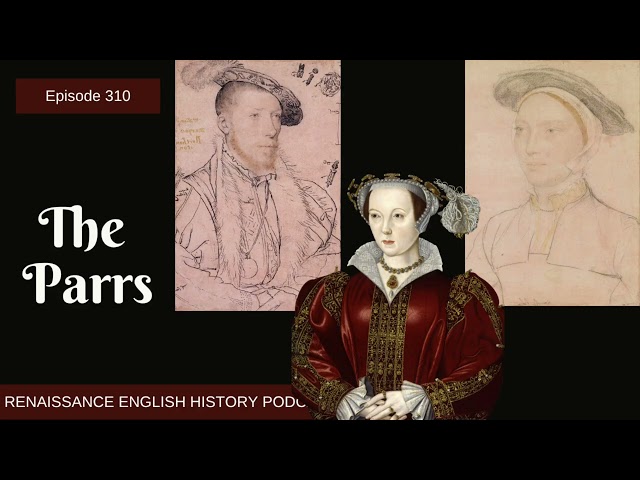
    The Parrs were one of the most fascinating yet often overlooked families of Tudor England. Unlike the mighty Howards or Seymours, the Parrs rose from the northern gentry of Westmorland to stand at the very heart of royal power. Their story is one of steady ambition, loyalty, and calculated marriages that carried them from Kendal’s windswept hills to the court of Henry VIII. Through generations of service and shrewd alliances, the Parrs transformed from local administrators into influential courtiers, culminating in the rise of Queen Catherine Parr—the last wife of Henry VIII and one of the most remarkable women of the Tudor age.

    Transcript of From Kendal Gentry to Queen Katherine Parr:

    When we think of the families that shaped Tudor England, the same names tend to dominate—the Howards, the Seymours, the Boleyns, the Nevilles, the Percys. But one clan that is often overlooked is the Parrs, a family who rose not from the ancient nobility, but from the sturdy ranks of the northern gentry.

    The Parr family fortunes were tied to the northwest of England, particularly to Kendal in Westmorland. The castle still overlooks the town in ruined form. It is often associated with the Parrs today, but they were never actually the lords of it in their own right. Kendal Castle was the seat of the Barons of Kendal, originally held by the de Ros family. The Parrs entered prominence as retainers and tenants of these barons, gradually building up their landholdings through loyal service and a series of shrewd and lucky marriages.

    By the 14th century, the Parrs were firmly established among the gentry of Westmorland. Sir William Parr, who died in 1405, served the crown in northern campaigns and anchored the family’s reputation as reliable administrators in a region frequently unsettled by raids from across the Scottish border.

    Over the generations, the Parrs gained estates through marriage connections, most importantly through links with de Ros family, who still controlled the Kendal barony. These marriages never gave the Parrs the castle itself, but they did make them some of the most prominent tenants in the area. They were wealthy, visible, and increasingly influential.

    The Wars of the Roses gave the Parrs their first real taste of national-level politics. Like many northern families, they were drawn into the rivalry between York and Lancaster. Some Parrs supported the Yorkist cause, while others showed loyalty to Lancaster. This was not unusual. For families without the resources of the Percys or the Nevilles—hedging one’s bets was a strategy for survival. After battles like Towton in 1461 or Hexham in 1464, fortunes could change overnight, and the Parrs, by keeping a foot in both camps—much like the Stanleys—managed to emerge intact no matter who claimed the upper hand.

    By the end of the 15th century, the family had positioned itself well. Their loyalty to Richard III did not prevent them from making the transition smoothly to Henry VII’s rule after Bosworth in 1485. They were not wealthy magnates, nor were they ancient aristocracy, but they were solidly placed in the gentry class, with enough estates and enough loyalty to be useful to the Tudors.

    It is worth noting that by the time Catherine Parr was born in 1512, Kendal Castle itself was already falling into decline. The family seat associated with her childhood was not the ruined fortress in Westmorland, but rather their household at Blackfriars in London, close to court. The link between Catherine and Kendal Castle is a romantic one made by later generations when the ruins became tied in local memory to the queen who bore the name of Parr.

    The Parrs’ real story in the late medieval period is not one of seizing castles or founding dynasties, but of survival and gradual progress. They were never the dominant house in the north—that honor went to the Nevilles and the Percys—but they managed to keep themselves relevant and respected. Through marriage into the de Ros family, loyal service to the Nevilles, and a reputation for steadiness and loyalty, they survived the shifting political winds of late medieval England and emerged ready to take their place on the Tudor stage.

    Sir Thomas Parr: From Gentry to Royal Court

    The real turning point for the Parr family came with Sir Thomas Parr, born around 1483. He embodied the family’s shift from northern gentry to figures of real significance at the royal court. Thomas was the great-grandson of Sir William Parr of Kendal, and he inherited not only lands in Westmorland but also a sense that the family’s future lay closer to the crown than to the windswept castles of the north. Thomas Parr’s career unfolded under Henry VIII, where he found a place in the king’s household. He held offices in the north, but more importantly, he gained connections with the great Neville family, cementing the Parrs’ link to one of the most powerful northern dynasties. His loyalty and service earned him a knighthood, and while he never became one of the kingdom’s leading magnates, he was respected as a capable and ambitious courtier.

    Thomas’s marriage proved even more influential. He married Maud Green, a woman of strong courtly connections who was serving as a lady-in-waiting to Queen Katherine of Aragon. This match tied the Parrs firmly into the circle of the Tudor court and gave their children a direct link to royal service from birth. Maud herself was a woman of learning and piety, remembered for her devotion to Katherine of Aragon and her interest in education. Through her, the Parr children were raised with an emphasis on reading, religious study, and the humanist ideals that were just beginning to spread through England.

    Thomas and Maud had three surviving children: Catherine, William, and Anne. Each of them would leave their mark on Tudor history, but their paths were shaped by the environment their parents created. At their household in Blackfriars, the children had access to teachers, books, and the intellectual atmosphere of the court. Unlike many provincial gentry families, the Parrs were raising their heirs in the heart of the kingdom’s political and cultural life.

    Sir Thomas died in 1517 when his children were still quite young. This might have spelled disaster for a family whose fortunes rested on his courtly position, but Maud Green Parr took the reins. As a widow, she made sure to continue her children’s education and cultivated their connections at court. Her role as a mother and patroness cannot be overstated. She positioned her son William to serve the king, secured Anne’s placement as a lady-in-waiting, and laid the foundation for Catherine’s eventual rise to queenship.

    In the Parr story, it was the marriage that opened doors. Thomas Parr brought the respectability of a northern gentry line, while Maud Green contributed her direct service to Queen Catherine and her close ties at court. Together they placed their children into a world far removed from Kendal’s windswept hills—one of humanist teachers, royal favor, and opportunity. Without Maud’s connections and Thomas’s ambition, Catherine, William, and Anne Parr might never have stepped so confidently into the Tudor world.

    Catherine Parr: From Noblewoman to Queen

    So let’s talk about Catherine. Born in 1512, she was the oldest child of Sir Thomas and Maud. Her childhood was shaped by her mother’s strong courtly ties and commitment to education, which was very different from most northern gentry daughters. Catherine was fluent in several languages and well read in scripture and humanist thought—unusually well prepared to take on roles of influence in a period when women were rarely encouraged to step far beyond the domestic sphere.

    Her path to Henry’s throne, however, was anything but direct. She married four times before her death in 1548, and each marriage reveals a stage in both her personal development and the family’s steady climb. Her first marriage was to Sir Edward Burgh, the son of a Lincolnshire gentleman. The match was advantageous enough to cement alliances, but it was not particularly dazzling. Catherine’s father had already passed away by this time, and her mother was still working to secure her children’s futures. Catherine lived with Burgh at his family’s modest estate, but he died within a few years, leaving her widowed in her early twenties. Far from being a setback, this gave her a degree of independence and control over her next marriage choice.

    Her second marriage was a step upward. She became the wife of John Neville, Lord Latimer, a wealthy widower nearly twice her age. As Lady Latimer, she presided over large estates in the north, cared for Neville’s children, and became deeply involved in the responsibilities of an aristocratic household.

    But this marriage also brought her dangerously close to rebellion. During the Pilgrimage of Grace in 1536, when northern Catholics rose up against Henry VIII’s religious reforms, rebels stormed Latimer’s house and forced him to join their cause. Catherine endured terrifying months when her home was overrun and she and her stepchildren were held under guard. Latimer later managed to reconcile with the crown, but the episode gave Catherine firsthand experience of the dangers of politics and religion in Henry’s England.

    Widowed again in 1543, Catherine returned to court, and there she caught the eye of Henry VIII, who by then was in his early fifties, obese, and increasingly ill. Catherine, though, wasn’t just a convenient bride. She was intelligent, compassionate, and deeply devout—qualities that Henry valued as he sought stability in his final years. Their marriage in July 1543 made her queen consort, and with it, Catherine stepped into one of the most dangerous roles in England.

    As Queen, Catherine showed remarkable political and personal skill. She worked to reconcile Henry with his daughters Mary and Elizabeth, helping to restore them to the line of succession. She also acted as regent in 1544 when Henry led a campaign in France, overseeing the kingdom in his absence—a role rarely entrusted to a queen consort. It had previously been given to Katherine of Aragon, who won the Battle of Flodden. Catherine Parr’s household became a hub for scholars, reformers, and writers. She published two devotional works, Prayers or Meditations and later Lamentations of a Sinner, making her the first queen of England—and the first woman in England—to publish under her own name.

    Catherine’s religious leanings, however, almost cost her everything. By the late 1540s, factions at court were bitterly divided between conservative and reformist groups. Bishop Stephen Gardiner and Lord Chancellor Thomas Wriothesley saw Catherine as a threat, accusing her of heresy. A warrant for her arrest was even drawn up in 1546, but Catherine’s quick thinking saved her.

    She was warned in advance about the threat and presented herself to Henry not as a reformist rival, but as a humble wife who only argued scripture to distract him from his pain. Flattered, Henry embraced her, and when the soldiers came to arrest her, he publicly rebuked them—which must have been very confusing for them, I’m sure. “Wait, hang on. You approved this? What?” Anyway, Catherine had outmaneuvered her enemies with a performance that probably saved her life.

    After Henry’s death in January 1547, Catherine married for the fourth time, to Thomas Seymour, the ambitious brother of Henry’s third wife, Jane Seymour. This marriage was risky. Thomas was politically dangerous and openly flirted with the young Princess Elizabeth, who was living in Catherine’s household. Catherine became pregnant for the first and only time, but she died in September 1548 at Sudeley Castle, likely of childbed fever, leaving behind an infant daughter, Mary Seymour, who disappears from the historical record soon after.

    Catherine’s life is often summed up with that rhyme about Henry’s six wives: “Divorced, beheaded, died; divorced, beheaded, survived,” with Catherine holding the final word. But “survived” doesn’t fully capture her. She was more than Henry’s last wife. She was a patron of learning, a religious writer, a peacemaker in a fractured family, and a survivor in a court that consumed most who entered it.

    William Parr: The Marquess of Northampton

    For the Parr family, she was the crowning achievement of generations of ambition and endurance. While Catherine’s place in history was secured through her marriage to Henry, her younger brother William Parr tried to carve out his own path to prominence. Born in 1513, William inherited the family estates after their father’s death and was shaped by his mother Maud’s determination to secure influential positions for her children. His career shows both the opportunities and pitfalls of Tudor politics for ambitious men without the backing of a great noble house.

    His early career was promising. He served Henry VIII in military and court capacities, eventually earning the title of Baron Parr of Kendal in 1539. His fortunes really began to climb under Edward VI, whose Protestant leanings matched his own. In 1547, he was elevated to Marquess of Northampton, a significant title that placed him among the leading peers of the realm.

    His Protestant sympathies, coupled with his sister Catherine’s influence as Queen Dowager, gave him access to power at the very highest level. But his personal life nearly destroyed him. His marriage to Anne Bourchier, the heiress of the Earl of Essex, should have been a triumph. The match brought him wealth, prestige, and ties to an ancient noble family, but the union quickly soured.

    In 1541, Anne scandalized society by eloping with a lover and bearing an illegitimate child. William sought a parliamentary annulment, which was granted in 1552, but the disgrace lingered. It was a rare case where a noblewoman’s actions threatened the standing of her husband. Despite the personal turmoil, William remained central to Edward VI’s regime.

    He supported the Duke of Northumberland’s attempts to secure the succession for Lady Jane Grey, another Protestant cause. When Mary claimed the throne in 1553, William paid the price for his allegiance. He was arrested for treason, stripped of his titles, and imprisoned in the Tower. For many noble families, such a fall would have ended their story.

    But like his sister Catherine, William had a knack for survival. When Elizabeth I came to power in 1558, William’s fortunes were restored. His Protestant faith, once a liability under Mary, was now a valuable asset. Elizabeth reinstated him as Marquess of Northampton, and he regained his place among the kingdom’s leading nobles.

    Though he died childless in 1571, his career mirrored all the normal swings of Tudor politics—meteoric rise, disastrous fall, and careful, calculated restoration. For the Parr family, William represented the male counterpart to Catherine’s queenship, a man who reached the peak of noble rank and influence, but whose personal and political missteps kept him forever in his sister’s shadow.

    Anne Parr: The Countess of Pembroke

    Still, his story shows just how far the Parrs had come from their gentry roots in Kendal. They now produced not only a queen but one of the realm’s highest-ranking peers. If Catherine gave the family a queen and William gave them a marquess, their younger sister Anne made sure that the Parr legacy continued through one of the most powerful noble houses of Tudor England.

    Born in 1515, Anne grew up alongside her siblings in the courtly household shaped by their mother, Maud. Like Catherine, she was well-educated and destined for a life close to the crown. She first entered court as a lady-in-waiting to Katherine Howard and later to her own sister when Catherine became queen.

    This dual service placed Anne at the very heart of the Tudor court during some of its most turbulent years. While not as politically outspoken as Catherine, her position was one of influence. Proximity to the queen meant proximity to power, and Anne knew how to move through those corridors carefully.

    In 1538, Anne made a brilliant marriage to Sir William Herbert, a rising soldier and courtier who would later become the Earl of Pembroke. Herbert was ambitious, loyal to Henry VIII, and ruthless enough to seize opportunity when it appeared. His marriage to Anne Parr bound him to a family already on the rise, and the match proved mutually beneficial.

    By the reign of Edward VI, Herbert was one of the kingdom’s most powerful men, serving on the Regency Council and commanding immense estates. As Countess of Pembroke, Anne presided over a household that became a hub of culture and patronage. The Herberts were known for their support of the arts, and Anne herself was remembered as a gracious and intelligent noblewoman.

    Anne and William Herbert had three children. The most notable was Henry Herbert, 2nd Earl of Pembroke. He married Mary Sidney, sister to the poet Sir Philip Sidney, and brought the Parr bloodline into one of the most brilliant literary circles of Elizabethan England. Mary Sidney Herbert became a renowned writer and translator in her own right, a patron of poets, and a central figure in the cultural life of the Elizabethan court. Through this union, the Parr legacy extended far beyond politics. The family that had once been tenants at Kendal Castle now stood at the very heart of the Elizabethan literary renaissance.

    Anne Parr herself died in 1552, before her son and daughter-in-law achieved their later prominence. Through her, the Parr family became entwined not only with the politics of Tudor England but also with the flowering of its culture. So Catherine Parr gave the dynasty a queen, and Anne Parr ensured that the family would live on in the poetry, patronage, and intellectual brilliance of the Sidney-Herbert circle.

    By the mid-16th century, the Parrs had risen higher than any of their Kendal forebears could have dreamed. Unlike the Howards or the Seymours, their prominence was brief, and within a generation, the name itself had almost vanished from the ranks of the peerage. The male line ended with William, the Marquess of Northampton, who died in 1571 without legitimate heirs. With him, the titles granted to the Parrs lapsed, and the family name ceased to carry weight in the nobility. His estates were dispersed, and the heraldic arms of the Parrs of Kendal became the stuff of history rather than current politics.

    The real survival of the family came through Anne Parr’s marriage to William Herbert. Long after the Parrs themselves were gone, the Herberts played major roles in the later Tudor and early Stuart courts. The Herbert Earls of Pembroke became noted patrons of literature, and the third earl was famously one of the dedicatees of the 1623 First Folio of Shakespeare.

    As for the Parr estates in Westmoreland, Kendal Castle itself had already fallen into decline by the 16th century, as mentioned, and was abandoned not long after Catherine’s death. By the English Civil War in the 1640s, the Parr name no longer featured in the struggles between the king and Parliament.

    The Herbert family, though, very much did. Philip Herbert, who was then the fourth Earl of Pembroke, was an active parliamentarian, serving as Lord Chamberlain and signing the death warrant of Charles I supporters, though he later attempted to shift allegiances when the monarchy was restored.

    Today, there are no titled nobles bearing the Parr name. The line as a distinct force in the period ended with William Parr in the 16th century. What survives are the ruins of Kendal Castle, Catherine Parr’s memory as Henry’s last queen, and the lasting prominence of the Herberts, who, through Anne Parr, made sure that Kendal’s most famous family would endure far into the Stuart era and beyond.

    Related links:

    Episode 252: The Spiritual Influence of Katherine Parr
    Unveiling History: 7 Surprising Facts about Katherine Parr – The Last Wife of Henry VIII
    Episode 93: Tudor Times on Katherine Parr 
    Rebecca Larson on Thomas Seymour

  • Top 5 Tudor Mistakes: Blunders That Cost Lives, Crowns, and Countries

    Top 5 Tudor Mistakes: Blunders That Cost Lives, Crowns, and Countries


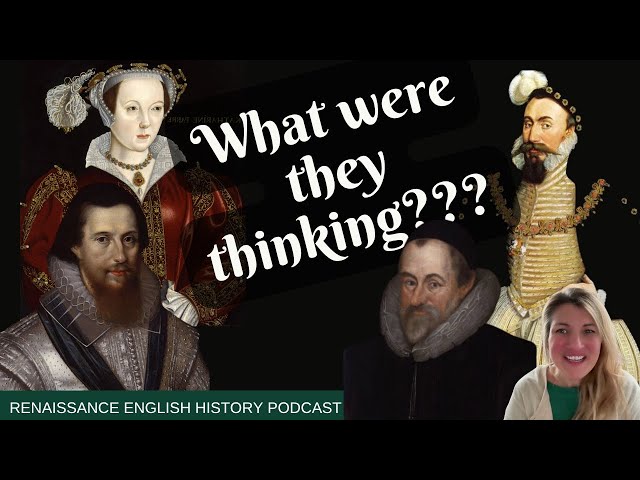
    Top 5 Tudor mistakes that changed the course of history include a mix of political missteps, personal misjudgments, and catastrophic power plays that still fascinate historians today. From botched rebellions and reckless diplomacy to deadly family decisions, these moments reveal just how perilous life could be in Tudor England. In a world where one wrong move could lead to execution or exile, the stakes were always high. This list explores the worst of the worst—decisions so bad they shaped the fate of individuals, dynasties, and nations.

    Transcript of Top 5 Tudor Mistakes: Blunders That Cost Lives, Crowns, and Countries

    Have you ever read a Tudor biography and found yourself shouting, “No, don’t do it! Don’t do it!” when the person you’re reading about is doing something that you know is not going to end well? Well, you’re not alone in that. The Tudor era is a goldmine of dramatic decisions and colossal miscalculations.

    Some of these errors cost people their lives. Others damaged England’s position on the world stage. And some were just downright embarrassing. So today, we are going to count down five of the worst Tudor mistakes.

    Some are personal disasters, like a father who managed to get his daughter executed after she had already been spared once. Others involve misguided diplomacy, espionage gone wrong, and rebellions that probably should have stayed as diary entries. Let’s dive into the top five Tudor mistakes.

    I’m delighted that you are here with me, and today, like I said, we are going to count down the top five really bad decisions of the Tudor period. I would love to know what you think about this list when we get done. Are there ones that I included that you wouldn’t have? Or are there ones that you would have included that I didn’t? Let me know in the comments after the video.

    5. Katherine Parr’s Dangerous Debate

    Let’s get started with a really bad decision: to argue theology with your very broody husband, who was very changeable and also could have you killed. And that’s what Katherine Parr did. Katherine Parr was Henry VIII’s sixth and final wife, and unlike her immediate predecessor, she was really, really intelligent. And she somehow managed to live to tell the tale of being married to Henry, but just barely, by the skin of her teeth.

    Katherine was a reform-minded Protestant who enjoyed debating religious doctrine. The problem, of course, was that her husband had zero tolerance for being contradicted, especially by a woman, and especially when he was in a bad mood, which was often, thanks to his festering ulcers and general paranoia.

    Katherine also had a lot of enemies among the conservatives at court who wanted to bring her down and basically tear apart the Protestant movement anyway. So, you know, it really wasn’t a good time to be arguing theology in general when you’re queen, and especially not when you’ve got a husband like Henry.

    According to John Foxe’s account, Katherine got into theological discussions with Henry and pushed her evangelical views a bit too far. The conservative Bishop Gardiner saw an opportunity and convinced Henry that she was becoming a subversive influence.

    A warrant for her arrest was drawn up. Now, Katherine was tipped off just in time. She went into full damage control. She threw herself at Henry’s feet, claimed that she only ever argued to distract him from his pain and to benefit from his superior wisdom. She was, after all, a woman, and she desperately needed his guidance.

    And that flattery hit the spot. When the guards arrived to arrest her, Henry actually sent them packing with a beating. Moral of the story: never assume that you can debate with Henry VIII, even if—and maybe especially when—you are his queen.

    4. Essex’s Rebellion

    Let’s talk about the number four spot: Essex’s Rebellion, a vanity project that kind of got out of hand. By the late 1590s, Robert Devereux, Earl of Essex, had fallen hard from favor. His campaign in Ireland had been an expensive catastrophe. Troops were dying of disease, morale was crumbling, and Essex quietly negotiated a truce with the rebel leader Hugh O’Neill—behind Elizabeth’s back, no less. And then, in a move that somehow managed to be both reckless and theatrical, he disobeyed orders and rushed back to England.

    Still in his travel-stained gear, he burst into Elizabeth’s private chambers unannounced. For a queen obsessed with image and protocol, this was beyond shocking. She kept her cool, but Essex had crossed the line, and everyone knew it.

    What followed was one of the most misguided coups in English history. In February 1601, Essex raised a pitiful rebellion—that really is the only word to describe it—hoping that the people of London would rally to his cause and help him overthrow Robert Cecil and reclaim his place by the Queen’s side.

    Except they didn’t, and the whole thing fizzled out by dinnertime. Essex was arrested, tried, and executed. His mistake: arrogance, misreading the mood of the nation, and most fatally, thinking Elizabeth would forgive him one more time when she didn’t.

    3. The Lopez Affair

    Let’s talk about number three: the Lopez Affair, spy games, and scapegoating. Dr. Rodrigo Lopez was Queen Elizabeth’s personal physician. He was also a Portuguese-born crypto-Jew, a skilled courtier, and, just to complicate things, a part-time spy—a little side hustle going on. It was a career that required a lot of caution, and unfortunately, Lopez miscalculated just how dangerous Elizabeth’s court could be.

    After the death of his patron, Francis Walsingham, Lopez kept playing the espionage game, juggling communication with Spanish and Portuguese agents, trying to broker peace talks between Elizabeth and Philip II, likely with dreams of retirement and a hefty reward.

    Enter Robert Devereux, the aforementioned Earl of Essex, who we just talked about—bold, ambitious, and still eager to prove his loyalty. Essex accused Lopez of plotting to poison the queen, presenting it as a Spanish-backed conspiracy. Was there a real plot? Almost certainly not. But Lopez’s web of secretive dealings gave Essex just enough threads to twist into a rope.

    Lopez was convicted of treason, and he was hanged, drawn, and quartered in 1594. He died protesting his innocence, crying out that he loved the queen as much as he loved Jesus Christ. That line, considering he was a crypto-Jew, only fueled antisemitic mockery. Lopez’s fatal mistake was not treason. It was thinking that he could outmaneuver the power players without protection.

    His protection had died—Francis Walsingham was gone—and so too was the idea that Elizabeth’s court had room for independent operators. There were no independent contractors at Elizabeth’s court.

    2. The Rough Wooing

    All right, number two: the Rough Wooing. Henry VIII tries diplomacy with a sledgehammer. Let’s talk about a mistake that left scorch marks across Scotland. In 1542, James V had died, leaving behind his six-day-old baby, Mary, Queen of Scots. Henry VIII, ever the opportunist, saw a golden opportunity: marry his son Edward to baby Mary and unite the two kingdoms under English control. Easy peasy, lemon squeezy. He even got a treaty signed—the Treaty of Greenwich—which said that Mary would be sent to England when she was ten years old.

    Now, Henry, being Henry, gets impatient. He demands that the baby be handed over immediately, which naturally enrages the Scots. Of course it does. They tear up the treaty before it is even ratified, and instead of dialing it back a little bit, like you might do, Henry does not. He goes full scorched earth. Literally.

    He launched a brutal campaign through the Borders, burning, looting, pillaging, and general rampaging, known later as the Rough Wooing. Because, of course, there is no better way to get a girl to pay attention to you and marry you than to make war on her country.

    It is a disaster. Far from winning hearts and minds, Henry’s violence pushed the Scots straight into the arms of the waiting French, and Mary was whisked off to France, betrothed to the Dauphin. England lost any real chance of a peaceful union.

    This, of course, was not just a failed diplomatic plan. It was a flaming public relations nightmare that fueled resentment for generations. Now, of course, England would be united eventually under that same line when Mary’s son, James VI of Scotland, became James I of England and there was the Union of the Crowns a hundred years later. But it was not the way Henry had intended, and the Rough Wooing certainly cost England a lot in treasure, lives, and general goodwill.

    1. Jane Grey’s Father’s Fatal Rebellion

    Now, what I think is the number one dumb move of the Tudor period is Jane Grey’s dad starting a rebellion while she is in the Tower. Let’s talk about it. Lady Jane Grey had already lost everything—her crown, which she did not even want, her freedom, and most likely her future—when her father decided to make things worse.

    After Mary I’s succession in 1553, Jane, who had reigned for just nine days, was imprisoned in the Tower of London. Although she had been the figurehead of the attempted Protestant succession, Mary seemed inclined to spare her. She recognized that Jane was young and was probably a pawn, manipulated by more powerful figures, including her own father, Henry Grey, Duke of Suffolk.

    But then, in early 1554, Jane’s father decided to throw his lot in with Wyatt’s Rebellion, a rising meant to stop Mary’s marriage to Philip of Spain. It failed spectacularly. The rebels were scattered and Suffolk was captured. The fallout was swift. Jane was already a figurehead of one failed coup, and suddenly she became a liability. She and her husband, Guilford Dudley, were executed soon after.

    It is hard to imagine a more dumb, self-defeating move. Your daughter is in the Tower awaiting judgment, and you launch a rebellion against the woman who is holding her fate in her hands. If Jane had any chance of survival at all, her father’s rebellion certainly sealed her doom.

    I mean, it would have been really smart to go to Mary and say, “Hey, there’s this rebellion being planned. Hey, why don’t you also release my daughter?” But, you know, that did not happen. Bad decision-making. So many bad decisions all around.

    Anyway, Tudor England did not have much room for error. One bad decision could cost you, or your daughter, their head and spark a war. These five blunders show how ambition, vanity, and really bad timing could unravel careers, cost lives, and change the course of history. So next time you are thinking about a decision, weighing options and thinking, “Ah, surely it will work out, it will be fine,” the Tudors thought that too.

    Anyway, let me know in the comments which other bad mistakes or moves you would have included, and which you think should be added to the list. Maybe we will do a follow-up on this.

    Related links:

    Episode 093: Tudor Times on Katherine Parr
    The Tumultuous Relationship of Elizabeth I and Robert Devereux
    Episode 157: The Rough Wooing
    Elizabeth I’s Spy Network: The Hidden Web that Safeguarded a Queen
    The Execution of Lady Jane Grey

  • Katherine Willoughby: A Tudor Survivor and Protestant Champion

    Katherine Willoughby: A Tudor Survivor and Protestant Champion


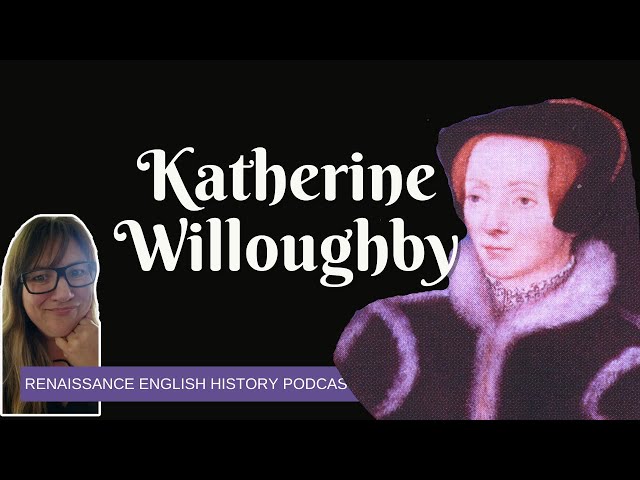
    Katherine Willoughby was one of the most fascinating and influential women of the Tudor period, yet she’s often overlooked in mainstream history. A noblewoman, reformer, and close friend of Queen Katherine Parr, Katherine Willoughby lived through some of the most turbulent decades in English history. Her life was marked by political intrigue, personal tragedy, and unwavering faith. From navigating the dangerous courts of Henry VIII and Mary I to going into exile for her Protestant beliefs, Katherine Willoughby’s story is one of resilience, intelligence, and courage.

    Let’s explore her remarkable life, her legacy, and why her story still resonates today.

    Transcript of Katherine Willoughby: A Tudor Survivor and Protestant Champion

    Today we’re going to talk about a woman who—I don’t know why—hasn’t come up more on my podcast, why I haven’t done more with her: Katherine Willoughby. She makes these kinds of ancillary appearances with Katherine Parr and Charles Brandon, but I don’t think I’ve ever done a full video or a full episode on her. That’s really quite negligent on my part.

    Katherine Willoughby was a remarkable woman of the Tudor period. She’s remembered for her resilience, her intelligence, and her influence. The Tudor court in the 1540s was no joke—it was super dangerous. She was a Protestant, a very strong Protestant, and somehow she managed to survive and thrive. She even managed to survive under the court of Mary I—though, of course, she had to leave. We’ll talk about that. But she lived a remarkably long life.

    Her friendship with Katherine Parr, the last wife of Henry VIII, is something that’s still remembered. They were kind of besties—often remembered together. There were also actually rumors that she might have been someone Henry wanted to marry if things hadn’t worked out with Katherine Parr. So, she was a remarkable, remarkable woman.

    Let’s go back to her beginnings, though. She was born in 1519 to William Willoughby—he was the 11th Baron Willoughby de Eresby—and Maria de Salinas. You may have heard Maria de Salinas’s name; she was a lady-in-waiting who came to England with Katherine of Aragon, married William and had Katherine Willoughby.

    Katherine was their only child, and her father’s substantial estate made her one of the wealthiest heiresses in England. William had estates in Lincolnshire, Norfolk, and Suffolk. Katherine’s mother, Maria, had traveled—like I said—to England as part of Katherine of Aragon’s entourage, so there were very deep ties to the royal household there as well.

    Maria de Salinas remained loyal to Katherine of Aragon, even as Katherine was being put aside—basically sent into exile—when Henry was getting involved with Anne Boleyn. Maria stayed close to her, even defying Henry VIII’s orders to stay away. She continued visiting Katherine and stood by her, which shows she was also a very strong woman who wasn’t going to be told what to do. That strength was clearly reflected in her daughter.

    Katherine’s father died tragically in 1526, when she was only seven. This was her first major challenge. She became the subject of an inheritance dispute with her uncle, Sir Christopher Willoughby, who contested her right to inherit her father’s estates—because she was a girl.

    Her mother, Maria, fought vigorously to secure Katherine’s inheritance, engaging in lawsuits in both the Court of Chancery and the Star Chamber. This battle really highlights how precarious a position women—especially wealthy aristocratic women—in Tudor England held. Being rich gave you a lot of power and privilege, but that could be taken away. People could—and did—challenge it. You needed strong guardians to protect your rights, especially if you were a minor, and even more so if you were female.

    Katherine’s wardship was eventually purchased by Charles Brandon, Duke of Suffolk—Henry VIII’s bestie. At the time, Charles Brandon was married to Henry VII’s sister, Mary Tudor. Initially, he intended for Katherine to marry his son, Henry, Earl of Lincoln. But then Mary Tudor died, and Charles Brandon saw an opportunity. He decided to marry Katherine himself to secure her fortune. So, originally, Katherine was meant to be betrothed to Brandon’s son. But after Mary Tudor’s death, Brandon stepped in and said, “Well, I’ll just marry her myself and get that money.”

    So, Katherine was just 14 years old when they got married. Charles Brandon was nearly 50 at this point. But the marriage wasn’t necessarily all bad for Katherine Willoughby. It was a significant step up for her in terms of rank. It was also going to protect her inheritance, and it was a strategic alliance for Brandon, who secured her considerable wealth.

    Despite the very significant age gap and the potential for scandal, the marriage actually proved to be a very interesting and successful partnership—both personally and politically. Katherine’s marriage to Charles Brandon brought her to the heart of the Tudor court. She was now the wife of the king’s close friend and ally, and she was frequently in the presence of Henry VIII and his inner circle.

    Katherine quickly adapted to the complexities of court life, navigating all the politics, alliances, and rivalries with remarkable skill. She was initially raised, of course, as the daughter of Maria de Salinas—a very devout Catholic. But her religious views began to shift toward Protestantism. This transformation was influenced by the growing reformist ideas at court and her own personal experiences. The Reformation was gaining momentum, and Katherine found herself increasingly aligned with the new religious thinking.

    Her marriage to Charles Brandon was reportedly a very happy one. They had two sons—Henry and Charles—born in 1535 and 1537, respectively. As the Duchess of Suffolk, she held a significant role at court. She attended major events and was a regular at royal celebrations and ceremonies. Her beauty, intelligence, and wit made her a prominent and admired figure.

    Despite the age difference between her and Brandon. Like I said, her marriage to Charles Brandon was characterized by mutual respect. They really seemed to have a partnership—something Brandon hadn’t necessarily enjoyed with Mary Tudor or the other women he had been engaged to or involved with earlier in his life. Charles Brandon had a lot of really iffy involvements.

    I think—someone will correct me in the comments if I’m wrong—I’m pretty sure there was a woman Charles Brandon was going to marry, and then he decided not to, in order to marry that woman’s mother, who had more money. Or maybe it was the other way around. Either way, he had some very, very iffy, sketchy romantic dealings in the early part of the 16th century.

    There were also rumors about him at the court of Margaret of Austria, which have made their way into several historical fiction books as well—that they had a little fling going on when Anne Boleyn was there as a young child. So Charles Brandon had a very, kind of—shall we say—tumultuous relationship history.

    But he seemed—maybe because of his older age—he seemed to settle in with Katherine, and they really seemed to have an interesting partnership and mutual respect for each other. Given the age difference—which feels gross to us now and even for the time was unusual—it wasn’t unheard of in that period. So we need to remember that as context.

    Together, they actually managed to maintain their favor with Henry VIII. Charles Brandon was the only person who could really talk to Henry VIII honestly and still keep his head, right? That’s how we remember him today. And Katherine Willoughby was similar—she maintained her favor with Henry VIII despite some challenges, especially once she became close friends with Katherine Parr.

    Katherine Parr became Henry VIII’s sixth wife in 1543. Both women shared a strong commitment to the Protestant faith and quickly became allies in the religious reform sweeping through England. Their bond was strengthened by shared experiences and mutual support. Katherine Parr had been a widow by that point a widow and as she entered her marriage with Henry, she and Katherine Willoughby found support in one another.

    Now, Katherine Parr’s influence on the king was instrumental in protecting many reformers from persecution. This was the period after Thomas Cromwell had been executed, and in this seesaw of religious control, Stephen Gardiner and the Catholic faction were on the rise again, gaining more power without Cromwell or the Protestant faction there to check them.

    Katherine Parr really provided a moderating influence on Henry, helping to protect some of the reformers at court from persecution. The two women created a network of like-minded people at court, advocating for religious reform and supporting one another. Their friendship was not just a personal connection—it was a strategic alliance that helped them navigate the dangerous waters of Henry VIII’s court.

    So Henry’s temper and political maneuvers often posed threats to the safety of those around him, including Katherine Parr. As we know, she was almost arrested and possibly persecuted as a heretic. The two Katherines stood by each other, looking out for one another. Katherine Willoughby was one of the people who warned Katherine Parr that she was in danger.

    Their shared commitment to their faith and to one another provided a source of strength and stability in a highly volatile environment. That alliance was critical during the final turbulent years of Henry’s reign. As the king’s health declined, he was in a terrible mood, and all the political factions were vying for power.

    Charles Brandon died in 1545, and Katherine became a prominent widow at court. Now free of her husband’s influence, she used her status and considerable wealth to support the Protestant cause. Her home became a sanctuary for reformers and scholars—a hub of intellectual and religious activity.

    Her patronage extended to many of the leading figures of the Reformation. She provided financial support, shelter, and a platform to those advocating for religious change. People like John Foxe, in his Acts and Monuments, celebrated her contributions to the reformed faith. Foxe’s work, of course, chronicled the sufferings of Protestant martyrs, and he highlighted Katherine’s pivotal role in the Protestant movement in England.

    At this point, Katherine was no longer just the wife of a powerful man—she was a formidable figure in her own right. Her advocacy for religious reform and her support for the Protestant cause helped shape the religious landscape of England.

    There were setbacks and struggles as well. For example, when Anne Askew was put to death, the entire plot around her was seen by many as a possible attempt to bring down Queen Katherine Parr. Anne Askew and Katherine Parr moved in the same Protestant circles, and it was believed that if the authorities could get to Anne, they might be able to implicate Katherine Parr. Katherine Willoughby would also have been in danger at that point, but Anne Askew never gave up their names, and both women came through the episode unscathed.

    Under Edward VI, Katherine Willoughby would’ve been safe—Edward was a strong Protestant and continued the Reformation, even pushing it to a whole new level. But then he died, and we got Mary I, who was of course a committed Catholic. That shift put Katherine’s life in immediate danger in 1553. She was famous for her outspoken Protestant beliefs and her influential position at court.

    Oh—and I forgot to mention this earlier when we were talking about Stephen Gardiner in the 1540s. Katherine Willoughby actually had a dog that she named “Gardiner” after Stephen Gardiner, and she reportedly loved giving it orders—saying she was bossing Gardiner around. That’s the kind of sharp wit and humor she had!

    So yes, she was very well known as a committed Protestant, and she knew that she and her family were in real danger. As a result, they fled England. By this point, she had remarried—and this time, she married for love. Her second husband was Richard Bertie, who had been a member of her household staff. It’s a story somewhat reminiscent of Owen Tudor marrying Katherine of Valois—one of those rare Tudor love matches.

    He had been part of her staff—apparently she trusted him deeply because he had been her gentleman usher. That was his role, and over time, they fell in love and married for love. It was a true love match. So, they went into exile. They fled to Poland. Katherine and her husband Richard found refuge under the protection of King Sigismund II, who offered them safety and support during their time away from England.

    One of the things that might have made it easier for Katherine to leave was the devastating loss of her sons during the outbreak of sweating sickness in 1551. Both boys had been students at Cambridge. When the outbreak began, Katherine initially arranged for her sons and their cousin to go to Kingston, several miles from St. John’s College, where they were studying.

    But after their cousin George Stanley died, she had her sons moved to Buckden, a little farther away. Tragically, on the same day—July 14, 1551—both Henry and Charles Brandon died of the sweating sickness within half an hour of each other. It’s incredibly sad. One of their tutors wrote:

    “They both together were in one house, lodged in two separate chambers, and almost at one time both sickened and both departed. They both died Dukes, both well learned, both wise, and both right godly.”

    It was a profound loss. And it may have made it easier for Katherine to go into exile—knowing she wasn’t leaving her children behind. I mean, truly, how do you even keep going after that? It’s like—what’s the whole point of life then, right? So… all right. Off to Poland. Whatever. That was the greatest tragedy of her life.

    Life in exile, of course, was incredibly difficult. We can’t even begin to imagine what it would have been like to just leave everything behind and go to a foreign country. But Katherine was resilient. She remained steadfast in her Protestant faith. She continued to support and inspire the reformist cause from abroad. She and Richard ended up living in various parts of Europe, but they maintained their religious practices and stayed closely connected to the broader Protestant network at the time.

    So then Mary I dies at the end of their exile, and Elizabeth I becomes queen. She’s a Protestant, and Katherine and her family are able to return to England. Once she came back, she resumed her support for Protestant causes.

    She was actually quite disappointed that the Elizabethan Settlement—I’ve talked before about how it was kind of the perfect compromise because neither side was particularly happy with it—didn’t go far enough in its Protestantism. She had hoped it would lean more toward the Puritan side, but it did not. Still, she remained a respected figure, continuing to advocate for further religious reform.

    She died in 1580, leaving behind a legacy of courage, resilience, and unwavering commitment to her beliefs. Her story is a powerful example of how one woman navigated the treacherous waters of Tudor politics and religion, standing firm in her convictions and making a lasting impact on history.

    What you thought about Katherine Willoughby. What do you think of her? Is she inspiring? Does she make you want to get up and follow your own dreams and beliefs even more?

    Related links:
    Two Katherines of the Tudor Era: A Story of Friendship and Faith
    María de Salinas: The Unyielding Confidante of Catherine of Aragon
    Sarah Bryson on Charles Brandon
    Tony Riches on Charles Brandon, Mary Tudor, and Katherine Willoughby

  • Queen Regents of England: Warrior Queens, Scholars, and Stateswomen

    Queen Regents of England: Warrior Queens, Scholars, and Stateswomen


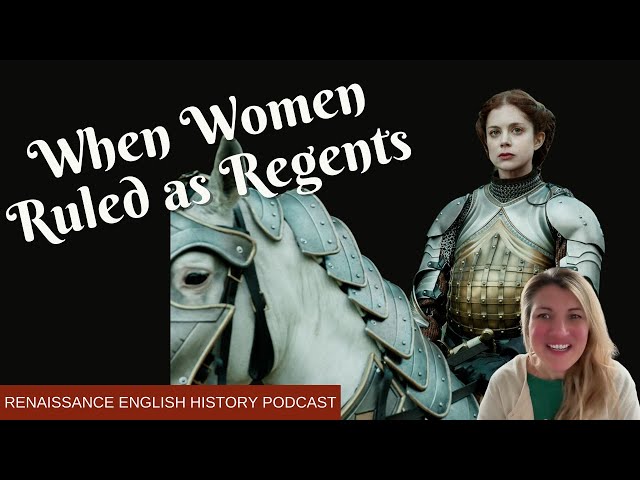
    Queen regents of England were more than just royal placeholders—they were powerful women who governed the kingdom in times of crisis, military campaigns, and political upheaval. During the reign of Henry VIII, two such women, Katherine of Aragon and Katherine Parr, were entrusted with the authority to rule England in the king’s absence. Acting as true regents—not figureheads—they made military decisions, issued royal proclamations, and maintained control over state affairs.

    Let’s explore the remarkable stories of these queen regents, comparing their leadership styles and highlighting their crucial roles in Tudor governance. From battlefield victories to navigating dangerous court politics, these queens redefined what it meant to wield power in a male-dominated monarchy.

    Transcript of When Women Ruled: Queen Regents of England: From Eleanor of Aquitaine to Katherine Parr

    Today, we are going to talk about that time Katherine Parr ruled England when Henry was away in France—and about regents in general. So, Queen Regents—because Katherine of Aragon also ruled when Henry was in France and had a stellar military victory at the time as well with the Battle of Flodden. We’ll get into when the two Katherines were regents and talk about the differences between the two and other related topics.

    Picture this: Henry VIII is off to France, decked out in golden armor, dreaming of conquest and glory—another corpus, if you will. But back in England, it’s not a council of dukes or earls running things—it’s his wife. Twice during his reign, Henry left his queen in charge of the kingdom—not just as a figurehead, but as an actual regent, issuing orders, raising troops, and managing the business of ruling the country.

    So today, we’re going to talk about two Queen Regents: Katherine of Aragon and Katherine Parr. They were very different women, but both were trusted with the highest authority a Tudor queen could wield.

    Henry VIII fancied himself a warrior king, right in the tradition of Henry V. He dreamed of continuing the Hundred Years’ War and returning England to its glory days—Cressy, Agincourt, and all of that. So, when the opportunity came to fight France, as it did in both 1513 and 1544, he grabbed his armor and headed off to Calais. But someone had to keep England running—and not just symbolically.

    There was the constant threat of Scottish invasion in the north, rebellions at home, and rival courtiers jockeying for power. In both cases, Henry turned to his wife—not to a council, not to a duke or nobleman—but to the queen. And these weren’t just ceremonial appointments. The title of regent actually meant wielding real authority in Henry’s absence.

    Both Katherines issued royal proclamations under the Great Seal, maintained correspondence with foreign ambassadors, and had the final say in matters of state. It was one of the few times under Henry’s reign—and in early Tudor history—when women held that kind of power.

    Of course, later we would see reigning queens themselves: Mary I, Elizabeth I. But under Henry, for the first time, we saw powerful Queen Regents—women wielding power not behind the scenes, but right out in the open.

    Now, a couple of examples before we get started of other Queen Regents in English history. One very famous one was Matilda of Scotland. She was the wife of Henry I in the early 12th century. She was the daughter of Malcolm III and St. Margaret of Wessex. She was highly educated and deeply involved in government. When Henry I went to Normandy, she acted as regent. Chroniclers described her presiding over the courts and issuing writs. In practice, she often governed England during Henry’s absence, though not always with the formal title of regent.

    There was also, very famously, Eleanor of Aquitaine—legendary in her own right. She was named regent multiple times during Henry II’s campaigns in France. She held enormous power in both England and Aquitaine, issued charters, managed royal business, and oversaw governance. She even served as regent for her son, Richard I, when he was on crusade.

    During that time, she also raised ransom money for Richard when he was captured after the crusade. That regency was much more formal, and she was often referred to in contemporary documents as holding regal authority.

    Another very famous queen regent was Isabella of France. Now, this was more complicated. She was the wife of Edward II and famously led a rebellion against her husband. She then ruled England as regent for her son, Edward III, from 1327 to 1330, alongside her lover, Roger Mortimer. Although she wasn’t named regent in a formal legal sense, she absolutely held the reins of power and controlled royal policy and government during her son’s minority.

    Of course, Edward later took power and became an incredibly strong king in his own right, but Isabella was a regent for a time following the rebellion against her husband. So that one’s a bit more complicated—she wasn’t named and trusted by her husband; she actually overthrew him.

    Those are some examples of queen regents in English history leading up to Henry VIII. But Henry is kind of unique. This is something that often gets lost in the larger story of Henry and his six wives and his tyranny and narcissism—but he actually liked strong, powerful women. When you look at his wives and the women he was attracted to, he consistently sought out intelligent women, and he trusted his wives more than many other kings of the time did.

    The first time this was evident was in 1513, when Henry invaded France and named Katherine of Aragon as regent. She rose to the occasion with dramatic flair.  Of course, she was the daughter of Isabella of Castile and Ferdinand of Aragon—the warrior monarchs of Spain who led the Reconquista and ultimately expelled the Moors, reclaiming Spain after centuries of conflict. So, she had this warrior mother to look up to, and she totally embraced that legacy.

    That summer, England was invaded by Scotland. James IV saw his chance while Henry was away and marched south with a massive army. Katherine was six months pregnant and dressed in armor. She rallied troops in the north, personally oversaw military logistics, sent urgent dispatches, coordinated defenses, and even threatened one bishop who was dragging his feet in raising troops. While she didn’t physically lead the troops into battle herself, she was very much involved in the campaign.

    That led to the Battle of Flodden, which was a crushing English victory. James IV was killed, along with much of the Scottish nobility. Katherine wrote triumphantly to Henry and sent him part of the Scottish king’s bloodied coat as a trophy. She supposedly wanted to send the body itself, but it was deemed a bit too grotesque.

    She wasn’t just filling in—she was ruling in the mold of her mother, Isabella, who had physically led armies herself. Katherine of Aragon’s regency wasn’t passive. It was active, hands-on, and laced with martial pride.

    Then let’s talk about Katherine Parr. Fast forward to 1544: Henry was older, more paranoid, more murderous—and once again, he set off for France, this time to besiege Boulogne. He left Katherine Parr in charge, but by now, the stakes were different. The political climate was more dangerous. Katherine had to walk a far tighter line.

    She wasn’t just Henry’s sixth wife—she was also his nurse, his companion, and his political ally. He trusted her enough to name her regent, and she accepted the role with care. While Katherine of Aragon marched troops and sent bloody trophies, Katherine Parr governed through council meetings, legal decrees, and diplomatic correspondence. She worked closely with Thomas Cranmer and senior officials to keep the machinery of government stable.

    She also had to navigate the increasingly tense religious divide at court—keeping reformist allies close while avoiding the wrath of conservative factions who wanted her gone. Of course, this is the period when Stephen Gardiner was trying to have her arrested (he also tried to have Thomas Cranmer arrested), so it was a particularly tricky time for her. She didn’t command armies, but she survived the court intrigue, the plots, and the whispers against her—which, frankly, in 1544, might have been even more impressive.

    So, Katherine of Aragon ruled like a warrior queen—trained from birth to be a ruler, proud of her bloodline, and ready to make war if needed. Katherine Parr, by contrast, was a scholar, a stepmother, a reformist. She ruled with precision, intellect, and emotional intelligence.

    Both regents held power, but their styles could not have been more different. One fought enemies at the border; the other outmaneuvered them in council meetings. And while Katherine of Aragon had a glorious military victory to write to Henry about, Katherine Parr managed something even more unusual and rare in Henry’s world—she ruled, and she lived to tell the tale.

    We often think of Henry’s wives as tragic figures or political pawns, but twice the king trusted a queen to take the throne in all but name. They didn’t just keep the seat warm—they ruled. And in doing so, they reminded everyone: sometimes, the smartest move Henry made was leaving.

    Related links:
    Episode 252: The Spiritual Influence of Katherine Parr
    Episode 47: Tudor Times on Katherine of Aragon

  • Katherine Parr’s Posthumous Horror

    Katherine Parr’s Posthumous Horror


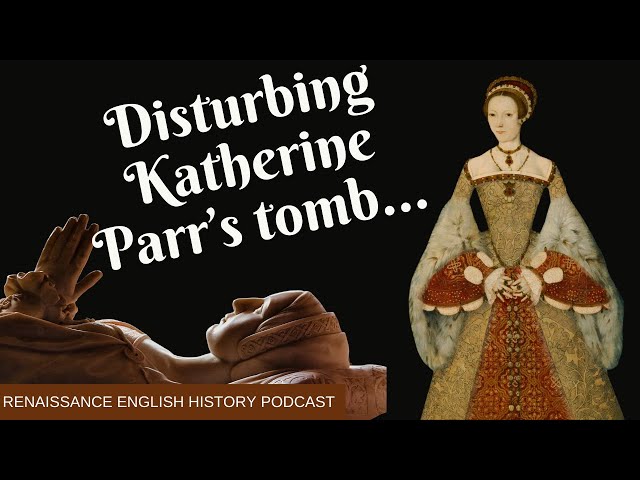
    Katherine Parr’s Posthumous Horror is one of the most unsettling and overlooked tales in Tudor history. Though she survived Henry VIII—becoming the only one of his six wives to do so—her tragic fate didn’t end with her death. After dying from childbirth complications in 1548, Parr was hastily buried at Sudeley Castle.

    But centuries later, her peace was shattered when her coffin was rediscovered—and repeatedly disturbed—by curious onlookers, souvenir hunters, and even grave robbers. From macabre exhumations to shocking abuse of her remains, the story of what happened to Katherine Parr’s body after death is as haunting as it is fascinating.

    Transcript of The Disturbing Fate of Katherine Parr’s Body

    Today we are going to talk a little bit about the shocking afterlife of Katherine Parr. Katherine Parr did not rest in peace. And we’re going to talk a little bit about what happened with her remains, which is a fascinating story, if a bit macabre.

    Katherine Parr famously survived marriage to a King, notorious for discarding spouses by execution or divorce, but Katherine’s survival did not spare her tragedy. Just over a year after Henry’s death, she herself died from childbirth complications at Sudeley Castle with her daughter Mary Seymour that she had with Thomas Seymour.

    Hurriedly buried, Katherine might have expected a peaceful rest, but history as it so often does, had some other ideas. Instead, her remains became part of a chilling centuries-long saga of macabre discoveries, disturbing exhumations and Victorian-era souvenir hunters. Katherine Parr’s afterlife is one of Tudor England’s most bizarre and unsettling tales.

    So on August 30, 1548, Katherine Parr gave birth to a daughter, Mary Seymour at Sudeley Castle. Joy turned swiftly to tragedy when Katherine contracted purple fever, a deadly infection common in childbirth. Within days, the vibrant former queen was delirious, accusing her ambitious husband, Thomas Seymour of neglect and cruelty.

    Katherine died early in the morning on September 5, 1548. Her burial held the very same day, lacked any kind of royal ceremony or grandeur. There was no solemn procession, funeral effigy, nor lying in state, surrounded by mourners and candles.

    Instead, Katherine was hastily wrapped in waxed linen, sealed in a lead coffin, and quietly interred at Sudeley Castle’s Chapel. With startling speed, the memories of Henry VIII’s last queen faded into obscurity. After the English Civil War, the chapel crumbled, leaving Katherine’s resting place forgotten beneath ivy and rubble until curiosity got the better of history.

    In the summer of 1782, local resident John Lucas stumbled upon Katherine Parr’s lost Tomb at Sudeley, finding her coffin buried just two feet beneath the chapel floor. He couldn’t resist peeking inside. When Lucas pried opened the coffin, he made a stunning discovery.

    Katherine’s body appeared almost perfectly preserved with skin, still white and moist as if she had died just days ago rather than two centuries before. Unable to leave this eerie miracle undisturbed, Lucas took macabre souvenirs, snipping locks of Katherine’s hair plucking fabric from her gown, even pulling a tooth from the late Queen’s mouth. It’s upsetting.

    Tragically, his curiosity came at a high cost. By opening the coffin, he inadvertently let air into the sealed tomb, rapidly accelerating decay. His discovery soon drew even more attention to Katherine’s resting place, beginning decades of grizzly invasions into the Queen’s afterlife. Unfortunately, the curiosity sparked by Lucas’s discovery attracted an unsettling parade of visitors eager to glimpse the former queen.

    In 1783, just a year later, castle steward of Lord Rivers reopened her coffin meticulously, noting her fine clothing, delicate proportions, and traces of her once celebrated beauty. Each intrusion sped up the decay and soon her remains became less a historical wonder and more a morbid spectacle.

    Most shocking violation came in the 1790s when drunken grave diggers hired to rebury Katherine securely, grotesquely abused her corpse. Reportedly, they removed her body from its coffin, danced with her skeleton remains, tore out some hair and teeth as gruesome souvenirs, and then buried her upside down.

    Katherine, once England’s dignified queen became a macabre Victorian novelty victim to a strange cultural obsession with Tudor relics. Her sacred resting place turned into a grim tourist attraction, visited more out of horrified fascination than any kind of genuine respect.

    Finally, in 1817, a local rector determined to put an end to Katherine’s posthumous ordeal, so this is 20 some odd years, 20, 30 years after the initial discovery, they had to search again.

    People had forgotten where she’d been buried, so they finally found her reduced largely to bones at this point, her remains and she was buried upside down in a makeshift grave. Remarkably, an ivy wreath had naturally grown around her skull, forming an eerie green crown.

    In 1861, Katherine was at last, laid to rest properly, reinterred in a beautiful neogothic tomb within the restored St. Mary’s Chapel at Sudeley. Here, beneath an elegantly carved marble effigy, Katherine’s tumultuous afterlife came to a peaceful close.

    Her once magnificent form had become mere dust. Yet she finally received the dignity denied to her for centuries. Today, visitors at Sudeley can pay respects at her tomb, marvel at her writings and think about a Queen whose extraordinary life and even more extraordinary posthumous afterlife embodies the enduring fascination and occasional cruelty of history itself.
    So there we go. Poor Katherine Parr. She couldn’t even rest in peace. This is why we can’t have nice things. It’s unfortunate for Katherine, but interesting nonetheless.

  • Henry VIII vs. John Lambert: A Tudor Debate on Heresy

    Henry VIII vs. John Lambert: A Tudor Debate on Heresy

    Henry VIII and John Lambert faced off in one of the most extraordinary moments of the English Reformation—a public debate that revealed the king’s fierce commitment to religious authority. When Lambert challenged the doctrine of transubstantiation, Henry didn’t delegate the response to bishops or scholars; he took the floor himself. This dramatic encounter wasn’t just about theology—it was a display of power, a warning to reformers, and a turning point in the battle over England’s spiritual future

    Rough transcript of The Heretic and the King: Henry VIII Debates John Lambert in Wolf Hall

    Today, we are going to do another Wolf Hall Reaction video. The second series is on in the US now. It was on in the UK in the autumn. I have a whole playlist of all the reaction videos that I did when it was on in the UK. And I’m also doing some more now this go around because you can never have too much Wolf Hall.

    So last night was Episode 4. There was a whole lot happening. Cromwell has a daughter. Jane Seymour dies. I did a whole talk about that, a whole video about that as well, and talks more about that in another video later this week. But today I want to talk about the debate that Henry VIII did with John Lambert.

    Henry VIII and the Reformation

    This is an interesting period in the Reformation. The English Reformation was never clean. It was very messy because Henry VIII was never really a Catholic right. He just didn’t want the Pope telling him he could or couldn’t get divorced. So Henry VIII never denied transubstantiation, which is the miracle of the mass, that the bread and wine become the body and blood of Christ.

    That was something Henry hung on to his whole life, and he would execute people for heresy for denying that. But he also didn’t like the straight-up Catholics there. There was one week 1544/45, I think, where he executed Catholics for being too Pope-ish obviously. And and in the same week he executed Protestants for heresy.

    So you really couldn’t win with Henry, like in a lot of things. And we start to see that and he waffled back and forth. At one point, he released the English Bible, which was a monumental event. Every church was supposed to have a Bible in English so the people could have the word of the Lord available to them. It did a lot to increase literacy, for example.

    But then, he also would execute people for denying transubstantiation. It all depended on who was talking to him. He saw people like Stephen Gardiner would rise in favor and fall based on what was happening.

    So Henry went back and forth, and this is evidence of that, so it’s one of the most astonishing scenes that we have where Henry isn’t just observing, but he actually steps forward to argue theology with John Lambert, a condemned man. This wasn’t a private discussion in a back chamber. This was a public theatrical showdown, a monarch versus a heretic.

    And while it makes for riveting drama, it is actually drawn directly from history because this was a spectacle and this was more than a debate. It really happened. And for John Lambert, it was in fact his death sentence. So we’re gonna get into that today.

    Henry VIII really fancied himself a theologian. If you think back to the earlier years before the Reformation, he actually wrote this pamphlet against Martin Luther. That’s what earned him the title Defender of the Faith. He really studied this stuff and thought that he was really well-informed and could debate with the best theologians around. So when he had this opportunity, he took it. So let’s talk about who John Lambert was to start with.

    John Lambert’s Background

    He was a Cambridge-educated Protestant, and he was an articulate critic of Catholic doctrine, particularly transubstantiation. Like we said, that’s the idea that during the mass, the bread and the wine literally become the body and blood of Christ.

    For Lambert, this teaching was unscriptural and he wasn’t shy about saying so. He’d already been in trouble once before. Charges were brought against him in 1531, but the case fizzled out when Archbishop Warham died. This was William Warham. who was the archbishop before Cranmer and that reprieve gave Lambert a few more years of freedom.

    The Trial and Execution

    But by 1538, his luck and his hope that Henry VIII might hear him out had run out. The timing of this trial wasn’t an accident. By 1538, Henry had broken with Rome, had declared himself the Supreme Head of the Church of England, and had started dissolving dozens of monasteries.

    He didn’t start embracing every Protestant idea that was coming out of Germany or Geneva. He wanted to draw a very clear line between what was acceptable reform and what was dangerous heresy.

    Lambert with his outspoken denial of transubstantiation was the perfect example of what Henry would not tolerate. Executing him wasn’t just about theology, it was about optics. Henry needed Europe. He needed his own bishops to see that he hadn’t gone soft. Henry decided not to delegate this one.

    He took center stage. A group of 10 bishops stood as enforcers of orthodoxy forming what looked less like a court and more like an inquisition. Lambert, perhaps naively thought that he might reason with the king and thought that he could appeal to scripture, logic and conscience.

    A lot of times I think Henry enjoyed catching people off because of the reformer who thought look, Henry broke from Rome. He’s doing all of this stuff. He’s putting the Bible in English, all this stuff that’s really reform-minded. Surely we can appeal to that.

    But Lambert quickly realized that the outcome had already been decided. The bishops heckled the crowd, jeered and Henry dressed as a king in his regal splendor, grilled him personally.

    What say you to this?, he demanded again and again, and finally, when Lambert refused to recant, the king pronounced his judgment, you’re heretic, and you shall burn. This was theatrical. This was a demonstration of Henry’s authority and it was designed to send a message, a chilling message to other would-be Protestants out there.

    Henry was interested potentially in reform, but only up to a limit. You cross that limit and you’re gonna be burned as a heretic. So what was Cromwell‘s role in all of this? Cromwell and John Lambert weren’t strangers to each other. They both studied at Cambridge. They may have crossed paths during their early reformist years, but by 1538, Cromwell was in a very different position.

    He was the architect of the legal side of the English Reformation. Yes. But he was also walking a political tightrope. Did he try to help Lambert? Probably not in any meaningful way. The risks were just too high for Cromwell. Wolf Hall actually shows Cromwell having this moment of quiet anguish hinting at potential regret.

    One account of dubious origin claims that Cromwell stood at the execution and wept. There’s no strong evidence for that, but it’s easy to see why Hilary Mantel would have imagined this period of anguish for Cromwell. When it came to John Lambert’s execution, Lambert’s death sentence was by burning.

    Henry wanted it done slowly as a warning. Eyewitness’ accounts say that it was especially brutal as the flames rose, Lambert is said to have repeated a single phrase over and over, “None but Christ.” He didn’t curse his accusers or plead for mercy. He just clung to his faith. That image of John Lambert would live on and Lambert became one of the first Protestant martyrs in England.

    The Aftermath and Historical Impact

    His name appears in later works like Foxe’s Book of Martyrs. Remembered not for his rebellion or for treason, but for standing firm on his theology in a world where theology could kill you.

    One interesting note about why heretics were burned then. It was actually seen as a merciful punishment. It was designed to give you a taste of the flames of hell while you were still alive and could recant. So that is where the the punishment for heresy as burning comes from, which is a little macabre, but if you think about it, they were thinking about your immortal soul, which is a bigger idea than just the temporary pains of the flesh, who knows?

    In Wolf Hall, the Lambert trial is about the shifting ground beneath Cromwell’s feet. The more radical the Reformation becomes, the more dangerous Cromwell’s position is, the more Henry goes back to Gardiner.

    Henry uses the child to reassert his control, reminding everybody that he, Henry defines the orthodoxy, not Rome, not the reformers, certainly not Cromwell. The debate dramatizes the kingdom at war with itself.

    This would last throughout Henry’s reign if we think another seven years, eight years into the future with Katherine Parr. Gardiner was a conservative. He was Catholic. His star was on the rise, and he thought he could bring down Katherine Parr for heresy. And there’s that whole story that he actually had an arrest warrant drawn up.

    Katherine got word of it and got to Henry first and pled her case of saying she was just an ignorant woman who needed him to educate her, and it all fell apart for Gardiner. He also tried to do the same thing to Cranmer, had an arrest warrant drawn up and everything, and tried to have Cranmer executed for heresy, but of course, it didn’t work out for him with either of those.

    He might have overreached a bit. This is really, we see this back and forth with Henry of going towards the reformer side, but then they would get too much power and he would go back towards the conservative side and just playing each side back and forth against the other.

    For Cromwell, the ice is cracking beneath him and things are starting to really spin out of control for him. So a king debating a heretic and then ordering his execution by fire, what would you have done? Would you have spoken up for him or would you have stayed silent?

  • Top Tudor Romance Scandals

    Top Tudor Romance Scandals

    Here are the top five lesser-known Tudor romance scandals:

    5. The tragic story of Katherine Howard, Henry VIII’s young and vivacious fifth wife, is one such narrative that underscores the perilous intersection of love and ambition in Tudor England. Thrust into the limelight as queen when she was still a teenager, Katherine’s past and clandestine liaison quickly became the fodder for courtly intrigue.

    Before her marriage to Henry, Katherine’s romantic entanglements, notably with Henry Mannox and Frances Dereham, were whispered secrets that she hoped were buried in her past. However, it was her alleged affair with Thomas Culpepper, a close courtier of the king, that ignited a scandal with fatal consequences.

    The discovery of Katherine’s indiscretions, real or fabricated, set a tragic end in motion. Katherine, accused of treason for her premarital relationships and the affair with Culpepper. Katherine’s fate was sealed in a public spectacle of disgrace and punishment.

    Her story not only highlights the dangers that young women in the Tudor court faced, but also reflects the broader themes of power, control, and the perilous politics of the royal bedchamber. Katherine Howard’s life, shrouded in scandal, serves as a poignant prologue for the tales of intrigue that simmered beneath the surface of Tudor grandeur.

    4. Katherine Parr and Thomas Seymour. The widowhood of Katherine Parr, the sixth and surviving wife of Henry VIII, took a scandalous turn with her hasty marriage to Thomas Seymour, the Lord High Admiral and brother of Henry’s third wife, Jane Seymour.

    Mere months after the King’s death in 1547, Katherine, who had been a calming and reformist influence on Henry, entered into a union that sent shockwaves through the Tudor court. Seymour, known for his ambition and charm, was also the uncle of the young Edward VI, positioning him close to the center of power, a fact that made their marriage all the more contentious.

    The marriage raised eyebrows not only because of its rapid timing, but also due to Seymour’s well-known aspirations to increase his influence. Katherine’s position as the Dowager Queen and her close relationship with the young Princess Elizabeth, who resided in their household, adds layers of complexity and intrigue to their union.

    Seymour’s subsequent actions, including flirtations with Elizabeth and a bold but ill-fated bid for power, only served to deepen the scandal. The repercussion of Katherine and Seymour’s marriage were far-reaching, affecting court politics and the intricate web of Tudor succession.

    Seymour’s eventual arrest and execution for treason underscored the volatile nature of Tudor alliances and the dangerous interplay between personal ambition and the machinations of power. Their story is a testament to the unpredictable dynamics of the Tudor court, where love, ambition, and treachery were often closely intertwined.

    3. The Dudley love triangle involving Robert Dudley, Amy Robsart, and Queen Elizabeth I remains one of the Tudor period’s most enigmatic scandals shrouded in mystery and speculation. Robert Dudley, a favorite of Elizabeth I and a key figure at her court, found his life and ambitions irrevocably altered by the tragic and untimely death of his wife Amy in 1560.

    Amy Robsart’s demise under suspicious circumstances with a fetal fall down a staircase at Cumnor Place in Oxfordshire ignited a firestorm of rumors that implicated Dudley in a dark plot to free himself from his marriage, thereby paving the way for a union with the Queen. The scandal surrounding Amy’s death cast a long shadow over Dudley’s reputation and his relationship with Elizabeth.

    Despite the Queen’s evident fondness for Dudley, highlighted by their close companionship and the lavish attention she bestowed upon him, The whispers of foul play and ambition made any prospect of marriage politically toxic. The court and the public alike were rife with gossip and speculation, which threatened not only Dudley’s position, but also the Queen’s image as a virtuous and just monarch.

    Elizabeth, acutely aware of the delicate balance of public opinion and the need to maintain her authority unblemished, navigated the scandal with her characteristic prudence. Although Dudley remained a prominent courtier and was later made Earl of Leicester, the stain of the scandal effectively barred him from ever becoming consort.

    The Dudley love triangle thus exemplifies the intricate interplay of personal relationships and public perceptions in the Tudor court, where love, ambition, and tragedy were inextricably linked with profound implications for those involved and the course of Elizabeth’s reign.


    2. The affair between Anne Vavasour and the Earl of Oxford, Edward De Vere. So Anne Vavasour was a young maid-of-honor to Elizabeth I. Anne had an affair with Edward De Vere, 17th Earl of Oxford, which stands out for its dramatic intensity and the scandal it caused.

    The clandestine relationship, blooming within the confines of Elizabeth’s court, broke the conventions of the time and led to one of the most sensational scandals of the Elizabethan era. The affair came to light in 1581, when Anne gave birth to De Vere’s illegitimate son, a revelation that shocked the court and infuriated Queen Elizabeth, who had strict rules against such liaisons among her courtiers.

    The Queen’s response was swift and severe. Both Anne and De Vere were imprisoned in the Tower of London for their indiscretion, a punishment that underscored the gravity of their offense in the Queen’s eyes. The scandal did not end with their imprisonment. Upon their release, the affair led to a series of violent confrontations, fueling a bitter feud between De Vere and Anne’s kinsmen. The most notable incident was a deadly duel in the streets of London, which resulted in several injuries and further deepened the animosity between the two factions.

    This series of events not only highlighted the personal risks of such romantic entanglements, but also reflected the broader tensions within the Elizabethan court, where honor, reputation, and loyalty were constantly at stake. The affair of Anne Vavasour and Edward De Vere with its blend of passion, defiance, and tragedy, exemplifies the complex interplay of personal desires and societal constraints in Tudor England.

    1. The Frances Howard and Robert Carr scandal, which culminated in the mysterious death of Thomas Overbury, stands as one of the most sordid tales of the early Stuart period, intertwining love, ambition, and murder at the highest levels of English society.

    Frances Howard was initially married to the Earl of Essex and sought an annulment to wed Robert Carr, Earl of Somerset, and a favorite of King James I. The annulment, granted under scandalous circumstances, was just the beginning of a saga that would shock the nation.

    The union between Howard and Carr was marred by the shadow of Thomas Overbury, a close advisor and friend to Carr, who vehemently opposed their relationship. Overbury’s subsequent imprisonment in the Tower of London and mysterious death in 1613, later revealed to be poison, ignited a firestorm of rumors and accusations.

    The investigation unveiled a complex web of intrigue implicating not only Frances and Carr, but also members of their inner circle in a murder plot. The trial that followed was a public spectacle, drawing attention to the corrupt and decadent nature of James I’s court.

    Frances and Carr were both found guilty, the images tarred, and their positions at court irreparably damaged. The overbearing scandal exposed the dark underbelly of Jacobean politics and courtly intrigue, highlighting the lengths to which individuals would go for love and power. The public outcry and fascination with the case underscored the perennial allure of scandal and the dangerous intersection of personal desires with political machinations.

    The Tudor and Stuart periods were rife with romantic intrigue where love often collided with ambition. Leading to scandals that echoed through the annals of history. These tales of passion, betrayal, and intrigue offer a window into the complex interplay of personal desires and political power.

  • Tudor Minute April 25, 1544: Katherine Parr published a book

    Tudor Minute April 25, 1544: Katherine Parr published a book

    Today in 1544 Queen Katherine Parr published a book. Psalms or Prayers was a translation of Bishop Fisher’s Latin Psalms, published around 1525. She went on to publish Prayers or Meditations in 1545 and The Lamentation of a Sinner in 1548.

    According to the introduction from the University of Chicago Press, which published the psalms in 2011, “Undertaking to translate any work entails careful, sustained attention to many specifics of theme, tone, and expression. Parr’s responsiveness to Fisher’s spirituality is widely demonstrated in the sensitivity with which she handles her source, and it is especially salient in “Psalms or Prayers,” where key religious issues of her day come to the fore. Judged by any standard and viewed from any angle, it demonstrates a profound familiarity with the Bible in Latin and English—and preeminently with the Psalms.”

    That’s your Tudor Minute for today. Remember you can dive deeper into life in 16th century England through the Renaissance English History Podcast at englandcast.com where we have an episode on Katherine Parr.

    Suggested links:
    Episode 093: Tudor Times on Katherine Parr
    Episode 62: Printing from Caxton to Shakespeare

  • Tudor Minute September 5, 1548: Katherine Parr’s death

    Tudor Minute September 5, 1548: Katherine Parr’s death

    Today in 1548 Katherine Parr died. She was Henry VIII’s final wife, having outlived him, but only for just over a year. Childbed fever caught her, the way it did so many women of this time period. Giving birth was a dangerous time for women, no matter what class. Henry’s mother, Elizabeth of York, died in childbirth. His third wife Jane Seymour died in childbirth. And so did Katherine Parr, just under a week after giving birth to her daughter. It’s no wonder that when women found out they were pregnant, one of the first things they did was write their wills. It’s extraordinary that midwives had full capabilities to baptize children, as they wanted to ensure that babies who died went to heaven, even before a priest could be called. This was an extraordinary danger for women, and sadly, today Katherine Parr succumbed to it.

    That’s your Tudor Minute for today. Remember you can dive deeper into life in 16th century England through the Renaissance English History Podcast at englandcast.com.

    Suggested links:
    Episode 024: Pregnancy and Childbirth in Renaissance England
    Rebecca Larson on Thomas and Katherine: A Love Story?
    Episode 093: Tudor Times on Katherine Parr

    From the Shop:
    Katherine Parr Collection
    “Methinks Love Maketh Men Like Angels” Katherine Parr Quote Mug
    Ps. All products are made on-demand and can take a few weeks to ship.

    Katherine Parr mug

  • Tudor Minute August 30, 1548: Mary Seymour was born

    Tudor Minute August 30, 1548: Mary Seymour was born

    Today in 1548 Mary Seymour was born. She was the daughter of Catherine Parr to Thomas Seymour. There are plenty of rumors that Katherine Parr had had a thing with Thomas Seymour before Henry VIII started showing interest in her, and so she had to put that on hold to become Henry’s wife. After Henry died, she married Seymour quickly, and got pregnant. Catherine Parr died less than a week after Mary was born, leaving her without a mother. Then, less than a year later her father Thomas experienced a downfall that would lead to his execution, leaving her an orphan.

    Mary was left in the care of Katherine Willoughby, the Duchess of Suffolk, but she disappears from the records after 1550. It’s one of history’s mysteries as to what happened to her. The Victorian author Agnes Strickland contended that she lived until adulthood, but more recently historian Linda Porter pointed to an inscription in a child’s tomb that suggests it’s Mary’s.

    Either way, the one thing we do know is that Mary was born today.

    That’s your Tudor Minute. Remember you can dive deeper into life in 16th century England through the Renaissance English History Podcast at englandcast.com.

    Suggested links:
    Episode 093: Tudor Times on Katherine Parr
    The Death of Katherine Parr
    Autumn 2018 Tudor Summit: Rebecca Larson on Thomas Seymour

    From the shop:
    Katherine Parr Collection
    Featuring: “Methinks Love Maketh Men Like Angels” Katherine Parr Quote Mug

    Katherine Parr Mug