Lady Margaret Beaufort

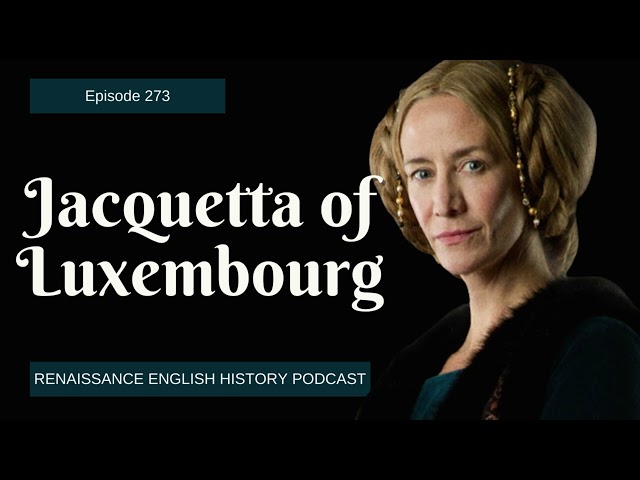
  • Jacquetta of Luxembourg: The Woman Behind the Tudors

    Jacquetta of Luxembourg: The Woman Behind the Tudors


    Jacquetta of Luxembourg, a pivotal figure in medieval European history, is best remembered as the mother of Queen Elizabeth Woodville and a direct ancestor of England’s Tudor dynasty. Born into one of Europe’s most prestigious noble families around 1416, Jacquetta’s life was shaped by love, scandal, and resilience during a time of political turmoil.

    Her marriages, first to John of Lancaster, Duke of Bedford, and later to Sir Richard Woodville, cemented her legacy in the Wars of the Roses. Notably, her family claimed descent from the mythical water goddess Melusina, a connection that later fueled accusations of witchcraft.

    Jacquetta defied societal norms, marrying for love and navigating the treacherous politics of 15th-century England. Her story, intertwined with myth and historical events, showcases a woman whose influence shaped the future of the English monarchy. Today, Jacquetta of Luxembourg remains a fascinating figure, whose legacy endures through her descendants, including King Henry VIII and every subsequent English monarch.

    Transcript of Episode 273: Jacquetta of Luxembourg: The Woman Behind the Tudors

    Today, we are going to talk about Jacquetta of Luxembourg. So if you watch or read any of Philippa Gregory’s books about the White Queen, the Red Queen, all the various different colors of queens, you ran into Jacquetta and that is how I first learned about her when I read and watched the S. T. A. R. S. series. Gosh, how long ago was that? Like, a long, long time ago.

    I’ve said this before, a lot of people have kind of mixed thoughts about Philippa Gregory. And the one thing I’m not a fan of the way she treats Lady Margaret Beaufort. So there’s that right off the bat.

    I do love that she’s gotten so many people interested in Tudor history and wanting to dig deeper and wanting to learn more, and so that is definitely a positive. I’m not a fan when people get into arguments about historical things and they say in the Philippa Gregory book, I read blah, blah, blah, blah, blah, because, that kind of makes you cringe a little bit.

    But that’s not her fault that people do that, so I can’t blame her for that. Ha. Anyway, Jacquetta is one of those women that was so prominent and played such a huge role and is fortunately getting a lot more attention thanks to Philippa Gregory and some other research that’s been done too.

    It’s not just her. But we’re gonna do an episode on her today and talk about her. And of course she is outside of the Tudor period, but her granddaughter was the Queen of England and her great-grandson was Henry VIII. So she obviously has a role to play there.

    Jacquetta of Luxembourg, a woman whose story is packed with love, scandal, myth, and survival. Born into one of Europe’s oldest and most noble families, Jacquetta wasn’t content to simply play by the role society expected of her.

    Instead, she made her mark as a duchess, a scandalous bride, and eventually the mother of a queen. Jacquetta’s life was wrapped in legend. Her family claimed descent from Melusina, a water goddess said to have cursed her descendants. Whether that myth influenced the accusations of witchcraft that Jacquetta later faced, we can’t say for sure. But the connection adds another layer of intrigue to her story. And what a story it is!

    Jacquetta was the great-grandmother of Henry VIII, the mother of Elizabeth Woodville, and through her descendants a direct ancestor of every English monarch since the Tudors. She defied royal orders to marry for love.

    She saw her family rise to the heights of power, and she survived some of the most tumultuous decades in English history. Her journey was far from easy. Her life intersected with the great events of her time. From the Hundred Years’ War to the Wars of the Roses, she faced accusations of witchcraft at a time when such charges could mean death.

    Yet through it all, she remained resilient, ensuring her family’s legacy while navigating a world that often sought to destroy women like her. So in this episode, we’re going to talk about the life of Jacquetta, from her noble beginnings to her role in shaping the Tudor dynasty. We’ll talk about her ties to Melusina, to that legend, her controversial marriage to a knight, and the witchcraft accusations that threatened her.

    Jacquetta of Luxembourg was born around 1416 into one of the most prestigious families in Europe. Her father, Peter of Luxembourg, was the Count of Saint-Pol, Conversano, and Brienne, titles that stretched across modern-day France and Italy.

    Her mother, Margaret of Baux, came from a similarly illustrious background. If you follow her family tree, you’ll find it littered with connections to royalty, including descent from Charlemagne and England’s King John. Her heritage made her a valuable political pawn, but her story shows that she was far more than just a pawn.

    We don’t know a lot about her early years, of course, as a girl, but her childhood was undoubtedly shaped by the ongoing conflict of the Hundred Years’ War. France was caught between English and French claims to the throne, and power shifted constantly. The Luxembourg family was well placed in the middle of it all, allied with England during Jacquetta’s youth. It was a dangerous, uncertain time, but Jacquetta’s early exposure to these political dynamics likely prepared her for the upheavals that she would face later on in her life.

    Her uncle, John of Luxembourg, played a particularly influential role. He was a key military leader during the war and was infamous for his role in capturing Joan of Arc. For months, Joan was held at John’s castle before being handed over to the English who ultimately executed her. There is no record of Jacquetta meeting Joan, But it’s hard to imagine that she wouldn’t have heard about her.

    Joan’s rise and tragic fall sent a clear message to women. Step out of line and the consequences could be deadly. Her upbringing likely included a refined education, preparing her for the roles of wife and noblewoman. She would have learned skills like embroidery, music, and perhaps some basic reading and writing.

    Though, she did later demonstrate a more advanced understanding of literature and learning than many women of her time. This curiosity defined her, especially as she found herself in circles where books and ideas were valued. She lived at a time when the printing press was being invented and disseminated throughout Europe. Her son would actually bring the printing press to England, so she was definitely a part of that group.

    But Jacquetta’s family also carried with them a myth. The Luxembourgs claimed descent from Melusina, a water goddess, cursed to transform into a serpent from the waist down every Saturday. According to legend, Melusina married a mortal under the condition that he would never spy on her during her transformation.

    When he inevitably broke that promise, she left him. But not before cursing her descendants with tragedy and transformation. This legend wasn’t just a family story, it was a huge part of Jacquetta’s identity. The tale tied her lineage to the supernatural, painting her family as something otherworldly, both powerful and cursed.

    This myth might have been a point of pride, but it also set the stage for future accusations of witchcraft. After all, when a woman defied expectations or rose too high, myths and whispers could easily become weapons. Jacquetta’s life would reflect the themes of the Melusina legend. She faced moments of transformation, becoming a duchess, and then a commoner’s wife, and finally the mother of a queen.

    And, like her legendary ancestor, she experienced tragedy. including the loss of loved ones and the shadow of suspicion. Even as a young girl, Jacquetta must have felt the weight of her family’s legacy. She was part of this lineage that claimed divine and royal connections. This combination of myth, nobility, and then the harsh realities of war set the stage for the life that she would lead. A life where history and legend were deeply intertwined.

    Marriage to John of Lancaster

    At the age of 17, Jacquetta’s life changed dramatically when she married John of Lancaster,1st Duke of Bedford. John was one of the most powerful men in England, serving as regent of France for his young nephew, Henry VI. As the younger brother of Henry V, John was tasked with upholding English control in France. A mission that defined his life.

    Marrying Jacquetta was meant to strengthen his political position, but the union would shape Jacquetta’s life in ways she couldn’t have foreseen. The marriage took place in April of 1433, just five months after the death of John’s first wife, Anne of Burgundy. This quick remarriage caused some tension with John’s former Burgundian allies who saw it as disrespectful.

    Nevertheless, Jacquetta stepped into her role as the Duchess of Bedford with grace. At just 17, she became one of the highest ranking women in England and France, second only to Queen Catherine of Valois and the Dowager Queen in the English royal hierarchy. After their marriage, Jacquetta and John travelled to Paris, where she was introduced to the intricate world of English-controlled France.

    They initially lived in the Hôtel de Bourbon, a residence near the Louvre. It was here that Jacquetta was exposed to her husband’s famous library. which contained works on alchemy, religion, and natural sciences. This collection may have sparked Jacquetta’s own intellectual curiosity. The Duke’s interest in the mystical and intellectual realms perhaps later fueled suspicions about Jacquetta’s own practices, particularly when she was accused of witchcraft.

    Despite her elevated status, Jacquetta’s life with John was far from stable. The Hundred Years’ War raged on and the English grip on France was weakening. In 1435, John’s alliance with Burgundy collapsed when the Duke of Burgundy shifted his allegiance to the French crown. This political blow, combined with John’s deteriorating health, marked the beginning of the end for Jacquetta’s time as the Duchess of Bedford.

    On September 14, 1435, after just over two years of marriage, John died in Rouen. At 19, Jacquetta was a widow. But she wasn’t left empty-handed. John’s will granted her a significant dower, including a generous income and the right to remain a duchess. She also inherited John’s library.

    However, Jacquetta’s future was now under the control of Henry VI, who required her to seek royal permission before remarrying, a stipulation that would become pivotal in her next chapter.

    Jacquetta’s first marriage positioned her at the heart of English and French politics. Though brief, her time as the Duchess of Bedford introduced her to the complexities of power and survival. The knowledge she gained during these years would serve her well in the tumultuous decades to come. But it wasn’t long before Jacquetta’s independent spirit led her to make a choice that shocked the English court and cemented her reputation as a woman who followed her heart.

    Scandalous Second Marriage

    After the death of her first husband, Jacquetta might have expected to be used as a political pawn once again. At 19, she was a wealthy, entitled widow, and as a member of King Henry VI’s extended family, her future was tightly controlled by royal prerogative. Any future marriage required the king’s permission.

    But Jacquetta had other plans. Instead of waiting for a politically advantageous match, she followed her heart, marrying Sir Richard Woodville, a knight of relatively modest means. This match was not only unconventional, it was actually quite scandalous. Richard Woodville had served as a squire in Chamberlain to Jacquetta’s late husband.

    He was young, handsome, and charming, but he was not the kind of man a duchess was expected to marry. How their romance began is unclear, but given the time they spent together in France, it’s easy to imagine how they might have fallen in love. What we do know is that sometime in 1437, they married in secret, without the required royal permission.

    When news of their marriage reached the court, it caused an uproar. Jacquetta’s decision to marry beneath her station was seen as a defiance of social and political norms. The King’s Council, which had been considering Jacquetta’s value as a potential diplomatic bride, were furious. She and Richard were summoned to face the consequences for their actions.

    The couple was fined a thousand pounds, a staggering amount at the time, and stripped of Jacquetta’s dour lands. However, Jacquetta was no stranger to navigating the royal court, and she skillfully petitioned Henry VI for forgiveness. By October of 1437, they received a royal pardon, and Jacquetta’s lands were restored.

    Despite the rocky start, the marriage was a very strong and loving partnership. Unlike her first marriage, which had been a duty-bound union to a much older man, Jacquetta and Richard’s relationship was based on mutual affection. They settled at Grafton Regis in Northamptonshire, where they made their home.

    Over the years, they would have 14, seven sons and seven daughters. A remarkable number even for the time. Among them was Elizabeth Woodville, who would later marry King Edward IV and become the Queen of England. The Woodville family’s rise to prominence was slow but steady. Richard’s career flourished under Henry VI’s reign, and in 1448 he was elevated to the peerage as Baron Rivers, a title that lifted him into the nobility.

    Jacquetta’s influence at court, particularly through her close relationship with Margaret of Anjou, undoubtedly played a role in her husband’s advancement. The couple became loyal supporters of the Lancastrian cause, and Jacquetta often served in the Queen’s household in various roles. Their love story was not without its risks.

    By choosing Richard, Jacquetta had jeopardized her position and her wealth. The love match that scandalized the court ultimately produced a dynasty that would change England forever.

    the Wars of the Roses

    By the mid-15th century, England was at a breaking point. The Wars of the Roses, the dynastic struggle between the Lancastrian and Yorkist factions, dominated politics, splitting loyalties, turning allies into enemies.

    As a loyal supporter of the Lancastrian king and his formidable wife, Margaret of Anjou, Jacquetta found herself deeply entangled in this violent upheaval. Jacquetta and her husband stood firmly on the Lancastrian side, loyalty coming not only from political ties but also from personal relationships.

    Jacquetta had been a close confidant of Queen Margaret since the young French woman’s arrival in England in 1445. The two women shared similar noble backgrounds, and Margaret relied on Jacquetta for advice and support as she sought to maintain her husband’s fragile reign. Henry VI, known for his piety and gentleness, was ill-equipped to rule.

    His bouts of catatonia, his mental health left the kingdom in a state of disarray, and Margaret often stepped in to lead the Lancastrian faction. Jacquetta, with her experience and steady presence, was a vital ally in the Queen’s efforts to hold the kingdom together. But their alliance came at a cost. By the late 1450s, tensions between the Lancastrians and the Yorkists, led by Richard, Duke of York, had escalated into open conflict.

    In 1459, Richard Woodville was ordered by Queen Margaret to prepare a fleet at Sandwich to support the Lancastrian army. Jacquetta joined him there along with their eldest son, Anthony. But before they could act, Yorkist forces struck. It was a daring raid, led by the Earl of Warwick’s captain, Yorkist soldiers stormed the port and captured the Woodvilles and dragged them from their beds.

    Jacquetta and Anthony were sent back to England, but Richard was taken to Calais, where Warwick and Edward, Earl of March, later, Edward IV humiliated him publicly. Though released without charges, this event showed just how precarious the Woodvilles’ position had become. As the conflict deepened, the Woodville family remained staunchly Lancastrian.

    Jacquetta’s daughter, Elizabeth, married Sir John Grey, a committed Lancastrian knight. However, the 1461 Battle of Towton, a brutal clash that solidified Edward IV’s hold on the throne, proved devastating for the Lancastrian cause. John Grey was killed in battle, leaving Elizabeth a widow with two young sons.

    Around the same time, Jacquetta’s husband and eldest son were captured and imprisoned in the Tower of London, although Edward IV eventually pardoned them, likely thanks to Jacquetta’s own diplomacy. With the Yorkists now in power, Jacquetta faced an impossible situation. Her family had been loyal to the defeated Lancastrian regime, but survival required pragmatism.

    Jacquetta adjusted to the new reality, fostering a cautious relationship with Edward. This shift became even more critical in 1464, when her widow daughter Elizabeth married the Yorkist king in a secret ceremony. The union was a shock to the court, but for Jacquetta, it was a remarkable turn of fortune.

    Once again, her family was at the center of power and Jacquetta herself became the Queen Mother, a position of immense influence. However, Jacquetta’s sudden rise didn’t come without consequences. The Woodville family’s rapid ascent bred resentment among Edward’s court, particularly from his former allies like Richard Neville, Earl of Warwick.

    Accusations of Witchcraft

    In 1469, Warwick rebelled against Edward and seized control of the government. During this brief period of upheaval, Jacquetta’s husband and son were captured and executed by Warwick’s forces. Warwick’s Rebellion also saw Jacquetta accused of witchcraft. A man named Thomas Wake, likely acting under Warwick’s orders, accused her of using witchcraft to manipulate Edward into marrying Elizabeth.

    Wake claimed to have found lead figures, one resembling the king and another resembling Elizabeth, on Jacquetta’s estate. He alleged that these figures had been used in rituals to cast a spell on Edward, ensuring he would fall under Elizabeth’s control. The claim played into widespread fears about the supernatural and the idea that women, especially powerful ones, could wield dangerous, unseen forces.

    Jacquetta immediately denied the accusations and took swift action to defend herself. She appealed to the Lord Mayor of London and other influential figures, emphasizing her long-standing service to the Crown and the baselessness of the charge. Her strategy worked, at least temporarily. By early 1470, the charges were dropped because of lack of evidence.

    This was a remarkable outcome, given that witchcraft trials often ended with the accused burned at the stake. It’s possible that Jacquetta’s high status, powerful allies, and the return of Edward to power all contributed to her acquittal. But the accusations didn’t end with her vindication. Years later, after Jacquetta’s death, the charges resurfaced during the reign of Richard III.

    Richard, in his bid to legitimize his claim to the throne, declared Edward’s marriage to Elizabeth invalid, claiming it had been brought about through witchcraft. He implied that both Jacquetta and Elizabeth had used dark arts to ensnare the king. However, Richard produced no evidence, and the allegations were widely seen as a political ploy to discredit the Woodville family.

    The witchcraft accusations against Jacquetta were as much a reflection of her enemy’s desperation, as they were of the era’s fear of powerful women. Her connection to the myth of Melusina also likely added fuel to the fire. The legend of her family’s supernatural origins may have seemed harmless in peacetime, but during moments of political instability, it became a convenient excuse to target her.

    Legacy and Descendants

    Jacquetta Luxemburg’s legacy is most evident in her children and the roles they played, shaping England’s history. Her daughter, Elizabeth, became the Queen of England as the wife of Edward IV, while her son, Anthony, Lord Rivers, stood out as one of the most interesting figures of the late 15th century.

    Elizabeth’s marriage to Edward catapulted the Woodville family to prominence, a transformation that Jacquetta played a central role in orchestrating. As Elizabeth’s mother, Jacquetta became a powerful figure at court. using her position to secure advantageous marriages and opportunities for her children. However, this rise brought the family many enemies, and the Woodvilles were often accused of wielding undue influence over Edward.

    Anthony Woodville, Jacquetta’s oldest surviving son, emerged as a scholar, diplomat, and a patron of the arts. He was an early supporter of printing in England and is credited with translating and publishing several important works, including the Dictes and Sayings of the Philosophers, one of the first books printed in England.

    Anthony also played a crucial role in supporting his nephew, Edward V, after the death of Edward IV in 1483. As one of the key figures entrusted with the young king’s guardianship, Anthony represented the Woodville family’s continued influence. However, this position made him a target for Richard, Duke of Gloucester, who would later become Richard III.

    One of Richard’s first acts in his bid for the throne was to arrest Anthony and execute him without trial. Anthony’s death marked a turning point signaling the end of Woodville dominance and the rise of Richard III.

    Jacquetta’s other children made notable marriages, aligning themselves with powerful families across England. Mary, her daughter, married William Herbert, 2nd Earl of Pembroke. You will likely recognize the Herbert family name later on during Elizabeth’s reign. We talk about Mary Sidney Herbert, for example, the Countess of Pembroke, who was a poet, translator, and patron of the arts. So she, of course, comes from Jacquetta.

    There was also Catherine Woodville, who married Henry Stafford, 2nd Duke of Buckingham. And then Catherine remarried Jasper Tudor, uncle of Henry VII. Catherine’s first marriage, though, to Henry Stafford led to the Stafford family, all of those Dukes of Buckingham that we hear about later. There was Lionel Woodville, who became Bishop of Salisbury, and was highly regarded as a scholar and a clergyman.

    Through these connections, Jacquetta’s descendants became intertwined with the Tudor dynasty and the future of the English monarch. She died on May 30th, 1472, likely at her family home in Grafton Regis. She was about 56, and the exact circumstances of her death are unclear, but it’s evident that she had lived an extraordinary life with highs and crushing losses.

    Her final resting place is unknown, a mystery that does add a layer of intrigue to her story, much like the Melusina myth. Jacquetta’s life, of course, shows the turbulence of 15th-century England. But it also shows a figure who shaped the political and cultural landscape of her time, ensuring her family’s survival and success in a period where so much was beyond her control.

    So there we have it, a little bit about Jacquetta of Luxembourg. If you want to dig in more to her, there’s a very good book that I read called Royal Witches. It’s by Gemma Hollman. It’s called, it’s called Royal Witches: Witchcraft and the Nobility in Fifteenth-Century England. Highly recommend that you check that out.

  • The Women Who Defied Henry VIII: Martyrs, Rebels, and the Religious Turmoil of the 16th Century

    The Women Who Defied Henry VIII: Martyrs, Rebels, and the Religious Turmoil of the 16th Century

    Women who defied Henry VIII and stood at the forefront of religious upheaval during the 16th century in England, let’s explore their incredible stories. From the dissolution of monasteries under Henry VIII to the brutal persecutions under Mary I and Elizabeth I, this episode delves into the lives of the women who fought, suffered, and sacrificed for their faith.

    Discover the hidden networks, secret rebellions, and enduring legacies of these often-overlooked figures, whose courage and resilience helped shape the course of English history. Whether as martyrs, exiles, or protectors of tradition, these women played a pivotal role in the religious transformations of their time. Join us as we uncover their powerful stories and reflect on how they continue to influence our understanding of faith and gender today.

    We’re actually going to go and talk about something that we talked a little bit about during Women’s History Month and that was the role of the Reformation on women. Basically what women were doing during the religious changes of the 16th century and how that affected them. The reason why we’re going to talk about that is, I have been reading Philippa Gregory‘s book Normal Women which is really, really good.

    It’s basically about what normal women were doing from the period from 1066 up to I think it goes up to just after the Civil War, 18th century. This is because of course it was men writing the history, women weren’t out in the public sphere as much, although many were, but the men who were writing about it, well, they weren’t writing about it. So there was that.

    So this book has been really interesting for me. I have to say, I have a bit of a complicated relationship with Philippa Gregory. Because on the one hand, I read The Other Boleyn Girl back in 2003, 2004, or something like that, when it first came out. 

    Here’s a personal share. So I was living in New York City and it was summer. And I  would go to Coney Island, to the beach. I would go there because it was a really easy train ride for me. Cause I lived right by Penn Station. So I had this easy train ride to go to Coney Island and I wasn’t fancy enough to go to the Hamptons or anything like that. I remember very clearly reading The Other Boleyn Girl, sitting on the beach in Coney Island. It must’ve been 2004.

    Anyway, we are all like in this Tudor world, most of us have read The Other Boleyn Girl. If we haven’t, we’re familiar with it. We’ve read The White Queen, The White Princess, the multicolor rainbows of queens and princesses and duchesses and whatnot.  In general, I mean, I love her storytelling. It’s wonderful. I’m really not a fan of the way some of the stories seem to be sensationalized.

    Particularly around Lady Margaret Beaufort. I don’t know what Lady Margaret Beaufort ever did to Philippa Gregory to make her deserve to get the treatment that she has gotten.  It used to really bother me when people would hop into a Facebook group and be like, “Well, I read The White Queen. And so therefore I know that Lady Margaret  Beaufort killed the Princes in the Tower and she did it for her son to get to the throne.”

    Honestly, I will admit. I also that I did kind of buy into that because I didn’t know any better. And I remember also very clearly interviewing Melita at Tudor times. It’s some episode from like maybe eight years ago when Margaret Beaufort was the person of the month for them, and we were doing those kinds of regular podcasts.

    And I asked her, I said, “Well what about the idea that she was like, the mother-in-law from hell  and everything like that?” And Melita started schooling me and then I did more of my own research as well and I found that indeed, there was very little evidence for Lady Margaret Beaufort actually being the mother-in-law from hell.

    She spent most of her time when Henry was an exile, just trying to figure out how to get him back. She had accepted the Yorkist regime. It wasn’t like she was plotting for him to be king. And there’s so many people who benefited from the Princes’ disappearance. Yeah, it just seems so unfair to Lady Margaret and it’s kind of one of the things that really bothers me about Philippa Gregory. So I have a complicated relationship with her.

    But I saw the book Normal Women, and I was like, I got to read that of course. So I’ve really been loving it. I’ve really been enjoying it. And so the part specifically about women in the Reformation in the 16th century really struck me. And I thought, I’m going to do something with that on this podcast because I think it’s a good story to tell.

    So. I will say right now that everything I’m talking about is coming from that book. All of the examples, everything like that. If you want to dig in deep and really, really go for it. The book, Normal Women, it’s a really good book, highly recommended. As long as Lady Margaret Beaufort isn’t framed for killing the Princes in the Tower. So let us get into it.

    The 16th century in England, as we know, seismic shifts in religion with the break from the Catholic church, set off a chain reaction of changes that would reverberate through every corner of society. And these changes didn’t just alter the relationship between England and Rome. They had profound effects on the lives of everyday people, particularly women.

    While the kings and the bishops made the headlines, the women across the country were navigating the new religious landscape in ways that were both deeply personal and very impactful. Whether they were nuns who were displaced from their convents, noblewomen, protecting their faith in secret, or ordinary wives and mothers trying to keep their families together, amid all of the shifting doctrines, women played a crucial role in this period of religious upheaval.

    Some fought back, some adapted, and others quietly carried on the traditions that were suddenly illegal. So today we’re going to explore how these women were both shaped by and instrumental in the religious changes of the 16th century. From the dissolution of the monasteries to the bloody battles over faith that followed, women were at the heart of it.

    Dissolution of the Monasteries

    Let’s start with the dissolution and how that affected religious women. So when Henry broke from the Catholic church, it wasn’t just an act of defiance against the Pope. It was a move that upended the lives of thousands of religious women across England. The dissolution beginning in the late 1530s meant the closure of nearly 900 religious houses, including nunneries that had been the centers of female religious life and female education, places for women to go, who didn’t want to marry. The center of all of this for centuries, one of the most immediate and brutal impacts of the Reformation was the closure of these religious houses.

    Nuns who had dedicated their lives to God suddenly found themselves homeless and without a purpose. Let’s take, for example, the case of the Crabhouse Priory which was in Norfolk dating back to the 12th century, I believe. When one of Henry’s commissioners, Thomas Leigh, we’ve talked about the Leigh family a lot recently. It was Thomas Leigh who visited in 1535. He painted a very grim picture.

    He accused the nuns of everything from pilfering items and selling monastic items, items that belong to the priory, to sexual misconduct. He claimed that one nun had born two children, one by a priest and one by a layman. These accusations, whether they were true or exaggerated were part of a broader effort to justify the closure of such establishments.

    The nunnery along with many others was dissolved and the residents were left to fend for themselves. The closure of these religious houses didn’t mean just the loss of a home. It meant the end of a way of life that had given women a rare form of independence for centuries.

    Nunneries had been places where women could live free from the control of men. They could manage their own affairs. They often contributed to the local community in significant ways. But with the dissolution, these women were not only displaced. They were stripped of their status and their roles. Thousands of nuns were expelled from their homes.

    Some found themselves the subject of intense scrutiny and harsh judgments. The priory had only seven nuns. But it was enough for the authorities to accuse the prior use of mismanagement and even physical abuse against the other nuns. Whether these accusations were entirely true or partially fabricated to hurry up the priories’ closing, the result was the same, and other communities of women were forced out, their contributions erased.

    Not all religious women simply faded into the background. Some have found ways to continue their spiritual lives despite the upheaval, Katherine Manne is a notable example. After the dissolution, she lived in a cell attached to the Dominican church in Norwich like an anchoress, continuing her religious practices in solitude.

    Others joined small informal communities of ex-nuns who lived together, prayed together and kept the old traditions alive in secret. Well, many nuns were forced to reintegrate into a society that had little use for celibate women. Some resisted by maintaining their vows in private or adapting their roles to a new reality. 

    They might’ve lost their official status, but they didn’t lose their faith or their determination to live by it. Ex-nuns and church members were granted small pensions. They were expected to maintain their vows of celibacy until 1549 when Edward VI started to change that. Only 19% of nuns chose marriage and only about 17% of monks. So the majority of them continued to live by their faith.

    Now as Henry VIII and his successors imposed all of these sweeping religious reforms, not everyone in England was happy and content to follow the new plan. For many women, these changes represented a direct threat to their faith, their way of life, and their communities. Some actually took up arms. Others use their homes as sanctuaries and still others operated in the shadows, keeping their faith alive, despite the dangers.

    Pilgrimage of Grace

    We’ve heard a lot about the Pilgrimage of Grace. When we did the rebellion series, we’ve talked about a number of times, one of the most significant uprisings against Henry VIII’s religious policies. Women actually played a very crucial role in this movement, which I hadn’t really ever thought about.

    This rebellion took place in the north of England. Tens of thousands of people rose up in protest against the dissolution. This was in late 1536 and also the overall direction of the Reformation. Among these rebels were women who supported, organized, and even led aspects of the revolt.

    Margaret Cheyney is one such woman whose involvement did not go unnoticed or unpunished. Cheyney and her husband were active participants in their rebellion. Margaret was accused of urging her neighbors to join the uprising. After the rebellion was quashed, she was arrested, sent to London, and ultimately executed. Her death is brutal as it was a chilling reminder of the risks that women faced when they stood against the crown.

    But Margaret Cheyney was far from alone. Many other women suffered for their participation in the Pilgrimage of Grace as well. These women weren’t just passive supporters. They were ardent believers who saw the Reformation as a threat to their faith and their community. Their involvement shows how deeply their religious change has penetrated into the daily lives of ordinary people, compelling them to take extraordinary risks.

    While women like Margaret Cheyney took to the streets, others fought the Reformation from within the walls of their own homes. Noblewomen in particular played a pivotal role in protecting the old faith. These women had the means, the influence, and the determination to resist the changes imposed by the crown, often at great personal risk.

    The Countess of Westmoreland, Jane Neville is a prime example of such resistance. She and her husband, the Earl of Westmoreland were central figures in the Northern Rising of 1569, another major rebellion against the Protestant Reformation. Jane Neville not only supported their rebellion but also helped to organize it using her home as a refuge for Catholic priests and as a center for planning. 

    When the Northern Rising was crushed, Jane’s husband was executed and she was placed under house arrest for the rest of her life. Despite these harsh consequences, her actions ensured the Catholic traditions and practices continued in her community long after the rebellion was over. Noblewomen like Jane Neville didn’t just passively resist the Reformation. They actively worked to protect and preserve their faith. Often becoming the last line of defense in their regions.

    Beyond the public rebellions and noble resistance, there was another quieter battle being waged by women across England.  This was the hidden Catholic network, a network of homes, secret masses, and underground practices that kept the old faith alive in the face of intense persecution.

    Women were at the heart of this network. They created and maintained priest holes, hidden spaces within their homes where Catholic priests could hide from the authorities. They organized secret masses ensuring that their families and communities could continue to practice their faith in secret. Their risks were enormous. Discovery could mean imprisonment, torture, and death.

    But for these women, the preservation of their faith was worth the risk. One particularly striking example is that of Alice Line who had a priest hole built in her home and hosted a secret Candlemas service. When her home was raided, the priest managed to escape, but Alice was not so lucky. She was arrested, imprisoned, and eventually executed for her role in protecting the priest. Her last words on the scaffold were a defiant declaration of her faith and her refusal to repent for harboring a priest.

    This hidden network of Catholic women played a crucial role in maintaining the old faith during a time when open practice was impossible. Through their quiet, determined actions, these women ensured that Catholicism in England survived even the harshest years of Protestant rule.

    The Martyrs and Scholars

    The religious upheavals of the 16th century didn’t just lead to rebellion and hidden networks. It also led to the persecution and execution of women who stood by their faith. This era of female martyrdom, not only highlighted the brutal consequences of religious conflict but also began to shift how women were perceived in society.

    So to start with the Protestant martyrs during the reign of Mary I, the first Protestant women found themselves under intense scrutiny. No secret there. Mary was determined to restore  Catholicism. She saw Protestantism as a heresy that needed to be stamped out and her methods were ruthless.

    Of course, this period earned her the nickname Bloody Mary, which I don’t really like. But it is what it is. And the women who resisted her efforts paid the ultimate price. Perhaps one of the best-known Protestant martyrs, this is even before Mary, would be Anne Askew. 

    She was a young educated woman from a noble family. She was a vocal critic of Catholic doctrine, particularly the practice of transubstantiation. Her refusal to recant her beliefs led to her arrest, torture, and eventual execution by burning at the stake in 1546.

    What makes Anne’s story particularly poignant is her resilience. Even under torture, she refused to name other Protestants, protecting her fellow believers to the end. In fact many people believe that Anne was tortured because they were trying to get to Katherine Parr at the time. But she never gave that name or anything like that.

    Anne wasn’t alone in her feet, dozens more women were executed as Protestant martyrs during Mary’s reign. Of course, none during Edward’s reign because he was a Protestant. But during Mary’s reign, they were executed for their Protestant beliefs. 

    Joan Waste, a blind woman from Derbyshire was another tragic example. She was arrested for refusing to attend mass and was burned at the stake in 1556. These women and many others like them became symbols of Protestant resistance. Their deaths serve to inspire and galvanize those who continue to fight against Catholicism.

    But then the pendulum swings the other direction. So Elizabeth ascends to the throne and now being a Catholic is illegal. The religious pendulum just goes back and forth and now Catholic women are finding themselves persecuted. Elizabeth’s government saw Catholicism as a threat to the state. Of course, equating loyalty to the Pope with treason.

    Women who harbored priests attended secret masses or refused to conform to the new religious orders were often subjected to the very harshest penalties. Margaret Ward is one of the most notable Catholic martyrs of this period. A maidservant in London, Margaret was deeply committed to her Catholic faith. In 1588, she helped a Catholic priest escape from prison, smuggling a rope into his cell. When she refused to disclose his hiding place, she was arrested, tortured, and eventually hanged.

    Margaret’s courage and defiance made her a hero among Catholics and a stark reminder of the dangers that came with holding onto the old faith. The martyrdom of these women began to shift the way society viewed them. Before the Reformation, women were often seen as temptresses. They were sources of sin and temptation in a male-dominated world. The church had long perpetuated the image of women as descendants of Eve, easily swayed by the devil and in need of male guidance and control.

    However, the narratives around women like Anne Askew and Margaret Ward began to challenge this perception. These women were no longer seen as weak or morally suspect. Instead, they were celebrated for their spiritual strength, their courage, and their unwavering commitment to their faith. The image of women as martyrs and spiritual leaders began to take hold, portraying them as morally superior even as they remained without formal power or agency.

    This transformation wasn’t without its complexities, while women were increasingly seen as paragons of virtue and spiritual resilience, this newfound respect didn’t translate into real power or influence. Women were still expected to be submissive, to accept their roles within the private sphere and to defer to bail authority. The martyrdom of women, like Anne Askew and Margaret Ward didn’t lead to a broader re-evaluation of women’s roles in society, but rather reinforced the idea of women as virtuous sufferers. Strong in faith, but still subservient.

    The narrative also shifts based on what the prevailing religious attitude of the time is. So there are women like Anne Askew who is celebrated as a martyr and a hero. While, traditionally Elizabeth Barton, Maid of Kent, who was a Catholic visionary, and opposed  Henry VIII’s marriage to Anne Boleyn, was executed as a heretic and a fraud. Both were deeply religious women, but their legacies were shaped by the political and religious biases of their time.

    The shift in the image of women during this period was significant, marking the beginning of a new narrative around women’s spirituality and strength. Yet it also highlighted the limitations of this new image as women continue to be revered for their piety but denied the power and authority that came with it.

    As the religious landscape in England became increasingly hostile for those who refused to conform, many women chose exile over submission. These women not only sought refuge in foreign lands but also became key figures in preserving and spreading their faith. For many devout Catholic women, the choice was stark. Conform to the new Protestant state or leave everything behind. Exile was not just a physical departure from England, but a profound act of faith in defiance.

    Among the most notable of these exiles was Mary Ward, a woman whose dedication to her faith led her to establish a network of religious houses across Europe. Mary was born into a Catholic family in Yorkshire at a time when practicing Catholicism in England was increasingly dangerous. Faced with the choice between staying in a hostile environment or preserving her religious vocation, Ward chose to leave England.

    She traveled to Flanders where she founded the Institute of the Blessed Virgin Mary, a religious order dedicated to education and spiritual service. Unlike traditional convents, Ward’s order was active, and focused on teaching and missionary work rather than cloistered contemplation. Her efforts were groundbreaking, creating a model that would influence religious orders for women across Europe.

    Wards’ work was not without its challenges. She faced opposition from both secular and religious authorities who were suspicious of her unconventional approach. Yet she persisted, establishing houses in France, Italy, and beyond. All while remaining committed to her vision of a more active role for women in the church.

    While some women left England to continue their religious practices abroad, others stayed and became deeply involved in religious scholarship. These women played crucial roles in translating, interpreting, and spreading reformist ideas. Often working in close collaboration with leading male reformers.

    Anne Lock is a prime example of such a scholar. She was born into a Protestant family, well-educated, and deeply committed to the Reformist cause. She moved in influential circles, corresponding with and assisting prominent figures like John Knox, the fiery Scottish Reformer. Lock’s most significant contribution was her translation and publication of Calvinist sermons, and religious texts, which helped spread the  Protestant ideas in England and beyond.

    In 1560, Locke published her A Meditation of a Penitent Sinner, a 26-sonnet series based on Psalm 51, which is considered one of the earliest examples of English, Protestant devotional literature. Lock’s work was not only an expression of personal piety but also a tool for educating others, particularly women, about the new religious ideas that were reshaping England.

    Despite their significant contributions, many of the women who played critical roles in preserving and promoting their faith during this period have been largely forgotten by history. These women risked everything, their families, their homes, and their lives to stay true to their beliefs.  But their stories are often missing from the grander narratives of the Reformation. 

    Rose Hickman is one of these heroines. She was a Protestant who lived through the tumultuous reigns of Henry VIII, Edward VI, Mary I, and Elizabeth I. She was a staunch defender of the Reformation. She hid reformist preachers in her home, distributed Protestant literature, and maintained a network of like-minded individuals who resisted the return to Catholicism under Mary I.

    Hickman’s actions were incredibly risky at any moment. She could have been arrested, tortured, or even executed for all of this. Despite her bravery and commitment, her story has faded into obscurity. She was never rewarded or officially recognized for her efforts of fate shared by many women who played similar roles. These women were essential to the survival and spread of their faith. Yet their contributions were often dismissed or ignored in a society that still struggled to see women as equal participants in religious and intellectual life.

    Conclusion


    The stories of these exiled scholarly and courageous women remind us that the Reformation was not just a story of kings and clergy, but also of countless women who fought to preserve their beliefs. The religious upheavals of the 16th century had profound and lasting effects on the lives and roles of women in English society. As the Reformation, reshaped religious institutions, it also reshaped the way women were perceived and treated both within the church and in broader society.

    One of the most significant long-term impacts of the Reformation was the secularization of women’s roles. With the dissolution of the monasteries and the decline of female religious orders, the option of celibacy as a respected and independent lifestyle for women largely disappeared.

    In its place, a new societal perception of women began to emerge. One that was increasingly sexualized. Women were no longer seen primarily as spiritual beings, dedicated to God, but rather as potential wives and mothers subject to the desires and control of men. The absence of respected celibate women and religious roles contributed to the notion that a woman’s value was tied to her sexuality and her ability to fulfill domestic duties. 

    This shift marked a significant departure from an earlier image of women who could be holy figures. Leading to a society that often viewed women as seducers, rather than spiritual leaders. But despite the diminishing opportunities for women within formal religious institutions, the changes in the 16th century also set the stage for future movements that would challenge the status quo.

    Women like Mary Ward who founded a religious order that emphasized education and active service planted the seeds for early feminist thought within a religious context. Ward’s belief in the equality of women in the eyes of God was radical for her time and her efforts to establish a more active role for women in the church were a direct challenge to the traditional passive roles that women were expected to play. 

    Ward’s legacy along with that of other religious women who defied the norms of their time, provided a foundation for future generations to continue pushing for greater equality and recognition within religious and secular life. These early movements were crucial in shaping the discourse around women’s rights and their roles in society even if their impact wasn’t fully realized until centuries later.

    So the religious changes of the 16th century were a watershed moment in English history and women were deeply affected by and instrumental to these transformations. From the dissolution of the monasteries and the persecution of martyrs to the quiet defiance of religious exiles and scholars, women navigated this tumultuous period just as much as men with courage, resilience, and creativity.

    The rules were complex and multifaceted and often overlooked in the way we talk about the Reformation. Yeah, they were crucial to the survival and evolution of their faiths. It’s important to remember that the history of religion is not just a story of men and institutions but also the countless women who fought to preserve their own beliefs and carve out spaces of power and agency in their rapidly changing world.

  • Tudor Minute June 29, 1509: Lady Margaret Beaufort died

    Tudor Minute June 29, 1509: Lady Margaret Beaufort died

    Today in 1509 Lady Margaret Beaufort died. She was Henry VIII’s grandmother, and she lived long enough to watch her son, Henry VII, become King, and to see the first bloodless transfer of power in England in over fifty years when her grandson Henry inherited the throne and was crowned.

    Lady Margaret gets a lot of flack in popular fiction, which I’ve talked about here before, and I don’t like it. She was a woman who gave birth at the age of 12 in a horrific situation – her husband was already dead when her son Henry was born. She kept him alive, negotiating the court at an impossible time during the Wars of the Roses, and, and negotiated a way for him to become King when the opportunity arose. She loved her family, she supported education, and she was devout and devoted. So, RIP Lady Margaret.

    That’s your Tudor Minute for today. Remember you can dive deeper into life in 16th century England through the Renaissance English History Podcast at englandcast.com where there is an episode on Lady Margaret Beaufort.

    Suggested links:
    Episode 42: Lady Margaret Beaufort
    Episode 17: Lady Margaret Beaufort

    From my shop:
    Lady Margaret Beaufort Tudor Women Charm Necklace
    Ps. All products are made on-demand and can take a few weeks to ship.

    Lady Margaret Beaufort Charm Necklace
  • Tudor Minute May 31, 1443: Happy Birthday Lady Margaret Beaufort

    Tudor Minute May 31, 1443: Happy Birthday Lady Margaret Beaufort

    Today is the birthday of one of my favorite women in Tudor history – Lady Margaret Beaufort, born today in 1443. The mother of Henry Tudor, she paved the way for his invasion of England, negotiating the marriage of Henry with Elizabeth of York’s mother, Elizabeth Woodville, and pretty much masterminding the whole thing.

    Sadly, she is often remembered as being cold hearted, or even the mother in law from hell to Elizabeth. There was one comment in one record about her not walking properly behind Elizabeth, and suddenly that’s been woven into this drama. And that’s all it is – drama. There’s no evidence that she didn’t get along with Elizabeth of York, or that she was anything other than a loving mother and mother in law. Family was hugely important to her, having been without her son, and without much of a family her entire life as she tried to navigate her way through the Wars of the Roses. She was also a devout woman, and supported education, funding several colleges.

    That’s your Tudor Minute for today. Remember you can dive deeper into life in 16th century England through the Renaissance English History Podcast at englandcast.com where there is an episode on Lady Margaret.

    Suggested links:
    Episode 42: Lady Margaret Beaufort
    Tudor Learning Circle Book Club: Nicola Tallis on Margaret Beaufort
    Episode 17: Lady Margaret Beaufort

    From the shop:
    Lady Margaret Charm Bracelet
    Ps. All products are made on-demand and can take a few weeks to ship.