Margaret Douglas

  • Elizabeth I’s Potential Heirs: Katherine Grey, Henry Hastings, and Mary Stuart

    Elizabeth I’s Potential Heirs: Katherine Grey, Henry Hastings, and Mary Stuart


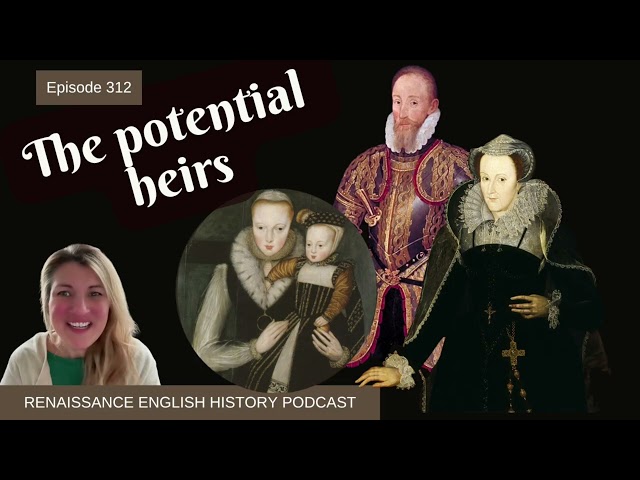
    Elizabeth I’s potential heirs represented three very different paths for England’s future. When Elizabeth I took the throne in 1558, she refused to name a successor, leaving courtiers and foreign powers to speculate who might inherit her crown. Katherine Grey embodied the Tudor bloodline and lawful claim, Henry Hastings offered Protestant stability and caution, and Mary Stuart carried the dangerous glamour of dynastic and Catholic ambition. Together, their stories reveal how Elizabeth’s silence on succession became one of her most powerful—and perilous—political strategies.

    Transcript of Three Who Might Have Ruled – Katherine Grey, Henry Hastings, and Mary Stuart:

    In November 1558, England gained a new monarch and a new problem. Elizabeth Tudor, twenty-five years old, unmarried, and childless, stepped into the role of queen with the weight of a dynasty balanced on a very thin thread. Her accession was met not with jubilation alone, but also with calculation from those who had survived the rapid-fire shifts of power.

    Under Henry VIII, Edward VI, Jane Grey’s nine days, and Mary I, they had learned one lesson very clearly: a crown without a clear next heir was not a blessing, it was a peril. The memory of 1553 still lingered. Edward VI had barely been in his grave before two rival queens, Jane Grey and Mary Tudor, had raised standards in their names.

    Armies had marched, proclamations were issued and revoked, and ordinary people had been forced to declare where their loyalties lay before the dust had even settled on Edward’s tomb. Nobody wanted a repeat performance, especially not with the added complication of foreign powers now watching England’s throne with more interest than ever.

    Yet from her very first council meetings, Elizabeth made one thing very clear: she would not name an heir. The succession question was not an administrative matter; it was leverage, and she intended to keep it close. Almost immediately, whispers began moving through court chambers and family estates alike.

    If Elizabeth died suddenly, who then was next? Three names rose again and again: Lady Katherine Grey, Henry Hastings, Earl of Huntingdon, and Mary, Queen of Scots. Each had a different claim. Each was backed by a different faction. Each was waiting for the crown’s silence to break.

    Today, we are going to talk about the heirs of Elizabeth I, especially very early in her reign. We will look at those early years, up until the mid-1560s, and consider who the presumed heirs were when people had not yet grown used to the fact that their queen was not going to marry. Everyone was very concerned about what would happen if she perished, and the main names that were thrown around and considered.

    Lady Katherine Grey: A Controversial Claim

    To understand why these three names rose above the others, it is necessary to go back and look at the paperwork left behind by Henry VIII. In 1544, Parliament passed the Third Succession Act, reaffirming the rights of Henry’s daughters Mary and Elizabeth to inherit after their brother Edward.

    But it also granted the king an unusual power, the right to designate the succession beyond his children. Henry’s final will, confirmed before witnesses and sealed with the Great Seal, did exactly that. After his own children, he named the heirs of his younger sister, Mary Tudor, through her daughters Frances Brandon and Eleanor Brandon.

    That meant that the Brandon descendants, the Grey sisters through Frances, and the Hastings line through Eleanor, were legally next in line. Conspicuously absent were the descendants of Margaret Tudor, Henry VII’s older sister, whose line had merged with the Scottish crown through James IV and James V.

    By leaving them out, Henry effectively declared that the throne of England should remain distinctly English and not fall under Scottish or, worse, French influence. This created a split in logic that would define Elizabeth’s reign: English law versus dynastic blood. By statute, Katherine Grey and Henry Hastings were legitimate successors. By lineage and international recognition, Mary, Queen of Scots, had the superior claim.

    So Elizabeth inherited a throne and also a legal contradiction, and around that contradiction, power began to gather. If one were to follow Henry VIII’s will to the letter, Lady Katherine Grey should have been the most obvious heir to Elizabeth. She was the granddaughter of Mary Tudor, Henry’s beloved younger sister, through her daughter Frances Brandon. On parchment, it looked very neat and settled, but in reality, her claim was wrapped in discomfort, scandal, and bitter memory.

    The Grey family had not yet recovered from its most infamous moment: the nine-day reign and execution of Lady Jane Grey, Katherine’s older sister. Jane’s brief and tragic brush with the crown had turned the Grey name into a warning. Her death in 1554, carried out by Mary I after Wyatt’s Rebellion, created a Protestant martyr figure and a ghost that haunted Elizabeth’s early reign. To acknowledge Katherine too openly as heir would not just raise a lawful successor, it would resurrect Jane.

    The other issue with Katherine Grey was that there were mutters that Charles Brandon, Duke of Suffolk, her grandfather, had technically still been married to Anne Browne when he married Mary Tudor. The legality of that union was later resolved, but in an age obsessed with marriage contracts and sacrament, the shadow of doubt lingered. The whisper of illegitimacy clung to the Brandon and Grey line just enough to make things uncomfortable.

    Katherine’s fortunes under Mary I were far more favorable than many might have expected. Despite the consequences of her sister Jane Grey’s brief reign and tragic end, Mary did not hold Katherine responsible. She served at court, attended key ceremonies, and was one of the chief ladies-in-waiting. Most notably, she acted as Chief Mourner at Mary’s funeral. Katherine was treated with every respect as one of the queen’s blood, a recognition of her place in the royal hierarchy. This ceremonial role physically placed Katherine at the head of the mourning procession, signaling to ambassadors and courtiers alike that she ranked highly among the surviving Tudor women.

    But everything shifted once Elizabeth ascended the throne. Mary had included Katherine; Elizabeth conspicuously diminished her status. At Elizabeth’s earliest court celebration, Katherine was positioned behind women of lower birth, a visible sign of the queen’s intention to lessen her profile. De Feria reported to Spain that “the queen does not favor Lady Katherine and keeps her at a distance,” which summed up Elizabeth’s chilly treatment.

    Elizabeth’s unease with Katherine was deeply personal as well as political. Katherine represented lawful succession and the potential for producing heirs. Elizabeth, unmarried and constantly pressured on the matter of marriage and succession, found her cousin’s fertility and royal legitimacy a pointed contrast.

    Ambassadorial letters from these years often speculated on the likelihood that God might provide England with another heir if Elizabeth did not marry, a sentiment echoed in multiple reports, though not always in those exact words. Diplomatic observers noted that Elizabeth’s mood soured whenever Katherine was mentioned in court discussions. Venetian and Papal envoys described the queen’s coldness and dismissive attitude toward Katherine.

    In Tudor politics, even a smile could signal exclusion, and Elizabeth’s polite gestures were frequently understood to mask deeper reservations. Though Katherine herself rarely took an active political role, her passive position made her an ideal object of political schemes and plotting.

    Katherine’s situation became significantly more controversial in 1560 and 1561 when she secretly married Edward Seymour, son of the former Protector Somerset and nephew of Jane Seymour. Both brought powerful dynastic claims. Their union was politically dangerous and performed without Elizabeth’s permission, which was tantamount to treason. When Katherine was discovered to be pregnant, all hell broke loose. De Feria’s dispatches recorded concern that “Lady Katherine grows great with child, and the court murmurs that she will give England what the Queen has not.”

    Elizabeth’s response was immediate and severe. Upon discovering Katherine’s secret marriage, Elizabeth ordered both Katherine and Edward to be imprisoned in the Tower, where they were kept apart. Katherine gave birth to her first son, Edward Seymour, in the Tower in September 1561.

    Despite the harsh conditions, the couple managed to meet secretly, resulting in Katherine’s second pregnancy. Her second son, Thomas, was born there in 1563, but due to outbreaks of plague in London, they were later placed under house arrest. Katherine was kept in the custody of her uncle, Lord John Grey, at Pirgo in Essex, while Edward was confined elsewhere. These births caused considerable discussion, as each represented a potential Tudor heir born without the Queen’s consent.

    Henry Hastings: The Protestant Hope

    Now let us turn to Henry Hastings, Earl of Huntingdon, the Protestant candidate. If Katherine Grey represented the legal heir and Mary Stuart the glamorous dynastic threat, Henry Hastings, 3rd Earl of Huntingdon, stood for something far more measured—a controlled future shaped by counsel rather than crown.

    He was not a man of charisma or romantic speculation; he was no court superstar. To many observers, though, that was precisely his strength. Hastings was descended from George, Duke of Clarence, brother to Edward IV and Richard III, the Yorkist line that was older than the Tudors themselves. In a court that still remembered Bosworth and the usurpation of Richard III, that bloodline stirred quiet interest.

    An Italian observer noted with wry amusement that some in England “still speak of the House of York in a lower voice, as if it might rise again.” Hastings never invoked that lineage himself, but it hovered behind him like an ancestral banner. He had built a reputation as serious, pious, and disciplined. The Spanish ambassador, who reported on the personal habits of the English nobility with cutting precision, described Hastings as “the most virtuous of lords, a sober man who seeks to offend no party.”

    It was not a compliment so much as a warning. Hastings was clean, and clean men were hard to discredit. His household at Ashby-de-la-Zouch was run with almost Puritan severity. There was a lack of pageantry; it was seen as a godly house where they dined more on scripture than on luxury. To Protestant reformers like Cecil, that actually made him an ideal successor—staunch in faith, yet politically cautious.

    He could be trusted to maintain the Protestant settlement without the flamboyance or foreign entanglement that Mary Stuart embodied. There were factional advantages too. Hastings had married Katherine Dudley, sister of Robert Dudley, Elizabeth’s favorite and true love. That alliance made Protestants hopeful that, should Elizabeth die without issue, Dudley—and by extension, Cecil’s council—might rule through a compliant Huntingdon.

    One French report put it bluntly: “If this Earl were King, England should be governed by those who made him.” Unlike Katherine Grey or Mary Stuart, Hastings drew no emotional commentary. Ambassadors did not describe him as dangerous or tragic; instead, they called him safe.

    Importantly, Hastings never openly lobbied for his own claim. That aloofness actually helped him. Katherine Grey had married dangerously. Mary Stuart had let France proclaim her Queen of England. Hastings, by contrast, appeared modest and controllable. He simply kept his head down.

    He served Elizabeth loyally and let other men whisper on his behalf. People generally thought he was a safe bet who would do little harm—which sounded like salvation. He offered loyalty without ambition, which made him useful to powerful men who preferred a monarch who could reign by counsel, not personal will.

    No songs were written about Henry Hastings. No romantic plots spiraled around his name. But while the court gossiped about Grey and trembled at Mary Stuart, the Protestant establishment kept his name quietly polished, ready to bring forward if Elizabeth left England without an heir and without direction.

    Mary Queen of Scots: The Dynastic Threat

    So Henry Hastings represented the quiet Protestant insurance policy, and Mary, Queen of Scots, was the exact opposite. There was nothing modest or quiet about her. While Hastings’ name appeared in council calculations and Protestant contingency planning, Mary’s name rang across Europe like a challenge.

    Hastings was described by ambassadors as harmless. Mary was spoken of in terms of destiny. To many outside England, she was not a possible heir; she was the rightful Queen of England, waiting only for God or politics to remove Elizabeth. Mary was the granddaughter of Margaret Tudor, Henry VIII’s older sister.

    And unlike the Grey or Hastings claim, her lineage could be traced in a straight, unbroken line from a lawful Tudor marriage. More importantly, she was already a crowned queen, an anointed monarch of Scotland since infancy, and for a brief window, her claim seemed unstoppable. As wife to Francis II of France, she stood poised to become Queen of France, Queen of Scotland, and, in French eyes, Queen of England.

    From the moment Elizabeth took the throne, French coinage and court ceremony began referring to Mary as Queen of England. It was an insult recorded with alarm in English diplomatic letters. The Spanish ambassador observed that “the French speak more of the Scottish queen’s right than of their own king’s glory,” noting that Mary’s claim had become a rallying cry, not just a legal argument.

    Mary herself understood the value of spectacle. She cultivated image and presence, something neither Katherine Grey nor Henry Hastings ever did. She was described as graceful, learned, and exceedingly conscious of her station. Her letters to Elizabeth were outwardly courteous but always written from one sovereign to another, not from a supplicant or a dependent.

    The Bishop of Ross, Mary’s representative, noted that she would never address the Queen of England as a lesser, but always as one equal born. And the Spanish ambassador de Quadra reported that “Elizabeth fears that the Scottish queen carries herself too much as queen of all realms.”

    Mary asked repeatedly for a personal meeting with Elizabeth, hoping to secure recognition or at least a public statement confirming her place in the succession. Elizabeth always delayed, evaded, or redirected. The two queens would never meet, and religion only sharpened the divide.

    Mary was Catholic, tied to the powerful Guise faction in France. Then Elizabeth made a move that turned Mary’s court ice cold: she sent aid to the Huguenots, the Protestant rebels fighting Mary’s French relatives. It was seen as a deliberate act of hostility that ended any hope of diplomatic warmth between them. At the time, it was believed that the Scottish queen would never forgive the English aid to heretics, and Mary seemed to believe that the Queen of England was making war upon her very blood.

    Mary’s presence in European politics had real emotion, where Hastings inspired caution and Katherine inspired uneasy sympathy, Mary stirred passion—hope among Catholics, dread among Protestants, and a dangerous fascination in between. Foreign envoys did not ask if she would make a move on England; they asked when. And when Elizabeth played her long game of ambiguity and delay, Mary’s claim gathered momentum outside her control—a train already moving, powered by crowns, churches, and rumor.

    Margaret Douglas and the Lennox Claim

    So then, let us talk about a minor player: Lady Lennox, Margaret Douglas. Katherine Grey was languishing under her house arrest. Henry Hastings remained a quiet contingency. There was a fourth presence hovering at the edges of the succession question—not an official heir, not yet dangerous, but unmistakably alert to opportunity. And that would be Margaret Douglas, Countess of Lennox, the daughter of Margaret Tudor, Henry VII’s older sister, by her second marriage to Archibald Douglas, the Earl of Angus.

    That birth gave her a direct Tudor bloodline. She was first cousins with Elizabeth I, and unlike Mary Stuart, she lived in England, watched the court daily, and studied Elizabeth with the cold patience of someone who believed fortune could still turn in her favor. She had spent time in the Tower under both Henry VIII and Mary I, usually for overreaching in marriage politics.

    She had a secret marriage in the summer of 1536 that was portrayed very vividly in Wolf Hall. I actually did several videos on that secret marriage on my YouTube channel, so I will not go back and go through all the details right now. She fell in love and had this secret liaison with Lord Thomas Howard, a younger son in the powerful Howard family, and Henry VIII was very upset about that and punished them both severely. Thomas Howard actually died in the Tower because of that liaison, that relationship.

    Henry Darnley: A Prince Born of Two Royal Lines

    So Margaret Douglas was no stranger to marriage politics. Her son, Henry Darnley, was the product of deliberate dynastic pairing. Of course, his mother had direct Tudor blood as the daughter of Margaret Tudor, and his father, Matthew Stewart, Earl of Lennox, descended from James II of Scotland, making Darnley a Stewart prince by birth.

    In him, two royal lines met: Tudor and Stewart. Margaret raised him with full awareness that this made him uniquely viable. Unlike Mary Stuart, Darnley had been born in England, raised speaking the language of the English court, and could be presented as a domestic Tudor heir rather than a foreign Catholic monarch.

    Elizabeth recognized immediately that Margaret Douglas was raising a marriageable male heir who could, if matched with Mary Stuart, unite the Scottish and English succession claims into one bloodline. This was not an official claim. It was more like a threat that lingered, just floating in the wind.

    So from the moment she took the throne, Elizabeth ruled not just as a queen but as the single barrier between order and another succession crisis. She understood immediately that naming an heir would create more danger than security. The moment one candidate was acknowledged, every other faction would rally against them, and England would once again fracture into competing loyalties.

    Elizabeth employed ambiguity as policy. When Katherine Grey produced two sons in captivity, Elizabeth refused to see them, and foreign ambassadors reported that she would not even speak their names. To acknowledge them was to make them real. Katherine existed, but politically she was treated as something closer to a legal problem than a living kinswoman.

    Henry Hastings, meanwhile, was kept close to court but never elevated. He received positions of responsibility without influence. Present but neutralized, Cecil and the Protestant council kept him quietly positioned like a spare key, useful only if all else failed. Hastings was allowed proximity but never a platform.

    Mary, Queen of Scots, was handled with distance. Elizabeth delayed every request for a meeting, drawing it out with polite deferrals, keeping Mary always in motion but never in reach. When foreign diplomats pressed her, Elizabeth issued the same careful line: “I know no heir but the one God shall send me.” It was less a statement of faith than a weaponized refusal, a way to shut down conversation without giving anything away.

    By refusing to designate a successor, Elizabeth turned every potential heir into a figure of uncertainty rather than legitimacy. Katherine Grey became a prisoner, not an heir. Hastings became a possibility, never a promise. Mary Stuart became a threat, not a certainty. This was Elizabeth’s strategy, and it kept her throne firmly hers.

    By the early 1560s, none of these three main heirs were advancing, and none were disappearing either. Katherine Grey was still confined, still producing Tudor sons out of sight. Henry Hastings was moving with silent discipline through the court, useful but deliberately unexciting. Mary Stuart circled from Scotland, her letters gracious but edged like a blade. Everyone was waiting for Elizabeth to move first, and she never did.

    Stillness became its own form of pressure. As the 1560s unfolded, the succession question became less about ambition and more about endurance. Each potential heir remained in play, but none with momentum. Katherine Grey was turning into a quiet tragedy. Shut away, her children were growing up as political inconveniences rather than princely assets. She had done what a Tudor woman was meant to do: she had produced heirs, and for that she was punished.

    Henry Hastings continued to serve Elizabeth with faultless loyalty, neither favored nor dismissed, existing in that strange limbo reserved for men who are useful so long as they never ask for more. His house remained orderly, his reputation spotless, which made him seem almost too perfect, too managed. A spare monarch waiting in a cupboard, never taken out.

    And Mary, Queen of Scots, was the heir of conversations, of rumors, of foreign correspondence, a queen who could not step onto English soil without changing the entire game. Through it all, Elizabeth outlasted the tension by refusing to blink. The court held its breath, and she never exhaled.

    Looking back, it is tempting to see all three of them—Katherine, Henry, and Mary, Queen of Scots—as pieces in a game that Elizabeth had already won. But in the first years of her reign, nothing felt secure, and none of them knew how long Elizabeth would live or whether England would once again be thrown into frantic allegiance-making at the death of a monarch. They waited in their prisons, council chambers, and foreign courts while Elizabeth mastered the art of ruling by absence, keeping the future deliberately unwritten.

    Katherine died in custody. Hastings faded into dutiful obscurity, and Mary walked straight into the tragedy that would end on the scaffold at Fotheringhay. In the end, none of them wore the crown they circled. The question that haunted the 1560s—who comes after Elizabeth—would be answered not by any of those early heirs, but by a child born outside of this story, in the next generation entirely.

    So there we have it, a little bit on the uneasiness of the presumed heirs in the 1560s.

    Related links:

    Episode 085: Tudor Times on Mary, Queen of Scots
    The Greys: From Elizabeth Woodville to Lady Jane Grey

  • Episode 200: Margaret Douglas and her uniyelding will

    Episode 200: Margaret Douglas and her uniyelding will

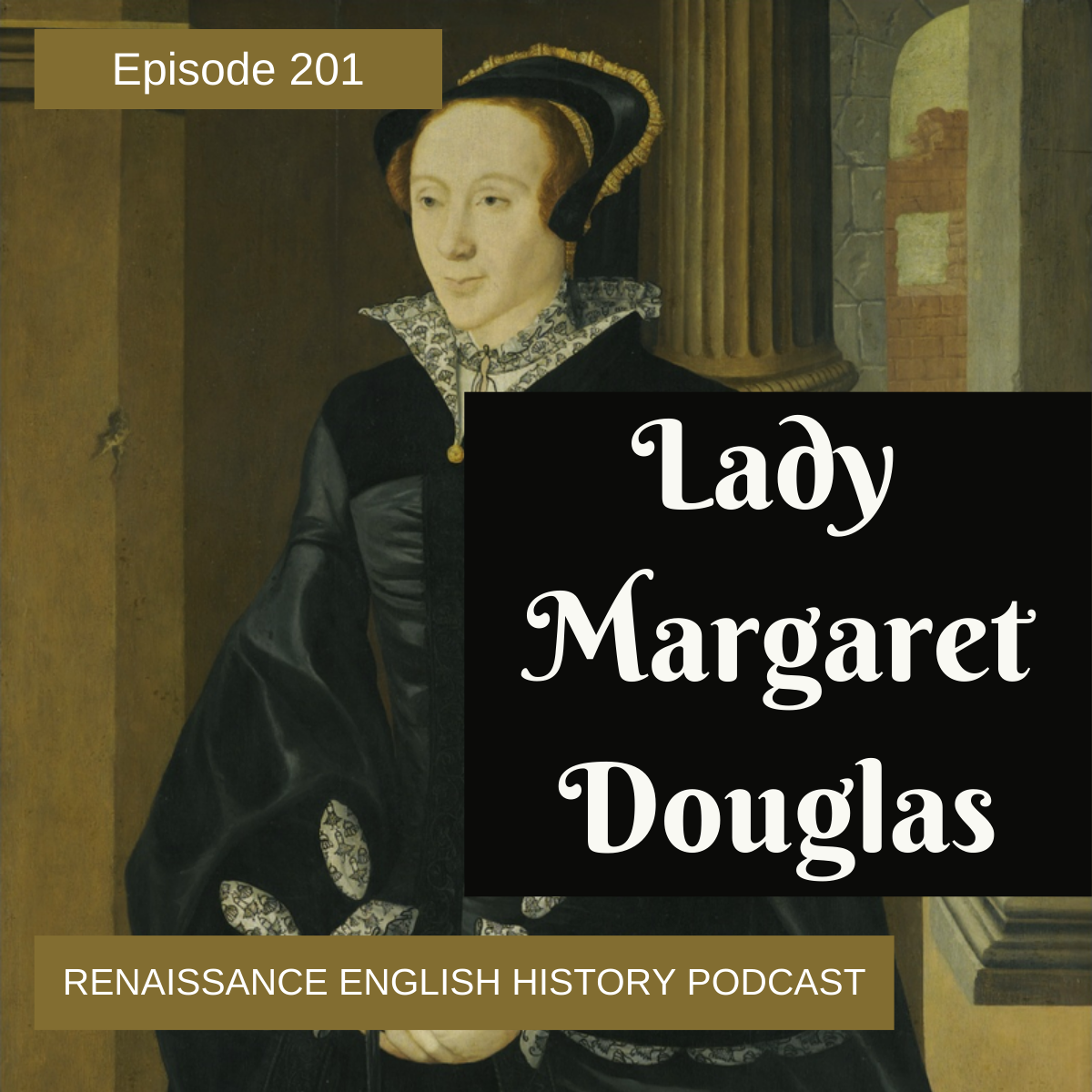
    This episode offers an exploration of the life of Lady Margaret Douglas.

    The niece of Henry VIII, she is often overshadowed by more famous figures of her era, Margaret’s life was filled with political intrigue, romance, and resilience as she navigated the dangerous world of the Tudor court. Heather details Margaret’s story from her tumultuous childhood, marked by her parents’ fractious marriage, to her pivotal role as a royal influencer and kingmaker.

    Margaret’s life intersected with nearly every Tudor monarch, from her uncle Henry VIII to her granddaughter Arbella Stuart’s potential claim to the throne. Her story includes notable highlights such as her imprisonment for her ill-fated romance with Lord Thomas Howard, her marriage to Matthew Stuart, Earl of Lennox, and her relentless pursuit of power and recognition for her son, Henry Stuart, Lord Darnley, who became the ill-fated husband of Mary, Queen of Scots.

    Margaret’s tenacity and political maneuvering shaped the Tudor and Stuart dynasties, even as personal tragedy defined much of her life, including the loss of all her children. Heather also discusses Margaret’s lasting legacy, from her influence on English-Scottish relations to her enduring presence in Westminster Abbey, where she was laid to rest at Elizabeth I’s expense.

    This episode provides a detailed narrative of Margaret’s extraordinary life, offering listeners a fresh perspective on the Tudor court and the behind-the-scenes influence of this remarkable, often overlooked figure.

    A very rough transcript on Episode 200: Lady Margaret Douglas

    Hello and welcome to the Renaissance English History Podcast, a part of the Agora Podcast Network. I am your host, Heather Teysko, and I’m a storyteller who makes history accessible because I believe it’s a pathway to understanding who we are, our place in the universe, and being more deeply in touch with our own humanity.

    Today, we’re going to dive into the life of a lesser known yet immensely powerful Tudor woman, and that would be Lady Margaret Douglas. the niece of Henry VIII. She is often left in the shadows of the more famous figures of her era, but she wielded a significant influence behind the scenes of the Tudor court, shaping the course of history in ways that leave an impact even today.

    And I’m going to tell you, this is going to be quite a long one. The transcript itself is about 6, 000 words. So, grab a beverage of your choice and get settled in. We’re going to cover all sorts of geography from Scotland to France to England and get into the politics of all of the Tudor monarchs, except maybe Henry VII.

    Before we get started, though, this is your regular reminder about TudorCon. We’re just under two months away. Hooray! Plans are being finalized and moving on apace. Remember if you can’t come in person, and remember there’s actually still a bit of time to get your ticket if you can. You can still come via the magic of the interwebs via our streaming ticket.

    All of the talks will be live, there will be a moderated chat so you can ask questions of all of the speakers, interact with others in attendance, There’s a dedicated TutorCon group where you’ll get the transcripts and the recordings, plus a digital goodie bag with e books, electronic art, and some other fun digital treats.

    So go to englandcast. com slash TutorCon online to learn more and enter the code earlybird when you receive your ticket to save 10. And again, that’s TutorCon. Englandcast. com slash Tudorcon online and enter the code earlybird. All right, then, my friends, Margaret Douglas, born amidst political turmoil and bred in the opulent yet dangerous Tudor court.

    Lady Margaret’s life was rife with romance, power plays, and the immense task of playing kingmaker within her own family lineage. Her story offers a unique lens through which to view the Renaissance England that we all know and love, brimming with clandestine plots, royal scheming, and political maneuverings.

    In this episode, we’re going to talk about her childhood, her critical role within the court. And the powerful players that she was able to place in positions of authority, as well as her legacy. So, settle in and get comfortable. Here we go. Lady Margaret Douglas was born on October 7th, 1515. Some sources say October 8th, but it was actually the 7th.

    She was the child of a politically charged union between Margaret Tudor, who was, of course, the older sister of Henry VIII, She was also the Queen Dowager of Scotland at the time, and her second husband Archibald Douglas, the 6th Earl of Angus. It was a tumultuous relationship that was often at odds with the political climate of the time.

    They had secretly left Linlithgow Palace in Scotland due to the escalating tensions. And, the marriage of her parents set the stage for Margaret’s eventful life. Archibald was apparently considered a young, witless fool by his own uncle, Gavin Douglas. He headed the influential Red Douglas clan. They typically lean towards the pro English party in Scotland, and this clan was often at odds with the majority pro French group.

    Also, little did Queen Margaret know at the time of their marriage, Archibald was actually already pre contracted to marry a lady, Janet Stuart, a detail that would come back later to haunt him and his daughter. The union between Queen Margaret and Archibald sparked resentment among the other Scottish nobles.

    They feared that this alliance could lead to Archibald’s domination of the government, because, of course, Queen Margaret, her son, was the king. She was the Queen Dowager. Uh, they were worried about him having complete power over this, so they actually summoned the Duke of Albany from France to take up the role of governor.

    This left Queen Margaret feeling cornered, and she was urged to seek out refuge across the border in England. She was encouraged by the English Warden of the East, March. She arrived at Harbottle Castle just days before she was due to give birth to her first child by Angus. And she gave birth, little Margaret thrived, and was christened on the 8th of October with Cardinal Woolsey actually serving as her godfather by proxy.

    Now, being born in England actually had significant implications for Lady Margaret. She was born to an English mother. She was born on English soil. And so she was seen as an English subject. This also made her eligible to inherit the crown. She of course would be a granddaughter of Henry VII. This would influence her position in the years to come.

    In the immediate aftermath of the birth, Queen Margaret fell seriously ill. She laid immobile on her bed, and during this time there were whispers in Europe of a potential invasion of Scotland by Henry VIII. Despite assurances by his minister, Cardinal Wolsey, of no such intention, Henry was prepared to enforce his will.

    Should Albany not accede to his demands regarding Queen Margaret? After a series of letters, Queen Margaret and her husband were invited by Henry and his council to come south for Christmas. Due to Queen Margaret’s frailty and the ongoing policy uncertainties regarding Scotland, the party did not actually travel to London, and instead Queen Margaret and baby Margaret were relocated to Moorpath in slow stages, Arriving on the 23rd of November, 1515.

    So little Margaret would have been about six weeks old. Seemed like a really big journey to undertake with a six week old. I remember just getting out the door with a six week old seemed like impossible, but anyway, they traveled. Then Angus did go back to Scotland a few weeks before Queen Margaret and baby Margaret departed to continue south on the 8th of April, 1516.

    Queen Margaret probably understood Angus’s need to maintain his estates, but she still felt a sense of betrayal. Angus quickly resumed his relationship with said Janet Stewart, which resulted in a daughter, and more indignation for Queen Margaret, especially when she discovered that Angus and Janet had been living in her own dour castle, not cool.

    Traveling south with young Margaret, Queen Margaret entered London on the 3rd of May, 1516, and was greeted with joy at the court in Greenwich, which was celebrating the birth of Mary, Henry and Catherine’s long awaited child. From Henry’s perspective, his sisters were crucial tools to attain and sustain power for his lineage.

    With his perception skewed towards the establishment of a Scottish regency favoring England, he He did not shy away from any means necessary to achieve this goal. The problem for Henry was that without a living son, the young James was still his closest male heir, which wasn’t something that he liked.

    So his strategy was to try to control the boy through his mother and ideally bring him to England. rendering the situation less threatening. To implement this, he needed Margaret to go back to Scotland. So finally, in December of 1516, England and Scotland signed a treaty that allowed Queen Margaret to return to Scotland.

    In 1517, in May, Queen Margaret and Lady Margaret, who was then 18 months old, baby Margaret, Embarked on their journey from London, they were welcomed at Berwick by Albany’s representative and Angus on the 15th of June. Queen Margaret was thrilled to see Angus, her husband, still quite oblivious of his affair with the Lady Janet and of their daughter.

    The reunion, however, was short lived with Queen Margaret writing to her brother about her increasing troubles with her husband, Angus. During this tumultuous period, it’s believed that young Margaret stayed with her mother, but records of her upbringing or education during this time are few and far between.

    In 1517, Queen Margaret contemplated annulling her marriage to Angus, but was dissuaded. But by 1521, their relationship had crumbled completely. And Angus, who had tried to undermine Albany’s regency, was exiled to France. Angus later ventured to England, where Henry warmly welcomed him, which must have really made Margaret mad.

    The two formed an alliance, requiring Angus to endorse English interests in Scotland. Henry seemed to favor Angus over his own sister and turned a blind eye to her grievances about him. Now, little Margaret, maybe Margaret’s education during this period is not well documented, but we can figure out from later records and the practices at the time that she would have learned to read, probably write, and write.

    She was likely fluent in Scots and English and she had some understanding of French. She also would have probably learned some practical skills related to managing her large household and also, probably some Latin and some history. She also would have been taught music to sing to play the lute and the virginals and she also would have gone riding, hunting, and maybe even learned some falconry.

    In terms of her religious upbringing, Margaret was brought up in the traditional form, a practice that she upheld throughout her life. Despite the emerging skepticism towards the veneration of images and relics in intellectual circles, Margaret remained a faithful Catholic, and she passionately collected relics.

    In the aftermath of Angus’s exile in 1524, Queen Margaret actually turned to the Pope, seeking an annulment based on Angus’s previous betrothal to Lady Janet. This started a whole scandal back in England, where Henry, Catherine, and Wolsey were absolutely shocked and did everything in their power to prevent it.

    Woolsey, in his correspondence with Henry, detailed his strategies to obstruct the matter due to concerns that the Queen intended to marry Albany, who was her alleged lover. So I think this is quite rich. Henry’s having a fit about his sister wanting an annulment from her husband, who’s clearly not very nice to her.

    And you know, just a few years later, he would be seeking his own annulment. In the same year, Queen Margaret swayed the Scots estates to declare the end of Albany’s regency, giving King James the throne himself. This led to Angus returning to Scotland, where he caused further problems for his wife and stepson.

    He took control of King James’s government. Significantly influencing the Scottish government for the next three years. Lady Margaret’s exact whereabouts during this time are kind of sketchy, but she probably stayed near her father and was probably in close contact with her half brother at various royal palaces like Stirling, Linlithgow, or Edinburgh.

    So in 1526, the Pope finally grants Queen Margaret’s divorce. It was announced in Scotland by Cardinal James Beaton, Archbishop of St. Andrews. The Declaration included the legitimacy of the Union’s daughter as Queen Margaret entered the marriage in good faith. Queen Margaret then subsequently remarried a Henry’s store, Lord Methven.

    When she was close to 15, Margaret was brought to the English court by Henry VIII, following her mother’s failed attempt to secure her a marriage with the French Dauphin. Margaret was appointed as a lady in waiting. to Henry’s daughter, Mary, the future Mary First of England. On April 6th, 1530, Henry VIII got Margaret clothing, supplied her with clothing, but her precise location at that time is ambiguous.

    There’s a theory that Alison Weir puts forth that she moved from Northumberland to the residence of her Aunt Mary, the French Queen, in Suffolk. The theory’s foundation lies in the lines of a posthumous tribute poem about Margaret, presumably penned by someone who knew her personally. However, in the absence of contemporary records, Other historians argue that she went directly to Beaulieu, living with her cousin Mary.

    By Christmas of 1530, Margaret was attending court and was given 6, 13 shillings by Henry for her leisure. This gift was presented again the following year. Margaret was now part of her cousin Mary’s entourage. Mary was still acknowledged as a princess, with her parents marriage under dispute, but not yet formally annulled.

    The two girls developed a close bond that lasted throughout Mary’s lifetime. There was only a six month age difference. They were both under the supervision of Mary’s lady mistress, Margaret Plantagenet, Margaret Poole, Countess of Salisbury, who was also a cousin, of course, of their maternal grandmother, Elizabeth of York.

    Living in the princess’s household, she would have been subject to very strict rules. At that time, Lady Salisbury was in her late fifties and likely adhered to traditional This could have been balanced with the progressive education that Mary was receiving, although there is no evidence suggesting that Margaret was included in those lessons.

    The entire household was made of about 162 members, with Lady Salisbury leading them all. Mostly, the girls resided at Mary’s estates, making occasional visits to the King and Queen at court during Easter and Christmas. They also would have seen Henry and Catherine as Henry and Catherine moved around to their various palaces north of London.

    In 1533, as Princess Mary’s status was downgraded and her household disbanded, Margaret was called to court to serve the newborn Elizabeth, daughter of the new Queen Anne Boleyn. She held the role of chief lady of the bedchamber. It’s not documented whether she pledged allegiance to the Acts of Succession and Supremacy in 1534, which of course validated Anne’s position as Queen and Elizabeth as the sole legitimate heir, while renouncing the Pope’s authority.

    But in order to have that position and be a court, she probably would have given the oath and agreed to the Acts of Succession and Supremacy. In March of 1534, records suggest that Margaret was at court with Henry considering her as a bridal option for Francois I of France’s son instead of Mary.

    Margaret’s appointment as Anne’s lady in waiting was viewed as a major coup and it also distanced Margaret from Mary, a move encouraged by Anne Boleyn. She didn’t like the two girls together, potentially plotting. Having Margaret in her household was also a status symbol for Anne. You know, to say, look, I’ve got the Scottish princess here with me as well.

    Courtly life provided the young women lots of opportunities to indulge in music, singing, dancing, poetry, and romance. Writing love poetry was a popular pastime. The Devonshire Manuscript contains 183 poems and was transcribed mainly by Margaret Douglas and Mary Shelton. It includes several poems attributed to Margaret and her lover, Lord Thomas Howard.

    By 1535, at the age of 20, Margaret was actually unusually old for an unmarried noblewoman. Despite her mother’s earlier arrangements, no marriage prospects seemed likely. Yet, Margaret began a relationship with Lord Thomas Howard, the Duke of Norfolk’s half brother. Margaret, besides being in love, also would have recognized that it was advantageous to be in a union with the family of the Queen’s uncle.

    However, by spring of 1536, this all changed, with Anne disgracefully executed, and the children and Elizabeth was declared illegitimate, Mary had already been declared illegitimate. So, following Anne’s death, an act of succession passed in July 1536, unexpectedly made Margaret the lawful heir in the absence of a legitimate heir from Queen Jane Seymour.

    As Henry realized Margaret’s ongoing affair with Lord Thomas, it became a source of danger for her, as it hadn’t yet been consummated and wasn’t legally binding yet. On July 9th, investigations into the former Queen’s household revealed Howard’s relationship with Margaret. Both were imprisoned, and Howard was condemned by an act of attainder for treason.

    This act also banned royal family members from marrying without the king’s permission. Margaret was spared due to the unconsummated nature of their relationship. Later, a Sir Francis Bigot, a rebel leader, claimed that the act against Howard was actually instigated by Cromwell, who wanted to marry Margaret, which, you know, is a little bit sketchy, so who knows.

    Thomas and Margaret remained in the Tower throughout the summer of 1536, after the execution of Anne Boleyn. Margaret was probably really afraid, and she probably hoped that her family would intercede with Henry, although how much good that would have done, who knows. On August the 12th, Queen Margaret, her mother, implored Henry to let her daughter return to Scotland, but he refused.

    Margaret’s imprisonment wasn’t harsh. She had her servant, possibly guests, and she even exchanged verses with Thomas. By October 20th, Queen Margaret thanked Henry for his nobleness towards her daughter, indicating that Margaret was pardoned. Some historians suggest that Margaret stayed in the Tower until October of 1537 and then convalesced at Scion Abbey.

    Others, based on correspondence from that period, propose that she was transferred to Scion in November of 1536, after receiving Henry’s pardon and a luxurious gift indicating her forgiven status. However, Thomas remained in the tower and he died on October 31st, 1537. His death deeply affected Margaret.

    She was very much in distress about it. Thomas was buried without pomp, as per the King’s command, and during her imprisonment and thereafter, Margaret incurred medical expenses paid by the King, suggesting an illness. Her movements post Scion are unknown, but she likely returned to her cousin Mary’s household by June of 1538.

    In October of 1538, she was considered for a foreign prince’s marriage, Henry offered Margaret and other ladies to Emperor Charles if he accepted his protégé for Mary, but negotiations stalled. When Henry pursued Anne of Cleves, Margaret was to lead the great ladies and welcome the new queen. She was granted luxurious accommodation at Hampton Court.

    In the queen’s service, Margaret would have met and been close with Catherine Howard, who of course was related to Thomas Howard, and then Catherine replaced Anne of Cleves as queen in 1540. So Margaret remained in the royal household, receiving a gift from the new queen. She sparked a flirtation with Charles Howard, Catherine’s brother, but marriage plans did not materialize.

    In 1541, Margaret’s mother passed away. Around the same time, Queen Catherine was arrested for adultery. And, Margaret was questioned but remained uninvolved. Post investigation, Margaret was directed to Kenningall in Norfolk, accompanied by her friend Mary, Duchess of Richmond. She remained there until late 1542.

    She then faced a further loss as her half brother, King James V of Scotland, died in December of 1542. Her father, Angus, was restored to his lands and joined the Scots Privy Council. In July 1543, Margaret witnessed Henry VIII’s sixth marriage to Catherine Parr and was surrounded by familiar faces.

    Finally, it was going to be Margaret’s turn to get married very soon. Discussions for a marriage between Margaret and Matthew Stuart, Earl of Lennox, began in July 1543, with Lennox returning to Scotland, intending to oust the Earl of Arran, the governor. Lennox, representing the French alliance, hoped to marry Marie of Guise, the Dowager but instead found himself swaying towards the English side due to intense rivalry with Aaron.

    By October of 1543, Lennox was at Dumbarton Castle receiving a loan and munitions from France. Lennox began secret negotiations with the English, demanding marriage to Margaret and succession of her father’s earldom in exchange for betraying Dumbarton to Henry’s men. Despite his demands, Margaret’s father Angus refused to agree to Lennox’s terms.

    Lennox’s hatred and jealousy of Aaron and rejection by Marie seemed to override his loyalty to the King of France. By March 1544, Henry appeared open to the marriage as long as both Margaret and Lennox agreed after meeting, leaving room for him to break it off if necessary. In June of 1544, a treaty was established between Henry and Lennox.

    Lennox would marry Lady Margaret Douglas and receive an estate in return for renouncing his claims to the Scots throne and his French properties, and handing over Dumbarton and Bute to the English. This agreement also stipulated that Lennox, once Henry ruled over Scotland, which he planned to, because he was going to have Edward marry, marry Queen of Scots, he would be governor under him and would be encouraged to propagate the word of God in Scotland.

    The treaty was followed by a celebratory feast and Margaret married Lennox three days later at St. James Palace. She was almost 30, typically considered past the marriageable age at her time. And Lennox, who was the same age and quite attractive might have been a very pleasing match for her. Margaret supported the marriage of Edward and Mary Queen of Scotts, aligning her closely to the Crown to secure Margaret and Lennox’s loyalty.

    Henry Grant them large tracks of land in Yorkshire, making them one of the largest landowners in the north. The land comprised confiscated monastery and rebel properties, and was bestowed jointly to prevent passing it on to any of Lennox’s potential future children from another marriage. During the War of the Rough Willing, Henry VIII utilized Lennox, Margaret’s husband, for military duties in Ireland and Scotland.

    In 1545, Lennox was convicted of treason by the Scots Parliament, leading to his land’s confiscation. In his absence, Margaret resided at court. The couple still managed to have eight children, however, only two sons, Henry and Charles, would survive into adulthood. The third act of succession prior to Margaret’s marriage established Edward, then Mary, and then Elizabeth as Henry’s successors.

    but overlooked Margaret’s potential claim to the throne entirely. It’s speculated that Henry probably didn’t want Lennox to become King of England, and that’s what led to this decision. After Henry’s death, Margaret and Lennox relocated to Temple Newsom near Leeds, managing their estates. Margaret was known for retaining her Catholic practices, even amid Edward VI’s reformist legislation.

    Their sons were raised as Catholics, though they did show some religious flexibility you kind of add to them. Margaret mostly stayed away from court during Edward’s reign, but she did entertain the Regent of Scotland, Marie of Guise, on her journey from France to Scotland in 1551. Margaret’s father, Angus, did attempt to reconcile with her around this time, expressing affection and presenting gifts.

    But Margaret resented her father for his disloyalty to her he sided with the other side of her and her husband. And also for changing the inheritance around so that she was left out and his children by his other marriage received everything. He basically disinherited her. She expressed her frustration in a letter that she wrote to him in 1549.

    In 1552, while she was pregnant, Margaret wished to return home, possibly for the first time back to Scotland since 1528, and she likely visited her father. However, this potential reconciliation didn’t change the entitlement of Angus’s lands. And that led to later disputes. Lennox and her children remained in England, possibly keeping Margaret away during the summer of 1553, when Lady Jane Grey was being positioned for the throne.

    Upon Queen Mary’s ascension, Margaret quickly returned to court, where she and her husband Lennox were favoured. She likely saw this as an opportunity to promote her son, Darnley, as a potential heir and to regain Lennox’s Scottish estates. They received numerous gifts from the Queen, and Darnley’s lute playing skills apparently greatly pleased Mary.

    Margaret served as Queen Mary’s train bearer at her wedding in July 1554, and remained at court as Mary’s chief lady in waiting, despite being pregnant. She bore two sons during Mary’s reign, but only Charles survived. In 1557, Angus, Margaret’s father, died, and she claimed his earldom. However, her cousin Archibald Douglas seized the Angus lands.

    Although Queen Mary sought the Scottish Regent’s support for Margaret’s claims, the matters were left unresolved. In the meantime, Lennox’s brother John’s participation in battles against England raised suspicion about the Lennox’s loyalty, but no action was taken before Mary’s death in November 1558.

    Upon Mary’s death, Margaret, as the Queen’s chief mourner played roles in the funeral and Queen Elizabeth’s coronation. However, Elizabeth distanced herself from Margaret, creating discomfort between them. The Lennoxes retreated to their properties in Setrington, maintaining their Catholic faith despite the Reformation.

    Elizabeth’s reign saw rampant espionage, and Thomas Bishop, a disgruntled former servant of the Lennoxes, reported their actions to the government. Simultaneously, Scotland was in turmoil, with Marie of Guise courted by Protestant reformers. She promised the Lennoxes their ancestral estates, potentially offering a future for their sons.

    Margaret sought recognition for her son Darnley as a potential heir, but with Elizabeth deemed illegitimate by some Catholics. Darnley’s claims extended to Scotland and even to France. Despite Queen Mary of Scots denying Darnley’s request for Lennox estates, the Lennoxes pursued connections with her and the French nobility.

    Elizabeth’s council interrogated Margaret and challenged her legitimacy, citing Queen Margaret Tudor’s divorce. After Mary, Queen of Scots French husband, François II’s death in 1560, there was speculation about Darnley potentially becoming Queen Mary’s second husband. merging their claims to the English throne and bolstering the Scottish throne.

    Upon Queen Mary’s widowhood, both Scotland and England anticipated that the Lennoxes would engineer her marriage to their son Darnley. Margaret Lennox spearheaded this agenda, regularly corresponding with Queen Mary. But the Scottish Queen was more inclined towards an alliance with Spain, sidelining the young Darnley.

    Towards the end of 1561, Margaret and other Catholic nobles, including the earls of Northumberland and Westmoreland, were summoned to London. Fearful of potential arrest, Margaret justified her actions in plotting this marriage by arguing that a Mary Darnley marriage could stave off a civil war should Elizabeth pass away childless.

    Further allegations against Margaret were raised, including her supposed efforts to hinder a meeting between Mary and Elizabeth, due to concerns that Mary might disclose their private correspondence. However, it was evident that Elizabeth’s administration, particularly William Cecil, also preferred to keep the two queens apart.

    Meanwhile, Queen Mary was more focused on her own bid to be named Elizabeth’s direct successor than on the Lennox’s ambitions. In January of 1562, Margaret faced a major setback when she learned of Lennox’s arrest in London. He was taken after he failed to explain some questionable communications with Scotland that the English government had intercepted.

    Thomas Bishop, the disgruntled servant who had been dismissed by the Lennox’s for a second time, not sure why they hired him back, but they fired him a second time, took advantage of the situation by launching a litany of accusations against them. Unsurprisingly, Scotland offered no assistance during the crisis.

    Queen Mary showed little interest in the Lennox family at this stage. As a result, Lennox was then transferred to the Tower of London, and Margaret was placed under house arrest at the old Charterhouse at Sheen in London. The saga of the Lennoxes and their pursuit of power was growing increasingly perilous.

    The government unearthed a conspiracy by the Spanish ambassador de Cuadra to usurp the throne, with Margaret claiming King Philip’s assistance would garner wide support. Margaret, in touch with Daquadra, seemed unaware of the scheme. Thomas Bishop and another spy, Forbes, accused her of treasonous activities such as witchcraft and conspiring against Queen Elizabeth.

    In May, the Council interrogated Margaret, who denied all allegations, requesting her accusers to face her directly and meet Elizabeth. Other Lennox servants confirmed that their correspondence with the Scottish Queen was about the Lennox estates, not Darnley’s marriage. Elizabeth seemed to believe in Lennox and Margaret’s innocence concerning de Quadra’s plot.

    Margaret maintained her innocence throughout the summer, acknowledging only that Darnley’s tutor had visited Scotland without permission. Despite concerns about her finances and the management of their estates, Margaret and Lennox remained confined. In autumn of 1562, Elizabeth fell ill with smallpox, prompting some lords to support Margaret and Darnley’s claims, and Dudley suggested freeing Margaret.

    Upon recovery, Elizabeth allowed Lennox to join Margaret, albeit still under house arrest. Eventually, Elizabeth yielded, likely to maintain equilibrium among potential successors, Margaret, Queen Mary, and Lady Catherine Grey. As a condition, Margaret vowed Darnley wouldn’t wed without Elizabeth’s approval.

    Later, Elizabeth agreed to back the Lennox’s claims to his land, although the Lennox’s financial woes, given their substantial land holdings, were puzzling. Elizabeth’s government soon saw a union between Mary and Darnley as a lesser threat than Mary’s potential marriage to Don Carlos, Philip of Spain’s son.

    Despite this, this is when Elizabeth proposed that Lord Robert Dudley was an alternative spouse for Mary, a suggestion met, of course, with disdain by both Dudley and Mary. Darnley’s exposure at the English court seemed to aim to keep Mary favorably disposed towards the English. Meanwhile, Margaret still anticipated Darnley’s marriage to Mary and subsequent ascension to the English throne.

    not indicating any intent to overthrow Elizabeth. Despite previous hesitations, Elizabeth permitted Lennox to journey to Scotland and eventually Darnley as well. As Dudley sought to avoid marriage with Mary, he willingly cooperated with Margaret to promote Darnley’s prospects. In September of 1564, the Scots Parliament reinstated Lennox, lifting his two decade forfeiture sentence.

    Elizabeth continued to favor Darnley, suggesting him as a suitor to Mary’s ambassador. Ultimately, Darnley traveled to Scotland and quickly caught Mary’s affection. By April, Mary was requesting Elizabeth’s approval for marriage with Darnley and her designation as Elizabeth’s heir. Elizabeth responded coldly, restricting Margaret’s movement and giving contradictory orders about the proposed match.

    Mary’s choice of Darnley was met with general displeasure among the Scottish lords for various reasons. When Darnley accepted the earldom of Ross swearing allegiance to Mary, Elizabeth commanded him and Lennox to return to England immediately. Their failure to comply resulted in Margaret’s imprisonment in the Tower of London.

    Margaret was suitably housed and attended during her incarceration near the bell tower. Her son Charles briefly lived with the Archbishop of York before returning to his home. While her estates were not formally forfeited, their rents were directed to the Crown. Margaret increasingly corresponded with Cecil and the French and Spanish ambassadors, much to Elizabeth’s chagrin.

    Soon, word arrived of Mary and Darnley’s marriage. Darnley tactfully abstained from attending the nuptial mass, signaling his empathy towards Scotland’s Protestants. The couple were now styled as King and Queen of Scots, appealing for Margaret’s release, promising non interference in England, and requesting an Act of Parliament securing the succession for their heirs.

    Despite pleas from multiple European monarchs, Elizabeth denied Margaret’s release, though did ensure her comfortable captivity. Well, that was nice of her. Trouble brewed within the new royal union due to Darnley’s arrogant behavior and Mary’s reluctance to grant him full equality. Lennox’s quest for revenge also troubled Mary.

    However, Darnley did serve one useful purpose, ensuring Mary’s pregnancy shortly after their marriage. Margaret was undoubtedly pleased by the pregnancy news and received a letter from Lennox intercepted and confiscated when their servant Fowler was apprehended. Meanwhile, the marital discord between Mary and Darnley escalated.

    Darnley’s jealousy of Mary’s secretary David Rizzio culminated in a conspiracy to murder him, possibly involving Lennox. Darnley sought his mother’s release through a letter to Elizabeth, claiming her innocence in his marriage to Mary, but it proved ineffective. The Spanish ambassador suggested that Margaret’s influence could have mitigated Darnley’s behavioral issues, perhaps explaining Elizabeth’s insistence on keeping Margaret imprisoned.

    Public appearances suggested Mary and Darnley’s reconciliation post Rizzio’s murder, but with the birth of her son. Mary saw no further need for Darnley, a sentiment shared by most Scottish nobles, except for his father. Darnley was murdered in February 1567, with the extent of Mary’s involvement remaining a subject of debate, to put it mildly.

    News of Darnley’s death, of course, would have crushed Margaret, prompting Elizabeth to dispatch Lady Cecil and Lady William Howard to inform her. Initially, Margaret thought that her husband, Lennox, was dead as well, until William Cecil personally reassured her. Elizabeth, sympathizing with Margaret’s intense grief, allowed her to relocate to Sheen where she was reunited with her son, Charles.

    Margaret and Lennox, suspecting Queen Mary’s involvement in their son’s death due to her lackluster pursuit of justice, pursued a private prosecution against the Earl of Bothwell. His subsequent acquittal only heightened their suspicions. By April of 1567, Lennox returned to England. to console Margaret.

    Touched by their sorrow, many of Elizabeth’s courtiers suggested leniency. Eventually, the grieving couple was allowed to reside at Cold Harbor, a modest London palace, although their estate’s incomes remained with the crown. Mary’s suspected guilt and her subsequent marriage to Bothwell led to her abdication in favor of her son James, Margaret’s grandson.

    Margaret and Lennox were horrified at the possibility of Mary regaining her throne with English support and implored Elizabeth for justice. Despite initial sympathy, Elizabeth grew tired of their grief and demanded more proof of Mary’s guilt. In Scotland, the young James was crowned and raised in the Protestant faith by the Earl of Moray, his uncle.

    The following two years saw Margaret and Lennox continue to accuse Mary of Darnley’s murder, though the issue remained unresolved. In 1570, the assassination of the Regent Moray plunged Scotland into chaos, sparking fear in both Margaret and Mary for James safety. Despite Margaret’s pleas to bring James to England and under her care, Elizabeth denied the request due to potential religious influences and risks to her own power.

    Meanwhile, Mary reached out to Margaret, seeking advice about James’s relocation. Margaret didn’t respond but maintained her belief in Mary’s guilt in a letter to Sir William Cecil. Amidst the chaos in Scotland, Elizabeth appointed Lennox as the new regent under strict instructions while Margaret and Charles remained in London essentially as hostages.

    Lennox reluctantly assumed the role of regent and developed a bond with his four year old grandson, King James. Despite his best efforts, Lennox’s old rivalry with the Hamilton’s led to conflicts, resulting in him executing several Hamilton hostages, marking him as a target. His relationship with the Earl of Morton, involved in the murder of Secretary Rizzio, also soured.

    In 1571, Lennox was killed, possibly by an enemy or an ally, during an armed confrontation led by the Queen’s party in Stirling. His last words expressed concern for King James and a love for his wife, Margaret. His death was kept under wraps until Elizabeth personally could break the news to a devastated Margaret.

    Margaret shifted her focus to her remaining child, Charles, seeking his guidance and promotion through Lord Burleigh. though he only appointed Charles a Protestant tutor. Despite her Catholic beliefs, Margaret showed tolerance for other religious views, which of course was very rare in this time. During this period, she liaised with the new regent, the Earl of Marr.

    Surprisingly, around 1573, Margaret announced her belief in Queen Mary’s innocence of Darnley’s murder. This drastic shift in her convictions remains a mystery. In 1573, Margaret asked to return to Setrington, granted by Elizabeth, with instructions to avoid Chatsworth. where Mary was being held. Despite reconciliation with Mary, Margaret dismissed the notion of collusion, not forgetting her child’s murder.

    The next year, Margaret and her son Charles journeyed to Temple Newsom. She arranged a meeting with Countess Bess of Hardwick at Rufford Abbey, leading to Charles and Bess’s daughter Elizabeth Cavendish’s lovestruck marriage, arranged without Queen Elizabeth’s consent, resulting in Margaret’s imprisonment yet again in the Tower.

    There, Margaret spent her time crafting a handkerchief for Mary, and with no treasonous evidence found, she was released by the end of 1575. In 1577, her son Charles died, probably of consumption. She lost all of her children. She gave birth to eight children. and not one of them survived her. She sought recognition for Arbella as the Countess of Lennox, which was denied, and Queen Mary’s attempt to grant the Lennox inheritance to Arbella in her will had little impact.

    Margaret’s pleas to Elizabeth secured a stern message to Regent Morton regarding Arbella’s rights, possibly with the view to saving Elizabeth’s own money. Margaret drafted her will in February of 1578, and she passed away in March. Elizabeth covered the funeral expenses, allowing Margaret to be buried in Westminster Abbey.

    So there you go, the tumultuous life of Margaret Douglas. We’re going to stop it here. You can hop into the Tudor Learning Circle, a social network just for Tudor nerds. to continue the conversation about this and all things Tudor. And remember to check out the TudorCon streaming tickets at englandcast.com slash TudorConOnline. Thank you so very much for listening and I will be back with more stories of Tudor England next week. Have a great one

  • Who was Margaret Douglas, and what did she do to anger the King so much?

    Who was Margaret Douglas, and what did she do to anger the King so much?

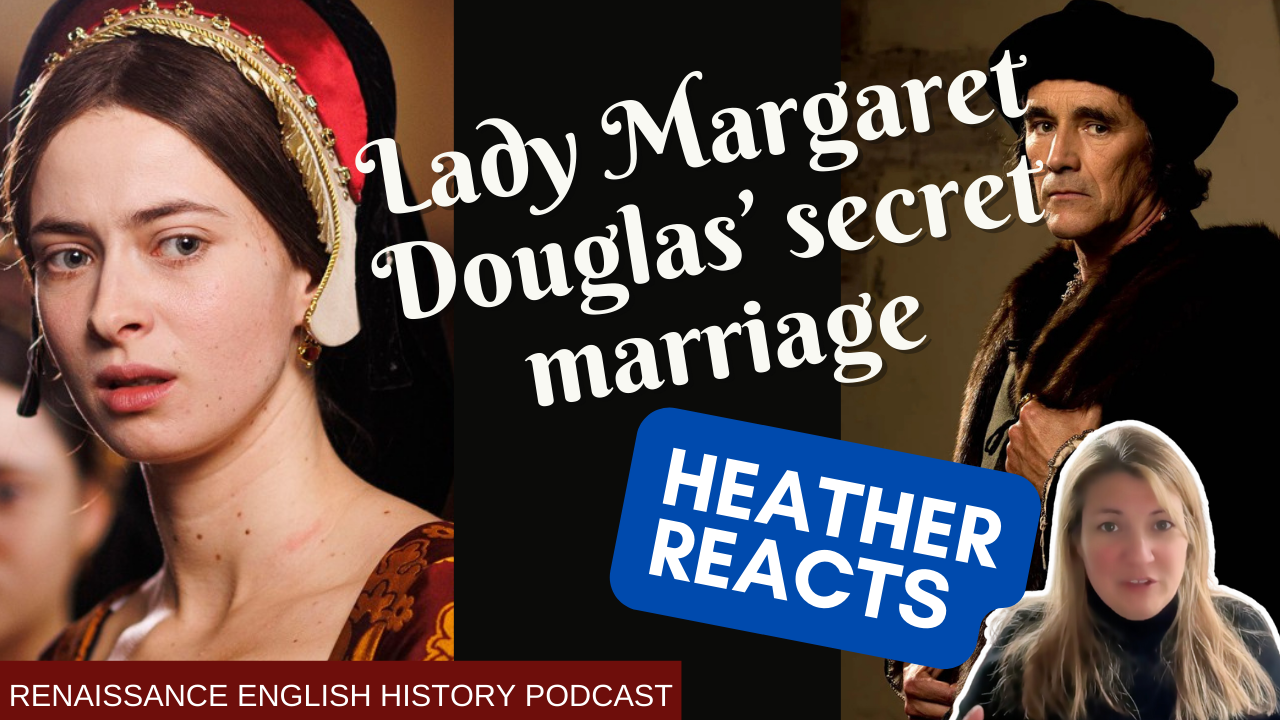
    Well, the second episode of the second season of Wolf Hall, the Mirror and the Light, gets into the scandal of Lady Margaret Douglas’ secret marriage to Lord Thomas Howard. Let’s dig in and look at the truth behind the drama.

    Watch the video, or read a rough transcript below.

    Related Link: Episode 53: Tudor Times on Margaret Tudor

     Hey friend, welcome back to the YouTube channel for the Renaissance English History Podcast. I am your host, Heather. I’ve been podcasting on Tudor England since 2009 with my show, making it the original Tudor History Podcast. This channel is where I put all of my episodes from all of my shows, as well as lots of extra content like this video right here.

    This video today. We are going to talk more about Wolf Hall, the second episode, uh, aired in the UK on Sunday of the Mirror and the Light. I did a video on Monday or Tuesday talking about, uh, was Cromwell really going to marry Princess Mary? Because that’s something that was portrayed, the, the rumor of that was.

    portrayed in the second episode. The other main thing that came in that second episode was we saw Lady Margaret Douglas and her secret marriage and we saw Cromwell interrogating her and the kind of repercussions and fallout from that. So today we’re going to talk about about the truth of what happened with Lady Margaret Douglas and her secret marriage, which is indeed historically accurate.

    Uh, we’re going to talk about how Cromwell might have been involved, what we know about how he might’ve been involved and what was an interpretation, that kind of thing. So let’s get started and dig right in. Before we do that though, if you would like to see more Tudor history in your YouTube feed, why not go ahead and hit subscribe right now so you never miss a video that I put out.

    Okay. I have to put on my glasses to do this so I can see my notes. Ah, age. All right, so let’s talk a little bit about who Lady Margaret Douglas was and this secret marriage that she had. So it’s the summer of 1536. Henry is basking in his new marriage to Jane Seymour and hopeful for his long awaited male heir and scandal erupts in his court.

    His beloved niece, Lady Margaret Douglas, secretly pledged herself to Lord Thomas Howard, a move that set the court ablaze with whispers of treason and ambition.

    This is the story of how Margaret’s love affair nearly toppled her future and the The life of her lover and brought her under the sharp scrutiny of Thomas Cromwell. Someone whose sharp scrutiny you never wanted to attract. So Margaret was born in 1515. She was the daughter of Margaret Tudor, Henry VIII’s older sister, and Archibald Douglas, the Earl of Angus.

    So Margaret Tudor had married into Scotland. Her husband had died and then she remarried Archibald Douglas, Earl of Angus.

    This makes Lady Margaret Douglas very important. Henry’s daughters, Mary and Elizabeth, are still at this point declared illegitimate after his marriages to Catherine of Aragon and Anne Boleyn unraveled. Margaret Douglas was seen as a potential heir to the English throne.

    Uh, she was of the three, of three women there, she was the only one who wasn’t declared illegitimate, so good for her.

    Margaret’s early life had been shaped by the dramatic fallout of her parents turbulent marriage. Her mother had scandalized both England and Scotland by marrying the Earl of Angus, Archibald Douglas, following the death of her first husband, uh, that was James IV , so when James the fourth died, Margaret Douglas is, you know, the Dowager, she’s the regent, but she then remarries , the politics in Scotland were similar to the Tudor court in England. And so that kind of scandalized everybody.

    She had to flee for her safety. Margaret Tudor had, Henry’s sister, had to flee for her safety more than once, often with her young daughter, Lady Margaret Douglas, in tow. Eventually, Margaret was sent to England, Margaret Douglas, The daughter was sent to England. She lived at Scotland Yard. You know, it’s funny because we think of Scotland Yard as where the police are, and no, we’re going to call Scotland Yard.

    But it was actually a royal residence in Westminster named for its association with the Scottish monarchy. So Lady Margaret Douglas was living at Scotland Yard, where she was brought up in, you know, this political upheaval not around her mother, but her uncle, Henry VIII, did dote on her completely, just loved her, loved her, loved her.

    Henry made sure that she was well placed at court. He showered her with gifts and favor, but her position has was always gonna be precarious. Her royal blood came with high expectations, and her actions could have far reaching consequences. In 1536, Margaret fell in love with Lord Thomas Howard. Lord Thomas Howard was a younger son in the powerful Howard family.

    Though Thomas was from one of England’s most noble houses, he was far beneath Margaret in status. He was a younger son. Their engagement was a reckless gamble in the treacherous world of Tudor politics. Margaret, at that point, they would have wanted her for an international marriage. Henry didn’t have tons of kids to marry off and have alliances with.

    So he would’ve wanted to save his niece for, you know, an international marriage, something that could help diplomatically, not just have her marry for love, which that in and of itself was like, why would you do that? The nobility didn’t particularly marry for love. They married for alliances. Um, and you know, then to someone so far beneath her.

    It was pretty scandalous when it happened. The relationship was kept secret, but secrets did not last very long in the Tudor court. When news of the engagement reached the king, he was livid. The implications were both personal and political. With his marriage to Jane Seymour still quite fresh and no male heir yet born, the Tudor succession was fragile and Margaret’s engagement to Thomas Howard could be interpreted as a direct challenge to the throne, particularly since Thomas Howard’s uncle, who is the Duke of Norfolk, was already a pretty high power broker in court.

    The Duke of Norfolk had also been Anne Boleyn’s uncle. So he was really high up there involved in everything and so for Lord Thomas Howard to marry the niece of the king who is in the line of succession, that could show that he maybe had some eyes on the succession himself.

    Now, Thomas Cromwell was the king’s chief minister at this point, and given the nature of how sensitive it was, the ranks of the people involved, he would have played a central role in handling the fallout from the scandal.

    In the series, they show Cromwell interrogating Margaret, showing his kind of dual loyalties. He was completely loyal to the king, but he also privately understood how love had the power to destroy people and, you know, could, could have a power all on its own. Under intense pressure, Margaret admitted her engagement to Thomas, but she denied any treasonous intent.

    Nevertheless, Henry was unforgiving. Both Margaret and Thomas were imprisoned in the Tower of London. This was a chilling reminder of the consequences of defying Henry VIII. An act of attainder was passed against Thomas, accusing him of aspiring to marry Margaret to place himself in line for the throne.

    The act also introduced a new law. No member of the royal family could ever marry without the king’s explicit permission. While Margaret languished in the tower, Thomas Howard fate. was sealed. Though his death sentence was not immediately carried out, he remained imprisoned in very harsh conditions.

    He got ill and he died in the tower in 1537, likely of malnutrition or disease. He was only 26 years old. Margaret’s imprisonment was less severe, but still quite humiliating. After falling ill herself, she was moved to Scion Abbey. Her mother, Margaret Tudor, Henry’s sister, was writing these desperate pleas, asking him to move her, really trying to fight for her, but there wasn’t really anything she could do either.

    By 1537, she was released and was gradually returned to the King’s good graces, though the episode would , leave a shadow over her reputation. This episode did harden Margaret Douglas, and in later years, she would become a very shrewd political operator, very, very deeply involved in Tudor succession intrigues. The law forbidding royal marriages without the king’s consent would also have lasting consequences.

    It showed Henry’s determination to control the dynasty and protect his legacy at all costs, even if it meant crushing the romantic aspirations of his own family. Despite the scandal, Margaret Douglas’s life did not end in ruin. She went on to marry Matthew Stuart, the Earl of Lennox, and became the mother of Henry Stuart, Lord Darnley.

    Now, if that name sounds familiar to you, it is because, , Lord Darnley married Mary Queen of Scots, and together they had James VI of Scotland, who then became the future James I of England, who united the crowns of England and Scotland after the death of Elizabeth I.

    Now, how was Thomas Cromwell involved in the interrogation the way they show it in Wolf Hall? The historical records showing Cromwell’s direct involvement in interrogating either Margaret Douglas or Thomas Howard are sparse, but there are enough clues to build a nuanced narrative based on his role as Henry’s chief minister and the way he handled similar cases.

    So here’s what we can reasonably infer or speculate, along with some insights as to whether others in Cromwell’s circle, such as somebody like Richard Rich or Rafe Sadler, might have been involved.

    First, direct interrogations. So there’s no specific evidence in contemporary records that Cromwell personally interrogated either Margaret or Thomas, but it is entirely possible given his position. Cromwell oversaw most major investigations and interrogations on behalf of the king, particularly when they involved very sensitive political issues.

    If the matter was as critical as this, directly tied to the succession and the potential breach of royal authority, Cromwell would likely have been involved. Then there was his role as an intermediary. Cromwell often worked as Henry’s trusted intermediary, handling sensitive matters with discretion. His legal training and methodical nature made him adept at extracting confessions and ensuring that evidence was aligned with the king’s objectives.

    He would likely have conducted interrogators to handle it under his supervision. And then there’s the documentation of evidence. Cromwell was meticulous about recording confessions and correspondence. If he did not personally interrogate Margaret or Thomas, he would have overseen those who did and ensured that their testimonies were well documented in detail to justify the act of attainder against Thomas Howard.

    In terms of the historical and dramatic elements in Wolf Hall, the depiction of his interrogation of Margaret is a dramatic interpretation, of course, but it does align with his known responsibilities. It’s worth noting that Margaret did confess. So if Cromwell or his team interrogated her, they might have framed her relationship as naive rather than treasonous to avoid alienating Henry entirely from his beloved niece.

    And that is how it was framed. Thomas Howard’s confession might have been obtained under duress or through the promise of leniency, though it ultimately did not save him from imprisonment and an act of attainder.

    And then Cromwell’s interrogation style. Historical accounts do show Cromwell as calm and calculating rather than overtly threatening. If he questioned Margaret, he likely appealed to her fear of the King’s wrath and emphasized her precarious position as a royal woman defying the King’s authority.

    So there we have it, my friend, a little bit about Lady Margaret Douglas, her scandalous secret marriage, and how Cromwell might have been involved. I’m really loving Wolf Hall being back on, huh? Are you loving it? I’m totally loving it. It’s, uh, I’ve missed it. Really missed it. All right. Uh, we will leave it there for now.

    Thank you so much for watching. If you want to keep watching Tudor content, here is a video that I did on Lady Margaret Douglas just recently, actually. And here’s a video that YouTube thinks you’ll enjoy. Thank you so much for watching. Remember, you are deeply loved. I’m so glad I share the planet with you.

    Don’t forget to drink your water. Important to stay hydrated, and I will be back very soon. Bye bye.

  • Arbella Stuart: The Forgotten Tudor Heir

    Arbella Stuart: The Forgotten Tudor Heir

    Arbella Stuart, the Tudor-era royal often overlooked by history. Let’s dive into her captivating story of being born into a lineage of power and ambition, Arbella’s life was marked by political intrigue, imprisonments, and a daring escape.

    Amid the sprawling tapestry of English history, some figures though draped in royal image and standing at a crossroads of dynastic change, still remain largely in the shadows, and Arbella Stuart is one such figure. Born at a time of political upheaval and religious discord, her very existence was a testament to the tangled web of the Tudor bloodline and the looming question of succession. The absence of a direct heir from Elizabeth, threw the country into a quagmire of conspiracies, power plays, and anticipation, and Arbella Stuart was right at the center of that, and that’s who we’re going to talk about today.

    Within the swirling vortex of courtly intrigue, the name Arbella Stuart surfaced again and again. Here was a young woman whose veins carried the legitimate Tudor blood through her grandmother, Margaret Douglas, a direct descendant of the House of Tudor. Yet how many of us have actually heard her story? As we embark on this journey into Arbella’s life, we’re not just delving into the story of a potential queen, we’re unraveling a narrative that encapsulates the very essence of Elizabethan and Jacobian eras.

    From the cold stonewalls of the Tower of London to the courts and the greatest monarchs, from clandestine love letters to audacious escape attempts, Arbella’s story isn’t just about her claim to the throne. It’s about a woman who was both a pawn and a player in a grander game and the personal sacrifices that came with her royal birthright.

    In today’s episode, we’re going to travel back through time, shedding light on the enigma that is Arbella Stuart, retracing her footsteps, and unveiling a tail as captivating as any crowned monarch of England. To truly understand the weight of Arbella’s claim, we need to first step back and examine the Tudor family tree.

    Her Royal Lineage

    Arbella Stuart was born on October 3, 1575, in Hardwick Hall in Derbyshire. She was the child of Charles Stuart, 5th Earl of Lennox, and Elizabeth Cavendish. Her birthplace Hardwick Hall was the brainchild of Arbella’s grandmother, the formidable Bess of Hardwick. From her earliest days surrounded by such opulence and heritage, Arbella’s life was deeply intertwined with the rich tapestry of English royalty. It was clear from the beginning that her destiny would be anything but ordinary.

    Arbella’s paternal grandmother, Margaret Douglas, held a significant place in the family saga. Margaret was the daughter of Margaret Tudor, the eldest daughter of Henry VII, and sister to Henry VIII. This direct connection to the Tudors was solidified further through the marriage as Margaret Douglas wed Matthew Stewart, 4th Earl of Lennox. The Lennox connection was crucial too. It was a lineage that though initially from Scotland, intertwined deeply with England’s royal chronicles.

    The birth of Arbella’s father Charles Stuart, Earl of Lennox, further cemented this legacy when he married Elizabeth Cavendish. Arbella’s lineage boasted a dual heritage, one part Tudor through her grandmother Margaret Douglas, and one part English nobility, courtesy of the Cavendish, a prominent family in the Elizabethan court.

    Given this lineage, it’s not difficult to see why Arbella’s claim to the throne was taken seriously by many. At a time when the Tudor dynasty was waning with Elizabeth I, aging and childless, the realm was rife with anxiety about succession. Elizabeth’s reluctance, or perhaps inability to name an heir left a vacuum causing the English court and European monarchies to speculate and strategize. 

    In this soup, anyone with a drop of Tudor blood became a contender, and Arbella’s claim was as legitimate as any, given her proximity to the main Tudor line. Yet it’s essential to understand that Arbella’s claim was not just about blood, it was about the broader narrative of the era, the religious divide between Catholicism and Protestantism.

    With the Protestant Reformation still fresh, and England having broken away from the Catholic church, Arbella, viewed by some as potentially leaning towards Catholicism due to her Lennox lineage, represented an opportunity for Catholic forces in Europe. She was seen as a symbol of hope for those who wished to revert England back to Catholicism, making her both a beacon for some and a threat for others.

    Bess of Hardwick

    Bess of Hardwick born Elizabeth Hardwick is a figure who looms large, not just in Arbella’s story but in English history as a whole. We’ve done several episodes on her because she highly deserves them. Rising from relatively humble beginnings, Bess would go on to become one of the wealthiest and most influential women of her time, second only to Queen Elizabeth.

    Four marriages, each strategically aligned and ascending in status, catapulted Bess into the echelons of the English nobility. Her last marriage to George Talbott, 6th Earl of Shrewsbury cemented her position at the heart of England’s political and social circles. But Bess wasn’t just a woman of wealth and influence. She was a shrewd operator, a formidable matriarch, and a masterful builder.

    Her most famous architectural feat, Hardwick Hall, with its emblematic proclamation, Hardwick Hall –  more glass than wall, was a testament to her audacity and ambition. Its large windows, a luxury in the Elizabethan age, symbolized her transparent ambitions and vast wealth into this world of opulence, power plays, and political maneuvering, Arbella Stuart was born.

    And under the watchful eye of Bess, she was raised. Arbella’s parents died when she was young, leaving her in the guardianship of her grandmother. For Bess, Arbella was not just a beloved granddaughter, but also a living embodiment of potential and promise. Bess knew all too well the weight of Arbella’s royal lineage, and she was determined to ensure that her granddaughter was prepared for whatever destiny had in store. While Bess’ estate provided a safe haven, it was also a crucible for young Arbella.

    Bess instilled in her a sense of her royal identity, ensuring she received an education befitting a potential queen. Arbella was trained in languages, music, needlework, and scriptures. Equally, she was made aware of the political intrigues that surrounded her birthright.

    The Tudor court with its ever-shifting alliances and undercurrents, was a frequent topic of discussion. Yet for all the formality and expectations, Bess’ influence was not solely that of a stern matriarch shaping a royal heir. There were moments of tenderness shared between a grandmother and her charge. Through letters and accounts, we catch glimpses of their bond.

    Bess is concerned for Arbella’s health. Her letters were filled with advice, warnings, and occasional reprimands, but always underscored by deep-seated affection. In understanding Arbella’s formative years, one cannot overlook the pivotal role played by Bess. Her indomitable spirit and her political acumen, her unwavering belief in Arbella’s destiny would leave an indelible mark on the young Stuart heiress.

    Another figure that of course, loomed large over Abella would be Elizabeth I. With her resolute decision to neither marry nor name an heir, she had inadvertently cultivated a hotbed of speculation and conspiracy. As she aged and the future of the Tudor dynasty seemed uncertain. eyes inevitably turned towards anyone with a drop of Tudor blood.

    Catholics vs Protestants

    In this environment, Arbella’s claim rooted in her Tudor lineage made her a natural focal point. For the Protestant faction at court, the specter of Catholicism remained an ever-present threat.  The religious reformation had divided Europe and England’s break from the Roman Catholic Church was still a recent memory. This made any claimant with even a hint of Catholic sympathies, real or imagined, both a rallying point for Catholic hopes and a source of anxiety for the Protestant establishment. 

    Given the Lennox connection and its perceived Catholic leanings, there were those who saw Arbella as a potential Catholic queen, a restoration of the old faith on English shores. However, public perception wasn’t uniformly one-dimensional. For many, Arbella was a symbol of English stability. As Europe’s monarchies watched the English succession drama with bated breath, many within England yearned for a seamless uncontroversial transition.

    In Arabella, they saw continuity, a bridge between the Tudor past and a hopeful future. Yet the court was a place of whispers, a realm where rumor often held as much power as fact. Arbella’s every move, her friendships, her letters, and even her personal beliefs became fodder for speculation. Was she loyal to the Protestants or did she secretly harbor Catholic sympathies?  Did she have ambitions to claim the throne or was she content in her role as a potential heir?  

    James I

    James VI of Scotland‘s assent to the English throne as James I, added another layer of complexity. Though he was a cousin and by many accounts held Arbella in fond regard, her proximity to the throne naturally made their relationship fraught with political undercurrents to the public. Arbella’s life was a narrative of potential, a story that intertwined hope, ambition, and the looming question of “what if.”

    To courtiers, she was both an asset and an enigma. Someone to be watched, courted, and at times controlled. When James VI of Scotland was declared James I of England in 1603, uniting the crowns of both kingdoms, the political landscape underwent a seismic shift for Arbella.

    This period was one of profound personal and political ramifications. James’s ascension might have provided some clarity to the succession question, but it by no means eliminated the intrigues that surrounded Arbella. Initially, there was hope for her.  After all, James and Ella were first cousins. They shared a lineage that could have been a bridge to a close bond, and in many ways it was.

    James invited her to court and bestowed upon her a generous allowance, and for a while, it seemed that Arbella had found a secure place in the new Stuart Dynasty. However, the realities of royal politics are seldom straightforward. Arbella’s position close to the throne, yet not on it rendered her a figure of enduring interest and speculation.

    Her Clandestine Marriage

    Her every action, even her potential marital alliances became matters of state concern. Any suitor of Arbella was not merely courting a lady. He was potentially aligning with the claim to the throne.  This made her personal life a topic of national significance. One such romantic entanglement, her relationship with William Seymour, 2nd Duke of Somerset, a descendant of Lady Katherine Grey, was also a descendant of Henry VII, brought this to a head. 

    Their affection for each other was undeniable. However, their union would signify the joining of two claimants to the throne, something that was viewed with deep suspicion.  Their clandestine marriage in 1610, without the King’s permission led to their imprisonment. A love story, which in any other context might have been celebrated, became a symbol of political defiance.

    The marriage between Arbella and William Seymour was not just a personal matter, but a political conundrum. The merging of two claims to the English throne was not something that James I first could ignore, given the historical challenges of Tudor and Stuart succession.

    Upon discovering the clandestine union, James acted decisively. He saw this union as a threat to the stability of his reign. The newlyweds were promptly arrested. William was sent to the Tower of London while Arbella Stuart found herself confined to Sir Thomas Perry‘s house in Lambeth.

    Imprisonment and Attempt to Escape

    Arbella’s life once filled with the possibilities of royalty, was now marked by solitude and confinement. Yet her spirit remained undimmed. Separated from her husband, and under constant watch, she orchestrated a daring escape plan. By 1611, her situation had become increasingly desperate. Imprisoned and separated from her beloved, she found herself under the watchful eye of Sir James Croft at his house in Barnet.

    Despite the scrutiny, her spirit was not easily caged. In the time leading up to her escape, Arbella began a calculated performance. She feigned bouts of illness effectively reducing her guard’s vigilance as they believed her to be too weak to attempt an escape. This act also granted her some increased privacy, which she used to her advantage.

    Arbella and William, although physically separated, had managed to establish a secret line of communication. Using this, they meticulously planned their escapes to be executed simultaneously, hoping to reunite and flee England for a life on the continent.

    As part of this plan, Arbella’s maid played a pivotal role in risking her safety. The maid smuggled men’s clothing into the house in Barnet. On the appointed day in 1611, Arbella downed the male attire, a move that greatly reduced the chances of her recognition. With her appearance transformed and exploiting the decreased guard vigilance due to her illness, Arbella successfully evaded her captors.

    She traveled from Barnet to Blackwell, hoping to rendezvous with William. Simultaneously, William had orchestrated his own escape using a wig and a false beard to alter his appearance. He managed to elude his captors at the Tower of London and aim to reunite with Arbella.

    However, despite their meticulous planning, fate did not favor the pair. A series of delays and miscommunications marred their escape. They missed their rendezvous, and William, unaware of Arbella’s whereabouts, decided to continue on to Flanders.  Arbella’s ship delayed while she awaited William, was eventually pursued and intercepted by English authorities before she could reach the relative safety of Calais.

    Arbella was captured and brought back to England. Audacious attempt combined with the political implications of her union with William, led to a stricter and more punishing confinement in the Tower of London, the grim surroundings and her separation from William took a significant toll on her health and spirit, and in 1615, this potential heir to the English throne passed away in the confines of the tower. Her life is a tapestry of ambition, love, and tragedy.

  • Tudor Minute October 8, 1515: Happy Birthday Lady Margaret Douglas

    Tudor Minute October 8, 1515: Happy Birthday Lady Margaret Douglas

    Today is the birthday, in 1515, of Henry VIII’s niece, Lady Margaret Douglas.

    Margaret was the daughter of the Scottish queen dowager Margaret Tudor and her second husband Archibald Douglas, 6th Earl of Angus after Margaret remarried for love, losing her regency in the bargain. Margaret was born at Harbottle Castle in Northumberland. Her mother, Henry’s sister Margaret, had crossed the border from Scotland when her father was facing threats. In October 1528, Angus was threatened by James V of Scotland and sent Margaret back over the River Tweed into England at Norham Castle. After a brief stay at Berwick Castle accompanied by her nurse, Margaret joined the household of her godfather, Cardinal Wolsey. When Wolsey died in 1530, Lady Margaret was invited to the household of Princess Mary, who became her lifelong friend. She was in high standing with her uncle, Henry VIII, who gave her very generous gifts when she was younger.

    When Anne Boleyn’s court was established, Margaret was appointed as a lady-in-waiting. There she met Anne Boleyn’s uncle, Lord Thomas Howard, and they began their courtship. After Henry turned on Anne, he heard of the secret engagement, and was furious. He had his daughters Elizabeth and Mary declared bastards, which left Margaret very high in the succession, and it wasn’t a good idea for her to have contracted an unauthorized marriage. Both Lord Thomas and Lady Margaret were committed to the Tower. On 18 July 1536, Parliament, by an Act of Attainder, condemned Thomas to death for attempting to ‘interrupt ympedyte and lett the seid Succession of the Crowne’. The Act also forbade the marriage of any member of the King’s family without his permission. Thomas was spared execution, but remained in the Tower even after Margaret broke off their relationship. He died there on 31 October 1537.

    Margaret also fell ill in the Tower, and the King allowed her to move to Syon Abbey under the supervision of the abbess. She was released from imprisonment on 29 October 1537.

    In 1544, Lady Margaret married a Scottish exile, Matthew Stewart, 4th Earl of Lennox (1516–1571), who later became regent of Scotland in 1570–1571. Their children were: Henry Stuart (1545-1567), born in 1545 at Temple Newsam; and Charles Stuart (1555-1576), who later married Elizabeth Cavendish in 1574. Elizabeth was the daughter of Sir William Cavendish and Bess of Hardwick.

    Margaret succeeded in marrying her elder son, Lord Darnley, to his first cousin, Mary, Queen of Scots, thus uniting their claims to the English throne, and it would be their son James who would eventually fulfill that union.

    That’s your Tudor Minute for today. Remember you can dive deeper into life in 16th century England through the Renaissance English History Podcast at englandcast.com.


    Suggested link:
    Autumn 2018 Tudor Summit: Melita Thomas on Ladies-in-Waiting

    From the shop:
    Tudor Lover Weekender Tote
    Ps. All products are made on-demand and can take a few weeks to ship.

  • How Scotland arrived in Westminster

    This week I’ve been re-reading Alison Weir’s The Lost Tudor Princess, Alison Weir’s book about Margaret Douglas, Henry VIII’s niece via his sister Margaret, who married the King of Scotland.  When her husband died, she married again for love, and had Margaret, who, because she was born on English soil became a legitimate heir of the perpetually heir-less Henry VIII.  It’s a complicated story of her pregnant mother fearing for her life and escaping to Berwick only a few weeks before her daughter was born, but it effectively put Margaret into the line of succession in England.

    Lost PrincessWhen Margaret was very young and her life in Scotland was unstable thanks to the perpetual clan infighting that went on there, she and her mother were welcomed to the English Court where the younger Margaret would stay for decades.  She stayed in a palace called Scotland in Westminster, close to Henry’s palace at Whitehall, just south of Charing Cross.  Scotland in Westminster?  Huh?  I know that area pretty well, having worked just off the Strand and spending many evenings high-tailing it down to Westminster Abbey for Evensong service after work.  I didn’t know there was a Scotland there.  How did I miss this?

    Ahhhh, I thought.  Oh, hang on.  I know what that is!  That’s Scotland Yard!  England’s police force got its name from the name of the street on which the building was situated.  New Scotland Yard.  But how did New Scotland Yard arrive in Westminster?

    We have a partial answer from John Stow and his Survey of London.  In his book on Westminster and Charing Cross, Stow says that, “On the left hand from Charing Cross bee also divers fayre Tenements lately builded, till ye come to a large plotte of ground inclosed with bricke, and is called Scotland, where great buildings hath beene for receipt of the kings of Scotland, and other estates of that countrey; for Margaret Queene of Scots and sister to King Henry the eight, had her abiding there, when she came into England after the death of her husband, as the kings of Scotland had in former times, when they came to the Parliament of England.”

    So it seems to have been what they called a palace where the Kings or nobles of Scotland would stay when they visited London.  Even before this, in 1436, a jury that was looking at land ownership said that this area had been given by a former King of England to a former King of Scotland so that the Scottish King could build a house there to stay when attending parliament.  But because the two countries never managed to get along properly, the house was never built.  The jury added that because of a war with Scotland, the King of England took the land back.

    There’s a second story which contradicts the first a bit.  Apparently in the early days, the hermitage that was at Charing (before it became Charing Cross) was a part of this “Scotland” land.  So when the King took Scotland back, a grant was made to the hermitage for the land.  In the grant of 1462 it reads that the property was bequeathed to various people, but eventually wound up reading that it would go to “Cicile Crawford, all her land, meadow and gardens called Scottes Grounde…”  

    Either way, it appears that the space was reserved for the use of the Scottish nobility, but by 1519 King Henry VIII had it back, granting it to Cardinal Wolsey until his fall in 1529.  For a while it was then an empty piece of ground, and there was a dock by the river known as Scotland Dock. 

    Much of Whitehall Palace and the attached grounds burned down in 1698 (Inigo Jones’ Banqueting Hall survived), but the name Scotland Yard survived, eventually becoming the entrance to the Metropolitan Police department.   And that’s how we know it today.

    You can read the full story, with footnotes and lots of Big Words here: http://www.british-history.ac.uk/survey-london/vol16/pt1/pp158-164