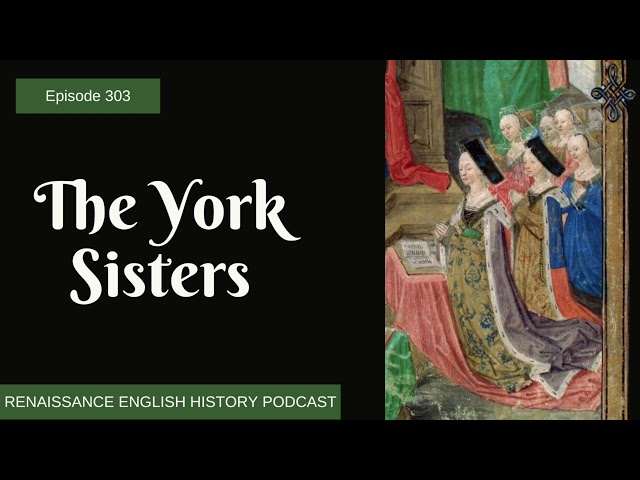
Margaret Pole

  • The York Sisters: Edward IV’s Daughters and the Last Yorkist Threats

    The York Sisters: Edward IV’s Daughters and the Last Yorkist Threats


    The York sisters were the daughters of Richard, Duke of York, and Cecily Neville, and the sisters of Edward IV and Richard III. Born into one of the most powerful dynasties of the Wars of the Roses, the York sisters carried royal blood and dynastic ambition that would shape England long after their brothers were gone.

    Through marriages to dukes, princes, and foreign rulers, they spread Yorkist influence across England and Europe. But under the new Tudor regime, their children became dangerous heirs, rebels, and exiles, forcing the crown to watch every move they made. The story of the York sisters is not one of quiet survival in the shadow of kings—it is the story of how their bloodline haunted the Tudors for generations.

    Transcript of The York Sisters

    It’s late summer 1487 in a chamber at Wingfield Manor, Elizabeth, Duchess of Suffolk, sits by a leaded window. The air is heavy with the scent of beeswax and damp stone. News has just arrived from Nottinghamshire. The rebels who had rallied around the boy pretender, Lambert Simnel, have been routed at the Battle of Stoke Field.

    Her eldest son, John de la Pole, Earl of Lincoln, is dead on the field. He had been the Yorks’ hope, the standard-bearer for their cause after the disappearance of the princes, and now his body lies somewhere along the mud and blood, stripped by soldiers loyal to Henry VII.

    Elizabeth knows what this means. The new Tudor king has been on the throne for less than two years, but already he is tightening the net around her family. She has other sons, Edmund, Richard, and William, and now each one will live under suspicion, their lives balanced on the knife-edge between clemency and execution.

    It is not a new sensation for her. She has been a royal daughter, sister to two kings, and wife to a duke. But in the game of thrones that has consumed England for decades, titles have never been shields. The Yorkist age is ending, and for the women who bear its blood, the danger will not end with this battle.

    Today we are going to talk about the sisters of Edward IV and Richard III and what happened to their children, because that is quite a saga. We’ve talked about different parts of their story before in different episodes. I have done some episodes on the de la Poles. We talk a lot about Margaret Pole, who is very famous. She is not directly descended from one of the sisters, but from the Duke of Clarence. We have also looked at the Courtenay family. We have talked about some of these people, but we have never just had it come down directly from the sisters and talked about those sisters, what their lives were like after Bosworth under the Tudors. So, my friend, that is what we are going to talk about today.

    The sisters of Edward IV and Richard III were born into one of the most ambitious and self-assured families in England. Their father, Richard, Duke of York, was not just a nobleman with a claim to the throne. He was a man convinced of his right to it. Their mother, Cecily Neville, came from the powerful Neville family, which had ties in nearly every noble house of the realm. We have talked about the Nevilles as well.

    So Cecily was known as the Rose of Raby for her beauty in youth, but she was also proud and politically shrewd, instilling in her daughters the expectation that they would marry as queens or near queens.

    The sisters’ early years were spent at the family’s stronghold of Fotheringhay Castle, a sprawling riverside fortress in Northamptonshire. Here they had the typical education of highborn girls: lots of reading, music, and embroidery. They learned management of large households. They also probably absorbed, maybe even unconsciously at first, the rhythms of political maneuvering. Their uncles and cousins and brothers were deeply enmeshed in the politics of the 1450s as the Wars of the Roses slid into open conflict.

    By the time Edward IV seized the throne in 1461, the sisters were already pawns in an international marriage market. Their unions would be used to cement alliances, neutralize rivals, and expand Yorkist influence abroad. But the same marriages that seemed advantageous in the 1460s would, within a generation, draw their children into rebellions and plots against the Tudors. The sisters were not just footnotes to their brothers’ reigns. They were conduits through which Yorkist blood and Yorkist claims flowed into the next century.

    Anne of York: A Life of Political Turmoil

    Let’s start with Anne of York. She was the eldest surviving daughter of Richard, Duke of York, and Cecily Neville. Born in 1439, she grew up with all the same privileges of a great magnate’s daughter and the heavy expectation that her marriage would serve the political fortunes of the family.

    In 1447, when she was about eight years old, she was betrothed to Henry Holland, 3rd Duke of Exeter. This match looked powerful on paper. Exeter was of royal blood, a great-grandson of John of Gaunt, and one of the richest nobles in England. But politics soon turned the alliance sour. Exeter was a staunch Lancastrian, fiercely loyal to Henry VI, and when civil war broke out, he and Richard of York were enemies.

    This left Anne in a very awkward position. The Duke of Exeter fought against her father at the Battle of St. Albans in 1455, and again at Towton in 1461, where Edward IV’s victory forced Exeter into exile. Anne remained in England, effectively separated from her husband. She never reconciled with him, and after years of estrangement, she actually obtained an annulment in 1472.

    Her second marriage was a love match by the standards of her rank. In 1474 she married Sir Thomas St. Leger, a loyal supporter of Edward IV. This union produced her only child, Anne St. Leger, who was born in 1476. Tragically, Anne of York died shortly after childbirth. She was just 37 years old and was buried at St. George’s Chapel in Windsor.

    Now, Anne St. Leger’s position was extraordinary. Through her mother, she was an heir to the great Neville estates of the Earldom of Salisbury. Edward IV, fond of his sister and brother-in-law, had made generous provisions for her, ensuring that she would inherit a vast fortune.

    But wealth of that scale was dangerous for a Yorkist heiress under Tudor rule. After Henry VII’s succession, the crown moved to limit Anne St. Leger’s inheritance. She was married to George Manners, later Baron de Ros, aligning her with a family less threatening to the Tudor regime. The redistribution of her estates into crown hands was part of Henry’s broader policy to keep Yorkist bloodlines under watch and their fortunes under control.

    Anne of York’s life was a topsy-turvy wheel of fortune. A girl married to a powerful duke could, within a decade, become the wife of a traitor, a political liability, and, in death, the source of a dangerous heiress whose wealth had to be curtailed for the sake of the crown’s security.

    Elizabeth of York: Duchess of Suffolk

    Next, Elizabeth of York, Duchess of Suffolk. This is Elizabeth of York, Duchess of Suffolk, not the queen. She belonged to the generation before, one of the sisters of Edward IV, not a daughter. Born in 1444, she was the second daughter of Richard and Cecily. Her marriage in 1458 to John de la Pole, Duke of Suffolk, was arranged while the Yorkists were still on the rise but not yet crowned.

    Suffolk’s father had been executed in 1450 after the disastrous loss of Normandy. His family still held wealth and influence, and the match was meant to knit Yorkist and Lancastrian sympathies together. When Edward IV seized the throne in 1461, Elizabeth’s position solidified. She and her husband kept close to the royal court, benefiting from her brother’s favor.

    The de la Pole family became one of the leading noble houses of the realm, and Elizabeth gave birth to at least 11 children, an unusually large brood, even by the standards of the time. Her eldest surviving son, John de la Pole, Earl of Lincoln, was named by Richard III as his heir presumptive after the death of young Edward of Middleham.

    This positioned Elizabeth’s family at the very heart of the Yorkist succession. But Bosworth in 1485 changed everything. Henry VII claimed the throne, and while Lincoln outwardly reconciled, he was soon involved in the Lambert Simnel rising of 1487. He fell at the Battle of Stoke Field, the last pitched battle of the Wars of the Roses, leaving Elizabeth with the grief of losing her son and the knowledge that her family was now firmly in the Tudor crosshairs.

    The other de la Pole brothers were no less problematic for the new regime. Edmund de la Pole inherited the Suffolk title and for years vacillated between apparent loyalty and open defiance. By 1501 he was in exile and eventually handed over to Henry VII under the promise of mercy, a promise that Henry VIII ignored when he executed Edmund in 1513. Richard de la Pole, styled by continental allies as the White Rose, spent most of his life abroad as a rallying point for anti-Tudor plots, dying at the Battle of Pavia in 1525 while fighting for France.

    Elizabeth herself managed to survive all of this turmoil. She died in 1503 at the age of 59. She had seen her sons lead rebellions, die in battle, or live in perpetual exile, all because the blood in their veins made them a threat to the Tudor crown. Her life shows the harsh truth that for Yorkist women, survival often meant keeping one’s head down, but their children’s ambitions could undo even the most careful discretion.

    Margaret of York: Duchess of Burgundy

    Next up, Margaret of York, Duchess of Burgundy. Margaret of York, born in 1446, was the third surviving daughter of Richard and Cecily and the one whose life took her the farthest from England. In 1468, at the age of 22, she married Charles the Bold, Duke of Burgundy, in one of the most glittering dynastic unions of the century.

    The marriage was a triumph for Edward IV’s diplomacy, sealing an alliance with one of the wealthiest and most sophisticated courts in Europe. The celebrations in Bruges were legendary, pageants, jousts, feasts, and a wedding dress of cloth of gold so heavy that Margaret had to be supported as she walked.

    Margaret’s marriage was childless, but she embraced her role as Duchess of Burgundy with vigor. She became a patron of the arts, of printing, and of religious institutions, and she involved herself in Burgundian politics.

    When Charles was killed in 1477, she became stepmother and advisor to his heiress Mary of Burgundy and helped arrange Mary’s marriage to Maximilian of Austria, a union that would eventually bring the rich Burgundian territories under Habsburg control, igniting decades of rivalry between France and the Habsburg dynasty.

    It was after 1485, with the fall of Richard III and the rise of Henry VII, that Margaret became such a thorn in the Tudor king’s side. From her base in Mechelen, she acted as the unofficial headquarters for Yorkist exiles. She provided refuge, money, and legitimacy to claimants who challenged Henry’s rule.

    She openly backed Lambert Simnel in 1487, even sending troops to Ireland to support his cause. Later, she championed Perkin Warbeck, insisting that he was her nephew Richard, Duke of York, one of the princes in the Tower, and introducing him to European courts as the rightful king of England.

    Margaret’s support was not just symbolic. She helped arrange military aid for Warbeck’s attempted invasions and forced Henry VII to expend considerable money and resources quashing the threat. Her refusal to acknowledge Tudor legitimacy made her persona non grata in England, and Henry forbade any of her English relatives from corresponding with her.

    Despite her political defiance, Margaret remained a respected figure in Burgundy. She died in 1503 at the age of 57, still unrepentant in her Yorkist loyalties. From across the Channel, she had kept the embers of the Yorkist cause alive for nearly two decades after Bosworth, a living reminder that the threat to the Tudors was not confined just to English soil.

    So the sisters of Edward IV and Richard III did not live to see the complete extinction of the Yorkist cause, but their children and grandchildren were at the center of the last serious threats to Tudor rule.

    Anne of York’s only child, Anne St. Ledger, as we said, saw her vast Neville inheritance curtailed under Henry VII. Married to George Manners, later Baron de Ros, she bore several children, including Thomas Manners, who became the first Earl of Rutland under Henry VIII and was actually a great favorite of the king. This branch avoided rebellion, but their claim through the female line still made them figures of interest in the Tudor court. The Rutland line would persist as a prominent noble house well into the Elizabethan era, its Yorkist blood now safely loyal to the crown.

    Elizabeth of York, Duchess of Suffolk, left the most dangerous legacy. Her son John de la Pole, Earl of Lincoln, fell at Stoke in 1487. Edmund de la Pole, third Duke of Suffolk, spent years in exile before his execution by Henry VIII in 1513, and Richard de la Pole was killed at the Battle of Pavia while fighting for France. The younger de la Poles, such as William, lived quietly or were kept under close watch. The line’s potential to spark rebellion lingered in Tudor paranoia long after their military threat was gone.

    Margaret of York had no children of her own, but her stepdaughter Mary of Burgundy’s marriage to Maximilian of Austria created a political earthquake. This union brought the wealthy Burgundian territories into the Habsburg sphere, setting off the long-running rivalry between France and the Habsburgs. That rivalry would define European politics for much of the 16th century and inevitably draw England into the shifting alliances and hostilities, particularly during the reign of Henry VIII, when English diplomacy was often balanced between these two great powers.

    By the mid-Tudor period, the direct female-line descendants of Edward IV’s sisters were largely integrated into Tudor nobility. Many married into loyal families and were absorbed into the period in ways that neutralized their claims. The fea r of Yorkist resurgence through the female line was never entirely gone. Henry VII’s careful management of marriages and inheritances, and Henry VIII’s readiness to execute even distant kin, ensured that no descendant could combine both the blood and the means to challenge Tudor supremacy. Even decades after Bosworth, the Tudors still looked warily at families descended from three Yorkist princesses, knowing that the past was never entirely dead.

    It is now 1503, and in quick succession two of the York sisters are gone. In Burgundy, Margaret of York’s funeral is a lavish formal affair. She is laid to rest in the Church of the Cordeliers in Mechelen, far from the English castles of her childhood. Across the Channel in England, Elizabeth, Duchess of Suffolk, also dies that same year, quietly in her late fifties. Her passing draws little fanfare. The Tudor court offers no public mourning for the sisters of the York kings, the aunts of the late princes in the Tower.

    By then, Anne of York had been in her grave for nearly three decades, and her daughter’s inheritance clipped to suit the needs of the new regime. The sisters’ brothers, Edward IV and Richard III, were long dead, their reigns collapsed into cautionary tales in Tudor chronicles. Yet in noble houses across England, children still carried the blood of York. Some were content to serve the Tudors, others dreamed, perhaps, of what might have been. And for the Tudors, that was the problem.

    Bloodlines linger, and ambition can skip a generation. It would take another twenty years before the last serious claimant, Richard de la Pole, fell on a foreign battlefield. Only then could the Tudors stop looking over their shoulders. Yet Henry VIII would continue to be nervous and paranoid about his York cousins, as we see with Margaret Pole and the other relatives of the male line from the Duke of Clarence.

    The sisters themselves were gone, but the dynasty they had helped to build and defend still haunted England’s throne long after their deaths. So we will leave it there, in that exploration of the sisters of the Yorkist kings, the Yorkist princesses.

    Related links:

    Episode 73: Tudor Times on Elizabeth of York
    Did Elizabeth of York Love Richard III? Separating Fact from Fiction
    Margaret of York: The Powerhouse Duchess Who Shaped Medieval Europe

  • Henry VIII’s Betrayals and Executions: Did He Regret Them?

    Henry VIII’s Betrayals and Executions: Did He Regret Them?

    Henry VIII’s betrayals and executions defined one of the bloodiest reigns in English history. From trusted advisors to beloved queens, no one was safe from the axe once they fell out of favor with the king. This post explores some of the most shocking downfalls during Henry’s rule—including Anne Boleyn, Thomas Cromwell, Cardinal Wolsey, Margaret Pole, and Thomas More—and asks a haunting question: did Henry VIII ever regret these ruthless decisions?

    As we revisit these infamous moments of betrayal and brutality, we’ll examine whether the king’s legacy was shaped not only by his thirst for power—but also by any trace of remorse that may have lingered behind the crown.

    Did Henry VIII Ever Regret the Executions of Anne Boleyn, Cromwell, or Thomas More?

    So today we’re going to talk about some of Henry VIII’s most brutal executions and punishments—because I count Wolsey in this list as well. Then we’ll talk about whether Henry ever regretted some of these downfalls, because evidence shows he might have. Of course, he never actually blamed himself—he blamed others for what happened, claiming he’d been given bad advice, etc., etc.

    We’re going to look at four of the most brutal executions—the ones that really stain Henry’s legacy. I mean, there are a lot of them, but we’re going to pick four. And like I said, I’m including Wolsey, even though he wasn’t executed, because his downfall was so swift, and he probably would have been executed if he had lived to be tried. Then we’ll talk about whether Henry ever regretted them.

    So, Henry VIII’s reign is remembered as a bloody one. Heads rolled at an alarming pace, and few—even among his closest friends and advisors—were truly safe. But once the dust settled and the scaffolds were cleared, did Henry ever regret the brutal falls he orchestrated? Was there even a glimmer of remorse behind the crown?

    Today, we’ll talk about the aftermath of some of Henry’s most shocking betrayals:

    • The downfall of his second queen, Anne Boleyn
    • The execution of his right-hand man, Thomas Cromwell
    • The long fall of Cardinal Wolsey
    • And the horrifying death of Margaret Pole, an elderly noblewoman whose execution shocked even the most hardened courtier

    Let’s start with Anne Boleyn. Anne Boleyn was the woman for whom Henry had broken England apart—the dazzling queen who had once been the center of his universe. But by 1536, she was fighting for her life against a tide of false accusations: adultery, incest, and treason. Her trial was a farce. Her execution was swift.

    In the immediate aftermath, Henry wasted no time mourning. Just days after Anne’s death, he was seen parading on the Thames in a barge, openly celebrating with the ladies of the court. Preparations for his marriage to Jane Seymour were underway almost before Anne’s body had cooled.

    Outwardly, it looked like Henry had brushed her aside without a second thought. But there are hints that her death left a deeper mark. His moods reportedly grew darker over the summer. Courtiers noticed an increasing irritability and a hardening of his already suspicious nature. He rarely spoke of Anne, and when he did, it was to blame her for her own downfall. If there was any regret there, it wasn’t the kind that softened him—it was the kind that twisted itself into bitterness and paranoia.

    What about Thomas Cromwell? When Henry broke apart the old England, Cromwell had been his architect—the man who helped build the new England out of the rubble of the old one.

    For years, Cromwell had been indispensable, clearing the way for Henry’s ambitions through diplomacy, legislation, and, when necessary, a few carefully arranged executions. It was Cromwell who had overseen Anne’s downfall, and yet, just four years later, Cromwell himself would fall victim to the same brutal machinery.

    Cromwell’s biggest mistake was arranging Henry’s disastrous marriage to Anne of Cleves—a political match that Henry found personally unbearable. Enemies at court seized on the opportunity, and Cromwell was arrested, imprisoned, and executed within months.

    Now, in this case, there actually is strong evidence that Henry did regret what he had done. The Spanish ambassador Eustace Chapuys reported that Henry called Cromwell “the most faithful servant he ever had.” He blamed others—especially the Duke of Norfolk and Stephen Gardiner—for poisoning his mind against Cromwell.

    Afterwards, Henry reportedly ordered Cromwell’s portrait hidden away because he couldn’t bear to look at it. It’s one of the few instances where Henry’s guilt seems to have broken through his usual justifications. But, as always with Henry, the realization came too late to save anyone.

    Now let’s talk about Cardinal Wolsey. Long before Anne Boleyn or Thomas Cromwell, there was Thomas Wolsey—the brilliant, ambitious cleric who served as Henry’s chief minister for nearly two decades.

    Wolsey had shaped Henry’s early reign, securing alliances, negotiating treaties, managing the court. But when he failed to deliver the King’s annulment from Katherine of Aragon, his enemies closed in. In 1529, Wolsey was stripped of his office and titles. Two years later, he was summoned to London to face charges of treason. He died on the road at Leicester Abbey, likely of illness, but few doubted that had he actually made it to London, the block would have awaited him.

    Henry’s reaction to Wolsey’s death was complex. On one hand, he raged against Wolsey’s betrayal. On the other, he was reportedly somber at the news, musing that Wolsey had served him well—until he didn’t. If Henry felt regret here, it seems to have been brief, quickly swallowed up by the narrative that Wolsey had simply failed him.

    Finally, the most brutal execution of them all was Margaret Pole. Few executions during Henry’s reign were as shocking or grotesque as that of Margaret Pole. She was the Countess of Salisbury in her own right and a niece of Edward IV, which meant Margaret carried royal blood—making her a permanent thorn in Henry’s side as he grew more paranoid about threats to his dynasty.

    In 1541, after years of tenuous imprisonment in the Tower, she was abruptly sentenced to death without a formal trial. Her execution was a horror. The inexperienced headsman missed the mark repeatedly, hacking her to death in a gruesome, drawn-out scene that horrified witnesses. She even reportedly tried to run away, saying that she wasn’t going to simply put her head on the block. The executioner chased her, and she was in her sixties at the time—it was a horrific and chaotic scene.

    There is no record that Henry expressed any regret over Margaret’s death. In fact, it’s unclear whether he ever dwelled on it at all. Foreign observers, however, were appalled, and Margaret’s execution further darkened Henry’s reputation across Europe.

    If he ever had second thoughts, they never made it into the historical record. More likely, by this stage of his reign, he was too far gone—isolated, suspicious, and convinced that bloodshed was the only sure path to security.

    Speaking of executions that shocked Europe, I’m going to throw in an extra one here: Thomas More. Thomas More wasn’t just Henry’s Lord Chancellor. He had once been a beloved courtier, an intellectual companion, a trusted friend—almost a father figure.

    Early in his reign, More had helped nurture the King’s humanist image. He encouraged him in his studies and praised his mind. Their relationship was deeply personal, which made More’s refusal to accept Henry’s supremacy over the Church all the more devastating.

    More’s execution in 1535 was carefully staged. He was charged with treason for his silence, not for any public rebellion, and he was beheaded at the Tower. His final words were a masterclass in quiet defiance. He died, he said, “The King’s good servant, but God’s first.”

    As for Henry, there’s little evidence that he openly regretted More’s death. If anything, he seemed to have convinced himself that More’s stubbornness had left him no choice. But the shadow of More’s martyrdom lingered, and abroad, Henry’s reputation suffered badly. If Henry ever felt any private sorrow for sending an old friend to the scaffold, he kept it buried deep—another hard scar on a reign increasingly defined by the blood of the once beloved.

    So, did Henry ever regret any of the blood on his hands? In Thomas Cromwell’s case, this is unique—because he almost certainly did. But it was too late to undo it. With Anne Boleyn and Cardinal Wolsey, perhaps there was a passing shadow of regret, but it quickly hardened into blame or bitterness. With Margaret Pole, there’s not a shred of evidence that he felt anything at all. And with Thomas More, he seemed to justify the whole thing, insisting that More had brought it on himself.

    So if Henry ever regretted anything, it wasn’t the cruelty—it was losing the people who once served his ambitions, and losing pieces of himself along the way. There we go—a little reflection on some of the worst downfalls of Henry’s reign, and whether he ever regretted them. Interestingly, with Cromwell, he did. But with the others? Not so much.

    Related links:
    Anne Boleyn’s Final Hours
    David Crowther on Thomas Cromwell
    Episode 180: Cardinal Wolsey
    Episode 081: Tudor Times on Margaret Pole
    The Fall of Thomas More: Henry VIII’s Friend Turned Traitor?

  • Ursula Pole: The Unsung Tudor Survivor 

    Ursula Pole: The Unsung Tudor Survivor 

    Ursula Pole, a lesser-known figure of the Tudor era, whose resilience and adaptability saw her navigate some of the most tumultuous events of the 16th century. From the intricate dance of courtly politics to the brutal fallout of the Exeter Conspiracy, Ursula’s story offers a unique perspective on the challenges faced by the nobility during the reigns of the Tudor monarchs.

    In the grand Tudor history world, there are certain names like Henry, Elizabeth, Anne that loom large casting shadows that often obscure the lives of other equally intriguing figures. In the past year, we’ve been delving into some of those people like the Poles and the Stafford families. They were pivotal in the political and dynastic dramas of the Tudor court. Strutling the worlds of both of these influential families was a figure whose story offers a unique insight into the perilous journey of survival, allegiance, and ambition during this turbulent period and that is Ursula Pole.

    Ursula’s life embodied the transition from the Plantagenets to the Tudors. She had Plantagenet blood yet she was deeply entwined in the dramas of the Tudor court and Ursula’s life spans the reigns of several Tudor monarchs and it’s a testament to the delicate balancing act she had to do, of managing loyalties, navigating politics. So Ursula Pole was born in a world of transition.

    She is the daughter of Margaret Pole. So when she was born, the shadows of the Wars of the Roses were still hovering over England. The fledgling Tudor dynasty represented by Henry VII was still making efforts to establish its legitimacy and suppress remnants of the old Plantagenet rivalries.

    Early Life

    Ursula was born about 1504. She was the daughter of Sir Richard Pole and Margaret Plantagenet. Margaret Plantagenet was the daughter of George Plantagenet, 1st Duke of Clarence, brother of Edward IV and Richard III. It’s worth remembering that Ursula’s grandfather was the one who rebelled against Edward IV. He was in league with Warwick the Kingmaker and as punishment, he was supposedly drowned in a barrel of Malmsey wine.

    She was also a cousin of Henry VIII. Her grandmother Edith St John was half-sister to his grandmother Margaret Beaufort. So she had a lineage that was both her privilege and her potential peril. She had three older brothers, we’ve talked about some of them like Cardinal Reginald Pole. And of course, the Tudor dynasty began in blood was filled with suspicion and every Plantagenet no matter how distant their claim to the throne, was tainted with that suspicion.

    Ursula’s early years would have been tinged with the awareness of the suspicion on their family. Margaret Pole herself exhibited a particular brand of resilience, reinstated to her brother Edward’s lands and titles after he was executed, which made her one of the wealthiest and most influential purists of her time.

    Growing up with her family, Ursula would have heard stories of her family’s past. She would have been educated about their noble responsibilities, and taught to respect their lineage while also understanding the need to be loyal to the Tudors. Margaret Pole was also the governess to Princess Mary, the daughter of Katherine of Aragon which provided the Poles proximity to power but also of course would ensnare them in the everchanging loyalties and allegiances at court. They would remain Catholic which was their biggest problem and would stay loyal to Katherine of Aragon.

    Because she was a member of the royal family, her marriage was debated a lot. Of course, people talked about maybe the Duke of Milan as a possible match, but then Cardinal Wolsey himself actually suggested Henry Stafford, the Duke of Buckingham.

    Henry Stafford was a descendant of the House of Lancaster. He also had the taint of the Wars of the Roses still on him. His grandfather the 2ns Duke of Buckingham had rebelled against Richard III and was then executed. But by Ursula’s time, the Staffords had managed to regain some semblance of favor in the eyes of the Tudors.

    They were married in 1519 and Ursula was about 15 years old. The Poles and the Staffords were able to combine their wealth and their estates and also their shared experiences as families striving to navigate and thrive under this nascent Tudor dynasty. They set up a house in her father-in-law’s household and remained at the center of court life.

    When she was four months pregnant, Ursula actually even went to the Field of Cloth of Gold and was part of Henry VIII’s entourage. At that meeting with King Francis, indications suggest that the relationship was marked by mutual respect and shared responsibilities. They actually had 14 children all told and these children would later play various roles in the political and courtly dramas of the mid to late Tudor period, again further entwining the destinies of the Poles and the Staffords.

    Ursula’s dowry was 3,000 marks and it would be increased by a thousand marks if the Countess of Salisbury was able to get back certain lands from the King which she then did. She got lands in Somerset and Devon worth 700 marks which she then passed on to the couple and their children.

    In return, the Duke of Buckingham was required to set aside lands worth £500 for Ursula’s jointure, which was the part that went in to take care of the wife in case the husband died. He also paid for the expenses of the wedding. In November of 1520, Ursula had her first child. She would have seven sons and seven daughters which is evidence that the couple had a certain amount of domestic happiness.

    The Downfall

    But Ursula and Henry had only been married for about two years when the first signs of Henry VIII’s potential vindictiveness and mistrust of these families would come to a head and that started with Henry Stafford’s father the 3rd Duke of Buckingham being charged with treason and executed on Tower Hill in 1521.

    Supposedly, he was accused of wanting to kill the King but his real crime was probably the fact that he was descended from Katherine Woodville, sister of Elizabeth Woodville who of course was Henry VIII’s grandmother. So it was as close ties with Henry VIII that were actually probably the thing that made him the most suspicious. Edward was posthumously attainted by an Act of Parliament and his titles and estates including the Duke’s castle at Thornbury were seized by the crown.

    Of course, this would have been really hard for Ursula. She’s seeing her father-in-law beheaded and suddenly her family is tainted with treason so they would have spent the 1520s probably moving from house to house. They were losing lands trying to regain what they had lost, probably relying on Margaret Pole quite a bit for help and support and probably just trying to figure out how to manage.

    But then things really heated up for them in the 1530s because of course, this is when Henry VIII is leaving his wife Katherine of Aragon, we’ve talked about all of this in the episodes on Margaret Pole. Margaret Pole was caught in this alliance to Katherine, having taken care of Mary and been her nurse and her guardian. Things were clearly changing. A societal revolution was happening and Ursula was caught right in the middle of all of that.

    From the safety of the continent, her brother Reginald became one of the most vocal critics of Henry’s annulment from Katherine of Aragon. He was writing these treatises against Henry VIII while he was safely on the continent and it was his family who was having to deal with the ramifications of that back in England.

    Reginald Pole’s defiance would have been insulting no matter who it was but the fact that it came from within Henry’s own family, with someone who actually had a claim to the throne must have made it even more precarious, made it even more difficult for Henry to overlook.

    Of course, the Poles were painted with a broad brush of suspicion and Ursula was having an even more difficult time. Here she was married to a family that was seen as suspicious. She had a brother who was now seen as suspicious, it was going to really challenge her mettle in the years that lay ahead,

    By 1538, the noose was tightening around the Pole family, and with the Exeter Conspiracy, Geoffrey Pole was arrested. Initially, arrested and interrogated, he did not directly implicate Ursula but it did bring the entire Pole family under even more suspicion. Then Margaret Pole was arrested subjected to a mockery of a trial and of course, tragically executed, was one of the most controversial executions of Henry’s entire reign.

    Ursula herself was not spared. She also faced the terrifying prospect of imprisonment, interrogation, and even execution. While detailed records of her incarceration are scant, it’s believed that she was able to carefully distance herself from any overt acts of descent and that combined with her demonstrated loyalty to the crown facilitated her release.

    Henry Stafford

    Somehow both she and her husband were able to escape from this mess and were released. Henry Stafford, her husband was actually a Justice of the Peace for both Staffordshire and Shropshire in 1536. So during this period, he was actually working for the King so he must have had a test of loyalty going on as well.

    One thing that’s interesting about their household is that Henry Stafford, her husband had one of the largest libraries in England. He had about 300 books in his library mostly in Latin and in 1548 he published an English translation of a 1534 tract by Edward Foxe called “The True Dyfferens Between the Royall Power and the Ecclesiasticall Power”. Of course, then under Mary, Henry converted back to Catholicism and translated two texts by Erasmus against Luther neither of which survives.

    So Ursula Pole and Henry Stafford were clearly very good at doing mental gymnastics to justify certain beliefs and loyalties and to navigate all of this stuff. They both managed to survive, they both managed to live until ripe old age and die in their beds. In 1547, Henry actually petitioned Parliament for the restoration of his father’s lands. In 1548, he was summoned to Parliament by Edward VI and was thus created the 1st Baron Stafford. That is how Ursula is remembered as Baroness Stafford as well.

    Ursula seems to have had this ability to stay friends with everyone and to keep relationships close even when there was arguing going on. For example, she stayed very close to her sister-in-law even after her husband had fought with his sister and that was Elizabeth Stafford, Duchess of Norfolk.

    We know that they had a close relationship even though Henry had fought with his sister, because after she died the Duchess of Norfolk bequeathed to Ursula whom she affectionately described as her “suster Stafford”, all of her apparel and her jewelry as well as a French hood and velvet-covered saddle which she would not have done if they didn’t get along.

    Thomas Stafford

    As Ursula grew older, her children then took up the mantle of the activity in the family and one of the most famous incidents involving one of her children is her ninth son Thomas Stafford. Thomas was the second surviving son and apparently around 1550, he went to Rome where he studied with his uncle Reginald Pole and then he spent 3 years in Italy, and traveled to Poland.

    When he was in Poland, he got a recommendation from King Sigismund II Augustus who requested that Mary I restore him to the Dukedom of Buckingham. So he was traveling around and meeting kings and doing that kind of thing as one does, but then when he came back to England in January 1554, he joined the rebellion led by Thomas Wyatt which came out of course a worry that Mary was going to marry Philip of Spain and turn England into a Spanish colony.

    Essentially the Rebellion failed. Thomas Stafford Ursula’s son was imprisoned in the Fleet Prison, then he fled to France. There he got into even more drama with other English exiles and he actually thought that he had a claim to the English throne and that he would be a good candidate for the English throne.

    In 1557, he sailed to Scarborough with two ships and 30 men and he walked into Scarborough Castle and proclaimed himself the Protector of the Realm. He tried to incite a new revolt. He denounced the marriage to Spain. He railed against increased Spanish influence and he said that if he was made king he would return the crown “to the trewe Inglyshe bloude of our owne naterall countrye”.

    He claimed that he had seen letters in Europe showing that Scarborough and 12 other castles were going to be given to Philip II and garrisoned with 12,000 Spanish soldiers before the coronation. This did not last long. 3 days later the Earl of Westmorland recaptured the castle and arrested Stafford and his 30 companions. Stafford was beheaded on May 28, 1557, on Tower Hill and 32 of his followers were also executed after the rebellion.

    So let’s imagine Ursula. In the beginning of her life, her Uncle Edward was executed then she saw her mother executed, she saw her family being seen with a huge amount of suspicion, her brother Reginald was writing these letters, her father-in-law was executed, and then her son was executed. Then Elizabeth comes to the throne, the Protestants are back in power. It seems as if Henry and Ursula, both tried to just live a quiet life.

    Henry was still commissioning translations in 1559. He commissioned a translation and influenced the publication of Mirror for Magistrates and Ursula was likely following suit, trying to live a quiet life. In 1563, Henry Stafford died. He managed to die of natural causes and avoid the fate of so many of the rest of his family.

    He was succeeded in his titles by his eldest surviving son Henry Stafford, 2nd Baron Stafford who then himself died only three years later. Ursula herself died in 1570. She was about 66 years old at the time. Her oldest daughter Dorothy was actually one of the most influential people at the court of Elizabeth I. She served Elizabeth as the Mistress of the Robes.

    Another little tidbit about this family is that Dorothy Stafford, Ursula’s daughter was the second wife of Sir William Stafford. Sir William Stafford was the widower of Mary Boleyn. So after Mary Boleyn died, Sir William Stafford married Dorothy Stafford. They had actually gone to Geneva as part of the Marian persecutions and the Protestant reformer John Calvin was the godfather to her youngest son.

    So Ursula is this very interesting woman at the heart of all of these different pieces of Tudor history. She had the Plantagenet connection, she had this treason taint with her family and then you have the issues going on with the faith. Her brother is a cardinal and is writing against Henry and against the Church of England. Meanwhile, her daughter is fleeing to Geneva as part of the Marian persecutions.

    I think it’s this kind of microcosm of where people would have found themselves in this period with their loyalties pulled, not sure where to put their loyalties, not sure how to navigate this tightrope that must have been so difficult for them to figure out how to just survive.

    The fact that Ursula kept her head and her husband kept his head while we don’t know a whole lot about the specific details of her life, I think we can get enough information just with that fact alone to know that the two of them were intelligent and managed to navigate all of this political mess astutely. Her son not quite as much.

  • Henry Pole the Younger: A Forgotten Enigma

    Henry Pole the Younger: A Forgotten Enigma

    Henry Pole the Younger, a figure often overshadowed by more famous tales of the era. Let’s explore the intrigue surrounding his vanishing act within the Tower of London, uncovering clues and raising questions about his fate.

    This is episode 216. I’m having a lot of fun with the Pole family which is not a sentence that you say every day but recently, we talked to Nathen Amin bout the Princes in the Tower, and it got me thinking about another royal who went missing in the Tower and and that is Henry Pole, who is bringing together then my recent infatuation with the Pole family and missing people in the Tower. That could be like a series in and of itself –missing people in the Tower.

    In the annals of history, there are moments that capture our imagination, stories that echo through the ages, and mysteries that defy explanation. One enigma unfolds within the walls of the Tower of London, a place known for secret whispers and hidden chapters of intrigue throughout history.

    Today we’re going to continue our discussion of a time when royal blood was both a blessing and a curse and when children were caught up in the tapestry of political machinations. We’re going to talk about a boy who’s about 13, a teenager bearing the unmistakable legacy of the Plantagenets.

    This young boy was alone. He was frozen with fear, he was filled with dread and he was led into the innermost recesses of the Tower of London. He was no longer surrounded by his servants, he was left to navigate the dark corridors of the Tower, a place where ghosts of countless prisoners linger, a place that has witnessed the rise and the fall of kings and queens.

    But this is not one of the Princes in the Tower, no this story revolves around another figure, a lesser-known character whose name has been overshadowed by history’s more famous intrigues, but Henry wasn’t just any regular normal boy. He was the grandson of Margaret Pole, Countess of Salisbury, a woman who was herself the daughter of the Duke of Clarence which made Henry directly related to the Plantagenet royal family.

    The Plantagenets whose loyalty to the Tudor monarchy would be tested in unimaginable ways. His family story is one of endurance, of loyalty, of resilience, of questionable loyalty amidst the ever-shifting tides of Tudor England. While the Princes in the Tower have long captured our collective fascination, Henry Pole the Younger’s story has remained for the most part, concealed in the shadows of history just like he himself is.

    Today we are going to unveil the mysteries surrounding this forgotten figure, delve into the narrative that challenges our understanding of the Tudor period, exploring the twists and turns of Henry’s life within the Tower confines and his story that has largely remained untold, and overshadowed by some of the other more high-profile ones.

    So let’s get into it. First, we’re going to talk about his family – the Pole family which we’ve been talking about a lot on this podcast recently, not as commonly known as the Tudors or the Plantagenets but they held a very prominent place in the intricate web of English nobility.

    At its heart stood Margaret Pole, Countess of Salisbury, a remarkable figure who wooed her destiny amidst the changing currents of Tudor England. Her family tree bore the unmistakable marks of Plantagenet royalty. Her father was George Plantagenet, 1st Duke of Clarence, a man whose life ended tragically. He was plotting against his own brother Edward IV and probably died in a barrel of malmsey wine, that’s the story, who knows.

    Her mother Isabelle Neville was from the famed Neville family known to history as the kingmakers clan so Margaret Pole was born into a lineage of privilege and peril, a family with a knack for being in close proximity to the throne and it associated intrigues. We’re going to talk about Margaret’s early years just very briefly, if you want to learn more about her I have several episodes about her which I will link below.

    Her early years were marked by adversity and upheaval. She was orphaned when her father met his untimely demise. She and her younger brother Edward were entrusted to the care of their uncles Edward IV and Richard III but when the Plantagenets fell from grace at the Battle of Bosworth Field in 1485, Margaret found herself in the protective custody of Lady Margaret Beaufort and the new Tudor clan.

    Margaret of Salisbury was married off to Sir Richard Pole, a loyal Tudor supporter. This union was a strategic match. It was also a reflection of Margaret’s position within the shifting landscape of Tudor politics. Henry VII’s ascent to the throne brought renewed favor to the Pole family, for the young King restored Margaret’s title as the Countess of Salisbury in her name. So she had this title on her own not dependent on her husband.

    The Poles who had been so impoverished that they had to borrow money to pay for Sir Richard’s funeral now found themselves back in royal favor, but then things turned a little bit sour for the Poles and for Margaret because the family stayed loyal to Katherine of Aragon and Princess Mary. Margaret was the governess and the godmother of the young princess, cementing her position as a trusted figure within the Tudor court, until Anne Boleyn came along.

    She was also devoted to the Catholic faith and so she had a conservative adherence to traditional beliefs which put her on a collision course with Henry VIII. As he pursued his quest for marital and religious change, her son Reginald Pole wrote a book denouncing the King’s marriage to Anne Boleyn and that would set off a chain of events that would deeply impact the Pole family.

    So now let’s talk about the heart of the mystery, a mystery that has lingered in the shadow of history’s more prominent enigmas such as the fate of the Princes in the Tower – the Disappearance of Henry Pole the Younger remains shrouded in obscurity with scant details to illuminate a path of his tragic journey within the Tower of London.

    First and foremost, even the age of Henry Pole the Younger remains a subject of speculation. He might have been a boy of 13, on the cusp of adolescence or he was an older teenager, maybe even up to 18. The absence of concrete information about his age only adds to the mystery that cloaks his story. However, the fact that he was not executed alongside his father Henry Pole, Lord Montagu suggests that he belonged to the Younger end of the spectrum.

    We’ll examine the circumstances surrounding his disappearance. One chilling possibility emerges from the narrative – starvation. It’s been suggested that young Henry may have met his end through the cruel and agonizing process of slowly starving, deprived of sustenance in the confines of the Tower, whether it was a deliberate act or the result of neglect, the outcome remains a dark stain on the history of Tudora.

    Here we encounter a striking contrast with the Princes in the Tower whose disappearance captured the imagination of generations. The princes Edward V and Richard Duke of York are remembered with endless debates, theories and fictional retellings. There was just the Channel 4 documentary, their fate has been the subject of intense scrutiny with theories ranging from murder to secret escape.

    In contrast, Henry Pole the Younger’s story has been largely relegated to the shadows, receiving only a fraction of the attention given to the royal brothers. What sets these two cases apart and why has Henry’s fate not elicited the same outcry and debate, the answer perhaps lies in the politics of the time.

    Richard III often accused of involvement in the Princes’ disappearance has been a contentious figure throughout history. In contrast, Henry VIII the reigning monarch when Henry Pole the Younger vanished is often remembered for other aspects of his tumultuous reign such as his marriages and dissolution of the monasteries.

    The narrative surrounding Henry VIII tends to overshadow the lesser-known tragedies that unfolded during his rule. The lack of outcry and denunciation regarding Henry the Younger’s fate raises intriguing questions about historical narratives and the selective memory of the past.

    While the Princes in the Tower have been the focus of relentless scrutiny and debate, Henry Pole the Younger’s enigmatic disappearance has remained muted – a story that challenges our understanding of Tudor England. So of course the downfall of the Poles started when Margaret and the family, their loyalty stayed with Katherine of Aragon and her daughter Princess Mary like I said, she had been the governess and godmother of Princess Mary.

    Trouble really started to brew when her son Reginald Pole, a Cardinal a learned academic, educated at Henry’s expense, authored a book in 1536 titled Pro ecclesiasticae unitatis defensione. This work denounced Henry’s marriage to Anne Boleyn and his religious policies.

    It should be noted that Reginald wrote that from the safety of the continent. He was not in England when he wrote it and the Pole family was still living in England, his family found themselves suffering the wrath of Henry for the book that their family member wrote. The Pole family found themselves in disfavor.

    Their correspondence was read, and they were spied on. Margaret and her family withdrew from court. They tried to keep their heads down and avoid further trouble however in 1538, the so-called Exeter Conspiracy was unveiled. In August, Margaret’s youngest son Geoffrey was arrested and sent to the Tower. Basically, there was a potential rebellion that involved Geoffrey and the Poles.

    In November of 1538, Henry Pole along with his wife’s uncle, Edward Neville and other relatives were arrested on a charge of treason by Henry VIII. Although even Thomas Cromwell at the time had previously written that they had “little offended save that he [Reginald Pole] is of their kin.” Reginald was still in exile at this time.

    Henry Pole the Elder was committed to the Tower of London, Henry was attainted and his honors were forfeited on the 2nd of December 1538. Henry Pole, the father was executed in January of 1539. Of course, his mother Lady Salisbury stayed in captivity for another 2 years and she was herself executed at age 67 in the Tower in May of 1541.

    There was a huge outcry against Lady Salisbury Margaret Pole’s execution. People were disgusted by it and that might have been part of the reason why the King didn’t want to risk even more unfavorable public opinion and didn’t execute Henry Pole the Younger.

    So young Henry was committed to the Tower at the same time as his father and it was expected that he would follow his grandmother to the block but like I just said, Henry probably didn’t want to risk negative public opinion after what happened with Lady Margaret, so in 1540 both Margaret and Henry were denied pardons that they had requested. Their confinement continued. The food allowance provided by Henry VIII persisted but Henry was deprived of his Tudor and their fate was sealed.

    So one interesting possibility emerged that Henry Pole the Younger was put forward as a potential spouse for Princess Mary, the daughter of Henry and Katherine of Aragon. The proposal isn’t widely known or discussed but it does carry significant political implications.

    Henry’s status as a potential husband for Princess Mary would have held substantial weight. Marrying her to a nobleman with Plantagenet blood could have been seen as yet another way to unite the Tudor and Plantagenet line, similar to Henry VIII marrying Elizabeth of York.

    Reginald Pole may have been one of the key figures advocating for the marriage. Of course, he was completely against the religious reform. By proposing Henry Pole the Younger as a suitor for Princess Mary, Reginald might have envisioned a scenario in which his family’s influence could be restored and the Tudor monarchy brought back to the Catholic faith.

    The prospect of such a union likely had repercussions for Henry’s treatment and his imprisonment. If Henry VIII perceived the marriage proposal as a political threat or an attempt to challenge his authority, it may have contributed to the harsh conditions of Henry Pole’s captivity. The King could have viewed Henry as a potential pawn in a larger game of political maneuvering, prompting him to keep the young nobleman under strict confinement.

    So Henry Pole the Younger did not emerge from the Tower, unlike his contemporary Edward Courtenay who managed to survive his imprisonment and was eventually released after Mary Tudor’s ascension to the throne, young Henry’s fate appears much bleaker.

    The absence of concrete information about Henry’s age complicates the matter. Most people seem to think he was born in 1521 but Allison Weir has given some pretty convincing evidence that it wasn’t until 1527. The clues suggest though that he was in the lower range of adolescence at the time of his arrest and incarceration.

    His uncle Reginald Pole in later writings described him as the “remaining hope of our race” implying that Henry was still quite young when he vanished into the Tower’s depth. What distinguishes Henry’s story from that of Edward Courtenay is the marked difference in their treatment during captivity.

    The French Ambassador wrote in July 1540 that Courtenay is more at large than he was and had a preceptor to teach him lessons, a situation that was significantly less restrictive than Henry Pole’s confinement. The French Ambassador also noted that Henry was poorly and strictly kept and not desired to know anything.

    The stark contrast in their imprisonment conditions raises the Haunting possibility that Henry Pole the Younger met his end within the Tower’s walls as the food bills just stopped coming for him. So it’s possible it was neglect harsh treatment or even starvation.

    Historical records do not definitively confirm his fate but the silence around his case speaks volumes. By the time that Mary was Queen, she would have surely released him if he had been alive, so we can assume that he was dead by that point. His disappearance remains an unsolved Tudor history mystery. Like I said, often overshadowed by the more famous stories of Tudor Intrigue and tragedy. His story is a reminder that the Tower of London with its labyrinthine passages and dark cells, held secrets that were never fully uncovered.

  • Tudor Minute October 26, 1538: The Interrogation of Geoffrey Pole

    Tudor Minute October 26, 1538: The Interrogation of Geoffrey Pole

    Today in 1538 Geoffrey Pole was interrogated in the Tower. Geoffrey Pole was the fourth son of Sir Richard Pole and Margaret Pole, the Countess of Salisbury. She was the daughter of the Duke of Clarence, and Edward IV’s niece, and as such the family found themselves at the center of plots, and rallying in favor of the Catholic church when Henry was setting up the Church of England with himself as the head.

    Geoffrey was the brother of Cardinal Reginald Pole, who was one of the final Plantagenets who had a claim to the throne, and in the 1530’s they all got caught up in plots involving overthrowing Henry and the new church. He fell out of favor after the Pilgrimage of Grace, and when he was interrogated it was about a series of letters his family had received regarding the possibility of an invasion fleet landing on their lands. His answers helped to seal the fate of his mother, who would be gruesomely executed.

    That’s your Tudor Minute for today. Remember you can dive deeper into life in 16th century England through the Renaissance English History Podcast at englandcast.com where there is an episode about Margaret Pole and the Pole family.

    Suggested links:
    Episode 081: Tudor Times on Margaret Pole
    Halloween Episodes!

    From the shop:
    The Tudors: Putting the “nasty” in Dynasty since 1485 Mug
    Ps. All products are made on-demand and can take a few weeks to ship.

    The Tudors Dynasty Mug
  • Tudor Minute May 27, 1536: The Pole Family’s Downfall

    Tudor Minute May 27, 1536: The Pole Family’s Downfall

    Today in 1536 Cardinal Reginald Pole sent a letter to Henry VIII blasting his divorce and leaving the church – this letter, called De Unitate, was then made public, which caused a lot of trouble for Cardinal Pole’s family in England, who were immediately under suspicion for plotting with their relative against Henry.

    Cardinal Pole was related to Henry VIII by way of his mother, Margaret Pole, who was the nephew of Edward IV (Henry’s grandfather). So Cardinal Pole and Henry VIII were cousins, sharing a great grandfather in the Duke of York who began the Wars of the Roses. Henry had taken care of his cousins, paying for Reginald’s education. Reginald repaid this by plotting from afar while his family were still in England.

    And five years later, on May 27 1541, Pole’s mother Margaret was executed brutally by an inexperienced executioner. It was seen by most people as a very sad miscarriage of justice. Meanwhile, Reginald Pole kept plotting. 

    That’s your Tudor Minute for today. Remember you can dive deeper into life in 16th century England through the Renaissance English History Podcast at englandcast.com.

    Suggested link:
    Episode 081: Tudor Times on Margaret Pole

    From the shop:
    Talk Tudor To Me Short-Sleeve T-Shirt
    Ps. All products are made on-demand and can take a few weeks to ship.

  • Tudor Minute August 14, 1473: Happy Birthday Margaret Pole

    Tudor Minute August 14, 1473: Happy Birthday Margaret Pole

    Today in 1473 Margaret Pole was born. She was a Yorkist princess, the daughter of Edward IV’s brother George, the Duke of Clarence. Her life was one big roller coaster of rising up and down. First she was a Yorkist princess. Then when the Tudors won, she was on the wrong side and her brother was killed as collateral damage by Henry VII. She rose again through marriage, and became a Countess in her own right. But thanks to her children who weren’t very polite or grateful, she found herself accused of treason, and at almost 70 years old she was beheaded by Henry VIII.

    Margaret Pole is an example of the way the wheel of fortune could raise you up, and then plunge you down again just as quickly. As a Countess in her own right she lived as a medieval lord and ran her estates without a husband, and that is one reason she is an interesting woman to study.

    That’s your Tudor Minute for today. Remember you can dive deeper into life in 16th century England through the Renaissance English History Podcast at englandcast.com where there is a recent episode on Margaret Pole.

    Suggested link:
    Episode 081: Tudor Times on Margaret Pole

    From my shop:
    Kickass Tudor Women Portrait Leggings

  • Episode 081: Tudor Times on Margaret Pole

    Episode 081: Tudor Times on Margaret Pole

    Episode 081 of the Renaissance English History Podcast is an interview with Melita Thomas on Margaret Pole, Countess of Salisbury. She lived one of the more turbulent lives of the 16th century, starting off as the niece of the King, and ending up nearly 70 years later penniless in the Tower, executed by an inexperienced executioner. 

    Tudor Times Resources:

    http://tudortimes.co.uk/people/lady-margaret-plantagenet

    Books: (Amazon Affiliate links – you pay the same price, and the podcast gets a portion of the profits – hooray!)
    Faithful Traitor by Samantha Wilcoxson – historical fiction – description
    Margaret Pole is no stranger to fortune’s wheel. From her childhood as firstborn of the heir apparent of England, she was brought low as the daughter of a traitor. After years of turmoil as the Tudor dynasty made its roots, Margaret finds favor with her cousin, King Henry VIII. Will the remnant of the York dynasty thrive under this tempestuous king or will Margaret discover that there is a price to pay for having an excess of royal blood? Step into Tudor England….

    Margaret Pole, Countess of Salisbury 1473-1541: Loyalty, Lineage, and Leadership from Hazel Pierce.
    In this first biography of a significant female figure in the male-dominated world of British Tudor politics, Hazel Pierce reconsiders the life and martyrdom of Catholic duchess Margaret Pole against the changing social and political landscape of her times. Pole, niece of both Edward IV and Richard III, was the only woman apart from Anne Boleyn to hold a peerage in her own right during the sixteenth century, and this important contribution to medieval scholarship provides a matchless understanding of aristocratic women during that time period, as well as new interpretations of Henry VIII and his relationship with the nobility.

    Margaret Pole, Countess in the Tower from Susan Higginbotham.
    Of the many executions ordered by Henry VIII, surely the most horrifying was that of sixty-seven-year-old Margaret Pole, Countess of Salisbury, hacked to pieces on the scaffold by a blundering headsman. From the start, Margaret’s life had been marred by tragedy and violence: her father, George, Duke of Clarence, had been executed at the order of his own brother, Edward IV, and her naïve young brother, Edward, Earl of Warwick, had spent most of his life in the Tower before being executed on the orders of Henry VII. Yet Margaret, friend to Catherine of Aragon and the beloved governess of her daughter Mary, had seemed destined for a happier fate, until religious upheaval and rebellion caused Margaret and her family to fall from grace. From Margaret’s birth as the daughter of a royal duke to her beatification centuries after her death, ‘Margaret Pole: The Countess in the Tower’ tells the story of one of the fortress’s most unlikely prisoners.

    (Remember, if you like this show, there are two main ways you can support it. First (and free!) you can leave a review on iTunes. It really helps new people discover the show. Second, you can support the show financially by becoming a patron on Patreon for as little as $1 episode. Also, you can buy one of my journals, planners, or virtual tours!)

    TRANSCRIPT—

    Heather Teysko: Hello, and welcome to the Renaissance English History Podcast. I’m your host Heather Teysko, and I’m a storyteller who makes history accessible because I believe it’s a pathway to understanding who we are, our place in the universe, and our connection to our own humanity. This is episode 81, another joint episode with Melita Thomas of Tudor Times on Margaret Pole. Just a quick note that the Renaissance English History Podcast is a proud member of the Agora Podcast Network, and you can discover lots of great new podcasts at agorapodcastnetwork.com. Remember you can get links to more information and resources and sign up for the mailing list for extra minicasts and goodies like that at englandcast.com.

    Now, let me introduce you to Melita. Melita is a co-founder and editor of Tudor Times, a website devoted to Tudor and Stuart history in the period from 1485 to 1625. You can find it at tudortimes.co.uk. Melita, who has always been fascinated by history ever since she saw the 1970 series Elizabeth R with Glenda Jackson, also contributes articles to BBC History Extra and Britain Magazine.

    Melita Thomas: Margaret Pole or Pole, where the pronunciation is one of those things that people have been arguing over for centuries, her actual maiden name insofar as people used them in those days was Margaret Plantagenet. She was the daughter of the Duke of Clarence, and so she was the niece of Edward IV and Richard III. Her mother Elizabeth Neville was one of the great English heiresses, a daughter of Warwick the Kingmaker. Margaret was right at the heart of the York family, and like everybody who was born in the 1470s, was tangentially affected by the Wars of the Roses.

    When she was born, her uncle Edward, who’d been a king for what, if you exclude the short flirtation with Lancaster in 1471, he’d been king for about 12 years, but Edward and his brother Clarence didn’t get on for various reasons, mainly to do with Clarence being over-ambitious and coveting his brother’s throne, probably. There’d been some difficulty between the two brothers, which eventually ended in Clarence being accused of treason and tried in front of the Houses of Parliament with Edward himself actually laying the charges and arguing the case. Clarence was convicted and executed, possibly by being drowned in a pit of Malmsey, as the old legend is, and Margaret was orphaned at a very young age. Her mother had died in childbirth.

    Edward seems to have taken his responsibilities to Margaret and her brother Edward, the Earl of Warwick, quite seriously. So far as we can tell, Margaret was brought up with his daughters, Elizabeth of York and her sisters. It’s not absolutely certain. There’s no definite records, but that seems the most likely place for her to have lived. Things went on much as they did for young members of the royal family. She was educated to the standards of the time. She could read and write English, and spoke French, and played the virginals, obviously the usual religious upbringing.

    Then, in 1483, her uncle Edward died. There was the brief reign of her cousin Edward V, and then Richard III took the throne. During Richard’s reign, not much information about where Margaret was. Probably still with her cousins, once they’d come out of sanctuary. At the end of 1485, when Henry Tudor invaded, Margaret was sent to Sheriff Hutton in Yorkshire with the princesses, the York sisters, Elizabeth and Catherine.

    When Henry VII won the throne, Margaret was brought back to London and probably housed with his mother, Lady Margaret Beaufort. When he married Elizabeth of York, Margaret became part of their court. She was one of the ladies-in-waiting to her cousin the queen, along with Elizabeth’s sisters and Catherine. Then, there’s some controversy about when Margaret was married. Some historians put it around about 1491, but her most comprehensive biographer, a woman called Hazel Pierce, has argued for it being a bit earlier than that, in 1487.

    The husband that Henry VII chose for her was a chap by the name of Sir Richard Pole. At face value, he obviously was of much lower rank than her. He was only a knight, but he was not just an ordinary knight. His mother was Margaret Beaufort’s half-sister, so he was actually a cousin to the king, and he was very close to the king, so although it wasn’t a good match from the point of view of her title and money, it kept her within the royal family. Richard was very much favored by Henry VII, so perhaps not such a bad match as appears.

    There was quite a big age gap between them, probably about 15 years, but as far as you can tell, it seemed to have been a happy marriage. The reason I assume that is that long after Richard’s death, Margaret paid for one of the most beautiful chantry chapels in all of England for them both. That’s at Christchurch in Dorset, an absolutely superb example of late medieval architecture well worth a visit. Later, she also had new plate and new furnishings embroidered with his coat of arms as well as hers. All of that would suggest that actually she wasn’t unhappily married to him.

    During the 1490s, they were in and about the court until Richard became one of the senior members of the Prince of Wales’s household. That’s Arthur, Prince of Wales, the son of Henry and Elizabeth. Richard was one of the senior members of Arthur’s household, and Richard and Margaret spent a good deal of time in the Welsh Marshes at Stoughton Castle and Ludlow as part of Arthur’s household. During that period, Margaret had several children. Her older son was Henry, a very tactful choice of name thee, and then there was Arthur, Reginald, and Jeffrey, and a daughter Ursula. There may have been another daughter who died young, and my guess is she would have been Elizabeth, if there had been another daughter. Ursula was a name that had been used in the York family. Edward IV had a sister named Ursula who died young.

    There they were. They were living in the Marches, doing whatever people did in those days. They also had a house in Buckinghamshire and a couple of other properties. Then after Arthur married Katherine of Aragon, and went back to Ludlow and took up his married life there. Richard Pole was definitely there, and it has always been assumed that Margaret was with him. It’s probably at this time that she and Katherine of Aragon became friends. There was quite a big age gap. Margaret was about 10 years older, but they were certainly friends later in life, so this is probably the time when they first met.

    Margaret was widowed in 1504. Henry VII, as I say, didn’t cover himself with glory in the way he treated her. He was very niggardly about money, which considering he had her brother’s earldom of Warwick, he gave her a very meager pension to live on. In 1509, everything changed because Henry VIII became king, Katherine of Aragon by his side, and Margaret was instantly rushed back to court, became lady-in-waiting to the queen, and within a couple of years, she petitioned Henry for the restoration of the earldom of Salisbury. The earldom of Salisbury had been held by Margaret’s great-grandfather. It was one of those earldoms that could be inherited by a woman. Margaret petitioned for it to be returned to her, and in 1513, Henry agreed.

    Margaret became Countess of Salisbury in her own right, and it was one of the wealthiest earldoms in the whole country. She had an income somewhere around 2,000 pounds per annum. The Duke of Buckingham, who was the top noble, had around 4,000 pounds per annum, but Margaret’s income was greater than that of the Dukes of Norfolk and of Suffolk, so she really was right at the top. She lived like a great feudal magnate. She had hundreds of manor houses, several castles. She built a great manor house at Warblington in Hampshire, which unfortunately there’s just one little tower is left now. She had one at Clavering. She had a London house right where Cannon Street Station is now.

    She lived like a great feudal magnate, and she married her children into the appropriate families. Her daughter Ursula was married to the heir of the Duke of Buckingham, which was the best marriage in the country for a girl. Had things gone well, Ursula would have become the highest-ranking woman after the royal family, but unfortunately, in 1520, Ursula’s father-in-law, the Duke of Buckingham, was accused of treason. Pardon me, 1521. May of 1521, Buckingham was executed. Margaret’s son, now Lord Montague, was associated with Buckingham and he spent some time in the Tower of London as well. Margaret herself had been appointed as governess to Henry and Katherine’s daughter Mary, but she was removed from her post in the wake of the Buckingham affair and under a bit of a cloud of suspicion, because obviously the marriage between Ursula and Buckingham’s son started to look a bit suspect when Margaret was being accused of treason.

    Margaret and her family fell under a bit of a cloud. However, at that time in the early 1520s, Henry was somewhat less vengeful than he later became, and Margaret was reinstated as governess to Princess Mary in 1525. When Mary, like her uncle Arthur, was sent to Ludlow as President of the Council of Wales and the Marches, Mary was only nine, so it was Margaret’s role to make sure she was brought up properly, educated, had enough exercise, wrote her letters to her mother and father, she was healthy and happy, and all those sorts of things. They were there for three years off and on between 1525 and 1528.

    Then, in 1528, Mary was recalled to live, and I quote, “nearer to the king’s person,” unquote. There’s some question as to why Henry decided to bring Mary back. It’s possible that it was for her health. She had a bout of smallpox, so that might have been it. It might have been that Henry and Katherine were genuinely missing her, as they said, or it may have been related to the fact that Henry was now seeking to have his marriage to Katherine annulled. In his own mind, he was going to probably replace Mary with a son who he hoped would quickly arrive when the pope gave him permission to marry again.

    Unfortunately, of course, it didn’t work out quite how Henry was planning, so there was a long hiatus between 1528 and 1533 when Margaret was still governess to Mary, who was still the king’s daughter, the king’s heir. It wasn’t until 1533 that Henry demoted Mary after the birth of Elizabeth. Margaret offered to pay for Mary’s household herself, but that was refused and she was dismissed from her post as governess. Mary was sent to Elizabeth, and Margaret was basically sent to the country, because her son Reginald, who had been educated at Henry’s expense, wrote the most surprisingly vicious attack on Henry VIII. It wasn’t just a case of him disagreeing with the annulment. He wrote a paper that was full of personal abuse of the king, which was tactless to say the least of it, and because Reginald was safely in Europe, effectively damaged his mother and his brothers.

    Margaret and her older son, Lord Montague, effectively disowned Reginald and said, “He’s ungrateful and undutiful.” They wrote to him and said, “Reginald, you must obey the king. He’s your sovereign, your master,” and so forth. Reginald, for his sake, he couldn’t in conscience agree to the annulment, so he stayed in Europe. There was a rumor that Henry’s government attempted to have him assassinated. Whether Henry would have gone as far as assassination, although his government certainly paid for a Scottish cardinal to be assassinated, so possibly he would have gone that far. Anyway, if there was such a plot, it didn’t come to anything, but Margaret was now under suspicion, as were her other sons Montague, and Arthur had died, and Jeffrey.

    Margaret, so far as I have evidence, she wasn’t ever actually asked to sign the oaths of supremacy of succession. Some women were, some women weren’t, but Montague certainly did, and his brother Jeffry probably did as well. Henry knew that they weren’t happy with the situation, but they accepted it. During the late 1530s, so Reginald had written his letter in 1536, Margaret occasionally attended the court. After Mary was reconciled to Henry in 1536, there was a general reconciliation of the former supporters of Katherine once Anne was dead, but she wasn’t restored as Mary’s governess, and she played much less a court part than she had previously.

    Of course, she was well into her 60s by now. In 1538, things got worse. Margaret didn’t do herself any favors in that she argued with the king about some property. Henry had restored the earldom of Salisbury to her, and you could say that Margaret was standing on her rights, but the king believed that one of the manors she thought was hers was his, and it may have been more sensible for her to just let it go, but she didn’t. She kept arguing over this property matter. Being so tenacious of her rights was probably not a very wise political move.

    Jeffrey Paul was a foolish man, and he drank, and he started talking unwisely about how the world was going to hell right in a handcart, and writing to his brother who was still in Europe, Reginald. Cromwell got wind of this, not surprisingly. Jeffrey was clapped in the Tower, left there for a couple of months without being questioned to panic, got so distressed he tried to kill himself, but was prevented. Then the more he tried to excuse himself and his family, the more everybody got dropped in it. He said that Montague had criticized the king, calling him full of flesh and unwieldy, which obviously Henry didn’t want to hear about, and that he was a bad character and everything was appalling. You can see the sort of thing, lewd talk, but this was leaped upon as evidence of treason.

    As well as Montague being involved was the Marquess of Exeter, Henry’s cousin, a son of Catherine of York. He was involved in it, and it became called the Exeter Conspiracy. There’s no strong evidence that there was any real conspiracy, but Margaret’s lands were along the south coast, so if Reginald Pole had managed to persuade the Emperor Charles and Francois to invade, of course Margaret’s lands would have been a very superb place for them to land. Although there’s no [inaudible 00:15:42], you can see that there was enough for a paranoid king like Henry to think that this was actually a real conspiracy against him.

    Montague was executed. Jeffrey was a broken man and was allowed to go free. Margaret was put under house arrest at [Calgary 00:16:01] Castle. She clearly made herself very unpleasant, because the earl’s wife refused to stay in the castle if Margaret was there unless her husband was there. You can imagine that she knew how to make herself difficult. The earl was very sure that Margaret knew nothing of anything that her sons might or might not have been up to. He described as having her the courage that … She was almost a man, she was so steadfast and courageous. In Tudor minds, that was quite a compliment, to be almost a man. Margaret was sure absolutely that she knew of no conspiracy.

    However, after a while, she was taken from house arrest. This was a good opportunity to get Salisbury back for Henry. She was attainted by Parliament, which is effectively a declaration that you’re guilty of treason without a trial. Off she went back to the Tower. All of her lands were taken. Having started as a royal princess, fallen down to the bottom of the heap after her father was executed, climbed back up to be Countess of Salisbury, she was now back to being the widowed Lady Margaret Pole, [inaudible 00:17:15] money, laying in the Tower at the king’s expense.

    She was there until 1541, then one day in May, the constable came in and said, “Madam, today is the day you’re going to die.” Margaret was horrified. She said, what was she accused of? She’d had no trial. She’d had nothing. In fact, even a couple of months before, Henry had sent her some warm clothes in the Tower, so he was possibly weakening, but then there was a rumor of another conspiracy, completely unrelated, but he probably thought it was a good time to polish off Margaret. She was taken out to the Tower and butchered by a junior headsman who had no training.

    Heather Teysko: It was quite gruesome, wasn’t it?

    Melita Thomas: Yes. I don’t know that the story that she ran around the scaffold and had to be forcibly restrained, I’m not sure that that actually dates from the time, but that is one of the stories, that she refused to lay down because she said she wasn’t a traitor. It’s a very distressing thought to think of an elderly woman, nearly 73, hacked by a butcher.

    Heather Teysko: Can you tell me just a little bit going back earlier in her life? Her mother died, then she lost her father, and then she lost her brother. Wasn’t it in part because of the marriage of Katherine of Aragon that Ferdinand asked that her brother be killed, because he was a potential figurehead of a rebellion? Can you tell me a little bit about what happened with that, and how that affected her relationship with Katherine, if at all? I find it interesting that these women still maintained relationships even while the men were fighting.

    Melita Thomas: It’s true, how they divorced their personal friendships from their familial ties, yes. If you go back to the Wars of the Roses, Margaret of Anjou and Cecily Neville were on much better terms with their husbands. It is strange, but after the Battle of Bosworth in 1485, Margaret’s brother Warwick, who was 10 and a half so coming up to his 11th birthday, initially he like Margaret was brought to London and housed probably with Margaret Beaufort, but then he soon found himself in the Tower. Henry VII was a man who liked legality. He was not a secret murderer. He liked everything to be done with at least a show of legality, so Warwick was in the Tower, but he was not executed or anything. Not that that’s any excuse, but he was maintained there.

    Then, in the 1490s, initially along came Lambert Simnel pretending to be the Earl of Warwick. Henry paraded Warwick up and down the streets of London, saying, “No, the chap in Dublin can’t possibly be the Earl of Warwick, because here he is.” Lambert Simnel’s invasion, that collapsed, and Simnel went to turn on a spit in the king’s kitchen, and Warwick went back to the Tower. Then later, there was the Perkin Warbeck rebellion. Warbeck claimed to be the younger son of Edward IV, and the two were housed to next each other in the Tower after Warbeck went to the Tower. It was alleged that Warbeck and Warwick got together to try to come up with an escape plan for them both.

    It’s very likely, of course, that this was engineered so that they were trapped, or what’s the word, enticed, entrapped into committing an allegedly treasonable offense. As you say, this was very likely to have been at the instigation of Ferdinand and Isabella, who didn’t want this, to send their daughter to a country where her husband might be overthrown at any time. Warwick and Warbeck were entrapped into this alleged attempt to escape, and Warwick was executed.

    Henry felt guilty about this for the rest of his life, in fact, because obviously he knew it was a put-up job. He had done a very bad thing. Katherine, it’s said, also felt guilty about it for the rest of her life. That may have been possibly the reason why she was fond of Margaret and did want to make her life as good as possible, and possibly she may have influenced Henry to grant her the earldom of Salisbury as compensation at least in part for the loss of her brother.

    How attached Margaret had been to her brother is debatable. She last saw him when she was about 12 and he was about 10, and it was some 14 or 15 years later that he was executed. I’m not saying that she wasn’t personally distressed by it, but it is unlikely that they had a very close personal relationship, but of course the whole situation would be hugely upsetting.

    One of the most interesting things I found about her was actually how she lived, effectively, as an earl. She was a female earl. She wasn’t just a countess. She had vast lands to administer. She had a council. This was the common way of doing it. They administered her lands on her behalf, and she took strategic decisions about what she wanted to hold, what she wanted to keep. She seemed to have taken a reasonably hands-on approach to being a great lord, and she was also considered … To have a place in the household of the Countess of Salisbury was a great achievement for a young woman, so there’s lots and lots of letters from courtiers and noblemen saying, “Please will give you a place for my daughter?” Because there was no better place for them to be brought up. If they couldn’t get into the queen’s household, Lady Salisbury was next, really, of the great ladies that they could put their daughters with. It was like a finishing school for her young gentlewomen.

    Heather Teysko: Why did she never remarry?

    Melita Thomas: That’s an interesting question, isn’t it? My guess is that if I were Countess of Salisbury in my own right, why would I want to introduce a husband into the picture? Because he would instantly have taken charge. Although yes, she could have had marriage articles drawn up that would have retained her control, that would have been to make more waves than just to not remarry and continue to control it herself.

    Heather Teysko: I’m surprised she wasn’t forced into a marriage, though, to secure her loyalty or something like that.

    Melita Thomas: The only people who could have forced her would have been Henry and Katherine, and from Henry’s point of view in the early years of his reign, he was attempting to get on well with his York relatives. He promoted Margaret and her sons, paid for the somewhat ungrateful Reginald’s education. His other, the Marquess of Exeter, he promoted him. He wanted to get on well with his York cousins. There was probably nobody of a suitable age, and in fact from Henry’s point of view, probably marrying her to another great noble would actually potentially make her more powerful or him more powerful, the husband more powerful, so keeping her single probably didn’t hurt.

    She was widowed … Just looking at how old she was when she was widowed in 1504, so she was … What does that make her? 27. Yeah, so only in her early 30s, only 31, but during Henry VII’s reign, he possibly may have got round to remarrying her, but when she was widowed, he had gone into the rather morose period that he went into after the death of Elizabeth and Arthur. Another thing is, talking about the influence she had as a great lady, in 1537, after Mary had gone back to court and Jane Seymour was queen, Margaret started receiving letters again asking her to make favors with the queen. She was asked by Lady Lyell, Anna Grenville, who we’ve talked about previously, to find a place, to talk to Queen Jane about places for Anna’s daughters. It was instantly assumed that Margaret would once again be influential after the death of Anne Boleyn, but I don’t think Margaret had as much influence as Lady Lyell hoped.

    I get the impression that Henry didn’t like her personally, that there was some quarrel, possibly because he thought that she was ungrateful or possibly she was Katherine’s friend. You definitely get the impression that there was some personal dislike here.

    Heather Teysko: Where can we learn more about her?

    Melita Thomas: The standard biography, which is very, very thorough, is by Hazel Pierce. It’s quite an academic work, but it’s full of really interesting information about her life as a countess and quite a lot on the Exeter Conspiracy, which saw the end of her sons. Go and see her chantry in Christchurch. Susan Higginbotham has written Margaret Pole, a biography. For novels, there’s Samantha Wilcoxson’s Faithful Traitor, and Lady Salisbury makes quite an important appearance in the old Hilda Lewis trilogy about Mary, which I think is out of print now but good if you can get hold of a copy. I am Mary Tudor, it’s called.

    Heather Teysko: Thank you again to Melita Thomas for taking the time to tell us about Margaret Poole. For more information on her, go to tudortimes.co.uk or see the resources available on the Englandcast site at englandcast.com. Remember, if you like this podcast, the best ways you can help us succeed is to leave a review on iTunes or you can tell a friend about it. Seriously, tell your friends to listen. When you’re all at work and you’re talking about what you’re watching on TV, what you’re reading, tell your friends to check out the podcast. Seriously, you know they’re going to like it, so just tell them. It really makes a huge difference to the show, and thank you.

    The next episode in about two weeks is going to be on some of the more well-known antiquarians and early historians of Tudor England. I thought it was really interesting to think about the people who were already practicing history during this period that we are now looking back at. We’re going to look at some of the chroniclers who’ve made this period so much more accessible to us than other periods. We’ll talk about people like Edward Hall and others like him. Stay tuned for that.

    All right. Thanks so much for listening, and we will talk with you again soon.

    (Remember, if you like this show, there are two main ways you can support it. First (and free!) you can leave a review on iTunes. It really helps new people discover the show. Second, you can support the show financially by becoming a patron on Patreon for as little as $1 episode. Also, you can buy one of my journals, planners, or virtual tours!)