Mary Boleyn

  • Adrienne Dillard on Anne Boleyn: Brave or Just Lucky?

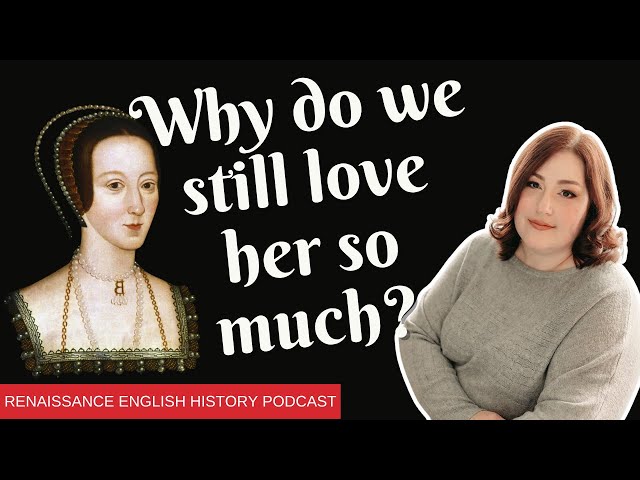
    Adrienne Dillard on Anne Boleyn: Brave or Just Lucky?


    Adrienne Dillard on Anne Boleyn offers a fresh, unfiltered look at one of Tudor England’s most iconic and controversial figures. In this exclusive conversation, historical fiction author and Tudorcon favorite Adrienne Dillard joins us to unpack Anne Boleyn’s charisma, agency, and lasting impact on English history. From public backlash and court intrigue to the truth behind her family’s ambition and her role in the Reformation, Adrienne sheds light on both the myth and the reality. If you’ve ever wondered whether Anne was truly powerful or just caught in the current of change, this deep dive is for you.

    Transcript of Was Anne Boleyn Brave or Just Lucky? A No-Holds-Barred Chat with Adrienne Dillard

    Heather: I have a bit of a treat for you today. One of the perks of being a member or patron of this podcast is regular author chats. This is a chat we had with my dear friend Adrienne Dillard, who is a historical fiction author, longtime Tudorcon speaker, and all-around just brilliant human being. We talked about all things related to Anne Boleyn. This was in May, the month when Anne was executed.

    Adrienne is the author of, among other books, The Raven’s Widow and Cor Rotto. She’s currently deep-diving into George Boleyn’s writings on the Knowles sisters, so this is definitely going to be good.

    This conversation went everywhere—from Anne’s charisma and courage to the mob of angry Tudor women who chased her down the Strand, to whether Anne really changed history or just surfed the waves already forming around her.

    Also, fair warning: this conversation contains confessions of fever dreams, mild soapbox moments, and some very honest takes on feminism, Henry VIII, and the Anne Boleyn fangirl industrial complex. So grab your tea or your wine and settle in for a juicy, slightly rebellious chat with the one and only Adrienne Dillard.

    Heather: Adrienne Dillard, you have written books, you have spoken at Tudorcon. I always say this story about you, but I’m going to say it again. I just always remember you because your book on Jane Boleyn—I read it when I was really sick, and I was on the couch reading it, and then I had this horrible fever. I kept waking up through the night thinking that I was Jane Boleyn and George, and that I was being killed, and that I was with Katherine Howard, and it was just this fever dream all night.

    I didn’t know what was going on. I was half awake and not awake, reading and dreaming at the same time. So I always associate you with that really sick time I had—but in a good way, because it was kind of trippy and kind of enjoyable, but also weird.

    Adrienne: I love that I inspire nightmares. I think that’s a great life goal for a woman to have—to inspire nightmares.

    Heather: I agree. Total professional goals— inspiring nightmares. Yeah. So talk to me a little bit. This has been a year-long shindig of a court, of a study group, whatever we want to call it, that people are in. And we’ve been looking at the top moments in Tudor history. This past month, we’ve been focused on the Great Matter. Because we have been looking at the Great Matter itself, the rise of Anne, then the Act of Supremacy, and now this last week was the Dissolution. So we have been digging deep into this stuff.

    But I would like to speak to you specifically about Anne and how she basically upended England and English history, and how England is different because of her and her family and where she came from. There are a lot of myths about Anne and her family, and I want to break some of that down. So my first question to you is: what made Anne so special?

    Adrienne: I think some people just have that thing, right? And nowadays, we tend to see them as celebrities, and a lot of that comes from charisma. I think one of the things we can say about Anne is that she had a lot of charisma—whether you were on her good side, her bad side, or even if you did not like her.

    I think Eustace Chapuys is a perfect example. He did not like Anne. He did not support her in any way, but he was still really impressed by her—impressed by her composure, impressed by the way she carried herself. One of the quotes I love the most is where he calls her braver than a lion.

    That quote, in itself, sums Anne up perfectly. Whether you agree or disagree with the choices she made, whatever she was doing took great courage—for good or for bad. She was a really powerful woman. She was very influential, and she had the ear of the king. I do not buy into the idea that she was playing hard to get, but I am also not totally attached to the idea that she was just a helpless victim in all of this either.

    We see time and again that she had agency and power. My own personal belief is that when Anne was turning Henry VIII down in the beginning, I think she was being sincere. Because look at what had happened to her sister. I think she was saying to the king, “I deserve a true marriage.”

    And I think it was not until it became clear to her that Henry was going to do whatever it took to end his marriage to Katherine of Aragon and marry her. At that point, Anne was like, okay, then we are going to buy into this, and my family is going to buy into this. Because really, you could not marry higher than the king—the king was as high as it got.

    And I think in Anne’s head it was like, okay, well, if we can get the Pope to sign off, and then when that did not happen, they were like, okay, well if we can get this new idea moving, this new path… Because really, the new religious changes dovetailed really well with making Anne queen.

    You can see them as two separate issues, right? Because reform was already starting to happen in the church. So, I mean, the divorce—the Great Matter itself—and the Reformation are actually two separate issues, because the Reformation had already begun.

    And it just so happened that this new marriage with Anne fit into that. The pieces fit together so well and dovetailed so neatly that they kind of get conflated. Because really, you had to have the Reformation in order to have the marriage. You almost could not have one without the other. So then they end up going together.

    But I think that Anne came in and she was just… she was really well-educated, she was very smart, she was very opinionated. She had learned how to behave at court, and I think that is what made her really attractive.

    Heather: And so you talked a little bit about the idea that she had agency. There is that myth that her father was almost like pimping her and her sister out. Tell me what you think about that.

    Adrienne: I mean, no, I do not believe that at all. In fact, actually, I believe there is commentary—I do not know if it is actually in Thomas Boleyn’s own words—but there is commentary that Thomas did not actually want this match between Anne and the king.

    He thought she was going to end up a mistress and then be discarded like Mary Boleyn was. So it really was not until it became a sure thing that Anne was going to become queen that they really put their efforts behind it.

    I do not know. I mean, I feel like the jury is kind of out as far as how Mary became a mistress to the king. And of course, we cannot even date it for sure. We do not even know how long it lasted. Literally all we have to go on—and it is not even an actual confirmation—is kind of like, he says never with the mother. Right?

    And then we have the dispensation. The dispensation says “perhaps,” if he had perhaps had a relationship within however many degrees. There is never any actual confirmation. I think there is enough circumstantial evidence that we could say yes, it did happen.

    But I tend to think that Mary was clearly very different from Anne, and I think maybe it was something she got swept up in. At that time, Henry was young and attractive, and he was having relations with other women—there are all sorts of stories about him with different young ladies at court. So I think that is probably what happened. And then she got married to William Carey because it was like, okay, we are done with that, and we are going to set you on your path.

    Heather: So talk to me about the response to Anne becoming queen and to their marriage. And maybe talk to me a little bit about—let’s back up—their timeline and how they eventually got married. So we are looking at 1532 as the trip to Calais, where they start having relations, right? And there was a secret—talk to me about the timeline then for that next year, leading up to the birth of Elizabeth. Let’s just say from September to September.

    Adrienne: Yeah, so they were over in Calais, and that was kind of like their great triumph, right? Because François really greeted Anne as the queen. There was a whole lot of pomp and circumstance, and it was just seen as very blessed. And then these storms came and they were not able to leave. So of course everybody is kind of hunkered down.

    Anne and Henry are really excited. They have just managed to accomplish what they did not think was going to happen. They got Francis’ buy-in, and so I am sure if they were already having some level of intimacy, they just kind of got to the point where they were like, it is happening. You know? Right. We do not have to wait. And they were excited. I think January is just too late. I mean, I think that would make Elizabeth too premature for me. Obviously, it is only a difference of a couple of months.

    When they come back—they are back in England in January—they get married in secret. There are only a few witnesses, and we know George is one of them. We also know that there was a woman, one of Anne’s ladies, who was part of it as well. But yes, it was very, very secret.

    To use an example, I was pregnant, and my son was born literally just a couple of days before Elizabeth’s birthday. And I fell pregnant with him in early December. So for me, I feel like January is just too late. Maybe, but Logan, my son was born right on time—he was right on his due date. That sticks in my mind a lot, and I think about that. That is what makes me think January was just too late.

    Heather: Hannah was originally—she was early—but her original due date was the 21st of August. So like two or three weeks early. Two and a half. And that was Thanksgiving weekend. Funny how we know this stuff. So that was the end of November.

    Adrienne: Right, right. Well, we were tracking, and so that is how I know. Right? And so, like, I know. And I think about that, and then I think about how it just very much fits. It does fit a narrative that they were there, she got pregnant, and by January she would have known. Or she would have at least been very late.

    And then they needed to get married. Because if you think about it, it was still kind of a rush. Yes, they had accomplished a lot, and it was pretty sure that they were going to be able to get married and everything, but you would think that after as hard as they fought and as much time as they waited, they would have done it differently. And they did not.

    So that is just my opinion. We do not have a smoking gun, but in my opinion, you know, there is a little jubilation when she finds out she is pregnant and all of the astrologers are saying, “Oh, it is going to be a boy.”

    Heather: Yeah. And how did the crowds react? Because there are those stories of when she was being crowned, her processions had people laughing and saying “Ha ha,” and even, I think it is in The Tudors, one of the shows, they showed a mob attacking her before she was queen because they were so supportive of Katherine. Talk to me about how people viewed her.

    Adrienne: That did happen. There was a mob. They had actually gone—and I know this specifically because I wrote this scene in The Raven’s Widow, and I remember just being shocked when I read the actual account of this.

    One thing that is really interesting is that it is very clear Anne had the full support of the Boleyns. This ties back into that question you asked earlier. One of the things that really stands out to me is that they had homes very near to London so that Anne could be in London. They could attend the trial of Katherine, they could attend Parliament, and all of these things.

    So, when this mob happened, Anne was staying at her father’s house on the Strand. He had a house on the Strand, and the Crown was actually paying for an apartment for Jane Boleyn and George so that they could live there and be near to court while Anne was at court.

    So Jane and George were a huge presence in that early part and were really supportive of her. It is often said that Jane was not, but there are so many little details that I do not know if people have missed or if maybe they are not realizing that Jane was also part of that.

    I found a lot of things that were attached to George, but Jane was also listed in there in some way. One of them is that Henry paid for an apartment for them to live in, which is really interesting.

    Heather: Yeah, it is. So there were kind of mixed feelings within the populace at large about her.

    Adrienne: Yes, exactly. So she was at this house on the Strand, and these women just showed up because they were all there, kind of planning out her household. A bunch of just regular civilians showed up and they were yelling at her, calling her a whore, calling her names, throwing stuff at her. They ran down to the river, got on a riverboat, and got away just in time.

    But these things were happening, quite often, because the people were in support of Katherine. They were seeing how she was being treated in court and by Henry and his advisors. They could not act out against Henry, but they could act out against Anne.

    Heather: Yeah, for sure. And it makes sense why they would be upset. Katherine was treated terribly, and so often in history people want to pit these women against each other. And I mean, in the end they were kind of against each other, but it is really Henry who is the monster here. You know, let us not forget.

    Adrienne: Right? Yeah. And I mean, as much influence as Anne did have, ultimately there was not a thing that she could do. Even if she were to say, “You know what, no, no, no, never mind. This is too much. I don’t… you know, we’ve gone too far. I don’t want to…” there is no way that Anne could have said that to the king at any time.

    Heather: Yeah, yeah. What are you gonna do? Yeah, it’s really sad. It’s really sad for all these women, getting mixed up with him. Bad move. I mean, not that they could have made a choice.

    So tell me about then how like… so that was regular women and regular people where there was this kind of divide and people still supported Katherine. What about the nobility? Were the nobility quick to jump on supporting Anne and supporting the Boleyns, or… I mean, I’m thinking no, because there was still this conservative faction. Talk to me about that.

    Adrienne: It was really kind of divided. Both Katherine and Anne had their supporters, and I think they were probably pretty equally split down the middle. You tended to see most of the newer nobles were for more of the Boleyn faction, and then you had the older, traditional conservative nobles who were for Katherine.

    But at the same time, you had Norfolk, who was one of the oldest nobles at court, and he was related to Anne. Yes, he did support Anne for a time, but then when she drew some boundaries with him, he did not like that and thought, “Who are you to tell me?”

    And so he defected to the other side. You could not assume who supported which side, because it really just depended, sometimes, on which way the wind was blowing and who had the king’s ear at that time.

    Even, you know, we are discovering some stories that you have John Gage, who was the Constable of the Tower.  He was actually the Constable of the Tower after Anne’s death, because Master Kingston was before him. But John Gage was actually trying to resign in protest of Anne and complained about her because he was conservative and he did not support the new Reformation changes.

    But then, as we found out—like, I don’t know, five or six years ago—Dr. Kate McCaffrey from Hever discovered that John Gage and his wife had kept Anne Boleyn’s Book of Hours. That was the last place you would think it would be, but it was there.

    And so I think that we have to remember that we are looking at official paperwork, right? And even today, sometimes the things we put in official paperwork are not necessarily the way we really feel.

    So I think we can make our best guesses as to who was on whose side and why, but the reality is we are never actually going to know who the real movers were behind Anne’s downfall. We all think it was Thomas Cromwell, and certainly he had a big hand in it, but how much more of a hand did Henry have in it, or these other people who worked for Cromwell? I mean, it’s all very shadowy.

    Heather: Truly, and it’s hard to know from 500 years away and looking at incomplete records and all of that. Nobody knows, and everybody is guessing, and you can put together some good guesses, some educated guesses, but yeah, it’s still a guess.

    So you had said—the Reformation—I want to go back to this point you mentioned, that the Reformation was already happening beforehand. So I’m wondering, just playing some alternative history, if Katherine had had a son and there was no need to go outside, how do you think history might have gone without Anne?

    Would England have hosted the Spanish Inquisition, the northern part? Or do you think, since Henry was the Defender of the Faith and all that, that the power of the Reformation would have taken over eventually anyway? What are your thoughts on that?

    Adrienne: That is such a good question. And as a baptized and confirmed Lutheran, someone is saying that the Reformation would have happened anyway. I think…

    Heather: I think Jonathan is also a baptized and confirmed Lutheran, so that’s fun. You’ve been like, the power of the Bible in the vernacular, and getting rid of the Popish stuff, and having a direct relationship with God and all of that was different. Overpower it.

    Adrienne: Yeah, I think ultimately that would have won out. I mean, really, we give Anne and Henry so much credit for the Reformation, but really, they never changed. They were practicing Catholics, right? They only did away with the things that did not benefit them. I mean, Henry was crawling to the cross like two years before he died—well after he had broken from Rome.

    And so, you know, really, the people surrounding Henry—I would say actually Thomas Cromwell did more for the Reformation than Henry did. I think what it was, is Henry had a problem. There were people around him that said, “Look what can go.” Right? But they were already deeply embedded. I mean, as we know, like Thomas Cranmer, he was deeply embedded in that already. You know, and it was the Boleyns who said, “Well actually, yeah, we are our friend.”

    Heather: So that makes me wonder, like, if Henry hadn’t had that problem, would there have been a use for Thomas Cromwell? Would there—I mean, Thomas Wolsey wouldn’t have fallen, right? Because he wouldn’t have had to—so all of that. Would there have been a use for Cranmer? Would there be—who knows? It’s interesting to think about. So yeah.

    Adrienne: I mean, I think—yeah, I think it ultimately would have happened, but I think that the players might have been a little bit different.

    Heather: Gotcha. I like to think of that too, because I am an Episcopalian, so you know, it’s a little bit the same. Go Protestant. Yes. Team Bible in English. So, all right, I guess I just want to ask you about what she accomplished as queen and then, I guess, just her downfall. We can talk a little bit about that and how it changed England—and the idea that a queen could be killed—and what that did to England, if anything. And then we can wrap up with that. So tell me a little bit about her reign as queen.

    Adrienne: Yeah, I mean, for being a queen consort, she actually had quite a lot of influence on Henry, particularly in the early days, before she was actually queen. You know, because really, she was not a queen, but she was in that role for longer than she actually was queen in the role.

    So for me, I have a hard time separating the two, because in many ways, she was already wielding that power. And I think that she brought in a lot—like you said, with the Reformation and stuff like that. She brought in a lot of the literature and the players. I mean, she and George were bringing in literature from Protestants on the continent. And we know this because some of it still exists and is in the British Library, because it was confiscated from them.

    They kind of had a tendency to know the right people. They knew the right people. And I want to say that they were very good at sizing up how people—like, how a person could help them best.

    And I don’t say that in a selfish way—not like help them selfishly—but what they could get the best from a person. I think Anne was good at putting people, kind of influencing them into these roles of where they should be in the court. I think that she and her dad and her brother had a huge hand in that.

    And she also—I think she sort of could—I’m trying to figure out how to phrase it, because Anne wasn’t a feminist. And I think there’s really a draw to want to call her that, but she wasn’t. But she did elevate women in many ways that she could. You know, she really was known for taking care of her women.

    And I’m not talking about the nobles who attended on her. I’m talking about her gentlewomen, her maids who worked with her on a daily basis. She could be very, very generous to them. She helped with education, helped fund education, and she did a lot of things that were in the realm of what we would consider feminism today. But she was also a huge part of the patriarchy in that role too.

    Heather: I have such an issue when people put those modern—well, we’ve talked about this before, haven’t we?—talked about these modern terminologies on people who wouldn’t have understood them. It’s not—I don’t know. It’s kind of like if, in 500 years, there’s some movement of some type, something we can’t even imagine right now because we haven’t thought about it.

    And in 500 years they go back and say, “Oh, well Adrienne, she was clearly”—like “Read Adrienne’s book. She was clearly a WSA bus fusha,” or something. I don’t know.

    Adrienne: Right.

    Heather: Yeah. And it’s just kind of like—it bugs me to put that on people because I don’t think it’s fair to assign that.

    Adrienne: Right. And it’s a completely different thing. A feminist today is not the same as what a feminist back then would have been. In fact, there was not really any possible way for someone to truly be a feminist in that world.

    Heather: Yeah, and it changes. Feminism today is different than feminism in the 1930s, and different again from feminism during the suffragette era. It’s all different, right? I don’t know. So just to go back and say Anne was a feminist—

    Adrienne: Yeah, I don’t like that either. We also have to consider the fact that these labels—even if she was a feminist—do not make her perfect. It does not mean that she maintained this perfect ideal. That’s one of the things about Anne—she truly is a gray character.

    She did some really dumb things. Not because she was dumb—she was incredibly intelligent and clever—but she was human, right? And sometimes we do things that are illogical or rash or impulsive or whatever.

    We always want to make her the saint or the sinner, but really it’s somewhere in the middle. Because yes, she did do a lot for women, but at the same time, she wasn’t doing anything that was outside the realm of what she should have been doing as queen.

    Heather: Katherine of Aragon did a lot for women too, being like a warrior queen who wanted to go lead a battle in the Battle of Flodden and all of that. That was a really big step for women too. So again, pitting people against each other—anyway, I will now skip my soapbox.

    Adrienne: Okay. I’m almost hesitant to say it because I’m nervous about the Anne Boleyn warriors coming for me, and this is going to be a controversial take. I think the reality is that Katherine had more accomplishments—things she did on her own, right?

    But the accomplishments that we attribute to Anne are, one, often colored by one, our more modern thinking, and two, tied to the fact that we give her credit for a significant part of the Reformation that was actually being done by other people. And that’s not to say I don’t think Anne accomplished things, because I do. But they weren’t really outside the prescribed notions of what a queen should be doing.

    So if we were to just look at it and ask, “Who was more accomplished, Katherine or Anne?” Well, it’s really easy to say Katherine, right? Because of Flodden, because she was pregnant, because she did all of those things.

    Anne doesn’t really have that. But that does not mean that she didn’t accomplish things. Because she did. She elevated voices, she brought in more knowledge. She had invisible hands in things, but she wasn’t doing them alone. It was a groundswell that she was a big part of.

    Heather: I’m excited to see if there are any Anne Boleyn warriors who get mad at this. I’m here for it. Actually, no, I won’t. I don’t read comments.

    Adrienne: Me, I love Anne. It’s so funny because I came into this starting out with Anne, right? She was my entry into the world of the Tudors. And my perception of her has changed a lot as my research horizons have expanded. And I started to look outside of the Anne sphere. Because there is a lot more to Tudor history than just Anne.

    Heather: There is, yeah. And we’ve just spent a lot of time talking about her because she is still important, obviously. But there is a lot more than just Anne. There were other people doing other things. Mind blown.

    Anyway, you’ve been so generous. I want you to tell people where they can find you, all of the cool things that you’re up to, all of the amazing stuff, how they can buy your books, all of that kind of stuff.

    Adrienne: Well, I recently, well not recently, a couple of months ago, deactivated Facebook because I just needed to be done. So I’m not really on Facebook anymore, but I am on Instagram. I have a TikTok, and mostly what I post are just funny videos of my cat.

    But I’ve started to try to branch out, and I’m learning that medium a lot more. Let’s see. Oh, and I also have a website. You can find me at Adrienne-dillard.com, because Adrienne-dillard.com was already taken. Let’s see. You can find my books on Amazon. You can find them all on barnesandnoble.com. You can buy them from the Apple Store, wherever you get your books.

    I’m working on a couple of different things right now. I’m continuing to research George Boleyn and his book, so I will be going back to the British Library next year to do some more research on his book The Torments of Marriage. I’m working on that.

    I’m also working on a contemporary novel, and it’s called Project Archer. It’s sort of an autobiography, but it’s part true and part false. So there’s going to be a lot of my experiences in there, but it’s going to be a fictional story. Yeah, so that’s kind of interesting and new. I’ve almost got two chapters written, so I’m working on that.

    And then, of course, I’m still researching my book on the Knollys sisters. I’m writing about Elizabeth and Lettice Knollys, and it’ll be called The Sisters Knollys. It’ll kind of center on Lettice and her relationship with Elizabeth, the Queen, and also Elizabeth Knollys’ relationship with the Queen, because they had very different relationships with her.

    So it’ll be kind of fun because you’ll get to see a young Queen Elizabeth through the eyes of two of her closest relatives who had very different perspectives of her. And then there’s that kind of classic sister tussle.

    Heather: Guys, I just love you so much. I need more Adrienne Dillard in my life. That’s just all I can say. You’re just such a joy. You’re just such a bright light of, like, I don’t know. You just are this light of joy, and I just love it. Thank you.

    Related links:

    Adrienne Dillard’s website
    George Boleyn’s Protestantism from Adrienne Dillard
    Behind the Boleyns: The Intriguing Legacy of Anne Boleyn and Her Family

  • Henry VIII’s Secret Mission to Rome: How He Went Behind Wolsey’s Back

    Henry VIII’s Secret Mission to Rome: How He Went Behind Wolsey’s Back


    Henry VIII’s secret mission to Rome in 1527 marked a dramatic turning point in both his personal life and English politics. As his marriage to Katherine of Aragon grew increasingly untenable and his relationship with Anne Boleyn intensified, Henry began to doubt Cardinal Wolsey’s ability—or willingness—to secure the annulment he so desperately wanted.

    In a bold and highly confidential move, Henry bypassed his chief minister entirely, sending his trusted secretary William Knight on a covert diplomatic mission to the Pope. This secret effort to obtain a papal dispensation, hidden even from Wolsey himself, revealed Henry’s growing mistrust and marked the beginning of the Cardinal’s slow fall from grace. The mission may have failed in Rome, but it succeeded in reshaping the power dynamics at the English court.

    Transcript of Henry VIII’s Secret Mission to Rome: The Plot That Even Wolsey Didn’t Know About

    Today, we’re going to talk about Henry VIII’s secret mission—a covert diplomatic move that he deliberately hid from Cardinal Wolsey early on. As Henry pursued his divorce from Katherine of Aragon, he began to suspect that Wolsey might not be the best man for the job. So he launched a quiet diplomatic effort that completely skirted around Wolsey’s authority.

    In September 1527, Henry VIII quietly sent his newly appointed secretary, William Knight, on a highly sensitive mission to Rome. It was so secret, in fact, that he explicitly ordered Knight not to inform Cardinal Wolsey—the very man who had, until then, controlled every detail of Henry’s diplomatic and religious affairs.

    Knight’s mission was to secure a special dispensation from the Pope—one that would allow Henry to marry a woman whose sister he had previously slept with. It was a legal sleight of hand designed to undo his marriage to Katherine without challenging the validity of the original papal dispensation that had allowed that union. So why did Henry go behind Wolsey’s back?

    By the autumn of 1527, Henry’s confidence in Wolsey was faltering. Despite more than 20 years of loyal service, the Cardinal had failed to deliver an annulment. Worse, Henry began to suspect that Wolsey’s loyalties leaned more toward Rome than toward the king’s personal desires.

    His relationship with Anne Boleyn was growing more serious—Henry wasn’t just trying to escape Katherine anymore. He was planning a future with Anne. That meant action—not delays, excuses, or papal hesitation. So he made a secret move.

    William Knight, newly appointed as secretary, was discreet and still operating under Wolsey’s radar. The instructions were incredibly specific: travel to Rome, but stop first in France—because Wolsey was in France at the time. Henry wanted Knight to lull the Cardinal and others into a false sense of normalcy.

    Then, once in Italy, Knight was to request a papal dispensation—not for a divorce, but for remarriage on the basis of affinity: in other words, permission to marry a woman whose sister he had previously had relations with. The woman, of course, was Anne Boleyn. The sister was Mary Boleyn.

    And so Knight did as instructed: he traveled first to France, where he stayed just long enough to maintain the illusion. Then he continued on to Rome, carrying with him one of the earliest—and most secret—moves in Henry’s campaign to remarry.

    Then, once the coast seemed clear, he headed toward Rome—but it didn’t stay quiet for long. Rumors began swirling, and Wolsey got wind of the plan—perhaps through court gossip, perhaps through his network of informants.

    Either way, Henry panicked. He blamed the leak on someone close to him and ordered Knight to take an entirely revised version of the document instead—one that was even more explicit and more confidential.

    Henry instructed that the new dispensation be shown only to Pope Clement and his most trusted advisors. No one else—not Wolsey, not any other cardinal—was to see it. He even insisted that it be delivered only to men whom he was certain would “never disclose it to no man living, for any craft, the Cardinal or any other confined.”

    But even with this new version, things didn’t go as planned. Knight struggled to gain access to the Pope. Political pressure in Rome was intense—Clement was essentially being held hostage by Emperor Charles V after the Sack of Rome. Granting any dispensation, especially one so clearly engineered, was extremely risky.

    Knight alone couldn’t get the job done. So by December, Wolsey finally realized the scope of the situation. Knight’s mission had stalled, and the Boleyns were making end runs around him. So Wolsey inserted himself—but not by removing Knight. Instead, he brought in reinforcements.

    He turned to Gregory di Casale, an Italian diplomat born in Rome who had lived for a time in England and was now stationed at the Vatican. Casale had the charm, the connections, and the political savvy to succeed where Knight had not. He used both diplomacy and bribery—offering 10,000 ducats and a 3,000 crown salary (more than some bishops earned) to help open the right doors.

    Meanwhile, the Boleyns continued their own maneuvering. John Barlow, Anne’s chaplain and a fiery reformist, tracked Knight down in Parma and acted as a courier between Knight and the English court.

    Around the same time, they also turned to Robert Wakefield, a Hebrew scholar from Cambridge fluent in Latin, Greek, and Aramaic. Wakefield argued forcefully that Henry’s marriage to Catherine violated divine law, not just church law, and that the Levitical prohibition was binding on Christians. It was precisely the sort of scriptural support Henry needed.

    Crucially, Wakefield had been identified and promoted—not by Wolsey, but by Thomas Boleyn. Wolsey’s grip on power was slipping. Ambassadors like the Spanish ambassador, de Mendoza, were already reporting that Anne Boleyn had overtaken Wolsey’s influence. Mendoza even noted that Anne was answering the king’s summons for visitors—a role that Wolsey once controlled.

    Reformers and evangelicals were also beginning to suffer under Wolsey’s harsh measures, including Robert Barnes, who had already been punished once for preaching. This time, he was imprisoned for distributing Tyndale’s banned New Testament—and then staged a dramatic escape, leaving a pile of clothes and a suicide note beside the River Nene, before joining Luther in exile.

    So, Knight’s mission had ultimately failed. By early 1528, Pope Clement had fled Rome for Orvieto, and no formal decision was forthcoming. But the real result had already happened: Henry acted without Wolsey. Anne was asserting herself politically, and the entire operation—though unsuccessful in Rome—marked the beginning of Wolsey’s slow and irreversible fall.

    By the way, that whole story of Robert Barnes I found fascinating. I just kind of skipped over it with one sentence. Unfortunately, the historical record is really sketchy on how he escaped, because he was supposedly in custody—and then he got out of custody, left this pile of clothes and a note saying he was ending his life, and slipped across the Channel.

    He made it to Antwerp, and then all the way to Wittenberg, to Luther himself. But how he got out of custody to leave those clothes and that note is something historians still don’t know. At the time, the record was more concerned with painting him as a heretic and less concerned with how he managed to escape the authorities.

    Some scholars suggest that he wasn’t locked in a high-security prison like the Tower. He might have been just under scrutiny somewhere—a more relaxed area of confinement, maybe at a university or a religious house in Cambridge. He was apparently in Cambridge at the time, and that might have allowed him a bit more movement—at least enough to slip away.

    It’s also possible he had help. He still had supporters, and Cambridge was a major hotbed of reform. So people might have helped him—and it’s even possible the authorities were complicit, or at least indifferent.

    That’s Robert Barnes—and of course, he escaped to Wittenberg and became something of a Protestant celebrity there. And so, the English government wasn’t exactly keen on broadcasting the details of how he got out—but he did. I find it fascinating.

    So, that’s a little bit about these early political maneuverings that were happening around the time Henry stopped trusting Wolsey completely and tried to go around him a bit. It was also the earliest inkling for Wolsey that he might be starting to lose his grip on power.

    Related links:
    Episode 180 Cardinal Wolsey Part 1
    Stories of Tudor Annulments
    Great Escapes: Wild Tudor Prison Breaks (That Weren’t at the Tower)

  • Henry VIII’s Love Letters to Anne Boleyn: Obsession, Power, and a Chilling Warning

    Henry VIII’s Love Letters to Anne Boleyn: Obsession, Power, and a Chilling Warning


    Henry VIII’s love letters to Anne Boleyn offer a rare and intimate glimpse into the heart and mind of one of history’s most powerful—and complex—monarchs. Written in the late 1520s and preserved today in the Vatican Library, these passionate, pleading, and sometimes unsettling letters reveal a king not in command, but consumed by desire. Far from royal proclamations or political orders, they show Henry as vulnerable, obsessive, and emotionally raw, desperately wooing a woman who refused to be easily won.

    Let’s explore the history behind these letters, what they tell us about Henry’s psychological state, and how Anne Boleyn used silence and strategy to hold the king in suspense.

    Transcript of Henry VIII’s Love Letters to Anne Boleyn: Obsession, Power, and a Chilling Warning

    Today we’re going to talk about Henry VIII’s love letters to Anne Boleyn. It’s a fascinating story—the history of the letters themselves, what they say, what they reveal about Henry’s psychology and how he was wooing Anne, and just what was going on in his mind. They’re very, very personal, and fascinating to look at. So, we’re going to dig into them today.

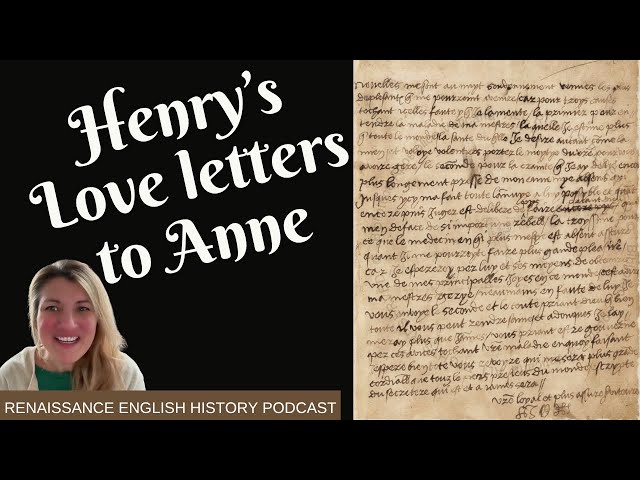
    If you want a glimpse inside the mind of Henry VIII—not the king in armor or on a throne, but the man lying awake, lovesick—this is it. It’s not a grand palace that will show you. You’re not going to find it in Hampton Court. It’s a bundle of letters sitting quietly in the Vatican Library. Seventeen letters survive, in Henry’s own hand, written in the late 1520s to a woman who wasn’t his wife—not yet—and not his mistress, at least not officially.

    These are love letters to Anne Boleyn, and they’re some of the only surviving documents that show Henry’s raw, unfiltered feelings. We have none from Anne—just Henry pleading, gushing, sometimes groveling, and maybe, just maybe, a little bit threatening.

    One thing: these letters were not meant to survive. They were likely stolen from Anne, probably by someone who supported Katherine of Aragon, and smuggled out of England during the early years of the king’s campaign to annul his marriage. Eventually, they made their way to Rome, where they were preserved in the Vatican Library.

    Actually, there’s even more of a rabbit hole you can go down with these letters. When Napoleon swept through Italy—where they had been kept in Rome—in 1797, fifteen of the letters were among papers looted and sent to Paris, where they were studied and transcribed by French scholars. They remained in Paris until Waterloo—not the ABBA Eurovision song, but the actual defeat—and then they were given back to Rome back to the Vatican. And that is where they are today.

    They’re written in French—likely to flatter Anne, who had been raised at the French court and was a Francophile. This was when Henry was moving more toward France in his foreign policy. So, he wrote in French to her. They’re often described as repetitive, awkward, and a little bit cliché.

    But what makes them extraordinary isn’t the literary quality—it’s the emotional transparency. Historian John Guy called them one of the most extraordinary letter series that perhaps any king has ever written. And it’s true, because this isn’t Henry the ruler. It’s Henry the man, losing his composure over a woman who just wouldn’t give in.

    As for the timing, these letters were probably written in 1526 or 1527. Henry mentions that he had been hit by the “dart of love” for about a year at this point. So it’s early in their relationship. Anne hasn’t yet given in and is still playing it very, very cool.

    These letters don’t show the Henry we usually see—commanding, confident, wielding power like it’s a sword. Here, he’s insecure. He’s desperate. He’s obsessive. He pours himself out to Anne with a neediness that almost feels adolescent. He calls her his mistress, his good sweetheart, the one woman in the world whom he truly esteems. He tells her he’s almost intolerable when she’s away and begs her to write back to him, blaming her silence for his unhappiness.

    In one letter, he writes that he’s not displeased with her but—his tone is strained. There’s always this unspoken tension: Why hasn’t she answered? Why hasn’t she yielded yet? This is when Anne left the court and was back at Hever, probably with her mother, making her decision about what she was going to do.

    She knew the king was falling for her, and she was trying to figure out how to play it. She wasn’t married—that made her different from when Henry was with her sister, who was married at the time. So Anne was in a different position than Mary Boleyn had been, and she really needed to think strategically about what she wanted. She was also probably still smarting from the heartbreak with Henry Percy. So, while we don’t have her letters to him, we can piece together what was going on based on his responses to her.

    It’s not just romantic devotion that Henry is showing—it’s a weird, obsessive fixation. He tells her that his heart belongs entirely to her. He sends jewelry. He promises devotion. He even refers to himself as her “most loyal servant.” For a man who spent his life surrounded by sycophants and wielding ultimate authority, it’s beyond just the language of courtly love. It’s striking—how willing he was to place himself in this kind of emotional exchange.

    It’s not all humility. There are moments when he flips back into the dominant role—telling her what he expects of her, complaining about her behavior, and beginning to sound less like a love-struck suitor and more like a man who’s used to getting what he wants.

    So, like I said, we don’t have any letters from Anne in return. Maybe she destroyed them. Maybe he destroyed them after her execution. Maybe they were stolen or lost. Maybe she never wrote back. And that silence—when she didn’t write back, which we can tell from his responses—gave her real power.

    Anne was no fool, of course. She knew how to keep Henry on the hook. While his letters overflow with declarations of love and longing, Anne kept him waiting. The longer she withheld, the more he wanted her. Her absence became her greatest weapon.

    Henry complains about her silence—gently at first, but with mounting frustration. He writes, “I was never displeased with you until now.” It’s not just that he misses her; it’s that he expects her to respond, to match his feelings, to obey the unwritten script he’s laid out for them. And when she doesn’t, we start to see the edges fray, and the devotion gets really twisty.

    There’s one letter in particular where the temperature really drops. Henry writes that if Anne’s coldness isn’t by her will—if her distance is because of something beyond her control—he’ll endure it. But if it’s her choice, then she should know that he could do no less than what he must.

    It’s veiled, very carefully worded, but the implication is there: if she doesn’t come around, there’ll be consequences. Maybe he’ll just give up on her. Who knows? It’s not an open threat. It doesn’t need to be. This is Henry. Henry’s already decided that he wants her, and he’s not used to being told no.

    That single line—“I could do no less”—says more about what’s coming than all the flowery declarations that fill the rest of the letters. Years later, when Anne would be accused, tried, and executed on trumped-up charges, it would be easy to look back and see that the warning signs were there all along. Talk about red flags early on.

    So these letters are the only surviving window into Henry’s most vulnerable moments—and his most dangerous. They show a man who wanted love, was desperate for it, and couldn’t bear to be denied. A man who offered his heart—but always expected control in return.

    Anne played a delicate game, balancing charm with resistance. And for a time, it worked. But even in those very early days—the early pages of their story—the shadow of tyranny is constantly creeping in. The man who signs off as her most humble and loyal servant would one day order her death. And the man who said that her absence made his life unbearable… made her permanently absent.

    So the love letters are a fascinating insight into Henry’s psyche. In fact, in some of them, he makes a big deal out of the fact that he’s writing them himself. He always found handwriting tedious, slow, and painful. Normally, he had a secretary for that. But in these letters, he emphasizes—Look, this one, I wrote myself. This is signed by my own hand. It’s a kind of emotional proof. Look how much I love you. I’m writing to you all by myself. It’s a revealing look into Henry—what was going on in his mind, and what he thought was important to express.

    Also interesting: shortly after that letter with the veiled threat, historians think Anne gave Henry a New Year’s gift that completely captivated him—a model ship with a woman on board in peril. The implication, of course, was that she was putting herself in his hands, and he would be her safe harbor. Unfortunately, it didn’t work out that way for Anne.

    Related links:
    Episode 076: Alison Weir on Anne Boleyn
    Anne Boleyn’s Downfall: A Detailed Timeline from Conspiracy to Execution
    Mary Boleyn: The Real Story Behind Henry VIII’s Forgotten Mistress
    The Forbidden Love of Anne Boleyn and Henry Percy: Untold Tragedy of Tudor England

  • Elizabeth Boleyn: A Mother’s Silence Amidst Scandal

    Elizabeth Boleyn: A Mother’s Silence Amidst Scandal


    Elizabeth Boleyn is one of the most shadowy and silent figures in the dramatic downfall of Anne Boleyn in 1536. As the mother of a queen accused of adultery, incest, and treason, Elizabeth Boleyn stood at the heart of a scandal that rocked the Tudor court—but left behind almost no trace. While her daughter Anne and son George were arrested, tried, and executed, Elizabeth’s actions remain a mystery.

    Unlike the men in her family who played visible roles in the events, Elizabeth Boleyn disappeared from the historical record just when the storm hit. What happened to her? Why did she remain silent? And what can her absence tell us about the role of women—and mothers—at the Tudor court?

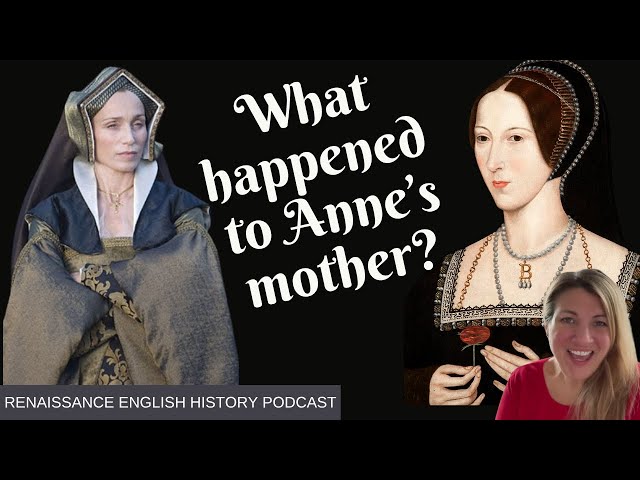
    Transcript of What Happened to Anne Boleyn’s Mother? The Forgotten Fallout of 1536

    Today, we are going to talk about how Anne Boleyn’s family—her mother and her father—reacted to her arrest and downfall. This was something that someone recently asked about in a comment on one of my videos, wondering: what was her mother doing? Because we don’t really hear much about that.

    On the 2nd of May, 1536, Anne Boleyn was arrested at Greenwich and taken by barge along the Thames to the Tower of London. She would never leave it. As the king’s men moved swiftly to accuse her of adultery, incest, and treason, the court was buzzing with fear and whispers.

    Her brother George was arrested that same day. Her father, Thomas Boleyn, kept his head down. But what about her mother? While all the spotlight blazed on Anne’s downfall, Elizabeth Howard Boleyn remained almost entirely in the shadows—silent, invisible, and to this day, still a mystery.

    Elizabeth Howard came from one of the most powerful families in England. She was the daughter of Thomas Howard, 2nd Duke of Norfolk, and the sister of the third Duke, who would later preside over Anne’s trial. That’s got to make your Thanksgiving dinner a little messy, huh?

    She married Thomas Boleyn in the 1490s—a union that likely served both ambition and alliance. Together, they had at least five children, two of whom—Anne and George—would one day lose their lives to the executioner’s axe.

    As her daughter rose in and fell from Henry VIII’s affections, Elizabeth’s household became a center of political gravity. She was at court during Anne’s years as maid-of-honour to Queen Katherine, and later as Henry’s mistress, and then his wife.

    There’s every reason to believe that Elizabeth was deeply enmeshed in court life, especially in managing her daughters’ reputations. When Henry was courting Anne, Elizabeth likely acted as chaperone. She was definitely not just a passive bystander—until 1536, when she all but vanishes from the historical record.

    Here’s what makes Elizabeth Howard Boleyn so mysterious—so haunting: we don’t actually know what she did when her daughter was arrested. There are no surviving letters, no mention of her trying to visit Anne in the Tower, no records of pleas for mercy or even expressions of grief.

    For a woman whose daughter was queen, and then accused of incest with her own brother, who was also that woman’s son, obviously, the silence is deafening. Why the silence? Some historians suggest that Elizabeth may have been seriously ill by that point. Others think she stayed away deliberately—either out of political caution or despair.

    As a woman, she may not have had the power to intervene, and after all the arrests, the Boleyn name was toxic. Perhaps she withdrew to protect herself. Perhaps she was just too devastated to do anything.

    But we do have Anne’s own words. In one account of her final days, she is said to have cried out, “Oh, my poor mother, thou wilt die with sorrow.” That brief, anguished line shows that Anne knew her mother was suffering—and feared that the disgrace would break her. Maybe it did.

    While Elizabeth stayed silent—or was silenced—the men in her family were conspicuously active. Her husband, Thomas Boleyn, did nothing to publicly defend Anne or George. He even took part in the trials of some of the men accused with Anne, though he avoided serving on George’s jury. His lack of any kind of open resistance speaks volumes. Whether out of political calculation or fear, he prioritized self-preservation.

    Even more chilling was the role of Elizabeth’s brother, Thomas Howard, 3rd Duke of Norfolk. As Lord High Steward, he presided over the trials of Anne and George—and he even announced their sentences. He reportedly wept after George’s condemnation, but he still did the job.

    The Howard family had clawed its way to the top, and Norfolk wasn’t about to risk it all for his niece and nephew. Did Elizabeth argue with him behind closed doors? Did she beg him to stop it? Again—we don’t know.

    What about Anne’s older sister? The Boleyns had three surviving children, and the other one was Mary. Well, Mary Boleyn had been largely estranged from the family. By 1536, she had married a commoner, William Stafford, for love—and had been pushed aside as a result. She lived quietly in the countryside and did not return to court during the crisis. There’s no evidence that she visited Anne or attempted to intervene at all.

    Other relatives, like the poet Thomas Wyatt—who had once admired Anne and probably had a bit of a romance with her—were caught up in the chaos too. Wyatt was imprisoned briefly. The rest of the Howard-Boleyn network kept their heads down. Because in Tudor politics, blood might be thicker than water—but family ties had their limits.

    After the executions of Anne and George, Elizabeth faded from view entirely. She never returned to court, and her name disappears from any royal records. She died less than two years later, in April 1538, at the Boleyn family estate at Hever.

    Some sources suggest that she was broken down by grief. Others suspect illness. Her will offers no emotional insights—just practical instructions and bequests. There was no public mourning, no commemorative monument. Like so many women of her time, Elizabeth’s story is written in the spaces between the official records—in what was not said, and what was never preserved.

    We’ll probably never know what Elizabeth Boleyn really thought during those weeks in May 1536. Like so many women of her time, her story just drops off the map when things got dangerous. But the silence itself tells us something. She lost two children to the axe, and nobody wrote down her feelings about that.

    So we’ll leave it there for now. Basically, when people ask, “What was Anne’s mother doing?”—we don’t know. And that speaks volumes, I think.

    Related link:
    Claire Ridgway on the Boleyns

  • Mary Boleyn: The Real Story Behind Henry VIII’s Forgotten Mistress

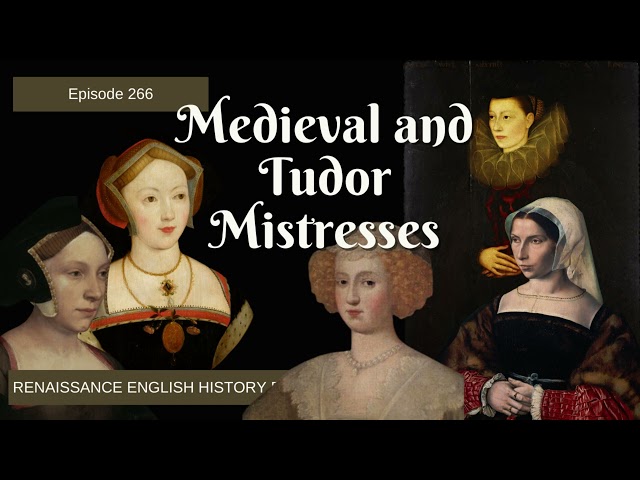
    Mary Boleyn: The Real Story Behind Henry VIII’s Forgotten Mistress


    Mary Boleyn is often overshadowed by her famous sister Anne, yet her life at the Tudor court was no less intriguing. Known in popular culture as “The Other Boleyn Girl,” Mary has long been a figure of myth, speculation, and historical fiction. But beyond the rumors and romanticized portrayals lies the story of a woman who navigated scandal, courtly politics, and personal sacrifice in one of the most volatile periods of English history.

    In this episode, we explore the real Mary Boleyn—her role in the French and English courts, her controversial relationships, her quiet rebellion through marriage, and the legacy she left behind.

    Transcript of Mary Boleyn: The Real Story Behind Henry VIII’s Forgotten Mistress

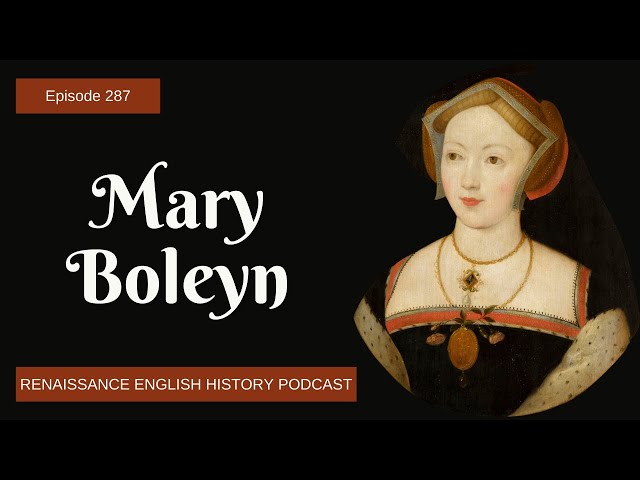
    We are gonna talk today about Mary Boleyn. Mary Boleyn gets a lot of press as the other Boleyn girl, everything like that. And we are going to dig into her real life, what we know about her, what we don’t, the truth behind some of the myths.

    Mary Boleyn is one of the most misunderstood women of the Tudor court. Her name often surfaces as a footnote in the stories of others, mistress to Henry VIII, sister Anne Boleyn, the other Boleyn girl. Over time, she’s been reshaped into a character of fiction portrayed alternately as a pawn, a seductress, or even a victim.

    But when we step away from the novels and the films, what remains is a quieter and more complex story, one shaped less by scandal and more by survival. The truth is, very little contemporary documentation survives about Mary’s life. She doesn’t leave behind letters or memoirs. We don’t have direct quotes from her, and even the most talked about moments, her alleged affairs with two kings are only thinly supported by sources.

    That silence, though, is precisely what makes her so fascinating. Her story has been filled in by others for centuries, and so in this episode, we will look at what we do know and what we can reasonably conclude.

    This isn’t about sensational claims or rehashing old rumors. It’s about piecing together the factual evidence and placing Mary Boleyn back into the context of her time, not as a dramatic foil to her famous sister, but as a woman who lived through the rise and fall of one of the most ambitious families in Tudor England.

    Early Life and Family Background

    Mary Boleyn was likely born around 1499 or 1500. She was the eldest surviving child of Thomas Boleyn and Elizabeth Howard. Her father was of course a rising diplomat, skilled in languages, court maneuvering, and her mother came from one of the most powerful noble families in England.

    Elizabeth was the daughter of Thomas Howard, 2nd Duke of Norfolk, placing Mary within one of the most influential networks at court. The Boleyns were not yet among the great houses of England, but they were rapidly gaining ground, thanks largely to Thomas Boleyn’s ambition and skill.

    Mary’s early life would have reflected her family’s social aspirations. As the daughter of a diplomat and courtier, she would’ve received the kind of education expected of a noble woman – reading, writing, music, French, perhaps a little smattering of Latin, some household accounts.

    Some sources suggest she spent time in the household of Margaret of Austria in the Netherlands like her sister Anne did. This would’ve been a prestigious placement for a young noblewoman. But that claim is actually definitely documented for her sister Anne. But it’s also plausible that Mary may have been sent abroad even briefly.

    Life at the French Court

    Now, in 1514, Mary was selected to join the household of Mary Tudor, Henry VIII’s younger sister, as she traveled to France to marry King Louis XII. The Princess’s entourage included several young women of noble birth intended both to serve and to represent English grace and learning at the French court.

    When Mary Tudor returned to England just months later, after the French King died, Mary Boleyn remained behind. Now in the service of the French court and the new King Francis I, this marked the beginning of one of the most discussed and debated chapters of her life. Mary’s time at the French court is one of the murkiest and most mythologized parts of her life.

    What we know for certain is that she remained in France after Mary Tudor’s brief queenship ended with the death of Louis XII, that was in early 1515. Mary Tudor returned to England to marry Charles Brandon, and have all of that happen, and Mary Boleyn stayed behind entering the service of Queen Claude, the wife of the new King.

    She remained in France for several years, likely until about 1519. Now, it’s during this time that rumors began to swirl that Mary had become the mistress of Francis. The most often cited piece of evidence is a statement reportedly made by the King, in which he referred to her as his English mare, saying that she was a great whore, the most infamous of all, and had been passed from one man to another.

    This quote is often repeated, but its authenticity is questionable. It appears in the writings of later chroniclers, not in contemporary court documents, and its tone reflects the kind of scurrilous gossip that often attached itself to women at court, especially foreign ladies-in-waiting who returned home with tarnished reputations.

    There’s no surviving French documentation, court records or letters that confirm an affair between Mary and Francis. Accusation is circumstantial, bolstered by nothing more than gossip, and the fact that Francis was known for his sexual appetites. It’s worth noting also that Mary Boleyn returned to England without disgrace.

    If she had been embroiled in a serious scandal, it’s unlikely she would’ve been accepted back into court life, let alone married off to a respectable courtier shortly thereafter. Her time in France stands in contrast to her sister Anne’s. Anne arrived in France a bit later and spent nearly seven years there gaining fluency in French and exposure to continental humanism and courtly culture.

    While Mary’s reputation was marred by whispers of sexual impropriety, Anne was remembered at least by later supporters for her wit, refinement, and intelligence. These differing narratives would follow both sisters for the rest of their lives shaping how they were seen by their contemporaries.

    And by history, by us today, Mary returned to England around 1519 or 1520, likely as part of the changing political landscape, following England’s shifting alliances with France and Spain. Despite whatever rumors may have accompanied her, there’s no indication that her return was scandalous or unwelcome.

    She reentered court life and by February 1520, she was married to William Carey, a well-connected member of the King’s Privy Chamber. Carey was a gentleman of the court with ties to some of the most powerful noble families in England, and a cousin of the king through the Beaufort line. The match was socially advantageous and the king himself attended the wedding.

    Affair with Henry VIII

    Following her marriage. Mary served as a lady-in-waiting to Katherine of Aragon, a position that placed her directly at the heart of the royal court. It also placed her within the orbit of Henry VIII, who is believed to have begun a sexual relationship with Mary sometime during the early 1520’s, likely after her marriage to Carey, and probably between 1522 and 1525.

    The exact dates are of course impossible to pin down. It’s not like somebody was writing it down it saying, this is exactly when it began, and the affair itself is very poorly documented.

    Unlike Henry’s earlier mistress, Bessie Blunt, Mary never received royal acknowledgement of any of the children that may have resulted from the relationship, which of course leads to lots of murky ideas about Catherine Carey and the relationship that she had with Elizabeth later. Lettice Knollys comes from that line.

    It really plays out interestingly in the next generation, and we just don’t know if she was Henry’s child or not. There are no surviving letters between Mary and the king. And contemporary records are very quiet on the subject. The main evidence comes from a single comment made later by Henry himself who acknowledged before the annulment of his marriage to Katherine that he had known Mary carnally, and that was enough to raise canonical concerns when he later sought to marry her sister Anne.

    Still at the time of the affair, Mary would have been a minor player in the court’s power dynamics. Now when her sister Anne’s rise drew political attention, Mary’s connection to the king remained quiet, undocumented, and eventually largely forgotten. The affair between Mary Boleyn and Henry VIII remains one of the most debated episodes in her life, largely because of how little documentation exists.

    There aren’t any letters, there aren’t court records that describe the relationship. The primary piece of evidence is Henry’s own admission made years later during debates over his marriage to Anne, that he had once had relations with Anne’s sister Mary. In canon law that placed Anne within a prohibited degree of affinity and opponents of the marriage used it as an argument against the union.

    While Henry’s acknowledgement made it clear that the affair did occur, the timeline is uncertain. Most historians, like I said, place it somewhere between 1522 and 1525. During the early years of Mary’s marriage to William Carey, she had been visibly present at court taking part in events like the famous Chateau Vert Pageant in 1522, where both she and Anne performed in the lavish allegory of female virtues. It’s likely that the King’s interest developed around this time.

    Despite the royal affair, Mary Boleyn herself didn’t receive the kinds of overt rewards or recognition given to Henry’s other mistresses, but her husband, William Carey, did benefit from royal favor. During the likely years of the relationship, he received lucrative grants of land and prestigious appointments, including positions in the King’s household.

    One of the more intriguing pieces of commentary, it comes from the idea that Mary had been married off to William Carey to get rid of her, implying that the match may have been arranged to end the affair or keep it quiet. Now whether that’s true or not, it’s clear that Carey’s advancement coincided with the king’s known interest in Mary.

    These indirect benefits suggest that the relationship may have had political or financial rewards for those around Mary. Even if she herself did not leave court with land titles or lasting influence. And while it’s tempting to see Carey’s rise as proof of the affairs timeline, it’s also true that his family connections and court position made him a rising figure in his own right. And so like with so much of Mary’s story, the truth likely lies somewhere in between the gossip and the official record.

    Mary’s two children, Catherine born in 1524, and Henry born around 1526, have prompted speculation over whether either might have been Henry’s illegitimate offspring. The question is particularly pointed regarding Henry Carey, who bore a striking resemblance to the king in later portraits.

    However, Henry never acknowledged either of Mary’s children as his own in a reign where illegitimacy was not necessarily a barrier to royal favor. This silence is significant. It’s possible that the children were William Carey’s. It’s also possible that if one or both were the King’s, Henry simply chose not to recognize them.

    Perhaps because the relationship with Mary had been too brief or politically inconvenient. What can be said with certainty is that Mary remained at court during this period, balancing the roles of wife, courtier, and former royal mistress.

    She didn’t gain a lot in terms of advancements, but her connection to Henry, however short-lived, would have later consequences for her position. Particularly once Anne Boleyn began her own rise to power.

    Widowhood and Second Marriage

    In 1528, Mary’s husband William died suddenly during an outbreak of the sweating sickness. His death left Mary in a precarious financial position as a widow with two young children and no significant inheritance. She was dependent on her family and the goodwill of others.

    For a time, it appears that her sister Anne, who was then rapidly gaining influence with the King, arranged a small annuity for Mary, possibly through Thomas Boleyn’s influence at court. Anne also took some responsibility for the education of Mary’s children, especially Henry, who was later raised with the support of the King and received an excellent education.

    Mary’s fortunes declined even further in 1534 when she made a decision that would alienate her from her powerful family entirely. Sometime that year, she secretly married William Stafford, a soldier of modest rank and means. The marriage wasn’t sanctioned by her family, and certainly not by her sister, who was by then Queen of England.

    Thomas Boleyn and Anne reacted with fury. Not only had Mary married beneath her station, but she had done so without seeking permission, defying the courtly and familial structures that had shaped her life. As a result, Mary was banished from court.

    She was cut off financially, and Anne, despite her own position as Queen, refused to support her. In a surviving letter that Mary wrote to Thomas Cromwell around this time, she described her situation with a quiet dignity. She admitted that she had married for love, knowing the consequences, and expressed regret that she had angered her family, but not regret for the marriage itself.

    Mary and William withdrew from court life entirely. They may have lived for a time at Rochford Hall in Essex, one of the Boleyn family properties, or possibly on land belonging to Stafford’s relatives. There’s no indication that they had any children together.

    Her absence from court coincided with the most turbulent years of Anne’s reign. When Anne was arrested and executed in 1536, there’s no record of Mary’s reaction or whether she was even allowed to be present by that point. She had faded completely from public life.

    Final Years and Legacy

    Her name no longer appeared in court lists or household accounts. The woman who had once stood beside queens and kings had slipped into obscurity. After her fall in 1534, Mary lived the rest of her life largely out of sight. While many in her position would’ve tried to maneuver their way back into favor, Mary didn’t.

    She seems to have embraced a quieter existence with her second husband. Their exact movements are hard to trace, but they spent time in the countryside and she was completely away from court. Never saw Anne again as far as it’s recorded.

    Mary’s financial situation was also modest. She received little support from her relatives and her marriage to a man of lower rank meant she no longer held a position in the aristocratic households where she had once served. But there’s no evidence that she tried to return to court or seek renewed favor from her family. Unlike her sister Anne or her daughter Catherine, Mary didn’t leave a strong political or social footprint in her later years.

    Mary died on July 19, 1543. She was around 43 or 44 years old. There’s no surviving tomb or epitaph to mark her resting place. Though she’s believed to have been buried at the parish church of St. Martin’s in the field in London, which of course has since been rebuilt.

    Her death went unrecorded in major chronicles of the time, yet through her children, particularly Catherine and Henry, Mary’s lineage lasted. Both would rise in favor under Elizabeth I, and through them Mary would become the ancestor of numerous British and European noble familie

    Mary’s reputation has been shaped by more fiction than fact. For much of the 20th and 21st century, she’s been reimagined through novels, films, and television, either as a passive victim or a calculating seductress, popular portrayals like The Other Boleyn Girl have taken liberties with her life, blending rumor with invention until the historical figures nearly lost beneath the fiction.

    In truth, Mary was neither especially prominent, nor especially scandalous by Tudor standards. Her brief affair with Henry didn’t elevate her or her children that much. She seems to have spent most of her adult life outside the central mechanisms of power compared to her sister Anne, who left behind a political legacy and reams of contemporary commentary.

    Mary passed through the court with relatively little notice, what survives of her voice is rare. The letters she wrote to Thomas Cromwell in 1534 pleading her case after marrying William Stafford is perhaps the most authentic glimpse we have into her character, and it reveals a woman who knows that she had offended powerful people, but who valued her independence and her personal happiness over ambition.

    In an age where women were often pawns and family advancement, Mary made a choice that cost her everything, and she stood by it. Today, historians are beginning to revisit Mary Boleyn with fresh eyes, not as a foil to Anne or historical curiosity, but as a woman shaped by the complex expectations of Tudor court life.

    Her story offers a counterpoint to the narratives of ambition and downfall that dominate the period. She didn’t rise to the top, but she also didn’t break under the weight of what happened around her. And that in and of itself, my friends, I think is worth remembering.

  • Lettice Knollys: The Tudor Rebel Who Dared to Rival Elizabeth I

    Lettice Knollys: The Tudor Rebel Who Dared to Rival Elizabeth I


    Lettice Knollys was a formidable Tudor noblewoman whose dramatic life story has long been overshadowed by her infamous feud with Queen Elizabeth I. Cousin to the Virgin Queen and possibly the granddaughter of Henry VIII, Lettice Knollys lived through nearly a century of political intrigue, royal favor, and scandal.

    From her noble birth and striking resemblance to Elizabeth, to her secret marriage to the Queen’s favorite, Robert Dudley, her story is one of ambition, love, exile, and resilience. This deep dive into the life of Lettice Knollys reveals the woman behind the myth—one who defied royal wrath, navigated the treacherous waters of Tudor politics, and ultimately carved out a legacy of her own.

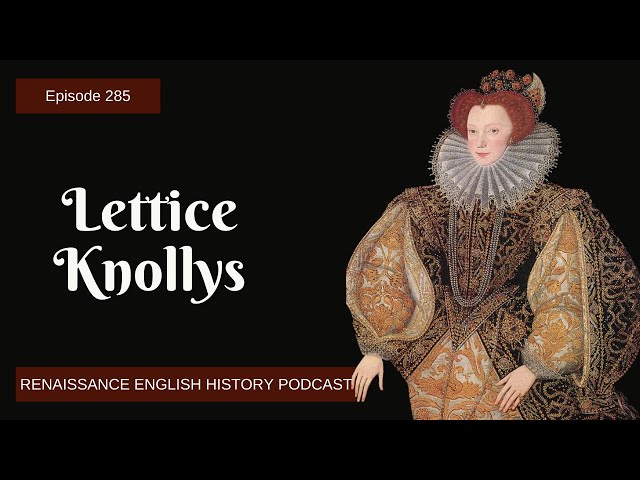
    Rough Transcription of Episode 285: Lettice Knollys: The Tudor Rebel Who Dared to Rival Elizabeth I

    Lettice Knollys. You might not know her name as well as her famous cousin, Elizabeth I, but her life was no less dramatic. Born into the heart of Tudor intrigue, Lettice lived through the reigns of six English monarchs. Seven if you count Lady Jane Grey, from Henry VII to Charles I spanning an astonishing 91 years, that alone would make her remarkable. But she was more than just long-lived. She was bold and a little bit of a troublemaker if we’re honest. So let’s talk today about Lettice Knollys.

    Lettice was a noble woman whose legacy has been overshadowed by her turbulent relationship with the Queen. But this isn’t just a story of rivalry. It’s about love. It’s about scandal and survival in the cutthroat Tudor world. So today we’re gonna talk about her life from her noble birth to of course her infamous marriage to Robert Dudley, her exile from Elizabeth’s court and the complex legacy that she left behind.

    We will explore the rumors that her mother, Catherine Carey, might have been Henry VIII’s daughter, and consider what that would have meant for Lettice herself. So buckle up for a story that’s equal parts history and scandal with a little bit of Tudor gossip. Because Lettice Knollys is about to take center stage.

    Noble Birth and Family Connections

    Lettice entered the world on November 8th, 1543. She was the eldest of 16 children. Born to Sir Francis Knollys and Lady Catherine Carey. God bless her. Born into a family deeply entwined with Tudor royalty. She grew up in an environment of privilege and political influence, of course.

    Her grandmother was Mary Boleyn, once the mistress of Henry VIII, this made her a cousin of Elizabeth I, because Anne Boleyn was the mother of Elizabeth I, Catherine Carey was the mother of Lettice Knollys, so they were sisters. So even if there wasn’t anything more to it than that, she was at least cousins with Elizabeth I.

    But that’s where things get a little bit interesting. Catherine Carey was rumored to be the illegitimate daughter of Henry VIII himself. This theory has fascinated historians and people, writers, Tudor enthusiasts for centuries. I’ve actually done some YouTube videos on this that have been pretty popular.

    So the first line of reasoning is Catherine Carey was, like we said, the daughter of Mary Boleyn. Mary Boleyn had her affair with Henry people say, while she was married to William Carey. So if Catherine was indeed the king’s daughter, it would make Lettice not just a courtier, but the granddaughter of Henry VII.

    Adding fuel to the rumor, Elizabeth I, Henry’s legitimate daughter showed marked favor towards the Carey family throughout her reign. Some accounts even note that Lettice bore a striking resemblance to Elizabeth hinting at a possible shared bloodline. Yet there is of course, no concrete evidence ever surfaced and historians remain divided.

    Some suggest the resemblance and favor were just coincidental. They were related after all. So there was family genetics and perhaps rooted in the family connection through the Boleyns rather than a royal affair. Lettice’s father, Sir Francis Knollys, was a staunch Protestant and a prominent courtier. During the reign of Mary I, Francis fled to the continent for safety, taking his family with him.

    When Elizabeth ascended to the throne in 1558, the Knollys family returned to England where Francis secured a high office as Vice Chamberlain. Lettice likely shaped by her father’s religious convictions and courtly connections, learned the grace, the wit, the calculated charm that would define her as a formidable noblewoman.

    When Elizabeth ascended to the throne in 1558, the fortunes, like we said, changed dramatically for the Knollys family. In addition to Lettice’s father being given a high office, young Lettice who was in her late teens at the time, joined the royal household as one of Elizabeth’s ladies-in-waiting

    Life at Elizabeth’s Court

    Picture the court of the 1560s, there was a dazzling blend of politics, of pageantry, where ambition and beauty went hand in hand. Lettice was tall, graceful, and strikingly beautiful, and quickly became one of the most admired women at court. Her dark auburn hair and fine aristocratic features were so similar to Elizabeth’s that many remarked that she looked like the queen’s mirror image. This resemblance, flattering as it was, could be a double-edged sword.

    After all, it wasn’t just any courtier drawing comparisons to the queen herself, it was her cousin, young, beautiful, and full of life. Elizabeth initially seemed to welcome her vivacious relation. Lettice was family and Elizabeth who cherished her Boleyn kin, was fond of her. They seemed to share a bond, but that closeness did not last in the summer of 1565.

    Lettice’s beauty and perhaps her sense of adventure sparked Elizabeth’s jealousy for the first time. Pregnant with her third child, Lettice was seen flirting with Robert Dudley, Elizabeth’s favorite courtier. That would’ve been a no-no. The Spanish ambassador noted that Lettice was one of the best-looking ladies and held the Queen’s favor at least until that moment when Elizabeth heard of the flirtation.

    Her reaction was swift and furious. Dudley was hers, or at least he was supposed to be. Whether Lettice meant any harm or not, Elizabeth did not tolerate women drawing Dudley’s attention. To keep the peace, Lettice prudently withdrew from court for a time allowing Elizabeth’s temper to cool.

    It was a small incident, but it set the stage for a far deeper rivalry. Lettice had unknowingly stepped into dangerous ground, and Elizabeth’s wrath would not be so easily appeased in the years to come.

    Marriage to Walter Devereaux

    In 1560 at just 17 years old, Lettice made a significant match. She married Walter Devereaux, Viscount Hereford. Walter was an ambitious nobleman and a good deal older than Lettice, but the marriage made sense for both families. By 1572, Walter’s star had risen and he was then created Earl of Essex, elevating Lettice to the title Countess of Essex. The couple settled primarily at Chartley Manor in Staffordshire, though Lettice often appeared at court alongside her husband.

    Motherhood followed swiftly. Lettice gave birth to Penelope in 1563, Dorothy in 1564, and then a son Robert in 1565, the future second Earl of Essex. Two more sons followed. Walter and Little Francis, who sadly died young by her mid-twenties. Lettice was juggling her roles as a mother of five and a prominent court lady.

    Balancing family life with the allure of Elizabeth’s court, Walter’s ambitions though soon drew him away. In 1573, he left for Ireland to lead a military campaign leaving Lettice to manage their estates and maintain her social standing. It was during that time that rumors began to swirl.

    Letters and gossips suggested that Lettice was spending significant time at the home of Robert Dudley, who was sending her gifts and hosted her at Kenilworth Castle. In 1575 when Queen Elizabeth visited Kenilworth in that very famous progress, she stayed for 19 days there for Dudley to throw this massive festival for her. Lettice was reportedly present there. She was just kept out of sight. Later that year, Elizabeth and her entourage visited Lettice at Chartley Manor, and Lettice played the gracious hostess keeping any personal drama hidden.

    Scandal then followed. In late 1575, a Spanish agent reported great enmity between Leicester and the absent Earl of Essex hinting that Lettice had born Dudley’s children while her husband was in Ireland. While this was almost certainly untrue, it reflects the tense rumor driven atmospheric court.

    An infamous pamphlet, Leicester’s Commonwealth would later accuse Lettice of conceiving two of Dudley’s children and secretly aborting one to cover up the infidelity, a salacious and entirely unfounded claim. Walter Devereux meanwhile died in Dublin in September, 1576, officially of dysentery.

    Though there were also whispers that Dudley had poisoned him to clear the path for Lettice, an inquiry found no evidence of foul play. But Walter’s tragic death left Lettice a widow. She was only 32. She had five children and a very precarious financial situation. She attended his funeral in Wales, but her plea for relief from his debts was denied by Elizabeth. Perhaps a sign that the queen was already suspicious of her closeness with Dudley.

    With Walter gone and her status uncertain Lettice’s connection with Robert Dudley grew even closer. The scandal that followed would define her reputation for the rest of her life. Two years after the death of her first husband, Lettice made a bold and fateful decision. On September 21st, 1578, she secretly married Robert Dudley.

    Secret Marriage with Robert Dudley and Her Exile

    The wedding took place in the early hours at Leicster’s country estate Wanstead Hall in Essex, attended by only a handful of trusted witnesses. Among them was Lettice’s father, Sir Francis. He was a practical and a devout man, who knows what he would’ve thought about this, but he likely saw no choice but to condone the union.

    The bride got married in a very simple dress, just a loose gown, not any kind of elaborate finery that one might expect for a noble wedding. So why the haste and secrecy? Most evidence points to Lettice being pregnant by Dudley at the time, her father determined to avoid future scandal, insisted on an immediate marriage to legitimize the situation.

    It was a reckless, passionate move. Marrying without the queen’s permission wasn’t just risky, it was treasonous. Elizabeth had made it clear over the years that Dudley was off limits, whether in romance, friendship, or political alliance, he belonged to her alone. Yet Dudley who had long danced a precarious line between courtly devotion to the queen and personal ambition had now taken a step that even he could not walk back for a time.

    The newlyweds managed to keep their marriage secret. The French ambassador heard rumors in late 1578, but nothing was officially confirmed. Dudley continued to appear at court, managed to maintain his favor with the Queen, but by late 1579, the secret was out. One of Leicester’s political enemies seeking to undermine his influence, revealed the marriage to Elizabeth directly, and Elizabeth’s reaction was volcanic.

    One biographer described it as a torrential force of wounded affection, betrayed confidence, jealousy, and anger. The Queen saw this not just as a personal betrayal, but a public humiliation. Her most cherished favorite, a man she had long considered marrying herself, had married her cousin, the very woman who so often seemed to mirror her own appearance and spirit.

    There are countless legends about the confrontation between the two women. One story claims that Elizabeth snatched off Lettice’s wig in a fit of fury. Another says she struck her across the face. These accounts, while colorful are probably exaggerations from later writers who delighted in the dramatic possibilities of two fierce women clashing.

    What is certain is that Elizabeth immediately banished Lettice from court. The queen’s wrath was absolute and permanent. She would never, ever forgive Lettice, nor would she ever allow her into her presence again. Elizabeth reportedly declared as there is, but one sun in the sky, there could be but one queen in England.

    Lettice daring to rival her in love and prestige had crossed an unforgivable line. As for Robert Dudley, Elizabeth’s anger towards him was a bit more complicated. She couldn’t bear to lose his company entirely. Though he faced a period of house arrest in the queen’s cold shoulder, he eventually regained a measure of favor, but Lettice remained irrevocably exiled.

    The public perception of Lettice was equally harsh. In a society where loyalty to the monarch was paramount. Marrying the Queen’s favor without permission was a bold defiance. Many whispered that she had bewitched Dudley or driven him to madness. It didn’t help that dudley’s political enemies, gleefully spread tales of her conniving nature.

    In truth, Lettice’s greatest crime in Elizabeth’s eyes was not just love but audacity. She had dared to compete with the Queen in both beauty and affection, and that was unforgivable. While others who married without royal consent faced prison, or even worse, like the Grey sisters who met grim fates for similar transgressions, Lettice’s only punishment was banishment.

    Yet for a woman of her rank and ambition, lifelong exile from court was a devastating blow, cutting her off from the heart of power and the queen’s favor that her family had long enjoyed. From 1580 onward, Lettice’s life would never again intersect directly with Elizabeth, and she would wear the stain of this scandal for the rest of her days.

    Life After Dudley

    When Robert Dudley died in September, 1588, Lettice faced both personal heartbreak and financial uncertainty. Dudley’s unexpected death, left her a wealthy widow, but he also carried significant debts to the crown. As Elizabeth auctioned off Dudley’s possessions to recoup what was owed. Lettice found her inheritance unexpectedly diminished.

    Just six months after Dudley’s death, Lettice made another surprising choice. She married Sir Christopher Blunt, a man of relatively modest means compared to her previous husbands. Blunt, had been Dudley’s trusted officer and was significantly younger than Lettice, about 12 years her junior. This marriage raised eyebrows among the nobility with even Lettice’s son Robert Devereaux, criticizing the match as an unhappy choice.

    Why did Lettice marry again so soon and to someone of lesser status? The answer may lie more in companionship than in strategy. After years of court intrigue and heartbreak, perhaps Lettice found solace in a familiar and loyal presence. Blunt, despite his lower rank, had been close to Dudley and had remained loyal throughout their marriage.

    Perhaps they were just very close friends, and there might have been a bond there based on trust and affection rather than any kind of political strategy. This third marriage brought Lettice relative stability in the countryside, particularly at Drayton Bassett in Staffordshire where the couple lived quietly.

    Yet once again, her family connections would soon embroil her in political turmoil. This time through her ambitious son, the Earl of Essex. While Latice had remained outcast at Elizabeth’s court, her son Robert Devereux, 2nd Earl of Essex, rose to dazzling heights. In the mid 1590s as the queen herself was entering her sixties, she seemed to relish Essex’s, youthful charm and bold spirit.

    She showered him with honors making him Master of the Horse, a title that had once belonged to both his grandfather and his stepfather, Robert Dudley. He also became a privy counselor, cementing his place as the Queen’s favorite. For Lettice, Essex’s success was a double-edged sword. On the one hand, it restored some of the family prestige she had lost through her own scandal.

    On the other, she remained personally excluded from court life watching from afar as her son thrived in the very place from which she was banished. Essex for his part, tried at least once to reconcile his mother with the queen. But Elizabeth’s resentment never softened.

    Personal tensions, also arose. Essex initially disapproved of Lettice’s third husband and the mother-son relationship grew strained at times. Despite this, Lettice remained a devoted mother. She worried over her son’s safety on military expeditions, and she wrote letters filled with advice and affection, yet Essex’s, impetuous nature, so reminiscent of Robert Dudley’s earlier bravado soon became his downfall.

    In 1601, Essex’s ambition got the batter of him. Frustrated by his declining influence and Elizabeth’s growing impatience with his insolence, he led the Essex Rebellion, the ill-conceived coup against the queen. The plot failed spectacularly and Elizabeth, heartbroken and furious ordered his execution for treason.

    Essex was beheaded on February 25th, 1601. He was only 35 years old. To compound this tragedy for Lettice, her husband had joined the rebellion and was also executed just weeks later. In the span of a few brutal months, she lost both her beloved son and her supportive third husband. At almost 60, she was left to grapple with grief and disgrace once more.

    Final Years and Legacy

    When James I took the throne in 1603, Lettice’s fortunes took a surprising turn for the better. Unlike Elizabeth, James had no personal animosity towards her and so no reason to hold a grudge. In a gesture of reconciliation, he restored the Essex title and estates to Lettice’s grandson. Thus reviving the family status and easing Lettice’s financial worries.

    He also canceled the remaining crown debt from Leicester’s time, bringing some much needed stability to her later years. She spent her final decades living mostly in Staffordshire. Even into her seventies and eighties, she maintained a formidable presence.

    Portraits from her later years depict a dignified and stately woman still holding onto her pride and independence. Family members noted her affection for her grandchildren and she found solace in their company telling stories of her eventful past and perhaps hinting at a quiet satisfaction that she had outlived so many of her rivals.

    Lettice Knollys passed away on Christmas Day 1634 at the remarkable age of 91. In her will she requested to be buried beside her dear Lord Robert Dudley in the Beuchamp Chapel of St. Mary’s Church. Her wish was honored and she was laid to rest next to Dudley, opposite the monument of their little son, Lord Denbigh.

    In the end, Leticia’s life story is one of defiance, survival, and a remarkable longevity. Often just remembered as Elizabeth’s rival, she was so much more, she was a noblewoman who endured the triumphs and tragedies of Tudor politics with an unwavering tenaciousness and determination. She didn’t just survive the Tudor era, she outlived it.

    A matriarch who might have been Henry VIII’s granddaughter. She remained standing long after the last echoes of Elizabeth’s court head faded.

  • Medieval and Tudor Mistresses: Power, Scandal, and Survival

    Medieval and Tudor Mistresses: Power, Scandal, and Survival


    Medieval and Tudor mistresses occupied a fascinating and controversial role in history, shaping the politics, culture, and court life of their time. Far from being mere companions, these women wielded considerable influence, using their proximity to monarchs to advocate for allies, secure wealth, and navigate the treacherous waters of royal intrigue.

    Figures like Alice Perrers, Jane Shore, and Katherine Swynford exemplify the complex lives of mistresses, blending ambition with survival in an era of rigid societal expectations. From the shadowy corridors of medieval courts to the glittering courts of Tudor England, the stories of these women reveal a hidden history where charm, intelligence, and resilience often determined their fates. This exploration delves into the lives of royal mistresses, uncovering their enduring impact on history and their remarkable ability to navigate power, scandal, and the ever-present threat of downfall.

    Rough transcript of Episode 266: Medieval and Tudor Mistresses

    We are going to talk about a very unique type of woman in history, and that would be the mistresses. So a lot of people have a lot of opinions about mistresses, especially royal mistresses, noble mistresses, but it’s true that they were very much a part of court life.

    They were much, very much a part of life, as indeed they likely still are. And they have a very complicated and controversial place in history, and we’re going to talk about them. We’re going to talk about some famous mistresses throughout medieval and Tudor England and what the role of the mistress was.

    Royal mistresses, far from being just footnotes to kings lives, they could wield considerable influence in politics, court intrigue, and culture. These women were not officially recognized, yet their relationships with powerful men gave them access to wealth and a voice in decisions that shaped kingdoms.

    So this episode will explore the lives of royal mistresses in medieval and Tudor England. Figures like Alice Perrers and Jane Shore, who managed to survive the treacherous world of court politics, and later women like Anne Basset and Mary Boleyn, show a hidden world of ambition, survival, and scandal.

    Alice Perrers: The Lady of the Sun

    Let’s start out with Alice Perrers. Alice, later known as Alice of Salisbury or Alice of Windsor, was born around 1348. Her exact birthplace and family background are unclear, but some evidence suggests that she may have belonged to the Hertfordshire’ Perrers family. Other accounts, likely biased by contemporary disdain, claim that she was the daughter of a thatcher “from the town of Henney”.

    Around the age of 12, she married a Janyn Perrers, a London jeweller who died within a few years, leaving her a widow by her mid teens. Her entrance into the royal court came through service to Queen Philippa as a damsel or attendant.

    By 1366, at the age of 18, she had caught the attention of Edward III who was then 55. Their affair began while Queen Philippa was still alive, and Alice bore the king at least three children during this time. Despite her lack of noble lineage or striking beauty, chroniclers noted Alice’s wit, charm, and a melodious voice that compensated for her physical appearance.

    Edward’s affection for her grew stronger after the Queen’s death in 1369, and he rewarded her lavishly. She amassed immense wealth, including 56 manors, castles, and townhouses. Alice’s influence became increasingly controversial as Edward aged and his health declined. Accused of exploiting his senility, she reportedly convinced him to buy her the same jewels repeatedly, reselling them for cash.

    Edward even paraded her through London in golden robes as the “Lady of the Sun”, inciting public criticism. Between 1370 and 1376, she used her position to manipulate court proceedings, ensuring favorable outcomes for herself and her allies. Her dominance made her deeply unpopular among nobles and the public.

    In 1376, during the Good Parliament, Alice was accused of corruption, and they made the King banish her. An ordinance specifically prohibited her from participating in any legal cases, a practice that she had apparently abused to protect her vast estate. Her properties, including over 21, 000 pearls, were confiscated. Despite this, she managed to return and regain some of her lands after Edward died in 1377.

    Now in 1375, she had married Sir William of Windsor to secure her position after Edward’s death, though the union produced no children. She spent her remaining years attempting to recover her full estate. She died in the winter of 1400 to 1401 and was buried at the Church of St. Lawrence in Upminster in Essex.

    Her story is marked by ambition, scandal, and resilience, and it lives on as a cautionary tale of the risks and rewards that women could face when they became a king’s mistress in the medieval court.

    Jane Shore: The Merry Mistress

    Now we’re going to talk about Jane Shore, the merry mistress of Edward IV. Jane Shore was born Elizabeth Lambert around 1445 in London. She was the daughter of John Lambert, a prosperous merchant, and Amy Marshall. Raised in relative comfort, she received an education unusual for women of her class. Her intelligence, charm, and quick wit gained her attention at a young age, earning her admirers among the city’s elite.

    Thomas More later wrote that her personality, more than her physical beauty, captivated those around her. She was described as merry in company and skilled in conversation, with an innate ability to put people at ease. She married William Shore, a goldsmith and banker, in her early 20s. But the marriage was annulled in 1476 on the grounds of his impotence.

    Shortly after, Jane caught the eye of King Edward IV, who was known for his many romantic entanglements. Their affair began in 1476 and lasted until Edward’s death in 1483. Unlike other royal mistresses, Jane was not showered with extravagant gifts. Instead, she used her influence to plead for mercy on behalf of those who had fallen out of favor, earning her a reputation for generosity and compassion.

    Her advocacy reportedly saved Eaton College from disillusion, a legacy they still remember in the Jane Shore Society. Following Edward’s death, Jane became embroiled in the power struggles of the time. She formed relationships with Thomas Gray, Edward’s stepson, and William Hastings, Edward’s loyal supporter.

    Accused of conspiring against Richard III, Jane was arrested and publicly humiliated, forced to perform penance by walking through London in a thin shift with a candle in her hand. After her penance, Jane was imprisoned in Ludgate, where she caught the attention of Thomas Lynom, Richard’s solicitor general.

    Despite Richard’s objections, they married, and Jane lived out her remaining years in relative obscurity, her fortunes diminished. She actually survived all the way until about 1527, her early brilliance dimmed by a life marked by both privilege and hardship.

    Katherine Swynford: The Scandalous Duchess

    Now we’re going to talk about a royal mistress love story that actually ended well, which is Katherine Swynford, the scandalous duchess who changed England’s royal lineage.

    Born Katherine de Roet around 1349, likely in Hainault, Katherine grew up in a family connected to the English court. Her father, Payne de Roet, was a herald knight who accompanied Queen Philippa of Hainault to England. So that’s under Edward III when we’ve got Alice Perrers being born and then eventually becoming the mistress, having served in the same Queen Philippa’s household, right?

    So a lot of mistresses happening. Katherine and her siblings, including her sister Philippa, who married Geoffrey Chaucer, were raised at court under the Queen’s patronage. This upbringing afforded Katherine an education, social polish, and connections that would shape her future. Katherine married Sir Hugh Swinford, a knight in the service to John of Gaunt, Duke of Lancaster, around 1361.

    They lived modestly at Kettlethorpe, a manor in Lincolnshire, and had several children. Then, Hugh died in 1371, and Katherine’s position became precarious. To support herself and her children, she joined the household of John of Gaunt’s second wife, Constance of Castile, as a governess to the Duke’s daughters.

    This role brought her into close proximity with Gaunt, sparking a love affair that scandalized the realm. Between 1373 and 1381, Katherine and Gaunt had four children, the Beauforts, named after one of Gaunt’s estates in France. Despite their illegitimacy, these children were legitimized by the Pope in 1396 after Katherine and John of Gaunt married following the death of his second wife.

    Their union was, of course, highly controversial, viewed as a shocking departure from noble norms. Chroniclers like Thomas Walsingham denounced Katherine as a social climber, but her lasting relationship with Gaunt suggests mutual affection and loyalty. Katherine’s children with John of Gaunt profoundly influenced English history.

    Her great grandson, Henry VII, founded the Tudor dynasty, claiming the throne through his mother, Margaret Beaufort. Katherine’s descendants include every English and British monarch from the Tudors onward. After Gaunt’s death in 1399, Katherine retired to Lincoln, where she lived quietly until her death in 1403. She was buried at Lincoln Cathedral. Her tomb is a site of reverence for her prominent descendants.

    Katherine Swynford’s legacy endures as the matriarch of a lineage that shaped England’s destiny and the enduring power of love amidst scandal.

    Anne Stafford: The Tudor Temptress

    Now we’re going to talk about some of the early Tudor mistresses, starting with Anne Stafford. Lady Hastings was born around 1483 into the very powerful Stafford family. Her father, the Duke of Buckingham, and her mother was Katherine Woodville, the sister of Elizabeth Woodville, Edward IV’s queen, so she was Edward IV’s niece. With her Plantagenet lineage, Anne was a prominent figure at court, carrying the prestige and peril of noble blood in an era where politics often turned deadly.

    Her brother, Edward Stafford, Duke of Buckingham, would later lose his life in 1521. accused of treasonously entertaining prophecies about Henry VIII’s failure to produce a male heir. Anne’s connection to scandal stems from a rumored affair with Henry VIII, a claim that has tantalized historians but remains unproven.

    This event, however, caused enough uproar to disrupt courtly life. The events unfolded in 1510 while Katherine of Aragon was pregnant with her first child. Anne, along with her sister Elizabeth Stafford, served as one of Katherine’s ladies in waiting. Elizabeth grew suspicious of Anne’s interactions with the king and alerted their brother, the Duke of Buckingham.

    Enraged at what he perceived as the king’s inappropriate attention toward his sister, Buckingham confronted Sir William Compton, a close confidant of Henry and allegedly an intermediary for the affair. The scandal erupted into full blown confrontation. Buckingham, unwilling to accuse the king directly, withdrew from court, and Anne’s husband, Lord George Hastings, sent her to a nunnery 60 miles away to cool the controversy.

    Henry retaliated by banishing Elizabeth Stafford from court, incurring Katherine of Aragon‘s wrath. According to the Spanish ambassador Chapuys, Katherine wept and ranted at her husband, angered by his infidelity and the exile of her favorite lady in waiting. Yet Anne’s marriage to Lord Hastings seems to have weathered the storm, producing seven children and letters that speak of affection and mutual respect.

    Anne Stafford remains a figure shrouded in ambiguity. Was she truly Henry’s mistress or simply a pawn in the power games of Tudor politics? Either way, her story captures the volatile mix of ambition, loyalty, and scandal that defined life at Henry’s court.

    Bessie Blunt: Mother of Henry Fitzroy

    Next, Bessie Blunt. She holds a unique place in Tudor history as the mother of Henry VIII’s only acknowledged illegitimate child, Henry Fitzroy. Born around 1498 to Sir John Blunt and Catherine Peshall of Kinlit in Shropshire, Bessie came from a respectable but unremarkable gentry family. Her father’s loyalty to the crown included service in Henry VII’s campaigns in France, but the family rose to greater prominence through Bessie’s relationship with the king.

    Little is known about Bessie’s early years, but she is remembered for her beauty, vivacity, and her grace. She joined the court as a maid of honor to Katherine of Aragon, where her dancing, singing, and charm captured the attention of Henry. By 1514 or 1515, she became his mistress. a position she held for several years, longer than most of Henry’s extramarital affairs.

    At court, Bessie became the king’s favored companion, excelling in courtly entertainments. In 1519, she bore the king a son, Henry Fitzroy, later created the Duke of Richmond in Somerset. Fitzroy was the only illegitimate child Henry VIII ever officially acknowledged. His birth was a testament to the king’s ability to have healthy male heirs.

    A significant point during a time when Katherine of Aragon’s pregnancies resulted in repeated losses, the saying “Bless ‘ee, Bessie Blount” became a popular refrain celebrating her contribution to the Tudor legacy. Despite the significance of Fitz Roy’s birth, though Henry’s affair with Bessie ended shortly afterwards, possibly due to his growing interest in Mary Boleyn.

    Unlike other royal mistresses in European courts, Bessie was never formally recognized in an official capacity. Her role remained discreet, though her impact on the dynasty was substantial. In 1522, she married Gilbert Talboys, a baron, with whom she had three children.

    Their marriage took her to Lincolnshire, where she lived quietly, removed from the intrigue of court. However, letters from Fitzroy’s tutor suggest that Bessie maintained some involvement in her son’s upbringing, alongside Henry’s notable affection for his son. After her husband died in 1530, Bessie remarried Edward Clinton. This union produced three daughters.

    Briefly, Bessie served as a lady in waiting to Anne of Cleves, but ill health cut her time at court short. She died in 1540, likely from tuberculosis. Though overshadowed by Henry’s queens and other mistresses, her legacy did endure through her son Henry Fitzroy. In the 1520s, Fitzroy’s legitimacy as Henry’s heir was briefly contemplated during the king’s quest to annul his marriage to Katherine.

    His existence underscored Henry’s belief that his marriage was cursed, fueling the great matter and England’s break from the Catholic Church. Though, of course, none of that mattered because Fitzroy himself passed away in 1536.

    Mary Boleyn: The Other Boleyn Girl

    Then there’s Mary Boleyn, often overshadowed by her ambitious sister Anne. She gained notoriety as the mistress of two kings potentially, Francis I of France and Henry VIII of England, and later became a figure of quiet resilience after her fall from royal favor.

    Born around 1499, her life offers a lens into the precarious positions that women of the Tudor age often found themselves in. She was born at Blickling Hall, just like Anne, and then raised at Hever in Kent. She was the oldest of three surviving Boleyn children, and she received a well rounded education typical of her station.

    Around 1514, she joined the household of Princess Mary Tudor, who was traveling to France to marry Louis XII. It was during this time that Mary’s reputation became tarnished by rumors of promiscuity, allegedly becoming the mistress of Louis successor, Francis I. Francis himself later referred to Mary as a great whore, though such claims may have been exaggerated to discredit the Blinns.

    Mary returned to England in 1519 and soon married Sir William Carey, a prominent courtier. Despite her marriage, she became a mistress to Henry VIII. The affair’s timeline and duration are unclear, but it likely occurred in the early 1520s.

    Unlike Bessie Blunt, Henry’s previous mistress, Mary’s relationship with the king resulted in no acknowledged offspring, although it has been widely speculated that her two eldest children, Catherine Carey and Henry Carey, were fathered by Henry VIII.

    However, Henry never formally claimed them. While Mary’s affair with Henry faded, her younger sister Anne rose to prominence. Anne refused to become Henry’s mistress, likely seeing what happened to her sister. And, of course, then it led to the great matter and Henry annulling his marriage to Katherine of Aragon, setting the stage for Anne’s ascent to power.

    Mary’s life was less glamorous, though. Her husband, William Carey, died in 1528, leaving her in a great amount of debt. Anne was now a key figure at court. and arranged for her nephew, Mary’s son, Henry Carey, to be placed in a prestigious monastery and secured Mary a modest pension. Despite these efforts, though, the sisters were not close, and Mary’s role at court diminished as Anne’s influence grew. I would imagine it would likely be quite awkward for these two sisters, who were both with the same man.

    Now, in 1534, Mary secretly married William Stafford, a soldier of modest means. This marriage was seen as a social misstep and it angered both Queen Anne and King Henry. Mary and Stafford were banished from court and the Boleyn family disowned her.

    Financially struggling, Mary appealed to Thomas Cromwell and even wrote a heartfelt letter defending her marriage, stating she chose love over ambition. Although Anne sent a conciliatory gift, Mary was not reinstated at court. Mary lived quietly with her husband in Essex, fading from the historical record.

    She didn’t visit Anne or George, their brother, during their imprisonment in the Tower of London, nor is there evidence of her presence at Anne’s execution in 1536. Mary died in 1543. Likely at Rochford Hall, and her burial place is unknown. Mary had four known children, Catherine and Henry Carey, from her first marriage, and possibly two children, Edward and Anne Stafford, from her second.

    Her children, particularly Katherine and Henry Carey, rose to prominence during the reign of their cousin Elizabeth. Henry Carey was ennobled as Baron Hunsdon, and became a trusted figure in Elizabeth’s court. Catherine served as one of Elizabeth’s ladies-in-waiting. Then we’re going to talk about the later Tudor period.

    Anne Basset

    For example, Anne Basset, the stepdaughter of Arthur Plantagenet, who was Henry VIII’s uncle, was widely rumored to have been one of Henry VIII’s later mistresses. A maid of honor to both Jane Seymour and Katherine Howard, Anne was described as beautiful and ambitious, fitting the profile of women who caught Henry’s attention.

    Despite the persistent rumors though, no concrete evidence confirms Anne’s relationship with the king. Historians speculate that the stories might have originated from court gossip or political maneuvering as Anne’s family had much to gain from such a connection.

    Elizabeth Vernon

    Then there was Elizabeth Vernon, the mistress and later wife of the Earl of Southampton. Her story is a reflection of the shifting attitudes towards mistresses in Elizabethan England. As a maid of honor to Elizabeth I, Elizabeth Vernon became involved with Henry Wriothesley, the Earl of Southampton.

    Their passionate relationship caused scandal when Elizabeth became pregnant out of wedlock. The couple married in 1598, but their actions enraged the Queen, who briefly imprisoned both of them for their indiscretion.

    Unlike earlier mistresses, though, Elizabeth Vernon’s story did not involve a monarch, but a prominent nobleman. Signaling a cultural shift, and also, there was no king on the throne, and it’s not like Elizabeth was going to be having a lot of affairs, so it did change the culture. By the late Tudor period, mistresses were less likely to be tied to the crown, as the cult of Elizabeth’s chastity discouraged such relationships at court.

    Lady Penelope Devereaux

    Similarly, Lady Penelope Devereaux, the sister of the Earl of Essex, was celebrated for her intelligence and beauty. She was the inspiration for Sir Philip Sidney’s Astrophel and Stella , one of the great works of Elizabethan poetry. While rumors linked her romantically to Sidney and other courtiers, her actual role as a mistress remains unclear.

    What sets Penelope apart is the way she leveraged her connections to influence politics. She became deeply involved in her brother’s rebellion against Elizabeth I, using her charm and social standing to rally support. Penelope’s life demonstrates how women could navigate the courtly world of romance, intrigue, and power without necessarily being tied to a royal figure.

    The Role and Legacy of Mistresses

    Then let’s talk about the role of mistresses. Power, survival, and scandal, mistresses often wielded influence in ways that official advisors or even queens could not. Their proximity to the king gave them access to his private thoughts and decisions, allowing them to advocate for allies, secure patronage, and shape court politics.

    Alice Perrers, for example, successfully lobbied for lucrative land grants and positions for her supporters, while Jane Shore used her charm to mediate disputes and assist those seeking royal favor. This influence, though, came with risks. A mistress’s favor was tied directly to the king’s affection, making her position precarious.

    Once their relationship ended, mistresses were often vilified, stripped of their wealth, or cast out of court entirely, as we saw with Alice Perrers and Jane Shore. Society viewed mistresses with a mix of fascination and disdain.

    In medieval England, royal mistresses like Katherine Swynford were sometimes forgiven if their relationships led to legitimate unions. By contrast, Tudor era mistresses often faced harsher scrutiny, reflecting the era’s growing emphasis on morality and public decorum. Scandals involving mistresses could spark political crises. Anne Stafford’s brief affair with Henry VIII created tensions between the king and her powerful family.

    Similarly, Elizabeth the Vernon’s premarital pregnancy and secret marriage to the Earl of Southampton enraged Queen Elizabeth I, who valued her court’s reputation for chastity. The public also enjoyed a good gossip about these relationships, of course. Ballads and plays often sensationalized the lives of royal mistresses, turning women like Jane Shore into tragic figures or cautionary tales.

    These stories reflected societal anxieties about power, sexuality, and female ambition. For every mistress who thrived, many more were discarded when their influence waned. The very qualities that brought them favor beauty, charm, and wit often became liabilities when court politics shifted. Mary Boleyn, for instance, was eclipsed by her sister Anne, and her relationship with Henry ultimately brought her little lasting benefit.

    Even those who achieved prominence lived under constant threat. They could be used as scapegoats in political conflicts, blamed for the king’s unpopular decisions, or targeted by rival factions. The legacy of Medieval and Tudor mistresses is complex. In their own time, they were derided as symbols of moral corruption.

    But their stories show a more nuanced reality. Many of these women were survivors, using the limited tools available to them charm, intelligence, and connections. To carve out spaces of power in a male dominated world. In literature and art, royal mistresses have been reimagined as everything from seductresses to tragic heroines.

    Jane Shore became a fixture of English ballads, while Katherine Swynford’s romance with John of Gaunt inspired novels and historical fantasies. So the lives of medieval and Tudor mistresses show a hidden layer of history where women without official titles shaped court politics. influenced royal decisions and became pivotal figures in the stories of their times.

    Their stories reflect the challenges of navigating a world that offered women few official avenues to power. They were not just companions to kings, but survivors of a courtly system that could both elevate and destroy them. Each one faced unique struggles, whether managing public scrutiny, avoiding political entanglements, or securing a future after their fall from favor.

  • Tudor Minute March 24, 1603: Elizabeth I died

    Tudor Minute March 24, 1603: Elizabeth I died

    Today in 1603 Elizabeth I died in Richmond Palace. She was 69 years old, and ruled for 44 years. 

    Sir Robert Carey, the grandson of Mary Boleyn (and so a cousin of Elizabeth) wrote of Elizabeth’s last days:

    “On Wednesday, the 23d of March, she grew speechless. That afternoon, by signs, she called for her council, and by putting her hand to her head, when the king so Scots was named to succeed her, they all knew he was the man she desired should reign after her. About six at night she made signs for Archbishop Whitgift and her chaplains to come to her, at which time I went in with them, and sat upon my knees full of tears to see that heavy sight. Her Majesty lay upon her back, with one hand in the bed, and the other without. The bishop kneeled down by her, and examined her first of her faith; and she so punctually answered all his several questions, by lifting up her eyes, and holding up her hand, as it was a comfort to all the beholders. Then the good man told her plainly what she was, and what she was to come to; and though she had been long a great Queen here upon earth, yet shortly she was to yield an account of her stewardship to the King of kings. After this he began to pray, and all that were by did answer him. After he had continued long in prayer, till the old man’s knees were weary, he blessed her, and meant to rise and leave her. The Queen made a sign with her hand. My sister Scroop knowing her meaning, told the bishop the Queen desired he would pray still. He did so for a long half hour more, with earnest cries to God for her soul’s health, which he uttered with that fervency of spirit, as the Queen, to all our sight, much rejoiced thereat, and gave testimony to us all of her Christian and comfortable end. By this time it grew late, and every one departed, all but her women that attended her.”

    That’s your Tudor Minute for today. Remember you can dive deeper into life in 16th century England through the Renaissance English History Podcast at englandcast.com.

    Suggested links:
    The Birth of Elizabeth I
    Spring 2019 Tudor Summit: Dr. Estelle Paranque on Elizabeth I Through Foreign Eyes

    Check out the Top Ten Tudor Women Episodes you might have missed.

    Looking for your next Tudor read? Here’s a list of Tudor Book Recommendations.
    Is your favorite book not on the list? Submit it here!

  • Tudor Minute March 4, 1526: Happy Birthday Henry Carey

    Tudor Minute March 4, 1526: Happy Birthday Henry Carey

    Today is the birthday, in 1526, of Henry Carey, the son of William Carey and his wife Mary Boleyn. The fact that Mary had a romantic relationship with Henry VIII before marrying William has led to speculation that Henry might be the father of her children.

    In 1528 William Carey died from the sweating sickness, and Henry became the ward of Anne Boleyn. Anne made sure he had a good education, and he later became a member of Parliament. He is buried in Westminster Abbey with his sister Catherine, who has a much stronger claim to being Henry VIII’s daughter.

    That’s your Tudor Minute for today. Remember you can dive deeper into life in 16th-century England through the Renaissance English History Podcast at englandcast.com where there is an interview with Christine Morgan on Catherine Carey, and Mary Boleyn.

    Suggested links:
    Spring 2019 Tudor Summit: Christine Morgan on Mary Boleyn
    Spring 2018 Tudor Summit: Claire Ridgway on the Boleyns

  • Watching the Tudors Season 2 Episode 5: His Majesty’s Pleasure

    Watching the Tudors Season 2 Episode 5: His Majesty’s Pleasure

    In this episode of Watching the Tudors we talk about why Thomas More seemed to really want to be a martyr, and why Mary Boleyn really shouldn’t have gotten married without the permission of Anne and Henry.

    Learn more about Thomas More on the other podcast episode I did about him here: Episode 055: Tudor Times on Thomas More

    [advertisement insert here: if you like this show, and you want to support me and my work, the best thing you can do (and it’s free!) is to leave us a rating on iTunes. It really helps others discover the podcast. Second best is to buy Tudor-themed gifts for all your loved ones at my shop, at TudorFair.com, like leggings with the Anne Boleyn portrait pattern on them, or boots with Elizabeth I portraits. Finally, you can also become a patron of this show for as little as $1/episode at Patreon.com/englandcast … And thank you!]