Mary I

  • Lady Jane Greyโ€™s Failed Rebellion: How Mary I Claimed the Crown

    Lady Jane Greyโ€™s Failed Rebellion: How Mary I Claimed the Crown


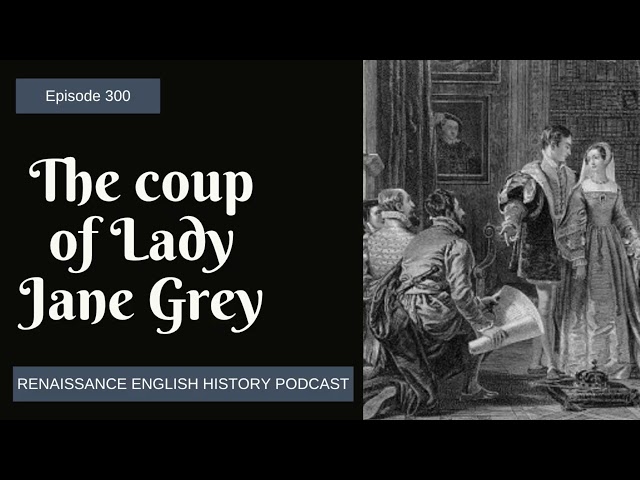
    Lady Jane Greyโ€™s failed rebellion in July 1553 is one of the most dramatic power struggles in Tudor history. Declared queen at just sixteen, Jane reigned for only nine days before being overthrown by Mary Tudor, who claimed the throne with remarkable speed and without a battle.

    Far more than a teenage tragedy, the collapse of Janeโ€™s brief reign reveals the dangers of political overreach, the power of legitimacy, and the miscalculations of those who tried to engineer Englandโ€™s succession. Understanding why Lady Jane Greyโ€™s rebellion failed helps us see how Mary I, once dismissed as powerless and irrelevant, rose to become Englandโ€™s first crowned queen regnant.

    Transcript of Why Lady Jane Greyโ€™s Rebellion Failed: How Mary I Took the Throne

    On July 10, 1553, a young woman was declared Queen of England, Englandโ€™s first Queen regnant. Her name was Lady Jane Grey, and just nine days later, she was a prisoner in the Tower. What happened in those nine days was more than a failed coup. It was a last-ditch attempt by Edward VIโ€™s government to preserve Protestant power, and it collapsed with breathtaking speed.

    But what is even more remarkable is who took the throne instead: Mary Tudor, a woman the political establishment had written off as outdated, dangerously Catholic, and politically irrelevant. Yet Mary won without an army, without a formal base of power, just with her name, her fatherโ€™s legacy, and the backing of a population that frankly was not interested in watching another political gamble tear the country apart.

    This episode is not just about Jane, though her story is central. It is about how the machinery behind her brief reign came apart almost immediately. It is about Northumberlandโ€™s miscalculations, the power of legitimacy, and how Mary, the daughter of Katherine of Aragon, turned a quiet escape into a triumphant march to the throne.

    The nine days that Jane was queen tell us a lot about Tudor politics: who actually held power, how fast public opinion could turn, and what happened when you tried to force a dynasty into a direction it did not want to go.

    This week, we are talking about Lady Jane Grey, the Nine Days Queen, and not just about Jane, but about the failed coup and how Mary Tudor was able to overcome the threats against her and claim the throne without any bloodshed. So letโ€™s get right into it.

    By early 1553, it was clear that Edward VI was dying. He was only fifteen, but the effects of tuberculosis, or what his contemporaries called consumption, were impossible to ignore. His coughing fits worsened, his weight dropped, and his council began to panic.

    Edward, despite his youth, was deeply committed to Protestant reform. He had been raised under the influence of Archbishop Cranmer, and he took his role as a godly prince seriously. The idea that his crown might pass to Mary Tudor, his Catholic half-sister, horrified him. And that is where the Device for the Succession comes in.

    Lady Jane Gray’s Ascension and Immediate Challenges

    Edward began drafting the document himself in early 1553. Now, originally it stated that the crown would pass to the heirs male of Lady Jane Grey. When it became clear that Edward did not have enough time to wait for Jane to produce an heir, the wording was revised to name Jane herself as the heir outright. Now, who exactly was Lady Jane Grey?

    Lady Jane Grey was the daughter of Frances Grey, the Duchess of Suffolk. She was, in turn, the daughter of Mary Tudor, Henry VIIโ€™s younger sister, the Queen of France for a short time, who was married to Charles Brandon. Lady Jane Grey herself would have been like a great-niece to Henry VIII.

    The problem with this arrangement was that it ignored both Mary and Elizabeth, Henryโ€™s daughters, who had each been restored to the line of succession in their fatherโ€™s will. Yes, both had technically been declared illegitimate during their fatherโ€™s lifetime, but Henryโ€™s final act had reinstated them. Edward, by naming Jane, was overriding his fatherโ€™s settlement and an act of Parliament.

    It was a bold move, and he was not working alone. John Dudley, the Duke of Northumberland, had recently married his son, Guildford Dudley to Jane. The timing was, of course, not a coincidence with Edwardโ€™s failing health. Dudley was positioning his family as the power behind the next monarch. Jane was educated, pious, and Protestant, but more importantly, she had no power base of her own, so she was controllable.

    Jane herself does not seem to have been consulted. Later reports suggest that when she learned of the plan, she collapsed in tears or fainted. She insisted that she never sought the crown, but, and this is key, she also accepted it. Whether through pressure, duty, or fear is hard to say.

    The Privy Council, likely under heavy pressure from Dudley and perhaps genuinely afraid of a Catholic queen, signed off on the plan. Even Cranmer, who had been close to Henry and knew better than anyone the legal problems with bypassing Mary, eventually added his own signature.

    On paper, it looked neat. Protestant rule was preserved. The Dudley family was secured. A calm handover of power was planned. But outside the court bubble, very few people even knew who Lady Jane Grey was. She had no public support, no military backing of her own, and no real claim that people recognized. It was a succession engineered entirely from the top down. It was about to come apart almost as quickly as it was declared.

    So, on July the 10th, 1553, Lady Jane Grey was officially proclaimed the Queen of England. She was escorted by barge to the Tower of London, the traditional residence, of course, of monarchs before they were crowned, and she took up residence as queen.

    That same day, the Privy Council issued formal orders. Janeโ€™s name was entered into the official records. Bishops were told to preach in her name. Coins were minted. Prayers were rewritten. Outside the walls of the Tower, the mood was uncertain in London. People heard the proclamation and responded with dead silence.

    There were no celebrations in the streets, no church bells, no bonfires. Even those who supported the Protestant cause were not quite sure what to make of this obscure teenage girl being named queen over both Henry VIIIโ€™s daughters. It also did not help that Mary Tudor had already made her first move.

    Mary Tudor’s Counterclaim and Rising Support

    Just a few days earlier as Edward lay dying, Mary had been tipped off about the plan to block the succession. She rode hard for East Anglia, heading straight to the place where she knew she had allies: Framlingham Castle. Meanwhile, back in London, the new regime was already showing some cracks.

    One of Janeโ€™s first acts was to refuse the demand that her husband, Guildford, be declared king. This infuriated the Dudley family, especially her mother-in-law, the Duchess of Northumberland, who apparently shouted at Jane in front of the court. Jane held her ground, insisting that Guildford would be a duke, not a king.

    That single moment exposed the entire house of cards. It was immediately clear that Jane was not as pliable as Dudley had hoped. Her refusal to elevate Guildford undermined the idea that the Dudleys could rule through her, and it began to drive a wedge between the new queen and the faction that had installed her.

    Meanwhile, the Privy Council was growing uneasy. Their signatures were on the device, yes, but many of them had longstanding ties to Mary. Some had even served with her mother, Katherine of Aragon, decades before. Others had personal reservations about the legality of Janeโ€™s claim. Most of all, they were watching how the country reacted, which was a big nothing burger. No outpouring of support, no groundswell of loyalty, just a deep and uneasy silence.

    Northumberland, who had been the architect of the whole succession plan, now had to scramble to build support for Jane on the ground, but his influence was waning. The farther from London he went, the more Maryโ€™s name and her legitimacy carried weight.

    Jane, for her part, continued to carry herself as a queen with dignity. She spent time in prayer. She attended to state matters with seriousness. She thought that perhaps God had actually put her in this position, so she was going to accept it and do the best she could. She followed through on the daily business of queenship and getting ready to be crowned. But she had no experience, no allies outside of her husbandโ€™s faction, and no real power. She had the title, but Mary had the loyalty of the people, and things were about to turn very quickly in Maryโ€™s favor.

    So, while Jane was being moved into the Tower and proclaimed queen with all of the outward trappings of monarchy, Mary Tudor was already in motion. On July 9th, 1553, before Jane had even been publicly proclaimed, Mary received word that Edward had died and that her enemies planned to cut her out of the succession.

    She did not wait to see if the Council would honor her claim. She rode hard for East Anglia, the region where she held her estates, her longstanding supporters, and something far more valuable: her power base. She arrived at Framlingham Castle, a strong fortress in Suffolk that had been part of the Howard family holdings. And there Mary made her stand.

    This is where it gets interesting, because Mary did not have an army, at least not yet. She had a name, and in 1553, that was more powerful than anyone had predicted. Mary did not send out fiery manifestos or call for rebellion. She issued carefully crafted proclamations, emphasizing her legitimacy.

    She was Henry VIIIโ€™s daughter. She was born in wedlock. She was named in his will, and she was confirmed by statute as the next in line after Edward. Whatever people thought about her religion, and there were concerns about her Catholicism, she was by all reasonable standards the rightful heir. And people responded. Nobles and gentry began to flock to her, many of whom had nothing to gain from supporting Jane.

    In fact, many of them had quietly stayed out of politics completely during Edwardโ€™s reign, watching the religious changes with growing discomfort. Mary, to them, represented not just legitimacy but also a return to order, a queen whose claim was rooted in law and blood, not paperwork drafted by a dying boy and a power-hungry council.

    She also had the support of ordinary people in East Anglia, a region still thick with traditional Catholic sentiment. Crowds gathered to cheer her on. Towns raised men to serve her, and by mid-July, Mary, who had fled without a military escort, now had a growing armed force behind her.

    The Collapse of Jane’s Regime

    The Privy Council in London began to sweat. John Dudley, realizing the threat, persuaded the Council to let him march out to confront her. He set out with a small force, expecting to rally more support as he moved north, except that support did not materialize.

    Worse, his own troops began to desert, some slipping away to join Maryโ€™s forces, others simply melting back into the countryside. No one wanted to fight a popular royal woman who was, by most standards, the rightful heir, especially not in defense of a girl that no one had chosen.

    Mary, from her position at Framlingham, now issued orders like a queen. She appointed commanders, raised troops, and sent letters, all while Jane sat in the Tower waiting for a coronation ceremony that was never going to come. What started as a defensive retreat had turned into a full-fledged counterclaim, and back in London, things were falling apart.

    So I just want to pause for a moment and say this: over on my YouTube channel a couple of weeks ago, I put up a poll and asked you all what you thought, whether Jane should be called Jane I, since she was kind of the queen, or whether no, because she was never crowned, she never, you know, ruled properly. I did make the point that, of course, Edward V was never crowned, because he was in the Tower held by Richard III, and yet we still consider him Edward V. So the whole โ€œhaving a coronation ceremonyโ€ doesnโ€™t mean so much to me. But I wondered what you all thought. Should she be called Jane I, or no, because she never ruled properly? And 668 of you voted in that poll, and itโ€™s really split down the middle.

    Yes, she should be called Jane I won with 56 percent of the vote. And โ€œno, not crowned, never ruled properlyโ€ came in second, of course, because there were only two choices. So that took 44 percent of the vote. According to those of you who voted on YouTube, she should be called Jane I, for whatever thatโ€™s worth. I just think thatโ€™s a fun little thing to think about. What do you think? Should she have been called Jane I? Should we refer to her now as Jane I? Iโ€™d love to know what you think about that.

    By mid-July, the political gamble that had placed Lady Jane Grey on the throne was in free fall. John Dudley had left London on July 14th to march north and confront Maryโ€™s growing forces in East Anglia. He had only a small army, somewhere around 3,000 men, and no real enthusiasm behind him.

    His march was slow, and it was plagued by desertions and hesitation. Towns that should have welcomed him offered zero support. Some quietly closed their gates. Others made it clear that their loyalties were leaning toward Mary. And Dudley knew exactly what was happening. According to one report, he turned to a companion and said bitterly, โ€œThe people press to see us, but not one says God speed us.โ€

    Meanwhile, back in London, the Privy Council was losing its nerve. At first, they had followed Dudleyโ€™s lead, issuing Janeโ€™s proclamation, swearing oaths, and going through all the motions. But as the news from East Anglia trickled in, and as Maryโ€™s support kept growing, they started looking for their exit plan.

    Some of the councillors were secretly corresponding with Mary already, hedging their bets. Others, including the Earl of Arundel, began openly pressing for the council to reverse course. Janeโ€™s father, Henry Grey, Duke of Suffolk, had been left behind in London, effectively acting as her political regent. But he had no control over the council and no real military authority. He was also indecisive and prone to panicking, not exactly a strong figure to rally around.

    The real turning point came on July 19th. That morning, the Privy Council, which had been meeting at Baynardโ€™s Castle, quietly left the city and regrouped at the house of the Earl of Pembroke. There they drafted and signed a formal proclamation declaring Mary Tudor the rightful Queen of England.

    The news spread instantly. Bonfires were lit. Bells rang across London. Crowds flooded the streets to celebrate, some out of relief, others out of genuine joy. Even many Protestants who were wary of Maryโ€™s Catholicism were just glad the whole thing was over.

    The Aftermath: Jane’s Imprisonment and Execution

    Jane, well, she was still in the Tower when the announcement reached her, not as queen now, but as a prisoner. The same royal fortress that had welcomed her as a monarch nine days earlier had now become her jail cell.

    Later that day, Northumberland, still in Cambridge and now fully aware that he had been abandoned, publicly declared for Mary. He threw his cap in the air, swore allegiance, and tried to save himself, like that was really going to work. Spoiler alert: it didnโ€™t work. He was arrested within 24 hours and taken back to London, and he would be executed a few weeks later on August 22nd.

    In the Tower, Jane was formally deposed. Her name was removed from official documents. The crown she had worn briefly, a smaller version of the State Crown made for the coronation, was taken away. Her husband Guildford was also imprisoned, and so were her parents, though her mother Frances would later be released.

    It was all over. The coup hadnโ€™t just failed. It had completely disintegrated. And it had done so not because Mary had more soldiers, or better strategy, or stronger propaganda, or anything like that.

    It had failed because the heart of Tudor power, the nobility, the legal system, and the public, just did not accept Janeโ€™s claim. She was smart, educated, devout, and serious, but she had no real support. Mary, on the other hand, had the thing that mattered most in Tudor England: a father named Henry VIII.

    Looking back at those nine days, it is tempting to see Lady Jane Grey as a tragic figure caught in the middle of someone elseโ€™s power play, and she was that. But the failure of her reign was not just bad luck. It was the result of serious miscalculations at every level: political, legal, and personal.

    First and foremost, legitimacy still mattered in Tudor England. Edwardโ€™s device for the succession was clever, but it was not enough. It was never ratified by Parliament. It contradicted both Henryโ€™s will and an Act of Succession passed during Henryโ€™s lifetime. By the letter of the law, Mary was the rightful heir, and that carried enormous weight with people, even those who might have preferred a Protestant monarch.

    Mary was Henryโ€™s daughter. Everyone remembered her mother, Katherine of Aragon, who had been queen for over twenty years. Whatever doubts existed about her religion, her bloodline was beyond dispute.

    The second problem was the Dudley name. Jane may have been intelligent and pious, but she was deeply tied to the most hated man in England at the time. John Dudley had risen quickly under Edward VI, sidelining rivals and dominating the court. Many in the nobility distrusted him. Some outright hated him. Installing his daughter-in-law on the throne looked like a power grab, not a legitimate succession. Even those who supported Janeโ€™s religion recoiled at the idea of Dudley effectively ruling through her.

    Then there was public perception. Jane was barely known outside of court circles. She had not spent time building a public persona or visiting the provinces. Mary, on the other hand, had lived quietly but was still a known quantity. She had a network of household servants, nobles, and former allies from her motherโ€™s faction, and they all remembered her.

    There were also some critical strategic blunders. Northumberland underestimated just how quickly Mary could rally support. He overestimated how loyal his troops would be, and most fatally, he left London, effectively giving the Privy Council room to reverse course without having to face him directly.

    And finally, Janeโ€™s own position was deeply compromised from the start. Her refusal to name her husband Guilford king, angered the faction that had put her on the throne. She was not in control, and everybody knew that. The fact that she had to fight her in-laws before even being crowned made it clear to the council that this was not a unified regime.

    In the end, Jane never had a foundation to stand on. The political scaffolding around her collapsed almost immediately because it was brittle, self-serving, and completely disconnected from what the country actually wanted. Mary, for all her faults, understood power better, and she had one thing her opponents could not manufacture: a claim that people actually believed.

    So after the Privy Council declared for Mary, Janeโ€™s fate changed instantly. She was no longer the queen. She was a traitor. She was still only sixteen. She had reigned for just nine days, and now she was a prisoner.

    At first, Mary, of course, showed surprising restraint. Jane was young, intelligent, clearly a pawn in someone elseโ€™s game. Mary ordered that she be held but not mistreated. She was given a decent apartment. She was allowed books and even had occasional visitors. There is no evidence that Mary initially intended to execute her.

    John Dudley, of course, had no such leniency. As mentioned, he was executed a month after he was arrested, on August 22nd, just over a month after Jane had been proclaimed queen. He died insisting that he had only followed the kingโ€™s will, a claim that nobody was really moved by.

    Janeโ€™s own father, Henry Grey, was also released. Despite being deeply involved in the coup, he was forgiven, likely because Mary wanted to avoid creating too many martyrs. It was a generous act, and as it turned out, it was a mistake. In January 1554, just six months into Maryโ€™s reign, Janeโ€™s father joined Wyattโ€™s Rebellion, an uprising sparked by outrage over Maryโ€™s plans to marry Philip of Spain. The rebellion, of course, failed, but the implications were clear: Janeโ€™s family was still dangerous, and Mary could no longer afford to be merciful.

    Jane and Guilford were both sentenced to death, and on the morning of February 12th, 1554, Guilford was executed first. Jane actually watched his body return to the Tower from her window. A short time later, she herself was taken to the scaffold on Tower Green. Her final words were quiet, steeped in religious conviction.

    She declared herself a faithful Christian, asked for forgiveness, and forgave her executioners. Her body was buried near that of Anne Boleyn in the chapel of St. Peter ad Vincula, another young woman executed at the command of a Tudor monarch.

    In the centuries that followed, Janeโ€™s reputation was reshaped. Protestant writers in Elizabethโ€™s reign turned her into a martyr. She was included in Foxeโ€™s Book of Martyrs as a symbol of purity and reform crushed by Catholic tyranny. That image stuck in literature, portraiture, and eventually in pop culture.

    But the real Jane was much more complicated. She was clever, she was principled, and she was politically aware, but deeply vulnerable to the ambitions of those around her. She did not start the coup. She did not want the crown. But when offered it, she also did not refuse. And that choice, made under pressure in a world she could not control, would cost her everything.

    And so Lady Janeโ€™s nine days on the throne are often reduced to a tragic blip,  a teenage girl used and discarded by men chasing power. And while there is indeed some truth in that, the story is more than just pathos. Janeโ€™s reign failed because the people who installed her underestimated Mary, misunderstood the meaning of legitimacy, and overestimated how far fear and control could go without true support.

    Mary, who had no army, no position, no official title, took back the throne through sheer determination, lineage, and the fact that enough people still believed in her right to rule. Jane did not fail because she was weak or foolish. She failed because the entire framework around her was built on sand.

    And yet, she remains one of the most memorable figures of the Tudor period,  not because of what she herself did, but because of what she represented: a regime that tried to rewrite the rules of succession overnight, and a teenage girl caught in the middle when it all collapsed.

    Related links:

    Episode 016: Lady Jane Grey
    The Forgotten Grey Sisters: Love, Treason, and Tragedy in Tudor England

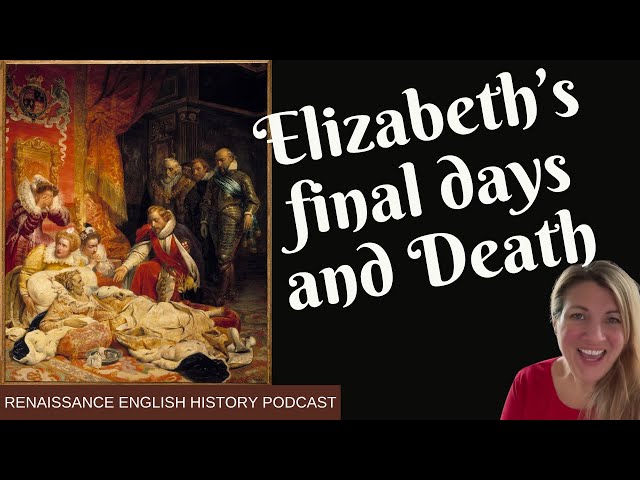
  • Elizabeth I’s Final Days: Melancholy, Makeup, and the End of the Tudors

    Elizabeth I’s Final Days: Melancholy, Makeup, and the End of the Tudors


    Elizabeth Iโ€™s final days were a poignant end to one of the most iconic reigns in English history. After nearly 45 years on the throne, the Virgin Queen faced a slow and sorrowful decline marked by physical pain, emotional isolation, and a desperate clinging to her image of eternal youth. As her health failed and succession anxieties mounted, Elizabeth I refused to relinquish control or reveal weakness.

    Let’s explore the final weeks of Queen Elizabeth Iโ€™s life โ€” a dramatic and symbolic closing chapter that reveals as much about her reign as it does about her death.

    Transcript of The Last Days of Elizabeth I: Melancholy, Makeup, and the End of the Tudors

    By the time Queen Elizabeth I died in 1603, she had ruled for nearly 45 years. She was Englandโ€™s Gloriana, the Virgin Queen, a living symbol of power and pride. But behind the carefully crafted image of youth and majesty was an aging monarch who was slowly falling apart physically, emotionally, and politically.

    Elizabeth died at the age of 69 on the 24th of March, and the end was drawn-out, uncomfortable, and, according to some who witnessed it, deeply unsettling. This is the story of her final weeks of melancholy, makeup, and a monarch desperate to keep up appearances, even as everything was slipping away.

    It might seem a little bit dark to focus on Elizabethโ€™s final days, but the way that she faced death tells us just as much about her reign as her victories did. The mask of youth, the silence on succession, the fear of being seen as weak โ€” this was all part of how she ruled, right up until the end. So, grab your coffee or your water, and letโ€™s settle in and talk about the final days of Elizabeth I.

    Elizabethโ€™s decline began quietly, at least outwardly. In the winter of 1602, Elizabeth was still hosting court at Whitehall, but her energy was flagging. She suffered from a severe sore throat and could barely speak above a whisper. She sipped soothing drinks constantly, but she did not eat very much. Visitors were turned away, confused after being told that they had no appointment, despite the fact that Elizabeth herself had summoned them.

    She was becoming forgetful, withdrawn, and increasingly melancholy. The death of her beloved lady-in-waiting, Katherine Howard โ€” no, not the fifth wife, but another one โ€” hit her hard. Even worse was the lingering grief over Robert Devereux, Earl of Essex. His execution the previous year, which had been ordered by Elizabeth herself, was sticking with her. It was, a little bit, haunting her. At the mention of his name, she was said to weep and beat her chest with her fist.

    She had, of course, always been vain โ€” famously so. But in these final months, her looks became a fixation. She insisted on full court regalia even when she was physically unable to carry it off. A visiting Venetian ambassador noted that Elizabeth was absolutely covered in pearls. Her once slender fingers were now swollen, and her coronation ring, which she had worn for 45 years, had to be cut off when it became embedded in her flesh.

    A symbolic marriage to her kingdom was removed just days before her death. People took that as a very bad omen, but she was not going to let go of her image. She piled on makeup โ€” lead-based Venetian ceruse โ€” thick as plaster to preserve what she called her mask of youth. It is said that at the time of her death, she had a full inch of makeup on her face. That is a lot.

    In February 1603, Elizabeth moved to Richmond Palace. It was a place with deep Tudor history. Her grandfather, Henry VII, had died there nearly a century before. Now his granddaughter had come to do the same.

    At first, there were moments of clarity. She reportedly scolded a Venetian ambassador who dared to raise the issue of piracy, lashing out that the Republic of Venice only ever asks for something. But those moments were fleeting.

    By early March, her behavior had become erratic and worrying. She barely ate. Her mouth and throat were painfully dry, and her body was failing her. She refused to lie down, fearing โ€” perhaps rightly โ€” that if she did, she would never rise again. So she stood for hours and then collapsed onto the floor, where her ladies-in-waiting had piled cushions. She remained there, silent and unmoving, for days.

    On March 19th, her cousin Robert Carey visited. She took his hand and whispered, โ€œRobin, Iโ€™m not well,โ€ and that was one of the last things she would ever say. By March 23rd, Elizabeth was fading fast. She had not moved from her pile of cushions in days. Her eyes were fixed on the floor. Her finger stayed pressed to her mouth. She would not speak, she would not eat, and she would not sleep.

    The Privy Council gathered at Richmond. They needed her to name a successor. Legally, the will of Henry VII still stood, but it barred James VI of Scotland from inheriting the English throne. The only way around it was if Elizabeth gave a sign of her wishes. But she could not speak, so they asked her to raise her finger or gesture in response to Jamesโ€™s name.

    Some witnesses later claimed that she lifted her hand to her head in the shape of a crown. Others insisted that she did not move at all. Either way, the council left that room with their answer. They said Elizabeth had signaled James VI of Scotland was to be king. It was her final act of state.

    Later that night, the Archbishop of Canterbury and Elizabethโ€™s chaplains came to pray with her, and in the early hours of the 24th of March 1603, Queen Elizabeth died quietly in her bed at Richmond Palace. The sun had set on the Tudor dynasty.

    Even in death, Elizabethโ€™s body was guarded, literally and symbolically. Her lady of the bedchamber refused permission for a postmortem, likely to protect the queenโ€™s image as the untouched Virgin Queen.

    But reports began to leak that her coronation ring had grown into her flesh, that her face was so thick with lead-based paint it had cracked under the embalmerโ€™s touch, and that her body, sealed in a lead-lined coffin, burst open from the buildup of gases during decomposition. Her hair had mostly fallen out. Her teeth were decaying and infected with dental abscesses, causing terrible pain and swelling in her throat. Some said the glands in her neck burst just before she died.

    Modern pathologists believe that she ultimately died of bronchial pneumonia, possibly complicated by heart failure and sepsis, exacerbated by chronic lead poisoning from decades of using Venetian ceruse makeup. The mask of youth had ultimately done its damage. She had held onto her image until the very end, but it could not hold her togetherโ€”not anymore.

    Elizabethโ€™s body was embalmed and lay in state at Richmond for several days, watched over by six of her ladies. Then it was taken by barge along the Thames to Whitehall, under velvet and candles. According to one observer, โ€œThe oars at every stroke did tears let fall.โ€

    On April 28th, over a month after her death, the funeral procession made its way through the streets of London. Thousands lined the route. The coffin was topped with a striking effigy of the queen in full royal robes, so lifelike that it reportedly made the crowd gasp.

    Her body was first interred in the vault of her grandfather, Henry VII, at Westminster Abbey. But in 1606, King James I ordered her coffin moved to a new tomb, and she now has a shared resting place with her half-sister, Mary I. The Latin inscription at the base reads, โ€œPartners in throne and grave. Here we sleep, Elizabeth and Mary, sisters in the hope of resurrection.โ€

    Elizabethโ€™s final weeks were marked by pain, paranoia, and exhaustion. But even as her body failed, she tried to hold onto the power and the image she had so carefully built over four decades. She refused to name the successor until the very, very end.

    She refused to lie down. She refused to give up her mask of youth. She had ruled alone, and she would ultimately go out alone. And with her last breath, the Tudor era folded. No wars, no rebellion, just silence as England turned the page very quietly.

    Related links:

    Episode 245: Mary and Elizabeth
    The Tumultuous Relationship of Elizabeth I and Robert Devereux: A Journey into Tudor Court
    Dr. Estelle Paranque on Elizabeth I

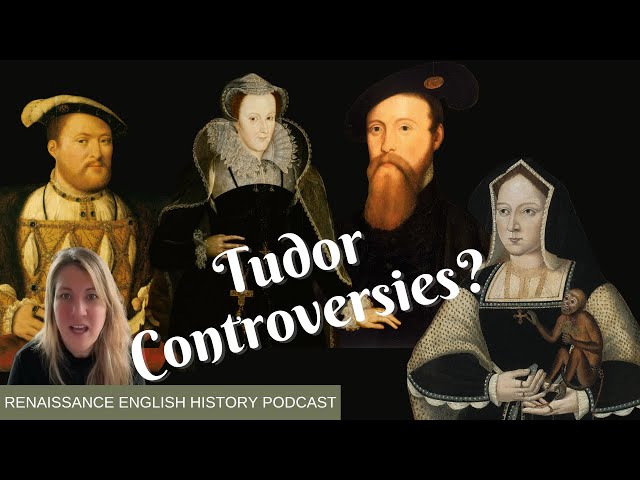
  • Tudor Controversies That STILL Spark Debate: Jane Grey, Seymour, and Mary, Queen of Scots

    Tudor Controversies That STILL Spark Debate: Jane Grey, Seymour, and Mary, Queen of Scots


    Tudor controversies continue to captivate historians and enthusiasts alike, sparking debate centuries after the events unfolded. From the legitimacy of Lady Jane Greyโ€™s brief reign to the execution of Mary, Queen of Scots, these pivotal moments raise questions about power, politics, and personal conviction.

    Let’s dive into four of the most hotly debated Tudor controversies: Should Katherine of Aragon have stepped aside? Was Elizabeth I right to sign Maryโ€™s death warrant? Did Thomas Seymour truly deserve execution? And was Henry VIIIโ€™s will ultimately meaningless? These enduring disputes offer more than just historical dramaโ€”they reflect timeless dilemmas that still resonate today.

    Transcript of Tudor Controversies That STILL Spark Debate: Jane Grey, Seymour, and Mary, Queen of Scots

    Should Lady Jane Grey have actually been called Jane I? This is one of the many, many topics that Tudor enthusiasts still debate centuries later. I put a poll up last week to ask people what they thought, and the results were pretty mixed. Itโ€™s clearly something we still have thoughts and opinions about, so thank you to everybody who filled that out.

    There are so many moments like that in Tudor historyโ€”these kinds of sliding glass doors, what-ifs, and decisions that were made that we can still argue about. Reasonable people can still disagree, and itโ€™s really fun to get into those debates, to look at those big controversies like: Was Elizabeth I right to have Mary, Queen of Scots, executed? Did Henry VIIโ€™s will actually matter? Should Thomas Seymour really have been executed? Should Katherine of Aragon have stepped aside?

    These are big questions that actually change the arc of Tudor history, and there are still people on both sides who disagree, who argue for one side or the other. So today, weโ€™re going to talk about four of the biggest controversies of Tudor England. Iโ€™ll tell you my opinion on them at the endโ€”Iโ€™m not going to get into it while Iโ€™m reporting, but I will tell you at the end.

    The first one weโ€™re going to start with is: Should Katherine of Aragon have stepped aside? Katherine of Aragon was no stranger to sacrifice. She had been a Spanish infanta, raised to believe that her destiny was to be queen. She was the daughter of a warrior queenโ€”Queen Isabellaโ€”and she held onto that belief. She was forceful about that belief.

    But what if she had let go? What if, instead of digging in her heels during Henryโ€™s Great Matter, she had actually just stepped aside? And there was, in fact, a precedent for this. A few decades earlier, Joan of France, Duchess of Berry, had been the wife of Louis XII. Their marriage was annulled, and she retired to a convent in Bourges.

    Now, Joan had married Louis XII in an arranged marriage, but he annulled it so that he could marry Anne of Brittany. Joan went on to found the Order of the Annunciation and was later canonized as a saint. So thatโ€™s an example of what Katherine of Aragonโ€™s path might have been, had she stepped aside.

    Katherine had already given Henry a daughter. It was clear she wasnโ€™t going to have any more living children, and she could probably understand that Henry needed a male heir. She knew what England had gone through with the Wars of the Roses. So if she had gracefully exited the stageโ€”perhaps claiming a religious callingโ€”Henry might have remarried without launching a full-scale rebellion against Rome.

    So I think itโ€™s one of those big ironies: Katherine was fighting so hard to keep England Catholic, to keep herself as queen, to keep England loyal to the Pope, that she actually kind of forced Henry into this rebellion. If she had let go, itโ€™s very possible that England would have stayed Catholic. There wouldnโ€™t have been a Thomas Cromwell. There wouldnโ€™t have been a Cranmer. There wouldnโ€™t have been a dissolution. No break from the Pope.

    Itโ€™s an irony thatโ€™s kind of too big to ignore: in fighting to remain queen, Katherine may have set into motion the destruction of everything she was trying to protect. Stepping aside was never really going to be an option for her. She wasnโ€™t just a wifeโ€”she was a princess of Spain, the daughter of Isabella and Ferdinand. Stepping aside would have meant branding Mary a bastard, and that was never going to happen.

    So what do you think? Was Katherine right to have fought for her rightsโ€”for Maryโ€™s rights? Or should she maybe have just stepped aside? Let me know.

    All right, the second one: Should Elizabeth have actually executed Mary, Queen of Scots? This is one of the biggest controversies of Elizabeth Iโ€™s reign. This oneโ€™s really tricky because we know how it ends. Elizabeth reluctantly, finally, signs Maryโ€™s death warrant in 1587โ€”and Mary, Queen of Scots, loses her head and gains martyrdom. It took Elizabeth 19 years to get to that point, and for almost every one of those years, people were telling her that execution was the smart move.

    The argument for execution was really straightforward: Mary had a legitimate claim to Elizabethโ€™s throne. We first have to look back at what Catholics believed about the marriage of Anne Boleyn to Henry VIII. Katherine of Aragon was still alive when Elizabeth was born, which meant that the marriage of Henry and Anneโ€”in the eyes of Catholics, who did not think the marriage to Katherine had been dissolvedโ€”was bigamy.

    The marriage between Henry and Anne was an illegitimate marriage, and so that meant Elizabeth was an illegitimate child. So if you believed that, you looked to the next person in line for the successionโ€”and it just happened to be a Catholic like yourself: Mary, Queen of Scots.

    Mary, Queen of Scots, was also the center of every major Catholic plot for two decades, especially the Babington Plot, which finally sealed her fate. As long as Mary lived, Catholic Europe had hope. But Elizabeth hesitated again and again. Killing a fellow monarch was unthinkable. Can you imagine if the roles had been reversedโ€”if she were kept prisoner somewhere and someone killed her?

    It wasnโ€™t just about guiltโ€”it was about precedent. It set the example that a fellow monarch could be executed for being a threat. And then how would that ever stop someone from potentially turning that logic on her? Even when she finally relented, Elizabeth still performed this great pantomime of outrage when the warrant was carried out, claiming she never meant for it to happen. Was she being sincere, or clever, or cowardly?

    Either way, the execution did remove a threat. And though it created a martyr, it solved a problem. But it didnโ€™t do it quietly. It actually directly led to the Armada. It ramped up the war with Spain, which cost thousands of other lives. So I donโ€™t knowโ€”should she have executed Mary, Queen of Scots? What do you think?

    Next: Should Thomas Seymour have been executed? Thomas Seymour was equal parts ambitious, charming, and really reckless. The brother of Jane Seymour and uncle to Edward VI, Thomas managed to marry the dowager queen, Katherine Parr, only a couple of months after Henry VIIIโ€™s deathโ€”which scandalized Princess Mary, for example. And if that wasnโ€™t bold enough, he started getting a little too friendly with the teenage Princess Elizabeth while living under the same roof. But was that enough to get him executed?

    The real issue wasnโ€™t just Elizabethโ€”it was his attempt to break into the kingโ€™s chambers at Hampton Court, supposedly to check on the boy in the middle of the night. He also tried to manipulate his way into the regency. It was messy. It was desperate. It was not the least bit subtle.

    His brother, Edward Seymourโ€”the Lord Protectorโ€”used this as an excuse to get rid of him. Thereโ€™s also the idea that he quite possibly shot the dogโ€”Edwardโ€™s dog. And anybody who comes to Tudorcon or watches Tudorcon online, whether in person or virtually, will remember that we have this ongoing debate about whether or not Tom actually shot the dog. Every year, Janet Whitman brings her little stuffed dog, and itโ€™s become one of those bits of Tudorcon lore.

    Anyway, Edward said that Tom was committing treason. Tom was found guilty, and Thomas lost his head. Poor Edward VIโ€”first having to execute one uncle, Tom Seymour, and then later having to execute Edward Seymour. That kind of trauma wouldโ€™ve been enough to give Edward a headacheโ€”if not worse.

    Of course, Thomas lost his headโ€”but was it necessary? Some argue that he was more fool than traitor. He was dangerous, sure, but perhaps only to himself. Others say he was just one lucky break away from taking over the kingdom. Either way, he didnโ€™t live long enough for any of us to find out. What do you thinkโ€”should Tom Seymour have been executed?

    And finally, the last question weโ€™re going to look at today: was Henry VIIIโ€™s will meaningless? This comes back to whether or not Jane Grey should have been called Jane I. Henry VIIIโ€™s will was meant to be the final word on everything. He even had it signed with a dry stamp so that no one could claim he hadnโ€™t approved it.

    It laid out a clear succession: Edward, then Mary, then Elizabeth. After them, the heirs of his younger sister, Mary Tudorโ€”not the Scottish line descended from Margaret. But hereโ€™s the thingโ€”Parliament never ratified any of the sections beyond Elizabeth. That means the succession order had no legal force once Elizabeth died.

    Edward tried to override it with his โ€œDevice for the Succession,โ€ naming Lady Jane Greyโ€”something Henryโ€™s will did not allow. And then, when Elizabeth died in 1603, no one even glanced at the document. It was nearly 60 years old by that point. James VI of Scotland was crowned without any reference to it, despite being from the line of Margaret Tudor, whom Henry had explicitly left out. So was the whole thing performative? A way for Henry to feel like he was in controlโ€”even from beyond the grave?

    It turns out that once the king dies, paper doesnโ€™t matter as much as power. And Henryโ€™s carefully written future actually never came to pass. So what do you think about any of these? Iโ€™ll tell you my opinion.

    Iโ€™m an Episcopalian, so Iโ€™m actually quite happy that Katherine fought as hard as she did and that the Reformation came to pass in Englandโ€”and came to pass the way it did. I still go to a church that uses the Book of Common Prayer, which came from Cranmer, so Iโ€™m a fan of that.

    But I think that from Katherineโ€™s perspectiveโ€”if you were fighting to keep Catholicism and to keep England loyal to the Popeโ€”she actually really failed at that. And it kind of reminds me of the Zen Buddhist idea that โ€œwhat you resist persists,โ€ and the concept of detachment.

    She was so attached to her rights, so attached to England being loyal to the Pope and to her own role as queen, that she lost sight of what was actually happening: Henry was moving further and further away from Rome. And the whole thing just backfired spectacularly on her.

    I think things could have been so different for her. Also, not having seen her daughter for yearsโ€ฆ If she had just stepped aside and said, โ€œYou know what? My badโ€”youโ€™re right, it was consummated, I was married to Arthur, we probably shouldnโ€™t do this,โ€ and had tried to understand Henryโ€™s positionโ€”that he really needed a male heirโ€”and also that he was falling for Anne Boleyn (and heโ€™s the king, so he can kind of do that)โ€ฆ things might have gone very differently. Plus, there was precedentโ€”Claude of France had stepped aside just a few decades earlier.

    Had Katherine done the same, she probably would have been given a very generous settlement. Look at what happened with Anne of Clevesโ€”she got an amazing settlement. Katherine would likely have been sent to the convent of her choice. She was very religious anyway, so that might actually have suited her.

    She would have been able to continue seeing her daughter. And she probably could have negotiated a really strong marriage for Mary. Instead, Mary never married until she was too old to have children.

    Itโ€™s one of the great tragedies about Mary Tudorโ€”that all she wanted for so long was a child. There were so many times when she was betrothed and it didnโ€™t work out. My heart really goes out to Mary because she truly wanted to be a mother.

    The way she took care of Elizabethโ€”even though she had every reason to hate herโ€”yet they were very close, and she looked at Elizabeth the way a mother would look at her child. I really feel for Mary that she never had that experience herself.

    I think Katherine actually wound up hurting Mary moreโ€”and hurting her own cause moreโ€”because then Mary had this whole vendetta to bring England back to Catholicism. And look at how poor Mary is remembered nowโ€”as โ€œBloody Mary.โ€ The whole thing, I think, just backfired spectacularly on Katherine.

    So from Katherineโ€™s perspective, I see it as a failure. She probably should have stepped aside, and I think things might have worked out a lot better for her. But I also understandโ€”she was the Spanish infanta. She was the daughter of Isabella and Ferdinand. She was not going to give up. And I get it.

    But again, I come back to that idea: โ€œWhat you resist persists.โ€ She resisted so much, and it persistedโ€”and it didnโ€™t work out for her. But then again, I am an Episcopalian, so Iโ€™m a fan of the Book of Common Prayer, and it all worked out for me. And reallyโ€”I am the center of the universe. So of course, my opinion is what matters most.

    Everybody is the center of their own little universe, right? Iโ€™m the center of mine, and you are the center of yours. At least Iโ€™m open and honest about it. All rightโ€”my opinions on the other controversies arenโ€™t as strong, I will say that.

    Should Elizabeth have executed Mary Queen of Scots? I think it set a really bad precedent. I also think Elizabeth was too wishy-washy about it. Iโ€™m not a fan of the way she handled it. But again, I see her perspective.

    Mary, Queen of Scots was not particularly smart in how she involved herself in some of these plots. She wasnโ€™t especially politically savvy. Scotland was a mess, and honestly, I donโ€™t know that there could have been any other way for her.

    But it also seems like she brought some of this on herself by being involved in these plots and by supporting them. But again, if I were in her shoes, I donโ€™t think I wouldโ€™ve done anything differently. Thatโ€™s the thingโ€”when you walk in someone elseโ€™s shoes, of course they did what they did, because they did it. It all makes sense when you look at it like that.

    Iโ€™m not a fan of the way Elizabeth handled it, but Iโ€™m also not a fan of how Mary, Queen of Scots handled it. Soโ€ฆ Iโ€™m not a fan of either. I donโ€™t think either party comes out looking particularly good in that scenario.

    Tom Seymourโ€”again, I donโ€™t know what else you do. What do you do when someone is threatening the throne? If someoneโ€™s being treasonous, it kind of puts you in a corner. But was he actually treasonous? I donโ€™t know. I donโ€™t really have a strong opinion on that one, but I know a lot of people do. So Iโ€™d love to hear what your opinion is.

    And was Henry VIIIโ€™s will meaningless? I mean, everyoneโ€™s will is ultimately kind of meaningless, becauseโ€ฆ youโ€™re gone. You canโ€™t enforce it. You just have to trust that the people around you are going to carry out your wishes. Hopefully, they do. But in Henryโ€™s case, it was generations later. I donโ€™t think the people determining the succession were still going back and consulting Henry VIIIโ€™s will.

    And Henry VII certainly didnโ€™t look back at the will of, I donโ€™t know, William Rufus, or try to figure out what Edward III wanted. So, you knowโ€”you pass away, and things change. Thatโ€™s what happens. Thatโ€™s life. So yeah, I think Henry VIIIโ€™s will probably was meaningless. And honestly, I donโ€™t know that it really matters that much.

    You guys, I get kind of Zen about this stuff. I donโ€™t get worked up about most of it. I do get worked up about how people treat Lady Margaret Beaufortโ€”that one really gets meโ€”but thatโ€™s pretty much the only thing in Tudor history I get fired up about.

    I knowโ€”if you go on Facebook groups, people are arguing about this and that: โ€œWell, if you believe this,โ€ or, โ€œIf you believe thatโ€ฆโ€ Ugh. I donโ€™t know. Life is short, man. Go smell the flowers. These people have been dead for 400 years. Are we really getting that worked up about it?

    What I do think, though, is that the reason weโ€™re so fascinated by this history is because it reflects the times we live in now. I see so many parallels and similarities with whatโ€™s going on in our world today.

    Things like, for example, the idea of the printing press making information available that wasnโ€™t necessarily authorizedโ€”that didnโ€™t come through the proper channelsโ€”was happening for the first time. And look at what that opened up for people. We see something very similar in the past 30 years with the internet and with social media.

    And also, like, what can you trust, right? If somebody has a printing press in their basement and theyโ€™re putting out pamphletsโ€”can you trust that? And if somebody posts something on Twitter, can you trust that? (I refuse to call it X. I justโ€ฆ I canโ€™t do it. I got my first Twitter account in 2005, and you still had to use one of those flip phones and text updates to 40404. That was how you tweeted. I refuse to call it X after that.)

    Anywayโ€”if somebody posts something on X, does that make it true? If someone prints a pamphlet in their basement, does that make it true? How do you know what is truth? And I feel like thatโ€™s something people in the 16th century were grappling withโ€”and itโ€™s something weโ€™re grappling with now, too. Itโ€™s really important.

    Also, the class differences in the 16th centuryโ€”there was a rise in the merchant class, the emergence of a real middle class. Classes were realigning. Political affiliations were shifting. And I see so much of that today too, with the rise of this whole new techno-class that weโ€™ve never seen before. And the political realignment happening nowโ€”itโ€™s fascinating. It so closely parallels what people back then were experiencing.

    There were also major questions about the role of government. Think about the poor laws passed under Elizabeth, or the dissolution of the monasteries. When you dissolve the monasteriesโ€”which had been providing hospitals, schools, support for the poorโ€”you didnโ€™t replace it with anything. Not until the poor laws, which came about 40 years later.

    So what is our role to each other? What obligations do we have? What is the social contract? Do we even have one? I think people today are grappling with those questions in new waysโ€”ways they havenโ€™t necessarily grappled with before.

    And people were thinking about this back then as wellโ€”this shift away from serfdom, the end of serfdom. Moving from a system where the lord was responsible for the serfs and the serfs were tied to the land, to a new world with more mobility, a little bit more freedom. But with that freedomโ€”what responsibilities do you have? What responsibility does the king have? What responsibility does the government have?

    If people are now free to make their own way, does that mean thereโ€™s still a social contract? I donโ€™t know. And thisโ€”this is the stuff I really nerd out on. So if you want to nerd out on that stuff with me too, leave me a comment and let me know, and we can nerd out on it together.

    Either way, Iโ€™d love to know your thoughts on some of these controversiesโ€”and any other controversies youโ€™d like to voice your opinion on. Iโ€™d be very interested! If thereโ€™s something new, we could even put up a poll and see what people think.

    I think itโ€™s really important to be able to practice having these kinds of debates, and to realize that reasonable people can disagree. Iโ€™ve said this beforeโ€”probably many timesโ€”but I think itโ€™s good practice for us to learn empathy. If we can have these arguments and walk in someone elseโ€™s shoes from 500 years ago, maybe we can bring some of that empathy back into the present. If we get really good at understanding people from the past, maybe we can start to understand where people who think differently from us today are coming from. Soโ€”thatโ€™s my spiel on that.

    Related links:
    Episode 47: Tudor Times talks about Katherine of Aragon
    Unraveling the Mysteries of Mary, Queen of Scots
    Rebecca Larson on Thomas Seymour

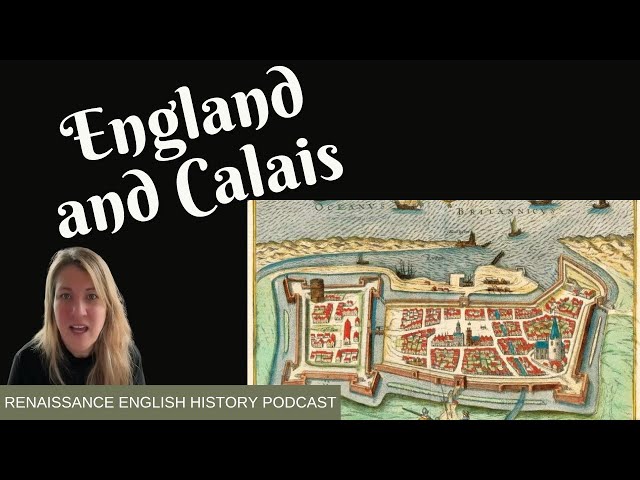
  • How England Lost Calais: A Turning Point in Tudor History

    How England Lost Calais: A Turning Point in Tudor History


    How England lost Calais is more than a story of military defeatโ€”itโ€™s the end of a centuries-long English presence in France and a major turning point in Tudor history. When Calais fell to the French in January 1558, it wasnโ€™t just a territorial loss; it shattered a powerful symbol of English identity and pride. Calais had been Englandโ€™s last stronghold on the continent, a thriving outpost held for over 200 years, deeply tied to trade, politics, and royal ambition. Its fall devastated Queen Mary I, enraged Parliament, and marked the final collapse of Englandโ€™s medieval dream of empire in France.

    Let’s explore how England gained Calais, why it mattered so much, and how England lost Calais in a matter of daysโ€”changing the nationโ€™s future forever.

    Transcript of Calais: How England Took โ€” and Lost โ€” Its Last Foothold in France

    When the news reached England in January of 1558 that Calais had fallen to the French, it was received with shock. Calais wasnโ€™t a distant outpost for people in Englandโ€”it was part of their national identity. It was the last foothold of the once-great English empire in France. It had belonged to the English for over two centuries, and now it was gone.

    Today, weโ€™re going to talk about Calaisโ€”how the English got it, how they kept it, how they lost it, why it was so important, and what its loss did to Mary I. Calais played such an important role in so many different parts of Tudor history. We think about Anne Boleyn going on that famous trip to Calais with Henry VIII, where they kind of solidified their relationship. She was presented as a consort before they were even married.

    It played such an enormous role in English history, and when it was lost, it devastated Mary I. But how did Calais become part of England? How did this happen? So weโ€™re going to go back and talk about that.

    When the news came that Calais had fallen, Mary Iโ€”who was already quite unwell and whose popularity was dippingโ€”is said to have taken the loss quite deeply. According to legend, she told her ladies that if they opened her after death, they would find โ€œCalaisโ€ written on her heart.

    Whether or not she actually said it, the line stuck, because that is how much Calais meant to the English. But to understand why the loss stung so much, we have to go back to how England got Calais in the first place.

    Our story begins in the reign of Edward III, in the early years of the Hundred Yearsโ€™ War. In 1346, after the crushing English victory at the Battle of Crรฉcy, Edward moved to consolidate his position in northern France by laying siege to Calais. The siege dragged on for eleven months. Edward knew that attacking the heavily fortified town head-on would be disastrous, so instead he blockaded the port and waited. Calais was cut off from supplies, and with its population slowly starving, they finally surrendered in August of 1347.

    Edwardโ€™s terms were harsh. The original French inhabitants were expelledโ€”some say around 3,000 peopleโ€”and the town was repopulated with English settlers. This was more than a military base; it was a colonial experimentโ€”a little slice of England placed on the northern coast of France. For 200 years, it stayed that way.

    Calais became a military outpost, a trading hub, and a political tool all rolled into one. It was governed by a lord deputy, or captain appointed by the kingโ€”often a nobleman of significant stature. A council managed the day-to-day affairs, and it remained directly under the control of the English Crown.

    It wasnโ€™t part of any French duchy or region. It was the Pale of Calais, a defined and fortified area that stretched a few miles inland. The English built up its defensesโ€”Henry VIII in particular spent enormous sums reinforcing its walls and updating the artillery. It was one of the most fortified towns in Europe.

    Calais also wasnโ€™t just a military zone. Economically, it was critical. English wool exports passed through Calais under the Staple system. This was a medieval monopoly that designated certain ports for official trade. English merchants had major privileges in Calais, including tax breaks and certain protections.

    It became a gateway for English goods heading to the continent and vice versa. This blend of martial and mercantile life made Calais truly unique and distinct. It was English territory, but always on the edgeโ€”geographically and politicallyโ€”surrounded by French towns, always under threat. Yet it was a thriving, bustling area that, as mentioned, was one of the most fortified towns in Europe.

    While Calais was a garrison town, it wasnโ€™t just soldiers marching around in armor. It developed into a functioning community with families, schools, markets, churches, and taverns. English settlers made their lives there, with some born and raised without ever setting foot in England. These so-called โ€œCalais Englishโ€ formed a unique identity.

    They were loyal to the English Crown, but they were shaped by the rhythms of life in a continental port. They would have had much more experience with French, and with trading with the French. Traveling to France was much easier.

    The population of Calais at the end of the 15th century was between 3,000 and 4,000 people. This included soldiers, administrators, merchants, artisans, and their families. The entire Pale of Calaisโ€”a fortified region of about 20 square miles extending inland from the townโ€”had an estimated population of about 12,000 people at this time. This broader area included several small villages like Guรฎnes, and it was used for agriculture, defensive outposts, and that sort of thing.

    The garrison, of course, was a major part of the population. It had about 1,200 soldiers or so, depending on the decade and the threat level. During Henryโ€™s reign, when he was invading France, that number naturally went up. Compared to other English towns, Calais was really modest in sizeโ€”it was smaller than places like Norwich or York. But economically and strategically, it was far more important than its size alone would suggest.

    Trade was the engine of daily life. Merchants came and went, goods were weighed and taxed. So even though the permanent population was around 4,000 people, there were likely many more people passing throughโ€”trading, staying temporarilyโ€”who werenโ€™t official residents.

    The wool trade dominated the docks and craftsmen produced everything from cloth to leather goods. Bakers and butchers kept the garrison fed. There was always a military presence, but it didnโ€™t drown out the hum of ordinary life.

    Still, everyone lived with a kind of low-level tension all the time. Skirmishes with the French were common. Every resident knew that war could flare up at any moment. It was a frontier townโ€”civilized, but never entirely safe. Calais was the last relic of Englandโ€™s old claim in France, a physical reminder of Edward III, Henry V, and the days when English kings dreamed of ruling both realms.

    Militarily, it gave England a base for launching campaigns into the continent. Economically, it anchored the wool trade and gave merchants a foothold in Europe. Symbolically, it mattered even more. Losing Calais didnโ€™t just shrink the map by a littleโ€”it bruised the national ego. It marked the end of an era. England was no longer a European power with land in France. It was back to being an island. So what went wrong?

    By the time Mary came to the throne, Calais was still seen as vital, but it had become more symbolic than strategic. The townโ€™s defenses had been allowed to decline. The garrison was underpaid and undermanned. And Englandโ€”locked in an expensive war alongside Spain against Franceโ€”was stretched incredibly thin.

    In January 1558, the French made their move. Under the command of Franรงois, Duke of Guise, they launched a swift winter offensive. This was highly unusual; winter was not typically a time for military campaigns. Calais was caught off guard and poorly defended. It fell in less than a week. There was no serious attempt at any kind of relief, and the English were humiliated.

    Their last continental possession was gone. The loss was devastating. English merchants lost their privileges. Parliament fumed. Mary was inconsolable and died within the year. Elizabeth was more pragmatic, and she quietly abandoned any plans to try to retake Calais.

    In England, though, the memory lingered. Calais became a symbol of what had been lostโ€”not just land, but prestige, pride, and the last link to the old Plantagenet dream of an Anglo-French empire.

    From that point on, English ambitions turned seaward. The age of colonies and maritime power was beginning. But for many, Calais remained a sore spotโ€”the wound that marked the end of Englandโ€™s time as a continental power. England, as we said, would begin to turn westwardโ€”to Ireland, and eventually to the Americasโ€”but they never again had that place in Calais, in France, a European outpost.

    So there we go, my friendโ€”a little bit about the taking and losing of Calais, and why it was so important to the English. Weโ€™ll leave it there for now. Let me know what you think about Calais in the comments. Should Elizabeth have tried to retake it, or was it better for her to look westwardโ€”to Ireland and to the Americasโ€”and build up Englandโ€™s maritime power?

    Related links:
    Melita Thomas on Mary Tudor
    Episode 247: Tudor and Elizabethan Exploration
    Episode 067: Henry VII and his foreign policy

  • Elizabeth Iโ€™s Spy Network: The Hidden Web that Safeguarded a Queen

    Elizabeth Iโ€™s Spy Network: The Hidden Web that Safeguarded a Queen


    Elizabeth Iโ€™s spy network played a crucial role in securing the throne during one of the most turbulent periods in English history. Faced with constant threats from Catholic powers, assassination plots, and internal rebellion, Queen Elizabeth I relied on a sophisticated web of spies orchestrated by key figures like William Cecil, Robert Cecil, and Francis Walsingham. This intelligence network not only protected the Protestant queen from countless dangers but also laid the foundations for modern espionage.

    In this episode, weโ€™ll dive deep into the origins, operations, and lasting legacy of Elizabeth Iโ€™s spy network, uncovering how it safeguarded a nation and changed the course of history.

    Transcript of Elizabeth I’s Spy Network: The Secret Network that Protected a Queen

    Today we are going to talk about spiesโ€”specifically, Elizabeth Iโ€™s spy network. Iโ€™ve talked a little bit about some of the figures involved. We discussed Francis Walsingham in an episode I did back, gosh, close to 10 years ago. It was a 2015 episode, I think, on Francis Walsingham. You know what I realize? I have never done a full episode on William Cecil or Robert Cecil, so Iโ€™ve added that to my list.

    In this episode, we are going to unravel the complex web woven by three pivotal figures: William Cecil, Lord Burghley, his son Robert Cecil, and the enigmatic spymaster Francis Walsingham. Together, they orchestrated a network of spies whose efforts were not only crucial for the queenโ€™s security, but also pivotal in shaping the course of English history. Weโ€™ll dissect the plots they uncovered, explore the espionage techniques they employed, and consider the enduring impact of their secretive endeavors long after the Virgin Queenโ€™s reign.

    Just some background: Elizabeth ascended to the throne in 1558, a period teeming with political intrigue and religious upheaval. England was an isolated Protestant nation on the fringes of a largely Catholic Europe, making her a beacon of heresy in the eyes of her rivals.

    The excommunication by Pope Pius V in 1570 not only deepened her conflict with the Catholic monarchs, but also marked her for assassinationโ€”because the Pope basically said, if you want to assassinate her, no biggie. This made an effective spy network not just valuable, but vital.

    Espionage during Elizabethโ€™s reign evolved beyond mere political necessityโ€”it became an art form. Led by the Cecils and Francis Walsingham, the network extended its tendrils across Europe, infiltrating enemy courts and intercepting communications.

    This web of spies wasnโ€™t just about gathering intelligence; it was about ensuring survival. They used ciphers, secret correspondences, and double agents, transforming statecraft into a battleground of wits and secrecy.

    Weโ€™ll also talk about the specific threats that spurred this networkโ€™s creation, like the Ridolfi Plot, which sought to replace Elizabeth with Mary, Queen of Scots. Actually, a number of plots sought to replace Elizabeth with Mary, Queen of Scots, but we will gain a clearer view of the often precariousness of Elizabethโ€™s reign. Each plot foiled was not merely a victory, but a necessity, preventing invasions, uprisings, and rebellion.

    William Cecil: The Architect of Espionage

    So, letโ€™s start by looking at each of these three figures. Weโ€™re gonna start with William Cecil. Iโ€™m gonna talk the longest about him. William Cecil, 1st Lord Burghley, was Elizabeth Iโ€™s principal advisor for most of her reign, and his mastery of espionage played a pivotal role in safeguarding her throne.

    Born in 1520 in Lincolnshire, William Cecil was educated at St. Johnโ€™s College, Cambridge. He received rigorous training in administration and the classics, but his entry into royal service began under Edward VI, where his administrative talents were first recognized.

    It was his staunch Protestant beliefs and strategic acumen that caught the eye of Elizabeth I, whom he met during her time as Princess, particularly during her house arrest under Mary Iโ€™s reign.

    William Cecilโ€™s tenure as an influential political figure under Edward VI saw him holding positions like Chancellor of the Order of the Garter and Secretary of State. But the landscape drastically changed with Edwardโ€™s death and the succession crisis that followed.

    Cecil became entangled in the Duke of Northumberlandโ€™s controversial plot to place Lady Jane Grey on the throneโ€”a scheme devised to prevent the Catholic Mary from becoming queen. Initially, Cecil was resistant; he wrote letters to his wife saying he was going to try to stay away from it, but he eventually succumbed to the pressure. He signed documents that promoted Janeโ€™s brief, ill-fated reign. He justified his participation as obedience to King Edwardโ€™s commandโ€”a move that exemplified his pragmatic approach to survival in treacherous times.

    That survival, and his position, became precarious under Mary I, because he was a known Protestant and had previous political maneuvers against her cause. Pretty much everybody involved in the plot to bring Jane to the throne ended up imprisoned in the Tower or executed.

    Despite his earlier involvement in the Protestant government, Cecil adeptly navigated the Catholic revival under Mary. He wasnโ€™t primarily targeted, mostly because he didnโ€™t have a very high profile or high rank during most of the very divisive policies that were put into place.

    And he did adapt. He outwardly conformed to the restored Catholic practicesโ€”he attended mass and publicly reconciled with the Catholic Church. His survival strategy included distancing himself from active opposition, and he also engaged in some subtle intrigue against Northumberland once Maryโ€™s ascension seemed inevitable.

    Cecilโ€™s cautious yet opportunistic tactics allowed him to maintain a semblance of loyalty to Mary, which he leveraged by presenting himself as a cooperative figure to the incoming regime. So, he was able to emerge from Maryโ€™s reign pretty unscathed, which left him poised to reclaim a central role when Elizabeth ascended.

    Cecil then served Elizabeth once she became queen, and he was motivated by both the precariousness of Elizabethโ€™s positionโ€”she was a Protestant monarch, plus she was a woman in a very male-dominated societyโ€”so he established her spy network as the cornerstone of her internal and external security strategies.

    He recognized early on that information was power, particularly in a period rife with religious conflicts and political instability. This foresight led him to orchestrate an intelligence system that not only protected Elizabeth but also helped to stabilize her reign during its most vulnerable moments.

    Robert Cecil: The Successor

    Towards the end of Elizabethโ€™s reign, as William Cecil aged and his health declined, his son, Robert, gradually began to assume more responsibilities. Robert officially took over as Secretary of State in 1596, and he was well-prepared, having been deeply involved in the intelligence operations under his fatherโ€™s guidance.

    This early transition ensured a smooth succession, enabling him to maintain and enhance the espionage network critical to Elizabethโ€™s security. The full assumption of his fatherโ€™s responsibilities was seamless by the time William died in 1598. Supported by his proven competence and the queenโ€™s trust in his capabilities.

    Robert brought a more methodical approach to intelligence. He capitalized on the expanding network his father had established. Under his watch, the network matured, utilizing more sophisticated methods of code-breaking and covert operations. His tenure saw the orchestration of espionage activities that were crucial during pivotal moments, like when James I was negotiating the Treaty of London, which ended the war with Spain in 1604.

    Robertโ€™s adeptness at espionage not only maintained but strengthened the security apparatus his father had built, ensuring the crownโ€™s stability as Elizabethโ€™s reign ended and Jamesโ€™s began. In fact, that network built for Elizabeth would ultimately save the life of James I. Robert Cecil himself was the principal discoverer of the Gunpowder Plot.

    I should add here that this will be another episode to look at, because Robertโ€™s involvement with the Gunpowder Plot is very shady. There are a lot of conspiracy theories suggesting that he himself was involved in itโ€”that he was a double agent, or even that he planned it himself to make Catholics look bad. Who knows? Thatโ€™s something Iโ€™ll have to dig into deeper in a future episode.

    But for now, weโ€™re just concerned with the fact that he took the spy network his father built and expanded it, and ultimately, James I can thank him for saving his life, Parliamentโ€™s, and everybody else who was targeted in the Gunpowder Plot.

    Francis Walsingham: The Ruthless Spymaster

    Then we have Francis Walsingham, perhaps Elizabethโ€™s most notorious spymaster, often remembered for his unyielding dedication to the protection of the queen. His tenure as principal secretary was marked by a ruthless efficiency in intelligence gathering and counter-espionage.

    He witnessed the St. Bartholomewโ€™s Day Massacre in 1572 as the English ambassador in France, which of course, would have affected him deeply. He returned to England, resolved to protect Protestant England from similar atrocities. He was galvanized. He expanded the use of espionage to include not only defensive but also aggressive tactics, employing spies to infiltrate and undermine opposition groups across Europe.

    His crowning achievement was the interception of the letters that led to the exposure of the Babington Plot in 1586, which of course sought the assassination of Elizabeth and the installation of Mary, Queen of Scots, on the English throne. It led to Maryโ€™s death.

    His networkโ€™s ability to crack codes, utilize double agents, and even use torture when neededโ€”although quite controversialโ€”proved indispensable in maintaining the Queenโ€™s safety and Protestant Englandโ€™s sovereignty.

    So now letโ€™s talk about the spy network in action. It was a sophisticated system crucial for the security of a Protestant state. Like I said, the networkโ€™s efficiency hinged on a meticulous structure of recruitment, information gathering, and innovative espionage techniques. The recruitment of spies was a targeted and strategic process.

    Walsingham and his colleagues often recruited from among merchants, diplomats, and even English students stationed abroad, leveraging their positions to gather intelligence. These spies were not only chosen for their loyalty to the crown, but also for their ability to blend into foreign courts and societies.

    The network also included double agents and informers within the domestic Catholic factions, providing a steady stream of intelligence about internal threats. Information gathering was diverse and adapted to various contexts.

    Spies used traditional methods like intercepting letters and eavesdropping, but they also engaged in more direct intelligence gathering by infiltrating enemy ranks and reporting back on military movements or political plans.

    One notable technique was the use of ciphers and encoded messages to communicate securely. Couriers carried these encrypted messages across borders, reducing the risk of sensitive information falling into enemy hands.

    The spy network also employed cutting-edge technologies of the time. Cipher discs and codes were developed by mathematicians and cryptologists, enabling the encoding and decoding of messages.

    Walsingham famously established a dedicated team just for deciphering intercepted communications, a precursor to modern cryptographic teams. Additionally, the network used early forms of invisible ink, derived from natural substances like lemons, with which they could write secret messages that could only be revealed under specific conditions.

    Counter-espionage was equally sophisticated. It involved monitoring known Catholic sympathizers and intercepting their communications. Walsinghamโ€™s agents were adept at turning enemy spies, using them to feed false information back to their original employers.

    This method effectively confused and undermined opposing spy operations, leading to the thwarting of several plots against the queen. The effectiveness of Elizabethโ€™s spy network wasnโ€™t just in the collection of information, but in the ability to preempt and neutralize threats before they could escalate. This proactive approach to intelligence would become a hallmark of modern espionage practices, reflecting the advanced techniques and strategic foresight of Cecil and Walsingham.

    Thwarted Plots: Redolfi, Throckmorton, and Babington

    So now, letโ€™s talk about three of the main thwarted plots. Weโ€™ll start with the Redolfi Plot of 1571. This was a well-orchestrated attempt by Roberto Redolfi, an Italian banker and ardent Catholic, who, of course, wanted to replace Elizabeth with Mary, Queen of Scots, and restore Catholicism to England.

    Redolfi conspired with the Duke of Norfolk, a prominent noble, and foreign powers, including Spain and the Pope. The plan involved marrying Mary, Queen of Scots, to Norfolk, raising a Catholic army with Spanish support, and then, of course, assassinating Elizabeth.

    The plot was uncovered due to the meticulous surveillance of Catholic nobles practiced by Walsinghamโ€™s network. Letters detailing the conspiracy were intercepted, and under intense questioning, the implicated parties confessed. Norfolk was executed, and the plot significantly heightened Elizabethโ€™s distrust of Mary, setting the stage for her ongoing imprisonment.

    Twelve years later, we have the Throckmorton Plot. Spearheaded by Francis Throckmorton, a Catholic conspirator who again planned to free Mary, Queen of Scots, and instigate a Spanish invasion of England. Thereโ€™s kind of a pattern emerging here.

     The plot envisioned Spanish forces landing in England, supported by an uprising of English Catholics. Walsinghamโ€™s network infiltrated this plot through the use of double agents and surveillance. Throckmorton was arrested, and a search of his residence yielded incriminating evidence, including detailed plans of the invasion and a list of Catholic sympathizers.

    His confession, obtained under torture, provided further details that helped in arresting many involved, demonstrating, again, the ruthless efficiency of Walsinghamโ€™s counterintelligence operations.

    Then, the Babington Plot, just three years later. This is, of course, the most famous plot, foiled by Elizabethโ€™s spy network, led by Anthony Babington. It was a complex scheme that, guess what? Once again, sought the assassination of Elizabeth and the installation ofโ€”guess who?โ€”Mary, Queen of Scots. Thatโ€™s right.

    Itโ€™s like so unoriginal. They just keep using the same playbook. After it was foiled once, youโ€™d think maybe theyโ€™d find another Catholic they could install. I donโ€™t know. But, uh, Mary, Queen of Scots, was the most obvious choice, and she had a lot of loyalty, so there you go.

    Anyway, Walsinghamโ€™s agents, including the ingenious use of a double agent, Gilbert Gifford, managed to intercept letters between Babington and Mary, which were smuggled in beer barrels. These letters contained explicit details on the plot. Walsingham had them decoded from a cipher.

    The evidence was undeniable, leading to the arrest and execution of Babington and his co-conspirators. And then the involvement of Mary in this plot, as evidenced by her approval of the assassination plan in the letters, led to her trial and eventual execution, marking a significant victory for Elizabethโ€™s security apparatus.

    In fact, in the letterโ€ฆ um, Iโ€™ll have to put it on YouTube or something. The person who deciphered the letter that Mary had written, giving her approval, after he deciphered it, actually drew a little picture of a gallows at the bottom, because he knew that would be the end of Mary.

    These plots showcase the sophistication and effectiveness of Elizabethโ€™s spy network. The discovery and neutralization of the threats was not merely due to luck. They were the result of an expansive and well-maintained network of spies, the use of cutting-edge technology, like we said, and the strategic use of information. Each thwarted plot reinforced the networkโ€™s methods and the necessity of such a system for maintaining the security of the state and the safety of the queen.

    Legacy of Elizabeth’s Spy Network

    So, the spy network established during Queen Elizabethโ€™s reign represents a seminal period in the history of intelligence. Its profound impact on English history cannot be overstated. It not only secured the Protestant Reformation in England, but also safeguarded the throne during a time when political and religious upheaval could easily have led to the collapse of Elizabeth.

    The successful thwarting of multiple high-stakes plots demonstrated the vital role of intelligence in national security and governance. It set a precedent that we still use today in modern intelligence practices.

    The legacy of the Cecils and Francis Walsingham extends beyond their immediate success in espionage. Their innovative approaches to intelligence, systematic use of informers, development of cryptographic techniques, and strategic misinformation paved the way for contemporary intelligence work.

    Today agencies worldwide employ strategies first conceptualized and implemented in Elizabethan England. The idea that a well-organized and proactive intelligence network can decisively influence national and international affairs finds its roots in the work of these Elizabethan figures.

    Related link:
    Mary Queen of Scotsโ€™ Cipher, and the art of hiding messages
    Ciphers, Secrets, and Spies in The Court of Elizabeth I by Carol Ann Lloyd

  • Henry Lee and Thomas Wyatt the Younger: Wyatt’s Rebellion and the Wyatt Family Legacy

    Henry Lee and Thomas Wyatt the Younger: Wyatt’s Rebellion and the Wyatt Family Legacy


    Henry Lee and Thomas Wyatt the Younger played pivotal roles in shaping Tudor and Elizabethan history, leaving a legacy of rebellion, politics, and courtly influence.

    As key figures in the tumultuous 16th century, Thomas Wyatt the Younger spearheaded the infamous Wyattโ€™s Rebellion in 1554, a bold yet doomed attempt to thwart Queen Mary Iโ€™s marriage to Philip of Spain, driven by fears of foreign domination and the return of Catholicism. His cousin, Sir Henry Lee, rose to prominence under Elizabeth I, serving as the Queenโ€™s Champion and embodying chivalric ideals at court.

    Together, these descendants of Sir Henry Wyatt and Thomas Wyatt the Elder represent the complex intersections of loyalty, defiance, and cultural impact that defined Englandโ€™s transition from Tudor absolutism to Elizabethan stability.

    Rough transcript of Episode 243 Wyatt’s Rebellion and the Wyatt Family Legacy: Intrigue, Politics, and Protest

    So in this episode today, we are continuing our discussion of the Wyatt family, the key players in the tumultuous world of Tudor England. Two weeks ago, we delved into the life and legacy of Sir Henry Wyatt, who was the patriarch of the Wyatt family during this period, how he supported Henry VII, and then his son, Thomas Wyatt, and his daughter, Margaret Wyatt.


    Introduction to the Wyatt Family Legacy

    Today, we are going to talk about the next generation of the Wyatt family, focusing on the children of Thomas Wyatt the Elder, and Margaret Wyatt, his sister. This episode will highlight the lives and legacies of Sir Thomas Wyatt the Younger, a rebellious figure who played a significant role in English politics, and Sir Henry Lee, a prominent courtier under Elizabeth I. Through their stories, we will continue to explore the enduring impact of the Wyatt family on Tudor and Elizabethan history.

    So let’s get started with Sir Thomas Wyatt the Younger. Born in 1521 to Thomas Wyatt the Elder, And Elizabeth Brooke. Sir Thomas Wyatt the Younger grew up amidst the turbulent political landscape in Tudor England. His father, of course, was a famous poet and courtier. And he would have made sure that his son received only the best humanist education, typical of the English elite, including languages, literature, the arts, which would prepare him for a life of service.

    Of course, when he was a teenager, his father was in prison, suspected of committing adultery with Anne Boleyn. His upbringing in a family closely tied to the Tudor court meant that he was well acquainted with all of the dangers of being very close to the Tudor court. This background would have set the stage for his later involvement in one of the most significant uprisings against the Tudor monarchy. As a young man, Wyatt served in the court of Edward VI. He began to establish himself as a capable and ambitious figure.

    Wyatt’s Rebellion: A Fight Against Tyranny

    However, his life took a dramatic turn with the accession of Queen Mary I. Deeply, deeply opposed to Mary’s plan to marry Philip of Spain, Wyatt viewed the marriage as a threat to England’s sovereignty and its Protestant faith. Let’s break that down for a second.

    Wyatt was, of course, a Protestant, so he would have been wary of Mary in the first place. But people were very worried about Mary marrying Philip. Because, a woman, of course, had to obey, it was part of the marriage vows, had to obey her husband. So if Mary married Philip of Spain, she was queen, that would have essentially made him the king.

    It wasn’t like with the Queen Elizabeth II, where Prince Philip was the Duke of Edinburgh and she was still, Elizabeth was still the queen. People were very worried that if Mary married Philip that Philip would become the king and Philip would be in charge of everything. Everybody was actually slightly alarmed about this and there was actually a lot of negotiation that went into the marriage.

    People were worried what if she died during childbirth, for example? Did that mean Philip was king? So all of that had to be hammered out in the marriage negotiations. But Wyatt, Thomas Wyatt the Younger, took a leading role in what would become known as Wyatt’s Rebellion in 1554.

    Calling it Wyatt’s Rebellion makes it sound really big when in fact, it was really only organized by about four men, including Wyatt the Younger. Apparently the lawyer at Wyatt’s arraignment called it Wyatt’s Rebellion, and that has stuck with it through the years. The other people participating, though, were Sir James Croft, Sir Peter Carew, and Henry Grey, Duke of Suffolk.

    Now, Henry Grey, Duke of Suffolk, is interesting that he participated because this is the father of Lady Jane Grey, who is currently being held in the Tower of London for having been the โ€œNine Daysโ€™ Queenโ€. So Mary hadn’t executed Lady Jane Grey yet by this point. In fact, she was trying to be merciful and was just holding her and Guildford Dudley realizing that they were just pawns in this larger rebellion against her.

    But then Lady Jane Grey’s own father conspires with Thomas Wyatt, these other two men, to launch a rebellion. Just a note, if your daughter is being held in the Tower of London, you don’t go start another rebellion if you care about your daughter. So that all turned out very bad for Lady Jane Grey, of course.

    So those are the people who were involved in the rebellion. Like I said, they were Protestants, they feared not just Philip taking over, but this is also during the period of the Spanish Inquisition. And they were very worried about the Spanish Inquisition coming to England.

    Wyatt, at this point, was a significant landowner in Kent. Wyatt was known for being very impetuous, and he had previously spent time in the Tower of London for participating in a street riot. Now, Sir James Croft was from an influential Herefordshire family, and Sir Peter Carew was a Member of Parliament for Devon, and a maritime adventurer, they also joined the rebellion.

    Both were motivated by concerns about their future financial well being and career prospects under Mary’s reign. Initially, the plan was set for simultaneous uprisings in different regions, Devon, led by Carew, Kent, led by Wyatt, the Midlands, led by Suffolk, and Wales, led by Croft. These forces were then to converge on London and replace Mary with Elizabeth, who would marry Courtenay. And they also hoped that the French would be able to prevent Philip’s arrival in England.

    However, the plan had to be put together very quickly. It wasn’t well thought out or well planned out because, of course, they were worried that they were going to be discovered. Wyatt began the uprising on the 25th of January, 1554, by raising his standard at Maidstone Castle and rallying support in Kent.

    Despite some initial successes, including the capture of several royal ships and the defection of the Whitecoats, who were the royal troops, to his side, Wyatt’s forces faced significant challenges. Carrow’s efforts in Devon were thwarted, leading him to flee to France. Suffolk was unable to garner enough support and was captured. And Croft raised forces in Wales, but was surrounded and forced to surrender.

    Only Wyatt managed to press on, leading his forces to London. On the 1st of February, 1554, Wyatt’s forces reached Southwark, but found London Bridge closed and heavily defended. Undeterred, they moved to Kingston, crossing the river and advancing on London.

    Despite significant attrition and desertions, Wyatt’s remaining forces reached Ludgate, but were repelled. Wyatt surrendered and was taken to the Tower of London.

    The Aftermath of Wyatt’s Rebellion

    Following the rebellion’s failure, Mary I’s response was severe. Hundreds of insurgents were arrested, about 150 were executed. Poor Lady Jane Grey and her husband also executed, despite their complete lack of involvement in the rebellion.

    But I get it, right? As long as they’re alive, they’re going to be a figurehead for rebellion. And honestly, I don’t know what her father was thinking. I guess he had some idea that maybe it would work.

    Wyatt himself was also executed. This is when we see Princess Elizabeth, being taken to the Tower under suspicion that she was involved in this. Wyatt cleared Elizabeth of any kind of complicity in the rebellion. Elizabeth was released two months after her imprisonment due to the lack of evidence against her.

    So Wyatt was tried with charges of high treason. Despite having some sympathizers, he was of course found guilty, of course he was, and he was executed on April 11th, 1554.

    He maintained his stance the entire time. He never expressed remorse. He expressed regret only for the fact that the rebellion failed, not for its cause, and he said he still was against the Spanish marriage. After his execution, Thomas Wyatt the Younger became a symbol of resistance against tyranny and foreign influence.

    Contemporary and later historians viewed him through a complex lens. To some, he was a traitor who defied his sovereign. To others, he was a martyr for the Protestant cause and a patriot who sought to protect England from Spanish domination. Elizabeth, who succeeded Mary, had a more nuanced view of Wyatt.

    Although she could not publicly condone his rebellion, she did recognize the validity of his concerns about Spanish influence. Of course, she herself never married. Her reign saw the establishment of Protestantism and a resistance to Spanish power and indirectly validated many of Wyatt’s fears and aspirations.

    His name and actions were thus partially rehabilitated in the eyes of the English public. Wyatt’s rebellion had far reaching consequences for English politics. It underscored the deep divisions within the country over religious and political issues. The rebellion also highlighted the significant opposition to Mary’s marriage to Philip of Spain and the return to Catholicism.

    The harsh response to the rebellion, including numerous executions, illustrated the Tudor regime’s determination to crush dissent. But it also galvanized Protestant opposition and laid the groundwork for future resistance movements. Wyatt’s call to defend English sovereignty and Protestantism resonated with many, contributing to the eventual establishment of Protestant England under Elizabeth I.

    His legacy also extends beyond politics into literature and cultural memory. His rebellion and the dramatic events surrounding it have been the subject of numerous historical and literary works. The Rebellion is depicted as a tragic but heroic stand against tyranny, with Wyatt often portrayed as a noble, if flawed, character.

    His father’s literary reputation also contributed to his enduring legacy. Thomas Wyatt the Elder’s poetry, which often reflected themes of political and personal turmoil, added a layer of literary gravitas to the younger Wyatt’s story. This connection between the personal and political, the poetic and the rebellious, has kept the memory of Thomas Wyatt the Younger alive in English cultural history.

    Sir Henry Lee: The Queen’s Champion

    Now let’s talk about Sir Henry Lee, who was Thomas Wyatt the Younger’s cousin. He was born in 1533 to Margaret Wyatt and Sir Anthony Lee. His mother, Margaret, was the sister to Sir Thomas Wyatt the Elder, so she was the daughter of the original Patriarch Henry Lee. The association with the Wyatt family and the Boleyns, through his mother’s close ties to Anne Boleyn, provided Henry with a unique position within the Tudor court.

    As Elizabeth I ascended the throne in 1558, Henry Lee began to rise in prominence at her court. He quickly became one of her most trusted courtiers. He was loyal and he had these advantages from his family’s connections. His most notable role was as the Queen’s Champion, a position he held for 31 years from 1559 to 1590.

    This role involved participating in jousts and tournaments held on accession day, and to celebrate Elizabeth’s reign and publicly demonstrate his loyalty and martial prowess. As a Queen’s Champion, Lee was responsible for organizing and leading these elaborate ceremonies, which were crucial for reinforcing the monarchy’s image and stability.

    His performances in the tilt yard, marked by chivalric displays and nightly honor, became iconic elements of Elizabethan culture. Lee’s dedication to the Queen was not merely ceremonial, he also played a significant role in court politics and served as an advisor to Elizabeth, influencing many of the decisions that shaped the period.

    He was a patron of the arts, he supported poets, musicians, and artists, and his patronage helped to foster a vibrant artistic community. He was also a Member of Parliament for Buckinghamshire in 1558, 59, 1571, and 72. So we’ve actually talked about Henry Lee a couple of weeks ago. I think it was a YouTube channel, a YouTube video I did on Anne Vavasour and Henry Lee.

    Anne Vavasour had been a maid of honor with Elizabeth and in 1581 she got pregnant. The father was Edward de Vere, the Earl of Oxford. Of course, that was very bad for her and Oxford. But then, Anne found herself an unexpected protector in Henry Lee.

    By this point in his life, Henry Lee was a widower. He had children. He was building up his estate at Ditchley. And he wanted to protect Anne. And they actually built for themselves, really one might call it progressive for the time. They never got married. There was a big age difference, but they seemed to really love each other. They entertained the Queen at Ditchley, which was Henry Lee’s main estate.

    They just seemed happy, which is something you sadly don’t really see in marriages and relationships of the nobility. They read these names and you think about these people and you hear these stories often in a vacuum. And then you realize these parts that go together. Oh, that was Henry Lee, right? That’s the guy we’ve been talking about. He was Thomas Wyatt, the poet, Thomas Wyatt, the Elderโ€™s nephew, right? That’s pretty neat to link them together.

    So Henry Lee also commissioned the Ditchley portrait of Queen Elizabeth, which I also have done a portraits and propaganda episode on my YouTube channel. It shows Elizabeth standing. It’s the one of her that’s quite famous on one half is a sunny sky and on the other half is lightning and she’s standing over the British Isles and her feet are right at Ditchley showing, that this was going to hang in his home and it was to commemorate Elizabeth’s visit to Ditchley.

    And even after Elizabeth died, Lee continued to serve the royalty. Anne of Denmark, who was James I‘s wife, visited Lee and was friends with Anne Vavasour, and actually even was at the point where she was sending gifts back and forth.

    So Henry Lee remained a respected figure at court until 1611 when he passed away, having had a very long and productive life. None of his children lived that long. He had two sons with his first wife, Anne Paget, John Lee and Henry Lee, they both died young.

    And then he had a daughter, Mary. Now, Mary supposedly eloped with a John Worsley in February of 1579, which is its own story. But Mary died in 1583. Sadly, Henry Lee, none of his children with Ann Paget lived.

    But he definitely lived a colorful life. One might look at that and say that was a pretty satisfactory life. And he died, like I said, in 1611 and that will do it for our look at the Lee family now.

    Related links: The Wyatt Family: Loyalty, Intrigue, and Literary Legacy in Tudor England

  • Mary I’s Trauma and Mental Health: A Deep Dive into the Life of England’s First Queen Regnant by Kendra Drown Pitts

    Mary I’s Trauma and Mental Health: A Deep Dive into the Life of England’s First Queen Regnant by Kendra Drown Pitts

    This post comes from the highlights of Kendra Drown Pitts’ talk on the Trauma and mental health of Mary Tudor at Tudorcon 2024.

    At Tudorcon 2024, Kendra Drown Pitts delivered a powerful and emotional presentation on the life and trauma of Mary I, Englandโ€™s first crowned queen regnant. Kendra, who began her own historical journey as an attendee at the very first Tudorcon in 2019, has since pursued a degree in history and is now working on her masterโ€™s in public history. Her research into the life of Mary I, often remembered with the moniker “Bloody Mary,” challenged the audience to look beyond the oversimplified historical narrative of Maryโ€™s reign and instead, consider the role of trauma in shaping her life and legacy.

    Mary Tudor Sketch by Holbein

    Mary Tudor: The Princess Who Lost Everything

    Mary I was born into a world of privilege and power, as the only surviving child of Henry VIII and Catherine of Aragon. She was doted on by her parents, raised in luxury, and recognized as the heir to the throne. But as Kendra highlighted, Mary’s life took a drastic turn when Anne Boleyn entered the picture in 1526.

    Mary’s world collapsed as her father sought to annul his marriage to her mother. Mary was stripped of her title, declared illegitimate, and forced into servitude in the household of her baby half-sister, Elizabeth. According to Kendra, these experiences profoundly affected Mary, not only emotionally but also physically. The stress and trauma of her fatherโ€™s actions began manifesting in severe health issues, marking the beginning of a pattern of illness that would plague Mary throughout her life.

    “Here is this woman who was born a princess, yet went through hell and back on the whims of a man,” Kendra said. “She became the first regnant queen crowned in England in spite of this same man, her father.”

    Mental Health in Tudor Times

    One of the most compelling aspects of Kendraโ€™s talk was her exploration of the possibility that Mary suffered from severe depression, exacerbated by the traumatic events of her life. Traditionally, many historians have focused on Maryโ€™s supposed physical ailments, such as painful menstrual cycles and phantom pregnancies. However, Kendra urged the audience to reconsider these symptoms through the lens of mental health.

    โ€œWhat if Mary wasnโ€™t going through a menstrual issue, but was actually suffering from severe depression?โ€ Kendra asked.

    Kendra drew parallels between her own struggles with depression and anxiety and what Mary might have experienced, explaining that depression often manifests in physical symptoms, such as gastrointestinal issues, migraines, and sleep disturbances. The idea that Maryโ€™s lifelong battle with illness was linked to psychological trauma is a perspective that sheds new light on her reign.

    Adverse Childhood Experiences and Their Lasting Impact

    In her research, Kendra delved into the concept of Adverse Childhood Experiences (ACEs) and how they relate to adult health issues. The Centers for Disease Control and Prevention (CDC) defines ACEs as potentially traumatic events that occur in childhood, such as abuse, neglect, or household dysfunction. These experiences can have long-lasting effects on physical and mental health.

    Based on her findings, Kendra argued that Mary Iโ€™s childhood, marked by her fatherโ€™s cruelty and her motherโ€™s powerlessness, would have resulted in a high ACE score. The constant stress and upheaval in Maryโ€™s lifeโ€”from being separated from her mother to being forced to renounce her titleโ€”left deep psychological scars.

    โ€œMary scored a 5 on the ACEs scaleโ€ฆ going from a beloved daughter to being treated with disdain and derision by her father was a huge blow,โ€ Kendra explained.

    This trauma, Kendra suggested, likely contributed to many of Maryโ€™s later health issues, including her bouts of melancholy, heart palpitations, and her well-documented phantom pregnancies.

    Phantom Pregnancies: The Physical Manifestation of Trauma

    Perhaps one of the most heartbreaking elements of Mary Iโ€™s story is her struggle with phantom pregnancies. Shortly after her marriage to Philip II of Spain, Mary experienced what seemed to be all the typical symptoms of pregnancyโ€”morning sickness, a growing belly, and even lactation. Yet, no child was ever born.

    โ€œShe had all the symptoms of a normal pregnancy,โ€ Kendra noted. โ€œBut her belly began to shrink, and reports say she would sit on the floor with her knees drawn to her chin, rocking.โ€

    This tragedy repeated itself later in Maryโ€™s life, leading historians to speculate about what might have caused these false pregnancies. While many have assumed they were related to reproductive issues, Kendra offered an alternative explanation: that Mary may have been suffering from a prolactinoma, a non-cancerous tumor on the pituitary gland that can cause the body to mimic pregnancy symptoms. This theory aligns with the idea that Maryโ€™s physical ailments were intricately linked to her psychological trauma.

    Maryโ€™s Strength Amidst Adversity

    Despite her lifelong battles with physical and mental health, Kendra emphasized that Mary I was a survivor. She endured years of emotional abuse at the hands of her father, religious and political isolation, and the weight of ruling a divided kingdom. Yet, she remained steadfast in her Catholic faith and her determination to prove her father wrong by successfully ruling as queen.

    โ€œI think she put a lot of pressure on herself to prove her father wrong, that she could rule,โ€ Kendra said, highlighting Maryโ€™s resilience.

    Though Maryโ€™s reign is often remembered for the execution of Protestants during her attempt to restore Catholicism, Kendra encouraged the audience to view her actions within the context of the immense pressures she faced. Maryโ€™s determination to secure her legacy and her deep religious conviction were products of a lifetime of trauma and suffering.

    A New Perspective on Mary Iโ€™s Legacy

    Kendraโ€™s talk at Tudorcon 2023 offered a fresh perspective on Mary I, encouraging attendees to move beyond the traditional narrative of โ€œBloody Maryโ€ and instead consider the profound impact of trauma on her life and reign. By examining Maryโ€™s physical and mental health through the lens of modern psychology, Kendraโ€™s research opens the door to a more compassionate understanding of one of Englandโ€™s most misunderstood monarchs.

    Mary I was not simply a woman who failed to produce an heir or a queen remembered for her religious persecutions. She was a survivor of immense personal trauma, a woman who struggled with both her physical and mental health, and a monarch who faced extraordinary challenges in a male-dominated world.

    As Kendra powerfully concluded:

    โ€œI think she suffered as a child, and with trauma, and I think this affected her for the rest of her life, both physically and mentally.โ€


    Final Thoughts

    Kendraโ€™s exploration of Mary Iโ€™s trauma provides a valuable reminder that history is not just about dates and eventsโ€”itโ€™s about real people, their struggles, and the lasting impact of their experiences. By re-examining the life of Mary I through this lens, we can better appreciate the complexities of her reign and the personal battles she fought every day.

    To explore these fascinating stories and more, you can gain full access to the Tudorcon 2024 video collection. Learn directly from expert historians about the intricacies of Tudor life, politics, and powerโ€”right from the comfort of your home.

  • Episode 256: Mary and Philip

    Episode 256: Mary and Philip

    Episode 256 was on the relationship between Mary and Philip – both the wedding ceremony, and the marriage itself.

    Below the episode you’ll find a transcript for easy reading.

    Hey friends, and welcome to the Renaissance English History Podcast, a part of the Agora Podcast Network. I am your host, Heather Teysko. I’m a storyteller who makes history accessible because I believe it’s a pathway to understanding who we are, our place in the universe, and being much more deeply in touch with our own humanity.

    So this is, I think, episode 256. And we are going to talk today about the marriage between Mary Tudor and Philip of Spain. I’ve been reading a lot about Mary Tudor lately, and actually today as I’m recording this, it’s the anniversary of when she came to the throne as England’s first Queen Regnant. And of course she gets a very bad reputation, not all of which is deserved.

    Some of which is also due to the fact that she was the first queen regnant in a country that was not very friendly to that. But one of the things that made people the angriest at her early on was her marriage to Philip of Spain. We’re going to talk about why that was. What people were so worried about and how it was dealt with.

    But first I want to give a big shout out and thank you to some of the newest patrons of the podcast. Hi and welcome Ruthie and Becky and Maya. In addition to that warm, fuzzy feeling of knowing that you’re supporting an independent podcaster, patrons actually do get tangible things. You get the podcast early, uh, without ads, you get extra mini casts, author chats.

    Certain levels get extra mini audio courses. September’s, which I’m posting a day late today, uh, is on the divorce between Henry and Catherine, a deep dive into early questions about the marriage and how exactly Henry went about getting his divorce in the timeline and, and just all the shenanigans that were going on with that.

    So you can join this elite group of podcast supporters. Uh, by going to patreon. com slash englandcast, patreon. com slash englandcast, and picking your favorite level there. Or, if you are listening to this on YouTube, you can just go to join this channel, click on that join this channel button, and again you’ll have a couple of levels to choose from.

    They’re pretty much the same whether you go to Patreon or YouTube. Doesn’t matter, whatever is easiest for you. Alright, thank you again Ruthie, Becky, and Maya, and let’s get right into it. So in the summer of 1554, England stood on the brink of a major transformation. Mary Tudor, the first queen to rule England in her own right, It was about to marry Philip of Spain, heir to one of the most powerful empires in Europe.

    The match promised mucha union of crowns, a consolidation of Catholic power, and the potential for England to stand at the center of European politics. But beneath the surface of this royal alliance simmered deep anxieties. For Mary, this wasn’t just a political necessity. This marriage was a lifeline.

    She was in her late thirties, and she had endured years of personal and political turmoil. The union with Philip offered the chance to secure her Catholic restoration, produce an heir, and stabilize her fragile reign. But to her subjects, especially the English nobility, Philip was a foreign prince from a dynasty that symbolized both power and fear.

    There were whispers of the Spanish Inquisition. Rumors that England might fall under Spanish control, and a tangible fear that Mary’s marriage would cost the country its sovereignty. So in this episode, we are going to delve into the complex negotiations, the power struggles, and personal dynamics that defined the co monarchy of Philip and Mary.

    This is a story of political maneuvering, cultural clashes, and two monarchs trying to find their place. In a world that is unwilling to yield to their authority. I know normally I do Monty Python cut-ins here with things like that, but when I read the word authority, I hear cartman from South Park going, respect my Lord die.

    Um, but again, that is because I have the sense of humor of a 15-year-old boy. Anyway. Moving on, the marriage between Mary Tudor and Philip of Spain was not a love match, at least for Philip, and not for Mary at first, but it was a political union, one that needed the delicate touch of diplomacy to overcome the deep suspicions on both sides.

    At the center of these negotiations was Simon Reynard, the Spanish ambassador. and close confidant of Emperor Charles V, Philip’s father. Renard had the unenviable task of brokering the marriage in a kingdom still grappling with the effects of Henry VIII’s break from Rome and fiercely protective of its sovereignty.

    From the outset, Renard faced significant opposition from the English nobility, who feared that this marriage would bring more than just a foreign king. It would bring the oppressive might of the Spanish Inquisition, which, of course, nobody ever expects. Stories of brutal interrogations and forced conversions echoed across Europe, fueling rumors that Mary’s marriage would signal the return of Catholic authoritarianism.

    Even more troubling was the possibility that England might be reduced to a mere vassal of the vast Habsburg Empire. Many feared Philip’s arrival would mean England’s absorption into Spain’s political orbit, losing its hard won independence in the process. The Wyatt Rebellion, which erupted in early 1554, was the most direct manifestation of these fears.

    Led by Thomas Wyatt the Youngerwe actually did a series on the Wyatt family a couple months agothe rebellion sought to prevent the marriage by force. Although Wyatt’s army of a few thousand men was easily defeated, the uprising sent shockwaves through the court and the country. It was a clear indication that the English people, especially the Protestant factions, were would not quietly accept the idea of a Spanish king, and certainly not one who might bring with him the Inquisition.

    To assuage these fears and ensure the nobility’s cooperation, a series of stringent conditions were included in the marriage treaty. Chief among them was the agreement that Philip would not be crowned King of England. He would rule solely as Mary’s consort, but never as an independent sovereign. This was a crucial concession to safeguard English sovereignty, ensuring that Mary retained full control over her realm.

    The treaty went further, explicitly stating that English laws and customs would remain unchanged, and that no Spaniards would be appointed to positions of power in England. This clause was designed to quell fears that Spanish officials would flood the English court and government, turning it into an arm of Philip’s empire.

    The treaty also addressed the all important issue of succession. If Mary and Philip had a child, that heir would inherit the English crown, preserving the Tudor line. But in the event of Mary’s death without an heir, the throne would revert back to her English relatives, not to Philip. This ensured that the kingdom would not be handed over to Spain when Mary died.

    Despite these reassurances, the English nobility remained wary. Many saw Philip as a foreigner with little interest in England’s well being, and they doubted whether Mary, despite her insistence on maintaining her authority, would be able to hold her ground against the pressures of Habsburg influence.

    The Wyatt Rebellion may have been crushed, but the tensions it revealed would stay throughout Mary’s reign. So let’s talk about the royal wedding. The royal wedding took place on July 25, 1554, in Winchester Cathedral. This wasn’t an ordinary royal marriage, of course. Every detail of the ceremony was carefully orchestrated, designed to project a message to England and the world about the nature of the Union.

    In the midst of widespread unease about a foreign king potentially ruling England, the wedding itself became a stage for political theater. As the doors of Winchester Cathedral opened, the visual staging immediately set the tone. Philip arrived first and took his place on the left hand side of the altar.

    Mary entered shortly after, taking the right hand position traditionally reserved for kings. This subtle but significant agreement sent a clear message. Mary was England’s sovereign. And despite marrying one of the most powerful men in Europe, she would not be relinquishing her authority. Philip’s role, at least symbolically, was to remain that of a consort, not a co ruler.

    Their dress reinforced this message of unity, but with nuance. Both Philip and Mary were dressed in matching gold cloth, richly embroidered, a striking visual symbol of their partnership. By wearing nearly identical outfits, they projected a sense of equality and shared purpose in their marriage. Yet, the subtle differences in the way they were positioned in the churchMary on the right, Philip on the leftemphasized that while they were united, Mary remained the dominant figure.

    The wedding itself was lavish. Of course, the cathedral was draped in rich fabrics and gold. With a platform built to raise the couple higher so they could be seen by the entire congregation. It was a visual reassurance to the English people, many of whom were still deeply suspicious of the Spanish match.

    The royal couple standing side by side in full view was a living emblem of their shared destiny. For Mary, it was crucial to communicate that while she was marrying a foreign prince who was very powerful, England’s sovereignty remained intact. The public spectacle of the wedding, with its grand displays of wealth and power, also served as a political tool.

    It was meant to bolster support for the marriage by showcasing Philip’s integration into the English royal fold and reassuring the people that their queen was still in charge. The wedding was as much of a political performance as it was a personal union. A visual narrative crafted to quell the fears of a nervous nation.

    As Mary and Philip settled into their roles as monarchs, the intricacies of their power sharing arrangement began to unfold. Despite the carefully crafted public image of unity during the wedding, the balance of power between them was anything but straightforward. Mary’s status as a reigning queen was reinforced by an act of parliament who passed just months before the marriage.

    This act granted her what were referred to as kingly powers, a legal recognition that she would hold the same authority as any male monarch. It was a bold move, particularly in an era when a woman’s ability to rule was still viewed with deep skepticism. The act ensured that Mary could govern independently, a crucial safeguard in the face of fears that Philip would try to dominate English affairs.

    Despite this legal recognition, Philip’s power remained limited. The marriage treaty, which had been fiercely negotiated, made it clear that Philip wouldn’t be crowned as king in his own right. He was a king consort. And while he was given a ceremonial role in the governance of England, his influence was very much circumscribed.

    Official documents, coinage, and even public proclamations listed both their names, but Philip’s name always came second, a subtle reminder that Mary’s authority remained supreme. However, Philip was not without influence. While the public ceremonies emphasized Mary’s dominance, behind the scenes Philip’s role gradually expanded.

    He attended the Privy Council meetings, and he began to involve himself in England’s foreign policy, particularly when it came to its relationship with Spain and France. His presence at court, along with his Spanish retinue, meant that informal power through advisors, personal relationships, and quiet influence.

    slowly shifted in his direction. His ability to grant favors and build networks of loyalty was significant especially among English courtiers eager to curry favor with the future king of Spain. But this balance of power was always delicate and much of the tension lay in the gender dynamics of the relationship.

    As a woman ruling in her own right, Mary faced a unique set of challenges. Not only did she have to navigate the expectations of her male dominated court, gosh darn it, but she also had to manage the personal dynamics of being a wife. Not easy. Her marriage to Philip brought with it the expectation of wifely submission, something that was at odds very much with her position as queen.

    The tension was most evident in their wedding vows. As part of the ceremony, Mary swore to be obedient to Philip, a standard line for marriages at the time. but one that carried particular weight in her situation. Despite the political assurances that she would retain her sovereignty, The private, personal element of their relationship reinforced the traditional roles of husband and wife.

    In public, Mary was the monarch. In private, she was expected to conform to the role of a dutiful wife. This duality created a complex dynamic within their marriage. Mary was deeply devoted to Philip, and there were times when her personal feelings seemed to influence her decision as queen. Yet, she remained protective of her authority.

    She had fought too hard to secure her place on the throne to let it be overshadowed by her husband, no matter how much she loved him. Her ability to balance these competing roles, the sovereign and the wife, was a constant struggle throughout their reign. In many ways, the marriage of Philip and Mary was a reflection of the broader struggles of the time.

    It was a balancing act between the expectations placed on women, even those in positions of power, and the reality of political governance. It Publicly, the ceremonies and legal acts reinforced Mary’s dominance. Privately, Philip’s growing influence and their traditional marriage roles added layers of complexity to an already fraught situation.

    Their co monarchy was both a partnership and a battleground, where questions of authority, loyalty, and gender

    So as Philip stepped into his role as Mary’s consort, he faced the difficult task of integrating into a culture very different from his own. England was wary of foreign rulers, and Philip’s success or failure in adapting to English customs would be crucial to the stability of their co monarchy.

    Understanding this, Philip made a significant effort to blend into English society and reassure the people that he was not a foreign usurper. One of his first moves was to adopt English customs and clothing. He was often seen wearing English style garments, and during his public appearances he made the point of presenting himself as a ruler who respected and embraced his new country.

    This went beyond clothing. Philip took on English titles and adopted the public manners expected of a king consort. All designed to smooth the edges of the foreignness that unnerved so many in the English court. A key part of this effort was Philip’s portrayal on coinage and in official symbols. After the marriage, new coins were minted, featuring the profiles of both Philip and Mary.

    Their faces turned toward each other in a symbolic gesture of unity. Their joint arms appeared on these coins as well, underscoring their shared monarchy. The floating crown above their heads on some depictions, however, sparked controversy, with critics interpreting it as a sign that Philip had gained too much power, an allusion to the very fears of foreign domination that had plagued the marriage from the beginning.

    These fears were not unfounded. At court, tensions between the English and Spanish factions grew as Philip’s entourage began to assert itself. His arrival brought his Spanish advisers and courtiers. Many of whom quickly became a source of friction with the established English nobility. This broader anxiety over foreign influence extended beyond the walls of court.

    Across England, people worried that Philip’s presence marked the beginning of a foreign takeover. Would English law remain intact? Would English traditions be upheld, or would they be swallowed by Spain’s imperial ambitions? These concerns fueled much of the ongoing suspicion toward Philip, even after the marriage treaty’s reassurances.

    But Philip’s efforts to present himself as an English king consort were not in vain, and over time he was able to win over many in the court, not through overt power grabs, but using marriage as a diplomatic tool. His marriage to Mary became a symbol of strengthening alliances, particularly with Spain, and as England’s relationship with Spain solidified, many of the nobility came to see the benefits of Philip’s presence.

    His influence, while carefully managed, helped to maintain England’s place in the broader European political landscape. Though he would never be fully embraced as one of their own, Philip gradually carved out a space for himself in English politics. His public image, carefully constructed through cultural adaptation, became a crucial component of the co monarchy’s few successes.

    In time, Philip’s role as a consort was viewed less as a threat and more as a stabilizing force in an increasingly unstable world. As Philip and Mary navigated the complexities of their co monarchy, they faced significant challenges at home and abroad. The most immediate challenge came from within, the ongoing tension between the Catholic restoration that Mary championed and the Protestant reforms that had taken root under her father and brother.

    Philip, who was also a devout Catholic, supported Mary’s efforts to restore England to the Catholic fold. But these efforts were met with a lot of resistance. One of the most notable challenges came from the Wyatt Rebellion, like we talked about, which was a direct response to the announcement of their marriage.

    And although the rebellion was quashed, it highlighted all of these anxieties within England about foreign influence and religion and sovereignty. Mary’s determination to reestablish Catholicism, with Philip’s backing, led to the persecution of Protestants in what would become known as the Marian persecutions.

    The burning of Protestant heretics cast a shadow over their reign and earned Mary the nickname Bloody Mary, which would define her legacy in years to come. It should be noted that Philip actually was very worried about how he would be perceived with all of the burnings that were going on, and worried that people would think it was coming from him, and he actually urged Mary to go cautiously and not make massive changes a lot of persecutions at the very beginning.

    He, of course, was aware that people were worried about his influence and worried about the Spanish Inquisition and everything like that, so he actually tried to warn Mary to go much more slowly and carefully. Despite the religious upheaval, Mary and Philip did have some notable successes in foreign policy.

    Their marriage tied England to the Habsburg dynasty, one of the most powerful families in Europe. And brought the country into the broader European political sphere. This alliance was particularly significant because Europe was on the brink of war. By the mid 1550s, England was drawn into a conflict with France primarily due to Philip’s entanglements on the continent.

    But this foreign policy entanglement had mixed results. Most significant loss came in 1558 when England was forced to surrender Calais, its last remaining possession in France. For Mary, the loss of Calais was a personal blow and she reportedly said that when she died the name Calais would be found inscribed on her heart.

    The defeat marked the end of England’s centuries long claimed French territory, and it was a symbolic loss of English prestige on the European stage. But despite these military and political setbacks, their reign did have some strengthened international alliances. Through their marriage, Mary and Philip forged a closer relationship between England and Spain, and Philip’s influence on English foreign policy would leave an impact even after his departure.

    So the reign of Mary and Philip is one of the most complex and debated periods in English history. Their partnership as co monarchs, while fraught with challenges, did leave a lasting imprint on the political and cultural landscape of England. Mary’s position as a female sovereign was groundbreaking, not only because she ruled in her own right, but because she did so while also having the added complexities of marriage to a foreign prince.

    In many ways, their reign redefined the expectation of queenship, illustrating the delicate balance between personal devotion and political power that female rulers have had to navigate. Interestingly, I think they still have to navigate that if you watch The Crown on Netflix, especially early on in the first couple of seasons.

    There’s a lot, uh, that’s similar between another Philip, uh, Prince Philip, and Elizabeth II. So, the more things change, the more they stay the same, right? One of the most significant legacies of their co monarchy was how it shaped the perception of women in power. Mary’s reign, particularly her role in maintaining sovereignty over Philip, set the precedent for future queens and her ability to assert her authority even within the confines of a marriage.

    Helped pave the way for future female monarchs, including her successor Elizabeth. But it also showed the limits of female power in a deeply patriarchal society where gender still dictated the extent of public and private authority. So even while Philip and Mary, which is a very unique case in history, wasn’t a long reign and didn’t achieve all of their ambitions, their partnership still left a very lasting and complicated legacy.

    That reshaped the narrative of co monarchy and queenship in England. And I dare say, one of the biggest things that they were able to do was teach Elizabeth through their mistakes, uh, what not to do. And while it’s probably not the thing they would want to be remembered for, I think a lot of what Mary can be remembered for is having made the mistakes that Elizabeth would learn from and not make herself.

    So, there we go, a little bit about Philip and Mary and their marriage and how England saw it and the wariness and all of that. Of course, we didn’t even get into anything about all of her pregnancies, well, phantom pregnancies. What was going on with that? That is another discussion that we will have to save for another day.

    Maybe a YouTube video I’m not sure I can get a whole episode out of that, but maybe I can we shall see anyway I will leave it here for now. Thank you so much for listening to this wherever you are I sure do appreciate your listenership I appreciate you spending the last 20 some odd minutes with me and I will be back again very soon.

  • 10 Surprising Tudor Facts That Will Change How You See History

    10 Surprising Tudor Facts That Will Change How You See History

    Tudor England was filled with dirt, no one bathed, and everyone got sick and died when they were 28 from easily curable diseases, right? Also, the diet was terrible, and people lost all their teeth. And Henry VIII was a brainless tyrant. Not so fast, my friend. Tudor England was a vibrant place that was much more modern, in many ways, than we might expect. Read on for ten surprising Tudor facts that might change how you see the 16th century!

    1. Elizabeth I Was Nearly Killed by Smallpox

    • Fact: In 1562, Elizabeth I contracted smallpox and came close to death. Her recovery was a turning point in her reign, and she emerged even more resilient, though it left her with scars she would cover with heavy makeup. Check out this Renaissance English History Podcast episode on Tudor Cosmetics and Makeup!

    2. Henry VIII Wrote a Bestselling Book

    • Fact: Before his infamous reign, Henry VIII was known as a scholarly king. In 1521, he wrote “Defence of the Seven Sacraments,” which defended the Catholic Church against Martin Luther and earned him the title “Defender of the Faith” from the Pope. He also wrote music, and his hit song Pastime with Good Company was the Song of the Summer in 1515!
      Check out all our Reformation Month episodes.

    3. The Tudor Court Was Obsessed with Astrology

    • Fact: Astrology played a significant role in Tudor life, with court astrologers advising on everything from military campaigns to marriage dates. Even Elizabeth I consulted astrologers regularly. Elizabeth’s court astrologer John Dee even used the stars to decide her coronation date! Check out this episode on the Music of the Spheres and how astrology influenced music and healing.

    4. The Tudor Diet Was Surprisingly Healthy

    • Fact: Despite popular images of Henry VIII feasting on meat, the average Tudor diet was rich in vegetables, fruits, and grains. Meat was a luxury, and most people ate far more plant-based foods. In fact, the idea that people had bad teeth in the Tudor period is also a myth – since most people couldn’t afford sugar, dental records show that most people had pretty good dental hygiene! Check out this Interview with Brigitte Webster on Tudor food.
    Tudor Facts: Tudor food

    5. Anne Boleyn Had Extra Fingers โ€“ or Did She?

    • Fact: One of the most persistent myths about Anne Boleyn is that she had six fingers on one hand, a tale likely spread by her enemies to paint her as a witch. Thereโ€™s no contemporary evidence to support this claim. Check out this YouTube video on Anne Boley’s Six Fingers myth to learn more about where it came from and how it spread.

    6. Tudor Medicine Was More Advanced Than You Think

    • Fact: While Tudor medicine included some bizarre practices, they also used herbal remedies and surgical techniques that were surprisingly effective. They even understood the importance of cleanliness in preventing infections. Renaissance English History Podcast interview with Seamus O’Calleigh on Tudor medicine.

    7. Mary I Was Almost a Queen of France

    • Fact: Before becoming Queen of England, Mary I was betrothed to the future French king, Francis I. The engagement was broken off, but had it gone ahead, Mary might have become Queen of France instead of England. Of course, she was only two when it happened, so she probably doesn’t remember it. Check out this Renaissance English History Podcast interview with Melita Thomas on Mary I.

    8. Tudor Hygiene Wasnโ€™t as Bad as You Think

    • Fact: While Tudors didnโ€™t bathe as frequently as we do today, they were still concerned with hygiene. They washed their hands before meals and used perfumes and scented water to stay fresh. Renaissance English History Podcast episode on Taking the Waters in Tudor England.
    Tudor fact: The Tudors bathed

    9. The Tower of London Was a Zoo

    • Fact: The Tower of London wasnโ€™t just a prison; it also housed a menagerie of exotic animals, including lions, elephants, and even a polar bear, which was a gift from the King of Norway.
      Check out this Renaissance English History Podcast episode on the Tower Menagerie.
    Tudor Facts: Tower Menagerie


    10. Tudor England Was Multicultural

    • Fact: Contrary to popular belief, Tudor England had a diverse population, including Africans, Jews, and people from the Middle East and Europe. They lived and worked in cities like London, contributing to the cultural fabric of the time. Check out this podcast episode on the experience of black people in Tudor England.

    What’s your biggest takeaway on how Tudor England might be different than we had always been led to believe?

  • Katherine Grey: The Forgotten Tudor Princess

    Katherine Grey: The Forgotten Tudor Princess

    Let’s explore the life of Katherine Grey, the lesser-known sister of the Nine Daysโ€™ Queen and the often-forgotten cousin of Queen Elizabeth I.

    She was born in 1540 and she was the second daughter of Henry Grey, 1st Duke of Suffolk and Frances Brandon. So her mother was the niece of Henry VIII, thus connecting Katherine to the royal lineage and painting a potential path to the throne.

    So she comes from Henryโ€™s sister, Mary Tudor, Queen of France. The one who married the king of France and then he died and she secretly married Charles Brandon. That’s Mary and Charles Brandon and they had a daughter Frances and then Katherine was Frances’s daughter. So she would have been Henry VIIIโ€™s great-niece, I suppose.

    She comes from that line. Her older sister was Lady Jane Grey who of course was manipulated into taking the throne after the death of Edward VI. However, Jane’s rule was very short-lived. She was overthrown by Mary Tudor, imprisoned and later executed in this tragic event. It cast a shadow over the Grey family and the younger Katherine.

    Yet, despite her sister’s execution, Katherine and her younger sister, Mary were not entirely out of the picture under Henry VIIIโ€™s will. They remained potential heirs to the throne, adding layers of complexity to their relationship with their royal cousin, Elizabeth.

    When Elizabeth ascended to the throne in 1558, the dynamics of the court shifted dramatically. Although Elizabeth never officially named an heir, the Grey sisters were recognized as potential successors. A fact that did not go unnoticed by courtiers, especially those aspiring to power.

    So both Katherine and Mary were seen as attractive prospects for marriage, Katherine in particular, attracted the interest of many suitors, which only fueled Elizabeth’s unease. Of course, we know Elizabeth was quite kind of jealous of the attention that other women at court got. She was unmarried and childless and this of course deepen the significance of the Grey sistersโ€™ presence at court.

    In 1560 Katherine’s life took a dramatic turn when she secretly married Edward Seymour, Earl of Hertford. This unauthorized marriage became one of the most controversial events in Elizabethan court life, igniting a firestorm when Katherine became pregnant.

    Elizabeth felt completely betrayed by Katherineโ€™s secret marriage and swift pregnancy.

    She saw it as a direct challenge to her reign. As a consequence, both Katherine and Edward were imprisoned in the Tower of London. Katherine’s first child Edward was born in the Tower of London. In fact, Katherine lived most of her remaining years in confinement.

    Her existence, far removed from the glamor and grander of court life that she once knew. Even so, her spirit remained unbroken despite the harsh conditions. She had a second son named Thomas in 1563. This also made Elizabeth very, very mad because of course the jailers at the tower were allowing her to see her husband. Clearly. And so Elizabeth got very mad about this.

    So tragedy struck when Katherine Grey died at only 27 years old in 1568. The once vibrant and potential heir to the throne ended her life in captivity, having never fully realized her royal connections.

    Katherine Grey in history is often overshadowed by her sister, Jane and her cousin Elizabeth. Yet her life was marked by its own unique blend of rebellion, love and tragedy. Her actions were defiant and daring for the time. Also not a lot of forethought. But she greatly shaped the Elizabethan era casting ripples that still influence our understanding of this fascinating period.

    It was one of the first times that one of Elizabeth’s women got married without her permission. Elizabeth was still young when this happened. And of course, this would set the stage for the way Elizabeth treated her women who got married throughout the rest of her reign. Katherine Grey was a fascinating woman.