Thomas Cranmer

  • Bad Tudor Bromances: When Powerful Friendships Went Very, Very Wrong

    Bad Tudor Bromances: When Powerful Friendships Went Very, Very Wrong


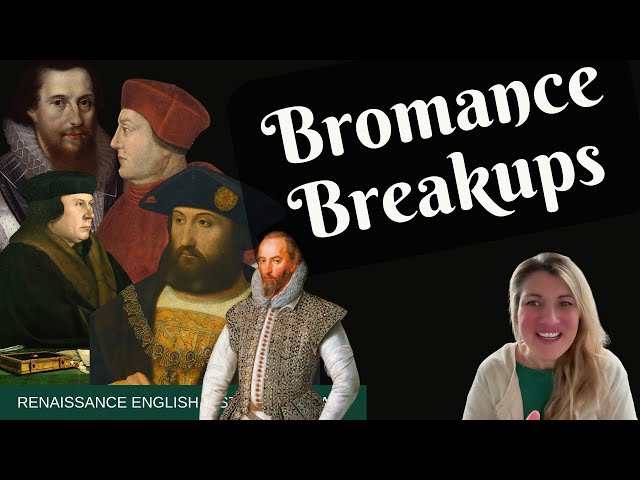
    Bad Tudor bromances were more than just courtly drama—they were high-stakes relationships where betrayal could mean exile, disgrace, or even death. From Henry VIII’s volatile friendships to Elizabeth I’s emotionally charged alliances, the Tudor court was a minefield of loyalty, ambition, and personal power plays.

    Let’s dive deep into the most infamous bromance breakups of the Tudor era—those fascinating, messy, and often fatal fallouts that reveal just how dangerous it was to get close to the crown. Whether you’re a Tudor history buff or just love a good friendship-gone-wrong story, these bad Tudor bromances deliver all the intrigue, betrayal, and backstabbing you could ask for.

    Transcript of Bad Tudor Bromances: When Powerful Friendships Went Very, Very Wrong

    Today, we’re going to talk about some Tudor bromance breakups. Unless you’ve been living under a rock lately, you’ll have noticed a pretty high-profile bromance breakup in the news over the past few days involving a president and a very wealthy man.

    Without diving into the politics of that—because that’s beyond the scope of this channel—I thought it would be fun to take things back to Tudor England and look at some of the most high-profile bromance breakups of the period.

    Let’s talk about bro breakups. Not the kind where someone unfollows you on Instagram or posts nasty things about you on Twitter, but the 16th-century kind—where betrayal might actually end with you losing your head. Literally.

    The Tudor court was full of alliances, friendships, and high-stakes politics, all dressed up as loyalty. We talk about it all the time. But as we all know, in Tudor England, being close to power often meant being dangerously close to disaster. So today, in honor of a very public modern bromance implosion, we’re looking at the most dramatic, most awkward, and yes—occasionally most fatal—bromance breakups of the Tudor period.

    Let’s start with the one that still makes historians wince: Henry VIII and Thomas More. The “It’s not you, it’s… well, actually, it is you” breakup.

    Once upon a time, Henry VIII and Thomas More were the Renaissance version of intellectual besties. More was witty, cool, and principled. Henry loved having someone around who could match him in Latin puns and theological debates. He even made More Lord Chancellor after Thomas Wolsey fell from grace (more on that in a minute).

    But then came Henry’s divorce—and his demand that everyone recognize him as the Supreme Head of the Church of England. More politely declined. He didn’t speak out against the king, but he also wasn’t going to sign on. Henry did not take that well.

    At first, More was just frozen out. He was pushed into retirement, then imprisoned in the Tower, and finally executed in 1535. Henry was reportedly sad about it—which is a strange vibe when you’ve just had your old friend beheaded. Still, you can’t argue this wasn’t one of the most emotionally intense bro breakups of Henry’s reign. He cared. It didn’t stop him from sending More to the axe, but he cared.

    Next up: Edward VI and the Duke of Somerset—Uncle Problems: Royal Edition.

    When Edward VI became king at just nine years old, his uncle Edward Seymour, Duke of Somerset, stepped in as Lord Protector. For a while, Somerset basically ran the country, and young Edward seemed fine with that. He even called him “my most loving uncle.”

    But then things started to shift. Somerset wasn’t great at making friends on the council. He made enemies. He made his fellow nobles furious because he had some populist beliefs that didn’t sit well with the elite. He actually favored ending land enclosures, for example—and we talk about that when we cover Kett’s Rebellion, which he basically bungled the response to.

    Then his own brother tried to oust him. So Somerset had his brother executed. You know—just really awkward family dinners all around. Eventually, Edward grew frustrated. In his private journal, he noted Somerset’s downfall with all the emotion of an Excel spreadsheet:

    “The Duke of Somerset had his head cut off today on Tower Hill between eight and nine in the morning.”

    Of course, Edward’s diary isn’t exactly full of emotion in general. It just sort of lists the events that happened. And, to be fair, he had recently executed his other uncle. So you get the sense that Edward was ready to move on. It went from “my dear uncle” to “that guy we used to know.”

    Next up: Henry VIII and Charles Brandon—Bro Code Violation: Royal Sister Edition.

    This one is more fun—and less fatal, thank goodness. Charles Brandon was Henry’s childhood bestie. He was actually a little older than Henry, which made him super cool in Henry’s eyes. They trained together. Charles taught him jousting. They went hunting. They wrestled. Real testosterone-fueled bromance stuff. Henry loaded him up with titles, made him the Duke of Suffolk, and basically kept him at court as his wingman.

    And then Charles went and married Henry’s sister, Mary Tudor in secret. Without asking permission. Cue the royal meltdown. Henry was furious. Marrying a royal without the king’s blessing was a massive overstep—even for someone in the inner circle. Brandon and Mary were hauled back to court, fully expecting to lose everything—or worse.

    But Mary, clever as she was, talked Henry down. Brandon had to pay a massive fine, but Henry forgave him. Eventually, he was welcomed back. They stayed friends for the rest of Brandon’s life. He even carried Henry’s sword at Anne’s coronation. So while this was a classic “you married my sister behind my back” situation, it’s also one of the few Tudor bromance breakups with a genuine reconciliation. So that’s sweet. Charles Brandon: possibly the only man in Tudor England who pulled off a comeback like that after breaking the bro code and the law against Henry.

    Next up: Robert Dudley and Sir Walter Raleigh — Two’s Company, Three Is a Power Struggle.

    This one’s less a breakup and more a long, smoldering frenemy situation. Robert Dudley and Walter Raleigh were both Elizabeth’s favorites at different times. Dudley had been the Queen’s trusted companion for decades. He was her true love—handsome, polished, charming, and constantly speculated to be her maybe-sort-of boyfriend.

    Then along comes Walter Raleigh—charismatic, poetic, swaggering. He had the gall to charm Elizabeth with his own flair: sending her gloves, planting potatoes, founding colonies—the nerve!

    Dudley didn’t love the competition. There were veiled insults, political undercutting, and both men trying to one-up the other at court. While they weren’t openly hostile, there was definitely shade being thrown on the regular.

    Raleigh later got into serious trouble for secretly marrying one of Elizabeth’s ladies, while Dudley stayed on the Queen’s good side until the end—even after he married her cousin. It’s like watching two alpha influencers compete for the same brand deal—just with more ruffs and fewer ring lights.

    Okay, now: Thomas Cromwell and Thomas Howard, Duke of Norfolk — Enemies with Benefits (Until They Weren’t).

    Cromwell and Norfolk were never exactly friends, but for a while, they needed each other. Cromwell was the ultimate self-made man, rising from a blacksmith’s son to Henry’s most powerful minister. Norfolk was old-school nobility—steeped in family pride and suspicious of Cromwell’s reformist zeal and upstart ways. But they could cooperate when it suited them—first to raise Anne Boleyn with Henry VIII, and then, when Anne needed removing, they both had their reasons to help.

    Cromwell eventually pushed too far—especially with the disastrous marriage to Anne of Cleves. Norfolk saw his chance, pounced, and led the charge to bring Cromwell down. The irony, of course, is that Norfolk himself was arrested just a few years later and only escaped execution because Henry conveniently died the night before his sentence was to be carried out. Tudor Karma moves so fast.

    Next up: Henry VIII and Cardinal Wolsey — The Mentor Who Couldn’t Deliver.

    Wolsey was the man in Henry’s early reign. He made the Church dance, kept Europe talking, and probably poured the king’s wine at dinner. He helped build Henry’s image as a Renaissance prince—and did most of the paperwork to prove it.

    But when Henry wanted his divorce from Katherine of Aragon, Wolsey couldn’t get the Pope to say yes—and Henry was not impressed. Wolsey was stripped of his power, sent away from court, and then, you know, accused of treason.

    He died en route to London before he could be tried. So technically not a full execution, but let’s not pretend Henry was planning a warm welcome. It’s one of the sadder endings because Henry had leaned on Wolsey for so many years. But when the biggest favor of all went unfulfilled, it was over.

    Next up: Henry VIII and Thomas Cranmer — The Bromance That Somehow Survived.

    Let’s take a quick break from the drama for a rare sighting: a bromance that didn’t end in flames or on a scaffold. Thomas Cranmer, Archbishop of Canterbury, was one of Henry’s key allies during the Reformation. He helped annul Henry’s first marriage, supported his religious reforms, and quietly backed Protestant policies—even when the mood at court was turning.

    At several points, Cranmer’s enemies tried to bring him down, but Henry always shielded him. He even gave Cranmer his royal ring once as a sign of protection and told Cranmer’s accusers to, you know, like—back off.

    Somehow, Cranmer managed to keep Henry’s favor when so many others had failed. Maybe it was luck. Maybe it was loyalty. Or maybe Henry just liked the guy. Either way, Cranmer was one of the very few who stayed in the king’s good graces all the way to the end.

    Henry even left him in a position of power for Edward VI’s reign. Of course, Cranmer’s story doesn’t end well under Mary—but that was a different monarch and a totally different vibe. So while it’s not a breakup, it’s worth including as the rare survivor in a landscape of shattered bromances. A unicorn, if you will, in the court of Henry VIII.

    Finally: Elizabeth I and the Earl of Essex — When Flirting Becomes Treason. Now, Elizabeth technically wasn’t a “bro,” but she was a monarch, so we’re going to kind of put this one in the same column.

    This is possibly the most dramatic Tudor bromance—or whatever we want to call this particular relationship. Robert Devereux was the Earl of Essex. He was young, handsome, reckless—and very aware of all three. Elizabeth adored him, at least at first. He was witty, daring, and just unpredictable enough to be interesting. He got titles. He got favors. He got away with a lot—until he didn’t.

    He disobeyed her orders in Ireland. He burst into her bedchamber without permission—a major no-no. Even if you’re cute. Maybe especially when you’re cute. He openly criticized her decisions, surrounded himself with yes-men, and seemed to believe he understood what England needed better than the Queen herself.

    Then, in 1601, he took things just a tad too far. He led a botched uprising in London, hoping to rally support and take control at court. It failed—spectacularly. He was arrested, tried, and executed. The tragedy here is that Elizabeth did actually love him. Not necessarily romantically—but he meant something to her.

    Here’s where it gets even more complicated: He was Robert Dudley’s stepson. Yes, Robert Dudley—her first true love. So Essex was, in a way, her last link to Dudley. That made his betrayal cut even deeper. She never really recovered from it. It wasn’t just politics—it was personal. Very personal. So if Henry VIII’s bromance breakups were bloody and transactional, Elizabeth’s were something else entirely. Emotional. Tangled. Messy.

    So, let’s recap. What have we learned today? If you’re going to be besties with a Tudor monarch, you might want to: keep your ambitions low, your opinions quieter and never ever marry their sister without asking first.

    Whether it was petty jealousy, political backstabbing, or just the brutal reality of Tudor court life… these bromances weren’t built to last. But they do make great stories, don’t they?

    Related links:
    Episode 055: Tudor Times on Thomas More
    Edward Seymour: Rise, Reign, and Downfall
    Sarah Byson on Charles Brandon
    Episode 95: Tudor Times on Robert Dudley
    Sir Walter Raleigh: The Elizabethan Enigma – Explorer, Poet, and Courtier

  • Surviving Henry VIII: The Men Who Escaped the Axe

    Surviving Henry VIII: The Men Who Escaped the Axe


    Surviving Henry VIII was no small feat. In a court where ambition could get you executed and favor could vanish overnight, most who rose close to the king eventually lost their heads—literally. Yet a handful of men managed to do the impossible: they stayed in Henry’s good graces from the start of his reign to the very end.

    Let’s explore the remarkable stories of those who navigated the deadly politics of the Tudor court and lived to tell the tale. These survivors—trusted advisors, loyal friends, and expert political chameleons—offer a rare glimpse into what it really took to thrive while surviving Henry VIII.

    Transcript of The Men Who Survived Henry VIII: Friends Who Kept Their Heads

    Today, we’re going to talk about the people Henry VIII didn’t kill—which honestly seems like a shorter list than the people he did. Sometimes it really feels like just being near Henry was dangerous. Anyone who rose too high—Cromwell, Boleyn—ended up in serious trouble, and often, dead.

    But there were actually people who were very close to Henry, genuine friends, who managed to survive his entire reign and stay in his good graces the whole time. That’s something we don’t talk about nearly as often, so I want to highlight those people today.

    Like I said, when we talk about the people closest to Henry VIII, the stories usually don’t end well—heads on spikes, reputations in tatters, families ruined. But a few men managed something remarkable: they stayed in Henry’s favor from the beginning to the end. These were insiders who understood the rules of a deadly game, and somehow, they walked away unscathed. So who were these unicorns of the Tudor court?

    CLet’s start with the most obvious name on the list: Charles Brandon, Duke of Suffolk. Charles Brandon was Henry’s childhood best friend—the kind of friendship that survived jousts, wars, and even a royal scandal.

    In 1515, Brandon secretly married Henry’s sister, Mary Tudor, the widow of the French king. Most people would have been executed for that level of cheek, but Brandon got a slap on the wrist and a fine… which he never really paid. That tells you everything you need to know about how deep Henry’s affection for Charles Brandon ran.

    Brandon was a constant in Henry’s life. He fought alongside him in France, served on the Privy Council, and even participated in the Dissolution of the Monasteries. But crucially, he never got too close to dangerous court factions or took risky political stances. He was loyal, yes—but he also knew when to stay quiet.

    He died in 1545 of natural causes—one of the very few men who went from the start of Henry’s reign to nearly the end without falling out of favor.

    Next, we have Sir Thomas Audley. Audley didn’t start in Henry’s inner circle, but he was a master of survival through adaptation. Originally a client of Thomas Cromwell, Audley rose quickly.

    He presided over the trials of Sir Thomas More and Anne Boleyn, and eventually became Lord Chancellor. That kind of job usually came with a very short shelf life, but he somehow made it last. His secret was loyalty to the crown over any ideology: when Cromwell fell, he didn’t try to save him; when Protestant reform was in fashion, he supported it, and when it wasn’t, he quietly stepped back.

    He understood that his duty wasn’t to shape policy but to carry out Henry’s will. He kept his head down, did the work, and avoided moral stands that might have put him at risk. He died peacefully in 1544.

    Next we have Thomas Cranmer, one of the most paradoxical figures in Henry’s reign—deeply Protestant, yet protected by a king who often leaned Catholic when it suited him. Cranmer’s appointment in 1533 was strategic: Henry needed someone to approve the annulment of Katherine of Aragon, and Cranmer delivered. But he wasn’t just a puppet; he had a long game in mind, a slow, cautious shift toward reform. He made many powerful enemies, yet Henry shielded him more than once.

    In 1543, when court conservatives tried to bring charges against him, Henry warned Cranmer ahead of time and publicly reaffirmed his trust. That same year, when Catherine Parr nearly faced execution and conservatives gained influence, Henry’s protection saved Cranmer’s life.

    Of course, that protection ended the moment Henry died. Under Edward VI, Cranmer was safe, but under Mary I, he was arrested, tried, and eventually burned at the stake. During Henry’s reign, however, he was effectively untouchable.

    Now let’s talk about Sir Anthony Denny. You know you’re trusted when you’re literally managing the king’s bathroom schedule. As Groom of the Stool, Denny had daily access to Henry VIII, which even his most powerful ministers could dream of. By the 1540s that role had evolved: Denny not only oversaw the privy but also controlled access to the king, managed royal correspondence, and acted as a political gatekeeper.

    In Henry’s final years—when illness made him irritable and paranoid—Denny was one of the few people allowed into his chambers. He even delivered the news of the king’s impending death and helped arrange Henry’s last will and testament to favor the reformist faction. Throughout it all, he never drew attention to himself. He had influence without ever making himself a target—and that is exactly how you survive in the Tudor court.

    Let’s talk now about William Paget. He was not born into power; he worked his way up through competence and discretion. He was a skilled administrator, starting as Clerk of the Signet and eventually rising to Secretary of State. He served Henry loyally and handled some of the most delicate political negotiations of the 1540s, including affairs related to the succession.

    Paget’s real strength was his total pragmatism. He didn’t tie himself too tightly to any one ideology—Protestant, Catholic, it didn’t matter—as long as the king’s will was done efficiently. He was one of the few men trusted by both Henry and his son Edward VI, and he even served under Mary Tudor later. That adaptability was his superpower, and it kept him alive.

    Finally, there’s John Russell, 1st Earl of Bedford. Russell was a soldier and a statesman, but he never tried to be a kingmaker—and that likely saved his life. He served in France, took part in the suppression of the Pilgrimage of Grace, and helped to manage the Dissolution of the Monasteries.

    Henry rewarded him handsomely with land and titles. The whole area around Covent Garden today was given to John Russell—Bedford Square, Russell Square—those are his namesakes. All of that land, from Covent Garden north through Russell Square, was part of what Henry VIII gave to him.

    Russell knew how to stay out of political firefights. He focused on running his estates, fighting in wars, and doing what he was told—simple, effective, and most importantly, alive.

    So what did all of these men have in common? They weren’t saints, but they were careful. They stayed useful. They avoided factional bloodbaths. And they never forgot one essential rule: in Henry’s court, survival wasn’t about being right or righteous—it was about being needed. And never, never ever—never—outshining the king. So there we go: a little bit about the men who stayed alive in Henry’s court.

  • Cromwell and Cranmer: Acts of Loyalty

    Cromwell and Cranmer: Acts of Loyalty


    Cromwell and Cranmer were two of the most pivotal figures in the English Reformation, working together to lay the legal and theological foundations of the Church of England. While Henry VIII often takes the spotlight, it was Cromwell and Cranmer who, behind the scenes, implemented the critical reforms that would forever change English religious life.

    Cromwell, with his sharp political maneuvering, and Cranmer, with his deep theological insights, formed an unlikely but effective partnership. However, when Cromwell fell from grace in 1540, it was Cranmer who risked everything to defend him, demonstrating a remarkable act of loyalty.

    This story of Cromwell and Cranmer reveals the depth of their relationship and their enduring influence on the course of English history.

    Transcript of Cromwell & Cranmer: Acts of Loyalty:

    Today, we’re going to talk about the relationship between Thomas Cranmer and Thomas Cromwell. This is another kind of Wolf Hall-adjacent video. Last night in the U.S. was the finale of The Mirror and the Light on PBS. This was actually the second time I’ve watched it—I saw it when it aired in the U.K. in the fall and did a whole series of Wolf Hall reaction videos, which you can check out.

    So yes, this was my second time watching it, and I cried a lot the first time. I cried again this time. There’s just something about the pacing and the way it builds up. That ending, showing all of the different activities and reactions—Katherine Howard getting dressed in her wedding gown, Princess Mary’s look of mild disgust, Rafe Sadler crying and having his breakdown, even Call-Me-Risley was having a hard time. Just all of these people reacting as Cromwell is being led to the scaffold—it gets you.

    One thing I realized the last time I did those reaction videos is that I haven’t talked a whole lot about the relationship between Thomas Cranmer and Thomas Cromwell. These two men were really the architects of Henrician Reformation—Henry’s break with Rome. One laid down the legal framework, and the other the theological one.

    In the finale, they show Cranmer writing a letter in support of Cromwell. Cromwell is actually kind of surprised by it—he says it’s about as good as he could have hoped for. The show does a great job illustrating the support Cranmer gave Cromwell at the end and his emotional reaction. So I thought I’d take a few minutes to talk about these two men and how Thomas Cranmer reacted to Thomas Cromwell’s arrest and execution. Let’s get into that.

    When people think about the English Reformation, they usually picture Henry VIII, who was of course larger th  an life. But behind him stood two much quieter men who, in their own way, did more than anyone else to actually build the new Church of England.

    And that would be Cromwell and Cranmer—the two Thomases. I think I did an episode very early on in my podcast, I think it was around episode seven or something from 2009, and it was called A Tale of Two Thomases: Cranmer and Cromwell. I think I did another one, A Tale of Two Thomases: Part Two, and it was Wolsey and More.

    Anyway, Cromwell and Cranmer—the two Thomases. These men didn’t start off as natural allies. Cromwell came from the rough streets of Putney, the son of a brewer or a blacksmith, depending on who you asked. He made his way up through the hard school of European mercenary camps, merchant banking, and then legal work.

    Cranmer, by contrast, was a Cambridge scholar—mild, bookish, and very cautious by nature. Their paths first really crossed in the 1530s during Henry’s increasingly desperate efforts to annul his marriage to Katherine of Aragon, so, very early 1530s, Cranmer—who had been involved in theological studies about marriage and divorce—caught Henry’s eye when he proposed using university scholars to back up Henry’s case instead of relying on the Pope.

    Cromwell, who was already working under Cardinal Wolsey and then directly for Henry after Wolsey’s fall, saw Cranmer’s usefulness immediately. They weren’t close friends—they didn’t spend evenings drinking together or playing cards—but they trusted each other’s judgment. And more importantly, they needed each other.

    Cromwell could manipulate Parliament and the law to force through the changes Henry wanted. Cranmer could give those changes the religious cover—he was the theological side of things. They shared something even deeper: they shared a belief that England needed religious reform, and that it had to happen carefully if it was going to survive Henry’s unpredictable moods.

    The English Reformation wasn’t something that happened with a lightning strike. You didn’t just go to bed one night and wake up the next morning Protestant. It took decades—four monarchs, actually. You could make a case that even the English Civil War was a continuation of the Protestant Reformation in England.

    And there were phases. There was the first phase with Cromwell and Cranmer—and that’s what we’re going to talk about. Then there was the Elizabethan Settlement, the Counter-Reformation under Mary I, and Edward’s Protestant moves. So, it happened in multiple stages. It was a very dynamic process. It didn’t just happen overnight.

    Cromwell and Cranmer were behind nearly all of the initial steps in the 1530s. Cromwell was Henry’s Vicegerent in Spirituals—the man put in charge of church affairs. He handled the dirty work: forcing monasteries to close, reorganizing church finances, and writing laws like the Act of Supremacy in 1534 that formally declared Henry the Head of the Church of England.

    Meanwhile, Cranmer laid the intellectual groundwork. As the Archbishop of Canterbury, he quietly steered English religious thought away from Rome. It was Cranmer who oversaw the annulment of Henry’s marriage to Katherine of Aragon. It was Cranmer who helped ease Henry’s shifting  theological positions into something vaguely Protestant—without ever making Henry feel like he was becoming a Lutheran.

    They worked almost in tandem. Cromwell managed the politics and the practicalities. Cranmer crafted the religious arguments. And together, they pushed forward reforms like placing the English Bible in parish churches, making changes to liturgy, and initiating doctrinal shifts such as the rejection of papal authority.

    You can even see this dynamic in the Great Bible that Henry released. In its imagery, Henry receives the word from the Lord and then passes it—on one side to Cranmer, who gives it to the clergy, and on the other side to Cromwell, who passes it to the nobility. From there, it trickled down through the different layers of society to the people at the bottom. Neither man moved faster than Henry allowed, but behind the scenes, they were building something far more radical than Henry probably even realized.

    In the summer of 1540, after years of carefully surviving Henry’s moods, Cromwell finally misstepped. The marriage he arranged between Henry and Anne of Cleves was a disaster from the moment Henry met her.

    By that point, Cromwell had also made too many enemies. Powerful nobles resented his low birth and rapid rise, and conservatives at court were eager to roll back his Protestant-leaning reforms. On June 10th, Cromwell was arrested during a council meeting—dragged away without even being allowed to speak in his own defense.

    Most of his so-called allies scattered immediately. But Cranmer, normally the most cautious man at court, took an enormous risk. He wrote a letter directly to Henry VIII, almost pleading for Cromwell’s life. In the letter, he didn’t just defend Cromwell’s character—he reminded Henry of how much Cromwell had done for him, pointing out that no one had served the king’s wishes with more energy or loyalty.

    But it was also like, “You know, I believed him to be this—but if he’s really that, then who can you even trust anymore?” In fact, I’ll read you part of the letter now. He says:

    “I heard yesterday in your Grace’s Council that he [Cromwell] is a traitor. Yet who cannot be sorrowful and amazed that he should be a traitor against your Majesty? That he, who was so advanced by your Majesty; he, whose surety was only by your Majesty; he, who loved your Majesty—as I ever thought—no less than God; he, who studied always to set forward whatever was your Majesty’s will and pleasure; he, who cared for no man’s displeasure to serve your Majesty; he, that was such a servant, in my judgment, in wisdom, diligence, faithfulness, and experience, as no prince in this realm ever had; he, that was so vigilant to preserve your Majesty from all treason, that few could be so secretly conceived but he detected the same in the beginning. If the noble princes of memory—King John, Henry II, and Richard II—had had such a counsellor about them, I suppose that they should never have been so traitorously abandoned and overthrown as those good princes were. I loved him as my friend, for so I took him to be; but I chiefly loved him for the love which I thought I saw him bear ever towards your Grace, singularly above all others. But now, if he be a traitor, I am sorry that I ever loved him or trusted him, and am very glad that his treason is discovered in time. But yet again, I am very sorrowful—for whom shall Your Grace trust hereafter, if you must not trust him? Alas, I bewail and lament Your Grace’s chance herein. I pray God continually, night and day, to send such a counsellor in his place—whom Your Grace may trust, and who, for all his qualities, can and will serve Your Grace like he did, and who will have so much solicitude and care to preserve Your Grace from all dangers, as I ever thought he had.”

    For a man like Cranmer, who was so cautious, that was a really big deal—to have said all of that, to have defended Cromwell’s character, and to have reminded Henry how much Cromwell had done for him. In some ways, Cranmer was almost putting his own neck on the line for this man who had been branded a traitor. Cranmer was really the only person who stuck up for Cromwell like that.

    Henry ignored it, of course. Cromwell was executed on July 28, 1540. Cranmer’s letter remains, and it’s a record of true loyalty at a court where most people were really only ever loyal to their own survival. Of course, like Cromwell said in the episode itself, he has to temper all of the good stuff with: “But if it’s not true, then he’s a traitor.” Then, of course, he says, essentially, I’m very glad you found out about it—but he certainly went out of his way to list all the good that Cromwell had done first.

    So after Cromwell’s death, Cranmer must have known he was more exposed than ever. The man who had protected the reformers—who could steer Henry’s anger away from them—was gone. Cranmer survived, but he did so in a much more precarious world.

    Still, that letter to Henry shows something very rare—not just political calculation, but something real. Cranmer and Cromwell had built the English Reformation side by side, brick by brick. In the end, Cranmer couldn’t save him. But he sort of tried—when almost no one else did. And in Henry’s world, that kind of loyalty was almost unheard of.

    So I’d love to know what you think: was Cranmer’s loyalty genuine, or was it a survival strategy? Should he have done more? Could he have done more? Let me know in the comments what you think. And I’d also love to know what you thought about the series as well. I just love it—it’s just poetry. It’s so beautiful.

  • Tudor Minute April 27, 1536: The start of Anne Boleyn’s downfall

    Tudor Minute April 27, 1536: The start of Anne Boleyn’s downfall

    Today in 1536 things started heading downhill very quickly for Anne Boleyn. Archbishop Cranmer, and other clergy and nobles were summoned to London for a Parliament in June, for what most historians believe was going to be the question of Henry putting aside Anne Boleyn. Of course, Anne would already have been dead by that point, but it likely shows that no one knew at this point what exactly was going to happen with Anne – just that she needed to go.

    Also, on this day, John Stokesley, Bishop of London, was consulted for advice regarding whether the King could end his marriage to Anne Boleyn. Eustace Chapuys, the Imperial Ambassador, wrote to Charles V:

    “The brother of lord Montague told me yesterday at dinner that the day before the bishop of London had been asked if the King could abandon the said concubine, and he would not give any opinion to anyone but the King himself, and before doing so he would like to know the King’s own inclination, meaning to intimate that the King might leave the said concubine, but that, knowing his fickleness, he would not put himself in danger. The said Bishop was the principal cause and instrument of the first divorce, of which he heartily repents, and would still more gladly promote this, the said concubine and all her race are such abominable Lutherans. London, 29 April 1536.”

    That’s your Tudor Minute for today. Remember you can dive deeper into life in 16th-century England through the Renaissance English History Podcast at englandcast.com.

    Suggested links:
    Follow Anne’s downfall thru Watching the Tudors Podcast.
    Watching The Tudors: Season 2 Episode 8 – Lady in Waiting

    Episode 076: Alison Weir on Anne Boleyn

  • Tudor Minute November 7, 1541: Catherine Howard was questioned

    Tudor Minute November 7, 1541: Catherine Howard was questioned

    Today in 1541 Henry VIII’s fifth wife Catherine Howard was questioned about her salacious past by Archbishop Cranmer and her uncle the Duke of Norfolk.

    She was also confined to her chambers and would never see Henry again as he had abandoned her at Hampton Court the day before. Eustace Chapuys the Imperial Ambassador, wrote what he knew in a letter to the Queen of Hungary: 

    “On the evening of the 6th the Privy Councillors returned and stayed nearly all night deliberating in the King’s apartments, and then the day after, night and day, at the house of the Bishop of Winchester, where it was resolved to discharge most of those who were at Hampton Court with the Queen, all coffers and chests being sealed and the doors guarded. Among others who remained inside the palace was the Archbishop of Canterbury, who has charge of everything.”

    Catherine knew she was in big trouble and she became so hysterical that Cranmer couldn’t question her and so they came back the next day.

    That’s your Tudor Minute for today. Remember you can dive deeper into life in 16th century England through the Renaissance English History Podcast at Englandcast.com.

    Suggested links:
    Autumn 2018 Tudor Summit: Claire Ridgway on Katherine Howard
    James Boulton on Tudor Queens

    From the shop:
    Tudor Women Charm Jewelry Collection
    Featuring: Katherine Howard Tudor Women Charm Necklace
    Ps. All products are made on-demand and can take a few weeks to ship.

    Catherine Howard Necklace
  • Tudor Minute November 2, 1541: Catherine Howard’s secret past

    Tudor Minute November 2, 1541: Catherine Howard’s secret past

    Today in 1541 Archbishop Thomas Cranmer left a letter for Henry VIII in the chapel at Hampton Court giving details about his wife Catherine Howard’s past. Henry had married Catherine thinking she was an innocent virgin – which she was not. A woman who knew Catherine when they were younger had told a story of Catherine’s relationship with Francis Derham, as well as her music tutor Henry Manox.

    At first, Henry didn’t believe it, thinking that she was an honest woman, and not doubting her, but he organized an investigation – which would, of course, highlight that she had committed adultery on top of all of the other stuff. Catherine would be executed about three months later.

    That’s your Tudor Minute for today. Remember you can dive deeper into life in 16th century England through the Renaissance English History Podcast at englandcast.com.

    Suggested link:
    Autumn 2018 Tudor Summit: Claire Ridgway on Katherine Howard
    James Boulton on Tudor Queens

    From the shop:
    Katherine Howard Portrait Bracelet
    Ps. All products are made on-demand and can take a few weeks to ship.

    Tudors Accessories
  • Tudor Minute October 15, 1537: Prince Edward’s Christening

    Tudor Minute October 15, 1537: Prince Edward’s Christening

    Today in 1537 Henry and Jane Seymour’s son Edward, the future Edward VI, was christened in Hampton court. Thomas Cranmer performed the rites in front of a crowd of several hundred. Henry’s daughter with Catherine of Aragon, Mary, was godmother.

    There was a great procession starting from the Queen’s apartments, and then after Cranmer performed the rites, Edwards titles were read aloud, and a Te Deum was sung. Then the prince was taken back to Jane Seymour, who, it should be noted, was in no sign of ill health at this time. This is something that the movies and fiction often gets a bit wonky – Jane was sitting up in bed, signing birth announcements, and no one seemed at all worried about her health. She received the Christening gifts, and there was no sign that she was anything other than healthy – as much as you can be after childbirth. Of course, within two weeks she would be dead, but we will save that story for another day.

    That’s your Tudor Minute for today. Remember you can dive deeper into life in 16th century England through the Renaissance English History Podcast at englandcast.com – there’s an episode there that’s an interview with Alison Weir about her fictional account of Jane Seymour, and the theories behind her death that is fascinating to listen to.

    Suggested links:
    Author Janet Wertman on Edward VI
    Episode 105: Historian Alison Weir on Jane Seymour

    From the shop:
    Jane Seymour Tudor Women Charm Necklace
    Ps. All products are made on-demand and can take a few weeks to ship.

  • Tudor Minute September 12, 1555: Thomas Cranmer goes on trial

    Tudor Minute September 12, 1555: Thomas Cranmer goes on trial

    Today in 1555 Archbishop Thomas Cranmer went on trial for heresy. He was one of the architects of Henry VIII’s divorce from Catherine of Aragon, and as such when Mary Tudor came to power, Catherine’s daughter, he was one of the main people that she had a grudge against. And so today, at the University Church of St Mary the Virgin at Oxford, Cranmer entered the court, having been accused of denying papal authority, and denying transubstantiation. Transubstantiation was the belief that the bread and wine literally turned to Christ’s body and blood in Communion, and a main tenant of Protestant belief was that it was symbolic of the bond people had with Christ rather than being literal.

    The Bishop of Gloucester represented the Pope in the trial, as it was under Papal jurisdiction since Cranmer was archbishop of Canterbury and had been appointed by the pope. But Cranmer didn’t show any deference to Gloucester, and when he was asked why he responded that he had once taken a vow never to let any papal authority into England, and he wasn’t about to turn back on that now.

    The Pope duly stripped him of his titles, and turned him over to the secular authorities to administer their sentence to him – which would be burning at the stake.

    That’s your Tudor Minute for today. Remember you can dive deeper into life in 16th century England through the Renaissance English History Podcast at englandcast.com.

    Suggested links:
    Episode 010: A Tale of Two Thomases Part 2 (Cromwell & Cranmer)
    October is Reformation Month!

    From the Shop:
    Cromwell “Coffee. Because Reformation-ing is hard,” mug
    Ps. All products are made on-demand and can take a few weeks to ship.


  • Tudor Minute May 30, 1536: Henry VIII marries Jane Seymour

    Tudor Minute May 30, 1536: Henry VIII marries Jane Seymour

    Today in 1536 Henry married his third wife, Jane Seymour, in a ceremony in the Queen’s Closet in York Place officiated by Archbishop Cranmer – you can only imagine how Cranmer must have felt doing this just a few weeks after the fall of his previous friend and ally Anne Boleyn. He was betrothed to Jane the very day after Anne Boleyn was executed, and then married her ten days later.

    It had only been a few weeks since Anne had been Queen, and workers had to work hard to replace Anne’s initials and emblems with Jane’s own Phoenix badge. In some cases, the workers didn’t quite finish the job, and you can still see A’s beneath the J’s in some places at Hampton Court.

    That’s your Tudor Minute for today. Remember you can dive deeper into life in 16th century England through the Renaissance English History Podcast at englandcast.com.

    Suggested links:
    Episode 105: Historian Alison Weir on Jane Seymour
    Autumn 2017 Tudor Summit: Janet Wertman on the Seymours

    From the shop:
    Jane Seymour Tudor Women Charm Necklace
    Ps. All products are made on-demand and can take a few weeks to ship.

    Jane Seymour Tudor merch
  • Tudor Minute May 23, 1533: Annulment of Henry VIII’s marriage to Catherine of Aragon

    Tudor Minute May 23, 1533: Annulment of Henry VIII’s marriage to Catherine of Aragon

    Today in 1533 Archbishop Cranmer ruled that Henry’s marriage to Catherine of Aragon was well and truly void.

    “My lord of Canterbury gave sentence this day at 11 o’clock in the great cause of matrimony; has declared it to be against the law of God, and has divorced the King from the noble lady Katharine. He has used himself in this matter very honorably, and all who have been sent hither on the King’s behalf have acted diligently and towardly. Sentence shall be given for the King’s second contract of matrimony before the Feast of Pentecost. The process is partly devised. 23 May.”

    That’s your Tudor Minute for today. Remember you can dive deeper into life in 16th century England through the Renaissance English History Podcast at englandcast.com.

    Suggested links:
    Episode 109: Divorce in the Middle Ages (The Precedence for Henry’s Divorce)
    Episode 69: Supplemental – Chat with James Boulton on Katherine of Aragon
    Episode 47: Tudor Times talks about Katherine of Aragon

    From the shop:
    The Andalucian Princess Collection
    Featuring: Catherine of Aragon Andalucian Princess Leggings
    Ps. All products are made on-demand and can take a few weeks to ship.

    Andalucian Princess yoga pants