Thomas More

  • Bad Tudor Bromances: When Powerful Friendships Went Very, Very Wrong

    Bad Tudor Bromances: When Powerful Friendships Went Very, Very Wrong


    Bad Tudor bromances were more than just courtly drama—they were high-stakes relationships where betrayal could mean exile, disgrace, or even death. From Henry VIII’s volatile friendships to Elizabeth I’s emotionally charged alliances, the Tudor court was a minefield of loyalty, ambition, and personal power plays.

    Let’s dive deep into the most infamous bromance breakups of the Tudor era—those fascinating, messy, and often fatal fallouts that reveal just how dangerous it was to get close to the crown. Whether you’re a Tudor history buff or just love a good friendship-gone-wrong story, these bad Tudor bromances deliver all the intrigue, betrayal, and backstabbing you could ask for.

    Transcript of Bad Tudor Bromances: When Powerful Friendships Went Very, Very Wrong

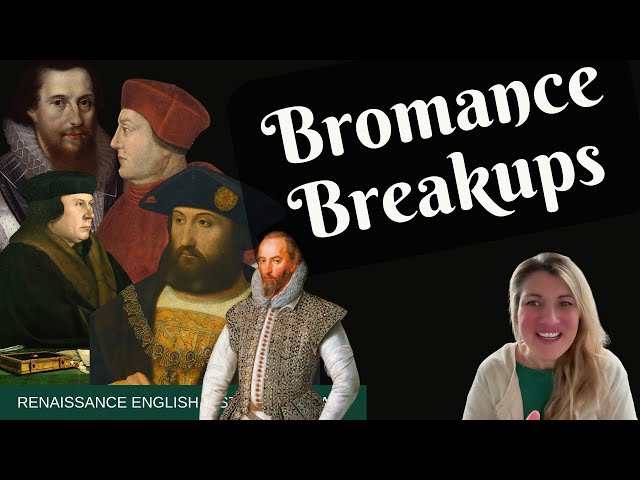
    Today, we’re going to talk about some Tudor bromance breakups. Unless you’ve been living under a rock lately, you’ll have noticed a pretty high-profile bromance breakup in the news over the past few days involving a president and a very wealthy man.

    Without diving into the politics of that—because that’s beyond the scope of this channel—I thought it would be fun to take things back to Tudor England and look at some of the most high-profile bromance breakups of the period.

    Let’s talk about bro breakups. Not the kind where someone unfollows you on Instagram or posts nasty things about you on Twitter, but the 16th-century kind—where betrayal might actually end with you losing your head. Literally.

    The Tudor court was full of alliances, friendships, and high-stakes politics, all dressed up as loyalty. We talk about it all the time. But as we all know, in Tudor England, being close to power often meant being dangerously close to disaster. So today, in honor of a very public modern bromance implosion, we’re looking at the most dramatic, most awkward, and yes—occasionally most fatal—bromance breakups of the Tudor period.

    Let’s start with the one that still makes historians wince: Henry VIII and Thomas More. The “It’s not you, it’s… well, actually, it is you” breakup.

    Once upon a time, Henry VIII and Thomas More were the Renaissance version of intellectual besties. More was witty, cool, and principled. Henry loved having someone around who could match him in Latin puns and theological debates. He even made More Lord Chancellor after Thomas Wolsey fell from grace (more on that in a minute).

    But then came Henry’s divorce—and his demand that everyone recognize him as the Supreme Head of the Church of England. More politely declined. He didn’t speak out against the king, but he also wasn’t going to sign on. Henry did not take that well.

    At first, More was just frozen out. He was pushed into retirement, then imprisoned in the Tower, and finally executed in 1535. Henry was reportedly sad about it—which is a strange vibe when you’ve just had your old friend beheaded. Still, you can’t argue this wasn’t one of the most emotionally intense bro breakups of Henry’s reign. He cared. It didn’t stop him from sending More to the axe, but he cared.

    Next up: Edward VI and the Duke of Somerset—Uncle Problems: Royal Edition.

    When Edward VI became king at just nine years old, his uncle Edward Seymour, Duke of Somerset, stepped in as Lord Protector. For a while, Somerset basically ran the country, and young Edward seemed fine with that. He even called him “my most loving uncle.”

    But then things started to shift. Somerset wasn’t great at making friends on the council. He made enemies. He made his fellow nobles furious because he had some populist beliefs that didn’t sit well with the elite. He actually favored ending land enclosures, for example—and we talk about that when we cover Kett’s Rebellion, which he basically bungled the response to.

    Then his own brother tried to oust him. So Somerset had his brother executed. You know—just really awkward family dinners all around. Eventually, Edward grew frustrated. In his private journal, he noted Somerset’s downfall with all the emotion of an Excel spreadsheet:

    “The Duke of Somerset had his head cut off today on Tower Hill between eight and nine in the morning.”

    Of course, Edward’s diary isn’t exactly full of emotion in general. It just sort of lists the events that happened. And, to be fair, he had recently executed his other uncle. So you get the sense that Edward was ready to move on. It went from “my dear uncle” to “that guy we used to know.”

    Next up: Henry VIII and Charles Brandon—Bro Code Violation: Royal Sister Edition.

    This one is more fun—and less fatal, thank goodness. Charles Brandon was Henry’s childhood bestie. He was actually a little older than Henry, which made him super cool in Henry’s eyes. They trained together. Charles taught him jousting. They went hunting. They wrestled. Real testosterone-fueled bromance stuff. Henry loaded him up with titles, made him the Duke of Suffolk, and basically kept him at court as his wingman.

    And then Charles went and married Henry’s sister, Mary Tudor in secret. Without asking permission. Cue the royal meltdown. Henry was furious. Marrying a royal without the king’s blessing was a massive overstep—even for someone in the inner circle. Brandon and Mary were hauled back to court, fully expecting to lose everything—or worse.

    But Mary, clever as she was, talked Henry down. Brandon had to pay a massive fine, but Henry forgave him. Eventually, he was welcomed back. They stayed friends for the rest of Brandon’s life. He even carried Henry’s sword at Anne’s coronation. So while this was a classic “you married my sister behind my back” situation, it’s also one of the few Tudor bromance breakups with a genuine reconciliation. So that’s sweet. Charles Brandon: possibly the only man in Tudor England who pulled off a comeback like that after breaking the bro code and the law against Henry.

    Next up: Robert Dudley and Sir Walter Raleigh — Two’s Company, Three Is a Power Struggle.

    This one’s less a breakup and more a long, smoldering frenemy situation. Robert Dudley and Walter Raleigh were both Elizabeth’s favorites at different times. Dudley had been the Queen’s trusted companion for decades. He was her true love—handsome, polished, charming, and constantly speculated to be her maybe-sort-of boyfriend.

    Then along comes Walter Raleigh—charismatic, poetic, swaggering. He had the gall to charm Elizabeth with his own flair: sending her gloves, planting potatoes, founding colonies—the nerve!

    Dudley didn’t love the competition. There were veiled insults, political undercutting, and both men trying to one-up the other at court. While they weren’t openly hostile, there was definitely shade being thrown on the regular.

    Raleigh later got into serious trouble for secretly marrying one of Elizabeth’s ladies, while Dudley stayed on the Queen’s good side until the end—even after he married her cousin. It’s like watching two alpha influencers compete for the same brand deal—just with more ruffs and fewer ring lights.

    Okay, now: Thomas Cromwell and Thomas Howard, Duke of Norfolk — Enemies with Benefits (Until They Weren’t).

    Cromwell and Norfolk were never exactly friends, but for a while, they needed each other. Cromwell was the ultimate self-made man, rising from a blacksmith’s son to Henry’s most powerful minister. Norfolk was old-school nobility—steeped in family pride and suspicious of Cromwell’s reformist zeal and upstart ways. But they could cooperate when it suited them—first to raise Anne Boleyn with Henry VIII, and then, when Anne needed removing, they both had their reasons to help.

    Cromwell eventually pushed too far—especially with the disastrous marriage to Anne of Cleves. Norfolk saw his chance, pounced, and led the charge to bring Cromwell down. The irony, of course, is that Norfolk himself was arrested just a few years later and only escaped execution because Henry conveniently died the night before his sentence was to be carried out. Tudor Karma moves so fast.

    Next up: Henry VIII and Cardinal Wolsey — The Mentor Who Couldn’t Deliver.

    Wolsey was the man in Henry’s early reign. He made the Church dance, kept Europe talking, and probably poured the king’s wine at dinner. He helped build Henry’s image as a Renaissance prince—and did most of the paperwork to prove it.

    But when Henry wanted his divorce from Katherine of Aragon, Wolsey couldn’t get the Pope to say yes—and Henry was not impressed. Wolsey was stripped of his power, sent away from court, and then, you know, accused of treason.

    He died en route to London before he could be tried. So technically not a full execution, but let’s not pretend Henry was planning a warm welcome. It’s one of the sadder endings because Henry had leaned on Wolsey for so many years. But when the biggest favor of all went unfulfilled, it was over.

    Next up: Henry VIII and Thomas Cranmer — The Bromance That Somehow Survived.

    Let’s take a quick break from the drama for a rare sighting: a bromance that didn’t end in flames or on a scaffold. Thomas Cranmer, Archbishop of Canterbury, was one of Henry’s key allies during the Reformation. He helped annul Henry’s first marriage, supported his religious reforms, and quietly backed Protestant policies—even when the mood at court was turning.

    At several points, Cranmer’s enemies tried to bring him down, but Henry always shielded him. He even gave Cranmer his royal ring once as a sign of protection and told Cranmer’s accusers to, you know, like—back off.

    Somehow, Cranmer managed to keep Henry’s favor when so many others had failed. Maybe it was luck. Maybe it was loyalty. Or maybe Henry just liked the guy. Either way, Cranmer was one of the very few who stayed in the king’s good graces all the way to the end.

    Henry even left him in a position of power for Edward VI’s reign. Of course, Cranmer’s story doesn’t end well under Mary—but that was a different monarch and a totally different vibe. So while it’s not a breakup, it’s worth including as the rare survivor in a landscape of shattered bromances. A unicorn, if you will, in the court of Henry VIII.

    Finally: Elizabeth I and the Earl of Essex — When Flirting Becomes Treason. Now, Elizabeth technically wasn’t a “bro,” but she was a monarch, so we’re going to kind of put this one in the same column.

    This is possibly the most dramatic Tudor bromance—or whatever we want to call this particular relationship. Robert Devereux was the Earl of Essex. He was young, handsome, reckless—and very aware of all three. Elizabeth adored him, at least at first. He was witty, daring, and just unpredictable enough to be interesting. He got titles. He got favors. He got away with a lot—until he didn’t.

    He disobeyed her orders in Ireland. He burst into her bedchamber without permission—a major no-no. Even if you’re cute. Maybe especially when you’re cute. He openly criticized her decisions, surrounded himself with yes-men, and seemed to believe he understood what England needed better than the Queen herself.

    Then, in 1601, he took things just a tad too far. He led a botched uprising in London, hoping to rally support and take control at court. It failed—spectacularly. He was arrested, tried, and executed. The tragedy here is that Elizabeth did actually love him. Not necessarily romantically—but he meant something to her.

    Here’s where it gets even more complicated: He was Robert Dudley’s stepson. Yes, Robert Dudley—her first true love. So Essex was, in a way, her last link to Dudley. That made his betrayal cut even deeper. She never really recovered from it. It wasn’t just politics—it was personal. Very personal. So if Henry VIII’s bromance breakups were bloody and transactional, Elizabeth’s were something else entirely. Emotional. Tangled. Messy.

    So, let’s recap. What have we learned today? If you’re going to be besties with a Tudor monarch, you might want to: keep your ambitions low, your opinions quieter and never ever marry their sister without asking first.

    Whether it was petty jealousy, political backstabbing, or just the brutal reality of Tudor court life… these bromances weren’t built to last. But they do make great stories, don’t they?

    Related links:
    Episode 055: Tudor Times on Thomas More
    Edward Seymour: Rise, Reign, and Downfall
    Sarah Byson on Charles Brandon
    Episode 95: Tudor Times on Robert Dudley
    Sir Walter Raleigh: The Elizabethan Enigma – Explorer, Poet, and Courtier

  • Henry VIII’s Betrayals and Executions: Did He Regret Them?

    Henry VIII’s Betrayals and Executions: Did He Regret Them?

    Henry VIII’s betrayals and executions defined one of the bloodiest reigns in English history. From trusted advisors to beloved queens, no one was safe from the axe once they fell out of favor with the king. This post explores some of the most shocking downfalls during Henry’s rule—including Anne Boleyn, Thomas Cromwell, Cardinal Wolsey, Margaret Pole, and Thomas More—and asks a haunting question: did Henry VIII ever regret these ruthless decisions?

    As we revisit these infamous moments of betrayal and brutality, we’ll examine whether the king’s legacy was shaped not only by his thirst for power—but also by any trace of remorse that may have lingered behind the crown.

    Did Henry VIII Ever Regret the Executions of Anne Boleyn, Cromwell, or Thomas More?

    So today we’re going to talk about some of Henry VIII’s most brutal executions and punishments—because I count Wolsey in this list as well. Then we’ll talk about whether Henry ever regretted some of these downfalls, because evidence shows he might have. Of course, he never actually blamed himself—he blamed others for what happened, claiming he’d been given bad advice, etc., etc.

    We’re going to look at four of the most brutal executions—the ones that really stain Henry’s legacy. I mean, there are a lot of them, but we’re going to pick four. And like I said, I’m including Wolsey, even though he wasn’t executed, because his downfall was so swift, and he probably would have been executed if he had lived to be tried. Then we’ll talk about whether Henry ever regretted them.

    So, Henry VIII’s reign is remembered as a bloody one. Heads rolled at an alarming pace, and few—even among his closest friends and advisors—were truly safe. But once the dust settled and the scaffolds were cleared, did Henry ever regret the brutal falls he orchestrated? Was there even a glimmer of remorse behind the crown?

    Today, we’ll talk about the aftermath of some of Henry’s most shocking betrayals:

    • The downfall of his second queen, Anne Boleyn
    • The execution of his right-hand man, Thomas Cromwell
    • The long fall of Cardinal Wolsey
    • And the horrifying death of Margaret Pole, an elderly noblewoman whose execution shocked even the most hardened courtier

    Let’s start with Anne Boleyn. Anne Boleyn was the woman for whom Henry had broken England apart—the dazzling queen who had once been the center of his universe. But by 1536, she was fighting for her life against a tide of false accusations: adultery, incest, and treason. Her trial was a farce. Her execution was swift.

    In the immediate aftermath, Henry wasted no time mourning. Just days after Anne’s death, he was seen parading on the Thames in a barge, openly celebrating with the ladies of the court. Preparations for his marriage to Jane Seymour were underway almost before Anne’s body had cooled.

    Outwardly, it looked like Henry had brushed her aside without a second thought. But there are hints that her death left a deeper mark. His moods reportedly grew darker over the summer. Courtiers noticed an increasing irritability and a hardening of his already suspicious nature. He rarely spoke of Anne, and when he did, it was to blame her for her own downfall. If there was any regret there, it wasn’t the kind that softened him—it was the kind that twisted itself into bitterness and paranoia.

    What about Thomas Cromwell? When Henry broke apart the old England, Cromwell had been his architect—the man who helped build the new England out of the rubble of the old one.

    For years, Cromwell had been indispensable, clearing the way for Henry’s ambitions through diplomacy, legislation, and, when necessary, a few carefully arranged executions. It was Cromwell who had overseen Anne’s downfall, and yet, just four years later, Cromwell himself would fall victim to the same brutal machinery.

    Cromwell’s biggest mistake was arranging Henry’s disastrous marriage to Anne of Cleves—a political match that Henry found personally unbearable. Enemies at court seized on the opportunity, and Cromwell was arrested, imprisoned, and executed within months.

    Now, in this case, there actually is strong evidence that Henry did regret what he had done. The Spanish ambassador Eustace Chapuys reported that Henry called Cromwell “the most faithful servant he ever had.” He blamed others—especially the Duke of Norfolk and Stephen Gardiner—for poisoning his mind against Cromwell.

    Afterwards, Henry reportedly ordered Cromwell’s portrait hidden away because he couldn’t bear to look at it. It’s one of the few instances where Henry’s guilt seems to have broken through his usual justifications. But, as always with Henry, the realization came too late to save anyone.

    Now let’s talk about Cardinal Wolsey. Long before Anne Boleyn or Thomas Cromwell, there was Thomas Wolsey—the brilliant, ambitious cleric who served as Henry’s chief minister for nearly two decades.

    Wolsey had shaped Henry’s early reign, securing alliances, negotiating treaties, managing the court. But when he failed to deliver the King’s annulment from Katherine of Aragon, his enemies closed in. In 1529, Wolsey was stripped of his office and titles. Two years later, he was summoned to London to face charges of treason. He died on the road at Leicester Abbey, likely of illness, but few doubted that had he actually made it to London, the block would have awaited him.

    Henry’s reaction to Wolsey’s death was complex. On one hand, he raged against Wolsey’s betrayal. On the other, he was reportedly somber at the news, musing that Wolsey had served him well—until he didn’t. If Henry felt regret here, it seems to have been brief, quickly swallowed up by the narrative that Wolsey had simply failed him.

    Finally, the most brutal execution of them all was Margaret Pole. Few executions during Henry’s reign were as shocking or grotesque as that of Margaret Pole. She was the Countess of Salisbury in her own right and a niece of Edward IV, which meant Margaret carried royal blood—making her a permanent thorn in Henry’s side as he grew more paranoid about threats to his dynasty.

    In 1541, after years of tenuous imprisonment in the Tower, she was abruptly sentenced to death without a formal trial. Her execution was a horror. The inexperienced headsman missed the mark repeatedly, hacking her to death in a gruesome, drawn-out scene that horrified witnesses. She even reportedly tried to run away, saying that she wasn’t going to simply put her head on the block. The executioner chased her, and she was in her sixties at the time—it was a horrific and chaotic scene.

    There is no record that Henry expressed any regret over Margaret’s death. In fact, it’s unclear whether he ever dwelled on it at all. Foreign observers, however, were appalled, and Margaret’s execution further darkened Henry’s reputation across Europe.

    If he ever had second thoughts, they never made it into the historical record. More likely, by this stage of his reign, he was too far gone—isolated, suspicious, and convinced that bloodshed was the only sure path to security.

    Speaking of executions that shocked Europe, I’m going to throw in an extra one here: Thomas More. Thomas More wasn’t just Henry’s Lord Chancellor. He had once been a beloved courtier, an intellectual companion, a trusted friend—almost a father figure.

    Early in his reign, More had helped nurture the King’s humanist image. He encouraged him in his studies and praised his mind. Their relationship was deeply personal, which made More’s refusal to accept Henry’s supremacy over the Church all the more devastating.

    More’s execution in 1535 was carefully staged. He was charged with treason for his silence, not for any public rebellion, and he was beheaded at the Tower. His final words were a masterclass in quiet defiance. He died, he said, “The King’s good servant, but God’s first.”

    As for Henry, there’s little evidence that he openly regretted More’s death. If anything, he seemed to have convinced himself that More’s stubbornness had left him no choice. But the shadow of More’s martyrdom lingered, and abroad, Henry’s reputation suffered badly. If Henry ever felt any private sorrow for sending an old friend to the scaffold, he kept it buried deep—another hard scar on a reign increasingly defined by the blood of the once beloved.

    So, did Henry ever regret any of the blood on his hands? In Thomas Cromwell’s case, this is unique—because he almost certainly did. But it was too late to undo it. With Anne Boleyn and Cardinal Wolsey, perhaps there was a passing shadow of regret, but it quickly hardened into blame or bitterness. With Margaret Pole, there’s not a shred of evidence that he felt anything at all. And with Thomas More, he seemed to justify the whole thing, insisting that More had brought it on himself.

    So if Henry ever regretted anything, it wasn’t the cruelty—it was losing the people who once served his ambitions, and losing pieces of himself along the way. There we go—a little reflection on some of the worst downfalls of Henry’s reign, and whether he ever regretted them. Interestingly, with Cromwell, he did. But with the others? Not so much.

    Related links:
    Anne Boleyn’s Final Hours
    David Crowther on Thomas Cromwell
    Episode 180: Cardinal Wolsey
    Episode 081: Tudor Times on Margaret Pole
    The Fall of Thomas More: Henry VIII’s Friend Turned Traitor?

  • Henry VIII vs. daughter Mary: How Close Did He Come to Executing Her?

    Henry VIII vs. daughter Mary: How Close Did He Come to Executing Her?


    Henry VIII vs daughter Mary was more than a family disagreement—it was a dangerous standoff with life-or-death stakes. In 1536, Mary Tudor refused to acknowledge her father’s authority as Supreme Head of the Church of England, defying both royal will and religious reform. Her refusal to sign the Oath of Supremacy put her in the same perilous position as others who had gone to the scaffold for less. Once his cherished daughter, Mary had become a political liability.

    This episode explores just how close Henry came to executing his own child—and why Mary ultimately chose submission over martyrdom.

    Transcription of Henry VIII vs. Mary: How Close Did He Come to Executing Her?

    Something exciting is happening, which is that Wolf Hall: The Mirror and the Light is on in the US, finally. So I actually did back in November and December when it was on in the UK, I did a series of reaction videos and breakdowns and things like that.

    But I’m gonna do another set looking at different topics just because it is so popular. I’m watching it again. It’s so amazing. Just like the books, everything about Wolf Hall is just the best.

    When I was doing this first video reaction back in November, which seemed like such a long time ago, I looked at the execution scene of Anne Boleyn and how realistic was it.

    I had this whole issue around them showing that Henry was getting married to Jane at the exact same time. I get it was for dramatic effect, but it was bad enough as it was. You didn’t have to make it exactly at the same time. Anyway, today I’m gonna talk about something different.

    Which is the relationship between Henry and Mary, his daughter, and whether or not there was really any threat to Mary Tudor. So would Henry VIII really have killed his own daughter?

    So in 1536 when the series starts, Mary Tudor was isolated. She was out of favor. She was refusing to take the Oath of Supremacy that named her father as the Head of the Church.

    After Anne Boleyn‘s fall, Mary had hoped for reconciliation, but instead things actually wound up getting even more dangerous for her. So how close did she come to execution and would Henry have actually done it? Let’s discuss.

    So Mary had suffered deeply duringAnne Boleyn’s rise. She’d been declared illegitimate, she’d been stripped off of her household. She was forcibly separated from her mother. Anne’s execution in May of 1536 seemed like it might change everything. Mary hoped that Henry would soften, maybe even restore her to the line of succession.

    And certainly there were those, like the show shows, the Pole family who was hoping as well that she would get restored. But instead, Thomas Cromwell stepped in. He made it clear if Mary wanted peace, she’d have to submit not just to her father, but to his new role as the Supreme Head of the Church of England.

    The political had become personal and Cromwell’s pressure campaign would push her to the brink. The Oath of Supremacy wasn’t just a signature, and this is what Bishop Fisher and Thomas More had found out. It was a renunciation, and that’s why they could not sign it in good conscience.

    By taking the Oath of Supremacy, Mary would have had to deny the Pope’s authority and acknowledge Henry as the Head of the Church, and even worse, accept that her parents’ marriage had never been valid.

    That meant calling herself a bastard, which for a devout Catholic, for the daughter of Katherine of Aragon, this wasn’t just painful, this was perilous to her spirit. To her, the Pope was God’s voice on earth. Signing the oath would be a betrayal of her conscience and her faith and her mother’s memory.

    For a time, Mary refused and that refusal put her life in danger. Cromwell didn’t rely on subtlety. Mary was placed under a tight watch, denied visits from friends and allies, and bombarded with letters, insisting that she submit.

    Some were laced with direct threats. If she refused, she could be tried for treason. And in 1536, treason meant death. Henry had already executed Thomas More and Bishop Fisher for refusing the same oath.

    Anne Boleyn, his wife, had gone to the block just weeks earlier. Mary knew full well what her father was capable of. Cromwell told the Imperial Ambassador Eustace Chapuys that Mary’s stubbornness could cost her life. Was it a bluff? Some historians think so, but to marry isolated and frightened, the threat probably felt very, very real.

    And she had every reason to believe that they would follow through. Would Henry have really crossed the line though? Few monarchs ever had, but not none.

    Peter the Great of Russia, this was later, but Peter the Great of Russia would famously have his son Alexei, tortured and executed in 1718 for defying him. That was two centuries later, like I said. But it does show that there was sort of an idea that this could be done, that the monarch had to put monarch ideas before family ideas.

    And then you look at even just within living memory, whoever killed the Princes in the Tower, if they were killed, I know that’s like its whole thing, but that somebody hurt those boys. Somebody threatened those boys, and I know it wasn’t their father, but it was their uncle, potentially. And I know people have ideas.

    Again, I’m not trying to start like a whole Princes in the Tower thing. We have done that on this channel before. That’s not this, but just the idea that the precedent that killing young children, killing people who were innocent, who hadn’t even done anything, much less refusing an oath, it was there.

    But in Tudor England, killing your own child would’ve been shocking and unprecedented. Killing your daughter wasn’t just cruel. It was politically dangerous. And in Mary’s case, it would’ve made her a Catholic martyr, infuriated Europe and possibly even triggered a war. But what was Henry even thinking?

    Well, by the summer of 1536, he was determined to stamp out any opposition to his supremacy. Mary, once his beloved pearl of the world, which he called her, had become a liability. Her refusal to submit was a challenge to everything that Henry had built. But executing Mary also risked political backlash.

    Henry likely saw her as a pawn, not a threat that he needed to eliminate. If she submitted, he won. If she didn’t, he might not flinch, but ideally she would break first. He didn’t need her blood, he needed her obedience. Cromwell’s job was to get it.

    Had Henry executed Mary the fallout would’ve been immediate. Her cousin, Charles V ruled the Holy Roman Empire and was still furious about the treatment of Katherine of Aragon. Killing Mary could have sparked a war, or at the very least, drawn England deeper into isolation. Even Henry as bold as he was, had to consider how far he could push before Europe pushed back.

    So was the threat real? Almost certainly. Would he have gone through with it? Maybe, but we’ll never know because Mary blinked first. She signed the submission with tears falling down her cheeks, her hand trembling. She saved her own life. It’s one of the few times that Henry didn’t have to choose between power and blood, but make no mistake, he came dangerously close.

    So what do you think? Would Henry have actually killed his daughter?

  • The Fall of Thomas More: Henry VIII’s Friend Turned Traitor?

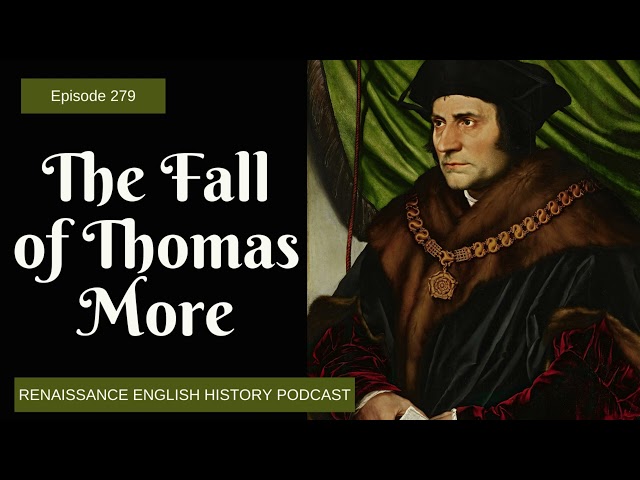
    The Fall of Thomas More: Henry VIII’s Friend Turned Traitor?


    The fall of Thomas More is one of the most dramatic and tragic episodes of the Tudor era. Once a trusted advisor and close companion to Henry VIII, More’s steadfast loyalty to the Catholic Church ultimately led to his downfall. As the king sought to break from Rome and establish his supremacy over the Church of England, More’s refusal to compromise his beliefs sealed his fate.

    His story is a cautionary tale of loyalty, power, and conviction in the face of absolute monarchy. But was he a principled martyr or a rigid idealist? This deep dive into the fall of Thomas More explores the man behind the legend and the fateful choices that led to his execution.

    Rough transcript of The Fall of Thomas More: Henry VIII’s Friend Turned Traitor?

      Today, we’re going to talk about the downfall of Thomas More. There are a lot of opinions about Thomas More. Some people consider him to be a martyr. Other people think he was stubborn and doesn’t deserve to be so venerated. So we’re going to talk today about Thomas More’s relationship with Henry, how deep it went, and what went so horribly wrong. So let’s discuss.

    Thomas More and Henry VIII were once the closest of companions. They were bound by a shared love of learning, theology, and sharp debate. More was no ordinary courtier. He was one of the most brilliant minds of his age, a lawyer, philosopher, and statesman whose intellect Henry both admired and respected.

    They exchanged letters. They engaged in lively theological discussions. Henry invited More to spend time with him at court. He relished the company of a man whose wisdom he trusted. More, for his part, saw himself as a loyal subject, bound by duty to serve the king while staying true to his principles.

    But loyalty to Henry VIII was a dangerous thing. It was expected to be absolute. Unwavering and, above all, adaptable, Henry’s needs would change and those who failed to change with them, who clung to their own beliefs rather than bending to the king’s will, were discarded, often violently. Thomas More believed an unshakable truth rooted in the authority of the Church and the Pope.

    Henry, however, believed in his own supremacy. Particularly, when the Pope refused to annul his first marriage. At first, Thomas More tried to walk a careful line, staying silent rather than opposing Henry’s break with Rome outright, but silence was not enough.

    In 1534, Henry demanded that all of his subjects swear an oath recognizing him as the supreme head of the Church of England. More refused. That refusal, more than anything else, sealed his fate. Henry had once called More a friend. Now, he called him a traitor, and for that, More would pay with his life. Let’s talk about Thomas More. Thomas More was not born into nobility, but his intellect, his deep religious convictions set him apart from an early age.

    Thomas More’s Early Life and Education

    He was born in 1478, the son of a successful London lawyer. He received an excellent education first at St. Anthony’s School, and then he went to Oxford. It was there that he developed a passion for classical learning, philosophy, and theology, subjects that would define his life. His father insisted that he train in law, and though More followed that path, his interest remained broad.

    More’s devout Catholicism wasn’t just a private matter, it shaped his entire worldview. As a young man, he actually even considered joining the priesthood. He spent time with the Carthusian monks and he adopted some of their rigorous spiritual discipline. Though he ultimately chose to pursue a legal and political career, he did remain deeply pious.

    He attended mass daily. He also wore a hair shirt as an act of penance. His faith wasn’t something that he took lightly. It was the foundation of his identity. Even before Henry became king, More had ties to the royal family. He was already an esteemed, well respected lawyer and scholar when he first encountered the young Prince Henry, who was himself being raised with a humanist education that emphasized the classical learning in theology and statecraft.

    More wasn’t his official tutor. That role belonged to men like John Skelton and John Skelton, Lord Mountjoy. We did an episode years ago on Tudor tutors. The tutors of the Tudors. I should go back and revisit that. Anyway, he was part of the circle of intellectuals, though, that surrounded Henry’s education.

    The prince, with his sharp mind and deep interest in theology, was naturally drawn to More’s wit, wisdom, and humanist ideals. When Henry unexpectedly became the heir to the throne in 1502, after the death of his older brother, Arthur, More may have played a role in shaping the prince’s understanding of governance and philosophy.

    By the time Henry ascended to the throne in 1509, Thomas More was already one of the kingdom’s most respected thinkers. It was during these early years that More’s influence was at its peak. He and Henry shared their love of learning, and More encouraged the king’s early reputation as a scholar ruler.

    At this point, Henry was still a fierce defender of Catholicism. More undoubtedly would have reinforced the young king’s belief in papal authority and the importance of church doctrine. Ironically, the very beliefs that would later put them at odds when Henry sought to break from Rome. Henry often sought out More for discussions on governance, philosophy, and in 1518 he brought More into royal service as a member of his Privy Council.

    From there, More’s rise was rapid. He was knighted in 1521. He became the Chancellor of the Duchy of Lancaster. In 1529, Henry made a fateful decision. Cardinal Wolsey, of course, had failed to secure the annulment of Henry’s marriage to Katherine of Aragon, and Cardinal Wolsey was on the way out, his star was fading.

    More was appointed Lord Chancellor. This was the highest legal office in England. Wolsey had been that before. He was the first layman to hold the position, which showed Henry’s trust in him. But while More was loyal to the king, his greater loyalty was always going to be to the church. And as Henry’s battle with Rome escalated, More found himself in an impossible position.

    Conflict with Henry VIII: The Break with Rome

    Thomas More had always been a loyal subject, but his loyalty had limits. As Lord Chancellor, he was responsible for enforcing the king’s laws, but when those laws clashed with his faith, he couldn’t compromise. And Henry VIII was no longer simply a king, he was a man who was obsessed with securing his legacy.

    His marriage to Katherine of Aragon had not produced a male heir, and he was convinced that his lack of sons was divine punishment. By the late 1520s, he was determined to annul his marriage and take Anne Boleyn as his queen. But the Pope, under pressure from Katherine’s nephew, Charles V, refused to grant the annulment.

    More didn’t see this as a marital dispute. This was actually seen as a direct challenge to the authority of the church. Henry thought that he had the right to determine his own affairs, even if it meant breaking with Rome. More was a staunch defender of papal supremacy, and he couldn’t accept this. But, rather than openly defy the king, he chose a path of careful silence.

    He didn’t speak against the annulment, but he didn’t support it either. In More’s mind, his silence should have been enough to keep him out of danger. Henry, though, saw this silence as resistance. By 1531, Henry had forced the English clergy to acknowledge him as the supreme head of the Church of England as far as the law of Christ allows.

    This wasn’t yet a full break from Rome, but it was a clear step toward Henry asserting his authority over the Church. More was deeply troubled by this shift, but he was still Lord Chancellor, and he tried to get through this without openly defying the king. Then, in 1532, the tension grew when Henry pressured the clergy into accepting the submission of the clergy, which effectively placed the English church under royal control.

    This was a direct attack on papal authority, something that More could not support. In May of 1532, More resigned as Lord Chancellor. He cited ill health. In reality, he knew that he could no longer, in good conscience, serve a king who was moving toward a full break with Rome. By stepping down, he hoped to retreat from public life and avoid further conflict.

    The Final Stand: Refusal to Swear the Oath

    But Henry was not about to let his former friend slip away so easily. More’s quiet refusal to support the king’s religious policies didn’t go unnoticed, and his absence from Anne Boleyn’s coronation in 1533 was a bold, if silent, act of defiance. It was clear that he had chosen his side. Henry was now fully committed to asserting his authority over the church, and he could not tolerate any challenge even from a man he had once trusted.

    More had tried to avoid direct confrontation, but Henry’s England had no room for neutrality. And, soon his silence would not be enough to save him. By 1534, Henry had achieved what once had seemed unthinkable. He had broken England away from the authority of Rome and declared himself the supreme head of the Church of England.

    With Anne now as his queen and Katherine of Aragon cast aside, Henry was determined to solidify his power and silence any opposition. Parliament passed the Act of Succession, requiring all subjects to recognize Henry’s marriage to Anne. and accept any children that they had as legitimate heirs. But it wasn’t just a statement on succession.

    This was an ideological test, a demand for total loyalty. To enforce it, Henry required his subjects to swear an oath, affirming both legitimacy of Anne’s children and his supremacy over the church. The wording was carefully crafted. Swearing the oath meant acknowledging that the Pope had no authority in England.

    This was an outright rejection of Rome, and he was making his subjects agree to it. This was where More, who had spent years walking the tightrope between loyalty to the king and loyalty to his faith, could no longer maneuver. When called on to take the oath in April 1534, Thomas More refused. He didn’t openly condemn Henry or his new marriage, but neither would he swear to something that denied the Pope’s authority.

    His legal training made him cautious. He avoided outright treasonous speech, knowing that he could be imprisoned or executed Henry’s supremacy. Instead, he simply stayed silent. believing that his lack of affirmation should not be treated as a rebellion. But Henry, of course, saw things quite differently.

    Imprisonment and Trial

    Silence to him was defiance. If More, one of the most respected legal minds in England, refused the oath, what would stop others from questioning Henry’s authority? More’s refusal was dangerous. It set a precedent. It showed that loyalty to Rome could still exist in England. And on April 17, 1534, Thomas More was arrested and taken to the Tower of London.

    At first, he was treated with some leniency. He was allowed visits from his family and access to books. But, as the months passed, his condition worsened. Henry and his ministers, particularly Thomas Cromwell, were determined to break him. More’s family pleaded with him to take the oath, to say the words that could save his life.

    But Henry himself may have still hoped for More’s submission. He had once admired the man, and executing him would be a public stain on his reign. But More would not yield. He had given everything in service to Henry, his wisdom, his loyalty, his legal expertise. But he would not give up his conscience.

    And for that, he would pay the ultimate price. Locked away in the Tower of London, Thomas More found himself in a grim but strangely familiar position. He had prosecuted men for heresy, seen others sent to their deaths for defying the Church, and now he was the one awaiting a fate decided by a king who had once called him a friend.

    But if Henry thought imprisonment would break More’s will, he underestimated the depth of his resolve. Like we said, at first, his imprisonment wasn’t harsh. He was allowed books. He had writing materials. His daughter also visited him, and she pleaded with him to take the oath. He had no illusions about what lay ahead, but he still refused to outright denounce the king.

    Instead, he carefully crafted his words, staying just within the legal boundaries to avoid outright treason while holding firm to his principles. More’s letters from the tower reveal his state of mind. He was calm, he was feeling deeply religious, and even slightly, darkly humorous at times. Writing to Margaret, he reassured her that he was at peace with his decision.

    And he urged her not to grieve. His faith remained unshaken, and if anything, it seemed to strengthen as his imprisonment stretched on. Meanwhile, Henry VIII hesitated. More’s execution wasn’t a decision that he took lightly. Unlike Anne Boleyn or other perceived enemies, More had been a trusted advisor, an intellectual equal, a man that Henry had genuinely admired.

    The King had hoped that More’s imprisonment alone would be enough to force his submission, that he would bend rather than break. Over the course of months, Henry sent envoys to persuade More, offering him multiple chances to swear the oath in private without public humiliation. Each time, More refused.

    In June of 1535, Bishop John Fisher, More’s fellow prisoner and a similarly steadfast opponent of Henry’s policies was executed. Fisher’s death was a warning, a signal that Henry’s patience was wearing thin. The king had once been reluctant to execute a cardinal of the church, just as he hesitated to execute More.

    But once that first domino fell, the next would soon follow. More knew Fisher’s fate was a harbinger of his own. If Henry was willing to send a bishop to the scaffold, there would be no mercy for him. But he still would not yield. His silence, once his greatest defense, had become his death sentence. The trap had closed, and soon, More would face the final reckoning.

    More was brought to trial on July 1, 1535 at Westminster Hall before a jury packed with Boleyn’s father, brother and uncle. The proceedings, of course, were a mere formality. The verdict had already been decided. The main charge was treason. More was accused of denying the king’s supremacy over the church.

    But proving this was difficult. More had said nothing that could be used against him. Enter Richard Rich, one of Cromwell’s most ambitious allies. Rich took the stand and testified that during a private conversation in the Tower, More had stated that Parliament had no authority to make Henry the head of the church.

    More immediately denied this, declaring that Rich’s testimony was a blatant lie, adding, with biting sarcasm, that he would never have shared such a thought with a man of Rich’s character. But, of course, truth mattered little in a trial where the outcome was already written. Rich’s perjury was enough. The jury, likely under immense pressure, found More guilty of treason.

    With the verdict decided, More finally broke his silence. Since he was condemned regardless, he spoke openly at last. No king, he declared, could rightfully claim to be the head of the church. That authority belonged to the Pope alone. He had remained silent not out of uncertainty, but out of prudence. Now, with nothing left to lose, he made his opinion clear.

    Execution and Legacy

    The sentence was death by hanging, drawing, and quartering, the most brutal punishment for traitors. But Henry, perhaps already uneasy about executing a man he had once held in such high esteem who was loved around the world, commuted the sentence to beheading. Even at the end, More’s execution was made to look like an act of reluctant necessity rather than outright vengeance.

    His fate was set. In a matter of days, Thomas More would walk to the scaffold. On the morning of July 6, 1535, Thomas More was led from the Tower of London to Tower Hill, where his execution would take place. The streets were lined with spectators. Some came to mourn, others simply to witness the fall of a man who once was so close to the king.

    More was composed and he walked with dignity even as he approached his final moments. According to reports, when he climbed the scaffold, he reassured the executioner, telling him not to fear his task. In a final act of defiant wit, he adjusted his beard a bit before laying his head on the block. He remarked “This hath not offended the king.”

    Moments later, with a single stroke of the axe, Thomas More was dead. His execution sent shockwaves through Europe. Charles V, Holy Roman Emperor, was said to be appalled, lamenting that Henry had executed the only man in England worthy of the name of a statesman. Erasmus, More’s longtime friend, mourned the loss deeply, writing that England had killed her wisest man.

    The Catholic Church, which had already begun to see More as a symbol of resistance against Henry’s break with Rome, would later canonize him as a saint. But did More see himself as a martyr? He never actively sought death, and he spent much of his time in the Tower trying to walk this tightrope of the legal pitfalls that might condemn him.

    Yet when the end became inevitable, he embraced it with the resolve of a man who believed he was dying for his faith. In his final speech, he declared, “I die the king’s good servant, but God’s first.” To the Catholic world, this was proof of his sanctity. To Henry, it was the ultimate defiance. More’s body was buried in an unmarked grave, but his severed head was displayed on London Bridge, a grim warning to others who would challenge the king’s supremacy.

    Later, his devoted daughter, Margaret Roper, recovered it and preserved it as a relic. Even in death, More remained a powerful symbol of resistance. Thomas More remains one of history’s most complex figures. To some, he is a saint and a martyr, a man who died for his principles. To others, he was a rigid idealist, unwilling to bend, even when his life was at stake.

    His legacy is further complicated by his earlier role as a persecutor of heretics. He was not simply a victim of oppression, but he was also a man willing to enforce his own strict beliefs on others. But regardless of how he is judged, his influence is enduring. His writings, particularly Utopia, are widely studied.

    His steadfast resistance to Henry’s religious policies has cemented him as one of the most famous figures of the Reformation, and in 1935 he was finally canonized as a saint, officially recognized as a defender of the faith. In the end, his story was not just a story of a friendship turned fatal, it was a warning of the dangers of unchecked power and the price of unwavering conviction.

    We will leave it there for now. Thomas More. What do you think about him? Let me know. Leave me a comment wherever you’re listening to this. I would love to know. I personally have mixed opinions about him. I don’t love how he persecuted others for their beliefs, and he surely shouldn’t have been surprised that came back to haunt him then, given that he had done it himself. Life and people are complicated and we don’t always have to understand them or agree with them to appreciate their story and have empathy.

  • Tudor Minute April 17, 1534: Thomas More was sent to the Tower

    Tudor Minute April 17, 1534: Thomas More was sent to the Tower

    Today in 1534 Thomas More was sent to the Tower for his refusal to take the Oath of Succession saying that Henry’s marriage to Catherine was void, and his marriage to Anne Boleyn was the legitimate one. After having refused to swear the oath on April 13, he was removed to the Abbot of Westminster where he stayed until today, when he was moved to the Tower.

    He wrote a letter to his oldest daughter Margaret Roper when he arrived, telling her what had happened. The Abbot and other nobles had used very persuasive tactics on More. After he said he couldn’t sign it, he wrote, “Unto this my Lord Chancellor said that they all were sorry to hear me say thus, and see me thus refuse the oath. And they said all that on their faith I was the very first that ever refused it; which would cause the King’s Highness to con-ceive great suspicion of me and great indignation toward me. And therewith they showed me the roll, and let me see the names of the lords and the commons which had sworn, and subscribed their names already.”

    He closed with,

    “Howbeit (as help me God), as touching the whole oath, I never withdrew any man from it, nor never advised any to refuse it, nor never put, nor will, any scruple in any man’s head, but leave every man to his own conscience. And methinketh in good faith that so were it good reason that every man should leave me to mine.”

    That’s your Tudor Minute for today. Remember you can dive deeper into life in 16th century England through the Renaissance English History Podcast at englandcast.com.

    Suggested links:
    Episode 55: Tudor Times on Thomas More
    Episode 009: A Tale of Two Thomases Part I (Wolsey & More)

  • Tudor Minute April 13, 1534: Thomas More was summoned to appear at Lambeth

    Tudor Minute April 13, 1534: Thomas More was summoned to appear at Lambeth

    Today in 1534 Thomas More was summoned to appear at Lambeth to swear to the Act of Succession.

    The Act Respecting the Oath to the Succession was passed by the Parliament of England in November 1534, and required all subjects to take an oath to uphold the Act of Succession passed that March. It was later given the formal short title of the Succession to the Crown Act 1534.

    The Act required all those asked to take the oath to recognize Anne Boleyn as King Henry VIII’s lawful wife and their children legitimate heirs to the throne. Anyone refusing to take the oath was guilty of treason.

    The Oath of Succession itself went further than the original Act in several ways. It demanded that persons swearing the oath renounce the power of any “foreign authority or potentate” – so that would include the Pope – and repudiate any oath previously made to such an authority. This did not go unnoticed by Sir Thomas More who claimed he had been sent to the Tower “for refusing of this oath not agreeable with the statute”. He thought that Thomas Cromwell and Thomas Audley “did of their own heads add more words unto it” and therefore they were unable “by their own law … to justify my imprisonment”.

    Refusal to take the oath led to the arrest of More for treason in 1534. He refused to take the oath because it included the abjuration of the pope and claimed the marriage between King Henry VIII and Catherine of Aragon was annulled and it went against his Roman Catholic beliefs. More was beheaded in 1535.

    That’s your Tudor Minute for today. Remember you can dive deeper into life in 16th century England through the Renaissance English History Podcast at englandcast.com where there is an episode on Thomas More.

    Suggested links:
    Episode 55: Tudor Times on Thomas More
    Episode 009: A Tale of Two Thomases Part I (Wolsey & More)

  • Tudor Minute February 7, 1478: Happy birthday Sir Thomas More

    Tudor Minute February 7, 1478: Happy birthday Sir Thomas More

    Today is the birthday in 1478 of Sir Thomas More, who was a writer, humanist, and became a saint after being martyred for not taking the Oath of Supremacy under Henry VIII.

    He was the son of a lawyer and judge, and studied law in London. He became good friends with Erasmus, and through his writing, most famously Utopia, he became famous throughout Europe. In 1521 he was knighted, and became Henry’s Lord Chancellor in 1529 after the fall of Wolsey.

    He was a longstanding Catholic supporter, fighting against heresy, and he then was killed for not supporting Henry as the head of the Church. He was canonized in 1935, and his feast day is June 22 in the Catholic church.

    That’s your Tudor Minute for today. Remember you can dive deeper into life in 16th century England through the Renaissance English History Podcast at englandcast.com.

    Suggested links:
    Episode 055: Tudor Times on Thomas More
    Episode 009: A Tale of Two Thomases Part I (Wolsey & More)

  • Tudor Minute October 25, 1529: More replaces Wolsey as Lord Chancellor

    Tudor Minute October 25, 1529: More replaces Wolsey as Lord Chancellor

    Today in 1529 Thomas More became the Lord Chancellor after the fall of Cardinal Wolsey. His rise made the Catholic traditionalists happy as he supported Queen Catherine over Anne Boleyn in Henry VIII’s divorce proceedings. 

    While More was a humanist and favored reform of the church from within, he fought against the Protestant Reformation. He originally aided Cardinal Wolsey in suppressing Protestant literature including Tyndale’s translation of the New Testament. 

    Once he was Lord Chancellor, he took this work even more seriously and he approved of burning heretics thinking that they were cancer on the church.

    More would resign in 1532 as the clergy was under more and more pressure from Henry to recognize him as the Supreme Head of the Church, and More could not abide by that. He would eventually refuse to take an oath against the Act of Succession, and he was executed in 1535.

    That’s your Tudor minute for today. Remember you can dive deeper into life in 16th century England through the Renaissance English History Podcast at englandcast.com.

    Suggested links:
    Episode 055: Tudor Times on Thomas More
    Episode 009: A Tale of Two Thomases Part I (Wolsey & More)

    From the shop:
    Thomas More Thug Life Shirt
    Ps. All products are made on-demand and can take a few weeks to ship.

    Thomas More Shirt
    “You have to accept me as Head of Church,” he said. He got fat, I became a Saint.
    (Tudor Thug Life)
  • Tudor Minute August 11, 1534: The Greenwich Friars were evicted

    Tudor Minute August 11, 1534: The Greenwich Friars were evicted

    Today in 1534 140 Friars Observant were evicted from their religious house in Greenwich by Henry VIII over their support for Katherine of Aragon and their refusal to accept Henry as the Supreme Head of the Church. Their refusal to accept him, similarly to Thomas More’s, was a big PR blow to Henry, who had hoped that with these people supporting him the rest of the country would easily follow.

    Out of the 140 evicted some were relocated to the Grey Friars where they were treated worse than prisoners. Others escaped abroad and a few were imprisoned in London. Out of those expelled 31 died soon after. 

    Of those who did move to other monasteries their time there was not long as the dissolution of the monasteries soon began. The friars became an example of the Catholic resistance against Henry, and many later became Saints. One of those was John Forest, who had been freed after he gave in to Henry’s demands. He later regretted this, and in 1538 he was burned at the stake. Some also died of starvation in prison.

    The friars were evicted today in 1534.

    That’s your Tudor Minute for today. Remember you can dive deeper into life in 16th century England through the Renaissance English History Podcast at englandcast.com

    Suggested link:
    October is Reformation Month

    From my shop:
    Catherine of Aragon Andalucian Princess Sleeveless Long Dress
    Ps. All products are made on-demand and can take a few weeks to ship.

  • Tudor Minute June 3, 1535: The Interrogation of Thomas More

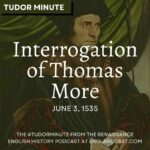
    Tudor Minute June 3, 1535: The Interrogation of Thomas More

    Today Thomas More, the king’s former chancellor, found himself being interrogated in the Tower of London by Thomas Boleyn, Thomas Audley, Thomas Cromwell and the Duke of Suffolk about the royal supremacy.

    They wanted to find out if he thought the statute of supremacy was lawful: “The said Sir Thomas likewise, when examined at the Tower, 3 June, maliciously persevered in refusing to give a direct answer, and, imagining to move sedition and hatred against the King, said to the King’s councillors, “The law and statute whereby the King is made Supreme Head as is aforesaid be like a sword with two edges; for if a man say that the same laws be good then it is dangerous to the soul, and if he say contrary to the said statute then it is death to the body.”

    Also on this day the same year, while More was being interrogated, Thomas Cromwell, Henry VIII’s Vicar-General, ordered all bishops to preach in support of the royal supremacy and to remove all references to the Pope from mass books and other church books.

    That’s your Tudor Minute for today. Remember you can dive deeper into life in 16th century England through the Renaissance English History Podcast at englandcast.com where there is a series on the English Reformation.

    Suggested links:
    Reformation Month
    Episode 055: Tudor Times on Thomas More

    From the shop:
    Cromwell “Coffee. Because Reformation-ing is hard,” mug
    Ps. All products are made on-demand and can take a few weeks to ship.

    Cromwell "Coffee. Because Reformation-ing is hard," mug