Anne Boleyn

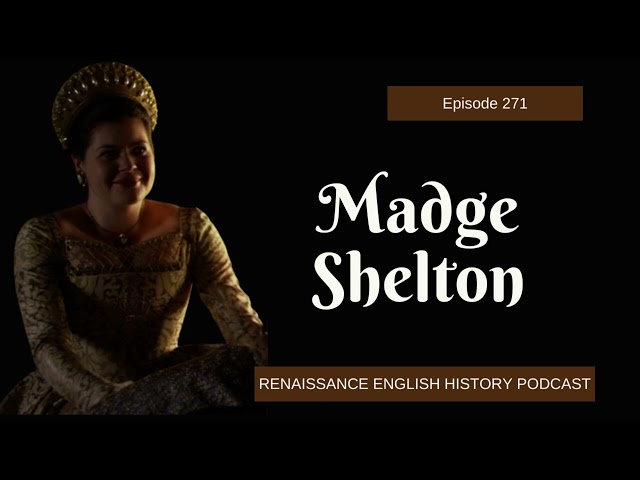
  • Madge Shelton

    Madge Shelton

    Madge Shelton is one of the many intriguing and often overlooked figures of Henry VIII’s court. She was known for her beauty, for her brief entanglement with the king, and her story gives us a glimpse into a world of Tudor court politics. Of course, alliances were fragile, reputations could shift as quickly as Henry’s affections.

    Transcript of Episode 271: Madge Shelton

    Today we’re going to talk about Madge’s life, her involvement with Henry VIII, what became of her after her cousin Anne Boleyn’s fall from grace.

    Madge was born, Margaret, her real name, but she’s known as Madge. Margaret Shelton was born into the influential Shelton family. She was closely tied to the Boleyns. Her parents, Sir John Shelton and Anne Boleyn Shelton, She secured a prominent position at court largely due to their kinship with Anne Boleyn, the king’s wife.

    Anne Boleyn Shelton was actually Anne’s aunt and she was with her in the Tower during her final days. She was Thomas Boleyn‘s sister. So that’s how she was related to Anne. The Shelton’s were an established Norfolk family with estates and a history of service to the crown. The exact date of Madge’s birth remains uncertain.

    Madge Shelton’s Early Life and Court Introduction

    Estimates place it around 1500, but this date raises questions because it suggests she would have been in her mid-30s during her relationship with Henry VIII, which is an age considered somewhat older for a woman debuting in court. And also she went on to have children after that, which we’ll talk about that.

    So again, she would have been a bit older for that if indeed she was in her mid-30’s. Some historians do suggest she may have been born closer to 1510, making her presence as a young and eligible lady much more plausible. So who knows exactly when she was born, but sometime between 1500 and 1510.

    Madge’s introduction to court life came during Anne Boleyn’s rise to power. As a lady-in-waiting, she was part of the inner circle of Anne’s household. She was known as Pretty Madge, and she quickly gained attention for her beauty, with her dimples and her gentle demeanor becoming her trademarks. Report of her charm and her grace circulated widely even after her departure from court.

    In fact, later on, when courtiers were talking about a prospective wife for Henry VIII, they compared that woman’s beauty to Madge Shelton. So she was remembered as being quite a beautiful woman. The Sheltons were entrusted with key responsibilities, including overseeing the household of Princess Mary, Henry’s daughter by Katherine of Aragon.

    This placed Madge and her family in a politically sensitive role, of course navigating the tensions between Henry’s estranged daughter and his new queen. For Madge, this setting provided a rare opportunity to show her wit, her intelligence, and her poise, qualities that would distinguish her beyond her looks.

    Madge Shelton’s Relationship with Henry VIII

    Her connection to Henry VIII began in early 1535. Eustace Chapuys, the sharp-eyed imperial ambassador, noted in his correspondence that the king’s attentions had shifted to a new favorite, Anne Boleyn’s cousin. This relationship, whether consummated or not, lasted roughly six months.

    Now there’s speculation, and it’s often shown in the TV shows, that Anne herself encouraged this dalliance, believing that a family member could help to divert Henry’s wandering eye away from other women.

    The notion of Anne effectively sacrificing her cousin’s reputation might seem cold, but it shows the calculated pragmatism that was often required in this high stakes environment. Still, the arrangement must have been fraught with tension for Madge, who was also at the same time betrothed to Henry Norris, one of the king’s closest advisors.

    The engagement between Madge and Norris stalled during this period, likely due to his reluctance to pursue a marriage with someone who had drawn the king’s favor. Madge’s flirtation with another courtier, Sir Francis Weston, only added to the complexity. Anne would reprimand both men for their behavior with Madge, and that reprimand would be later twisted into evidence against her during her trial in 1536.

    As a lady-in-waiting, Madge Shelton’s daily life would have been both demanding and privileged. Ladies-in-waiting served as companions, confidants, and attendants to the Queen. Performing tasks ranging from assisting with dressing to participating in court entertainment. They were also expected to uphold the Queen’s image of refinement and elegance, making their conduct a reflection of their mistress.

    Madge’s position gave her access to the most powerful figures at court, but it also placed her under constant scrutiny. Her interactions flirtatious or formal, would have been noted by courtiers eager to advance their own agendas. For beyond her duties, Madge likely engaged in the intellectual and cultural pursuits of the court, including poetry, music, and dance, and these activities not only entertained the court, but also served as subtle displays of wit and sophistication.

    Madge’s brief affair with Henry unfolded within a culture steeped in the traditions of courtly love. And of course, Henry himself loved the idea of love and romance and courtly love, this chivalric code that idealized unattainable love and devotion often blurred the lines between flirtation and serious entanglement.

    For women like Madge, these interactions were not just romantic but also political. Being the object of the king’s affections could elevate a family’s status or, conversely, place them in jeopardy. In Madge’s case, her association with the king brought both attention and risk. Her family’s fortunes were tied to Anne Boleyn, whose position was becoming increasingly precarious.

    Henry’s flirtations with other women, including eventually Jane Seymour, signaled a shift in his affections that would have profound consequences for Anne and her circle. Madge’s betrothal to Henry Norris adds another layer of intrigue to her story. Norris was the Groom of the stool, one of the most trusted and intimate positions in Henry’s court.

    Their engagement was overshadowed by her relationship with the king. Norris hesitation to proceed with the marriage may have stemmed from his awareness of the political implications. Tragically, Norris became one of the men implicated in Anne Boleyn’s alleged adultery. Arrested and executed in 1536, he maintained his innocence until the end.

    This left Madge in a really dangerous position. Her engagement dissolved and her family’s standing at court severely diminished. Now, a lot of the TV shows, like The Tudors, show that Madge testified against Anne, that there was some anger there, maybe Madge was upset at the way Anne handled the relationship that she’d had with Henry, and she actually testified against her own cousin.

    That isn’t based on any historical record. Historical records don’t indicate her involvement in the legal proceedings at all. But it is worth noting that, like I said, her mother, Lady Anne Shelton, played a very significant role during this period. She was with those who may have provided testimony or information during the investigation, and she was with Anne during her final week in the Tower.

    So Lady Anne was one of those attendants that was selected by Cromwell, likely to monitor Anne and report on her statements when she was in prison. Anne had reportedly expressed distress over being attended by individuals that she didn’t favor herself, referring to this as a great unkindness. But then, as her execution approached, there’s some evidence that some of her attendants were replaced with people that she chose herself, giving her some comfort in her final days.

    The specific replacements and the identities of the people who were chosen remains limited, but Lady Anne Shelton was one of those women appointed by Cromwell rather than being chosen herself.

    So whether or not Madge was involved in the testimony against Anne, how much her family was involved in testifying against her is not part of the record, but it is interesting that her aunt was one of those women that Cromwell had chosen to be one of her attendants, and it wasn’t one of the ones that Anne had chosen herself.

    In the summer of 1536, there’s so much drama happening, I don’t even know where to start. Of course, you’ve got the execution of Anne Boleyn, and then later that summer, you’ve got the illicit affair between Margaret Douglas and Thomas Howard that had them wind up in the Tower, both of them.

    The Devonshire Manuscript and Madge’s Later Life

    But there’s something really interesting that came to light during this time too, which is the Devonshire manuscript and I want to talk about that. It’s an extraordinary manuscript giving us a window into the inner workings of Henry’s court, and Madge Shelton was part of it.

    So it’s a manuscript that was compiled during the 1530s and 40s. It’s a collection of poems that was passed around by courtiers as a collaborative project. It includes works by well-known figures like Thomas Wyatt and Henry Howard, as well as several anonymous contributors. What makes it so special is how it blends courtly love, personal commentary, and political intrigue into one document.

    I only recently found out about the Devonshire Manuscript, and at some point I might do a whole episode or a YouTube video on it. But it’s really cool because Madge did have a role in this. One memorable line attributed to her reads: “Undesired service requires no hire”. It’s a sharp, pointed observation, likely a comment on the unbalanced dynamics of courtly relationships.

    Madge’s involvement wasn’t just about writing. She may also have helped to circulate messages and poems, facilitating communication between other contributors. For example, she’s believed to have played a part in the exchange of love poems between Margaret Douglas and Thomas Howard. the relationship that caused this major scandal in court.

    The Devonshire manuscript also shows how women at court carved out intellectual spaces for themselves despite the restrictions of the time. Madge was actively shaping the cultural dialogue of her era. Her wit and her intelligence shined through giving us a glimpse of a woman who was more than just a pretty face.

    After her brief time in the spotlight, Madge Shelton’s life took a quieter turn. She married Thomas Woodhouse, a gentleman from Norfolk, and together they had several children. Tragically, Thomas died in 1547 at the battle of Pinkie in Scotland. That was part of the rough wooing, forcing Edward, the young Edward, to marry Mary, Queen of Scots, and that left Madge a widow.

    The battle was a decisive English victory, but it came at a great personal cost to families like the Sheltons. Following her husband’s death, Madge likely returned to Norfolk to manage her household and raise her children. Madge also may have overseen the education of her children, given how intelligent she was.

    Her experience at court and her connections would have been invaluable in positioning her family for future success. The Devonshire manuscript in particular is a lasting kind of testament to her wit, her intellect. It’s pages capture not just the cultural life of the Tudor elite, but also the personal struggles and ambitions of those who contributed to it.

    One lingering question about Madge’s life is whether it was truly her or her sister Mary who was romantically involved with Henry VIII. Some historical sources point to Mary as the possible mistress because of ambiguities in records that abbreviate Marge, commonly used for Margaret, that could be mistaken for Mary, Marg versus Mary.

    Mary Shelton was also an active figure at court. She was also part of the Devonshire Manuscript, and she was connected to figures like Thomas Clere. There’s no definitive evidence to resolve the question, the overlap in their courtly presence and activities has left historians debating their roles for centuries.

    But it seems like most people think it was probably Madge just because of how pretty she was, how the king would have noticed her, and also the drama involved with the breakup of her engagement. So it was probably Madge and not Mary, but it’s important to note that is something that historians debate.

    So there you have it, a little bit about Madge Shelton.

  • Dissecting Anne Boleyn’s Execution in Wolf Hall

    Dissecting Anne Boleyn’s Execution in Wolf Hall

    Anne Boleyn’s execution was on May 19, 1536, marked a pivotal moment in English history, forever altering the trajectory of Henry VIII’s reign. In the highly anticipated second season of Wolf Hall, now airing in the UK after a nine-year hiatus, this historic event is revisited with remarkable attention to detail and artistic nuance.

    The series, based on Hilary Mantel’s acclaimed trilogy, opens with Anne’s execution, blending historical accuracy with creative liberties. From Anne’s composed demeanor and poignant final speech to the unique use of a French swordsman and the intimate setting of the execution, Wolf Hall reimagines these moments with both fidelity and narrative drama.

    However, as with any historical drama, the series takes interpretive risks, such as juxtaposing Anne’s tragic end with Henry’s union to Jane Seymour—a visually striking but historically inaccurate choice. Join us as we explore the historical sources behind Anne’s execution and assess how Wolf Hall balances the line between fact and fiction in its portrayal of one of history’s most infamous scenes.

    ‌Transcript of History Podcaster Reacts: The Wolf Hall Execution Scene…


    So today we are going to talk about Anne Boleyn’s execution scene in Wolf Hall. The second season of Wolf Hall is playing now in the UK. It started on Sunday. It’s been nine years since the first season. Can you even believe that? Nine years. I haven’t aged a day. I think there were a lot of holdups with the pandemic, and of course, Hilary Mantel hadn’t yet written the final installment in the trilogy, The Mirror and the Light.

    And then the pandemic happened, and so it just took a long time to get it out. But it’s on now in the UK. So I watched the first episode on Monday, and it opens with the execution scene that the first season ended with, showing Anne’s execution. Of course, the first season was the combination of the first two books in the trilogy and it ended with Anne Boleyn‘s execution and then they decided to open the second season with that same scene.

    So some pieces were reshot but in general they reused most of the footage. So we’re going to talk about that footage. We’re going to talk about what was true from the execution scene and what was not because there were definitely some creative licenses there.

    Historical Accuracy Of Anne’s Execution

    All right, so Anne Boleyn was executed May 19, 1536, a pivotal turning point in English history. The first time a queen is executed showed how ruthless her husband, Henry VIII could be. The brutal end if you fell out of power from Henry. The book, Wolf Hall, and the series are both known for a lot of attention to detail, really staying true to the history.

    Of course, it is very biased in favor of Thomas Cromwell, but it’s from his perspective, right? So it shows events from his perspective. And one of the most accurate pieces of historical fiction, as well as being one of the most beautiful pieces of writing ever. There’s a reason why it won so many awards.

    It’s so beautiful. I love it. I’m a big fan if you can’t tell. The execution scene is how season one ended and they recently reintroduced season two with that scene. So we’re going to talk today about how closely Wolf Hall aligns with the historical accounts of Anne’s execution, focusing on her final speech, the presence of Thomas Cromwell, the actions of her French executioner, her dress, all of that.

    Historical Accounts and Sources

    One thing too, there are three main sources that we have for Anne’s execution where we get our information. Of course those sources are also biased. One of them is from Eustace Chapuys, the Imperial Ambassador, who was writing back about what happened. He did not like Anne, but even he, in his letters, admits that Anne’s ending was unfair and she was probably innocent of what she was accused of.

    Even with all of his hatred, he definitely had, did not have any kind of soft spot for Anne so he was probably pretty accurate in his writings, but keeping in mind that he was biased and didn’t like Anne.

    The other source that we have is John Stow, who was an antiquarian, who was writing decades later, but he had access to people who had heard about it and had memories of it. So he wrote about Anne’s execution. He’s our second source.

    And then the third is Lancelot de Carle. He was a bishop, he was a French scholar and poet, and he was in London in 1536, saw everything that was happening as well. So he’s our other source. Again, all of these sources are going to have their own biases.

    Like anything in history, when you’re reading about it, you’re reading one person’s perspective. So in terms of how accurate the scene in Wolf Hall is compared to what was written about it, we’re going to talk about that, but then keep in mind that we don’t even know if those people who were writing about it, if those were completely accurate, right?

    So there’s like a lot of filling in the blank that we have to do. The first thing we’re going to talk about is her final speech. One of the most documented elements of her execution was her final speech. Stow, de Carle, and Chapuys talked about what she said in her speech. This was a very common thing, obviously.

    People who were on the scaffold gave a speech. There were a couple of reasons for doing that. You wanted to make sure that you were protecting your family because you were worried if you weren’t going to be around anymore if you said something really bad before you were killed, something against the king, would the king then hurt your family?

    So you were thinking about them, and Anne was thinking about her daughter, Elizabeth, in her final speech. She talked about how Henry had been really good to her, how there hadn’t been a better prince anywhere, and she was undeserving of his kindness and all of this. Just praise the heck out of him. And she’s doing that to protect Elizabeth and to protect Elizabeth’s legacy and her claim and all of that kind of stuff.

    Chapuys reported that Anne raised her eyes to heaven, seeking God’s mercy, asking the king for forgiveness. and depicting her as both penitent and quite fearful. So in Wolf Hall, they don’t show a final speech like that. Claire Foy’s character is just muttering brief prayers rather than delivering a full address.

    The original 2015 series did include a more extensive version of her speech, but in this latest installment the scene is shortened for dramatic effect, while the absence of her full statement sacrifices some of the history, It does heighten the tension, and the immediacy of the moment. So this choice highlights a common dilemma in historical drama, which is the balance between accuracy and the narrative impact. One thing that the series did get right is that she looked composed and resolute, but also praying and asking God to protect her soul and to receive her soul.

    Cromwell’s Presence and Emotional Undertones

    Thomas Cromwell is seen at the execution scene. It’s interesting though, they had to reshoot his part because in the original Wolf Hall from 2015, in that scene, Tom Holland played his son.

    Tom Holland has now become quite famous and I don’t know whether there was an issue with his schedule or whatever, but he’s not, he’s been replaced. The character of Cromwell’s son is now played by another actor. So they had to reshoot the part where Gregory, the son, asks Thomas Cromwell, “Why does she keep looking up?” and it’s a different actor. So they had to reshoot that part.

    Cromwell was at the execution. He was there with the Duke of Suffolk and other members of Henry’s inner circle. They were there as witnesses. None of the sources say anything about how Cromwell appeared or, the inner turmoil that he might’ve been feeling at the fact that he was bringing Anne down when he had also been so pivotal in her rise and now how he was becoming entrapped in all of these different schemes and the royal drama.

    So of course, nobody was going to write about that. They couldn’t know how he was feeling. So the series does make it look like he’s a little bit detached, a little bit aloof, but also there’s a lot happening inside his head and you can see this potential, Idon’t know. His emotions are definitely there when you’re watching the series. How accurate that is, I don’t know, I’m not Thomas Cromwell, but presumably Hilary Mantel spent a lot of time communing Cromwell, one might say. So I’m going to trust her take on that.

    The Sword Instead of the Axe

    Now one of the most distinctive elements of Anne’s execution was the unusual choice of a French swordsman instead of the traditional axe that the English had always used. Supposedly, Henry VIII had granted Anne this mercy, such as it was, recognizing that a sword would result in a quicker, cleaner death than an ax, which could require multiple strokes. As we saw with Margaret Pole, when she was executed, I think it took at least 11 strokes for her to be finished. So a sword is much quicker, much cleaner.

    Anne’s execution was actually delayed because there was a delay in the French swordsman coming over. And so she was prepared to die, I think it was the day before, and she was all ready and they said, oh no, it’s not time yet. So then she had a whole other day that she had to wait, which would have been quite terrifying.

    So according to the historical accounts, the swordsman did request Anne’s forgiveness before he executed her which was also quite common for people to do. He also did wear soft shoes. This was another kind of mercy for people to keep people calm. Thought was that if you heard shoes clunking around on the scaffold it would make people much more tense because they’d be just waiting.

    And so they wore these soft shoes to muffle the sound so that they wouldn’t be able to hear them. Also, the show is accurate in portraying the death the way he apparently had made a noise over on this side and then went, jumped really quickly over to this side because he wanted to get her head to turn. So he was an expert in what he was doing and was able to make the death as quick and clean as possible. And so that part is pretty true.

    Anne’s Attire and the Audience

    Now what about Anne’s clothing? Accounts of her clothing during her final moment vary, but they do provide some insight into the visual details. John Stow did not talk about the dress, but other observers said that she wore a black damask gown with a white cape.

    Also de Carle said that she wore a white collar and hood, both removed before her execution. The blindfold was noted in several sources. According to Chapuys, her ladies helped her cover her hair with a linen cap. and placed a blindfold over her eyes just before the sword fell. And this is how they show it in Wolf Hall, so that is very accurate. That’s probably what it would have looked like.

    Now what about the size of the audience? In the show, there’s just a lot of close ups, so they don’t show a big crowd, so you don’t know exactly how many people they think are there. But in reality, it was a small group. Henry didn’t want this to turn into a mob.

    He knew, Henry knew, that this was a really big deal. He knew that this was the first time a queen was being executed, and there was the potential for people to protest and for things to get out of hand, so he did keep it quite private. He also limited foreigners from attending. They wanted to limit any ability for people to take home accounts to a home country that might be used as propaganda against English.

    And also the date wasn’t publicized, so even prominent people at court probably would have had difficulty arranging attendance getting there because it wasn’t something that was announced very far in advance. Wolf Hall shows this, like I said, they just show a lot of close ups, so you don’t really see a large crowd.

    It makes it feel like it is quite an intimate experience, and I think visually that contrasts with Anne at her power when she was surrounded by people who loved her and all of these people who were praising her and saying wonderful things about her. And in her moment of death, she was by herself, largely, with a very small group of people there to witness it.

    And then what they did with her body, Wolf Hall is very accurate, showing Anne’s ladies being quite emotionally shaken lifting her body and her remains and preparing them for burial. The contemporary accounts say that her ladies-in-waiting gathered up her body and put her in the chapel of St. Peter ad Vincula in the tower, and that she was buried near her brother George, who had been executed several days earlier.

    Juxtaposing Anne’s Death and Henry’s New Beginning

    The biggest issue that I had with this scene in the second season is that they juxtaposed Henry VIII getting married to Jane Seymour with Anne’s execution. So it made it look like it was happening at the same time. And in fact, there was quite an interesting visual showing Anne’s clothing being taken off of her cape and her luxurious gowns being taken off of her on the scaffold.

    While Henry was getting dressed in gold for his wedding, people putting clothes on Henry as Anne’s clothes were coming off, which visually was a really poignant, dramatic scene, but it’s not true. Henry didn’t marry Jane Seymour until May 30th, and during the time that Anne was executed, he was actually spending time on, on the river, on boats in the river, entertaining other ladies.

    He was praising God that he had been rescued from this witch who had bewitched him. There were a lot of things happening, but he was not getting married to Jane Seymour at that time. So season two makes it look like he was marrying Jane Seymour at the exact moment that Anne was executed, which he wasn’t. So that is one inaccuracy, but I do think it makes for a really interesting visual to show these layers being put on Henry as they’re coming off of Anne.

    So there you go, that is my take on the execution scene from The Mirror and the Light. Of course, it’s also how season one ended, so you can, if you’re going back and watching season one, you can check that out. Apparently, The Mirror and the Light will be on officially in the U.S. in the spring on PBS. U.S. viewers have to wait till the spring.

    Related link:
    Wolf Hall Mirror and Light Reaction Videos

  • How accurate was Anne Boleyn’s Execution Scene in Wolf Hall?

    How accurate was Anne Boleyn’s Execution Scene in Wolf Hall?

    The second – and final – season of Wolf Hall is back after nine years. But if the first episode is anything to go by, it will have been worth the wait!

    Hillary Mantel’s trilogy tells the story of Thomas Cromwell – one of Henry VIII’s leading advisors, who was also the main architect behind the Dissolution of the Monasteries. The first season focused on his rise, and the political machinations that led to Anne Boleyn becoming Henry’s wife. It ended with Anne’s downfall and execution.

    The Mirror and the Light showed Cromwell’s downfall, and while I don’t know how the series will end, I suspect we’ll see Cromwell’s (spoiler alert!) beheading. To neatly bookend the series then, season two began with a recap of Anne Boleyn’s death.

    Take a look below, and then we’ll discus…

    Traumatized yet? Yeah, me too. So much so, I decided to do an entire video dedicated to the accuracy of the scene. You can watch it below, or read the transcript.

    So let’s get started… how accurate *was* Anne Boleyn’s Execution Scene in Wolf Hall?

     Hey friend, welcome to the YouTube channel for the Renaissance English History Podcast. I am your host, Heather. I’ve been podcasting on Tudor England since 2009, making my show the original Tudor History Podcast. This channel is where I put all of my episodes from all of my different shows, as well as lots of extra content like this video right here.

    So today we are going to talk about Anne Boleyn’s execution scene in Wolf Hall. The second season of Wolf Hall is playing now in the UK. It started on Sunday. It’s been nine years since the first season. Can you even believe that? Nine years. I haven’t aged today. Um, anyway, I think there were a lot of holdups with the pandemic.

    And of course, Hilary Mantel hadn’t yet written the final installment in the trilogy, The Mirror and the Light. And then the pandemic happened. And so it just took a long time to get it out. But, um, It’s on now in the UK. So I watched the first episode on Monday. And it opens with the execution scene that the first season ended with showing Anne’s execution. Of course, the first season was kind of the combination of the first two books in the trilogy and it ended with Anne Boleyn’s execution.

    And then they decided to open the second season with that same scene. So some pieces were re shot, um, but in general, they reused most of the footage. We’re going to talk about, um, What was true from the execution scene and what was not because there were definitely some creative licenses there.

    Also, just to note, I’m not in the UK. You can Google how to watch UK TV not in the UK. That’s all I’m going to say about that. If you would like to see more Tudor history in your YouTube feed, go ahead and subscribe now. So you never miss a video that I put out.

    All right, so Anne Boleyn executed May 19th, 1536, a pivotal turning point in English history. The first time a queen is executed showed how ruthless her husband, Henry VIII, could be. The brutal end if you fell out of power from Henry. The book, Wolf Hall and the series are both known for a lot of attention to detail, really staying true to the history.

    Of course, it is very biased in favor of Thomas Cromwell, but it’s from his perspective, right? So it shows events from his perspective. And, it’s one of the most accurate pieces of historical fiction, as well as being one of the most beautiful pieces of writing ever. There’s a reason why it won so many awards.

    It’s just so beautiful. Um, I love it. I’m a big fan. If you can’t tell. So the execution scene is how season one ended and they recently reintroduced season two with that scene.

    So we’re going to talk today about how closely Wolf Hall aligns with the historical accounts of Anne’s execution, focusing on her final speech, the presence of Thomas Cromwell, the actions of her French executioner, her dress, all of that. One thing too. There are. three main sources that we have for Anne’s execution, where we get our information.

    And of course, those sources are also biased. One of them is from Chapuys, the imperial ambassador who was writing back about what happened. He did not like Anne, but even he in his letters admits that Anne’s ending was unfair and she was probably innocent of what she was accused of. Even with all of his hatred, he definitely hadn’t.

    did not have any kind of soft spot for Anne. So he was probably pretty accurate in his writings, but keeping in mind that he was biased and didn’t like Anne. The other source that we have is John Stowe, who was an antiquarian who was writing decades later, but he had access to people who, had heard about it and had memories of it.

    So he wrote about Anne’s execution. He’s our second source.

    And then the third is Lancelot de Carle. He was a bishop. He was a French scholar and poet, and he was in London in 1536 and saw everything that was happening as well. So he’s our other source. Again, all of these sources are going to have their own biases. So, like anything in history, when you’re reading about it, you’re reading one person’s perspective.

    So in terms of how accurate the scene in Wolf Hall is compared to what was written about it, we’re going to talk about that. But then keep in mind that we don’t even know if those people who were writing about it, if those were completely accurate, right? So there’s like a lot of filling in the blank that we have to do.

    So the first thing we’re going to talk about is her final speech. One of the most documented elements of her execution was her final speech. Stowe, DeCarle, and Chapuis talked about what she said in her, in her speech. This was a very common thing. Obviously, people who were on the scaffold gave a speech.

    There were a couple of reasons for doing that. You wanted to make sure that you were protecting your family because you were worried if you weren’t going to be around anymore, if you said something really bad, , right before you were killed, something against the king, would the king then hurt your family?

    So you were thinking about them and Anne was thinking about her daughter, Elizabeth, in her final speech. She talked about how Henry had been really good to her, how there hadn’t been a better prince anywhere, and she was undeserving of his kindness and all of this. Just praised the heck out of him.

    And she was doing that to protect Elizabeth and to protect Elizabeth’s legacy and her acclaim and all of that kind of stuff.

    Shap wee, which means, Again, staunchly Anne T. Boleyn reported that Anne raised her eyes to heaven, seeking God’s mercy, asking the king for forgiveness, and depicting her as both penitent and quite fearful.

    So in Wolf Hall, they don’t show a final speech like that. Claire Foy’s character is just kind of muttering brief prayers rather than delivering a full address. The original 2015 series did include a more extensive version of her speech, but in this latest installment, the scene is shortened for dramatic effect, I suppose.

    While the absence of her full statement sacrifices some of the history, it does heighten the tension and the immediacy of the moment. So this choice kind of highlights a common dilemma in historical drama, which is the balance between accuracy and the narrative impact.

    One thing that the series did get right is that she looked composed and resolute, but also, praying and, and asking God to, to protect her soul and to receive her soul.

    So my take on whether that part was accurate or not is kind of.

    Now Thomas Cromwell is seen at the execution scene. It’s interesting though, they had to reshoot his part because in the original Wolf Hall from 2015, in that scene, Tom Holland played his son. Tom Holland has now become quite famous and, uh, I don’t know whether there was an issue with his schedule or whatever, but he’s not, he’s been replaced.

    The, the character of Cromwell’s son is now played by another actor. So they had to reshoot the part where Gregory, the son, asks Thomas Cromwell, why does she keep looking up? And it’s a different actor. So they had to reshoot that part.

    Cromwell was at the execution. Uh, he was there with the Duke of Suffolk and other members of Henry’s inner circle. They were there as witnesses.

    None of the sources say anything about how Cromwell appeared or, you know, the inner turmoil that he might have been feeling at the fact that he was bringing Anne down. Uh, when he had also been so pivotal in her rise and now how he was becoming entrapped in all of these different schemes and the royal drama.

    So, uh, Of course, nobody was going to write about that. They, they couldn’t know how he was feeling. So the series does make it look like, he’s a little bit detached, a little bit aloof, but also there’s a lot happening inside his head and you can kind of see this potential. I don’t know. His emotions are definitely there when you’re watching the series.

    How accurate that is, I don’t know. I’m not Thomas Cromwell. But presumably, Hilary Mantel spent a lot of time, uh, communing with Cromwell, one might say, when she was writing Wolf Hall. So I’m gonna trust her, her take on that. Now, one of the most distinctive elements of Anne’s execution was the unusual choice of a French swordsman instead of the traditional axe that the English had always used.

    Supposedly, Henry VIII had granted Anne this mercy, such as it was, recognizing that a sword would result in a quicker, cleaner death than an axe, which could require multiple strokes. As we saw with Margaret Pole, when she was executed, I think it took at least 11 strokes to be finished. So a sword is much quicker, much cleaner.

    Anne’s execution was actually delayed because there was a delay in the French swordsman coming over. Uh, and so she was prepared to die. I think it was the day before and she was all ready and they said, Oh no, it’s not time yet. So then she had a whole other day that she had to wait, which would have been quite, quite terrifying.

    So according to the historical accounts, the swordsman did request Anne’s forgiveness before he executed her, which was also quite common for people to do.

    He also did wear soft shoes. This was another kind of mercy for people to keep people calm. The thought was that if you heard shoes clunking around on the scaffold, it would make people much more tense because they’d be just kind of waiting. And so they wore these soft shoes to kind of muffle the sound so that they wouldn’t be able to hear them.

    Also, the show is accurate in portraying the death the way he apparently had made a noise over on this side and then went, jumped really quickly over to this side because he wanted to get her head to turn. Uh, so he was an expert in what he was doing and, and was able to make the death as quick and, uh, clean as possible.

    So that part is pretty true.

    Now what about Anne’s clothing as shown in the Wolf Hall scene? Accounts of her clothing during her final moment vary, but they do provide some insight into the visual details. John Stowe did not talk about the dress, but other observers said that she wore a black damask gown with a white cape. Also, de Carle said that she wore a white collar and hood, both removed before her execution.

    The blindfold was noted in several sources. According to Chapuis, her ladies helped her cover her hair with a linen cap and placed a blindfold over her eyes just before the sword fell.

    And this is how they show it in Wolf Hall. So that is very accurate. That’s probably what it would have looked like.

    Now, what about the size of the audience in the show? There’s just a lot of close up, so they don’t show a big crowd. So you don’t know exactly how many people they think are there. But in reality, it was a small group. Henry didn’t want this to turn into a mob. He knew Henry knew that this was a really big deal.

    He knew that. This was the first time a queen was being executed and there was the potential for people to protest and for things to get out of hand. So he did keep it quite private.

    He also limited foreigners from attending. Chapuys was lucky that he got to go even though he wasn’t English. They wanted to limit any ability for people to take home accounts to a home country that might be used as propaganda against English.

    And also the date wasn’t publicized, so even prominent people at court probably would have had difficulty arranging attendance, getting there because it wasn’t something that was announced very far in advance.

    Wolf Hall shows this, like I said, they just show a lot of close ups. So you don’t really see a large crowd. It makes it feel like it is quite an intimate experience. And I think visually that contrasts with Anne at her power, when she was surrounded by people who loved her and all of these people who were praising her and saying wonderful things about her.

    And, In her moment of death, she was by herself, largely , with a very small group of people there to witness it.

    And then what they did with her body. Wolf Hall is very accurate, showing Anne’s ladies being quite emotionally shaken, lifting her body and her remains and preparing them for burial. The contemporary accounts say that her ladies in waiting gathered up her body and put her in the chapel of St. Peter Advincula in the tower.

    And that she was buried near her brother George, who had been executed several days earlier.

    The biggest issue that I had with this Scene in the second season is that they juxtaposed Henry the 8th getting married to Jane Seymour with Anne’s execution. So it made it look like it was happening at the same time. And in fact, there was quite an interesting visual, , showing Anne’s clothing being taken off of her, her cape and her luxurious gowns being taken off of her on the scaffold while Henry was getting dressed in gold, , for his wedding.

    People putting clothes on Henry as Anne’s clothes were coming off, which, visually was a really poignant, kind of dramatic scene, But it’s not true. Henry didn’t marry Jane Seymour until May 30th, and during the time that Anne was executed, he was actually spending time on, on the river, on boats in the river, entertaining other ladies, um, he was praising God that he had been rescued from this witch who had bewitched him. There were a lot of things happening, but he was not getting married to Jane Seymour at that time.

    So season two of Wolf Hall makes it look like he was marrying Jane Seymour at the exact moment that Anne was executed, which he wasn’t. So that is one inaccuracy, but I do think it makes for really interesting visual to show these layers being put on Henry as they’re coming off of Anne.

    So there you go. That is my take on the execution scene from The Mirror and the Light. Of course, it’s also how season one ended. So you can, if you’re going back and watching season one, you can check that out. Apparently The Mirror and the Light will be on officially in the U. S. in the spring on PBS. So U.

    S. viewers have to wait till the spring. So thank you so much for watching. We will leave it there. If you made it to the end of this video and you enjoyed it, I sure would appreciate a press of that like button. It helps to feed the algorithm and get our videos to even more people.

    Spread the Tudor love all around. If you want to continue binging Anne Boleyn and Tudor content, here’s a video I did on Anne’s time in the tower. You can check out or here’s a video that YouTube thinks you will enjoy. Thank you so much for being here. Remember you are deeply loved. I am so glad I share the planet with you.

    Don’t forget to drink your water. I’ll be back soon. Bye.

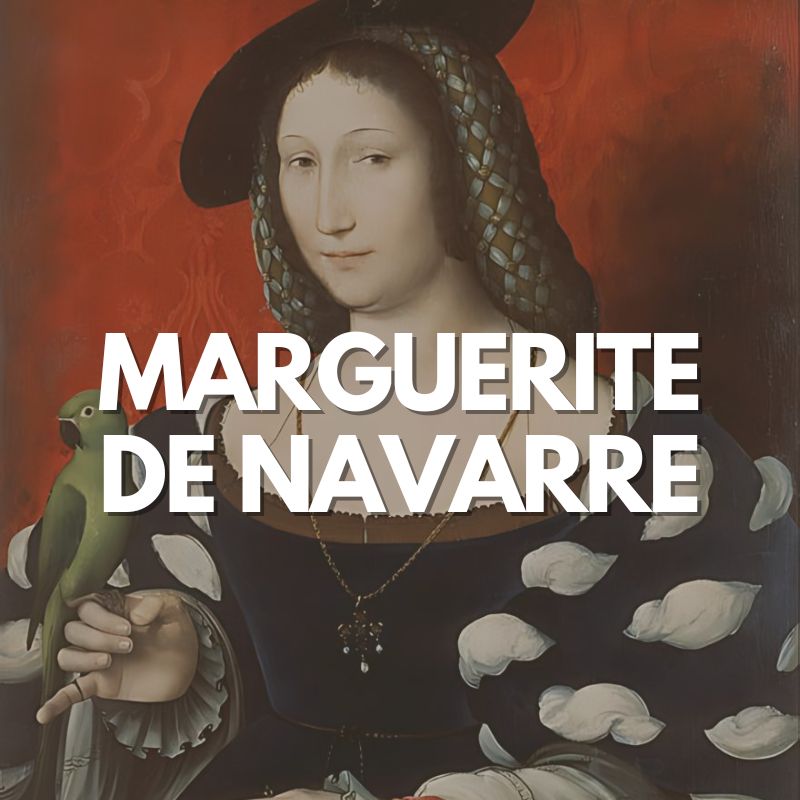
  • Marguerite de Navarre: Renaissance Writer, Reformer, and Trailblazer

    Marguerite de Navarre: Renaissance Writer, Reformer, and Trailblazer

    Marguerite de Navarre was a pivotal figure in the French Renaissance. As the sister of King Francis I and Queen of Navarre, Marguerite was not only a powerful woman in a male-dominated society but also a prolific writer and an advocate for religious reform.

    Discover how her early humanist education shaped her critical views on religion and society. We’ll explore her most famous work, the Heptameron, a collection of stories that offers deep insights into human relationships, gender dynamics, and class structures of the time.

    Learn about Marguerite’s complex relationship with the Catholic Church, her support of reformers, and her delicate balancing act between tradition and innovation. We’ll also discuss her potential influence on Anne Boleyn, highlighting the connections between these two influential women.

    Join us as we uncover Marguerite’s legacy—a blend of literary genius, political acumen, and unwavering commitment to intellectual and spiritual growth—that left an indelible mark on history.

    This is episode 253, and it is on  Marguerite of Navarre, who, of course is a remarkable figure of the French Renaissance,  who also had a huge impact on the Reformation and on Anne Boleyn. We are going to expand our horizons a little bit. I know it’s the Renaissance English  History Podcast, and you might think, well, why are you talking about someone who’s French? But of course, it’s all linked together, and Marguerite of  Navarre was a very influential woman in both England and France and the rest of Europe, so we will talk about her.

    Marguerite was a remarkable figure in the French  Renaissance. She was the sister of King Francis I. She was the Queen of Navarre through her marriage to Henry II of Navarre. She wielded considerable influence in both political and intellectual circles. Marguerite was not just a royal figure; she was a prolific writer, a patron of the arts, and an advocate for religious reform.

    Her most famous literary work, the Heptameron, remains a masterpiece of Renaissance literature, reflecting her keen understanding of human nature, morality, and society. Her position as a woman of power gave her unique access to Reformist ideas, particularly as the Reformation began to spread across Europe.

    She maintained a delicate balance between supporting reform while remaining within the Catholic fold and navigating the very dangerous waters of religious upheaval. Her influence extended beyond France, impacting figures like Anne Boleyn, who had spent time at the French court. In this episode, we will explore Marguerite’s contributions to literature, her role in religious reform, and her legacy as a powerful woman in a male-dominated world. 

    Early Life

    Marguerite de Navarre was born in 1492  to Charles, Count of Angoulême, and Louise of Savoy,  just two years before her brother, the future Francis I would ascend to the French throne. From an early age, Marguerite was immersed in an environment that emphasized education and intellect. Her mother, Louise, ensured that both her children were well-educated, which was particularly rare for a girl in that era.

    Marguerite received the same humanist education as her brother, which included reading classical works by Plato and Aristotle, as well as more contemporary Italian writers like Dante and Boccaccio. The focus of this education was on intellectual development, critical thinking, and exposure to diverse ideas from across Europe.

    The family’s intellectual center was in Cognac, where Marguerite had access to an extensive library.  This library became a foundation for her humanist education, which fostered her interest in literature, philosophy, and religion. The Renaissance’s emphasis on individual thought and return to classical sources deeply influenced Marguerite’s worldview. Her exposure to these works, combined with her experiences at court, shaped her critical views of the Catholic Church, setting the stage for her later involvement in religious reform movements.

    So, one of the things about the family’s center in Cognac was, it was heavily influenced by the Italian Renaissance.  This atmosphere undoubtedly shaped Marguerite’s intellectual curiosity and her later contributions to literature and religion. She and her brother Francis were inseparable. They shared tutors, and they fostered a love of learning that would define much of their later lives.

    Her Marriages

    At the age of 17, in 1509, Marguerite was married to Charles IV, Duke of Alençon. Louis XII arranged the marriage for political reasons. It was not a very happy union. Charles was kind, but he was intellectually limited and very much ill-suited to Marguerite’s vibrant and inquisitive nature.  The marriage produced no children.

    In 1525, Charles died, and Marguerite’s position at court became even more significant. Her brother had ascended to the throne as Francis I in 1515, and Marguerite emerged as a key figure in the French court, where her salon became a gathering place for the most prominent intellectuals and reformers of the day.

    In 1527, Marguerite remarried, this time to Henry  II of Navarre. This marriage was more fruitful. It produced two children, although only one survived, Jeanne d’Albret, born in 1528. Jeanne would go on to become the Queen of Navarre and the mother of Henry IV of France, 1st Bourbon king, establishing Marguerite as the ancestress of the Bourbon dynasty.

    Marguerite’s second marriage also brought her a significant role in the politics of Navarre where she balanced her duties as queen with her ongoing influence at the French court. So Navarre, at that time, was actually a separate country. It was on the Iberian Peninsula, bordered by Aragon. And it’s that part that now is sort of part of Basque Country in northern  Spain, which is a beautiful, beautiful place.

    When we lived in Spain, one of my favorite vacations, we went up to Basque Country a couple of times. It’s gorgeous. I love it. I  would totally live there. It’s amazing. Anyway, Navarre was in that bit right at the corner where the Iberian Peninsula kind of goes off. There’s like a 90-degree angle. Spain juts out and Navarre was right in that corner.

    It actually went back and forth between being annexed by Spain. The French portion, which was on the Northern slope of the Pyrenees, was a separate kingdom until 1589, when it was eventually incorporated into France. But that is a little side story.

    A Diplomat and Political Advisor

    The point is, that Marguerite was the Queen of Navarre, and she had to balance that role with also being involved in the French court. One of her most remarkable achievements that she’s very well known for came in 1525, when her brother, Francis, died, Marguerite was imprisoned in Spain after being captured at the Battle of Pavia.

    Marguerite rode through the harsh winter conditions in the Pyrenees to negotiate for her brother’s release,  which showed she had a lot of political savvy. She was very determined. She was actually unable to secure his immediate freedom, but she managed to nurse him back to health.

    He had been very ill, and she had prevented a devastating treaty from being signed with the Holy Roman Emperor, Charles V. This episode solidified her reputation as both a diplomat and a trusted political advisor. But personally, what she is well known for is her literary output.

    The Heptameron

    She has actually been called the first modern woman by Samuel Putnam who was a scholar and translator of Romance languages, and she was just a titan in the French  Renaissance, as a patron and as a writer herself. Her legacy is most strongly tied to her work, the Heptameron, which is a collection of 72 short stories framed within a narrative structure similar to Boccaccio’s The Decameron.

    In the Heptameron, a group of aristocrats, five men, and five women, find themselves stranded in a monastery in the  Pyrenees after floods and natural disasters prevent them from traveling. To pass the time, they tell stories that explore a wide range of themes, including love and betrayal, justice and morality.

    While Marguerite adopted Boccaccio’s structural framework, her stories delve deeper into complex human relationships, especially the tensions between men and women and between different social classes. One of the most striking aspects of the Heptameron is its exploration of gender and gender dynamics.

    Several of the stories depict the struggle between male and female perspectives, often showing women as victims of male dominance or deceit. While others present women as resourceful and virtuous, capable of navigating a world that favors men. The discussions that follow each story, where the aristocrats debate the lessons and morals, reveal Marguerite’s nuanced views on gender, virtue, and power.

    These discussions also reflect the class divisions of time as the noble storytellers grapple with issues of justice and fairness throughout the world, across different social strata. Marguerite’s work stands out in the French Renaissance for its combination of entertainment, moral inquiry, and subtle social critique.

    While the stories are often bawdy,  humorous, or filled with dramatic tension, they also serve as a reflection on the human condition, the roles people play in society, and the moral consequences of their actions.

    Unlike many works of the time, the Heptameron doesn’t offer easy moral conclusions.  Instead, it challenges readers to engage with the complexity of the situations, leaving many of the discussions open-ended. This complexity is one reason why the  Heptameron has endured as a literary jewel of the Renaissance.

    Other Literary Contributions

    Beyond the Heptameron, Marguerite’s literary contribution extended to devotional works, poetry, and translations.  Her early translations included commentary by Martin Luther on the Lord’s Prayer, reflecting her interest in religious reform.

    This would have been a really big deal, translating anything related to Martin Luther in France, which was extremely Catholic. But her devotional writings often centered on personal spirituality and the search for divine grace, making her a rare voice in a field dominated by  men.

    She wrote The Mirror of the Sinful Soul, which is a deeply introspective work that explores the relationship between the soul and God. And it later influenced figures like Elizabeth I who translated it into English. Marguerite’s ability to use literature as both a form of personal expression and a vehicle for social commentary was remarkable for a woman in her time.

    While most women of her status focused on traditional roles, Marguerite used her pen to explore the broader themes of power, faith, and human interaction. Her works were not only a reflection of her own religious and philosophical beliefs, but also a critique of the society that she inhabited. Through her writing, Marguerite carved out a space of authority in a male-dominated world,  establishing herself as one of the most important female intellectuals of her time.

    Her Religious Position and Influence

    Just like her literary career was, her role in religious life was complex and multifaceted. While she remained loyal to the Catholic Church, nominally at least, her interest in reform and association with movements that sought to address corruption within the church placed her in a bit of a precarious position.

    Marguerite’s religious views reflected the broader intellectual trends of Renaissance humanism, which encouraged a return to classical sources and a more direct engagement with the Bible. Like many humanists of her time, Marguerite believed in the need to purify and reform the church, though she stopped short of advocating for a full break with  Catholicism as many Protestants did.

    One of Marguerite’s earliest influences would have been the growing discontent with the corruption in the Catholic Church. By the early 16th century, there was widespread dissatisfaction with the moral and financial abuses of the clergy that had already begun to take root across Europe.

    Marguerite, educated in humanist thought, well read in both classical and contemporary theological texts, was deeply affected by these criticisms. Her writings often reflect her concerns about the ethical decay within the church and her desire for a return to spiritual purity.

    She was particularly interested in the movement to return to the original teachings of the Gospels, an idea that resonated with reformers across Europe. Now she was also associated with a group called the evangelicals. They were a group in France that sought to reform the church from within. And that further complicated her religious position.

    The evangelicals were sometimes described as Proto-Protestants. They were focused on the  Bible as the central authority in religious life, promoting the religious study of scripture and move away from the excesses of the Catholic hierarchy.

    While the evangelicals shared some beliefs with the Protestant Reformation, particularly regarding the importance of scripture and the need for reform, they did not advocate for a full schism with the Catholic Church.

    Marguerite was seen as a key figure in this movement, providing protection and patronage to reformers who might otherwise have faced persecution. Marguerite’s position at court allowed her to shield reformers from the harsh penalties that often accompanied criticism of the church.

    She used this influence to protect intellectuals, writers, and theologians who were challenging the status quo. Her brother Francis, though a devout Catholic, did give Marguerite some latitude to support these thinkers, at least in the earlier stages of the Reformation.

    But then, as tensions between the Catholics and the Protestants escalated, Marguerite found herself in an increasingly precarious position,  attempting to balance her desire for reform with her loyalty to the Catholic faith and her royal duties. One of Marguerite’s most significant acts of defiance was her translation of Martin  Luther’s Commentary on the Lord’s Prayer.

    Luther was by that time excommunicated by the Catholic Church, and had become a leading figure in the Protestant Reformation.  Translating his work into French was a bold move, one that signaled Marguerite’s deep engagement with Reformist ideas, while also testing the boundaries of acceptable dissent within Catholic France.

    Though Marguerite never publicly renounced the  Catholic Church, her translation of Luther’s work was seen as a provocative act, aligning her with the more radical reformers while allowing her to maintain a degree of plausible deniability. The significance of Marguerite’s religious position was in her ability to navigate the fine line between reform and tradition.

    She was not a Protestant, but neither was she a staunch defender of Catholic orthodoxy. Her writings, especially her devotional works,  reveal a deep personal faith and a commitment to religious reform. Yet she remained  within the fold of the Catholic Church,  

    hoping to see it reformed from within rather than destroyed. This balancing act became increasingly difficult as the Reformation progressed and the lines between Catholicism and Protestantism hardened. 

    Margaret’s religious stance not only shaped her personal life, but also her influence at court among the intellectual elite, her patronage of reformers, her writings on spiritual matters, and her protection of those advocating for change made her a key figure in the religious debates of her time.

    She was a bridge between the conservative forces of Catholicism and the burgeoning reformist movement, using her position of power to foster dialogue and protect those who might otherwise have been silenced.

    French Court and Anne Boleyn

    Marguerite’s ability to maintain her religious independence while continuing to influence court politics and intellectual life, shows her skill as a diplomat and a thinker in an age of deep religious upheaval.

    A very famous English queen, Anne Boleyn,  spent a significant portion of her early life in France, first as lady-in-waiting to Queen Claude, and then at the court of Francis I later. It was during this time that she would have encountered the intellectual and religious culture of the French Renaissance, which was shaped by figures like Marguerite of Navarre.

    Marguerite’s influence on the French court,  particularly through her support of humanist ideas and reform, had an impact on the young Anne Boleyn. Now there’s no direct evidence of a personal relationship between the two women, and Anne was just there as a lady-in-waiting, who knows what the relationship would have been.

    But it is clear that Anne’s exposure to Marguerite’s intellectual circle would have left a lasting impression. Both Marguerite and Anne were advocates for religious reform, but they operated in very different contexts and approached the issue in different ways.

    Marguerite remained within the Catholic Church, pushing for internal reform, while avoiding a full break with the papacy. Her association with the evangelicals and her support of the Bible translation reflect her desire to see a more spiritually authentic church, though she did not cross the line into Protestantism.

    In contrast, Anne Boleyn’s influence on Henry VIII and the English Reformation led to a complete schism with Rome and the establishment of the Church of England. While  Marguerite hoped to change the Church from within, Anne was instrumental in England’s dramatic and irreversible break with Catholicism.

    The connections between the two women through their court experience,  shared intellectual circles, and support for reform, reflect this broader European movement of religious and intellectual change. Whatever their relationship was, it’s clear that Marguerite did have a very big  impact on Anne. Anne had written to Marguerite in 1535 saying that her greatest wish next to having a son, was “to see you again”. So Anne very much looked up to Marguerite.

    Now one other fun fact on the overlap between Anne and Marguerite is that in Shakespeare‘s play Henry VIII in Act 3 Scene  2, Shakespeare actually writes that it was Marguerite that Cardinal Wolsey had been planning on having Henry marry while he was trying to break with Katherine of Aragon.

    So who knows how true Shakespeare’s story is, right? I don’t know that we want to take that completely, but it seems like there were at least rumors or the idea that if Henry was going to break with Katherine of Aragon, he might marry Marguerite. Of course, he didn’t. Marguerite became a widow in 1525. and didn’t get remarried until a couple of years later.

    She would have been single and available during much of this time. So who knows what the thought process was, but of course, by just a couple of years later, she had remarried. So that idea was gone, but it’s interesting to think that there was some thought that maybe Henry would have married Marguerite when he would marry Anne Boleyn instead, of course.

    Her Brother Francis I

    In addition to her literary and religious contributions. Marguerite of Navarre played a significant political role alongside her brother  Francis. She was a trusted advisor and diplomat. She often stepped into negotiations during moments of crisis.

    We talked about her political acumen when she was negotiating for her brother, Francis’ release from his prison in Madrid, and also then making sure that he did not sign a disastrous treaty with Spain. But her political influence extended beyond her relationship with her brother.

    As the wife of Henry II, King of Navarre, she found herself navigating the complex political landscape between France and Navarre. Her husband had lost a portion of his kingdom to Spain, like  I said in 1515, when it was annexed.

    And her diplomatic skills were essential in managing the tension between Navarre’s desire for autonomy and Francis’s attempt to consolidate power. Her loyalty to her brother sometimes conflicted with her obligations to her husband, yet she managed to maintain this delicate balance between the competing interests.

    Conclusion

    Marguerite’s legacy is one of profound influence on French literature, religious reform, and Renaissance thought. The Heptameron is a literary masterpiece. I urge you to check it out and read it. It offers a window into the complexities of human relationships, morality, and class dynamics.

    Her role as a supporter of religious reform, never fully aligning with Protestantism, positioned her as a pivotal figure in the broader European Reformation, and debate over whether she was a Catholic loyalist or Protestant sympathizer continues to this day, but her advocacy for change within the church is undeniable.

    Her influence extended to future generations,  particularly through her daughter, Jeanne, who became a prominent Protestant leader and played a key role in the French wars of religion.

    Today, Marguerite is recognized as a powerful intellectual, political, and religious figure in Renaissance history and her contributions to literature and her complex role in the religious and political landscape of the 16th century solidified her place as one of the most influential women of her time. So that is Marguerite of Navarre in a nutshell.

  • 10 Surprising Tudor Facts That Will Change How You See History

    10 Surprising Tudor Facts That Will Change How You See History

    Tudor England was filled with dirt, no one bathed, and everyone got sick and died when they were 28 from easily curable diseases, right? Also, the diet was terrible, and people lost all their teeth. And Henry VIII was a brainless tyrant. Not so fast, my friend. Tudor England was a vibrant place that was much more modern, in many ways, than we might expect. Read on for ten surprising Tudor facts that might change how you see the 16th century!

    1. Elizabeth I Was Nearly Killed by Smallpox

    • Fact: In 1562, Elizabeth I contracted smallpox and came close to death. Her recovery was a turning point in her reign, and she emerged even more resilient, though it left her with scars she would cover with heavy makeup. Check out this Renaissance English History Podcast episode on Tudor Cosmetics and Makeup!

    2. Henry VIII Wrote a Bestselling Book

    • Fact: Before his infamous reign, Henry VIII was known as a scholarly king. In 1521, he wrote “Defence of the Seven Sacraments,” which defended the Catholic Church against Martin Luther and earned him the title “Defender of the Faith” from the Pope. He also wrote music, and his hit song Pastime with Good Company was the Song of the Summer in 1515!
      Check out all our Reformation Month episodes.

    3. The Tudor Court Was Obsessed with Astrology

    • Fact: Astrology played a significant role in Tudor life, with court astrologers advising on everything from military campaigns to marriage dates. Even Elizabeth I consulted astrologers regularly. Elizabeth’s court astrologer John Dee even used the stars to decide her coronation date! Check out this episode on the Music of the Spheres and how astrology influenced music and healing.

    4. The Tudor Diet Was Surprisingly Healthy

    • Fact: Despite popular images of Henry VIII feasting on meat, the average Tudor diet was rich in vegetables, fruits, and grains. Meat was a luxury, and most people ate far more plant-based foods. In fact, the idea that people had bad teeth in the Tudor period is also a myth – since most people couldn’t afford sugar, dental records show that most people had pretty good dental hygiene! Check out this Interview with Brigitte Webster on Tudor food.
    Tudor Facts: Tudor food

    5. Anne Boleyn Had Extra Fingers – or Did She?

    • Fact: One of the most persistent myths about Anne Boleyn is that she had six fingers on one hand, a tale likely spread by her enemies to paint her as a witch. There’s no contemporary evidence to support this claim. Check out this YouTube video on Anne Boley’s Six Fingers myth to learn more about where it came from and how it spread.

    6. Tudor Medicine Was More Advanced Than You Think

    • Fact: While Tudor medicine included some bizarre practices, they also used herbal remedies and surgical techniques that were surprisingly effective. They even understood the importance of cleanliness in preventing infections. Renaissance English History Podcast interview with Seamus O’Calleigh on Tudor medicine.

    7. Mary I Was Almost a Queen of France

    • Fact: Before becoming Queen of England, Mary I was betrothed to the future French king, Francis I. The engagement was broken off, but had it gone ahead, Mary might have become Queen of France instead of England. Of course, she was only two when it happened, so she probably doesn’t remember it. Check out this Renaissance English History Podcast interview with Melita Thomas on Mary I.

    8. Tudor Hygiene Wasn’t as Bad as You Think

    • Fact: While Tudors didn’t bathe as frequently as we do today, they were still concerned with hygiene. They washed their hands before meals and used perfumes and scented water to stay fresh. Renaissance English History Podcast episode on Taking the Waters in Tudor England.
    Tudor fact: The Tudors bathed

    9. The Tower of London Was a Zoo

    • Fact: The Tower of London wasn’t just a prison; it also housed a menagerie of exotic animals, including lions, elephants, and even a polar bear, which was a gift from the King of Norway.
      Check out this Renaissance English History Podcast episode on the Tower Menagerie.
    Tudor Facts: Tower Menagerie


    10. Tudor England Was Multicultural

    • Fact: Contrary to popular belief, Tudor England had a diverse population, including Africans, Jews, and people from the Middle East and Europe. They lived and worked in cities like London, contributing to the cultural fabric of the time. Check out this podcast episode on the experience of black people in Tudor England.

    What’s your biggest takeaway on how Tudor England might be different than we had always been led to believe?

  • Treasures of the Tudor Era: A Glimpse into Royal Elegance

    Treasures of the Tudor Era: A Glimpse into Royal Elegance

    Let’s dive deep into the treasures of the Tudor era, the opulence of its court, and explore a curated collection of exquisite items that once graced the halls of Henry VIII, Anne Boleyn, and Elizabeth I. From intricate rings to priceless pearls, each artifact tells a tale of romance, power, and grandeur.

    So today we are talking about items that belong to the Tudors. We actually have a lot of items still in museums that have come down through the ages that we can trace the provenance back to the Tudors, and we’re going to look at a couple of them today.

    Lock of Hair

    The first item we have is a lock of hair belonging to Katherine Parr. Supposedly, this lock of hair was taken the night she died on September 5, 1548. It was sold by Bonham’s London in January 2008 for 2,160 to a Charles Hudson.

    Lock of Hair Katherine Parr Treasure of Tudor

    The lock is mounted in an oval frame with an ink inscribed paper that states “Hair of Queen Catherine Parr, last consort of Henry, the night she dyed September 5th 1548 was in the Chapel of Sudeley Castle, near Winchcombe.”


    Mary Tudor Pearl

    There are actually three pearls that are very famous and look very similar that are often confused. This is the Mary Tudor Pearl, not the Pelegrina or La Peregrina pearl, two separate ones. La Pelegrina and the other La Peregrina, and then the Mary Tudor pearl.

    Mary Tudor Pearl Treasure of Tudor

    This one is featured in at least three portraits of Mary I. It’s about 64 and a half carats. It’s from 1526. The Tudor pearl disappeared in the late 16th century, and then a similar pearl was sold at auction in 2004 by the London jewelers Symbolic and Chase and was called the Pearl of Kuwait.

    The owners have made claims that it’s actually the Tudor pearl because it’s very similar in shape and size, and this pearl is currently on loan to the Smithsonian. The Tudor pearl was found around 1526 was given to Isabella of Portugal. When Isabella died in 1539, she left it to her daughter, Juana of Austria. It was then sent to Mary as part of the negotiations for her marriage to Juana’s brother, Philip of Spain, and is seen in contemporary portraits suspended from a circular golden brooch.

    Here’s a funny little fun fact about this pearl and Mary and the other pearls that they’re often confused with. So a portrait of Mary I from 1554 by Hans Eworth shows the Tudor pearl, and that was actually owned by Elizabeth Taylor and Richard Burton. Now they mistakenly believed that it depicted La Peregrina pearl. Burton had recently given Elizabeth Taylor La Peregrina pearl for Valentine’s Day.

    Then the Burtons discovered that the British National Portrait Gallery didn’t actually have an original painting of Mary, so they donated their portrait of Mary with the Tudor pearl to the National Portrait Gallery.


    Boleyn Cup


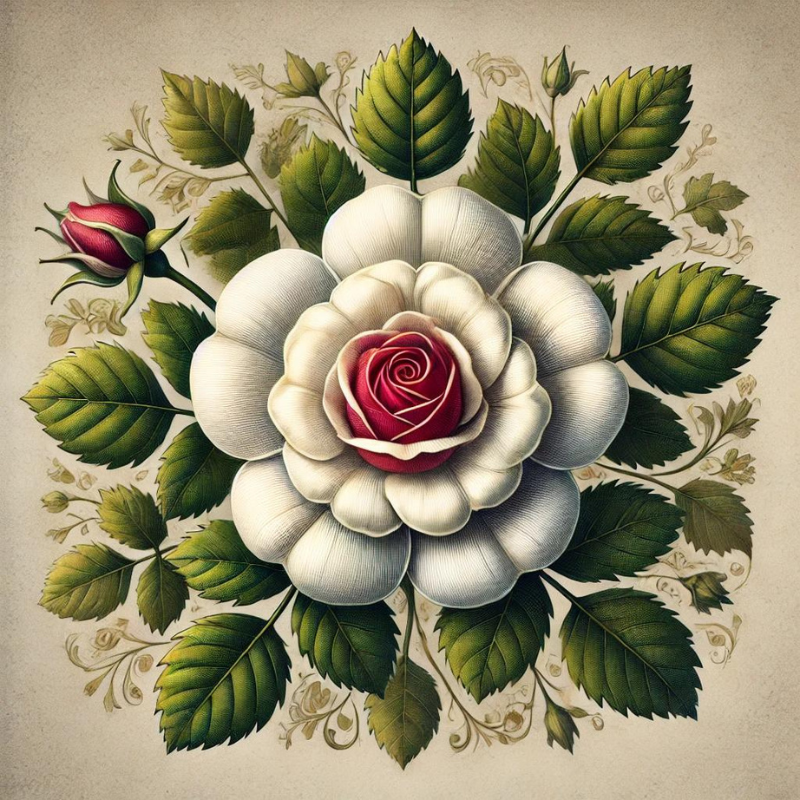
    Next up, the Boleyn Cup, a silver gilt masterpiece from 1535. It shows Anne Boleyn’s crest, a crowned falcon, atop of a tree stump with red and white flowers. It was once a possession of Anne, which then found its way to her daughter, Elizabeth. And then, as a thank-you gift, Elizabeth actually gave it to her physician, who then donated it to St. John the Baptist Parish Church in Cirencester, Gloucestershire, where it is still on display today.

    Anne Boleyn Cup Treasure of Tudor

    Chequers Ring

    Next up, the very famous Chequers Ring, which was once worn by Elizabeth I, a rare artifact that survives from her actual inventory. Made of mother-of-pearl set with gold and studded with rubies, the ring showcases an intricately designed locket with Two portraits inside – Elizabeth and another woman, which is historically thought to be Anne Boleyn, Elizabeth’s mother.

    Chequers Ring Elizabeth I Treasure of Tudor


    Supposedly, Robert Carey removed the ring from Elizabeth I’s finger on her death and presented it to James I. Over time, it eventually reached Arthur Lee, who gifted it alongside his Chequers country house to the nation, and now it’s a treasured artifact at Chequers,  publicly displayed for the first time in 2003 at the National Maritime Museum.


    Anne Boleyn Wall Clock

    Next up, this gilt bronze wall clock, adorned with the royal coat-of-arms and intricate engravings, features a unique birdcage style lantern mechanism. Its historical authenticity is debated, with evidence suggesting that some of the parts were assembled over time, and allegedly Henry VIII gave this clock to Anne Boleyn in 1532 on their wedding day. Later, it became part of Horace Walpole’s collection at Strawberry Hill until 1842 when Queen Victoria bought it at an auction.

    Anne Boleyn wedding Wall Clock Treasure of Tudor

    Coleridge Collar

    Next, this enigmatic Coleridge collar made of gold has a provenance shrouded in controversy. It’s believed to be a 16th-century chain of office given by Henry VIII to Sir Edward Montagu in 1546 when he became Lord Chief Justice of the Common Pleas. Then again, it could also be a 17th-century replica.

    William Coleridge, a former owner, sold it in 2006 as a copy for 35,000 pounds based on advice from Sotheby’s, yet in a twist, it was later auctioned by Christie’s in 2008 as an original for over 300, 000. A subsequent lawsuit by Lord Coleridge against Sotheby’s in 2012 resulted in his loss and considerable legal expenses. So who knows?

    Coleridge Collar Henry VIII Treasure of Tudor

    Pistol-shaped Whistle Pendant

    Finally, this pistol-shaped whistle pendant, intricately engraved with foliage, also houses some cosmetic tools. That spoon is actually an earwax spoon, kind of gross, but there you go. So Henry VIII used to have trinkets like this, trinkets I say, they’re golden, right? But he would have them sewn into his costumes for masks, and many of these he would just kind of hand out as he was going around during the mass. He’d have them sewn in.

    Pistol-shaped Whistle Pendant henry VIII Treasure of Tudor


    Apparently in 1510, a goldsmith was paid 266 pounds to make new trinkets, including small hearts and roses in gold, because all the other charms that had been in his other costumes had been stolen or given away by Henry. And this particular one was apparently, legend says, Henry VIII’s first gift to Anne Boleyn.

    Can you imagine just going around a party and somebody hands you this golden trinket, like a Pandora charm or something like that, bigger than that, but, you know, that would be really cool.

  • The Relationship between Anne Boleyn and Thomas Wolsey

    The Relationship between Anne Boleyn and Thomas Wolsey

    In today’s YouTube video (are you subscribed to me yet? If not, why not?!) we talk about the relationship between Anne Boleyn and Thomas Wolsey.

    Dig deeper in the video:


    And here’s a Rough Transcript of the video looking at the relationship between Anne Boleyn and Cardinal Wolsey:

    [00:00:00] Hi, welcome to the YouTube channel
    for Renaissance English History podcast.

    I have my helper today.

    I’m Hannah.

    She’s my mom.

    I’m her mom.

    And what’s special about today?

    Today’s my birthday.

    Hannah’s perfect.

    And I’m Hannah’s starting to, but currently
    right now, when we are making this video,

    you are probably not watching it right now
    because, I mean, it’s not even out now, but

    right now, mom would still have been an agony.

    No epidural, all natural.

    I was so silly.

    I popped out 20, 25 hours.

    20 hours.

    I’m gonna pop out.

    What time is it now?

    Okay, this is getting way too personal.

    So Hannah, what are we talking about today?

    Let me tell you what we’re talking about.

    Let’s pull up these notes.

    I don’t know what we’re talking about today,
    mom.

    We are talking about the relationship with
    Ian.

    Do you remember who she is?

    She’s right.

    Do you know which one she is?[00:01:00]

    My cheat sheet.

    I was gonna say the third, but you just told
    me that she has the second.

    Yeah, she’s the one that Henry left.

    Yeah.

    Catherine ve gone for.

    So she we’re gonna talk about her relationship
    with Cardinal Woolsey.

    Is that, is she a bird?

    Is she a cardinal?

    No, but you know why they called them that?

    ’cause they had these cardinals hats that
    were red and they wore these red outfits.

    I mean, I think that has to do with it.

    Somebody’s, here’s probably gonna leave me
    a comment and tell me that’s wrong.

    But as far as I know, that’s what it comes
    from.

    He was a religious uh, advisor, but he was
    also Henry’s lord chancellor.

    He was kind of Henry’s right hand man.

    Okay.

    Like Hamilton was Washington’s right hand
    man.

    Cool.

    Real quick before you get into it, yeah.

    Mm-hmm.

    I got this necklace for my birthday and it’s
    in Opal and I’m gonna go watch TV now.

    Okay.

    Well wait, don’t you wanna have me do, if
    you’re new here, very special, warm.

    Welcome to you right there.

    Yeah.

    I’m your host, Heather.

    This is.

    Tesco, and I’ve been podcasting on Tudor,
    England [00:02:00] since 2009 before you were

    even born child, and that was four years I
    was born.

    It was, this is the channel where I put all
    of my episodes from my theory podcasts, as

    well as loads of extra content.

    Like this video right here.

    And what should they do if they haven’t already?

    Subscribe and smash that like button.

    All right, go.

    Happy birthday.

    Bye.

    All right, so I’m gonna record for a couple
    minutes.

    Okay.

    Before we get started, some of you know that
    I have books.

    I make books.

    I publish books, and this is one of the first
    ones I wrote, sideways and Backwards, A Journey

    Time Travel and Self-Discovery.

    Um, and it’s by me.

    I published it in 2016.

    Anyway, I’m giving out five copies of this
    to subscribers of this channel.

    So if you are not subscribed to this channel
    and you would like a, I’m gonna sign it too,

    I’ll sign it.

    You would like a signed copy of my book.

    Um, it’s [00:03:00] about, I’ll read you the
    back.

    Natasha Delling Court.

    The editor in chief of a large publishing
    company wakes up in the morning after Halloween

    with a massive hangover.

    She also has a huge problem and a compromising
    photo of her from the night before it went

    viral.

    Advised by her company PR to get out of London
    and turn off her phone.

    She takes the train to Cambridge for a weekend
    of self-imposed quiet reflection, determined

    to figure out how her life has gone so sideways
    and how she can start fresh.

    She makes an afternoon pilgrimage to even
    song service at King’s College, an ancient

    chapel in the heart of Cambridge.

    Then things start to get strange.

    Really strange.

    Feeling moved by the music and surroundings.

    She closes her eyes in quiet meditation, and
    then the world gets dark.

    She wakes up in the same place, but a very,
    very different dog.

    So that is our friend Natasha.

    She, uh, goes back in time.

    It’s like a time slip sort of look.

    So I wouldn’t call it, it’s not historical
    fiction, it’s more like yeah, time slip.

    So anyway, if you would like a signed copy,
    just make sure you’re [00:04:00] subscribed

    and at the end of the, at the end of the week,
    Next Monday, August 14th, I’m gonna choose

    five random subscribers and contact them and
    arrange to send them copies of my book.

    All right, cool.

    Let’s get into it.

    In the vibrant tapestry of Tudor history,
    few relationships have influenced England’s

    trajectory as profoundly as the intriguing
    interplay between Ann Belin and Cardinal Thomas

    Woolsey.

    And the captivating lady and waiting who would
    become the second wife of Henry VIII and Woolie,

    the powerful prelate who dominated England’s
    political and religious landscape.

    They were pivotal figures in one of history’s
    most dramatic tales.

    So in this video, we are going to journey
    through the opulent halls of the Tudor Court,

    where ambition, desire, and fate intertwine
    setting the stage for monumental change.

    So let’s start with a background on Thomas
    Woolsey.

    His story [00:05:00] is one of a meteoric
    rise to power from humble beginnings to the

    echelons of England’s elite.

    Born in Ipswich to a butcher and his wife
    Woolsey’s intellect and ambition propelled

    him far beyond the confines of his modest
    upbringing.

    He was educated Oxford.

    He was lauded as a prodigious scholar, earning
    the nickname the Boy Bachelor for his academic

    achievements at the tender age of just 15
    years old.

    But it was in the realm of politics and church
    affairs where Woolsey truly made his mark.

    Henry VIII recognized his talent setting Woolsey
    on a path of increasing prominence.

    By the time young King Henry VIII ascended
    the throne, Woolsey had become an indispensable

    asset.

    Their partnership was founded on mutual respect
    and trust while Henry indulged in the pleasures

    of kingship.

    Woolsey managed the intricacies of governance.

    In essence, he was England’s defacto ruler.

    His positions were manifold.

    He was [00:06:00] the Archbishop of York.

    He was the Lord Chancellor of England, and
    perhaps most significantly he was the papal

    Legate, a direct representative of the Pope
    in Rome.

    This last title granted him unparalleled religious
    authority in second only to the Pope himself.

    Yet with all of his power, he was not immune
    to the shifting sands of court politics.

    Or the whims of a king in search of a male
    heir.

    As the 1520s dawned, a new figure began to
    cast a long shadow over the English court,

    and that would be Anne Bein. Little did Woolsey
    know that his fate and Anne’s ambitions would

    soon become linked.

    Lin’s returned to the court from France in
    the 1520s and the early 1520s was marked by

    grace, intelligence and a distinct French
    flare, a testament to her time spent in the

    courts of Burgundy, the Netherlands, and of
    course France.

    Her European sojourn had shaped her into a
    sophisticated and alluring presence, [00:07:00]

    captivating the attentions of many, including
    a young nobleman named Henry Percy.

    Their budding relationship filled with the
    promise of love was abruptly cut short.

    The general consensus at court was that Woolley
    had played a significant role in ending their

    courtship.

    Cavendish said that Henry himself had ordered,
    it ended because he already was starting to

    feel feelings for Anne.

    Um, Percy already had marriage plans, so you
    know, there was a, a couple of things that

    wasn’t just that Woolsey didn’t like Anne.

    Uh, Anne blamed him for that definitely.

    And her ire with Woolsey began in earnest
    with this intervention.

    She felt wronged her personal life, manipulated
    for political reasons, yet as one door closed,

    another opened, Henry VIII was already getting
    restless in his marriage to Catherine Aragon,

    due to many things, including her inability
    to produce a male air, and he became increasingly

    [00:08:00] enamored with Anne.

    Here Anne, of course, demonstrated her astuteness.

    Unlike her sister, she refused to be a mere
    mistress, subtly asserting her worth and stoking

    the king’s desire even further, as their relationship
    deepened, the pressing matter of Henry’s annulment

    from Catherine became the court’s primary
    preoccupation.

    For Henry the annulment was not just a matter
    of the heart, but also of dynasty.

    His desperation for a male heir coupled with
    his infatuation for Anne, pushed the great

    matter to the forefront of England’s political
    agenda.

    And as the king’s most trusted advisor, Woolsey
    was entrusted with this sensitive task.

    Given Woolsey’s dual role as both the king’s
    chief minister and the Papal Legate, Henry

    assumed that the annulment would be a relatively
    straightforward affair.

    However the process proved anything but simple.

    The Pope was under significant pressure from
    the Holy Roman emperor, Charles the V, who

    was of course Katherine’s nephew and [00:09:00]
    was reluctant to annul the marriage.

    Additionally, the sack of Rome in 1527 by
    Charles’s troops further complicated matters

    as the Pope was virtually a prisoner and couldn’t
    make independent decisions.

    The months turned into years.

    Ann’s patience were thin.

    She had already experienced Woolsey’s interference
    in her relationship with Percy.

    Now she perceived his inability to secure
    the annulment as yet another betrayal.

    While Woolsey genuinely tried to navigate
    the complex web of European politics, his

    efforts were continually thwarted.

    Anne’s growing influence over Henry, combined
    with Woolsey’s perceived failures.

    Set the stage for the inevitable clash.

    Their intertwined destinies would play a decisive
    role in the unfolding drama of the Tudor Court.

    The woman once seen as an unsuitable match
    for Henry Percy was now at the heart of English.

    Political life wielding influenced.

    Few could have predicted Lin’s growing presence
    in Henry’s life had [00:10:00] ramifications

    beyond their intimate relationship.

    It began to permeate the very politics of
    court.

    Anne’s animosity towards Woolsey was of course
    multifaceted.

    She was still upset with him about messing
    up with her romance with Henry Percy, and

    you know, as the annulment dragged on, she
    became ever more convinced that Woolsey was

    actually acting against her.

    She wasn’t alone in her mistrust.

    Court gossip and whisperings of Woolsey’s
    other political adversaries found a willing

    audience in her.

    Together, they painted a portrait of Woolsey
    as a self-serving Prelate, more interested

    in his own power than in the king’s desires.

    Moreover, Ian began introducing Henry to reformist
    religious ideas, subtly challenging Woolsey’s

    staunch Catholic beliefs, the religious divide
    between them further strained their relationship

    with Anne.

    Subtly suggesting that perhaps Woolsey’s loyalty
    to Rome was greater than his loyalty to the

    English crown.

    [00:11:00] By the late 1520s, his star was
    waning.

    His failure to secure the annulment was seen
    not just as a personal failure, but a diplomatic

    and political one as well.

    Henry’s frustrations with him were clear.

    And Anne, with her growing influence over
    the King was well positioned to exacerbate

    these tensions.

    Anne’s alliances within the court played a
    pivotal role.

    She fostered close ties with Woolsey’s political
    enemies, including the Duke of Norfolk and

    the Belin family’s own connections.

    Highlighting his luxurious lifestyle, which
    you know, didn’t seem like that of a prelate

    or a man of God.

    By 1529, the inevitable occurred Woolsey was
    dismissed from his position as Lord Chancellor

    replaced by Sir Thomas Moore, stripped of
    his properties and wealth.

    He was ordered to retire in York, but even
    in his reduced state, his enemies were not

    done.

    In 1530, he was arrested on charges of treason.

    He was supposedly writing letters to Catherine
    Aragon.

    Although he would never stand trial, [00:12:00]
    dying un route to London, Woolsey’s downfall

    was complete.

    Anne’s triumph was clear.

    The man who once stood in her way, both in
    matters of the heart and politics was gone,

    but the English court was a place of shifting
    alliances and tumultuous affairs as Woolsey’s

    Star set.

    Anne’s own fate was on the rise with the challenges
    and triumphs of her own awaiting.

    The intense interplay between Anne and Cardinal
    Woolsey had profound implications for England.

    Woolsey’s downfall not only highlighted the
    volatile nature of court politics, but also

    demonstrated the immense power of an individual,
    in this case, Anne, and the role she could

    have over the Monarch and the nation’s entire
    direction.

    With Woolsey out of the way, the path to Henry’s
    break from the Catholic church became more

    unobstructed and reformist beliefs.

    Her influence over Henry contributed to the
    eventual establishment of the Church of England.

    This monumental shift was not just about Henry’s
    desire for a male heir or his love for [00:13:00]

    Anne.

    It also stemmed from the political and religious
    tensions of the era with figures like Anne

    and Woolsey at the very heart.

    For Anne, her victory over Woolsey was bittersweet.

    She did become Queen of England and give birth
    to Elizabeth the first.

    Her time on the throne was fraught with challenges.

    Her inability to produce a male heir coupled
    with the court intrigues and the fickle nature

    of Henry’s affections would eventually lead
    to her own tragic end.

    The relationship between Anne and Thomas Woolsey
    is a microcosm of broader intrigues passions

    and political maneuverings in the Tudor era.

    Their personal feud reflects the larger struggles
    of the time from the quest for power to the

    religious upheavals that would shape England
    to forced centuries.

    In the annals of history, their names are
    forever intertwined.

    A reminder of a time when love, ambition,
    and destiny emerged in the halls of the Tudor

    Court.

    So thank you so much for watching.

    If you’ve made it to the end of this video
    and enjoyed it, I hope I earned a press of

    that [00:14:00] like button and a subscription
    to my channel where I put out content like

    this almost every day.

    Don’t forget to subscribe.

    So you’re entered into the contest to win
    one of my books, and thank you so, so much

    for watching.

    I just wanna remind you that you are special.

    You are awesome.

    You are deeply, deeply loved.

    Whatever you’re doing right now, you are important
    and I am so glad that you are here, not just

    because you watched my video.

    Thanks so much for watching.

    Have a fantastic day.

  • Tudor Minute May 12, 1536: Anne Boleyn’s co-defendants were tried

    Tudor Minute May 12, 1536: Anne Boleyn’s co-defendants were tried

    Today in 1536 Anne Boleyn’s downfall was picking up pace. Four men:  Sir Henry Norris, Henry VIII’s groom of the stool; Sir Francis Weston, a gentleman of the king’s privy chamber; William Brereton, a powerful man in North Wales and Cheshire, and Mark Smeaton, a court musician, were taken by barge from their prison at the Tower of London to Westminster Hall to stand trial for high treason. The men were tried separately from Anne Boleyn and George Boleyn, since Anne and George were members of the aristocracy, they were entitled to be tried in the court of the Lord High Steward of England by a jury of their peers.

    There was little chance that there would be anything other than a guilty verdict – the jury was stacked with religious conservatives who were also close to Cromwell.  Eustace Chapuys, the Imperial Ambassador, wrote: “The others were condemned upon presumption and certain indications, without valid proof or confession.” 

    That’s your Tudor Minute for today. Remember you can dive deeper into life in 16th century England through the Renaissance English History Podcast at englandcast.com.

    Suggested links: 
    Episode 076: Alison Weir on Anne Boleyn
    Autumn 2018 Tudor Summit: James Peacock on Anne Boleyn
    Spring 2018 Tudor Summit: Claire Ridgway on the Boleyns

  • Tudor Minute May 11, 1536: Coup against Anne Boleyn

    Tudor Minute May 11, 1536: Coup against Anne Boleyn

    Today in 1536 we have more movement in the coup against Anne Boleyn. The Grand Jury of Kent met. On the 10th they had met at Middlesex, so this was a similar meeting for Kent.

    They met in front of Sir John Baldwin (Chief Justice of the Common Pleas), Sir Walter Luke and five other Justices. They were to rule on the alleged crimes of the Queen and the arrested men for the events that were committed in Kent – specifically at Greenwich Palace and Eltham Palace.

    Here’s a sample:
    “Record of indictment and process before Baldewyn, Luke, and others, in co. Kent.

    The indictment found at Deptford, on Thursday, 11 May 28 Hen. VIII., is precisely similar in character to the Middlesex indictment, except as regards times and places; viz., that the Queen at Estgrenewyche [East Greenwich], 12 Nov. 25 Hen. VIII., and divers days before and since, allured one Hen. Noreys, late of Est Grenewyche, to violate her, whereby he did so on the 19 Nov., &c.; that on 22 Dec. 27 Hen. VIII., and divers other days, at Eltham, she allured Geo. Boleyn, lord Rocheford, &c., whereby he did so, 29 Dec., &c.; that on the 16 Nov. 25 Hen. VIII., and divers, &c., at Est Grenewyche, she allured one Will. Bryerton, late of Est Grenewyche, &c., whereby he did so, 27 Nov., &c.; that on the 6 June 26 Hen. VIII., &c., at Est Grenewyche, she allured Sir Fras. Weston, &c., whereby he did so, 20 June, &c.; that on the 13 May 26 Hen. VIII. &c., at Est Grenewyche, she allured Mark Smeton, &c., whereby he did so, 19 May 26 Hen. VIII.

    That’s your Tudor Minute for today. Remember you can dive deeper into life in 16th century England through the Renaissance English History Podcast at englandcast.com.

    Suggested links: 
    Autumn 2018 Tudor Summit: James Peacock on Anne Boleyn
    Episode 076: Alison Weir on Anne Boleyn
    Spring 2018 Tudor Summit: Claire Ridgway on the Boleyns

  • Tudor Minute April 27, 1536: The start of Anne Boleyn’s downfall

    Tudor Minute April 27, 1536: The start of Anne Boleyn’s downfall

    Today in 1536 things started heading downhill very quickly for Anne Boleyn. Archbishop Cranmer, and other clergy and nobles were summoned to London for a Parliament in June, for what most historians believe was going to be the question of Henry putting aside Anne Boleyn. Of course, Anne would already have been dead by that point, but it likely shows that no one knew at this point what exactly was going to happen with Anne – just that she needed to go.

    Also, on this day, John Stokesley, Bishop of London, was consulted for advice regarding whether the King could end his marriage to Anne Boleyn. Eustace Chapuys, the Imperial Ambassador, wrote to Charles V:

    “The brother of lord Montague told me yesterday at dinner that the day before the bishop of London had been asked if the King could abandon the said concubine, and he would not give any opinion to anyone but the King himself, and before doing so he would like to know the King’s own inclination, meaning to intimate that the King might leave the said concubine, but that, knowing his fickleness, he would not put himself in danger. The said Bishop was the principal cause and instrument of the first divorce, of which he heartily repents, and would still more gladly promote this, the said concubine and all her race are such abominable Lutherans. London, 29 April 1536.”

    That’s your Tudor Minute for today. Remember you can dive deeper into life in 16th-century England through the Renaissance English History Podcast at englandcast.com.

    Suggested links:
    Follow Anne’s downfall thru Watching the Tudors Podcast.
    Watching The Tudors: Season 2 Episode 8 – Lady in Waiting

    Episode 076: Alison Weir on Anne Boleyn