Lady Jane Grey

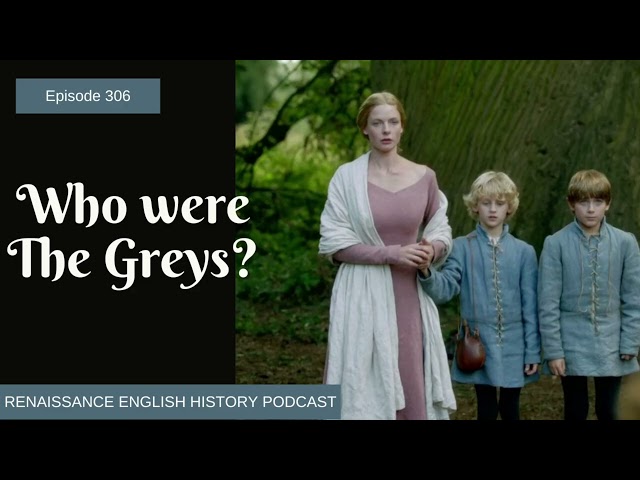
  • The Greys: From Elizabeth Woodville to Lady Jane Grey

    The Greys: From Elizabeth Woodville to Lady Jane Grey

    The Greys were one of the most intriguing families in English history, a dynasty that seemed to appear at every turning point from the Wars of the Roses to the Tudor court. They produced queens, rebels, soldiers, and statesmen—figures who stood dangerously close to the English throne. Elizabeth Woodville, a Grey by birth, became a queen; Lady Jane Grey briefly ruled as the “Nine Days’ Queen”; and her sisters Katherine and Mary found their own lives entangled in scandal, imprisonment, and heartbreak. Across generations, the Greys rose from Bedfordshire gentry to near-royalty, their story revealing both the glittering rewards and deadly risks of ambition in Tudor England.

    Transcript of The Greys: From Elizabeth Woodville to Lady Jane Grey

    If you’ve spent any time at all in Tudor history, you have run into the Greys. They are the family that just keeps showing up at every turni ng point. Elizabeth Woodville was a Grey before she was a queen. Lady Jane Grey was briefly a queen herself, if only for nine days. Katherine Grey secretly married into the Seymours and wound up a prisoner in the Tower. Then there was Mary Grey, scandalizing Elizabeth I by marrying her household guard.

    And it was not just the famous women. The Greys were everywhere: nobles, courtiers, soldiers, and statesmen. It feels like no matter where you turn in late medieval and Tudor history, there is a Grey hovering in the background, sometimes in favor, sometimes in disgrace, but always a part of the story.

    So the question is, were all of these Greys related? The short answer is yes, at least most of them were branches of the same sprawling family tree with roots in the gentry of Bedfordshire and connections that reached the highest levels of Tudor politics. But the real story is not just the genealogy. It is how the Greys managed to weave themselves into the fabric of English royalty, sometimes as loyal supporters, sometimes as rivals, and sometimes as tragic victims.

    That is what we are going to explore in this episode: the saga of the Greys from their medieval beginnings to their moment in the spotlight with Lady Jane Grey, and the way their story sums up the perils of being almost royal.

    The Greys started out as a respectable but not especially glamorous gentry family from Bedfordshire. Their fortunes really began to rise in the 14th and 15th centuries when several branches of the family distinguished themselves through service to the crown and through very strategic marriages.

    One of the earliest and most famous was Reginald Grey, Baron Grey of Ruthin. If his name sounds familiar, it is probably because of Owain Glyndŵr, the Welsh leader who rose in rebellion against English rule at the start of the 15th century. Reginald Grey and Glyndŵr had a long-running feud over disputed land in Wales, and Grey’s attempt to seize land from Glyndŵr helped spark the uprising in 1400, helped to spark Glyndŵr’s revolt. One of the most serious challenges to English authority in medieval Wales. That gives you an idea of just how prominent the Greys had become by that time. They were no longer just minor knights. They were the kind of family that could help trigger a full-scale rebellion.

    From this base, the Greys expanded. Different branches of the family established themselves in various parts of the country. Some became soldiers, others diplomats, and several married into even more powerful houses. By the mid-15th century, when the Wars of the Roses were erupting between the houses of Lancaster and York, the Greys were well positioned to play their role.

    That brings us to the most famous early Grey of the Tudor story, Sir John Grey of Groby. He was a Lancastrian supporter who fought in the Wars of the Roses and was killed at the Second Battle of St. Albans in 1461. His widow was left with two young sons and very uncertain prospects. Her name was Elizabeth Woodville, and her decision to remarry would change the fortunes of both the Greys and the English crown.

    Elizabeth Woodville’s Impact

    What Elizabeth did when she decided to remarry was to set the Grey name on a collision course with royalty. Elizabeth herself was not without connections. Her father, Richard Woodville, had risen from the gentry to become Earl Rivers through his loyal service to the Lancastrians. More importantly, her mother was Jacquetta of Luxembourg, a noblewoman of high European birth descended from the Dukes of Luxembourg and connected to both Burgundian and French royalty.

    Jacquetta’s marriage to Richard Woodville had been something of a scandal. She married far beneath her station, but it gave Elizabeth a pedigree that was anything but ordinary. Even so, as a widowed mother with two sons, Elizabeth’s future was uncertain.

    Then came the fateful marriage in 1464. The story goes that Elizabeth stood under an oak tree by the road near Grafton, waiting to catch the attention of Edward IV as he passed by. Whether that detail is true or not, the fact remains that Edward noticed her, and he fell hard. Despite the fact that she was a commoner, a widow, and the daughter of a Lancastrian supporter, Edward married her in secret around May of 1464.

    It was a shocking match that infuriated his advisors, particularly Warwick the Kingmaker, who had expected him to marry a French or at least European princess. For the Greys, though, it was a turning point that bound their family name to the very heart of English royalty. Overnight, Elizabeth’s sons by John Grey were transformed from the children of a fallen Lancastrian knight to the half-brothers of the Yorkist royal family.

    Edward IV showed them particular favor. Thomas Grey, the elder boy, was given the title Marquess of Dorset, an extraordinary leap in status for someone whose father had been a middling knight only a few years earlier. The rise of the Woodvilles brought the Greys along with them, and that did not sit well with everyone at court. Old noble families resented the sudden elevation of what they saw as upstarts. Thomas Grey’s new title and rapid advancement were symbols of this resentment. The Greys became entangled in the factional politics of Edward’s reign, both as beneficiaries of his favor and as lightning rods for criticism.

    Elizabeth’s marriage to Edward also meant that the Greys were now woven into the royal line itself. Her sons were stepsons to the king and half-brothers to the royal princes. This closeness to the throne would prove to be both a blessing and a curse, as the family discovered when Edward IV died in 1483 and the crown passed to his young son. Or at least it was supposed to.

    When Edward died, the Greys were sitting near the top of the political ladder. Thomas Grey, now grown up, was one of the king’s chief advisors. His younger brother Richard held lands and offices. Their mother, Elizabeth, was the dowager queen and the mother of the new King Edward V.

    The Greys’ rise, as we said, had made them enemies. Edward IV’s brother, Richard, Duke of Gloucester, the future Richard III, moved quickly to seize power as protector for the young king. Richard struck hard at the Woodville-Grey faction. As Edward V made his way to London for his coronation, Richard intercepted him, arrested key members of the queen’s family, and soon after took the boy king into custody.

    Among those seized were Elizabeth Woodville’s son by her first marriage, Richard Grey, along with her brother Anthony Woodville, now Earl Rivers. Both men were executed in June of 1483 on charges of treason. This was a brutal reminder of just how tenuous the Greys’ position really was. One moment, half-brother to the king, the next condemned as a traitor.

    Thomas Grey managed to avoid his brother’s fate, but just barely. He initially aligned himself with Richard, but his loyalties shifted as rebellion began to brew. Later that year, he took part in the Duke of Buckingham’s uprising against Richard, and when that failed, he fled into exile. At first, he was kept under house arrest in France, suspected of being a bit too wobbly in his loyalties. Eventually, though, he pledged himself to Henry Tudor, the exiled claimant to the throne.

    When Henry invaded in 1485, Thomas Grey returned with him. He fought at the Battle of Bosworth, where Richard was killed and Henry crowned as Henry VII. Once again, the Greys had managed to survive by attaching themselves to the winning side. But Henry VII, ever cautious about overmighty nobles, did not entirely trust them. Thomas Grey was kept on a very short leash. His power was checked, and his ambitions were carefully managed.

    The lesson of this period was clear. The Greys’ proximity to the crown made them valuable allies and dangerous rivals, depending on which way the wind blew. They had climbed high, but the higher they went, the sharper the drop if fortune turned against them.

    The Greys Under Henry VII and Henry VIII

    Now, with Henry on the throne after Bosworth, the Greys were entering a new chapter. Thomas retained his title and his position, and his descendants continued to rise despite the suspicion of Henry VII. By the time of Henry VIII, the Dorset Greys were firmly established as part of the noble elite.

    The family’s fortunes peaked when Thomas’s grandson, Henry Grey, inherited the title. He later became Duke of Suffolk through his marriage to Frances Brandon, who, if you remember, was the daughter of Mary Tudor, Henry VII’s younger sister, and Charles Brandon. This marriage of Henry Grey to Frances Brandon tied the Greys directly to the Tudor bloodline and planted the seeds for Lady Jane Grey’s later claim to the throne.

    Another branch of the family, the Greys of Wilton, built their reputation through military service. Lords Grey of Wilton fought in France and later took part in Henry VIII’s wars in Scotland. The Wilton Greys often appear in chronicles of Tudor campaigns. They were reliable men of arms, if not usually the stars of court politics. Their military service ensured that the Grey name kept appearing in the background of Tudor events, even when the spotlight was elsewhere.

    Then there were the Ruthin Greys. They were descendants of Reginald Grey, who had quarreled with Owain Glyndŵr a century earlier. They also survived into Tudor times. This line produced barons who fought for Henry VII and Henry VIII. Though less famous than the Dorset or Wilton Greys, the Ruthins also show us that the Grey family was not just a single line by this point. It was a whole network of noble houses, all tracing back to the same medieval roots.

    By the 1540s, the Dorset line of the Greys had risen as high as they could go without actually wearing a crown themselves. Henry Grey, by now the 3rd Marquess of Dorset, cemented the family’s fortunes, as we said, by marrying Frances Brandon. Through that marriage, the Greys gained their direct blood tie to the Tudors. This marriage brought Henry Grey not only wealth and prestige, but also a new title.

    In 1551, he was created Duke of Suffolk, reviving a title that had lapsed after the death of Charles Brandon, his wife’s father. It was a stunning rise from Bedfordshire gentry to dukes tied by blood to the royal family in little more than a century. Henry and Frances had three surviving daughters: Jane, Katherine, and Mary Grey. Each would find herself entangled in questions of succession, dynastic marriage, and political danger.

    Lady Jane Grey’s Tragic Reign

    Lady Jane Grey was the eldest, and she was given the kind of humanist education normally reserved only for princesses. She studied Latin, Greek, and even Hebrew. Contemporaries marveled at her intellect and her intense Protestant faith. She was very much a child of the Reformation, a young woman whose learning and piety would later be used to argue that she was divinely suited to rule.

    When Edward VI, Henry’s young son, fell ill in 1553, the succession crisis brought the Greys into the center of the drama. According to Henry’s will, the crown should pass to his daughters Mary and Elizabeth if Edward died without heirs. But Edward’s powerful advisor, John Dudley, Duke of Northumberland, feared the return to Catholicism under Mary, and so did Edward himself.

    Edward’s “Device for the Succession” excluded his half-sisters and instead named Lady Jane Grey, his Protestant cousin, as heir. To secure this plan, Jane was married to Northumberland’s son, Guildford Dudley, in May of 1553. It was a dynastic masterstroke: the Dudleys and the Greys united, ready to keep Protestant control of the throne.

    So when Edward died on July 6, 1553, Jane was proclaimed queen just four days later. She was sixteen years old, deeply reluctant, and almost certainly a pawn in the schemes of her father and father-in-law. For nine days, she bore the title Queen of England. But Mary Tudor rallied support, and the people backed the daughter of Henry VIII over the granddaughter of his younger sister. Mary entered London in triumph on July 19, and Jane’s reign was over before it had even really begun.

    Lady Jane and her husband, Guildford, were imprisoned in the Tower, and at first Mary showed mercy. But when Jane’s father, Henry Grey, supported Wyatt’s Rebellion in 1554, Mary’s patience snapped. Jane and Guildford were executed in February that year. Henry Grey himself was executed soon after. Frances Brandon was spared, but her family’s fortunes were shattered. The title of Duke of Suffolk was forfeit. The Grey name was forever linked with rebellion and treason.

    Jane Grey became a Protestant martyr in the years that followed, immortalized in sermons, ballads, and eventually romantic Victorian paintings. But in her own time, her short-lived reign was the culmination of the Grey’s dangerous proximity to the throne.

    The Fates of Katherine and Mary Grey

    The downfall of Lady Jane might have seemed like the end of the family’s ambitions. Yet her sisters, Katherine and Mary, both inherited the Grey name and the dangers that came with it. Their bloodline still linked them to the Tudors, and that alone was enough to make them threats in the eyes of the crown.

    Katherine Grey, the middle sister, was considered by some Protestants to be the legitimate heir after Elizabeth I, since Henry VIII’s will had placed the Suffolk line above the descendants of his Scottish sister, Margaret. That meant Katherine was watched carefully from the moment Elizabeth came to the throne in 1558.

    In 1560, Katherine secretly married Edward Seymour, Earl of Hertford, without Elizabeth’s permission. Seymour was the son of the late Protector Somerset and the nephew of Queen Jane Seymour, Henry VIII’s third wife. The match united two powerful bloodlines and produced a son, which only made matters worse.

    When Elizabeth found out, she was furious. A secret marriage without the queen’s consent was bad enough, but when it involved a woman who could claim the throne and who had just produced a male heir, it became treason. Katherine and her husband were thrown into the Tower of London. Even after Katherine gave birth to a second child, Elizabeth refused to recognize the marriage as valid, declaring the children illegitimate. Katherine remained under house arrest for the rest of her life and died in 1568, just 27 years old, worn down by confinement and grief.

    And then there was Mary Grey, the youngest sister, facing her own troubles. She was small in stature. Contemporaries described her as a dwarf, and she was not considered the same dynastic prize that her sisters were. Perhaps because of this, she shocked everybody by marrying for love.

    In 1565, she wed Thomas Keyes, the Sergeant Porter of the Palace, a man well beneath her social rank. Elizabeth was no more forgiving of Mary than she had been of Katherine. The marriage was seen as reckless and inappropriate for someone of royal blood. Mary, like her sister, was imprisoned, though eventually released. She lived the rest of her life in obscurity, widowed and largely forgotten, dying in 1578 at the age of just 33.

    Between Jane’s execution, Katherine’s imprisonment, and Mary’s disgrace, the Grey sisters showed just how dangerous it was to be close to the throne without the queen’s approval. They were royal enough to be considered possible heirs, but never secure enough to live freely. Each sister paid a steep price for her bloodline: Jane with her life, Katherine with her freedom, and Mary with her happiness.

    Looking back across two centuries of history, the Greys story follows a striking pattern. They began as ambitious gentry in Bedfordshire, built their fortunes through loyal service and advantageous marriages, and rose spectacularly when Elizabeth Woodville married Edward IV. From that point on, their fortunes were bound to the crown. But proximity to royal power was always double-edged.

    Thomas Grey, Marquess of Dorset, found himself alternately favored and distrusted under Richard III, Henry VII, and Henry VIII. The Wilton and Ruthin branches carved out steadier, if less glamorous, careers through military service. Meanwhile, the Suffolk Greys—Jane, Katherine, and Mary—showed what could happen when a family got too close to the succession.

    Certain themes repeat again and again: ambitious marriages that tied the family to the crown, like Elizabeth Woodville to Edward IV and Henry Grey to Frances Brandon; shifting loyalties that reflected the instability of the era, like Thomas Grey moving from loyalty to Richard III to Henry Tudor; and tragic downfalls when fortune turned against them. Like Richard Grey being executed by Richard III and Jane Grey executed under Mary.

    The Greys never sat on the throne themselves, unless you count Lady Jane, but their story shows just how dangerous it was to hover on the edges. So there we have it. Were all of those Greys related? Yes, the Dorset, Suffolk, Wilton, and Ruthin branches all traced back to the same medieval family.

    But the real answer lies in what their stories tell us. The Greys were not just another noble house. They were a family that repeatedly found themselves almost royal, close enough to power to shape events, but never secure enough to survive them unscathed. From Reginald Grey sparking Owain Glyndŵr’s rebellion, to Elizabeth Woodville changing the course of the monarchy, to Lady Jane Grey’s nine-day reign and her sisters’ imprisonments, the Greys were always part of the drama. They show us that in Tudor England, ambition could carry you to the heights of power and then drop you into the Tower just as quickly.

    Earl Grey Tea Connection

    Now, a quick coda: those of you who are tea lovers might have wondered before if Earl Grey was related to any of these Greys. I know I have wondered that—maybe that is just me. Either way, if you have ever sipped a cup of Earl Grey, then yes, you have encountered yet another branch of this family.

    The blend is named for Charles Grey, 2nd Earl Grey, who served as Prime Minister in the early 19th century. His family, the Greys of Howick in Northumberland, traced their roots back to the same medieval Grey stock as the Dorset and Suffolk lines. By Charles’s time, the Greys were no longer toppling monarchs or marrying into the royal line. They were still shaping British history, this time through political reform, the abolition of slavery, and of course, lending their name to a tea that is now known around the world.

    Related links:

    Why Lady Jane Grey’s Rebellion Failed: How Mary I Took the Throne
    The Three Grey Sisters: Love, Treason, and Tragedy in Tudor England

  • Lady Jane Grey’s Failed Rebellion: How Mary I Claimed the Crown

    Lady Jane Grey’s Failed Rebellion: How Mary I Claimed the Crown


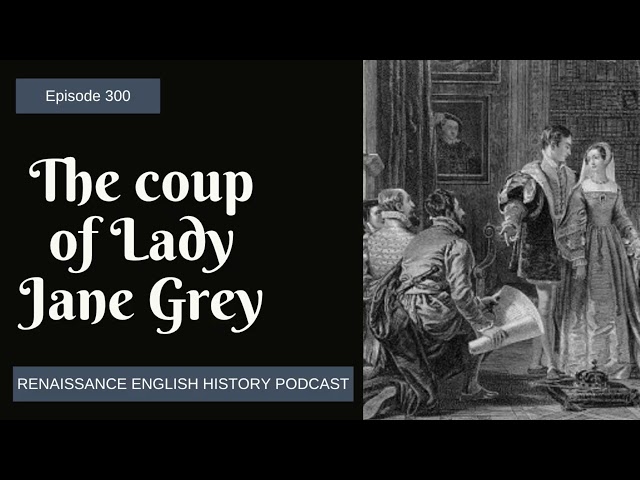
    Lady Jane Grey’s failed rebellion in July 1553 is one of the most dramatic power struggles in Tudor history. Declared queen at just sixteen, Jane reigned for only nine days before being overthrown by Mary Tudor, who claimed the throne with remarkable speed and without a battle.

    Far more than a teenage tragedy, the collapse of Jane’s brief reign reveals the dangers of political overreach, the power of legitimacy, and the miscalculations of those who tried to engineer England’s succession. Understanding why Lady Jane Grey’s rebellion failed helps us see how Mary I, once dismissed as powerless and irrelevant, rose to become England’s first crowned queen regnant.

    Transcript of Why Lady Jane Grey’s Rebellion Failed: How Mary I Took the Throne

    On July 10, 1553, a young woman was declared Queen of England, England’s first Queen regnant. Her name was Lady Jane Grey, and just nine days later, she was a prisoner in the Tower. What happened in those nine days was more than a failed coup. It was a last-ditch attempt by Edward VI’s government to preserve Protestant power, and it collapsed with breathtaking speed.

    But what is even more remarkable is who took the throne instead: Mary Tudor, a woman the political establishment had written off as outdated, dangerously Catholic, and politically irrelevant. Yet Mary won without an army, without a formal base of power, just with her name, her father’s legacy, and the backing of a population that frankly was not interested in watching another political gamble tear the country apart.

    This episode is not just about Jane, though her story is central. It is about how the machinery behind her brief reign came apart almost immediately. It is about Northumberland’s miscalculations, the power of legitimacy, and how Mary, the daughter of Katherine of Aragon, turned a quiet escape into a triumphant march to the throne.

    The nine days that Jane was queen tell us a lot about Tudor politics: who actually held power, how fast public opinion could turn, and what happened when you tried to force a dynasty into a direction it did not want to go.

    This week, we are talking about Lady Jane Grey, the Nine Days Queen, and not just about Jane, but about the failed coup and how Mary Tudor was able to overcome the threats against her and claim the throne without any bloodshed. So let’s get right into it.

    By early 1553, it was clear that Edward VI was dying. He was only fifteen, but the effects of tuberculosis, or what his contemporaries called consumption, were impossible to ignore. His coughing fits worsened, his weight dropped, and his council began to panic.

    Edward, despite his youth, was deeply committed to Protestant reform. He had been raised under the influence of Archbishop Cranmer, and he took his role as a godly prince seriously. The idea that his crown might pass to Mary Tudor, his Catholic half-sister, horrified him. And that is where the Device for the Succession comes in.

    Lady Jane Gray’s Ascension and Immediate Challenges

    Edward began drafting the document himself in early 1553. Now, originally it stated that the crown would pass to the heirs male of Lady Jane Grey. When it became clear that Edward did not have enough time to wait for Jane to produce an heir, the wording was revised to name Jane herself as the heir outright. Now, who exactly was Lady Jane Grey?

    Lady Jane Grey was the daughter of Frances Grey, the Duchess of Suffolk. She was, in turn, the daughter of Mary Tudor, Henry VII’s younger sister, the Queen of France for a short time, who was married to Charles Brandon. Lady Jane Grey herself would have been like a great-niece to Henry VIII.

    The problem with this arrangement was that it ignored both Mary and Elizabeth, Henry’s daughters, who had each been restored to the line of succession in their father’s will. Yes, both had technically been declared illegitimate during their father’s lifetime, but Henry’s final act had reinstated them. Edward, by naming Jane, was overriding his father’s settlement and an act of Parliament.

    It was a bold move, and he was not working alone. John Dudley, the Duke of Northumberland, had recently married his son, Guildford Dudley to Jane. The timing was, of course, not a coincidence with Edward’s failing health. Dudley was positioning his family as the power behind the next monarch. Jane was educated, pious, and Protestant, but more importantly, she had no power base of her own, so she was controllable.

    Jane herself does not seem to have been consulted. Later reports suggest that when she learned of the plan, she collapsed in tears or fainted. She insisted that she never sought the crown, but, and this is key, she also accepted it. Whether through pressure, duty, or fear is hard to say.

    The Privy Council, likely under heavy pressure from Dudley and perhaps genuinely afraid of a Catholic queen, signed off on the plan. Even Cranmer, who had been close to Henry and knew better than anyone the legal problems with bypassing Mary, eventually added his own signature.

    On paper, it looked neat. Protestant rule was preserved. The Dudley family was secured. A calm handover of power was planned. But outside the court bubble, very few people even knew who Lady Jane Grey was. She had no public support, no military backing of her own, and no real claim that people recognized. It was a succession engineered entirely from the top down. It was about to come apart almost as quickly as it was declared.

    So, on July the 10th, 1553, Lady Jane Grey was officially proclaimed the Queen of England. She was escorted by barge to the Tower of London, the traditional residence, of course, of monarchs before they were crowned, and she took up residence as queen.

    That same day, the Privy Council issued formal orders. Jane’s name was entered into the official records. Bishops were told to preach in her name. Coins were minted. Prayers were rewritten. Outside the walls of the Tower, the mood was uncertain in London. People heard the proclamation and responded with dead silence.

    There were no celebrations in the streets, no church bells, no bonfires. Even those who supported the Protestant cause were not quite sure what to make of this obscure teenage girl being named queen over both Henry VIII’s daughters. It also did not help that Mary Tudor had already made her first move.

    Mary Tudor’s Counterclaim and Rising Support

    Just a few days earlier as Edward lay dying, Mary had been tipped off about the plan to block the succession. She rode hard for East Anglia, heading straight to the place where she knew she had allies: Framlingham Castle. Meanwhile, back in London, the new regime was already showing some cracks.

    One of Jane’s first acts was to refuse the demand that her husband, Guildford, be declared king. This infuriated the Dudley family, especially her mother-in-law, the Duchess of Northumberland, who apparently shouted at Jane in front of the court. Jane held her ground, insisting that Guildford would be a duke, not a king.

    That single moment exposed the entire house of cards. It was immediately clear that Jane was not as pliable as Dudley had hoped. Her refusal to elevate Guildford undermined the idea that the Dudleys could rule through her, and it began to drive a wedge between the new queen and the faction that had installed her.

    Meanwhile, the Privy Council was growing uneasy. Their signatures were on the device, yes, but many of them had longstanding ties to Mary. Some had even served with her mother, Katherine of Aragon, decades before. Others had personal reservations about the legality of Jane’s claim. Most of all, they were watching how the country reacted, which was a big nothing burger. No outpouring of support, no groundswell of loyalty, just a deep and uneasy silence.

    Northumberland, who had been the architect of the whole succession plan, now had to scramble to build support for Jane on the ground, but his influence was waning. The farther from London he went, the more Mary’s name and her legitimacy carried weight.

    Jane, for her part, continued to carry herself as a queen with dignity. She spent time in prayer. She attended to state matters with seriousness. She thought that perhaps God had actually put her in this position, so she was going to accept it and do the best she could. She followed through on the daily business of queenship and getting ready to be crowned. But she had no experience, no allies outside of her husband’s faction, and no real power. She had the title, but Mary had the loyalty of the people, and things were about to turn very quickly in Mary’s favor.

    So, while Jane was being moved into the Tower and proclaimed queen with all of the outward trappings of monarchy, Mary Tudor was already in motion. On July 9th, 1553, before Jane had even been publicly proclaimed, Mary received word that Edward had died and that her enemies planned to cut her out of the succession.

    She did not wait to see if the Council would honor her claim. She rode hard for East Anglia, the region where she held her estates, her longstanding supporters, and something far more valuable: her power base. She arrived at Framlingham Castle, a strong fortress in Suffolk that had been part of the Howard family holdings. And there Mary made her stand.

    This is where it gets interesting, because Mary did not have an army, at least not yet. She had a name, and in 1553, that was more powerful than anyone had predicted. Mary did not send out fiery manifestos or call for rebellion. She issued carefully crafted proclamations, emphasizing her legitimacy.

    She was Henry VIII’s daughter. She was born in wedlock. She was named in his will, and she was confirmed by statute as the next in line after Edward. Whatever people thought about her religion, and there were concerns about her Catholicism, she was by all reasonable standards the rightful heir. And people responded. Nobles and gentry began to flock to her, many of whom had nothing to gain from supporting Jane.

    In fact, many of them had quietly stayed out of politics completely during Edward’s reign, watching the religious changes with growing discomfort. Mary, to them, represented not just legitimacy but also a return to order, a queen whose claim was rooted in law and blood, not paperwork drafted by a dying boy and a power-hungry council.

    She also had the support of ordinary people in East Anglia, a region still thick with traditional Catholic sentiment. Crowds gathered to cheer her on. Towns raised men to serve her, and by mid-July, Mary, who had fled without a military escort, now had a growing armed force behind her.

    The Collapse of Jane’s Regime

    The Privy Council in London began to sweat. John Dudley, realizing the threat, persuaded the Council to let him march out to confront her. He set out with a small force, expecting to rally more support as he moved north, except that support did not materialize.

    Worse, his own troops began to desert, some slipping away to join Mary’s forces, others simply melting back into the countryside. No one wanted to fight a popular royal woman who was, by most standards, the rightful heir, especially not in defense of a girl that no one had chosen.

    Mary, from her position at Framlingham, now issued orders like a queen. She appointed commanders, raised troops, and sent letters, all while Jane sat in the Tower waiting for a coronation ceremony that was never going to come. What started as a defensive retreat had turned into a full-fledged counterclaim, and back in London, things were falling apart.

    So I just want to pause for a moment and say this: over on my YouTube channel a couple of weeks ago, I put up a poll and asked you all what you thought, whether Jane should be called Jane I, since she was kind of the queen, or whether no, because she was never crowned, she never, you know, ruled properly. I did make the point that, of course, Edward V was never crowned, because he was in the Tower held by Richard III, and yet we still consider him Edward V. So the whole “having a coronation ceremony” doesn’t mean so much to me. But I wondered what you all thought. Should she be called Jane I, or no, because she never ruled properly? And 668 of you voted in that poll, and it’s really split down the middle.

    Yes, she should be called Jane I won with 56 percent of the vote. And “no, not crowned, never ruled properly” came in second, of course, because there were only two choices. So that took 44 percent of the vote. According to those of you who voted on YouTube, she should be called Jane I, for whatever that’s worth. I just think that’s a fun little thing to think about. What do you think? Should she have been called Jane I? Should we refer to her now as Jane I? I’d love to know what you think about that.

    By mid-July, the political gamble that had placed Lady Jane Grey on the throne was in free fall. John Dudley had left London on July 14th to march north and confront Mary’s growing forces in East Anglia. He had only a small army, somewhere around 3,000 men, and no real enthusiasm behind him.

    His march was slow, and it was plagued by desertions and hesitation. Towns that should have welcomed him offered zero support. Some quietly closed their gates. Others made it clear that their loyalties were leaning toward Mary. And Dudley knew exactly what was happening. According to one report, he turned to a companion and said bitterly, “The people press to see us, but not one says God speed us.”

    Meanwhile, back in London, the Privy Council was losing its nerve. At first, they had followed Dudley’s lead, issuing Jane’s proclamation, swearing oaths, and going through all the motions. But as the news from East Anglia trickled in, and as Mary’s support kept growing, they started looking for their exit plan.

    Some of the councillors were secretly corresponding with Mary already, hedging their bets. Others, including the Earl of Arundel, began openly pressing for the council to reverse course. Jane’s father, Henry Grey, Duke of Suffolk, had been left behind in London, effectively acting as her political regent. But he had no control over the council and no real military authority. He was also indecisive and prone to panicking, not exactly a strong figure to rally around.

    The real turning point came on July 19th. That morning, the Privy Council, which had been meeting at Baynard’s Castle, quietly left the city and regrouped at the house of the Earl of Pembroke. There they drafted and signed a formal proclamation declaring Mary Tudor the rightful Queen of England.

    The news spread instantly. Bonfires were lit. Bells rang across London. Crowds flooded the streets to celebrate, some out of relief, others out of genuine joy. Even many Protestants who were wary of Mary’s Catholicism were just glad the whole thing was over.

    The Aftermath: Jane’s Imprisonment and Execution

    Jane, well, she was still in the Tower when the announcement reached her, not as queen now, but as a prisoner. The same royal fortress that had welcomed her as a monarch nine days earlier had now become her jail cell.

    Later that day, Northumberland, still in Cambridge and now fully aware that he had been abandoned, publicly declared for Mary. He threw his cap in the air, swore allegiance, and tried to save himself, like that was really going to work. Spoiler alert: it didn’t work. He was arrested within 24 hours and taken back to London, and he would be executed a few weeks later on August 22nd.

    In the Tower, Jane was formally deposed. Her name was removed from official documents. The crown she had worn briefly, a smaller version of the State Crown made for the coronation, was taken away. Her husband Guildford was also imprisoned, and so were her parents, though her mother Frances would later be released.

    It was all over. The coup hadn’t just failed. It had completely disintegrated. And it had done so not because Mary had more soldiers, or better strategy, or stronger propaganda, or anything like that.

    It had failed because the heart of Tudor power, the nobility, the legal system, and the public, just did not accept Jane’s claim. She was smart, educated, devout, and serious, but she had no real support. Mary, on the other hand, had the thing that mattered most in Tudor England: a father named Henry VIII.

    Looking back at those nine days, it is tempting to see Lady Jane Grey as a tragic figure caught in the middle of someone else’s power play, and she was that. But the failure of her reign was not just bad luck. It was the result of serious miscalculations at every level: political, legal, and personal.

    First and foremost, legitimacy still mattered in Tudor England. Edward’s device for the succession was clever, but it was not enough. It was never ratified by Parliament. It contradicted both Henry’s will and an Act of Succession passed during Henry’s lifetime. By the letter of the law, Mary was the rightful heir, and that carried enormous weight with people, even those who might have preferred a Protestant monarch.

    Mary was Henry’s daughter. Everyone remembered her mother, Katherine of Aragon, who had been queen for over twenty years. Whatever doubts existed about her religion, her bloodline was beyond dispute.

    The second problem was the Dudley name. Jane may have been intelligent and pious, but she was deeply tied to the most hated man in England at the time. John Dudley had risen quickly under Edward VI, sidelining rivals and dominating the court. Many in the nobility distrusted him. Some outright hated him. Installing his daughter-in-law on the throne looked like a power grab, not a legitimate succession. Even those who supported Jane’s religion recoiled at the idea of Dudley effectively ruling through her.

    Then there was public perception. Jane was barely known outside of court circles. She had not spent time building a public persona or visiting the provinces. Mary, on the other hand, had lived quietly but was still a known quantity. She had a network of household servants, nobles, and former allies from her mother’s faction, and they all remembered her.

    There were also some critical strategic blunders. Northumberland underestimated just how quickly Mary could rally support. He overestimated how loyal his troops would be, and most fatally, he left London, effectively giving the Privy Council room to reverse course without having to face him directly.

    And finally, Jane’s own position was deeply compromised from the start. Her refusal to name her husband Guilford king, angered the faction that had put her on the throne. She was not in control, and everybody knew that. The fact that she had to fight her in-laws before even being crowned made it clear to the council that this was not a unified regime.

    In the end, Jane never had a foundation to stand on. The political scaffolding around her collapsed almost immediately because it was brittle, self-serving, and completely disconnected from what the country actually wanted. Mary, for all her faults, understood power better, and she had one thing her opponents could not manufacture: a claim that people actually believed.

    So after the Privy Council declared for Mary, Jane’s fate changed instantly. She was no longer the queen. She was a traitor. She was still only sixteen. She had reigned for just nine days, and now she was a prisoner.

    At first, Mary, of course, showed surprising restraint. Jane was young, intelligent, clearly a pawn in someone else’s game. Mary ordered that she be held but not mistreated. She was given a decent apartment. She was allowed books and even had occasional visitors. There is no evidence that Mary initially intended to execute her.

    John Dudley, of course, had no such leniency. As mentioned, he was executed a month after he was arrested, on August 22nd, just over a month after Jane had been proclaimed queen. He died insisting that he had only followed the king’s will, a claim that nobody was really moved by.

    Jane’s own father, Henry Grey, was also released. Despite being deeply involved in the coup, he was forgiven, likely because Mary wanted to avoid creating too many martyrs. It was a generous act, and as it turned out, it was a mistake. In January 1554, just six months into Mary’s reign, Jane’s father joined Wyatt’s Rebellion, an uprising sparked by outrage over Mary’s plans to marry Philip of Spain. The rebellion, of course, failed, but the implications were clear: Jane’s family was still dangerous, and Mary could no longer afford to be merciful.

    Jane and Guilford were both sentenced to death, and on the morning of February 12th, 1554, Guilford was executed first. Jane actually watched his body return to the Tower from her window. A short time later, she herself was taken to the scaffold on Tower Green. Her final words were quiet, steeped in religious conviction.

    She declared herself a faithful Christian, asked for forgiveness, and forgave her executioners. Her body was buried near that of Anne Boleyn in the chapel of St. Peter ad Vincula, another young woman executed at the command of a Tudor monarch.

    In the centuries that followed, Jane’s reputation was reshaped. Protestant writers in Elizabeth’s reign turned her into a martyr. She was included in Foxe’s Book of Martyrs as a symbol of purity and reform crushed by Catholic tyranny. That image stuck in literature, portraiture, and eventually in pop culture.

    But the real Jane was much more complicated. She was clever, she was principled, and she was politically aware, but deeply vulnerable to the ambitions of those around her. She did not start the coup. She did not want the crown. But when offered it, she also did not refuse. And that choice, made under pressure in a world she could not control, would cost her everything.

    And so Lady Jane’s nine days on the throne are often reduced to a tragic blip,  a teenage girl used and discarded by men chasing power. And while there is indeed some truth in that, the story is more than just pathos. Jane’s reign failed because the people who installed her underestimated Mary, misunderstood the meaning of legitimacy, and overestimated how far fear and control could go without true support.

    Mary, who had no army, no position, no official title, took back the throne through sheer determination, lineage, and the fact that enough people still believed in her right to rule. Jane did not fail because she was weak or foolish. She failed because the entire framework around her was built on sand.

    And yet, she remains one of the most memorable figures of the Tudor period,  not because of what she herself did, but because of what she represented: a regime that tried to rewrite the rules of succession overnight, and a teenage girl caught in the middle when it all collapsed.

    Related links:

    Episode 016: Lady Jane Grey
    The Forgotten Grey Sisters: Love, Treason, and Tragedy in Tudor England

  • The Three Grey Sisters: Love, Treason, and Tragedy in Tudor England

    The Three Grey Sisters: Love, Treason, and Tragedy in Tudor England


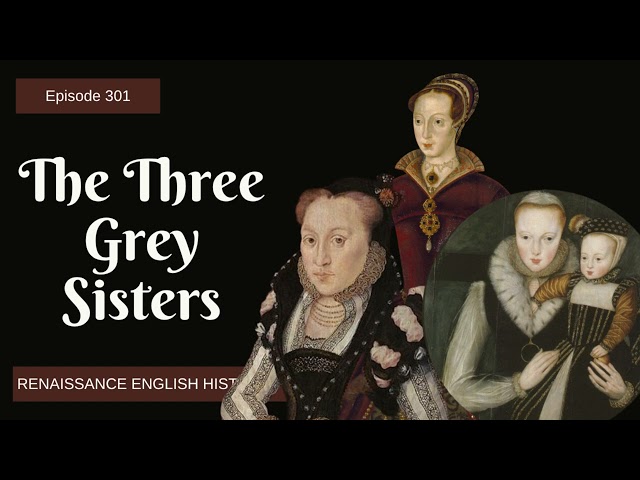
    The three Grey sisters – Jane, Katherine, and Mary were granddaughters of Henry VII’s sister and heirs to a dangerous legacy. Born into a world of shifting power and fragile succession, they lived their lives under constant scrutiny at the Tudor court.

    Jane Grey, remembered as the Nine Days’ Queen, was executed as a teenage martyr. Katherine Grey’s secret marriage brought her love but also years of imprisonment and the loss of her children. Mary Grey, the youngest, defied expectations with a forbidden match that condemned her to a lifetime of isolation. Together, the three Grey sisters show how Tudor women could be celebrated, controlled, or destroyed simply for being too close to the crown.

    Transcript of The Forgotten Grey Sisters: Love, Treason, and Tragedy in Tudor England

    In Greek mythology, the Graeae were three sisters born old, with gray hair, a single eye, and a single tooth between them. They lived on the edge of the known world in a bleak and misty land, somewhere between life and death. Not quite monsters, but not quite human either. They had knowledge that others needed, but no real power of their own.

    And in the most famous story about them, Perseus steals their shared eye, leaving them blind and groping in the dark. The Tudors, of course, had their own Grey sisters, Jane, Katherine, and Mary. They were not born with gray hair or tucked away in caves, but they were linked, like their mythological namesakes, by their strange and precarious position close to the throne, never secure, watched, judged, manipulated, and ultimately punished for who they loved and how they lived.

    Last week we talked about the most famous of the trio, Lady Jane Grey, the Nine Days’ Queen, the teenage scholar who died a political martyr on the scaffold in 1554. But Jane was not an only child, and her story was not a standalone tragedy.

    She was the oldest of three sisters, all granddaughters of Henry VII’s younger sister, Princess Mary Tudor. Because of that royal blood, each of them – Jane, Katherine, and Mary, lived under the weight of the crown that none of them ever asked for. This week, we are going to follow the story of all three Grey sisters, from Jane’s execution to Katherine’s doomed love affair with a Seymour to Mary’s forbidden marriage to a palace gatekeeper. Along the way, we will talk about how Tudor ideas of succession, marriage, and female obedience shaped their fates.

    The Greys were not just side characters in someone else’s story. After Edward VI’s death, they became the focal point of a succession crisis that haunted Elizabeth I for decades. Even though they never wore a crown, the Greys were central to the larger story of female power and vulnerability in a world that did not quite know what to do with ambitious or even just slightly inconvenient women. So let us meet the other Grey sisters, the ones who did not get nine days on a throne, but still managed to threaten it.

    Lady Jane Grey: The Nine Days’ Queen

    Before we talk about the younger sisters, let us take a moment to revisit Jane, the most famous of the three, but often the least understood. Lady Jane Grey was born into ambition. Her mother, Frances Brandon, was the daughter of Princess Mary Tudor, one-time Queen of France and Henry VII’s younger sister, which gave Jane a direct claim to the English throne. Unfortunately for her, people at court knew it.

    She was brilliant, precociously learned, raised to read Latin, Greek, and Hebrew, and corresponded with reformers across Europe. Her education was not just an intellectual polish. In a court ruled by religious swings and dynastic tensions, Jane’s Protestant credentials and her royal blood made her both dangerous and useful.

    She, of course, became a pawn in the final year of Edward VI’s reign, when the Protestant king, dying at just 15, tried to keep the throne out of the hands of his Catholic half-sister Mary. His solution was to skip over both Mary and Elizabeth and name Jane, his cousin, devout Protestant, and safe political ally, as his heir.

    Of course, it was not just Edward’s idea. Jane’s marriage to Guilford Dudley, the son of John Dudley, Duke of Northumberland, was timed perfectly to align Northumberland’s ambitions with the king’s new will. Jane was then about 16. She had no say in any of this. She was married off, declared queen upon Edward’s death, and immediately caught in a storm she could not control.

    Her reign lasted just over a week, nine days to be exact, before Mary I successfully claimed the throne. That was what we talked about in last week’s episode, how that came about. Jane and her husband were imprisoned, and though she might have lived quietly out of public life, the Wyatt Rebellion in 1554 sealed her fate, even though she had literally nothing to do with it, since she was already in prison.

    The rebellion aimed to overthrow Mary and place Jane back on the throne, and that was enough. She was executed that February alongside Guilford. Before she died, she wrote a long letter to her sister Katherine, a kind of theological farewell, warning her to prepare her soul and stay strong in her Protestant faith.

    But while Jane died young, Katherine and Mary had to live through court politics, personal betrayals, and imprisonment. There was also the unpredictable fury of Queen Elizabeth. In Katherine’s case, it all began with love. If Jane was the Grey sister remembered for martyrdom, her younger sister Katherine would be remembered, at least by those who knew her, for love and heartbreak and prison, and two sons born in the Tower of London. It is a lot.

    Katherine Grey: Love, Heartbreak, and Imprisonment

    Katherine was born around 1540, the second of three daughters of Frances Brandon and Henry Grey. Like Jane, she had royal blood, a solid education, and a dangerously high place in the line of succession. But where Jane was intense and cerebral, Katherine seems to have been warmer, more affectionate, and less interested in theology and politics. That did not make her life any easier.

    At the age of 12, Katherine was married off to Henry Herbert, teenage heir to the powerful Earl of Pembroke. It was part of the same flurry of marriages orchestrated by the Duke of Northumberland, who had just placed Jane on the throne. The idea was to bind key noble families together into one unified Protestant power bloc.

    Katherine married Henry Herbert on the same day Jane married Guilford Dudley, in a lavish triple ceremony that was more about strategy than sentiment. But somehow Katherine and Henry fell for each other. Despite their youth, they reportedly cared deeply for one another. When Mary Tudor came to power, however, Northumberland’s plans collapsed.

    Jane was deposed and executed. Katherine’s father was executed as well. And although Katherine herself was not charged with treason, her marriage was now politically toxic. The Herberts moved quickly to cut ties. They pushed for an annulment, hoping to quietly erase the alliance. Katherine and Henry resisted, claiming that they had consummated the marriage, a claim that, if true, would have made the annulment much harder to secure.

    But Katherine was not pregnant, and the Herberts were powerful, so the annulment went through. Still, Katherine did not disappear. Her mother Frances made peace with Queen Mary, and Katherine returned to court. Under Mary’s reign, and even more under Elizabeth, Katherine’s position grew increasingly precarious.

    She was, after all, one of the senior surviving Protestant claimants to the throne. Elizabeth had no children. Mary, Queen of Scots, was Catholic. That left Katherine in the mix, which might have been a strategic asset if Katherine had not done something deeply unstrategic. She fell in love. The object of her affection was Edward Seymour, Earl of Hertford, the son of Anne Stanhope and the late Edward Seymour, Lord Protector Somerset.

    Now this Edward Seymour was, of course, connected, noble, and Protestant, and their romance blossomed quickly during Elizabeth’s early reign. Katherine called him her Ned, and he wrote her poems. Their relationship grew under the watchful eyes of the court, but they tried to be discreet because both of them knew what was at stake.

    Elizabeth had no tolerance for royal marriages without her permission, especially not for potential heirs. Still, Katherine and Ned made their plans: first a secret betrothal, and then, in 1560, a secret wedding. Elizabeth had left the court for a hunting trip, and Katherine, claiming illness, stayed behind.

    With Ned’s sister Jane Seymour as the only witness, the two were married by a clergyman in Ned’s house on Cannon Row. Afterwards, they consummated the marriage and then returned to court as though nothing had happened. No big deal. But of course, something had happened. Things were about to get far more complicated.

    Within a few months, Jane Seymour died. The only witness to the marriage was gone. The priest, whose name had not been recorded, disappeared. And then Katherine discovered she was pregnant. Oops. She tried to write to Ned, who was sent abroad, but got no reply. With the queen still unaware of the marriage, Katherine tried to keep her pregnancy a secret, but gossip spreads fast at court.

    Eventually she turned to Robert Dudley, the queen’s favorite, and begged for help. Dudley promised to intervene on her behalf, then went directly to Elizabeth and told her everything. Elizabeth exploded. She was furious, not just about the secret marriage, but about the threat that it posed. Katherine was her cousin.

    If she had a son, that child would be seen as a legitimate Protestant heir. Elizabeth, who had lived through the Wyatt Rebellion and seen how easily royal women could become pawns in succession plots, was in no mood to tolerate another one. Katherine was imprisoned in the Tower of London. When Ned returned to England, he was thrown in the Tower as well. They were kept apart, interrogated, and denied visitors.

    In September 1561, Katherine gave birth to a baby boy, Edward Seymour, Lord Beauchamp, behind the Tower walls. Despite the grim setting, Katherine and Ned were happy to be reunited in spirit. They passed notes, bribed guards, and were even occasionally allowed to see one another.

    And that is how Katherine got pregnant again. Oopsies. In 1563, she gave birth to a second son, Thomas, and this time the scandal was too much. Elizabeth had Sir Edward Warner, the sympathetic lieutenant of the Tower, removed. The couple were separated, and their children were sent away. Hartford was fined 15,000 pounds, an astronomical sum, and both of them were shuffled between remote houses under constant supervision.

    The remainder of Katherine’s life was one long string of prisons, five different houses over seven years, each one more isolating than the last. She never saw her eldest son again. Her health declined, and she grew increasingly despondent. By the time she was 27, she had effectively stopped eating. She died at Cockfield Hall in 1568, leaving behind her two sons, three rings for her husband, and a final message engraved in gold: “While I lived, yours.” After her death, Elizabeth refused to recognize the marriage, and the boys were considered illegitimate, a decision only reversed years later under James I. Katherine Grey married for love, and she was loved deeply in return. That love, far from freeing her, became her prison. And in Elizabeth’s court, even affection could be treason.

    Mary Gray: The Forgotten Sister

    Now, what about Mary? Mary Grey was the youngest of the Grey sisters, the least politically important, the most physically unusual, and the one history often forgets. But her story is every bit as poignant as her sisters’ and just as emblematic of what it meant to be a woman with royal blood under Elizabeth.

    She was born in 1545, nearly ten years younger than Jane and five years younger than Katherine. Where Jane was brilliant and devout, and Katherine was warm and romantic, Mary was known for her sharp wit, her deep loyalty, and a kind of stubbornness that got her through a quietly brutal life.

    She was, by all accounts, very small. Contemporary descriptions ranged from “crook-backed” to “the least of all the court.” Modern historians have speculated that she may have had scoliosis, dwarfism, or another condition that affected her growth. Estimates put her height at around four feet tall.

    Now you have to remember, this was a time when physical appearance was seen as a reflection of moral and spiritual worth. Mary’s stature made her an object of ridicule and, in the eyes of her contemporaries, all but excluded her from the throne, despite her impeccable lineage. She still carried royal blood. She was still the granddaughter of Mary Tudor. And so, like her sisters, she had to live a tightly controlled public-facing life at court,  a possible heir, but never a safe one.

    After Jane’s execution and Katherine’s disgrace, Mary kept her head down. She served quietly at Elizabeth’s court as a maid of honour, gaining a reputation for intelligence and discretion. Then, like her sister Katherine before her, she fell in love with entirely the wrong man.

    His name was Thomas Keyes. He was over six feet tall, twice Mary’s age, a widower with several children, and a member of the gentry, not the nobility. He served as Elizabeth’s Sergeant Porter, in charge of the palace gates. In a court obsessed with bloodlines and status, he was an astonishingly unsuitable match for the queen’s cousin.

    Naturally, Mary married him in secret. The wedding took place in 1565 while Elizabeth was away attending the wedding of another cousin. This time, unlike Katherine, Mary ensured that there were many witnesses. She wanted to make the marriage legally watertight, and it was, which ironically made it harder for her to escape the consequences.

    When Elizabeth found out, we can all guess how she felt. She was livid. The queen’s own cousin had married a man she had not approved of, a commoner, and had done so in a way she could not legally undo. Mary was placed under house arrest at the home of Sir William Hawtrey at Chequers. Keyes, as a commoner, was sent to the Fleet Prison, where the cells were so small that he could not fully stretch out his legs. His health quickly deteriorated.

    Mary wrote pleading letters to William Cecil asking for leniency. So did Keyes. He even offered to annul the marriage, but they had been too careful. There were no legal grounds to dissolve it, and Elizabeth refused to relent. The couple would never see each other again.

    Mary spent nearly a decade under house arrest, shuffled between unwilling caretakers. She was sent to her step-grandmother, the Duchess of Suffolk, and then to the home of the wealthy merchant Sir Thomas Gresham, who found her presence such a burden that he wrote desperate letters begging to be rid of her. She had little furniture, no attendants, and even fewer allies.

    Then, in 1571, Keyes died. Mary took the news hard. She asked to raise his orphaned children and began referring to herself as his widow. She even had a portrait made showing her wedding ring prominently, saying, “I married for love, and I am not sorry about it.”

    At last, in 1573, Elizabeth relented. Mary was allowed to live independently in London with limited access to court. She reconnected with her old friends, helped to raise her stepchildren, and was briefly restored as a maid of honour, but her health never fully recovered. In 1578, on her thirty-third birthday, Mary Grey died. She was buried in Westminster Abbey in her mother’s tomb with the honors due to a queen’s cousin. She died in favor, but she was never in favor with the man she loved.

    The three Grey sisters, Jane, Katherine, and Mary, did not rule, but their lives were shaped by the throne as much as any monarch’s. They lived in its shadow, edged close to its power, and were punished for even the faintest suggestion that they might reach for it.

    Like the Graeae Sisters of mythology, those strange otherworldly sisters who shared a single eye and had knowledge others feared, these Grey sisters were often seen less as individuals and more as potential threats. They were watched, moved like pieces on a board, and punished for what they might become.

    Jane was used as a figurehead, crowned by those who hoped she would secure their power and discarded once her usefulness ended. She died young, her intellect and faith intact, but she never truly lived. Katherine fell in love twice and paid for it with years of imprisonment, forced separation from her children, and ultimately her life. Her sons were declared illegitimate and her marriage erased. Eventually, she gave up entirely.

    Mary, the youngest, tried to live quietly. She married for love, hoping that her unthreatening position and unsuitable husband would spare her Elizabeth’s wrath. Instead, she was separated from her husband for the rest of his life, isolated and moved from house to house like an inconvenience no one could quite figure out how to manage.

    In the end, none of them succeeded in love, ambition, or family, at least not in life. In death, the stories shift. Katherine’s marriage was finally recognized under James I and her sons reinstated. Mary, though buried under the name Grey, never stopped calling herself Keyes’s widow. Jane, though she reigned for just nine days, became a Protestant martyr, a symbol that far outlived her. Three sisters, one royal bloodline and three lives marked not by the crowns they wore, but by the ones they never even touched.

    Related links:

    Why Lady Jane Grey’s Rebellion Failed: How Mary I Took the Throne
    Episode 016: Lady Jane Grey

  • The Scoundrel’s Son by Frederic Fahey 

    The Scoundrel’s Son by Frederic Fahey 


    The Scoundrel’s Son by Frederic Fahey is a captivating historical fiction novel that reimagines the life of Tom Canty from Mark Twain’s The Prince and the Pauper. In this thoughtful continuation, debut author Frederic Fahey—formerly a medical physicist at Boston Children’s Hospital and Harvard Medical School—explores Tom’s journey through the royal court of Edward VI, weaving a rich tale of friendship, loss, identity, and coming of age in Tudor England.

    In this interview, Fahey shares the inspiration behind The Scoundrel’s Son, his creative process, and how he brought historical and fictional characters to life, including Lady Jane Grey and a spirited original heroine named Allie. If you’re a fan of Twain, Tudor history, or character-driven storytelling, The Scoundrel’s Son by Frederic Fahey is a must-read.

    Transcript of What Happened After The Prince and the Pauper? Author Frederic Fahey on The Scoundrel’s Son

    Heather: Hey, friend. Today I have something a little different. I sat down recently with the author Frederic Fahey, who, after an impressive career as a medical physicist at Boston Children’s Hospital and Harvard Medical School, has taken a fascinating turn into the world of historical fiction. His debut novel is The Scoundrel Son, and it picks up where Mark Twain’s The Prince and the Pauper left off—but not in the way that you might expect.

    Fred takes us on a journey through the Tudor world, following Tom Canty as he grows up in the royal court, befriends Edward VI, meets Lady Jane Grey, and wrestles with what it means to be a good person in a complicated world.

    In this conversation, we talk about what inspired Fred to give Tom his own voice, how he blended fictional and historical characters, and why friendship, loss, and identity are at the heart of this story.

    Plus, we get the inside scoop on the incredible book cover, which was designed by the same artist who did the Wicked book cover. So that’s a fun connection. Let’s dive right in and learn more about Edward VI. And if you’re a fan of Mark Twain and The Prince and the Pauper, this is definitely going to be one you’ll want to watch the whole way through. All right, let’s get into it.

    So you have this wonderful book. You have the—oh, you should tell me before we even get started—the story behind the cover of your book, because you shared something very interesting about that. The Scoundrel Son. Tell me about this beautiful cover.

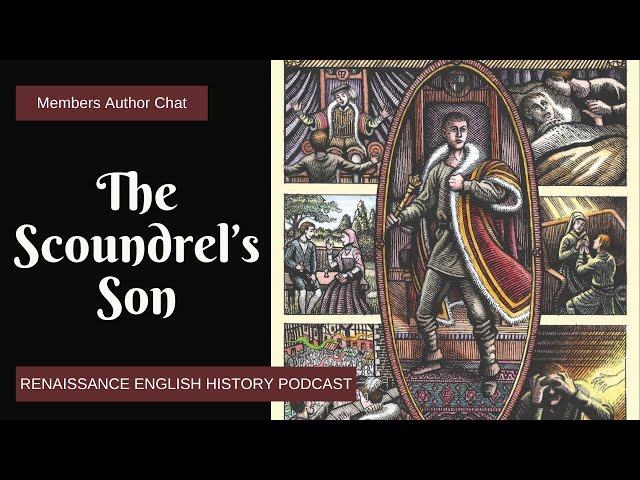
    Frederic: So, uh, you know, one of the advantages of having gone to a small publisher is they said, “You do the cover.” You know, my writing coach told me she doesn’t even think Stephen King gets to pick what his cover looks like.

    So I live on this island off Portland, Maine, called Peaks Island, and there are some very talented illustrators on the island. One happens to be Doug Smith. He lives about maybe three quarters of a mile from me here, and he did the original cover of Wicked. You know, not the Broadway poster, but the actual book cover.

    Heather: I can tell that now that you’re saying it. It looks familiar.

    Frederic: So he also read my book very carefully, because although I probably had veto power, he chose the six scenes he decided to illustrate. He has on this side of the book cover, part one, it’s a little bit lighter. On this side, part two, it’s a little bit darker. So, yeah. And it was great working with him. And Scott Nash, another illustrator, worked with us. Scott helped design it, and Doug did the illustration.

    Heather: Awesome. So your book kind of picks up—or picks off? I would think it’s kind of… it’s not necessarily a sequel to The Prince and the Pauper by Mark Twain, but it’s more of like a companion, I guess you could say. So you pick up the story of Tom Canty from The Prince and the Pauper.

    And if people don’t know that story, maybe you can just give me a little… in the first chapter, you give this little synopsis of The Prince and the Pauper, and maybe you can tell me a little bit about the story and how you pick it up. And I’m curious—what was it about Tom Canty’s voice that kept tugging at you and made you want to write this companion? For lack of a better word—I don’t want to call it a sequel because it’s not a sequel so much, but…

    Frederic: Yeah. I’m sort of calling it a continuation, in a way. When I was a kid, I saw the Errol Flynn movie version of The Prince and the Pauper, and at the end of it, I said, “Wow, was Edward really a real person?” So I ran to my Collier’s Encyclopedia—20 volumes—and looked it up.

    And lo and behold, a lot of people sort of know the story of The Prince and the Pauper, but they don’t realize that the prince is an actual prince. He’s Edward—the real Edward VI, King of England. So that intrigued me.

    What Twain says about Tom is that he lived to be an old man, but my encyclopedia said that Edward did not. So I wondered what happened next. Actually, in The Prince and the Pauper—and maybe we’ll talk about this a little bit more later—they don’t spend much time together. They sort of meet, decide they are going to exchange places, and then Edward goes off and has these harrowing adventures in the city, which he thought would be cooler than it actually is.

    Tom is in the palace, trying to make people believe he is the prince. And then the king dies, and, well, you know. So I thought, what happens next? And now, many years later, I decided I know what happened next.

    The other thing that came into it—which maybe we will talk about later—is that probably about ten or twenty years ago, I visited the Tower of London. The yeoman, the Beefeater giving the tour, talked about Lady Jane Grey. I was intrigued by her and her story, so I thought it would be sort of fun to add a teenage girl to the mix. So I decided to do that. And that is how I got the idea. I wanted to know what happened next.

    Heather: Very cool. Yeah. And there’s sort of like a—I do not want to give anything away—but there’s an interesting tension between Tom and Jane Grey. I do not know, he seems to want to impress her. It is almost like a little bit of a love interest, but not really, kind of from afar. It is cool. It is neat to bring that in like that.

    So you frame it like a memoir—Tom as a grown man looking back—and I am curious why you framed it that way. What made you decide to have it come from that perspective?

    Frederic: You know, partly it was because this is the first novel I ever wrote. After being a scientist for many years, I retired and decided I would try to write a novel. I figured, well, one way to tell a tale is to tell a tale.

    So I thought that might be easier. And it is, in some ways, but it is limiting in other ways, right? Because all you know is what Tom knows. It is in retrospect, so I loosened it up a little bit. He is telling it twenty years later.

    That is sort of why I chose it. I said, okay, it is going to be in first person. It is going to be a tale told to somebody. And I am not going to do what Twain did. I am not going to try to do my version of Elizabethan English. It is pretty much going to be modern English, because, again, it was my first book and I wanted to make it as easy as I could. But I think it worked well. I mean, I thought that Tom brings a certain perspective to the Royal Court that is unique, and I thought that would be something interesting to see.

    Heather: Yeah. Well, congratulations on this first book. It is a marvelous first book. It is a delight to read. I am interested in this friendship between Tom and Edward. Of course, Tom goes off and he is the King’s ward at this point and living his life. How did you envision or decide to depict their friendship as they both grew up and entered adolescence? How did you decide to portray it the way you did?

    Frederic: Yeah. You know, one of the themes of the book—or one of the things I wanted to capture—is those friendships we have when we are that age. The story starts when they are about eleven and ends when they are fifteen or sixteen years old. Sometimes, some of the strongest friendships in your life are from that time period.

    Like I said, Edward and Tom did not spend much time together in The Prince and the Pauper, so I wanted to expand on that. Were they still friends? Did they still have a relationship? Or did Tom go his way and Edward go his?

    Then I thought, Tom brings something unique. Edward is the King of England now, right? So he spends a lot of time with people who are much older than he is. But Tom comes in and he is a kid—he is exactly the same age, to the day, as Edward. So they do little boy things. I have a scene where Tom tells a joke and milk comes out of Edward’s nose—the King of England’s nose.

    Heather: Right. I remember you said something like, “Oh, that made milk hit my nose,” or something. It was quite funny.

    Frederic: So I was trying to capture that friendship as a very strong part of what I wanted to present here.

    Heather: Yeah. From your research and what you learned about Edward as you were researching this book, do you think Edward needed friendships like that? Do you think Edward had any friendships like that?

    Frederic: He did, because he was at school, and I do not think he was educated by himself. I think there were others. I cannot remember the name exactly, but there was an Irish kid, for example—something like that. It was not Robert…

    Heather: Dudley? I think he was part of Elizabeth’s circle.

    Frederic: Yeah, he did know Robert Dudley a little bit, and others in that family. So he did have some friendships. Some of his other cousins too—like Ned Seymour—maybe he knew. But that is still in the realm of either school or being in the royal family.

    So he is able to let his guard down more when he is with Tom. And I think that makes it a little easier. On the other hand, as the story progresses and they get a little older, Tom brings a unique perspective to what is going on.

    Tom does not have as much formal schooling as Edward or Jane, but he has street smarts that they do not. He is a little bit guarded because he has not had an easy childhood. He knows that there are good people in the world, but he also knows that there are not. And he learns through this story that even if you are a noble or royal, that does not mean you cannot be a scheming person.

    Heather: Sure. Yeah. I remember there was a scene where one of his friends—not the noble one—was cheating at cards. Jam was cheating at cards. And there was this awareness in Tom. I thought it was such an interesting dichotomy, playing both sides—the noble side and the street side—and realizing that kind of thing is everywhere and him being more introduced to that early on.

    There is this wonderful cast of characters that you have—Father Christian and Robert Hobson. How did you come up with these characters? Did any of them surprise you as you were writing? Did any of them just appear to you? Did they take on bigger roles than you had imagined? Tell me about them.

    Frederic: You mentioned Father Christian. That is sort of a funny thing because if you are familiar with The Prince and the Pauper, Tom is friendly with a priest called Father Andrew. So I started writing my first draft with Father Andrew, and then it occurred to me—wait a minute—Father Andrew dies in The Prince and the Pauper. So I had to make a shift.

    I think one of the other characters I liked, who had a bigger part than I would have expected, is Richard, the king’s head groom. They sort of bond because Richard knows what Tom brings to the table—both early on and then later, after things evolve. He is an interesting character, and he has a respect for Tom.

    Sometimes I had to invent a character like Richard because I had to ask myself, how do you grease the wheels to get Tom into the places where he wants to be? There is another one—William the guard. The guard who roughed him up in The Prince and the Pauper now befriends him. So I liked him too.

    Father Christian is a little bit of a spiritual presence. Tom is not really that spiritual, but he listens. And then Robert is more like his mentor. Tom is his apprentice, and that relationship provides a lot of grounding.

    And then I dragged Miles Hendon in from The Prince and the Pauper because we needed someone who knows something about covert operations.

    Heather: Yeah, for sure. And how did you—like, it is interesting because you brought in—normally with historical fiction, you are bringing in real people with invented characters and mixing things. And then you also have another layer where you are bringing in characters from another historical fiction book from a hundred and something odd years ago, almost 150 years ago.

    So how did you mix together all of these characters? What were the challenges with that? And also, bringing in real characters and maintaining historical accuracy while also being faithful to the characters that Mark Twain created? And then putting your own spin on them, and also bringing in the characters that you had to invent as well? Tell me a little bit about how you were able to do that process.

    Frederic: You know, I am the person who ripped off Mark Twain and did not win the Pulitzer Prize. So kudos to Percival Everett for James. But it is about—so I followed his approach. And I thought it would be easier. Again, it is my first novel. I had history, I had a scaffold, I knew some things that happened, and I had some characters that are good and worthwhile. Tom, mostly, and a little bit his family.

    I probably expand on his mother a little bit more than you learn from The Prince and the Pauper. She is a good woman in The Prince and the Pauper, but I think I make her funnier. So I was trying to take advantage of that.

    But then the history part—you know, I have exchanged some emails with an author from Boston, Bill Martin, who writes historical fiction. Not Tudor, but American historical fiction, from the Revolution up to the 1960s. And he told me that when he starts a book, his research is a mile wide and an inch deep. He knows a little about a lot, and then as the story progresses, things start to pile up as you need to know more.

    And I sort of did the same. When I started, I did not want to hamstring myself. I knew some things. I knew some things about Jane and Edward and the Tudors. So I took advantage of that, but I sort of told myself, I am not a historian. I am an author.

    And I do not mean to sound like I am putting myself in the same category as Shakespeare, but if you want to know history, do not read Shakespeare. It is like saying Game of Thrones is history. Right? I mean, it is a story.

    But on the other hand, I am not Quentin Tarantino. I try to stay with what actually happened. Sharon Tate really did get murdered by the Manson family. So I tried not to change that kind of thing. Jane—things were going to happen, and I was not going to change them. I moved some things around. Some things happen in different places than they actually did, just to make it convenient for Tom to be there.

    So anyway, I tried to mix it in, and early on, I probably did more exposition. And my writing coach really pushed me to try to make it more seamless—to try to tell the history as part of the story. So I tried to do that. I hope I did, and I hope I gave people enough history that they did not have to keep running back to Wikipedia to figure out what the heck was going on.

    Heather: Yeah. Easier though than your Collier’s Encyclopedia after all.

    Frederic: Right?

    Heather: Yeah.

    Frederic: Yeah, yeah. So I tried to mix the history in, but not make it too onerous—just make it clear how it fit into the story.

    Heather: Mm-hmm.

    Frederic: You know, in some places I did more, and in some places I did less. Obviously, Jane becomes more important. In some ways, the Tom and Jane relationship becomes the relationship in the story. But, you know, I mean, Thomas Seymour and Edward Seymour sort of come in and out, and John Dudley, they are in the story, but they come and go. Even Queen Mary, you know.

    Heather: Yeah. Okay. And in this book, there are so many kind of deep themes, even though I know The Prince and the Pauper was written, what, for children of all ages or something? Did not Twain say that?

    Frederic: Yes, he did.

    Heather: It kind of has that same sort of style. So it does not read like something really heavy, but at the same time, there are some really deep themes in there around class, identity, loss, and temptation.

    I am just wondering, were there any themes that felt most personal to you? How did you weave those themes in and make it accessible in a way that did not feel like one was reading something overly heavy? Like, you could read it before bed and fall asleep. It was not super hard reading, obviously. So how did you work these themes into a story based on a children’s story and still make it thought-provoking?

    Frederic: You know, even Twain, in the parts where Edward is getting into trouble in London, it is pretty dark. Some of it is quite dark, actually. And it is a good thing Miles Hendon is there to get him out of different jams. There were two aspects of this that I focused on. Like I said, friendship—these young people being very close friends. Some of it, I tried to keep simple. As Patti Smith would say, I wanted to make them just kids.

    But, on the other hand, there is some loss, as you say. And Tom, in the first paragraph of the book, points out that he is going to go through some things that a young person, or a young man, should not have to deal with.

    And there is an aspect of it. You know, people have asked me, why do you call it The Scoundrel Son? And my writing coach said to me once, you know, that stories, as you try to frame them, are about what the main character wants and what is in their way—what the obstacle is that they have to get around.

    And what he wants is not to be his father. His father is a scoundrel. His father’s a jerk. And he really wants to be a good person, and he wants to work at that. But what he learns in this story, to some extent, is that even if you are a really good person, bad things still happen to you. And you have to ask, what do you do about them? How do you get around them?

    He is not so religious that he says, well, it is just God’s plan and that is it. Other people in the story do have that perspective, but Tom does not necessarily. So he is trying to come to grips with that.

    And I do not know whether it is unfortunate, but I, as a young person, dealt with loss—losing someone who was a member of my family. You can imagine that in the 1500s, people died all the time. But it is another thing when it is your best friend or someone like that. Then that changes how you grasp it. And so that rang true for me, and I wanted to explore that a little bit. But also in the context of these three kids being friends and liking each other. And yes, I think Tom is smitten.

    Heather: Yeah. It is very sweet. And talk to me about Jane, and then there is another female character, Allie, who is a friend of Tom’s as well. She is a really super cool character. I really loved her. What inspired her, and how did you feel about writing these strong female characters in the Tudor world? Talk to me a little bit about your thoughts on that.

    Frederic: You know, that is always something when you are writing your first novel—how am I going to do? Am I going to do a decent job in making these people real?

    So we do have these two young female characters. Allie—Allison—who lives in the neighborhood. She is poor, but she is spunky. I am married to a former tomboy, I guess you would say, who wanted to go out for the football team kind of thing. And so Allie, you know, she likes to climb things, she can run faster than anyone in the neighborhood, and she is not above punching someone in the nose who is giving her a bad time.

    And Jane is the total other side of that. Jane is one of the most educated young ladies in England at the time, and she would much prefer to read a book than to go hunting with her parents. So it is a little bit of a yin and yang there.

    But I wanted Allie to be Tom’s friend and confidante. As the story goes on, she is the person in the neighborhood that he really talks to about what is going on in his complicated life. And she gives him a rule—she tells him to try to figure out how he would deal with these people if they were not royal, if they were just normal people.

    So I tried to make her real. I am glad you liked her because I tried to make her real. And Katie Holman said she really liked my portrayal of Jane. So yes, I am glad—so much so that in my second book, my main character is a woman.

    Heather: Oh, wow. All right.

    Frederic: And I was willing to even take that leap. So, thank you. I think Allie is interesting. I like her a lot. I tend to like my characters.

    Heather: Cool. Well, that is helpful if you are spending a lot of time with them.

    Frederic: Yeah, exactly.

    Heather: Can you share what your second book is about?

    Frederic: Yeah, it’s totally different. It is historical, but it is mostly based on my grandmother’s life. So it takes place in the 1920s and 1930s. In a phrase, my grandmother, at 19 years old, a mother of two, leaves her abusive husband and does not go back. Then she spends the next 10 years trying to make a go of it. That is hard enough to do in 2025, never mind 1926. So that is the story.

    My grandmother did not talk about her life that much. My mother was like the happiest person I ever knew, and then I learned her young life was not that easy. So I wanted to… I took a few words my grandmother said about her life and then wrote a 300-page novel.

    Heather: Okay. All right. That is very cool. I am sure that was an emotional journey as well.

    Frederic: Yeah, to go on. It was. It was fun.

    Heather: Yeah. Also, I want to say that one of our guests is watching from Paris, so hello to Paris. They ask, “I do love historical fiction. I could not find a French translation online. Do you have any plans to translate your book into French or any other language?”

    Frederic: I do have a foreign agent. That sounds more intriguing than it means, but I have a woman who contacted me and is trying to line up translation and foreign rights. So I hope so. There is not a French translation yet, but maybe soon.

    Heather: We will keep our fingers crossed.

    Frederic: Right?

    Heather: Yeah. All right. Very cool. There is a scene that stuck with me when Tom realized that he never asked Edward how he was doing, and it is this emotional shift in it. Do you remember writing that? Tell me a little bit about your thoughts on that part.

    Frederic: You know, I was thinking, sometimes in our lives — and I have been around a bit — you meet people who are noted or known for some reason. Not the king of England, but you know. And Tom realizes that he did not. The king asked him how he was doing, but he did not ask the king how he was. And not like, how are things in Scotland going or what are you doing about France — none of that stuff. But just, how do you feel? How are you? What is your favorite color? What do you like to do? Do you like music? Do you like these kinds of things?

    And he decides that if they are really going to be friends — and this is me delving into what friendship means — he has to ask those things. He has to get more involved in what is going on with Edward and get into more of that life.

    I think there is also a bit where he says one thing he realizes is that what Edward needs is an expert in being an 11-year-old boy. And he says, I am an expert in that. I am the expert on that. And so they start playing chess together. He comes in with a few jokes every time, and it is just 11-year-olds hanging out and eating all the snacks that the king can bring.

    Heather: Yeah. Very cool. So my final question is, if you could sit down with Mark Twain and show him this book, what would you want him to know about your take on his character, Tom?

    Frederic: Yeah. As I said, Tom is probably not as central a character in The Prince and the Pauper. It is probably more Edward and the adventures and misadventures he has out in the London slums. So I wanted to, since I decided I was going to tell this story from Tom’s point of view, I wanted to be true.

    You know, when you write a novel, you are writing a lot of lies to tell a greater truth. I wanted it to be true to the character that Twain had, but I wanted to figure out, where is he five years later? Where is that young boy five years later? And be true, and have this be a reasonable extrapolation of that.

    I tried really hard to find out why Twain wrote this book, because The Prince and the Pauper came out between Tom Sawyer and Huckleberry Finn.

    Heather: Huck Finn, yeah.

    Frederic: And I know he traveled a lot and went to England a lot. He also wrote A Connecticut Yankee in King Arthur’s Court. But why did he write The Prince and the Pauper? What I did find in his autobiography — and I have written a little piece for my newsletter about it — is that his daughter loved this story. The Prince and the Pauper was her favorite story.

    Heather: Oh, interesting.

    Frederic: So that was interesting. Twain came back from the road, and they said, oh, we have to go to the neighbor’s house. And they went over to the neighbor’s house. He said, oh, can I just stay home? And they dragged him over, and they had set up a stage, and his daughter and her friend — they were about twelve at the time — put on a play of The Prince and the Pauper.

    Heather: How fun. Oh, how fun. That is so cool. What a good story.

    Frederic: Yeah.

    Heather: That is very cool.

    Frederic: So I would be happy if he thought that who Tom was is who he imagined Tom could be down the road.

    Heather: Awesome. Well, Fred, it was lovely to meet you and your book The Scoundrel Son. It was a very fun read, so thank you for taking the time to talk with me about it and share your experience. Where can people find you and your books? Plug your stuff.

    Frederic: So, you can probably find my book almost anywhere. If you go to your bookstore, it may not be on the shelf, but they certainly can order it. My publisher goes through Ingram, so it is pretty available.

    Certainly, you can find it on Amazon. The ebook is only available as a Kindle version, so only through Amazon. If you subscribe to Kindle Unlimited, it is part of your subscription. You can read it as part of that. You can also check out my website, which is fredericfahey.com, and find things from there as well.

    Heather: Perfect. Awesome. Any parting thoughts? Do you want to leave me with anything? You don’t have to, I’m just wondering if there is anything I missed that you want to add?

    Frederic: Yeah, people have asked me if there is going to be more. Like I said, Tom lived to be an old man, and people have asked me if there are going to be more stories.

    So I am working on what started out as a short story, but I don’t know where it is going to go. As I said, Twain said he lived to be an old man. So in the time after The Prince and the Pauper, there are a lot of interesting people.

    Heather: Yeah, there definitely are. All right, we will stay tuned for that and see what happens.

    Frederic: Yeah, so that is one of the things that is out there. I am working on a little short story now that I hope is interesting.

    Heather: Okay. Well, Fred, thanks for taking the time.

    Frederic: Heather, thanks for the invitation. I really appreciate it. This was really fun.

    Related links:

    The Scoundrel’s Son
    Frederic Fahey’s website
    Episode 016: Lady Jane Grey

  • Top 5 Tudor Mistakes: Blunders That Cost Lives, Crowns, and Countries

    Top 5 Tudor Mistakes: Blunders That Cost Lives, Crowns, and Countries


    Top 5 Tudor mistakes that changed the course of history include a mix of political missteps, personal misjudgments, and catastrophic power plays that still fascinate historians today. From botched rebellions and reckless diplomacy to deadly family decisions, these moments reveal just how perilous life could be in Tudor England. In a world where one wrong move could lead to execution or exile, the stakes were always high. This list explores the worst of the worst—decisions so bad they shaped the fate of individuals, dynasties, and nations.

    Transcript of Top 5 Tudor Mistakes: Blunders That Cost Lives, Crowns, and Countries

    Have you ever read a Tudor biography and found yourself shouting, “No, don’t do it! Don’t do it!” when the person you’re reading about is doing something that you know is not going to end well? Well, you’re not alone in that. The Tudor era is a goldmine of dramatic decisions and colossal miscalculations.

    Some of these errors cost people their lives. Others damaged England’s position on the world stage. And some were just downright embarrassing. So today, we are going to count down five of the worst Tudor mistakes.

    Some are personal disasters, like a father who managed to get his daughter executed after she had already been spared once. Others involve misguided diplomacy, espionage gone wrong, and rebellions that probably should have stayed as diary entries. Let’s dive into the top five Tudor mistakes.

    I’m delighted that you are here with me, and today, like I said, we are going to count down the top five really bad decisions of the Tudor period. I would love to know what you think about this list when we get done. Are there ones that I included that you wouldn’t have? Or are there ones that you would have included that I didn’t? Let me know in the comments after the video.

    5. Katherine Parr’s Dangerous Debate

    Let’s get started with a really bad decision: to argue theology with your very broody husband, who was very changeable and also could have you killed. And that’s what Katherine Parr did. Katherine Parr was Henry VIII’s sixth and final wife, and unlike her immediate predecessor, she was really, really intelligent. And she somehow managed to live to tell the tale of being married to Henry, but just barely, by the skin of her teeth.

    Katherine was a reform-minded Protestant who enjoyed debating religious doctrine. The problem, of course, was that her husband had zero tolerance for being contradicted, especially by a woman, and especially when he was in a bad mood, which was often, thanks to his festering ulcers and general paranoia.

    Katherine also had a lot of enemies among the conservatives at court who wanted to bring her down and basically tear apart the Protestant movement anyway. So, you know, it really wasn’t a good time to be arguing theology in general when you’re queen, and especially not when you’ve got a husband like Henry.

    According to John Foxe’s account, Katherine got into theological discussions with Henry and pushed her evangelical views a bit too far. The conservative Bishop Gardiner saw an opportunity and convinced Henry that she was becoming a subversive influence.

    A warrant for her arrest was drawn up. Now, Katherine was tipped off just in time. She went into full damage control. She threw herself at Henry’s feet, claimed that she only ever argued to distract him from his pain and to benefit from his superior wisdom. She was, after all, a woman, and she desperately needed his guidance.

    And that flattery hit the spot. When the guards arrived to arrest her, Henry actually sent them packing with a beating. Moral of the story: never assume that you can debate with Henry VIII, even if—and maybe especially when—you are his queen.

    4. Essex’s Rebellion

    Let’s talk about the number four spot: Essex’s Rebellion, a vanity project that kind of got out of hand. By the late 1590s, Robert Devereux, Earl of Essex, had fallen hard from favor. His campaign in Ireland had been an expensive catastrophe. Troops were dying of disease, morale was crumbling, and Essex quietly negotiated a truce with the rebel leader Hugh O’Neill—behind Elizabeth’s back, no less. And then, in a move that somehow managed to be both reckless and theatrical, he disobeyed orders and rushed back to England.

    Still in his travel-stained gear, he burst into Elizabeth’s private chambers unannounced. For a queen obsessed with image and protocol, this was beyond shocking. She kept her cool, but Essex had crossed the line, and everyone knew it.

    What followed was one of the most misguided coups in English history. In February 1601, Essex raised a pitiful rebellion—that really is the only word to describe it—hoping that the people of London would rally to his cause and help him overthrow Robert Cecil and reclaim his place by the Queen’s side.

    Except they didn’t, and the whole thing fizzled out by dinnertime. Essex was arrested, tried, and executed. His mistake: arrogance, misreading the mood of the nation, and most fatally, thinking Elizabeth would forgive him one more time when she didn’t.

    3. The Lopez Affair

    Let’s talk about number three: the Lopez Affair, spy games, and scapegoating. Dr. Rodrigo Lopez was Queen Elizabeth’s personal physician. He was also a Portuguese-born crypto-Jew, a skilled courtier, and, just to complicate things, a part-time spy—a little side hustle going on. It was a career that required a lot of caution, and unfortunately, Lopez miscalculated just how dangerous Elizabeth’s court could be.

    After the death of his patron, Francis Walsingham, Lopez kept playing the espionage game, juggling communication with Spanish and Portuguese agents, trying to broker peace talks between Elizabeth and Philip II, likely with dreams of retirement and a hefty reward.

    Enter Robert Devereux, the aforementioned Earl of Essex, who we just talked about—bold, ambitious, and still eager to prove his loyalty. Essex accused Lopez of plotting to poison the queen, presenting it as a Spanish-backed conspiracy. Was there a real plot? Almost certainly not. But Lopez’s web of secretive dealings gave Essex just enough threads to twist into a rope.

    Lopez was convicted of treason, and he was hanged, drawn, and quartered in 1594. He died protesting his innocence, crying out that he loved the queen as much as he loved Jesus Christ. That line, considering he was a crypto-Jew, only fueled antisemitic mockery. Lopez’s fatal mistake was not treason. It was thinking that he could outmaneuver the power players without protection.

    His protection had died—Francis Walsingham was gone—and so too was the idea that Elizabeth’s court had room for independent operators. There were no independent contractors at Elizabeth’s court.

    2. The Rough Wooing

    All right, number two: the Rough Wooing. Henry VIII tries diplomacy with a sledgehammer. Let’s talk about a mistake that left scorch marks across Scotland. In 1542, James V had died, leaving behind his six-day-old baby, Mary, Queen of Scots. Henry VIII, ever the opportunist, saw a golden opportunity: marry his son Edward to baby Mary and unite the two kingdoms under English control. Easy peasy, lemon squeezy. He even got a treaty signed—the Treaty of Greenwich—which said that Mary would be sent to England when she was ten years old.

    Now, Henry, being Henry, gets impatient. He demands that the baby be handed over immediately, which naturally enrages the Scots. Of course it does. They tear up the treaty before it is even ratified, and instead of dialing it back a little bit, like you might do, Henry does not. He goes full scorched earth. Literally.

    He launched a brutal campaign through the Borders, burning, looting, pillaging, and general rampaging, known later as the Rough Wooing. Because, of course, there is no better way to get a girl to pay attention to you and marry you than to make war on her country.

    It is a disaster. Far from winning hearts and minds, Henry’s violence pushed the Scots straight into the arms of the waiting French, and Mary was whisked off to France, betrothed to the Dauphin. England lost any real chance of a peaceful union.

    This, of course, was not just a failed diplomatic plan. It was a flaming public relations nightmare that fueled resentment for generations. Now, of course, England would be united eventually under that same line when Mary’s son, James VI of Scotland, became James I of England and there was the Union of the Crowns a hundred years later. But it was not the way Henry had intended, and the Rough Wooing certainly cost England a lot in treasure, lives, and general goodwill.

    1. Jane Grey’s Father’s Fatal Rebellion

    Now, what I think is the number one dumb move of the Tudor period is Jane Grey’s dad starting a rebellion while she is in the Tower. Let’s talk about it. Lady Jane Grey had already lost everything—her crown, which she did not even want, her freedom, and most likely her future—when her father decided to make things worse.

    After Mary I’s succession in 1553, Jane, who had reigned for just nine days, was imprisoned in the Tower of London. Although she had been the figurehead of the attempted Protestant succession, Mary seemed inclined to spare her. She recognized that Jane was young and was probably a pawn, manipulated by more powerful figures, including her own father, Henry Grey, Duke of Suffolk.

    But then, in early 1554, Jane’s father decided to throw his lot in with Wyatt’s Rebellion, a rising meant to stop Mary’s marriage to Philip of Spain. It failed spectacularly. The rebels were scattered and Suffolk was captured. The fallout was swift. Jane was already a figurehead of one failed coup, and suddenly she became a liability. She and her husband, Guilford Dudley, were executed soon after.

    It is hard to imagine a more dumb, self-defeating move. Your daughter is in the Tower awaiting judgment, and you launch a rebellion against the woman who is holding her fate in her hands. If Jane had any chance of survival at all, her father’s rebellion certainly sealed her doom.

    I mean, it would have been really smart to go to Mary and say, “Hey, there’s this rebellion being planned. Hey, why don’t you also release my daughter?” But, you know, that did not happen. Bad decision-making. So many bad decisions all around.

    Anyway, Tudor England did not have much room for error. One bad decision could cost you, or your daughter, their head and spark a war. These five blunders show how ambition, vanity, and really bad timing could unravel careers, cost lives, and change the course of history. So next time you are thinking about a decision, weighing options and thinking, “Ah, surely it will work out, it will be fine,” the Tudors thought that too.

    Anyway, let me know in the comments which other bad mistakes or moves you would have included, and which you think should be added to the list. Maybe we will do a follow-up on this.

    Related links:

    Episode 093: Tudor Times on Katherine Parr
    The Tumultuous Relationship of Elizabeth I and Robert Devereux
    Episode 157: The Rough Wooing
    Elizabeth I’s Spy Network: The Hidden Web that Safeguarded a Queen
    The Execution of Lady Jane Grey

  • Tudor Controversies That STILL Spark Debate: Jane Grey, Seymour, and Mary, Queen of Scots

    Tudor Controversies That STILL Spark Debate: Jane Grey, Seymour, and Mary, Queen of Scots


    Tudor controversies continue to captivate historians and enthusiasts alike, sparking debate centuries after the events unfolded. From the legitimacy of Lady Jane Grey’s brief reign to the execution of Mary, Queen of Scots, these pivotal moments raise questions about power, politics, and personal conviction.

    Let’s dive into four of the most hotly debated Tudor controversies: Should Katherine of Aragon have stepped aside? Was Elizabeth I right to sign Mary’s death warrant? Did Thomas Seymour truly deserve execution? And was Henry VIII’s will ultimately meaningless? These enduring disputes offer more than just historical drama—they reflect timeless dilemmas that still resonate today.

    Transcript of Tudor Controversies That STILL Spark Debate: Jane Grey, Seymour, and Mary, Queen of Scots

    Should Lady Jane Grey have actually been called Jane I? This is one of the many, many topics that Tudor enthusiasts still debate centuries later. I put a poll up last week to ask people what they thought, and the results were pretty mixed. It’s clearly something we still have thoughts and opinions about, so thank you to everybody who filled that out.

    There are so many moments like that in Tudor history—these kinds of sliding glass doors, what-ifs, and decisions that were made that we can still argue about. Reasonable people can still disagree, and it’s really fun to get into those debates, to look at those big controversies like: Was Elizabeth I right to have Mary, Queen of Scots, executed? Did Henry VII’s will actually matter? Should Thomas Seymour really have been executed? Should Katherine of Aragon have stepped aside?

    These are big questions that actually change the arc of Tudor history, and there are still people on both sides who disagree, who argue for one side or the other. So today, we’re going to talk about four of the biggest controversies of Tudor England. I’ll tell you my opinion on them at the end—I’m not going to get into it while I’m reporting, but I will tell you at the end.

    The first one we’re going to start with is: Should Katherine of Aragon have stepped aside? Katherine of Aragon was no stranger to sacrifice. She had been a Spanish infanta, raised to believe that her destiny was to be queen. She was the daughter of a warrior queen—Queen Isabella—and she held onto that belief. She was forceful about that belief.

    But what if she had let go? What if, instead of digging in her heels during Henry’s Great Matter, she had actually just stepped aside? And there was, in fact, a precedent for this. A few decades earlier, Joan of France, Duchess of Berry, had been the wife of Louis XII. Their marriage was annulled, and she retired to a convent in Bourges.

    Now, Joan had married Louis XII in an arranged marriage, but he annulled it so that he could marry Anne of Brittany. Joan went on to found the Order of the Annunciation and was later canonized as a saint. So that’s an example of what Katherine of Aragon’s path might have been, had she stepped aside.

    Katherine had already given Henry a daughter. It was clear she wasn’t going to have any more living children, and she could probably understand that Henry needed a male heir. She knew what England had gone through with the Wars of the Roses. So if she had gracefully exited the stage—perhaps claiming a religious calling—Henry might have remarried without launching a full-scale rebellion against Rome.

    So I think it’s one of those big ironies: Katherine was fighting so hard to keep England Catholic, to keep herself as queen, to keep England loyal to the Pope, that she actually kind of forced Henry into this rebellion. If she had let go, it’s very possible that England would have stayed Catholic. There wouldn’t have been a Thomas Cromwell. There wouldn’t have been a Cranmer. There wouldn’t have been a dissolution. No break from the Pope.

    It’s an irony that’s kind of too big to ignore: in fighting to remain queen, Katherine may have set into motion the destruction of everything she was trying to protect. Stepping aside was never really going to be an option for her. She wasn’t just a wife—she was a princess of Spain, the daughter of Isabella and Ferdinand. Stepping aside would have meant branding Mary a bastard, and that was never going to happen.

    So what do you think? Was Katherine right to have fought for her rights—for Mary’s rights? Or should she maybe have just stepped aside? Let me know.

    All right, the second one: Should Elizabeth have actually executed Mary, Queen of Scots? This is one of the biggest controversies of Elizabeth I’s reign. This one’s really tricky because we know how it ends. Elizabeth reluctantly, finally, signs Mary’s death warrant in 1587—and Mary, Queen of Scots, loses her head and gains martyrdom. It took Elizabeth 19 years to get to that point, and for almost every one of those years, people were telling her that execution was the smart move.

    The argument for execution was really straightforward: Mary had a legitimate claim to Elizabeth’s throne. We first have to look back at what Catholics believed about the marriage of Anne Boleyn to Henry VIII. Katherine of Aragon was still alive when Elizabeth was born, which meant that the marriage of Henry and Anne—in the eyes of Catholics, who did not think the marriage to Katherine had been dissolved—was bigamy.

    The marriage between Henry and Anne was an illegitimate marriage, and so that meant Elizabeth was an illegitimate child. So if you believed that, you looked to the next person in line for the succession—and it just happened to be a Catholic like yourself: Mary, Queen of Scots.

    Mary, Queen of Scots, was also the center of every major Catholic plot for two decades, especially the Babington Plot, which finally sealed her fate. As long as Mary lived, Catholic Europe had hope. But Elizabeth hesitated again and again. Killing a fellow monarch was unthinkable. Can you imagine if the roles had been reversed—if she were kept prisoner somewhere and someone killed her?

    It wasn’t just about guilt—it was about precedent. It set the example that a fellow monarch could be executed for being a threat. And then how would that ever stop someone from potentially turning that logic on her? Even when she finally relented, Elizabeth still performed this great pantomime of outrage when the warrant was carried out, claiming she never meant for it to happen. Was she being sincere, or clever, or cowardly?

    Either way, the execution did remove a threat. And though it created a martyr, it solved a problem. But it didn’t do it quietly. It actually directly led to the Armada. It ramped up the war with Spain, which cost thousands of other lives. So I don’t know—should she have executed Mary, Queen of Scots? What do you think?

    Next: Should Thomas Seymour have been executed? Thomas Seymour was equal parts ambitious, charming, and really reckless. The brother of Jane Seymour and uncle to Edward VI, Thomas managed to marry the dowager queen, Katherine Parr, only a couple of months after Henry VIII’s death—which scandalized Princess Mary, for example. And if that wasn’t bold enough, he started getting a little too friendly with the teenage Princess Elizabeth while living under the same roof. But was that enough to get him executed?

    The real issue wasn’t just Elizabeth—it was his attempt to break into the king’s chambers at Hampton Court, supposedly to check on the boy in the middle of the night. He also tried to manipulate his way into the regency. It was messy. It was desperate. It was not the least bit subtle.

    His brother, Edward Seymour—the Lord Protector—used this as an excuse to get rid of him. There’s also the idea that he quite possibly shot the dog—Edward’s dog. And anybody who comes to Tudorcon or watches Tudorcon online, whether in person or virtually, will remember that we have this ongoing debate about whether or not Tom actually shot the dog. Every year, Janet Whitman brings her little stuffed dog, and it’s become one of those bits of Tudorcon lore.

    Anyway, Edward said that Tom was committing treason. Tom was found guilty, and Thomas lost his head. Poor Edward VI—first having to execute one uncle, Tom Seymour, and then later having to execute Edward Seymour. That kind of trauma would’ve been enough to give Edward a headache—if not worse.

    Of course, Thomas lost his head—but was it necessary? Some argue that he was more fool than traitor. He was dangerous, sure, but perhaps only to himself. Others say he was just one lucky break away from taking over the kingdom. Either way, he didn’t live long enough for any of us to find out. What do you think—should Tom Seymour have been executed?

    And finally, the last question we’re going to look at today: was Henry VIII’s will meaningless? This comes back to whether or not Jane Grey should have been called Jane I. Henry VIII’s will was meant to be the final word on everything. He even had it signed with a dry stamp so that no one could claim he hadn’t approved it.

    It laid out a clear succession: Edward, then Mary, then Elizabeth. After them, the heirs of his younger sister, Mary Tudor—not the Scottish line descended from Margaret. But here’s the thing—Parliament never ratified any of the sections beyond Elizabeth. That means the succession order had no legal force once Elizabeth died.

    Edward tried to override it with his “Device for the Succession,” naming Lady Jane Grey—something Henry’s will did not allow. And then, when Elizabeth died in 1603, no one even glanced at the document. It was nearly 60 years old by that point. James VI of Scotland was crowned without any reference to it, despite being from the line of Margaret Tudor, whom Henry had explicitly left out. So was the whole thing performative? A way for Henry to feel like he was in control—even from beyond the grave?

    It turns out that once the king dies, paper doesn’t matter as much as power. And Henry’s carefully written future actually never came to pass. So what do you think about any of these? I’ll tell you my opinion.

    I’m an Episcopalian, so I’m actually quite happy that Katherine fought as hard as she did and that the Reformation came to pass in England—and came to pass the way it did. I still go to a church that uses the Book of Common Prayer, which came from Cranmer, so I’m a fan of that.

    But I think that from Katherine’s perspective—if you were fighting to keep Catholicism and to keep England loyal to the Pope—she actually really failed at that. And it kind of reminds me of the Zen Buddhist idea that “what you resist persists,” and the concept of detachment.

    She was so attached to her rights, so attached to England being loyal to the Pope and to her own role as queen, that she lost sight of what was actually happening: Henry was moving further and further away from Rome. And the whole thing just backfired spectacularly on her.

    I think things could have been so different for her. Also, not having seen her daughter for years… If she had just stepped aside and said, “You know what? My bad—you’re right, it was consummated, I was married to Arthur, we probably shouldn’t do this,” and had tried to understand Henry’s position—that he really needed a male heir—and also that he was falling for Anne Boleyn (and he’s the king, so he can kind of do that)… things might have gone very differently. Plus, there was precedent—Claude of France had stepped aside just a few decades earlier.

    Had Katherine done the same, she probably would have been given a very generous settlement. Look at what happened with Anne of Cleves—she got an amazing settlement. Katherine would likely have been sent to the convent of her choice. She was very religious anyway, so that might actually have suited her.

    She would have been able to continue seeing her daughter. And she probably could have negotiated a really strong marriage for Mary. Instead, Mary never married until she was too old to have children.

    It’s one of the great tragedies about Mary Tudor—that all she wanted for so long was a child. There were so many times when she was betrothed and it didn’t work out. My heart really goes out to Mary because she truly wanted to be a mother.

    The way she took care of Elizabeth—even though she had every reason to hate her—yet they were very close, and she looked at Elizabeth the way a mother would look at her child. I really feel for Mary that she never had that experience herself.

    I think Katherine actually wound up hurting Mary more—and hurting her own cause more—because then Mary had this whole vendetta to bring England back to Catholicism. And look at how poor Mary is remembered now—as “Bloody Mary.” The whole thing, I think, just backfired spectacularly on Katherine.

    So from Katherine’s perspective, I see it as a failure. She probably should have stepped aside, and I think things might have worked out a lot better for her. But I also understand—she was the Spanish infanta. She was the daughter of Isabella and Ferdinand. She was not going to give up. And I get it.

    But again, I come back to that idea: “What you resist persists.” She resisted so much, and it persisted—and it didn’t work out for her. But then again, I am an Episcopalian, so I’m a fan of the Book of Common Prayer, and it all worked out for me. And really—I am the center of the universe. So of course, my opinion is what matters most.

    Everybody is the center of their own little universe, right? I’m the center of mine, and you are the center of yours. At least I’m open and honest about it. All right—my opinions on the other controversies aren’t as strong, I will say that.

    Should Elizabeth have executed Mary Queen of Scots? I think it set a really bad precedent. I also think Elizabeth was too wishy-washy about it. I’m not a fan of the way she handled it. But again, I see her perspective.

    Mary, Queen of Scots was not particularly smart in how she involved herself in some of these plots. She wasn’t especially politically savvy. Scotland was a mess, and honestly, I don’t know that there could have been any other way for her.

    But it also seems like she brought some of this on herself by being involved in these plots and by supporting them. But again, if I were in her shoes, I don’t think I would’ve done anything differently. That’s the thing—when you walk in someone else’s shoes, of course they did what they did, because they did it. It all makes sense when you look at it like that.

    I’m not a fan of the way Elizabeth handled it, but I’m also not a fan of how Mary, Queen of Scots handled it. So… I’m not a fan of either. I don’t think either party comes out looking particularly good in that scenario.

    Tom Seymour—again, I don’t know what else you do. What do you do when someone is threatening the throne? If someone’s being treasonous, it kind of puts you in a corner. But was he actually treasonous? I don’t know. I don’t really have a strong opinion on that one, but I know a lot of people do. So I’d love to hear what your opinion is.

    And was Henry VIII’s will meaningless? I mean, everyone’s will is ultimately kind of meaningless, because… you’re gone. You can’t enforce it. You just have to trust that the people around you are going to carry out your wishes. Hopefully, they do. But in Henry’s case, it was generations later. I don’t think the people determining the succession were still going back and consulting Henry VIII’s will.

    And Henry VII certainly didn’t look back at the will of, I don’t know, William Rufus, or try to figure out what Edward III wanted. So, you know—you pass away, and things change. That’s what happens. That’s life. So yeah, I think Henry VIII’s will probably was meaningless. And honestly, I don’t know that it really matters that much.

    You guys, I get kind of Zen about this stuff. I don’t get worked up about most of it. I do get worked up about how people treat Lady Margaret Beaufort—that one really gets me—but that’s pretty much the only thing in Tudor history I get fired up about.

    I know—if you go on Facebook groups, people are arguing about this and that: “Well, if you believe this,” or, “If you believe that…” Ugh. I don’t know. Life is short, man. Go smell the flowers. These people have been dead for 400 years. Are we really getting that worked up about it?

    What I do think, though, is that the reason we’re so fascinated by this history is because it reflects the times we live in now. I see so many parallels and similarities with what’s going on in our world today.

    Things like, for example, the idea of the printing press making information available that wasn’t necessarily authorized—that didn’t come through the proper channels—was happening for the first time. And look at what that opened up for people. We see something very similar in the past 30 years with the internet and with social media.

    And also, like, what can you trust, right? If somebody has a printing press in their basement and they’re putting out pamphlets—can you trust that? And if somebody posts something on Twitter, can you trust that? (I refuse to call it X. I just… I can’t do it. I got my first Twitter account in 2005, and you still had to use one of those flip phones and text updates to 40404. That was how you tweeted. I refuse to call it X after that.)

    Anyway—if somebody posts something on X, does that make it true? If someone prints a pamphlet in their basement, does that make it true? How do you know what is truth? And I feel like that’s something people in the 16th century were grappling with—and it’s something we’re grappling with now, too. It’s really important.

    Also, the class differences in the 16th century—there was a rise in the merchant class, the emergence of a real middle class. Classes were realigning. Political affiliations were shifting. And I see so much of that today too, with the rise of this whole new techno-class that we’ve never seen before. And the political realignment happening now—it’s fascinating. It so closely parallels what people back then were experiencing.

    There were also major questions about the role of government. Think about the poor laws passed under Elizabeth, or the dissolution of the monasteries. When you dissolve the monasteries—which had been providing hospitals, schools, support for the poor—you didn’t replace it with anything. Not until the poor laws, which came about 40 years later.

    So what is our role to each other? What obligations do we have? What is the social contract? Do we even have one? I think people today are grappling with those questions in new ways—ways they haven’t necessarily grappled with before.

    And people were thinking about this back then as well—this shift away from serfdom, the end of serfdom. Moving from a system where the lord was responsible for the serfs and the serfs were tied to the land, to a new world with more mobility, a little bit more freedom. But with that freedom—what responsibilities do you have? What responsibility does the king have? What responsibility does the government have?

    If people are now free to make their own way, does that mean there’s still a social contract? I don’t know. And this—this is the stuff I really nerd out on. So if you want to nerd out on that stuff with me too, leave me a comment and let me know, and we can nerd out on it together.

    Either way, I’d love to know your thoughts on some of these controversies—and any other controversies you’d like to voice your opinion on. I’d be very interested! If there’s something new, we could even put up a poll and see what people think.

    I think it’s really important to be able to practice having these kinds of debates, and to realize that reasonable people can disagree. I’ve said this before—probably many times—but I think it’s good practice for us to learn empathy. If we can have these arguments and walk in someone else’s shoes from 500 years ago, maybe we can bring some of that empathy back into the present. If we get really good at understanding people from the past, maybe we can start to understand where people who think differently from us today are coming from. So—that’s my spiel on that.

    Related links:
    Episode 47: Tudor Times talks about Katherine of Aragon
    Unraveling the Mysteries of Mary, Queen of Scots
    Rebecca Larson on Thomas Seymour

  • Elizabeth I’s Spy Network: The Hidden Web that Safeguarded a Queen

    Elizabeth I’s Spy Network: The Hidden Web that Safeguarded a Queen


    Elizabeth I’s spy network played a crucial role in securing the throne during one of the most turbulent periods in English history. Faced with constant threats from Catholic powers, assassination plots, and internal rebellion, Queen Elizabeth I relied on a sophisticated web of spies orchestrated by key figures like William Cecil, Robert Cecil, and Francis Walsingham. This intelligence network not only protected the Protestant queen from countless dangers but also laid the foundations for modern espionage.

    In this episode, we’ll dive deep into the origins, operations, and lasting legacy of Elizabeth I’s spy network, uncovering how it safeguarded a nation and changed the course of history.

    Transcript of Elizabeth I’s Spy Network: The Secret Network that Protected a Queen

    Today we are going to talk about spies—specifically, Elizabeth I’s spy network. I’ve talked a little bit about some of the figures involved. We discussed Francis Walsingham in an episode I did back, gosh, close to 10 years ago. It was a 2015 episode, I think, on Francis Walsingham. You know what I realize? I have never done a full episode on William Cecil or Robert Cecil, so I’ve added that to my list.

    In this episode, we are going to unravel the complex web woven by three pivotal figures: William Cecil, Lord Burghley, his son Robert Cecil, and the enigmatic spymaster Francis Walsingham. Together, they orchestrated a network of spies whose efforts were not only crucial for the queen’s security, but also pivotal in shaping the course of English history. We’ll dissect the plots they uncovered, explore the espionage techniques they employed, and consider the enduring impact of their secretive endeavors long after the Virgin Queen’s reign.

    Just some background: Elizabeth ascended to the throne in 1558, a period teeming with political intrigue and religious upheaval. England was an isolated Protestant nation on the fringes of a largely Catholic Europe, making her a beacon of heresy in the eyes of her rivals.

    The excommunication by Pope Pius V in 1570 not only deepened her conflict with the Catholic monarchs, but also marked her for assassination—because the Pope basically said, if you want to assassinate her, no biggie. This made an effective spy network not just valuable, but vital.

    Espionage during Elizabeth’s reign evolved beyond mere political necessity—it became an art form. Led by the Cecils and Francis Walsingham, the network extended its tendrils across Europe, infiltrating enemy courts and intercepting communications.

    This web of spies wasn’t just about gathering intelligence; it was about ensuring survival. They used ciphers, secret correspondences, and double agents, transforming statecraft into a battleground of wits and secrecy.

    We’ll also talk about the specific threats that spurred this network’s creation, like the Ridolfi Plot, which sought to replace Elizabeth with Mary, Queen of Scots. Actually, a number of plots sought to replace Elizabeth with Mary, Queen of Scots, but we will gain a clearer view of the often precariousness of Elizabeth’s reign. Each plot foiled was not merely a victory, but a necessity, preventing invasions, uprisings, and rebellion.

    William Cecil: The Architect of Espionage

    So, let’s start by looking at each of these three figures. We’re gonna start with William Cecil. I’m gonna talk the longest about him. William Cecil, 1st Lord Burghley, was Elizabeth I’s principal advisor for most of her reign, and his mastery of espionage played a pivotal role in safeguarding her throne.

    Born in 1520 in Lincolnshire, William Cecil was educated at St. John’s College, Cambridge. He received rigorous training in administration and the classics, but his entry into royal service began under Edward VI, where his administrative talents were first recognized.

    It was his staunch Protestant beliefs and strategic acumen that caught the eye of Elizabeth I, whom he met during her time as Princess, particularly during her house arrest under Mary I’s reign.

    William Cecil’s tenure as an influential political figure under Edward VI saw him holding positions like Chancellor of the Order of the Garter and Secretary of State. But the landscape drastically changed with Edward’s death and the succession crisis that followed.

    Cecil became entangled in the Duke of Northumberland’s controversial plot to place Lady Jane Grey on the throne—a scheme devised to prevent the Catholic Mary from becoming queen. Initially, Cecil was resistant; he wrote letters to his wife saying he was going to try to stay away from it, but he eventually succumbed to the pressure. He signed documents that promoted Jane’s brief, ill-fated reign. He justified his participation as obedience to King Edward’s command—a move that exemplified his pragmatic approach to survival in treacherous times.

    That survival, and his position, became precarious under Mary I, because he was a known Protestant and had previous political maneuvers against her cause. Pretty much everybody involved in the plot to bring Jane to the throne ended up imprisoned in the Tower or executed.

    Despite his earlier involvement in the Protestant government, Cecil adeptly navigated the Catholic revival under Mary. He wasn’t primarily targeted, mostly because he didn’t have a very high profile or high rank during most of the very divisive policies that were put into place.

    And he did adapt. He outwardly conformed to the restored Catholic practices—he attended mass and publicly reconciled with the Catholic Church. His survival strategy included distancing himself from active opposition, and he also engaged in some subtle intrigue against Northumberland once Mary’s ascension seemed inevitable.

    Cecil’s cautious yet opportunistic tactics allowed him to maintain a semblance of loyalty to Mary, which he leveraged by presenting himself as a cooperative figure to the incoming regime. So, he was able to emerge from Mary’s reign pretty unscathed, which left him poised to reclaim a central role when Elizabeth ascended.

    Cecil then served Elizabeth once she became queen, and he was motivated by both the precariousness of Elizabeth’s position—she was a Protestant monarch, plus she was a woman in a very male-dominated society—so he established her spy network as the cornerstone of her internal and external security strategies.

    He recognized early on that information was power, particularly in a period rife with religious conflicts and political instability. This foresight led him to orchestrate an intelligence system that not only protected Elizabeth but also helped to stabilize her reign during its most vulnerable moments.

    Robert Cecil: The Successor

    Towards the end of Elizabeth’s reign, as William Cecil aged and his health declined, his son, Robert, gradually began to assume more responsibilities. Robert officially took over as Secretary of State in 1596, and he was well-prepared, having been deeply involved in the intelligence operations under his father’s guidance.

    This early transition ensured a smooth succession, enabling him to maintain and enhance the espionage network critical to Elizabeth’s security. The full assumption of his father’s responsibilities was seamless by the time William died in 1598. Supported by his proven competence and the queen’s trust in his capabilities.

    Robert brought a more methodical approach to intelligence. He capitalized on the expanding network his father had established. Under his watch, the network matured, utilizing more sophisticated methods of code-breaking and covert operations. His tenure saw the orchestration of espionage activities that were crucial during pivotal moments, like when James I was negotiating the Treaty of London, which ended the war with Spain in 1604.

    Robert’s adeptness at espionage not only maintained but strengthened the security apparatus his father had built, ensuring the crown’s stability as Elizabeth’s reign ended and James’s began. In fact, that network built for Elizabeth would ultimately save the life of James I. Robert Cecil himself was the principal discoverer of the Gunpowder Plot.

    I should add here that this will be another episode to look at, because Robert’s involvement with the Gunpowder Plot is very shady. There are a lot of conspiracy theories suggesting that he himself was involved in it—that he was a double agent, or even that he planned it himself to make Catholics look bad. Who knows? That’s something I’ll have to dig into deeper in a future episode.

    But for now, we’re just concerned with the fact that he took the spy network his father built and expanded it, and ultimately, James I can thank him for saving his life, Parliament’s, and everybody else who was targeted in the Gunpowder Plot.

    Francis Walsingham: The Ruthless Spymaster

    Then we have Francis Walsingham, perhaps Elizabeth’s most notorious spymaster, often remembered for his unyielding dedication to the protection of the queen. His tenure as principal secretary was marked by a ruthless efficiency in intelligence gathering and counter-espionage.

    He witnessed the St. Bartholomew’s Day Massacre in 1572 as the English ambassador in France, which of course, would have affected him deeply. He returned to England, resolved to protect Protestant England from similar atrocities. He was galvanized. He expanded the use of espionage to include not only defensive but also aggressive tactics, employing spies to infiltrate and undermine opposition groups across Europe.

    His crowning achievement was the interception of the letters that led to the exposure of the Babington Plot in 1586, which of course sought the assassination of Elizabeth and the installation of Mary, Queen of Scots, on the English throne. It led to Mary’s death.

    His network’s ability to crack codes, utilize double agents, and even use torture when needed—although quite controversial—proved indispensable in maintaining the Queen’s safety and Protestant England’s sovereignty.

    So now let’s talk about the spy network in action. It was a sophisticated system crucial for the security of a Protestant state. Like I said, the network’s efficiency hinged on a meticulous structure of recruitment, information gathering, and innovative espionage techniques. The recruitment of spies was a targeted and strategic process.

    Walsingham and his colleagues often recruited from among merchants, diplomats, and even English students stationed abroad, leveraging their positions to gather intelligence. These spies were not only chosen for their loyalty to the crown, but also for their ability to blend into foreign courts and societies.

    The network also included double agents and informers within the domestic Catholic factions, providing a steady stream of intelligence about internal threats. Information gathering was diverse and adapted to various contexts.

    Spies used traditional methods like intercepting letters and eavesdropping, but they also engaged in more direct intelligence gathering by infiltrating enemy ranks and reporting back on military movements or political plans.

    One notable technique was the use of ciphers and encoded messages to communicate securely. Couriers carried these encrypted messages across borders, reducing the risk of sensitive information falling into enemy hands.

    The spy network also employed cutting-edge technologies of the time. Cipher discs and codes were developed by mathematicians and cryptologists, enabling the encoding and decoding of messages.

    Walsingham famously established a dedicated team just for deciphering intercepted communications, a precursor to modern cryptographic teams. Additionally, the network used early forms of invisible ink, derived from natural substances like lemons, with which they could write secret messages that could only be revealed under specific conditions.

    Counter-espionage was equally sophisticated. It involved monitoring known Catholic sympathizers and intercepting their communications. Walsingham’s agents were adept at turning enemy spies, using them to feed false information back to their original employers.

    This method effectively confused and undermined opposing spy operations, leading to the thwarting of several plots against the queen. The effectiveness of Elizabeth’s spy network wasn’t just in the collection of information, but in the ability to preempt and neutralize threats before they could escalate. This proactive approach to intelligence would become a hallmark of modern espionage practices, reflecting the advanced techniques and strategic foresight of Cecil and Walsingham.

    Thwarted Plots: Redolfi, Throckmorton, and Babington

    So now, let’s talk about three of the main thwarted plots. We’ll start with the Redolfi Plot of 1571. This was a well-orchestrated attempt by Roberto Redolfi, an Italian banker and ardent Catholic, who, of course, wanted to replace Elizabeth with Mary, Queen of Scots, and restore Catholicism to England.

    Redolfi conspired with the Duke of Norfolk, a prominent noble, and foreign powers, including Spain and the Pope. The plan involved marrying Mary, Queen of Scots, to Norfolk, raising a Catholic army with Spanish support, and then, of course, assassinating Elizabeth.

    The plot was uncovered due to the meticulous surveillance of Catholic nobles practiced by Walsingham’s network. Letters detailing the conspiracy were intercepted, and under intense questioning, the implicated parties confessed. Norfolk was executed, and the plot significantly heightened Elizabeth’s distrust of Mary, setting the stage for her ongoing imprisonment.

    Twelve years later, we have the Throckmorton Plot. Spearheaded by Francis Throckmorton, a Catholic conspirator who again planned to free Mary, Queen of Scots, and instigate a Spanish invasion of England. There’s kind of a pattern emerging here.

     The plot envisioned Spanish forces landing in England, supported by an uprising of English Catholics. Walsingham’s network infiltrated this plot through the use of double agents and surveillance. Throckmorton was arrested, and a search of his residence yielded incriminating evidence, including detailed plans of the invasion and a list of Catholic sympathizers.

    His confession, obtained under torture, provided further details that helped in arresting many involved, demonstrating, again, the ruthless efficiency of Walsingham’s counterintelligence operations.

    Then, the Babington Plot, just three years later. This is, of course, the most famous plot, foiled by Elizabeth’s spy network, led by Anthony Babington. It was a complex scheme that, guess what? Once again, sought the assassination of Elizabeth and the installation of—guess who?—Mary, Queen of Scots. That’s right.

    It’s like so unoriginal. They just keep using the same playbook. After it was foiled once, you’d think maybe they’d find another Catholic they could install. I don’t know. But, uh, Mary, Queen of Scots, was the most obvious choice, and she had a lot of loyalty, so there you go.

    Anyway, Walsingham’s agents, including the ingenious use of a double agent, Gilbert Gifford, managed to intercept letters between Babington and Mary, which were smuggled in beer barrels. These letters contained explicit details on the plot. Walsingham had them decoded from a cipher.

    The evidence was undeniable, leading to the arrest and execution of Babington and his co-conspirators. And then the involvement of Mary in this plot, as evidenced by her approval of the assassination plan in the letters, led to her trial and eventual execution, marking a significant victory for Elizabeth’s security apparatus.

    In fact, in the letter… um, I’ll have to put it on YouTube or something. The person who deciphered the letter that Mary had written, giving her approval, after he deciphered it, actually drew a little picture of a gallows at the bottom, because he knew that would be the end of Mary.

    These plots showcase the sophistication and effectiveness of Elizabeth’s spy network. The discovery and neutralization of the threats was not merely due to luck. They were the result of an expansive and well-maintained network of spies, the use of cutting-edge technology, like we said, and the strategic use of information. Each thwarted plot reinforced the network’s methods and the necessity of such a system for maintaining the security of the state and the safety of the queen.

    Legacy of Elizabeth’s Spy Network

    So, the spy network established during Queen Elizabeth’s reign represents a seminal period in the history of intelligence. Its profound impact on English history cannot be overstated. It not only secured the Protestant Reformation in England, but also safeguarded the throne during a time when political and religious upheaval could easily have led to the collapse of Elizabeth.

    The successful thwarting of multiple high-stakes plots demonstrated the vital role of intelligence in national security and governance. It set a precedent that we still use today in modern intelligence practices.

    The legacy of the Cecils and Francis Walsingham extends beyond their immediate success in espionage. Their innovative approaches to intelligence, systematic use of informers, development of cryptographic techniques, and strategic misinformation paved the way for contemporary intelligence work.

    Today agencies worldwide employ strategies first conceptualized and implemented in Elizabethan England. The idea that a well-organized and proactive intelligence network can decisively influence national and international affairs finds its roots in the work of these Elizabethan figures.

    Related link:
    Mary Queen of Scots’ Cipher, and the art of hiding messages
    Ciphers, Secrets, and Spies in The Court of Elizabeth I by Carol Ann Lloyd

  • Henry Lee and Thomas Wyatt the Younger: Wyatt’s Rebellion and the Wyatt Family Legacy

    Henry Lee and Thomas Wyatt the Younger: Wyatt’s Rebellion and the Wyatt Family Legacy


    Henry Lee and Thomas Wyatt the Younger played pivotal roles in shaping Tudor and Elizabethan history, leaving a legacy of rebellion, politics, and courtly influence.

    As key figures in the tumultuous 16th century, Thomas Wyatt the Younger spearheaded the infamous Wyatt’s Rebellion in 1554, a bold yet doomed attempt to thwart Queen Mary I’s marriage to Philip of Spain, driven by fears of foreign domination and the return of Catholicism. His cousin, Sir Henry Lee, rose to prominence under Elizabeth I, serving as the Queen’s Champion and embodying chivalric ideals at court.

    Together, these descendants of Sir Henry Wyatt and Thomas Wyatt the Elder represent the complex intersections of loyalty, defiance, and cultural impact that defined England’s transition from Tudor absolutism to Elizabethan stability.

    Rough transcript of Episode 243 Wyatt’s Rebellion and the Wyatt Family Legacy: Intrigue, Politics, and Protest

    So in this episode today, we are continuing our discussion of the Wyatt family, the key players in the tumultuous world of Tudor England. Two weeks ago, we delved into the life and legacy of Sir Henry Wyatt, who was the patriarch of the Wyatt family during this period, how he supported Henry VII, and then his son, Thomas Wyatt, and his daughter, Margaret Wyatt.


    Introduction to the Wyatt Family Legacy

    Today, we are going to talk about the next generation of the Wyatt family, focusing on the children of Thomas Wyatt the Elder, and Margaret Wyatt, his sister. This episode will highlight the lives and legacies of Sir Thomas Wyatt the Younger, a rebellious figure who played a significant role in English politics, and Sir Henry Lee, a prominent courtier under Elizabeth I. Through their stories, we will continue to explore the enduring impact of the Wyatt family on Tudor and Elizabethan history.

    So let’s get started with Sir Thomas Wyatt the Younger. Born in 1521 to Thomas Wyatt the Elder, And Elizabeth Brooke. Sir Thomas Wyatt the Younger grew up amidst the turbulent political landscape in Tudor England. His father, of course, was a famous poet and courtier. And he would have made sure that his son received only the best humanist education, typical of the English elite, including languages, literature, the arts, which would prepare him for a life of service.

    Of course, when he was a teenager, his father was in prison, suspected of committing adultery with Anne Boleyn. His upbringing in a family closely tied to the Tudor court meant that he was well acquainted with all of the dangers of being very close to the Tudor court. This background would have set the stage for his later involvement in one of the most significant uprisings against the Tudor monarchy. As a young man, Wyatt served in the court of Edward VI. He began to establish himself as a capable and ambitious figure.

    Wyatt’s Rebellion: A Fight Against Tyranny

    However, his life took a dramatic turn with the accession of Queen Mary I. Deeply, deeply opposed to Mary’s plan to marry Philip of Spain, Wyatt viewed the marriage as a threat to England’s sovereignty and its Protestant faith. Let’s break that down for a second.

    Wyatt was, of course, a Protestant, so he would have been wary of Mary in the first place. But people were very worried about Mary marrying Philip. Because, a woman, of course, had to obey, it was part of the marriage vows, had to obey her husband. So if Mary married Philip of Spain, she was queen, that would have essentially made him the king.

    It wasn’t like with the Queen Elizabeth II, where Prince Philip was the Duke of Edinburgh and she was still, Elizabeth was still the queen. People were very worried that if Mary married Philip that Philip would become the king and Philip would be in charge of everything. Everybody was actually slightly alarmed about this and there was actually a lot of negotiation that went into the marriage.

    People were worried what if she died during childbirth, for example? Did that mean Philip was king? So all of that had to be hammered out in the marriage negotiations. But Wyatt, Thomas Wyatt the Younger, took a leading role in what would become known as Wyatt’s Rebellion in 1554.

    Calling it Wyatt’s Rebellion makes it sound really big when in fact, it was really only organized by about four men, including Wyatt the Younger. Apparently the lawyer at Wyatt’s arraignment called it Wyatt’s Rebellion, and that has stuck with it through the years. The other people participating, though, were Sir James Croft, Sir Peter Carew, and Henry Grey, Duke of Suffolk.

    Now, Henry Grey, Duke of Suffolk, is interesting that he participated because this is the father of Lady Jane Grey, who is currently being held in the Tower of London for having been the “Nine Days’ Queen”. So Mary hadn’t executed Lady Jane Grey yet by this point. In fact, she was trying to be merciful and was just holding her and Guildford Dudley realizing that they were just pawns in this larger rebellion against her.

    But then Lady Jane Grey’s own father conspires with Thomas Wyatt, these other two men, to launch a rebellion. Just a note, if your daughter is being held in the Tower of London, you don’t go start another rebellion if you care about your daughter. So that all turned out very bad for Lady Jane Grey, of course.

    So those are the people who were involved in the rebellion. Like I said, they were Protestants, they feared not just Philip taking over, but this is also during the period of the Spanish Inquisition. And they were very worried about the Spanish Inquisition coming to England.

    Wyatt, at this point, was a significant landowner in Kent. Wyatt was known for being very impetuous, and he had previously spent time in the Tower of London for participating in a street riot. Now, Sir James Croft was from an influential Herefordshire family, and Sir Peter Carew was a Member of Parliament for Devon, and a maritime adventurer, they also joined the rebellion.

    Both were motivated by concerns about their future financial well being and career prospects under Mary’s reign. Initially, the plan was set for simultaneous uprisings in different regions, Devon, led by Carew, Kent, led by Wyatt, the Midlands, led by Suffolk, and Wales, led by Croft. These forces were then to converge on London and replace Mary with Elizabeth, who would marry Courtenay. And they also hoped that the French would be able to prevent Philip’s arrival in England.

    However, the plan had to be put together very quickly. It wasn’t well thought out or well planned out because, of course, they were worried that they were going to be discovered. Wyatt began the uprising on the 25th of January, 1554, by raising his standard at Maidstone Castle and rallying support in Kent.

    Despite some initial successes, including the capture of several royal ships and the defection of the Whitecoats, who were the royal troops, to his side, Wyatt’s forces faced significant challenges. Carrow’s efforts in Devon were thwarted, leading him to flee to France. Suffolk was unable to garner enough support and was captured. And Croft raised forces in Wales, but was surrounded and forced to surrender.

    Only Wyatt managed to press on, leading his forces to London. On the 1st of February, 1554, Wyatt’s forces reached Southwark, but found London Bridge closed and heavily defended. Undeterred, they moved to Kingston, crossing the river and advancing on London.

    Despite significant attrition and desertions, Wyatt’s remaining forces reached Ludgate, but were repelled. Wyatt surrendered and was taken to the Tower of London.

    The Aftermath of Wyatt’s Rebellion

    Following the rebellion’s failure, Mary I’s response was severe. Hundreds of insurgents were arrested, about 150 were executed. Poor Lady Jane Grey and her husband also executed, despite their complete lack of involvement in the rebellion.

    But I get it, right? As long as they’re alive, they’re going to be a figurehead for rebellion. And honestly, I don’t know what her father was thinking. I guess he had some idea that maybe it would work.

    Wyatt himself was also executed. This is when we see Princess Elizabeth, being taken to the Tower under suspicion that she was involved in this. Wyatt cleared Elizabeth of any kind of complicity in the rebellion. Elizabeth was released two months after her imprisonment due to the lack of evidence against her.

    So Wyatt was tried with charges of high treason. Despite having some sympathizers, he was of course found guilty, of course he was, and he was executed on April 11th, 1554.

    He maintained his stance the entire time. He never expressed remorse. He expressed regret only for the fact that the rebellion failed, not for its cause, and he said he still was against the Spanish marriage. After his execution, Thomas Wyatt the Younger became a symbol of resistance against tyranny and foreign influence.

    Contemporary and later historians viewed him through a complex lens. To some, he was a traitor who defied his sovereign. To others, he was a martyr for the Protestant cause and a patriot who sought to protect England from Spanish domination. Elizabeth, who succeeded Mary, had a more nuanced view of Wyatt.

    Although she could not publicly condone his rebellion, she did recognize the validity of his concerns about Spanish influence. Of course, she herself never married. Her reign saw the establishment of Protestantism and a resistance to Spanish power and indirectly validated many of Wyatt’s fears and aspirations.

    His name and actions were thus partially rehabilitated in the eyes of the English public. Wyatt’s rebellion had far reaching consequences for English politics. It underscored the deep divisions within the country over religious and political issues. The rebellion also highlighted the significant opposition to Mary’s marriage to Philip of Spain and the return to Catholicism.

    The harsh response to the rebellion, including numerous executions, illustrated the Tudor regime’s determination to crush dissent. But it also galvanized Protestant opposition and laid the groundwork for future resistance movements. Wyatt’s call to defend English sovereignty and Protestantism resonated with many, contributing to the eventual establishment of Protestant England under Elizabeth I.

    His legacy also extends beyond politics into literature and cultural memory. His rebellion and the dramatic events surrounding it have been the subject of numerous historical and literary works. The Rebellion is depicted as a tragic but heroic stand against tyranny, with Wyatt often portrayed as a noble, if flawed, character.

    His father’s literary reputation also contributed to his enduring legacy. Thomas Wyatt the Elder’s poetry, which often reflected themes of political and personal turmoil, added a layer of literary gravitas to the younger Wyatt’s story. This connection between the personal and political, the poetic and the rebellious, has kept the memory of Thomas Wyatt the Younger alive in English cultural history.

    Sir Henry Lee: The Queen’s Champion

    Now let’s talk about Sir Henry Lee, who was Thomas Wyatt the Younger’s cousin. He was born in 1533 to Margaret Wyatt and Sir Anthony Lee. His mother, Margaret, was the sister to Sir Thomas Wyatt the Elder, so she was the daughter of the original Patriarch Henry Lee. The association with the Wyatt family and the Boleyns, through his mother’s close ties to Anne Boleyn, provided Henry with a unique position within the Tudor court.

    As Elizabeth I ascended the throne in 1558, Henry Lee began to rise in prominence at her court. He quickly became one of her most trusted courtiers. He was loyal and he had these advantages from his family’s connections. His most notable role was as the Queen’s Champion, a position he held for 31 years from 1559 to 1590.

    This role involved participating in jousts and tournaments held on accession day, and to celebrate Elizabeth’s reign and publicly demonstrate his loyalty and martial prowess. As a Queen’s Champion, Lee was responsible for organizing and leading these elaborate ceremonies, which were crucial for reinforcing the monarchy’s image and stability.

    His performances in the tilt yard, marked by chivalric displays and nightly honor, became iconic elements of Elizabethan culture. Lee’s dedication to the Queen was not merely ceremonial, he also played a significant role in court politics and served as an advisor to Elizabeth, influencing many of the decisions that shaped the period.

    He was a patron of the arts, he supported poets, musicians, and artists, and his patronage helped to foster a vibrant artistic community. He was also a Member of Parliament for Buckinghamshire in 1558, 59, 1571, and 72. So we’ve actually talked about Henry Lee a couple of weeks ago. I think it was a YouTube channel, a YouTube video I did on Anne Vavasour and Henry Lee.

    Anne Vavasour had been a maid of honor with Elizabeth and in 1581 she got pregnant. The father was Edward de Vere, the Earl of Oxford. Of course, that was very bad for her and Oxford. But then, Anne found herself an unexpected protector in Henry Lee.

    By this point in his life, Henry Lee was a widower. He had children. He was building up his estate at Ditchley. And he wanted to protect Anne. And they actually built for themselves, really one might call it progressive for the time. They never got married. There was a big age difference, but they seemed to really love each other. They entertained the Queen at Ditchley, which was Henry Lee’s main estate.

    They just seemed happy, which is something you sadly don’t really see in marriages and relationships of the nobility. They read these names and you think about these people and you hear these stories often in a vacuum. And then you realize these parts that go together. Oh, that was Henry Lee, right? That’s the guy we’ve been talking about. He was Thomas Wyatt, the poet, Thomas Wyatt, the Elder’s nephew, right? That’s pretty neat to link them together.

    So Henry Lee also commissioned the Ditchley portrait of Queen Elizabeth, which I also have done a portraits and propaganda episode on my YouTube channel. It shows Elizabeth standing. It’s the one of her that’s quite famous on one half is a sunny sky and on the other half is lightning and she’s standing over the British Isles and her feet are right at Ditchley showing, that this was going to hang in his home and it was to commemorate Elizabeth’s visit to Ditchley.

    And even after Elizabeth died, Lee continued to serve the royalty. Anne of Denmark, who was James I‘s wife, visited Lee and was friends with Anne Vavasour, and actually even was at the point where she was sending gifts back and forth.

    So Henry Lee remained a respected figure at court until 1611 when he passed away, having had a very long and productive life. None of his children lived that long. He had two sons with his first wife, Anne Paget, John Lee and Henry Lee, they both died young.

    And then he had a daughter, Mary. Now, Mary supposedly eloped with a John Worsley in February of 1579, which is its own story. But Mary died in 1583. Sadly, Henry Lee, none of his children with Ann Paget lived.

    But he definitely lived a colorful life. One might look at that and say that was a pretty satisfactory life. And he died, like I said, in 1611 and that will do it for our look at the Lee family now.

    Related links: The Wyatt Family: Loyalty, Intrigue, and Literary Legacy in Tudor England

  • Katherine Grey: The Forgotten Tudor Princess

    Katherine Grey: The Forgotten Tudor Princess

    Let’s explore the life of Katherine Grey, the lesser-known sister of the Nine Days’ Queen and the often-forgotten cousin of Queen Elizabeth I.

    She was born in 1540 and she was the second daughter of Henry Grey, 1st Duke of Suffolk and Frances Brandon. So her mother was the niece of Henry VIII, thus connecting Katherine to the royal lineage and painting a potential path to the throne.

    So she comes from Henry’s sister, Mary Tudor, Queen of France. The one who married the king of France and then he died and she secretly married Charles Brandon. That’s Mary and Charles Brandon and they had a daughter Frances and then Katherine was Frances’s daughter. So she would have been Henry VIII’s great-niece, I suppose.

    She comes from that line. Her older sister was Lady Jane Grey who of course was manipulated into taking the throne after the death of Edward VI. However, Jane’s rule was very short-lived. She was overthrown by Mary Tudor, imprisoned and later executed in this tragic event. It cast a shadow over the Grey family and the younger Katherine.

    Yet, despite her sister’s execution, Katherine and her younger sister, Mary were not entirely out of the picture under Henry VIII’s will. They remained potential heirs to the throne, adding layers of complexity to their relationship with their royal cousin, Elizabeth.

    When Elizabeth ascended to the throne in 1558, the dynamics of the court shifted dramatically. Although Elizabeth never officially named an heir, the Grey sisters were recognized as potential successors. A fact that did not go unnoticed by courtiers, especially those aspiring to power.

    So both Katherine and Mary were seen as attractive prospects for marriage, Katherine in particular, attracted the interest of many suitors, which only fueled Elizabeth’s unease. Of course, we know Elizabeth was quite kind of jealous of the attention that other women at court got. She was unmarried and childless and this of course deepen the significance of the Grey sisters’ presence at court.

    In 1560 Katherine’s life took a dramatic turn when she secretly married Edward Seymour, Earl of Hertford. This unauthorized marriage became one of the most controversial events in Elizabethan court life, igniting a firestorm when Katherine became pregnant.

    Elizabeth felt completely betrayed by Katherine’s secret marriage and swift pregnancy.

    She saw it as a direct challenge to her reign. As a consequence, both Katherine and Edward were imprisoned in the Tower of London. Katherine’s first child Edward was born in the Tower of London. In fact, Katherine lived most of her remaining years in confinement.

    Her existence, far removed from the glamor and grander of court life that she once knew. Even so, her spirit remained unbroken despite the harsh conditions. She had a second son named Thomas in 1563. This also made Elizabeth very, very mad because of course the jailers at the tower were allowing her to see her husband. Clearly. And so Elizabeth got very mad about this.

    So tragedy struck when Katherine Grey died at only 27 years old in 1568. The once vibrant and potential heir to the throne ended her life in captivity, having never fully realized her royal connections.

    Katherine Grey in history is often overshadowed by her sister, Jane and her cousin Elizabeth. Yet her life was marked by its own unique blend of rebellion, love and tragedy. Her actions were defiant and daring for the time. Also not a lot of forethought. But she greatly shaped the Elizabethan era casting ripples that still influence our understanding of this fascinating period.

    It was one of the first times that one of Elizabeth’s women got married without her permission. Elizabeth was still young when this happened. And of course, this would set the stage for the way Elizabeth treated her women who got married throughout the rest of her reign. Katherine Grey was a fascinating woman.

  • Tudor Minute April 11, 1554: Sir Thomas Wyatt the Younger was beheaded

    Tudor Minute April 11, 1554: Sir Thomas Wyatt the Younger was beheaded

    Today in 1554 Sir Thomas Wyatt the Younger was beheaded for having led Wyatt’s Rebellion against Mary I.

    Wyatt had already found himself on the wrong side of Mary when he supported Lady Jane Grey. He managed to avoid any kind of punishment then, but after Mary made it clear that she would marry Philip of Spain, Wyatt organized a series of rebellions again.

    His plan was to depose Mary and replace her with Elizabeth. The plan failed miserably, and Mary had time to rally her troops, giving a moving speech at the Guildhall in London that would be echoed 30 years later when Elizabeth gave her own speech to the troops with the approach of the Spanish Armada.

    The most unfortunate unintended result was for Lady Jane Grey, who was executed after Mary had wanted to be lenient with her after the first rebellion.

    That’s your Tudor Minute for today. Remember you can dive deeper into life in 16th century England through the Renaissance English History Podcast at englandcast.com.

    Suggested links:
    Spring 2018 Tudor Summit: Tudor Rebellions
    Episode 052: Rebellions Part Two
    Episode 16: Lady Jane Grey