Nan Cobham remains one of the most enigmatic figures in Tudor history. Mentioned only once in a surviving letter from 1536, she is named alongside Lady Worcester as one of the first accusers of Anne Boleyn. Beyond that brief reference, Nan Cobham disappears from the historical record, leaving historians to speculate about her true identity and role in the queen’s downfall.
Was she a lady-in-waiting in Anne’s privy chamber, a midwife present during the queen’s final miscarriage, or simply an informant drawn into Cromwell’s web of intrigue? Whatever the truth, Nan Cobham’s name endures as a faint but fascinating trace of the hidden women whose voices shaped one of the most dramatic moments in Henry VIII’s reign.
Transcript of Who Was Nan Cobham? The Mystery Accuser in Anne Boleyn’s Fall:
It’s May of 1536. Anne Boleyn is in the Tower, and the machinery of her downfall is already grinding forward. We often focus on Cromwell’s strategy or Henry’s sudden coldness, but there’s a quieter moment tucked into a letter that hints at a more intimate betrayal behind the accusation.
John Husee, writing to Lady Lisle, casually noted that the first accuser of Anne was Lady Worcester and Nan Cobham, with one maid more. Lady Worcester, we can trace through family records, but what about Nan Cobham?
She appears once in the surviving sources and then vanishes. That single mention is all we have of her. There are no surviving trial records naming her, no confession or testimony preserved in the legal papers. Whether the records were destroyed, suppressed, or never even formally written down, Nan’s role exists purely in that one line of correspondence.
And yet she must have been close enough to Anne to have been called as a witness, or at least considered an informant by Cromwell’s investigators, and that makes her significant. In a palace full of courtiers, only a very small inner circle of women had the kind of access that could have been weaponized against the queen. So who was she?
The nickname “Nan” offers the first clue. It was the familiar form of Anne or Agnes, but crucially, it wasn’t how a titled woman would normally be referenced in official correspondence. Husee was writing to Lady Lisle, a noblewoman. If Nan had been a peeress, a legitimate Lady Cobham, he almost certainly would have written her title.
That detail nudges us away from the idea that she was Anne Bray, Baroness Cobham, who was present at Anne’s coronation and whose husband sat on the jury that condemned the queen. But the Cobham name still lingers around the edges of the court. The Brooke and Bray families, both tied to the Cobham title, had several female relations in and around royal service.
A Mrs. Cobham is recorded receiving a New Year’s gift from Henry VIII in 1534, and an Anne Cobham, a widow, was later granted lands in 1540 after the dissolution of Syon Abbey. These could be the same woman, or not. Records rarely make it that easy. Some historians have tried to link Nan Cobham to a flesh-and-blood figure by tying her to Catherine Parr’s household, because a woman by that name is listed among Parr’s ladies in 1547.
If that’s the same person, it’s fascinating. It would mean that Nan not only survived the political firestorm of Anne Boleyn’s fall, but actually remained within the royal household through two more queens. That puts her in the same category as Jane Parker, women who cooperated with Cromwell’s inquiry and were rewarded through continued placement at court rather than being punished.
Then there’s Retha M. Warnicke’s theory in The Rise and Fall of Anne Boleyn. She suggested that Nan may have been Anne’s midwife, and therefore present during the queen’s final miscarriage, which some have speculated was abnormal. Warnicke used this as part of a broader argument about rumors of deformity and witchcraft, but there’s no contemporary source saying that Anne’s pregnancy was anything other than the loss of a male child. All of that talk about deformity and witchcraft came later. The midwife idea survives more because it’s evocative than because it’s well evidenced.
More grounded is the idea that Nan Cobham was simply one of the many lesser gentlewomen in Anne’s privy chamber, women who were placed there through connections, marriage alliances, or family favors. Ladies like Margery Horsman, who appears frequently in correspondence around Anne Boleyn’s imprisonment, show how much influence these chamber women could actually wield. Cromwell himself wrote to English ambassadors that Anne’s own ladies could not contain what they knew, and that their words were damning enough to shake the king.
Lady Worcester may have been the spark, but Nan Cobham, listed second, was part of the confirmation. An agreement, a repeated conversation behind closed doors, could be enough to support the narrative Cromwell needed.
The fact that her identity is lost only sharpens the mystery. One line in a letter, a woman without a confirmed surname or title, yet she stands in the shadows behind one of the most dramatic trials in English history. Her name surfaced once and then nothing. Unless some stray household roll or overlooked letter surfaces in an archive somewhere, Nan Cobham will stay that way: an unnamed witness in one of the most consequential whisper campaigns in Tudor history.
So, my friend, what do you think? Do you have any thoughts about who Nan Cobham was? I know there are lots of theories out there. I’d like to hear yours if you have one.
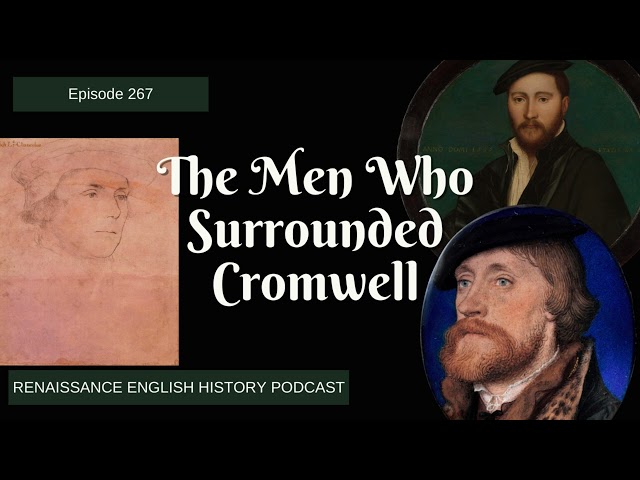
Thomas Cromwell was Henry VIII’s chief revolution commander. He dissolved monasteries, engineered divorces, and reshaped English law. His political maneuvers fill countless historical accounts, yet what was in his heart remains locked away. While courtiers whispered about the king’s mistresses and nobles schemed through marriage alliances, Cromwell’s private affections stayed hidden.
Hilary Mantel’s Wolf Hall imagines him yearning for his sister-in-law Johane, a compelling fiction that captures our hunger to understand the man behind the minister. But what truth lies beneath these literary inventions? Who was Thomas Cromwell’s wife? Why did England’s most powerful commoner never remarry after becoming a widower? And were there really any affairs?
The answers reveal a man whose personal restraint matched his political cunning.
The Merchant’s Daughter: Elizabeth Wyckys
Elizabeth Wyckys came from London’s working heart. Her father, Henry Wyckys, dealt in cloth, the trade that built Tudor England’s wealth. When her first husband died, Elizabeth found herself a widow with modest means but solid connections in the capital’s merchant community.
Around 1515, she married Thomas Cromwell. He was then climbing from his rough Putney origins, having returned from adventures in Italy and Flanders with ambition and legal training. Their home on Fenchurch Street became the foundation of Cromwell’s London life. Elizabeth bore him three children: Gregory, who would carry the family name, and daughters Anne and Grace.
This marriage anchored Cromwell among London’s merchant class rather than nobility. While other ambitious men sought wives with aristocratic bloodlines, Cromwell chose substance over status. Elizabeth brought respectability and commercial connections, assets that would prove valuable as her husband’s career accelerated.
The Tragedy of 1529
Death struck the Cromwell household with terrible efficiency in 1529. Elizabeth, Anne, and Grace all died within months of each other. The sweating sickness (that mysterious Tudor killer) likely claimed them, though records remain sparse. Only Gregory survived the plague that devastated his father’s family.
The timing proved cruelly ironic. Just as Cardinal Wolsey’s power crumbled and Cromwell prepared to serve Henry VIII directly, personal catastrophe shattered his domestic world. Letters from this period hint at profound grief, though Cromwell’s habitual reserve keeps his deepest emotions hidden from history.
The widower who emerged from 1529 never sought another wife.
The Puzzle of Perpetual Bachelorhood
Cromwell’s refusal to remarry defied Tudor convention. Widowers of his rising status typically found new wives within years, if not months. Marriage meant alliances, heirs, and household management, practical necessities for successful men.
Yet Cromwell remained alone. He possessed an heir in Gregory, which reduced pressure for additional children. Political caution may have influenced his choice; marriage alliances could become dangerous liabilities in Henry VIII’s volatile court. A wife’s family might drag Cromwell into factional disputes or create conflicts of loyalty.
Perhaps grief and genuine attachment to Elizabeth’s memory kept him single. His letters reveal a man capable of deep family affection, suggesting emotional bonds stronger than mere political calculation.
Johane Williamson and the Literary Romance
Elizabeth’s sister Johane had married John Williamson and had a daughter, also named Johane. After Elizabeth’s death at the end of 1528, Johane appears to have moved into Cromwell’s household at Austin Friars to help with domestic affairs and care for Gregory during this difficult period. However, Johane herself died not long after Cromwell made his will in July 1529. Her husband John continued to serve as Cromwell’s agent until 1540, maintaining the family connection.
Hilary Mantel transformed this brief period when Johane lived in Cromwell’s household into something more romantic, imagining tension and unspoken desire between the grieving widower and his sister-in-law. The fiction works brilliantly, particularly since Johane’s early death creates perfect dramatic possibilities for unfulfilled attraction and lingering grief.
But contemporary evidence supports no such relationship. Johane appears in records as a devoted sister and housekeeper, nothing more. The rumor persists because it fills a void in our knowledge, giving emotional color to a man who guarded his feelings carefully.
Family Man and Political Strategist
Cromwell channeled his paternal instincts toward Gregory and extended family. When Gregory came of age, Cromwell arranged his marriage to Elizabeth Seymour, sister of Henry VIII’s third queen, Jane Seymour.
This match was the height of Cromwell’s strategic brilliance. Rather than remarrying for his own benefit, he focused on elevating his son through marriage alliances. Gregory’s connection to the Seymour family provided insurance and advancement. This was a classic Cromwell maneuver that served multiple purposes while appearing straightforward.
Love Life Without Scandal
In a court notorious for sexual intrigue, Thomas Cromwell’s personal life remained remarkably clean. Henry VIII cycled through wives while conducting affairs. Nobles like Henry Norris and William Brereton lost their heads partly due to alleged romantic entanglements with Anne Boleyn. Thomas Wyatt’s poetry hinted at dangerous attractions to Anne as well.
Cromwell avoided such complications entirely. No contemporary sources suggest mistresses, inappropriate attachments, or romantic scandals. His enemies (and he accumulated many) never attacked him for sexual impropriety, a common weapon in Tudor political warfare.
This restraint may have strengthened his position. While other courtiers stumbled through romantic entanglements that became political vulnerabilities, Cromwell’s personal conduct remained beyond reproach.
The Quiet Heart
Thomas Cromwell’s love life tells a story through absence rather than action. His only documented marriage was to Elizabeth Wyckys, a cloth merchant’s daughter who gave him children and respectability. After her death in 1529, he never remarried, despite rising to unprecedented power and wealth.
Rumors of affairs with his sister in law Johane remain literary invention rather than historical fact. In a court saturated with sexual scandal and romantic intrigue, Cromwell’s private life stayed remarkably, perhaps deliberately, quiet.
This restraint fascinates us precisely because it seems so unusual. We expect powerful men to indulge in romantic excess, yet Cromwell apparently chose otherwise. His heart remains history’s secret, locked away with the same care he used to guard state documents.
Bad Tudor bromances were more than just courtly drama—they were high-stakes relationships where betrayal could mean exile, disgrace, or even death. From Henry VIII’s volatile friendships to Elizabeth I’s emotionally charged alliances, the Tudor court was a minefield of loyalty, ambition, and personal power plays.
Let’s dive deep into the most infamous bromance breakups of the Tudor era—those fascinating, messy, and often fatal fallouts that reveal just how dangerous it was to get close to the crown. Whether you’re a Tudor history buff or just love a good friendship-gone-wrong story, these bad Tudor bromances deliver all the intrigue, betrayal, and backstabbing you could ask for.
Transcript of Bad Tudor Bromances: When Powerful Friendships Went Very, Very Wrong
Today, we’re going to talk about some Tudor bromance breakups. Unless you’ve been living under a rock lately, you’ll have noticed a pretty high-profile bromance breakup in the news over the past few days involving a president and a very wealthy man.
Without diving into the politics of that—because that’s beyond the scope of this channel—I thought it would be fun to take things back to Tudor England and look at some of the most high-profile bromance breakups of the period.
Let’s talk about bro breakups. Not the kind where someone unfollows you on Instagram or posts nasty things about you on Twitter, but the 16th-century kind—where betrayal might actually end with you losing your head. Literally.
The Tudor court was full of alliances, friendships, and high-stakes politics, all dressed up as loyalty. We talk about it all the time. But as we all know, in Tudor England, being close to power often meant being dangerously close to disaster. So today, in honor of a very public modern bromance implosion, we’re looking at the most dramatic, most awkward, and yes—occasionally most fatal—bromance breakups of the Tudor period.
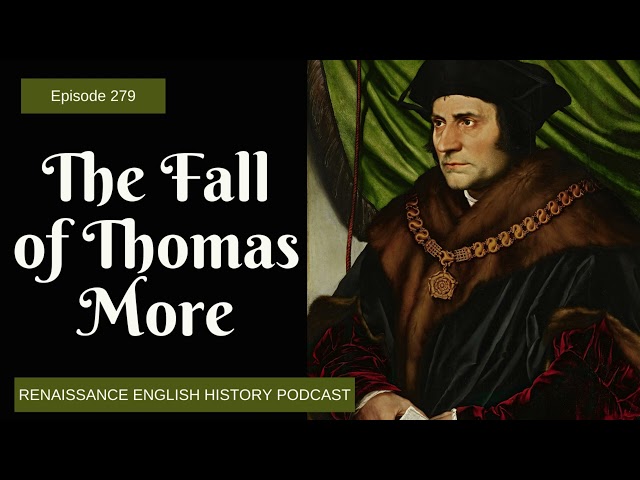
Let’s start with the one that still makes historians wince: Henry VIII and Thomas More. The “It’s not you, it’s… well, actually, it is you” breakup.
Once upon a time, Henry VIII and Thomas More were the Renaissance version of intellectual besties. More was witty, cool, and principled. Henry loved having someone around who could match him in Latin puns and theological debates. He even made More Lord Chancellor after Thomas Wolsey fell from grace (more on that in a minute).
But then came Henry’s divorce—and his demand that everyone recognize him as the Supreme Head of the Church of England. More politely declined. He didn’t speak out against the king, but he also wasn’t going to sign on. Henry did not take that well.
At first, More was just frozen out. He was pushed into retirement, then imprisoned in the Tower, and finally executed in 1535. Henry was reportedly sad about it—which is a strange vibe when you’ve just had your old friend beheaded. Still, you can’t argue this wasn’t one of the most emotionally intense bro breakups of Henry’s reign. He cared. It didn’t stop him from sending More to the axe, but he cared.
Next up: Edward VI and the Duke of Somerset—Uncle Problems: Royal Edition.
When Edward VI became king at just nine years old, his uncle Edward Seymour, Duke of Somerset, stepped in as Lord Protector. For a while, Somerset basically ran the country, and young Edward seemed fine with that. He even called him “my most loving uncle.”
But then things started to shift. Somerset wasn’t great at making friends on the council. He made enemies. He made his fellow nobles furious because he had some populist beliefs that didn’t sit well with the elite. He actually favored ending land enclosures, for example—and we talk about that when we cover Kett’s Rebellion, which he basically bungled the response to.
Then his own brother tried to oust him. So Somerset had his brother executed. You know—just really awkward family dinners all around. Eventually, Edward grew frustrated. In his private journal, he noted Somerset’s downfall with all the emotion of an Excel spreadsheet:
“The Duke of Somerset had his head cut off today on Tower Hill between eight and nine in the morning.”
Of course, Edward’s diary isn’t exactly full of emotion in general. It just sort of lists the events that happened. And, to be fair, he had recently executed his other uncle. So you get the sense that Edward was ready to move on. It went from “my dear uncle” to “that guy we used to know.”
Next up: Henry VIII and Charles Brandon—Bro Code Violation: Royal Sister Edition.
This one is more fun—and less fatal, thank goodness. Charles Brandon was Henry’s childhood bestie. He was actually a little older than Henry, which made him super cool in Henry’s eyes. They trained together. Charles taught him jousting. They went hunting. They wrestled. Real testosterone-fueled bromance stuff. Henry loaded him up with titles, made him the Duke of Suffolk, and basically kept him at court as his wingman.
And then Charles went and married Henry’s sister, Mary Tudor in secret. Without asking permission. Cue the royal meltdown. Henry was furious. Marrying a royal without the king’s blessing was a massive overstep—even for someone in the inner circle. Brandon and Mary were hauled back to court, fully expecting to lose everything—or worse.
But Mary, clever as she was, talked Henry down. Brandon had to pay a massive fine, but Henry forgave him. Eventually, he was welcomed back. They stayed friends for the rest of Brandon’s life. He even carried Henry’s sword at Anne’s coronation. So while this was a classic “you married my sister behind my back” situation, it’s also one of the few Tudor bromance breakups with a genuine reconciliation. So that’s sweet. Charles Brandon: possibly the only man in Tudor England who pulled off a comeback like that after breaking the bro code and the law against Henry.
Next up: Robert Dudley and Sir Walter Raleigh — Two’s Company, Three Is a Power Struggle.
This one’s less a breakup and more a long, smoldering frenemy situation. Robert Dudley and Walter Raleigh were both Elizabeth’s favorites at different times. Dudley had been the Queen’s trusted companion for decades. He was her true love—handsome, polished, charming, and constantly speculated to be her maybe-sort-of boyfriend.
Then along comes Walter Raleigh—charismatic, poetic, swaggering. He had the gall to charm Elizabeth with his own flair: sending her gloves, planting potatoes, founding colonies—the nerve!
Dudley didn’t love the competition. There were veiled insults, political undercutting, and both men trying to one-up the other at court. While they weren’t openly hostile, there was definitely shade being thrown on the regular.
Raleigh later got into serious trouble for secretly marrying one of Elizabeth’s ladies, while Dudley stayed on the Queen’s good side until the end—even after he married her cousin. It’s like watching two alpha influencers compete for the same brand deal—just with more ruffs and fewer ring lights.
Okay, now: Thomas Cromwell and Thomas Howard, Duke of Norfolk — Enemies with Benefits (Until They Weren’t).
Cromwell and Norfolk were never exactly friends, but for a while, they needed each other. Cromwell was the ultimate self-made man, rising from a blacksmith’s son to Henry’s most powerful minister. Norfolk was old-school nobility—steeped in family pride and suspicious of Cromwell’s reformist zeal and upstart ways. But they could cooperate when it suited them—first to raise Anne Boleyn with Henry VIII, and then, when Anne needed removing, they both had their reasons to help.
Cromwell eventually pushed too far—especially with the disastrous marriage to Anne of Cleves. Norfolk saw his chance, pounced, and led the charge to bring Cromwell down. The irony, of course, is that Norfolk himself was arrested just a few years later and only escaped execution because Henry conveniently died the night before his sentence was to be carried out. Tudor Karma moves so fast.
Next up: Henry VIII and Cardinal Wolsey — The Mentor Who Couldn’t Deliver.
Wolsey was the man in Henry’s early reign. He made the Church dance, kept Europe talking, and probably poured the king’s wine at dinner. He helped build Henry’s image as a Renaissance prince—and did most of the paperwork to prove it.
But when Henry wanted his divorce from Katherine of Aragon, Wolsey couldn’t get the Pope to say yes—and Henry was not impressed. Wolsey was stripped of his power, sent away from court, and then, you know, accused of treason.
He died en route to London before he could be tried. So technically not a full execution, but let’s not pretend Henry was planning a warm welcome. It’s one of the sadder endings because Henry had leaned on Wolsey for so many years. But when the biggest favor of all went unfulfilled, it was over.
Next up: Henry VIII and Thomas Cranmer — The Bromance That Somehow Survived.
Let’s take a quick break from the drama for a rare sighting: a bromance that didn’t end in flames or on a scaffold. Thomas Cranmer, Archbishop of Canterbury, was one of Henry’s key allies during the Reformation. He helped annul Henry’s first marriage, supported his religious reforms, and quietly backed Protestant policies—even when the mood at court was turning.
At several points, Cranmer’s enemies tried to bring him down, but Henry always shielded him. He even gave Cranmer his royal ring once as a sign of protection and told Cranmer’s accusers to, you know, like—back off.
Somehow, Cranmer managed to keep Henry’s favor when so many others had failed. Maybe it was luck. Maybe it was loyalty. Or maybe Henry just liked the guy. Either way, Cranmer was one of the very few who stayed in the king’s good graces all the way to the end.
Henry even left him in a position of power for Edward VI’s reign. Of course, Cranmer’s story doesn’t end well under Mary—but that was a different monarch and a totally different vibe. So while it’s not a breakup, it’s worth including as the rare survivor in a landscape of shattered bromances. A unicorn, if you will, in the court of Henry VIII.
Finally: Elizabeth I and the Earl of Essex — When Flirting Becomes Treason. Now, Elizabeth technically wasn’t a “bro,” but she was a monarch, so we’re going to kind of put this one in the same column.
This is possibly the most dramatic Tudor bromance—or whatever we want to call this particular relationship. Robert Devereux was the Earl of Essex. He was young, handsome, reckless—and very aware of all three. Elizabeth adored him, at least at first. He was witty, daring, and just unpredictable enough to be interesting. He got titles. He got favors. He got away with a lot—until he didn’t.
He disobeyed her orders in Ireland. He burst into her bedchamber without permission—a major no-no. Even if you’re cute. Maybe especially when you’re cute. He openly criticized her decisions, surrounded himself with yes-men, and seemed to believe he understood what England needed better than the Queen herself.
Then, in 1601, he took things just a tad too far. He led a botched uprising in London, hoping to rally support and take control at court. It failed—spectacularly. He was arrested, tried, and executed. The tragedy here is that Elizabeth did actually love him. Not necessarily romantically—but he meant something to her.
Here’s where it gets even more complicated: He was Robert Dudley’s stepson. Yes, Robert Dudley—her first true love. So Essex was, in a way, her last link to Dudley. That made his betrayal cut even deeper. She never really recovered from it. It wasn’t just politics—it was personal. Very personal. So if Henry VIII’s bromance breakups were bloody and transactional, Elizabeth’s were something else entirely. Emotional. Tangled. Messy.
So, let’s recap. What have we learned today? If you’re going to be besties with a Tudor monarch, you might want to: keep your ambitions low, your opinions quieter and never ever marry their sister without asking first.
Whether it was petty jealousy, political backstabbing, or just the brutal reality of Tudor court life… these bromances weren’t built to last. But they do make great stories, don’t they?
Henry VIII’s betrayals and executions defined one of the bloodiest reigns in English history. From trusted advisors to beloved queens, no one was safe from the axe once they fell out of favor with the king. This post explores some of the most shocking downfalls during Henry’s rule—including Anne Boleyn, Thomas Cromwell, Cardinal Wolsey, Margaret Pole, and Thomas More—and asks a haunting question: did Henry VIII ever regret these ruthless decisions?
As we revisit these infamous moments of betrayal and brutality, we’ll examine whether the king’s legacy was shaped not only by his thirst for power—but also by any trace of remorse that may have lingered behind the crown.
Did Henry VIII Ever Regret the Executions of Anne Boleyn, Cromwell, or Thomas More?
So today we’re going to talk about some of Henry VIII’s most brutal executions and punishments—because I count Wolsey in this list as well. Then we’ll talk about whether Henry ever regretted some of these downfalls, because evidence shows he might have. Of course, he never actually blamed himself—he blamed others for what happened, claiming he’d been given bad advice, etc., etc.
We’re going to look at four of the most brutal executions—the ones that really stain Henry’s legacy. I mean, there are a lot of them, but we’re going to pick four. And like I said, I’m including Wolsey, even though he wasn’t executed, because his downfall was so swift, and he probably would have been executed if he had lived to be tried. Then we’ll talk about whether Henry ever regretted them.
So, Henry VIII’s reign is remembered as a bloody one. Heads rolled at an alarming pace, and few—even among his closest friends and advisors—were truly safe. But once the dust settled and the scaffolds were cleared, did Henry ever regret the brutal falls he orchestrated? Was there even a glimmer of remorse behind the crown?
Today, we’ll talk about the aftermath of some of Henry’s most shocking betrayals:
The downfall of his second queen, Anne Boleyn
The execution of his right-hand man, Thomas Cromwell
The long fall of Cardinal Wolsey
And the horrifying death of Margaret Pole, an elderly noblewoman whose execution shocked even the most hardened courtier
Let’s start with Anne Boleyn. Anne Boleyn was the woman for whom Henry had broken England apart—the dazzling queen who had once been the center of his universe. But by 1536, she was fighting for her life against a tide of false accusations: adultery, incest, and treason. Her trial was a farce. Her execution was swift.
In the immediate aftermath, Henry wasted no time mourning. Just days after Anne’s death, he was seen parading on the Thames in a barge, openly celebrating with the ladies of the court. Preparations for his marriage to Jane Seymour were underway almost before Anne’s body had cooled.
Outwardly, it looked like Henry had brushed her aside without a second thought. But there are hints that her death left a deeper mark. His moods reportedly grew darker over the summer. Courtiers noticed an increasing irritability and a hardening of his already suspicious nature. He rarely spoke of Anne, and when he did, it was to blame her for her own downfall. If there was any regret there, it wasn’t the kind that softened him—it was the kind that twisted itself into bitterness and paranoia.
What about Thomas Cromwell? When Henry broke apart the old England, Cromwell had been his architect—the man who helped build the new England out of the rubble of the old one.
For years, Cromwell had been indispensable, clearing the way for Henry’s ambitions through diplomacy, legislation, and, when necessary, a few carefully arranged executions. It was Cromwell who had overseen Anne’s downfall, and yet, just four years later, Cromwell himself would fall victim to the same brutal machinery.
Cromwell’s biggest mistake was arranging Henry’s disastrous marriage to Anne of Cleves—a political match that Henry found personally unbearable. Enemies at court seized on the opportunity, and Cromwell was arrested, imprisoned, and executed within months.
Now, in this case, there actually is strong evidence that Henry did regret what he had done. The Spanish ambassador Eustace Chapuys reported that Henry called Cromwell “the most faithful servant he ever had.” He blamed others—especially the Duke of Norfolk and Stephen Gardiner—for poisoning his mind against Cromwell.
Afterwards, Henry reportedly ordered Cromwell’s portrait hidden away because he couldn’t bear to look at it. It’s one of the few instances where Henry’s guilt seems to have broken through his usual justifications. But, as always with Henry, the realization came too late to save anyone.
Now let’s talk about Cardinal Wolsey. Long before Anne Boleyn or Thomas Cromwell, there was Thomas Wolsey—the brilliant, ambitious cleric who served as Henry’s chief minister for nearly two decades.
Wolsey had shaped Henry’s early reign, securing alliances, negotiating treaties, managing the court. But when he failed to deliver the King’s annulment from Katherine of Aragon, his enemies closed in. In 1529, Wolsey was stripped of his office and titles. Two years later, he was summoned to London to face charges of treason. He died on the road at Leicester Abbey, likely of illness, but few doubted that had he actually made it to London, the block would have awaited him.
Henry’s reaction to Wolsey’s death was complex. On one hand, he raged against Wolsey’s betrayal. On the other, he was reportedly somber at the news, musing that Wolsey had served him well—until he didn’t. If Henry felt regret here, it seems to have been brief, quickly swallowed up by the narrative that Wolsey had simply failed him.
Finally, the most brutal execution of them all was Margaret Pole. Few executions during Henry’s reign were as shocking or grotesque as that of Margaret Pole. She was the Countess of Salisbury in her own right and a niece of Edward IV, which meant Margaret carried royal blood—making her a permanent thorn in Henry’s side as he grew more paranoid about threats to his dynasty.
In 1541, after years of tenuous imprisonment in the Tower, she was abruptly sentenced to death without a formal trial. Her execution was a horror. The inexperienced headsman missed the mark repeatedly, hacking her to death in a gruesome, drawn-out scene that horrified witnesses. She even reportedly tried to run away, saying that she wasn’t going to simply put her head on the block. The executioner chased her, and she was in her sixties at the time—it was a horrific and chaotic scene.
There is no record that Henry expressed any regret over Margaret’s death. In fact, it’s unclear whether he ever dwelled on it at all. Foreign observers, however, were appalled, and Margaret’s execution further darkened Henry’s reputation across Europe.
If he ever had second thoughts, they never made it into the historical record. More likely, by this stage of his reign, he was too far gone—isolated, suspicious, and convinced that bloodshed was the only sure path to security.
Speaking of executions that shocked Europe, I’m going to throw in an extra one here: Thomas More. Thomas More wasn’t just Henry’s Lord Chancellor. He had once been a beloved courtier, an intellectual companion, a trusted friend—almost a father figure.
Early in his reign, More had helped nurture the King’s humanist image. He encouraged him in his studies and praised his mind. Their relationship was deeply personal, which made More’s refusal to accept Henry’s supremacy over the Church all the more devastating.
More’s execution in 1535 was carefully staged. He was charged with treason for his silence, not for any public rebellion, and he was beheaded at the Tower. His final words were a masterclass in quiet defiance. He died, he said, “The King’s good servant, but God’s first.”
As for Henry, there’s little evidence that he openly regretted More’s death. If anything, he seemed to have convinced himself that More’s stubbornness had left him no choice. But the shadow of More’s martyrdom lingered, and abroad, Henry’s reputation suffered badly. If Henry ever felt any private sorrow for sending an old friend to the scaffold, he kept it buried deep—another hard scar on a reign increasingly defined by the blood of the once beloved.
So, did Henry ever regret any of the blood on his hands? In Thomas Cromwell’s case, this is unique—because he almost certainly did. But it was too late to undo it. With Anne Boleyn and Cardinal Wolsey, perhaps there was a passing shadow of regret, but it quickly hardened into blame or bitterness. With Margaret Pole, there’s not a shred of evidence that he felt anything at all. And with Thomas More, he seemed to justify the whole thing, insisting that More had brought it on himself.
So if Henry ever regretted anything, it wasn’t the cruelty—it was losing the people who once served his ambitions, and losing pieces of himself along the way. There we go—a little reflection on some of the worst downfalls of Henry’s reign, and whether he ever regretted them. Interestingly, with Cromwell, he did. But with the others? Not so much.
Anne Boleyn’s pregnancies were not just personal struggles; they were pivotal moments that shaped the course of English history. From the initial hope that she would provide Henry VIII with the longed-for male heir to the heartbreak of multiple miscarriages, Anne’s pregnancies had profound consequences for her reign as queen. In this episode, we explore the intense pressure Anne faced to secure a male successor, the impact her pregnancies had on her relationship with Henry, and how these events ultimately contributed to her tragic downfall.
Join us as we uncover the human side of Anne Boleyn’s story, a tale of ambition, loss, and the fierce struggle for survival in the Tudor court.
Transcript of Anne Boleyn’s Pregnancies: Hopes, Losses, and the Final Miscarriage
This is the start of May and for many people in the Tudor world, May is a month when we remember Anne Boleyn and Anne Boleyn’s story. This episode is about Anne—specifically about her pregnancies and her miscarriages.
So I want to include a bit of a content warning: if you are sensitive to discussions about miscarriage and pregnancy loss, you might want to give this one a skip. We’re going to talk about her different pregnancies, how Henry reacted, and how the final miscarriage was really the breaking point that did her in—what made Henry decide he needed to put her aside.
I’ve shared before on this podcast—gosh, back in 2010—I lost a son. And funny—I mean, not funny, obviously it’s tragic—but I was already doing this podcast by then, and I talked about it on the show. Even now, people go back and start listening from the beginning and assume it just happened. I still get emails every once in a while saying, “I’m so sorry for your loss.” And I appreciate it, of course, but I think sometimes people miss the date on that—it was fifteen years ago. That said, the experience stays with you forever.
So I also just want to say: if you are dealing with pregnancy loss, miscarriage, or fertility struggles—I went through that myself. It’s kind of one of those sororities you don’t really want to join. But once you’re in it, you find it’s a very close-knit group of people. If you’re part of that group and you ever want to talk about it, consider me a resource. I’m always here—to talk about the babies, the ones who are here, and the ones who aren’t.
That’s what we’re going to talk about today. It’s a bit of a somber one, but I think it’s important. It’s a very human story—something many people still go through today. Katherine of Aragon dealt with it too. And I think talking about these things humanizes them. It connects us to their stories. It’s one of those deeply human experiences that has crossed centuries. Women have always gone through this, and still do. And of course, it affects fathers as well—I don’t mean to place it entirely on women—but physically, it’s something women endure. Alright. I’m rambling now. Let’s get into it.
Anne Boleyn’s First Pregnancy and Elizabeth’s Birth
When Anne Boleyn was crowned Queen of England in the summer of 1533, the entire country held its breath. Her coronation, carried out with more pomp and splendor than anything London had seen in a long, long time, was not just a celebration of Anne herself—it was a public bet, a grand wager that Anne would succeed where Katherine of Aragon had failed. Anne would give Henry VIII his longed-for son—the son who would secure the Tudor dynasty and end years of dynastic uncertainty.
She was already visibly pregnant when she processed through the streets, seated in a white litter, gliding above the crowds who jostled and craned their necks to glimpse the woman for whom kings had upended kingdoms.
There was no small amount of superstition tied to this pregnancy. Astrologers had consulted the stars and confidently predicted that a prince was on the way. Tapestries with human figures were removed from Anne’s birthing chamber, lest the images somehow influence the shape of the unborn child. Henry had tournaments and celebrations planned in advance, certain that Anne would deliver exactly what he had fought so hard to obtain.
In early September, Anne withdrew to her confinement at Greenwich Palace—a solemn ritual marking the final weeks of pregnancy. The court grew quiet, more reverent as the day approached.
Then, on September 7th, 1533, Anne gave birth not to the expected prince, but to a healthy, robust daughter. The baby, with her father’s distinctive Tudor coloring, would become Elizabeth I.
But in 1533, Elizabeth’s birth was not received as triumphantly as modern hindsight might suggest. Henry’s disappointment was palpable, even if cloaked in official good cheer. The court had prepared printed announcements celebrating the birth of a prince. Clerks scrambled after the fact, forced to manually add an S to transform prince into princess.
It was a patchwork fix for a patchwork triumph. The tournaments Henry had planned were quietly canceled. There were no triumphant processions, no week-long celebrations. Still, Henry tried to console Anne—and perhaps himself. He reassured her: they were both still young; sons would surely follow.
Anne was reportedly devoted to Elizabeth, pouring her hopes into the little girl’s cradle. But privately, she must have understood the stakes. In Henry’s world, a queen who failed to produce a male heir was a queen whose position was, at best, quite tenuous.
The Second Pregnancy and Its Mysterious End
The pressure didn’t ease. Only months after Elizabeth’s birth, Anne conceived again. News reached Eustace Chapuys, the ever-watchful Imperial Ambassador by January 1534. He reported that Anne was in good health and carrying another child. George Taylor, a servant at court, wrote enthusiastically to his master that the queen had a “goodly belly.”
Henry, buoyed by the news, commissioned a magnificent silver cradle studded with jewels—ready to welcome the son he was certain would soon arrive. For a brief moment that spring, the court’s optimism returned. This time, surely, fate would reward the king and his new queen. But that second pregnancy, so full of promise, would never actually reach its hoped-for conclusion.
By the summer of 1534, Anne was visibly pregnant—enough so that her brother, George Boleyn, was dispatched to France with apologies. Anne was so far gone with child that she could not accompany the king on a planned visit. Everything suggested a healthy pregnancy was advancing. Notably, Henry postponed diplomatic travel—a decision he would not have made lightly, given how much he prized foreign alliances.
Yet by September, whispers began to circulate. Chapuys, always eager to report anything that might discredit Anne, wrote to Emperor Charles V that Henry had begun to doubt whether his lady was “enceinte or not,” and had as a result renewed and increased his affection for another lady at court.
If Anne’s pregnancy had been progressing well, Henry’s attention would not have wavered so conspicuously. Still, the exact nature of this failure remains one of the quieter mysteries of Anne Boleyn’s life. No direct record survives of a miscarriage, a stillbirth, or even an official announcement that the pregnancy had ended.
It simply vanished from court conversation. One day Anne was pregnant; the next, she was not—and no one spoke openly about it. It was rather like what would later happen to her stepdaughter, Mary I, several decades later.
Historians have long debated what happened. Some, like Eric Ives, suggest that Anne likely suffered a miscarriage—perhaps in the summer months, perhaps later—but that the event was kept discreet to avoid further embarrassment. After all, to have miscarried again so soon after Elizabeth’s birth would have been a bitter blow to the queen’s public standing.
Others, however, have proposed that Anne experienced a false pregnancy—a rare condition in which the body mimics pregnancy symptoms without an actual fetus developing. Both Katherine of Aragon and, later, Mary Tudor would suffer these phantom pregnancies
In a period that lacked modern medical understanding, a queen could easily believe herself pregnant for months before realizing the truth. Chapuys’ phrasing in his September dispatch—that the king doubted whether Anne was pregnant—leaves open the possibility that even Henry had been deceived.
If Anne’s symptoms had mimicked pregnancy but the expected baby failed to materialize, it would have been a humiliation Henry was eager to forget. It might explain why the matter was dropped so quietly. Regardless of whether Anne miscarried or whether the pregnancy had been false, the impact was the same: no child was born, no son arrived to solidify Anne’s position.
Instead, Henry’s eye began to wander, and the cracks in the marriage started to show. Anne, for her part, would have understood the danger immediately. Her power, her influence, her very safety depended on producing a living male heir. And after the anticlimax of 1534, she knew the next pregnancy had to succeed. The stakes—already high—were about to become lethal.
The Third Pregnancy and Growing Tensions
The year 1535 brought no recorded pregnancy for Anne. If she conceived, it was either lost so early that no one remarked on it, or it never happened at all. A letter from Sir William Kingston mentioning the queen’s “fair belly” was once thought to hint at a pregnancy that year, but historians later realized that it referred to the previous year—adding yet another layer of confusion to the already murky record.
In reality, 1535 was a year of growing tension. Henry’s affection cooled noticeably. While Anne remained queen, she no longer held the singular grip on Henry’s heart that she once had.
Late that year, Jane Seymour—a quiet, seemingly docile lady-in-waiting—began to catch the king’s eye. At first, Jane’s presence was barely more than a flicker at the edge of court gossip, but it would soon burn far brighter.
Anne, sharp-tongued and proud, was ill-suited to share her husband’s attention. She had fought too hard to secure her place as queen to now sit quietly by while another woman rose in favor. Her temper—once part of her charm—now irritated Henry.
Chapuys, of course ever ready to report these missteps, recorded that Henry grew increasingly cold toward her over the course of 1535. There were arguments, frayed silences, visible signs of strain. Yet Anne had one way to win back Henry’s full devotion: another child.
The Final Pregnancy and Anne’s Downfall
By the autumn of 1535, she was again pregnant. This time, more than ever, success was essential. At first, all seemed to go well. By December, the court buzzed with optimism. Henry and Anne, perhaps cautiously hopeful, must have dared to imagine that the tide was turning in their favor. With Katherine of Aragon—Henry’s first wife and Anne’s rival in legitimacy—in declining health, the political landscape seemed poised to favor Anne at last.
On January 7th, 1536, Katherine died. In theory, Anne should have triumphed. Katherine’s death meant that Anne’s marriage could no longer be contested by a living rival claimant. She was, by any earthly measure, Henry’s sole wife.
Yet the court’s reaction was strange. Some said Henry and Anne wore yellow in celebration. Others noted that yellow was a mourning color in Spain. Either way, the moment was loaded with symbolism.
Anne was carrying the future—literally and politically—but underneath the surface, danger rippled. Henry’s growing attentions to Jane Seymour continued. Katherine’s death removed a political obstacle but did nothing to repair the cracks in Henry and Anne’s relationship. If anything, it gave Henry more freedom to act as he pleased, because with Katherine gone, the threat from the emperor was no longer there.
Then disaster struck. On January 24th, Henry participated in a joust at Greenwich. Always proud of his athleticism, Henry charged into the lists and suffered a terrifying fall. Thrown from his horse, the king lay motionless on the ground. Courtiers rushing to his side feared the worst—some thought him dead. For two long hours, Henry was unconscious, and the court held its breath.
Somewhere in her apartments, carrying what she prayed was her savior, Anne waited for news that would shatter her world. When the Duke of Norfolk arrived to deliver the news, he tread carefully. Anne was pregnant, already under strain, and very vulnerable. The Duke of Norfolk broke the news as gently as he could: the king had been injured, but he was alive, and there was no reason for alarm.
Anne’s reaction was immediate. She was horrified. Henry’s brush with death was not just a personal terror—it was a political catastrophe in the making. If Henry had died without a male heir, the Tudor dynasty itself would have been plunged into chaos. Elizabeth, a small girl barely two years old, would hardly have been accepted by the powerful, divided factions at court. And Anne herself, without Henry’s protection, would have been dangerously exposed.
The shock was too much. And days later, on January 29th, 1536—the same day that Katherine of Aragon was laid to rest at Peterborough—Anne miscarried. The child she lost was a boy, estimated to be around 15 weeks gestation.
Even Chapuys, who normally took a grim delight in Anne’s misfortunes, reported the event without triumph. On the day of the interment, he wrote to Emperor Charles V: “The concubine had an abortion, which seemed to be a male child of about three and a half months, at which the king has shown great distress.”
Charles Wriothesley, herald and chronicler, added further confirmation: Anne had miscarried “a male child, as it was said, before her time, before she had reckoned herself but 15 weeks gone with child.”
The reports are sober, grim—and crucially, at the time, they make no mention of deformity or anything abnormal about the fetus despite the later lurid rumors that would circulate. For Anne, the loss was an unmistakably public failure. A boy—finally, a boy—and he was gone. The emotional weight must have been crushing.
Anne, according to reports, blamed the miscarriage on the shock she suffered hearing about Henry’s accident. Contemporary medicine often linked strong emotions to the loss of a child, and Anne’s explanation would have seemed perfectly plausible to her contemporaries. After all, she had been carrying the hope of a dynasty in her womb, and the terror that it might all come crashing down with Henry’s fall could very well have been enough to precipitate a miscarriage.
Yet not everyone at court was willing to accept this explanation. Chapuys, who viewed Anne with unrelenting suspicion, noted skeptically that Norfolk had taken care to deliver the news cautiously, “in a way that she would not be alarmed.”
Others at court began to whisper that Anne’s miscarriage was no accident. Perhaps it was a sign that God disapproved of the union. Some even murmured that Anne’s body was somehow incapable of producing healthy male heirs.
As Anne grieved, she must have known that this loss would not simply be mourned—it would be weaponized. At first, Henry seemed genuinely devastated. For a few brief days after the miscarriage, he reportedly showed Anne real sorrow. This had been his son too—his longed-for prince—and the loss struck hard.
But Henry was not a man who dwelt long in grief. Almost immediately, his sadness curdled into something far more dangerous: disappointment, resentment, and the cold, calculating search for an alternative.
According to Chapuys, when Anne, desperate to explain herself, approached Henry in the aftermath of her miscarriage—pleading that the shock of his accident had caused her loss—Henry listened grimly and then, with chilling finality, told her that he now saw God did not wish to give him male children by her.
It was a devastating sentence, and Anne must have heard the full implication. Henry, who had moved heaven and earth to make her queen, was now suggesting that their union was cursed—that God Himself had withheld the male heir because of her.
This was a cosmic judgment on their marriage, and the parallels to Katherine of Aragon’s downfall were impossible to ignore. Years earlier, Henry had claimed that his first marriage was invalid because it had failed to produce a son—a failure he took as evidence that God had not blessed the match.
Now, with Anne, he was drawing the same ominous conclusion. Anne—newly miscarried, fragile in both body and spirit—found herself suddenly and terrifyingly alone. Reports from the weeks following the miscarriage suggest that Henry’s affection, already faltering, withdrew almost completely.
He spent less time with Anne. He grew increasingly open in his attentions to Jane Seymour, whose quiet, modest demeanor stood in sharp contrast to Anne’s proud and volatile personality. Jane, coached by her ambitious family, knew exactly how to play the part of the soothing, unthreatening alternative.
Meanwhile, Anne—still technically queen—moved through the court like a ghost. Her enemies, emboldened, began to circle. Even her supporters must have recognized how precarious her position had become.
Chapuys wrote gleefully that some at court speculated Henry would now take another wife. Others noted that Anne’s miscarriage had given Henry the very excuse he needed to set her aside if he wished.
Anne herself seems to have realized how badly she had miscalculated her own security. In private conversations with her ladies, she reportedly blamed jealousy—the stress of competing with Jane Seymour—for contributing to the loss of her child. A bitter irony, if true: the very fear of losing Henry may have helped bring about the catastrophe that made it inevitable.
In a few short weeks, Anne had fallen from a seemingly secure queen consort to a political liability. Her final chance had slipped through her fingers, and Henry—once bewitched by her wit and her charm—now looked at her with the cold eyes of a king seeking an exit. The clock was ticking.
In the weeks that followed, Anne’s position grew weaker by the day. Though outwardly still queen, she found herself isolated within her court. The elaborate rituals and courtesies due to a queen were maintained, but the warmth behind them had cooled. Fewer ladies flocked to her side. Fewer courtiers sought her favor. Those who had once fawned over her as the king’s darling now turned their eyes toward Jane Seymour, sensing a shift in the political winds.
Anne would have seen it too. She was no fool. Those same courtly instincts that had once propelled her rise would have made the change in atmosphere painfully obvious. She could hardly have missed the fact that Jane now received secret gifts from the king—including a locket containing Henry’s portrait—an insult that must have cut to the bone.
Henry, meanwhile, was moving from private disillusionment to quiet action. In March 1536, he began speaking more openly about his regrets over his marriage. To trusted courtiers, he allegedly hinted that his second marriage, like his first, might have been founded on false grounds. With Katherine dead, he no longer needed to justify himself to the Pope or foreign powers.
Anne’s precarious fertility record now gave him all the pretext he needed to seek a new solution. ThomasCromwell, who now had his own grievances against Anne, recognized the opportunity. Whether acting on Henry’s unspoken wishes or out of his own initiative, Cromwell began to quietly construct the case against the queen.
At first, it was vague—certain matters regarding her conduct needed to be examined—but soon it would take a more sinister shape. Anne’s enemies were many, and they had long memories. Old grudges, jealousies, political slights, and personal humiliations now surfaced and attached themselves to Cromwell’s investigations like barnacles to a ship.
And yet, in early spring 1536, Anne still held the title of queen. She attended mass; she still moved through the court with regal dignity. She could not have known precisely how little time she had left, but the warning signs must have been impossible to ignore.
The miscarriage of January had done irreparable damage. Without a living son in her arms, Anne had no shield against the ambitions of others. Henry—ever impatient, ever hungry for certainty—had already started imagining a life beyond her. And the machinery of her downfall—the lies, the interrogations, the betrayals—had begun to grind into motion. Anne had lost more than a child in January 1536. She had lost her future.
The Aftermath and Historical Rumors
In the aftermath of Anne’s fall, the story of her final miscarriage began to take on a life of its own. At the time, the official accounts made no mention of anything unusual about the lost child. Chapuys described it simply as a male fetus about 15 weeks old. Charles Wriothesley, too, recorded that it was a male child born prematurely. Neither hinted at anything grotesque or unnatural.
To those present in 1536, the tragedy was grim but straightforward: a devastating loss of a much-hoped-for son. But as the decades passed, darker rumors began to creep into the narrative.
The most notorious came from Nicholas Sander, a Catholic exile writing fifty years later during the reign of Elizabeth, Anne’s daughter. Sander, bitterly opposed to Elizabeth’s Protestant rule, painted Anne as a monster in every sense. He is the one who claimed she had six fingers on one hand, a projecting tooth, a large goiter under her chin, and—most infamously—that she had miscarried a shapeless mass of flesh.
Sander’s grotesque description was pure invention. He had never met Anne; he was not even alive when she was queen. His goal was clearly political: to discredit Elizabeth by portraying her mother as unnatural and cursed.
But his accusations proved sticky. Over time, they filtered into popular imagination, blurring the line between fact and propaganda. Even today, Sander’s lies crop up in novels and films. Modern historians have pushed back firmly.
Eric Ives, Anne’s most meticulous biographer, found no contemporary evidence for any deformity in the lost fetus, nor did any contemporary chronicler. In Ives’s words, the suggestion that Anne miscarried a monstrous child is “a smear without foundation.”
Still, the idea had taken root deeply enough that even some serious historians grappled with it centuries later. In the 20th century, historian Retha Warnicke proposed a controversial theory that Anne’s miscarriage involved a malformed fetus, and that this shocking event spurred Henry and Cromwell to move against her so swiftly.
Warnicke’s argument built on the notion that a monstrous birth would have been seen as a divine sign of sexual sin—incest, adultery, witchcraft—and thus gave urgency to Anne’s destruction. It’s an intriguing idea, but it rests on a fragile foundation: Sander’s later account, which serious scholars generally dismiss as unreliable.
Not one single document from 1536—not a letter, not a court record, not a dispatch—mentions anything malformed. On the contrary, the descriptions suggest a tragically ordinary miscarriage.
Most historians today agree that the rumor of a monstrous miscarriage belongs firmly in the realm of later anti-Anne propaganda, not fact. Anne’s downfall can be explained without recourse to supernatural horror stories. Political betrayal, Henry’s dynastic desperation, and Anne’s own precarious position were more than enough.
Legacy of Anne Boleyn and Conclusion
The miscarriage of January 1536 was not, by itself, the cause of Anne’s destruction, but it was the moment when her vulnerability became undeniable. Historians have debated just how pivotal the event was.
There’s that famous phrase saying that Anne had “miscarried of her savior,” which captures her situation vividly. Had the child lived—had Anne delivered a healthy boy in the spring or summer of 1536—the course of English history might well have been very different.
A male heir would have strengthened Anne’s position beyond easy assault. Henry, so desperate for a son, might have been willing to overlook other irritations: her sharp tongue, her political meddling, her declining favor.
She would have placed a prince in his arms. The dynasty would have been secure. The Seymour family’s ambitions would have been checked before they could gain momentum. Cromwell’s schemes might never have ripened. But the child was lost. And with that loss, Anne’s enemies found their opening.
Historians like Eric Ives have cautioned that it would be a mistake to view the miscarriage as the sole trigger for Anne’s downfall. Anne’s situation was already deteriorating in late 1535, even before she became pregnant again. Henry’s attentions were already shifting toward Jane Seymour. Cromwell and Anne were clashing over political matters, especially the redistribution of monastic wealth.
The miscarriage, in Ives’s view, did not create Anne’s vulnerability, but it did expose it—fully and irrevocably. There’s no question that the loss hardened Henry’s resolve. After January 1536, Henry stopped pretending that he saw his marriage to Anne as a divinely sanctioned union. When he said, “God does not wish to give me sons by her,” he was showing himself to be a man searching for a way to justify what he already wanted—to move on.
It’s easy, 500 years later, to look at Anne’s pregnancies purely as political events—to see the births and the miscarriages, even the phantom pregnancy, perhaps, as chess moves in a brutal game of dynasty-building, successes or failures measured only in crowns and bloodlines.
But behind the royal titles, behind the expectations—remember, there was a woman. Anne would have known the risks every time she conceived. Childbirth in the 16th century was perilous, even in the best conditions. Miscarriages were common, infant mortality was high, and medical knowledge was limited. Every new pregnancy carried with it not only hope, but fear—fear of loss, fear of death, fear of disappointing a husband whose love was not unconditional.
She must have felt real joy when she first realized she was carrying Elizabeth, real pride when she felt her daughter’s kicks, real hope when she conceived again in 1534 and in 1535—and real, devastating grief when each of those pregnancies ended in silence.
But of course, that daughter she left behind would change the course of English history. Elizabeth would reign for 45 years, ushering in a golden age of exploration, culture, and stability. That “disappointment,” born in September 1533, would become one of the most celebrated monarchs in English history.
Anne’s enemies could tear down her reputation, they could blacken her name—but they couldn’t erase her daughter. And in the end, that’s the story that would outlast them all.
So there we are, my friends—a little bit about Anne’s pregnancies. Sometimes you hear these stories and they’re just sentences. But then you think about the people behind them, and the effect those events had on their lives, and it becomes a bit more real.
Cromwell and Cranmer were two of the most pivotal figures in the English Reformation, working together to lay the legal and theological foundations of the Church of England. While Henry VIII often takes the spotlight, it was Cromwell and Cranmer who, behind the scenes, implemented the critical reforms that would forever change English religious life.
Cromwell, with his sharp political maneuvering, and Cranmer, with his deep theological insights, formed an unlikely but effective partnership. However, when Cromwell fell from grace in 1540, it was Cranmer who risked everything to defend him, demonstrating a remarkable act of loyalty.
This story of Cromwell and Cranmer reveals the depth of their relationship and their enduring influence on the course of English history.
Transcript of Cromwell & Cranmer: Acts of Loyalty:
Today, we’re going to talk about the relationship between Thomas Cranmer and Thomas Cromwell. This is another kind of Wolf Hall-adjacent video. Last night in the U.S. was the finale of The Mirror and the Light on PBS. This was actually the second time I’ve watched it—I saw it when it aired in the U.K. in the fall and did a whole series of Wolf Hall reaction videos, which you can check out.
So yes, this was my second time watching it, and I cried a lot the first time. I cried again this time. There’s just something about the pacing and the way it builds up. That ending, showing all of the different activities and reactions—Katherine Howard getting dressed in her wedding gown, Princess Mary’s look of mild disgust, Rafe Sadler crying and having his breakdown, even Call-Me-Risley was having a hard time. Just all of these people reacting as Cromwell is being led to the scaffold—it gets you.
One thing I realized the last time I did those reaction videos is that I haven’t talked a whole lot about the relationship between Thomas Cranmer and Thomas Cromwell. These two men were really the architects of Henrician Reformation—Henry’s break with Rome. One laid down the legal framework, and the other the theological one.
In the finale, they show Cranmer writing a letter in support of Cromwell. Cromwell is actually kind of surprised by it—he says it’s about as good as he could have hoped for. The show does a great job illustrating the support Cranmer gave Cromwell at the end and his emotional reaction. So I thought I’d take a few minutes to talk about these two men and how Thomas Cranmer reacted to Thomas Cromwell’s arrest and execution. Let’s get into that.
When people think about the English Reformation, they usually picture Henry VIII, who was of course larger th an life. But behind him stood two much quieter men who, in their own way, did more than anyone else to actually build the new Church of England.
And that would be Cromwell and Cranmer—the two Thomases. I think I did an episode very early on in my podcast, I think it was around episode seven or something from 2009, and it was called A Tale of Two Thomases: Cranmer and Cromwell. I think I did another one, A Tale of Two Thomases: Part Two, and it was Wolsey and More.
Anyway, Cromwell and Cranmer—the two Thomases. These men didn’t start off as natural allies. Cromwell came from the rough streets of Putney, the son of a brewer or a blacksmith, depending on who you asked. He made his way up through the hard school of European mercenary camps, merchant banking, and then legal work.
Cranmer, by contrast, was a Cambridge scholar—mild, bookish, and very cautious by nature. Their paths first really crossed in the 1530s during Henry’s increasingly desperate efforts to annul his marriage to Katherine of Aragon, so, very early 1530s, Cranmer—who had been involved in theological studies about marriage and divorce—caught Henry’s eye when he proposed using university scholars to back up Henry’s case instead of relying on the Pope.
Cromwell, who was already working under Cardinal Wolsey and then directly for Henry after Wolsey’s fall, saw Cranmer’s usefulness immediately. They weren’t close friends—they didn’t spend evenings drinking together or playing cards—but they trusted each other’s judgment. And more importantly, they needed each other.
Cromwell could manipulate Parliament and the law to force through the changes Henry wanted. Cranmer could give those changes the religious cover—he was the theological side of things. They shared something even deeper: they shared a belief that England needed religious reform, and that it had to happen carefully if it was going to survive Henry’s unpredictable moods.
The English Reformation wasn’t something that happened with a lightning strike. You didn’t just go to bed one night and wake up the next morning Protestant. It took decades—four monarchs, actually. You could make a case that even the English Civil War was a continuation of the Protestant Reformation in England.
And there were phases. There was the first phase with Cromwell and Cranmer—and that’s what we’re going to talk about. Then there was the Elizabethan Settlement, the Counter-Reformation under Mary I, and Edward’s Protestant moves. So, it happened in multiple stages. It was a very dynamic process. It didn’t just happen overnight.
Cromwell and Cranmer were behind nearly all of the initial steps in the 1530s. Cromwell was Henry’s Vicegerent in Spirituals—the man put in charge of church affairs. He handled the dirty work: forcing monasteries to close, reorganizing church finances, and writing laws like the Act of Supremacy in 1534 that formally declared Henry the Head of the Church of England.
Meanwhile, Cranmer laid the intellectual groundwork. As the Archbishop of Canterbury, he quietly steered English religious thought away from Rome. It was Cranmer who oversaw the annulment of Henry’s marriage to Katherine of Aragon. It was Cranmer who helped ease Henry’s shifting theological positions into something vaguely Protestant—without ever making Henry feel like he was becoming a Lutheran.
They worked almost in tandem. Cromwell managed the politics and the practicalities. Cranmer crafted the religious arguments. And together, they pushed forward reforms like placing the English Bible in parish churches, making changes to liturgy, and initiating doctrinal shifts such as the rejection of papal authority.
You can even see this dynamic in the Great Bible that Henry released. In its imagery, Henry receives the word from the Lord and then passes it—on one side to Cranmer, who gives it to the clergy, and on the other side to Cromwell, who passes it to the nobility. From there, it trickled down through the different layers of society to the people at the bottom. Neither man moved faster than Henry allowed, but behind the scenes, they were building something far more radical than Henry probably even realized.
In the summer of 1540, after years of carefully surviving Henry’s moods, Cromwell finally misstepped. The marriage he arranged between Henry and Anne of Cleves was a disaster from the moment Henry met her.
By that point, Cromwell had also made too many enemies. Powerful nobles resented his low birth and rapid rise, and conservatives at court were eager to roll back his Protestant-leaning reforms. On June 10th, Cromwell was arrested during a council meeting—dragged away without even being allowed to speak in his own defense.
Most of his so-called allies scattered immediately. But Cranmer, normally the most cautious man at court, took an enormous risk. He wrote a letter directly to Henry VIII, almost pleading for Cromwell’s life. In the letter, he didn’t just defend Cromwell’s character—he reminded Henry of how much Cromwell had done for him, pointing out that no one had served the king’s wishes with more energy or loyalty.
But it was also like, “You know, I believed him to be this—but if he’s really that, then who can you even trust anymore?” In fact, I’ll read you part of the letter now. He says:
“I heard yesterday in your Grace’s Council that he [Cromwell] is a traitor. Yet who cannot be sorrowful and amazed that he should be a traitor against your Majesty? That he, who was so advanced by your Majesty; he, whose surety was only by your Majesty; he, who loved your Majesty—as I ever thought—no less than God; he, who studied always to set forward whatever was your Majesty’s will and pleasure; he, who cared for no man’s displeasure to serve your Majesty; he, that was such a servant, in my judgment, in wisdom, diligence, faithfulness, and experience, as no prince in this realm ever had; he, that was so vigilant to preserve your Majesty from all treason, that few could be so secretly conceived but he detected the same in the beginning. If the noble princes of memory—King John, Henry II, and Richard II—had had such a counsellor about them, I suppose that they should never have been so traitorously abandoned and overthrown as those good princes were. I loved him as my friend, for so I took him to be; but I chiefly loved him for the love which I thought I saw him bear ever towards your Grace, singularly above all others. But now, if he be a traitor, I am sorry that I ever loved him or trusted him, and am very glad that his treason is discovered in time. But yet again, I am very sorrowful—for whom shall Your Grace trust hereafter, if you must not trust him? Alas, I bewail and lament Your Grace’s chance herein. I pray God continually, night and day, to send such a counsellor in his place—whom Your Grace may trust, and who, for all his qualities, can and will serve Your Grace like he did, and who will have so much solicitude and care to preserve Your Grace from all dangers, as I ever thought he had.”
For a man like Cranmer, who was so cautious, that was a really big deal—to have said all of that, to have defended Cromwell’s character, and to have reminded Henry how much Cromwell had done for him. In some ways, Cranmer was almost putting his own neck on the line for this man who had been branded a traitor. Cranmer was really the only person who stuck up for Cromwell like that.
Henry ignored it, of course. Cromwell was executed on July 28, 1540. Cranmer’s letter remains, and it’s a record of true loyalty at a court where most people were really only ever loyal to their own survival. Of course, like Cromwell said in the episode itself, he has to temper all of the good stuff with: “But if it’s not true, then he’s a traitor.” Then, of course, he says, essentially, I’m very glad you found out about it—but he certainly went out of his way to list all the good that Cromwell had done first.
So after Cromwell’s death, Cranmer must have known he was more exposed than ever. The man who had protected the reformers—who could steer Henry’s anger away from them—was gone. Cranmer survived, but he did so in a much more precarious world.
Still, that letter to Henry shows something very rare—not just political calculation, but something real. Cranmer and Cromwell had built the English Reformation side by side, brick by brick. In the end, Cranmer couldn’t save him. But he sort of tried—when almost no one else did. And in Henry’s world, that kind of loyalty was almost unheard of.
So I’d love to know what you think: was Cranmer’s loyalty genuine, or was it a survival strategy? Should he have done more? Could he have done more? Let me know in the comments what you think. And I’d also love to know what you thought about the series as well. I just love it—it’s just poetry. It’s so beautiful.
The dissolution of the monasteries was one of the most seismic events in English history, reshaping religious life, society, and the landscape itself between 1536 and 1540. Ordered by Henry VIII and carried out by Thomas Cromwell, the Dissolution saw over 800 monasteries, priories, abbeys, and convents across England closed, stripped, and dismantled. But beyond the ruined buildings, this period left thousands of monks, nuns, and friars suddenly displaced—cut off from their communities, vocations, and way of life.
In this post, we’ll explore what really happened during the dissolution of the monasteries and what it meant for the people who lived through it.
Transcript of What Happened to England’s Monks and Nuns?
Today, we’re going to talk about the dissolution of the monasteries—very briefly. The dissolution is a massive topic, right? Books—many, many books—have been written about it, so we’re not going to dig in deep. This is just a quick skim.
I’ve done fuller episodes on this over the years, especially back in 2017 when it was the 500th anniversary of the 95 Theses. I did a big series on the Reformation, including a full episode on the Dissolution. I’ve also done lots on Cromwell and his role in it. So if you want to dig deeper, I’ll put links to some of those episodes below.
Today, we’re just going to talk briefly about some of the famous priories and monasteries that were dissolved, as well as what happened to the monks and nuns whose livelihoods were taken away.
Between 1536 and 1540, more than 800 religious houses across England were closed, stripped, and scattered. It was one of the most dramatic transformations in English religious life—and it wasn’t just about breaking with Rome. Henry VIII wanted power. He wanted wealth. And Cromwell delivered both.
Monasteries were more than places of prayer. They were hospitals, libraries, schools, homes, even hotels for weary travelers. Their destruction wasn’t a neat, quiet thing. It was loud. It was public. It was brutal. For generations, they had shaped the spiritual rhythm of English life—and suddenly, they were just gone, dismantled brick by brick, altar by altar, with the king’s blessing.
Let’s talk about some of the famous monasteries and abbeys that fell. We’ll start with Glastonbury Abbey. Actually, people have noticed I have a lot of Glastonbury stuff around behind me—those are paintings of Glastonbury. I’ve got some cards you can’t see, but whatever. I’ve got some paintings over here. I love Glastonbury. It’s one of my favorite places.
Nowadays, it has this kind of woo-woo, new-age-y feel to it—which is really cool, too. It’s a neat mix of the mystical and the historical. I really love it. Anyway—Glastonbury Abbey. It was ancient, wealthy, and steeped in legend.
It was rumored to be the resting place of King Arthur. Its abbot, Richard Whiting, was in his eighties when Cromwell’s commissioners came. He refused to surrender—and that sealed his fate. In 1539, he was dragged to Glastonbury Tor (which is the tower I have paintings of back there—it’s that tower on the hill). He was hanged, drawn, and quartered as a traitor—at over eighty years old. thank you very much.
The abbey’s treasures were seized, its library was scattered, and its sacred spaces were left to rot. This was sacrilege to many people. Obviously, this went beyond politics. It was just sacrilegious.
Then there’s Fountains Abbey in Yorkshire. It had been one of the wealthiest Cistercian houses in Europe. Its lands stretched for miles. Its buildings were grand. The monks surrendered in 1539 without any violence. The abbey did not survive. The buildings were gutted, the valuables were hauled off, and the estate was handed to one of Henry’s men. Today it stands in ruins—but the scale still impresses.
Tintern Abbey—another one—was set in a river valley in Wales. It was dissolved in 1536 and was one of the earliest casualties of the Dissolution. Initially, there was this idea that only the most corrupt houses would be targeted—or the smallest ones that weren’t really making a profit. But then it moved on to everything.
Like, they didn’t really have a consistent process. It was just, “Oh, there’s money here, there’s wealth, it’s an abbey or a monastery—let’s get rid of it.” So there wasn’t really any kind of method to it at all.
Tintern was one of the first. Its monastic life ended quietly. The ruins survived, and by the 18th century it had become a favorite subject for poets and painters—transformed from a spiritual center into a symbol of picturesque decay.
Waltham Abbey had royal connections and deep historic roots. It was said to be the resting place of Harold Godwinson. It closed in 1540. Its buildings survived for a while, but over time they were also dismantled.
And the final one we’ll mention is Lewes Priory. It wasn’t just dissolved—it was obliterated. Cromwell’s agents used gunpowder to destroy what remained, leaving very little behind. It was one of the most dramatic erasures of a religious house.
So what happened to all of the people who were living there—the monks and the nuns? Well, for the monks, there were a couple of different options. What happened next depended on your age, your rank, and your obedience.
Abbots who cooperated were often rewarded with very generous pensions. Some lived out their days in relative comfort. The average monk—especially the younger ones—got far, far less.
Many were given just very small stipends and told to fend for themselves. A few found work as schoolmasters or chaplains. Some tried to carry on their religious lives privately, or they became secular clergy under the new Church of England. Others simply vanished into lay life, taking up farming or a trade.
For men who had spent decades in quiet routine, the upheaval was jarring—and often humiliating. Not everyone went quietly. A handful of abbots refused to surrender their houses, like we said with Glastonbury, they were arrested, tried for treason, and executed.
In addition to Glastonbury’s Richard Whiting, there was also Reading’s Hugh Cook and Colchester’s John Beche. They died as criminals in the eyes of the crown—martyrs to some, rebels to others.
Now, nuns had a very different outcome. They were in a much worse position. They weren’t eligible for full pensions, and because they were nuns, they weren’t allowed to marry under church law.
With no roles left in a reformed church, many had to go live with relatives. Some gathered in informal communities of ex-nuns. A few appealed for housing support. Most faded from the record—their lives effectively erased.
Friars were the most vulnerable—especially the Franciscan friars. They were left absolutely destitute. Their orders did not own property, so they had nothing to fall back on. Some begged, some preached quietly, and others just disappeared completely. There was no safety net for them at all.
Now, that’s just talking about the monks and the nuns. Then there were the communities they served—people who had relied on these houses of worship, these monastic houses, for centuries. Like I said, they were schools, hospitals—they gave out alms to the poor. They were an essential part of the community.
And suddenly, Henry just sold off their land and the buildings to the highest bidder. His henchmen—his people who were loyal to him—got to buy all of those properties. This was also right when the wool trade was starting to take off even more and become more profitable.
So they started enclosing all the lands to graze sheep. All of this common land was gone. And those new landowners weren’t about to start handing out alms or providing the same services that the monasteries had before.
It was a real gap—a real hole—for people in their communities. And it took a long time to figure out who was going to replace those services and how they were going to be replaced. It was a massive period of transition for towns and villages that had relied on these spaces. Yeah—a massive upheaval for people all around, just so that Henry could have more money, land, wealth, power, and be in charge of the Church.
Anyway, the ruins of many of these monasteries still stand, but the people are gone. Of course, the monks, the nuns, the friars didn’t just lose their buildings—they lost communities. They lost their vocations. They lost purpose.
Cromwell’s reform wasn’t just about power or profit—it was about control. It left behind a country that had been spiritually uprooted, piece by piece, stone by stone. So there we have it—a little bit about the Dissolution of the Monasteries and some of how people were affected by it.
Henry VIII vs daughter Mary was more than a family disagreement—it was a dangerous standoff with life-or-death stakes. In 1536, Mary Tudor refused to acknowledge her father’s authority as Supreme Head of the Church of England, defying both royal will and religious reform. Her refusal to sign the Oath of Supremacy put her in the same perilous position as others who had gone to the scaffold for less. Once his cherished daughter, Mary had become a political liability.
This episode explores just how close Henry came to executing his own child—and why Mary ultimately chose submission over martyrdom.
Transcription of Henry VIII vs. Mary: How Close Did He Come to Executing Her?
Something exciting is happening, which is that Wolf Hall: The Mirror and the Light is on in the US, finally. So I actually did back in November and December when it was on in the UK, I did a series of reaction videos and breakdowns and things like that.
But I’m gonna do another set looking at different topics just because it is so popular. I’m watching it again. It’s so amazing. Just like the books, everything about Wolf Hall is just the best.
When I was doing this first video reaction back in November, which seemed like such a long time ago, I looked at the execution scene of Anne Boleyn and how realistic was it.
I had this whole issue around them showing that Henry was getting married to Jane at the exact same time. I get it was for dramatic effect, but it was bad enough as it was. You didn’t have to make it exactly at the same time. Anyway, today I’m gonna talk about something different.
Which is the relationship between Henry and Mary, his daughter, and whether or not there was really any threat to Mary Tudor. So would Henry VIII really have killed his own daughter?
So in 1536 when the series starts, Mary Tudor was isolated. She was out of favor. She was refusing to take the Oath of Supremacy that named her father as the Head of the Church.
After Anne Boleyn‘s fall, Mary had hoped for reconciliation, but instead things actually wound up getting even more dangerous for her. So how close did she come to execution and would Henry have actually done it? Let’s discuss.
So Mary had suffered deeply duringAnne Boleyn’s rise. She’d been declared illegitimate, she’d been stripped off of her household. She was forcibly separated from her mother. Anne’s execution in May of 1536 seemed like it might change everything. Mary hoped that Henry would soften, maybe even restore her to the line of succession.
And certainly there were those, like the show shows, the Pole family who was hoping as well that she would get restored. But instead, Thomas Cromwell stepped in. He made it clear if Mary wanted peace, she’d have to submit not just to her father, but to his new role as the Supreme Head of the Church of England.
The political had become personal and Cromwell’s pressure campaign would push her to the brink. The Oath of Supremacy wasn’t just a signature, and this is what Bishop Fisher and Thomas More had found out. It was a renunciation, and that’s why they could not sign it in good conscience.
By taking the Oath of Supremacy, Mary would have had to deny the Pope’s authority and acknowledge Henry as the Head of the Church, and even worse, accept that her parents’ marriage had never been valid.
That meant calling herself a bastard, which for a devout Catholic, for the daughter of Katherine of Aragon, this wasn’t just painful, this was perilous to her spirit. To her, the Pope was God’s voice on earth. Signing the oath would be a betrayal of her conscience and her faith and her mother’s memory.
For a time, Mary refused and that refusal put her life in danger. Cromwell didn’t rely on subtlety. Mary was placed under a tight watch, denied visits from friends and allies, and bombarded with letters, insisting that she submit.
Some were laced with direct threats. If she refused, she could be tried for treason. And in 1536, treason meant death. Henry had already executed Thomas More and Bishop Fisher for refusing the same oath.
Anne Boleyn, his wife, had gone to the block just weeks earlier. Mary knew full well what her father was capable of. Cromwell told the Imperial Ambassador Eustace Chapuys that Mary’s stubbornness could cost her life. Was it a bluff? Some historians think so, but to marry isolated and frightened, the threat probably felt very, very real.
And she had every reason to believe that they would follow through. Would Henry have really crossed the line though? Few monarchs ever had, but not none.
Peter the Great of Russia, this was later, but Peter the Great of Russia would famously have his son Alexei, tortured and executed in 1718 for defying him. That was two centuries later, like I said. But it does show that there was sort of an idea that this could be done, that the monarch had to put monarch ideas before family ideas.
And then you look at even just within living memory, whoever killed the Princes in the Tower, if they were killed, I know that’s like its whole thing, but that somebody hurt those boys. Somebody threatened those boys, and I know it wasn’t their father, but it was their uncle, potentially. And I know people have ideas.
Again, I’m not trying to start like a whole Princes in the Tower thing. We have done that on this channel before. That’s not this, but just the idea that the precedent that killing young children, killing people who were innocent, who hadn’t even done anything, much less refusing an oath, it was there.
But in Tudor England, killing your own child would’ve been shocking and unprecedented. Killing your daughter wasn’t just cruel. It was politically dangerous. And in Mary’s case, it would’ve made her a Catholic martyr, infuriated Europe and possibly even triggered a war. But what was Henry even thinking?
Well, by the summer of 1536, he was determined to stamp out any opposition to his supremacy. Mary, once his beloved pearl of the world, which he called her, had become a liability. Her refusal to submit was a challenge to everything that Henry had built. But executing Mary also risked political backlash.
Henry likely saw her as a pawn, not a threat that he needed to eliminate. If she submitted, he won. If she didn’t, he might not flinch, but ideally she would break first. He didn’t need her blood, he needed her obedience. Cromwell’s job was to get it.
Had Henry executed Mary the fallout would’ve been immediate. Her cousin, Charles V ruled the Holy Roman Empire and was still furious about the treatment of Katherine of Aragon. Killing Mary could have sparked a war, or at the very least, drawn England deeper into isolation. Even Henry as bold as he was, had to consider how far he could push before Europe pushed back.
So was the threat real? Almost certainly. Would he have gone through with it? Maybe, but we’ll never know because Mary blinked first. She signed the submission with tears falling down her cheeks, her hand trembling. She saved her own life. It’s one of the few times that Henry didn’t have to choose between power and blood, but make no mistake, he came dangerously close.
So what do you think? Would Henry have actually killed his daughter?
The fall of Thomas More is one of the most dramatic and tragic episodes of the Tudor era. Once a trusted advisor and close companion to Henry VIII, More’s steadfast loyalty to the Catholic Church ultimately led to his downfall. As the king sought to break from Rome and establish his supremacy over the Church of England, More’s refusal to compromise his beliefs sealed his fate.
His story is a cautionary tale of loyalty, power, and conviction in the face of absolute monarchy. But was he a principled martyr or a rigid idealist? This deep dive into the fall of Thomas More explores the man behind the legend and the fateful choices that led to his execution.
Rough transcript of The Fall of Thomas More: Henry VIII’s Friend Turned Traitor?
Today, we’re going to talk about the downfall of Thomas More. There are a lot of opinions about Thomas More. Some people consider him to be a martyr. Other people think he was stubborn and doesn’t deserve to be so venerated. So we’re going to talk today about Thomas More’s relationship with Henry, how deep it went, and what went so horribly wrong. So let’s discuss.
Thomas More and Henry VIII were once the closest of companions. They were bound by a shared love of learning, theology, and sharp debate. More was no ordinary courtier. He was one of the most brilliant minds of his age, a lawyer, philosopher, and statesman whose intellect Henry both admired and respected.
They exchanged letters. They engaged in lively theological discussions. Henry invited More to spend time with him at court. He relished the company of a man whose wisdom he trusted. More, for his part, saw himself as a loyal subject, bound by duty to serve the king while staying true to his principles.
But loyalty to Henry VIII was a dangerous thing. It was expected to be absolute. Unwavering and, above all, adaptable, Henry’s needs would change and those who failed to change with them, who clung to their own beliefs rather than bending to the king’s will, were discarded, often violently. Thomas More believed an unshakable truth rooted in the authority of the Church and the Pope.
Henry, however, believed in his own supremacy. Particularly, when the Pope refused to annul his first marriage. At first, Thomas More tried to walk a careful line, staying silent rather than opposing Henry’s break with Rome outright, but silence was not enough.
In 1534, Henry demanded that all of his subjects swear an oath recognizing him as the supreme head of the Church of England. More refused. That refusal, more than anything else, sealed his fate. Henry had once called More a friend. Now, he called him a traitor, and for that, More would pay with his life. Let’s talk about Thomas More. Thomas More was not born into nobility, but his intellect, his deep religious convictions set him apart from an early age.
Thomas More’s Early Life and Education
He was born in 1478, the son of a successful London lawyer. He received an excellent education first at St. Anthony’s School, and then he went to Oxford. It was there that he developed a passion for classical learning, philosophy, and theology, subjects that would define his life. His father insisted that he train in law, and though More followed that path, his interest remained broad.
More’s devout Catholicism wasn’t just a private matter, it shaped his entire worldview. As a young man, he actually even considered joining the priesthood. He spent time with the Carthusian monks and he adopted some of their rigorous spiritual discipline. Though he ultimately chose to pursue a legal and political career, he did remain deeply pious.
He attended mass daily. He also wore a hair shirt as an act of penance. His faith wasn’t something that he took lightly. It was the foundation of his identity. Even before Henry became king, More had ties to the royal family. He was already an esteemed, well respected lawyer and scholar when he first encountered the young Prince Henry, who was himself being raised with a humanist education that emphasized the classical learning in theology and statecraft.
More wasn’t his official tutor. That role belonged to men like John Skelton and John Skelton, Lord Mountjoy. We did an episode years ago on Tudor tutors. The tutors of the Tudors. I should go back and revisit that. Anyway, he was part of the circle of intellectuals, though, that surrounded Henry’s education.
The prince, with his sharp mind and deep interest in theology, was naturally drawn to More’s wit, wisdom, and humanist ideals. When Henry unexpectedly became the heir to the throne in 1502, after the death of his older brother, Arthur, More may have played a role in shaping the prince’s understanding of governance and philosophy.
By the time Henry ascended to the throne in 1509, Thomas More was already one of the kingdom’s most respected thinkers. It was during these early years that More’s influence was at its peak. He and Henry shared their love of learning, and More encouraged the king’s early reputation as a scholar ruler.
At this point, Henry was still a fierce defender of Catholicism. More undoubtedly would have reinforced the young king’s belief in papal authority and the importance of church doctrine. Ironically, the very beliefs that would later put them at odds when Henry sought to break from Rome. Henry often sought out More for discussions on governance, philosophy, and in 1518 he brought More into royal service as a member of his Privy Council.
From there, More’s rise was rapid. He was knighted in 1521. He became the Chancellor of the Duchy of Lancaster. In 1529, Henry made a fateful decision. Cardinal Wolsey, of course, had failed to secure the annulment of Henry’s marriage to Katherine of Aragon, and Cardinal Wolsey was on the way out, his star was fading.
More was appointed Lord Chancellor. This was the highest legal office in England. Wolsey had been that before. He was the first layman to hold the position, which showed Henry’s trust in him. But while More was loyal to the king, his greater loyalty was always going to be to the church. And as Henry’s battle with Rome escalated, More found himself in an impossible position.
Conflict with Henry VIII: The Break with Rome
Thomas More had always been a loyal subject, but his loyalty had limits. As Lord Chancellor, he was responsible for enforcing the king’s laws, but when those laws clashed with his faith, he couldn’t compromise. And Henry VIII was no longer simply a king, he was a man who was obsessed with securing his legacy.
His marriage to Katherine of Aragon had not produced a male heir, and he was convinced that his lack of sons was divine punishment. By the late 1520s, he was determined to annul his marriage and take Anne Boleyn as his queen. But the Pope, under pressure from Katherine’s nephew, Charles V, refused to grant the annulment.
More didn’t see this as a marital dispute. This was actually seen as a direct challenge to the authority of the church. Henry thought that he had the right to determine his own affairs, even if it meant breaking with Rome. More was a staunch defender of papal supremacy, and he couldn’t accept this. But, rather than openly defy the king, he chose a path of careful silence.
He didn’t speak against the annulment, but he didn’t support it either. In More’s mind, his silence should have been enough to keep him out of danger. Henry, though, saw this silence as resistance. By 1531, Henry had forced the English clergy to acknowledge him as the supreme head of the Church of England as far as the law of Christ allows.
This wasn’t yet a full break from Rome, but it was a clear step toward Henry asserting his authority over the Church. More was deeply troubled by this shift, but he was still Lord Chancellor, and he tried to get through this without openly defying the king. Then, in 1532, the tension grew when Henry pressured the clergy into accepting the submission of the clergy, which effectively placed the English church under royal control.
This was a direct attack on papal authority, something that More could not support. In May of 1532, More resigned as Lord Chancellor. He cited ill health. In reality, he knew that he could no longer, in good conscience, serve a king who was moving toward a full break with Rome. By stepping down, he hoped to retreat from public life and avoid further conflict.
The Final Stand: Refusal to Swear the Oath
But Henry was not about to let his former friend slip away so easily. More’s quiet refusal to support the king’s religious policies didn’t go unnoticed, and his absence from Anne Boleyn’s coronation in 1533 was a bold, if silent, act of defiance. It was clear that he had chosen his side. Henry was now fully committed to asserting his authority over the church, and he could not tolerate any challenge even from a man he had once trusted.
More had tried to avoid direct confrontation, but Henry’s England had no room for neutrality. And, soon his silence would not be enough to save him. By 1534, Henry had achieved what once had seemed unthinkable. He had broken England away from the authority of Rome and declared himself the supreme head of the Church of England.
With Anne now as his queen and Katherine of Aragon cast aside, Henry was determined to solidify his power and silence any opposition. Parliament passed the Act of Succession, requiring all subjects to recognize Henry’s marriage to Anne. and accept any children that they had as legitimate heirs. But it wasn’t just a statement on succession.
This was an ideological test, a demand for total loyalty. To enforce it, Henry required his subjects to swear an oath, affirming both legitimacy of Anne’s children and his supremacy over the church. The wording was carefully crafted. Swearing the oath meant acknowledging that the Pope had no authority in England.
This was an outright rejection of Rome, and he was making his subjects agree to it. This was where More, who had spent years walking the tightrope between loyalty to the king and loyalty to his faith, could no longer maneuver. When called on to take the oath in April 1534, Thomas More refused. He didn’t openly condemn Henry or his new marriage, but neither would he swear to something that denied the Pope’s authority.
His legal training made him cautious. He avoided outright treasonous speech, knowing that he could be imprisoned or executed Henry’s supremacy. Instead, he simply stayed silent. believing that his lack of affirmation should not be treated as a rebellion. But Henry, of course, saw things quite differently.
Imprisonment and Trial
Silence to him was defiance. If More, one of the most respected legal minds in England, refused the oath, what would stop others from questioning Henry’s authority? More’s refusal was dangerous. It set a precedent. It showed that loyalty to Rome could still exist in England. And on April 17, 1534, Thomas More was arrested and taken to the Tower of London.
At first, he was treated with some leniency. He was allowed visits from his family and access to books. But, as the months passed, his condition worsened. Henry and his ministers, particularly Thomas Cromwell, were determined to break him. More’s family pleaded with him to take the oath, to say the words that could save his life.
But Henry himself may have still hoped for More’s submission. He had once admired the man, and executing him would be a public stain on his reign. But More would not yield. He had given everything in service to Henry, his wisdom, his loyalty, his legal expertise. But he would not give up his conscience.
And for that, he would pay the ultimate price. Locked away in the Tower of London, Thomas More found himself in a grim but strangely familiar position. He had prosecuted men for heresy, seen others sent to their deaths for defying the Church, and now he was the one awaiting a fate decided by a king who had once called him a friend.
But if Henry thought imprisonment would break More’s will, he underestimated the depth of his resolve. Like we said, at first, his imprisonment wasn’t harsh. He was allowed books. He had writing materials. His daughter also visited him, and she pleaded with him to take the oath. He had no illusions about what lay ahead, but he still refused to outright denounce the king.
Instead, he carefully crafted his words, staying just within the legal boundaries to avoid outright treason while holding firm to his principles. More’s letters from the tower reveal his state of mind. He was calm, he was feeling deeply religious, and even slightly, darkly humorous at times. Writing to Margaret, he reassured her that he was at peace with his decision.
And he urged her not to grieve. His faith remained unshaken, and if anything, it seemed to strengthen as his imprisonment stretched on. Meanwhile, Henry VIII hesitated. More’s execution wasn’t a decision that he took lightly. Unlike Anne Boleyn or other perceived enemies, More had been a trusted advisor, an intellectual equal, a man that Henry had genuinely admired.
The King had hoped that More’s imprisonment alone would be enough to force his submission, that he would bend rather than break. Over the course of months, Henry sent envoys to persuade More, offering him multiple chances to swear the oath in private without public humiliation. Each time, More refused.
In June of 1535, Bishop John Fisher, More’s fellow prisoner and a similarly steadfast opponent of Henry’s policies was executed. Fisher’s death was a warning, a signal that Henry’s patience was wearing thin. The king had once been reluctant to execute a cardinal of the church, just as he hesitated to execute More.
But once that first domino fell, the next would soon follow. More knew Fisher’s fate was a harbinger of his own. If Henry was willing to send a bishop to the scaffold, there would be no mercy for him. But he still would not yield. His silence, once his greatest defense, had become his death sentence. The trap had closed, and soon, More would face the final reckoning.
More was brought to trial on July 1, 1535 at Westminster Hall before a jury packed with Boleyn’s father, brother and uncle. The proceedings, of course, were a mere formality. The verdict had already been decided. The main charge was treason. More was accused of denying the king’s supremacy over the church.
But proving this was difficult. More had said nothing that could be used against him. Enter Richard Rich, one of Cromwell’s most ambitious allies. Rich took the stand and testified that during a private conversation in the Tower, More had stated that Parliament had no authority to make Henry the head of the church.
More immediately denied this, declaring that Rich’s testimony was a blatant lie, adding, with biting sarcasm, that he would never have shared such a thought with a man of Rich’s character. But, of course, truth mattered little in a trial where the outcome was already written. Rich’s perjury was enough. The jury, likely under immense pressure, found More guilty of treason.
With the verdict decided, More finally broke his silence. Since he was condemned regardless, he spoke openly at last. No king, he declared, could rightfully claim to be the head of the church. That authority belonged to the Pope alone. He had remained silent not out of uncertainty, but out of prudence. Now, with nothing left to lose, he made his opinion clear.
Execution and Legacy
The sentence was death by hanging, drawing, and quartering, the most brutal punishment for traitors. But Henry, perhaps already uneasy about executing a man he had once held in such high esteem who was loved around the world, commuted the sentence to beheading. Even at the end, More’s execution was made to look like an act of reluctant necessity rather than outright vengeance.
His fate was set. In a matter of days, Thomas More would walk to the scaffold. On the morning of July 6, 1535, Thomas More was led from the Tower of London to Tower Hill, where his execution would take place. The streets were lined with spectators. Some came to mourn, others simply to witness the fall of a man who once was so close to the king.
More was composed and he walked with dignity even as he approached his final moments. According to reports, when he climbed the scaffold, he reassured the executioner, telling him not to fear his task. In a final act of defiant wit, he adjusted his beard a bit before laying his head on the block. He remarked “This hath not offended the king.”
Moments later, with a single stroke of the axe, Thomas More was dead. His execution sent shockwaves through Europe. Charles V, Holy Roman Emperor, was said to be appalled, lamenting that Henry had executed the only man in England worthy of the name of a statesman. Erasmus, More’s longtime friend, mourned the loss deeply, writing that England had killed her wisest man.
The Catholic Church, which had already begun to see More as a symbol of resistance against Henry’s break with Rome, would later canonize him as a saint. But did More see himself as a martyr? He never actively sought death, and he spent much of his time in the Tower trying to walk this tightrope of the legal pitfalls that might condemn him.
Yet when the end became inevitable, he embraced it with the resolve of a man who believed he was dying for his faith. In his final speech, he declared, “I die the king’s good servant, but God’s first.” To the Catholic world, this was proof of his sanctity. To Henry, it was the ultimate defiance. More’s body was buried in an unmarked grave, but his severed head was displayed on London Bridge, a grim warning to others who would challenge the king’s supremacy.
Later, his devoted daughter, Margaret Roper, recovered it and preserved it as a relic. Even in death, More remained a powerful symbol of resistance. Thomas More remains one of history’s most complex figures. To some, he is a saint and a martyr, a man who died for his principles. To others, he was a rigid idealist, unwilling to bend, even when his life was at stake.
His legacy is further complicated by his earlier role as a persecutor of heretics. He was not simply a victim of oppression, but he was also a man willing to enforce his own strict beliefs on others. But regardless of how he is judged, his influence is enduring. His writings, particularly Utopia, are widely studied.
His steadfast resistance to Henry’s religious policies has cemented him as one of the most famous figures of the Reformation, and in 1935 he was finally canonized as a saint, officially recognized as a defender of the faith. In the end, his story was not just a story of a friendship turned fatal, it was a warning of the dangers of unchecked power and the price of unwavering conviction.
We will leave it there for now. Thomas More. What do you think about him? Let me know. Leave me a comment wherever you’re listening to this. I would love to know. I personally have mixed opinions about him. I don’t love how he persecuted others for their beliefs, and he surely shouldn’t have been surprised that came back to haunt him then, given that he had done it himself. Life and people are complicated and we don’t always have to understand them or agree with them to appreciate their story and have empathy.
Wriothesley, Sadler, and Rich exemplify the intrigue and peril of Tudor politics as key members of Thomas Cromwell’s inner circle. Wriothesley, a calculating and ambitious politician, rose to prominence through Cromwell’s patronage but secured his own advancement by betraying his mentor. Sadler, a loyal and skilled diplomat, managed to maintain his integrity and navigate the turbulent court, surviving the fall of Cromwell and serving through four Tudor reigns. Rich, infamous for his treachery and moral compromise, exploited every opportunity for personal gain, becoming one of the most controversial figures of his time. Together, their stories highlight the volatile interplay of ambition, loyalty, and betrayal in one of England’s most transformative eras.
Rough Transcript of Episode 267 The Men Behind Cromwell: Wriothesley, Sadler, & Rich
This is an episode on the men who surrounded Thomas Cromwell. I’ve been doing a lot on Thomas Cromwell on my YouTube channel. I’ve been doing reaction videos every week. To the new season of The Mirror and the Light that’s on in the UK. So if you aren’t subscribed to my YouTube channel, there’s a plug for that.
And members and patrons this month got a mini audio course on Thomas Cromwell. So I’ve had a lot of Cromwell on my mind. And I realized I’ve never done an episode. I’ve done episodes on Cromwell here. David Crowther from the History of England did a fantastic talk at one of the Tudor summits. Gosh, I want to say maybe 2018 on Cromwell.
And so we’ve done a lot around Cromwell, but what I’ve never done is an episode on the men who surrounded Cromwell, the household of Cromwell. And so that’s what we’re going to talk about today.
After Cromwell’s wife and two daughters died of probably the sweating sickness. He kept his home at Austin Friars. It was a home that was filled with the people he had working for him, the servants, but also people who were petitioning. It was a very busy place. And he had a team of a handful of men that he trusted who worked with him and who were very close with him. And so we’re going to talk about a couple of those men. And we’re going to talk about Ralph Sadler, Thomas Wriothesley, aka Call-Me Risley and Richard Rich are the three people we’re going to talk about in this episode, so let’s get into it.
Key Figures: Wriothesley, Sadler, and Rich
Tudor England in the 1530s was a kingdom that was being reshaped by bold reforms and, of course, dangerous court rivalries. And at the center of this transformation process stood Cromwell. A man of extraordinary vision who had risen from humble beginnings to becoming Henry’s chief minister. Surrounding him was a select group of men who shared his ambitions, executed his plans, and when the time came, either betrayed him or carried on his legacy.
Among these figures, the ones we’re going to talk about today were Thomas Wriothesley, Ralph Sadler, and Richard Rich. Each played a critical role. In Cromwell’s meteoric rise and the reforms that defined this period of Henry’s reign, Wriothesley was sharp and calculating, and he was just the person who mastered court politics with a loyalty as conditional as it was fierce.
Sadler was a trusted aide, skilled diplomat. He maintained his integrity while outlasting the political storms that claimed many others. And Rich remains one of the most infamous opportunists of the period. A man whose actions defined moral compromise in pursuit of power.
Thomas Wriothesley: The Calculating Politician
Let’s start with Thomas Wriothesley, Call-Me Risley. Born in 1405, he came from a family of heralds and administrators. He was educated at St. Paul’s School and later at Trinity Hall in Cambridge. He studied under the influential cleric Stephen Gardner. He didn’t earn a degree, but Wriothesley’s education, coupled with Gardner’s mentorship, provided a foundation in law and diplomacy.
His introduction to court life came through the patronage of Thomas Cromwell, who met Wriothesley and recognized his ambition and his political instincts. Sometime before May of 1530, he was appointed Joint Clerk of the Signet under Gardiner, who had by that point been a secretary to Henry VIII. Alison Weir has described Wriothesley as being able, enterprising, tenacious, and ruthless Yet insufferably overconfident and egotistic.
As Cromwell rose to power in the early 1530s and became Henry VIII’s chief minister, Wriothesley transferred his service. He left his position as the clerk of the signet in 1530. And he transferred his loyalty to Cromwell, becoming Cromwell’s chief clerk and personal secretary. One of his first jobs as a member of this pool of royal secretaries, he worked with William Brereton to help secure the annulment for Henry against Catherine of Aragon.
They actually went out on a little traveling job to get the nobility to sign written statements Saying that they agreed with the annulment. So they were out there collecting, almost like getting people to sign petitions. By the mid 1530s, he was benefiting from the dissolution of the monasteries. He had been working with Cromwell on that and he was granted lands between Southampton and Winchester that had once belonged to the abbeys of Beaulieu and Titchfield.
He actually transformed Titchfield Abbey into a massive grand residence, which is where he would set up his household. He had a reputation during this time as being a very capable, But also unscrupulous operator. In 1533 he got married to Jane Cheney, who was the daughter and the heiress of William Cheney, and they had three sons and five daughters, so they were very prolific.
So in 1539 Wriothesley was appointed ambassador to Brussels. He oversaw the naval escort that brought Anne of Cleves to England, which of course was a very politically sensitive mission. That really gave him an opportunity to showcase his versatility as a diplomat. But his ambition often overrode his loyalty.
In 1540, he betrayed his mentor by relaying to the king accusations about Cromwell’s indiscretions regarding Anne of Cleves. So basically he went to the king and told him that Cromwell was gossiping about him. This treachery, coupled with the political fallout from Cromwell’s failed foreign alliances, sealed his mentor’s fate and cemented Wriothesley’s own advancement.
Later that year, after Cromwell had been executed, Wriothesley was knighted and appointed one of Henry VIII’s principal secretaries sharing responsibilities with Saraf Sadler, who is also knighted While Sadler focused on personal correspondence for the King Wriothesley handled the broader political matters He went whichever way the wind blew.
Sometimes he supported the reformers and other times he would support the Catholic faction. His power peaked in 1544 when he became the Lord Chancellor and this brought him some pretty negative notoriety. He personally operated the rack during the torture of Anne Askew, who, was a Protestant martyr accused of heresy.
This is a pretty icky thing. And the fact that Wriothesley was able to do this, the first woman, I think the only woman who was ever racked in the tower I’ll let you draw your own conclusions about what kind of person that is, but I have my opinions. Despite his power, Wriothesley’s political fortunes waned toward the end of Henry’s reign.
His attempts to arrest Queen Katherine Parr on charges of heresy were rebuffed by the king himself, who dismissed Wriothesley with scathing insults. Must have come as quite a surprise considering he thought the whole thing was taken care of. But there’s that. And then, by the time of Henry’s death in 1547, Wriothesley was outmaneuvered by Edward Seymour, who became the Lord Protector during Edward VI’s minority.
Accusations of corruption led to Wriothesley’s dismissal as the Lord Chancellor and his temporary removal from the Privy Council. He was later readmitted to the Council, but he never regained his former influence. He also played a role in the downfall of Somerset, the Lord Protector, of course he did, but his career never fully recovered.
He died on July 30, 1550, and his son Henry succeeded him as the second Earl of Southampton, inheriting the wealth and the status that Wriothesley fought so hard and compromised his morals so much to secure.
Ralph Sadler: The Loyal Statesman
Now let’s talk about Ralph Sadler, the loyal statesman. Born in 1507 in Hackney in Middlesex. He was the son of a minor official who served prominent nobles. At just seven years old, he entered the household of Thomas Cromwell, where he received an exceptional education. Cromwell recognized Sadler’s potential and ensured that he was taught to read and write fluently in French, Latin, and Greek, while also acquiring practical skills in law and finance. Sadler also became talented in horseback riding, falconry, and other pursuits that were valued at court.
By the 1530s, Sadler had risen to become one of Cromwell’s closest and most trusted associates. He was instrumental in managing Cromwell’s personal and political affairs, almost like his secretary. And this trust translated into opportunities within Henry VIII’s court. Sadler became a gentleman of the privy chamber and was soon sent on sensitive diplomatic missions.
In 1537, he was dispatched to Scotland to address complaints made by Margaret Tudor, Henry VIII’s sister, about her husband. He later negotiated the proposed marriage between the infant Mary, Queen of Scots, and Prince Edward, an alliance aimed at uniting the two kingdoms. Which then, of course, never turned into anything, but it led to the rough wooing where England thought they could force Edward and Mary to get married.
Sadler’s diplomatic skill and level headedness impressed both Henry and James V of Scotland, who commented on what a good diplomat he was. Despite his close association with Cromwell, Sadler managed to survive his mentor’s dramatic fall from power in 1540. Though briefly imprisoned, Sadler quickly regained royal favor and resumed his role as one of Henry’s most trusted advisors.
During this period he did all kinds of things from overseeing military logistics to participating in the examination of Catherine Howard’s household during her fall from grace. Sadler’s political acumen Made sure that he remained a valuable figure at court even as the factions shifted around him.
Sadler would play a prominent role in the military campaigns against Scotland during the so called Rough Wooing. He was the treasurer of the army, and in 1547 he was knighted as a Banneret following the Battle of Pinkie, a rare honor acknowledging his contributions to the war effort. Sadler’s career spanned four Tudor reigns, but his service was not without personal challenges.
Sadler’s In 1545, Sadler faced a scandal when his wife, Ellen Mitchell was revealed to have been previously married to a man long thought dead. The resulting legal complications led to an Act of Parliament legitimizing their marriage and children, which just goes to show how much he was respected, his standing, and his influence.
During Mary’s reign, Sadler’s Protestant leanings forced him into semi retirement. However, Elizabeth I reinstated him as one of her trusted counselors. In the 1560s, he reluctantly served as a jailer to Mary, Queen of Scots, which he found deeply uncomfortable. Despite his personal misgivings, Sadler carried out his duties with responsibility and care.
He made sure that Mary was treated respectfully while also listening to Elizabeth’s very strict security measures. He died in 1587 at his estate in Standon in Hertfordshire. And he left behind a legacy as a devoted servant of the crown, a capable diplomat, and one of the wealthiest commoners in England.
His long career managed to span the reigns of four monarchs, and unlike Wriothesley, it showed his ability to maintain integrity and loyalty in an era defined by betrayal and ambition. I don’t really seem like a fan of Wriothesley to you, do I? I wonder if that’s coming through.
Richard Rich: The Unscrupulous Opportunist
Now let’s talk about Richard Rich, the unscrupulous opportunist. Born around 1496, Richard Rich began his career as a lawyer and climbed steadily through the ranks of Tudor politics. Though his origins were modest compared to many of his peers, Rich exhibited an exceptional talent for aligning himself with powerful patrons. First, Thomas Audley, and then later, Thomas Cromwell.
His skill in legal matters, combined with his willingness to take morally questionable actions, made him a valuable asset in the political climate of Henry’s court. His rise began in earnest when he was appointed Solicitor General in 1533, a position that placed him at the forefront of England’s religious and political transformation.
As Solicitor General, he played a significant role in enforcing Henry VIII’s Act of Supremacy, which of course severed England’s ties with the Catholic Church. He also assisted in the trials of Sir Thomas More and Bishop John Fisher, where his testimony, based on alleged private conversations. was critical to their convictions.
Rich’s actions during these trials earned him a reputation for treachery. Moore famously called him a man always reputed, light of his tongue, a great dicer and gamester, and not of any commendable fame. Rich’s involvement in the disillusion of the monasteries also showed his opportunistic nature. Tasked with evaluating and overseeing the closure of religious institutions, he ensured that much of the wealth and the land flowed into his own hands.
Among his acquisitions was the Priory of St. Bartholomew in London, which he converted into a private estate. His newfound wealth and influence allowed him to solidify his position at court, even as Cromwell’s fortunes began to wane. In 1540, Rich, like Wriothesley, distanced himself from Cromwell as his mentor’s downfall became inevitable.
Aligning with the conservative faction at court, he played a part in Cromwell’s arrest and subsequent execution. This act of betrayal ensured his survival and allowed him to continue ascending through the ranks of government. His career reached its zenith under Edward VI when he was appointed Lord Chancellor in 1547.
In this role, he became a key figure in the enforcement of Protestant reforms. Isn’t that ironic, given he had first aligned with the Catholics? Though, his actions during this period were marked by continued moral ambiguity. He also personally participated in the torture of the Protestant martyr Anne Askew, which, like Wriothesley, showed his reputation for cruelty and self interest.
Despite his alignment with Protestant reformers during Edward’s reign, Rich seamlessly transitioned to serving Mary I, actively supporting the restoration of Catholicism. He played a significant role in the persecution of Protestants, again showing his adaptability to shifting political and religious tides without regard for personal consistency.
You gotta do what you gotta do, right? He retired from public life during Elizabeth’s reign, focusing on his estates and his family. His legacy, though, was already firmly established. As the founder of the Felstad School and the rich family dynasty, he left behind a substantial material and institutional footprint.
Yet, his name remains synonymous with duplicity, greed, and moral compromise. He died on June 12, 1567, at his estate in Rochford in Essex. While his wealth and political savvy ensured his success, his actions during his lifetime earned him enduring infamy as one of the most unprincipled figures of Tudor England.
Themes of Loyalty, Ambition, and Survival
The careers of Wriothesley, Sadler, and Richard Rich show the complexities of loyalty, ambition, and survival in Tudor England. As members of Cromwell’s inner circle, these men shared a proximity to power that came with immense opportunities and considerable risks. While their paths diverged dramatically, several unifying themes emerged from their lives.
First, loyalty to Cromwell and its limits. Each of these men owed at least part of their rise to Cromwell, whose mentorship provided access to the highest echelons of Tudor government. Sadler remained steadfast in his loyalty, even after Cromwell’s execution. He even endured personal and political challenges without compromising his principles.
By contrast, Wriothesley and Rich abandoned Cromwell when his influence waned. Wriothesley and Rich show the opportunism required to thrive in Tudor politics. Wriothesley’s swift alignment with Norfolk’s faction after Cromwell’s fall, and Rich’s ability to shift religious loyalties between Protestant and Catholic show their pragmatism.
Sadler, though less opportunistic, showed his adaptability in managing to get through decades of political upheaval across four monarchs. Ambition propelled all three of these men to extraordinary heights, but it often came at a cost. Wriothesley’s participation in acts of brutality, such as the torture of Anne Askew and Rich’s reputation for treachery and cruelty, tarnished their legacies.
Sadler’s career, while less morally compromised, still had its challenges, including the scandal involving his wife’s first marriage. Cromwell’s ability to cultivate and elevate talented men demonstrates the importance of patronage in Tudor England. These men’s fates were deeply tied to their patrons influence, and their ability to secure new alliances after Cromwell’s fall determined their survival.
Patronage not only facilitated their rise, but also showed the fragility of power when it depended on another’s favor. While Sadler is remembered as a loyal and capable statesman, Wriothesley and Rich are viewed more critically. Wriothesley’s betrayal of Cromwell and his ruthless actions as Lord Chancellor and Rich’s relentless self interest earned them reputations as symbols of the darker side of Tudor politics.
The lives of Wriothesley, Sadler, and Rich are a reminder of the human cost of power and the moral compromises that often accompanied survival in one of history’s most volatile courts. In the end, the careers of Wriothesley, Sadler, and Rich were shaped as much by their own ambitions as by the politics of Henry’s reign.
Whether through betrayal, loyalty, or opportunism, each found a way to survive a world where survival itself was no small feat. Their legacies may be mixed, but their influence on the Tudor court is undeniable. So there we have it, a little intro to Ralph Sadler, Richard Rich, and Thomas Wriothesley. What do you think?