Kings, Queens and Court

  • John of Gaunt and Katherine Swynford: The Scandalous Love Affair That Created the Tudors

    John of Gaunt and Katherine Swynford: The Scandalous Love Affair That Created the Tudors


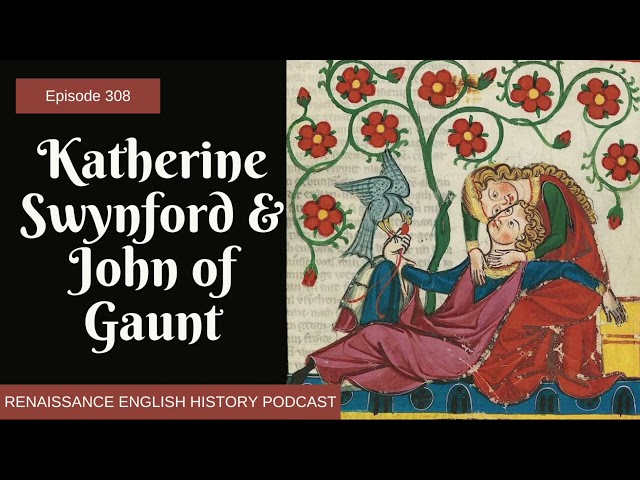
    John of Gaunt and Katherine Swynford share one of the most fascinating love stories in medieval England, a relationship that began in scandal but ultimately shaped the course of history. John of Gaunt, Duke of Lancaster and son of Edward III, was one of the most powerful men in Europe, while Katherine Swynford started her life at court as the daughter of a minor knight and later became governess to John’s children.

    Their affair, which produced the Beaufort line, was condemned in its own time, yet their descendants played a decisive role in the Wars of the Roses and gave rise to the Tudor dynasty. Without the union of John of Gaunt and Katherine Swynford, there would have been no Margaret Beaufort and no Henry VII, the first Tudor king.

    Transcript of The Scandalous Love Affair That Created the Tudors: John of Gaunt & Katherine Swynford:

    John of Gaunt was one of the most powerful men in Europe, a prince of England, Duke of Lancaster, son of Edward III. He commanded vast estates, immense wealth, and an influence that stretched well beyond his homeland. Yet despite all the trappings of status, his name is often remembered today not only for politics and wars but for love.

    In the 1370s, John began a relationship with Katherine Swynford, a woman far beneath him in rank, a lady-in-waiting and the widow of a modest knight. Their affair produced children outside of marriage, the Beauforts, whose position at court became the subject of gossip, anger, and eventually a papal ruling.

    For years, their love was a scandal, whispered about in Parliament and condemned by chroniclers. But in a dramatic turn, John married Katherine later in life, and their children were legitimized with one important restriction. Generations later, the Tudors would sit on the throne as direct descendants of this once illicit union. It is a story of passion and politics colliding with consequences that reached far beyond the private lives of John of Gaunt and Katherine Swynford.

    We are going way back in time, far beyond what we normally talk about, because we are going to talk about John of Gaunt and Katherine Swynford. Now, you might say, how does that relate to the Tudors? How it relates to the Tudors is that it is literally where the Tudors came from. So we are going to go back and talk about that relationship between Katherine Swynford and John of Gaunt. Let’s get started.

    To understand the affair, we need to first look at John of Gaunt himself. Born in 1340, he was the third surviving son of Edward III and Philippa of Hainault. The name Gaunt comes from his birthplace, Ghent, in modern Belgium. Though not the eldest, John’s fortunes rose quickly thanks to his advantageous marriage to Blanche of Lancaster in 1359. Blanche was the sole heiress of the vast Lancaster estates, and through her, John inherited enormous lands across England, making him one of the wealthiest nobles in Europe.

    As Duke of Lancaster, John’s income rivaled that of the crown itself. He maintained great households, patronized poets like Geoffrey Chaucer, and played an active role in the politics of his father’s reign. When Edward III’s health declined, and the Black Prince, John’s elder brother and heir to the throne, died in 1376, John of Gaunt stepped into a central role in government.

    During the minority of his young nephew, Richard II, John acted as a stabilizing figure, though not without controversy. He was accused of protecting corrupt officials, favoring foreign allies, and imposing harsh taxes. His immense wealth and perceived arrogance made him an easy target for public anger, and he became one of the most divisive figures of late 14th-century England.

    Yet despite his power and political importance, John’s personal life, and especially his connection to Katherine Swynford, would come to overshadow his reputation. The man who had been married into the highest echelons of nobility would risk scandal for a relationship that seemed wildly inappropriate for his station.

    So who was Katherine Swynford? Her story begins far from the wealth and grandeur of the Lancastrian estates. She was born around 1350, the daughter of Paon de Roet, a knight from Hainault who had come to England in the retinue of Queen Philippa, Edward III’s consort. Her family was noble but not wealthy, and Katherine’s prospects would depend on service in the households of greater lords.

    She grew up in the orbit of the royal court, where her elder sister, Philippa de Roet, married the poet Geoffrey Chaucer. That connection alone brought Katherine into circles of influence, but her own path was shaped by her marriage to Hugh Swynford, a minor knight from Lincolnshire. The couple settled at Kettlethorpe, a modest estate that was frequently in financial difficulty. He was often away on campaign, leaving Katherine to manage the household.

    Her fortunes changed when she entered the household of Blanche of Lancaster, John of Gaunt’s first wife. Katherine became governess to the duke and duchess’s children, including the future King Henry IV. This role gave her an unusual position of trust both within the Lancastrian family and at court. Chroniclers described her as beautiful, intelligent, and capable, qualities that undoubtedly caught John’s attention.

    When Hugh Swynford died in 1371, Katherine was left a widow in her early twenties, with children to support and little wealth to fall back on. It was in this vulnerable position that her relationship with John of Gaunt began to shift. Once simply the governess to his children, she became the focus of the duke’s passion and eventually his partner in one of the most notorious affairs of the late Middle Ages.

    For Katherine, the leap from the respectability of a knight’s widow to the intimate companion of one of Europe’s most powerful men was extraordinary. It was also dangerous because it embroiled her in a scandal that would follow her for the rest of her life.

    The Affair and Its Consequences

    The precise moment when John of Gaunt and Katherine Swynford crossed the line from trusted governess and duke to lovers is impossible to pin down, but most historians place the beginning of their affair in the early 1370s, not long after the death of Hugh Swynford in 1371. Katherine was a widow. She had limited means, and John was a man whose grief for his first wife, Blanche of Lancaster, left him vulnerable.

    Blanche had died in 1368, and by all accounts their marriage had been affectionate. The duke honored her memory for years afterwards, commissioning poems like Chaucer’s Book of the Duchess in her name. Yet in the void she left behind, his bond with Katherine deepened. By the mid 1370s, Katherine was not just the governess of John’s children, she was his companion.

    The relationship was not kept entirely in the shadows. Chroniclers such as Thomas Walsingham, who was quick to condemn court scandals, hinted at the affair with disapproval, calling Katherine’s influence over the duke a disgrace. The couple had several children together, later known collectively as the Beauforts: John, Henry, Thomas, and Joan.

    All born out of wedlock, these children were acknowledged by their father but carried the stain of illegitimacy that would complicate their futures. John of Gaunt’s political situation only added fuel to the controversy. In 1371, he had remarried, this time to Constance of Castile, a union intended to bolster his claim to the throne of Castile through her inheritance.

    The marriage was strategic but it was not affectionate, and throughout his decades with Constance, John continued his relationship with Katherine. The arrangement, a dynastic marriage on one hand and a passionate liaison on the other, was exactly the kind of hypocrisy that critics seized upon.

    The political climate of the late 1370s made matters worse. John’s prominence in government during Richard II’s minority made him a lightning rod for public anger. Accusations of corruption, mismanagement, and foreign favoritism swirled around him, and his private life, with Katherine’s role in it, became yet another charge against him.

    In 1376, during the Good Parliament, reform-minded members went so far as to denounce his household, singling out Katherine as a corrupting influence. For Katherine, the risks were immense. A noblewoman might hope to survive disgrace through family connections or wealth, but she had neither. Her position depended entirely on John’s protection.

    What began as a widow’s attempt to secure her future had grown into one of the most talked about affairs of the century, a relationship that seemed at times to imperil John’s political standing. Katherine found herself drawn into the fire, with chroniclers painting her as a dangerous influence, a woman who had bewitched the duke and led him into sin.

    One hostile writer even described her as a witch whose charms corrupted Lancaster’s judgment, a familiar slur leveled at women who dared to overstep their expected role. Yet despite the hostility, John did not abandon her. Their relationship continued openly, and their children, the Beauforts, were acknowledged and provided for.

    Public resentment only deepened, and in 1381 it exploded in the Peasants’ Revolt. Sparked by anger over poll taxes and years of war were also a generation on from the Black Death. So we are dealing with a shrinking population, fewer workers, and demands for more autonomy and higher wages. Rebels poured into London, attacking symbols of wealth and authority.

    John was in Scotland at the time, but the fury of the crowds fell on him all the same. His magnificent Savoy Palace, the jewel of the Lancaster estates, was stormed, looted, and burned to the ground. Chroniclers record that the rioters hurled his gold and silver into the Thames so that no one could profit from it. In that moment, John of Gaunt became the very embodiment of oppression in the eyes of the people.

    His private life was bound up in that resentment, and Katherine, already maligned as his mistress, bore the brunt of renewed hostility. To shield himself from further political damage, John formally renounced her after the revolt. Katherine was dismissed from his household and retreated to Kettlethorpe, the modest Lincolnshire estate she had inherited through her late husband.

    Separation and Reunion

    For Katherine, the separation was a bitter reversal. She had risen to the heights of intimacy with one of the most powerful men in Europe, only to be cast aside when his position became untenable. Yet even at a distance, John continued to support her and the children financially.

    The renunciation after the Peasants’ Revolt did not end their story, far from it. Their bond remained, waiting for the chance to return. For more than a decade, their love survived only in private, overshadowed by the fury of a kingdom that saw John as the enemy and Katherine as his scandalous accomplice.

    Everything changed in the 1390s. Constance of Castile died in 1394, and then after nearly two decades of scandal, separation, and whispered gossip, John of Gaunt and Katherine Swynford finally had their moment. In 1394, John’s second wife, Constance of Castile, died, leaving him free from the obligations of that long political marriage.

    Two years later, in January 1396, John stunned England by marrying Katherine. For many, the union was shocking. Katherine had been the subject of slander, blamed in Parliament for corrupting Lancaster’s household, and dismissed as an unsuitable companion. Now she was the Duchess of Lancaster, elevated to one of the most powerful positions in the realm.

    Chroniclers reacted with scorn, calling the marriage disgraceful. Others, though, began to soften their view, acknowledging the extraordinary endurance of their bond. The most consequential part of the marriage, though, was the legitimization of their children. With papal approval from Boniface IX, the Beauforts—John, Henry, Thomas, and Joan—were declared legitimate, but there was a crucial caveat. While they could inherit lands and titles, they were officially barred from ever claiming the throne of England.

    That exclusion was intended to prevent dynastic instability, but as history would prove, such restrictions were not easily enforced once ambition came into play. The marriage itself was brief. John died in 1399, just three years later. But by then the Beauforts had secured their place among the English nobility. Katherine lived for several years quietly after his death, respected as the Duchess of Lancaster, and she died in 1403.

    The Legacy of John and Katherine

    It is one of the great ironies of medieval history: an affair once condemned as shameful became the foundation for a dynasty. For through their son John Beaufort came Margaret Beaufort, the determined mother of Henry Tudor and the future Henry VII. Without John and Katherine’s marriage, the Tudors would never have claimed the throne.

    The true significance of John of Gaunt and Katherine Swynford’s relationship lies not only in their marriage, but in the generations that followed. Their children, once dismissed as illegitimate, became central figures in the shifting dynastic politics of the 15th century. The Beaufort line began with John, Henry, Thomas, and Joan, each of whom forged powerful alliances.

    Henry Beaufort became a cardinal and one of the most influential churchmen of the age. Thomas Beaufort rose to Duke of Exeter and was a key commander during the Hundred Years’ War. Their sister Joan married into the Neville family, tying the Beauforts to the rising northern magnates who would later play decisive roles in the Wars of the Roses.

    But it was through John the eldest that their legacy most profoundly shaped England. His granddaughter Margaret Beaufort inherited the Lancaster bloodline at a time when rival claims to the throne were tearing the country apart. Against all odds, she was able to position her son Henry Tudor as the Lancastrian claimant.

    When Henry defeated Richard III at Bosworth in 1485, he became Henry VII, the first Tudor monarch. In that moment, the love affair of John of Gaunt and Katherine Swynford became part of the origin story of a dynasty that would rule England for more than a century. Of course, the irony was striking. The papal bull that had legitimized the Beauforts had explicitly barred them from the succession.

    But history rarely obeys tidy legal rulings. Margaret Beaufort’s ambition, combined with her son’s victory, brushed aside those restrictions. By tracing his claim through her, Henry VII tied the Tudor crown to the line of a relationship that had once been condemned as scandalous.

    The impact of the Beauforts did not end with the Tudors’ arrival.Their bloodline continued through the centuries, weaving into the fabric of the English aristocracy. Even today, the Dukes of Beaufort trace their descent from John and Katherine, a reminder of just how far-reaching the consequences of their union became.

    What began as a love affair between a duke and his children’s governess, criticized, condemned, and seemingly destined to be forgotten, instead reshaped English history. Without Katherine Swynford, there is no Margaret Beaufort, and without Margaret there is no Tudor dynasty. So the story of John and Katherine is one of the great paradoxes of medieval England. That just goes to show you, my friend, that private passions can actually alter the fate of kingdoms.

    We will leave it there in our discussion of John of Gaunt and Katherine Swynford. There are, of course, lots of books about Katherine Swynford. I enjoyed Alison Weir’s book. It is a bit older, but I did like that one as it really dug into her life. If you want to explore Katherine’s life more, check out the link below.

    Related links:

    Mistress of the Monarchy: The Life of Katherine Swynford, Duchess of Lancaster by Alison Weir 
    The Beauforts: The Illegitimate Family That Put the Tudors on the Throne
    Episode 42: Tudor Times on Margaret Beaufort

  • The Tudor Cousins Who Could Have Taken the Throne

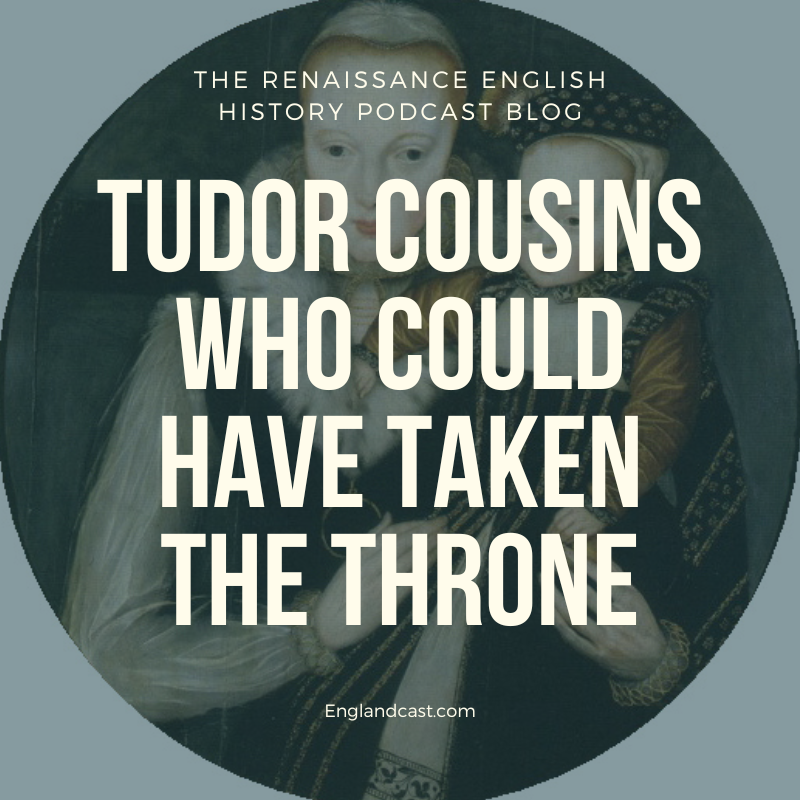
    The Tudor Cousins Who Could Have Taken the Throne

    The Tudor dynasty ruled England for 118 years, yet their grip on power was never secure. Behind every coronation lurked cousins with bloodlines stretching back to Edward III, each carrying claims that could topple a throne. While Henry VIII and Elizabeth I command history’s spotlight, other family members possessed royal blood potent enough to reshape England’s story. Some died on scaffolds, others in exile, and a few lived as prisoners in their own country. These forgotten claimants reveal how the Tudors survived not just through political skill, but by systematically crushing anyone who dared share their heritage.

    The Poles: The Last Plantagenets

    Margaret Pole carried the most dangerous blood in England. As daughter of George, Duke of Clarence – Edward IV’s brother – she descended directly from the Plantagenet kings who ruled before the Tudors seized power at Bosworth Field. Her royal lineage made every breath a political act.

    Her son Reginald Pole became a cardinal and Henry VIII’s most articulate critic, writing treatises that condemned the king’s break with Rome. When Henry declared himself Supreme Head of the English Church, Reginald branded him a schismatic tyrant from the safety of continental Europe. Another son, Henry Pole, Lord Montagu, remained in England where his Plantagenet heritage marked him as a perpetual threat.

    Henry VIII understood dynastic mathematics. The Poles’ claim predated his own, and Catholic Europe viewed them as England’s rightful rulers. In 1538, the king struck. He executed Henry Pole for treason a few months later in early 1539: his crime was existing with royal blood. Three years later, Margaret Pole, now sixty-seven and the last of the Plantagenets, followed her son to the block. The executioner botched the job, hacking at her neck and shoulders before finally severing her head.

    Reginald survived in exile, returning as Archbishop of Canterbury under Mary I to restore Catholicism. He died twelve hours after Elizabeth I’s accession, his life’s mission collapsing with the Protestant settlement.

    The Courtenays: Devon’s Doomed Earl

    Edward Courtenay inherited a claim through his mother, Gertrude Blount, whose grandmother was Katherine of York, Edward IV’s daughter. This genealogical thread connected him to the crown through the House of York, making him valuable to those who questioned Tudor legitimacy.

    Henry VIII imprisoned Courtenay in the Tower of London for fifteen years (from childhood to adulthood) simply because his bloodline posed theoretical danger. Released when Mary I took the throne in 1553, Courtenay briefly emerged as a potential husband for the new Catholic queen. His Protestant education under Henry VIII, however, made him seem unsuitable for Mary’s mission to restore papal authority.

    The young earl’s freedom lasted three years. Implicated in Wyatt’s Rebellion against Mary’s marriage to Philip II of Spain, Courtenay fled to exile in Padua, where he died of fever at twenty-nine. His claim died with him, another bloodline extinguished by Tudor paranoia and political miscalculation.

    The Greys: Nine Days and a Lifetime of Consequences

    Lady Jane Grey’s nine-day reign in July 1553 represented the closest any Tudor cousin came to permanent power. Her grandmother, Mary Tudor (Henry VIII’s sister), had married Charles Brandon, Duke of Suffolk, creating a line through their daughters with unquestionable royal heritage. Jane descended from Henry VII through this connection, placing her firmly within succession debates.

    John Dudley, Duke of Northumberland, orchestrated Jane’s brief queenship to maintain Protestant rule after Edward VI’s death. The plan collapsed when England rallied behind Mary I’s superior claim as Henry VIII’s daughter. Jane paid with her head in February 1554, age sixteen.

    Her sisters Katherine and Mary Grey carried the same dangerous bloodline. Katherine secretly married Edward Seymour, Earl of Hertford, producing sons who might claim the throne. Elizabeth I imprisoned Katherine for this unauthorized marriage – royal blood required royal permission to reproduce. Katherine died in captivity, never seeing freedom again.

    Mary Grey (the youngest, and some say she may have been born with dwarfism) seemed less threatening until she too married without permission. Her punishment was gentler than Katherine’s, but the message remained clear: Tudor cousins existed at the crown’s pleasure, their lives forfeit to dynastic security.

    The Stuarts: Northern Claims and Ultimate Victory

    Margaret Tudor’s marriage to James IV of Scotland created the bloodline that would ultimately inherit England. Their great-granddaughter, Mary Queen of Scots, possessed the strongest claim to succeed Elizabeth I – closer than any English cousin through proximity to Henry VII.

    Mary’s Catholic faith and French upbringing made her unacceptable to Protestant England, but her hereditary right was perceived as unassailable. Elizabeth kept Mary under house arrest for nineteen years before executing her in 1587, yet this only transferred the claim to Mary’s son, James VI of Scotland.

    James had learned patience from his mother’s fate. He cultivated Protestant credentials, corresponded diplomatically with Elizabeth, and waited. When the last Tudor died childless in 1603, James inherited both English and Scottish crowns, finally uniting the kingdoms his great-grandmother had connected through marriage.

    The Stuart succession proved that Tudor cousins’ claims were never empty threats: they were prophecies waiting for the right moment to fulfill themselves.

    The Suffolks and Forgotten Bloodlines

    Henry Brandon, Duke of Suffolk, represented another path English history might have taken. Son of Mary Tudor, Queen of France, and Charles Brandon, he carried royal blood through Henry VIII’s sister. His early death in 1551 ended speculation about his potential claim, but his existence reminded contemporaries how many Tudor relatives possessed theoretical rights to rule.

    Earlier in the dynasty, the De la Pole family had threatened Henry VII’s shaky grip on power. Edmund de la Pole, Earl of Suffolk, fled England in 1501 rather than accept Tudor rule, claiming the throne through his Yorkist heritage. His brother Richard remained at large until dying at the Battle of Pavia in 1525, the last active Yorkist claimant.

    These forgotten names show how weak the early Tudor rule truly was. Henry VII spent his reign eliminating rivals, while Henry VIII continued the work with methodical brutality.

    The Price of Royal Blood

    The Tudors survived by transforming family reunions into execution lists. They understood that royal blood was both blessing and curse – it legitimized their rule while providing ammunition for their enemies. Every cousin represented a potential rallying point for dissent, every bloodline a possible foundation for rebellion.

    Tudor history might have unfolded differently if Margaret Pole had found more support, if Edward Courtenay had lived longer, or if Lady Jane Grey’s coup had succeeded. Instead, the dynasty’s paranoid efficiency eliminated most alternatives, leaving only the Scottish Stuarts to inherit when Elizabeth’s childlessness ended the Tudor line.

    The Tudor cousins’ stories reveal monarchy’s fundamental contradiction: the same bloodline that grants legitimacy also multiplies threats. In the end, the family that won at Bosworth Field survived by ensuring their relatives never got another chance to play the game.

    Which of these forgotten claimants would you have backed? Sometimes the most interesting chapters in history are the ones that were never written.

  • Thomas Cromwell’s Love Life: Wife, Widowhood, and Rumors

    Thomas Cromwell’s Love Life: Wife, Widowhood, and Rumors

    Thomas Cromwell was Henry VIII’s chief revolution commander. He dissolved monasteries, engineered divorces, and reshaped English law. His political maneuvers fill countless historical accounts, yet what was in his heart remains locked away. While courtiers whispered about the king’s mistresses and nobles schemed through marriage alliances, Cromwell’s private affections stayed hidden.

    Hilary Mantel’s Wolf Hall imagines him yearning for his sister-in-law Johane, a compelling fiction that captures our hunger to understand the man behind the minister. But what truth lies beneath these literary inventions? Who was Thomas Cromwell’s wife? Why did England’s most powerful commoner never remarry after becoming a widower? And were there really any affairs?

    The answers reveal a man whose personal restraint matched his political cunning.

    The Merchant’s Daughter: Elizabeth Wyckys

    Elizabeth Wyckys came from London’s working heart. Her father, Henry Wyckys, dealt in cloth, the trade that built Tudor England’s wealth. When her first husband died, Elizabeth found herself a widow with modest means but solid connections in the capital’s merchant community.

    Around 1515, she married Thomas Cromwell. He was then climbing from his rough Putney origins, having returned from adventures in Italy and Flanders with ambition and legal training. Their home on Fenchurch Street became the foundation of Cromwell’s London life. Elizabeth bore him three children: Gregory, who would carry the family name, and daughters Anne and Grace.

    This marriage anchored Cromwell among London’s merchant class rather than nobility. While other ambitious men sought wives with aristocratic bloodlines, Cromwell chose substance over status. Elizabeth brought respectability and commercial connections, assets that would prove valuable as her husband’s career accelerated.

    The Tragedy of 1529

    Death struck the Cromwell household with terrible efficiency in 1529. Elizabeth, Anne, and Grace all died within months of each other. The sweating sickness (that mysterious Tudor killer) likely claimed them, though records remain sparse. Only Gregory survived the plague that devastated his father’s family.

    The timing proved cruelly ironic. Just as Cardinal Wolsey’s power crumbled and Cromwell prepared to serve Henry VIII directly, personal catastrophe shattered his domestic world. Letters from this period hint at profound grief, though Cromwell’s habitual reserve keeps his deepest emotions hidden from history.

    The widower who emerged from 1529 never sought another wife.

    The Puzzle of Perpetual Bachelorhood

    Cromwell’s refusal to remarry defied Tudor convention. Widowers of his rising status typically found new wives within years, if not months. Marriage meant alliances, heirs, and household management, practical necessities for successful men.

    Yet Cromwell remained alone. He possessed an heir in Gregory, which reduced pressure for additional children. Political caution may have influenced his choice; marriage alliances could become dangerous liabilities in Henry VIII’s volatile court. A wife’s family might drag Cromwell into factional disputes or create conflicts of loyalty.

    Perhaps grief and genuine attachment to Elizabeth’s memory kept him single. His letters reveal a man capable of deep family affection, suggesting emotional bonds stronger than mere political calculation.

    Johane Williamson and the Literary Romance

    Elizabeth’s sister Johane had married John Williamson and had a daughter, also named Johane. After Elizabeth’s death at the end of 1528, Johane appears to have moved into Cromwell’s household at Austin Friars to help with domestic affairs and care for Gregory during this difficult period. However, Johane herself died not long after Cromwell made his will in July 1529. Her husband John continued to serve as Cromwell’s agent until 1540, maintaining the family connection.

    Hilary Mantel transformed this brief period when Johane lived in Cromwell’s household into something more romantic, imagining tension and unspoken desire between the grieving widower and his sister-in-law. The fiction works brilliantly, particularly since Johane’s early death creates perfect dramatic possibilities for unfulfilled attraction and lingering grief.

    But contemporary evidence supports no such relationship. Johane appears in records as a devoted sister and housekeeper, nothing more. The rumor persists because it fills a void in our knowledge, giving emotional color to a man who guarded his feelings carefully.

    Family Man and Political Strategist

    Cromwell channeled his paternal instincts toward Gregory and extended family. When Gregory came of age, Cromwell arranged his marriage to Elizabeth Seymour, sister of Henry VIII’s third queen, Jane Seymour.

    This match was the height of Cromwell’s strategic brilliance. Rather than remarrying for his own benefit, he focused on elevating his son through marriage alliances. Gregory’s connection to the Seymour family provided insurance and advancement. This was a classic Cromwell maneuver that served multiple purposes while appearing straightforward.

    Love Life Without Scandal

    In a court notorious for sexual intrigue, Thomas Cromwell’s personal life remained remarkably clean. Henry VIII cycled through wives while conducting affairs. Nobles like Henry Norris and William Brereton lost their heads partly due to alleged romantic entanglements with Anne Boleyn. Thomas Wyatt’s poetry hinted at dangerous attractions to Anne as well.

    Cromwell avoided such complications entirely. No contemporary sources suggest mistresses, inappropriate attachments, or romantic scandals. His enemies (and he accumulated many) never attacked him for sexual impropriety, a common weapon in Tudor political warfare.

    This restraint may have strengthened his position. While other courtiers stumbled through romantic entanglements that became political vulnerabilities, Cromwell’s personal conduct remained beyond reproach.

    The Quiet Heart

    Thomas Cromwell’s love life tells a story through absence rather than action. His only documented marriage was to Elizabeth Wyckys, a cloth merchant’s daughter who gave him children and respectability. After her death in 1529, he never remarried, despite rising to unprecedented power and wealth.

    Rumors of affairs with his sister in law Johane remain literary invention rather than historical fact. In a court saturated with sexual scandal and romantic intrigue, Cromwell’s private life stayed remarkably, perhaps deliberately, quiet.

    This restraint fascinates us precisely because it seems so unusual. We expect powerful men to indulge in romantic excess, yet Cromwell apparently chose otherwise. His heart remains history’s secret, locked away with the same care he used to guard state documents.

  • The Cliffords of Skipton: From the “Shepherd Lord” to Lady Anne’s Castle Wars

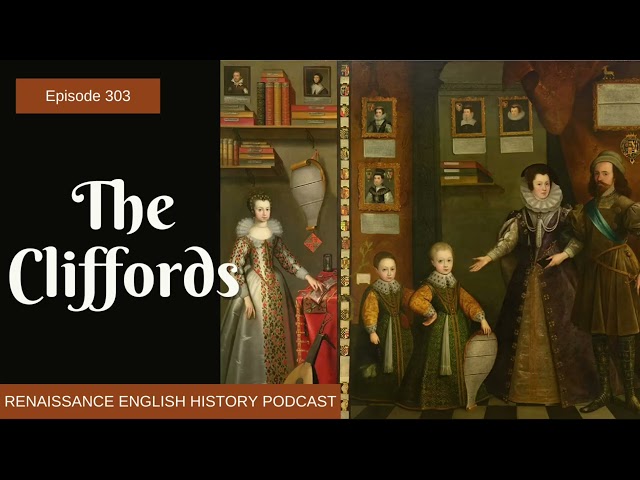
    The Cliffords of Skipton: From the “Shepherd Lord” to Lady Anne’s Castle Wars


    The Cliffords of Skipton were one of northern England’s most resilient and influential dynasties, their story stretching from medieval battlefields to Tudor courts and beyond. From Robert de Clifford’s death at Bannockburn to Henry Clifford’s legendary survival as the “Shepherd Lord,” the family held the strategic stronghold of Skipton Castle for centuries, navigating rebellion, border wars, and shifting royal favor. Their role in the Pilgrimage of Grace, their marriages into powerful houses like the Tudors and Stanleys, and Anne Clifford’s determined fight for her inheritance all reveal a lineage defined by survival, ambition, and reinvention.

    Today, the legacy of the Clifford still stands in stone, literature, and memory, a testament to one of England’s most stubborn northern families.

    Transcript of The Cliffords of Skipton: From the “Shepherd Lord” to Lady Anne’s Castle Wars

    October 1536, Skipton Castle. Henry Clifford, 1st Earl of Cumberland, stands on the battlements watching 40,000 rebels camp in the Yorkshire Dales below. The Pilgrimage of Grace has swept across northern England like a plague. Banners bearing the Five Wounds of Christ flutter over an army that wants Henry VIII’s Protestant advisors dead and the old faith restored. Clifford’s pantry is running low. His own tenants argue in the courtyards. Some want to join the rebels, others say to stick with the king.

    The earl’s steward reports that three more villages have declared for the pilgrims. A messenger from the rebel captain Robert Aske demands that Clifford open his gates or face siege. Clifford does not open them. He talks instead, promising to carry petitions to London. He swears he shares their concerns about church policy, anything to buy time while Henry VIII musters his forces in the south.

    This choice will define the Cliffords for generations. Three hundred years, they have held these northern strongholds, transforming from Norman raiders into border wardens, from medieval muscle into Tudor courtiers. Their story runs from Bannockburn slaughter to Elizabeth’s court, from a lord who supposedly lived as a shepherd to a woman who rebuilt castles with lawsuit money and left us the most detailed diary in English literature. Welcome to the rise and resurrection of England’s most stubborn northern dynasty.

    The Cliffords were not Cliffords when they arrived with William the Conqueror. They picked up the name from Clifford Castle on the Welsh border, where they spent two centuries learning how to kill Welshmen for Norman kings. Robert de Clifford changed everything. Edward I made him the 1st Baron Clifford in 1299 and handed him a collection of northern castles that controlled the roads to Scotland.

    Skipton became Robert’s headquarters. Brougham, Appleby, and Brough formed a defensive chain across Westmorland. The king wanted these passes held, and Robert held them. He also died for them. At Bannockburn, June 24, 1314, Robert charged Bruce’s spearmen alongside three hundred English knights. The Scots cut them to pieces in the morning mud.

    Edward II fled south, and Robert de Clifford bled out in a Scottish field. His body was so hacked up they barely got enough pieces home to bury. His son Roger inherited the barony and promptly squandered it. After rebelling against Edward II in 1322, he got himself captured at Boroughbridge and hanged as a traitor.

    The family lost everything, but they got it back. That is what made the Cliffords different from other northern families. They did not just hold land, they made themselves useful – border captains, royal agents, the men London called when Scotland needed watching or rebels needed crushing. They learned that service to the crown, however dangerous, paid better than rebellion.

    The Shepherd Lord Myth

    So Henry Clifford, the 10th Baron, was nine when his father died at Towton in 1461. The Yorkists had won. King Edward IV’s friends controlled the North. Henry’s mother smuggled him into the Lake District before his father’s enemies could find him. For twenty-four years Henry disappeared. The story goes that he lived as a shepherd, learning to read weather instead of books, growing strong on mountain air and honest labor.

    And when Henry VII beat Richard III at Bosworth in 1485, this rustic lord emerged from the fells to claim his inheritance. Most historians doubt the shepherd story. Henry probably got some education and stayed in touch with Lancastrian networks, but the legend stuck because it served everyone’s purposes. Henry VII could present the restoration as innocent rather than calculated revenge. Henry Clifford got a romantic origin story that set his family apart.

    The reality though was impressive enough. Henry proved to be a capable soldier, administrator, and scholar. He corresponded with European humanists. He rebuilt the Clifford network that his father’s death had shattered. He served Henry VII faithfully on the Scottish border, leading raids and organizing defenses. Most importantly, he gave his descendants a story. They were not just northern barons; they were survivors who had touched the real England of field and mountain, and then returned to serve with earned wisdom.

    The Shepherd Lord myth became the family’s calling card for the next two centuries. Henry Clifford’s loyalty to Henry VII paid dividends under Henry VIII. The king elevated him to Earl of Cumberland in 1525, recognizing both his border service and his value as a northern power broker.

    The new earl received the wardenship of the West March, sheriffs dimmed across Yorkshire and Westmoreland, and the thankless job of keeping the North loyal to a king who lived 400 miles to the south. Border work meant constant headaches. Scottish raiders crossed the frontier monthly, English families feuded with each other, and everyone feuded with the Scots. Clifford organized musters, repaired castles, and wrote endless reports to London explaining why he needed more money, more men, and more authority to keep the peace.

    The Pilgrimage of Grace nearly broke him. In October 1536, with 40,000 rebels demanding Henry VIII restore Catholic worship and remove his Protestant advisors. Clifford found himself alone at Skipton, surrounded by neighbors who had known him since childhood and now wanted him to join their holy war.

    His response was masterful politics. Clifford opened negotiations with the rebel leaders. He listened to their grievances. He promised to forward their petition to the king. He expressed sympathy for their concerns about religious policy, but he never opened Skipton’s gates. For two months, he played for time.

    The rebels controlled most of Yorkshire, but they could not take his castle. When the Duke of Norfolk arrived with royal forces, the rebellion collapsed, and Clifford’s loyalty was rewarded with additional grants and offices. His neighbors got pardons or hangings, depending on how deep they had gone into treason.

    The marriages that Clifford arranged for his children locked in these gains. His son married into the Percys. His daughter wed a Talbot. These alliances created a network of mutual support that stretched from the Scottish border to the royal court.

    Henry Clifford, 2nd Earl of Cumberland, transformed his family’s status with one brilliant marriage. His bride was Lady Eleanor Brandon, the daughter of Charles Brandon, Duke of Suffolk, and Mary Tudor, Henry VII’s younger sister. This match brought Tudor blood into the Clifford line and put them in the royal succession conversation.

    Margaret Clifford’s Royal Connection

    I actually did a video on Eleanor Clifford Brandon a couple of weeks ago. I can link to that in the show notes. Anyway, Eleanor died young in 1547, but not before giving birth to Margaret Clifford. As Henry VII’s great-niece, Margaret held a theoretical claim to the English throne. Elizabeth I never married and had no children, so Margaret’s bloodline made her both valuable and dangerous.

    Margaret got the education her status demanded. She spoke French, Italian, and Latin. She corresponded with John Dee, the mathematician and court astrologer. She moved comfortably between her family’s northern castles and Elizabeth’s palaces, equally at home discussing border defenses and continental philosophy.

    Her marriage to Henry Stanley, Earl of Derby, created one of England’s most powerful regional alliances, the Stanleys. We did an episode on them several weeks ago. They controlled Lancashire and the Isle of Man. Combined with the Clifford holdings in Yorkshire and Westmoreland, this gave the family strategic depth across the entire northwest.

    Their son, Ferdinando Stanley, became a serious player in late Elizabethan politics. Some actually considered him a better claimant than James VI of Scotland. Ferdinando died mysteriously in 1594, possibly poisoned. Margaret survived these dangerous decades through careful politics and useful marriages. She kept her head while other claimants lost theirs.

    The Northern Rising of 1569 tested every northern family’s loyalty to Elizabeth I. The Earls of Westmoreland and Northumberland raised 6,000 men, ostensibly to free Mary, Queen of Scots, and restore Catholic worship. In reality, they wanted to overthrow Elizabeth and put Mary on the English throne.

    Now Henry Clifford, 2nd Earl of Cumberland, faced the hardest choice the family had confronted since the Pilgrimage of Grace. Most of his neighbors joined the rebels. His own tenants expected him to lead them against Elizabeth’s Protestant government. Catholic priests preached that loyalty to the queen meant damnation.

    And yet Clifford stayed loyal. He raised his own forces and marched them to York, where they joined the royal army. When the rebellion collapsed and its leaders fled to Scotland, Clifford was among the few northern earls to emerge with his position strengthened rather than compromised.

    The aftermath brought permanent changes. Elizabeth’s government imposed bonds for good behavior on suspect families. Regular reports to the Privy Council became mandatory. Networks of informers reported on religious activities, political discussions, and family connections. The Cliffords learned to work within this surveillance state. They patronized Protestant preachers while quietly assisting displaced Catholics.

    They funded church repairs that removed superstitious imagery while preserving architectural integrity. George Clifford became a sea captain, commanding privateering expeditions against Spanish shipping. His naval service proved his Protestant credentials while filling the family coffers with prize money.

    But the religious divide never fully healed. Northern England remained largely Catholic in sympathy. The Cliffords, like their neighbors, lived with the constant tension between personal conviction and political survival.

    Anne Clifford’s Legal Battle and Legacy

    Anne Clifford was born at Skipton in 1590, expecting to inherit her father’s vast northern estates. George Clifford, the third Earl, had no sons. By rights, everything should have passed to his only daughter. Except it didn’t. George’s will followed legal precedent, passing the estates to his younger brother Francis under male entail. Anne, at just ten years old, became one of England’s wealthiest heiresses and one of its most dispossessed. Her response defined the rest of her life.

    Anne initiated legal proceedings that would last forty years, challenging not just Francis’s inheritance but the entire system that excluded women from landed wealth. She hired the best lawyers money could buy. She lobbied judges, politicians, and anyone else who might influence her case.

    The legal battle was only part of Anne’s significance. She kept meticulous diaries that provide an unparalleled window into seventeenth-century aristocratic life. Her Great Books of Record documented family history, property disputes, and personal relationships with unprecedented detail. These texts represent the most important collection of female-authored material from early modern England.

    She wrote things like: Mr. Edward, Earl of Dorset, was the most bitter and earnest enemy to me that I ever had, but God Almighty delivered me most miraculously from all of his crafty devices.

    The 6th of November was my cause in Chancery between me and my tenants in Westmorland dismissed out of that court, and I was left to my remedy at common law, to which business God sends some good conclusion for. It hath been both chargeable and troublesome unto me. And in August this year, while I lay in Skipton Castle in Craven, did Judge Polston and Sergeant Parker come to Appleby Castle in their northern circuit, where they lay four or five nights.

    She also talks about personal things: And the 29th of this month, I, with my grandchild and my family, came from Skipton, lying one night by the way at Kirby Lonsdale, so that the next day we came to Appleby Castle, where this grandchild and  I kept our Christmas this year.

    So many details, super interesting to read. And you can actually look at the diary in its completion at the Internet Archive. It is public domain, of course, because it is four centuries old. Or you can also buy an annotated version that has an introduction, etc., on Amazon. I will put links to that as well in the show notes.

    Anne’s first marriage to Richard Sackville, Earl of Dorset, connected her to one of England’s premier court families. Her second marriage to Philip Herbert, Earl of Pembroke, linked her to another. Both husbands supported her inheritance claim, understanding that her northern estates would dramatically increase their own wealth and influence. Funny that.

    In 1643, Francis’s male line died out, and Anne, who was now 53, finally inherited the estates her father had left to his brother. The triumph unleashed an extraordinary building campaign that reshaped the northern landscape. This was the most ambitious private building campaign in 17th century northern England. She had waited forty years to reclaim her birthright, and now she would make sure that nobody forgot her triumph.

    Brougham Castle came first. She found it a ruin. Its walls were cracked, its roofs fallen. She rebuilt the great hall, restored the private chambers, and added new lodgings for her household. A stone inscription records her achievement: This Brougham Castle was repaired by the Lady Anne Clifford after it had lain ruinous without roof or floors ever since about 1617.

    Appleby Castle followed. Anne turned the medieval keep into a comfortable residence while preserving its defensive character. She added gardens and repaired the Church of St. Lawrence and and built almshouses for twelve poor widows. Her tomb in the church displays effigies of her parents, herself, and her two husbands, proclaiming four generations of Clifford power.

    Brougham and Skipton got similar treatment. Anne did not create romantic ruins; she built working residences that could house her household, entertain guests, and impress visitors. Each castle became a center of local administration, with Anne’s stewards collecting rents, settling disputes, and maintaining order.

    Her building inscriptions tell the story in her own words. At Pendragon Castle: This pillar was set up by Lady Anne Clifford in memory of her last parting in this place with her good and pious mother. At Brougham, she wrote: This Lady Anne Clifford, in her own time, repaired this castle and the church and made this highway.

    Anne died in 1676 at Brougham Castle, surrounded by the stones that she had raised to proclaim her victory over law, custom, and male prejudice. Her funeral cortege stopped at every castle and church that she had restored, a final progress through the landscape that she had remade.

    So what happened to the Cumberland line? Well, the title died out with Francis Clifford in 1643. The family name and estates continued through Anne to new dynasties. Her sister Margaret had married John Tufton, Earl of Thanet, creating another complex inheritance that would occupy lawyers for decades.

    Other Clifford branches survived independently. The Cliffords of Hudley and Devon maintained the name and some traditions, though without the northern strongholds that had defined the main line. Cadet branches scattered across England, carrying Clifford blood into obscurity.

    What survived tells us about memory as much as history. Skipton Castle remains largely intact, its great hall and towers still dominating the market town below. Appleby preserves Lady Anne Clifford’s tomb and some of her archives. At Brougham, her inscription stones mark her triumph over time itself.

    The literary legacy proved equally persistent. Wordsworth wrote about the Cliffords, focusing on Anne’s achievement and the Shepherd Lord legend. Victorian writers used the family story to explore northern identity and female agency, and tourist trails still follow Henry’s supposed wanderings through the Lake District. Modern Skipton markets itself as the gateway to the Dales. The real gateway remains Anne Clifford’s castle, its stones proclaiming five centuries of northern power. The great hall where Henry Clifford decided not to join the Pilgrimage of Grace now hosts wedding receptions and corporate events.

    History becomes heritage, but the stones always remember. Anne Clifford’s own assessment survives in her diary: It pleased God to give me strength and patience to recover my right by law and to build again what time and injury had ruined.

    Her achievement was simpler and more radical than she claimed. She proved that memory and determination, and superior legal advice, could overcome centuries of custom that denied women their inheritance. The North still remembers its difficult daughter who refused to disappear.

    Related links:

    Lady Anne Clifford’s Diary
    Margaret Clifford: The Tudor Heiress Who Was Too Close to the Throne
    Eleanor Clifford: Henry VIII’s often overlooked niece
    Ferdinando Stanley: Theater Patron, Earl of Derby, and maybe poisoned?

  • Lady Jane Grey’s Failed Rebellion: How Mary I Claimed the Crown

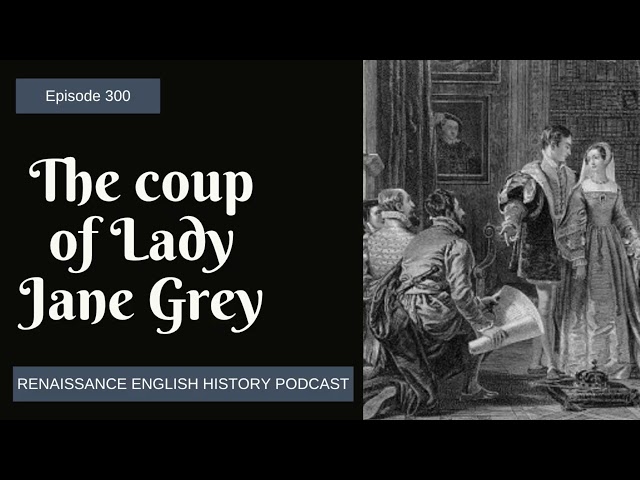
    Lady Jane Grey’s Failed Rebellion: How Mary I Claimed the Crown


    Lady Jane Grey’s failed rebellion in July 1553 is one of the most dramatic power struggles in Tudor history. Declared queen at just sixteen, Jane reigned for only nine days before being overthrown by Mary Tudor, who claimed the throne with remarkable speed and without a battle.

    Far more than a teenage tragedy, the collapse of Jane’s brief reign reveals the dangers of political overreach, the power of legitimacy, and the miscalculations of those who tried to engineer England’s succession. Understanding why Lady Jane Grey’s rebellion failed helps us see how Mary I, once dismissed as powerless and irrelevant, rose to become England’s first crowned queen regnant.

    Transcript of Why Lady Jane Grey’s Rebellion Failed: How Mary I Took the Throne

    On July 10, 1553, a young woman was declared Queen of England, England’s first Queen regnant. Her name was Lady Jane Grey, and just nine days later, she was a prisoner in the Tower. What happened in those nine days was more than a failed coup. It was a last-ditch attempt by Edward VI’s government to preserve Protestant power, and it collapsed with breathtaking speed.

    But what is even more remarkable is who took the throne instead: Mary Tudor, a woman the political establishment had written off as outdated, dangerously Catholic, and politically irrelevant. Yet Mary won without an army, without a formal base of power, just with her name, her father’s legacy, and the backing of a population that frankly was not interested in watching another political gamble tear the country apart.

    This episode is not just about Jane, though her story is central. It is about how the machinery behind her brief reign came apart almost immediately. It is about Northumberland’s miscalculations, the power of legitimacy, and how Mary, the daughter of Katherine of Aragon, turned a quiet escape into a triumphant march to the throne.

    The nine days that Jane was queen tell us a lot about Tudor politics: who actually held power, how fast public opinion could turn, and what happened when you tried to force a dynasty into a direction it did not want to go.

    This week, we are talking about Lady Jane Grey, the Nine Days Queen, and not just about Jane, but about the failed coup and how Mary Tudor was able to overcome the threats against her and claim the throne without any bloodshed. So let’s get right into it.

    By early 1553, it was clear that Edward VI was dying. He was only fifteen, but the effects of tuberculosis, or what his contemporaries called consumption, were impossible to ignore. His coughing fits worsened, his weight dropped, and his council began to panic.

    Edward, despite his youth, was deeply committed to Protestant reform. He had been raised under the influence of Archbishop Cranmer, and he took his role as a godly prince seriously. The idea that his crown might pass to Mary Tudor, his Catholic half-sister, horrified him. And that is where the Device for the Succession comes in.

    Lady Jane Gray’s Ascension and Immediate Challenges

    Edward began drafting the document himself in early 1553. Now, originally it stated that the crown would pass to the heirs male of Lady Jane Grey. When it became clear that Edward did not have enough time to wait for Jane to produce an heir, the wording was revised to name Jane herself as the heir outright. Now, who exactly was Lady Jane Grey?

    Lady Jane Grey was the daughter of Frances Grey, the Duchess of Suffolk. She was, in turn, the daughter of Mary Tudor, Henry VII’s younger sister, the Queen of France for a short time, who was married to Charles Brandon. Lady Jane Grey herself would have been like a great-niece to Henry VIII.

    The problem with this arrangement was that it ignored both Mary and Elizabeth, Henry’s daughters, who had each been restored to the line of succession in their father’s will. Yes, both had technically been declared illegitimate during their father’s lifetime, but Henry’s final act had reinstated them. Edward, by naming Jane, was overriding his father’s settlement and an act of Parliament.

    It was a bold move, and he was not working alone. John Dudley, the Duke of Northumberland, had recently married his son, Guildford Dudley to Jane. The timing was, of course, not a coincidence with Edward’s failing health. Dudley was positioning his family as the power behind the next monarch. Jane was educated, pious, and Protestant, but more importantly, she had no power base of her own, so she was controllable.

    Jane herself does not seem to have been consulted. Later reports suggest that when she learned of the plan, she collapsed in tears or fainted. She insisted that she never sought the crown, but, and this is key, she also accepted it. Whether through pressure, duty, or fear is hard to say.

    The Privy Council, likely under heavy pressure from Dudley and perhaps genuinely afraid of a Catholic queen, signed off on the plan. Even Cranmer, who had been close to Henry and knew better than anyone the legal problems with bypassing Mary, eventually added his own signature.

    On paper, it looked neat. Protestant rule was preserved. The Dudley family was secured. A calm handover of power was planned. But outside the court bubble, very few people even knew who Lady Jane Grey was. She had no public support, no military backing of her own, and no real claim that people recognized. It was a succession engineered entirely from the top down. It was about to come apart almost as quickly as it was declared.

    So, on July the 10th, 1553, Lady Jane Grey was officially proclaimed the Queen of England. She was escorted by barge to the Tower of London, the traditional residence, of course, of monarchs before they were crowned, and she took up residence as queen.

    That same day, the Privy Council issued formal orders. Jane’s name was entered into the official records. Bishops were told to preach in her name. Coins were minted. Prayers were rewritten. Outside the walls of the Tower, the mood was uncertain in London. People heard the proclamation and responded with dead silence.

    There were no celebrations in the streets, no church bells, no bonfires. Even those who supported the Protestant cause were not quite sure what to make of this obscure teenage girl being named queen over both Henry VIII’s daughters. It also did not help that Mary Tudor had already made her first move.

    Mary Tudor’s Counterclaim and Rising Support

    Just a few days earlier as Edward lay dying, Mary had been tipped off about the plan to block the succession. She rode hard for East Anglia, heading straight to the place where she knew she had allies: Framlingham Castle. Meanwhile, back in London, the new regime was already showing some cracks.

    One of Jane’s first acts was to refuse the demand that her husband, Guildford, be declared king. This infuriated the Dudley family, especially her mother-in-law, the Duchess of Northumberland, who apparently shouted at Jane in front of the court. Jane held her ground, insisting that Guildford would be a duke, not a king.

    That single moment exposed the entire house of cards. It was immediately clear that Jane was not as pliable as Dudley had hoped. Her refusal to elevate Guildford undermined the idea that the Dudleys could rule through her, and it began to drive a wedge between the new queen and the faction that had installed her.

    Meanwhile, the Privy Council was growing uneasy. Their signatures were on the device, yes, but many of them had longstanding ties to Mary. Some had even served with her mother, Katherine of Aragon, decades before. Others had personal reservations about the legality of Jane’s claim. Most of all, they were watching how the country reacted, which was a big nothing burger. No outpouring of support, no groundswell of loyalty, just a deep and uneasy silence.

    Northumberland, who had been the architect of the whole succession plan, now had to scramble to build support for Jane on the ground, but his influence was waning. The farther from London he went, the more Mary’s name and her legitimacy carried weight.

    Jane, for her part, continued to carry herself as a queen with dignity. She spent time in prayer. She attended to state matters with seriousness. She thought that perhaps God had actually put her in this position, so she was going to accept it and do the best she could. She followed through on the daily business of queenship and getting ready to be crowned. But she had no experience, no allies outside of her husband’s faction, and no real power. She had the title, but Mary had the loyalty of the people, and things were about to turn very quickly in Mary’s favor.

    So, while Jane was being moved into the Tower and proclaimed queen with all of the outward trappings of monarchy, Mary Tudor was already in motion. On July 9th, 1553, before Jane had even been publicly proclaimed, Mary received word that Edward had died and that her enemies planned to cut her out of the succession.

    She did not wait to see if the Council would honor her claim. She rode hard for East Anglia, the region where she held her estates, her longstanding supporters, and something far more valuable: her power base. She arrived at Framlingham Castle, a strong fortress in Suffolk that had been part of the Howard family holdings. And there Mary made her stand.

    This is where it gets interesting, because Mary did not have an army, at least not yet. She had a name, and in 1553, that was more powerful than anyone had predicted. Mary did not send out fiery manifestos or call for rebellion. She issued carefully crafted proclamations, emphasizing her legitimacy.

    She was Henry VIII’s daughter. She was born in wedlock. She was named in his will, and she was confirmed by statute as the next in line after Edward. Whatever people thought about her religion, and there were concerns about her Catholicism, she was by all reasonable standards the rightful heir. And people responded. Nobles and gentry began to flock to her, many of whom had nothing to gain from supporting Jane.

    In fact, many of them had quietly stayed out of politics completely during Edward’s reign, watching the religious changes with growing discomfort. Mary, to them, represented not just legitimacy but also a return to order, a queen whose claim was rooted in law and blood, not paperwork drafted by a dying boy and a power-hungry council.

    She also had the support of ordinary people in East Anglia, a region still thick with traditional Catholic sentiment. Crowds gathered to cheer her on. Towns raised men to serve her, and by mid-July, Mary, who had fled without a military escort, now had a growing armed force behind her.

    The Collapse of Jane’s Regime

    The Privy Council in London began to sweat. John Dudley, realizing the threat, persuaded the Council to let him march out to confront her. He set out with a small force, expecting to rally more support as he moved north, except that support did not materialize.

    Worse, his own troops began to desert, some slipping away to join Mary’s forces, others simply melting back into the countryside. No one wanted to fight a popular royal woman who was, by most standards, the rightful heir, especially not in defense of a girl that no one had chosen.

    Mary, from her position at Framlingham, now issued orders like a queen. She appointed commanders, raised troops, and sent letters, all while Jane sat in the Tower waiting for a coronation ceremony that was never going to come. What started as a defensive retreat had turned into a full-fledged counterclaim, and back in London, things were falling apart.

    So I just want to pause for a moment and say this: over on my YouTube channel a couple of weeks ago, I put up a poll and asked you all what you thought, whether Jane should be called Jane I, since she was kind of the queen, or whether no, because she was never crowned, she never, you know, ruled properly. I did make the point that, of course, Edward V was never crowned, because he was in the Tower held by Richard III, and yet we still consider him Edward V. So the whole “having a coronation ceremony” doesn’t mean so much to me. But I wondered what you all thought. Should she be called Jane I, or no, because she never ruled properly? And 668 of you voted in that poll, and it’s really split down the middle.

    Yes, she should be called Jane I won with 56 percent of the vote. And “no, not crowned, never ruled properly” came in second, of course, because there were only two choices. So that took 44 percent of the vote. According to those of you who voted on YouTube, she should be called Jane I, for whatever that’s worth. I just think that’s a fun little thing to think about. What do you think? Should she have been called Jane I? Should we refer to her now as Jane I? I’d love to know what you think about that.

    By mid-July, the political gamble that had placed Lady Jane Grey on the throne was in free fall. John Dudley had left London on July 14th to march north and confront Mary’s growing forces in East Anglia. He had only a small army, somewhere around 3,000 men, and no real enthusiasm behind him.

    His march was slow, and it was plagued by desertions and hesitation. Towns that should have welcomed him offered zero support. Some quietly closed their gates. Others made it clear that their loyalties were leaning toward Mary. And Dudley knew exactly what was happening. According to one report, he turned to a companion and said bitterly, “The people press to see us, but not one says God speed us.”

    Meanwhile, back in London, the Privy Council was losing its nerve. At first, they had followed Dudley’s lead, issuing Jane’s proclamation, swearing oaths, and going through all the motions. But as the news from East Anglia trickled in, and as Mary’s support kept growing, they started looking for their exit plan.

    Some of the councillors were secretly corresponding with Mary already, hedging their bets. Others, including the Earl of Arundel, began openly pressing for the council to reverse course. Jane’s father, Henry Grey, Duke of Suffolk, had been left behind in London, effectively acting as her political regent. But he had no control over the council and no real military authority. He was also indecisive and prone to panicking, not exactly a strong figure to rally around.

    The real turning point came on July 19th. That morning, the Privy Council, which had been meeting at Baynard’s Castle, quietly left the city and regrouped at the house of the Earl of Pembroke. There they drafted and signed a formal proclamation declaring Mary Tudor the rightful Queen of England.

    The news spread instantly. Bonfires were lit. Bells rang across London. Crowds flooded the streets to celebrate, some out of relief, others out of genuine joy. Even many Protestants who were wary of Mary’s Catholicism were just glad the whole thing was over.

    The Aftermath: Jane’s Imprisonment and Execution

    Jane, well, she was still in the Tower when the announcement reached her, not as queen now, but as a prisoner. The same royal fortress that had welcomed her as a monarch nine days earlier had now become her jail cell.

    Later that day, Northumberland, still in Cambridge and now fully aware that he had been abandoned, publicly declared for Mary. He threw his cap in the air, swore allegiance, and tried to save himself, like that was really going to work. Spoiler alert: it didn’t work. He was arrested within 24 hours and taken back to London, and he would be executed a few weeks later on August 22nd.

    In the Tower, Jane was formally deposed. Her name was removed from official documents. The crown she had worn briefly, a smaller version of the State Crown made for the coronation, was taken away. Her husband Guildford was also imprisoned, and so were her parents, though her mother Frances would later be released.

    It was all over. The coup hadn’t just failed. It had completely disintegrated. And it had done so not because Mary had more soldiers, or better strategy, or stronger propaganda, or anything like that.

    It had failed because the heart of Tudor power, the nobility, the legal system, and the public, just did not accept Jane’s claim. She was smart, educated, devout, and serious, but she had no real support. Mary, on the other hand, had the thing that mattered most in Tudor England: a father named Henry VIII.

    Looking back at those nine days, it is tempting to see Lady Jane Grey as a tragic figure caught in the middle of someone else’s power play, and she was that. But the failure of her reign was not just bad luck. It was the result of serious miscalculations at every level: political, legal, and personal.

    First and foremost, legitimacy still mattered in Tudor England. Edward’s device for the succession was clever, but it was not enough. It was never ratified by Parliament. It contradicted both Henry’s will and an Act of Succession passed during Henry’s lifetime. By the letter of the law, Mary was the rightful heir, and that carried enormous weight with people, even those who might have preferred a Protestant monarch.

    Mary was Henry’s daughter. Everyone remembered her mother, Katherine of Aragon, who had been queen for over twenty years. Whatever doubts existed about her religion, her bloodline was beyond dispute.

    The second problem was the Dudley name. Jane may have been intelligent and pious, but she was deeply tied to the most hated man in England at the time. John Dudley had risen quickly under Edward VI, sidelining rivals and dominating the court. Many in the nobility distrusted him. Some outright hated him. Installing his daughter-in-law on the throne looked like a power grab, not a legitimate succession. Even those who supported Jane’s religion recoiled at the idea of Dudley effectively ruling through her.

    Then there was public perception. Jane was barely known outside of court circles. She had not spent time building a public persona or visiting the provinces. Mary, on the other hand, had lived quietly but was still a known quantity. She had a network of household servants, nobles, and former allies from her mother’s faction, and they all remembered her.

    There were also some critical strategic blunders. Northumberland underestimated just how quickly Mary could rally support. He overestimated how loyal his troops would be, and most fatally, he left London, effectively giving the Privy Council room to reverse course without having to face him directly.

    And finally, Jane’s own position was deeply compromised from the start. Her refusal to name her husband Guilford king, angered the faction that had put her on the throne. She was not in control, and everybody knew that. The fact that she had to fight her in-laws before even being crowned made it clear to the council that this was not a unified regime.

    In the end, Jane never had a foundation to stand on. The political scaffolding around her collapsed almost immediately because it was brittle, self-serving, and completely disconnected from what the country actually wanted. Mary, for all her faults, understood power better, and she had one thing her opponents could not manufacture: a claim that people actually believed.

    So after the Privy Council declared for Mary, Jane’s fate changed instantly. She was no longer the queen. She was a traitor. She was still only sixteen. She had reigned for just nine days, and now she was a prisoner.

    At first, Mary, of course, showed surprising restraint. Jane was young, intelligent, clearly a pawn in someone else’s game. Mary ordered that she be held but not mistreated. She was given a decent apartment. She was allowed books and even had occasional visitors. There is no evidence that Mary initially intended to execute her.

    John Dudley, of course, had no such leniency. As mentioned, he was executed a month after he was arrested, on August 22nd, just over a month after Jane had been proclaimed queen. He died insisting that he had only followed the king’s will, a claim that nobody was really moved by.

    Jane’s own father, Henry Grey, was also released. Despite being deeply involved in the coup, he was forgiven, likely because Mary wanted to avoid creating too many martyrs. It was a generous act, and as it turned out, it was a mistake. In January 1554, just six months into Mary’s reign, Jane’s father joined Wyatt’s Rebellion, an uprising sparked by outrage over Mary’s plans to marry Philip of Spain. The rebellion, of course, failed, but the implications were clear: Jane’s family was still dangerous, and Mary could no longer afford to be merciful.

    Jane and Guilford were both sentenced to death, and on the morning of February 12th, 1554, Guilford was executed first. Jane actually watched his body return to the Tower from her window. A short time later, she herself was taken to the scaffold on Tower Green. Her final words were quiet, steeped in religious conviction.

    She declared herself a faithful Christian, asked for forgiveness, and forgave her executioners. Her body was buried near that of Anne Boleyn in the chapel of St. Peter ad Vincula, another young woman executed at the command of a Tudor monarch.

    In the centuries that followed, Jane’s reputation was reshaped. Protestant writers in Elizabeth’s reign turned her into a martyr. She was included in Foxe’s Book of Martyrs as a symbol of purity and reform crushed by Catholic tyranny. That image stuck in literature, portraiture, and eventually in pop culture.

    But the real Jane was much more complicated. She was clever, she was principled, and she was politically aware, but deeply vulnerable to the ambitions of those around her. She did not start the coup. She did not want the crown. But when offered it, she also did not refuse. And that choice, made under pressure in a world she could not control, would cost her everything.

    And so Lady Jane’s nine days on the throne are often reduced to a tragic blip,  a teenage girl used and discarded by men chasing power. And while there is indeed some truth in that, the story is more than just pathos. Jane’s reign failed because the people who installed her underestimated Mary, misunderstood the meaning of legitimacy, and overestimated how far fear and control could go without true support.

    Mary, who had no army, no position, no official title, took back the throne through sheer determination, lineage, and the fact that enough people still believed in her right to rule. Jane did not fail because she was weak or foolish. She failed because the entire framework around her was built on sand.

    And yet, she remains one of the most memorable figures of the Tudor period,  not because of what she herself did, but because of what she represented: a regime that tried to rewrite the rules of succession overnight, and a teenage girl caught in the middle when it all collapsed.

    Related links:

    Episode 016: Lady Jane Grey
    The Forgotten Grey Sisters: Love, Treason, and Tragedy in Tudor England

  • The Beauforts: The Illegitimate Family That Put the Tudors on the Throne

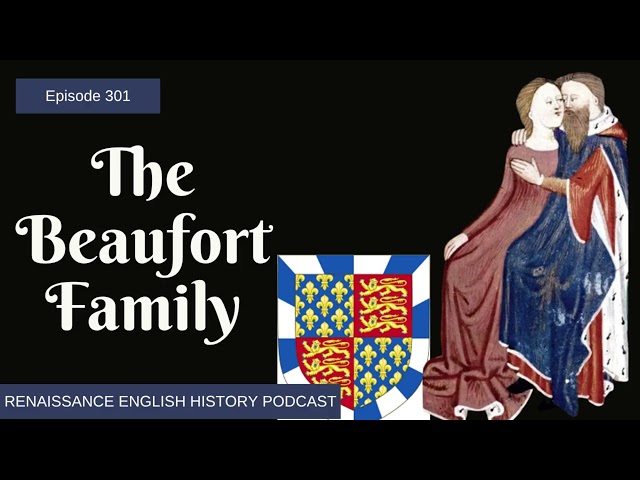
    The Beauforts: The Illegitimate Family That Put the Tudors on the Throne

    The Beauforts were one of the most influential families in late medieval and Tudor England, rising from scandal to shape the destiny of a nation. Descended from John of Gaunt and his mistress Katherine Swynford, the Beauforts began as illegitimate children but were later legitimized by both Pope and Parliament, though barred from the royal succession.

    Despite this, they became cardinals, generals, queen consorts, and kingmakers, marrying into powerful houses like the Nevilles and playing central roles in the Wars of the Roses. Through the determination of Margaret Beaufort and her son Henry Tudor, the family placed the Tudors on the throne of England, securing their legacy. Today, the Beaufort name still survives among Britain’s nobility, a testament to a dynasty that was never supposed to rule but never faded into obscurity.

    Transcript of The Beauforts: The Illegitimate Family That Put the Tudors on the Throne

    If you are looking for a Tudor origin story with scandal, political maneuvering, and some truly complicated family trees, you can’t do much better than the Beauforts. Born from a royal affair and legitimized by both Pope and King, but with an asterisk, the Beauforts were royal, but quiet. Their bloodline connected them directly to Edward III, yet they were not always treated like royalty.

    They were not princes, but they were never just ordinary nobles either. They were something in between, close enough to power to shape it, but far enough removed to constantly have to prove their place. This family would produce cardinals and generals, rebels and queen consorts. They married into the Nevilles, battled the House of York, and eventually, through one very determined mother, put a Tudor on the throne.

    In this episode, we are tracing the Beauforts from their beginnings in scandal with John of Gaunt and Katherine Swynford, through the chaos of the Wars of the Roses, and right up to their curious survival as semi-royal dukes who still exist today. They have been erased, rewritten, and maligned, but they were never irrelevant. So let’s get into the story of the Beauforts, the family that refused to stay in the margins of history, no matter how many times someone tried to scribble them out.

    The Beauforts began as bastards. There is really no way around it. Their story starts not with a marriage, but with an affair, one that scandalized the English court for over a decade. John of Gaunt, Duke of Lancaster, was the third surviving son of King Edward III and arguably the most powerful man in England outside the Crown.

    By the 1370s, he was widowed from his first wife, Blanche of Lancaster, and married to his second, Constance of Castile, a match designed more for diplomacy than affection. But it was his mistress, Katherine Swynford, who held his heart. Katherine was the daughter of a knight from the Low Countries and the widow of one of Gaunt’s own retainers. She had served as a governess in his household, a respected position, but not exactly the standard résumé for a duchess.

    Their affair was public enough to provoke outrage among the nobility. Chroniclers reported that high-born women refused to share rooms with her at court. One described her as the great scandal of her time. Their relationship continued for a decade until the Peasants’ Revolt in 1381 forced Gaunt to distance himself. He issued Katherine a quitclaim, formally ending their connection. But the story did not end there.

    When Constance died in 1394, Gaunt did not remarry for politics. He returned to Katherine, and in 1396, at around 56 years old, he married her in Lincoln Cathedral. By then, they already had four surviving children: John, Henry, Thomas, and Joan. These children were born out of wedlock, so they were given the surname Beaufort, likely taken from one of Gaunt’s former titles associated with a now-lost lordship in Anjou.

    Legitimization and Political Maneuvering

    Despite later myths, they were not born in France and almost certainly never saw the actual castle. The name was chosen not for sentiment but for convenience. It allowed them to be recognized as his children without threatening the inheritance of his legitimate heirs. It was similar to “Fitzroy” for a king’s illegitimate child. The Beaufort name marked them as Gaunt’s relations, but not his successors, and that would come to matter a great deal.

    In 1396, not long after their marriage, John of Gaunt petitioned Pope Boniface IX to legitimize his children with Katherine Swynford. The Pope obliged, issuing a bull that declared them legitimate. A year later, Gaunt secured parliamentary approval under Richard II. The act officially recognized the four Beauforts as lawful children, and they were allowed to inherit lands, titles, and marry into noble families.

    Problem solved, right? Not exactly. When Gaunt’s legitimate son Henry Bolingbroke seized the throne as Henry IV in 1399, things got more complicated. In 1407, Henry issued a royal proclamation reaffirming the Beauforts’ legitimacy, but with a handwritten note added to the patent: excepta dignitate regali. They were legitimate, yes, but they were barred from the royal succession.

    It is not exactly clear who added that line. Some believe it was Henry IV himself; others argue it was a scribe. What is certain is that it was not part of the original act passed by Parliament, and it was not part of the papal bull either. As historian Nathen Amin and others have pointed out, this marginal note may have had no legal authority at all. It may not have been officially binding, but once it was there, it stuck.

    Decades later, that little phrase would become a favorite talking point for the enemies of Margaret Beaufort and her son, Henry Tudor. The Yorkists pointed to it as proof that the Tudors had no rightful claim to the throne. After all, how could a dynasty be built on a line that had been explicitly excluded?

    But the truth is murkier. The Beauforts were not just some side branch. They were deeply tied into the royal family, married into the most powerful noble houses, and held some of the highest positions in church and state, legitimate enough to be trusted, but not quite legitimate enough to rule. That blurry middle ground would follow the family for generations: never fully royal, never fully removed from the crown.

    The Beauforts’ Rise to Power

    Once legitimized, or mostly legitimized, at least, the Beaufort children wasted no time embedding themselves deep into England’s political and dynastic web. This was not a quiet generation. They were ambitious, well placed, and determined to prove that they belonged.

    The eldest son, John Beaufort, was granted the title Earl of Somerset in 1397. He had served in military campaigns in France and was created a marquess by Richard II, though that title was stripped by Henry IV, who did not love how close John had been to the deposed king. Still, the family’s position remained strong.

    John married Margaret Holland, a granddaughter of Joan of Kent. This was the same Joan who had married the Black Prince and was the mother of Richard II. John’s children, therefore, were connected to both the Lancastrian and the older royal line of Edward the Black Prince. Convenient.

    Then there was Henry Beaufort, who chose a different path: the Church. He became Bishop of Lincoln, then of Winchester, and eventually rose to Cardinal. Do not picture a quiet cleric in a cloister. Henry was one of the most politically active men of his time. He was a key figure during the minority of Henry VI, a patron of the arts, and at various points clashed with everyone from Thomas Arundel to Humphrey, Duke of Gloucester. Henry was a cleric with ambition and influence, and by the time of his death in 1447, he had outlived nearly all of his contemporaries and left a fortune behind.

    Thomas Beaufort, the third son, took a more traditional noble route. He served under Henry V, was made Duke of Exeter, though the title died with him since he left no legitimate heirs. Like his brothers, he was deeply loyal to the Lancastrian cause and served with distinction in the Hundred Years’ War.

    Finally, there was Joan Beaufort, the youngest, who might just have been the most influential of them all. She married Ralph Neville, Earl of Westmorland, and produced a staggering 14 children, including Cecily Neville, the mother of Edward IV and Richard III. So yes, the Beauforts were technically Lancastrian, but their blood also flowed in the veins of the House of York. In one generation, the Beauforts had gone from scandalous royal bastards to cardinals, dukes, and matriarchs of royal houses.

    They were not content to live in the footnotes. They were writing the next chapter of England’s dynastic story. By the middle of the 15th century, the Beauforts were no longer outsiders. They were entrenched in the highest levels of government, married into the nobility, and close to the crown. But the closer you are to power, as we have seen, the more dangerous things get.

    And during the Wars of the Roses, the Beauforts played in blood. The man at the center was Edmund Beaufort, 2nd Duke of Somerset, a grandson of John Beaufort. He inherited the title after his uncle died childless. Edmund was everything you would expect from a Lancastrian noble. He was proud, loyal, and deeply tied to Queen Margaret of Anjou. He became her closest advisor and protector to her young son, Edward of Westminster.

    To the Yorkists, he was the enemy, especially to Richard, Duke of York, who saw Edmund as an upstart Beaufort with too much influence and not enough experience. The rivalry exploded in 1455 at the First Battle of St. Albans, the very beginning of the Wars of the Roses. York’s forces charged through the town’s narrow streets, and in the chaos Edmund was killed, one of the first high-ranking casualties of the civil war. His body was later found slumped against a wall, surrounded by blood.

    But the feud did not die with him. His sons Henry, Edmund, and John took up the Lancastrian cause, and the violence escalated. In 1460 at the Battle of Wakefield, Queen Margaret’s forces struck back. Richard of York was killed, his head famously displayed on Micklegate Bar in York with a paper crown mockingly placed on top.

    The Beauforts had their revenge, for a little while. Because then, in 1471, the pendulum swung back once more. At the Battle of Tewkesbury, Henry Beaufort, now the 4th Duke of Somerset, led the Lancastrian forces in a desperate charge that failed. He was captured and executed the next day, not in battle, but dragged out of sanctuary and beheaded in front of a church. His younger brothers were also killed in the fighting.

    Margaret Beaufort: The Strategist

    Just like that, the male Beaufort line, the legitimate one, at least, was gone. All that remained of the once powerful Beaufort dynasty was Margaret Beaufort, daughter of Edmund Beaufort’s first cousin. She was a young widow with a son in exile and no real power of her own, at least not yet. But through her, the Beauforts would rise again and claim the throne that they had been denied. After the deaths of her uncles and cousins in the Wars of the Roses, the Beaufort name could have vanished into obscurity.

    Instead, it passed to a young girl, Margaret Beaufort, born in 1443 to John Beaufort, the first Duke of Somerset. Her father died shortly after her birth, leaving her a wealthy and politically valuable heiress. At just 12 years old, she was married off to Edmund Tudor, the much older half-brother of King Henry VI.

    Less than a year later, she became a widow, because Edmund had already died. She gave birth to Henry Tudor. The birth was traumatic, and she would never have another child. But Margaret was not just a vessel for dynastic survival. She was a strategist. And over the next three decades, she would align herself with both Yorkist and Lancastrian houses, carefully maneuvering through incredibly dangerous political terrain.

    She married twice more, with her final husband, Lord Thomas Stanley, eventually becoming the decisive figure at the Battle of Bosworth, where his troops turned the tide against Richard III. We talked about the Stanley family in a separate episode a couple of weeks ago. So while her son was in exile, Margaret was his voice in England. She built alliances, financed conspiracies, and stayed alive, no small feat during the reigns of Edward IV and Richard III.

    At that point, she was likely just negotiating for him to stay alive. Edward IV was healthy, he had children, and there did not seem to be any sign that Henry Tudor could potentially be king. But when Henry returned in 1485 and claimed the throne as Henry VII, it was not just a Tudor victory, it was Margaret’s triumph.

    She styled herself not as Queen Dowager or Regent, but as “My Lady, the King’s Mother,” a title she had Parliament officially recognize at court. She took precedence over everyone but the queen and often acted as a co-ruler in all but name. This made sense: Henry Tudor had been away living in exile, while Margaret was the one who was familiar with everything and knew the politics. Of course Henry relied on her.

    She also managed her own estates, maintained a separate household, and even signed documents in her own name, which was a significant achievement for a woman of her time. But Margaret also left a lasting legacy beyond politics. She was deeply devout and funneled her wealth into education and religion. She founded Christ’s College and St. John’s College at Cambridge, helping to shape the intellectual life of Tudor England. She also re-endowed religious houses, sponsored scholars, and supported early printers and translators of devotional texts.

    Her motto, Souvent me souvient (“I often remember”), reflected a life of careful calculation, long memory, and determination. And it was through her that the Beauforts became monarchy, legitimized not just by birth, but by power, faith, and persistence. After her triumph and the rise of her son Henry VIII, you might expect the Beaufort name to quietly retire from the historical stage.

    The Beaufort Legacy: From Illegitimacy to Nobility

    The male line had been extinguished at the Battle of Tewkesbury. The family’s political legacy had been passed to the Tudors, and with Margaret’s death in 1509, the same year as her son, it seemed like the Beaufort story had reached its final chapter.

    But not quite, because there was one more branch of the family, an illegitimate line born during the chaos of the Wars of the Roses. And this branch wasn’t finished. This line descended from Charles Somerset, the illegitimate son of Henry Beaufort, third Duke of Somerset, one of the Lancastrian leaders executed after the Battle of Hexham. Charles was born around 1460 and likely spent the early part of his life in obscurity or exile, away from the immediate danger of Yorkist revenge.

    But he also had powerful connections. He was raised in the household of Lady Margaret Beaufort and accompanied her son Henry into exile. After the victory at Bosworth, Charles was rewarded handsomely for his loyalty. He was knighted, granted lands, and quickly rose through the Tudor court. In 1506, he was created Baron Herbert, taking the title from his wife’s family.

    A decade later, in 1514, he became the Earl of Worcester, a remarkable climb for a man whose father had died a traitor and whose own birth had once disqualified him from polite society. The most surprising moment in this line came long after the Tudors had faded from power.

    In 1682, during the reign of Charles II, Charles Somerset’s descendant Henry Somerset, 3rd Marquess of Worcester, was elevated to the title of Duke of Beaufort. It was a revival of the old name, now reattached to a new lineage. This branch of the family had no legal connection to the original Beaufort dukedom, and its descent from a bastard son would once have made the whole proposition laughable.

    But by the 17th century, legitimacy was more flexible, especially if you had money, land, and royal favor. The old scandals had faded. The Beaufort name still carried aristocratic weight. And Charles II, not exactly a stickler for legitimate descent himself, had no objection to rewarding loyalty with a splash of dynastic flair.

    The Dukes of Beaufort have been part of the British nobility ever since. Their seat, Badminton House in Gloucestershire, remains one of England’s grandest estates. The family has held ceremonial posts in the royal household, married into major houses, and largely kept out of the political bloodbaths that defined their forebears.

    And they are still around. The 12th Duke of Beaufort, Harry Somerset, born in 1952, is a landowner, horse-racing enthusiast, and a distant cousin to the Windsors. He is no kingmaker, but he is the living legacy of a family that clawed its way back from illegitimacy, exile, and royal prohibition, and somehow ended up back in the upper crust of Britain’s ruling class.

    The Beauforts were never supposed to last, but dynasties built on scandal sometimes have the longest shelf life. And that is the story of the Beauforts, born into scandal, legitimized by royal decree, and then written out of the succession only to come back and put a king on the throne anyway. They were never supposed to rule. They were supposed to quietly fade into the background, but instead they shaped the fate of England, and they are still around today, tucked into the aristocracy like a historical Easter egg with a scandalous backstory.

    Related links:

    Episode 42: Lady Margaret Beaufort
    Nathen Amin on the Beaufort Family

  • Who Was Henry Pole, Really? And Why Was His Death So Suspicious?

    Who Was Henry Pole, Really? And Why Was His Death So Suspicious?

    The Quiet Cousin Who Died Loudly

    Henry Pole, Baron Montagu, died in the Tower of London in 1539. No grand execution. No crowd. No official announcement. Just a quiet death that raised loud questions. This was Henry VIII’s cousin. Henry served at court, kept his head down, and tried to stay out of trouble. Unlike his firebrand brother Reginald Pole, who hurled theological insults at the king from the safety of Rome, Henry played by the rules. He attended court functions, managed his estates, and avoided controversy.

    Yet he ended up dead in a dank Tower cell at age 40, caught up in what historians call the Exeter Conspiracy. The charges painted him as a traitor plotting to overthrow his cousin the king. But the evidence was thin, the confessions extracted under duress, and the timing suspiciously convenient for Thomas Cromwell’s political housecleaning. So what really happened to Henry Pole? Was he a genuine threat to the Tudor throne, or just another victim of Henry VIII’s paranoid purges?

    Portrait of an unknown woman believed to be Lady Margaret Pole
    The Pole Family: Born Royal, Dying Royal

    The Poles carried royal blood that made them both valuable and dangerous. Henry’s mother, Margaret Pole, Countess of Salisbury, was the daughter of George, Duke of Clarence—brother to kings Edward IV and Richard III. This made her the last surviving member of the House of York with a legitimate claim to the throne. Henry VIII initially embraced this connection, appointing Margaret as governess to Princess Mary and treating the Pole family as trusted relatives.

    But Plantagenet blood proved a double-edged inheritance. As Henry VIII’s reign grew more tyrannical, anyone with a claim to royal succession became a potential threat. The king’s break with Rome in the 1530s only heightened these fears. When Henry’s younger brother Reginald Pole refused to support the king’s divorce from Catherine of Aragon and fled to Europe, he didn’t just anger Henry VIII—he painted a target on his entire family.

    Reginald’s 1536 treatise “Pro ecclesiasticae unitatis defensione” brutally criticized Henry’s religious policies, calling him a schismatic and tyrant. From his safe perch in Italy, Reginald became one of Henry’s most vocal critics. But his family back in England would pay the price for his defiance. Henry Pole found himself guilty by association, his loyalty questioned simply because he shared a name and bloodline with the king’s most prominent enemy.

    Reginald Pole
    The Exeter Conspiracy: Real Plot or Convenient Excuse?

    In November 1538, Henry Pole was arrested alongside Henry Courtenay, Marquess of Exeter, and several other nobles. The official charge: conspiring to overthrow Henry VIII and place Reginald Pole on the throne. Thomas Cromwell’s investigators claimed they had uncovered letters and meetings proving a treasonous plot. The evidence seemed damning—on paper.

    But scratch beneath the surface and the case crumbles. Most of the “proof” came from confessions extracted under torture or the threat of it. Geoffrey Pole, Henry’s younger brother, provided key testimony against his own family after being arrested and pressured. The supposed treasonous letters were never produced in court. The meetings could have been innocent social gatherings among nobles who happened to share Yorkist ancestry.

    What’s more suspicious is the timing. By 1538, Cromwell needed wins. His Protestant reforms faced resistance, Catholic Europe threatened invasion, and Henry VIII’s mood grew increasingly volatile. Rounding up nobles with rival bloodlines served multiple purposes: it eliminated potential focal points for rebellion, sent a message to other would-be conspirators, and demonstrated Cromwell’s continued usefulness to the king.

    The defendants fit a convenient pattern. All carried Plantagenet blood. All had family connections that could potentially challenge Tudor legitimacy. And all became scapegoats in a show trial designed more for political theater than justice.

    Thomas Cromwell
    Spies, Surveillance, and Tudor Paranoia

    By 1538, Henry VIII’s court had become a surveillance state. Informants lurked in noble households, servants reported private conversations, and even family members turned on each other to save their own necks. Cromwell had built an intelligence network that would make modern secret services proud. No conversation was truly private, no loyalty beyond question.

    Margaret Pole’s household became a particular target. When royal agents raided her properties, they discovered clothing embroidered with Plantagenet symbols—the white rose of York and royal arms that technically belonged only to the king. In Henry’s paranoid worldview, these weren’t family heirlooms but treasonous statements. A coat of arms became evidence of rebellion.

    The psychological pressure was immense. Nobles watched their words, servants spied on masters, and families fractured under suspicion. Henry Pole lived in this atmosphere of constant surveillance, where even the appearance of disloyalty could prove fatal. He may have committed no actual crime beyond existing as a potential rival to Tudor power.

    The king’s fear of Plantagenet rebellion wasn’t entirely irrational. The Wars of the Roses remained within living memory, and European Catholic powers openly discussed deposing the heretic king. But Henry VIII’s response was disproportionate, treating every noble with royal blood as an active threat rather than a passive one.

    Edward Courtenay
    The Mysterious Death in the Tower

    While Henry Courtenay and other Exeter Conspiracy defendants faced the headsman’s axe in early 1539, Henry Pole remained in the Tower. For over a year, he languished in captivity with no trial, no public proceedings, no resolution to his case. Then, in early 1540, he simply died.

    Official records provide no details. No execution order exists. No witness accounts survive. He died quietly, without ceremony or announcement. This wasn’t the normal Tudor way of dealing with traitors, who typically faced public execution as a warning to others. High-profile prisoners like Thomas More and Anne Boleyn got theatrical scaffold speeches and crowds of witnesses. Henry Pole got silence.

    Some contemporary sources suggest he died of illness, weakened by poor conditions and psychological stress. Others whisper about poison or deliberate neglect. The Tower’s records from this period are suspiciously sparse, as if someone wanted to erase the circumstances of his death.

    Why the secrecy? Perhaps Henry VIII realized the Exeter Conspiracy evidence was too thin for a public trial. Perhaps he wanted to avoid making Henry Pole a martyr. Or perhaps the execution of a royal cousin in a high-profile spectacle would have been politically damaging, especially with Margaret Pole still alive and potentially able to stir up sympathy.

    Aftermath: A Family Erased

    Henry Pole’s death was just the beginning. In 1541, Margaret Pole followed her son to the scaffold in one of the Tudor period’s most gruesome executions. The 67-year-old countess refused to lay her head on the block, forcing the executioner to hack at her neck and shoulders multiple times before finally killing her. Her last words reportedly declared her innocence of any crime beyond having royal blood.

    Reginald Pole survived in European exile, eventually becoming a Cardinal and playing a key role in the Counter-Reformation. When Mary I took the throne in 1553, she welcomed him back as Archbishop of Canterbury. But he outlived most of his family, the sole survivor of Henry VIII’s systematic destruction of the Pole lineage.

    The broader pattern was clear: Henry VIII had decided that Plantagenet blood was incompatible with Tudor security. The Poles joined the Courtenays and other ancient noble families in a purge designed to eliminate alternative claims to the throne. Their destruction served as a warning to any remaining nobles with inconvenient ancestry.

    The Ghost of a Name

    No portraits of Henry Pole survive. No monuments mark his grave. His death left barely a ripple in the historical record, exactly as Henry VIII intended. For a man who tried to live quietly and loyally, he became part of a very loud statement about Tudor power and paranoia.

    Yet his story illuminates the brutal mathematics of Henry VIII’s later reign, where bloodline trumped loyalty and potential threats were eliminated before they could become actual ones. Henry Pole died not for what he did, but for who he was—and in Tudor England, sometimes that was crime enough.

  • The Stanleys: A Noble Family’s Survival from the Tudors to the English Civil War

    The Stanleys: A Noble Family’s Survival from the Tudors to the English Civil War


    The Stanleys were one of the most quietly powerful noble families in English history, playing a pivotal role in shaping the Tudor dynasty and influencing events from the Wars of the Roses to the English Civil War. While their name may not carry the instant recognition of the Howards or the Percys, the Stanleys mastered the art of political survival through strategic alliances, cautious loyalty, and impeccable timing.

    From placing the crown on Henry VII’s head at Bosworth to navigating the treacherous courts of the Tudors and the Stuarts, the Stanleys proved that lasting power often comes not from bold rebellion, but from knowing exactly when to act—and when to wait.

    Transcript of The Stanley Family: How One Noble House Survived the Tudors, Shakespeare, and Civil War

    If the Tudors were born out of a gamble at Bosworth, the Stanleys were the ones holding the dice. The name might not evoke the same feelings of power and grandeur as the Howards, the Percys, or the Nevilles, but the Stanley family played one of the most pivotal roles in establishing the Tudor dynasty and then managed to stay alive, wealthy, and influential all the way through to the Stuarts. That alone deserves a round of applause.

    This was a family that perfected the art of calculated hesitation. They did not always back the winning side immediately, but they almost always backed it eventually, and just in time to avoid disaster.

    Today we are diving into the story of the Stanleys, from the late Middle Ages through the Wars of the Roses, into the height of the Tudor court, and onto the uneasy balancing act of Elizabethan politics. This is not a story of flash and scandal; it is a story of patient power. It culminated on a battlefield in 1485.

    In the mid-15th century, the Stanleys were already an established northern power. Their main seat was at Latham House in Lancaster, and their reach extended across Cheshire into Wales. They were not dukes or royal cousins, but they did not need to be. They had land, money, and most importantly, influence over the fierce, loyal retainers of the Northwest. You did not want to fight a northern rebellion without a Stanley on your side.

    By the 1470s, Thomas Stanley had positioned himself carefully within the Yorkist regime. He served under Edward IV. He was even made Lord High Constable at one point. But he was also very careful not to tie himself too closely to any one king, and that became even more obvious after 1482 when he married Lady Margaret Beaufort.

    Yes, that Margaret Beaufort, mother of Henry Tudor, Lancastrian exile and future King of England. Now, to be clear, this was not a love match. This was Stanley doing what Stanleys do best, making the right alliance without sticking his neck out too far. Marrying Lady Margaret brought her enormous wealth into his household, but she and her son were still both out of favor.

    Under Richard III, the marriage let Stanley keep an eye on her and let Margaret quietly maintain communication with her son in exile. When the showdown finally came in 1485, with Henry Tudor landing at Milford Haven and marching toward destiny, Thomas Stanley and his brother William found themselves in a very delicate position.

    They were officially serving Richard III, but their family ties through Margaret bound them to Henry. Richard, never one to overlook a potential betrayal, took the dramatic step of holding Thomas Stanley’s son hostage, a young man named Lord Strange, to try to ensure Stanley’s loyalty. Stanley promised to serve the king and then did not show up for the start of the battle.

    When Henry’s forces clashed with Richard’s at Bosworth, both Stanleys held back, waiting to see which way the battle would go. It was not until Richard made a final desperate charge directly at Henry himself, aiming to end the rebellion in a single blow, that William Stanley made his move. His troops crashed into Richard’s flank, cutting down the king’s personal guard.

    Richard was unhorsed and killed in the mud. His crown was famously found on the battlefield, and supposedly it was Thomas Stanley who picked it up and placed it on Henry Tudor’s head. So they say. That is a bit of an urban myth, but there is something very poetic about it. A family known for sitting on the sidelines had suddenly become kingmakers, and Henry VII would never forget it.

    After Bosworth, Henry knew exactly whom he owed. The Stanleys did not just support him, they had put the crown on his head, almost literally, if you believe it. Thomas Stanley was rewarded with the title Earl of Derby, a significant elevation that gave his family prestige to match their already considerable wealth and local power in the North.

    But the real power move was that Thomas remained married to Margaret Beaufort, Henry’s formidable and deeply involved mother. While they did not live as a conventional married couple, Margaret had taken a vow of chastity after her third marriage, the union created a sort of political tripod. Henry was at the center, but Margaret and Thomas were the two legs keeping the whole thing standing.

    From his new position, Stanley managed the North for Henry. The region had long been a hotbed of rebellion and Yorkist sentiment. Stanley was the local man with local influence, and he was exactly the kind of noble that the new king needed. He was loyal, useful, and more interested in stability than in glory.

    The Stanleys helped put down threats like the Lambert Simnel Rebellion in 1487, though again, they did it with just enough enthusiasm to stay in favor, but never so much as to appear overreaching.

    Anyway, back at court, the Stanleys kept their heads both literally and figuratively by knowing when to keep out of the spotlight. Thomas Stanley did not involve himself in the day-to-day drama of court politics. Instead, he focused on his own territories, his income, and quietly supporting the new Tudor regime.

    Meanwhile, Margaret Beaufort, never one to sit quietly on the sidelines, began building up her own informal power base, largely with Thomas’s cooperation. She created a network of clerks, bishops, and scholars who advised the king and helped guide policy behind the scenes.

    It is not hard to imagine Thomas Stanley smiling politely while his wife orchestrated the government, all while making sure the family name stayed clean. When Thomas died in 1504, he left behind a legacy not of daring or rebellion, but of political caution rewarded with security. His son, Thomas Stanley the Younger, became the 2nd Earl of Derby, and the family continued their legacy of strategic loyalty.

    Not everyone in the family escaped Henry VII’s suspicion, though. William Stanley, Thomas’s younger brother, the very same William who had come charging in at Bosworth to kill Richard and save Henry Tudor’s life, made the mistake of supporting the wrong cause. In the 1490s, specifically, he was implicated in supporting Perkin Warbeck, one of the Yorkist pretenders claiming to be Richard of Shrewsbury, one of the Princes in the Tower.

    Whether William truly believed Warbeck’s story or simply saw him as a useful alternative to a paranoid king, it did not actually matter. Henry VII was not taking any chances. In 1495, William Stanley was arrested, tried for treason, and executed. It was, of course, a sharp reminder that no matter how essential you once were, loyalty to the Tudors was a short-term contract. One false move, and your head was forfeit.

    The Stanleys Under Henry VII: Strategic Loyalty and Caution

    The family managed to hold on to its titles and lands. William’s execution did not bring the rest of them down, but it did cast a long shadow over the next generation. Things were about to get a lot more dangerous under Henry VIII, and the Stanleys would once again need to play it very, very carefully.

    The 2nd Earl of Derby, Thomas Stanley’s son, Thomas Stanley The Younger, inherited his father’s title just a few years before Henry VII died. When Henry VIII took the throne in 1509, the mood at court changed quickly. Of course, it is very well known that where Henry VII had ruled through careful alliances and a pinch of paranoia, his son preferred bold gestures, war, and a court full of glittering favorites.

    The Stanleys were not exactly glittering. They were powerful, yes. Wealthy, absolutely. But fashionable, flashy, constant presences at court? No, not really. And honestly, that is probably why they survived. The family mostly kept to their northern strongholds, staying involved just enough to remain useful without drawing the king’s unpredictable attention. They were not trying to be kingmakers anymore. They were trying not to get their heads chopped off.

    Still, they could not avoid everything. The north of England was growing restless. As Henry VIII broke from Rome and dissolved the monasteries, he unleashed chaos across the country, and the most devout resistance came from the Stanleys’ backyard.

    The Pilgrimage of Grace: The Stanleys’ Calculated Neutrality

    In 1536, the Pilgrimage of Grace exploded in Yorkshire and spread rapidly through the north. Tens of thousands of rebels rose up, calling for the restoration of the old religion and the removal of the king’s evil advisers. This was a full-scale rebellion, and the Stanleys did not join it. They also did not try to crush it. They did what Stanleys do. They waited, they watched, they measured. Ultimately, they supported the crown, publicly, at least, and avoided the brutal reprisals that fell on other northern families.

    The Percys, for example, were dragged into the rebellion, and their fortunes were never the same again. But the Stanleys emerged intact. It was the same instinct that had guided them at Bosworth: let others leap into the fire. They would step in once the flames had died down.

    Still, things were not completely calm. In the late 1540s and early 1550s, the 3rd Earl of Derby, Edward Stanley, found himself drawn more directly into national politics. He was a supporter of Edward VI’s Protestant government, and he sat on the Regency Council. But even then, he kept his distance from the factional bloodbaths that took down the Seymours, the Dudleys, and others. And when Mary I came to the throne in 1553, cool as ever, the Stanleys switched sides smoothly and welcomed the return to Catholicism. They were not ideologues; they were survivors.

    Elizabethan Era: The Stanleys’ Cultural and Political Maneuvering

    By the time Elizabeth took power, the Stanleys had weathered four Tudor reigns, three major rebellions, two religious reversals, and a partridge in a pear tree. And still they were standing. But the next generation would walk into an entirely different battlefield — the world of Elizabethan court intrigue, theater, and Catholic paranoia.

    By the time Elizabeth I came to the throne in 1558, the Stanleys had already outlived plenty of political rivals. They had survived the downfall of Cromwell, the chaos of Edward VI’s regency, and the dangerous piety of Mary I. Now, under Elizabeth, they faced a new challenge: staying relevant in a court that valued performance, loyalty, and Protestantism, all wrapped up in spectacle. Enter Henry Stanley, 4th Earl of Derby.

    Henry was a courtier, but not one of Elizabeth’s glittering favorites. He did all the right things. He served on the Privy Council, held regional offices, and sat in Parliament. But he kept a fairly low national profile. He was loyal, Protestant, and cautious — classic Stanley. Then the real drama came with his son, Ferdinando Stanley, who inherited the title in 1593 and was only the Earl of Derby for about a year before he suddenly, mysteriously died.

    Ferdinando’s life is one of those underexplored stories that probably deserves a whole drama of its own. He was deeply involved in the arts, a major patron of players and poets. His acting troupe, known as Lord Strange’s Men, was active in the 1580s and 1590s and is thought to have employed William Shakespeare in his early career. Some scholars even argue that Shakespeare’s path to fame might have begun in Stanley’s orbit.

    But Ferdinando’s position was not just cultural. It was actually quite dangerous, because you see, he was in line to the throne, not directly, but distantly enough to make everyone uncomfortable. Ferdinando’s royal connections came through his mother, Margaret Clifford, who was the granddaughter of Mary Tudor, Queen of France. We actually just did a video about her and about Eleanor Clifford in last week’s episode, so I will insert those links in the show notes to the Clifford family, because we were talking about them.

    This made Ferdinando not just a powerful noble, but a man who had Plantagenet blood and was a potential heir in the eyes of certain factions — especially among discontented Catholics who wanted an alternative to Elizabeth.

    Also, he was married to Alice Spencer, who we did an episode on maybe two years ago. She was a member of the powerful Spencer family, a noted patron of the arts in her own right. And yes, the Spencer family of Lady Diana Spencer, all of that, right? So that’s that line. After his death, she would herself remain an influential figure in literary circles, and we talked about that in the episode we did on her.

    So you see, all these people just kind of circle around, and often we talk about them like they are in a vacuum, but they were all related to each other and married to each other, all of that. That is how Ferdinando had royal blood and was potentially an heir to the throne.

    He was actually courted by factions pushing for a Catholic restoration, like I said, but there is no solid evidence that he ever supported them. He certainly did not lead any rebellions or make any public claims. But in 1594, just a year after becoming the Earl of Derby, he died suddenly after a brief and mysterious illness.

    Rumors flew, poison, witchcraft, assassination. Was he targeted by Catholic agents for refusing to cooperate by Elizabethan spies who did not trust him? Or did he happen to just get very, very unlucky? We will never know. What we do know is that after his death, the earldom passed on to his brother William Stanley, and the family quickly resumed its usual posture: loyal, quiet, and determined to never get noticed.

    By the end of Elizabeth’s reign, the Stanleys had weathered another major storm. They had stayed close enough to court to benefit, especially culturally, but far enough from the spotlight to avoid the fate of so many others. The Dudleys, the de Veres, the Thynnes all rose higher than the Stanleys, but also crashed a lot harder.

    When James VI of Scotland became James I of England in 1603, the Stanleys were in a solid, if somewhat quieter, position. The new king appreciated order, obedience, and aristocrats who knew their place. The Stanleys delivered exactly that.

    William Stanley, like I said, younger brother of Ferdinando, inherited the earldom in 1594 and became the 6th Earl of Derby. He managed to stay on James’s good side, though without ever achieving the national prominence that had once surrounded his brother. He maintained the family’s regional authority in Lancashire and Cheshire. He balanced local loyalty with royal service, much like his ancestors had done since the 1400s.

    But beneath the surface, there were cracks. The family’s long dance with Catholicism, public conformity, private ambiguity, became harder to manage as James dealt with plots like the Gunpowder Plot of 1605.

    The Stanleys were not directly involved, of course not. But their northern stronghold and longstanding local influence meant that they were always under a certain amount of scrutiny. It also did not help that the northwest remained a stronghold of recusants and Catholicism, and the Derby earls had to prove over and over again that their loyalty to the Protestant crown was firm.

    Over the next few decades, their national political influence slowly faded. They were not rising stars at court anymore. They were respected landowners, patrons of the arts, and still enormously powerful in their home territories. But they were no longer shaping the course of the monarchy. The age of crown-making was behind them.

    The English Civil War: The Stanleys’ Final Stand

    But they, of course, were not finished. During the English Civil War, the Stanleys reemerged on the national stage, this time on the side of the royalists. James Stanley, 7th Earl of Derby, was a staunch supporter of King Charles.

    The first paid the price for it. He fought throughout the northwest trying to rally support for the king and held out longer than many others. But after the royalist collapse, he was captured and executed in 1651. A rare end for a Stanley and a grim bookend to the family’s longstanding strategy of incredibly cautious political maneuvering.

    So the Stanleys did not have the romantic sheen of the Percys, or the scandal of the Boleyns, or the notoriety of the Howards. But in a way, that was the point. They were never trying to be legendary. They were trying to be there, in the room, in the region, in the balance, for centuries.

    From Bosworth to the English Civil War, the Stanleys proved that sometimes power is not about boldness or bloodlines. It is just about timing. They put the crown on Henry VII’s head. They stayed upright through all of these Tudor reigns. They flirted with Catholicism just carefully enough to not fall. They launched Shakespeare’s early career and died, finally, defending a doomed king in the mud of Cromwell’s England. You know, not bad for a family that always seemed to arrive just a few minutes after the battle had begun.

    And if you are wondering, yes, the Stanleys are still around. The current Earl of Derby, Edward Stanley, is the 19th to hold the title. The family still lives at Knowsley Hall, just outside of Liverpool. Just super random, the Derby Stakes, a very famous horse race held at Epsom, was named after Edward Smith Stanley, the 12th Earl of Derby in the late 18th century. So the Stanleys gave their name to one of the world’s most famous horse races as well. There we have it, a little bit about the Stanley family.

    Related links:

    The Nevilles: The Family That Made (and Lost) Kings
    The House That Couldn’t Stop Rebelling: The Percy Family’s 200-Year War with the Crown

  • Dorothea Wolsey Wasn’t Alone: Illegitimate Children and Scandal in the Tudor Church

    Dorothea Wolsey Wasn’t Alone: Illegitimate Children and Scandal in the Tudor Church

    Cardinal Thomas Wolsey had a daughter. This fact, buried in court records and whispered in diplomatic correspondence, should have destroyed England’s most powerful churchman. Dorothea Wolsey lived quietly, educated at Shaftesbury Abbey, while her father preached celibacy from the highest pulpits in the land. Thanks to recent popular portrayals like Wolf Hall, Dorothea has gained fresh attention as a symbol of Tudor hypocrisy. The irony was lost on no one, least of all Wolsey’s enemies.

    But here’s the thing: Dorothea wasn’t unique. She was simply the best-documented example of what everyone already knew: the Catholic Church’s rule of celibacy was honored more in the breach than the observance. From cardinals with secret families to parish priests supporting multiple children, Tudor England’s clergy lived double lives that made a mockery of their vows. These scandals didn’t just embarrass the Church; they provided the perfect ammunition for reformers who argued that celibacy was both unnatural and impossible to maintain. The Reformation may have started with Henry VIII’s marriage troubles, but the Church’s own hypocrisy ensured it would stick.

    Official Celibacy, Unofficial Families

    The Catholic Church had demanded clerical celibacy since the 11th century, arguing that priests needed to focus entirely on spiritual matters without the distractions of family life. In practice, this rule proved about as effective as prohibition would be centuries later. Priests across Europe maintained “housekeepers” who bore them children, monks slipped out of monasteries for romantic liaisons, and bishops kept mistresses in comfortable houses nearby.

    Thomas Cromwell’s visitations of English monasteries in the 1530s exposed the scale of the problem. The Comperta Monastica, his investigators’ reports, documented case after case of religious houses where celibacy was treated as a quaint suggestion. At monastery after monastery, Cromwell’s men found monks who had fathered children, maintained long-term relationships, or worse. The Abbey of Woburn was flagged for having monks who were “incontinent with women.” Langley Priory housed canons who kept concubines. These weren’t isolated incidents—they were systemic failures.

    Church courts routinely fined priests for “incontinence,” creating what amounted to a licensing system for clerical mistresses. Pay your fine, promise to reform, and carry on as before. Most priests weren’t defrocked unless they became too notorious to ignore. The Church preferred manageable scandal to public admission that its most fundamental rule was unenforceable.

    Cardinal Thomas Wolsey
    Thomas Wolsey had at least two illegitimate children
    Dorothea Wolsey and Her Cardinal Father

    Dorothea Wolsey represents the highest-profile case of clerical hypocrisy in Tudor England. Born around 1518 to an unknown mother (possibly Joan Larke, who lived in Wolsey’s household), she was raised as the cardinal’s acknowledged daughter. Wolsey placed her at Shaftesbury Abbey for education, ensuring she received the upbringing befitting a nobleman’s child. He secured her future with a marriage to Robert Constable and a comfortable inheritance.

    The cardinal’s fatherhood was an open secret at court. Foreign ambassadors mentioned it in dispatches. Court gossip treated it as established fact. Yet Wolsey continued to preach moral reform and celibacy while quietly arranging his daughter’s future. The contradiction was breathtaking: England’s leading ecclesiastic, the man who condemned others for moral lapses, was simultaneously raising a child who proved his own failures.

    After Wolsey’s fall in 1529, Dorothea vanished from the historical record. Her marriage likely protected her from association with her disgraced father, but her existence remained a permanent stain on his reputation. Protestant reformers would later point to her as proof that the Church’s moral authority was built on sand. How could men who couldn’t govern their own desires be trusted to guide others toward salvation?

    Cardinal Christopher Bainbridge: Scandal, Rage, and a Poisonous End

    Christopher Bainbridge’s story makes Wolsey’s domestic arrangements look positively wholesome. Archbishop of York from 1508 and cardinal from 1511, Bainbridge spent most of his career in Rome as Henry VIII’s ambassador to the Pope. There, surrounded by the luxury and intrigue of the papal court, he cultivated a household that became notorious for its excesses.

    In 1514, Bainbridge died suddenly in Rome, poisoned, it turned out, by his own chaplain, Rinaldo de Modena. The murder wasn’t random violence but the culmination of a toxic relationship that had scandalized even Roman observers. Witnesses described Bainbridge’s household as a den of favoritism, abuse, and improper relationships. While no illegitimate children emerged from the wreckage, the cardinal’s behavior toward young men in his service raised eyebrows across Europe.

    The poisoning investigation revealed a household where normal boundaries had completely collapsed. Bainbridge showed extreme favoritism to certain chaplains and servants, provoking jealousy and resentment among the rest. His relationship with Rinaldo de Modena was particularly intense and volatile, close enough that the chaplain had access to his master’s food, troubled enough that murder seemed preferable to whatever alternative he faced.

    Bainbridge’s death by poison administered by his own chaplain became a cautionary tale about clerical corruption. Here was a cardinal whose household was so dysfunctional, so removed from Christian virtue, that it produced a murderer. Protestant reformers would later use his story to argue that celibacy didn’t create holy men; it created desperate ones.

    Stephen Gardiner & Warham – Quiet Rumors and Clerical “Nieces”

    Not every clerical scandal exploded into public view. Some churchmen managed their double lives with enough discretion to avoid formal accusations while still provoking persistent whispers. Stephen Gardiner, Bishop of Winchester and one of Henry VIII’s most trusted advisors, exemplified this careful approach to hypocrisy.

    Gardiner never faced formal charges of breaking his vow of celibacy, but rumors followed him throughout his career. He showed particular favor to certain young men he called his “nephews,” providing them with benefices and advancement that suggested relationships beyond the merely professional. His household arrangements raised questions that contemporaries noted but couldn’t – or wouldn’t – pursue.

    William Warham, Archbishop of Canterbury before Thomas Cranmer, faced similar whispers. Later accounts suggested he maintained a long-term relationship with a woman in Kent, making comfortable arrangements for her in his household accounts under euphemistic descriptions. Like Gardiner, Warham was too powerful and too careful to face direct accusations, but the rumors persisted.

    The euphemistic language around these relationships became its own form of code. Everyone understood what it meant when a priest’s “housekeeper” bore children who looked remarkably like him, or when his “niece” received suspiciously generous treatment in his will. The fiction allowed everyone to maintain plausible deniability while acknowledging the reality underneath. These weren’t isolated cases but part of a systematic accommodation between official doctrine and human nature.

    “The Parish Priest and His Brood”: The Lower Clergy and Church Court Records

    While cardinals and bishops managed their scandals with relative discretion, parish priests often lacked the resources or connections to hide their domestic arrangements. Church court records from dioceses across England document case after case of priests fined for fathering children, maintaining concubines, or both.

    The Consistory Court records reveal the mundane reality behind clerical celibacy. In York, priests appeared regularly before church authorities to answer charges of “incontinence with women.” Some were repeat offenders, men like Thomas Smith of Hemingborough, who fathered children with multiple women while continuing to serve his parish. The courts fined him repeatedly but never removed him from office.

    Cromwell’s monastic visitations uncovered similar patterns in religious houses. At Woburn Abbey, investigators found monks who had “carnally known” local women and fathered children. The language of these reports was deliberately clinical, but the meaning was clear: monastic vows meant nothing when human desires intervened. Some monasteries had become what amounted to bachelor quarters for men who happened to wear religious habits.

    The sheer volume of these cases suggests that clerical celibacy had become a legal fiction. Church authorities collected their fines, issued their warnings, and pretended the system worked while everyone understood it didn’t. The hypocrisy was institutional, systematic, and ultimately unsustainable once reformers began pointing it out in public.

    Why It Mattered – The Fuel for Reform

    Protestant reformers seized on clerical scandals with the enthusiasm of prosecutors who had found the perfect evidence. John Bale wrote scathing attacks on “carnal clergy” who preached virtue while practicing vice. Hugh Latimer’s sermons skewered priests who claimed celibacy brought them closer to God while secretly supporting families. These weren’t theoretical arguments about theology but empirical observations about behavior.

    The reformers’ argument was devastatingly simple: if celibacy was truly holy and natural, why did it fail so consistently? If priests couldn’t govern their own desires, how could they guide others toward salvation? The scandals proved that Catholic doctrine was not just wrong but hypocritical, demanding impossible standards while quietly accommodating their violation.

    Henry VIII’s break with Rome benefited enormously from this pre-existing skepticism about clerical virtue. When the king dissolved the monasteries, he could point to Cromwell’s visitation reports as justification. When he allowed priests to marry, he was merely acknowledging what everyone already knew. The Church’s moral authority had been fatally compromised by its own members’ behavior.

    The scandals also provided practical benefits for the Reformation. Confiscated monastic lands funded royal policy. Exposed priests lost their positions to reform-minded replacements. Public disgust with clerical hypocrisy made religious change seem not just acceptable but necessary.

    Conclusion

    Dorothea Wolsey might be the only cardinal’s daughter whose name we know, but she was far from the only child born to supposedly celibate clergy. From Cardinal Bainbridge’s poisonous household in Rome to parish priests fined repeatedly for “incontinence,” Tudor England’s Church was riddled with men who preached one thing and lived another.

    The rule of celibacy created a culture of systematic hypocrisy that ultimately undermined everything the Church claimed to represent. Cardinals arranged their daughters’ marriages while condemning others for moral lapses. Bishops kept “housekeepers” who bore them children. Parish priests supported multiple families while lecturing their parishioners about virtue. The gap between official doctrine and lived reality had become so wide that reform was inevitable.

    The Reformation may have started over Henry’s marriage, but the Church’s own dirty laundry made sure it stuck. When your moral authority rests on standards you can’t meet yourself, eventually someone will call your bluff.

  • Tudor Spies: The Musician, the Magician, and the Woodcutter Who Should’ve Stayed Home

    Tudor Spies: The Musician, the Magician, and the Woodcutter Who Should’ve Stayed Home


    Tudor spies were not the suave, elite agents you might expect from a spy thriller—they were often chaotic, expendable, and operating far outside the rules. In the tangled world of Elizabethan intelligence, the Crown used whoever was available: wine merchants, failed actors, nervous clergymen, and occasionally, tipsy diplomats who stumbled into their roles. This messy, improvised network of Tudor spies didn’t follow a strict job description, but somehow it worked—at least for a time.

    Let’s dive into the unpredictable world of Tudor espionage, from unlikely operatives like Alexander Symson to the way ordinary people found themselves swept into dangerous games of information and betrayal.

    Transcript of Tudor Spies: The Musician, the Magician, and the Woodcutter Who Should’ve Stayed Home

    There’s something about the Tudors that just screams secrecy. Maybe it’s all those candlelit quarters and poisoned cups, or, you know, the suspicious accidental falls from towers. Whatever it is, the Tudors were obsessed with knowing things they weren’t supposed to know and making sure that you didn’t know those things.

    So when we think about spying in the Tudor world, most people jump straight to Elizabeth I and her infamous spymaster Francis Walsingham. Totally fair enough. He did create the sprawling web of informants that stretched from Antwerp to the English countryside, catching plots and decoding cipher letters like some early MI6.

    But the Tudor spy game didn’t begin with Walsingham. In fact, the art of intelligence gathering had been humming along quietly since the very first Tudor took the throne. Some Tudor spies looked exactly as you’d expect — grim-faced diplomats in somber black, whispering secrets in the shadows of French courts.

    Others looked a little bit less the part. They might be musicians passing through noble houses with a lute in one hand and a packet of intercepted letters in the other, or heralds, technically just messengers in fancy outfits, who somehow knew everything about everyone. Or even, as we’ll see, a bumbling woodcutter who got wildly in over his head while trying to impress a pub landlord.

    This week, we’re going to go deep into the world of Tudor espionage — not just the polished spycraft of the Elizabethan golden age, but the messy, improvisational, sometimes totally chaotic world of Tudor secret-keeping. So tuck that cipher key into your doublet and let’s get started.

    We are going to start before Elizabeth, before Mary, even before Henry VIII was scribbling love notes to Anne Boleyn. Our story begins with Henry VII, the king who owed his entire throne to secrecy, misdirection, and a few very well-placed informants.

    The Early Tudor Spies: Roger Machado

    Enter Roger Machado, not the Brazilian jiu-jitsu champion. This Roger Machado was a 15th-century herald and diplomat who somehow became one of the most intriguing and slippery early Tudor agents that we know about. He is one of those men who turns up again and again in the margins of other people’s stories — a messenger here, a negotiator there. But when you start tracing the breadcrumbs, it turns out that Roger Machado was everywhere.

    Machado, whose real name was likely Roy Machado, suggesting Portuguese origins, first pops up in the 1470s as Lester Harold. We find him at royal events like the marriage of Richard, Duke of Gloucester (the future Richard III), and Anne Neville, and at the funeral of Edward IV. That tells us two things. One, he was moving in very high circles, and two, he was trusted with ceremonial work at a time when precedents and protocol were everything.

    Heralds weren’t just fancy messengers. They were experts in genealogy, noble rank, and who was allowed to sit where at a royal funeral without punching someone. Machado seemed to be doing just fine until something happened around 1484.

    He fled England and turned up in Portugal. Now, did he leave because of unpaid debts? Maybe. Did he have a falling out with Richard III? Also maybe. But what we do know is that by 1485, Machado was working for Thomas Grey, Marquess of Dorset who also just so happened to be Elizabeth Woodville’s son and a supporter of Henry Tudor, that same Henry Tudor who would land at Milford Haven that summer and win the Battle of Bosworth.

    There’s a strong theory that Machado might have betrayed Thomas Grey to Henry, earning his trust just in time for the crown to change heads. Because after Bosworth, Henry rewarded Machado handsomely, named him Richmond Harold, and soon after sent him on diplomatic missions. And that’s where things get even more interesting.

    Machado wasn’t just delivering letters. He was carrying secret instructions from the king, talking to Charles VIII of France about Maximilian’s suspicious support for Perkin Warbeck, delivering delicate messages about potential marriage alliances, and gathering information that Henry could use to keep both the Yorkist claimant and his foreign enemies in check.

    We know all of this because Machado kept a journal, a rare treasure for this period. In it, we get glimpses of the tightrope walk he was doing. One mission in particular, in 1494, had him telling Charles of France that Henry VII wasn’t worried at all about Perkin Warbeck or Maximilian’s intentions. No, not at all. Totally calm. Couldn’t care less, which is a massive tell that he was, in fact, extremely worried. But that’s the job of a diplomat spy, lie persuasively, with a pleasant smile and impeccable manners.

    It’s also possible that Machado was the original source of that odd little detail about Perkin Warbeck having a funny eye, something that would later be used to question his royal authenticity. Was Machado buttering up Henry by subtly insulting his rival? Or was it just an early example of Tudor spin?

    As a herald, Machado wore flamboyant robes covered in royal insignia. He would have stood out like a peacock at a funeral, making him, ironically, the least discreet person to send out on a secret mission. But that’s part of what made heralds such useful tools. They could travel across borders with official status, participate in public ceremonies, and listen quietly while everyone assumed that they were just there to shout announcements and wave flags. Meanwhile, they were gathering names, overhearing gossip, and bringing it all back to the king.

    In 1501, Machado was sent to negotiate with Maximilian. In 1503, he went to the Danish court. Though we’re still not sure exactly why, possibly to thank the king for not sending ships to Perkin Warbeck. His career was long and multilingual. He spoke at least five languages and it was filled with odd little gaps that suggest a lot of secret work.

    He retired to Southampton, where his house was later excavated. Inside, archaeologists found imported Venetian glass and Italian ceramics, proof that Machado wasn’t traveling light. His cellar was full of valuable goods, including the very same items that he had listed in a handwritten inventory. That level of material wealth, especially for a man who was technically just a herald, suggests that spying and diplomacy had paid off for him.

    He ended his life as a searcher of customs, another job that sounds super boring but probably involved catching smugglers and keeping an eye on foreign agents. In other words, still kind of spying. Was Roger Machado officially a spy? Not exactly. He was never paid with the job description of “spy.”

    But Tudor record keeping is full of euphemisms: secret business, certain causes, rewards for service. And as the chronicler Philippe de Commynes once said, messenger, diplomat, and spy are all the same man. In Machado’s case, he was all three — and also maybe a little bit of a wine merchant too, but that’s a different story.

    The Musical Spy: Petrus Alamire

    Let’s now shift from heralds and garish robes to something a little more elegant. A man who used sheet music instead of secret codes, who could pass through courts, chapels, and great halls carrying intelligence along with motets and madrigals.

    Meet Petrus Alamire. If Roger Machado was the ideal spy in a flamboyant uniform, Alamire was the spy who could walk into the heart of a rival court and be welcomed with applause. On paper, he was a scribe and music copyist. In reality, he may have been one of the most slippery double agents in the entire Tudor period.

    Alamire was born Peter van den Hove. His pseudonym, Alamire, comes from the psalm and solmization syllables of the musical scale: A-la-mi-re. It was a clever musical in-joke. He was based in the Low Countries and had a hand in some of the most luxurious illuminated choir books of the early 16th century. Many of these were gifts for royalty and nobles.

    One of them, in particular, a volume filled with polyphonic masterpieces, was presented to none other than Henry VIII, and it is known today as the Spy’s Choir Book. There is actually a group, Alamire, a choir in the UK led by David Skinner, that recorded the Spy’s Choir Book. About ten years ago, the first in-person interview I ever did was with David Skinner at his office at Sidney Sussex College in Cambridge. That is just a side note, but you can check out that episode too. I will link to it in the notes below.

    Anyway, on the surface, the Spy’s Choir Book is exactly what it claims to be: a lavishly decorated manuscript full of courtly music created for the King’s Chapel. But historians, especially David Skinner, have long suspected that it is something else — that this gift was less about music and more about surveillance.

    See, Alamire wasn’t just working for the English. He also had ties to the court of Margaret of Savoy, Regent of the Habsburg Netherlands in 1515. Around the same time he was sending that beautiful choir book to Henry, he was also allegedly feeding intelligence to Margaret about English politics, court gossip, and perhaps even Henry’s own diplomatic overtures.

    The man was charming, multilingual, artistic, and perfectly positioned to overhear everything. Musicians were treated as cultural treasures, and they could cross borders without raising suspicion. They attended weddings, coronations, state dinners, and late-night entertainments. They were paid to sit quietly in the center of the room, playing their instruments and listening.

    Alamire had access to people who mattered. He worked closely with Erasmus. He had connections in Mechelen and Brussels, and he maintained links to major players on both sides of the Channel. He also had a knack for flattery. The choir book that he sent to Henry was dripping in it, filled with motets praising kingship, loyalty, and divine favor. It was the Tudor equivalent of a box of custom Belgian chocolates, only handwritten and illuminated on vellum.   

    But the flattery didn’t work for long. By 1518, Alamire had lost favor at the English court. Letters from Henry VIII’s advisors suggest that he was suspected of treachery. Margaret of Savoy may have leaned a little too hard on him for information, and Henry decided that he could not be trusted. His diplomatic usefulness had dried up, and his music, gorgeous though it was, was not enough to keep him protected. Still, of course, the Spy’s Choir Book survives, and it is an extraordinary artifact.

    Each folio is covered in rich decoration, and each page is carefully constructed not only to delight the ear, but to reflect political ideals. Many of the pieces are by composers like Josquin des Prez and Heinrich Isaac, favorites in both English and continental courts. It was as much a symbol of cultural power as it was a musical offering. In a way, Alamire is a reminder that not all spies needed to carry daggers or ciphers. Some just needed a good singing voice, a steady hand with a quill, and an ear for dangerous gossip.

    The Occultist Spy: John Dee

    Now, for someone who makes even the singing spy look ordinary. Because if Roger Machado was flamboyant, and Petrus Alamire was charming, John Dee was just downright strange. To call Dee a spy is complicated. He was never paid out of the secret business fund. He was not hiding under tables or intercepting letters. But the circles he moved in, and the kind of work he did for the crown, make it pretty clear that if he was not technically on the payroll as a spy, he was certainly being used like one.

    John Dee was a mathematician, astronomer, astrologer, and advisor to Elizabeth I. He was also deeply involved in the occult: angelic conversations, scrying mirrors, alchemical experiments — all the greatest hits of late medieval weirdness. But it would be a mistake to dismiss him as just a fringe figure waving a crystal ball.

    Dee was taken seriously. This was a time before the Enlightenment, when what we would call the occult today was considered the same as the hard sciences, when chemistry and the search for the philosopher’s stone were intermingled and regarded as one and the same. So Dee taught navigation, advised on calendar reform, and helped legitimize English imperial ambitions with hefty doses of classical learning and mystical theory.

    And most crucially, for our purposes, he traveled. A lot. In the 1580s, Dee and his favorite medium, Edward Kelley, spent years moving through the courts of Central Europe. They visited Bohemia, Poland, and the Holy Roman Empire. Officially, Dee was on a personal mission, searching for patrons, conducting research, and trying to unlock divine secrets through his scrying sessions.

    But unofficially, he was reporting back to England on political alliances and court personalities, on what Maximilian II and Rudolf II were whispering behind closed doors. He wrote coded letters to the court back home, and one of the signatures he used was 007. Yes, that 007. Long before Ian Fleming gave it to James Bond, John Dee was signing his confidential reports to the queen with a double zero seven, meant to signify “for your eyes only.”

    He believed he had a private channel to Elizabeth and that she alone could see the information he was transmitting. Whether she ever read any of those letters is a mystery, but someone in the court certainly did, and they were happy to keep him moving through Europe, stirring the pot and reporting back.

    Dee was not gathering military secrets or decoding enemy plans. He was offering a different kind of intelligence, one rooted in court politics, alchemical theory, and prophetic symbolism. It mattered in a world where rulers believed that bad omens could sway empires. Dee’s mystical knowledge gave England a psychological edge.

    And it was not all smoke and mirrors. He was a serious mathematician. Like I said, he wrote about navigation, taught sailors how to chart courses across the Atlantic, and helped to shape English ideas about empire. Long before Walter Raleigh set out for war anywhere, Dee’s treatises laid the intellectual groundwork for colonial ambition. And that was the kind of influence that made him valuable.

    In the 1570s and early 1580s, he advised England on a number of diplomatic matters. He even helped identify the best dates for political events using astrology. He chose Elizabeth I’s coronation date, for example. Was that intelligence? Not by modern standards, but in the Tudor court, where planetary alignment and power politics overlapped more than we usually think about, it absolutely counted.

    Eventually, Dee’s fortunes waned. He returned to England and found his home library ransacked. His reputation was in shreds, and his usefulness to the crown was drying up. Elizabeth gave him the wardenship of Manchester College, mostly to keep him quiet. He died poor, obscure, and unsurprisingly still convinced that he had been working for angels the whole time.

    But for a few critical decades, John Dee walked a very strange line between occult philosophy and political intelligence. Not quite a spy, but not exactly not one. He was a kind of unofficial weapon, someone you could deploy at a foreign court and trust to confuse your enemies just enough to be useful.

    By the time Elizabeth took the throne in 1558, England was surrounded by enemies: Spain, France, and a continent full of Catholic powers just waiting for the right excuse to unseat the heretic queen.

    Elizabeth’s government, unsurprisingly, became obsessed with loyalty. The result was the most organized, paranoid, and shockingly efficient spy network that the Tudors built. At its heart was Francis Walsingham, Elizabeth’s Secretary of State, and arguably the original spymaster. He did not invent Tudor espionage, but he did industrialize it.

    He turned what had been a messy, ad hoc patchwork into a fully functional surveillance state, with agents across Europe and informants inside English households. Walsingham had the money, the backing, and, most importantly, the support of William Cecil, Elizabeth’s long-serving advisor. Together, they oversaw a shadow system of codebreakers, letter interceptors, discontented nobles turned informants, and carefully cultivated foreign contacts.

    One of Walsingham’s smartest moves was recruiting Anthony Bacon and his brother Francis Bacon to run an intelligence network from abroad. Anthony Bacon gathered reports from spies in France and the Low Countries, while at home, Walsingham deployed Thomas Phelippes, the codebreaking genius who cracked cipher after cipher, often with just a little help from torture.

    The most famous coup of the network came in 1586 with the Babington Plot. A group of Catholic conspirators were planning to assassinate Elizabeth and place Mary, Queen of Scots, on the throne. Walsingham let them write letters to Mary, smuggled in and out of her prison inside the hollowed-out bung of a beer barrel.

    These letters were intercepted, decoded, copied, and then allowed to go forward—until Mary incriminated herself. It was a trap, and she walked right into it. That was not just good intelligence. It was entrapment, surveillance, and propaganda all rolled into one, and it worked.

    Walsingham’s spy network was not only about flashy plots and queens. Much of his work was quieter. He paid off printers to monitor Catholic pamphlets. He kept tabs on foreign merchants, and he maintained contacts in places like Venice and Istanbul. Some agents were priests, some were nobles, and some were nobody at all, servants who overheard things, sailors in the right port tavern at the right moment.

    And the paperwork—oh, my good grief, the paperwork. Hidden inks, ciphers, false names, fake hands. Walsingham made sure everything had plausible deniability. If something went sideways, he could always shrug and say, “Oh, that was just private correspondence.” Of course it was. And Elizabeth let him do it. She did not want to know the details. Too messy. But she understood the value. Walsingham once said, “There is less danger in fearing too much than in too little,” and that pretty much sums up the entire strategy.

    When Walsingham died in 1590, he left behind a state that had grown used to constant surveillance. The machinery he built outlasted him. Robert Cecil picked it up and carried on, making sure that the eyes and ears of the crown remained open. This was about controlling the narrative and making sure that any rebellion, any whisper of dissent, was either nipped in the bud or caught just in time to be used as proof of the queen’s divine right to rule. If it meant a few forged letters or a Catholic priest rotting in the Tower, so be it. Tudor security was never subtle, but it was effective.

     The Bumbling Spy: Alexander Symson

    Now, not every Tudor spy was elegant, educated, or even particularly competent. Some were just available. That seems to be the only explanation for why, in 1503, a Kentish woodcutter named Alexander Symson was recruited for a secret mission involving international travel, royal pretenders, and what may have been the worst spy cover in Tudor history.

    Now, I just want to give a quick note on the source for this story of Alexander Symson. In Thomas Penn’s Winter King, there is discussion of him and of his confession, more on that in a little bit. That is the main secondary source. I also found a mention of him on the Tudoriferous Podcast. So those are the only two major sources for him: Thomas Penn and that podcast. The Winter King is obviously very much based in historical fact, but there is definitely going to have to be some nuance around this as well. So I just wanted to give that quick note before we get into the story.

    Symson was a sawyer, a man who sawed timber for a living. He had worked on the estate of Sir Walter Roberts for over twenty years, minding his own business and, one assumes, not getting into much trouble.

    But then one day, Roberts took him aside — first during a casual walk around the grounds, and later while mucking about clearing a pond — and asked him the classic Tudor question: “Can I trust you?”

    You would think that would be a red flag. But Symson, maybe flattered, maybe just confused, said, “Oh, well, yes.” And before long, he was being handed gold coins and instructions to travel to Flanders to find out what Edmund de la Pole was planning.

    Let’s just pause here for a minute. Edmund de la Pole — we have done episodes on the de la Pole family, was a Yorkist exile living under Habsburg protection and quietly trying to stir up support for reclaiming the throne. England was already nervous about him. Henry VII had spies watching the ports, and here was Roberts, sending in a sawyer.

    Symson actually made the journey. He got himself to Calais and then into the orbit of the Yorkist court at Sluys, lodging with a cobbler, which is where things started to fall apart. For one thing, Symson began asking a few too many questions about de la Pole’s supporters. For another, he wasn’t exactly subtle about it.

    In short order, he found himself again, literally — kidnapped off the street and dragged into a back room by men loyal to the Yorkists. Honestly, you guys, this needs to be a movie. His interrogators included a friar and a man named George Neville, who had apparently graduated from the Perkin Warbeck conspiracy and was now involved with the de la Poles.

    Neville threatened to cut off Symson’s ears. The friar asked questions. Symson crumbled like damp parchment. He told them everything, who had sent him, what he was supposed to find out, where he got the money, and then they let him go.

    Now, why Neville and the others released him is still debated. Maybe they thought he was too clueless to be dangerous. Maybe they turned him. Or maybe they were feeding him false information and wanted it to get back to England. Either way, Symson got on a boat full of salted fish and returned home.

    He didn’t go back to Walter Roberts to report, though. He quietly slipped away to Dartford, picked up some odd jobs, and might have vanished entirely into obscurity except for one small detail.

    He got drunk in a pub. And in that pub, he told the landlord, Thomas Brooke, that he was planning to abduct a boy and groom him into believing he was a Yorkist heir to the throne. No big deal. He said that boy’s name was James Ormond, that he was next in line to the crown, and that if Brooke could help him secure a boat and sneak the child to France or Zeeland, there was a tidy profit in it for him. Oh, and also, could they arm themselves with a bow and a billhook in case they were pursued?

    To Symson’s credit, he did try to sweeten the deal. He offered Brooke eleven marks a year for his trouble, an eye-popping salary for a Kentish innkeeper. Unfortunately, Brooke was also a cautious man. He was also aligned with George Neville, Lord Bergavenny, an enemy of Walter Roberts, so he quietly turned Symson in.

    Symson was arrested and taken to the Tower. The boy, James Ormond, was found and questioned and confirmed the story. Yes, Symson had approached him, had promised him a title and land, and said he’d make him great if he followed along.

    Now, whether this was all part of an elaborate double cross or just a drunken fantasy gone wildly off the rails, we will never know. Symson confessed, but his confession was vague, full of hedging, and stopped short of actually explaining why he thought abducting a child and shipping him to Burgundy was a good idea.

    Some historians have speculated that this was a Yorkist plot disguised as incompetence. Others think Symson was just an easily manipulated pawn in a power struggle between Kentish lords. But one thing is clear. By the time the crown got involved, the whole thing had become a political problem. Walter Roberts, who had originally sent Symson abroad, was suddenly under suspicion.

    And Sir Richard Guildford, another court insider, got tangled up too. The incident spiraled into questions of loyalty, influence, and whether Henry VII’s government could trust anyone outside its inner circle.

    And for Symson, the records go quiet. We don’t know what happened to him after his Tower interrogation. He may have been released. He may have been quietly removed. Or he may have been sent back to his sawpit in Kent with strict instructions to never, ever talk in a pub again.

    But his story is a reminder that the world of Tudor espionage wasn’t just Walsingham and cipher wheels. Sometimes it was a nervous woodcutter with a coin purse, a loud mouth, and absolutely no idea what he was doing.

    So now it’s clear that spying in the Tudor period didn’t look like just one thing. It wasn’t only cloak-and-dagger operations in candlelit cellars or neat little men scribbling secret codes in invisible ink. It was messy, improvised, sometimes brilliant, sometimes embarrassing.

    There were professionals like Walsingham and his paid informants. There were also heralds like Roger Machado, officially in gold braid, unofficially ferrying information across Europe. There were musicians like Petrus Alamire, who could slip between courts with music manuscripts that doubled as diplomatic messages. There were astrologers and alchemists like John Dee, who convinced the government to fund his travels because he might, at some point, talk to angels who had state secrets.

    And then there was Alexander Symson, bless him, who walked straight into a trap, came back home, and invented a second entirely unrequested plot involving the kidnapping of a child, possibly while tipsy, possibly while being played like a fiddle. Probably both.

    That’s the thing about Tudor espionage. It didn’t follow a job description. The crown used whoever was available. Sometimes they were brilliant. Sometimes they were just disasters. Sometimes they were exactly what was needed, forgettable, expendable, and just convincing enough to get someone to talk.

    So if you’ve been imagining Tudor intelligence as a sleek system of loyal agents, you need to adjust that mental picture. It was more like a rickety stage production held together with scribbled notes, second sons, part-time wine traders, and people who definitely weren’t cleared for what they were hearing but heard it anyway. And somehow, for the time, it worked.

    Related links:

    Elizabeth I’s Spy Network: The Hidden Web that Safeguarded a Queen
    Episode 028: Dr. David Skinner
    Tudoriferous Podcast on Alexander Symson
    John Dee: The Renaissance Magician Behind the British Empire