Kings, Queens and Court

  • How England Lost Calais: A Turning Point in Tudor History

    How England Lost Calais: A Turning Point in Tudor History


    How England lost Calais is more than a story of military defeat—it’s the end of a centuries-long English presence in France and a major turning point in Tudor history. When Calais fell to the French in January 1558, it wasn’t just a territorial loss; it shattered a powerful symbol of English identity and pride. Calais had been England’s last stronghold on the continent, a thriving outpost held for over 200 years, deeply tied to trade, politics, and royal ambition. Its fall devastated Queen Mary I, enraged Parliament, and marked the final collapse of England’s medieval dream of empire in France.

    Let’s explore how England gained Calais, why it mattered so much, and how England lost Calais in a matter of days—changing the nation’s future forever.

    Transcript of Calais: How England Took — and Lost — Its Last Foothold in France

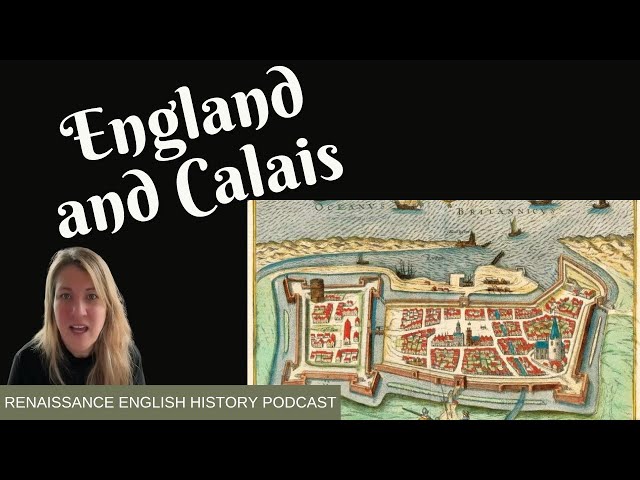
    When the news reached England in January of 1558 that Calais had fallen to the French, it was received with shock. Calais wasn’t a distant outpost for people in England—it was part of their national identity. It was the last foothold of the once-great English empire in France. It had belonged to the English for over two centuries, and now it was gone.

    Today, we’re going to talk about Calais—how the English got it, how they kept it, how they lost it, why it was so important, and what its loss did to Mary I. Calais played such an important role in so many different parts of Tudor history. We think about Anne Boleyn going on that famous trip to Calais with Henry VIII, where they kind of solidified their relationship. She was presented as a consort before they were even married.

    It played such an enormous role in English history, and when it was lost, it devastated Mary I. But how did Calais become part of England? How did this happen? So we’re going to go back and talk about that.

    When the news came that Calais had fallen, Mary I—who was already quite unwell and whose popularity was dipping—is said to have taken the loss quite deeply. According to legend, she told her ladies that if they opened her after death, they would find “Calais” written on her heart.

    Whether or not she actually said it, the line stuck, because that is how much Calais meant to the English. But to understand why the loss stung so much, we have to go back to how England got Calais in the first place.

    Our story begins in the reign of Edward III, in the early years of the Hundred Years’ War. In 1346, after the crushing English victory at the Battle of Crécy, Edward moved to consolidate his position in northern France by laying siege to Calais. The siege dragged on for eleven months. Edward knew that attacking the heavily fortified town head-on would be disastrous, so instead he blockaded the port and waited. Calais was cut off from supplies, and with its population slowly starving, they finally surrendered in August of 1347.

    Edward’s terms were harsh. The original French inhabitants were expelled—some say around 3,000 people—and the town was repopulated with English settlers. This was more than a military base; it was a colonial experiment—a little slice of England placed on the northern coast of France. For 200 years, it stayed that way.

    Calais became a military outpost, a trading hub, and a political tool all rolled into one. It was governed by a lord deputy, or captain appointed by the king—often a nobleman of significant stature. A council managed the day-to-day affairs, and it remained directly under the control of the English Crown.

    It wasn’t part of any French duchy or region. It was the Pale of Calais, a defined and fortified area that stretched a few miles inland. The English built up its defenses—Henry VIII in particular spent enormous sums reinforcing its walls and updating the artillery. It was one of the most fortified towns in Europe.

    Calais also wasn’t just a military zone. Economically, it was critical. English wool exports passed through Calais under the Staple system. This was a medieval monopoly that designated certain ports for official trade. English merchants had major privileges in Calais, including tax breaks and certain protections.

    It became a gateway for English goods heading to the continent and vice versa. This blend of martial and mercantile life made Calais truly unique and distinct. It was English territory, but always on the edge—geographically and politically—surrounded by French towns, always under threat. Yet it was a thriving, bustling area that, as mentioned, was one of the most fortified towns in Europe.

    While Calais was a garrison town, it wasn’t just soldiers marching around in armor. It developed into a functioning community with families, schools, markets, churches, and taverns. English settlers made their lives there, with some born and raised without ever setting foot in England. These so-called “Calais English” formed a unique identity.

    They were loyal to the English Crown, but they were shaped by the rhythms of life in a continental port. They would have had much more experience with French, and with trading with the French. Traveling to France was much easier.

    The population of Calais at the end of the 15th century was between 3,000 and 4,000 people. This included soldiers, administrators, merchants, artisans, and their families. The entire Pale of Calais—a fortified region of about 20 square miles extending inland from the town—had an estimated population of about 12,000 people at this time. This broader area included several small villages like Guînes, and it was used for agriculture, defensive outposts, and that sort of thing.

    The garrison, of course, was a major part of the population. It had about 1,200 soldiers or so, depending on the decade and the threat level. During Henry’s reign, when he was invading France, that number naturally went up. Compared to other English towns, Calais was really modest in size—it was smaller than places like Norwich or York. But economically and strategically, it was far more important than its size alone would suggest.

    Trade was the engine of daily life. Merchants came and went, goods were weighed and taxed. So even though the permanent population was around 4,000 people, there were likely many more people passing through—trading, staying temporarily—who weren’t official residents.

    The wool trade dominated the docks and craftsmen produced everything from cloth to leather goods. Bakers and butchers kept the garrison fed. There was always a military presence, but it didn’t drown out the hum of ordinary life.

    Still, everyone lived with a kind of low-level tension all the time. Skirmishes with the French were common. Every resident knew that war could flare up at any moment. It was a frontier town—civilized, but never entirely safe. Calais was the last relic of England’s old claim in France, a physical reminder of Edward III, Henry V, and the days when English kings dreamed of ruling both realms.

    Militarily, it gave England a base for launching campaigns into the continent. Economically, it anchored the wool trade and gave merchants a foothold in Europe. Symbolically, it mattered even more. Losing Calais didn’t just shrink the map by a little—it bruised the national ego. It marked the end of an era. England was no longer a European power with land in France. It was back to being an island. So what went wrong?

    By the time Mary came to the throne, Calais was still seen as vital, but it had become more symbolic than strategic. The town’s defenses had been allowed to decline. The garrison was underpaid and undermanned. And England—locked in an expensive war alongside Spain against France—was stretched incredibly thin.

    In January 1558, the French made their move. Under the command of François, Duke of Guise, they launched a swift winter offensive. This was highly unusual; winter was not typically a time for military campaigns. Calais was caught off guard and poorly defended. It fell in less than a week. There was no serious attempt at any kind of relief, and the English were humiliated.

    Their last continental possession was gone. The loss was devastating. English merchants lost their privileges. Parliament fumed. Mary was inconsolable and died within the year. Elizabeth was more pragmatic, and she quietly abandoned any plans to try to retake Calais.

    In England, though, the memory lingered. Calais became a symbol of what had been lost—not just land, but prestige, pride, and the last link to the old Plantagenet dream of an Anglo-French empire.

    From that point on, English ambitions turned seaward. The age of colonies and maritime power was beginning. But for many, Calais remained a sore spot—the wound that marked the end of England’s time as a continental power. England, as we said, would begin to turn westward—to Ireland, and eventually to the Americas—but they never again had that place in Calais, in France, a European outpost.

    So there we go, my friend—a little bit about the taking and losing of Calais, and why it was so important to the English. We’ll leave it there for now. Let me know what you think about Calais in the comments. Should Elizabeth have tried to retake it, or was it better for her to look westward—to Ireland and to the Americas—and build up England’s maritime power?

    Related links:
    Melita Thomas on Mary Tudor
    Episode 247: Tudor and Elizabethan Exploration
    Episode 067: Henry VII and his foreign policy

  • Henry VIII’s Betrayals and Executions: Did He Regret Them?

    Henry VIII’s Betrayals and Executions: Did He Regret Them?

    Henry VIII’s betrayals and executions defined one of the bloodiest reigns in English history. From trusted advisors to beloved queens, no one was safe from the axe once they fell out of favor with the king. This post explores some of the most shocking downfalls during Henry’s rule—including Anne Boleyn, Thomas Cromwell, Cardinal Wolsey, Margaret Pole, and Thomas More—and asks a haunting question: did Henry VIII ever regret these ruthless decisions?

    As we revisit these infamous moments of betrayal and brutality, we’ll examine whether the king’s legacy was shaped not only by his thirst for power—but also by any trace of remorse that may have lingered behind the crown.

    Did Henry VIII Ever Regret the Executions of Anne Boleyn, Cromwell, or Thomas More?

    So today we’re going to talk about some of Henry VIII’s most brutal executions and punishments—because I count Wolsey in this list as well. Then we’ll talk about whether Henry ever regretted some of these downfalls, because evidence shows he might have. Of course, he never actually blamed himself—he blamed others for what happened, claiming he’d been given bad advice, etc., etc.

    We’re going to look at four of the most brutal executions—the ones that really stain Henry’s legacy. I mean, there are a lot of them, but we’re going to pick four. And like I said, I’m including Wolsey, even though he wasn’t executed, because his downfall was so swift, and he probably would have been executed if he had lived to be tried. Then we’ll talk about whether Henry ever regretted them.

    So, Henry VIII’s reign is remembered as a bloody one. Heads rolled at an alarming pace, and few—even among his closest friends and advisors—were truly safe. But once the dust settled and the scaffolds were cleared, did Henry ever regret the brutal falls he orchestrated? Was there even a glimmer of remorse behind the crown?

    Today, we’ll talk about the aftermath of some of Henry’s most shocking betrayals:

    • The downfall of his second queen, Anne Boleyn
    • The execution of his right-hand man, Thomas Cromwell
    • The long fall of Cardinal Wolsey
    • And the horrifying death of Margaret Pole, an elderly noblewoman whose execution shocked even the most hardened courtier

    Let’s start with Anne Boleyn. Anne Boleyn was the woman for whom Henry had broken England apart—the dazzling queen who had once been the center of his universe. But by 1536, she was fighting for her life against a tide of false accusations: adultery, incest, and treason. Her trial was a farce. Her execution was swift.

    In the immediate aftermath, Henry wasted no time mourning. Just days after Anne’s death, he was seen parading on the Thames in a barge, openly celebrating with the ladies of the court. Preparations for his marriage to Jane Seymour were underway almost before Anne’s body had cooled.

    Outwardly, it looked like Henry had brushed her aside without a second thought. But there are hints that her death left a deeper mark. His moods reportedly grew darker over the summer. Courtiers noticed an increasing irritability and a hardening of his already suspicious nature. He rarely spoke of Anne, and when he did, it was to blame her for her own downfall. If there was any regret there, it wasn’t the kind that softened him—it was the kind that twisted itself into bitterness and paranoia.

    What about Thomas Cromwell? When Henry broke apart the old England, Cromwell had been his architect—the man who helped build the new England out of the rubble of the old one.

    For years, Cromwell had been indispensable, clearing the way for Henry’s ambitions through diplomacy, legislation, and, when necessary, a few carefully arranged executions. It was Cromwell who had overseen Anne’s downfall, and yet, just four years later, Cromwell himself would fall victim to the same brutal machinery.

    Cromwell’s biggest mistake was arranging Henry’s disastrous marriage to Anne of Cleves—a political match that Henry found personally unbearable. Enemies at court seized on the opportunity, and Cromwell was arrested, imprisoned, and executed within months.

    Now, in this case, there actually is strong evidence that Henry did regret what he had done. The Spanish ambassador Eustace Chapuys reported that Henry called Cromwell “the most faithful servant he ever had.” He blamed others—especially the Duke of Norfolk and Stephen Gardiner—for poisoning his mind against Cromwell.

    Afterwards, Henry reportedly ordered Cromwell’s portrait hidden away because he couldn’t bear to look at it. It’s one of the few instances where Henry’s guilt seems to have broken through his usual justifications. But, as always with Henry, the realization came too late to save anyone.

    Now let’s talk about Cardinal Wolsey. Long before Anne Boleyn or Thomas Cromwell, there was Thomas Wolsey—the brilliant, ambitious cleric who served as Henry’s chief minister for nearly two decades.

    Wolsey had shaped Henry’s early reign, securing alliances, negotiating treaties, managing the court. But when he failed to deliver the King’s annulment from Katherine of Aragon, his enemies closed in. In 1529, Wolsey was stripped of his office and titles. Two years later, he was summoned to London to face charges of treason. He died on the road at Leicester Abbey, likely of illness, but few doubted that had he actually made it to London, the block would have awaited him.

    Henry’s reaction to Wolsey’s death was complex. On one hand, he raged against Wolsey’s betrayal. On the other, he was reportedly somber at the news, musing that Wolsey had served him well—until he didn’t. If Henry felt regret here, it seems to have been brief, quickly swallowed up by the narrative that Wolsey had simply failed him.

    Finally, the most brutal execution of them all was Margaret Pole. Few executions during Henry’s reign were as shocking or grotesque as that of Margaret Pole. She was the Countess of Salisbury in her own right and a niece of Edward IV, which meant Margaret carried royal blood—making her a permanent thorn in Henry’s side as he grew more paranoid about threats to his dynasty.

    In 1541, after years of tenuous imprisonment in the Tower, she was abruptly sentenced to death without a formal trial. Her execution was a horror. The inexperienced headsman missed the mark repeatedly, hacking her to death in a gruesome, drawn-out scene that horrified witnesses. She even reportedly tried to run away, saying that she wasn’t going to simply put her head on the block. The executioner chased her, and she was in her sixties at the time—it was a horrific and chaotic scene.

    There is no record that Henry expressed any regret over Margaret’s death. In fact, it’s unclear whether he ever dwelled on it at all. Foreign observers, however, were appalled, and Margaret’s execution further darkened Henry’s reputation across Europe.

    If he ever had second thoughts, they never made it into the historical record. More likely, by this stage of his reign, he was too far gone—isolated, suspicious, and convinced that bloodshed was the only sure path to security.

    Speaking of executions that shocked Europe, I’m going to throw in an extra one here: Thomas More. Thomas More wasn’t just Henry’s Lord Chancellor. He had once been a beloved courtier, an intellectual companion, a trusted friend—almost a father figure.

    Early in his reign, More had helped nurture the King’s humanist image. He encouraged him in his studies and praised his mind. Their relationship was deeply personal, which made More’s refusal to accept Henry’s supremacy over the Church all the more devastating.

    More’s execution in 1535 was carefully staged. He was charged with treason for his silence, not for any public rebellion, and he was beheaded at the Tower. His final words were a masterclass in quiet defiance. He died, he said, “The King’s good servant, but God’s first.”

    As for Henry, there’s little evidence that he openly regretted More’s death. If anything, he seemed to have convinced himself that More’s stubbornness had left him no choice. But the shadow of More’s martyrdom lingered, and abroad, Henry’s reputation suffered badly. If Henry ever felt any private sorrow for sending an old friend to the scaffold, he kept it buried deep—another hard scar on a reign increasingly defined by the blood of the once beloved.

    So, did Henry ever regret any of the blood on his hands? In Thomas Cromwell’s case, this is unique—because he almost certainly did. But it was too late to undo it. With Anne Boleyn and Cardinal Wolsey, perhaps there was a passing shadow of regret, but it quickly hardened into blame or bitterness. With Margaret Pole, there’s not a shred of evidence that he felt anything at all. And with Thomas More, he seemed to justify the whole thing, insisting that More had brought it on himself.

    So if Henry ever regretted anything, it wasn’t the cruelty—it was losing the people who once served his ambitions, and losing pieces of himself along the way. There we go—a little reflection on some of the worst downfalls of Henry’s reign, and whether he ever regretted them. Interestingly, with Cromwell, he did. But with the others? Not so much.

    Related links:
    Anne Boleyn’s Final Hours
    David Crowther on Thomas Cromwell
    Episode 180: Cardinal Wolsey
    Episode 081: Tudor Times on Margaret Pole
    The Fall of Thomas More: Henry VIII’s Friend Turned Traitor?

  • Anne Boleyn’s Final Hours: What Really Happened on May 19, 1536

    Anne Boleyn’s Final Hours: What Really Happened on May 19, 1536


    Anne Boleyn’s final hours remain one of the most haunting and iconic moments in Tudor history. On May 19th, 1536, Anne Boleyn, the second wife of King Henry VIII and mother of the future Queen Elizabeth I, faced her execution at the Tower of London. From her calm composure and last prayers to the chilling efficiency of the French swordsman, Anne Boleyn’s final hours were marked by dignity, devotion, and tragedy.

    Let’s take a detailed look at the events of that fateful morning—her last words, the people who witnessed them, and the powerful legacy she left behind.

    Transcript of Anne Boleyn’s Final Hours: What Really Happened on May 19, 1536

    Today is May 19th, so it is a very important day in Tudorland—in Tudor history land—because it’s the anniversary of the execution of Anne Boleyn. We’re going to talk today about the execution of Anne, the final hours of Anne Boleyn.

    So it’s May 19th, at the Tower of London. It was just after dawn. It was a Friday, May 19th, 1536, and Anne had been awake all night inside the Queen’s lodging at the Tower, waiting for the end. She had already dressed. She was wearing a dark gray gown with a red kirtle underneath and a cloak trimmed with ermine.

    Those who saw her that morning remarked on her composure. Someone even said they had never seen her more beautiful. Sir William Kingston, the Constable of the Tower, even seemed surprised at how steady she was, which he wrote about in his letters.

    Outside, a scaffold had been built on Tower Green, just yards away. The swordsman, of course, had been brought from Calais by special order that was seen as one last mercy by Henry VIII. He had arrived earlier that week. Her execution had actually been delayed by a day, they think, because the swordsman was a little late arriving in London.

    Some people, though, also lean toward the idea that Henry was still a little undecided about a couple of things—namely, whether her sentence should be commuted or, if not, whether she should be allowed to be buried in consecrated ground. So there was some delay. Anne initially thought she was going to die on the 18th, and it was moved to the 19th.

    Anyway, Anne knew exactly what was coming. She was not allowed a confessor, but she did request the Eucharist. At about 7:00 a.m., she received communion, likely from her almoner, John Skypp, and apparently she swore her innocence once more before taking her communion. According to Eustace Chapuys, she declared that she had never been unfaithful to the king.

    Taking communion on the morning of an execution wasn’t unusual, but Anne’s behavior did stand out. Kingston later reported that she took the sacrament with great devotion and “seemed more ready to die than any creature I ever saw.”

    There was no confession of guilt—only a firm insistence on her own honesty. She remained consistent in claiming that she had not committed any adultery or treason. Her final hours were, of course, being closely monitored. Kingston reported every detail to Thomas Cromwell, who was pulling the strings behind the scenes.

    Even Anne’s body language became evidence in the record. He described how she actually made some dark, kind of macabre jokes about her own execution. She apparently said, “I heard say the executioner was very good, and I have but a little neck,” and then she laughed. It’s one of the most chilling lines in the entire story—half gallows humor, half effort to stay in some kind of control.

    Anne had expected to die at 8:00 a.m., but the execution was delayed yet again—this time because the scaffold wasn’t ready and the crowd hadn’t fully assembled. You can’t have an execution without the crowd being fully assembled, of course.

    Sir William Kingston had to tell her that she would need to wait again, and she reportedly took the news with calm acceptance—though some accounts suggest she showed visible signs of exhaustion at this point. Of course she did. She’d been up all night.

    She spent the next hour with the women assigned to her in the Tower. These, of course, weren’t her friends or confidantes. They had been chosen for their loyalty to the king. They had shared her last days, and according to Kingston, Anne told them to be brave and not to weep. She reminded them of her innocence and the peace she had made with God.

    When Kingston entered the room again at nine, she told him that she was ready. She was still steady, still composed, and had already arranged her headdress and clothing so that nothing would delay the swordsman.

    Just after nine, she was led from her chambers across the courtyard to the scaffold on Tower Green. There was only a small crowd—about a couple of hundred people. This wasn’t a huge public spectacle; it was deliberately kept private. This was the first time a queen had ever been executed, especially by a king, and they wanted to control the narrative as much as possible.

    So, it was held within the Tower walls. It wasn’t public—it wasn’t like Tyburn, and it wasn’t on Tower Hill where people could watch. It was within the Tower, and it was deliberately private. There were only a few noblemen present, some Tower officials, and her ladies.

    Kingston noted that she walked with a “goodly countenance,” holding herself with dignity. Anne gave a short speech, very carefully worded, of course. She didn’t confess to any crime. She asked those present to pray for the king, calling him “the most gentle and sovereign lord” and saying that he had always been kind to her.

    It was a final show of obedience—likely encouraged, if not required. She, of course, was thinking about her daughter Elizabeth and keeping Elizabeth safe. She expressed hope for salvation and forgiveness, and then she knelt down.

    Unlike executions by axe, this would be swift. The French swordsman had been instructed to act quickly and cleanly. She removed her hood and blindfolded herself, praying aloud as the moment approached. She was saying things like, “O Lord, Jesu, accept my soul. My soul belongs to Jesus. Lord Jesus, accept my soul.”

    The executioner stepped quietly behind her. The sword was already in his hand. According to accounts, he called for his assistant to bring him the weapon. It was a distraction, so that Anne wouldn’t flinch. She kept praying: “To Jesus Christ I commend my soul. Lord Jesus, receive my soul.”

    As he called for his assistant to bring the sword, her head turned toward the sound—toward where he was calling. That movement exposed her neck in the cleanest possible way. The sword fell cleanly in one stroke, and she was beheaded instantly.

    There wasn’t any cheering. There wasn’t any ceremony. Her ladies were weeping, and they gathered her body and head into a linen cloth. She was buried just steps away inside the Chapel of St. Peter ad Vincula—in an old arrow chest, because they hadn’t prepared a proper coffin. A Queen of England, buried without a proper coffin.

    There were no bells ringing, no public mourning, nothing like that. That same day, Henry announced his engagement to Jane Seymour. In some accounts—especially noted by Alison Weir—witnesses claimed that Anne’s lips were moving when her head was held up. As was customary, the executioner held up her head and declared, “This is what happens to the enemies of the King.” Some said her lips were still moving.

    Now, there is a theory that the nervous system can remain active for a few moments after death—that movement and muscle twitches may occur. It doesn’t all shut down instantly. Alison Weir actually did some deep research into this topic—the kind of research that gets a bit queasy, and honestly, it’s a little darker than where I want to take this video, especially this early in the morning. But the idea is out there. I’ll link to the video if you want to dive deeper into what Alison Weir discovered about this type of death and whether people die instantly.

    And you can read about it in her book too, The Lady in the Tower. I think she goes into detail about that. I actually read it right before bed—I finished it right before bed. It was years ago, but I remember having a really hard time getting to sleep after reading it. So if you’re queasy about stuff like that, tread carefully before you read it. But, you know, it’s there if you want to check it out.

    Related links:
    The Lady in the Tower: The Fall of Anne Boleyn
    Episode 076: Alison Weir on Anne Boleyn
    The Relationship between Anne Boleyn and Eustace Chapuys

  • The French Armada of 1545: The Day the Mary Rose Sank

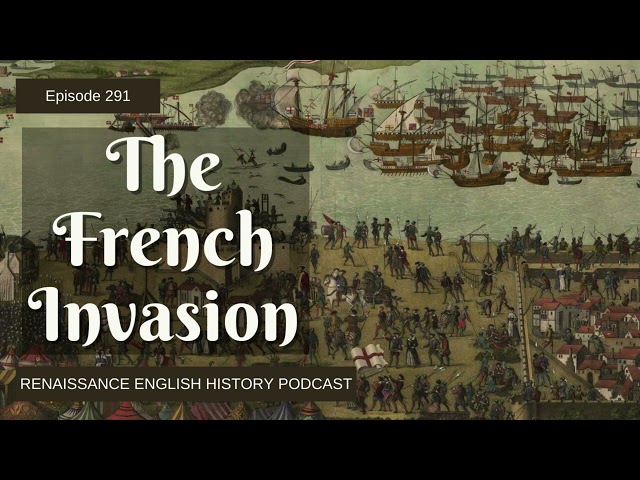
    The French Armada of 1545: The Day the Mary Rose Sank


    The French Armada of 1545 was the largest invasion fleet ever launched against Tudor England—larger even than the more famous Spanish Armada. Yet despite its scale and danger, this dramatic moment in history remains largely forgotten. In the summer of 1545, over 200 French ships carrying 30,000 troops crossed the Channel with one clear goal: invade England, capture Portsmouth, and topple Henry VIII. What followed was not a triumphant English victory, but a desperate, chaotic defense marked by confusion, tragedy, and one of the most haunting shipwrecks in British history—the sinking of the Mary Rose.

    Let’s uncover the full story of the French Armada of 1545: the politics behind it, the invasion that nearly succeeded, and how sheer luck, geography, and fierce resistance barely held the line.

    Transcript of The Day the Mary Rose Sank: France’s Bold Invasion of Tudor England

    Today we’re going to talk about something that often gets overlooked. When people think about Armadas invading England, they immediately think of the Spanish one. But there was actually an earlier invasion in 1545—one that was even bigger. And that’s the one we’re going to talk about.

    If you ask anyone to name the biggest naval threat England faced in the 16th century, they’ll almost certainly say the Spanish Armada. But what if I told you that 43 years earlier, another Armada came—larger, more chaotic, and every bit as dangerous?

    In the summer of 1545, France launched an invasion fleet of more than 200 ships, carrying 30,000 troops, with one clear mission: capture Portsmouth and topple Henry VIII. It was the largest force assembled against England in the early modern period—bigger even than the Spanish Armada that came decades later.

    This episode is about the French Armada—a dramatic but often forgotten chapter in Tudor history. There were no glowing bonfires of victory, no Protestant winds miraculously smashing the enemy fleet. No, this was a grim, grinding campaign fought in the narrow waters of the Solent, where the English were outnumbered, scrambling, and very nearly overrun.

    At the center of it all was a beautiful, deadly warship: the Mary Rose, Henry VIII’s pride and joy, which sank before his very eyes. We’re going to dive into the tangled European politics that led to the invasion, the scrambling English defense, and the strange series of events that turned a looming disaster into a near-miraculous survival story for England.

    The Road to Battle: European Politics

    The road to the Battle of the Solent began not on English shores, but in the messy web of European alliances and betrayals. By 1544, Henry VIII had formed a military alliance with his sometimes-friend, sometimes-rival Charles V, Holy Roman Emperor. Together, they were meant to pressure Francis I of France in the ongoing Italian War, which lasted from 1542 to 1546.

    It was all part of the endless chess game of European power politics. Honestly, the specific names don’t even matter. What matters is that these countries were constantly shifting allegiances, ganging up on one another. This invasion? It was just another episode in that never-ending drama.

    But for Henry, this was his chance to grab French territory and glory. Remember, Henry fancied himself a warrior king—someone like Henry V. In his heart, he yearned for another Agincourt. It was like his greatest life’s ambition was to lead another Agincourt and be crowned King of France, like Henry V.

    This was what he lived for. It was his purpose in life. And that summer, he personally led a campaign across the Channel, capturing the fortified town of Boulogne. It was a costly and exhausting affair, but Henry was triumphant. Francis was humiliated—and he vowed revenge.

    Meanwhile, over in the Vatican, Pope Paul III, still smarting from Henry’s break with Rome and the brutal treatment of his daughter, Katherine of Aragon, was urging Catholic monarchs to unite and crush the English heretic. Francis saw an opportunity and thought, That’s a part I can play. It fit nicely with his desire for revenge.

    Then came the twist: Charles V, having gotten what he wanted, sneakily signed a separate truce with Francis. Now Henry was left holding Boulogne—and the bill—with absolutely no allies.

    Francis acted quickly. In early 1545, he declared his intent to liberate England from Protestant tyranny and began assembling a massive invasion force under Admiral Claude d’Annebault. More than 200 ships, including 25 war galleys and 30,000 men, were readied in the Seine estuary. By sheer size, it was a more formidable force than the later Spanish Armada.

    And England? She had just 80 ships, 12,000 soldiers, and a whole lot of territory to defend—including active campaigns in Ireland, France, and Scotland. The coastal defenses were a mess. And the navy—Henry’s proud creation—was about to face its first true test. Even Henry seemed a little rattled.

    The Invasion Begins: French Armada Sets Sail

    So, the French Armada set sail. It was impressive on paper—but from the start, it seemed a little cursed.  On July 6th, 1545, as the fleet prepared to depart from the Seine estuary, disaster struck. The French flagship Carrack caught fire and exploded while still at anchor. The blaze gutted the ship and threw the invasion into immediate chaos.

    Admiral Claude salvaged what he could and transferred his command to La Maire, only to see that vessel then run aground outside of Le Havre shortly after. The ship began leaking badly and had to be hastily patched up before it was even seaworthy.

    Still, on July 16th—ten days later—the patched-together fleet finally launched. As I said: 200 ships, 30,000 soldiers. It was massive. Their destination was Portsmouth—Henry VIII’s naval stronghold.

    Now, England had been expecting this. Henry and his Privy Council had traveled to Portsmouth to personally oversee the defense. Troops were mobilized. Cannons were manned. But despite the urgency, England was stretched pretty thin.

    Much of the army was still tied up abroad, and the remaining coastal forces were understrength and scattered. The English navy was led by Lord Admiral John Dudley, the Viscount Lisle, who brought together what ships he could—only 80 in total—including the Henri Grâce à Dieu, the towering flagship, and the Mary Rose, a veteran warship and a personal favorite of the king, named after his sister.

    On July 18th, the French fleet appeared off the coast. They had the numbers, they had the wind, and they had caught England at a very vulnerable moment. For a brief time, it looked like they might just be victorious.

    The Battle of the Solent: The Sinking of the Mary Rose

    That day, the French fleet entered the Solent—the narrow stretch of sea between the Isle of Wight and the English mainland—without resistance. With Henry watching from Southsea Castle, the French moved into position, their war galleys prowling close to shore while the larger ships held back in deeper water.

    Viscount Lisle cautiously sailed the English fleet out from Portsmouth Harbor. The initial clash was… a little underwhelming. Both sides exchanged long-range cannon fire, but there was little real damage.

    The French galleys attempted to get in close with their powerful bow-mounted guns, but they were driven back by smaller English vessels, including nimble row barges. Still, the imbalance was obvious: the French had more ships, more men, more firepower.

    Their main problem wasn’t the English—it was the geography. The Solent’s shallow waters and tricky currents made it nearly impossible for the heavier French ships to maneuver effectively, especially without a strong wind. And that wind was stubbornly absent.

    That evening, Henry boarded the Henri Grâce à Dieu, his newest warship, and had his dinner there. While aboard, he confirmed that Vice Admiral George Carew would command the Mary Rose.

    The Mary Rose was an older but still powerful ship that had served England for over three decades. It was a pretty emotional moment—Henry had personally overseen her design and construction, and she had been with him since the very early days of his reign.

    At dawn on July 19th, the calm persisted. The French galleys resumed their harassment, darting forward and firing on the becalmed English ships. Then, late in the afternoon, a breeze finally stirred the flags. The English fleet began to move. The Mary Rose was one of the first to act—eager to meet the enemy and prove her worth. But within moments, something went terribly wrong. She fired a broadside, turned to bring her other guns to bear, and vanished beneath the waves.

    The sinking of the Mary Rose is one of the most infamous and mysterious moments in Tudor naval history. That afternoon, as the breeze lifted the English fleet into motion, the Mary Rose moved to engage the French galleys. According to eyewitnesses, she fired her guns from one side, as noted, and then began to turn to bring her other broadside into play.

    What happened next has never been fully explained. Suddenly, the Mary Rose heeled over violently to one side. Her open lower gun ports—which had just been used in the first volley—were still open. As she tilted, water rushed in.

    Within moments, she capsized and began to sink. Her heavy guns and stores made recovery impossible. She slipped beneath the surface of the Solent in full view of the king, who was watching nearby from Southsea Castle.

    Of the estimated 400 to 500 men aboard, fewer than 40 survived. Some contemporary reports blamed the crew, suggesting they had failed to close the gun ports after firing. Others hinted at panic or confusion on deck. One French eyewitness claimed that a galley had struck the Mary Rose with a cannon shot and holed her, but no such damage was found when the wreck was excavated in the 20th century.

    Another theory suggests the ship may have simply been too top-heavy—overloaded with soldiers and equipment. As she turned in the breeze, her instability may have doomed her.

    Whatever the cause, the loss was catastrophic—not just for the battle, but for Henry personally.

    The Mary Rose had been one of his earliest great warships. He had commissioned her in 1509, the year he became king. She had seen action against the French before, had been refitted and modernized, and was a symbol of his growing naval ambitions. And now, she was gone, dragging hundreds of Englishmen with her.

    Henry reportedly watched the disaster unfold in stunned silence. The rest of the English fleet held position, unwilling to risk another blunder. The wind, as quickly as it had come, died down again. The French galleys moved forward once more, but now they were facing an English fleet that was dug in—and angry. The death of the Mary Rose hadn’t broken the English; it had made them mad.

    The Isle of Wight: French Invasion Attempts

    With the naval battle stalled and the Mary Rose at the bottom of the Solent, the French turned to their next objective: invading the Isle of Wight. The island was strategically vital—just across from Portsmouth—and, the French believed, lightly defended.

    In truth, the islanders had been bracing for something like this for years. The Isle of Wight had a long memory of French raids going back to the Hundred Years’ War, and its population—just under 9,000—was surprisingly well-trained. Men were required to undergo military training, and even some women were trained as archers.

    On July 21st, Admiral d’Annebault ordered troops to land at three separate points: St. Helen’s, Bonchurch, and Sandown—hoping to divide and overwhelm the defenders. At St. Helen’s, a small English fort had been firing on the French fleet. It fell quickly, and the nearby villages—Seaview, Bembridge, and Nettlestone—were pillaged. The French advance halted there. They didn’t regroup or push inland, despite having superior numbers.

    The main action came at Bonchurch, where the French landed in force and marched inland. The first English defense was stiff, and the French were repelled. But a second push broke through, and the defenders began to flee.

    According to legend, one local captain, Robert Fisher—too heavy to escape up the steep hills—cried out, “A hundred pounds for a horse!” before being cut down. The line may sound familiar—it’s widely believed to have inspired Shakespeare’s famous line, “A horse! A horse! My kingdom for a horse!” in Richard III.

    The final landing at Sandown met fierce resistance. A new castle was under construction there, and though it wasn’t yet complete, English troops and local militia rushed to the shore. A brutal skirmish followed. The French lost several commanders and retreated in disarray.

    Elsewhere, a French detachment dug in among the ruins of Bembridge and managed to hold off English attackers, but they were cut off and exposed. The French had troops on the island, but they had no real foothold—and the clock was ticking.

    The Battle of the Solent never erupted into a full-scale clash of fleets—not because either side lacked the will, but because the conditions made it nearly impossible. After the Mary Rose disaster, the wind died down again, leaving both sides awkwardly drifting.

    But John Dudley had an advantage the French couldn’t match: he knew these waters. The Solent was his backyard, and he used its complex tides and shoals like invisible weapons. Dudley maneuvered the English fleet into a defensive position that blocked the main French ships from advancing. The larger French vessels, already struggling with damaged hulls and navigation problems, couldn’t get into firing range without risking grounding.

    The galleys, effective in tight quarters, couldn’t force a breakthrough alone. Meanwhile, the English ships had the protection of Portsmouth Harbor, and supplies were easy to move in from shore.

    Reinforcements could be mustered. Shore-based artillery was in place. The French had no such luxury. Admiral d’Annebault’s flagship La Maistresse was still leaking from its earlier grounding back in France.

    Illness was spreading among the crowded ships, and provisions were already running low. The longer they lingered, the weaker they became. The French still held pockets of the Isle of Wight, but they had failed to push inland or secure a fort. With each passing day, their position worsened.

    The invasion that had once looked so overwhelming was now dangerously exposed. Dudley didn’t actually need to win a grand naval battle—he just needed to hold the line. So, by July 22nd, just three days after the sinking of the Mary Rose, Admiral d’Annebault made the call: the French invasion of England was over.

    His fleet was battered, supplies were dwindling, and morale was collapsing. The troops on the Isle of Wight had failed to establish a proper foothold. Holding the island would have required constructing three full fortresses—a task estimated to take three months, even without constant harassment from locals wielding longbows and pitchforks. Worse, the flagship La Maistresse was still leaking badly. The admiral couldn’t afford to lose another ship—or more men to sickness.

    On July 23rd, as a parting gesture of defiance—or perhaps desperation—the French landed 1,500 troops near Seaford, about 40 miles east of Portsmouth. They raided a nearby village, but instead of terrified peasants, they encountered local militia who responded with force. Armed with longbows and fierce determination, they repelled the French attack.

    The Aftermath: A Narrow Escape

    Bloodied and humiliated, the invaders retreated once more to their ships.That was it. The French fleet turned back across the Channel. The grand Armada that had once seemed unstoppable had failed utterly and completely. England had survived—barely—and the memory of those July days would fade, overshadowed in time by another Armada.

    In the end, the French Armada of 1545 was bigger than the Spanish Armada and arguably more dangerous. Yet it barely registers in popular memory. No national holiday. No commemorative paintings in the Houses of Parliament. No Francis Drake playing bowls on the beach. Why?

    Part of it is the lack of a clear-cut, dramatic victory. There was no glorious naval battle to boast of, no captured enemy flagship. The English held the line, yes—but through geography, luck, and stubbornness, not through any kind of decisive blow.

    The real legacy of the battle wasn’t triumph. It was tragedy. The sinking of the Mary Rose—her sudden loss—came to symbolize the vulnerability of Tudor England. That ship, more than anything else, is what keeps the story alive.

    When the Mary Rose was raised from the seabed in 1982, after 437 years underwater, it brought with it a ghostly reminder of a nearly forgotten war—a time when France launched a massive assault on England’s southern coast and came dangerously close to succeeding.

    The French Armada may not have changed England’s borders, but it changed how the Tudors thought about defense, readiness, and naval power. And it left one magnificent wreck to tell the tale. So there you go.

    The summer of 1545 could have ended very differently for Henry. France had the ships, the soldiers, and the ambition to deal England a crushing blow. But in the end, it was the tides and timing—bad luck and good defenses—that kept the Tudor crown intact.

    Mary Rose, of course, still rests in Portsmouth, her splintered hull a witness to those tense days in the Solent. Her story is the one that we remember. But behind it lies the forgotten drama of the near invasion—the invasion of the Isle of Wight—and the ghost of a war that could have dramatically reshaped England.

    This was not a glorious victory. It was a super lucky, narrow escape. So we’ll leave it there for now, friends: the French Armada—bigger than the Spanish one, more dangerous, but unsuccessful all the same.

    Related links:
    Episode 39: The Spanish Armada Part 1
    July 19, 1545: The Sinking of the Mary Rose
    Episode 070: John Dudley
    5 Key Takeaways on the Rise of the Tudor Navy

  • Henry VIII’s 72,000 Death Toll Myth

    Henry VIII’s 72,000 Death Toll Myth


    Henry VIII’s 72,000 death toll is one of the most shocking and widely repeated claims in Tudor history—but is it actually true? This dramatic number has appeared in everything from 19th-century history books to modern TikToks, shaping the image of Henry as a ruthless, bloodthirsty monarch. In this article, we’ll explore where the 72,000 figure came from, how many people were really executed during his reign, and why this myth continues to stick in the public imagination.

    So, where did that shocking number come from—and is it even true? Let’s find out.

    Transcript of Did Henry VIII Really Order 72,000 Deaths? The Truth Behind the Myth

    Today, we’re going to talk about all the people Henry VIII killed. That sounds like a fun topic for a beautiful spring afternoon, doesn’t it? So last week, I did a video on whether or not Henry VIII ever regretted any of the people he executed—any of the downfalls, like Thomas Cromwell, Thomas More, Anne Boleyn, and all the other people he had killed during his reign.

    There were a few people in the comments who brought up the number we always hear—that Henry VIII killed 72,000 people. It’s a number that gets repeated everywhere. So let’s talk about where that number comes from, who these people were, and… I don’t know, why the heck Henry thought he needed to kill 72,000 people.

    This number—72,000 people—is repeated everywhere: documentaries, websites, TikToks, all of that. It sounds horrific. I mean, 72,000 people is like a stadium full of people. Did Henry really kill that many? Let’s talk about where the number came from, whether it’s accurate, and who was actually getting the axe during Henry’s reign.

    Okay, so let’s start with the number itself. The claim that Henry executed 72,000 people during his reign isn’t a modern invention. It actually dates back to just a few decades after his death, which is partly why it’s stuck around for so long.

    The source is a man named William Harrison, writing in the 1570s. He was the rector of a parish in Essex and contributed to Holinshed’s Chronicles, which became a major source for Elizabethan writers—Shakespeare included. In his Description of England, he writes that Henry VIII, executing his laws very severely against such idle persons—I mean great thieves, petty thieves, and rogues—“did hang up three score and 12,000 of them in his time.”

    Three score and twelve = 72, so that’s 72,000. Supposedly, 72,000 people were hanged for thievery and vagrancy—which seems… like a lie, you know? Now, Harrison doesn’t cite a source. He just states it as fact.

    But historians who’ve looked into it have traced where Harrison probably got the number: from an Italian mathematician named Girolamo Cardano, who traveled to Scotland in the 1550s—but never actually set foot in England.

    Cardano, in turn, said he heard the number from someone he called “the Bishop of L. Sovia,” which—just to make things weirder—seems to have been a bishopric that didn’t actually exist.

    So, to recap: a number passed along by an Italian who never visited England, quoting a French bishop from a possibly made-up place, eventually written down by a clergyman who tossed it into a chapter on English punishments. Super solid, right?

    Yet somehow, this figure ended up in Holinshed’s Chronicles, which gave it an air of authority. It was then picked up by people like David Hume, repeated in parliamentary debates in the 1800s, and eventually echoed by every history documentary trying to drive home just how scary Henry VIII’s reign was.

    So, how many people actually died by execution during Henry’s reign? Well, we do know that England had a pretty brutal legal system in the 1500s. Capital punishment was used a lot more frequently than it is today. But modern scholars estimate the number of executions to be closer to 700 per year, on average. Still a lot—but that brings the total across Henry’s 37-year reign to somewhere around 20,000 to 25,000 people, not 72,000.

    Most of these executions were not high-profile political victims. The vast majority were common criminals—thieves, murderers, highway robbers—people who were tried and sentenced in local courts, far from the king’s direct influence. Henry didn’t personally sign off on most of these. He probably didn’t even know their names. So that 20,000 to 25,000 people? It’s still a lot. It sounds like a lot. It is a lot. But it’s also important to understand who these people were.

    First, you’ve got ordinary criminals—that’s the majority. England’s legal system in the 16th century handed out death sentences like candy. Theft, burglary, even poaching could earn you a spot at the gallows. Executions were public. They were brutal. They were routine. They were seen as deterrents, not spectacles. And most of these people were tried in local courts. They weren’t summoned to London. They never saw Tower Hill or anything like that.

    Then there were the religious executions. Henry’s break with Rome triggered years of religious upheaval. Early in his reign, Catholics who opposed reform were targeted—people like the Carthusian monks, who were starved and hanged for refusing to accept the king’s supremacy. Later, Protestants like Anne Askew were burned at the stake for their beliefs. So really, nobody was safe. You could have Protestants and Catholics both executed under Henry.

    Next, you’ve got the high-profile political victims—the ones we remember: Anne Boleyn, Thomas More, Thomas Cromwell, Margaret Pole. These were dramatic. They were personal. They often involved fabricated charges of treason or heresy. And in these cases, yes, Henry was very involved. These were not local court cases. They were state-sanctioned purges, often driven by paranoia or shifting alliances.

    Then we have the rebels during the Pilgrimage of Grace in 1536. Thousands of people rose up in protest against the dissolution of the monasteries and the sweeping religious changes across the country. Henry crushed the rebellion. Over 200 people were executed in the aftermath, including abbots, lords, and commoners. That alone added a major spike to the death toll that year.

    So while Henry didn’t personally order tens of thousands of deaths, he did preside over a reign where capital punishment was frequent, and he didn’t hesitate to make examples of people when it suited him—politically or religiously.

    So why does this number—72,000—stick with us? Why has it hung around for so long? Well, mostly because it just kind of sounds right. It fits this popular image of Henry as the bloated, bloodthirsty tyrant, chopping off heads left and right. It’s dramatic. It’s got shock value. And the figure lived on thanks to the sources that passed it along: Holinshed’s Chronicles, and David Hume, who gave it credibility in his History of England.

    Then, later in 1810, Samuel Romilly used it in a debate in Parliament about reforming capital punishment. These were big names—and they weren’t citing their sources very closely. From there, it got picked up by 19th-century history books, Victorian moralists, and eventually, sensational documentaries and viral TikToks.

    By the time it landed on Reddit or TikTok, the number had been stripped of all context and just became another fact about scary Henry. Not saying he’s not scary—he’s definitely scary—but you know… it wasn’t quite 72,000.

    So, was the number 72,000 accurate? Probably not. That figure came from a game of historical telephone involving a French bishop, an Italian visitor, and a clergyman who wrote about English dogs in the same book.

    The real number was probably closer to 20,000 to 25,000 over nearly four decades. And most of those weren’t dramatic betrayals or personal vendettas, but everyday criminal “justice” in Tudor England.

    Henry was absolutely capable of cruelty and violence—no doubt about that—but like most historical myths, the truth is a lot more complicated, and maybe even more revealing. It tells us not just about Henry, but about how history gets written, repeated, and warped over time.

  • Surviving Henry VIII: The Men Who Escaped the Axe

    Surviving Henry VIII: The Men Who Escaped the Axe


    Surviving Henry VIII was no small feat. In a court where ambition could get you executed and favor could vanish overnight, most who rose close to the king eventually lost their heads—literally. Yet a handful of men managed to do the impossible: they stayed in Henry’s good graces from the start of his reign to the very end.

    Let’s explore the remarkable stories of those who navigated the deadly politics of the Tudor court and lived to tell the tale. These survivors—trusted advisors, loyal friends, and expert political chameleons—offer a rare glimpse into what it really took to thrive while surviving Henry VIII.

    Transcript of The Men Who Survived Henry VIII: Friends Who Kept Their Heads

    Today, we’re going to talk about the people Henry VIII didn’t kill—which honestly seems like a shorter list than the people he did. Sometimes it really feels like just being near Henry was dangerous. Anyone who rose too high—Cromwell, Boleyn—ended up in serious trouble, and often, dead.

    But there were actually people who were very close to Henry, genuine friends, who managed to survive his entire reign and stay in his good graces the whole time. That’s something we don’t talk about nearly as often, so I want to highlight those people today.

    Like I said, when we talk about the people closest to Henry VIII, the stories usually don’t end well—heads on spikes, reputations in tatters, families ruined. But a few men managed something remarkable: they stayed in Henry’s favor from the beginning to the end. These were insiders who understood the rules of a deadly game, and somehow, they walked away unscathed. So who were these unicorns of the Tudor court?

    CLet’s start with the most obvious name on the list: Charles Brandon, Duke of Suffolk. Charles Brandon was Henry’s childhood best friend—the kind of friendship that survived jousts, wars, and even a royal scandal.

    In 1515, Brandon secretly married Henry’s sister, Mary Tudor, the widow of the French king. Most people would have been executed for that level of cheek, but Brandon got a slap on the wrist and a fine… which he never really paid. That tells you everything you need to know about how deep Henry’s affection for Charles Brandon ran.

    Brandon was a constant in Henry’s life. He fought alongside him in France, served on the Privy Council, and even participated in the Dissolution of the Monasteries. But crucially, he never got too close to dangerous court factions or took risky political stances. He was loyal, yes—but he also knew when to stay quiet.

    He died in 1545 of natural causes—one of the very few men who went from the start of Henry’s reign to nearly the end without falling out of favor.

    Next, we have Sir Thomas Audley. Audley didn’t start in Henry’s inner circle, but he was a master of survival through adaptation. Originally a client of Thomas Cromwell, Audley rose quickly.

    He presided over the trials of Sir Thomas More and Anne Boleyn, and eventually became Lord Chancellor. That kind of job usually came with a very short shelf life, but he somehow made it last. His secret was loyalty to the crown over any ideology: when Cromwell fell, he didn’t try to save him; when Protestant reform was in fashion, he supported it, and when it wasn’t, he quietly stepped back.

    He understood that his duty wasn’t to shape policy but to carry out Henry’s will. He kept his head down, did the work, and avoided moral stands that might have put him at risk. He died peacefully in 1544.

    Next we have Thomas Cranmer, one of the most paradoxical figures in Henry’s reign—deeply Protestant, yet protected by a king who often leaned Catholic when it suited him. Cranmer’s appointment in 1533 was strategic: Henry needed someone to approve the annulment of Katherine of Aragon, and Cranmer delivered. But he wasn’t just a puppet; he had a long game in mind, a slow, cautious shift toward reform. He made many powerful enemies, yet Henry shielded him more than once.

    In 1543, when court conservatives tried to bring charges against him, Henry warned Cranmer ahead of time and publicly reaffirmed his trust. That same year, when Catherine Parr nearly faced execution and conservatives gained influence, Henry’s protection saved Cranmer’s life.

    Of course, that protection ended the moment Henry died. Under Edward VI, Cranmer was safe, but under Mary I, he was arrested, tried, and eventually burned at the stake. During Henry’s reign, however, he was effectively untouchable.

    Now let’s talk about Sir Anthony Denny. You know you’re trusted when you’re literally managing the king’s bathroom schedule. As Groom of the Stool, Denny had daily access to Henry VIII, which even his most powerful ministers could dream of. By the 1540s that role had evolved: Denny not only oversaw the privy but also controlled access to the king, managed royal correspondence, and acted as a political gatekeeper.

    In Henry’s final years—when illness made him irritable and paranoid—Denny was one of the few people allowed into his chambers. He even delivered the news of the king’s impending death and helped arrange Henry’s last will and testament to favor the reformist faction. Throughout it all, he never drew attention to himself. He had influence without ever making himself a target—and that is exactly how you survive in the Tudor court.

    Let’s talk now about William Paget. He was not born into power; he worked his way up through competence and discretion. He was a skilled administrator, starting as Clerk of the Signet and eventually rising to Secretary of State. He served Henry loyally and handled some of the most delicate political negotiations of the 1540s, including affairs related to the succession.

    Paget’s real strength was his total pragmatism. He didn’t tie himself too tightly to any one ideology—Protestant, Catholic, it didn’t matter—as long as the king’s will was done efficiently. He was one of the few men trusted by both Henry and his son Edward VI, and he even served under Mary Tudor later. That adaptability was his superpower, and it kept him alive.

    Finally, there’s John Russell, 1st Earl of Bedford. Russell was a soldier and a statesman, but he never tried to be a kingmaker—and that likely saved his life. He served in France, took part in the suppression of the Pilgrimage of Grace, and helped to manage the Dissolution of the Monasteries.

    Henry rewarded him handsomely with land and titles. The whole area around Covent Garden today was given to John Russell—Bedford Square, Russell Square—those are his namesakes. All of that land, from Covent Garden north through Russell Square, was part of what Henry VIII gave to him.

    Russell knew how to stay out of political firefights. He focused on running his estates, fighting in wars, and doing what he was told—simple, effective, and most importantly, alive.

    So what did all of these men have in common? They weren’t saints, but they were careful. They stayed useful. They avoided factional bloodbaths. And they never forgot one essential rule: in Henry’s court, survival wasn’t about being right or righteous—it was about being needed. And never, never ever—never—outshining the king. So there we go: a little bit about the men who stayed alive in Henry’s court.

  • The Sweating Sickness and Anne Boleyn: The Illness That Shook Henry VIII

    The Sweating Sickness and Anne Boleyn: The Illness That Shook Henry VIII


    The sweating sickness and Anne Boleyn might not be the first pairing that comes to mind when thinking about Tudor history, but in the summer of 1528, their paths crossed in a way that changed everything. The sweating sickness was a mysterious and deadly epidemic that swept through 16th-century England with terrifying speed—and when Anne Boleyn, Henry VIII’s great love and future queen, fell ill, it sent shockwaves through the royal court.

    In this episode, we explore how the sweating sickness shaped Anne’s fate, Henry’s emotional response, and the future of the Tudor dynasty.

    Transcript of That time Anne Boleyn Got the Sweat: The Illness That Shook Henry VIII

    Today, we’re going to talk about that time Anne Boleyn got the sweating sickness. The sweating sickness was a terrifying disease in England. A lot of times it gets confused with the plague—it wasn’t the plague. It was similar in some ways, but it wasn’t the same. It was brand new—something that had never appeared in England before, at least not until the time of Henry VII.

    It absolutely terrorized people—it was petrifying. And we’re going to talk about when Anne got it, and also how that affected her relationship with Henry. At that point, their relationship was still fairly new, and this illness actually led to an increase in intensity, you could say.

    Let’s start by talking about the sweating sickness. Imagine a disease that came out of nowhere, made you break out in an uncontrollable sweat, and then killed you within hours. Sounds fun, right? That was the reality of this very mysterious and terrifying illness known as the sweat. It was an epidemic that swept through England multiple times in the 16th century.

    In the summer of 1528, Anne Boleyn got it. She was young, she was in love, and she was already at the center of one of the most dangerous romances in history. But that summer, everything came to a halt—because the woman Henry VIII wanted to make his queen was suddenly fighting for her life.

    The sweating sickness wasn’t like the plague or other known illnesses at the time. It came on very suddenly. There was a headache, shivering, fever, followed by intense sweating, chest pain, and delirium. People could be dead within a single day. There was no clear cause, no known cure, and no explanation. It seemed to strike the young and fit most often—particularly men, especially courtiers.

    The first major outbreak came in 1485, just as Henry Tudor arrived in England to fight at Bosworth. That timing gave the disease an almost apocalyptic edge, and it reappeared sporadically throughout the early 16th century.

    Doctors were baffled. The only known treatment was to get into bed, stay very still, and hope—and pray. It was so feared that even the king—who rarely let fear show—would abandon his palaces and flee at the first sign of it. Of course, Henry was notoriously hypochondriacal, and he was petrified of the sweat as well.

    Let’s talk about that 1528 outbreak. It was especially devastating. It hit London and the royal court during a time of intense political upheaval. Henry was in the middle of his long, messy break with Katherine of Aragon. Anne was firmly established as his romantic obsession. The king had already begun lobbying the Pope for an annulment, but when the sweat returned, everything else just stopped.

    Henry, who had always been obsessive about his health, bolted from court and began moving from palace to palace to stay ahead of the infection. Some members of his council were ordered to stay behind to handle affairs—but they didn’t all survive. The diplomat William Compton died, for example. So did Anne’s brother-in-law, William Carey—Mary Boleyn’s husband.

    Fear gripped the court. Letters stopped. Meetings were canceled. And Anne, already removed from court for her safety, suddenly fell ill herself. This pulled Henry into one of the most emotionally vulnerable moments of his entire reign.

    It’s June 1528. Anne is staying at Hever Castle, removed from the court to avoid the growing outbreak—and the disease finds her anyway. Word traveled quickly to Henry, who was staying safely away. His reaction was immediate and unusually emotional.

    He wrote to her with uncharacteristic vulnerability, admitting that the news had struck him deeply. He sent his own doctor, William Butts—one of the best in England—straight to Hever to care for her.

    Henry may have still been married to Katherine of Aragon, but Anne was the one he was thinking about during this national health crisis. That level of care—personal letters, top physicians, daily updates—wasn’t something he offered lightly.

    Anne recovered. But like we said, not everyone was so lucky. Her brother-in-law’s death left their two children without a father. For Anne, it was her own brush with death. For Henry, it was likely a wake-up call—proof that he could lose the woman he had risked everything for at any moment.

    Anne’s illness became a defining moment in her relationship with Henry. Until that point, the courtship had been filled with flirtation, ambition, and long stretches of political delay. The sweat added a new layer: urgency.

    Henry’s emotional reaction—the panic, the personal letters, the dispatch of his physician—showed how deeply attached he was. This wasn’t just lust or political gain. He genuinely feared losing her.

    And when Anne recovered, it may have strengthened her position even further. Some historians believe that this episode may have made Henry even more determined to secure her position as queen. If death could come so suddenly, the need for a legitimate male heir—and a new wife to provide one—was even more pressing.

    And in fact, for Henry, who was viewing things through his theological lens, thinking of himself as, you know, this great theological thinker, survival itself could look like divine endorsement. So Henry likely saw this as even more proof that God wanted them to be together—that God was supportive of this union. Henry might have seen that survival as fate clearing the path for her.

    By early July, Henry was writing to Anne, mentioning that he was overjoyed at her recovery and assuring her that his heart was still hers. But Henry still kept his distance for a while. He was still moving from castle to castle, staying out in the countryside to avoid the sweat. So, he didn’t see her for a while—even after she had recovered.

    But he was even more emotionally invested than he had been before. He continued to press on with his plan to marry her and to get rid of Katherine.

    By October, she was back at court. Her presence was documented in various letters and diplomatic reports. So that summer was when Henry almost lost her. And like they say—sometimes you have to lose something to realize just how important it is. And Henry almost lost Anne, and realized that he wanted her more than ever.

    So there we go—a little bit about the sweating sickness, and when Anne Boleyn caught it at Hever in the summer of 1528.

    Related links:
    Watching the Tudors Episode 7: Message to the Emperor
    The Sweating Sickness in Tudor England

  • Cromwell and Cranmer: Acts of Loyalty

    Cromwell and Cranmer: Acts of Loyalty


    Cromwell and Cranmer were two of the most pivotal figures in the English Reformation, working together to lay the legal and theological foundations of the Church of England. While Henry VIII often takes the spotlight, it was Cromwell and Cranmer who, behind the scenes, implemented the critical reforms that would forever change English religious life.

    Cromwell, with his sharp political maneuvering, and Cranmer, with his deep theological insights, formed an unlikely but effective partnership. However, when Cromwell fell from grace in 1540, it was Cranmer who risked everything to defend him, demonstrating a remarkable act of loyalty.

    This story of Cromwell and Cranmer reveals the depth of their relationship and their enduring influence on the course of English history.

    Transcript of Cromwell & Cranmer: Acts of Loyalty:

    Today, we’re going to talk about the relationship between Thomas Cranmer and Thomas Cromwell. This is another kind of Wolf Hall-adjacent video. Last night in the U.S. was the finale of The Mirror and the Light on PBS. This was actually the second time I’ve watched it—I saw it when it aired in the U.K. in the fall and did a whole series of Wolf Hall reaction videos, which you can check out.

    So yes, this was my second time watching it, and I cried a lot the first time. I cried again this time. There’s just something about the pacing and the way it builds up. That ending, showing all of the different activities and reactions—Katherine Howard getting dressed in her wedding gown, Princess Mary’s look of mild disgust, Rafe Sadler crying and having his breakdown, even Call-Me-Risley was having a hard time. Just all of these people reacting as Cromwell is being led to the scaffold—it gets you.

    One thing I realized the last time I did those reaction videos is that I haven’t talked a whole lot about the relationship between Thomas Cranmer and Thomas Cromwell. These two men were really the architects of Henrician Reformation—Henry’s break with Rome. One laid down the legal framework, and the other the theological one.

    In the finale, they show Cranmer writing a letter in support of Cromwell. Cromwell is actually kind of surprised by it—he says it’s about as good as he could have hoped for. The show does a great job illustrating the support Cranmer gave Cromwell at the end and his emotional reaction. So I thought I’d take a few minutes to talk about these two men and how Thomas Cranmer reacted to Thomas Cromwell’s arrest and execution. Let’s get into that.

    When people think about the English Reformation, they usually picture Henry VIII, who was of course larger th  an life. But behind him stood two much quieter men who, in their own way, did more than anyone else to actually build the new Church of England.

    And that would be Cromwell and Cranmer—the two Thomases. I think I did an episode very early on in my podcast, I think it was around episode seven or something from 2009, and it was called A Tale of Two Thomases: Cranmer and Cromwell. I think I did another one, A Tale of Two Thomases: Part Two, and it was Wolsey and More.

    Anyway, Cromwell and Cranmer—the two Thomases. These men didn’t start off as natural allies. Cromwell came from the rough streets of Putney, the son of a brewer or a blacksmith, depending on who you asked. He made his way up through the hard school of European mercenary camps, merchant banking, and then legal work.

    Cranmer, by contrast, was a Cambridge scholar—mild, bookish, and very cautious by nature. Their paths first really crossed in the 1530s during Henry’s increasingly desperate efforts to annul his marriage to Katherine of Aragon, so, very early 1530s, Cranmer—who had been involved in theological studies about marriage and divorce—caught Henry’s eye when he proposed using university scholars to back up Henry’s case instead of relying on the Pope.

    Cromwell, who was already working under Cardinal Wolsey and then directly for Henry after Wolsey’s fall, saw Cranmer’s usefulness immediately. They weren’t close friends—they didn’t spend evenings drinking together or playing cards—but they trusted each other’s judgment. And more importantly, they needed each other.

    Cromwell could manipulate Parliament and the law to force through the changes Henry wanted. Cranmer could give those changes the religious cover—he was the theological side of things. They shared something even deeper: they shared a belief that England needed religious reform, and that it had to happen carefully if it was going to survive Henry’s unpredictable moods.

    The English Reformation wasn’t something that happened with a lightning strike. You didn’t just go to bed one night and wake up the next morning Protestant. It took decades—four monarchs, actually. You could make a case that even the English Civil War was a continuation of the Protestant Reformation in England.

    And there were phases. There was the first phase with Cromwell and Cranmer—and that’s what we’re going to talk about. Then there was the Elizabethan Settlement, the Counter-Reformation under Mary I, and Edward’s Protestant moves. So, it happened in multiple stages. It was a very dynamic process. It didn’t just happen overnight.

    Cromwell and Cranmer were behind nearly all of the initial steps in the 1530s. Cromwell was Henry’s Vicegerent in Spirituals—the man put in charge of church affairs. He handled the dirty work: forcing monasteries to close, reorganizing church finances, and writing laws like the Act of Supremacy in 1534 that formally declared Henry the Head of the Church of England.

    Meanwhile, Cranmer laid the intellectual groundwork. As the Archbishop of Canterbury, he quietly steered English religious thought away from Rome. It was Cranmer who oversaw the annulment of Henry’s marriage to Katherine of Aragon. It was Cranmer who helped ease Henry’s shifting  theological positions into something vaguely Protestant—without ever making Henry feel like he was becoming a Lutheran.

    They worked almost in tandem. Cromwell managed the politics and the practicalities. Cranmer crafted the religious arguments. And together, they pushed forward reforms like placing the English Bible in parish churches, making changes to liturgy, and initiating doctrinal shifts such as the rejection of papal authority.

    You can even see this dynamic in the Great Bible that Henry released. In its imagery, Henry receives the word from the Lord and then passes it—on one side to Cranmer, who gives it to the clergy, and on the other side to Cromwell, who passes it to the nobility. From there, it trickled down through the different layers of society to the people at the bottom. Neither man moved faster than Henry allowed, but behind the scenes, they were building something far more radical than Henry probably even realized.

    In the summer of 1540, after years of carefully surviving Henry’s moods, Cromwell finally misstepped. The marriage he arranged between Henry and Anne of Cleves was a disaster from the moment Henry met her.

    By that point, Cromwell had also made too many enemies. Powerful nobles resented his low birth and rapid rise, and conservatives at court were eager to roll back his Protestant-leaning reforms. On June 10th, Cromwell was arrested during a council meeting—dragged away without even being allowed to speak in his own defense.

    Most of his so-called allies scattered immediately. But Cranmer, normally the most cautious man at court, took an enormous risk. He wrote a letter directly to Henry VIII, almost pleading for Cromwell’s life. In the letter, he didn’t just defend Cromwell’s character—he reminded Henry of how much Cromwell had done for him, pointing out that no one had served the king’s wishes with more energy or loyalty.

    But it was also like, “You know, I believed him to be this—but if he’s really that, then who can you even trust anymore?” In fact, I’ll read you part of the letter now. He says:

    “I heard yesterday in your Grace’s Council that he [Cromwell] is a traitor. Yet who cannot be sorrowful and amazed that he should be a traitor against your Majesty? That he, who was so advanced by your Majesty; he, whose surety was only by your Majesty; he, who loved your Majesty—as I ever thought—no less than God; he, who studied always to set forward whatever was your Majesty’s will and pleasure; he, who cared for no man’s displeasure to serve your Majesty; he, that was such a servant, in my judgment, in wisdom, diligence, faithfulness, and experience, as no prince in this realm ever had; he, that was so vigilant to preserve your Majesty from all treason, that few could be so secretly conceived but he detected the same in the beginning. If the noble princes of memory—King John, Henry II, and Richard II—had had such a counsellor about them, I suppose that they should never have been so traitorously abandoned and overthrown as those good princes were. I loved him as my friend, for so I took him to be; but I chiefly loved him for the love which I thought I saw him bear ever towards your Grace, singularly above all others. But now, if he be a traitor, I am sorry that I ever loved him or trusted him, and am very glad that his treason is discovered in time. But yet again, I am very sorrowful—for whom shall Your Grace trust hereafter, if you must not trust him? Alas, I bewail and lament Your Grace’s chance herein. I pray God continually, night and day, to send such a counsellor in his place—whom Your Grace may trust, and who, for all his qualities, can and will serve Your Grace like he did, and who will have so much solicitude and care to preserve Your Grace from all dangers, as I ever thought he had.”

    For a man like Cranmer, who was so cautious, that was a really big deal—to have said all of that, to have defended Cromwell’s character, and to have reminded Henry how much Cromwell had done for him. In some ways, Cranmer was almost putting his own neck on the line for this man who had been branded a traitor. Cranmer was really the only person who stuck up for Cromwell like that.

    Henry ignored it, of course. Cromwell was executed on July 28, 1540. Cranmer’s letter remains, and it’s a record of true loyalty at a court where most people were really only ever loyal to their own survival. Of course, like Cromwell said in the episode itself, he has to temper all of the good stuff with: “But if it’s not true, then he’s a traitor.” Then, of course, he says, essentially, I’m very glad you found out about it—but he certainly went out of his way to list all the good that Cromwell had done first.

    So after Cromwell’s death, Cranmer must have known he was more exposed than ever. The man who had protected the reformers—who could steer Henry’s anger away from them—was gone. Cranmer survived, but he did so in a much more precarious world.

    Still, that letter to Henry shows something very rare—not just political calculation, but something real. Cranmer and Cromwell had built the English Reformation side by side, brick by brick. In the end, Cranmer couldn’t save him. But he sort of tried—when almost no one else did. And in Henry’s world, that kind of loyalty was almost unheard of.

    So I’d love to know what you think: was Cranmer’s loyalty genuine, or was it a survival strategy? Should he have done more? Could he have done more? Let me know in the comments what you think. And I’d also love to know what you thought about the series as well. I just love it—it’s just poetry. It’s so beautiful.

  • Elizabeth I’s Spy Network: The Hidden Web that Safeguarded a Queen

    Elizabeth I’s Spy Network: The Hidden Web that Safeguarded a Queen


    Elizabeth I’s spy network played a crucial role in securing the throne during one of the most turbulent periods in English history. Faced with constant threats from Catholic powers, assassination plots, and internal rebellion, Queen Elizabeth I relied on a sophisticated web of spies orchestrated by key figures like William Cecil, Robert Cecil, and Francis Walsingham. This intelligence network not only protected the Protestant queen from countless dangers but also laid the foundations for modern espionage.

    In this episode, we’ll dive deep into the origins, operations, and lasting legacy of Elizabeth I’s spy network, uncovering how it safeguarded a nation and changed the course of history.

    Transcript of Elizabeth I’s Spy Network: The Secret Network that Protected a Queen

    Today we are going to talk about spies—specifically, Elizabeth I’s spy network. I’ve talked a little bit about some of the figures involved. We discussed Francis Walsingham in an episode I did back, gosh, close to 10 years ago. It was a 2015 episode, I think, on Francis Walsingham. You know what I realize? I have never done a full episode on William Cecil or Robert Cecil, so I’ve added that to my list.

    In this episode, we are going to unravel the complex web woven by three pivotal figures: William Cecil, Lord Burghley, his son Robert Cecil, and the enigmatic spymaster Francis Walsingham. Together, they orchestrated a network of spies whose efforts were not only crucial for the queen’s security, but also pivotal in shaping the course of English history. We’ll dissect the plots they uncovered, explore the espionage techniques they employed, and consider the enduring impact of their secretive endeavors long after the Virgin Queen’s reign.

    Just some background: Elizabeth ascended to the throne in 1558, a period teeming with political intrigue and religious upheaval. England was an isolated Protestant nation on the fringes of a largely Catholic Europe, making her a beacon of heresy in the eyes of her rivals.

    The excommunication by Pope Pius V in 1570 not only deepened her conflict with the Catholic monarchs, but also marked her for assassination—because the Pope basically said, if you want to assassinate her, no biggie. This made an effective spy network not just valuable, but vital.

    Espionage during Elizabeth’s reign evolved beyond mere political necessity—it became an art form. Led by the Cecils and Francis Walsingham, the network extended its tendrils across Europe, infiltrating enemy courts and intercepting communications.

    This web of spies wasn’t just about gathering intelligence; it was about ensuring survival. They used ciphers, secret correspondences, and double agents, transforming statecraft into a battleground of wits and secrecy.

    We’ll also talk about the specific threats that spurred this network’s creation, like the Ridolfi Plot, which sought to replace Elizabeth with Mary, Queen of Scots. Actually, a number of plots sought to replace Elizabeth with Mary, Queen of Scots, but we will gain a clearer view of the often precariousness of Elizabeth’s reign. Each plot foiled was not merely a victory, but a necessity, preventing invasions, uprisings, and rebellion.

    William Cecil: The Architect of Espionage

    So, let’s start by looking at each of these three figures. We’re gonna start with William Cecil. I’m gonna talk the longest about him. William Cecil, 1st Lord Burghley, was Elizabeth I’s principal advisor for most of her reign, and his mastery of espionage played a pivotal role in safeguarding her throne.

    Born in 1520 in Lincolnshire, William Cecil was educated at St. John’s College, Cambridge. He received rigorous training in administration and the classics, but his entry into royal service began under Edward VI, where his administrative talents were first recognized.

    It was his staunch Protestant beliefs and strategic acumen that caught the eye of Elizabeth I, whom he met during her time as Princess, particularly during her house arrest under Mary I’s reign.

    William Cecil’s tenure as an influential political figure under Edward VI saw him holding positions like Chancellor of the Order of the Garter and Secretary of State. But the landscape drastically changed with Edward’s death and the succession crisis that followed.

    Cecil became entangled in the Duke of Northumberland’s controversial plot to place Lady Jane Grey on the throne—a scheme devised to prevent the Catholic Mary from becoming queen. Initially, Cecil was resistant; he wrote letters to his wife saying he was going to try to stay away from it, but he eventually succumbed to the pressure. He signed documents that promoted Jane’s brief, ill-fated reign. He justified his participation as obedience to King Edward’s command—a move that exemplified his pragmatic approach to survival in treacherous times.

    That survival, and his position, became precarious under Mary I, because he was a known Protestant and had previous political maneuvers against her cause. Pretty much everybody involved in the plot to bring Jane to the throne ended up imprisoned in the Tower or executed.

    Despite his earlier involvement in the Protestant government, Cecil adeptly navigated the Catholic revival under Mary. He wasn’t primarily targeted, mostly because he didn’t have a very high profile or high rank during most of the very divisive policies that were put into place.

    And he did adapt. He outwardly conformed to the restored Catholic practices—he attended mass and publicly reconciled with the Catholic Church. His survival strategy included distancing himself from active opposition, and he also engaged in some subtle intrigue against Northumberland once Mary’s ascension seemed inevitable.

    Cecil’s cautious yet opportunistic tactics allowed him to maintain a semblance of loyalty to Mary, which he leveraged by presenting himself as a cooperative figure to the incoming regime. So, he was able to emerge from Mary’s reign pretty unscathed, which left him poised to reclaim a central role when Elizabeth ascended.

    Cecil then served Elizabeth once she became queen, and he was motivated by both the precariousness of Elizabeth’s position—she was a Protestant monarch, plus she was a woman in a very male-dominated society—so he established her spy network as the cornerstone of her internal and external security strategies.

    He recognized early on that information was power, particularly in a period rife with religious conflicts and political instability. This foresight led him to orchestrate an intelligence system that not only protected Elizabeth but also helped to stabilize her reign during its most vulnerable moments.

    Robert Cecil: The Successor

    Towards the end of Elizabeth’s reign, as William Cecil aged and his health declined, his son, Robert, gradually began to assume more responsibilities. Robert officially took over as Secretary of State in 1596, and he was well-prepared, having been deeply involved in the intelligence operations under his father’s guidance.

    This early transition ensured a smooth succession, enabling him to maintain and enhance the espionage network critical to Elizabeth’s security. The full assumption of his father’s responsibilities was seamless by the time William died in 1598. Supported by his proven competence and the queen’s trust in his capabilities.

    Robert brought a more methodical approach to intelligence. He capitalized on the expanding network his father had established. Under his watch, the network matured, utilizing more sophisticated methods of code-breaking and covert operations. His tenure saw the orchestration of espionage activities that were crucial during pivotal moments, like when James I was negotiating the Treaty of London, which ended the war with Spain in 1604.

    Robert’s adeptness at espionage not only maintained but strengthened the security apparatus his father had built, ensuring the crown’s stability as Elizabeth’s reign ended and James’s began. In fact, that network built for Elizabeth would ultimately save the life of James I. Robert Cecil himself was the principal discoverer of the Gunpowder Plot.

    I should add here that this will be another episode to look at, because Robert’s involvement with the Gunpowder Plot is very shady. There are a lot of conspiracy theories suggesting that he himself was involved in it—that he was a double agent, or even that he planned it himself to make Catholics look bad. Who knows? That’s something I’ll have to dig into deeper in a future episode.

    But for now, we’re just concerned with the fact that he took the spy network his father built and expanded it, and ultimately, James I can thank him for saving his life, Parliament’s, and everybody else who was targeted in the Gunpowder Plot.

    Francis Walsingham: The Ruthless Spymaster

    Then we have Francis Walsingham, perhaps Elizabeth’s most notorious spymaster, often remembered for his unyielding dedication to the protection of the queen. His tenure as principal secretary was marked by a ruthless efficiency in intelligence gathering and counter-espionage.

    He witnessed the St. Bartholomew’s Day Massacre in 1572 as the English ambassador in France, which of course, would have affected him deeply. He returned to England, resolved to protect Protestant England from similar atrocities. He was galvanized. He expanded the use of espionage to include not only defensive but also aggressive tactics, employing spies to infiltrate and undermine opposition groups across Europe.

    His crowning achievement was the interception of the letters that led to the exposure of the Babington Plot in 1586, which of course sought the assassination of Elizabeth and the installation of Mary, Queen of Scots, on the English throne. It led to Mary’s death.

    His network’s ability to crack codes, utilize double agents, and even use torture when needed—although quite controversial—proved indispensable in maintaining the Queen’s safety and Protestant England’s sovereignty.

    So now let’s talk about the spy network in action. It was a sophisticated system crucial for the security of a Protestant state. Like I said, the network’s efficiency hinged on a meticulous structure of recruitment, information gathering, and innovative espionage techniques. The recruitment of spies was a targeted and strategic process.

    Walsingham and his colleagues often recruited from among merchants, diplomats, and even English students stationed abroad, leveraging their positions to gather intelligence. These spies were not only chosen for their loyalty to the crown, but also for their ability to blend into foreign courts and societies.

    The network also included double agents and informers within the domestic Catholic factions, providing a steady stream of intelligence about internal threats. Information gathering was diverse and adapted to various contexts.

    Spies used traditional methods like intercepting letters and eavesdropping, but they also engaged in more direct intelligence gathering by infiltrating enemy ranks and reporting back on military movements or political plans.

    One notable technique was the use of ciphers and encoded messages to communicate securely. Couriers carried these encrypted messages across borders, reducing the risk of sensitive information falling into enemy hands.

    The spy network also employed cutting-edge technologies of the time. Cipher discs and codes were developed by mathematicians and cryptologists, enabling the encoding and decoding of messages.

    Walsingham famously established a dedicated team just for deciphering intercepted communications, a precursor to modern cryptographic teams. Additionally, the network used early forms of invisible ink, derived from natural substances like lemons, with which they could write secret messages that could only be revealed under specific conditions.

    Counter-espionage was equally sophisticated. It involved monitoring known Catholic sympathizers and intercepting their communications. Walsingham’s agents were adept at turning enemy spies, using them to feed false information back to their original employers.

    This method effectively confused and undermined opposing spy operations, leading to the thwarting of several plots against the queen. The effectiveness of Elizabeth’s spy network wasn’t just in the collection of information, but in the ability to preempt and neutralize threats before they could escalate. This proactive approach to intelligence would become a hallmark of modern espionage practices, reflecting the advanced techniques and strategic foresight of Cecil and Walsingham.

    Thwarted Plots: Redolfi, Throckmorton, and Babington

    So now, let’s talk about three of the main thwarted plots. We’ll start with the Redolfi Plot of 1571. This was a well-orchestrated attempt by Roberto Redolfi, an Italian banker and ardent Catholic, who, of course, wanted to replace Elizabeth with Mary, Queen of Scots, and restore Catholicism to England.

    Redolfi conspired with the Duke of Norfolk, a prominent noble, and foreign powers, including Spain and the Pope. The plan involved marrying Mary, Queen of Scots, to Norfolk, raising a Catholic army with Spanish support, and then, of course, assassinating Elizabeth.

    The plot was uncovered due to the meticulous surveillance of Catholic nobles practiced by Walsingham’s network. Letters detailing the conspiracy were intercepted, and under intense questioning, the implicated parties confessed. Norfolk was executed, and the plot significantly heightened Elizabeth’s distrust of Mary, setting the stage for her ongoing imprisonment.

    Twelve years later, we have the Throckmorton Plot. Spearheaded by Francis Throckmorton, a Catholic conspirator who again planned to free Mary, Queen of Scots, and instigate a Spanish invasion of England. There’s kind of a pattern emerging here.

     The plot envisioned Spanish forces landing in England, supported by an uprising of English Catholics. Walsingham’s network infiltrated this plot through the use of double agents and surveillance. Throckmorton was arrested, and a search of his residence yielded incriminating evidence, including detailed plans of the invasion and a list of Catholic sympathizers.

    His confession, obtained under torture, provided further details that helped in arresting many involved, demonstrating, again, the ruthless efficiency of Walsingham’s counterintelligence operations.

    Then, the Babington Plot, just three years later. This is, of course, the most famous plot, foiled by Elizabeth’s spy network, led by Anthony Babington. It was a complex scheme that, guess what? Once again, sought the assassination of Elizabeth and the installation of—guess who?—Mary, Queen of Scots. That’s right.

    It’s like so unoriginal. They just keep using the same playbook. After it was foiled once, you’d think maybe they’d find another Catholic they could install. I don’t know. But, uh, Mary, Queen of Scots, was the most obvious choice, and she had a lot of loyalty, so there you go.

    Anyway, Walsingham’s agents, including the ingenious use of a double agent, Gilbert Gifford, managed to intercept letters between Babington and Mary, which were smuggled in beer barrels. These letters contained explicit details on the plot. Walsingham had them decoded from a cipher.

    The evidence was undeniable, leading to the arrest and execution of Babington and his co-conspirators. And then the involvement of Mary in this plot, as evidenced by her approval of the assassination plan in the letters, led to her trial and eventual execution, marking a significant victory for Elizabeth’s security apparatus.

    In fact, in the letter… um, I’ll have to put it on YouTube or something. The person who deciphered the letter that Mary had written, giving her approval, after he deciphered it, actually drew a little picture of a gallows at the bottom, because he knew that would be the end of Mary.

    These plots showcase the sophistication and effectiveness of Elizabeth’s spy network. The discovery and neutralization of the threats was not merely due to luck. They were the result of an expansive and well-maintained network of spies, the use of cutting-edge technology, like we said, and the strategic use of information. Each thwarted plot reinforced the network’s methods and the necessity of such a system for maintaining the security of the state and the safety of the queen.

    Legacy of Elizabeth’s Spy Network

    So, the spy network established during Queen Elizabeth’s reign represents a seminal period in the history of intelligence. Its profound impact on English history cannot be overstated. It not only secured the Protestant Reformation in England, but also safeguarded the throne during a time when political and religious upheaval could easily have led to the collapse of Elizabeth.

    The successful thwarting of multiple high-stakes plots demonstrated the vital role of intelligence in national security and governance. It set a precedent that we still use today in modern intelligence practices.

    The legacy of the Cecils and Francis Walsingham extends beyond their immediate success in espionage. Their innovative approaches to intelligence, systematic use of informers, development of cryptographic techniques, and strategic misinformation paved the way for contemporary intelligence work.

    Today agencies worldwide employ strategies first conceptualized and implemented in Elizabethan England. The idea that a well-organized and proactive intelligence network can decisively influence national and international affairs finds its roots in the work of these Elizabethan figures.

    Related link:
    Mary Queen of Scots’ Cipher, and the art of hiding messages
    Ciphers, Secrets, and Spies in The Court of Elizabeth I by Carol Ann Lloyd

  • William of Orange’s Assassination: A Turning Point for Elizabethan England

    William of Orange’s Assassination: A Turning Point for Elizabethan England


    William of Orange’s assassination marked a pivotal moment in the struggle between Protestant and Catholic powers in Europe. On July 10, 1584, William of Orange—the leader of the Dutch Revolt and a symbol of Protestant resistance—was assassinated, sending shockwaves across the continent.

    While his death occurred far from English shores, its impact on Elizabethan England was immediate and profound. The assassination forced Elizabeth I to rethink her political strategies, intensified fears of Catholic conspiracies, and ultimately pushed England closer to open conflict with Spain.

    In this article, we’ll explore how William of Orange’s assassination reshaped the religious and political landscape of Tudor England and why it became a defining event in Elizabeth’s reign.

    Transcript of The Assassination of William of Orange: A Turning Point for Elizabethan England

    Today we are going to talk about William of Orange. We’re going to talk about his assassination. It doesn’t seem like something that would affect Tudor England directly, but none of these events happen in a vacuum. Everything affects everything else, right? What is it—the butterfly effect? A butterfly beats its wings in, I don’t know, Japan, and then there’s a breeze in Hawaii because of that. So everything is interconnected and linked to everything else.

    We’re going to talk about the assassination of William of Orange and how Elizabethan England reacted to it—what it meant for Elizabeth, what it meant for the Protestants in Elizabethan England, and also for the war with Spain.

    On July 10th, 1584, a gunshot echoed through the Prinsenhof in Delft, silencing one of the most influential figures of the Protestant world. William of Orange, revered as the father of the Dutch nation, collapsed in his own home, mortally wounded by an assassin’s bullet.

    The man responsible, Balthasar Gérard, acted on orders from Philip II of Spain, who had placed a bounty on William’s head. It was a calculated, ruthless act designed to crush the Dutch revolt and send a chilling message to Protestant leaders across Europe.

    For Elizabeth, the news from Delft would have been deeply unsettling. England had long supported William and his fight against Spanish domination in the Netherlands—not only to aid their Protestant allies but also to protect their own interests against Philip’s ambitions.

    William’s death left a dangerous void in Protestant resistance, threatening to tip the balance of power in Europe at a time when England was already navigating a very precarious position.

    The assassination wasn’t just a turning point for the Netherlands—it reverberated through Tudor England, influencing Elizabeth’s policies, heightening fears of Catholic plots, and pushing England closer to war with Spain.

    Today, we’ll explore how the murder of William of Orange reshaped the political and religious landscape of Europe and talk about its profound impact on Elizabethan England. How did the death of this pivotal figure alter the course of Tudor history, and what lessons did Elizabeth take from his tragic end?

    William of Orange: Early Life and Rise

    So who was William of Orange? Born in 1533, he came from a prominent noble family that straddled the borders of the Holy Roman Empire and the Low Countries. His upbringing reflected his privileged position: he was a boy destined for power, influence, and service.

    As a child, he inherited the Principality of Orange in southern France, and his connections extended across Europe through a network of aristocratic ties. His early life was rooted in Catholic traditions, and he served loyally under the Habsburgs, the ruling dynasty of the Spanish Empire.

    William first came to prominence under Emperor Charles V, who entrusted him with significant responsibility. Charles chose him to serve as a page—an early indication of the emperor’s confidence in his young protégé. William’s rise continued as he became a trusted advisor and military commander, enjoying the benefits of imperial favor.

    But this loyalty would not last. As Charles’s successor, Philip II, tightened his grip on the Low Countries, William’s perspective began to change. The Spanish king’s oppressive policies, heavy taxation, persecution of Protestants, and insistence on centralized control alienated many in the region. William, initially cautious in his opposition, gradually emerged as a leader of the resistance.

    By the 1560s, the Low Countries were in open revolt. Despite his Catholic upbringing, William positioned himself as a unifying figure for the disaffected. He was no zealot; instead, his pragmatism allowed him to bridge the divides between Catholics and Protestants, rallying them against their common enemy: Spain.

    This ability to unite diverse factions made him indispensable to the Dutch cause—and a significant thorn in Philip’s side. As the leader of the Dutch Revolt, William’s importance grew beyond the Netherlands.

    He became a symbol of Protestant resistance across Europe, admired by figures like Elizabeth I. His leadership during the Eighty Years’ War—the prolonged struggle for Dutch independence—showed his remarkable ability to handle military and political challenges, even as Spain’s forces dominated in the early years, William’s resistance inspired hope among his allies.

    He soon became known as the Father of the Dutch Nation, a title that speaks to the esteem in which he was held at the time. Under his leadership, the Netherlands began to coalesce into a unified identity separate from Spanish control.

    His influence extended far beyond his lifetime. Protestant states, including England, saw in him a model of resistance—a leader who stood firm in the face of seemingly insurmountable odds.

    For Elizabeth and her advisors, William’s success offered both a template and a warning: the fight against Spain was a long, grueling endeavor, and victory required both determination and alliances.

    By the early 1580s, William of Orange had become the centerpiece of Protestant resistance as we said. To Philip, he wasn’t just an adversary—he was an existential threat to Catholic rule in the region. Philip had branded William an outlaw and placed a bounty of 25,000 crowns on his head. This was an astronomical sum that turned assassination into an attractive prospect for both devout Catholics and opportunists alike.

    The Assassination and Its Aftermath

    The man who ultimately carried out the deed was Balthazar Gerard, a French Catholic from Franche-Comté. Gerard was fanatically devoted to Philip and saw William’s assassination as both a religious duty and a path to eternal glory.

    Gerard made his way to Delft, where William was living, posing as a loyal supporter. Through a combination of guile and persistence, he gained access to William’s residence, the Prinsenhof.

    On July 10th, 1584, Gerard approached William under the guise of delivering a message. As William descended the stairs in his home, Gerard drew a wheellock pistol and fired three shots. Two bullets struck William, one in his chest and another in his side. The injuries were catastrophic. According to reports, William’s final words were, “God have mercy on my soul and on this poor nation,” and he died almost immediately.

    Gerard attempted to flee but was quickly captured. His punishment was both swift and brutal. He was subjected to torture and a gruesome execution intended to send a message to other would-be assassins. Gerard, however, reportedly died unrepentant, believing he had fulfilled his divine mission.

    The murder of William of Orange sent shockwaves through the Netherlands. For a movement already under immense pressure from Spanish forces, the loss of its leader was devastating. The provinces, which had relied on William’s ability to unite them, were suddenly fractured and vulnerable. Infighting and uncertainty threatened to undo the progress of the Dutch revolt.

    However, the rebellion didn’t collapse. Leadership passed to William’s son, Maurice of Nassau, who would eventually become one of the most skilled military commanders of the period. Under Maurice’s leadership, the Dutch continued their fight for independence, though the road ahead was long and fraught with challenges.

    William’s assassination also showed the lengths to which Philip II would go to suppress Protestantism. For the Dutch, it was a stark reminder of the stakes of their struggle. For Protestant allies like Elizabeth, it was a warning that no leader, no matter how prominent, was safe from Spain’s reach.

    The Broader Protestant Struggle

    The assassination shook Elizabeth’s court and forced her to confront the precarious position of Protestant alliances in Europe. William had been a linchpin in the Dutch revolt. His death destabilized the Protestant cause in the Netherlands and left Elizabeth with very difficult choices about how to protect both her realm and her allies.

    England’s involvement in the Dutch revolt predated William’s assassination. From the early stages of the conflict, Elizabeth recognized the strategic importance of the Netherlands. The Low Countries were not only a hub of commerce but also a critical geographic barrier between England and Spain.

    Supporting the Dutch rebellion was a way for Elizabeth to weaken Philip II without engaging in open warfare—it was like a proxy war. Elizabeth provided financial aid and allowed English volunteers to join the Dutch forces; we hear of figures like Philip Sidney fighting in the Netherlands.

    However, her support was cautious and calculated, designed to avoid provoking Philip into direct retaliation. William of Orange was a key partner in this balancing act. His ability to unite the Dutch factions against Spain gave Elizabeth the confidence that her investment was paying off.

    But his murder upended this fragile arrangement. Without William, the Protestant resistance in the Netherlands wavered, and the Dutch provinces struggled to find a leader capable of replicating William’s unifying influence.

    This left Elizabeth with two unpalatable options: withdraw support and risk a Spanish victory on her doorstep, or deepen her involvement in the conflict, knowing it would likely lead to war with Spain. Ultimately, she chose the latter, signing the Treaty of Nonsuch in 1585. William’s assassination also hit closer to home for Elizabeth—it was a grim reminder of her own vulnerability.

    Like William, Elizabeth was a Protestant leader surrounded by Catholic adversaries. Philip’s role in orchestrating William’s murder was a clear indication that assassination was not just a theoretical threat, but a weapon in the hands of Catholic monarchs. The parallels were impossible to ignore.

    William’s death emboldened Catholic conspirators, both within and outside England, who sought to remove Elizabeth and replace her with a Catholic monarch. The Babington Plot of 1586, perhaps the most famous of these conspiracies, aimed to assassinate Elizabeth and replace her with Mary, Queen of Scots.

    Francis Walsingham, Elizabeth’s spymaster, uncovered the plot before it could be carried out, but the danger was clear. The execution of Mary shortly thereafter was as much a response to these threats as it was a legal judgment.

    Elizabeth’s government responded to the heightened threat with stricter security measures. Walsingham’s spy network, which was already one of the most sophisticated in Europe, expanded its reach.

    Surveillance of Catholics in England intensified, and harsher penalties were imposed on recusants—those who refused to attend Anglican services. While these measures, in theory, helped to prevent further plots, they also deepened the religious tensions in the realm.

    William’s assassination also pushed England and Spain closer to war. With the Protestant resistance faltering, Elizabeth had no choice but to increase her commitment to the Netherlands.

    The Treaty of Nonsuch formalized this support. It was a significant shift in England’s foreign policy. By sending troops to fight alongside the Dutch, Elizabeth effectively declared war on Spain, though it wasn’t officially recognized as such.

    The English campaign, led by Robert Dudley, Earl of Leicester, faced significant challenges. Coordination with the Dutch was fraught with difficulties, and Leicester’s leadership was criticized for its ineffectiveness. Still, the presence of English forces in the Netherlands was enough to prevent a complete Spanish victory, buying time for the Dutch to regroup.

    Meanwhile, Philip saw Elizabeth’s actions as a direct provocation. He began preparing the Spanish Armada, a massive naval force intended to invade England and restore Catholicism. The escalation, of course, culminated very famously in 1588 when the Armada set sail. While the English victory over the Armada was celebrated as a triumph for Protestant England, it was also a reminder of how high the stakes had become.

    The assassination of William of Orange was a turning point in this conflict, forcing Elizabeth to abandon her cautious approach and take a more active role in the struggle against Spain. It also carried profound religious consequences for Tudor England and the Protestant cause across Europe.

    William’s death became a rallying cry for Protestants, while for Catholics, it was a demonstration of Philip’s unrelenting commitment to eradicating Protestant resistance. For Protestants, William’s death was quickly framed as an act of martyrdom. Though he was not theologically inclined in the same way as some other Protestant leaders, his role in defending the Protestant territories against Catholic Spain made him a symbol of resistance.

    Pamphlets and sermons throughout Europe painted him as a man who had sacrificed everything for the freedom of his people and their faith. This rhetoric found a receptive audience in England, where fears of Catholic domination were pervasive.

    Elizabeth, already seen as a Protestant leader on the European stage, became even more central to the cause. As the Protestant Queen of England, she was one of the last significant figures standing between Catholic Spain and total domination of Europe.

    William’s death showed the precariousness of the Protestant position and placed even greater emphasis on Elizabeth’s rule as the savior— for want of a better word—of the Protestant movement.

    In England, William’s martyrdom was also a powerful tool for propaganda. His story was retold in ways that inspired unity and vigilance among Protestants, particularly in the face of Catholic plots at home. His assassination served as a reminder of the personal sacrifices that Protestant leaders might have to make for the survival of their faith.

    From the Catholic perspective, William’s assassination was a triumph. Philip had placed a significant bounty on William’s head, as we said, branding him an outlaw and a heretic. Balthasar Gerard acted as a devoted servant of this cause, and his actions were celebrated in Catholic circles as a victory for the true faith. Gerard himself believed he was carrying out divine justice. Philip’s endorsement of the act further cemented Spain’s dedication to eliminating Protestant leaders.

    For Elizabeth, this was chilling. Philip’s willingness to sanction assassination as a political tool showed the lengths he would go to in order to restore Catholicism. It wasn’t just England’s political independence that was at stake; it was the survival of Protestantism itself.

    So the assassination of William of Orange was a wake-up call for England and Elizabeth. It showed the vulnerabilities of Protestant leaders in a Europe dominated by Catholic powers. For Elizabeth, the lessons were clear: security and succession planning were paramount.

    Unlike William, who left behind a fragmented movement struggling to regroup, Elizabeth doubled down on her efforts to solidify her control over England and prepare for a future without her. She avoided naming a successor, fearing it would spark intrigue, but she worked tirelessly to ensure that her government and Protestant institutions would endure beyond her reign.

    Propaganda became another crucial tool in Elizabeth’s arsenal. Just as William was framed as a Protestant martyr, Elizabeth’s image as a defender of the Protestant faith was carefully cultivated. From speeches to portraits, she positioned herself as an unyielding bulwark against Catholic aggression. This narrative bolstered her support domestically and cemented her status as a figurehead of the Protestant cause abroad.

    William’s death also exposed the fragility of alliances among Protestant states. His ability to unify the Dutch provinces was exceptional, and his absence showed how easily such coalitions could fracture.

    For Elizabeth, this was a reminder of the importance of strong leadership in maintaining resistance against Spain. It also forced her to take a more active role in European affairs, particularly after the Treaty of Nonsuch.

    Legacy and Reflections

    Ironically, William’s assassination may have strengthened the Protestant movement in the long run. The event created a shared sense of vulnerability among Protestant states, galvanizing their resolve to stand against Spain. England increasingly became the leader of this movement, stepping into the void left by William.

    While the Dutch Revolt continued under Maurice of Nassau, Elizabeth’s support became critical in sustaining the broader Protestant cause. For Elizabeth and England, William’s assassination was both a cautionary tale and an opportunity. It reinforced the stakes of the religious conflict but also elevated England’s position as a protector of Protestantism in Europe.

    But what if William had lived? Would the Dutch Revolt have succeeded more quickly? Would Elizabeth have been spared some of the pressures that came with taking on a leadership role in the Protestant alliance?

    History, as always, leaves us with as many questions as answers. But one thing is certain: William’s death changed the course of Elizabethan England and the Protestant movement.