Elizabeth I

  • Elizabeth I’s Potential Heirs: Katherine Grey, Henry Hastings, and Mary Stuart

    Elizabeth I’s Potential Heirs: Katherine Grey, Henry Hastings, and Mary Stuart


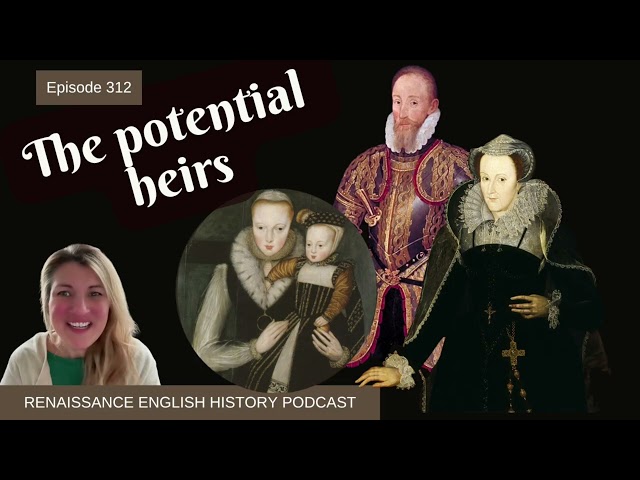
    Elizabeth I’s potential heirs represented three very different paths for England’s future. When Elizabeth I took the throne in 1558, she refused to name a successor, leaving courtiers and foreign powers to speculate who might inherit her crown. Katherine Grey embodied the Tudor bloodline and lawful claim, Henry Hastings offered Protestant stability and caution, and Mary Stuart carried the dangerous glamour of dynastic and Catholic ambition. Together, their stories reveal how Elizabeth’s silence on succession became one of her most powerful—and perilous—political strategies.

    Transcript of Three Who Might Have Ruled – Katherine Grey, Henry Hastings, and Mary Stuart:

    In November 1558, England gained a new monarch and a new problem. Elizabeth Tudor, twenty-five years old, unmarried, and childless, stepped into the role of queen with the weight of a dynasty balanced on a very thin thread. Her accession was met not with jubilation alone, but also with calculation from those who had survived the rapid-fire shifts of power.

    Under Henry VIII, Edward VI, Jane Grey’s nine days, and Mary I, they had learned one lesson very clearly: a crown without a clear next heir was not a blessing, it was a peril. The memory of 1553 still lingered. Edward VI had barely been in his grave before two rival queens, Jane Grey and Mary Tudor, had raised standards in their names.

    Armies had marched, proclamations were issued and revoked, and ordinary people had been forced to declare where their loyalties lay before the dust had even settled on Edward’s tomb. Nobody wanted a repeat performance, especially not with the added complication of foreign powers now watching England’s throne with more interest than ever.

    Yet from her very first council meetings, Elizabeth made one thing very clear: she would not name an heir. The succession question was not an administrative matter; it was leverage, and she intended to keep it close. Almost immediately, whispers began moving through court chambers and family estates alike.

    If Elizabeth died suddenly, who then was next? Three names rose again and again: Lady Katherine Grey, Henry Hastings, Earl of Huntingdon, and Mary, Queen of Scots. Each had a different claim. Each was backed by a different faction. Each was waiting for the crown’s silence to break.

    Today, we are going to talk about the heirs of Elizabeth I, especially very early in her reign. We will look at those early years, up until the mid-1560s, and consider who the presumed heirs were when people had not yet grown used to the fact that their queen was not going to marry. Everyone was very concerned about what would happen if she perished, and the main names that were thrown around and considered.

    Lady Katherine Grey: A Controversial Claim

    To understand why these three names rose above the others, it is necessary to go back and look at the paperwork left behind by Henry VIII. In 1544, Parliament passed the Third Succession Act, reaffirming the rights of Henry’s daughters Mary and Elizabeth to inherit after their brother Edward.

    But it also granted the king an unusual power, the right to designate the succession beyond his children. Henry’s final will, confirmed before witnesses and sealed with the Great Seal, did exactly that. After his own children, he named the heirs of his younger sister, Mary Tudor, through her daughters Frances Brandon and Eleanor Brandon.

    That meant that the Brandon descendants, the Grey sisters through Frances, and the Hastings line through Eleanor, were legally next in line. Conspicuously absent were the descendants of Margaret Tudor, Henry VII’s older sister, whose line had merged with the Scottish crown through James IV and James V.

    By leaving them out, Henry effectively declared that the throne of England should remain distinctly English and not fall under Scottish or, worse, French influence. This created a split in logic that would define Elizabeth’s reign: English law versus dynastic blood. By statute, Katherine Grey and Henry Hastings were legitimate successors. By lineage and international recognition, Mary, Queen of Scots, had the superior claim.

    So Elizabeth inherited a throne and also a legal contradiction, and around that contradiction, power began to gather. If one were to follow Henry VIII’s will to the letter, Lady Katherine Grey should have been the most obvious heir to Elizabeth. She was the granddaughter of Mary Tudor, Henry’s beloved younger sister, through her daughter Frances Brandon. On parchment, it looked very neat and settled, but in reality, her claim was wrapped in discomfort, scandal, and bitter memory.

    The Grey family had not yet recovered from its most infamous moment: the nine-day reign and execution of Lady Jane Grey, Katherine’s older sister. Jane’s brief and tragic brush with the crown had turned the Grey name into a warning. Her death in 1554, carried out by Mary I after Wyatt’s Rebellion, created a Protestant martyr figure and a ghost that haunted Elizabeth’s early reign. To acknowledge Katherine too openly as heir would not just raise a lawful successor, it would resurrect Jane.

    The other issue with Katherine Grey was that there were mutters that Charles Brandon, Duke of Suffolk, her grandfather, had technically still been married to Anne Browne when he married Mary Tudor. The legality of that union was later resolved, but in an age obsessed with marriage contracts and sacrament, the shadow of doubt lingered. The whisper of illegitimacy clung to the Brandon and Grey line just enough to make things uncomfortable.

    Katherine’s fortunes under Mary I were far more favorable than many might have expected. Despite the consequences of her sister Jane Grey’s brief reign and tragic end, Mary did not hold Katherine responsible. She served at court, attended key ceremonies, and was one of the chief ladies-in-waiting. Most notably, she acted as Chief Mourner at Mary’s funeral. Katherine was treated with every respect as one of the queen’s blood, a recognition of her place in the royal hierarchy. This ceremonial role physically placed Katherine at the head of the mourning procession, signaling to ambassadors and courtiers alike that she ranked highly among the surviving Tudor women.

    But everything shifted once Elizabeth ascended the throne. Mary had included Katherine; Elizabeth conspicuously diminished her status. At Elizabeth’s earliest court celebration, Katherine was positioned behind women of lower birth, a visible sign of the queen’s intention to lessen her profile. De Feria reported to Spain that “the queen does not favor Lady Katherine and keeps her at a distance,” which summed up Elizabeth’s chilly treatment.

    Elizabeth’s unease with Katherine was deeply personal as well as political. Katherine represented lawful succession and the potential for producing heirs. Elizabeth, unmarried and constantly pressured on the matter of marriage and succession, found her cousin’s fertility and royal legitimacy a pointed contrast.

    Ambassadorial letters from these years often speculated on the likelihood that God might provide England with another heir if Elizabeth did not marry, a sentiment echoed in multiple reports, though not always in those exact words. Diplomatic observers noted that Elizabeth’s mood soured whenever Katherine was mentioned in court discussions. Venetian and Papal envoys described the queen’s coldness and dismissive attitude toward Katherine.

    In Tudor politics, even a smile could signal exclusion, and Elizabeth’s polite gestures were frequently understood to mask deeper reservations. Though Katherine herself rarely took an active political role, her passive position made her an ideal object of political schemes and plotting.

    Katherine’s situation became significantly more controversial in 1560 and 1561 when she secretly married Edward Seymour, son of the former Protector Somerset and nephew of Jane Seymour. Both brought powerful dynastic claims. Their union was politically dangerous and performed without Elizabeth’s permission, which was tantamount to treason. When Katherine was discovered to be pregnant, all hell broke loose. De Feria’s dispatches recorded concern that “Lady Katherine grows great with child, and the court murmurs that she will give England what the Queen has not.”

    Elizabeth’s response was immediate and severe. Upon discovering Katherine’s secret marriage, Elizabeth ordered both Katherine and Edward to be imprisoned in the Tower, where they were kept apart. Katherine gave birth to her first son, Edward Seymour, in the Tower in September 1561.

    Despite the harsh conditions, the couple managed to meet secretly, resulting in Katherine’s second pregnancy. Her second son, Thomas, was born there in 1563, but due to outbreaks of plague in London, they were later placed under house arrest. Katherine was kept in the custody of her uncle, Lord John Grey, at Pirgo in Essex, while Edward was confined elsewhere. These births caused considerable discussion, as each represented a potential Tudor heir born without the Queen’s consent.

    Henry Hastings: The Protestant Hope

    Now let us turn to Henry Hastings, Earl of Huntingdon, the Protestant candidate. If Katherine Grey represented the legal heir and Mary Stuart the glamorous dynastic threat, Henry Hastings, 3rd Earl of Huntingdon, stood for something far more measured—a controlled future shaped by counsel rather than crown.

    He was not a man of charisma or romantic speculation; he was no court superstar. To many observers, though, that was precisely his strength. Hastings was descended from George, Duke of Clarence, brother to Edward IV and Richard III, the Yorkist line that was older than the Tudors themselves. In a court that still remembered Bosworth and the usurpation of Richard III, that bloodline stirred quiet interest.

    An Italian observer noted with wry amusement that some in England “still speak of the House of York in a lower voice, as if it might rise again.” Hastings never invoked that lineage himself, but it hovered behind him like an ancestral banner. He had built a reputation as serious, pious, and disciplined. The Spanish ambassador, who reported on the personal habits of the English nobility with cutting precision, described Hastings as “the most virtuous of lords, a sober man who seeks to offend no party.”

    It was not a compliment so much as a warning. Hastings was clean, and clean men were hard to discredit. His household at Ashby-de-la-Zouch was run with almost Puritan severity. There was a lack of pageantry; it was seen as a godly house where they dined more on scripture than on luxury. To Protestant reformers like Cecil, that actually made him an ideal successor—staunch in faith, yet politically cautious.

    He could be trusted to maintain the Protestant settlement without the flamboyance or foreign entanglement that Mary Stuart embodied. There were factional advantages too. Hastings had married Katherine Dudley, sister of Robert Dudley, Elizabeth’s favorite and true love. That alliance made Protestants hopeful that, should Elizabeth die without issue, Dudley—and by extension, Cecil’s council—might rule through a compliant Huntingdon.

    One French report put it bluntly: “If this Earl were King, England should be governed by those who made him.” Unlike Katherine Grey or Mary Stuart, Hastings drew no emotional commentary. Ambassadors did not describe him as dangerous or tragic; instead, they called him safe.

    Importantly, Hastings never openly lobbied for his own claim. That aloofness actually helped him. Katherine Grey had married dangerously. Mary Stuart had let France proclaim her Queen of England. Hastings, by contrast, appeared modest and controllable. He simply kept his head down.

    He served Elizabeth loyally and let other men whisper on his behalf. People generally thought he was a safe bet who would do little harm—which sounded like salvation. He offered loyalty without ambition, which made him useful to powerful men who preferred a monarch who could reign by counsel, not personal will.

    No songs were written about Henry Hastings. No romantic plots spiraled around his name. But while the court gossiped about Grey and trembled at Mary Stuart, the Protestant establishment kept his name quietly polished, ready to bring forward if Elizabeth left England without an heir and without direction.

    Mary Queen of Scots: The Dynastic Threat

    So Henry Hastings represented the quiet Protestant insurance policy, and Mary, Queen of Scots, was the exact opposite. There was nothing modest or quiet about her. While Hastings’ name appeared in council calculations and Protestant contingency planning, Mary’s name rang across Europe like a challenge.

    Hastings was described by ambassadors as harmless. Mary was spoken of in terms of destiny. To many outside England, she was not a possible heir; she was the rightful Queen of England, waiting only for God or politics to remove Elizabeth. Mary was the granddaughter of Margaret Tudor, Henry VIII’s older sister.

    And unlike the Grey or Hastings claim, her lineage could be traced in a straight, unbroken line from a lawful Tudor marriage. More importantly, she was already a crowned queen, an anointed monarch of Scotland since infancy, and for a brief window, her claim seemed unstoppable. As wife to Francis II of France, she stood poised to become Queen of France, Queen of Scotland, and, in French eyes, Queen of England.

    From the moment Elizabeth took the throne, French coinage and court ceremony began referring to Mary as Queen of England. It was an insult recorded with alarm in English diplomatic letters. The Spanish ambassador observed that “the French speak more of the Scottish queen’s right than of their own king’s glory,” noting that Mary’s claim had become a rallying cry, not just a legal argument.

    Mary herself understood the value of spectacle. She cultivated image and presence, something neither Katherine Grey nor Henry Hastings ever did. She was described as graceful, learned, and exceedingly conscious of her station. Her letters to Elizabeth were outwardly courteous but always written from one sovereign to another, not from a supplicant or a dependent.

    The Bishop of Ross, Mary’s representative, noted that she would never address the Queen of England as a lesser, but always as one equal born. And the Spanish ambassador de Quadra reported that “Elizabeth fears that the Scottish queen carries herself too much as queen of all realms.”

    Mary asked repeatedly for a personal meeting with Elizabeth, hoping to secure recognition or at least a public statement confirming her place in the succession. Elizabeth always delayed, evaded, or redirected. The two queens would never meet, and religion only sharpened the divide.

    Mary was Catholic, tied to the powerful Guise faction in France. Then Elizabeth made a move that turned Mary’s court ice cold: she sent aid to the Huguenots, the Protestant rebels fighting Mary’s French relatives. It was seen as a deliberate act of hostility that ended any hope of diplomatic warmth between them. At the time, it was believed that the Scottish queen would never forgive the English aid to heretics, and Mary seemed to believe that the Queen of England was making war upon her very blood.

    Mary’s presence in European politics had real emotion, where Hastings inspired caution and Katherine inspired uneasy sympathy, Mary stirred passion—hope among Catholics, dread among Protestants, and a dangerous fascination in between. Foreign envoys did not ask if she would make a move on England; they asked when. And when Elizabeth played her long game of ambiguity and delay, Mary’s claim gathered momentum outside her control—a train already moving, powered by crowns, churches, and rumor.

    Margaret Douglas and the Lennox Claim

    So then, let us talk about a minor player: Lady Lennox, Margaret Douglas. Katherine Grey was languishing under her house arrest. Henry Hastings remained a quiet contingency. There was a fourth presence hovering at the edges of the succession question—not an official heir, not yet dangerous, but unmistakably alert to opportunity. And that would be Margaret Douglas, Countess of Lennox, the daughter of Margaret Tudor, Henry VII’s older sister, by her second marriage to Archibald Douglas, the Earl of Angus.

    That birth gave her a direct Tudor bloodline. She was first cousins with Elizabeth I, and unlike Mary Stuart, she lived in England, watched the court daily, and studied Elizabeth with the cold patience of someone who believed fortune could still turn in her favor. She had spent time in the Tower under both Henry VIII and Mary I, usually for overreaching in marriage politics.

    She had a secret marriage in the summer of 1536 that was portrayed very vividly in Wolf Hall. I actually did several videos on that secret marriage on my YouTube channel, so I will not go back and go through all the details right now. She fell in love and had this secret liaison with Lord Thomas Howard, a younger son in the powerful Howard family, and Henry VIII was very upset about that and punished them both severely. Thomas Howard actually died in the Tower because of that liaison, that relationship.

    Henry Darnley: A Prince Born of Two Royal Lines

    So Margaret Douglas was no stranger to marriage politics. Her son, Henry Darnley, was the product of deliberate dynastic pairing. Of course, his mother had direct Tudor blood as the daughter of Margaret Tudor, and his father, Matthew Stewart, Earl of Lennox, descended from James II of Scotland, making Darnley a Stewart prince by birth.

    In him, two royal lines met: Tudor and Stewart. Margaret raised him with full awareness that this made him uniquely viable. Unlike Mary Stuart, Darnley had been born in England, raised speaking the language of the English court, and could be presented as a domestic Tudor heir rather than a foreign Catholic monarch.

    Elizabeth recognized immediately that Margaret Douglas was raising a marriageable male heir who could, if matched with Mary Stuart, unite the Scottish and English succession claims into one bloodline. This was not an official claim. It was more like a threat that lingered, just floating in the wind.

    So from the moment she took the throne, Elizabeth ruled not just as a queen but as the single barrier between order and another succession crisis. She understood immediately that naming an heir would create more danger than security. The moment one candidate was acknowledged, every other faction would rally against them, and England would once again fracture into competing loyalties.

    Elizabeth employed ambiguity as policy. When Katherine Grey produced two sons in captivity, Elizabeth refused to see them, and foreign ambassadors reported that she would not even speak their names. To acknowledge them was to make them real. Katherine existed, but politically she was treated as something closer to a legal problem than a living kinswoman.

    Henry Hastings, meanwhile, was kept close to court but never elevated. He received positions of responsibility without influence. Present but neutralized, Cecil and the Protestant council kept him quietly positioned like a spare key, useful only if all else failed. Hastings was allowed proximity but never a platform.

    Mary, Queen of Scots, was handled with distance. Elizabeth delayed every request for a meeting, drawing it out with polite deferrals, keeping Mary always in motion but never in reach. When foreign diplomats pressed her, Elizabeth issued the same careful line: “I know no heir but the one God shall send me.” It was less a statement of faith than a weaponized refusal, a way to shut down conversation without giving anything away.

    By refusing to designate a successor, Elizabeth turned every potential heir into a figure of uncertainty rather than legitimacy. Katherine Grey became a prisoner, not an heir. Hastings became a possibility, never a promise. Mary Stuart became a threat, not a certainty. This was Elizabeth’s strategy, and it kept her throne firmly hers.

    By the early 1560s, none of these three main heirs were advancing, and none were disappearing either. Katherine Grey was still confined, still producing Tudor sons out of sight. Henry Hastings was moving with silent discipline through the court, useful but deliberately unexciting. Mary Stuart circled from Scotland, her letters gracious but edged like a blade. Everyone was waiting for Elizabeth to move first, and she never did.

    Stillness became its own form of pressure. As the 1560s unfolded, the succession question became less about ambition and more about endurance. Each potential heir remained in play, but none with momentum. Katherine Grey was turning into a quiet tragedy. Shut away, her children were growing up as political inconveniences rather than princely assets. She had done what a Tudor woman was meant to do: she had produced heirs, and for that she was punished.

    Henry Hastings continued to serve Elizabeth with faultless loyalty, neither favored nor dismissed, existing in that strange limbo reserved for men who are useful so long as they never ask for more. His house remained orderly, his reputation spotless, which made him seem almost too perfect, too managed. A spare monarch waiting in a cupboard, never taken out.

    And Mary, Queen of Scots, was the heir of conversations, of rumors, of foreign correspondence, a queen who could not step onto English soil without changing the entire game. Through it all, Elizabeth outlasted the tension by refusing to blink. The court held its breath, and she never exhaled.

    Looking back, it is tempting to see all three of them—Katherine, Henry, and Mary, Queen of Scots—as pieces in a game that Elizabeth had already won. But in the first years of her reign, nothing felt secure, and none of them knew how long Elizabeth would live or whether England would once again be thrown into frantic allegiance-making at the death of a monarch. They waited in their prisons, council chambers, and foreign courts while Elizabeth mastered the art of ruling by absence, keeping the future deliberately unwritten.

    Katherine died in custody. Hastings faded into dutiful obscurity, and Mary walked straight into the tragedy that would end on the scaffold at Fotheringhay. In the end, none of them wore the crown they circled. The question that haunted the 1560s—who comes after Elizabeth—would be answered not by any of those early heirs, but by a child born outside of this story, in the next generation entirely.

    So there we have it, a little bit on the uneasiness of the presumed heirs in the 1560s.

    Related links:

    Episode 085: Tudor Times on Mary, Queen of Scots
    The Greys: From Elizabeth Woodville to Lady Jane Grey

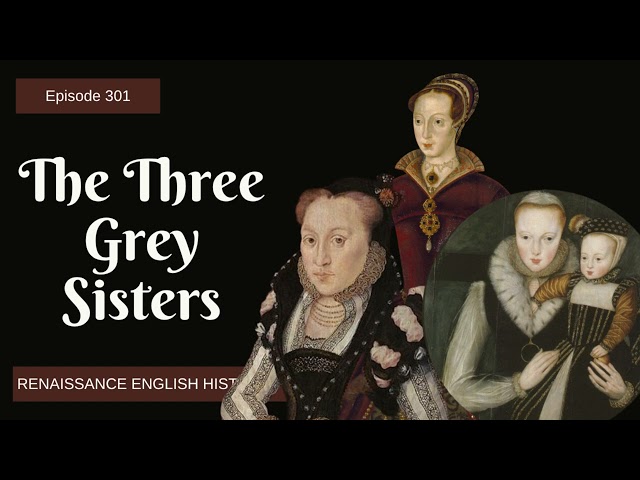
  • The Three Grey Sisters: Love, Treason, and Tragedy in Tudor England

    The Three Grey Sisters: Love, Treason, and Tragedy in Tudor England


    The three Grey sisters – Jane, Katherine, and Mary were granddaughters of Henry VII’s sister and heirs to a dangerous legacy. Born into a world of shifting power and fragile succession, they lived their lives under constant scrutiny at the Tudor court.

    Jane Grey, remembered as the Nine Days’ Queen, was executed as a teenage martyr. Katherine Grey’s secret marriage brought her love but also years of imprisonment and the loss of her children. Mary Grey, the youngest, defied expectations with a forbidden match that condemned her to a lifetime of isolation. Together, the three Grey sisters show how Tudor women could be celebrated, controlled, or destroyed simply for being too close to the crown.

    Transcript of The Forgotten Grey Sisters: Love, Treason, and Tragedy in Tudor England

    In Greek mythology, the Graeae were three sisters born old, with gray hair, a single eye, and a single tooth between them. They lived on the edge of the known world in a bleak and misty land, somewhere between life and death. Not quite monsters, but not quite human either. They had knowledge that others needed, but no real power of their own.

    And in the most famous story about them, Perseus steals their shared eye, leaving them blind and groping in the dark. The Tudors, of course, had their own Grey sisters, Jane, Katherine, and Mary. They were not born with gray hair or tucked away in caves, but they were linked, like their mythological namesakes, by their strange and precarious position close to the throne, never secure, watched, judged, manipulated, and ultimately punished for who they loved and how they lived.

    Last week we talked about the most famous of the trio, Lady Jane Grey, the Nine Days’ Queen, the teenage scholar who died a political martyr on the scaffold in 1554. But Jane was not an only child, and her story was not a standalone tragedy.

    She was the oldest of three sisters, all granddaughters of Henry VII’s younger sister, Princess Mary Tudor. Because of that royal blood, each of them – Jane, Katherine, and Mary, lived under the weight of the crown that none of them ever asked for. This week, we are going to follow the story of all three Grey sisters, from Jane’s execution to Katherine’s doomed love affair with a Seymour to Mary’s forbidden marriage to a palace gatekeeper. Along the way, we will talk about how Tudor ideas of succession, marriage, and female obedience shaped their fates.

    The Greys were not just side characters in someone else’s story. After Edward VI’s death, they became the focal point of a succession crisis that haunted Elizabeth I for decades. Even though they never wore a crown, the Greys were central to the larger story of female power and vulnerability in a world that did not quite know what to do with ambitious or even just slightly inconvenient women. So let us meet the other Grey sisters, the ones who did not get nine days on a throne, but still managed to threaten it.

    Lady Jane Grey: The Nine Days’ Queen

    Before we talk about the younger sisters, let us take a moment to revisit Jane, the most famous of the three, but often the least understood. Lady Jane Grey was born into ambition. Her mother, Frances Brandon, was the daughter of Princess Mary Tudor, one-time Queen of France and Henry VII’s younger sister, which gave Jane a direct claim to the English throne. Unfortunately for her, people at court knew it.

    She was brilliant, precociously learned, raised to read Latin, Greek, and Hebrew, and corresponded with reformers across Europe. Her education was not just an intellectual polish. In a court ruled by religious swings and dynastic tensions, Jane’s Protestant credentials and her royal blood made her both dangerous and useful.

    She, of course, became a pawn in the final year of Edward VI’s reign, when the Protestant king, dying at just 15, tried to keep the throne out of the hands of his Catholic half-sister Mary. His solution was to skip over both Mary and Elizabeth and name Jane, his cousin, devout Protestant, and safe political ally, as his heir.

    Of course, it was not just Edward’s idea. Jane’s marriage to Guilford Dudley, the son of John Dudley, Duke of Northumberland, was timed perfectly to align Northumberland’s ambitions with the king’s new will. Jane was then about 16. She had no say in any of this. She was married off, declared queen upon Edward’s death, and immediately caught in a storm she could not control.

    Her reign lasted just over a week, nine days to be exact, before Mary I successfully claimed the throne. That was what we talked about in last week’s episode, how that came about. Jane and her husband were imprisoned, and though she might have lived quietly out of public life, the Wyatt Rebellion in 1554 sealed her fate, even though she had literally nothing to do with it, since she was already in prison.

    The rebellion aimed to overthrow Mary and place Jane back on the throne, and that was enough. She was executed that February alongside Guilford. Before she died, she wrote a long letter to her sister Katherine, a kind of theological farewell, warning her to prepare her soul and stay strong in her Protestant faith.

    But while Jane died young, Katherine and Mary had to live through court politics, personal betrayals, and imprisonment. There was also the unpredictable fury of Queen Elizabeth. In Katherine’s case, it all began with love. If Jane was the Grey sister remembered for martyrdom, her younger sister Katherine would be remembered, at least by those who knew her, for love and heartbreak and prison, and two sons born in the Tower of London. It is a lot.

    Katherine Grey: Love, Heartbreak, and Imprisonment

    Katherine was born around 1540, the second of three daughters of Frances Brandon and Henry Grey. Like Jane, she had royal blood, a solid education, and a dangerously high place in the line of succession. But where Jane was intense and cerebral, Katherine seems to have been warmer, more affectionate, and less interested in theology and politics. That did not make her life any easier.

    At the age of 12, Katherine was married off to Henry Herbert, teenage heir to the powerful Earl of Pembroke. It was part of the same flurry of marriages orchestrated by the Duke of Northumberland, who had just placed Jane on the throne. The idea was to bind key noble families together into one unified Protestant power bloc.

    Katherine married Henry Herbert on the same day Jane married Guilford Dudley, in a lavish triple ceremony that was more about strategy than sentiment. But somehow Katherine and Henry fell for each other. Despite their youth, they reportedly cared deeply for one another. When Mary Tudor came to power, however, Northumberland’s plans collapsed.

    Jane was deposed and executed. Katherine’s father was executed as well. And although Katherine herself was not charged with treason, her marriage was now politically toxic. The Herberts moved quickly to cut ties. They pushed for an annulment, hoping to quietly erase the alliance. Katherine and Henry resisted, claiming that they had consummated the marriage, a claim that, if true, would have made the annulment much harder to secure.

    But Katherine was not pregnant, and the Herberts were powerful, so the annulment went through. Still, Katherine did not disappear. Her mother Frances made peace with Queen Mary, and Katherine returned to court. Under Mary’s reign, and even more under Elizabeth, Katherine’s position grew increasingly precarious.

    She was, after all, one of the senior surviving Protestant claimants to the throne. Elizabeth had no children. Mary, Queen of Scots, was Catholic. That left Katherine in the mix, which might have been a strategic asset if Katherine had not done something deeply unstrategic. She fell in love. The object of her affection was Edward Seymour, Earl of Hertford, the son of Anne Stanhope and the late Edward Seymour, Lord Protector Somerset.

    Now this Edward Seymour was, of course, connected, noble, and Protestant, and their romance blossomed quickly during Elizabeth’s early reign. Katherine called him her Ned, and he wrote her poems. Their relationship grew under the watchful eyes of the court, but they tried to be discreet because both of them knew what was at stake.

    Elizabeth had no tolerance for royal marriages without her permission, especially not for potential heirs. Still, Katherine and Ned made their plans: first a secret betrothal, and then, in 1560, a secret wedding. Elizabeth had left the court for a hunting trip, and Katherine, claiming illness, stayed behind.

    With Ned’s sister Jane Seymour as the only witness, the two were married by a clergyman in Ned’s house on Cannon Row. Afterwards, they consummated the marriage and then returned to court as though nothing had happened. No big deal. But of course, something had happened. Things were about to get far more complicated.

    Within a few months, Jane Seymour died. The only witness to the marriage was gone. The priest, whose name had not been recorded, disappeared. And then Katherine discovered she was pregnant. Oops. She tried to write to Ned, who was sent abroad, but got no reply. With the queen still unaware of the marriage, Katherine tried to keep her pregnancy a secret, but gossip spreads fast at court.

    Eventually she turned to Robert Dudley, the queen’s favorite, and begged for help. Dudley promised to intervene on her behalf, then went directly to Elizabeth and told her everything. Elizabeth exploded. She was furious, not just about the secret marriage, but about the threat that it posed. Katherine was her cousin.

    If she had a son, that child would be seen as a legitimate Protestant heir. Elizabeth, who had lived through the Wyatt Rebellion and seen how easily royal women could become pawns in succession plots, was in no mood to tolerate another one. Katherine was imprisoned in the Tower of London. When Ned returned to England, he was thrown in the Tower as well. They were kept apart, interrogated, and denied visitors.

    In September 1561, Katherine gave birth to a baby boy, Edward Seymour, Lord Beauchamp, behind the Tower walls. Despite the grim setting, Katherine and Ned were happy to be reunited in spirit. They passed notes, bribed guards, and were even occasionally allowed to see one another.

    And that is how Katherine got pregnant again. Oopsies. In 1563, she gave birth to a second son, Thomas, and this time the scandal was too much. Elizabeth had Sir Edward Warner, the sympathetic lieutenant of the Tower, removed. The couple were separated, and their children were sent away. Hartford was fined 15,000 pounds, an astronomical sum, and both of them were shuffled between remote houses under constant supervision.

    The remainder of Katherine’s life was one long string of prisons, five different houses over seven years, each one more isolating than the last. She never saw her eldest son again. Her health declined, and she grew increasingly despondent. By the time she was 27, she had effectively stopped eating. She died at Cockfield Hall in 1568, leaving behind her two sons, three rings for her husband, and a final message engraved in gold: “While I lived, yours.” After her death, Elizabeth refused to recognize the marriage, and the boys were considered illegitimate, a decision only reversed years later under James I. Katherine Grey married for love, and she was loved deeply in return. That love, far from freeing her, became her prison. And in Elizabeth’s court, even affection could be treason.

    Mary Gray: The Forgotten Sister

    Now, what about Mary? Mary Grey was the youngest of the Grey sisters, the least politically important, the most physically unusual, and the one history often forgets. But her story is every bit as poignant as her sisters’ and just as emblematic of what it meant to be a woman with royal blood under Elizabeth.

    She was born in 1545, nearly ten years younger than Jane and five years younger than Katherine. Where Jane was brilliant and devout, and Katherine was warm and romantic, Mary was known for her sharp wit, her deep loyalty, and a kind of stubbornness that got her through a quietly brutal life.

    She was, by all accounts, very small. Contemporary descriptions ranged from “crook-backed” to “the least of all the court.” Modern historians have speculated that she may have had scoliosis, dwarfism, or another condition that affected her growth. Estimates put her height at around four feet tall.

    Now you have to remember, this was a time when physical appearance was seen as a reflection of moral and spiritual worth. Mary’s stature made her an object of ridicule and, in the eyes of her contemporaries, all but excluded her from the throne, despite her impeccable lineage. She still carried royal blood. She was still the granddaughter of Mary Tudor. And so, like her sisters, she had to live a tightly controlled public-facing life at court,  a possible heir, but never a safe one.

    After Jane’s execution and Katherine’s disgrace, Mary kept her head down. She served quietly at Elizabeth’s court as a maid of honour, gaining a reputation for intelligence and discretion. Then, like her sister Katherine before her, she fell in love with entirely the wrong man.

    His name was Thomas Keyes. He was over six feet tall, twice Mary’s age, a widower with several children, and a member of the gentry, not the nobility. He served as Elizabeth’s Sergeant Porter, in charge of the palace gates. In a court obsessed with bloodlines and status, he was an astonishingly unsuitable match for the queen’s cousin.

    Naturally, Mary married him in secret. The wedding took place in 1565 while Elizabeth was away attending the wedding of another cousin. This time, unlike Katherine, Mary ensured that there were many witnesses. She wanted to make the marriage legally watertight, and it was, which ironically made it harder for her to escape the consequences.

    When Elizabeth found out, we can all guess how she felt. She was livid. The queen’s own cousin had married a man she had not approved of, a commoner, and had done so in a way she could not legally undo. Mary was placed under house arrest at the home of Sir William Hawtrey at Chequers. Keyes, as a commoner, was sent to the Fleet Prison, where the cells were so small that he could not fully stretch out his legs. His health quickly deteriorated.

    Mary wrote pleading letters to William Cecil asking for leniency. So did Keyes. He even offered to annul the marriage, but they had been too careful. There were no legal grounds to dissolve it, and Elizabeth refused to relent. The couple would never see each other again.

    Mary spent nearly a decade under house arrest, shuffled between unwilling caretakers. She was sent to her step-grandmother, the Duchess of Suffolk, and then to the home of the wealthy merchant Sir Thomas Gresham, who found her presence such a burden that he wrote desperate letters begging to be rid of her. She had little furniture, no attendants, and even fewer allies.

    Then, in 1571, Keyes died. Mary took the news hard. She asked to raise his orphaned children and began referring to herself as his widow. She even had a portrait made showing her wedding ring prominently, saying, “I married for love, and I am not sorry about it.”

    At last, in 1573, Elizabeth relented. Mary was allowed to live independently in London with limited access to court. She reconnected with her old friends, helped to raise her stepchildren, and was briefly restored as a maid of honour, but her health never fully recovered. In 1578, on her thirty-third birthday, Mary Grey died. She was buried in Westminster Abbey in her mother’s tomb with the honors due to a queen’s cousin. She died in favor, but she was never in favor with the man she loved.

    The three Grey sisters, Jane, Katherine, and Mary, did not rule, but their lives were shaped by the throne as much as any monarch’s. They lived in its shadow, edged close to its power, and were punished for even the faintest suggestion that they might reach for it.

    Like the Graeae Sisters of mythology, those strange otherworldly sisters who shared a single eye and had knowledge others feared, these Grey sisters were often seen less as individuals and more as potential threats. They were watched, moved like pieces on a board, and punished for what they might become.

    Jane was used as a figurehead, crowned by those who hoped she would secure their power and discarded once her usefulness ended. She died young, her intellect and faith intact, but she never truly lived. Katherine fell in love twice and paid for it with years of imprisonment, forced separation from her children, and ultimately her life. Her sons were declared illegitimate and her marriage erased. Eventually, she gave up entirely.

    Mary, the youngest, tried to live quietly. She married for love, hoping that her unthreatening position and unsuitable husband would spare her Elizabeth’s wrath. Instead, she was separated from her husband for the rest of his life, isolated and moved from house to house like an inconvenience no one could quite figure out how to manage.

    In the end, none of them succeeded in love, ambition, or family, at least not in life. In death, the stories shift. Katherine’s marriage was finally recognized under James I and her sons reinstated. Mary, though buried under the name Grey, never stopped calling herself Keyes’s widow. Jane, though she reigned for just nine days, became a Protestant martyr, a symbol that far outlived her. Three sisters, one royal bloodline and three lives marked not by the crowns they wore, but by the ones they never even touched.

    Related links:

    Why Lady Jane Grey’s Rebellion Failed: How Mary I Took the Throne
    Episode 016: Lady Jane Grey

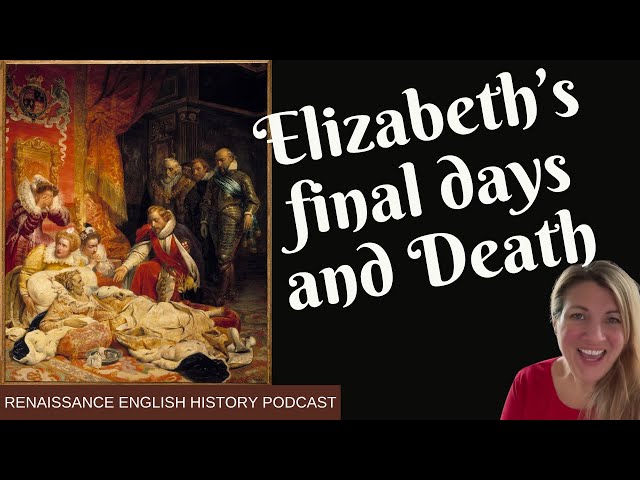
  • Elizabeth I’s Final Days: Melancholy, Makeup, and the End of the Tudors

    Elizabeth I’s Final Days: Melancholy, Makeup, and the End of the Tudors


    Elizabeth I’s final days were a poignant end to one of the most iconic reigns in English history. After nearly 45 years on the throne, the Virgin Queen faced a slow and sorrowful decline marked by physical pain, emotional isolation, and a desperate clinging to her image of eternal youth. As her health failed and succession anxieties mounted, Elizabeth I refused to relinquish control or reveal weakness.

    Let’s explore the final weeks of Queen Elizabeth I’s life — a dramatic and symbolic closing chapter that reveals as much about her reign as it does about her death.

    Transcript of The Last Days of Elizabeth I: Melancholy, Makeup, and the End of the Tudors

    By the time Queen Elizabeth I died in 1603, she had ruled for nearly 45 years. She was England’s Gloriana, the Virgin Queen, a living symbol of power and pride. But behind the carefully crafted image of youth and majesty was an aging monarch who was slowly falling apart physically, emotionally, and politically.

    Elizabeth died at the age of 69 on the 24th of March, and the end was drawn-out, uncomfortable, and, according to some who witnessed it, deeply unsettling. This is the story of her final weeks of melancholy, makeup, and a monarch desperate to keep up appearances, even as everything was slipping away.

    It might seem a little bit dark to focus on Elizabeth’s final days, but the way that she faced death tells us just as much about her reign as her victories did. The mask of youth, the silence on succession, the fear of being seen as weak — this was all part of how she ruled, right up until the end. So, grab your coffee or your water, and let’s settle in and talk about the final days of Elizabeth I.

    Elizabeth’s decline began quietly, at least outwardly. In the winter of 1602, Elizabeth was still hosting court at Whitehall, but her energy was flagging. She suffered from a severe sore throat and could barely speak above a whisper. She sipped soothing drinks constantly, but she did not eat very much. Visitors were turned away, confused after being told that they had no appointment, despite the fact that Elizabeth herself had summoned them.

    She was becoming forgetful, withdrawn, and increasingly melancholy. The death of her beloved lady-in-waiting, Katherine Howard — no, not the fifth wife, but another one — hit her hard. Even worse was the lingering grief over Robert Devereux, Earl of Essex. His execution the previous year, which had been ordered by Elizabeth herself, was sticking with her. It was, a little bit, haunting her. At the mention of his name, she was said to weep and beat her chest with her fist.

    She had, of course, always been vain — famously so. But in these final months, her looks became a fixation. She insisted on full court regalia even when she was physically unable to carry it off. A visiting Venetian ambassador noted that Elizabeth was absolutely covered in pearls. Her once slender fingers were now swollen, and her coronation ring, which she had worn for 45 years, had to be cut off when it became embedded in her flesh.

    A symbolic marriage to her kingdom was removed just days before her death. People took that as a very bad omen, but she was not going to let go of her image. She piled on makeup — lead-based Venetian ceruse — thick as plaster to preserve what she called her mask of youth. It is said that at the time of her death, she had a full inch of makeup on her face. That is a lot.

    In February 1603, Elizabeth moved to Richmond Palace. It was a place with deep Tudor history. Her grandfather, Henry VII, had died there nearly a century before. Now his granddaughter had come to do the same.

    At first, there were moments of clarity. She reportedly scolded a Venetian ambassador who dared to raise the issue of piracy, lashing out that the Republic of Venice only ever asks for something. But those moments were fleeting.

    By early March, her behavior had become erratic and worrying. She barely ate. Her mouth and throat were painfully dry, and her body was failing her. She refused to lie down, fearing — perhaps rightly — that if she did, she would never rise again. So she stood for hours and then collapsed onto the floor, where her ladies-in-waiting had piled cushions. She remained there, silent and unmoving, for days.

    On March 19th, her cousin Robert Carey visited. She took his hand and whispered, “Robin, I’m not well,” and that was one of the last things she would ever say. By March 23rd, Elizabeth was fading fast. She had not moved from her pile of cushions in days. Her eyes were fixed on the floor. Her finger stayed pressed to her mouth. She would not speak, she would not eat, and she would not sleep.

    The Privy Council gathered at Richmond. They needed her to name a successor. Legally, the will of Henry VII still stood, but it barred James VI of Scotland from inheriting the English throne. The only way around it was if Elizabeth gave a sign of her wishes. But she could not speak, so they asked her to raise her finger or gesture in response to James’s name.

    Some witnesses later claimed that she lifted her hand to her head in the shape of a crown. Others insisted that she did not move at all. Either way, the council left that room with their answer. They said Elizabeth had signaled James VI of Scotland was to be king. It was her final act of state.

    Later that night, the Archbishop of Canterbury and Elizabeth’s chaplains came to pray with her, and in the early hours of the 24th of March 1603, Queen Elizabeth died quietly in her bed at Richmond Palace. The sun had set on the Tudor dynasty.

    Even in death, Elizabeth’s body was guarded, literally and symbolically. Her lady of the bedchamber refused permission for a postmortem, likely to protect the queen’s image as the untouched Virgin Queen.

    But reports began to leak that her coronation ring had grown into her flesh, that her face was so thick with lead-based paint it had cracked under the embalmer’s touch, and that her body, sealed in a lead-lined coffin, burst open from the buildup of gases during decomposition. Her hair had mostly fallen out. Her teeth were decaying and infected with dental abscesses, causing terrible pain and swelling in her throat. Some said the glands in her neck burst just before she died.

    Modern pathologists believe that she ultimately died of bronchial pneumonia, possibly complicated by heart failure and sepsis, exacerbated by chronic lead poisoning from decades of using Venetian ceruse makeup. The mask of youth had ultimately done its damage. She had held onto her image until the very end, but it could not hold her together—not anymore.

    Elizabeth’s body was embalmed and lay in state at Richmond for several days, watched over by six of her ladies. Then it was taken by barge along the Thames to Whitehall, under velvet and candles. According to one observer, “The oars at every stroke did tears let fall.”

    On April 28th, over a month after her death, the funeral procession made its way through the streets of London. Thousands lined the route. The coffin was topped with a striking effigy of the queen in full royal robes, so lifelike that it reportedly made the crowd gasp.

    Her body was first interred in the vault of her grandfather, Henry VII, at Westminster Abbey. But in 1606, King James I ordered her coffin moved to a new tomb, and she now has a shared resting place with her half-sister, Mary I. The Latin inscription at the base reads, “Partners in throne and grave. Here we sleep, Elizabeth and Mary, sisters in the hope of resurrection.”

    Elizabeth’s final weeks were marked by pain, paranoia, and exhaustion. But even as her body failed, she tried to hold onto the power and the image she had so carefully built over four decades. She refused to name the successor until the very, very end.

    She refused to lie down. She refused to give up her mask of youth. She had ruled alone, and she would ultimately go out alone. And with her last breath, the Tudor era folded. No wars, no rebellion, just silence as England turned the page very quietly.

    Related links:

    Episode 245: Mary and Elizabeth
    The Tumultuous Relationship of Elizabeth I and Robert Devereux: A Journey into Tudor Court
    Dr. Estelle Paranque on Elizabeth I

  • Top 5 Tudor Mistakes: Blunders That Cost Lives, Crowns, and Countries

    Top 5 Tudor Mistakes: Blunders That Cost Lives, Crowns, and Countries


    Top 5 Tudor mistakes that changed the course of history include a mix of political missteps, personal misjudgments, and catastrophic power plays that still fascinate historians today. From botched rebellions and reckless diplomacy to deadly family decisions, these moments reveal just how perilous life could be in Tudor England. In a world where one wrong move could lead to execution or exile, the stakes were always high. This list explores the worst of the worst—decisions so bad they shaped the fate of individuals, dynasties, and nations.

    Transcript of Top 5 Tudor Mistakes: Blunders That Cost Lives, Crowns, and Countries

    Have you ever read a Tudor biography and found yourself shouting, “No, don’t do it! Don’t do it!” when the person you’re reading about is doing something that you know is not going to end well? Well, you’re not alone in that. The Tudor era is a goldmine of dramatic decisions and colossal miscalculations.

    Some of these errors cost people their lives. Others damaged England’s position on the world stage. And some were just downright embarrassing. So today, we are going to count down five of the worst Tudor mistakes.

    Some are personal disasters, like a father who managed to get his daughter executed after she had already been spared once. Others involve misguided diplomacy, espionage gone wrong, and rebellions that probably should have stayed as diary entries. Let’s dive into the top five Tudor mistakes.

    I’m delighted that you are here with me, and today, like I said, we are going to count down the top five really bad decisions of the Tudor period. I would love to know what you think about this list when we get done. Are there ones that I included that you wouldn’t have? Or are there ones that you would have included that I didn’t? Let me know in the comments after the video.

    5. Katherine Parr’s Dangerous Debate

    Let’s get started with a really bad decision: to argue theology with your very broody husband, who was very changeable and also could have you killed. And that’s what Katherine Parr did. Katherine Parr was Henry VIII’s sixth and final wife, and unlike her immediate predecessor, she was really, really intelligent. And she somehow managed to live to tell the tale of being married to Henry, but just barely, by the skin of her teeth.

    Katherine was a reform-minded Protestant who enjoyed debating religious doctrine. The problem, of course, was that her husband had zero tolerance for being contradicted, especially by a woman, and especially when he was in a bad mood, which was often, thanks to his festering ulcers and general paranoia.

    Katherine also had a lot of enemies among the conservatives at court who wanted to bring her down and basically tear apart the Protestant movement anyway. So, you know, it really wasn’t a good time to be arguing theology in general when you’re queen, and especially not when you’ve got a husband like Henry.

    According to John Foxe’s account, Katherine got into theological discussions with Henry and pushed her evangelical views a bit too far. The conservative Bishop Gardiner saw an opportunity and convinced Henry that she was becoming a subversive influence.

    A warrant for her arrest was drawn up. Now, Katherine was tipped off just in time. She went into full damage control. She threw herself at Henry’s feet, claimed that she only ever argued to distract him from his pain and to benefit from his superior wisdom. She was, after all, a woman, and she desperately needed his guidance.

    And that flattery hit the spot. When the guards arrived to arrest her, Henry actually sent them packing with a beating. Moral of the story: never assume that you can debate with Henry VIII, even if—and maybe especially when—you are his queen.

    4. Essex’s Rebellion

    Let’s talk about the number four spot: Essex’s Rebellion, a vanity project that kind of got out of hand. By the late 1590s, Robert Devereux, Earl of Essex, had fallen hard from favor. His campaign in Ireland had been an expensive catastrophe. Troops were dying of disease, morale was crumbling, and Essex quietly negotiated a truce with the rebel leader Hugh O’Neill—behind Elizabeth’s back, no less. And then, in a move that somehow managed to be both reckless and theatrical, he disobeyed orders and rushed back to England.

    Still in his travel-stained gear, he burst into Elizabeth’s private chambers unannounced. For a queen obsessed with image and protocol, this was beyond shocking. She kept her cool, but Essex had crossed the line, and everyone knew it.

    What followed was one of the most misguided coups in English history. In February 1601, Essex raised a pitiful rebellion—that really is the only word to describe it—hoping that the people of London would rally to his cause and help him overthrow Robert Cecil and reclaim his place by the Queen’s side.

    Except they didn’t, and the whole thing fizzled out by dinnertime. Essex was arrested, tried, and executed. His mistake: arrogance, misreading the mood of the nation, and most fatally, thinking Elizabeth would forgive him one more time when she didn’t.

    3. The Lopez Affair

    Let’s talk about number three: the Lopez Affair, spy games, and scapegoating. Dr. Rodrigo Lopez was Queen Elizabeth’s personal physician. He was also a Portuguese-born crypto-Jew, a skilled courtier, and, just to complicate things, a part-time spy—a little side hustle going on. It was a career that required a lot of caution, and unfortunately, Lopez miscalculated just how dangerous Elizabeth’s court could be.

    After the death of his patron, Francis Walsingham, Lopez kept playing the espionage game, juggling communication with Spanish and Portuguese agents, trying to broker peace talks between Elizabeth and Philip II, likely with dreams of retirement and a hefty reward.

    Enter Robert Devereux, the aforementioned Earl of Essex, who we just talked about—bold, ambitious, and still eager to prove his loyalty. Essex accused Lopez of plotting to poison the queen, presenting it as a Spanish-backed conspiracy. Was there a real plot? Almost certainly not. But Lopez’s web of secretive dealings gave Essex just enough threads to twist into a rope.

    Lopez was convicted of treason, and he was hanged, drawn, and quartered in 1594. He died protesting his innocence, crying out that he loved the queen as much as he loved Jesus Christ. That line, considering he was a crypto-Jew, only fueled antisemitic mockery. Lopez’s fatal mistake was not treason. It was thinking that he could outmaneuver the power players without protection.

    His protection had died—Francis Walsingham was gone—and so too was the idea that Elizabeth’s court had room for independent operators. There were no independent contractors at Elizabeth’s court.

    2. The Rough Wooing

    All right, number two: the Rough Wooing. Henry VIII tries diplomacy with a sledgehammer. Let’s talk about a mistake that left scorch marks across Scotland. In 1542, James V had died, leaving behind his six-day-old baby, Mary, Queen of Scots. Henry VIII, ever the opportunist, saw a golden opportunity: marry his son Edward to baby Mary and unite the two kingdoms under English control. Easy peasy, lemon squeezy. He even got a treaty signed—the Treaty of Greenwich—which said that Mary would be sent to England when she was ten years old.

    Now, Henry, being Henry, gets impatient. He demands that the baby be handed over immediately, which naturally enrages the Scots. Of course it does. They tear up the treaty before it is even ratified, and instead of dialing it back a little bit, like you might do, Henry does not. He goes full scorched earth. Literally.

    He launched a brutal campaign through the Borders, burning, looting, pillaging, and general rampaging, known later as the Rough Wooing. Because, of course, there is no better way to get a girl to pay attention to you and marry you than to make war on her country.

    It is a disaster. Far from winning hearts and minds, Henry’s violence pushed the Scots straight into the arms of the waiting French, and Mary was whisked off to France, betrothed to the Dauphin. England lost any real chance of a peaceful union.

    This, of course, was not just a failed diplomatic plan. It was a flaming public relations nightmare that fueled resentment for generations. Now, of course, England would be united eventually under that same line when Mary’s son, James VI of Scotland, became James I of England and there was the Union of the Crowns a hundred years later. But it was not the way Henry had intended, and the Rough Wooing certainly cost England a lot in treasure, lives, and general goodwill.

    1. Jane Grey’s Father’s Fatal Rebellion

    Now, what I think is the number one dumb move of the Tudor period is Jane Grey’s dad starting a rebellion while she is in the Tower. Let’s talk about it. Lady Jane Grey had already lost everything—her crown, which she did not even want, her freedom, and most likely her future—when her father decided to make things worse.

    After Mary I’s succession in 1553, Jane, who had reigned for just nine days, was imprisoned in the Tower of London. Although she had been the figurehead of the attempted Protestant succession, Mary seemed inclined to spare her. She recognized that Jane was young and was probably a pawn, manipulated by more powerful figures, including her own father, Henry Grey, Duke of Suffolk.

    But then, in early 1554, Jane’s father decided to throw his lot in with Wyatt’s Rebellion, a rising meant to stop Mary’s marriage to Philip of Spain. It failed spectacularly. The rebels were scattered and Suffolk was captured. The fallout was swift. Jane was already a figurehead of one failed coup, and suddenly she became a liability. She and her husband, Guilford Dudley, were executed soon after.

    It is hard to imagine a more dumb, self-defeating move. Your daughter is in the Tower awaiting judgment, and you launch a rebellion against the woman who is holding her fate in her hands. If Jane had any chance of survival at all, her father’s rebellion certainly sealed her doom.

    I mean, it would have been really smart to go to Mary and say, “Hey, there’s this rebellion being planned. Hey, why don’t you also release my daughter?” But, you know, that did not happen. Bad decision-making. So many bad decisions all around.

    Anyway, Tudor England did not have much room for error. One bad decision could cost you, or your daughter, their head and spark a war. These five blunders show how ambition, vanity, and really bad timing could unravel careers, cost lives, and change the course of history. So next time you are thinking about a decision, weighing options and thinking, “Ah, surely it will work out, it will be fine,” the Tudors thought that too.

    Anyway, let me know in the comments which other bad mistakes or moves you would have included, and which you think should be added to the list. Maybe we will do a follow-up on this.

    Related links:

    Episode 093: Tudor Times on Katherine Parr
    The Tumultuous Relationship of Elizabeth I and Robert Devereux
    Episode 157: The Rough Wooing
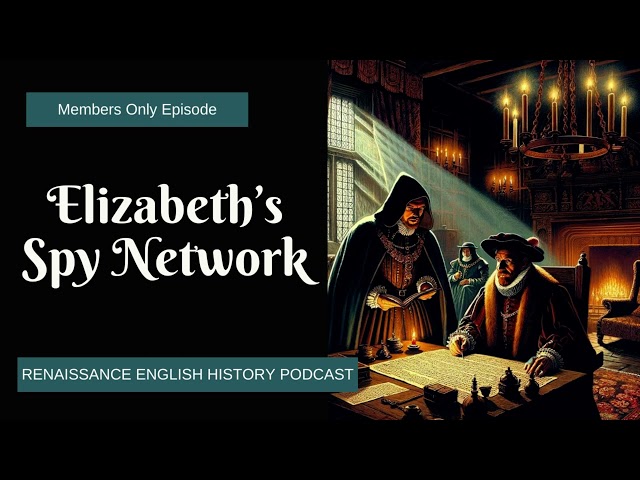
    Elizabeth I’s Spy Network: The Hidden Web that Safeguarded a Queen
    The Execution of Lady Jane Grey

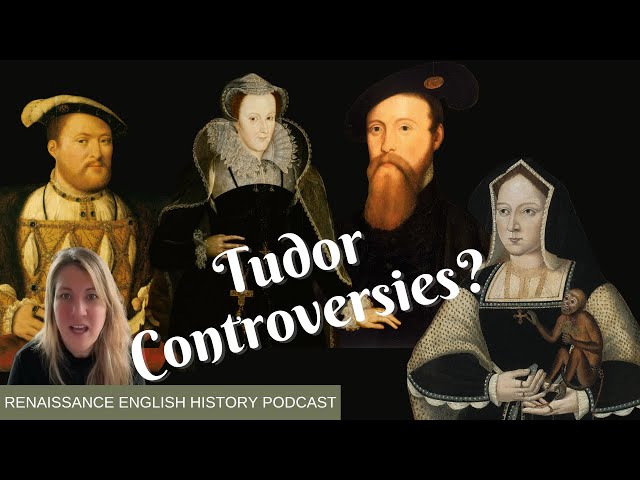
  • Tudor Controversies That STILL Spark Debate: Jane Grey, Seymour, and Mary, Queen of Scots

    Tudor Controversies That STILL Spark Debate: Jane Grey, Seymour, and Mary, Queen of Scots


    Tudor controversies continue to captivate historians and enthusiasts alike, sparking debate centuries after the events unfolded. From the legitimacy of Lady Jane Grey’s brief reign to the execution of Mary, Queen of Scots, these pivotal moments raise questions about power, politics, and personal conviction.

    Let’s dive into four of the most hotly debated Tudor controversies: Should Katherine of Aragon have stepped aside? Was Elizabeth I right to sign Mary’s death warrant? Did Thomas Seymour truly deserve execution? And was Henry VIII’s will ultimately meaningless? These enduring disputes offer more than just historical drama—they reflect timeless dilemmas that still resonate today.

    Transcript of Tudor Controversies That STILL Spark Debate: Jane Grey, Seymour, and Mary, Queen of Scots

    Should Lady Jane Grey have actually been called Jane I? This is one of the many, many topics that Tudor enthusiasts still debate centuries later. I put a poll up last week to ask people what they thought, and the results were pretty mixed. It’s clearly something we still have thoughts and opinions about, so thank you to everybody who filled that out.

    There are so many moments like that in Tudor history—these kinds of sliding glass doors, what-ifs, and decisions that were made that we can still argue about. Reasonable people can still disagree, and it’s really fun to get into those debates, to look at those big controversies like: Was Elizabeth I right to have Mary, Queen of Scots, executed? Did Henry VII’s will actually matter? Should Thomas Seymour really have been executed? Should Katherine of Aragon have stepped aside?

    These are big questions that actually change the arc of Tudor history, and there are still people on both sides who disagree, who argue for one side or the other. So today, we’re going to talk about four of the biggest controversies of Tudor England. I’ll tell you my opinion on them at the end—I’m not going to get into it while I’m reporting, but I will tell you at the end.

    The first one we’re going to start with is: Should Katherine of Aragon have stepped aside? Katherine of Aragon was no stranger to sacrifice. She had been a Spanish infanta, raised to believe that her destiny was to be queen. She was the daughter of a warrior queen—Queen Isabella—and she held onto that belief. She was forceful about that belief.

    But what if she had let go? What if, instead of digging in her heels during Henry’s Great Matter, she had actually just stepped aside? And there was, in fact, a precedent for this. A few decades earlier, Joan of France, Duchess of Berry, had been the wife of Louis XII. Their marriage was annulled, and she retired to a convent in Bourges.

    Now, Joan had married Louis XII in an arranged marriage, but he annulled it so that he could marry Anne of Brittany. Joan went on to found the Order of the Annunciation and was later canonized as a saint. So that’s an example of what Katherine of Aragon’s path might have been, had she stepped aside.

    Katherine had already given Henry a daughter. It was clear she wasn’t going to have any more living children, and she could probably understand that Henry needed a male heir. She knew what England had gone through with the Wars of the Roses. So if she had gracefully exited the stage—perhaps claiming a religious calling—Henry might have remarried without launching a full-scale rebellion against Rome.

    So I think it’s one of those big ironies: Katherine was fighting so hard to keep England Catholic, to keep herself as queen, to keep England loyal to the Pope, that she actually kind of forced Henry into this rebellion. If she had let go, it’s very possible that England would have stayed Catholic. There wouldn’t have been a Thomas Cromwell. There wouldn’t have been a Cranmer. There wouldn’t have been a dissolution. No break from the Pope.

    It’s an irony that’s kind of too big to ignore: in fighting to remain queen, Katherine may have set into motion the destruction of everything she was trying to protect. Stepping aside was never really going to be an option for her. She wasn’t just a wife—she was a princess of Spain, the daughter of Isabella and Ferdinand. Stepping aside would have meant branding Mary a bastard, and that was never going to happen.

    So what do you think? Was Katherine right to have fought for her rights—for Mary’s rights? Or should she maybe have just stepped aside? Let me know.

    All right, the second one: Should Elizabeth have actually executed Mary, Queen of Scots? This is one of the biggest controversies of Elizabeth I’s reign. This one’s really tricky because we know how it ends. Elizabeth reluctantly, finally, signs Mary’s death warrant in 1587—and Mary, Queen of Scots, loses her head and gains martyrdom. It took Elizabeth 19 years to get to that point, and for almost every one of those years, people were telling her that execution was the smart move.

    The argument for execution was really straightforward: Mary had a legitimate claim to Elizabeth’s throne. We first have to look back at what Catholics believed about the marriage of Anne Boleyn to Henry VIII. Katherine of Aragon was still alive when Elizabeth was born, which meant that the marriage of Henry and Anne—in the eyes of Catholics, who did not think the marriage to Katherine had been dissolved—was bigamy.

    The marriage between Henry and Anne was an illegitimate marriage, and so that meant Elizabeth was an illegitimate child. So if you believed that, you looked to the next person in line for the succession—and it just happened to be a Catholic like yourself: Mary, Queen of Scots.

    Mary, Queen of Scots, was also the center of every major Catholic plot for two decades, especially the Babington Plot, which finally sealed her fate. As long as Mary lived, Catholic Europe had hope. But Elizabeth hesitated again and again. Killing a fellow monarch was unthinkable. Can you imagine if the roles had been reversed—if she were kept prisoner somewhere and someone killed her?

    It wasn’t just about guilt—it was about precedent. It set the example that a fellow monarch could be executed for being a threat. And then how would that ever stop someone from potentially turning that logic on her? Even when she finally relented, Elizabeth still performed this great pantomime of outrage when the warrant was carried out, claiming she never meant for it to happen. Was she being sincere, or clever, or cowardly?

    Either way, the execution did remove a threat. And though it created a martyr, it solved a problem. But it didn’t do it quietly. It actually directly led to the Armada. It ramped up the war with Spain, which cost thousands of other lives. So I don’t know—should she have executed Mary, Queen of Scots? What do you think?

    Next: Should Thomas Seymour have been executed? Thomas Seymour was equal parts ambitious, charming, and really reckless. The brother of Jane Seymour and uncle to Edward VI, Thomas managed to marry the dowager queen, Katherine Parr, only a couple of months after Henry VIII’s death—which scandalized Princess Mary, for example. And if that wasn’t bold enough, he started getting a little too friendly with the teenage Princess Elizabeth while living under the same roof. But was that enough to get him executed?

    The real issue wasn’t just Elizabeth—it was his attempt to break into the king’s chambers at Hampton Court, supposedly to check on the boy in the middle of the night. He also tried to manipulate his way into the regency. It was messy. It was desperate. It was not the least bit subtle.

    His brother, Edward Seymour—the Lord Protector—used this as an excuse to get rid of him. There’s also the idea that he quite possibly shot the dog—Edward’s dog. And anybody who comes to Tudorcon or watches Tudorcon online, whether in person or virtually, will remember that we have this ongoing debate about whether or not Tom actually shot the dog. Every year, Janet Whitman brings her little stuffed dog, and it’s become one of those bits of Tudorcon lore.

    Anyway, Edward said that Tom was committing treason. Tom was found guilty, and Thomas lost his head. Poor Edward VI—first having to execute one uncle, Tom Seymour, and then later having to execute Edward Seymour. That kind of trauma would’ve been enough to give Edward a headache—if not worse.

    Of course, Thomas lost his head—but was it necessary? Some argue that he was more fool than traitor. He was dangerous, sure, but perhaps only to himself. Others say he was just one lucky break away from taking over the kingdom. Either way, he didn’t live long enough for any of us to find out. What do you think—should Tom Seymour have been executed?

    And finally, the last question we’re going to look at today: was Henry VIII’s will meaningless? This comes back to whether or not Jane Grey should have been called Jane I. Henry VIII’s will was meant to be the final word on everything. He even had it signed with a dry stamp so that no one could claim he hadn’t approved it.

    It laid out a clear succession: Edward, then Mary, then Elizabeth. After them, the heirs of his younger sister, Mary Tudor—not the Scottish line descended from Margaret. But here’s the thing—Parliament never ratified any of the sections beyond Elizabeth. That means the succession order had no legal force once Elizabeth died.

    Edward tried to override it with his “Device for the Succession,” naming Lady Jane Grey—something Henry’s will did not allow. And then, when Elizabeth died in 1603, no one even glanced at the document. It was nearly 60 years old by that point. James VI of Scotland was crowned without any reference to it, despite being from the line of Margaret Tudor, whom Henry had explicitly left out. So was the whole thing performative? A way for Henry to feel like he was in control—even from beyond the grave?

    It turns out that once the king dies, paper doesn’t matter as much as power. And Henry’s carefully written future actually never came to pass. So what do you think about any of these? I’ll tell you my opinion.

    I’m an Episcopalian, so I’m actually quite happy that Katherine fought as hard as she did and that the Reformation came to pass in England—and came to pass the way it did. I still go to a church that uses the Book of Common Prayer, which came from Cranmer, so I’m a fan of that.

    But I think that from Katherine’s perspective—if you were fighting to keep Catholicism and to keep England loyal to the Pope—she actually really failed at that. And it kind of reminds me of the Zen Buddhist idea that “what you resist persists,” and the concept of detachment.

    She was so attached to her rights, so attached to England being loyal to the Pope and to her own role as queen, that she lost sight of what was actually happening: Henry was moving further and further away from Rome. And the whole thing just backfired spectacularly on her.

    I think things could have been so different for her. Also, not having seen her daughter for years… If she had just stepped aside and said, “You know what? My bad—you’re right, it was consummated, I was married to Arthur, we probably shouldn’t do this,” and had tried to understand Henry’s position—that he really needed a male heir—and also that he was falling for Anne Boleyn (and he’s the king, so he can kind of do that)… things might have gone very differently. Plus, there was precedent—Claude of France had stepped aside just a few decades earlier.

    Had Katherine done the same, she probably would have been given a very generous settlement. Look at what happened with Anne of Cleves—she got an amazing settlement. Katherine would likely have been sent to the convent of her choice. She was very religious anyway, so that might actually have suited her.

    She would have been able to continue seeing her daughter. And she probably could have negotiated a really strong marriage for Mary. Instead, Mary never married until she was too old to have children.

    It’s one of the great tragedies about Mary Tudor—that all she wanted for so long was a child. There were so many times when she was betrothed and it didn’t work out. My heart really goes out to Mary because she truly wanted to be a mother.

    The way she took care of Elizabeth—even though she had every reason to hate her—yet they were very close, and she looked at Elizabeth the way a mother would look at her child. I really feel for Mary that she never had that experience herself.

    I think Katherine actually wound up hurting Mary more—and hurting her own cause more—because then Mary had this whole vendetta to bring England back to Catholicism. And look at how poor Mary is remembered now—as “Bloody Mary.” The whole thing, I think, just backfired spectacularly on Katherine.

    So from Katherine’s perspective, I see it as a failure. She probably should have stepped aside, and I think things might have worked out a lot better for her. But I also understand—she was the Spanish infanta. She was the daughter of Isabella and Ferdinand. She was not going to give up. And I get it.

    But again, I come back to that idea: “What you resist persists.” She resisted so much, and it persisted—and it didn’t work out for her. But then again, I am an Episcopalian, so I’m a fan of the Book of Common Prayer, and it all worked out for me. And really—I am the center of the universe. So of course, my opinion is what matters most.

    Everybody is the center of their own little universe, right? I’m the center of mine, and you are the center of yours. At least I’m open and honest about it. All right—my opinions on the other controversies aren’t as strong, I will say that.

    Should Elizabeth have executed Mary Queen of Scots? I think it set a really bad precedent. I also think Elizabeth was too wishy-washy about it. I’m not a fan of the way she handled it. But again, I see her perspective.

    Mary, Queen of Scots was not particularly smart in how she involved herself in some of these plots. She wasn’t especially politically savvy. Scotland was a mess, and honestly, I don’t know that there could have been any other way for her.

    But it also seems like she brought some of this on herself by being involved in these plots and by supporting them. But again, if I were in her shoes, I don’t think I would’ve done anything differently. That’s the thing—when you walk in someone else’s shoes, of course they did what they did, because they did it. It all makes sense when you look at it like that.

    I’m not a fan of the way Elizabeth handled it, but I’m also not a fan of how Mary, Queen of Scots handled it. So… I’m not a fan of either. I don’t think either party comes out looking particularly good in that scenario.

    Tom Seymour—again, I don’t know what else you do. What do you do when someone is threatening the throne? If someone’s being treasonous, it kind of puts you in a corner. But was he actually treasonous? I don’t know. I don’t really have a strong opinion on that one, but I know a lot of people do. So I’d love to hear what your opinion is.

    And was Henry VIII’s will meaningless? I mean, everyone’s will is ultimately kind of meaningless, because… you’re gone. You can’t enforce it. You just have to trust that the people around you are going to carry out your wishes. Hopefully, they do. But in Henry’s case, it was generations later. I don’t think the people determining the succession were still going back and consulting Henry VIII’s will.

    And Henry VII certainly didn’t look back at the will of, I don’t know, William Rufus, or try to figure out what Edward III wanted. So, you know—you pass away, and things change. That’s what happens. That’s life. So yeah, I think Henry VIII’s will probably was meaningless. And honestly, I don’t know that it really matters that much.

    You guys, I get kind of Zen about this stuff. I don’t get worked up about most of it. I do get worked up about how people treat Lady Margaret Beaufort—that one really gets me—but that’s pretty much the only thing in Tudor history I get fired up about.

    I know—if you go on Facebook groups, people are arguing about this and that: “Well, if you believe this,” or, “If you believe that…” Ugh. I don’t know. Life is short, man. Go smell the flowers. These people have been dead for 400 years. Are we really getting that worked up about it?

    What I do think, though, is that the reason we’re so fascinated by this history is because it reflects the times we live in now. I see so many parallels and similarities with what’s going on in our world today.

    Things like, for example, the idea of the printing press making information available that wasn’t necessarily authorized—that didn’t come through the proper channels—was happening for the first time. And look at what that opened up for people. We see something very similar in the past 30 years with the internet and with social media.

    And also, like, what can you trust, right? If somebody has a printing press in their basement and they’re putting out pamphlets—can you trust that? And if somebody posts something on Twitter, can you trust that? (I refuse to call it X. I just… I can’t do it. I got my first Twitter account in 2005, and you still had to use one of those flip phones and text updates to 40404. That was how you tweeted. I refuse to call it X after that.)

    Anyway—if somebody posts something on X, does that make it true? If someone prints a pamphlet in their basement, does that make it true? How do you know what is truth? And I feel like that’s something people in the 16th century were grappling with—and it’s something we’re grappling with now, too. It’s really important.

    Also, the class differences in the 16th century—there was a rise in the merchant class, the emergence of a real middle class. Classes were realigning. Political affiliations were shifting. And I see so much of that today too, with the rise of this whole new techno-class that we’ve never seen before. And the political realignment happening now—it’s fascinating. It so closely parallels what people back then were experiencing.

    There were also major questions about the role of government. Think about the poor laws passed under Elizabeth, or the dissolution of the monasteries. When you dissolve the monasteries—which had been providing hospitals, schools, support for the poor—you didn’t replace it with anything. Not until the poor laws, which came about 40 years later.

    So what is our role to each other? What obligations do we have? What is the social contract? Do we even have one? I think people today are grappling with those questions in new ways—ways they haven’t necessarily grappled with before.

    And people were thinking about this back then as well—this shift away from serfdom, the end of serfdom. Moving from a system where the lord was responsible for the serfs and the serfs were tied to the land, to a new world with more mobility, a little bit more freedom. But with that freedom—what responsibilities do you have? What responsibility does the king have? What responsibility does the government have?

    If people are now free to make their own way, does that mean there’s still a social contract? I don’t know. And this—this is the stuff I really nerd out on. So if you want to nerd out on that stuff with me too, leave me a comment and let me know, and we can nerd out on it together.

    Either way, I’d love to know your thoughts on some of these controversies—and any other controversies you’d like to voice your opinion on. I’d be very interested! If there’s something new, we could even put up a poll and see what people think.

    I think it’s really important to be able to practice having these kinds of debates, and to realize that reasonable people can disagree. I’ve said this before—probably many times—but I think it’s good practice for us to learn empathy. If we can have these arguments and walk in someone else’s shoes from 500 years ago, maybe we can bring some of that empathy back into the present. If we get really good at understanding people from the past, maybe we can start to understand where people who think differently from us today are coming from. So—that’s my spiel on that.

    Related links:
    Episode 47: Tudor Times talks about Katherine of Aragon
    Unraveling the Mysteries of Mary, Queen of Scots
    Rebecca Larson on Thomas Seymour

  • How England Lost Calais: A Turning Point in Tudor History

    How England Lost Calais: A Turning Point in Tudor History


    How England lost Calais is more than a story of military defeat—it’s the end of a centuries-long English presence in France and a major turning point in Tudor history. When Calais fell to the French in January 1558, it wasn’t just a territorial loss; it shattered a powerful symbol of English identity and pride. Calais had been England’s last stronghold on the continent, a thriving outpost held for over 200 years, deeply tied to trade, politics, and royal ambition. Its fall devastated Queen Mary I, enraged Parliament, and marked the final collapse of England’s medieval dream of empire in France.

    Let’s explore how England gained Calais, why it mattered so much, and how England lost Calais in a matter of days—changing the nation’s future forever.

    Transcript of Calais: How England Took — and Lost — Its Last Foothold in France

    When the news reached England in January of 1558 that Calais had fallen to the French, it was received with shock. Calais wasn’t a distant outpost for people in England—it was part of their national identity. It was the last foothold of the once-great English empire in France. It had belonged to the English for over two centuries, and now it was gone.

    Today, we’re going to talk about Calais—how the English got it, how they kept it, how they lost it, why it was so important, and what its loss did to Mary I. Calais played such an important role in so many different parts of Tudor history. We think about Anne Boleyn going on that famous trip to Calais with Henry VIII, where they kind of solidified their relationship. She was presented as a consort before they were even married.

    It played such an enormous role in English history, and when it was lost, it devastated Mary I. But how did Calais become part of England? How did this happen? So we’re going to go back and talk about that.

    When the news came that Calais had fallen, Mary I—who was already quite unwell and whose popularity was dipping—is said to have taken the loss quite deeply. According to legend, she told her ladies that if they opened her after death, they would find “Calais” written on her heart.

    Whether or not she actually said it, the line stuck, because that is how much Calais meant to the English. But to understand why the loss stung so much, we have to go back to how England got Calais in the first place.

    Our story begins in the reign of Edward III, in the early years of the Hundred Years’ War. In 1346, after the crushing English victory at the Battle of Crécy, Edward moved to consolidate his position in northern France by laying siege to Calais. The siege dragged on for eleven months. Edward knew that attacking the heavily fortified town head-on would be disastrous, so instead he blockaded the port and waited. Calais was cut off from supplies, and with its population slowly starving, they finally surrendered in August of 1347.

    Edward’s terms were harsh. The original French inhabitants were expelled—some say around 3,000 people—and the town was repopulated with English settlers. This was more than a military base; it was a colonial experiment—a little slice of England placed on the northern coast of France. For 200 years, it stayed that way.

    Calais became a military outpost, a trading hub, and a political tool all rolled into one. It was governed by a lord deputy, or captain appointed by the king—often a nobleman of significant stature. A council managed the day-to-day affairs, and it remained directly under the control of the English Crown.

    It wasn’t part of any French duchy or region. It was the Pale of Calais, a defined and fortified area that stretched a few miles inland. The English built up its defenses—Henry VIII in particular spent enormous sums reinforcing its walls and updating the artillery. It was one of the most fortified towns in Europe.

    Calais also wasn’t just a military zone. Economically, it was critical. English wool exports passed through Calais under the Staple system. This was a medieval monopoly that designated certain ports for official trade. English merchants had major privileges in Calais, including tax breaks and certain protections.

    It became a gateway for English goods heading to the continent and vice versa. This blend of martial and mercantile life made Calais truly unique and distinct. It was English territory, but always on the edge—geographically and politically—surrounded by French towns, always under threat. Yet it was a thriving, bustling area that, as mentioned, was one of the most fortified towns in Europe.

    While Calais was a garrison town, it wasn’t just soldiers marching around in armor. It developed into a functioning community with families, schools, markets, churches, and taverns. English settlers made their lives there, with some born and raised without ever setting foot in England. These so-called “Calais English” formed a unique identity.

    They were loyal to the English Crown, but they were shaped by the rhythms of life in a continental port. They would have had much more experience with French, and with trading with the French. Traveling to France was much easier.

    The population of Calais at the end of the 15th century was between 3,000 and 4,000 people. This included soldiers, administrators, merchants, artisans, and their families. The entire Pale of Calais—a fortified region of about 20 square miles extending inland from the town—had an estimated population of about 12,000 people at this time. This broader area included several small villages like Guînes, and it was used for agriculture, defensive outposts, and that sort of thing.

    The garrison, of course, was a major part of the population. It had about 1,200 soldiers or so, depending on the decade and the threat level. During Henry’s reign, when he was invading France, that number naturally went up. Compared to other English towns, Calais was really modest in size—it was smaller than places like Norwich or York. But economically and strategically, it was far more important than its size alone would suggest.

    Trade was the engine of daily life. Merchants came and went, goods were weighed and taxed. So even though the permanent population was around 4,000 people, there were likely many more people passing through—trading, staying temporarily—who weren’t official residents.

    The wool trade dominated the docks and craftsmen produced everything from cloth to leather goods. Bakers and butchers kept the garrison fed. There was always a military presence, but it didn’t drown out the hum of ordinary life.

    Still, everyone lived with a kind of low-level tension all the time. Skirmishes with the French were common. Every resident knew that war could flare up at any moment. It was a frontier town—civilized, but never entirely safe. Calais was the last relic of England’s old claim in France, a physical reminder of Edward III, Henry V, and the days when English kings dreamed of ruling both realms.

    Militarily, it gave England a base for launching campaigns into the continent. Economically, it anchored the wool trade and gave merchants a foothold in Europe. Symbolically, it mattered even more. Losing Calais didn’t just shrink the map by a little—it bruised the national ego. It marked the end of an era. England was no longer a European power with land in France. It was back to being an island. So what went wrong?

    By the time Mary came to the throne, Calais was still seen as vital, but it had become more symbolic than strategic. The town’s defenses had been allowed to decline. The garrison was underpaid and undermanned. And England—locked in an expensive war alongside Spain against France—was stretched incredibly thin.

    In January 1558, the French made their move. Under the command of François, Duke of Guise, they launched a swift winter offensive. This was highly unusual; winter was not typically a time for military campaigns. Calais was caught off guard and poorly defended. It fell in less than a week. There was no serious attempt at any kind of relief, and the English were humiliated.

    Their last continental possession was gone. The loss was devastating. English merchants lost their privileges. Parliament fumed. Mary was inconsolable and died within the year. Elizabeth was more pragmatic, and she quietly abandoned any plans to try to retake Calais.

    In England, though, the memory lingered. Calais became a symbol of what had been lost—not just land, but prestige, pride, and the last link to the old Plantagenet dream of an Anglo-French empire.

    From that point on, English ambitions turned seaward. The age of colonies and maritime power was beginning. But for many, Calais remained a sore spot—the wound that marked the end of England’s time as a continental power. England, as we said, would begin to turn westward—to Ireland, and eventually to the Americas—but they never again had that place in Calais, in France, a European outpost.

    So there we go, my friend—a little bit about the taking and losing of Calais, and why it was so important to the English. We’ll leave it there for now. Let me know what you think about Calais in the comments. Should Elizabeth have tried to retake it, or was it better for her to look westward—to Ireland and to the Americas—and build up England’s maritime power?

    Related links:
    Melita Thomas on Mary Tudor
    Episode 247: Tudor and Elizabethan Exploration
    Episode 067: Henry VII and his foreign policy

  • Elizabeth Vernon: The Tudor Lady Who Defied the Queen

    Elizabeth Vernon: The Tudor Lady Who Defied the Queen

    Elizabeth Vernon was no ordinary Tudor courtier—she was the woman who dared to defy Queen Elizabeth I with a secret marriage that rocked the royal court. As a maid of honour in the Queen’s inner circle, Elizabeth Vernon was expected to obey strict codes of conduct, but in 1598, she broke them all by secretly marrying Henry Wriothesley, the third Earl of Southampton—Shakespeare’s patron and the likely inspiration for the Fair Youth of the Sonnets. Their forbidden union sparked scandal, imprisonment, and exile from court, turning Elizabeth Vernon into one of the most controversial figures of Elizabethan England.

    Transcript of The Tudor Lady Who Broke the Rules: Elizabeth Vernon’s Scandalous Secret Marriage

    Today we are going to talk about Elizabeth Vernon, the lady who defied the Virgin Queen. Elizabeth Vernon was a maid of honour to Elizabeth I—until she disappeared from court and came back pregnant, married, and in serious trouble. Her husband, whom she had secretly married, was the third Earl of Southampton—Shakespeare’s patron and possibly the mysterious “Fair Youth” of the Sonnets. Their secret wedding caused a massive scandal, landed him in prison, and got her kicked out of the Queen’s presence. So today, we’re going to talk about her life.

    It was 1598, and Elizabeth Vernon had a secret. She was a maid of honour to the Queen, sworn to service, sworn to obedience—and definitely not allowed to sneak off and marry behind Elizabeth’s back. But she did exactly that.

    Her husband was Henry Wriothesley, the dashing third Earl of Southampton. He was a soldier, a courtier, and, according to some, the mysterious Fair Youth of Shakespeare’s sonnets. The fallout was fast and furious. He wound up in prison. She wound up in disgrace. But who was this woman who risked it all for love? And why did it cause such a royal meltdown?

    Elizabeth Vernon was born around 1572 into a well-connected family. Her father was John Vernon of Hodnet, but her more important connection was through her cousin, Robert Devereux, Earl of Essex—the Queen’s famously volatile favourite. That family link helped Elizabeth land a place as a maid of honour in Elizabeth I’s household.

    It sounds quite glamorous—jewels, gowns, court masques—but being a maid of honour meant existing under a microscope. Every smile, every conversation, every glance at a man was potentially political. Elizabeth stood in the same chamber as power, but she wasn’t allowed to touch it—unless she was prepared to deal with the consequences.

    And somewhere along the way, she started a relationship with the one man who would drag her right into the fire. Who was Henry Wriothesley? He was one of the most eligible bachelors at court—handsome, charming, heir to one of the great earldoms, and famously allergic to marriage. For years, he turned down matches left and right, including a proposed union with Elizabeth de Vere, the daughter of the Earl of Oxford.

    People noticed—and not just the refusals. William Shakespeare dedicated a couple of works, including Venus and Adonis, to Henry in swooningly poetic terms. Many scholars believe that Henry was the Fair Youth of Shakespeare’s sonnets—the object of intense affection, admiration, and maybe more. Whether those verses were heartfelt or just flattery for a generous patron, the rumors stuck.

    Then suddenly, Henry married in secret—Elizabeth Vernon. And when word got out that she was pregnant, everything exploded. The marriage hadn’t been properly approved by the Queen, which wasn’t just rude—it was political insubordination. Elizabeth I valued control over her court, especially her women. She was famous for this. One of her maids of honour sneaking off to marry a nobleman was an open challenge to her authority.

    Henry was briefly locked up in the Fleet Prison. Elizabeth was banished from court. The great romantic gesture came with real consequences. Henry didn’t stay in the Fleet Prison for very long—just a few weeks, maybe a month or two at most—but in Elizabethan politics, that was more than enough to leave a mark. The Queen had made her point. Marrying without her permission wasn’t just a personal offense; it was a public one.

    Elizabeth Vernon, meanwhile, was left to figure out her pregnancy and her new married life outside the protective bubble of royal favour. Once the initial storm passed, the two settled into a quieter life—or at least as quiet as it could be, given the political world they lived in. They had several children, including a son, James, who would later die fighting in the Netherlands.

    The scandal began to fade, but the political turbulence didn’t. They had connections, of course—like we said, to the Earl of Essex, Robert Devereux, who had been Elizabeth’s favourite—and that pulled them into another mess in 1601. Essex led a failed rebellion against the Queen, and Henry was caught up in the fallout.

    Once again, he landed in prison. Elizabeth Vernon wasn’t dragged into the proceedings, but she would have endured yet another season of uncertainty—this time with her husband facing potential execution.

    When Elizabeth I died in 1603 and James VI of Scotland took the English throne as James I, everything began to shift for them. Henry was released and returned to favor under James I. Elizabeth also reappeared at court, though she seems to have preferred a quieter presence. I mean, I don’t blame her.

    There were no more scandals, no more secret weddings—just a noblewoman keeping her head down and keeping her husband alive in a political world where men who crossed the Crown didn’t always get second chances like he did.

    Elizabeth Vernon didn’t leave behind letters, poetry, or memoirs—no grand declarations of her motivations or regrets in life—but she lived through extraordinary times. After her husband died in 1624, she entered a long widowhood—over 30 years—during which time she saw the world around her change dramatically. She witnessed the reigns of James I and Charles I, the growing tensions between Crown and Parliament, and the brutal reality of civil war.

    Elizabeth Vernon’s political position during the English Civil War was clear: they were staunch royalists. Her only surviving son, Thomas Wriothesley, 4th Earl of Southampton, was a key supporter of Charles I. He served in Parliament but remained loyal to the King even after war broke out. He later became Lord High Treasurer under Charles II. He survived the Civil War and helped to restore royal authority after the monarchy returned in 1660.

    As for Elizabeth herself, she stayed largely out of the public eye during the 1640s, but she was still alive during the King’s execution in 1649. She watched from a distance as the crown her family had served for generations collapsed into dust.

    She was well into her eighties by then, living through a time when royalist families like hers saw their fortunes threatened, their titles questioned, and their estates endangered—and yet she endured. By the time she died in 1655, Oliver Cromwell was Lord Protector, and England hadn’t had a king in six years.

    What she did during all of these decades is largely unrecorded, but her longevity alone is remarkable. She saw the Tudor world vanish and an entirely new England take its place. Her one act of defiance—marrying for love—had almost ruined her, but she managed to stay alive, quietly, steadily, and on her own terms. And I think that makes her worth talking about.

    Related links:
    Medieval and Tudor Mistresses: Power, Scandal, and Survival
    Episode 097: Shakespeare and Love
    The Tumultuous Relationship of Elizabeth I and Robert Devereux
    Wriothesley, Sadler, and Rich: The Men Behind Cromwell

  • Anne Boleyn’s Pregnancies: Hopes, Losses, and the Final Miscarriage

    Anne Boleyn’s Pregnancies: Hopes, Losses, and the Final Miscarriage


    Anne Boleyn’s pregnancies were not just personal struggles; they were pivotal moments that shaped the course of English history. From the initial hope that she would provide Henry VIII with the longed-for male heir to the heartbreak of multiple miscarriages, Anne’s pregnancies had profound consequences for her reign as queen. In this episode, we explore the intense pressure Anne faced to secure a male successor, the impact her pregnancies had on her relationship with Henry, and how these events ultimately contributed to her tragic downfall.

    Join us as we uncover the human side of Anne Boleyn’s story, a tale of ambition, loss, and the fierce struggle for survival in the Tudor court.

    Transcript of Anne Boleyn’s Pregnancies: Hopes, Losses, and the Final Miscarriage

    This is the start of May and for many people in the Tudor world, May is a month when we remember Anne Boleyn and Anne Boleyn’s story. This episode is about Anne—specifically about her pregnancies and her miscarriages.

    So I want to include a bit of a content warning: if you are sensitive to discussions about miscarriage and pregnancy loss, you might want to give this one a skip. We’re going to talk about her different pregnancies, how Henry reacted, and how the final miscarriage was really the breaking point that did her in—what made Henry decide he needed to put her aside.

    I’ve shared before on this podcast—gosh, back in 2010—I lost a son. And funny—I mean, not funny, obviously it’s tragic—but I was already doing this podcast by then, and I talked about it on the show. Even now, people go back and start listening from the beginning and assume it just happened. I still get emails every once in a while saying, “I’m so sorry for your loss.” And I appreciate it, of course, but I think sometimes people miss the date on that—it was fifteen years ago. That said, the experience stays with you forever.

    So I also just want to say: if you are dealing with pregnancy loss, miscarriage, or fertility struggles—I went through that myself. It’s kind of one of those sororities you don’t really want to join. But once you’re in it, you find it’s a very close-knit group of people. If you’re part of that group and you ever want to talk about it, consider me a resource. I’m always here—to talk about the babies, the ones who are here, and the ones who aren’t.

    That’s what we’re going to talk about today. It’s a bit of a somber one, but I think it’s important. It’s a very human story—something many people still go through today. Katherine of Aragon dealt with it too. And I think talking about these things humanizes them. It connects us to their stories. It’s one of those deeply human experiences that has crossed centuries. Women have always gone through this, and still do. And of course, it affects fathers as well—I don’t mean to place it entirely on women—but physically, it’s something women endure. Alright. I’m rambling now. Let’s get into it.

    Anne Boleyn’s First Pregnancy and Elizabeth’s Birth

    When Anne Boleyn was crowned Queen of England in the summer of 1533, the entire country held its breath. Her coronation, carried out with more pomp and splendor than anything London had seen in a long, long time, was not just a celebration of Anne herself—it was a public bet, a grand wager that Anne would succeed where Katherine of Aragon had failed. Anne would give Henry VIII his longed-for son—the son who would secure the Tudor dynasty and end years of dynastic uncertainty.

    She was already visibly pregnant when she processed through the streets, seated in a white litter, gliding above the crowds who jostled and craned their necks to glimpse the woman for whom kings had upended kingdoms.

    There was no small amount of superstition tied to this pregnancy. Astrologers had consulted the stars and confidently predicted that a prince was on the way. Tapestries with human figures were removed from Anne’s birthing chamber, lest the images somehow influence the shape of the unborn child. Henry had tournaments and celebrations planned in advance, certain that Anne would deliver exactly what he had fought so hard to obtain.

    In early September, Anne withdrew to her confinement at Greenwich Palace—a solemn ritual marking the final weeks of pregnancy. The court grew quiet, more reverent as the day approached.

    Then, on September 7th, 1533, Anne gave birth not to the expected prince, but to a healthy, robust daughter. The baby, with her father’s distinctive Tudor coloring, would become Elizabeth I.

    But in 1533, Elizabeth’s birth was not received as triumphantly as modern hindsight might suggest. Henry’s disappointment was palpable, even if cloaked in official good cheer. The court had prepared printed announcements celebrating the birth of a prince. Clerks scrambled after the fact, forced to manually add an S to transform prince into princess.

    It was a patchwork fix for a patchwork triumph. The tournaments Henry had planned were quietly canceled. There were no triumphant processions, no week-long celebrations. Still, Henry tried to console Anne—and perhaps himself. He reassured her: they were both still young; sons would surely follow.

    Anne was reportedly devoted to Elizabeth, pouring her hopes into the little girl’s cradle. But privately, she must have understood the stakes. In Henry’s world, a queen who failed to produce a male heir was a queen whose position was, at best, quite tenuous.

    The Second Pregnancy and Its Mysterious End

    The pressure didn’t ease. Only months after Elizabeth’s birth, Anne conceived again. News reached Eustace Chapuys, the ever-watchful Imperial Ambassador by January 1534. He reported that Anne was in good health and carrying another child. George Taylor, a servant at court, wrote enthusiastically to his master that the queen had a “goodly belly.”

    Henry, buoyed by the news, commissioned a magnificent silver cradle studded with jewels—ready to welcome the son he was certain would soon arrive. For a brief moment that spring, the court’s optimism returned. This time, surely, fate would reward the king and his new queen. But that second pregnancy, so full of promise, would never actually reach its hoped-for conclusion.

    By the summer of 1534, Anne was visibly pregnant—enough so that her brother, George Boleyn, was dispatched to France with apologies. Anne was so far gone with child that she could not accompany the king on a planned visit. Everything suggested a healthy pregnancy was advancing. Notably, Henry postponed diplomatic travel—a decision he would not have made lightly, given how much he prized foreign alliances.

    Yet by September, whispers began to circulate. Chapuys, always eager to report anything that might discredit Anne, wrote to Emperor Charles V that Henry had begun to doubt whether his lady was “enceinte or not,” and had as a result renewed and increased his affection for another lady at court.

    If Anne’s pregnancy had been progressing well, Henry’s attention would not have wavered so conspicuously. Still, the exact nature of this failure remains one of the quieter mysteries of Anne Boleyn’s life. No direct record survives of a miscarriage, a stillbirth, or even an official announcement that the pregnancy had ended.

    It simply vanished from court conversation. One day Anne was pregnant; the next, she was not—and no one spoke openly about it. It was rather like what would later happen to her stepdaughter, Mary I, several decades later.

    Historians have long debated what happened. Some, like Eric Ives, suggest that Anne likely suffered a miscarriage—perhaps in the summer months, perhaps later—but that the event was kept discreet to avoid further embarrassment. After all, to have miscarried again so soon after Elizabeth’s birth would have been a bitter blow to the queen’s public standing.

    Others, however, have proposed that Anne experienced a false pregnancy—a rare condition in which the body mimics pregnancy symptoms without an actual fetus developing. Both Katherine of Aragon and, later, Mary Tudor would suffer these phantom pregnancies

    In a period that lacked modern medical understanding, a queen could easily believe herself pregnant for months before realizing the truth. Chapuys’ phrasing in his September dispatch—that the king doubted whether Anne was pregnant—leaves open the possibility that even Henry had been deceived.

    If Anne’s symptoms had mimicked pregnancy but the expected baby failed to materialize, it would have been a humiliation Henry was eager to forget. It might explain why the matter was dropped so quietly. Regardless of whether Anne miscarried or whether the pregnancy had been false, the impact was the same: no child was born, no son arrived to solidify Anne’s position.

    Instead, Henry’s eye began to wander, and the cracks in the marriage started to show. Anne, for her part, would have understood the danger immediately. Her power, her influence, her very safety depended on producing a living male heir. And after the anticlimax of 1534, she knew the next pregnancy had to succeed. The stakes—already high—were about to become lethal.

    The Third Pregnancy and Growing Tensions

    The year 1535 brought no recorded pregnancy for Anne. If she conceived, it was either lost so early that no one remarked on it, or it never happened at all. A letter from Sir William Kingston mentioning the queen’s “fair belly” was once thought to hint at a pregnancy that year, but historians later realized that it referred to the previous year—adding yet another layer of confusion to the already murky record.

    In reality, 1535 was a year of growing tension. Henry’s affection cooled noticeably. While Anne remained queen, she no longer held the singular grip on Henry’s heart that she once had.

    Late that year, Jane Seymour—a quiet, seemingly docile lady-in-waiting—began to catch the king’s eye. At first, Jane’s presence was barely more than a flicker at the edge of court gossip, but it would soon burn far brighter.

    Anne, sharp-tongued and proud, was ill-suited to share her husband’s attention. She had fought too hard to secure her place as queen to now sit quietly by while another woman rose in favor. Her temper—once part of her charm—now irritated Henry.

    Chapuys, of course ever ready to report these missteps, recorded that Henry grew increasingly cold toward her over the course of 1535. There were arguments, frayed silences, visible signs of strain. Yet Anne had one way to win back Henry’s full devotion: another child.

    The Final Pregnancy and Anne’s Downfall

    By the autumn of 1535, she was again pregnant. This time, more than ever, success was essential. At first, all seemed to go well. By December, the court buzzed with optimism. Henry and Anne, perhaps cautiously hopeful, must have dared to imagine that the tide was turning in their favor. With Katherine of Aragon—Henry’s first wife and Anne’s rival in legitimacy—in declining health, the political landscape seemed poised to favor Anne at last.

    On January 7th, 1536, Katherine died. In theory, Anne should have triumphed. Katherine’s death meant that Anne’s marriage could no longer be contested by a living rival claimant. She was, by any earthly measure, Henry’s sole wife.

    Yet the court’s reaction was strange. Some said Henry and Anne wore yellow in celebration. Others noted that yellow was a mourning color in Spain. Either way, the moment was loaded with symbolism.

    Anne was carrying the future—literally and politically—but underneath the surface, danger rippled. Henry’s growing attentions to Jane Seymour continued. Katherine’s death removed a political obstacle but did nothing to repair the cracks in Henry and Anne’s relationship. If anything, it gave Henry more freedom to act as he pleased, because with Katherine gone, the threat from the emperor was no longer there.

    Then disaster struck.  On January 24th, Henry participated in a joust at Greenwich. Always proud of his athleticism, Henry charged into the lists and suffered a terrifying fall. Thrown from his horse, the king lay motionless on the ground. Courtiers rushing to his side feared the worst—some thought him dead. For two long hours, Henry was unconscious, and the court held its breath.

    Somewhere in her apartments, carrying what she prayed was her savior, Anne waited for news that would shatter her world. When the Duke of Norfolk arrived to deliver the news, he tread carefully. Anne was pregnant, already under strain, and very vulnerable. The Duke of Norfolk broke the news as gently as he could: the king had been injured, but he was alive, and there was no reason for alarm.

    Anne’s reaction was immediate. She was horrified. Henry’s brush with death was not just a personal terror—it was a political catastrophe in the making. If Henry had died without a male heir, the Tudor dynasty itself would have been plunged into chaos. Elizabeth, a small girl barely two years old, would hardly have been accepted by the powerful, divided factions at court. And Anne herself, without Henry’s protection, would have been dangerously exposed.

    The shock was too much. And days later, on January 29th, 1536—the same day that Katherine of Aragon was laid to rest at Peterborough—Anne miscarried. The child she lost was a boy, estimated to be around 15 weeks gestation.

    Even Chapuys, who normally took a grim delight in Anne’s misfortunes, reported the event without triumph. On the day of the interment, he wrote to Emperor Charles V: “The concubine had an abortion, which seemed to be a male child of about three and a half months, at which the king has shown great distress.”

    Charles Wriothesley, herald and chronicler, added further confirmation: Anne had miscarried “a male child, as it was said, before her time, before she had reckoned herself but 15 weeks gone with child.”

    The reports are sober, grim—and crucially, at the time, they make no mention of deformity or anything abnormal about the fetus despite the later lurid rumors that would circulate. For Anne, the loss was an unmistakably public failure. A boy—finally, a boy—and he was gone. The emotional weight must have been crushing.

    Anne, according to reports, blamed the miscarriage on the shock she suffered hearing about Henry’s accident. Contemporary medicine often linked strong emotions to the loss of a child, and Anne’s explanation would have seemed perfectly plausible to her contemporaries. After all, she had been carrying the hope of a dynasty in her womb, and the terror that it might all come crashing down with Henry’s fall could very well have been enough to precipitate a miscarriage.

    Yet not everyone at court was willing to accept this explanation. Chapuys, who viewed Anne with unrelenting suspicion, noted skeptically that Norfolk had taken care to deliver the news cautiously, “in a way that she would not be alarmed.”

    Others at court began to whisper that Anne’s miscarriage was no accident. Perhaps it was a sign that God disapproved of the union. Some even murmured that Anne’s body was somehow incapable of producing healthy male heirs.

    As Anne grieved, she must have known that this loss would not simply be mourned—it would be weaponized. At first, Henry seemed genuinely devastated. For a few brief days after the miscarriage, he reportedly showed Anne real sorrow. This had been his son too—his longed-for prince—and the loss struck hard.

    But Henry was not a man who dwelt long in grief. Almost immediately, his sadness curdled into something far more dangerous: disappointment, resentment, and the cold, calculating search for an alternative.

    According to Chapuys, when Anne, desperate to explain herself, approached Henry in the aftermath of her miscarriage—pleading that the shock of his accident had caused her loss—Henry listened grimly and then, with chilling finality, told her that he now saw God did not wish to give him male children by her.

    It was a devastating sentence, and Anne must have heard the full implication. Henry, who had moved heaven and earth to make her queen, was now suggesting that their union was cursed—that God Himself had withheld the male heir because of her.

    This was a cosmic judgment on their marriage, and the parallels to Katherine of Aragon’s downfall were impossible to ignore. Years earlier, Henry had claimed that his first marriage was invalid because it had failed to produce a son—a failure he took as evidence that God had not blessed the match.

    Now, with Anne, he was drawing the same ominous conclusion. Anne—newly miscarried, fragile in both body and spirit—found herself suddenly and terrifyingly alone. Reports from the weeks following the miscarriage suggest that Henry’s affection, already faltering, withdrew almost completely.

    He spent less time with Anne. He grew increasingly open in his attentions to Jane Seymour, whose quiet, modest demeanor stood in sharp contrast to Anne’s proud and volatile personality. Jane, coached by her ambitious family, knew exactly how to play the part of the soothing, unthreatening alternative.

    Meanwhile, Anne—still technically queen—moved through the court like a ghost. Her enemies, emboldened, began to circle. Even her supporters must have recognized how precarious her position had become.

    Chapuys wrote gleefully that some at court speculated Henry would now take another wife. Others noted that Anne’s miscarriage had given Henry the very excuse he needed to set her aside if he wished.

    Anne herself seems to have realized how badly she had miscalculated her own security. In private conversations with her ladies, she reportedly blamed jealousy—the stress of competing with Jane Seymour—for contributing to the loss of her child. A bitter irony, if true: the very fear of losing Henry may have helped bring about the catastrophe that made it inevitable.

    In a few short weeks, Anne had fallen from a seemingly secure queen consort to a political liability. Her final chance had slipped through her fingers, and Henry—once bewitched by her wit and her charm—now looked at her with the cold eyes of a king seeking an exit. The clock was ticking.

    In the weeks that followed, Anne’s position grew weaker by the day. Though outwardly still queen, she found herself isolated within her court. The elaborate rituals and courtesies due to a queen were maintained, but the warmth behind them had cooled. Fewer ladies flocked to her side. Fewer courtiers sought her favor. Those who had once fawned over her as the king’s darling now turned their eyes toward Jane Seymour, sensing a shift in the political winds.

    Anne would have seen it too. She was no fool. Those same courtly instincts that had once propelled her rise would have made the change in atmosphere painfully obvious. She could hardly have missed the fact that Jane now received secret gifts from the king—including a locket containing Henry’s portrait—an insult that must have cut to the bone.

    Henry, meanwhile, was moving from private disillusionment to quiet action. In March 1536, he began speaking more openly about his regrets over his marriage. To trusted courtiers, he allegedly hinted that his second marriage, like his first, might have been founded on false grounds. With Katherine dead, he no longer needed to justify himself to the Pope or foreign powers.

    Anne’s precarious fertility record now gave him all the pretext he needed to seek a new solution. Thomas Cromwell, who now had his own grievances against Anne, recognized the opportunity. Whether acting on Henry’s unspoken wishes or out of his own initiative, Cromwell began to quietly construct the case against the queen.

    At first, it was vague—certain matters regarding her conduct needed to be examined—but soon it would take a more sinister shape. Anne’s enemies were many, and they had long memories. Old grudges, jealousies, political slights, and personal humiliations now surfaced and attached themselves to Cromwell’s investigations like barnacles to a ship.

    And yet, in early spring 1536, Anne still held the title of queen. She attended mass; she still moved through the court with regal dignity. She could not have known precisely how little time she had left, but the warning signs must have been impossible to ignore.

    The miscarriage of January had done irreparable damage. Without a living son in her arms, Anne had no shield against the ambitions of others. Henry—ever impatient, ever hungry for certainty—had already started imagining a life beyond her. And the machinery of her downfall—the lies, the interrogations, the betrayals—had begun to grind into motion. Anne had lost more than a child in January 1536. She had lost her future.

    The Aftermath and Historical Rumors

    In the aftermath of Anne’s fall, the story of her final miscarriage began to take on a life of its own. At the time, the official accounts made no mention of anything unusual about the lost child. Chapuys described it simply as a male fetus about 15 weeks old. Charles Wriothesley, too, recorded that it was a male child born prematurely. Neither hinted at anything grotesque or unnatural.

    To those present in 1536, the tragedy was grim but straightforward: a devastating loss of a much-hoped-for son. But as the decades passed, darker rumors began to creep into the narrative.

    The most notorious came from Nicholas Sander, a Catholic exile writing fifty years later during the reign of Elizabeth, Anne’s daughter. Sander, bitterly opposed to Elizabeth’s Protestant rule, painted Anne as a monster in every sense. He is the one who claimed she had six fingers on one hand, a projecting tooth, a large goiter under her chin, and—most infamously—that she had miscarried a shapeless mass of flesh.

    Sander’s grotesque description was pure invention. He had never met Anne; he was not even alive when she was queen. His goal was clearly political: to discredit Elizabeth by portraying her mother as unnatural and cursed.

    But his accusations proved sticky. Over time, they filtered into popular imagination, blurring the line between fact and propaganda. Even today, Sander’s lies crop up in novels and films. Modern historians have pushed back firmly.

    Eric Ives, Anne’s most meticulous biographer, found no contemporary evidence for any deformity in the lost fetus, nor did any contemporary chronicler. In Ives’s words, the suggestion that Anne miscarried a monstrous child is “a smear without foundation.”

    Still, the idea had taken root deeply enough that even some serious historians grappled with it centuries later. In the 20th century, historian Retha Warnicke proposed a controversial theory that Anne’s miscarriage involved a malformed fetus, and that this shocking event spurred Henry and Cromwell to move against her so swiftly.

    Warnicke’s argument built on the notion that a monstrous birth would have been seen as a divine sign of sexual sin—incest, adultery, witchcraft—and thus gave urgency to Anne’s destruction. It’s an intriguing idea, but it rests on a fragile foundation: Sander’s later account, which serious scholars generally dismiss as unreliable.

    Not one single document from 1536—not a letter, not a court record, not a dispatch—mentions anything malformed. On the contrary, the descriptions suggest a tragically ordinary miscarriage.

    Most historians today agree that the rumor of a monstrous miscarriage belongs firmly in the realm of later anti-Anne propaganda, not fact. Anne’s downfall can be explained without recourse to supernatural horror stories. Political betrayal, Henry’s dynastic desperation, and Anne’s own precarious position were more than enough.

    Legacy of Anne Boleyn and Conclusion

    The miscarriage of January 1536 was not, by itself, the cause of Anne’s destruction, but it was the moment when her vulnerability became undeniable. Historians have debated just how pivotal the event was.

    There’s that famous phrase saying that Anne had “miscarried of her savior,” which captures her situation vividly. Had the child lived—had Anne delivered a healthy boy in the spring or summer of 1536—the course of English history might well have been very different.

    A male heir would have strengthened Anne’s position beyond easy assault. Henry, so desperate for a son, might have been willing to overlook other irritations: her sharp tongue, her political meddling, her declining favor.

    She would have placed a prince in his arms. The dynasty would have been secure. The Seymour family’s ambitions would have been checked before they could gain momentum. Cromwell’s schemes might never have ripened. But the child was lost. And with that loss, Anne’s enemies found their opening.

    Historians like Eric Ives have cautioned that it would be a mistake to view the miscarriage as the sole trigger for Anne’s downfall. Anne’s situation was already deteriorating in late 1535, even before she became pregnant again. Henry’s attentions were already shifting toward Jane Seymour. Cromwell and Anne were clashing over political matters, especially the redistribution of monastic wealth.

    The miscarriage, in Ives’s view, did not create Anne’s vulnerability, but it did expose it—fully and irrevocably. There’s no question that the loss hardened Henry’s resolve. After January 1536, Henry stopped pretending that he saw his marriage to Anne as a divinely sanctioned union. When he said, “God does not wish to give me sons by her,” he was showing himself to be a man searching for a way to justify what he already wanted—to move on.

    It’s easy, 500 years later, to look at Anne’s pregnancies purely as political events—to see the births and the miscarriages, even the phantom pregnancy, perhaps, as chess moves in a brutal game of dynasty-building, successes or failures measured only in crowns and bloodlines.

    But behind the royal titles, behind the expectations—remember, there was a woman. Anne would have known the risks every time she conceived. Childbirth in the 16th century was perilous, even in the best conditions. Miscarriages were common, infant mortality was high, and medical knowledge was limited. Every new pregnancy carried with it not only hope, but fear—fear of loss, fear of death, fear of disappointing a husband whose love was not unconditional.

    She must have felt real joy when she first realized she was carrying Elizabeth, real pride when she felt her daughter’s kicks, real hope when she conceived again in 1534 and in 1535—and real, devastating grief when each of those pregnancies ended in silence.

    But of course, that daughter she left behind would change the course of English history. Elizabeth would reign for 45 years, ushering in a golden age of exploration, culture, and stability. That “disappointment,” born in September 1533, would become one of the most celebrated monarchs in English history.

    Anne’s enemies could tear down her reputation, they could blacken her name—but they couldn’t erase her daughter. And in the end, that’s the story that would outlast them all.

    So there we are, my friends—a little bit about Anne’s pregnancies. Sometimes you hear these stories and they’re just sentences. But then you think about the people behind them, and the effect those events had on their lives, and it becomes a bit more real.

    Related links:
    Episode 130: Anne’s Pregnancy and Elizabeth’s Birth
    Episode 024: Pregnancy and Childbirth in Renaissance England

  • Elizabeth I’s Spy Network: The Hidden Web that Safeguarded a Queen

    Elizabeth I’s Spy Network: The Hidden Web that Safeguarded a Queen


    Elizabeth I’s spy network played a crucial role in securing the throne during one of the most turbulent periods in English history. Faced with constant threats from Catholic powers, assassination plots, and internal rebellion, Queen Elizabeth I relied on a sophisticated web of spies orchestrated by key figures like William Cecil, Robert Cecil, and Francis Walsingham. This intelligence network not only protected the Protestant queen from countless dangers but also laid the foundations for modern espionage.

    In this episode, we’ll dive deep into the origins, operations, and lasting legacy of Elizabeth I’s spy network, uncovering how it safeguarded a nation and changed the course of history.

    Transcript of Elizabeth I’s Spy Network: The Secret Network that Protected a Queen

    Today we are going to talk about spies—specifically, Elizabeth I’s spy network. I’ve talked a little bit about some of the figures involved. We discussed Francis Walsingham in an episode I did back, gosh, close to 10 years ago. It was a 2015 episode, I think, on Francis Walsingham. You know what I realize? I have never done a full episode on William Cecil or Robert Cecil, so I’ve added that to my list.

    In this episode, we are going to unravel the complex web woven by three pivotal figures: William Cecil, Lord Burghley, his son Robert Cecil, and the enigmatic spymaster Francis Walsingham. Together, they orchestrated a network of spies whose efforts were not only crucial for the queen’s security, but also pivotal in shaping the course of English history. We’ll dissect the plots they uncovered, explore the espionage techniques they employed, and consider the enduring impact of their secretive endeavors long after the Virgin Queen’s reign.

    Just some background: Elizabeth ascended to the throne in 1558, a period teeming with political intrigue and religious upheaval. England was an isolated Protestant nation on the fringes of a largely Catholic Europe, making her a beacon of heresy in the eyes of her rivals.

    The excommunication by Pope Pius V in 1570 not only deepened her conflict with the Catholic monarchs, but also marked her for assassination—because the Pope basically said, if you want to assassinate her, no biggie. This made an effective spy network not just valuable, but vital.

    Espionage during Elizabeth’s reign evolved beyond mere political necessity—it became an art form. Led by the Cecils and Francis Walsingham, the network extended its tendrils across Europe, infiltrating enemy courts and intercepting communications.

    This web of spies wasn’t just about gathering intelligence; it was about ensuring survival. They used ciphers, secret correspondences, and double agents, transforming statecraft into a battleground of wits and secrecy.

    We’ll also talk about the specific threats that spurred this network’s creation, like the Ridolfi Plot, which sought to replace Elizabeth with Mary, Queen of Scots. Actually, a number of plots sought to replace Elizabeth with Mary, Queen of Scots, but we will gain a clearer view of the often precariousness of Elizabeth’s reign. Each plot foiled was not merely a victory, but a necessity, preventing invasions, uprisings, and rebellion.

    William Cecil: The Architect of Espionage

    So, let’s start by looking at each of these three figures. We’re gonna start with William Cecil. I’m gonna talk the longest about him. William Cecil, 1st Lord Burghley, was Elizabeth I’s principal advisor for most of her reign, and his mastery of espionage played a pivotal role in safeguarding her throne.

    Born in 1520 in Lincolnshire, William Cecil was educated at St. John’s College, Cambridge. He received rigorous training in administration and the classics, but his entry into royal service began under Edward VI, where his administrative talents were first recognized.

    It was his staunch Protestant beliefs and strategic acumen that caught the eye of Elizabeth I, whom he met during her time as Princess, particularly during her house arrest under Mary I’s reign.

    William Cecil’s tenure as an influential political figure under Edward VI saw him holding positions like Chancellor of the Order of the Garter and Secretary of State. But the landscape drastically changed with Edward’s death and the succession crisis that followed.

    Cecil became entangled in the Duke of Northumberland’s controversial plot to place Lady Jane Grey on the throne—a scheme devised to prevent the Catholic Mary from becoming queen. Initially, Cecil was resistant; he wrote letters to his wife saying he was going to try to stay away from it, but he eventually succumbed to the pressure. He signed documents that promoted Jane’s brief, ill-fated reign. He justified his participation as obedience to King Edward’s command—a move that exemplified his pragmatic approach to survival in treacherous times.

    That survival, and his position, became precarious under Mary I, because he was a known Protestant and had previous political maneuvers against her cause. Pretty much everybody involved in the plot to bring Jane to the throne ended up imprisoned in the Tower or executed.

    Despite his earlier involvement in the Protestant government, Cecil adeptly navigated the Catholic revival under Mary. He wasn’t primarily targeted, mostly because he didn’t have a very high profile or high rank during most of the very divisive policies that were put into place.

    And he did adapt. He outwardly conformed to the restored Catholic practices—he attended mass and publicly reconciled with the Catholic Church. His survival strategy included distancing himself from active opposition, and he also engaged in some subtle intrigue against Northumberland once Mary’s ascension seemed inevitable.

    Cecil’s cautious yet opportunistic tactics allowed him to maintain a semblance of loyalty to Mary, which he leveraged by presenting himself as a cooperative figure to the incoming regime. So, he was able to emerge from Mary’s reign pretty unscathed, which left him poised to reclaim a central role when Elizabeth ascended.

    Cecil then served Elizabeth once she became queen, and he was motivated by both the precariousness of Elizabeth’s position—she was a Protestant monarch, plus she was a woman in a very male-dominated society—so he established her spy network as the cornerstone of her internal and external security strategies.

    He recognized early on that information was power, particularly in a period rife with religious conflicts and political instability. This foresight led him to orchestrate an intelligence system that not only protected Elizabeth but also helped to stabilize her reign during its most vulnerable moments.

    Robert Cecil: The Successor

    Towards the end of Elizabeth’s reign, as William Cecil aged and his health declined, his son, Robert, gradually began to assume more responsibilities. Robert officially took over as Secretary of State in 1596, and he was well-prepared, having been deeply involved in the intelligence operations under his father’s guidance.

    This early transition ensured a smooth succession, enabling him to maintain and enhance the espionage network critical to Elizabeth’s security. The full assumption of his father’s responsibilities was seamless by the time William died in 1598. Supported by his proven competence and the queen’s trust in his capabilities.

    Robert brought a more methodical approach to intelligence. He capitalized on the expanding network his father had established. Under his watch, the network matured, utilizing more sophisticated methods of code-breaking and covert operations. His tenure saw the orchestration of espionage activities that were crucial during pivotal moments, like when James I was negotiating the Treaty of London, which ended the war with Spain in 1604.

    Robert’s adeptness at espionage not only maintained but strengthened the security apparatus his father had built, ensuring the crown’s stability as Elizabeth’s reign ended and James’s began. In fact, that network built for Elizabeth would ultimately save the life of James I. Robert Cecil himself was the principal discoverer of the Gunpowder Plot.

    I should add here that this will be another episode to look at, because Robert’s involvement with the Gunpowder Plot is very shady. There are a lot of conspiracy theories suggesting that he himself was involved in it—that he was a double agent, or even that he planned it himself to make Catholics look bad. Who knows? That’s something I’ll have to dig into deeper in a future episode.

    But for now, we’re just concerned with the fact that he took the spy network his father built and expanded it, and ultimately, James I can thank him for saving his life, Parliament’s, and everybody else who was targeted in the Gunpowder Plot.

    Francis Walsingham: The Ruthless Spymaster

    Then we have Francis Walsingham, perhaps Elizabeth’s most notorious spymaster, often remembered for his unyielding dedication to the protection of the queen. His tenure as principal secretary was marked by a ruthless efficiency in intelligence gathering and counter-espionage.

    He witnessed the St. Bartholomew’s Day Massacre in 1572 as the English ambassador in France, which of course, would have affected him deeply. He returned to England, resolved to protect Protestant England from similar atrocities. He was galvanized. He expanded the use of espionage to include not only defensive but also aggressive tactics, employing spies to infiltrate and undermine opposition groups across Europe.

    His crowning achievement was the interception of the letters that led to the exposure of the Babington Plot in 1586, which of course sought the assassination of Elizabeth and the installation of Mary, Queen of Scots, on the English throne. It led to Mary’s death.

    His network’s ability to crack codes, utilize double agents, and even use torture when needed—although quite controversial—proved indispensable in maintaining the Queen’s safety and Protestant England’s sovereignty.

    So now let’s talk about the spy network in action. It was a sophisticated system crucial for the security of a Protestant state. Like I said, the network’s efficiency hinged on a meticulous structure of recruitment, information gathering, and innovative espionage techniques. The recruitment of spies was a targeted and strategic process.

    Walsingham and his colleagues often recruited from among merchants, diplomats, and even English students stationed abroad, leveraging their positions to gather intelligence. These spies were not only chosen for their loyalty to the crown, but also for their ability to blend into foreign courts and societies.

    The network also included double agents and informers within the domestic Catholic factions, providing a steady stream of intelligence about internal threats. Information gathering was diverse and adapted to various contexts.

    Spies used traditional methods like intercepting letters and eavesdropping, but they also engaged in more direct intelligence gathering by infiltrating enemy ranks and reporting back on military movements or political plans.

    One notable technique was the use of ciphers and encoded messages to communicate securely. Couriers carried these encrypted messages across borders, reducing the risk of sensitive information falling into enemy hands.

    The spy network also employed cutting-edge technologies of the time. Cipher discs and codes were developed by mathematicians and cryptologists, enabling the encoding and decoding of messages.

    Walsingham famously established a dedicated team just for deciphering intercepted communications, a precursor to modern cryptographic teams. Additionally, the network used early forms of invisible ink, derived from natural substances like lemons, with which they could write secret messages that could only be revealed under specific conditions.

    Counter-espionage was equally sophisticated. It involved monitoring known Catholic sympathizers and intercepting their communications. Walsingham’s agents were adept at turning enemy spies, using them to feed false information back to their original employers.

    This method effectively confused and undermined opposing spy operations, leading to the thwarting of several plots against the queen. The effectiveness of Elizabeth’s spy network wasn’t just in the collection of information, but in the ability to preempt and neutralize threats before they could escalate. This proactive approach to intelligence would become a hallmark of modern espionage practices, reflecting the advanced techniques and strategic foresight of Cecil and Walsingham.

    Thwarted Plots: Redolfi, Throckmorton, and Babington

    So now, let’s talk about three of the main thwarted plots. We’ll start with the Redolfi Plot of 1571. This was a well-orchestrated attempt by Roberto Redolfi, an Italian banker and ardent Catholic, who, of course, wanted to replace Elizabeth with Mary, Queen of Scots, and restore Catholicism to England.

    Redolfi conspired with the Duke of Norfolk, a prominent noble, and foreign powers, including Spain and the Pope. The plan involved marrying Mary, Queen of Scots, to Norfolk, raising a Catholic army with Spanish support, and then, of course, assassinating Elizabeth.

    The plot was uncovered due to the meticulous surveillance of Catholic nobles practiced by Walsingham’s network. Letters detailing the conspiracy were intercepted, and under intense questioning, the implicated parties confessed. Norfolk was executed, and the plot significantly heightened Elizabeth’s distrust of Mary, setting the stage for her ongoing imprisonment.

    Twelve years later, we have the Throckmorton Plot. Spearheaded by Francis Throckmorton, a Catholic conspirator who again planned to free Mary, Queen of Scots, and instigate a Spanish invasion of England. There’s kind of a pattern emerging here.

     The plot envisioned Spanish forces landing in England, supported by an uprising of English Catholics. Walsingham’s network infiltrated this plot through the use of double agents and surveillance. Throckmorton was arrested, and a search of his residence yielded incriminating evidence, including detailed plans of the invasion and a list of Catholic sympathizers.

    His confession, obtained under torture, provided further details that helped in arresting many involved, demonstrating, again, the ruthless efficiency of Walsingham’s counterintelligence operations.

    Then, the Babington Plot, just three years later. This is, of course, the most famous plot, foiled by Elizabeth’s spy network, led by Anthony Babington. It was a complex scheme that, guess what? Once again, sought the assassination of Elizabeth and the installation of—guess who?—Mary, Queen of Scots. That’s right.

    It’s like so unoriginal. They just keep using the same playbook. After it was foiled once, you’d think maybe they’d find another Catholic they could install. I don’t know. But, uh, Mary, Queen of Scots, was the most obvious choice, and she had a lot of loyalty, so there you go.

    Anyway, Walsingham’s agents, including the ingenious use of a double agent, Gilbert Gifford, managed to intercept letters between Babington and Mary, which were smuggled in beer barrels. These letters contained explicit details on the plot. Walsingham had them decoded from a cipher.

    The evidence was undeniable, leading to the arrest and execution of Babington and his co-conspirators. And then the involvement of Mary in this plot, as evidenced by her approval of the assassination plan in the letters, led to her trial and eventual execution, marking a significant victory for Elizabeth’s security apparatus.

    In fact, in the letter… um, I’ll have to put it on YouTube or something. The person who deciphered the letter that Mary had written, giving her approval, after he deciphered it, actually drew a little picture of a gallows at the bottom, because he knew that would be the end of Mary.

    These plots showcase the sophistication and effectiveness of Elizabeth’s spy network. The discovery and neutralization of the threats was not merely due to luck. They were the result of an expansive and well-maintained network of spies, the use of cutting-edge technology, like we said, and the strategic use of information. Each thwarted plot reinforced the network’s methods and the necessity of such a system for maintaining the security of the state and the safety of the queen.

    Legacy of Elizabeth’s Spy Network

    So, the spy network established during Queen Elizabeth’s reign represents a seminal period in the history of intelligence. Its profound impact on English history cannot be overstated. It not only secured the Protestant Reformation in England, but also safeguarded the throne during a time when political and religious upheaval could easily have led to the collapse of Elizabeth.

    The successful thwarting of multiple high-stakes plots demonstrated the vital role of intelligence in national security and governance. It set a precedent that we still use today in modern intelligence practices.

    The legacy of the Cecils and Francis Walsingham extends beyond their immediate success in espionage. Their innovative approaches to intelligence, systematic use of informers, development of cryptographic techniques, and strategic misinformation paved the way for contemporary intelligence work.

    Today agencies worldwide employ strategies first conceptualized and implemented in Elizabethan England. The idea that a well-organized and proactive intelligence network can decisively influence national and international affairs finds its roots in the work of these Elizabethan figures.

    Related link:
    Mary Queen of Scots’ Cipher, and the art of hiding messages
    Ciphers, Secrets, and Spies in The Court of Elizabeth I by Carol Ann Lloyd

  • William of Orange’s Assassination: A Turning Point for Elizabethan England

    William of Orange’s Assassination: A Turning Point for Elizabethan England


    William of Orange’s assassination marked a pivotal moment in the struggle between Protestant and Catholic powers in Europe. On July 10, 1584, William of Orange—the leader of the Dutch Revolt and a symbol of Protestant resistance—was assassinated, sending shockwaves across the continent.

    While his death occurred far from English shores, its impact on Elizabethan England was immediate and profound. The assassination forced Elizabeth I to rethink her political strategies, intensified fears of Catholic conspiracies, and ultimately pushed England closer to open conflict with Spain.

    In this article, we’ll explore how William of Orange’s assassination reshaped the religious and political landscape of Tudor England and why it became a defining event in Elizabeth’s reign.

    Transcript of The Assassination of William of Orange: A Turning Point for Elizabethan England

    Today we are going to talk about William of Orange. We’re going to talk about his assassination. It doesn’t seem like something that would affect Tudor England directly, but none of these events happen in a vacuum. Everything affects everything else, right? What is it—the butterfly effect? A butterfly beats its wings in, I don’t know, Japan, and then there’s a breeze in Hawaii because of that. So everything is interconnected and linked to everything else.

    We’re going to talk about the assassination of William of Orange and how Elizabethan England reacted to it—what it meant for Elizabeth, what it meant for the Protestants in Elizabethan England, and also for the war with Spain.

    On July 10th, 1584, a gunshot echoed through the Prinsenhof in Delft, silencing one of the most influential figures of the Protestant world. William of Orange, revered as the father of the Dutch nation, collapsed in his own home, mortally wounded by an assassin’s bullet.

    The man responsible, Balthasar Gérard, acted on orders from Philip II of Spain, who had placed a bounty on William’s head. It was a calculated, ruthless act designed to crush the Dutch revolt and send a chilling message to Protestant leaders across Europe.

    For Elizabeth, the news from Delft would have been deeply unsettling. England had long supported William and his fight against Spanish domination in the Netherlands—not only to aid their Protestant allies but also to protect their own interests against Philip’s ambitions.

    William’s death left a dangerous void in Protestant resistance, threatening to tip the balance of power in Europe at a time when England was already navigating a very precarious position.

    The assassination wasn’t just a turning point for the Netherlands—it reverberated through Tudor England, influencing Elizabeth’s policies, heightening fears of Catholic plots, and pushing England closer to war with Spain.

    Today, we’ll explore how the murder of William of Orange reshaped the political and religious landscape of Europe and talk about its profound impact on Elizabethan England. How did the death of this pivotal figure alter the course of Tudor history, and what lessons did Elizabeth take from his tragic end?

    William of Orange: Early Life and Rise

    So who was William of Orange? Born in 1533, he came from a prominent noble family that straddled the borders of the Holy Roman Empire and the Low Countries. His upbringing reflected his privileged position: he was a boy destined for power, influence, and service.

    As a child, he inherited the Principality of Orange in southern France, and his connections extended across Europe through a network of aristocratic ties. His early life was rooted in Catholic traditions, and he served loyally under the Habsburgs, the ruling dynasty of the Spanish Empire.

    William first came to prominence under Emperor Charles V, who entrusted him with significant responsibility. Charles chose him to serve as a page—an early indication of the emperor’s confidence in his young protégé. William’s rise continued as he became a trusted advisor and military commander, enjoying the benefits of imperial favor.

    But this loyalty would not last. As Charles’s successor, Philip II, tightened his grip on the Low Countries, William’s perspective began to change. The Spanish king’s oppressive policies, heavy taxation, persecution of Protestants, and insistence on centralized control alienated many in the region. William, initially cautious in his opposition, gradually emerged as a leader of the resistance.

    By the 1560s, the Low Countries were in open revolt. Despite his Catholic upbringing, William positioned himself as a unifying figure for the disaffected. He was no zealot; instead, his pragmatism allowed him to bridge the divides between Catholics and Protestants, rallying them against their common enemy: Spain.

    This ability to unite diverse factions made him indispensable to the Dutch cause—and a significant thorn in Philip’s side. As the leader of the Dutch Revolt, William’s importance grew beyond the Netherlands.

    He became a symbol of Protestant resistance across Europe, admired by figures like Elizabeth I. His leadership during the Eighty Years’ War—the prolonged struggle for Dutch independence—showed his remarkable ability to handle military and political challenges, even as Spain’s forces dominated in the early years, William’s resistance inspired hope among his allies.

    He soon became known as the Father of the Dutch Nation, a title that speaks to the esteem in which he was held at the time. Under his leadership, the Netherlands began to coalesce into a unified identity separate from Spanish control.

    His influence extended far beyond his lifetime. Protestant states, including England, saw in him a model of resistance—a leader who stood firm in the face of seemingly insurmountable odds.

    For Elizabeth and her advisors, William’s success offered both a template and a warning: the fight against Spain was a long, grueling endeavor, and victory required both determination and alliances.

    By the early 1580s, William of Orange had become the centerpiece of Protestant resistance as we said. To Philip, he wasn’t just an adversary—he was an existential threat to Catholic rule in the region. Philip had branded William an outlaw and placed a bounty of 25,000 crowns on his head. This was an astronomical sum that turned assassination into an attractive prospect for both devout Catholics and opportunists alike.

    The Assassination and Its Aftermath

    The man who ultimately carried out the deed was Balthazar Gerard, a French Catholic from Franche-Comté. Gerard was fanatically devoted to Philip and saw William’s assassination as both a religious duty and a path to eternal glory.

    Gerard made his way to Delft, where William was living, posing as a loyal supporter. Through a combination of guile and persistence, he gained access to William’s residence, the Prinsenhof.

    On July 10th, 1584, Gerard approached William under the guise of delivering a message. As William descended the stairs in his home, Gerard drew a wheellock pistol and fired three shots. Two bullets struck William, one in his chest and another in his side. The injuries were catastrophic. According to reports, William’s final words were, “God have mercy on my soul and on this poor nation,” and he died almost immediately.

    Gerard attempted to flee but was quickly captured. His punishment was both swift and brutal. He was subjected to torture and a gruesome execution intended to send a message to other would-be assassins. Gerard, however, reportedly died unrepentant, believing he had fulfilled his divine mission.

    The murder of William of Orange sent shockwaves through the Netherlands. For a movement already under immense pressure from Spanish forces, the loss of its leader was devastating. The provinces, which had relied on William’s ability to unite them, were suddenly fractured and vulnerable. Infighting and uncertainty threatened to undo the progress of the Dutch revolt.

    However, the rebellion didn’t collapse. Leadership passed to William’s son, Maurice of Nassau, who would eventually become one of the most skilled military commanders of the period. Under Maurice’s leadership, the Dutch continued their fight for independence, though the road ahead was long and fraught with challenges.

    William’s assassination also showed the lengths to which Philip II would go to suppress Protestantism. For the Dutch, it was a stark reminder of the stakes of their struggle. For Protestant allies like Elizabeth, it was a warning that no leader, no matter how prominent, was safe from Spain’s reach.

    The Broader Protestant Struggle

    The assassination shook Elizabeth’s court and forced her to confront the precarious position of Protestant alliances in Europe. William had been a linchpin in the Dutch revolt. His death destabilized the Protestant cause in the Netherlands and left Elizabeth with very difficult choices about how to protect both her realm and her allies.

    England’s involvement in the Dutch revolt predated William’s assassination. From the early stages of the conflict, Elizabeth recognized the strategic importance of the Netherlands. The Low Countries were not only a hub of commerce but also a critical geographic barrier between England and Spain.

    Supporting the Dutch rebellion was a way for Elizabeth to weaken Philip II without engaging in open warfare—it was like a proxy war. Elizabeth provided financial aid and allowed English volunteers to join the Dutch forces; we hear of figures like Philip Sidney fighting in the Netherlands.

    However, her support was cautious and calculated, designed to avoid provoking Philip into direct retaliation. William of Orange was a key partner in this balancing act. His ability to unite the Dutch factions against Spain gave Elizabeth the confidence that her investment was paying off.

    But his murder upended this fragile arrangement. Without William, the Protestant resistance in the Netherlands wavered, and the Dutch provinces struggled to find a leader capable of replicating William’s unifying influence.

    This left Elizabeth with two unpalatable options: withdraw support and risk a Spanish victory on her doorstep, or deepen her involvement in the conflict, knowing it would likely lead to war with Spain. Ultimately, she chose the latter, signing the Treaty of Nonsuch in 1585. William’s assassination also hit closer to home for Elizabeth—it was a grim reminder of her own vulnerability.

    Like William, Elizabeth was a Protestant leader surrounded by Catholic adversaries. Philip’s role in orchestrating William’s murder was a clear indication that assassination was not just a theoretical threat, but a weapon in the hands of Catholic monarchs. The parallels were impossible to ignore.

    William’s death emboldened Catholic conspirators, both within and outside England, who sought to remove Elizabeth and replace her with a Catholic monarch. The Babington Plot of 1586, perhaps the most famous of these conspiracies, aimed to assassinate Elizabeth and replace her with Mary, Queen of Scots.

    Francis Walsingham, Elizabeth’s spymaster, uncovered the plot before it could be carried out, but the danger was clear. The execution of Mary shortly thereafter was as much a response to these threats as it was a legal judgment.

    Elizabeth’s government responded to the heightened threat with stricter security measures. Walsingham’s spy network, which was already one of the most sophisticated in Europe, expanded its reach.

    Surveillance of Catholics in England intensified, and harsher penalties were imposed on recusants—those who refused to attend Anglican services. While these measures, in theory, helped to prevent further plots, they also deepened the religious tensions in the realm.

    William’s assassination also pushed England and Spain closer to war. With the Protestant resistance faltering, Elizabeth had no choice but to increase her commitment to the Netherlands.

    The Treaty of Nonsuch formalized this support. It was a significant shift in England’s foreign policy. By sending troops to fight alongside the Dutch, Elizabeth effectively declared war on Spain, though it wasn’t officially recognized as such.

    The English campaign, led by Robert Dudley, Earl of Leicester, faced significant challenges. Coordination with the Dutch was fraught with difficulties, and Leicester’s leadership was criticized for its ineffectiveness. Still, the presence of English forces in the Netherlands was enough to prevent a complete Spanish victory, buying time for the Dutch to regroup.

    Meanwhile, Philip saw Elizabeth’s actions as a direct provocation. He began preparing the Spanish Armada, a massive naval force intended to invade England and restore Catholicism. The escalation, of course, culminated very famously in 1588 when the Armada set sail. While the English victory over the Armada was celebrated as a triumph for Protestant England, it was also a reminder of how high the stakes had become.

    The assassination of William of Orange was a turning point in this conflict, forcing Elizabeth to abandon her cautious approach and take a more active role in the struggle against Spain. It also carried profound religious consequences for Tudor England and the Protestant cause across Europe.

    William’s death became a rallying cry for Protestants, while for Catholics, it was a demonstration of Philip’s unrelenting commitment to eradicating Protestant resistance. For Protestants, William’s death was quickly framed as an act of martyrdom. Though he was not theologically inclined in the same way as some other Protestant leaders, his role in defending the Protestant territories against Catholic Spain made him a symbol of resistance.

    Pamphlets and sermons throughout Europe painted him as a man who had sacrificed everything for the freedom of his people and their faith. This rhetoric found a receptive audience in England, where fears of Catholic domination were pervasive.

    Elizabeth, already seen as a Protestant leader on the European stage, became even more central to the cause. As the Protestant Queen of England, she was one of the last significant figures standing between Catholic Spain and total domination of Europe.

    William’s death showed the precariousness of the Protestant position and placed even greater emphasis on Elizabeth’s rule as the savior— for want of a better word—of the Protestant movement.

    In England, William’s martyrdom was also a powerful tool for propaganda. His story was retold in ways that inspired unity and vigilance among Protestants, particularly in the face of Catholic plots at home. His assassination served as a reminder of the personal sacrifices that Protestant leaders might have to make for the survival of their faith.

    From the Catholic perspective, William’s assassination was a triumph. Philip had placed a significant bounty on William’s head, as we said, branding him an outlaw and a heretic. Balthasar Gerard acted as a devoted servant of this cause, and his actions were celebrated in Catholic circles as a victory for the true faith. Gerard himself believed he was carrying out divine justice. Philip’s endorsement of the act further cemented Spain’s dedication to eliminating Protestant leaders.

    For Elizabeth, this was chilling. Philip’s willingness to sanction assassination as a political tool showed the lengths he would go to in order to restore Catholicism. It wasn’t just England’s political independence that was at stake; it was the survival of Protestantism itself.

    So the assassination of William of Orange was a wake-up call for England and Elizabeth. It showed the vulnerabilities of Protestant leaders in a Europe dominated by Catholic powers. For Elizabeth, the lessons were clear: security and succession planning were paramount.

    Unlike William, who left behind a fragmented movement struggling to regroup, Elizabeth doubled down on her efforts to solidify her control over England and prepare for a future without her. She avoided naming a successor, fearing it would spark intrigue, but she worked tirelessly to ensure that her government and Protestant institutions would endure beyond her reign.

    Propaganda became another crucial tool in Elizabeth’s arsenal. Just as William was framed as a Protestant martyr, Elizabeth’s image as a defender of the Protestant faith was carefully cultivated. From speeches to portraits, she positioned herself as an unyielding bulwark against Catholic aggression. This narrative bolstered her support domestically and cemented her status as a figurehead of the Protestant cause abroad.

    William’s death also exposed the fragility of alliances among Protestant states. His ability to unify the Dutch provinces was exceptional, and his absence showed how easily such coalitions could fracture.

    For Elizabeth, this was a reminder of the importance of strong leadership in maintaining resistance against Spain. It also forced her to take a more active role in European affairs, particularly after the Treaty of Nonsuch.

    Legacy and Reflections

    Ironically, William’s assassination may have strengthened the Protestant movement in the long run. The event created a shared sense of vulnerability among Protestant states, galvanizing their resolve to stand against Spain. England increasingly became the leader of this movement, stepping into the void left by William.

    While the Dutch Revolt continued under Maurice of Nassau, Elizabeth’s support became critical in sustaining the broader Protestant cause. For Elizabeth and England, William’s assassination was both a cautionary tale and an opportunity. It reinforced the stakes of the religious conflict but also elevated England’s position as a protector of Protestantism in Europe.

    But what if William had lived? Would the Dutch Revolt have succeeded more quickly? Would Elizabeth have been spared some of the pressures that came with taking on a leadership role in the Protestant alliance?

    History, as always, leaves us with as many questions as answers. But one thing is certain: William’s death changed the course of Elizabethan England and the Protestant movement.