Elizabeth I

  • Lettice Knollys: The Tudor Rebel Who Dared to Rival Elizabeth I

    Lettice Knollys: The Tudor Rebel Who Dared to Rival Elizabeth I


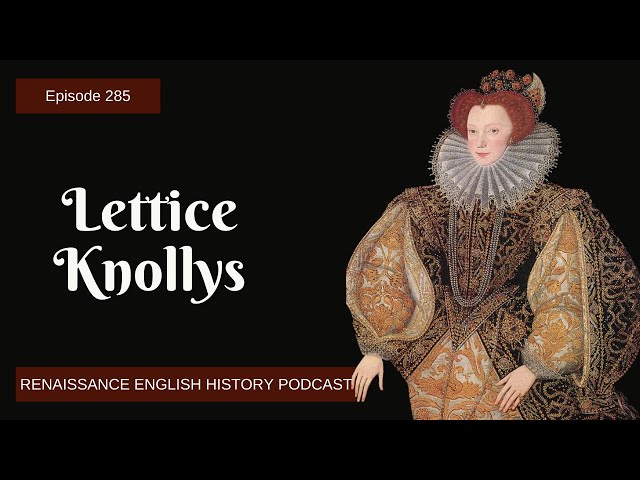
    Lettice Knollys was a formidable Tudor noblewoman whose dramatic life story has long been overshadowed by her infamous feud with Queen Elizabeth I. Cousin to the Virgin Queen and possibly the granddaughter of Henry VIII, Lettice Knollys lived through nearly a century of political intrigue, royal favor, and scandal.

    From her noble birth and striking resemblance to Elizabeth, to her secret marriage to the Queen’s favorite, Robert Dudley, her story is one of ambition, love, exile, and resilience. This deep dive into the life of Lettice Knollys reveals the woman behind the myth—one who defied royal wrath, navigated the treacherous waters of Tudor politics, and ultimately carved out a legacy of her own.

    Rough Transcription of Episode 285: Lettice Knollys: The Tudor Rebel Who Dared to Rival Elizabeth I

    Lettice Knollys. You might not know her name as well as her famous cousin, Elizabeth I, but her life was no less dramatic. Born into the heart of Tudor intrigue, Lettice lived through the reigns of six English monarchs. Seven if you count Lady Jane Grey, from Henry VII to Charles I spanning an astonishing 91 years, that alone would make her remarkable. But she was more than just long-lived. She was bold and a little bit of a troublemaker if we’re honest. So let’s talk today about Lettice Knollys.

    Lettice was a noble woman whose legacy has been overshadowed by her turbulent relationship with the Queen. But this isn’t just a story of rivalry. It’s about love. It’s about scandal and survival in the cutthroat Tudor world. So today we’re gonna talk about her life from her noble birth to of course her infamous marriage to Robert Dudley, her exile from Elizabeth’s court and the complex legacy that she left behind.

    We will explore the rumors that her mother, Catherine Carey, might have been Henry VIII’s daughter, and consider what that would have meant for Lettice herself. So buckle up for a story that’s equal parts history and scandal with a little bit of Tudor gossip. Because Lettice Knollys is about to take center stage.

    Noble Birth and Family Connections

    Lettice entered the world on November 8th, 1543. She was the eldest of 16 children. Born to Sir Francis Knollys and Lady Catherine Carey. God bless her. Born into a family deeply entwined with Tudor royalty. She grew up in an environment of privilege and political influence, of course.

    Her grandmother was Mary Boleyn, once the mistress of Henry VIII, this made her a cousin of Elizabeth I, because Anne Boleyn was the mother of Elizabeth I, Catherine Carey was the mother of Lettice Knollys, so they were sisters. So even if there wasn’t anything more to it than that, she was at least cousins with Elizabeth I.

    But that’s where things get a little bit interesting. Catherine Carey was rumored to be the illegitimate daughter of Henry VIII himself. This theory has fascinated historians and people, writers, Tudor enthusiasts for centuries. I’ve actually done some YouTube videos on this that have been pretty popular.

    So the first line of reasoning is Catherine Carey was, like we said, the daughter of Mary Boleyn. Mary Boleyn had her affair with Henry people say, while she was married to William Carey. So if Catherine was indeed the king’s daughter, it would make Lettice not just a courtier, but the granddaughter of Henry VII.

    Adding fuel to the rumor, Elizabeth I, Henry’s legitimate daughter showed marked favor towards the Carey family throughout her reign. Some accounts even note that Lettice bore a striking resemblance to Elizabeth hinting at a possible shared bloodline. Yet there is of course, no concrete evidence ever surfaced and historians remain divided.

    Some suggest the resemblance and favor were just coincidental. They were related after all. So there was family genetics and perhaps rooted in the family connection through the Boleyns rather than a royal affair. Lettice’s father, Sir Francis Knollys, was a staunch Protestant and a prominent courtier. During the reign of Mary I, Francis fled to the continent for safety, taking his family with him.

    When Elizabeth ascended to the throne in 1558, the Knollys family returned to England where Francis secured a high office as Vice Chamberlain. Lettice likely shaped by her father’s religious convictions and courtly connections, learned the grace, the wit, the calculated charm that would define her as a formidable noblewoman.

    When Elizabeth ascended to the throne in 1558, the fortunes, like we said, changed dramatically for the Knollys family. In addition to Lettice’s father being given a high office, young Lettice who was in her late teens at the time, joined the royal household as one of Elizabeth’s ladies-in-waiting

    Life at Elizabeth’s Court

    Picture the court of the 1560s, there was a dazzling blend of politics, of pageantry, where ambition and beauty went hand in hand. Lettice was tall, graceful, and strikingly beautiful, and quickly became one of the most admired women at court. Her dark auburn hair and fine aristocratic features were so similar to Elizabeth’s that many remarked that she looked like the queen’s mirror image. This resemblance, flattering as it was, could be a double-edged sword.

    After all, it wasn’t just any courtier drawing comparisons to the queen herself, it was her cousin, young, beautiful, and full of life. Elizabeth initially seemed to welcome her vivacious relation. Lettice was family and Elizabeth who cherished her Boleyn kin, was fond of her. They seemed to share a bond, but that closeness did not last in the summer of 1565.

    Lettice’s beauty and perhaps her sense of adventure sparked Elizabeth’s jealousy for the first time. Pregnant with her third child, Lettice was seen flirting with Robert Dudley, Elizabeth’s favorite courtier. That would’ve been a no-no. The Spanish ambassador noted that Lettice was one of the best-looking ladies and held the Queen’s favor at least until that moment when Elizabeth heard of the flirtation.

    Her reaction was swift and furious. Dudley was hers, or at least he was supposed to be. Whether Lettice meant any harm or not, Elizabeth did not tolerate women drawing Dudley’s attention. To keep the peace, Lettice prudently withdrew from court for a time allowing Elizabeth’s temper to cool.

    It was a small incident, but it set the stage for a far deeper rivalry. Lettice had unknowingly stepped into dangerous ground, and Elizabeth’s wrath would not be so easily appeased in the years to come.

    Marriage to Walter Devereaux

    In 1560 at just 17 years old, Lettice made a significant match. She married Walter Devereaux, Viscount Hereford. Walter was an ambitious nobleman and a good deal older than Lettice, but the marriage made sense for both families. By 1572, Walter’s star had risen and he was then created Earl of Essex, elevating Lettice to the title Countess of Essex. The couple settled primarily at Chartley Manor in Staffordshire, though Lettice often appeared at court alongside her husband.

    Motherhood followed swiftly. Lettice gave birth to Penelope in 1563, Dorothy in 1564, and then a son Robert in 1565, the future second Earl of Essex. Two more sons followed. Walter and Little Francis, who sadly died young by her mid-twenties. Lettice was juggling her roles as a mother of five and a prominent court lady.

    Balancing family life with the allure of Elizabeth’s court, Walter’s ambitions though soon drew him away. In 1573, he left for Ireland to lead a military campaign leaving Lettice to manage their estates and maintain her social standing. It was during that time that rumors began to swirl.

    Letters and gossips suggested that Lettice was spending significant time at the home of Robert Dudley, who was sending her gifts and hosted her at Kenilworth Castle. In 1575 when Queen Elizabeth visited Kenilworth in that very famous progress, she stayed for 19 days there for Dudley to throw this massive festival for her. Lettice was reportedly present there. She was just kept out of sight. Later that year, Elizabeth and her entourage visited Lettice at Chartley Manor, and Lettice played the gracious hostess keeping any personal drama hidden.

    Scandal then followed. In late 1575, a Spanish agent reported great enmity between Leicester and the absent Earl of Essex hinting that Lettice had born Dudley’s children while her husband was in Ireland. While this was almost certainly untrue, it reflects the tense rumor driven atmospheric court.

    An infamous pamphlet, Leicester’s Commonwealth would later accuse Lettice of conceiving two of Dudley’s children and secretly aborting one to cover up the infidelity, a salacious and entirely unfounded claim. Walter Devereux meanwhile died in Dublin in September, 1576, officially of dysentery.

    Though there were also whispers that Dudley had poisoned him to clear the path for Lettice, an inquiry found no evidence of foul play. But Walter’s tragic death left Lettice a widow. She was only 32. She had five children and a very precarious financial situation. She attended his funeral in Wales, but her plea for relief from his debts was denied by Elizabeth. Perhaps a sign that the queen was already suspicious of her closeness with Dudley.

    With Walter gone and her status uncertain Lettice’s connection with Robert Dudley grew even closer. The scandal that followed would define her reputation for the rest of her life. Two years after the death of her first husband, Lettice made a bold and fateful decision. On September 21st, 1578, she secretly married Robert Dudley.

    Secret Marriage with Robert Dudley and Her Exile

    The wedding took place in the early hours at Leicster’s country estate Wanstead Hall in Essex, attended by only a handful of trusted witnesses. Among them was Lettice’s father, Sir Francis. He was a practical and a devout man, who knows what he would’ve thought about this, but he likely saw no choice but to condone the union.

    The bride got married in a very simple dress, just a loose gown, not any kind of elaborate finery that one might expect for a noble wedding. So why the haste and secrecy? Most evidence points to Lettice being pregnant by Dudley at the time, her father determined to avoid future scandal, insisted on an immediate marriage to legitimize the situation.

    It was a reckless, passionate move. Marrying without the queen’s permission wasn’t just risky, it was treasonous. Elizabeth had made it clear over the years that Dudley was off limits, whether in romance, friendship, or political alliance, he belonged to her alone. Yet Dudley who had long danced a precarious line between courtly devotion to the queen and personal ambition had now taken a step that even he could not walk back for a time.

    The newlyweds managed to keep their marriage secret. The French ambassador heard rumors in late 1578, but nothing was officially confirmed. Dudley continued to appear at court, managed to maintain his favor with the Queen, but by late 1579, the secret was out. One of Leicester’s political enemies seeking to undermine his influence, revealed the marriage to Elizabeth directly, and Elizabeth’s reaction was volcanic.

    One biographer described it as a torrential force of wounded affection, betrayed confidence, jealousy, and anger. The Queen saw this not just as a personal betrayal, but a public humiliation. Her most cherished favorite, a man she had long considered marrying herself, had married her cousin, the very woman who so often seemed to mirror her own appearance and spirit.

    There are countless legends about the confrontation between the two women. One story claims that Elizabeth snatched off Lettice’s wig in a fit of fury. Another says she struck her across the face. These accounts, while colorful are probably exaggerations from later writers who delighted in the dramatic possibilities of two fierce women clashing.

    What is certain is that Elizabeth immediately banished Lettice from court. The queen’s wrath was absolute and permanent. She would never, ever forgive Lettice, nor would she ever allow her into her presence again. Elizabeth reportedly declared as there is, but one sun in the sky, there could be but one queen in England.

    Lettice daring to rival her in love and prestige had crossed an unforgivable line. As for Robert Dudley, Elizabeth’s anger towards him was a bit more complicated. She couldn’t bear to lose his company entirely. Though he faced a period of house arrest in the queen’s cold shoulder, he eventually regained a measure of favor, but Lettice remained irrevocably exiled.

    The public perception of Lettice was equally harsh. In a society where loyalty to the monarch was paramount. Marrying the Queen’s favor without permission was a bold defiance. Many whispered that she had bewitched Dudley or driven him to madness. It didn’t help that dudley’s political enemies, gleefully spread tales of her conniving nature.

    In truth, Lettice’s greatest crime in Elizabeth’s eyes was not just love but audacity. She had dared to compete with the Queen in both beauty and affection, and that was unforgivable. While others who married without royal consent faced prison, or even worse, like the Grey sisters who met grim fates for similar transgressions, Lettice’s only punishment was banishment.

    Yet for a woman of her rank and ambition, lifelong exile from court was a devastating blow, cutting her off from the heart of power and the queen’s favor that her family had long enjoyed. From 1580 onward, Lettice’s life would never again intersect directly with Elizabeth, and she would wear the stain of this scandal for the rest of her days.

    Life After Dudley

    When Robert Dudley died in September, 1588, Lettice faced both personal heartbreak and financial uncertainty. Dudley’s unexpected death, left her a wealthy widow, but he also carried significant debts to the crown. As Elizabeth auctioned off Dudley’s possessions to recoup what was owed. Lettice found her inheritance unexpectedly diminished.

    Just six months after Dudley’s death, Lettice made another surprising choice. She married Sir Christopher Blunt, a man of relatively modest means compared to her previous husbands. Blunt, had been Dudley’s trusted officer and was significantly younger than Lettice, about 12 years her junior. This marriage raised eyebrows among the nobility with even Lettice’s son Robert Devereaux, criticizing the match as an unhappy choice.

    Why did Lettice marry again so soon and to someone of lesser status? The answer may lie more in companionship than in strategy. After years of court intrigue and heartbreak, perhaps Lettice found solace in a familiar and loyal presence. Blunt, despite his lower rank, had been close to Dudley and had remained loyal throughout their marriage.

    Perhaps they were just very close friends, and there might have been a bond there based on trust and affection rather than any kind of political strategy. This third marriage brought Lettice relative stability in the countryside, particularly at Drayton Bassett in Staffordshire where the couple lived quietly.

    Yet once again, her family connections would soon embroil her in political turmoil. This time through her ambitious son, the Earl of Essex. While Latice had remained outcast at Elizabeth’s court, her son Robert Devereux, 2nd Earl of Essex, rose to dazzling heights. In the mid 1590s as the queen herself was entering her sixties, she seemed to relish Essex’s, youthful charm and bold spirit.

    She showered him with honors making him Master of the Horse, a title that had once belonged to both his grandfather and his stepfather, Robert Dudley. He also became a privy counselor, cementing his place as the Queen’s favorite. For Lettice, Essex’s success was a double-edged sword. On the one hand, it restored some of the family prestige she had lost through her own scandal.

    On the other, she remained personally excluded from court life watching from afar as her son thrived in the very place from which she was banished. Essex for his part, tried at least once to reconcile his mother with the queen. But Elizabeth’s resentment never softened.

    Personal tensions, also arose. Essex initially disapproved of Lettice’s third husband and the mother-son relationship grew strained at times. Despite this, Lettice remained a devoted mother. She worried over her son’s safety on military expeditions, and she wrote letters filled with advice and affection, yet Essex’s, impetuous nature, so reminiscent of Robert Dudley’s earlier bravado soon became his downfall.

    In 1601, Essex’s ambition got the batter of him. Frustrated by his declining influence and Elizabeth’s growing impatience with his insolence, he led the Essex Rebellion, the ill-conceived coup against the queen. The plot failed spectacularly and Elizabeth, heartbroken and furious ordered his execution for treason.

    Essex was beheaded on February 25th, 1601. He was only 35 years old. To compound this tragedy for Lettice, her husband had joined the rebellion and was also executed just weeks later. In the span of a few brutal months, she lost both her beloved son and her supportive third husband. At almost 60, she was left to grapple with grief and disgrace once more.

    Final Years and Legacy

    When James I took the throne in 1603, Lettice’s fortunes took a surprising turn for the better. Unlike Elizabeth, James had no personal animosity towards her and so no reason to hold a grudge. In a gesture of reconciliation, he restored the Essex title and estates to Lettice’s grandson. Thus reviving the family status and easing Lettice’s financial worries.

    He also canceled the remaining crown debt from Leicester’s time, bringing some much needed stability to her later years. She spent her final decades living mostly in Staffordshire. Even into her seventies and eighties, she maintained a formidable presence.

    Portraits from her later years depict a dignified and stately woman still holding onto her pride and independence. Family members noted her affection for her grandchildren and she found solace in their company telling stories of her eventful past and perhaps hinting at a quiet satisfaction that she had outlived so many of her rivals.

    Lettice Knollys passed away on Christmas Day 1634 at the remarkable age of 91. In her will she requested to be buried beside her dear Lord Robert Dudley in the Beuchamp Chapel of St. Mary’s Church. Her wish was honored and she was laid to rest next to Dudley, opposite the monument of their little son, Lord Denbigh.

    In the end, Leticia’s life story is one of defiance, survival, and a remarkable longevity. Often just remembered as Elizabeth’s rival, she was so much more, she was a noblewoman who endured the triumphs and tragedies of Tudor politics with an unwavering tenaciousness and determination. She didn’t just survive the Tudor era, she outlived it.

    A matriarch who might have been Henry VIII’s granddaughter. She remained standing long after the last echoes of Elizabeth’s court head faded.

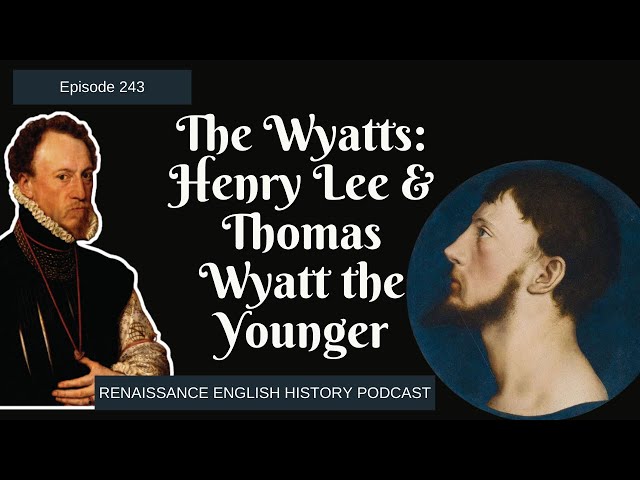
  • Henry Lee and Thomas Wyatt the Younger: Wyatt’s Rebellion and the Wyatt Family Legacy

    Henry Lee and Thomas Wyatt the Younger: Wyatt’s Rebellion and the Wyatt Family Legacy


    Henry Lee and Thomas Wyatt the Younger played pivotal roles in shaping Tudor and Elizabethan history, leaving a legacy of rebellion, politics, and courtly influence.

    As key figures in the tumultuous 16th century, Thomas Wyatt the Younger spearheaded the infamous Wyatt’s Rebellion in 1554, a bold yet doomed attempt to thwart Queen Mary I’s marriage to Philip of Spain, driven by fears of foreign domination and the return of Catholicism. His cousin, Sir Henry Lee, rose to prominence under Elizabeth I, serving as the Queen’s Champion and embodying chivalric ideals at court.

    Together, these descendants of Sir Henry Wyatt and Thomas Wyatt the Elder represent the complex intersections of loyalty, defiance, and cultural impact that defined England’s transition from Tudor absolutism to Elizabethan stability.

    Rough transcript of Episode 243 Wyatt’s Rebellion and the Wyatt Family Legacy: Intrigue, Politics, and Protest

    So in this episode today, we are continuing our discussion of the Wyatt family, the key players in the tumultuous world of Tudor England. Two weeks ago, we delved into the life and legacy of Sir Henry Wyatt, who was the patriarch of the Wyatt family during this period, how he supported Henry VII, and then his son, Thomas Wyatt, and his daughter, Margaret Wyatt.


    Introduction to the Wyatt Family Legacy

    Today, we are going to talk about the next generation of the Wyatt family, focusing on the children of Thomas Wyatt the Elder, and Margaret Wyatt, his sister. This episode will highlight the lives and legacies of Sir Thomas Wyatt the Younger, a rebellious figure who played a significant role in English politics, and Sir Henry Lee, a prominent courtier under Elizabeth I. Through their stories, we will continue to explore the enduring impact of the Wyatt family on Tudor and Elizabethan history.

    So let’s get started with Sir Thomas Wyatt the Younger. Born in 1521 to Thomas Wyatt the Elder, And Elizabeth Brooke. Sir Thomas Wyatt the Younger grew up amidst the turbulent political landscape in Tudor England. His father, of course, was a famous poet and courtier. And he would have made sure that his son received only the best humanist education, typical of the English elite, including languages, literature, the arts, which would prepare him for a life of service.

    Of course, when he was a teenager, his father was in prison, suspected of committing adultery with Anne Boleyn. His upbringing in a family closely tied to the Tudor court meant that he was well acquainted with all of the dangers of being very close to the Tudor court. This background would have set the stage for his later involvement in one of the most significant uprisings against the Tudor monarchy. As a young man, Wyatt served in the court of Edward VI. He began to establish himself as a capable and ambitious figure.

    Wyatt’s Rebellion: A Fight Against Tyranny

    However, his life took a dramatic turn with the accession of Queen Mary I. Deeply, deeply opposed to Mary’s plan to marry Philip of Spain, Wyatt viewed the marriage as a threat to England’s sovereignty and its Protestant faith. Let’s break that down for a second.

    Wyatt was, of course, a Protestant, so he would have been wary of Mary in the first place. But people were very worried about Mary marrying Philip. Because, a woman, of course, had to obey, it was part of the marriage vows, had to obey her husband. So if Mary married Philip of Spain, she was queen, that would have essentially made him the king.

    It wasn’t like with the Queen Elizabeth II, where Prince Philip was the Duke of Edinburgh and she was still, Elizabeth was still the queen. People were very worried that if Mary married Philip that Philip would become the king and Philip would be in charge of everything. Everybody was actually slightly alarmed about this and there was actually a lot of negotiation that went into the marriage.

    People were worried what if she died during childbirth, for example? Did that mean Philip was king? So all of that had to be hammered out in the marriage negotiations. But Wyatt, Thomas Wyatt the Younger, took a leading role in what would become known as Wyatt’s Rebellion in 1554.

    Calling it Wyatt’s Rebellion makes it sound really big when in fact, it was really only organized by about four men, including Wyatt the Younger. Apparently the lawyer at Wyatt’s arraignment called it Wyatt’s Rebellion, and that has stuck with it through the years. The other people participating, though, were Sir James Croft, Sir Peter Carew, and Henry Grey, Duke of Suffolk.

    Now, Henry Grey, Duke of Suffolk, is interesting that he participated because this is the father of Lady Jane Grey, who is currently being held in the Tower of London for having been the “Nine Days’ Queen”. So Mary hadn’t executed Lady Jane Grey yet by this point. In fact, she was trying to be merciful and was just holding her and Guildford Dudley realizing that they were just pawns in this larger rebellion against her.

    But then Lady Jane Grey’s own father conspires with Thomas Wyatt, these other two men, to launch a rebellion. Just a note, if your daughter is being held in the Tower of London, you don’t go start another rebellion if you care about your daughter. So that all turned out very bad for Lady Jane Grey, of course.

    So those are the people who were involved in the rebellion. Like I said, they were Protestants, they feared not just Philip taking over, but this is also during the period of the Spanish Inquisition. And they were very worried about the Spanish Inquisition coming to England.

    Wyatt, at this point, was a significant landowner in Kent. Wyatt was known for being very impetuous, and he had previously spent time in the Tower of London for participating in a street riot. Now, Sir James Croft was from an influential Herefordshire family, and Sir Peter Carew was a Member of Parliament for Devon, and a maritime adventurer, they also joined the rebellion.

    Both were motivated by concerns about their future financial well being and career prospects under Mary’s reign. Initially, the plan was set for simultaneous uprisings in different regions, Devon, led by Carew, Kent, led by Wyatt, the Midlands, led by Suffolk, and Wales, led by Croft. These forces were then to converge on London and replace Mary with Elizabeth, who would marry Courtenay. And they also hoped that the French would be able to prevent Philip’s arrival in England.

    However, the plan had to be put together very quickly. It wasn’t well thought out or well planned out because, of course, they were worried that they were going to be discovered. Wyatt began the uprising on the 25th of January, 1554, by raising his standard at Maidstone Castle and rallying support in Kent.

    Despite some initial successes, including the capture of several royal ships and the defection of the Whitecoats, who were the royal troops, to his side, Wyatt’s forces faced significant challenges. Carrow’s efforts in Devon were thwarted, leading him to flee to France. Suffolk was unable to garner enough support and was captured. And Croft raised forces in Wales, but was surrounded and forced to surrender.

    Only Wyatt managed to press on, leading his forces to London. On the 1st of February, 1554, Wyatt’s forces reached Southwark, but found London Bridge closed and heavily defended. Undeterred, they moved to Kingston, crossing the river and advancing on London.

    Despite significant attrition and desertions, Wyatt’s remaining forces reached Ludgate, but were repelled. Wyatt surrendered and was taken to the Tower of London.

    The Aftermath of Wyatt’s Rebellion

    Following the rebellion’s failure, Mary I’s response was severe. Hundreds of insurgents were arrested, about 150 were executed. Poor Lady Jane Grey and her husband also executed, despite their complete lack of involvement in the rebellion.

    But I get it, right? As long as they’re alive, they’re going to be a figurehead for rebellion. And honestly, I don’t know what her father was thinking. I guess he had some idea that maybe it would work.

    Wyatt himself was also executed. This is when we see Princess Elizabeth, being taken to the Tower under suspicion that she was involved in this. Wyatt cleared Elizabeth of any kind of complicity in the rebellion. Elizabeth was released two months after her imprisonment due to the lack of evidence against her.

    So Wyatt was tried with charges of high treason. Despite having some sympathizers, he was of course found guilty, of course he was, and he was executed on April 11th, 1554.

    He maintained his stance the entire time. He never expressed remorse. He expressed regret only for the fact that the rebellion failed, not for its cause, and he said he still was against the Spanish marriage. After his execution, Thomas Wyatt the Younger became a symbol of resistance against tyranny and foreign influence.

    Contemporary and later historians viewed him through a complex lens. To some, he was a traitor who defied his sovereign. To others, he was a martyr for the Protestant cause and a patriot who sought to protect England from Spanish domination. Elizabeth, who succeeded Mary, had a more nuanced view of Wyatt.

    Although she could not publicly condone his rebellion, she did recognize the validity of his concerns about Spanish influence. Of course, she herself never married. Her reign saw the establishment of Protestantism and a resistance to Spanish power and indirectly validated many of Wyatt’s fears and aspirations.

    His name and actions were thus partially rehabilitated in the eyes of the English public. Wyatt’s rebellion had far reaching consequences for English politics. It underscored the deep divisions within the country over religious and political issues. The rebellion also highlighted the significant opposition to Mary’s marriage to Philip of Spain and the return to Catholicism.

    The harsh response to the rebellion, including numerous executions, illustrated the Tudor regime’s determination to crush dissent. But it also galvanized Protestant opposition and laid the groundwork for future resistance movements. Wyatt’s call to defend English sovereignty and Protestantism resonated with many, contributing to the eventual establishment of Protestant England under Elizabeth I.

    His legacy also extends beyond politics into literature and cultural memory. His rebellion and the dramatic events surrounding it have been the subject of numerous historical and literary works. The Rebellion is depicted as a tragic but heroic stand against tyranny, with Wyatt often portrayed as a noble, if flawed, character.

    His father’s literary reputation also contributed to his enduring legacy. Thomas Wyatt the Elder’s poetry, which often reflected themes of political and personal turmoil, added a layer of literary gravitas to the younger Wyatt’s story. This connection between the personal and political, the poetic and the rebellious, has kept the memory of Thomas Wyatt the Younger alive in English cultural history.

    Sir Henry Lee: The Queen’s Champion

    Now let’s talk about Sir Henry Lee, who was Thomas Wyatt the Younger’s cousin. He was born in 1533 to Margaret Wyatt and Sir Anthony Lee. His mother, Margaret, was the sister to Sir Thomas Wyatt the Elder, so she was the daughter of the original Patriarch Henry Lee. The association with the Wyatt family and the Boleyns, through his mother’s close ties to Anne Boleyn, provided Henry with a unique position within the Tudor court.

    As Elizabeth I ascended the throne in 1558, Henry Lee began to rise in prominence at her court. He quickly became one of her most trusted courtiers. He was loyal and he had these advantages from his family’s connections. His most notable role was as the Queen’s Champion, a position he held for 31 years from 1559 to 1590.

    This role involved participating in jousts and tournaments held on accession day, and to celebrate Elizabeth’s reign and publicly demonstrate his loyalty and martial prowess. As a Queen’s Champion, Lee was responsible for organizing and leading these elaborate ceremonies, which were crucial for reinforcing the monarchy’s image and stability.

    His performances in the tilt yard, marked by chivalric displays and nightly honor, became iconic elements of Elizabethan culture. Lee’s dedication to the Queen was not merely ceremonial, he also played a significant role in court politics and served as an advisor to Elizabeth, influencing many of the decisions that shaped the period.

    He was a patron of the arts, he supported poets, musicians, and artists, and his patronage helped to foster a vibrant artistic community. He was also a Member of Parliament for Buckinghamshire in 1558, 59, 1571, and 72. So we’ve actually talked about Henry Lee a couple of weeks ago. I think it was a YouTube channel, a YouTube video I did on Anne Vavasour and Henry Lee.

    Anne Vavasour had been a maid of honor with Elizabeth and in 1581 she got pregnant. The father was Edward de Vere, the Earl of Oxford. Of course, that was very bad for her and Oxford. But then, Anne found herself an unexpected protector in Henry Lee.

    By this point in his life, Henry Lee was a widower. He had children. He was building up his estate at Ditchley. And he wanted to protect Anne. And they actually built for themselves, really one might call it progressive for the time. They never got married. There was a big age difference, but they seemed to really love each other. They entertained the Queen at Ditchley, which was Henry Lee’s main estate.

    They just seemed happy, which is something you sadly don’t really see in marriages and relationships of the nobility. They read these names and you think about these people and you hear these stories often in a vacuum. And then you realize these parts that go together. Oh, that was Henry Lee, right? That’s the guy we’ve been talking about. He was Thomas Wyatt, the poet, Thomas Wyatt, the Elder’s nephew, right? That’s pretty neat to link them together.

    So Henry Lee also commissioned the Ditchley portrait of Queen Elizabeth, which I also have done a portraits and propaganda episode on my YouTube channel. It shows Elizabeth standing. It’s the one of her that’s quite famous on one half is a sunny sky and on the other half is lightning and she’s standing over the British Isles and her feet are right at Ditchley showing, that this was going to hang in his home and it was to commemorate Elizabeth’s visit to Ditchley.

    And even after Elizabeth died, Lee continued to serve the royalty. Anne of Denmark, who was James I‘s wife, visited Lee and was friends with Anne Vavasour, and actually even was at the point where she was sending gifts back and forth.

    So Henry Lee remained a respected figure at court until 1611 when he passed away, having had a very long and productive life. None of his children lived that long. He had two sons with his first wife, Anne Paget, John Lee and Henry Lee, they both died young.

    And then he had a daughter, Mary. Now, Mary supposedly eloped with a John Worsley in February of 1579, which is its own story. But Mary died in 1583. Sadly, Henry Lee, none of his children with Ann Paget lived.

    But he definitely lived a colorful life. One might look at that and say that was a pretty satisfactory life. And he died, like I said, in 1611 and that will do it for our look at the Lee family now.

    Related links: The Wyatt Family: Loyalty, Intrigue, and Literary Legacy in Tudor England

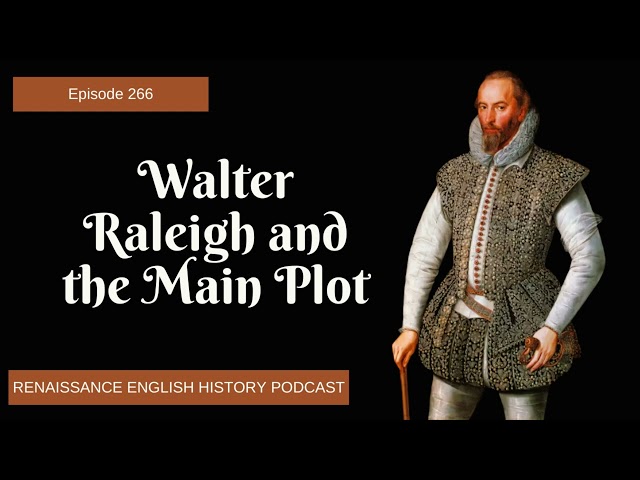
  • Walter Raleigh and the Main Plot: Treason, Trial, and Tower Life

    Walter Raleigh and the Main Plot: Treason, Trial, and Tower Life


    Walter Raleigh and the Main Plot are inextricably linked to one of the most tumultuous periods of early 17th-century England. Once a favorite of Queen Elizabeth I, celebrated as a poet, explorer, and soldier, Raleigh’s fortunes changed dramatically under the reign of King James I. The so-called Main Plot—a murky conspiracy to overthrow James and replace him with his cousin, Arbella Stuart—ensnared Raleigh, leading to his arrest, trial, and eventual imprisonment.

    While evidence against Raleigh was tenuous at best, his association with alleged conspirators and his history of bold ambition made him an easy scapegoat in a court rife with paranoia. This dramatic chapter in Raleigh’s life marked the beginning of his tragic fall from grace, cementing his legacy as both a symbol of the Elizabethan Golden Age and a cautionary tale of ambition in a shifting political landscape.

     Transcript of Episode 269: Walter Raleigh and the Main Plot: Treason, Trial, and Tower Life:

    This is episode 269, I think, and we’re going to talk about Walter Raleigh and the Main Plot today which I have never covered before, and it’s about time. We are going to get right into this plot that was the downfall of Walter Raleigh. We’re going to talk about Walter Raleigh a little bit, who he was, and how he got involved in the Main Plot.

    Walter Raleigh was the kind of guy who seemed untouchable. In Elizabeth’s court, he was a favorite, he was a poet, explorer, soldier, and someone who always seemed to be at the center of something big. Whether it was planting colonies in the Americas, defeating the Spanish Armada, or charming Elizabeth herself, Raleigh had carved out a life that made him one of the most famous men of his day.


    Introduction to Walter Raleigh and the Main Plot

    But fame is a double edged sword, and when James I took the throne in 1603, Raleigh found himself on the wrong side of the king’s favor. This is the story of how Raleigh got caught up in one of the strangest political conspiracies of the early 17th century, the so called Main Plot. It’s a tangled web of ambition, paranoia, and fragile alliances that ultimately led to Raleigh’s imprisonment, trial, and eventual downfall.

    But to understand how a man like Walter Raleigh ended up accused of treason, we first need to look at who he was and why his star had already begun to dim by the time the plot unfolded.

    Walter Raleigh was born in Devon in 1552, the youngest of five brothers. His family had a strong Protestant faith, which shaped much of Raleigh’s career. In a time when religion was inseparable from politics, being a Protestant meant loyalty to Queen Elizabeth and a deep suspicion of Catholic powers like Spain. Raleigh’s loyalty paid off. He served as a soldier in the brutal campaigns in Ireland where his ruthlessness gained him a reputation as someone who could get the job done no matter how messy it was.

    In the 1580s, Raleigh had become one of Elizabeth’s favorites. He was dashing, ambitious, and endlessly resourceful. The Queen rewarded him with a knighthood, land, and lucrative trade monopolies. Raleigh used this wealth to fund expeditions to the New World, including the ill fated attempt to establish a colony at Roanoke. Even though the colony disappeared without a trace, Raleigh’s efforts cemented his image as a bold adventurer and defender of England’s interests against the Spanish expansion.


    Raleigh’s Fall from Grace

    But Raleigh’s term had its limits. In 1592, he secretly married one of Elizabeth’s ladies in waiting, Bess Throckmorton. Without the Queen’s permission, that was a no. Elizabeth was famously possessive of her favorites, and she was furious. Both Raleigh and his wife were briefly imprisoned in the Tower of London, and though he eventually regained some favor, the relationship between Raleigh and the Queen was never quite the same.

    When Elizabeth died in 1603, Raleigh’s position became precarious. The new king, James I, didn’t trust him. James was a Scottish king inheriting an English throne and he wanted peace with Spain, not conflict. Raleigh’s Protestant zeal, his involvement in anti Spanish policies, and his history of intrigue made him an outsider in James’s court. It didn’t help that Raleigh was arrogant and unpopular among many of the king’s closest advisors.

    By the time James I took the throne, England was a powder keg. Catholics, who had suffered under Elizabeth’s strict laws, hoped that James would be more tolerant. Protestants, however, were wary of any sign that James might bend toward Catholicism. Meanwhile, nobles jockeyed for influence in the new regime, with resentment simmering among those who felt left out.


    The Main Plot Unfolds

    It was in this tense atmosphere that the whispers of treason began to circulate. The Main Plot was a scheme to remove James from the throne and replace him with his cousin Arbella Stewart. While the details were murky, the alleged conspirators included Lord Cobham, Raleigh’s longtime associate, and a handful of other nobles.

    Cobham was supposedly seeking Spanish money to fund the plot. Which definitely raised alarm bells at court. Spain had long been England’s greatest enemy and even the suggestion of collusion with the Spanish crown was enough to bring the full weight of the law down on anyone involved. So what exactly was the Main Plot?

    Honestly, it’s a tricky question because even at the time it was hard to pin down. What we know is this. The plot was allegedly masterminded by Henry Brooke, Lord Cobham, with a vague plan to overthrow King James I. The idea was to replace James with his cousin Arbella Stewart, a descendant of Henry VII, who had a claim to the throne.

    Arbella, who was reportedly oblivious to the whole thing, was seen as a safer bet by some discontented nobles. Someone who might be more open to Catholic tolerance or at least less reliant on Scottish advisers, whom many English courtiers deeply resented. The plan, if you can even call it that, hinged on getting financial support from Spain.

    Cobham was supposedly going to travel to Brussels, meet with the Spanish ambassador, and secure 600, 000 crowns to fund the conspiracy, such as it was. What they would actually do with that money was anyone’s guess. The plotters seemed long on ambition but short on specifics, and this is where Walter Raleigh comes into the picture.


    Raleigh’s Arrest and Trial

    Raleigh’s connection with the plot was tenuous at best, but that didn’t matter once suspicion started swirling. Cobham was one of Raleigh’s closest allies, and the two had a complicated friendship marked by both loyalty and rivalry. When Cobham was arrested and questioned, he cracked under pressure. He claimed that Raleigh had encouraged him to seek Spanish support and had even received a letter detailing the plan.

    Cobham’s testimony was shaky and inconsistent, but it was enough to implicate Raleigh in the eyes of the King’s investigators. Raleigh was arrested in July 1603 and sent to the Tower of London. For a man like Walter Raleigh, whose life had been defined by action and adventure. Imprisonment must have been agonizing.

    But worse was yet to come. The trial, held in November 1603 at Winchester Castle, was less about uncovering the truth and more about setting an example. The prosecution was led by Attorney General Sir Edward Cook, who pulled no punches. Cook accused Raleigh of being a monster and comparing him to Cain and Judas.

    He painted Raleigh as a treacherous schemer, willing to betray his country for personal gain. The problem was the evidence was thin, there were no letters from Raleigh, no direct proof tying him to the plot, and Cobham himself had recanted his accusations multiple times. Raleigh, for his part, put up a spirited defense.

    He argued that Cobham’s testimony was unreliable and pointed out the lack of concrete evidence. In one memorable moment, Raleigh called out the absurdity on relying on hearsay. Do you condemn a man based on bare suspicions? The proof of the pudding is in the eating. It was a dramatic and clever line, but it wasn’t enough to save him.

    The jury deliberated only 15 minutes before finding Raleigh guilty of treason. The sentence was death by hanging, drawing, and quartering, a brutal punishment reserved for the worst crimes. Raleigh wasn’t the only one caught in the fallout of the Main Plot. Lord Cobham, along with several others, including Lord Grey of Wilton and Sir Griffin Markham were also found guilty of treason.

    Initially, they were all sentenced to death, but in a dramatic twist, James commuted most of their sentences. Cobham and Gray were imprisoned while Markham was exiled. As for Raleigh, he was spared immediate execution. James likely saw value in keeping such a skilled man alive, even if only as a political pawn.


    Life in the Tower

    Raleigh was sent back to the Tower, where he remained for 13 long years. If there’s one thing Walter Raleigh couldn’t do, it was sit still. Even locked away in the Tower of London, he found ways to make himself useful, or at least distract himself. For one, Raleigh turned to writing, pouring his relentless energy into a colossal project, The History of the World.

    It wasn’t just any history book. Raleigh covered everything from the creation of the world to the Roman Empire, weaving in his own observations on politics, power, and the human condition. It was ambitious, brilliant, and deeply cynical. Probably a reflection of Raleigh’s own bitterness about his fall from grace.

    But Raleigh wasn’t just scribbling away in a dark cell. He also dabbled in science, conducting experiments, and cultivating a small garden. Yes, Walter Raleigh had a garden, and in fact, the Tower that he was kept in was actually called the Garden Tower because of that. There’s even a legend that Raleigh discovered how to distill fresh water from seawater during this time, which came in handy later when he was released for one last expedition.


    The Final Expedition and Execution

    After thirteen years in the Tower, Raleigh was given a second chance, or so it seemed. In 1616, James I released him to lead an expedition to South America in search of El Dorado, the mythical City of Gold. It was a gamble for both Raleigh and the King. For Raleigh, it was a chance to redeem himself and prove his worth.

    For James, it was an opportunity to gain wealth without much risk. If Raleigh succeeded, great. If not, he was expendable. The expedition was a disaster. Raleigh’s men clashed with the Spanish, violating James peace treaty with Spain. To make matters worse, Raleigh’s son, Watt, was killed in one of these skirmishes.

    Raleigh returned to England empty handed, knowing he had sealed his fate. I don’t know why he even went back. He should have just kept his ship and stayed in South America or something, but anyway, he went back. By 1618, Raleigh’s enemies had their chance to finish him off. The Spanish ambassador demanded justice for Raleigh’s attack on their settlement, and James, eager to maintain good relations with Spain, obliged.

    Instead of a new trial, James invoked Raleigh’s 1603 treason conviction, which had never been formally overturned. Raleigh was executed on October 29, 1618 outside the Palace of Westminster. Ever the showman, he faced his death with courage and wit. His famous last words, Strike, man, strike, cemented his legacy as a figure of defiance and bravery.

    In the end, the Main Plot was less about overthrowing a king and more about the precariousness of life in James’s court. For Raleigh, it marked the beginning of his long, tragic fall from grace. Whether he was truly involved in the conspiracy or simply a convenient scapegoat remains a matter of debate.


    Legacy of Walter Raleigh

    But what’s clear is that Raleigh’s life and death captured the imagination of generations to come. The conspirators themselves faded into obscurity, their plans little more than a footnote in history, but Raleigh’s story endured. He became a symbol of the Elizabethan Golden Age, a man whose ambition, courage, and wit could never be quite snuffed out, even by the executioner’s axe.

    Even in death, Walter Raleigh refused to disappear quietly. His execution may have been the final chapter of his life, but it was just the beginning of his legend. In the centuries that followed, Raleigh became a romanticized figure, celebrated as a renaissance man who embodied the adventurous spirit of Elizabethan England.

    Much of this mythologizing comes down to timing. Raleigh’s exploits, his trial, his execution all happened during a transformative period for England. He was a link between two worlds, the bold, expansionist Elizabethan age and the more cautious, politically fraught Jacobean era. Raleigh’s fall from favor was a reminder that ambition, no matter how grand, could be as dangerous as it was rewarding.

    His writings, especially the History of the World, ensured that his voice would live on. Though he may have been bitter when he wrote it, the work was admired for its depth and its breadth, and it inspired readers well into the 18th century. Raleigh’s poetry, too, secured his place among great literary figures of his time, alongside contemporaries like Edmund Spencer and Christopher Marlowe.

    The Main Plot didn’t amount to much in the grand scheme of things. It was a messy, half baked scheme riddled with confusion and unreliable testimony. But it revealed a lot about the tensions of the time. James was a new king trying to assert control over a fractured court. And plots like this one, and the Gunpowder Plot, and the Bye Plot, only reinforced his sense of vulnerability.

    The Bye Plot was also known as the Priest’s Plot. That was a lesser known conspiracy in 1603 that ran parallel to the Main Plot. While they are separate conspiracies, the two became entangled in the minds of investigators and historians. The bi plot was actually orchestrated by a small group of disaffected Catholic priests and laymen who hoped to force King James I to grant greater tolerance or even full freedom of worship to Catholics.

    Unlike the Main Plot, which aimed to overthrow James, the bi plot had more limited ambitions, but its methods were extreme. They wanted to kidnap James and hold him until he agreed to their demands, because I’m sure he’s going to do that. That makes sense. The conspirators intended to ambush the king as he traveled between London and Windsor and then detain him until he issued a proclamation of religious tolerance.

    The kidnapping scheme gave the plot its nickname, the By Plot, derived from the conspirators private term for the act of passing by the usual course of law. It was led by two Catholic priests, William Watson and William Clark, with a small group of conspirators, including Sir Griffin Markham, who was a Catholic soldier.

    All of this doesn’t really matter except just to say that it was a time of a lot of plots and James felt very vulnerable. So Walter Raleigh’s life was full of contradictions. He was a bold adventurer who made enemies as easily as he made discoveries. He was a favorite of Queen Elizabeth, yet he fell from her good graces.

    He was a man of action who spent years trapped in a tower. And he was a supposed traitor who died with the dignity of a hero. The Main Plot may not have brought down a king, but it did bring down one of the most fascinating figures of the Elizabethan and Jacobean eras. Even now, 400 years later, Raleigh’s story continues to captivate because, like the man himself, it’s full of ambition, intrigue, and enough mystery to keep us guessing.

    So there we have it, a little bit about the Main Plot and Sir Walter Raleigh’s involvement in it.

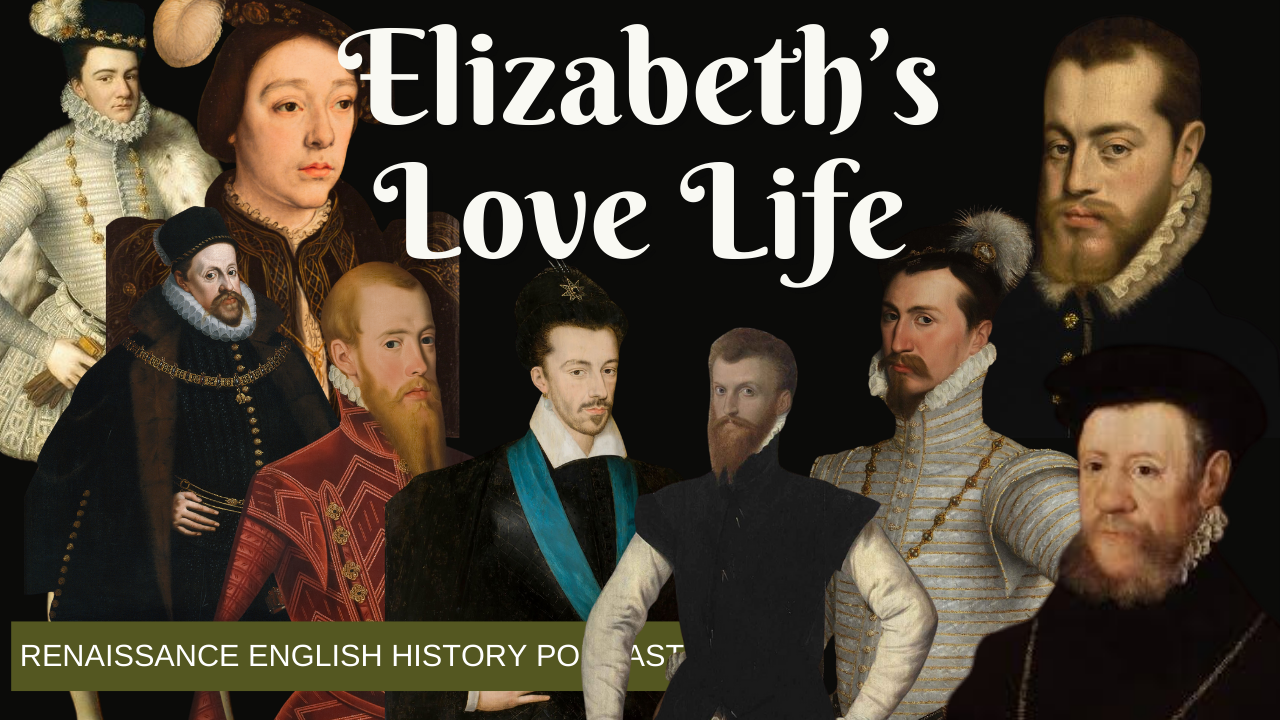
  • The many suitors of Elizabeth I

    The many suitors of Elizabeth I

    Who were the suitors of Elizabeth I? Who did Elizabeth consider marrying? Let’s discuss.
    This post is from Heather’s YouTube channel – make sure you subscribe so you never miss videos when they go live!

    Hello and welcome back to the YouTube channel for the Renaissance English History Podcast. I am your host, Heather, and I have been podcasting on Tudor England since 2009, the original Tudor History Podcast.

    This channel is where I put all of my episodes, as well as lots of extra content like this video right here. So today we are talking about the love life of Elizabeth I. The men who were courting Elizabeth. The men who would have liked to have been the King of England.

    If you would like to see more tutor history in your YouTube feed, why not go ahead and hit subscribe right now so that you never miss a video that I put out.

    So Elizabeth I and her love life. This is a topic that gets covered quite a lot. I’ve actually done other videos about Elizabeth and her suitors as well. Um, but it’s one of those subjects that never gets old and it’s always worth going back and revisiting it and looking for other spins you can put on it.

    So we’re going to talk a little bit about the men who were courting Elizabeth today. The men who had hopes of being the future King of England and the way Elizabeth played them off each other. One interesting thing about Elizabeth, of course, maybe one of the most interesting things about her is that she was the first woman to rule without a husband by her side.

    Of course, Mary I was the first queen regnant in England, um, but she got married right away to Philip of Spain. So Elizabeth comes along and she did not get married and she ruled for 45 years without a husband by her side, which was a choice that mystified the political world of her time.

    But Elizabeth’s decision to stay unmarried wasn’t due to lack of offers. Of course, throughout her life, she had no fewer than six. 16 suitors from prominent English noblemen to European princes, all vying for her hand. She knew how to leverage these proposals as political tools. She dangled the possibility of marriage and used it to forge alliances and to gain strategic advantages without ever truly committing.

    While she famously declared herself married to her country, her life, both real and speculative, was the source of endless romantic intrigue.

    So let’s start with her early proposals. Elizabeth’s early years were, of course, very romantic. Quite tumultuous. She was the daughter of Anne Boleyn, whose marriage to Henry sparked England’s break with the Catholic Church. Elizabeth’s legitimacy was always being called into question, not least because her mother was executed for adultery.

    So there was always this question around her legitimacy. Although Henry never questioned it himself, she looked like him, he always claimed her, there was never a question in his mind. But this uncertainty made her less appealing as a match for foreign princes when she was younger, unlike her half sister, Mary, who had been betrothed.

    multiple times before reaching adolescence. Elizabeth, on the other hand, only had a few early proposals. One of the first came when she was just a toddler, just a wee little mite. Henry VIII attempted to secure a match between the one year old Elizabeth and Charles de Valois, the Duke of Angoulême, the youngest son of the French king.

    But the French king refused to recognize Anne as Henry’s lawful wife, and that caused negotiations to fall through. A second attempt came during the reign of her brother, Edward VI, when Elizabeth was considered as a bride for Adolf, the Duke of Holstein Gottorp, a Protestant prince. However, like her earlier engagement, this too failed, leaving Elizabeth’s marriage prospects very uncertain during her early years.

    Then came the scandal of her teenage years when she was living with her stepmother, Catherine Parr, and Tom Seymour. Seymour was ambitious, was unscrupulous, um, was a bit of a cad, seeking ways to gain more influence within the court.

    At the time, Elizabeth was only about 14, Tom Seymour was in his 40s, but that did not stop him. Not only did he make all of those very inappropriate advances towards Elizabeth when she was living there, when she was dressed only in her nightgown and he would come in and tickle her and smack her butt.

    And all of that kind of really gross stuff. Uh, but he also then proposed to her after his wife Catherine Parr had died. So he had proposed marriage to Elizabeth

    And she was able to skillfully get out of that offer. And then Seymour’s political ambition got the best of him. He was arrested for treason and Elizabeth was actually implicated as a potential accomplice. But she was able to use her intelligence, her wit, to get herself out of that muddle.

    Seymour was not so lucky and he was executed in 1549.

    This whole mess with Seymour really influenced Elizabeth’s perception of marriage and power, and it likely contributed to her lifelong distrust of men and her determination to never let a man have any kind of control over her life or her reign.

    So then when Mary was the queen, Elizabeth was the next in line for the throne, and so she became a little bit more of an attractive prospect than when she was second in line, and there was a young king who might still have children, and then there was, Mary who was still young and might have children, so things had been very distant for Elizabeth to potentially be queen That’s just a few years earlier and then Mary becomes Queen.

    She’s older. She’s not having children. Elizabeth is next in line and one of the people who got caught up in that with her was Edward Courtney the Earl of Devon he was a great grandson of Edward IV, and he was seen as a potential match for Elizabeth, linking their Plantagenet blood with her Tudor blood, particularly by the people who opposed Mary’s reign.

    In 1554, he became embroiled in Wyatt’s Rebellion, which was a plot aimed at overthrowing Mary and placing Elizabeth on the throne next to Edward Courtney.

    The rebellion was crushed, but both Courtney and Elizabeth were implicated, and Elizabeth was imprisoned in the Tower of London under suspicion of conspiracy. Courtney was eventually banished to Venice. Elizabeth’s involvement was never proven, and she was released after intense questioning. However, again, the event cast a long shadow over her marriage prospects, and she was viewed with suspicion by both Mary’s supporters and foreign suitors alike.

    Of all of Elizabeth’s suitors, Robert Dudley, Earl of Leicester, was by far the most significant and closest to her heart. Her true love, Robert Dudley. Dudley and Elizabeth had known each other since childhood. Their connection was deep and enduring. When Elizabeth became Queen, Dudley quickly rose in prominence, earning positions of power and privilege, including the Master of the Horse, a role that kept him very close to her.

    to her. , as master of the horse, he was helping her when she would get up on the horse, for example. So there was a lot of like touching involved.

    It was a role that you would only want someone that you were very comfortable with to have. Rumors of a romantic relationship between Elizabeth and Dudley began circulating almost immediately, fueled by the fact that he was nearly always by her side.

    There was a problem, of course, though, and that was Dudley was married. His wife, Amy, did not live at court. She lived further away. There were rumors that she was sick and that maybe Dudley would be able to extricate himself early. from his marriage. But then in 1560, Amy died under very mysterious circumstances.

    Jill McCracken did a talk about that at TudorCon this year, the whodunit of Amy Robsart. I’ll have to find his related video and link to it. Um, anyway, the official inquest found the death was accidental, but there were rumors this ruined any opportunity Elizabeth was ever going to have to marry Dudley.

    Despite the scandal, Elizabeth would eventually keep Dudley close. She sent him away at first, but then she brought him back. But she realized she was never going to be able to marry him. Not just because of the suspicion over Dudley. what happened to Amy, but also because of the balance of power within the English nobility.

    If she was going to show favoritism to one, it was all such a delicate balance of power. It was going to get all messed up. If she would show favoritism to Dudley, all the different factions would just, it would turn into a mess. People would be very angry. Nobles would be upset. It wouldn’t be good, but their bond remained strong.

    And Elizabeth hinted that if she ever were to marry, it would be Dudley. At one point, she even proposed a potential solution which caught everybody off guard. The idea that Robert Dudley might marry Mary, Queen of Scots, because then their children could inherit the English and Scottish crowns.

    Both Dudley and Mary. and Mary thought that was weird and were resistant to the idea. I guess she thought that Mary would come to England then and they would all live together and be a happy family. Um, the plan never came to any kind of fruition.

    But Dudley of course would stay Elizabeth’s closest confidant and the one man who perhaps had a claim to her heart. Let’s talk about foreign suitors now.

    One of the most significant foreign suitors to pursue Elizabeth was Philip II of Spain, who had previously been married to Elizabeth’s half sister, Mary. After Mary’s death in 1558, Philip quickly proposed to the new queen, hoping to maintain his influence there. over England and to continue pushing for the country’s return to Catholicism.

    Now, interestingly, Philip had actually been a supporter of Elizabeth during Mary’s reign. He tried really hard to stay on her good side. He always wanted to keep her safe, even when Mary was uncertain about things. Mary actually might have done more to hurt Elizabeth, to make life difficult for Elizabeth, but Philip realized that they were never going to have any children. She was going to be the next in line, and he really wanted to stay on her good side.

    But Elizabeth turned him down.

    Not only did she realize how unpopular he was, he was deeply resented in England, but he was also her brother in law, and accepting his hand would have been accepting a man that she knew was going to try to dominate her and her country. She didn’t want to have any part of that, so she very tactfully declined.

    That would set the stage for the future rivalry that would, of course, lead to the Armada 30 years later. Crazy how that works.

    Next in line was Archduke Charles of Austria, a candidate promoted by the Holy Roman Emperor for Dan I. Negotiations between Charles and Elizabeth continued for years, but the match was doomed from the start because of religious differences. Charles was Catholic, and one of the key stipulations from his father was that Elizabeth would have to declare Charles her heir if they remained childless.

    These terms with the tensions going on in England between the Protestants and the Catholics, um, made the match really impossible for Elizabeth. Despite some really important political advantages, she ultimately turned down the proposal, unwilling to risk England’s religious stability.

    Then there was Eric XIV of Sweden, another royal who vied for Elizabeth’s hand. His courtship was one of the most persistent. Before either of them had become monarchs, even before he ascended to the Swedish throne, he had expressed interest in Elizabeth.

    And once he became king, he continued to shower her with lavish gifts and love letters. But he also displayed some really erratic behavior, some Pretty important mental instability, and there was political instability going on in Sweden at the time, and that made the match undesirable for Elisabeth.

    Eric himself came to a very grisly end. He tried to imprison a very powerful noble family in Sweden, alienating the Swedish nobility.

    He was then imprisoned by his brother, later died likely of poisoning. So his end was not so good, so good job on Elizabeth for turning that one down.

    One of the more awkward suitors was Henri III of France, who as a younger prince had shown little interest in Elizabeth.

    His mother, Catherine de Medici, had promoted the match, but Henri, known for his vanity and his sharp tongue, reportedly made disparaging comments about Elizabeth’s age and appearance. The rude remarks effectively killed any serious consideration of a match between them, though Elizabeth entertained his suit briefly just to antagonize Philip in Spain.

    The most serious foreign suitor was François, the Duke of Anjou, the youngest son of Catherine de Medici. There was a 22 year age gap between them, but despite that, they actually developed a very close bond. Elizabeth even came up with a nickname for him, which she only did with her favorites. She called him her father.

    Frog. Unlike other suitors, Francois actually came to England to woo Elizabeth in person. At one point, she even gave him a ring potentially signaling an engagement, but the match was very controversial. Francois was Catholic and public opinion in England was fiercely against it. There were pamphlets circulated condemning the marriage and Elizabeth eventually broke it off despite her emotional attachment to Francois.

    When he did leave England and went back to France, she was actually A little bit heartbroken. She had a little bit of a broken heart when he left, which, uh, very sad.

    And this was one of the last serious proposals that she considered.

    There were a couple of English suitors. Among them was Sir William Pickering, who was briefly considered for a potential match.

    He was a tall and handsome diplomat. He was highly regarded at court. court known for his charm. For a time, foreign ambassadors speculated that Elizabeth might marry him, but their flirtation never materialized into anything serious. After a brief period of anticipation, Pickering returned to Yorkshire, and the possibility of marriage quietly faded away.

    Then there was Henry FitzAlan, the Earl of Arundel, another suitor who invested heavily in trying to win Elizabeth’s hand. There was a huge age gap, and he was Catholic, but he spent vast sums entertaining the Queen and presented himself as a serious contender.

    Elizabeth, however, did not trust Arundel. She sensed his ambition. She kept him at court for times to keep an eye on him, but she eventually distanced herself from him. Years later, Arundel would become embroiled in a plot to assassinate Elizabeth, leading to his downfall and house arrest, where he died at the age of 67.

    As Elizabeth aged, her declaration of being married to her kingdom became more than just a political statement. It became part of her public persona. A cult of virginity formed around her, likening her to the Virgin Mary, symbolizing purity and devotion to her people. Despite the many suitors who courted her, Elizabeth steadfastly maintained that she had never married or had ever had any kind of intimate relations, even with Robert Dudley, her true love.

    Rumors persisted, however, particularly surrounding her relationship with Dudley. I just did a video on the secret pregnancies that people suspected of her with Dudley. Elizabeth’s refusal to marry had a significant impact on the politics of the time. It kept foreign powers guessing, preserving her autonomy, and protected England from potential political domination by a foreign prince or an English nobleman.

    By refusing to marry, Elizabeth retained full control of her reign and safeguarded her legacy as one of England’s greatest monarchs. So we will leave it there.

    Thank you so much for watching. If you made it to this point in the video and you liked it, I sure would appreciate a press of that like button. It helps to feed the algorithm and get my content to even more people. And I hope I earned your subscription to my channel, where I put out videos like this on the regular. If you want to keep watching Tudor content, why not check out this video on Cecilia Vassa? She was one of the noble women in the retinue that Eric of Sweden sent to woo Elizabeth. Or you can check out this video that YouTube thinks you will enjoy. Thank you so much. Have an amazing day and I will talk to you soon.

  • Elizabeth  and Robert Dudley: A Royal Love Story Rooted in Power and Politics

    Elizabeth and Robert Dudley: A Royal Love Story Rooted in Power and Politics

    This post comes from the highlights of Janet Wertman’s talk on Tudor writing from Tudorcon 2023

    Elizabeth I’s relationship with Robert Dudley remains one of the most intriguing and debated love stories in Tudor history. Their lifelong bond, born in childhood, was shaped by political necessity, courtly love, and scandal. In this video from Tudorcon 2023, historian Janet Wertman delves into the nuances of their relationship, exploring the powerful connection between the Virgin Queen and her trusted courtier.

    The Beginnings of a Lifelong Friendship: Elizabeth and Robert Dudley were raised in the same courtly household, forming a deep bond as children. Janet discusses how this early relationship set the stage for their connection as adults, despite the pressures of royal duty.

    Love and Politics in the Tudor Court: As Elizabeth ascended the throne, Dudley was never far from her side. Appointed Master of Horse, Dudley held a position that allowed him physical proximity to the Queen—fueling rumors and scandal. Their relationship, however, was never intended to lead to marriage, since Dudley was far beneath Elizabeth’s station.

    The Scandal of Amy Dudley’s Death: One of the most dramatic moments in their relationship came with the suspicious death of Dudley’s wife, Amy. Janet recounts the circumstances and the impact this had on Dudley’s standing at court. While Dudley was eventually exonerated, the scandal haunted them both.

    Elizabeth’s Strategic Use of Marriage: Janet emphasizes how Elizabeth used the possibility of marriage as a powerful diplomatic tool, deftly keeping foreign suitors at bay and leveraging her potential alliances to maintain England’s stability.

    The Tragic End: Dudley’s death in 1588 was a devastating blow to Elizabeth. Janet’s talk concludes with the poignant image of Elizabeth keeping Dudley’s final letter by her bedside until her own death.

    Discover more about the incredible relationship between Elizabeth I and Robert Dudley in this compelling talk by Janet Wertman. Purchase the full Tudorcon 2023 video collection to explore the fascinating lives and events of Tudor history from expert historians!learn more about the people and stories behind the words, the Tudorcon 2023 video collection is now available. With talks from leading experts on Tudor history, it’s your chance to dive deeper into this remarkable era from the comfort of your home.

    To explore these fascinating stories and more, you can gain full access to the Tudorcon 2023 video collection. Learn directly from expert historians about the intricacies of Tudor life, politics, and power—right from the comfort of your home.

  • 10 Surprising Tudor Facts That Will Change How You See History

    10 Surprising Tudor Facts That Will Change How You See History

    Tudor England was filled with dirt, no one bathed, and everyone got sick and died when they were 28 from easily curable diseases, right? Also, the diet was terrible, and people lost all their teeth. And Henry VIII was a brainless tyrant. Not so fast, my friend. Tudor England was a vibrant place that was much more modern, in many ways, than we might expect. Read on for ten surprising Tudor facts that might change how you see the 16th century!

    1. Elizabeth I Was Nearly Killed by Smallpox

    • Fact: In 1562, Elizabeth I contracted smallpox and came close to death. Her recovery was a turning point in her reign, and she emerged even more resilient, though it left her with scars she would cover with heavy makeup. Check out this Renaissance English History Podcast episode on Tudor Cosmetics and Makeup!

    2. Henry VIII Wrote a Bestselling Book

    • Fact: Before his infamous reign, Henry VIII was known as a scholarly king. In 1521, he wrote “Defence of the Seven Sacraments,” which defended the Catholic Church against Martin Luther and earned him the title “Defender of the Faith” from the Pope. He also wrote music, and his hit song Pastime with Good Company was the Song of the Summer in 1515!
      Check out all our Reformation Month episodes.

    3. The Tudor Court Was Obsessed with Astrology

    • Fact: Astrology played a significant role in Tudor life, with court astrologers advising on everything from military campaigns to marriage dates. Even Elizabeth I consulted astrologers regularly. Elizabeth’s court astrologer John Dee even used the stars to decide her coronation date! Check out this episode on the Music of the Spheres and how astrology influenced music and healing.

    4. The Tudor Diet Was Surprisingly Healthy

    • Fact: Despite popular images of Henry VIII feasting on meat, the average Tudor diet was rich in vegetables, fruits, and grains. Meat was a luxury, and most people ate far more plant-based foods. In fact, the idea that people had bad teeth in the Tudor period is also a myth – since most people couldn’t afford sugar, dental records show that most people had pretty good dental hygiene! Check out this Interview with Brigitte Webster on Tudor food.
    Tudor Facts: Tudor food

    5. Anne Boleyn Had Extra Fingers – or Did She?

    • Fact: One of the most persistent myths about Anne Boleyn is that she had six fingers on one hand, a tale likely spread by her enemies to paint her as a witch. There’s no contemporary evidence to support this claim. Check out this YouTube video on Anne Boley’s Six Fingers myth to learn more about where it came from and how it spread.

    6. Tudor Medicine Was More Advanced Than You Think

    • Fact: While Tudor medicine included some bizarre practices, they also used herbal remedies and surgical techniques that were surprisingly effective. They even understood the importance of cleanliness in preventing infections. Renaissance English History Podcast interview with Seamus O’Calleigh on Tudor medicine.

    7. Mary I Was Almost a Queen of France

    • Fact: Before becoming Queen of England, Mary I was betrothed to the future French king, Francis I. The engagement was broken off, but had it gone ahead, Mary might have become Queen of France instead of England. Of course, she was only two when it happened, so she probably doesn’t remember it. Check out this Renaissance English History Podcast interview with Melita Thomas on Mary I.

    8. Tudor Hygiene Wasn’t as Bad as You Think

    • Fact: While Tudors didn’t bathe as frequently as we do today, they were still concerned with hygiene. They washed their hands before meals and used perfumes and scented water to stay fresh. Renaissance English History Podcast episode on Taking the Waters in Tudor England.
    Tudor fact: The Tudors bathed

    9. The Tower of London Was a Zoo

    • Fact: The Tower of London wasn’t just a prison; it also housed a menagerie of exotic animals, including lions, elephants, and even a polar bear, which was a gift from the King of Norway.
      Check out this Renaissance English History Podcast episode on the Tower Menagerie.
    Tudor Facts: Tower Menagerie


    10. Tudor England Was Multicultural

    • Fact: Contrary to popular belief, Tudor England had a diverse population, including Africans, Jews, and people from the Middle East and Europe. They lived and worked in cities like London, contributing to the cultural fabric of the time. Check out this podcast episode on the experience of black people in Tudor England.

    What’s your biggest takeaway on how Tudor England might be different than we had always been led to believe?

  • The Decline of Serfdom: How Elizabeth I Freed the Last Serfs in England

    The Decline of Serfdom: How Elizabeth I Freed the Last Serfs in England

    Let’s explore the decline of serfdom under Elizabeth I’s reign and its fascinating history in England. We’ll look at the economic, social, and legal transformations that dismantled the feudal system, from the impact of the Black Death to the Peasants’ Revolt and beyond. Discover how the transition from a feudal economy to a market-based one reshaped English society and laid the groundwork for modern labor relations.

    Today we are talking about the fall of serfdom in England, which was a very, very long process. It didn’t happen overnight but the official nail in the coffin, as it were, came during the reign of Elizabeth I who formally ended serfdom in England.

    So that’s something random.  A lot of people don’t realize that even during the reign of Henry VIII  and Edward and Mary, that serfdom was still officially legal in  England. So Elizabeth finally ended it. And we are going to talk about the whole process of serfdom. We’re going to start like 200-300 years before and work our way up.

    So let’s get started with a quote by Wat Tyler who led the Peasant’s Rebellion of 1381. He said, 

    “There should be equality among all people save only the king. There should be no serfdom and all men should be free and of one condition. We will be free forever, our heirs and our lands.”

    His quote encapsulates the spirit of a time when the foundations of medieval society were being challenged. Of course, this is a generation after the Black Death. A lot of the societal norms,  the expectations, what had been for hundreds of years are now falling down.

    In medieval England, serfdom was a defining feature of the feudal system. It dictated the lives of countless individuals who were bound to the land and subject to the will of their lords. Serfs toiled in the fields, bound by duty and tradition. Their lives are defined by their servitude.

    Today we’re going to talk about the decline of the system, tracing its gradual erosion through economic, social, and legal changes, culminating, as I said, in Elizabeth I’s formal abolition of serfdom. This journey will take us through key events like the Black Death, the Peasants’ Revolt, and significant legal reforms, and we will highlight the transformation of English society and the rise of a free peasantry. 


    Serfdom

    So let’s first understand what serfdom was. At its core, serfdom was a condition of bondage. Serfs were tied to the land on which they lived and worked, and they were subject to the will of the land owner. However, unlike slaves, serfs had some personal freedoms and rights,  but their economic and social mobility was severely restricted. They could not leave the manor without the lord’s permission, and their labor was owed to the lord in exchange for protection and the right to work a portion of the land for their own subsistence. 

    The origins of serfdom in England go all the way back a thousand years before this to the collapse of the Roman Empire. As Roman authority waned, a new socio-economic structure emerged to fill the vacuum, leading to the establishment of the feudal system in the early medieval period. Land became the primary source of wealth and power,  and those who controlled the land also controlled the people who worked it.

    Daily life for a serf was arduous, it was monotonous. There was no change. Agricultural labor dominated their existence.  They would plow fields, they would sow seeds, and tend to the livestock. They would harvest crops.

    Beyond their work in the field, serfs also had to perform various other duties for the lord. They would repair roads. They would repair the buildings, do carpentry work, and even provide domestic service. They would live in simple often poorly constructed homes,  with limited access to education or upward mobility.

    But serfs were not completely powerless. They had certain rights and could appeal to manorial courts for justice in disputes. Over time, economic and social changes would take place and would begin to challenge the foundations of serfdom, setting the stage for its eventual decline and the rise of a more modern and free society.

    The early signs of change came in the 12th and 13th centuries. These are periods of significant economic and demographic shifts in England that set the stage for the decline of serfdom. The population growth increased massively and this actually increased the productivity of the farms.

    It transformed the rural landscape. I actually just got done reading a book on the Black Death, and it talked about this period that England especially went through, all of Europe, but especially England, went through at the beginning of the 14th century, end of the 13th,  beginning of the 14th century, where the farms were so massively productive and the population was booming. And they were talking about how the Black Death might have been sort of in response to that.

    So that’s what we’ve got going on at this time. There are new farming techniques. There’s a three-field system where you do crop rotation, more efficient use of land, and surplus production for the first time in anyone’s memory. There was surplus production which contributed to the growth of towns and of trade, gradually weakening the rigid structures of the feudal system.

    Black Death

    However, of course, the most profound catalyst for change came in the mid-14th century with the arrival of the Black Death. This devastating pandemic swept through Europe between 1348 and 1350, killing an estimated one-third to one-half of England’s population. I also read in that book that the population of England didn’t actually go back to its pre-1348 numbers until it was like the 19th century,  which is just, just massive.

    This massive population decline led to severe labor shortages, fundamentally altering the balance of power between landowners and laborers. There are fewer workers available. Surviving serfs and peasants now find themselves in higher demand, and this allows them to demand better working conditions and higher wages.

    This shift in the labor market was met, of course, with resistance from the ruling class. So the government actually enacted the Statute of Labourers in 1351, trying to cap the wages and restrict the movement of laborers. If you’ve read The Pillars of the Earth books, I guess it’s the World Without End, the second book, I suppose, the whole Black Death and the rules and being able to go from place to place and leave your farm and go to another place.  And then the restrictions on that play a huge part in that story.

    So that’s a way to dig in and experience what it would have been like for regular people who were just trying to live their lives and get by during this time. But so the Statute of Labourers tried to cap the wages. Instead of a minimum wage, there was a maximum wage. And of course,  this just made everybody really upset. So there was a ton of discontent among the lower classes.

    Peasants’ Revolt

    This set the stage for 30 years later, the massive Peasants’ Revolt. So it’s just simmering under there for decades. The Peasants Revolt was actually then triggered by a combination of high taxes,  oppressive laws, and social inequality.  The immediate cause was the imposition of the third poll tax in just four years,  which was deeply unpopular and seen as very unjust.

    So there are figures like Wat Tyler and John Ball. Thousands of peasants marched to  London demanding the abolition of serfdom, fair taxes, and an end to the corruption among officials. They actually entered the city and presented their demands to King Richard II.

    The revolt was ultimately suppressed and its leaders were executed, but the Peasants’ Revolt had significant long-term consequences. It marked the really official beginning of the end for serfdom in England, and the ruling class increasingly recognized the need to address the grievances of the lower classes.

    Over the following decades,  the pressures of a changing economy and continued social unrest would lead to further erosion of the feudal system, paving the way for the eventual formal abolition under Elizabeth. So let’s talk about some of these legal and economic shifts. England is transitioning from a feudal economy to a market-based one, and we start to see this.

    Legal and Economic Shifts

    One of the things I love about this period is this transition and the rise of the merchant class, of the middle class in the 16th century. So all of these traditional structures of serfdom are just kind of falling away naturally. There are several key developments, including the rise of tenant farming and the increasing prevalence of wage labor. What does that mean?

    Tenant farming allowed individuals to lease land from landowners in exchange for rent, rather than being bound to the land to serve. So you could just go up and rent some land from somebody. This enabled greater mobility and economic independence for many peasants. They could now negotiate the terms of their labor. They could move to areas offering better opportunities.

    The Statute of Labourers, as I said, was a direct response to the labor shortages from the Black Death and it was trying to fix the wages at pre-plague levels and restrict the movement of laborers who sought higher wages elsewhere. Employers were forbidden from paying more than the set wages. Workers were required to accept employment at these rates,  and violations were punishable by fines or imprisonment.

    However, this was super hard to enforce and often led to widespread resentment or evasion. As the economic landscape evolved, so too did the legal framework for governing labor and land. The manorial courts, which had traditionally overseen the administration of justice within the feudal system, began to decline in importance.  These courts were responsible for handling disputes between lords and their tenants, as well as enforcing customary laws and obligations.

    However, as the power of the central government grew and more and more equitable legal reforms were introduced, the jurisdiction of manorial courts diminished. Some of the legal reforms during this period were the gradual abolition of villainage, which was a form of serfdom, and the enfranchisement of serfs.

    These reforms were often driven by economic necessity and the growing recognition of individual rights. For instance, landowners increasingly found it more profitable to lease their lands to tenant farmers who could pay them rent rather than just relying on the labor of bound serfs.

    Additionally, the rise of common law courts provided a more standardized and accessible system of justice, which also then began to undermine the manorial court’s authority. Then there’s the role of monarchs and legislation. So the policies of Richard  II and the subsequent monarchs in the 15th century played a crucial role in shaping the landscape of labor and serfdom in England. 

    After the Peasants’ Revolt of 1381, Richard II attempted to maintain control through measures that both appeased and suppressed the population. His initial promise to abolish serfdom and grant freedom was quickly retracted once the revolt was over. However, the unrest made it clear that maintaining the status quo was not going to work.

    Over the ensuing decades, monarchs and lawmakers introduced reforms that gradually undermined the institution of serfdom. One of the key reforms was the gradual abolition of villainage. It’s like I said, it’s a specific form of serfdom, where villeins were tied to the land and owed labor to their lords. Legal changes and economic pressures led to a decline in the enforcement of these obligations. And by the late 15th century, it was largely obsolete, replaced by more flexible forms of labor agreements and tenancy.

    The enfranchisement of serfs allowed them to buy their freedom or be granted freedom by their lords. This further eroded the feudal system. These newly freed individuals could enter into wage labor contracts or lease land, contributing to the rise of a market-based economy. This shift had profound impacts on the social structure as it increased social mobility and contributed to the decline of rigid class boundaries.


    Wars of the Roses

    Then you’ve got the main event of the 15th century in England the Wars of the Roses. This series of civil wars that engulfed England for control of the English throne also influenced land ownership and labor relations. These conflicts resulted in significant upheaval among the nobility. Many estates were changing hands, and there was a lot of instability, which again weakened the feudal system, as the new landowners were often more interested in maximizing profits than maintaining traditional feudal obligations.

    And then we start to get more tenant farming and more decline in serfdom. The Tudors then, particularly Henry VII and  Henry VIII, implemented policies that favored the consolidation of power and the growth of a centralized state. They encouraged agricultural innovation, the enclosures movement, which converted common land into privately owned plots.  

    These enclosures disrupted traditional village life and displaced many peasants. That’s where we get rebellions like Kett’s Rebellion, which was about these land enclosures.  It also spurred the development of a more efficient agricultural system and more free labor market.

    Under Elizabeth I’s Reign

    Then we finally get to Elizabeth’s reign, which again started in 1558. And this was a period obviously, of significant social, economic,  and political transformations. Elizabeth was known for her pragmatism,  for her keen political acumen, and she navigated all of the messy religious conflicts, all of the upheaval, all of it.

    Her approach to governance was characterized by a desire to stabilize and modernize England, ensuring its prosperity and security. By the time Elizabeth ascended to the throne, the institution of serfdom had already been in decline for several centuries. The economic and demographic shifts following the Black Death, the rise of tenant farming and legal reforms had all but dismantled the traditional feudal system.

    However, remnants of serfdom persisted in some parts of the country where a small number of individuals were still bound to their lords. In 1574, Elizabeth issued a proclamation that formally freed the last remaining serfs in England. This proclamation was significant for several reasons. First, it marked the official end of a system that had defined medieval society. The move was both a recognition of the de facto situation where serfdom was largely obsolete.  

    And it was a symbolic act of modernizing the nation’s legal and social structures by saying, “Hey, we are done with that period.  We are moving on to the future now.” Elizabeth’s decision was  driven by multiple factors. First, the rise of the market-based economy, the increased importance of wage labor, serfdom was just not really useful anymore. 

    There’s also the agricultural innovations, the enclosure movements, move towards more efficient profit-driven farming practices that didn’t rely on bound labor. The growing sense of individual rights of personal freedoms influenced by the renaissance humanism and the reformation, made the continuation of serfdom untenable.

    Reformation

    It all comes back to the Reformation. Everything comes back to the Reformation. Anyway, politically, Elizabeth understood the importance of consolidating her power by fostering loyalty among her subjects. And the abolition of serfdom helped to mitigate potential sources of discontent.

    The immediate impact of the 1574 Proclamation was largely symbolic. Serfdom had already been in decline. However, it reinforced the transition towards a modern economy and even the concept of free labor. Former serfs who were now legally free could participate more fully in the economic life of the country, contributing to the growing market economy.

    Landowners, too, could benefit from the formalization of labor arrangements, which allowed for more predictable and profitable agricultural practices. In broader historical terms, the end of serfdom under Elizabeth I  marked a significant step in the evolution of English society.

    It represented the culmination of centuries of economic, legal, and social change and set the stage for the further development of capitalism and individual rights. Elizabeth’s proclamation was a clear break from the medieval past and a move towards a more modern and dynamic future, reflecting the broader transformations of the Elizabethan era.

    The End of Serfdom

    The immediate consequences of the end of serfdom in England were profound for both former serfs and landowners. Former serfs were now legally free. They had greater autonomy over their lives and their labor. They could choose where to work, they could negotiate their wages, and move more freely in search of better opportunities.

    This newfound freedom allowed many people to improve their living conditions and participate more actively in the growing economy. Landowners, on the other hand, had to adapt to the loss of a guaranteed labor force. But many had already transitioned to tenant farming and wage labor, and they found these arrangements were better for them economically either way.

    The formal end of serfdom allowed landowners to consolidate their states and implement more efficient agricultural practices which then also contributed to increased productivity and profitability. The transition to a more modern market economy facilitated the rise of a free peasantry that could engage in diverse economic activities beyond just subsistence agriculture.  

    This shift contributed to the growth of rural markets, the expansion of trade, the development of early capitalist practices, and the social mobility that the end of serfdom provided also started to break down the rigid class structures, and it fostered a more dynamic and fluid society.  

    The end of serfdom in England occurred earlier than in many other parts of Europe. In France,  serfdom persisted until after the French Revolution in the late 18th century,  while in Russia, it was not abolished until 1861. The earlier end of serfdom in England provided a headstart in the transition to a market economy and the development of individual rights, which then set a precedent for other nations to follow.

    So, as we reflect on this transformative period, we can appreciate the resilience and adaptability of English society in the face of immense change. Just a couple of notes here as we’re finishing up, the Elizabethan proclamation is something that you see online a lot, and it’s hard to find a primary source for that. So I spent a lot of time looking for like, “Where did Elizabeth actually say this?”.

    Because it just seems to be like this thing that everybody knows about and yet you can’t really find a source for it.  So one thing I did find, I found this on Quora, interestingly enough. So thank you. It was Paul who wrote this answer that I found. So he found it in a 1902 Encyclopedia  Britannica, which read

    “Serfdom died out in England without any special legislation against it. It survived in exceptional instances, as in France; Hallam mentions as the latest deed of enfranchisement one of Elizabeth in 1574 in favour of the bondmen on some of her manors,” 

    So that can be interpreted as Elizabeth just stating that these supposed bondsmen on her manors were free in law as they probably were by then in custom and in practice anyway because after the 14th century, it was very, very difficult to enforce any of the serfdom regulations and rules and all of these things as well. So it was more like her just recognizing,  “Okay, this is officially a thing. Let’s  just put a pin in it and call it done.” So that is where we get that 1574 date from.

    If you really want to get into the decline of serfdom in late medieval England, there is a book called exactly that. Mark Bailey has written a book called The Decline of Serfdom in Late Medieval England: From Bondage to Freedom. It’s very academic, but it’s a very good book and really digs into serfdom. So if you really want to nerd out on that, check it out. I recommend you check out that book.

    Also finally, an interesting note that I should say, even though this is the Renaissance English History Podcast soon enough of course, England and Scotland would be joined together. I did a mini-course on that for patrons last month.

    Random share, but there was serfdom in Scotland until 1775, interestingly. Coal miners who had been kept in serfdom until  1775 were freed at that point. So there you go, that is a little bit about serfdom in the Middle Ages.

  • Katherine Grey: The Forgotten Tudor Princess

    Katherine Grey: The Forgotten Tudor Princess

    Let’s explore the life of Katherine Grey, the lesser-known sister of the Nine Days’ Queen and the often-forgotten cousin of Queen Elizabeth I.

    She was born in 1540 and she was the second daughter of Henry Grey, 1st Duke of Suffolk and Frances Brandon. So her mother was the niece of Henry VIII, thus connecting Katherine to the royal lineage and painting a potential path to the throne.

    So she comes from Henry’s sister, Mary Tudor, Queen of France. The one who married the king of France and then he died and she secretly married Charles Brandon. That’s Mary and Charles Brandon and they had a daughter Frances and then Katherine was Frances’s daughter. So she would have been Henry VIII’s great-niece, I suppose.

    She comes from that line. Her older sister was Lady Jane Grey who of course was manipulated into taking the throne after the death of Edward VI. However, Jane’s rule was very short-lived. She was overthrown by Mary Tudor, imprisoned and later executed in this tragic event. It cast a shadow over the Grey family and the younger Katherine.

    Yet, despite her sister’s execution, Katherine and her younger sister, Mary were not entirely out of the picture under Henry VIII’s will. They remained potential heirs to the throne, adding layers of complexity to their relationship with their royal cousin, Elizabeth.

    When Elizabeth ascended to the throne in 1558, the dynamics of the court shifted dramatically. Although Elizabeth never officially named an heir, the Grey sisters were recognized as potential successors. A fact that did not go unnoticed by courtiers, especially those aspiring to power.

    So both Katherine and Mary were seen as attractive prospects for marriage, Katherine in particular, attracted the interest of many suitors, which only fueled Elizabeth’s unease. Of course, we know Elizabeth was quite kind of jealous of the attention that other women at court got. She was unmarried and childless and this of course deepen the significance of the Grey sisters’ presence at court.

    In 1560 Katherine’s life took a dramatic turn when she secretly married Edward Seymour, Earl of Hertford. This unauthorized marriage became one of the most controversial events in Elizabethan court life, igniting a firestorm when Katherine became pregnant.

    Elizabeth felt completely betrayed by Katherine’s secret marriage and swift pregnancy.

    She saw it as a direct challenge to her reign. As a consequence, both Katherine and Edward were imprisoned in the Tower of London. Katherine’s first child Edward was born in the Tower of London. In fact, Katherine lived most of her remaining years in confinement.

    Her existence, far removed from the glamor and grander of court life that she once knew. Even so, her spirit remained unbroken despite the harsh conditions. She had a second son named Thomas in 1563. This also made Elizabeth very, very mad because of course the jailers at the tower were allowing her to see her husband. Clearly. And so Elizabeth got very mad about this.

    So tragedy struck when Katherine Grey died at only 27 years old in 1568. The once vibrant and potential heir to the throne ended her life in captivity, having never fully realized her royal connections.

    Katherine Grey in history is often overshadowed by her sister, Jane and her cousin Elizabeth. Yet her life was marked by its own unique blend of rebellion, love and tragedy. Her actions were defiant and daring for the time. Also not a lot of forethought. But she greatly shaped the Elizabethan era casting ripples that still influence our understanding of this fascinating period.

    It was one of the first times that one of Elizabeth’s women got married without her permission. Elizabeth was still young when this happened. And of course, this would set the stage for the way Elizabeth treated her women who got married throughout the rest of her reign. Katherine Grey was a fascinating woman.

  • Treasures of the Tudor Era: A Glimpse into Royal Elegance

    Treasures of the Tudor Era: A Glimpse into Royal Elegance

    Let’s dive deep into the treasures of the Tudor era, the opulence of its court, and explore a curated collection of exquisite items that once graced the halls of Henry VIII, Anne Boleyn, and Elizabeth I. From intricate rings to priceless pearls, each artifact tells a tale of romance, power, and grandeur.

    So today we are talking about items that belong to the Tudors. We actually have a lot of items still in museums that have come down through the ages that we can trace the provenance back to the Tudors, and we’re going to look at a couple of them today.

    Lock of Hair

    The first item we have is a lock of hair belonging to Katherine Parr. Supposedly, this lock of hair was taken the night she died on September 5, 1548. It was sold by Bonham’s London in January 2008 for 2,160 to a Charles Hudson.

    Lock of Hair Katherine Parr Treasure of Tudor

    The lock is mounted in an oval frame with an ink inscribed paper that states “Hair of Queen Catherine Parr, last consort of Henry, the night she dyed September 5th 1548 was in the Chapel of Sudeley Castle, near Winchcombe.”


    Mary Tudor Pearl

    There are actually three pearls that are very famous and look very similar that are often confused. This is the Mary Tudor Pearl, not the Pelegrina or La Peregrina pearl, two separate ones. La Pelegrina and the other La Peregrina, and then the Mary Tudor pearl.

    Mary Tudor Pearl Treasure of Tudor

    This one is featured in at least three portraits of Mary I. It’s about 64 and a half carats. It’s from 1526. The Tudor pearl disappeared in the late 16th century, and then a similar pearl was sold at auction in 2004 by the London jewelers Symbolic and Chase and was called the Pearl of Kuwait.

    The owners have made claims that it’s actually the Tudor pearl because it’s very similar in shape and size, and this pearl is currently on loan to the Smithsonian. The Tudor pearl was found around 1526 was given to Isabella of Portugal. When Isabella died in 1539, she left it to her daughter, Juana of Austria. It was then sent to Mary as part of the negotiations for her marriage to Juana’s brother, Philip of Spain, and is seen in contemporary portraits suspended from a circular golden brooch.

    Here’s a funny little fun fact about this pearl and Mary and the other pearls that they’re often confused with. So a portrait of Mary I from 1554 by Hans Eworth shows the Tudor pearl, and that was actually owned by Elizabeth Taylor and Richard Burton. Now they mistakenly believed that it depicted La Peregrina pearl. Burton had recently given Elizabeth Taylor La Peregrina pearl for Valentine’s Day.

    Then the Burtons discovered that the British National Portrait Gallery didn’t actually have an original painting of Mary, so they donated their portrait of Mary with the Tudor pearl to the National Portrait Gallery.


    Boleyn Cup


    Next up, the Boleyn Cup, a silver gilt masterpiece from 1535. It shows Anne Boleyn’s crest, a crowned falcon, atop of a tree stump with red and white flowers. It was once a possession of Anne, which then found its way to her daughter, Elizabeth. And then, as a thank-you gift, Elizabeth actually gave it to her physician, who then donated it to St. John the Baptist Parish Church in Cirencester, Gloucestershire, where it is still on display today.

    Anne Boleyn Cup Treasure of Tudor

    Chequers Ring

    Next up, the very famous Chequers Ring, which was once worn by Elizabeth I, a rare artifact that survives from her actual inventory. Made of mother-of-pearl set with gold and studded with rubies, the ring showcases an intricately designed locket with Two portraits inside – Elizabeth and another woman, which is historically thought to be Anne Boleyn, Elizabeth’s mother.

    Chequers Ring Elizabeth I Treasure of Tudor


    Supposedly, Robert Carey removed the ring from Elizabeth I’s finger on her death and presented it to James I. Over time, it eventually reached Arthur Lee, who gifted it alongside his Chequers country house to the nation, and now it’s a treasured artifact at Chequers,  publicly displayed for the first time in 2003 at the National Maritime Museum.


    Anne Boleyn Wall Clock

    Next up, this gilt bronze wall clock, adorned with the royal coat-of-arms and intricate engravings, features a unique birdcage style lantern mechanism. Its historical authenticity is debated, with evidence suggesting that some of the parts were assembled over time, and allegedly Henry VIII gave this clock to Anne Boleyn in 1532 on their wedding day. Later, it became part of Horace Walpole’s collection at Strawberry Hill until 1842 when Queen Victoria bought it at an auction.

    Anne Boleyn wedding Wall Clock Treasure of Tudor

    Coleridge Collar

    Next, this enigmatic Coleridge collar made of gold has a provenance shrouded in controversy. It’s believed to be a 16th-century chain of office given by Henry VIII to Sir Edward Montagu in 1546 when he became Lord Chief Justice of the Common Pleas. Then again, it could also be a 17th-century replica.

    William Coleridge, a former owner, sold it in 2006 as a copy for 35,000 pounds based on advice from Sotheby’s, yet in a twist, it was later auctioned by Christie’s in 2008 as an original for over 300, 000. A subsequent lawsuit by Lord Coleridge against Sotheby’s in 2012 resulted in his loss and considerable legal expenses. So who knows?

    Coleridge Collar Henry VIII Treasure of Tudor

    Pistol-shaped Whistle Pendant

    Finally, this pistol-shaped whistle pendant, intricately engraved with foliage, also houses some cosmetic tools. That spoon is actually an earwax spoon, kind of gross, but there you go. So Henry VIII used to have trinkets like this, trinkets I say, they’re golden, right? But he would have them sewn into his costumes for masks, and many of these he would just kind of hand out as he was going around during the mass. He’d have them sewn in.

    Pistol-shaped Whistle Pendant henry VIII Treasure of Tudor


    Apparently in 1510, a goldsmith was paid 266 pounds to make new trinkets, including small hearts and roses in gold, because all the other charms that had been in his other costumes had been stolen or given away by Henry. And this particular one was apparently, legend says, Henry VIII’s first gift to Anne Boleyn.

    Can you imagine just going around a party and somebody hands you this golden trinket, like a Pandora charm or something like that, bigger than that, but, you know, that would be really cool.

  • Top Tudor Romance Scandals

    Top Tudor Romance Scandals

    Here are the top five lesser-known Tudor romance scandals:

    5. The tragic story of Katherine Howard, Henry VIII’s young and vivacious fifth wife, is one such narrative that underscores the perilous intersection of love and ambition in Tudor England. Thrust into the limelight as queen when she was still a teenager, Katherine’s past and clandestine liaison quickly became the fodder for courtly intrigue.

    Before her marriage to Henry, Katherine’s romantic entanglements, notably with Henry Mannox and Frances Dereham, were whispered secrets that she hoped were buried in her past. However, it was her alleged affair with Thomas Culpepper, a close courtier of the king, that ignited a scandal with fatal consequences.

    The discovery of Katherine’s indiscretions, real or fabricated, set a tragic end in motion. Katherine, accused of treason for her premarital relationships and the affair with Culpepper. Katherine’s fate was sealed in a public spectacle of disgrace and punishment.

    Her story not only highlights the dangers that young women in the Tudor court faced, but also reflects the broader themes of power, control, and the perilous politics of the royal bedchamber. Katherine Howard’s life, shrouded in scandal, serves as a poignant prologue for the tales of intrigue that simmered beneath the surface of Tudor grandeur.

    4. Katherine Parr and Thomas Seymour. The widowhood of Katherine Parr, the sixth and surviving wife of Henry VIII, took a scandalous turn with her hasty marriage to Thomas Seymour, the Lord High Admiral and brother of Henry’s third wife, Jane Seymour.

    Mere months after the King’s death in 1547, Katherine, who had been a calming and reformist influence on Henry, entered into a union that sent shockwaves through the Tudor court. Seymour, known for his ambition and charm, was also the uncle of the young Edward VI, positioning him close to the center of power, a fact that made their marriage all the more contentious.

    The marriage raised eyebrows not only because of its rapid timing, but also due to Seymour’s well-known aspirations to increase his influence. Katherine’s position as the Dowager Queen and her close relationship with the young Princess Elizabeth, who resided in their household, adds layers of complexity and intrigue to their union.

    Seymour’s subsequent actions, including flirtations with Elizabeth and a bold but ill-fated bid for power, only served to deepen the scandal. The repercussion of Katherine and Seymour’s marriage were far-reaching, affecting court politics and the intricate web of Tudor succession.

    Seymour’s eventual arrest and execution for treason underscored the volatile nature of Tudor alliances and the dangerous interplay between personal ambition and the machinations of power. Their story is a testament to the unpredictable dynamics of the Tudor court, where love, ambition, and treachery were often closely intertwined.

    3. The Dudley love triangle involving Robert Dudley, Amy Robsart, and Queen Elizabeth I remains one of the Tudor period’s most enigmatic scandals shrouded in mystery and speculation. Robert Dudley, a favorite of Elizabeth I and a key figure at her court, found his life and ambitions irrevocably altered by the tragic and untimely death of his wife Amy in 1560.

    Amy Robsart’s demise under suspicious circumstances with a fetal fall down a staircase at Cumnor Place in Oxfordshire ignited a firestorm of rumors that implicated Dudley in a dark plot to free himself from his marriage, thereby paving the way for a union with the Queen. The scandal surrounding Amy’s death cast a long shadow over Dudley’s reputation and his relationship with Elizabeth.

    Despite the Queen’s evident fondness for Dudley, highlighted by their close companionship and the lavish attention she bestowed upon him, The whispers of foul play and ambition made any prospect of marriage politically toxic. The court and the public alike were rife with gossip and speculation, which threatened not only Dudley’s position, but also the Queen’s image as a virtuous and just monarch.

    Elizabeth, acutely aware of the delicate balance of public opinion and the need to maintain her authority unblemished, navigated the scandal with her characteristic prudence. Although Dudley remained a prominent courtier and was later made Earl of Leicester, the stain of the scandal effectively barred him from ever becoming consort.

    The Dudley love triangle thus exemplifies the intricate interplay of personal relationships and public perceptions in the Tudor court, where love, ambition, and tragedy were inextricably linked with profound implications for those involved and the course of Elizabeth’s reign.


    2. The affair between Anne Vavasour and the Earl of Oxford, Edward De Vere. So Anne Vavasour was a young maid-of-honor to Elizabeth I. Anne had an affair with Edward De Vere, 17th Earl of Oxford, which stands out for its dramatic intensity and the scandal it caused.

    The clandestine relationship, blooming within the confines of Elizabeth’s court, broke the conventions of the time and led to one of the most sensational scandals of the Elizabethan era. The affair came to light in 1581, when Anne gave birth to De Vere’s illegitimate son, a revelation that shocked the court and infuriated Queen Elizabeth, who had strict rules against such liaisons among her courtiers.

    The Queen’s response was swift and severe. Both Anne and De Vere were imprisoned in the Tower of London for their indiscretion, a punishment that underscored the gravity of their offense in the Queen’s eyes. The scandal did not end with their imprisonment. Upon their release, the affair led to a series of violent confrontations, fueling a bitter feud between De Vere and Anne’s kinsmen. The most notable incident was a deadly duel in the streets of London, which resulted in several injuries and further deepened the animosity between the two factions.

    This series of events not only highlighted the personal risks of such romantic entanglements, but also reflected the broader tensions within the Elizabethan court, where honor, reputation, and loyalty were constantly at stake. The affair of Anne Vavasour and Edward De Vere with its blend of passion, defiance, and tragedy, exemplifies the complex interplay of personal desires and societal constraints in Tudor England.

    1. The Frances Howard and Robert Carr scandal, which culminated in the mysterious death of Thomas Overbury, stands as one of the most sordid tales of the early Stuart period, intertwining love, ambition, and murder at the highest levels of English society.

    Frances Howard was initially married to the Earl of Essex and sought an annulment to wed Robert Carr, Earl of Somerset, and a favorite of King James I. The annulment, granted under scandalous circumstances, was just the beginning of a saga that would shock the nation.

    The union between Howard and Carr was marred by the shadow of Thomas Overbury, a close advisor and friend to Carr, who vehemently opposed their relationship. Overbury’s subsequent imprisonment in the Tower of London and mysterious death in 1613, later revealed to be poison, ignited a firestorm of rumors and accusations.

    The investigation unveiled a complex web of intrigue implicating not only Frances and Carr, but also members of their inner circle in a murder plot. The trial that followed was a public spectacle, drawing attention to the corrupt and decadent nature of James I’s court.

    Frances and Carr were both found guilty, the images tarred, and their positions at court irreparably damaged. The overbearing scandal exposed the dark underbelly of Jacobean politics and courtly intrigue, highlighting the lengths to which individuals would go for love and power. The public outcry and fascination with the case underscored the perennial allure of scandal and the dangerous intersection of personal desires with political machinations.

    The Tudor and Stuart periods were rife with romantic intrigue where love often collided with ambition. Leading to scandals that echoed through the annals of history. These tales of passion, betrayal, and intrigue offer a window into the complex interplay of personal desires and political power.