Elizabeth I

  • Unveiling Mysteries: Elizabeth I’s Pelican Portrait

    Unveiling Mysteries: Elizabeth I’s Pelican Portrait

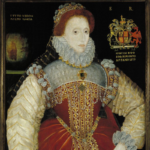
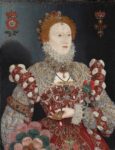
    Today we are doing another Tudor portraits and propaganda, and exploring one of the most captivating masterpieces of the Elizabethan era — the Pelican Portrait of Queen Elizabeth. This is a remarkable piece of art. It currently lives in the Walker Art Gallery in Liverpool and it is a testament to the grandeur and complexity of Elizabethan England and all of the propaganda that Elizabeth was such a master of using.

    It’s named for the distinctive Pelican pendant that Elizabeth is wearing symbolizing self-sacrifice and maternal care. This portrait is much more than a mere depiction. It is a mix of symbols and meanings that reflect the heart of Elizabeth’s reign. This portrait was painted around 1575 by Nicholas Hilliard, who of course was a famous portrait painter in Elizabeth’s c.ourt

    He was born around 1547. He was not just an artist but also a goldsmith by training. His unique style blended the meticulous detail of a jeweler with the grandeur of Tudor court. It’s one reason why he was so good at painting miniatures. He captured the essence of the era in each brush stroke. Even though he was renowned for his miniatures, he also excelled in larger portraits like this one where his skill in portraying regal splendor and intricate symbolism truly shines.

    So this was a time when Elizabeth who was around 42 was well established on her throne, like I said 1575, yet she was still navigating some complexities of her reign. Of course, her reign was marked by religious and political challenges. With Elizabeth skillfully steering England through the tumultuous waters of the Protestant Reformation and maintaining a delicate balance of power in Europe, the creation of the Pelican portrait during this period is particularly significant.

    It wasn’t just a royal commission. It was a political statement, a testament to Elizabeth’s resilience and her role as a benevolent almost divine leader of her nation. The portrait is rich in symbolism and regal bearing, reinforces her image as a powerful yet caring monarch akin to a mother nurturing her children and of course, her children were the English people.

    It was originally in Charlton house in Wiltshire. The portrait was a part of the collection of the Earls of Suffolk, of course a prominent noble family of the time. Its presence there speaks volumes about the prestige and reverence held for Elizabeth and her image.

    The Journey of this masterpiece from the halls of Charlton House to its current home in the Walker Art Gallery in Liverpool, mirrors the enduring legacy of Elizabeth’s reign. By the time that the portrait reached the art gallery in 1945 donated by E, Peter Jones, it had become not just an artifact of the past but a beacon of Elizabethan history offering viewers a window into an era of intrigue, power, and unparalleled royal splendor.

    The Pelican portrait is a labyrinth of symbols, each unfolding layers of Elizabeth’s identity and the perceptions she inspired as a monarch. Central to this, is the Pelican pendant, an emblem laden with deep meaning in Elizabethan symbolism. The pelican was revered for its maternal self-sacrifice believed to feed its young with its own blood. This emblem resonates with the portrayal of Elizabeth as the selfless mother of the nation, nurturing and protecting her subjects with a similar devotion.

    Equally symbolic are the pearls that Elizabeth is wearing. Shimmering with the glow of chastity, these pearls represented the Virgin Queen in a time when a monarch’s virtue was as significant as their lineage. These pearls were not just ornaments, but declarations of Elizabeth’s purity and moral fortitude.

    This is right at the height of her affair with Dudley, when Robert Dudley was getting ready to woo her for that two-week holiday at Kenilworth and wearing these also alongside with the two cherries near her ear, reinforce her status as the Virgin Queen. She’s saying I’m not getting married. I’m not having an affair with Dudley. I’m not secretly married, none of that. I am the Virgin Queen and I am the mother to the nation.

    The Tudor Rose and the fleur-de-lis within the portrait, carry their own weight in symbolism. The rose celebrates her dynasty, the unification of York and Lancaster. While the fleur-de-lis asserts her ancestral claim to the throne of France, a subtle nod to England’s historical ambitions.

    Above everything, a fringed canopy subtly suggests a throne room, placing Elizabeth not just in a space of regal Authority but also within a realm of divine right and celestial mandate. These symbols collectively weave a narrative of power, purity, and providence epitomizing the complex and multifaceted nature of Elizabeth’s reign.

    Hilliard’s style was characterized by intricate detail and a rich pallet and brought in almost ethereal quality to Elizabeth’s portrayal. Unlike his renowned miniatures which are marvels of precision, larger canvas allowed Hilliard to lavish attention on a grander scale of opulence and symbolism. Hillard’s skill in balancing realism with symbolism sets the Pelican Portrait apart from his miniatures. While the Miniatures focus on intimate details and facial expression, this portrait encapsulates the grandeur of Elizabeth’s reign, her royal majesty and the symbolic depth of her public image.

    In this, Hilliard transcends the boundaries of traditional portraiture, creating a piece that is as much a political statement as it is an artistic masterpiece. So the prominence of the painting starts with a story from the Howard family which claimed that the portrait was a personal gift from Elizabeth herself. This narrative adds a romantic hue to the prominence but there’s a lack of concrete evidence that lends an air of mystery to its origins.

    By 1945 it was donated to the Walker Art Gallery in Liverpool. It had been in the possession of the Earls of Suffolk, a lineage steeped in nobility and close to the Tudor court. So there we have it the Pelican Portrait is not just a visual feast, it’s a historical document that played a pivotal role in shaping the public image of Elizabeth.

    In this masterpiece, Nicholas Hillard masterfully blended realism with rich symbolism creating a portrait that was more than a likeness, it was a narrative. This portrait encapsulated Elizabeth’s persona as the Virgin Queen, a wise ruler, and a maternal figure to her nation, embedding these roles in the public consciousness. Hilliard’s work, especially this portrait, mirrors the Elizabethan era’s complexities, its Intrigue, its opulence, and its political subtleties.  

  • Unveiling the Mysteries of the Sieve Portrait: Elizabeth I’s Tudor Legacy Explored

    Unveiling the Mysteries of the Sieve Portrait: Elizabeth I’s Tudor Legacy Explored


    Today we are doing a Tudor portrait and propaganda episode and we’re looking at the portrait of Elizabeth I. There are actually a couple of portraits where Elizabeth is holding a sieve. So in this video, we are going to look at the George Gower one. It is in the Folger Shakespeare Library today. This portrait is a masterpiece of Renaissance Art, a testament to the intricate interplay of symbolism, politics, and personal Image during Elizabeth I’s reign.

    Let’s explore the layers of meaning in the painting, the artistic genius behind it, and its role in shaping the legacy of one of England’s most iconic monarchs.

    At he heart of this portrait lies the sieve, an object rich in allegorical significance. Its connection to the Roman vestal virgin Tuccia is a clever nod to Elizabeth’s self-styled image as the Virgin Queen. Also I just have to say,  here’s another example of Elizabethan bringing up Rome in their portraits. We did that video the other day of how the Tudors and Elizabethans saw the Roman Empire, how often they thought about the Roman Empire here is yet one more example.

    So the priestesses of Vestals, the Vestal Virgins were the Roman goddesses of the Hearth. They were required to remain chaste, when the Priestess Tuccia was accused of breaking this requirement. She apparently proved her virginity by carrying water in and without spilling a drop. Not sure how that works but it apparently proved her virginity, and so that is an imagery that people looking at this portrait would have been familiar with.

    By aligning herself with Tuccia, Elizabeth cleverly sidestepped the traditional expectations of marriage and succession, of course asserting her independence and her authority as a ruler in her own right. Some historians say that the Queen specifically intended the association with Tuccia with herself because of rumors going around of her unchastity.

    This was over a decade after Amy Robsart died. It’s also a year after Dudley had married someone else, but there were rumors persisting with all of these paramour that Elizabeth had.  I did a video a couple months ago on all of the different men that courted Elizabeth.

    She wanted to have that sieve as an association that she actually was quite chaste. Also, there’s an inscription on the rim of the sieve which is a nod to the Queen’s discernment. Of course, the sieve separates out the good from the bad, so this is saying that Elizabeth is able to discern the good from the bad in her country, and ensure that of course only the good reaches her country.
     
    There is a globe depicted behind the Queen. This isn’t just a backdrop it’s a powerful symbol of the era’s spirit of exploration and conquest. The inscription “TVTTO VEDO ET MOLTO MANCHA” highlights Elizabeth’s global awareness and ambition. It speaks volumes about the Queen’s vision for England’s role on the world stage. It subtly communicates her intentions to expand her realm and influence reflecting the burgeoning spirit of the Elizabethan age.

    George Gower’s artistic prowess is evident in every brushstroke of this portrait. His ability to blend realism with idealization, creates an image of Elizabeth that is both authentic and larger than life. The influence of the Darnley portrait is apparent in the Queen’s posture and attire, yet Gower’s rendition is unique in its integration of symbolism and detail.

    The opulent dress adorned with gold and silver and the elaborate headdress are not just fashion statements but visual assertions of royal power and wealth. This portrait was painted during a significant period in Elizabeth’s reign. She was about 46 years old. She was firmly established on the throne yet her most iconic moments were still to come.

    We still have the Armada to come which is one of the most famous of course episodes in Elizabeth’s life. We’re also still about eight years away from the execution of Mary Queen of Scots. By 1579 she still had not had those iconic kind of pivotal moments yet.

    So the Sieve Portrait captures a moment of transition from a queen consolidating her power to one who would become a legendary figure in British history in Tudor England. Portraiture was a powerful medium for propaganda. Every element in this painting, from the placement of the royal coat of arms to the Latin and Italian inscriptions was meticulously chosen to convey specific messages about the Queen’s virtue, wisdom, and divine right to rule.

    This portrait is a masterclass in visual rhetoric using symbolism and allegory to reinforce Elizabeth’s image as a monarch of unparalleled wisdom and virtue. The journey of the Sieve Portrait to the Folger Shakespeare Library is a tale in and of itself. It was acquired by George Arthur Plimpton and later bequeathed to the library. This painting not only reflects the tastes and interests of its collectors but also the changing perceptions of Elizabeth over the centuries.

    George Arthur Plimpton had acquired the painting by around 1930 and then his son Francis Plimpton inherited it when George died in 1936, and then it was the younger Plimpton who bequeathed the work to the Folger Shakespeare Library.

    The artist George Gower was born in Yorkshire around 1540 and died around 1596 in London. By 1573 he was working in London, he was working as a Portrait Painter and he painted people like Sir Thomas Kitson and his wife Elizabeth both in 1573. And then Elizabeth Knollys in 1576.

    In 1571, he was actually appointed Elizabeth’s Sergeant painter for life. So after that, George Gower and Nicholas Hilliard tried to streamline production of images of Elizabeth so that their production was exclusive to just Hilliard and Gower. Sadly for Gower, this attempt failed. No images of the queen credited to Gower during his lifetime exist anymore. The attribution for this painting was actually done by art historians by Roy Strong based on the stylistic grounds.

    So there you have it, a deep dive into the 1579 Sieve Portrait of Elizabeth. Not just a painting, it’s a historical document that offers invaluable insights into the art politics and culture of the Elizabethan era. As we unravel its layers, we gain deeper understanding of how Elizabeth skillfully crafted her image and how artists like George Gower played a crucial role in immortalizing her legacy. Check it out at the website of the Folger Shakespeare Library.

    Related link:
    Tudor Portraits and Propaganda
     
     
  • Helena Snakenborg: The Swedish Noblewoman Who Conquered Elizabethan England

    Helena Snakenborg: The Swedish Noblewoman Who Conquered Elizabethan England


    Today, we are going to be talking about Helena Snakenborg, who was a lady-in-waiting to Elizabeth I. She actually came over with the Swedish Princess Cecilia Vasa, who I did a whole podcast episode on several weeks ago, so I will link to that in the show notes for you to listen fully. She’s a fascinating woman who became part of the inner circle for Elizabeth I.
     
    In the annals of Elizabethan England, few figures captivate the imagination like Helena Snakenborg, Marchioness of Northampton. Born in Sweden in the mid-16th century, Helena’s life reads like a tapestry woven with threads of intrigue, romance, and political savvy. We’re going to talk about the remarkable journey of Helena from her early life in Sweden to becoming a prominent figure at the court of Elizabeth I.

    As lady-in-waiting to one of history’s most iconic monarchs, Helena not only witnessed but also played a major role in the grandeur and machinations of the Elizabethan era. Her story is a fascinating exploration of cross-cultural interactions, personal ambition, and the intricate social dynamics of the English royal court.

    Helena’s story begins in the province of Östergötland, Sweden, where she was born as Elin Ulfsdotter into the noble Bååt and Lillie af Ökna families. Her early life in Sweden was marked by a privileged upbringing, grounded in the traditions and politics of Swedish nobility. Her father was a supporter of King Gustav I of Sweden, and he ensured that his daughter was well-educated and prepared for life befitting her status.
     
    The turning point in Helena’s life came with her involvement in the retinue of Princess Cecilia Vasa of Sweden. In the autumn of 1564, Helena, along with five other Swedish noblewomen, embarked on an arduous journey to England. This voyage was actually intended to strengthen diplomatic ties, and possibly, Cecilia was going to kind of speak on behalf of her brother, who was courting Elizabeth I. So, kind of going back and forth on the idea of a royal marriage between Elizabeth I and Cecilia’s half-brother, King Eric of Sweden, and this journey was fraught with challenges.

    The hostility between Denmark, Norway, and Sweden forced them to take a lengthy and perilous land route through Finland, Livonia, Poland, and Germany. Upon their arrival in Dover in September 1565, Helena and her retinue were greeted by the English nobility, including the influential Sir William Parr, Marquess of Northampton. This marked Helena’s first foray into English society, a world vastly different than her native Sweden.

    Her transition from a Swedish noblewoman to a figure of significance in the English court began here, laying the foundation for her future as a respected lady-in-waiting to Queen Elizabeth and Marchioness Helena would have been spending this time that Cecilia was visiting as part of the retinue, and the primary objective did not actually materialize. You can listen to my episode on Cecilia for all the details about that visit. But it was successful in terms of diplomacy and cultural exchange. There were a lot of festivities. There were a lot of receptions illustrating the cordial relations between England and Sweden.

    Cecilia decided to return to Sweden in 1566. She had run up a lot of debts. It was time to go home. But Helena was still intrigued by life at the English court, and she was drawn to the opportunities that it presented, and she chose to stay behind. Her decision was influenced by her growing attachment to England and the prospects of a more advantageous position at court. Her charm and intelligence soon caught the attention of Elizabeth I leading to her appointment as the lady-in-waiting.

    This not only elevated Helena’s status, but also placed her in close proximity to the Queen, allowing her to establish herself as a significant figure in the Elizabethan court. She was a gentle woman who was responsible for overseeing many of the private aspects of the Queen’s life, which required utmost trust and loyalty. Her relationship with Elizabeth was one of mutual respect. Some accounts suggest a lot of personal fondness.

    Her loyalty and service to the Queen did not go unnoticed. She was often entrusted with significant responsibilities and privileges. Besides her interactions with the Queen, Helena also established connections with other prominent figures at court. Navigating the complex web of alliances and rivalries that characterize the Elizabethan era.

    The most significant turn in her life at the Elizabethan court came with her courtship and eventual marriage to William Parr, Marquess of Northampton. He was, of course, also Katherine Parr‘s brother. He was impressed by Helena’s charm and intellect, pursued her ardently. However, their path to matrimony was not without obstacles.

    Parr was previously married and then divorced. They faced the challenge of the Church of England’s stance on remarriage, which did not permit a subsequent marriage when the previous spouse was still alive. She did marry William Parr in May of 1571, and that was a milestone that elevated her status significantly. The ceremony was actually held in the presence of Elizabeth I. It was a testament to the Queen’s approval and Helena’s esteemed position at court.

    As the Marchioness of Northampton, Helena enjoyed a life of luxury and influence. She divided her time between the couple’s residences in Guilford, Surrey, and Stansted Hall in Essex, participating actively in the social and political life of the nobility. Tragically, their marriage was incredibly short-lived. William Parr passed away in October of 1571. After only five months, leaving Helena a widow.

    Despite the brief duration of their marriage, she gained a substantial dower and maintained the title of Marchioness for the rest of her life. She was thrust into widowhood and faced not only the personal grief of losing her husband, but also the challenge of maintaining her status and influence at court.

    Then, five years later, around 1576, her life took another dramatic turn with a secret marriage, which is never a good thing when it comes to Elizabeth I’s ladies-in-waiting, to a Thomas Gorges. He was a courtier and groom of the chamber, and a distant relative of Elizabeth, being a second cousin of Anne Boleyn. This clandestine union initially led to a scandal at court, resulting in Helena’s temporary exclusion and Gorges brief imprisonment. Their marriage was seen as a breach of court protocol, especially given Helena’s elevated status as a Marchioness, and it challenged the social norms and expectations of Elizabethan England.

    Despite these initial setbacks, Helena’s marriage to Gorges proved to be both fruitful and significant. They had eight children, and their family life was marked by both affection and ambition. It seems like it was a love match. They resided at their London townhouse at Whitefriars, and later at Longford Castle in Wiltshire. The reconstruction of Longford Castle, which had been damaged by fire before Gorges had acquired it, became a symbol of their status and their wealth. Completed under the supervision of the architect John Thorpe, the castle was a testament to their restored favor and success.

    There is actually a letter that still survives that was written by Helena to Thomas Radcliffe, the Earl of Sussex. It’s written during the fallout of the secret marriage to Thomas Gorges, and it’s a fascinating artifact that demonstrates her mastery of Elizabethan letter-writing conventions and her strategic thinking.

    In her letter, she eloquently articulated her plight, combining emotional appeal with a well-structured argument. She skillfully employed the rhetoric of supplication, a common practice in seeking favor or redress in Elizabethan court politics. The letter’s tone was one of humility and deference. Yet it cleverly underscored her plight and the injustice of the situation. This balance between emotion and decorum highlights Helena’s understanding of the nuanced dynamics of courtly communication and influence.

    Remember, she was Swedish. She’d been living in England for a decade and a little bit at this point, so it’s pretty amazing. I lived for seven years in a foreign country, and I never got to the point where I would have been able to do something like that, so it just goes to show how adaptable she was and how strategic she could think. The content of the letter reflected her immediate need to regain Queen Elizabeth’s favor following her secret marriage, and it appealed to Sussex’s sense of duty and honor, urging him to intercede on her behalf. Remarkably, her strategic appeal was successful.

    She was eventually reinstated to court, a clear indication that her persuasive skills and the respect she commanded among the nobility were working. It not only underscored her resilience, but also her astute understanding of the politics and social etiquettes of her adopted country.

    The life of Helena Snakenborg, Marchioness of Northampton is a remarkable tale of resilience, adaptability, and astuteness in the face of the complexities of Elizabethan England. From her beginnings as a young Swedish noblewoman to becoming a pivotal figure in the court of Elizabeth I, her journey is emblematic of the era’s intricate social and political landscape. Her marriage to Thomas Gorges, though initially scandalous, ultimately exemplified her ability to navigate and influence the highest circles of English society.

    So there you go, a little intro to Helena Snakenburg. I’m thinking that I will do a whole episode, a really more in-depth episode about her at some point. If you think that would be interesting, leave me a comment and let me know and I will work that into the schedule.
     
     
  • Elizabeth I Rainbow Portrait: Deep Dive

    Elizabeth I Rainbow Portrait: Deep Dive

    One of last week’s YouTube videos we did a deep dive into Elizabeth I’s Rainbow Portrait (do you subscribe to me on YouTube? If not, Tudorfy your YouTube algorithm and do it now!) Here’s the video, and the rough transcript.

    Related episodes:
    Tudor Portraits and Propaganda, December 2015
    Tudor Summit 2017: Roland Hui on Tudor Portraits

    Rough Transcript of the deep dive into Elizabeth I’s Rainbow Portrait

    hello and welcome to the YouTube channel for the Renaissance English History Podcast today we are looking at another tutor portrait this time it’s the rainbow portrait of Elizabeth the first which is of course filled with symbols and meanings Galore first if you are new here very special warm welcome to you my name is Heather I have been podcasting on tutor England since 2009. this channel right here is where I put all of my old podcast episodes as well as loads of special content just like this video right here

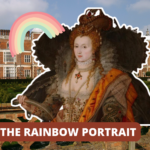
    So let’s talk about Elizabeth the first rainbow portrait shall we – this portrait attributed to Isaac Oliver or some people also say Marcus gerhart’s the younger either way it’s a half life-sized canvas woven with symbols and meanings painting Elizabeth not only as a queen but as an immortal entity a beacon of prosperity for England the Majesty of Hatfield house today houses this intriguing portrait amidst a vast collection of paintings and furniture and tapestries the rainbow portrait tells a story far beyond its brush Strokes it isn’t just an image it’s a piece of Elizabethan propaganda a testament to the era’s intricate web of Cipher’s symbolism and secret meanings

    The purpose of the portrait was to present an ageless and divine Elizabeth a significant departure from reality given that the queen when this was painted around 1600 was close to 70 years old yet here she stands radiant and Timeless defying the grip of age and mortality the symbolism is undeniable the rainbow held delicately in her right hand isn’t just a Marvel of nature accompanied by the Latin motto non-sinai Soleil Iris the queen becomes the sun suggesting that without her England would lack its golden age of peace and stability her attire further dives into the symbolism.

    There’s a mix of English wildflowers and exotic creatures and it paints a picture of an Empire vast and diverse and the eyes and the ears they tell the story of a queen who misses nothing who sees everything a testament to her omniscience and her spy Network this could also be an allusion to the numerous rebellions schemes and conspiracies that had been quashed or circumvented throughout her life.

    The jeweled serpent on her sleeve represents Elizabeth shrewdness and wisdom some people also say that these folds are mouths of the folds in her dress here are mouths which also of course would allude to her spy Network into the fact that people are speaking to her she sees everything and she hears everything and of course her crown is Rich with pearls. This reiterates the idea of her choice of a life without marriage being dedicated solely to her kingdom Elizabeth’s hair and ears glistened with precious gems a testament to her renowned sense of fashion.

    Records from 1587 show that she possessed a staggering 628 pieces of jewelry and upon her demise over 2 000 gowns were noted in her royal collection yet her extravagant attire was not merely a reflection of her Flair for fashion the 16th century was marked by strict dress codes these laws served as visual markers delineating social status and fostering order all the while ensuring unwavering allegiance to the crown one of the most lasting themes present in Elizabeth’s portraits is the subtle yet poignant portrayal of hers the Virgin Queen

    This theme is vividly showcased in the rainbow portrait with pearls adorning her person’s stand as symbols of Purity the intricately knotted necklace underscores her virginity and while Elizabeth’s status as the Virgin Queen is emphasized with pearls and the Luminosity of her complexion it’s intriguing to consider the challenge that this posed in an age where women were still seen as inferior highlighting Elizabeth’s femininity was a bold statement yet this portrait masterfully creates an image of strength Purity and unwavering leadership.

    The fairy queen by Edmund Spencer published in 1590 may have influenced this portrayal Elizabeth’s ethereal Aura may have been inspired by this allegorical work celebrating her reign with every detail in the rainbow portrait from the fiery orange clove adorned with the human eyes and ears and potentially mouths to the jeweled serpent The Narrative is clear Elizabeth is omnipresent omniscient and eternal it’s more than a portrait it’s a proclamation of her enduring Legacy a promise of England’s Golden Age under her role

    So we’ll stop there thank you so much for watching if you have made it to the end of this video and enjoyed it I hope I have earned your subscription to my channel and a press of that like button I put out videos like this almost every day and who doesn’t want their YouTube algorithm tutor fight am I right thanks so much for watching um I appreciate you don’t forget to drink your water and I will be back again tomorrow

  • Tudor Minute March 24, 1603: Elizabeth I died

    Tudor Minute March 24, 1603: Elizabeth I died

    Today in 1603 Elizabeth I died in Richmond Palace. She was 69 years old, and ruled for 44 years. 

    Sir Robert Carey, the grandson of Mary Boleyn (and so a cousin of Elizabeth) wrote of Elizabeth’s last days:

    “On Wednesday, the 23d of March, she grew speechless. That afternoon, by signs, she called for her council, and by putting her hand to her head, when the king so Scots was named to succeed her, they all knew he was the man she desired should reign after her. About six at night she made signs for Archbishop Whitgift and her chaplains to come to her, at which time I went in with them, and sat upon my knees full of tears to see that heavy sight. Her Majesty lay upon her back, with one hand in the bed, and the other without. The bishop kneeled down by her, and examined her first of her faith; and she so punctually answered all his several questions, by lifting up her eyes, and holding up her hand, as it was a comfort to all the beholders. Then the good man told her plainly what she was, and what she was to come to; and though she had been long a great Queen here upon earth, yet shortly she was to yield an account of her stewardship to the King of kings. After this he began to pray, and all that were by did answer him. After he had continued long in prayer, till the old man’s knees were weary, he blessed her, and meant to rise and leave her. The Queen made a sign with her hand. My sister Scroop knowing her meaning, told the bishop the Queen desired he would pray still. He did so for a long half hour more, with earnest cries to God for her soul’s health, which he uttered with that fervency of spirit, as the Queen, to all our sight, much rejoiced thereat, and gave testimony to us all of her Christian and comfortable end. By this time it grew late, and every one departed, all but her women that attended her.”

    That’s your Tudor Minute for today. Remember you can dive deeper into life in 16th century England through the Renaissance English History Podcast at englandcast.com.

    Suggested links:
    The Birth of Elizabeth I
    Spring 2019 Tudor Summit: Dr. Estelle Paranque on Elizabeth I Through Foreign Eyes

    Check out the Top Ten Tudor Women Episodes you might have missed.

    Looking for your next Tudor read? Here’s a list of Tudor Book Recommendations.
    Is your favorite book not on the list? Submit it here!

  • Tudor Minute February 3, 1587: Mary Queen of Scots’ death warrant

    Tudor Minute February 3, 1587: Mary Queen of Scots’ death warrant

    Today in 1587 Elizabeth I’s privy council met at William Cecil’s rooms in Greenwich and decided to send Mary Queen of Scots’ death warrant, signed by Elizabeth, to Fotheringhay.

    The Earls of Shrewsbury and Kent agreed to oversee the execution, and everyone decided to keep it a secret from Elizabeth until it was done. On February 1 Elizabeth had signed the death warrant and given it to her secretary, William Davison. She claimed that she had told him to keep the warrant until she had given her permission for him to share it. But he said that Elizabeth specifically said that she wanted the execution to take place as soon as possible because he was worried about plots to rescue her. The Privy Council decided to act before Elizabeth could change her mind. 

    That’s your Tudor Minute for today. Remember you can dive deeper into life in 16th-century England through the Renaissance English History Podcast at englandcast.com.

    Suggested links:
    Mary Queen of Scots’ Cipher, and the art of hiding messages
    Episode 085: Tudor Times on Mary Queen of Scots
    Episode 29: Mary Queen of Scots
    Mary Queen of Scots: Mermaid

  • Tudor Minute January 26, 1554: Mary I summoned Elizabeth

    Tudor Minute January 26, 1554: Mary I summoned Elizabeth

    Today in 1554 Mary I wrote a letter to her half-sister Princess Elizabeth, summoning her to court. She had been tipped off about Wyatt’s Rebellion, and suspected that Elizabeth had been involved. The letter didn’t directly threaten Elizabeth, but it did make clear that for her own protection she should come to court in case the rebellion spread.

    Elizabeth responded in a letter saying, “Although by neglect of my duty, most noble Queen, I might incur blame for not having sent your Highness any news of my doings since I left your Court, yet I trust that your Grace, of your noble nature and inclination, will excuse me and attribute this shortcoming to its true causes. I have been troubled, since my arrival at my house, with such a cold and headache that I have never felt their like, and especially during the last three weeks I have had no respite because of the pain in my head and also in my arms.” The royal physicians were dispatched to make sure Elizabeth wasn’t faking it, and reported that she was indeed sick.

    Of course this rebellion would wind up being the undoing of Lady Jane Grey, to whom Mary wanted to show leniency. It also led Elizabeth to spend time in the Tower while Mary sorted out whether or not she was involved.

    That’s your Tudor Minute for today. Remember you can dive deeper into life in 16th-century England through the Renaissance English History Podcast at englandcast.com.

    Suggested links:
    Episode 089: Edward and Mary and Religious Whiplash
    Episode 23 Mary Tudor (Mary I)
    Spring 2018 Tudor Summit: Tudor Rebellions

    From the shop:
    Valentine’s Day collection
    Featuring: “Build a Crown” birthstone sterling silver necklace.
    Note. All products are made on-demand and can take a few weeks to ship.

  • Tudor Minute January 14: A Coronation Procession and a Love Story

    Tudor Minute January 14: A Coronation Procession and a Love Story

    Today in 1559 Elizabeth I left the Tower for Westminster where she would be crowned Queen in a litter covered with cloth of gold. An apocryphal story is that as she passed the Tower Menagerie, she praised God that he had delivered her from the lion’s den as he had also delivered Daniel. Along the way she was met with five pageants extolling her lineage, and Tudor inheritance, and her role as the keeper of the true religion in England.

    Another important event that happened today was half a century earlier when Charles Brandon was sent to France to collect Henry VIII’s sister Mary, who was the Dowager Queen of France. Of course, this would go down in history when Charles and Mary got married in secret, one of the most memorable and romantic scandals of the Tudor period.

    That’s your Tudor Minute for today. Remember you can dive deeper into life in 16th-century England through the Renaissance English History Podcast at englandcast.com.

    Suggested links:
    Episode 112: The Tower Menagerie
    Episode 115: A chat with Tony Riches on Charles Brandon
    Episode 108: Mary Tudor, Queen of France

    From the shop:
    Mary Tudor Tudor Women Charm Necklace
    Note: All products are made on-demand and can take a few weeks to ship.

    Mary Queen of France merch
  • Tudor Minute November 23, 1558: Elizabeth I left Hatfield House

    Tudor Minute November 23, 1558: Elizabeth I left Hatfield House

    Today in 1558 Elizabeth I left Hatfield House, where she had been living as Princess, on her way to London, traveling as Queen. Her train of followers was nearly 1000 people, and she processed through Hertfordshire, being met in Barnet by the Sheriff of London who rode with her down the Great North Road, through Highgate, which was just a tiny village then, to the City. Random Fun Fact: When I first moved to London, I lived in Barnet. It’s the last stop on the Northern Line, just after a stop that has the most quintessentially British name, Totteridge and Whetstone. Anyway, I digress.

    Elizabeth had no trouble in claiming the throne. There were no other claimants, and the City was tired of the burnings of Mary, and were ready for a fresh start. The City responded in a way that has been described as rapturous.

    That’s your Tudor Minute for today. Remember you can dive deeper into life in 16th century England through the Renaissance English History Podcast at englandcast.com.

    Suggested links:
    Spring 2019 Tudor Summit: Dr. Estelle Paranque on Elizabeth I Through Foreign Eyes
    Episode 23 Mary Tudor (Mary I)

    From the shop:
    Celebrations of Elizabeth I Collection
    Featuring: Elizabeth I Tudor Thug Life Shirt
    Ps. All products are made on-demand and can take a few weeks to ship.

    Elizabeth I Tudor Thug Life Shirt
  • Tudor Minute October 10, 1562: Elizabeth I contracted smallpox

    Tudor Minute October 10, 1562: Elizabeth I contracted smallpox

    Today in 1562, 29-year-old Elizabeth I got a bad cold. It was actually smallpox. At first she didn’t believe that she could actually get smallpox, which was a highly contagious and very often deadly disease which could cause disfigurement, and still has no cure or treatment. She did not believe that Her Majesty could get an illness like this, and I highly suggest you check out the scene from Elizabeth R which showed how she was so angry at her doctors for implying that she could get such a disease. After that, she became so ill that she couldn’t speak, and there was real concern that she would die, and worry about the succession. For a week she battled a very high fever, and it seemed that she would not live.  

    At the time, her heir was Mary Queen of Scots, who was Catholic, and British Protestants were fearful of what would happen if a Catholic came to the throne after their recent experience with Elizabeth’s sister Mary. Under the terms of Henry VIII’s will, her second cousin Katherine Grey – who was the sister of Lady Jane Grey who had lost her life after the rebellion against Mary – could claim to the throne. But it was a tenuous claim, and Mary Queen of Scots’ was clearly a more direct line.

    Fortunately, Elizabeth survived, so there was no need to worry. But those who cared for her did become ill, one of which was Mary Dudley, the sister of Robert Dudley, Elizabeth’s soulmate. She also survived, but her face was left badly marked.

    That’s your Tudor Minute for today. Remember you can dive deeper into life in 16th century England through the Renaissance English History Podcast at englandcast.com.

    Suggested link:
    Seamus O’Calleigh talking Tudor Medicine at the Tudor Summit

    From the Shop:
    Elizabeth I Thug Life Tshirt
    “They said I was illegitimate. I sank their Armada…”
    Ps. All products are made on-demand and can take a few weeks to ship.