Henry VIII

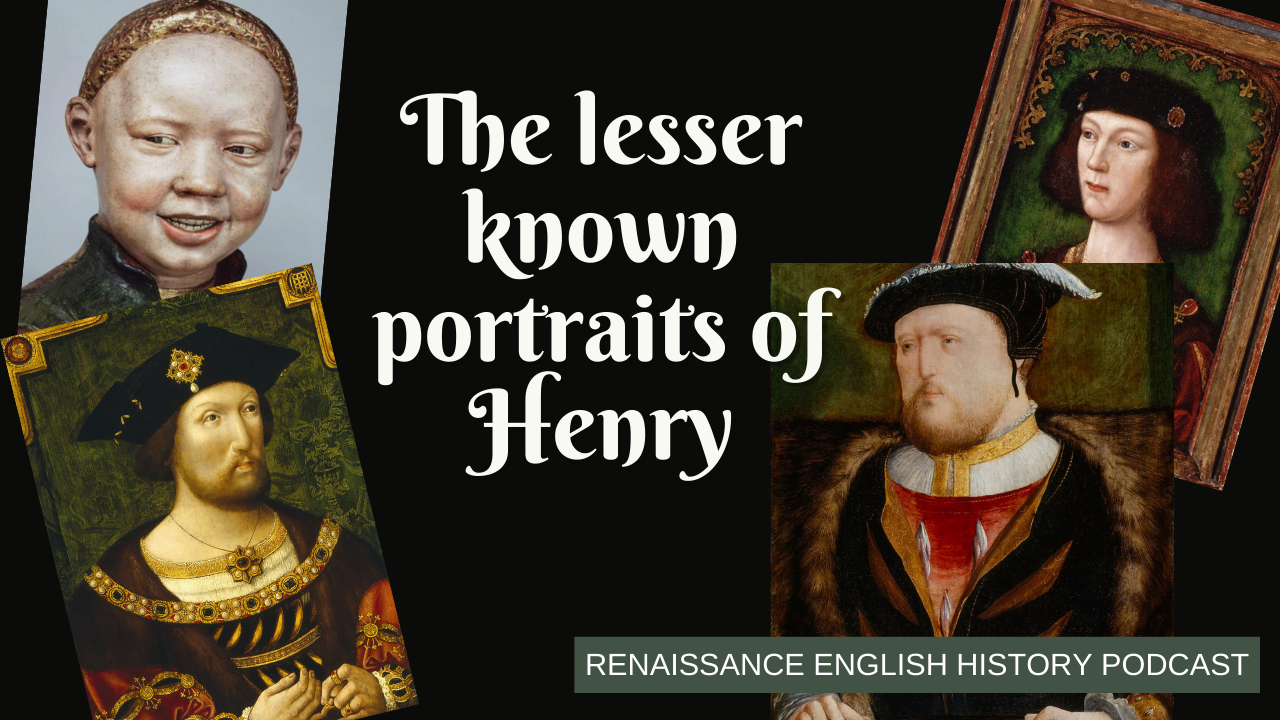
  • Lesser known Portraits of Henry VIII

    Lesser known Portraits of Henry VIII

    We all remember Holbein’s famous paintings, but there were other painters working beyond Holbein. Let’s take a look at some of the lesser known portraits of Henry VIII.

    Watch the video, or read a rough transcript below.

    Hey, welcome back to the YouTube channel for the Renaissance English History Podcast. I am your host, Heather. I’ve been podcasting on Tudor England since 2009 with my show, the original Tudor History Podcast.

    This channel is where I put all of my episodes from all of my different shows, as well as lots of extra content like this video right here. Today we are going to talk about some of the lesser known portraits of Henry VIII. So there’s like the famous ones, the Whitehall one, the one, the portrait of Henry with his family.

    There’s, you know, like four or five super famous, well known portraits of Henry. We’re going to look today at some of those. paintings, portraits of Henry from when he was younger, as well as some of the lesser known ones. But first, if you want to see more Tudor history in your YouTube feed, why not go ahead and hit subscribe right now so you never miss a video that I put out.

    Alright, let’s get started with the one image that we have of Henry as a child. This is an illuminated manuscript that was given to Henry VII around 1503 1504, and this is the cover of it, or the cover page, and we see Henry receiving the illuminated manuscript, but look in the left hand side.

    There are three children, so that would be Margaret and Mary, and then there on the top you see some red hair, That is young Henry. This was when the family was mourning the death of Elizabeth of York and So this was showing them kind of in mourning and Henry is actually kind of clutching His mother’s bedclothes and sheets, which is very very tragic This is you know an early image of Henry showing Uh, his emotions as a young boy, which I think it’s really quite poignant that, you know, his sisters are together kind of supporting each other.

    And then there’s Henry off to the side, just kind of crying in his mother’s bedclothes. Of course, he was very, very close to his mother, so her death would have hit him hard and did hit him hard.

    Now this is The Bust of a Boy by Guido Mazzoni, and Guido Mazzoni died around 1518. , this is a life size painted and gilded terracotta bust of a young boy laughing with his head turned three quarters to the left. It has been at sometimes thought to be a laughing girl or an elf.

    Or, a young Henry VIII, Prince Henry, when he was seven years old. Its identification as Henry is still a conjecture,

    Its provenance is through the royal family, so it had belonged to the crown, so that is why people think that it was a young Henry VIII. when he was about seven. And Mazzoni had been in London during that time. So, you know, who knows, but I think it’s an interesting thing to, to see Henry having this expression.

    It kind of looks like the young Henry that we imagined. It’s kind of hamming it up, um, quite outgoing. You know, you hear the story about how he was dancing at his brother’s wedding, at Arthur’s wedding. And so I don’t know, I, I like it. I, I’m going to say it is, but it’s conjecture at this point.

    the next one we’re going to look at is this. This is Henry in 1509. So this was right around the time that he became king. He would have been about 18 years old here.

    And this is Henry. in his prime. This was when he married Catherine. This was when he became king, started to really step into his own and become a man. Look at his rings. Look at these jewels around his neck and holding his cloak together. Look at the fur. It’s just really, really stunning.

    So yeah, you don’t really get much of a hint of the tyrant that he would become. This was right when he first became king, young teenager, young teenaged Henry. Now this is Henry as King. This is from about 1520. It’s by an unknown artist in the Netherlands and it lives in the National Portrait Gallery now.

    In the top you can see the Tudor Rose and the Beaufort Portcullis. Just look at him, look at those clothes, look at the backdrop. This is when he was about 30 ish years old, so he was still married to Catherine. He had um, Princess Mary at this point. He hadn’t yet started his affair with Anne Boleyn.

    This would have been him around the time of the Field of Cloth of Gold as well, right around that time.

    And then we’re going to look at two more of Henry, still young. This would have been in his Anne Boleyn stage. Both of these are between 1335 and 1340. They’re both Anglo Netherland artists and they live in the National Portrait Gallery.

    So Henry is starting to bulk up, bulk up, I guess, here by this point. And he is starting to look more like the familiar Henry that we know from the later portraits. This would have been right during his period of executing Anne Boleyn between 1535 and 1540. So executing Anne Boleyn, marrying Jane Seymour, and then eventually Anne of Cleves.

    This is what he would have looked like during that period. I

    think it’s interesting that he still has that kind of medieval hairstyle that he had when he was younger in the 1509 portrait. At least in this painting, I don’t know about in here because his head is covered.

    Of course Holbein, the Holbein images are the most famous ones that we have of Henry, but there were many other artists who painted the King’s portrait before Holbein even came to England, obviously.

    So there you have it. Some of the lesser known portraits of Henry through the years. It’s a little bit shorter of a video today than normal because I had to go to the post office to ship out the first 200 Tudor planners. Like this is the Tudor planner. You can get them on my shop now, uh, at Tudorfair.

    com. I’ll put a link, but this is the 2025 one. You can see it’s a beautiful, beautiful book that looks like an illuminated manuscript. And then inside, this is the weekly layout. You can see there’s like this week in Tudor history, all of that. So it looks historic. And then this is the monthly layout.

    There’s quotes. There’s a Spotify playlist so that you can listen to music while you’re planning. Um, monthly events, all that kind of stuff. Lots of note pages in the back. Ooh, and stickers. Look at these fun stickers. So you can get this at TutorFair. com and I do an Indiegogo every year to pay for the printing costs because I self publish it.

    So I do a crowdfunding every year to pay for the printing costs. So the early people who got theirs, I just shipped the first 200 out and I’m going to ship the next 200 out in a couple more days. Um, and so I was at the post office this morning. I got my cardio in and my strength in. lugging boxes of these into the post office.

    Super fun. I love this time of year. It’s planner time of year. And, uh, anyway, so it’s a little short, little more of a short video than normal, but I think it’s kind of fun to look at these images of Henry before the, uh, the super famous ones that we know of now.

    Huh? So, yay. Thanks for watching you guys. If you made it to the end of this video and you enjoyed it, I sure would appreciate a press of that like button. It helps to feed the algorithm and get our content to even more people. I hope I earned your subscription to my channel where I put out videos like this on the regular.

    If you want to keep binging Tudor content, here’s a Portraits and Propaganda video I did recently, and here’s a video that YouTube thinks you will enjoy.

    Thanks so much for watching. You are deeply loved. I’m so glad I share the planet with you. And don’t forget to drink your water. I have a super festive water cup. I just got it this weekend at Michael’s. It’s so festive. I love it. I love it. It makes me so happy. You have an amazing day. Bye.

  • The Weddings of Henry VIII

    The Weddings of Henry VIII

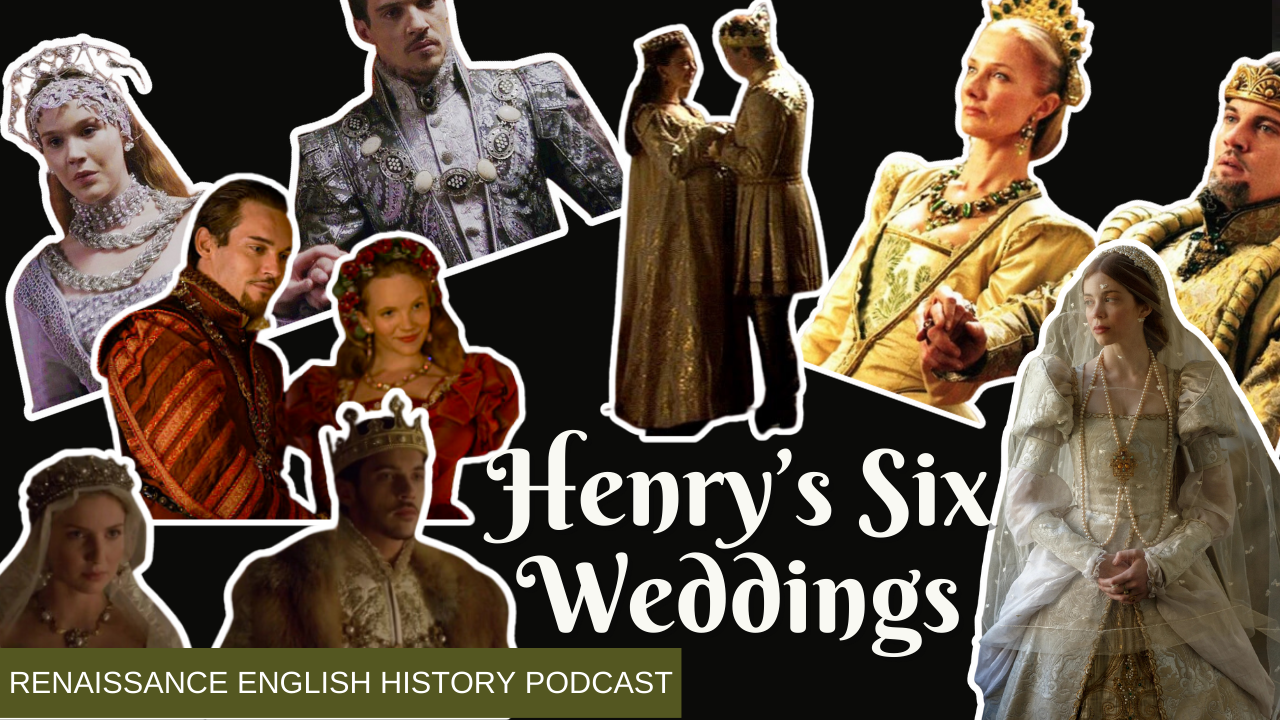
    Henry VIII had six wives. Which means he had six weddings. What were those weddings like? Let’s dig into it and see in today’s YouTube video on the Six Weddings of Henry VIII.

    Hey friend, welcome to the YouTube channel for the Renaissance English History Podcast. I am your host, Heather. I’ve been podcasting on Tudor England since 2009 with my show, the Original Tudor History Podcast. This channel is where I put all of my episodes from all of my shows, as well as lots of extra content like this video right here.

    Today we are going to talk about the many weddings of Henry VIII. So of course, Henry had six wives. Which means he also had six weddings. So we are going to talk about each of those weddings and, you know, what it was like. I wonder, do you think he ever got bored with getting married after six times? Do you think he thought there was anything special?

    Or was it just kind of like going through the motions? I wonder. Anyway, if you would like to see more Tudor history in your YouTube feed, go ahead and hit subscribe right now so you never miss a video I put out. All right, let’s start with Catherine of Aragon, the chivalric gesture. In early June 1509, young King Henry approached his first marriage with a sense of chivalric duty, casting himself as Catherine of Aragon’s protector and savior.

    Catherine, the Spanish princess who had once been married to Henry’s older brother Arthur, had faced years of uncertainty in England after Arthur’s death. Henry’s decision to marry her felt as much like a knightly quest as a political alliance.

    In a private, almost romantic moment, Henry arrived alone at Catherine’s apartment in Greenwich Palace. Dismissing her attendants, he lifted her from her curtsy. took her hand and declared his love, asking her to be his queen. Catherine, long hoping for such a turn of events, accepted joyfully. They wed on June 11th, the feast day of St.

    Barnabas, in a small and private ceremony within the queen’s closet at Greenwich. William Wareham, the Archbishop of Canterbury, had officiated. Catherine was a vision of elegance, wearing a gown of virginal white with her hair loose under a golden circlet. After the vows, the intimate party moved to the nearby chapel of the observant friars to hear mass.

    Notably absent was the public betting ceremony, which was typically held to confirm a royal marriage’s consummation, though the couple retired privately Catherine’s Swift pregnancy quelled. Any doubts about the union’s legitimacy?

    On June 15th, she made her first appearance as the Queen of England, a role she embraced with dignity despite the tumult that lay ahead.

    Then we have marriage number two, Anne Boleyn, the secret marriage. Henry’s marriage to Anne Boleyn reflected an entirely different spirit. Years of fervent courtship, Anne’s insistence on marriage, and Henry’s break with the Catholic Church had culminated in a union wrapped in secrecy and political defiance.

    Their first ceremony was held in Dover in November of 1532, right after they returned from their trip to France, to Calais, I just did a members video on what went down in Calais with Henry and Anne, so if you join this channel you get access to all of the members videos, including that one.

    So this initial wedding conducted privately while Henry was still technically married to Catherine, was little more than a desperate attempt to legitimize Anne’s standing and any potential children.

    However, with Anne now pregnant, Henry felt the need for a second more formal wedding. On January 25th, 1533, in the early morning hours, Henry and Anne wed again, this time at Whitehall Palace. The officiant was Dr. Roland Lee. You might recognize that name, Roland Lee.

    He was the father of John Dee, Elizabeth’s very famous astronomer, who I’ve also done videos on. The end. Tiffany actually requested a video on Roland Lee, which is on my list to do this week as well, so look at that, things all come together.

    Anyway, Roland Lee was likely informed of the very high stakes and was pregnant now, and this required swift action to secure the child’s legitimacy. Anne wore her hair loose, dressed in luxurious fabric befitting her new status. While Henry radiated a triumphant confidence. The couple kept their marriage hidden for several months until Easter when Anne, loaded with diamonds and other precious stones, made her public debut as queen.

    The secrecy around the wedding, juxtaposed with the grandeur of Anne’s later coronation, underscored the dramatic and ultimately doomed nature of their union. Within three years, Anne would be executed, the first wife to face Henry’s wrath so decisively.

    Marriage number three, Jane Seymour. The reserved yet promising ceremony. [00:05:00] Henry’s third marriage to Jane Seymour had a distinctly solemn tone, underscoring his shift from passionate pursuits to dynastic pragmatism.

    Mere days after Anne’s execution, Henry’s court was buzzing with news of his engagement to Jane.

    Jane was presented as the antithesis of Anne’s fiery character promised quiet obedience, and most importantly, the prospect of a male heir. On May 30th, 1536, Jane and Henry were married in a private ceremony at Whitehall Palace, Archbishop Thomas Kraner officiated in the queen’s closet with only a few close courtier in attendance.

    The simplicity of the ceremony was notable as though it was a reflection of Jane’s reserved nature. After the vows, Jane then took her place under the canopy of a state in the presence chamber, a striking visual, many noted.

    For within the same month, England had witnessed the downfall of one queen, the rise [00:06:00] of another, in bed and honor, A brutal cycle that shocked the court. Jane’s brief tenure as queen would bring the fulfillment of Henry’s longed for son Edward, though her death soon after left Henry in a period of intense mourning.

    Her quiet demeanor and her role as mother to the future king earned her an exalted place in Henry’s memory. She was the wife he chose to be buried beside his true queen in retrospect.

    Then we have Anne of Cleves, the diplomatic disaster. By the time Henry arranged to marry Anne of Cleves, he was deep in political maneuvers. His advisers had arranged to ally England with the Protestant German Duchy of Cleves against the powerful Catholic forces of France and Spain. But for Henry, the marriage was doomed from the moment he met Anne in person.

    Displeased with her appearance, his ego was hurt because she didn’t recognize his courtly chivalric gestures, Henry famously remarked that she looked nothing like her portrait. Despite his reluctance, Henry proceeded with the wedding to uphold the diplomatic ties. On January 6, 1540, at Greenwich Palace, Henry married Anne in a muted, almost resigned ceremony.

    Dressed in an elaborate gown adorned with large pearls, probably from Asia, Anne presented herself with a quiet dignity.

    Henry, however, could not mask his distaste. He muttered complaints about the match throughout the day, saying he felt like he was putting his neck in the yoke. The ceremony itself was subdued with Thomas Cranmer officiating again. When the ceremony concluded, Henry took Anne’s hand and led her to the king’s closet to hear a mass, as was the tradition.

    The marital bed was lavishly decorated with ornate carvings, yet Henry refused to consummate the marriage, claiming he found himself unable to proceed. He confided to his ministers that he abhorred Anne’s physical presence and found her repulsive. Within six months, their marriage was annulled on the grounds of non consummation.

    And Anne, ever pragmatic, accepted this with grace. She received a generous settlement and the honorary title of the king’s beloved sister, ensuring her security. Outliving all of Henry’s wives, Anne ultimately proved herself to be both shrewd and adaptable in the face of royal politics.

    Marriage number five, Catherine Howard, the passionate but doomed affair. After the diplomatic disappointment of Anne of Cleves, Henry turned his attention to Catherine Howard, a lively young woman barely out of her teens. Catherine, the niece of Thomas Howard, Duke of Norfolk, was placed in Henry’s path with the hope that she would bring the family influence at court.

    Of course, they had fallen a bit after Anne Boleyn’s fall. Anne Boleyn was part of the Howard family as well. So they were looking to get themselves back up in Henry’s good graces. Catherine’s beauty and charm captivated the aging king, who saw in her a renewal of the vigor and vitality that he had begun to lose.

    Their marriage took place on July 28, 1540, at Oatland’s Palace, the very day Henry’s former advisor, Thomas Cromwell, was executed, a day filled with starkly contrasting emotions. The wedding was private, with only a small gathering in attendance. Henry was besotted with his young bride, lavished her with gifts, and and make no attempts to hide his infatuation.

    Catherine became a visible figure at court, celebrated for her charm and her vibrant youth. Henry was openly affectionate, displaying a rare ease in her company, and lavished her with gifts. For a time, Catherine appeared every bit the devoted queen. However, she harbored secrets from her past. namely liaisons with other men, which, unbeknownst to Henry, would lead to her downfall.

    In 1541, rumors surfaced about her affairs both before and after her marriage to Henry. When these allegations reached Henry, he was devastated, even claiming he wished to slay her himself in his grief.

    Catherine was arrested and, despite her pleas, was found guilty of adultery. She was executed on February 13th, 1542, marking one of the briefest and most tragic chapters in Henry’s matrimonial history.

    Marriage number six, Catherine Parr. In his final marriage, Henry sought companionship and stability. rather than passion or political advantage. Catherine Parr, a twice widowed noblewoman with a reputation for intelligence and discretion, offered exactly what Henry needed in his declining years.

    Catherine was practical, nurturing, deeply religious, with a strong commitment to the Protestant faith that appealed to Henry’s increasingly reformist leanings. Henry found her presence comforting, and soon she became both his queen and his caregiver, although that whole idea of Catherine as Um, just the nurse.

    She was a lot more than that, right? But she is often remembered as being his caregiver in his decline. On July 12,1543, Henry and Catherine were married at Hampton Court in a private ceremony. Cranmer officiated once again. I wonder if he was getting tired of this. The guest list was intimate, reflecting the subdued tone of Henry’s final union.

    Following the vows, Catherine took her place under the canopy of a state in the presence chamber, a mark of her new status. Unlike Henry’s other queens, Catherine’s role was more than ceremonial.

    She was a confidant, a caretaker, and a trusted regent when he went to war with France. The only other queen to ever be regent was Catherine of Aragon, again when he was at war with France. And Catherine of Aragon led troops, they say, but she was handling things when, uh, the troops went to Scotland and had a major battle there.

    So when Henry embarked on a campaign to France, his final campaign, he appointed Catherine as regent, entrusting her with the governance in his absence, a rare and significant gesture. Catherine’s marriage to Henry was not without its challenges. Her outspoken Protestant beliefs clashed with the conservative factions at court.

    At one point, she narrowly escaped arrest on suspicion of heresy, Yet, she managed to smooth over these tensions remaining by Henry’s side until his death on January 28, 1547. Soon after, Catherine would fulfill her own long held desire to marry Thomas Seymour, Jane Seymour’s brother, whom she had been interested in before her marriage to Henry.

    Tragically, she died the following year after giving birth to her only child, Mary Seymour.

    These final three marriages show Henry’s evolving desires and needs as he aged. Each wedding brought its own set of expectations, challenges, and ultimately a unique role for each wife within the tumultuous world of the Tudor court.

    So before we go, I just want to do something fun. Do you guys know Catherine Holden? She’s an artist who makes amazing drawings. She comes to TudorCon and has a little, uh, not a little, it has a table every year with her, her work. She puts her stuff on, you know, mugs and cards and she has an Etsy shop.

    Anyway, she sent me, she recently did a crowdfunding campaign to make these, uh, Tudor playing cards and she sent me a package with the Tudor playing cards in. And I just wanted to. Open it up, it’s funny because I was showing Hannah, my daughter, uh, the other day and she said, Mommy, you should do an unboxing video the next time you do a YouTube video.

    So I’m not going to do a separate unboxing video for this, but I just wanted to show you. These are the playing cards that Catherine Holman, uh, sent me

    and I will hold them up there. Well, let me take them out of the package first. I didn’t take them out of the package because I wanted to unbox them with you. Um, so these are the playing cards. And they’re just regular, you know, 54 playing cards. Oops. They’re in a, they’re packaged together. I need scissors because they come all.

    In Shrinkwrap, there’s Thomas Tallis, the Joker. I love that because Thomas Tallis, of course, everybody knows I’m deeply into the music of this period. They call him Teflon Tallis because he managed to survive under four Tudor monarchs. And he wrote Protestant music, he wrote Catholic music. He managed to, uh.

    To survive under all that and he wrote the amazing 40 part motet, Spem in Allium, which was a bit of a PR stun because there was another composer, I did a blog post about it recent, not recently, about 10 years ago actually, uh, there was another composer, an Italian I think, who had a, also like a 35 part motet, like 35 lines of music, And was performing at London and some duke, it might have been the Duke of Norfolk, somebody, don’t quote me on that.

    I’ll have to find the article that I wrote because I researched it, um, had said that they wondered whether any English composer could do something the same and Thomas Tallis wrote Spaminalium. So here he is on the Joker. Love that. All right, so, um, these are all the cards, and I will just show you a couple.

    Let me see, here’s an Ace, Elizabeth I, here’s Hampton Court Palace, oh I see, and then here’s Sudley Castle. So it looks like, oh no, um, Ludlow Castle, oh and then there’s Jasper Tudor. I’m trying to see whether they go in any kind of order. Francis Drake, Henry VII. There’s Thomas Howard, Mary Stewart, queen of Scott’s.

    They’re still pretty. Ann of Cleaves, Thomas Cromwell, Ann Bely, and Henry vii as the king of hearts. That’s quite clever. I mean, I don’t know if it’s fitting or not, but Elizabeth first, ACE of Spades. None such palace. So we’ve got a mix of people, Thornbury Castle, St. James’s Palace, Lady Margaret Beaufort, my favorite.

    I love her. I love her so much. There’s Arthur Tudor. Um, so yeah, it’s super, super cool. Oh, and there’s Henry again as the king. Oh, so I guess, oh, look at that. I’m, I’m seeing a pattern. I’m seeing a pattern. Henry’s the king. Always. Elizabeth is the ace, um, and then we’ve got some places in the early, early numbers, um, and then we go to other people.

    So see, I’m starting to see this pattern. And then, yeah, there’s Henry again. See now the other joker here is Thomas Wyatt. Since we had Thomas Tallis. as, there’s Thomas White. Since we had Thomas Tallis as the one joker, I would have put William Byrd as the other joker because those two were partners in a music publishing business.

    They had, had the first, uh, patent. Elizabeth gave Byrd and Tallis, they had a, a business partnership and Elizabeth gave them the first patent to create printed music in England. So that was fun. So I would have made Thomas, uh, William Byrd the other, the other joker to go with Thomas Tallis, but. Thomas Wyatt is, so you’ve got two Thomases as jokers, and um, there you go. Anyway, um, but, oh, but I see because Thomas Wyatt was a poet, Thomas Tallis was a composer, so. Maybe that ties it all together. Or maybe I’m just reading way too much into it. Maybe I’m just reading way too much into it. Anyway, so these I think are gonna be on her Etsy shop.

    I don’t know. She didn’t, she didn’t ask me to do this. This isn’t like a sponsored post or anything. I just wanted to share it with you. Um, and then she also sent me these cool dice, die. What’s the plural of die? It’s like die, right? With, um, the wives because there’s six of them, right? So they’re pretty cool, too.

    So you can check out her shop if you want to, uh, want to see those. And thank you, Catherine, for sending me these. It was very fun. And, uh, my husband, Jonathan, actually really loves playing cards, and he has a lot of decks of playing cards., yeah, so Jonathan will appreciate looking at those. All right, my friend, if you made it to the end of this video and you enjoyed it, I sure would appreciate a press of that like button.

    It helps to feed the algorithm and get this content to even more people. And I hope I earned your subscription to my channel where I put out videos like this on the regular. All right. Thank you so much for listening. Remember, you are deeply loved. I am so glad I shared the planet with you. And don’t forget to drink your water.

    All right, friend. I will be back soon. Bye bye.

  • Episode 257: Henry’s Six Almost Wives

    Episode 257: Henry’s Six Almost Wives

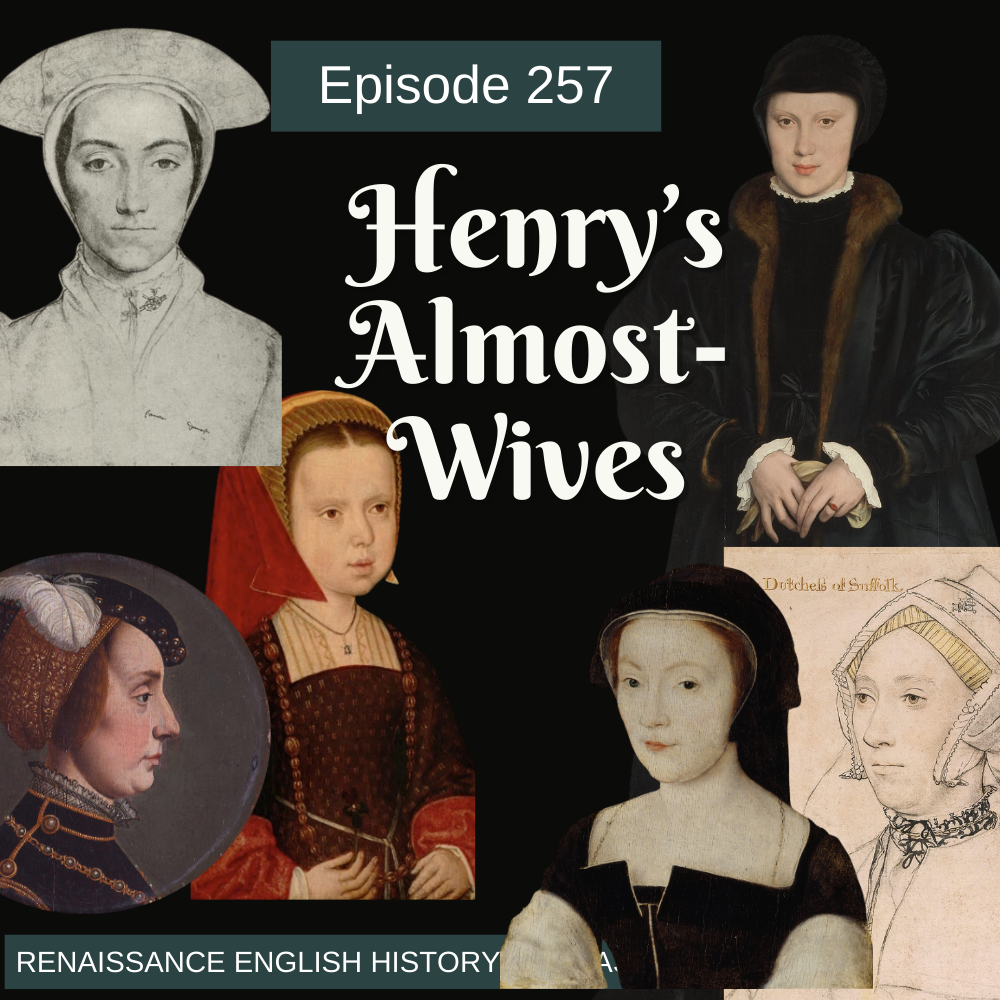
    Episode 257 was all about the six women who *could* have been the Queen of England as Henry’s wife, but escaped: Henry’s Six Almost Wives

    Below the episode you’ll find a transcript for easy reading.

    Hello, friend, and welcome to the Renaissance English History Podcast, a part of the Agora Podcast Network and the original Tudor History Podcast, telling stories of Tudor England since 2009. I am your host, Heather, and I’m a storyteller who makes history accessible because I believe it’s a pathway to understanding who we are, our place in the universe, and being more deeply in touch with our own humanity.

    This is episode 257. And we are going to talk about the almost wives of Henry VIII. Everybody knows the six wives, right? Divorce, beheaded, died, divorce, beheaded, survived. Actually, I just put a really cool new t shirt up on my merch shop at TudorFair. com that has that divorce, beheaded, died, divorced, beheaded, survived thing.

    Super cool. I ordered one for myself. Super excited to wear it. Anyway, I digress. But we remember the wives. But there were also at least six almost wives who you could say got lucky and escaped marriage to Henry. So, we are going to talk about them today. These almost wives also all tell us something new about Henry, his ambitions, his shifting priorities, and his evolving view of marriage as he grew older and more frustrated in his attempts to secure an heir.

    So, we’re going to talk about six women who Henry seriously considered marrying but didn’t. We’re going to talk about Eleanor of Austria, the diplomatic powerhouse who could have replaced Katherine of Aragon. Maria of Guise, a towering presence in every sense of the word. Christina of Denmark, famous for a quip that stung Henry’s ego.

    Anna of Lorraine, whose fate was tied up with the Dutch Revolt, Amelia of Cleves, sister of Henry’s fourth wife, and Katherine Willoughby, who might have been Henry’s last queen had fate and death not intervened. So let’s get right into it.

    Eleanor of Austria

    We’re going to start with Eleanor of Austria, and we’re going to talk about this in relation to Henry VII’s vision, and Eleanor’s suitability. So, Eleanor of Austria was born into the powerful Habsburg family. She was a highly sought-after bride in Europe. She was the daughter of Philip the Handsome and Juana of Castile, and the sister of Charles V, Holy Roman Emperor, and she was a key figure in all of these shifting alliances.

    So just a side note, because she was the daughter of Juana of Castile, she was also then Katherine of Aragon‘s niece. Juana of Castile was Katherine of Aragon’s sister. So from an early age, Eleanor’s marriage prospects were considered important to secure political alliances for her family. Henry VII, always eager to secure powerful alliances for England, began considering Eleanor as a potential bride for his son, Henry, around 1506.

    The timing was critical. In 1506, Eleanor’s father, Philip the Handsome, and mother, Juana, had been forced to seek shelter in England after their ship was caught in a storm while en route to Castile. We actually, I did a video on this on my YouTube channel a couple of weeks ago, this shipwreck that kind of changed history and especially how Katherine of Aragon felt about it.

    Of course, she was in that weird limbo period in her life at that point after Arthur had died, where she was running out of money, she was a widow, things were hard for her, and here is her sister shipwrecked. On the way to Castile, and they spent some time together, but they were also kept apart because Henry VII didn’t really want Katherine telling Juana how kind of not well she was being treated, among some other things.

    So you can check out that video of the shipwreck of Juana and her husband Philip the Handsome. Anyway, it was during this stay at the English court that negotiations for a possible marriage alliance were discussed, though nothing was finalized. Henry VII saw Eleanor as a valuable match because of her strong connections to the Holy Roman Empire and her substantial dowry.

    He had grown disillusioned with the marriage arrangement between Henry and Katherine of Aragon, especially after the death of his older son, Arthur. Which, left Katherine as a widow in England. Henry’s frustration with Spain’s dowry payments and the shifting political landscape made the Habsburg connection much more appealing to Henry.

    So marrying Henry, future Henry VIII, to Eleanor would bolster England’s standing in European politics and solidify a vital alliance against France. The potential marriage to Eleanor came at a time when Henry was actively looking for these new alliances. So Henry began pushing for Eleanor as the future Queen of England.

    He even suggested a broader marriage alliance that would include his daughter Mary Tudor marrying Charles V, Eleanor’s brother. The idea was that this dual marriage would create a strong alliance between England and the Habsburgs. Strategically positioning England between the Holy Roman Empire and France.

    The negotiations for the marriage progressed far enough that by 1507, serious discussions about Eleanor’s dowry and the terms of the alliance were actually taking place. However, these talks ultimately faltered. Henry’s health was deteriorating by this time and his ability to finalize negotiations was hindered both by his declining influence over his son and the complexities of dealing with the Habsburg family.

    Despite his father’s diplomatic maneuvering, the future Henry VIII, Prince Henry, who had turned 18 in 1509, was not interested in Eleanor. He said he had been enchanted by Katherine of Aragon since her arrival in England years earlier, and the idea of marrying a woman he had never met, especially one not known for her beauty, did not appeal to him.

    When Henry VII died in April 1509, all of his careful plans for Eleanor unraveled. The new king married Katherine of Aragon just two months later, on June 11th, officially ending any further negotiations with Eleanor’s family. Eleanor’s story continued on the stage of European politics, though. In 1518, she married King Manuel I of Portugal, only to be widowed soon after.

    She then, interestingly, later married Henry’s great rival, Francis I of France, further cementing her role in Habsburg diplomacy. Although she never became the Queen of England, Eleanor remained a significant figure in the power dynamics of Europe throughout her life. So there is Eleanor of Austria, who slipped away very fortunately and avoided marriage with the young Henry VIII. But she would, of course, go on to be the Queen of Portugal and France, so all’s good.

    Mary of Guise

    Next we’re going to talk about Mary of Guise. She was known then as the widow of James V, the mother of Mary, Queen of Scots, and a staunch ally of Scotland. She was born in 1515. She was a noblewoman of considerable political and personal stature. She was the daughter of Claude, Duke of Guise, and a member of the very powerful Guise family of Lorraine, so she was a prime candidate for a dynastic marriage. By the mid 1530s, she had already made an impression on the European courts.

    She married James V of Scotland after he personally wrote a letter to her pleading for her hand in marriage. She married him in 1538. But the marriage did not last long, she became a widow in 1542, and then she was also the mother of the infant Mary, Queen of Scots.

    So Henry VIII’s interest in Mary of Guise came shortly after the death of his third wife, Jane Seymour. By this point in his reign, Henry was in search of a new wife, but the political climate of Europe was tense. He was particularly concerned with consolidating his influence in Scotland, and marrying Mary, a tall and commanding woman known for her intelligence and Catholic faith, offered the possibility of strengthening his hold over Scottish affairs.

    Of course, France and Scotland had always been linked with that old alliance, so having a French wife, might help with that. So now at this point Mary was already being courted by James V of Scotland, so there was a rivalry too, which probably made her much more attractive to Henry. Then, if she had just been totally available, of course having someone else interested in her would have greatly raised her stock, I’m sure.

    Henry’s proposal to marry Mary of Guise came during the period between 1537 and 1538. He was navigating this aftermath of Jane Seymour’s death and figuring out his next marital move. At this point, James V had also lost his first wife, Madeleine of France, and he was in search of a new queen. Henry saw this as an opportunity not only to secure a powerful match with Mary but also thwart James’ plans.

    Politically, marrying Mary of Guise would have aligned Henry with one of the more powerful families in Europe, the House of Guise. And it also would have helped him thwart the old alliance between France and Scotland. So Henry dispatched ambassadors to begin negotiations, eager to solidify the connection.

    Mary’s reputation as a devout Catholic and an intelligent, formidable woman was appealing, but Henry’s interest likely had more to do with the political advantage he saw in marrying her. Mary, though, had her own ambitions. Although Henry’s proposal seemed promising, she was already leaning towards a marriage with James V.

    By 1538, it was clear that Henry’s bid to marry Mary of Guise had failed. She had married James V of Scotland in June of that year, so she was now the Queen of Scots, and the marriage solidified her role as a central figure in Scottish politics, especially after James’s death when she became regent for her daughter, Mary, Queen of Scots.

    For Henry, this failed match signaled a missed opportunity to weaken the old alliance and left him with less influence in Scottish affairs. Mary’s rejection underscored the continuing division between Scotland, England, and France, ensuring that these rivalries would persist long after Henry’s reign.

    Christina of Denmark

    Next, we are going to talk about Christina of Denmark. She was the Duchess of Milan and the niece of Charles V. She was born in 1521, a key figure in the political landscape of Europe, particularly after becoming a widow at the age of 16. Her brief marriage to Francesco II Sforza, Duke of Milan, had ended with his death in 1535, leaving Christina in a vulnerable but strategically important position.

    She was the niece of the Holy Roman Emperor Charles V, she was highly sought after for her dynastic connections, and Henry VIII. This is the period where again he was widowed after Jane Seymour’s death, and took notice of her as a potential fourth wife. By 1538, Henry was in active pursuit of a new bride to solidify his position and secure a spare to his heir that he had.

    Mary and Christina would have brought him closer to Charles V, potentially mending the strained relationship between England and the Holy Roman Empire after Henry’s break with Rome. So Henry’s ambassadors were dispatched to negotiate a match, potentially with Christina. Her youth and beauty made her an appealing choice.

    Hans Holbein was sent to Brussels to paint a portrait of Christina, capturing her charm and her elegance. For Henry, the match represented not just personal appeal but also significant political advantages. Of course, aligning with Charles V would bolster England’s standing against France and provide a very important Catholic ally in Europe.

    There was all this tension after the formation of the Church of England, so this union would have helped in diplomatic efforts to ease the isolation that England was beginning to experience. Christina was still under the control of her uncle, Charles. And she had little to say in her marital prospects.

    Despite this, she made it clear that she was not eager to marry Henry, a man with a growing reputation for difficult and deadly marriages. Christina’s sharp wit came to the forefront when she learned of Henry’s proposal. In one of the most memorable remarks of the period, she reportedly said, If I had two heads, one should be at the King of England’s disposal.

    This quip reflected, of course, her reluctance to become the next in line to Henry’s throne. For by then, Henry had been married three times, his first wife, Katherine of Aragon, had been divorced, his second wife had been executed, and his third wife had died in childbirth. It was not a good track record.

    It’s likely that Christina, though young, was acutely aware of the risks that came with being married to Henry VIII. Christina’s comment struck a chord and further cemented Henry’s already infamous reputation across the European courts. Ultimately, the proposed marriage between Henry and Christina never came to fruition.

    Charles V was reluctant to tie his family to the increasingly unpredictable English king, the religious differences between England and the Holy Roman Empire were too great, and Charles, always thinking of the broader European political landscape, chose not to support the match. By 1539, the negotiations had officially ended and Henry’s pursuit of a bride shifted elsewhere.

    Christina went on to marry Francis, the Duke of Lorraine, in 1541, further cementing her place in European politics but far away from the very, very dangerous throne of England. Next we are going to talk about Amelia of Cleves. Sometimes, her name is spelled Amalia, sometimes it’s Amelia. I’m going to say Amelia in this podcast, but just be aware that it’s also spelled Amalia.

    Anyway, however you want to say it, she was born in 1517. She was the younger sister of Anne of Cleves. Both sisters were considered as potential brides for Henry in 1539. Now, at the time, Cromwell, Thomas Cromwell, Henry’s chief minister, sought to strengthen England’s alliances with Protestant powers in Europe.

    to counterbalance the growing threats from Catholic France and the Holy Roman Empire. The Duchy of Cleves, strategically located in the Rhineland, was an attractive ally for England, and Cromwell saw marriage as a way to cement this alliance. During the initial marriage negotiations, both Anne and Amelia were considered, as it was practice for royal courts to assess the eligibility of multiple daughters from prominent families.

    Hans Holbein was dispatched to paint portraits of the sisters, And it was actually Anne’s portrait that ultimately convinced Henry to choose her. However, Amelia was kept in consideration as a possible alternative should the match with Anne not go forward smoothly. Although Anne was the first choice, Amelia was a possible backup candidate.

    And Cromwell likely saw her as that in case Anne didn’t meet Henry’s expectations. There was always the possibility that if Anne displeased the king upon meeting her, Amelia could be proposed as a replacement. Keep in mind, this would be the first marriage that Henry was going to have where he hadn’t met his wife before, which was really unusual for kings at the time.

    Most of the time, you know, in these kind of dynastic marriages, international marriages, you wouldn’t meet beforehand. Katherine of Aragon didn’t meet Arthur beforehand. But, of course, Henry had known Katherine when he was young. Then he went right to Anne Boleyn, who he knew before, then he went right to Jane Seymour.

    So he was pretty unusual in that, that on his fourth marriage, it wasn’t until his fourth marriage that he was marrying somebody that he had never met, and he actually was quite nervous about that. So Cromwell kind of kept Amelia in his back pocket in case things didn’t work out with Anne. The marriage negotiations with Cleaves were crucial for Cromwell’s diplomatic strategy, and having another option in the same family would ensure that the alliance could be secured.

    However, when Henry finally met Anne in person, he was so disappointed that the idea of Emilia as a fallback became increasingly untenable. His deep dissatisfaction with Anne, whom, of course, he said he found unattractive, tainted his view of the entire Cleves family. Even though Amelia had been considered as a viable option before the marriage, Henry’s experience with Anne soured any chance of pursuing her younger sister.

    The possibility of marrying Amelia never moved beyond these early considerations. Henry was not interested in any kind of further negotiations with the Cleves family, and once the marriage to Anne was annulled, he turned his attention to Catherine Howard right away. Amelia never married and lived out her life in relative obscurity compared to her sister.

    The Cleves alliance, which had been Cromwell’s grand strategy for strengthening Protestant ties, collapsed with the failure of the marriage. And for Henry, the episode marked the end of his attempts to forge a politically motivated marriage without personal involvement. Now, after the Cleves debacle, there was Anna of Lorraine, another Habsburg match that was considered.

    One of the names, after the short lived marriage to Anne of Cleves fell apart, one of the people that was considered was Anna of Lorraine, a member of a prominent European family with deep political connections. She was born in 1522. She was the daughter of Antoine the Duke of Lorraine and Rene of Bourbon Montpensier.

    I’m sure I butchered that. Very sorry. Her family had strong ties to both the French and the Habsburg courts, making her an appealing candidate for another foreign alliance. An interesting historical connection further tied Anna’s family to Henry VIII. Her father Antoine, Duke of Lorraine, had once been promised to Mary Tudor, Henry’s younger sister, as a bride by Francis I of France.

    Remember, Mary Tudor had gone over. To marry Louis XII in 1515. Louis XII died very soon after that and was succeeded by Francis I, who actually said that Mary should marry, Mary should marry, that’s a lot of Marys, um, said that Mary Tudor should marry Antoine the Duke of Lorraine. But Mary had defied expectations and married Charles Brandon, Duke of Suffolk, instead.

    Despite this missed connection though, Anna of Lorraine was suggested to Henry as a potential bride. The failure of Henry’s marriage to Anne of Cleves had left him deeply wary of foreign matches, especially those brokered based on portraiture. Hans Holbein had painted Anne of Cleves in a flattering light, and Henry agreed to marry her based on that portrait, only to be disappointed when he met her in person.

    Despite this, Holbein continued to paint other prospective brides, including Anna of Lorraine, who was regarded as politically viable. Now that is one reason why I don’t think the portrait of Anne of Cleves is actually that far off. Because, I mean, we all know Henry, right? Would Henry have really kept Hans Holbein employed, going around painting portraits, painting his own portrait, if the painting of Anne of Cleves was really that far off?

    I don’t think he would have. Now this is totally getting sidetracked, but one thing that I have seen about Anne of Cleves is there’s another famous portrait of her that shows her from the side. And in that portrait from the side, she has a much more, shall we say, striking nose than the famous portrait that Holbein had painted.

    And that portrait, of course, is just straight on, full face, just looking right at the, the viewer. So, a lot of historians think, and it makes sense. That maybe Holbein did that to make, maybe she had a big nose, right? Maybe that’s what it was. And he painted her. in that position, uh, in that pose to kind of downplay the schnoz.

    Um, that’s just one thing I’ve heard. And when you look at that other portrait of her from the side, you can see that. But I don’t think that Hans Holbein was that far off because I don’t think Henry would have kept, kept, uh, using him for portraits if he really had thought it was that different. Anyway, I got sidetracked.

    Anna of Lorraine. She was considered, but Henry was a little bit nervous about it, and he was also at that point beginning to focus on a different kind of bride, someone much younger and much closer to home, like, I don’t know, Catherine Howard. Henry’s growing distrust of foreign marriages Particularly, after the Anne of Cleves disaster led him to abandon the pursuit of Anna.

    Now Anna went on to marry William Prince of Orange in 1542, and her marriage became significant during the Dutch Revolt. Her life took a different direction away from the English court and its turbulent monarch. For Henry, his repeated failures in foreign matches, coupled with his volatile personal preferences, shall we say, steered him away from the idea of another arranged political marriage with someone he had never met.

    Speaking of brides close to home, Katherine Willoughby. A couple, maybe about 10 years ago, a book came out called, it was a biography of Katherine Willoughby and it was subtitled something like, Henry’s Potential Seventh Wife. And you know, there was all this news that broke that Henry was thinking about marrying Katherine Willoughby had he succeeded in executing Catherine Parr, I suppose.

    We’ve talked a lot about Katherine Willoughby, but we’ll just talk a little bit more about her here and then talk about the potential marriage. So, she, of course, is one of the most intriguing women in Henry’s court. She was the daughter of William Willoughby, the 11th Baron Willoughby d’Aresby, and Maria de Salinas, who was Katherine of Aragon’s very dear and close friend.

    Katherine’s early life was marked by her high status, her connections at court, but her position was further elevated when she married Charles Brandon, Duke of Suffolk, in 1533. So Brandon, of course, was Henry’s BFF. They had a bromance. And he was over 30 years older than Katherine, so there was that. But, despite her youth, Katherine Willoughby quickly became a favorite in Henry’s court.

    She was known for her intelligence, her sharp wit, and her strong Protestant leanings. One of the most wonderful little snippets about her is that she had a dog named Gardner after, named after Stephen Gardner, and she used to like to call her Dog Gardner to heal. And, uh, got a kick out of that, so I like that sense of humor.

    I approve. Anyway, by the time of Brandon’s death in 1545, Katherine was a widow. She was still quite young. She was wealthy and influential. Her staunch support of the Protestant cause and her presence in the royal court kept her in close proximity to Catherine Parr and to Henry as this final marriage to Catherine Parr unfolded.

    So there’s a lot of speculation that Katherine Willoughby might have become Henry’s seventh wife had he outlived Catherine Parr. Of course, implied in that is the idea that the arrest for Catherine Parr would have gone through and she would have been executed for heresy. Katherine Willoughby was a young wealthy widow with strong Protestant ties.

    She was seen by some as an ideal match for Henry in his later years. She had already been a close companion to Catherine Parr, and her deep involvement in court politics combined with her Protestant sympathies made her a potential contender for the role of Queen. Now the people who were pushing this were the reformers.

    This was a period in Henry’s life where he was going back to Catholicism. You know, he waffled during, uh, the Reformation Month episodes that we did six, seven years ago. I talked a lot about how in that later period of Henry’s reforming the church, he went back and forth. The conservatives gained and then the reformers gained.

    So this was a period where Henry’s pendulum was swinging much more towards the conservatives. And the Protestants, the Reformers, wanted to swing it back towards reform. Now Catherine also was very close friends with Henry’s children, especially Princess Elizabeth, with whom she shared her Protestant beliefs.

    Now there was also the idea that Katherine Willoughby had already had children. Um, she had already had two sons by Charles Brandon that would survive to adulthood. And so Henry, who was still in his older age thinking about another heir. was still thinking about that, he would have been attracted to the idea that he, he could tell that Katherine Willoughby could have children.

    But of course, Henry’s death in 1547 ended any chance of Katherine Willoughby becoming his queen. After his passing, Katherine remained deeply involved in the Protestant cause during the reign of Edward VI, where she used her influence to promote religious reform. Her support for Protestantism placed her in a very dangerous position when Mary I came to power, She fled to the continent where she remained in exile until Elizabeth ascended to the throne.

    She also unfortunately lost both of her sons within hours of each other, uh, due to the sweating sickness. So that was quite tragic. And then she married later, for love, one of her servants, who was also a Protestant. So, yeah. Her story had a lot of ups and downs in it, but fortunately for her, she escaped marriage to Henry the Ape.

    So there you go, six different women, six different stories of why they could have become queen, of what Henry’s priorities were, why they were even considered, and six different happy outcomes for those poor women. 20 25 minutes with me. Remember, you can always hop into the Tudor Learning Circle, which is a social media just for Tudor nerds, TudorLearningCircle.

    com, and post your thoughts on these six women or anything else related to Tudor history. We’d love to see you in there. It’s totally free and especially right now as you go on to social media, there’s so much ugliness. We don’t do that in the Tudor Learning Circle. It’s just all Tudors all the time, the nicest, most Tudorific place on the internet.

    You can also always drop me a line. You can text me 801 6-TEYSKO. That’s 801 683 9756 is my texting line. So go ahead and drop me a note if you like. Alright friend, thank you again so much for listening. I will be back next week. Have a phantasmal week. I will speak with you soon. Bye bye.

  • The Women Who Defied Henry VIII: Martyrs, Rebels, and the Religious Turmoil of the 16th Century

    The Women Who Defied Henry VIII: Martyrs, Rebels, and the Religious Turmoil of the 16th Century

    Women who defied Henry VIII and stood at the forefront of religious upheaval during the 16th century in England, let’s explore their incredible stories. From the dissolution of monasteries under Henry VIII to the brutal persecutions under Mary I and Elizabeth I, this episode delves into the lives of the women who fought, suffered, and sacrificed for their faith.

    Discover the hidden networks, secret rebellions, and enduring legacies of these often-overlooked figures, whose courage and resilience helped shape the course of English history. Whether as martyrs, exiles, or protectors of tradition, these women played a pivotal role in the religious transformations of their time. Join us as we uncover their powerful stories and reflect on how they continue to influence our understanding of faith and gender today.

    We’re actually going to go and talk about something that we talked a little bit about during Women’s History Month and that was the role of the Reformation on women. Basically what women were doing during the religious changes of the 16th century and how that affected them. The reason why we’re going to talk about that is, I have been reading Philippa Gregory‘s book Normal Women which is really, really good.

    It’s basically about what normal women were doing from the period from 1066 up to I think it goes up to just after the Civil War, 18th century. This is because of course it was men writing the history, women weren’t out in the public sphere as much, although many were, but the men who were writing about it, well, they weren’t writing about it. So there was that.

    So this book has been really interesting for me. I have to say, I have a bit of a complicated relationship with Philippa Gregory. Because on the one hand, I read The Other Boleyn Girl back in 2003, 2004, or something like that, when it first came out. 

    Here’s a personal share. So I was living in New York City and it was summer. And I  would go to Coney Island, to the beach. I would go there because it was a really easy train ride for me. Cause I lived right by Penn Station. So I had this easy train ride to go to Coney Island and I wasn’t fancy enough to go to the Hamptons or anything like that. I remember very clearly reading The Other Boleyn Girl, sitting on the beach in Coney Island. It must’ve been 2004.

    Anyway, we are all like in this Tudor world, most of us have read The Other Boleyn Girl. If we haven’t, we’re familiar with it. We’ve read The White Queen, The White Princess, the multicolor rainbows of queens and princesses and duchesses and whatnot.  In general, I mean, I love her storytelling. It’s wonderful. I’m really not a fan of the way some of the stories seem to be sensationalized.

    Particularly around Lady Margaret Beaufort. I don’t know what Lady Margaret Beaufort ever did to Philippa Gregory to make her deserve to get the treatment that she has gotten.  It used to really bother me when people would hop into a Facebook group and be like, “Well, I read The White Queen. And so therefore I know that Lady Margaret  Beaufort killed the Princes in the Tower and she did it for her son to get to the throne.”

    Honestly, I will admit. I also that I did kind of buy into that because I didn’t know any better. And I remember also very clearly interviewing Melita at Tudor times. It’s some episode from like maybe eight years ago when Margaret Beaufort was the person of the month for them, and we were doing those kinds of regular podcasts.

    And I asked her, I said, “Well what about the idea that she was like, the mother-in-law from hell  and everything like that?” And Melita started schooling me and then I did more of my own research as well and I found that indeed, there was very little evidence for Lady Margaret Beaufort actually being the mother-in-law from hell.

    She spent most of her time when Henry was an exile, just trying to figure out how to get him back. She had accepted the Yorkist regime. It wasn’t like she was plotting for him to be king. And there’s so many people who benefited from the Princes’ disappearance. Yeah, it just seems so unfair to Lady Margaret and it’s kind of one of the things that really bothers me about Philippa Gregory. So I have a complicated relationship with her.

    But I saw the book Normal Women, and I was like, I got to read that of course. So I’ve really been loving it. I’ve really been enjoying it. And so the part specifically about women in the Reformation in the 16th century really struck me. And I thought, I’m going to do something with that on this podcast because I think it’s a good story to tell.

    So. I will say right now that everything I’m talking about is coming from that book. All of the examples, everything like that. If you want to dig in deep and really, really go for it. The book, Normal Women, it’s a really good book, highly recommended. As long as Lady Margaret Beaufort isn’t framed for killing the Princes in the Tower. So let us get into it.

    The 16th century in England, as we know, seismic shifts in religion with the break from the Catholic church, set off a chain reaction of changes that would reverberate through every corner of society. And these changes didn’t just alter the relationship between England and Rome. They had profound effects on the lives of everyday people, particularly women.

    While the kings and the bishops made the headlines, the women across the country were navigating the new religious landscape in ways that were both deeply personal and very impactful. Whether they were nuns who were displaced from their convents, noblewomen, protecting their faith in secret, or ordinary wives and mothers trying to keep their families together, amid all of the shifting doctrines, women played a crucial role in this period of religious upheaval.

    Some fought back, some adapted, and others quietly carried on the traditions that were suddenly illegal. So today we’re going to explore how these women were both shaped by and instrumental in the religious changes of the 16th century. From the dissolution of the monasteries to the bloody battles over faith that followed, women were at the heart of it.

    Dissolution of the Monasteries

    Let’s start with the dissolution and how that affected religious women. So when Henry broke from the Catholic church, it wasn’t just an act of defiance against the Pope. It was a move that upended the lives of thousands of religious women across England. The dissolution beginning in the late 1530s meant the closure of nearly 900 religious houses, including nunneries that had been the centers of female religious life and female education, places for women to go, who didn’t want to marry. The center of all of this for centuries, one of the most immediate and brutal impacts of the Reformation was the closure of these religious houses.

    Nuns who had dedicated their lives to God suddenly found themselves homeless and without a purpose. Let’s take, for example, the case of the Crabhouse Priory which was in Norfolk dating back to the 12th century, I believe. When one of Henry’s commissioners, Thomas Leigh, we’ve talked about the Leigh family a lot recently. It was Thomas Leigh who visited in 1535. He painted a very grim picture.

    He accused the nuns of everything from pilfering items and selling monastic items, items that belong to the priory, to sexual misconduct. He claimed that one nun had born two children, one by a priest and one by a layman. These accusations, whether they were true or exaggerated were part of a broader effort to justify the closure of such establishments.

    The nunnery along with many others was dissolved and the residents were left to fend for themselves. The closure of these religious houses didn’t mean just the loss of a home. It meant the end of a way of life that had given women a rare form of independence for centuries.

    Nunneries had been places where women could live free from the control of men. They could manage their own affairs. They often contributed to the local community in significant ways. But with the dissolution, these women were not only displaced. They were stripped of their status and their roles. Thousands of nuns were expelled from their homes.

    Some found themselves the subject of intense scrutiny and harsh judgments. The priory had only seven nuns. But it was enough for the authorities to accuse the prior use of mismanagement and even physical abuse against the other nuns. Whether these accusations were entirely true or partially fabricated to hurry up the priories’ closing, the result was the same, and other communities of women were forced out, their contributions erased.

    Not all religious women simply faded into the background. Some have found ways to continue their spiritual lives despite the upheaval, Katherine Manne is a notable example. After the dissolution, she lived in a cell attached to the Dominican church in Norwich like an anchoress, continuing her religious practices in solitude.

    Others joined small informal communities of ex-nuns who lived together, prayed together and kept the old traditions alive in secret. Well, many nuns were forced to reintegrate into a society that had little use for celibate women. Some resisted by maintaining their vows in private or adapting their roles to a new reality. 

    They might’ve lost their official status, but they didn’t lose their faith or their determination to live by it. Ex-nuns and church members were granted small pensions. They were expected to maintain their vows of celibacy until 1549 when Edward VI started to change that. Only 19% of nuns chose marriage and only about 17% of monks. So the majority of them continued to live by their faith.

    Now as Henry VIII and his successors imposed all of these sweeping religious reforms, not everyone in England was happy and content to follow the new plan. For many women, these changes represented a direct threat to their faith, their way of life, and their communities. Some actually took up arms. Others use their homes as sanctuaries and still others operated in the shadows, keeping their faith alive, despite the dangers.

    Pilgrimage of Grace

    We’ve heard a lot about the Pilgrimage of Grace. When we did the rebellion series, we’ve talked about a number of times, one of the most significant uprisings against Henry VIII’s religious policies. Women actually played a very crucial role in this movement, which I hadn’t really ever thought about.

    This rebellion took place in the north of England. Tens of thousands of people rose up in protest against the dissolution. This was in late 1536 and also the overall direction of the Reformation. Among these rebels were women who supported, organized, and even led aspects of the revolt.

    Margaret Cheyney is one such woman whose involvement did not go unnoticed or unpunished. Cheyney and her husband were active participants in their rebellion. Margaret was accused of urging her neighbors to join the uprising. After the rebellion was quashed, she was arrested, sent to London, and ultimately executed. Her death is brutal as it was a chilling reminder of the risks that women faced when they stood against the crown.

    But Margaret Cheyney was far from alone. Many other women suffered for their participation in the Pilgrimage of Grace as well. These women weren’t just passive supporters. They were ardent believers who saw the Reformation as a threat to their faith and their community. Their involvement shows how deeply their religious change has penetrated into the daily lives of ordinary people, compelling them to take extraordinary risks.

    While women like Margaret Cheyney took to the streets, others fought the Reformation from within the walls of their own homes. Noblewomen in particular played a pivotal role in protecting the old faith. These women had the means, the influence, and the determination to resist the changes imposed by the crown, often at great personal risk.

    The Countess of Westmoreland, Jane Neville is a prime example of such resistance. She and her husband, the Earl of Westmoreland were central figures in the Northern Rising of 1569, another major rebellion against the Protestant Reformation. Jane Neville not only supported their rebellion but also helped to organize it using her home as a refuge for Catholic priests and as a center for planning. 

    When the Northern Rising was crushed, Jane’s husband was executed and she was placed under house arrest for the rest of her life. Despite these harsh consequences, her actions ensured the Catholic traditions and practices continued in her community long after the rebellion was over. Noblewomen like Jane Neville didn’t just passively resist the Reformation. They actively worked to protect and preserve their faith. Often becoming the last line of defense in their regions.

    Beyond the public rebellions and noble resistance, there was another quieter battle being waged by women across England.  This was the hidden Catholic network, a network of homes, secret masses, and underground practices that kept the old faith alive in the face of intense persecution.

    Women were at the heart of this network. They created and maintained priest holes, hidden spaces within their homes where Catholic priests could hide from the authorities. They organized secret masses ensuring that their families and communities could continue to practice their faith in secret. Their risks were enormous. Discovery could mean imprisonment, torture, and death.

    But for these women, the preservation of their faith was worth the risk. One particularly striking example is that of Alice Line who had a priest hole built in her home and hosted a secret Candlemas service. When her home was raided, the priest managed to escape, but Alice was not so lucky. She was arrested, imprisoned, and eventually executed for her role in protecting the priest. Her last words on the scaffold were a defiant declaration of her faith and her refusal to repent for harboring a priest.

    This hidden network of Catholic women played a crucial role in maintaining the old faith during a time when open practice was impossible. Through their quiet, determined actions, these women ensured that Catholicism in England survived even the harshest years of Protestant rule.

    The Martyrs and Scholars

    The religious upheavals of the 16th century didn’t just lead to rebellion and hidden networks. It also led to the persecution and execution of women who stood by their faith. This era of female martyrdom, not only highlighted the brutal consequences of religious conflict but also began to shift how women were perceived in society.

    So to start with the Protestant martyrs during the reign of Mary I, the first Protestant women found themselves under intense scrutiny. No secret there. Mary was determined to restore  Catholicism. She saw Protestantism as a heresy that needed to be stamped out and her methods were ruthless.

    Of course, this period earned her the nickname Bloody Mary, which I don’t really like. But it is what it is. And the women who resisted her efforts paid the ultimate price. Perhaps one of the best-known Protestant martyrs, this is even before Mary, would be Anne Askew. 

    She was a young educated woman from a noble family. She was a vocal critic of Catholic doctrine, particularly the practice of transubstantiation. Her refusal to recant her beliefs led to her arrest, torture, and eventual execution by burning at the stake in 1546.

    What makes Anne’s story particularly poignant is her resilience. Even under torture, she refused to name other Protestants, protecting her fellow believers to the end. In fact many people believe that Anne was tortured because they were trying to get to Katherine Parr at the time. But she never gave that name or anything like that.

    Anne wasn’t alone in her feet, dozens more women were executed as Protestant martyrs during Mary’s reign. Of course, none during Edward’s reign because he was a Protestant. But during Mary’s reign, they were executed for their Protestant beliefs. 

    Joan Waste, a blind woman from Derbyshire was another tragic example. She was arrested for refusing to attend mass and was burned at the stake in 1556. These women and many others like them became symbols of Protestant resistance. Their deaths serve to inspire and galvanize those who continue to fight against Catholicism.

    But then the pendulum swings the other direction. So Elizabeth ascends to the throne and now being a Catholic is illegal. The religious pendulum just goes back and forth and now Catholic women are finding themselves persecuted. Elizabeth’s government saw Catholicism as a threat to the state. Of course, equating loyalty to the Pope with treason.

    Women who harbored priests attended secret masses or refused to conform to the new religious orders were often subjected to the very harshest penalties. Margaret Ward is one of the most notable Catholic martyrs of this period. A maidservant in London, Margaret was deeply committed to her Catholic faith. In 1588, she helped a Catholic priest escape from prison, smuggling a rope into his cell. When she refused to disclose his hiding place, she was arrested, tortured, and eventually hanged.

    Margaret’s courage and defiance made her a hero among Catholics and a stark reminder of the dangers that came with holding onto the old faith. The martyrdom of these women began to shift the way society viewed them. Before the Reformation, women were often seen as temptresses. They were sources of sin and temptation in a male-dominated world. The church had long perpetuated the image of women as descendants of Eve, easily swayed by the devil and in need of male guidance and control.

    However, the narratives around women like Anne Askew and Margaret Ward began to challenge this perception. These women were no longer seen as weak or morally suspect. Instead, they were celebrated for their spiritual strength, their courage, and their unwavering commitment to their faith. The image of women as martyrs and spiritual leaders began to take hold, portraying them as morally superior even as they remained without formal power or agency.

    This transformation wasn’t without its complexities, while women were increasingly seen as paragons of virtue and spiritual resilience, this newfound respect didn’t translate into real power or influence. Women were still expected to be submissive, to accept their roles within the private sphere and to defer to bail authority. The martyrdom of women, like Anne Askew and Margaret Ward didn’t lead to a broader re-evaluation of women’s roles in society, but rather reinforced the idea of women as virtuous sufferers. Strong in faith, but still subservient.

    The narrative also shifts based on what the prevailing religious attitude of the time is. So there are women like Anne Askew who is celebrated as a martyr and a hero. While, traditionally Elizabeth Barton, Maid of Kent, who was a Catholic visionary, and opposed  Henry VIII’s marriage to Anne Boleyn, was executed as a heretic and a fraud. Both were deeply religious women, but their legacies were shaped by the political and religious biases of their time.

    The shift in the image of women during this period was significant, marking the beginning of a new narrative around women’s spirituality and strength. Yet it also highlighted the limitations of this new image as women continue to be revered for their piety but denied the power and authority that came with it.

    As the religious landscape in England became increasingly hostile for those who refused to conform, many women chose exile over submission. These women not only sought refuge in foreign lands but also became key figures in preserving and spreading their faith. For many devout Catholic women, the choice was stark. Conform to the new Protestant state or leave everything behind. Exile was not just a physical departure from England, but a profound act of faith in defiance.

    Among the most notable of these exiles was Mary Ward, a woman whose dedication to her faith led her to establish a network of religious houses across Europe. Mary was born into a Catholic family in Yorkshire at a time when practicing Catholicism in England was increasingly dangerous. Faced with the choice between staying in a hostile environment or preserving her religious vocation, Ward chose to leave England.

    She traveled to Flanders where she founded the Institute of the Blessed Virgin Mary, a religious order dedicated to education and spiritual service. Unlike traditional convents, Ward’s order was active, and focused on teaching and missionary work rather than cloistered contemplation. Her efforts were groundbreaking, creating a model that would influence religious orders for women across Europe.

    Wards’ work was not without its challenges. She faced opposition from both secular and religious authorities who were suspicious of her unconventional approach. Yet she persisted, establishing houses in France, Italy, and beyond. All while remaining committed to her vision of a more active role for women in the church.

    While some women left England to continue their religious practices abroad, others stayed and became deeply involved in religious scholarship. These women played crucial roles in translating, interpreting, and spreading reformist ideas. Often working in close collaboration with leading male reformers.

    Anne Lock is a prime example of such a scholar. She was born into a Protestant family, well-educated, and deeply committed to the Reformist cause. She moved in influential circles, corresponding with and assisting prominent figures like John Knox, the fiery Scottish Reformer. Lock’s most significant contribution was her translation and publication of Calvinist sermons, and religious texts, which helped spread the  Protestant ideas in England and beyond.

    In 1560, Locke published her A Meditation of a Penitent Sinner, a 26-sonnet series based on Psalm 51, which is considered one of the earliest examples of English, Protestant devotional literature. Lock’s work was not only an expression of personal piety but also a tool for educating others, particularly women, about the new religious ideas that were reshaping England.

    Despite their significant contributions, many of the women who played critical roles in preserving and promoting their faith during this period have been largely forgotten by history. These women risked everything, their families, their homes, and their lives to stay true to their beliefs.  But their stories are often missing from the grander narratives of the Reformation. 

    Rose Hickman is one of these heroines. She was a Protestant who lived through the tumultuous reigns of Henry VIII, Edward VI, Mary I, and Elizabeth I. She was a staunch defender of the Reformation. She hid reformist preachers in her home, distributed Protestant literature, and maintained a network of like-minded individuals who resisted the return to Catholicism under Mary I.

    Hickman’s actions were incredibly risky at any moment. She could have been arrested, tortured, or even executed for all of this. Despite her bravery and commitment, her story has faded into obscurity. She was never rewarded or officially recognized for her efforts of fate shared by many women who played similar roles. These women were essential to the survival and spread of their faith. Yet their contributions were often dismissed or ignored in a society that still struggled to see women as equal participants in religious and intellectual life.

    Conclusion


    The stories of these exiled scholarly and courageous women remind us that the Reformation was not just a story of kings and clergy, but also of countless women who fought to preserve their beliefs. The religious upheavals of the 16th century had profound and lasting effects on the lives and roles of women in English society. As the Reformation, reshaped religious institutions, it also reshaped the way women were perceived and treated both within the church and in broader society.

    One of the most significant long-term impacts of the Reformation was the secularization of women’s roles. With the dissolution of the monasteries and the decline of female religious orders, the option of celibacy as a respected and independent lifestyle for women largely disappeared.

    In its place, a new societal perception of women began to emerge. One that was increasingly sexualized. Women were no longer seen primarily as spiritual beings, dedicated to God, but rather as potential wives and mothers subject to the desires and control of men. The absence of respected celibate women and religious roles contributed to the notion that a woman’s value was tied to her sexuality and her ability to fulfill domestic duties. 

    This shift marked a significant departure from an earlier image of women who could be holy figures. Leading to a society that often viewed women as seducers, rather than spiritual leaders. But despite the diminishing opportunities for women within formal religious institutions, the changes in the 16th century also set the stage for future movements that would challenge the status quo.

    Women like Mary Ward who founded a religious order that emphasized education and active service planted the seeds for early feminist thought within a religious context. Ward’s belief in the equality of women in the eyes of God was radical for her time and her efforts to establish a more active role for women in the church were a direct challenge to the traditional passive roles that women were expected to play. 

    Ward’s legacy along with that of other religious women who defied the norms of their time, provided a foundation for future generations to continue pushing for greater equality and recognition within religious and secular life. These early movements were crucial in shaping the discourse around women’s rights and their roles in society even if their impact wasn’t fully realized until centuries later.

    So the religious changes of the 16th century were a watershed moment in English history and women were deeply affected by and instrumental to these transformations. From the dissolution of the monasteries and the persecution of martyrs to the quiet defiance of religious exiles and scholars, women navigated this tumultuous period just as much as men with courage, resilience, and creativity.

    The rules were complex and multifaceted and often overlooked in the way we talk about the Reformation. Yeah, they were crucial to the survival and evolution of their faiths. It’s important to remember that the history of religion is not just a story of men and institutions but also the countless women who fought to preserve their own beliefs and carve out spaces of power and agency in their rapidly changing world.

  • 10 Surprising Tudor Facts That Will Change How You See History

    10 Surprising Tudor Facts That Will Change How You See History

    Tudor England was filled with dirt, no one bathed, and everyone got sick and died when they were 28 from easily curable diseases, right? Also, the diet was terrible, and people lost all their teeth. And Henry VIII was a brainless tyrant. Not so fast, my friend. Tudor England was a vibrant place that was much more modern, in many ways, than we might expect. Read on for ten surprising Tudor facts that might change how you see the 16th century!

    1. Elizabeth I Was Nearly Killed by Smallpox

    • Fact: In 1562, Elizabeth I contracted smallpox and came close to death. Her recovery was a turning point in her reign, and she emerged even more resilient, though it left her with scars she would cover with heavy makeup. Check out this Renaissance English History Podcast episode on Tudor Cosmetics and Makeup!

    2. Henry VIII Wrote a Bestselling Book

    • Fact: Before his infamous reign, Henry VIII was known as a scholarly king. In 1521, he wrote “Defence of the Seven Sacraments,” which defended the Catholic Church against Martin Luther and earned him the title “Defender of the Faith” from the Pope. He also wrote music, and his hit song Pastime with Good Company was the Song of the Summer in 1515!
      Check out all our Reformation Month episodes.

    3. The Tudor Court Was Obsessed with Astrology

    • Fact: Astrology played a significant role in Tudor life, with court astrologers advising on everything from military campaigns to marriage dates. Even Elizabeth I consulted astrologers regularly. Elizabeth’s court astrologer John Dee even used the stars to decide her coronation date! Check out this episode on the Music of the Spheres and how astrology influenced music and healing.

    4. The Tudor Diet Was Surprisingly Healthy

    • Fact: Despite popular images of Henry VIII feasting on meat, the average Tudor diet was rich in vegetables, fruits, and grains. Meat was a luxury, and most people ate far more plant-based foods. In fact, the idea that people had bad teeth in the Tudor period is also a myth – since most people couldn’t afford sugar, dental records show that most people had pretty good dental hygiene! Check out this Interview with Brigitte Webster on Tudor food.
    Tudor Facts: Tudor food

    5. Anne Boleyn Had Extra Fingers – or Did She?

    • Fact: One of the most persistent myths about Anne Boleyn is that she had six fingers on one hand, a tale likely spread by her enemies to paint her as a witch. There’s no contemporary evidence to support this claim. Check out this YouTube video on Anne Boley’s Six Fingers myth to learn more about where it came from and how it spread.

    6. Tudor Medicine Was More Advanced Than You Think

    • Fact: While Tudor medicine included some bizarre practices, they also used herbal remedies and surgical techniques that were surprisingly effective. They even understood the importance of cleanliness in preventing infections. Renaissance English History Podcast interview with Seamus O’Calleigh on Tudor medicine.

    7. Mary I Was Almost a Queen of France

    • Fact: Before becoming Queen of England, Mary I was betrothed to the future French king, Francis I. The engagement was broken off, but had it gone ahead, Mary might have become Queen of France instead of England. Of course, she was only two when it happened, so she probably doesn’t remember it. Check out this Renaissance English History Podcast interview with Melita Thomas on Mary I.

    8. Tudor Hygiene Wasn’t as Bad as You Think

    • Fact: While Tudors didn’t bathe as frequently as we do today, they were still concerned with hygiene. They washed their hands before meals and used perfumes and scented water to stay fresh. Renaissance English History Podcast episode on Taking the Waters in Tudor England.
    Tudor fact: The Tudors bathed

    9. The Tower of London Was a Zoo

    • Fact: The Tower of London wasn’t just a prison; it also housed a menagerie of exotic animals, including lions, elephants, and even a polar bear, which was a gift from the King of Norway.
      Check out this Renaissance English History Podcast episode on the Tower Menagerie.
    Tudor Facts: Tower Menagerie


    10. Tudor England Was Multicultural

    • Fact: Contrary to popular belief, Tudor England had a diverse population, including Africans, Jews, and people from the Middle East and Europe. They lived and worked in cities like London, contributing to the cultural fabric of the time. Check out this podcast episode on the experience of black people in Tudor England.

    What’s your biggest takeaway on how Tudor England might be different than we had always been led to believe?

  • The Palaces of Henry VIII 

    The Palaces of Henry VIII 

    Let’s explore the palaces of Henry VIII and dive into the majestic world of Tudor England.

    Today, we are going to talk about Henry VIII’s palaces, the palaces he built, the palaces that he inherited. If you were going to visit Henry VIII, where would you find him?

    So Henry VIII resided in a series of majestic palaces each a testament to his extravagant lifestyle, his sense of royal grandiosity and the architectural preferences of Tudor England. They were a mix of inheritance and innovative construction. They serve not only as rural residences, but as symbolic representations of power, wealth and cultural sophistication.

    Let’s talk about some of the palaces he inherited. First the Tower of London with its historical and architectural richness. It goes all the way back to William the Conqueror who built the White Tower, was one of the inherited royal residences.

    Although, primarily a royal prison, that’s what we remember it for today, it was a palace. It was traditional for monarchs to spend the time before they were crowned in the opulent rooms of the Tower of London.

    There was also the Palace of Westminster, a marvel of gothic architecture. It served as a principal royal residence, hosting key events and ceremonies symbolizing, the monarchy’s ceremonial majesty.

    He also sort of inherited Hampton Court Palace. Cardinal Wolsey originally constructed most of Hampton Court. There’d been a palace there before, but Cardinal Wolsey really took it to the next level and made it Hampton Court Palace. Then it was gifted to Henry VIII in the late 1520’s as a way to sort of make up for the fact that Wolsey wasn’t successful in getting Henry his divorce. It quickly became a favorite residence because it was so modern. Everything was up to date. It combined architectural magnificence with luxurious comfort.

    The palace he constructed.  He constructed Nonsuch Palace. Henry commissioned the construction of Nonsuch Palace in Surrey to celebrate the 30th year of his reign. It’s name Nonsuch implied that there was no such palace like it, highlighting its unique design and extravagant decor. However, Henry spent limited time here as the palace’s construction wasn’t completed during his lifetime.

    There was also Whitehall Palace that he built. It had originally been York Place. Again, something that he got from Cardinal Wolsey and he turned it into Whitehall Palace and it became one of his most frequented residences. Renowned for its extensive art collection and its tennis courts.

    His favorite residence is Hampton Court. Henry’s predilection for Hampton Court Palace is well-documented. He invested substantially in its expansion and embellishment. He added tennis courts, a bowling alley and kitchens. He reveled in the pleasures of hunting, feasting and entertainment here. Epitomizing the opulent royal lifestyle. The palace’s vastness and multi-functionality allowed it to host grand feasts and accommodate a plethora of courtiers and servants.

    He also loved Greenwich Palace. Another favorite residence, the birthplace of Henry was also associated with many of the significant events in his life, including his marriages to Katherine of Aragon and Anne of Cleves. It was a vibrant cultural hub hosting tournaments plays and dances, reflecting Henry’s passion for arts and entertainment.

    Each of Henry’s palaces exuded architectural splendor and artistic excellence, adorned with tapestries, paintings, and intricate woodwork. The palaces were designed to facilitate the extensive royal entourage and to elaborate courtly ceremonies while also offering secluded spaces for the King’s private moments.

    The aesthetic amalgamation of grandeur and functionality in these palaces exemplified the architectural brilliance of the era. Henry’s palaces were more than mere residences. They were tangible manifestations of his royal authority, his cultural aspirations and his relentless pursuit of pleasure and luxury.

    In this video, we journey through:

    Tower of London: A symbol of power and authority.
    Palace of Westminster: A marvel of gothic architecture.
    Hampton Court Palace: A favorite residence of the king, combining architectural magnificence with luxurious comfort.
    Nonsuch Palace: A palace so unique, its very name implies unrivaled beauty and extravagance. Whitehall Palace: Once a hub of royal activity and home to an extensive art collection and sporting facilities.
    Greenwich Palace: A vibrant cultural hub and the birthplace of Henry VIII.

  • Henry VIII’s Illegitimate Children: Truth or Tale?

    Henry VIII’s Illegitimate Children: Truth or Tale?

    Let’s get into the captivating history of Henry VIII’s rumored illegitimate children. While Henry Fitzroy stands out as the king’s only acknowledged illegitimate son (and we just did a video on him recently – so we skip over him here – check the link below) whispers of other hidden heirs have echoed through time.

    From the famous Careys to lesser-known figures like Thomas Stukeley and Ethelreda Malte, we uncover the stories, evidence, and controversies surrounding these potential royal descendants. Did Henry truly father more children than we know, or are these tales just a product of Tudor-era gossip?

    Today we are talking about Henry VII’s children. He had three children, right? Oh, no, no. There might be a lot more. Well, half a dozen more. We are gonna talk today about Henry VIII’s illegitimate children that he had. So of course a lot of them, they’re alleged. There’s only one that he acknowledged. But there are some interesting stories behind the others as well. So we’re gonna dig into that.

    I actually did do a video last week, maybe the week before, on Henry Fitzroy, who’s the one acknowledged illegitimate child. So we’re gonna kind of skip over him then we’ll dig into the others. Also, I’m thinking about turning this into a whole podcast, digging really deep. This is kind of just a short overview.

    Legitimacy

    In the intricate tapestry of Tudor England, legitimacy was more than a matter of birthright. It was a symbol of power, of stability, and of divine right. The idea was that royal blood carried sanctity and the very essence of the monarchy depended on a clear line of succession. So illegitimate children were considered outsiders barred often from the inner circles of nobility, and denied the birthright privileges of their legitimate counterparts. Of course, this is because it could be a threat to the monarchy itself.

    So the strict adherence to legitimacy was grounded in both politics and religion. The Middle Ages and early Renaissance period of course, held up the sanctity of marriage and viewed children born outside of the marital confines as tainted. In the realm of politics, legitimacy ensured the undisputed right to the throne, preventing civil unrest and claims from rival factions, at least in theory.

    Remember, the Wars of the Roses was still quite fresh in everyone’s minds around this time. So an illegitimate child, especially one born to a king, was a very controversial figure. Both pitied, and potentially powerful. Their very existence raised questions of morality, of succession, of political maneuvering, making them subjects of intrigue and speculation in courtly circles.

    Catherine and Henry Carey

    So first we’re gonna talk about the Carey family consisting of Catherine Carey and Henry Carey. This has long been a point of intrigue and speculation when it comes to the potential illegitimate children of Henry VIII.

    Catherine Carey was born in 1524, the daughter of William Carey and Mary Boleyn Henry’s infamous mistress, sister of Anne Boleyn. The timing of Catherine’s birth and the nature of the relationship between Mary and Henry has led many to suggest that Catherine could be Henry’s daughter. However, of course, there’s no concrete proof of this. It’s entirely possible that she was born after Mary’s relationship with the king had ended.

    Her brother Henry also born in 1526, is also cloaked in similar rumors. Henry was born during a period when Mary’s relationship with the king was likely ongoing. Due to the close timing and Henry’s subsequent favorable treatment in court, even his name, there’s been lots of speculation through the years there was at the time, and there still is about his paternity.

    He was later made Baron Hunsdon by his cousin, Queen Elizabeth I. Cousin anyway, because Elizabeth was the daughter of Anne, so it might be that it was his half-sister, but also his cousin. All gets very complicated. Elizabeth also offered him the Earl of Ormond on his deathbed, a title associated with his maternal family, the Boleyns.

    What adds another layer of interest to these speculations is the fact that both Catherine and Henry bore a noticeable resemblance to Henry VIII. The resemblance was even more pronounced in Catherine’s daughter, Elizabeth Knollys, who was said to be so similar in appearance to Elizabeth I, that she was often mistaken for her.

    Despite the whispers and rumors, neither Catherine nor Henry Carey were ever publicly acknowledged by Henry VIII as his children. The lack of official acknowledgement may have been influenced by political implications at the time, particularly given the sensitive nature of the Boleyn family with the crown. Whether descended from a king or not, the Careys remain an intriguing footnote.

    Thomas Stukeley

    Now let’s talk about four other potential children of Henry viii. The first is Thomas Stukeley. His mother was Jane Pollard, and he was an English mercenary who fought in France and Ireland and at the Battle of Lepanto. He was killed in the Battle of Alcazar fighting the Army in Morocco.

    He was a Roman Catholic recusant and a rebel against Elizabeth I. His mother, Jane Pollard, was the member of a prominent Devon family, and she’s believed to have had a relationship with Henry VIII before her marriage.

    The rumors of Thomas being Henry’s son largely come from his own claims. He allegedly boasted about his royal blood, though there’s no concrete evidence to support this. His adventurous spirit and his audacious character might have further evoked comparisons to the young Henry VIII fueling further speculation.

    Richard Edwardes

    Next comes Richard Edwardes. His mother was Agnes Edwards. He was an English poet, playwright and composer. He was a gentleman of the Chapel Royal, was a master of the singing boys. He was known for his comedies and his interludes, and he received a lot of patronage showing a high level of royal favor.

    So rumors persisted, likely because of his rapid rise in the court and his artistic talents, which mirrored those of the king. Some contemporary sources hint at a possible lineage with Henry, but direct evidence remains elusive.

    Ethelreda Malte

    The next one is Ethelreda Malte. She’s also called Audrey. Her mother was Joan Dingley. Audrey was acknowledged as the daughter of a John Malte, who was Henry VIII’s tailor. However, her father’s will hinted at a royal connection. He left her a fair amount of money, which he said that Henry VIII had given him, and Henry had given him special grants when he accepted her as his daughter.

    So his will provided generously for Audrey contained a telling phrase. It referred to her as being reputed to be his daughter. This along with land grants linked to properties that were historically connected to the family, led many to speculate that she was Henry’s daughter.

    John Perrot

    Finally, we have John Perrot. His mother was Mary Berkeley, the wife of Sir Thomas Perrot. He served as Lord Deputy of Ireland and had a tumultuous relationship with the crown, eventually being imprisoned for treason. The rumor mill largely focused on John’s supposed resemblance to Henry VIII, both physically and in temperament.

    Contemporary sources including Sir Robert Naunton’s Fragmenta regalia suggests that Perrot was the king’s son, citing his behavior and physical likeness as evidence.While none of these figures was acknowledged by Henry VIII, the swirling rumors and their various connections at the royal court ensured that they remained subjects of intrigue and speculation in the annals of Tudor history.

    It should be noted that most modern historians reject John Perrot, especially as being the son of Henry VIII. But throughout most of history, people did suspect that there was a link there. The intrigue surrounding Henry VIII’s possible unacknowledged children remains a tantalizing puzzle for historians.

    Of course, there was no DNA testing available during the Tudor era. Much of what we know about these potential heirs comes from written records and gossip and sometimes the very silence of historical texts. Some factors come into play when considering the legitimacy of these claims.

    First, Henry’s personality was such that if he believed any of these children were his, he might have acknowledged them the way he did with Henry Fitzroy, his failure to do so casts doubt on these claims. However, of course, the political landscape was complex and acknowledging an illegitimate child could pose a threat to the line of succession, especially during times when Henry’s legitimate heirs were in question. The King’s acknowledgement might also have given the child and their maternal family a significant boost in status and power, which could disrupt the delicate balance of power at court.

    Finally, the mothers of these children and their proximity to the king during the speculated times can offer some clues. Some had clear access to the king while others seem more distant. While we may never know the full truth, the story of these individuals and their potential links to the throne, add depth to the already complex tapestry of Tudor history.

  • Treasures of the Tudor Era: A Glimpse into Royal Elegance

    Treasures of the Tudor Era: A Glimpse into Royal Elegance

    Let’s dive deep into the treasures of the Tudor era, the opulence of its court, and explore a curated collection of exquisite items that once graced the halls of Henry VIII, Anne Boleyn, and Elizabeth I. From intricate rings to priceless pearls, each artifact tells a tale of romance, power, and grandeur.

    So today we are talking about items that belong to the Tudors. We actually have a lot of items still in museums that have come down through the ages that we can trace the provenance back to the Tudors, and we’re going to look at a couple of them today.

    Lock of Hair

    The first item we have is a lock of hair belonging to Katherine Parr. Supposedly, this lock of hair was taken the night she died on September 5, 1548. It was sold by Bonham’s London in January 2008 for 2,160 to a Charles Hudson.

    Lock of Hair Katherine Parr Treasure of Tudor

    The lock is mounted in an oval frame with an ink inscribed paper that states “Hair of Queen Catherine Parr, last consort of Henry, the night she dyed September 5th 1548 was in the Chapel of Sudeley Castle, near Winchcombe.”


    Mary Tudor Pearl

    There are actually three pearls that are very famous and look very similar that are often confused. This is the Mary Tudor Pearl, not the Pelegrina or La Peregrina pearl, two separate ones. La Pelegrina and the other La Peregrina, and then the Mary Tudor pearl.

    Mary Tudor Pearl Treasure of Tudor

    This one is featured in at least three portraits of Mary I. It’s about 64 and a half carats. It’s from 1526. The Tudor pearl disappeared in the late 16th century, and then a similar pearl was sold at auction in 2004 by the London jewelers Symbolic and Chase and was called the Pearl of Kuwait.

    The owners have made claims that it’s actually the Tudor pearl because it’s very similar in shape and size, and this pearl is currently on loan to the Smithsonian. The Tudor pearl was found around 1526 was given to Isabella of Portugal. When Isabella died in 1539, she left it to her daughter, Juana of Austria. It was then sent to Mary as part of the negotiations for her marriage to Juana’s brother, Philip of Spain, and is seen in contemporary portraits suspended from a circular golden brooch.

    Here’s a funny little fun fact about this pearl and Mary and the other pearls that they’re often confused with. So a portrait of Mary I from 1554 by Hans Eworth shows the Tudor pearl, and that was actually owned by Elizabeth Taylor and Richard Burton. Now they mistakenly believed that it depicted La Peregrina pearl. Burton had recently given Elizabeth Taylor La Peregrina pearl for Valentine’s Day.

    Then the Burtons discovered that the British National Portrait Gallery didn’t actually have an original painting of Mary, so they donated their portrait of Mary with the Tudor pearl to the National Portrait Gallery.


    Boleyn Cup


    Next up, the Boleyn Cup, a silver gilt masterpiece from 1535. It shows Anne Boleyn’s crest, a crowned falcon, atop of a tree stump with red and white flowers. It was once a possession of Anne, which then found its way to her daughter, Elizabeth. And then, as a thank-you gift, Elizabeth actually gave it to her physician, who then donated it to St. John the Baptist Parish Church in Cirencester, Gloucestershire, where it is still on display today.

    Anne Boleyn Cup Treasure of Tudor

    Chequers Ring

    Next up, the very famous Chequers Ring, which was once worn by Elizabeth I, a rare artifact that survives from her actual inventory. Made of mother-of-pearl set with gold and studded with rubies, the ring showcases an intricately designed locket with Two portraits inside – Elizabeth and another woman, which is historically thought to be Anne Boleyn, Elizabeth’s mother.

    Chequers Ring Elizabeth I Treasure of Tudor


    Supposedly, Robert Carey removed the ring from Elizabeth I’s finger on her death and presented it to James I. Over time, it eventually reached Arthur Lee, who gifted it alongside his Chequers country house to the nation, and now it’s a treasured artifact at Chequers,  publicly displayed for the first time in 2003 at the National Maritime Museum.


    Anne Boleyn Wall Clock

    Next up, this gilt bronze wall clock, adorned with the royal coat-of-arms and intricate engravings, features a unique birdcage style lantern mechanism. Its historical authenticity is debated, with evidence suggesting that some of the parts were assembled over time, and allegedly Henry VIII gave this clock to Anne Boleyn in 1532 on their wedding day. Later, it became part of Horace Walpole’s collection at Strawberry Hill until 1842 when Queen Victoria bought it at an auction.

    Anne Boleyn wedding Wall Clock Treasure of Tudor

    Coleridge Collar

    Next, this enigmatic Coleridge collar made of gold has a provenance shrouded in controversy. It’s believed to be a 16th-century chain of office given by Henry VIII to Sir Edward Montagu in 1546 when he became Lord Chief Justice of the Common Pleas. Then again, it could also be a 17th-century replica.

    William Coleridge, a former owner, sold it in 2006 as a copy for 35,000 pounds based on advice from Sotheby’s, yet in a twist, it was later auctioned by Christie’s in 2008 as an original for over 300, 000. A subsequent lawsuit by Lord Coleridge against Sotheby’s in 2012 resulted in his loss and considerable legal expenses. So who knows?

    Coleridge Collar Henry VIII Treasure of Tudor

    Pistol-shaped Whistle Pendant

    Finally, this pistol-shaped whistle pendant, intricately engraved with foliage, also houses some cosmetic tools. That spoon is actually an earwax spoon, kind of gross, but there you go. So Henry VIII used to have trinkets like this, trinkets I say, they’re golden, right? But he would have them sewn into his costumes for masks, and many of these he would just kind of hand out as he was going around during the mass. He’d have them sewn in.

    Pistol-shaped Whistle Pendant henry VIII Treasure of Tudor


    Apparently in 1510, a goldsmith was paid 266 pounds to make new trinkets, including small hearts and roses in gold, because all the other charms that had been in his other costumes had been stolen or given away by Henry. And this particular one was apparently, legend says, Henry VIII’s first gift to Anne Boleyn.

    Can you imagine just going around a party and somebody hands you this golden trinket, like a Pandora charm or something like that, bigger than that, but, you know, that would be really cool.

  • Tudor Minute March 10, 1524: Henry VIII’s jousting accident

    Tudor Minute March 10, 1524: Henry VIII’s jousting accident

    Today in 1524 Henry VIII was in a jousting accident. No, not the famous one of 1536 when everyone thought he was dead – but this one was against Charles Brandon, because Henry had forgotten to put down his visor.

    The chronicler Edward Hall wrote: “The 10th day of March, the king having a new harness [armour] made of his own design and fashion, such as no armourer before that time had seen, thought to test the same at the tilt and appointed a joust to serve this purpose. On foot were appointed the Lord Marquis of Dorset and the Earl of Surrey; the King came to one end of the tilt and the Duke of Suffolk to the other. Then a gentleman said to the Duke, “Sir, the King is come to the tilt’s end.” “I see him not,” said the Duke, “on my faith, for my headpiece takes from me my sight.” With these words, God knoweth by what chance, the King had his spear delivered to him by the Lord Marquis, the visor of his headpiece being up and not down nor fastened, so that his face was clean naked. Then the gentleman said to the Duke, “Sir, the King cometh”.

    Then the Duke set forward and charged his spear, and the King likewise inadvisedly set off towards the Duke. The people, perceiving the King’s face bare, cried “Hold! Hold!”, but the Duke neither saw nor heard, and whether the King remembered that his visor was up or not few could tell. 

    But when the spear landed on that place, it was great jeopardy of death, in so much that the face was bare, for the Duke’s spear broke all to splinters and pushed the King’s visor or barbet so far back by the counter blow that all the King’s headpiece was full of splinters. The armourers for this matter were much blamed and so was the Lord Marquis for delivering the spear when his face was open, but the King said that no-one was to blame but himself, for he intended to have saved himself and his sight.

    The Duke immediately disarmed himself and came to the King, showing him the closeness of his sight, and swore that he would never run against the King again. But if the King had been even a little hurt, the King’s servants would have put the Duke in jeopardy. Then the King called his armourers and put all his pieces together and then took a spear and ran six courses very well, by which all men might perceive that he had no hurt, which was a great joy and comfort to all his subjects there present.”

    That’s your Tudor Minute for today. Remember you can dive deeper into life in 16th century England through the Renaissance English History Podcast at englandcast.com

    Suggested links:
    Spring 2018 Tudor Summit: Seamus O’Caellaigh on The Medical Ailments of Henry VIII
    Episode 115: A chat with Tony Riches on Charles Brandon
    Spring 2019 Tudor Summit: Sarah Bryson on Charles Brandon

  • Tudor Minute February 16, 1547: Henry VIII was laid to rest

    Tudor Minute February 16, 1547: Henry VIII was laid to rest

    Today in 1547, Henry VIII’s body was interred in a vault in St George’s Chapel Windsor. He was buried next to his third wife, Jane Seymour. Here is an eyewitness account of the funeral:

    “16 strong Yeomen of the Guard took the coffin and with four strong linen towels, which they had for their fees, let it into the vault near unto the body of Queen Jane Seymour, his third wife. Then the Lord Chamberlain, the Lord Great Master, Mr Treasurer, Mr Comptroller and the Sergeant Porter, breaking their white staves upon their heads in three parts, as did likewise all the Gentleman Ushers, threw them into the grave. Thus the funeral ended, the trumpets sounded in the Rood loft and the company dispersed.”

    That’s your Tudor Minute for today. Remember you can dive deeper into life in 16th century England through the Renaissance English History Podcast at englandcast.com.

    Related links:
    Spring 2018 Tudor Summit: Seamus O’Caellaigh on The Medical Ailments of Henry VIII
    Episode 012: The final years of Henry VIII’s reign
    Episode 169: Henry’s Inventory