Mary Queen of Scots

  • Elizabeth I’s Potential Heirs: Katherine Grey, Henry Hastings, and Mary Stuart

    Elizabeth I’s Potential Heirs: Katherine Grey, Henry Hastings, and Mary Stuart


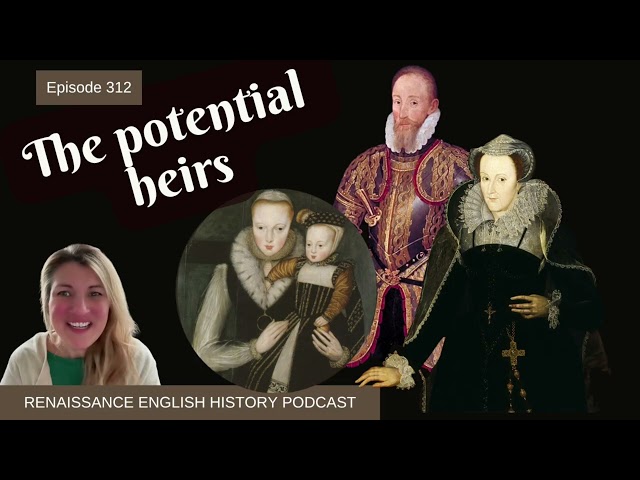
    Elizabeth I’s potential heirs represented three very different paths for England’s future. When Elizabeth I took the throne in 1558, she refused to name a successor, leaving courtiers and foreign powers to speculate who might inherit her crown. Katherine Grey embodied the Tudor bloodline and lawful claim, Henry Hastings offered Protestant stability and caution, and Mary Stuart carried the dangerous glamour of dynastic and Catholic ambition. Together, their stories reveal how Elizabeth’s silence on succession became one of her most powerful—and perilous—political strategies.

    Transcript of Three Who Might Have Ruled – Katherine Grey, Henry Hastings, and Mary Stuart:

    In November 1558, England gained a new monarch and a new problem. Elizabeth Tudor, twenty-five years old, unmarried, and childless, stepped into the role of queen with the weight of a dynasty balanced on a very thin thread. Her accession was met not with jubilation alone, but also with calculation from those who had survived the rapid-fire shifts of power.

    Under Henry VIII, Edward VI, Jane Grey’s nine days, and Mary I, they had learned one lesson very clearly: a crown without a clear next heir was not a blessing, it was a peril. The memory of 1553 still lingered. Edward VI had barely been in his grave before two rival queens, Jane Grey and Mary Tudor, had raised standards in their names.

    Armies had marched, proclamations were issued and revoked, and ordinary people had been forced to declare where their loyalties lay before the dust had even settled on Edward’s tomb. Nobody wanted a repeat performance, especially not with the added complication of foreign powers now watching England’s throne with more interest than ever.

    Yet from her very first council meetings, Elizabeth made one thing very clear: she would not name an heir. The succession question was not an administrative matter; it was leverage, and she intended to keep it close. Almost immediately, whispers began moving through court chambers and family estates alike.

    If Elizabeth died suddenly, who then was next? Three names rose again and again: Lady Katherine Grey, Henry Hastings, Earl of Huntingdon, and Mary, Queen of Scots. Each had a different claim. Each was backed by a different faction. Each was waiting for the crown’s silence to break.

    Today, we are going to talk about the heirs of Elizabeth I, especially very early in her reign. We will look at those early years, up until the mid-1560s, and consider who the presumed heirs were when people had not yet grown used to the fact that their queen was not going to marry. Everyone was very concerned about what would happen if she perished, and the main names that were thrown around and considered.

    Lady Katherine Grey: A Controversial Claim

    To understand why these three names rose above the others, it is necessary to go back and look at the paperwork left behind by Henry VIII. In 1544, Parliament passed the Third Succession Act, reaffirming the rights of Henry’s daughters Mary and Elizabeth to inherit after their brother Edward.

    But it also granted the king an unusual power, the right to designate the succession beyond his children. Henry’s final will, confirmed before witnesses and sealed with the Great Seal, did exactly that. After his own children, he named the heirs of his younger sister, Mary Tudor, through her daughters Frances Brandon and Eleanor Brandon.

    That meant that the Brandon descendants, the Grey sisters through Frances, and the Hastings line through Eleanor, were legally next in line. Conspicuously absent were the descendants of Margaret Tudor, Henry VII’s older sister, whose line had merged with the Scottish crown through James IV and James V.

    By leaving them out, Henry effectively declared that the throne of England should remain distinctly English and not fall under Scottish or, worse, French influence. This created a split in logic that would define Elizabeth’s reign: English law versus dynastic blood. By statute, Katherine Grey and Henry Hastings were legitimate successors. By lineage and international recognition, Mary, Queen of Scots, had the superior claim.

    So Elizabeth inherited a throne and also a legal contradiction, and around that contradiction, power began to gather. If one were to follow Henry VIII’s will to the letter, Lady Katherine Grey should have been the most obvious heir to Elizabeth. She was the granddaughter of Mary Tudor, Henry’s beloved younger sister, through her daughter Frances Brandon. On parchment, it looked very neat and settled, but in reality, her claim was wrapped in discomfort, scandal, and bitter memory.

    The Grey family had not yet recovered from its most infamous moment: the nine-day reign and execution of Lady Jane Grey, Katherine’s older sister. Jane’s brief and tragic brush with the crown had turned the Grey name into a warning. Her death in 1554, carried out by Mary I after Wyatt’s Rebellion, created a Protestant martyr figure and a ghost that haunted Elizabeth’s early reign. To acknowledge Katherine too openly as heir would not just raise a lawful successor, it would resurrect Jane.

    The other issue with Katherine Grey was that there were mutters that Charles Brandon, Duke of Suffolk, her grandfather, had technically still been married to Anne Browne when he married Mary Tudor. The legality of that union was later resolved, but in an age obsessed with marriage contracts and sacrament, the shadow of doubt lingered. The whisper of illegitimacy clung to the Brandon and Grey line just enough to make things uncomfortable.

    Katherine’s fortunes under Mary I were far more favorable than many might have expected. Despite the consequences of her sister Jane Grey’s brief reign and tragic end, Mary did not hold Katherine responsible. She served at court, attended key ceremonies, and was one of the chief ladies-in-waiting. Most notably, she acted as Chief Mourner at Mary’s funeral. Katherine was treated with every respect as one of the queen’s blood, a recognition of her place in the royal hierarchy. This ceremonial role physically placed Katherine at the head of the mourning procession, signaling to ambassadors and courtiers alike that she ranked highly among the surviving Tudor women.

    But everything shifted once Elizabeth ascended the throne. Mary had included Katherine; Elizabeth conspicuously diminished her status. At Elizabeth’s earliest court celebration, Katherine was positioned behind women of lower birth, a visible sign of the queen’s intention to lessen her profile. De Feria reported to Spain that “the queen does not favor Lady Katherine and keeps her at a distance,” which summed up Elizabeth’s chilly treatment.

    Elizabeth’s unease with Katherine was deeply personal as well as political. Katherine represented lawful succession and the potential for producing heirs. Elizabeth, unmarried and constantly pressured on the matter of marriage and succession, found her cousin’s fertility and royal legitimacy a pointed contrast.

    Ambassadorial letters from these years often speculated on the likelihood that God might provide England with another heir if Elizabeth did not marry, a sentiment echoed in multiple reports, though not always in those exact words. Diplomatic observers noted that Elizabeth’s mood soured whenever Katherine was mentioned in court discussions. Venetian and Papal envoys described the queen’s coldness and dismissive attitude toward Katherine.

    In Tudor politics, even a smile could signal exclusion, and Elizabeth’s polite gestures were frequently understood to mask deeper reservations. Though Katherine herself rarely took an active political role, her passive position made her an ideal object of political schemes and plotting.

    Katherine’s situation became significantly more controversial in 1560 and 1561 when she secretly married Edward Seymour, son of the former Protector Somerset and nephew of Jane Seymour. Both brought powerful dynastic claims. Their union was politically dangerous and performed without Elizabeth’s permission, which was tantamount to treason. When Katherine was discovered to be pregnant, all hell broke loose. De Feria’s dispatches recorded concern that “Lady Katherine grows great with child, and the court murmurs that she will give England what the Queen has not.”

    Elizabeth’s response was immediate and severe. Upon discovering Katherine’s secret marriage, Elizabeth ordered both Katherine and Edward to be imprisoned in the Tower, where they were kept apart. Katherine gave birth to her first son, Edward Seymour, in the Tower in September 1561.

    Despite the harsh conditions, the couple managed to meet secretly, resulting in Katherine’s second pregnancy. Her second son, Thomas, was born there in 1563, but due to outbreaks of plague in London, they were later placed under house arrest. Katherine was kept in the custody of her uncle, Lord John Grey, at Pirgo in Essex, while Edward was confined elsewhere. These births caused considerable discussion, as each represented a potential Tudor heir born without the Queen’s consent.

    Henry Hastings: The Protestant Hope

    Now let us turn to Henry Hastings, Earl of Huntingdon, the Protestant candidate. If Katherine Grey represented the legal heir and Mary Stuart the glamorous dynastic threat, Henry Hastings, 3rd Earl of Huntingdon, stood for something far more measured—a controlled future shaped by counsel rather than crown.

    He was not a man of charisma or romantic speculation; he was no court superstar. To many observers, though, that was precisely his strength. Hastings was descended from George, Duke of Clarence, brother to Edward IV and Richard III, the Yorkist line that was older than the Tudors themselves. In a court that still remembered Bosworth and the usurpation of Richard III, that bloodline stirred quiet interest.

    An Italian observer noted with wry amusement that some in England “still speak of the House of York in a lower voice, as if it might rise again.” Hastings never invoked that lineage himself, but it hovered behind him like an ancestral banner. He had built a reputation as serious, pious, and disciplined. The Spanish ambassador, who reported on the personal habits of the English nobility with cutting precision, described Hastings as “the most virtuous of lords, a sober man who seeks to offend no party.”

    It was not a compliment so much as a warning. Hastings was clean, and clean men were hard to discredit. His household at Ashby-de-la-Zouch was run with almost Puritan severity. There was a lack of pageantry; it was seen as a godly house where they dined more on scripture than on luxury. To Protestant reformers like Cecil, that actually made him an ideal successor—staunch in faith, yet politically cautious.

    He could be trusted to maintain the Protestant settlement without the flamboyance or foreign entanglement that Mary Stuart embodied. There were factional advantages too. Hastings had married Katherine Dudley, sister of Robert Dudley, Elizabeth’s favorite and true love. That alliance made Protestants hopeful that, should Elizabeth die without issue, Dudley—and by extension, Cecil’s council—might rule through a compliant Huntingdon.

    One French report put it bluntly: “If this Earl were King, England should be governed by those who made him.” Unlike Katherine Grey or Mary Stuart, Hastings drew no emotional commentary. Ambassadors did not describe him as dangerous or tragic; instead, they called him safe.

    Importantly, Hastings never openly lobbied for his own claim. That aloofness actually helped him. Katherine Grey had married dangerously. Mary Stuart had let France proclaim her Queen of England. Hastings, by contrast, appeared modest and controllable. He simply kept his head down.

    He served Elizabeth loyally and let other men whisper on his behalf. People generally thought he was a safe bet who would do little harm—which sounded like salvation. He offered loyalty without ambition, which made him useful to powerful men who preferred a monarch who could reign by counsel, not personal will.

    No songs were written about Henry Hastings. No romantic plots spiraled around his name. But while the court gossiped about Grey and trembled at Mary Stuart, the Protestant establishment kept his name quietly polished, ready to bring forward if Elizabeth left England without an heir and without direction.

    Mary Queen of Scots: The Dynastic Threat

    So Henry Hastings represented the quiet Protestant insurance policy, and Mary, Queen of Scots, was the exact opposite. There was nothing modest or quiet about her. While Hastings’ name appeared in council calculations and Protestant contingency planning, Mary’s name rang across Europe like a challenge.

    Hastings was described by ambassadors as harmless. Mary was spoken of in terms of destiny. To many outside England, she was not a possible heir; she was the rightful Queen of England, waiting only for God or politics to remove Elizabeth. Mary was the granddaughter of Margaret Tudor, Henry VIII’s older sister.

    And unlike the Grey or Hastings claim, her lineage could be traced in a straight, unbroken line from a lawful Tudor marriage. More importantly, she was already a crowned queen, an anointed monarch of Scotland since infancy, and for a brief window, her claim seemed unstoppable. As wife to Francis II of France, she stood poised to become Queen of France, Queen of Scotland, and, in French eyes, Queen of England.

    From the moment Elizabeth took the throne, French coinage and court ceremony began referring to Mary as Queen of England. It was an insult recorded with alarm in English diplomatic letters. The Spanish ambassador observed that “the French speak more of the Scottish queen’s right than of their own king’s glory,” noting that Mary’s claim had become a rallying cry, not just a legal argument.

    Mary herself understood the value of spectacle. She cultivated image and presence, something neither Katherine Grey nor Henry Hastings ever did. She was described as graceful, learned, and exceedingly conscious of her station. Her letters to Elizabeth were outwardly courteous but always written from one sovereign to another, not from a supplicant or a dependent.

    The Bishop of Ross, Mary’s representative, noted that she would never address the Queen of England as a lesser, but always as one equal born. And the Spanish ambassador de Quadra reported that “Elizabeth fears that the Scottish queen carries herself too much as queen of all realms.”

    Mary asked repeatedly for a personal meeting with Elizabeth, hoping to secure recognition or at least a public statement confirming her place in the succession. Elizabeth always delayed, evaded, or redirected. The two queens would never meet, and religion only sharpened the divide.

    Mary was Catholic, tied to the powerful Guise faction in France. Then Elizabeth made a move that turned Mary’s court ice cold: she sent aid to the Huguenots, the Protestant rebels fighting Mary’s French relatives. It was seen as a deliberate act of hostility that ended any hope of diplomatic warmth between them. At the time, it was believed that the Scottish queen would never forgive the English aid to heretics, and Mary seemed to believe that the Queen of England was making war upon her very blood.

    Mary’s presence in European politics had real emotion, where Hastings inspired caution and Katherine inspired uneasy sympathy, Mary stirred passion—hope among Catholics, dread among Protestants, and a dangerous fascination in between. Foreign envoys did not ask if she would make a move on England; they asked when. And when Elizabeth played her long game of ambiguity and delay, Mary’s claim gathered momentum outside her control—a train already moving, powered by crowns, churches, and rumor.

    Margaret Douglas and the Lennox Claim

    So then, let us talk about a minor player: Lady Lennox, Margaret Douglas. Katherine Grey was languishing under her house arrest. Henry Hastings remained a quiet contingency. There was a fourth presence hovering at the edges of the succession question—not an official heir, not yet dangerous, but unmistakably alert to opportunity. And that would be Margaret Douglas, Countess of Lennox, the daughter of Margaret Tudor, Henry VII’s older sister, by her second marriage to Archibald Douglas, the Earl of Angus.

    That birth gave her a direct Tudor bloodline. She was first cousins with Elizabeth I, and unlike Mary Stuart, she lived in England, watched the court daily, and studied Elizabeth with the cold patience of someone who believed fortune could still turn in her favor. She had spent time in the Tower under both Henry VIII and Mary I, usually for overreaching in marriage politics.

    She had a secret marriage in the summer of 1536 that was portrayed very vividly in Wolf Hall. I actually did several videos on that secret marriage on my YouTube channel, so I will not go back and go through all the details right now. She fell in love and had this secret liaison with Lord Thomas Howard, a younger son in the powerful Howard family, and Henry VIII was very upset about that and punished them both severely. Thomas Howard actually died in the Tower because of that liaison, that relationship.

    Henry Darnley: A Prince Born of Two Royal Lines

    So Margaret Douglas was no stranger to marriage politics. Her son, Henry Darnley, was the product of deliberate dynastic pairing. Of course, his mother had direct Tudor blood as the daughter of Margaret Tudor, and his father, Matthew Stewart, Earl of Lennox, descended from James II of Scotland, making Darnley a Stewart prince by birth.

    In him, two royal lines met: Tudor and Stewart. Margaret raised him with full awareness that this made him uniquely viable. Unlike Mary Stuart, Darnley had been born in England, raised speaking the language of the English court, and could be presented as a domestic Tudor heir rather than a foreign Catholic monarch.

    Elizabeth recognized immediately that Margaret Douglas was raising a marriageable male heir who could, if matched with Mary Stuart, unite the Scottish and English succession claims into one bloodline. This was not an official claim. It was more like a threat that lingered, just floating in the wind.

    So from the moment she took the throne, Elizabeth ruled not just as a queen but as the single barrier between order and another succession crisis. She understood immediately that naming an heir would create more danger than security. The moment one candidate was acknowledged, every other faction would rally against them, and England would once again fracture into competing loyalties.

    Elizabeth employed ambiguity as policy. When Katherine Grey produced two sons in captivity, Elizabeth refused to see them, and foreign ambassadors reported that she would not even speak their names. To acknowledge them was to make them real. Katherine existed, but politically she was treated as something closer to a legal problem than a living kinswoman.

    Henry Hastings, meanwhile, was kept close to court but never elevated. He received positions of responsibility without influence. Present but neutralized, Cecil and the Protestant council kept him quietly positioned like a spare key, useful only if all else failed. Hastings was allowed proximity but never a platform.

    Mary, Queen of Scots, was handled with distance. Elizabeth delayed every request for a meeting, drawing it out with polite deferrals, keeping Mary always in motion but never in reach. When foreign diplomats pressed her, Elizabeth issued the same careful line: “I know no heir but the one God shall send me.” It was less a statement of faith than a weaponized refusal, a way to shut down conversation without giving anything away.

    By refusing to designate a successor, Elizabeth turned every potential heir into a figure of uncertainty rather than legitimacy. Katherine Grey became a prisoner, not an heir. Hastings became a possibility, never a promise. Mary Stuart became a threat, not a certainty. This was Elizabeth’s strategy, and it kept her throne firmly hers.

    By the early 1560s, none of these three main heirs were advancing, and none were disappearing either. Katherine Grey was still confined, still producing Tudor sons out of sight. Henry Hastings was moving with silent discipline through the court, useful but deliberately unexciting. Mary Stuart circled from Scotland, her letters gracious but edged like a blade. Everyone was waiting for Elizabeth to move first, and she never did.

    Stillness became its own form of pressure. As the 1560s unfolded, the succession question became less about ambition and more about endurance. Each potential heir remained in play, but none with momentum. Katherine Grey was turning into a quiet tragedy. Shut away, her children were growing up as political inconveniences rather than princely assets. She had done what a Tudor woman was meant to do: she had produced heirs, and for that she was punished.

    Henry Hastings continued to serve Elizabeth with faultless loyalty, neither favored nor dismissed, existing in that strange limbo reserved for men who are useful so long as they never ask for more. His house remained orderly, his reputation spotless, which made him seem almost too perfect, too managed. A spare monarch waiting in a cupboard, never taken out.

    And Mary, Queen of Scots, was the heir of conversations, of rumors, of foreign correspondence, a queen who could not step onto English soil without changing the entire game. Through it all, Elizabeth outlasted the tension by refusing to blink. The court held its breath, and she never exhaled.

    Looking back, it is tempting to see all three of them—Katherine, Henry, and Mary, Queen of Scots—as pieces in a game that Elizabeth had already won. But in the first years of her reign, nothing felt secure, and none of them knew how long Elizabeth would live or whether England would once again be thrown into frantic allegiance-making at the death of a monarch. They waited in their prisons, council chambers, and foreign courts while Elizabeth mastered the art of ruling by absence, keeping the future deliberately unwritten.

    Katherine died in custody. Hastings faded into dutiful obscurity, and Mary walked straight into the tragedy that would end on the scaffold at Fotheringhay. In the end, none of them wore the crown they circled. The question that haunted the 1560s—who comes after Elizabeth—would be answered not by any of those early heirs, but by a child born outside of this story, in the next generation entirely.

    So there we have it, a little bit on the uneasiness of the presumed heirs in the 1560s.

    Related links:

    Episode 085: Tudor Times on Mary, Queen of Scots
    The Greys: From Elizabeth Woodville to Lady Jane Grey

  • The Percy Family Rebellion: 200 Years of Defying the English Crown

    The Percy Family Rebellion: 200 Years of Defying the English Crown


    The Percy Family Rebellion is one of the most dramatic and enduring sagas in English history—a two-century tale of loyalty, betrayal, and relentless defiance against the Crown. From the fiery rise of Henry “Hotspur” Percy to the doomed uprising of the 7th Earl in the Rising of the North, the Percys of Northumberland were at the center of nearly every major northern rebellion between the 14th and 16th centuries. Unlike other noble families who mastered the art of political survival, the Percys seemed drawn to conflict, often choosing rebellion over compromise—no matter the cost.

    Let’s uncover why the Percy family couldn’t stop rebelling, how they kept coming back after ruin, and why their name became both feared and legendary in the volatile world of Tudor and Plantagenet politics.

    Transcript of The House That Couldn’t Stop Rebelling: The Percy Family’s 200-Year War with the Crown

    Some noble families seemed to have a talent for survival. They knew when to flatter, when to step back, and when to switch sides if the winds changed. And then there were the Percys. If you were a monarch from the 14th century through to the 16th century, there was one family you always had to keep an eye on.

    That was the Percys of Northumberland. They were proud, they were powerful, and they were catastrophically bad at staying out of trouble. Their story isn’t just one rebellion. It’s a pattern, a rhythm, from Henry “Hotspur” Percy challenging Henry IV to later generations joining uprisings against the Tudors.

    The Percys just couldn’t seem to help themselves. There was something about being that close to the Scottish border and that far from royal oversight that gave them ideas—dangerous ideas. So today we are going to look at how one noble family found themselves at the center of nearly every major northern rebellion for over two centuries, and ask why they kept doing it, even when it got them killed multiple times.

    So let’s talk about the Percy family, starting with Hotspur riding out. To understand the Percy rebellion streak, we have to start with the one who practically wrote the playbook: Sir Henry Percy. Better known as Hotspur, he was born in 1364 as the eldest son of Henry Percy, 1st Earl of Northumberland. He grew up in a family that was essentially the crown’s military muscle in the north.

    They were wealthy, deeply entrenched in northern politics, and essential for keeping Scotland at bay. Under Richard II, the Percys were rewarded with lands, offices, and royal favors. But like many families during Richard’s reign, they grew uneasy with the king’s erratic behavior. They threw their support behind Henry Bolingbroke, who took the throne in 1399 as Henry IV, thanks in no small part to Percy help. But the alliance soured fast.

    The Percys felt that they weren’t being properly compensated for their loyalty and military efforts. Hotspur, in particular, bristled under the new king’s rule. Tensions exploded in 1403 when Hotspur openly rebelled. He joined forces with Owain Glyndŵr, the Welsh rebel, and Thomas Percy, his uncle, known as the Earl of Worcester.

    The rebellion culminated in the very bloody Battle of Shrewsbury. Hotspur died in the thick of it, fighting against the very king that he helped to crown. His body was actually cut into quarters and displayed publicly as a warning to anyone else who was feeling ever so slightly rebellious. It was a stunning downfall, but it did not end the Percy line.

    The family name and titles were too important, and later monarchs could not afford to alienate all of the northern lords. So over time, the Percys were rehabilitated, only to start the cycle over again.

    Hotspur became a bit of a folk hero, thanks largely to Shakespeare, who portrayed him in Henry IV, Part One as a fiery, impulsive warrior and a foil to the more politically savvy Prince Hal. But the real Hotspur was not just a romantic rebel. He was part of a family with serious ambitions and a knack for misreading the room and when it was safe to act on those ambitions.

    After Hotspur’s rebellion ended in blood and body parts, you would think the Percy family would vanish from history, or at least have learned their lesson. But no, this was only the first act. The title of the Earl of Northumberland was forfeited after the rebellion, but the Percy lands in the north were still there, still valuable, and still a political problem for whoever was sitting on the throne.

    The region needed strong governance, preferably by someone who could rally local support, command men in a hurry, and knew the lay of the land. In other words, someone exactly like a Percy.

    By the 1410s, Henry V, ever the pragmatist, realized that he could not govern the north without them. So, in a very Tudor precursor move, he restored the title Earl of Northumberland to Henry Percy, Hotspur’s son, in 1416. He had been raised in exile in Scotland, but even that did not stop him from becoming essential to the defense of the realm.

    This is the beginning of a pattern. The crown removes the Percys when they rebel, only to call them back a generation later when it turns out that no one else can manage Northumberland without sparking chaos. The Percys themselves seemed to understand this too, and they used it to their advantage.

    Under Henry VI, the Percys became dominant again, though by then they had a new problem—a rival family, the Nevilles. The Percy–Neville feud was not just a localized tiff. It turned violent and personal, and at times embarrassingly public. It was a full-blown aristocratic street fight over land, honor, and influence.

    And when the Wars of the Roses broke out, both families jumped into the fray on opposite sides.  The Percys chose the Lancastrian cause. The Nevilles were backing the Yorks, especially after Richard Neville, the so-called Kingmaker, married into the Yorkist line.

    So once again, the Percys found themselves on the losing side of a civil war. At Towton in 1461, the bloodiest battle ever fought on English soil, Henry Percy, 3rd  Earl of Northumberland, died fighting for Henry VI. His heir was a child, his lands were forfeited yet again, and the family honor was thrown into yet another period of disgrace.

    But just like before, they did not stay down for long. The Wars of the Roses were a kind of dynastic nightmare that tested every noble family’s survival instincts. Some hedged their bets. Some switched sides mid-battle. The Percys, naturally, went all in on the wrong horse.

    After the 3rd Earl of Northumberland was killed at Towton in 1461, his heir, Henry Percy, the future 4th Earl, was just a boy. And the Yorkist king, Edward IV, was not about to let a Percy hold power in the north again. The earldom was stripped, and the Percy lands were handed over to—wait for it—you guessed it, the Nevilles.

    It was a purposeful insult, one that rubbed salt into an already gaping wound. The Percys were locked up, their retainers were scattered, and their status as northern overlords was replaced by the very family they had been feuding with for decades.

    That should have been the end. But Edward IV was not a fool, just a realist. By the early 1470s, he needed the north stabilized. Warwick the Kingmaker had fallen out of favor, switched sides, and died in battle. The Neville grip on the region loosened, and suddenly restoring a Percy did not seem like such a bad idea.

    So in 1473, Edward released the young Henry Percy from the Tower, and two years later officially restored him as the fourth Earl of Northumberland. Once again, the Percys were back. This is key: they were never quite as powerful again. They were watched more closely, their lands were fewer, and the trust was gone.

    The family had been branded with the stink of rebellion, and though they were politically useful, they were no longer irreplaceable. Still, the fourth Earl walked a careful line. He served Edward IV loyally. He helped to maintain order and even attended Richard III’s coronation.

    But when Richard’s reign started to wobble, Percy hesitated. At the Battle of Bosworth in 1485, he commanded a reserve force but never committed his troops. Whether that was indecision or sabotage is still debated by historians. Either way, Richard lost the crown and his life.

    And you might think that Henry Tudor would reward Percy for his well, non-committal treachery. But Henry VII did not trust anyone with a reputation for playing both sides. And in 1489, when Percy tried to collect taxes on Henry’s behalf in Yorkshire, angry locals murdered him. A brutal end, and yet somehow the line still survived.

    Because of course it did. The Percys were like political weeds. They were trimmed back by force but always growing back with new shoots. And with the Tudors now in power, a new chapter of rebellion was just around the corner.

    By the 1530s, England was in upheaval again, but this time it was not about rival dynasties. It was about faith. Henry VIII’s break with Rome and the beginning of the English Reformation tore through the country’s political and spiritual foundations. Nowhere did the earth shake harder than in the north.

    Enter Henry Percy, 6th Earl of Northumberland. If ever there was a Percy who did not want to rebel, it was this one. He was sickly, childless, and politically cautious. The 6th Earl had zero appetite for uprisings. But unfortunately for him, he was surrounded by people who did.

    In 1536, when the Pilgrimage of Grace broke out—this massive northern rebellion in response to the dissolution of the monasteries and Cromwell’s religious reforms—the Percy name was once again at the center of it all. The Earl did not participate, but his younger brother, Sir Thomas Percy, did enthusiastically.

    Thomas joined the rebel cause, which called for the restoration of Catholic practices, the removal of Cromwell, and the protection of traditional monastic institutions. The rebels marched under the banners of the Five Wounds of Christ, mixing religious symbolism with open political defiance.

    The 6th Earl was caught between loyalty to the crown and sympathy for his family and his region, and he suffered a literal nervous breakdown. He was dragged into this mess by association, forced to swear loyalty to the king multiple times. He ultimately died in 1537 without an heir.
    Thomas Percy, meanwhile, was arrested and executed in 1537 for his role in the rebellion. His death was gruesome and public—hanged, drawn, and quartered—and it once again marked the end of a Percy branch, or so it seemed.

    But wait, because of course the Tudors could not manage the North without a Percy. Henry VIII, with all of his contradictions, allowed the title to lie dormant but kept the Percy lands in play. Young Thomas’s son would eventually be restored as the 7th Earl of Northumberland under Queen Mary.

    The Percys had now been removed and restored more times than anyone could count, and the pattern was becoming unmistakable. Every time they regained their footing, someone—usually a younger brother or a cousin—would stick a toe back in the rebellion pool and drag the entire family down under again.

    The next chapter would be the most spectacular one of all. One final blowup: big, loud, and utterly disastrous. And that was the Rising of the North. By the late 1560s, it was clear that Elizabeth I was not budging on religion. The Protestant settlement was here to stay, and anyone clinging to the old faith had to either keep quiet or risk everything.

    The Percys naturally risked everything. Thomas Percy, 7th Earl of Northumberland, had been restored to the earldom during the reign of Mary I, who was a Catholic. But under Elizabeth, he found himself increasingly marginalized. His conservative Catholic beliefs made him a suspect figure at court. His influence in the North, while still formidable, was carefully monitored.

    Meanwhile, Elizabeth’s Protestant regime was pushing hard to root out recusants. Priests were being hunted, masses were held in secret, and rumors were flying about Mary, Queen of Scots, who was being held under house arrest in England after fleeing her own kingdom.

    To Catholic nobles like Percy and Charles Neville, Earl of Westmorland, the situation was intolerable. They began plotting what would become the Rising of the North in 1569, a full-scale rebellion meant to restore Catholic worship and place Mary Stuart on the English throne.

    It was bold. It was theatrical. And it was a disaster. The plan was to seize control of the North, rally support from discontented Catholics, and march south to free Mary. The two Earls gathered an army of 6,000 men and raised the old religious banners—the Five Wounds of Christ—once again. They even held a mass in Durham Cathedral, an act of open defiance that left no room for forgiveness.

    But the rebellion was hopeless from the start. Mary, Queen of Scots, was swiftly moved further south under an even tighter guard. The Catholic gentry wavered. The promised support from Spain never arrived, and Elizabeth’s forces under the Earl of Sussex responded quickly and with overwhelming force.

    The rebels scattered. Westmorland escaped abroad, never to return. Thomas Percy was captured, handed over by the Scots after a year in hiding. His fate was sealed. In 1572, he was executed in York. His head was placed on a spike over Micklegate Bar, the same gate where traitors’ heads had been displayed for generations. His body was buried secretly, but later venerated by Catholics. In 1895, he was made a saint by the Pope. He is now known as Blessed Thomas Percy, a martyr to the Catholic cause.

    Beatification did not help the Percy family. Their lands were seized again. The name was tainted again. And this time, even though the title would be passed down in various forms, their political power in the North was permanently broken. It was the last great rebellion of the old northern lords, and fittingly the last time that the Percys would lead it.

    So over nearly two centuries, the Percy family managed to insert themselves into almost every major uprising against the crown—not just once, but over and over again. It was practically the family business.

    They backed Henry Bolingbroke, then rebelled against him. They supported the Lancastrians, then lost everything at Towton. They were restored by the Yorkists, then stood by at Bosworth. They dabbled in the Pilgrimage of Grace. They went all in on the Rising of the North. And every time it ended the same way: rebellion, disaster, forfeiture, and then somehow a comeback—until finally, they ran out of comebacks.

    The later Percys, stripped of real political power, did what most formerly rebellious nobles eventually had to do. They turned inward, focused on their estates, built stately homes, collected art, married well, and tried very hard not to get executed.

    You can still see the remnants of their old world today at places like Petworth House or in the heroic lion that once stood for northern authority and battlefield bravery. But behind all that grandeur, there is their history of ambition, miscalculation, and spectacular inability to know when to sit still. They were not cursed. They were just Percys, and that, as it turns out, was actually dangerous enough.

    Related links:
    Episode 085: Tudor Times on Mary Queen of Scots
    Episode 052: Rebellions Part Two

  • Top 5 Tudor Mistakes: Blunders That Cost Lives, Crowns, and Countries

    Top 5 Tudor Mistakes: Blunders That Cost Lives, Crowns, and Countries


    Top 5 Tudor mistakes that changed the course of history include a mix of political missteps, personal misjudgments, and catastrophic power plays that still fascinate historians today. From botched rebellions and reckless diplomacy to deadly family decisions, these moments reveal just how perilous life could be in Tudor England. In a world where one wrong move could lead to execution or exile, the stakes were always high. This list explores the worst of the worst—decisions so bad they shaped the fate of individuals, dynasties, and nations.

    Transcript of Top 5 Tudor Mistakes: Blunders That Cost Lives, Crowns, and Countries

    Have you ever read a Tudor biography and found yourself shouting, “No, don’t do it! Don’t do it!” when the person you’re reading about is doing something that you know is not going to end well? Well, you’re not alone in that. The Tudor era is a goldmine of dramatic decisions and colossal miscalculations.

    Some of these errors cost people their lives. Others damaged England’s position on the world stage. And some were just downright embarrassing. So today, we are going to count down five of the worst Tudor mistakes.

    Some are personal disasters, like a father who managed to get his daughter executed after she had already been spared once. Others involve misguided diplomacy, espionage gone wrong, and rebellions that probably should have stayed as diary entries. Let’s dive into the top five Tudor mistakes.

    I’m delighted that you are here with me, and today, like I said, we are going to count down the top five really bad decisions of the Tudor period. I would love to know what you think about this list when we get done. Are there ones that I included that you wouldn’t have? Or are there ones that you would have included that I didn’t? Let me know in the comments after the video.

    5. Katherine Parr’s Dangerous Debate

    Let’s get started with a really bad decision: to argue theology with your very broody husband, who was very changeable and also could have you killed. And that’s what Katherine Parr did. Katherine Parr was Henry VIII’s sixth and final wife, and unlike her immediate predecessor, she was really, really intelligent. And she somehow managed to live to tell the tale of being married to Henry, but just barely, by the skin of her teeth.

    Katherine was a reform-minded Protestant who enjoyed debating religious doctrine. The problem, of course, was that her husband had zero tolerance for being contradicted, especially by a woman, and especially when he was in a bad mood, which was often, thanks to his festering ulcers and general paranoia.

    Katherine also had a lot of enemies among the conservatives at court who wanted to bring her down and basically tear apart the Protestant movement anyway. So, you know, it really wasn’t a good time to be arguing theology in general when you’re queen, and especially not when you’ve got a husband like Henry.

    According to John Foxe’s account, Katherine got into theological discussions with Henry and pushed her evangelical views a bit too far. The conservative Bishop Gardiner saw an opportunity and convinced Henry that she was becoming a subversive influence.

    A warrant for her arrest was drawn up. Now, Katherine was tipped off just in time. She went into full damage control. She threw herself at Henry’s feet, claimed that she only ever argued to distract him from his pain and to benefit from his superior wisdom. She was, after all, a woman, and she desperately needed his guidance.

    And that flattery hit the spot. When the guards arrived to arrest her, Henry actually sent them packing with a beating. Moral of the story: never assume that you can debate with Henry VIII, even if—and maybe especially when—you are his queen.

    4. Essex’s Rebellion

    Let’s talk about the number four spot: Essex’s Rebellion, a vanity project that kind of got out of hand. By the late 1590s, Robert Devereux, Earl of Essex, had fallen hard from favor. His campaign in Ireland had been an expensive catastrophe. Troops were dying of disease, morale was crumbling, and Essex quietly negotiated a truce with the rebel leader Hugh O’Neill—behind Elizabeth’s back, no less. And then, in a move that somehow managed to be both reckless and theatrical, he disobeyed orders and rushed back to England.

    Still in his travel-stained gear, he burst into Elizabeth’s private chambers unannounced. For a queen obsessed with image and protocol, this was beyond shocking. She kept her cool, but Essex had crossed the line, and everyone knew it.

    What followed was one of the most misguided coups in English history. In February 1601, Essex raised a pitiful rebellion—that really is the only word to describe it—hoping that the people of London would rally to his cause and help him overthrow Robert Cecil and reclaim his place by the Queen’s side.

    Except they didn’t, and the whole thing fizzled out by dinnertime. Essex was arrested, tried, and executed. His mistake: arrogance, misreading the mood of the nation, and most fatally, thinking Elizabeth would forgive him one more time when she didn’t.

    3. The Lopez Affair

    Let’s talk about number three: the Lopez Affair, spy games, and scapegoating. Dr. Rodrigo Lopez was Queen Elizabeth’s personal physician. He was also a Portuguese-born crypto-Jew, a skilled courtier, and, just to complicate things, a part-time spy—a little side hustle going on. It was a career that required a lot of caution, and unfortunately, Lopez miscalculated just how dangerous Elizabeth’s court could be.

    After the death of his patron, Francis Walsingham, Lopez kept playing the espionage game, juggling communication with Spanish and Portuguese agents, trying to broker peace talks between Elizabeth and Philip II, likely with dreams of retirement and a hefty reward.

    Enter Robert Devereux, the aforementioned Earl of Essex, who we just talked about—bold, ambitious, and still eager to prove his loyalty. Essex accused Lopez of plotting to poison the queen, presenting it as a Spanish-backed conspiracy. Was there a real plot? Almost certainly not. But Lopez’s web of secretive dealings gave Essex just enough threads to twist into a rope.

    Lopez was convicted of treason, and he was hanged, drawn, and quartered in 1594. He died protesting his innocence, crying out that he loved the queen as much as he loved Jesus Christ. That line, considering he was a crypto-Jew, only fueled antisemitic mockery. Lopez’s fatal mistake was not treason. It was thinking that he could outmaneuver the power players without protection.

    His protection had died—Francis Walsingham was gone—and so too was the idea that Elizabeth’s court had room for independent operators. There were no independent contractors at Elizabeth’s court.

    2. The Rough Wooing

    All right, number two: the Rough Wooing. Henry VIII tries diplomacy with a sledgehammer. Let’s talk about a mistake that left scorch marks across Scotland. In 1542, James V had died, leaving behind his six-day-old baby, Mary, Queen of Scots. Henry VIII, ever the opportunist, saw a golden opportunity: marry his son Edward to baby Mary and unite the two kingdoms under English control. Easy peasy, lemon squeezy. He even got a treaty signed—the Treaty of Greenwich—which said that Mary would be sent to England when she was ten years old.

    Now, Henry, being Henry, gets impatient. He demands that the baby be handed over immediately, which naturally enrages the Scots. Of course it does. They tear up the treaty before it is even ratified, and instead of dialing it back a little bit, like you might do, Henry does not. He goes full scorched earth. Literally.

    He launched a brutal campaign through the Borders, burning, looting, pillaging, and general rampaging, known later as the Rough Wooing. Because, of course, there is no better way to get a girl to pay attention to you and marry you than to make war on her country.

    It is a disaster. Far from winning hearts and minds, Henry’s violence pushed the Scots straight into the arms of the waiting French, and Mary was whisked off to France, betrothed to the Dauphin. England lost any real chance of a peaceful union.

    This, of course, was not just a failed diplomatic plan. It was a flaming public relations nightmare that fueled resentment for generations. Now, of course, England would be united eventually under that same line when Mary’s son, James VI of Scotland, became James I of England and there was the Union of the Crowns a hundred years later. But it was not the way Henry had intended, and the Rough Wooing certainly cost England a lot in treasure, lives, and general goodwill.

    1. Jane Grey’s Father’s Fatal Rebellion

    Now, what I think is the number one dumb move of the Tudor period is Jane Grey’s dad starting a rebellion while she is in the Tower. Let’s talk about it. Lady Jane Grey had already lost everything—her crown, which she did not even want, her freedom, and most likely her future—when her father decided to make things worse.

    After Mary I’s succession in 1553, Jane, who had reigned for just nine days, was imprisoned in the Tower of London. Although she had been the figurehead of the attempted Protestant succession, Mary seemed inclined to spare her. She recognized that Jane was young and was probably a pawn, manipulated by more powerful figures, including her own father, Henry Grey, Duke of Suffolk.

    But then, in early 1554, Jane’s father decided to throw his lot in with Wyatt’s Rebellion, a rising meant to stop Mary’s marriage to Philip of Spain. It failed spectacularly. The rebels were scattered and Suffolk was captured. The fallout was swift. Jane was already a figurehead of one failed coup, and suddenly she became a liability. She and her husband, Guilford Dudley, were executed soon after.

    It is hard to imagine a more dumb, self-defeating move. Your daughter is in the Tower awaiting judgment, and you launch a rebellion against the woman who is holding her fate in her hands. If Jane had any chance of survival at all, her father’s rebellion certainly sealed her doom.

    I mean, it would have been really smart to go to Mary and say, “Hey, there’s this rebellion being planned. Hey, why don’t you also release my daughter?” But, you know, that did not happen. Bad decision-making. So many bad decisions all around.

    Anyway, Tudor England did not have much room for error. One bad decision could cost you, or your daughter, their head and spark a war. These five blunders show how ambition, vanity, and really bad timing could unravel careers, cost lives, and change the course of history. So next time you are thinking about a decision, weighing options and thinking, “Ah, surely it will work out, it will be fine,” the Tudors thought that too.

    Anyway, let me know in the comments which other bad mistakes or moves you would have included, and which you think should be added to the list. Maybe we will do a follow-up on this.

    Related links:

    Episode 093: Tudor Times on Katherine Parr
    The Tumultuous Relationship of Elizabeth I and Robert Devereux
    Episode 157: The Rough Wooing
    Elizabeth I’s Spy Network: The Hidden Web that Safeguarded a Queen
    The Execution of Lady Jane Grey

  • Tudor Controversies That STILL Spark Debate: Jane Grey, Seymour, and Mary, Queen of Scots

    Tudor Controversies That STILL Spark Debate: Jane Grey, Seymour, and Mary, Queen of Scots


    Tudor controversies continue to captivate historians and enthusiasts alike, sparking debate centuries after the events unfolded. From the legitimacy of Lady Jane Grey’s brief reign to the execution of Mary, Queen of Scots, these pivotal moments raise questions about power, politics, and personal conviction.

    Let’s dive into four of the most hotly debated Tudor controversies: Should Katherine of Aragon have stepped aside? Was Elizabeth I right to sign Mary’s death warrant? Did Thomas Seymour truly deserve execution? And was Henry VIII’s will ultimately meaningless? These enduring disputes offer more than just historical drama—they reflect timeless dilemmas that still resonate today.

    Transcript of Tudor Controversies That STILL Spark Debate: Jane Grey, Seymour, and Mary, Queen of Scots

    Should Lady Jane Grey have actually been called Jane I? This is one of the many, many topics that Tudor enthusiasts still debate centuries later. I put a poll up last week to ask people what they thought, and the results were pretty mixed. It’s clearly something we still have thoughts and opinions about, so thank you to everybody who filled that out.

    There are so many moments like that in Tudor history—these kinds of sliding glass doors, what-ifs, and decisions that were made that we can still argue about. Reasonable people can still disagree, and it’s really fun to get into those debates, to look at those big controversies like: Was Elizabeth I right to have Mary, Queen of Scots, executed? Did Henry VII’s will actually matter? Should Thomas Seymour really have been executed? Should Katherine of Aragon have stepped aside?

    These are big questions that actually change the arc of Tudor history, and there are still people on both sides who disagree, who argue for one side or the other. So today, we’re going to talk about four of the biggest controversies of Tudor England. I’ll tell you my opinion on them at the end—I’m not going to get into it while I’m reporting, but I will tell you at the end.

    The first one we’re going to start with is: Should Katherine of Aragon have stepped aside? Katherine of Aragon was no stranger to sacrifice. She had been a Spanish infanta, raised to believe that her destiny was to be queen. She was the daughter of a warrior queen—Queen Isabella—and she held onto that belief. She was forceful about that belief.

    But what if she had let go? What if, instead of digging in her heels during Henry’s Great Matter, she had actually just stepped aside? And there was, in fact, a precedent for this. A few decades earlier, Joan of France, Duchess of Berry, had been the wife of Louis XII. Their marriage was annulled, and she retired to a convent in Bourges.

    Now, Joan had married Louis XII in an arranged marriage, but he annulled it so that he could marry Anne of Brittany. Joan went on to found the Order of the Annunciation and was later canonized as a saint. So that’s an example of what Katherine of Aragon’s path might have been, had she stepped aside.

    Katherine had already given Henry a daughter. It was clear she wasn’t going to have any more living children, and she could probably understand that Henry needed a male heir. She knew what England had gone through with the Wars of the Roses. So if she had gracefully exited the stage—perhaps claiming a religious calling—Henry might have remarried without launching a full-scale rebellion against Rome.

    So I think it’s one of those big ironies: Katherine was fighting so hard to keep England Catholic, to keep herself as queen, to keep England loyal to the Pope, that she actually kind of forced Henry into this rebellion. If she had let go, it’s very possible that England would have stayed Catholic. There wouldn’t have been a Thomas Cromwell. There wouldn’t have been a Cranmer. There wouldn’t have been a dissolution. No break from the Pope.

    It’s an irony that’s kind of too big to ignore: in fighting to remain queen, Katherine may have set into motion the destruction of everything she was trying to protect. Stepping aside was never really going to be an option for her. She wasn’t just a wife—she was a princess of Spain, the daughter of Isabella and Ferdinand. Stepping aside would have meant branding Mary a bastard, and that was never going to happen.

    So what do you think? Was Katherine right to have fought for her rights—for Mary’s rights? Or should she maybe have just stepped aside? Let me know.

    All right, the second one: Should Elizabeth have actually executed Mary, Queen of Scots? This is one of the biggest controversies of Elizabeth I’s reign. This one’s really tricky because we know how it ends. Elizabeth reluctantly, finally, signs Mary’s death warrant in 1587—and Mary, Queen of Scots, loses her head and gains martyrdom. It took Elizabeth 19 years to get to that point, and for almost every one of those years, people were telling her that execution was the smart move.

    The argument for execution was really straightforward: Mary had a legitimate claim to Elizabeth’s throne. We first have to look back at what Catholics believed about the marriage of Anne Boleyn to Henry VIII. Katherine of Aragon was still alive when Elizabeth was born, which meant that the marriage of Henry and Anne—in the eyes of Catholics, who did not think the marriage to Katherine had been dissolved—was bigamy.

    The marriage between Henry and Anne was an illegitimate marriage, and so that meant Elizabeth was an illegitimate child. So if you believed that, you looked to the next person in line for the succession—and it just happened to be a Catholic like yourself: Mary, Queen of Scots.

    Mary, Queen of Scots, was also the center of every major Catholic plot for two decades, especially the Babington Plot, which finally sealed her fate. As long as Mary lived, Catholic Europe had hope. But Elizabeth hesitated again and again. Killing a fellow monarch was unthinkable. Can you imagine if the roles had been reversed—if she were kept prisoner somewhere and someone killed her?

    It wasn’t just about guilt—it was about precedent. It set the example that a fellow monarch could be executed for being a threat. And then how would that ever stop someone from potentially turning that logic on her? Even when she finally relented, Elizabeth still performed this great pantomime of outrage when the warrant was carried out, claiming she never meant for it to happen. Was she being sincere, or clever, or cowardly?

    Either way, the execution did remove a threat. And though it created a martyr, it solved a problem. But it didn’t do it quietly. It actually directly led to the Armada. It ramped up the war with Spain, which cost thousands of other lives. So I don’t know—should she have executed Mary, Queen of Scots? What do you think?

    Next: Should Thomas Seymour have been executed? Thomas Seymour was equal parts ambitious, charming, and really reckless. The brother of Jane Seymour and uncle to Edward VI, Thomas managed to marry the dowager queen, Katherine Parr, only a couple of months after Henry VIII’s death—which scandalized Princess Mary, for example. And if that wasn’t bold enough, he started getting a little too friendly with the teenage Princess Elizabeth while living under the same roof. But was that enough to get him executed?

    The real issue wasn’t just Elizabeth—it was his attempt to break into the king’s chambers at Hampton Court, supposedly to check on the boy in the middle of the night. He also tried to manipulate his way into the regency. It was messy. It was desperate. It was not the least bit subtle.

    His brother, Edward Seymour—the Lord Protector—used this as an excuse to get rid of him. There’s also the idea that he quite possibly shot the dog—Edward’s dog. And anybody who comes to Tudorcon or watches Tudorcon online, whether in person or virtually, will remember that we have this ongoing debate about whether or not Tom actually shot the dog. Every year, Janet Whitman brings her little stuffed dog, and it’s become one of those bits of Tudorcon lore.

    Anyway, Edward said that Tom was committing treason. Tom was found guilty, and Thomas lost his head. Poor Edward VI—first having to execute one uncle, Tom Seymour, and then later having to execute Edward Seymour. That kind of trauma would’ve been enough to give Edward a headache—if not worse.

    Of course, Thomas lost his head—but was it necessary? Some argue that he was more fool than traitor. He was dangerous, sure, but perhaps only to himself. Others say he was just one lucky break away from taking over the kingdom. Either way, he didn’t live long enough for any of us to find out. What do you think—should Tom Seymour have been executed?

    And finally, the last question we’re going to look at today: was Henry VIII’s will meaningless? This comes back to whether or not Jane Grey should have been called Jane I. Henry VIII’s will was meant to be the final word on everything. He even had it signed with a dry stamp so that no one could claim he hadn’t approved it.

    It laid out a clear succession: Edward, then Mary, then Elizabeth. After them, the heirs of his younger sister, Mary Tudor—not the Scottish line descended from Margaret. But here’s the thing—Parliament never ratified any of the sections beyond Elizabeth. That means the succession order had no legal force once Elizabeth died.

    Edward tried to override it with his “Device for the Succession,” naming Lady Jane Grey—something Henry’s will did not allow. And then, when Elizabeth died in 1603, no one even glanced at the document. It was nearly 60 years old by that point. James VI of Scotland was crowned without any reference to it, despite being from the line of Margaret Tudor, whom Henry had explicitly left out. So was the whole thing performative? A way for Henry to feel like he was in control—even from beyond the grave?

    It turns out that once the king dies, paper doesn’t matter as much as power. And Henry’s carefully written future actually never came to pass. So what do you think about any of these? I’ll tell you my opinion.

    I’m an Episcopalian, so I’m actually quite happy that Katherine fought as hard as she did and that the Reformation came to pass in England—and came to pass the way it did. I still go to a church that uses the Book of Common Prayer, which came from Cranmer, so I’m a fan of that.

    But I think that from Katherine’s perspective—if you were fighting to keep Catholicism and to keep England loyal to the Pope—she actually really failed at that. And it kind of reminds me of the Zen Buddhist idea that “what you resist persists,” and the concept of detachment.

    She was so attached to her rights, so attached to England being loyal to the Pope and to her own role as queen, that she lost sight of what was actually happening: Henry was moving further and further away from Rome. And the whole thing just backfired spectacularly on her.

    I think things could have been so different for her. Also, not having seen her daughter for years… If she had just stepped aside and said, “You know what? My bad—you’re right, it was consummated, I was married to Arthur, we probably shouldn’t do this,” and had tried to understand Henry’s position—that he really needed a male heir—and also that he was falling for Anne Boleyn (and he’s the king, so he can kind of do that)… things might have gone very differently. Plus, there was precedent—Claude of France had stepped aside just a few decades earlier.

    Had Katherine done the same, she probably would have been given a very generous settlement. Look at what happened with Anne of Cleves—she got an amazing settlement. Katherine would likely have been sent to the convent of her choice. She was very religious anyway, so that might actually have suited her.

    She would have been able to continue seeing her daughter. And she probably could have negotiated a really strong marriage for Mary. Instead, Mary never married until she was too old to have children.

    It’s one of the great tragedies about Mary Tudor—that all she wanted for so long was a child. There were so many times when she was betrothed and it didn’t work out. My heart really goes out to Mary because she truly wanted to be a mother.

    The way she took care of Elizabeth—even though she had every reason to hate her—yet they were very close, and she looked at Elizabeth the way a mother would look at her child. I really feel for Mary that she never had that experience herself.

    I think Katherine actually wound up hurting Mary more—and hurting her own cause more—because then Mary had this whole vendetta to bring England back to Catholicism. And look at how poor Mary is remembered now—as “Bloody Mary.” The whole thing, I think, just backfired spectacularly on Katherine.

    So from Katherine’s perspective, I see it as a failure. She probably should have stepped aside, and I think things might have worked out a lot better for her. But I also understand—she was the Spanish infanta. She was the daughter of Isabella and Ferdinand. She was not going to give up. And I get it.

    But again, I come back to that idea: “What you resist persists.” She resisted so much, and it persisted—and it didn’t work out for her. But then again, I am an Episcopalian, so I’m a fan of the Book of Common Prayer, and it all worked out for me. And really—I am the center of the universe. So of course, my opinion is what matters most.

    Everybody is the center of their own little universe, right? I’m the center of mine, and you are the center of yours. At least I’m open and honest about it. All right—my opinions on the other controversies aren’t as strong, I will say that.

    Should Elizabeth have executed Mary Queen of Scots? I think it set a really bad precedent. I also think Elizabeth was too wishy-washy about it. I’m not a fan of the way she handled it. But again, I see her perspective.

    Mary, Queen of Scots was not particularly smart in how she involved herself in some of these plots. She wasn’t especially politically savvy. Scotland was a mess, and honestly, I don’t know that there could have been any other way for her.

    But it also seems like she brought some of this on herself by being involved in these plots and by supporting them. But again, if I were in her shoes, I don’t think I would’ve done anything differently. That’s the thing—when you walk in someone else’s shoes, of course they did what they did, because they did it. It all makes sense when you look at it like that.

    I’m not a fan of the way Elizabeth handled it, but I’m also not a fan of how Mary, Queen of Scots handled it. So… I’m not a fan of either. I don’t think either party comes out looking particularly good in that scenario.

    Tom Seymour—again, I don’t know what else you do. What do you do when someone is threatening the throne? If someone’s being treasonous, it kind of puts you in a corner. But was he actually treasonous? I don’t know. I don’t really have a strong opinion on that one, but I know a lot of people do. So I’d love to hear what your opinion is.

    And was Henry VIII’s will meaningless? I mean, everyone’s will is ultimately kind of meaningless, because… you’re gone. You can’t enforce it. You just have to trust that the people around you are going to carry out your wishes. Hopefully, they do. But in Henry’s case, it was generations later. I don’t think the people determining the succession were still going back and consulting Henry VIII’s will.

    And Henry VII certainly didn’t look back at the will of, I don’t know, William Rufus, or try to figure out what Edward III wanted. So, you know—you pass away, and things change. That’s what happens. That’s life. So yeah, I think Henry VIII’s will probably was meaningless. And honestly, I don’t know that it really matters that much.

    You guys, I get kind of Zen about this stuff. I don’t get worked up about most of it. I do get worked up about how people treat Lady Margaret Beaufort—that one really gets me—but that’s pretty much the only thing in Tudor history I get fired up about.

    I know—if you go on Facebook groups, people are arguing about this and that: “Well, if you believe this,” or, “If you believe that…” Ugh. I don’t know. Life is short, man. Go smell the flowers. These people have been dead for 400 years. Are we really getting that worked up about it?

    What I do think, though, is that the reason we’re so fascinated by this history is because it reflects the times we live in now. I see so many parallels and similarities with what’s going on in our world today.

    Things like, for example, the idea of the printing press making information available that wasn’t necessarily authorized—that didn’t come through the proper channels—was happening for the first time. And look at what that opened up for people. We see something very similar in the past 30 years with the internet and with social media.

    And also, like, what can you trust, right? If somebody has a printing press in their basement and they’re putting out pamphlets—can you trust that? And if somebody posts something on Twitter, can you trust that? (I refuse to call it X. I just… I can’t do it. I got my first Twitter account in 2005, and you still had to use one of those flip phones and text updates to 40404. That was how you tweeted. I refuse to call it X after that.)

    Anyway—if somebody posts something on X, does that make it true? If someone prints a pamphlet in their basement, does that make it true? How do you know what is truth? And I feel like that’s something people in the 16th century were grappling with—and it’s something we’re grappling with now, too. It’s really important.

    Also, the class differences in the 16th century—there was a rise in the merchant class, the emergence of a real middle class. Classes were realigning. Political affiliations were shifting. And I see so much of that today too, with the rise of this whole new techno-class that we’ve never seen before. And the political realignment happening now—it’s fascinating. It so closely parallels what people back then were experiencing.

    There were also major questions about the role of government. Think about the poor laws passed under Elizabeth, or the dissolution of the monasteries. When you dissolve the monasteries—which had been providing hospitals, schools, support for the poor—you didn’t replace it with anything. Not until the poor laws, which came about 40 years later.

    So what is our role to each other? What obligations do we have? What is the social contract? Do we even have one? I think people today are grappling with those questions in new ways—ways they haven’t necessarily grappled with before.

    And people were thinking about this back then as well—this shift away from serfdom, the end of serfdom. Moving from a system where the lord was responsible for the serfs and the serfs were tied to the land, to a new world with more mobility, a little bit more freedom. But with that freedom—what responsibilities do you have? What responsibility does the king have? What responsibility does the government have?

    If people are now free to make their own way, does that mean there’s still a social contract? I don’t know. And this—this is the stuff I really nerd out on. So if you want to nerd out on that stuff with me too, leave me a comment and let me know, and we can nerd out on it together.

    Either way, I’d love to know your thoughts on some of these controversies—and any other controversies you’d like to voice your opinion on. I’d be very interested! If there’s something new, we could even put up a poll and see what people think.

    I think it’s really important to be able to practice having these kinds of debates, and to realize that reasonable people can disagree. I’ve said this before—probably many times—but I think it’s good practice for us to learn empathy. If we can have these arguments and walk in someone else’s shoes from 500 years ago, maybe we can bring some of that empathy back into the present. If we get really good at understanding people from the past, maybe we can start to understand where people who think differently from us today are coming from. So—that’s my spiel on that.

    Related links:
    Episode 47: Tudor Times talks about Katherine of Aragon
    Unraveling the Mysteries of Mary, Queen of Scots
    Rebecca Larson on Thomas Seymour

  • Elizabeth I’s Spy Network: The Hidden Web that Safeguarded a Queen

    Elizabeth I’s Spy Network: The Hidden Web that Safeguarded a Queen


    Elizabeth I’s spy network played a crucial role in securing the throne during one of the most turbulent periods in English history. Faced with constant threats from Catholic powers, assassination plots, and internal rebellion, Queen Elizabeth I relied on a sophisticated web of spies orchestrated by key figures like William Cecil, Robert Cecil, and Francis Walsingham. This intelligence network not only protected the Protestant queen from countless dangers but also laid the foundations for modern espionage.

    In this episode, we’ll dive deep into the origins, operations, and lasting legacy of Elizabeth I’s spy network, uncovering how it safeguarded a nation and changed the course of history.

    Transcript of Elizabeth I’s Spy Network: The Secret Network that Protected a Queen

    Today we are going to talk about spies—specifically, Elizabeth I’s spy network. I’ve talked a little bit about some of the figures involved. We discussed Francis Walsingham in an episode I did back, gosh, close to 10 years ago. It was a 2015 episode, I think, on Francis Walsingham. You know what I realize? I have never done a full episode on William Cecil or Robert Cecil, so I’ve added that to my list.

    In this episode, we are going to unravel the complex web woven by three pivotal figures: William Cecil, Lord Burghley, his son Robert Cecil, and the enigmatic spymaster Francis Walsingham. Together, they orchestrated a network of spies whose efforts were not only crucial for the queen’s security, but also pivotal in shaping the course of English history. We’ll dissect the plots they uncovered, explore the espionage techniques they employed, and consider the enduring impact of their secretive endeavors long after the Virgin Queen’s reign.

    Just some background: Elizabeth ascended to the throne in 1558, a period teeming with political intrigue and religious upheaval. England was an isolated Protestant nation on the fringes of a largely Catholic Europe, making her a beacon of heresy in the eyes of her rivals.

    The excommunication by Pope Pius V in 1570 not only deepened her conflict with the Catholic monarchs, but also marked her for assassination—because the Pope basically said, if you want to assassinate her, no biggie. This made an effective spy network not just valuable, but vital.

    Espionage during Elizabeth’s reign evolved beyond mere political necessity—it became an art form. Led by the Cecils and Francis Walsingham, the network extended its tendrils across Europe, infiltrating enemy courts and intercepting communications.

    This web of spies wasn’t just about gathering intelligence; it was about ensuring survival. They used ciphers, secret correspondences, and double agents, transforming statecraft into a battleground of wits and secrecy.

    We’ll also talk about the specific threats that spurred this network’s creation, like the Ridolfi Plot, which sought to replace Elizabeth with Mary, Queen of Scots. Actually, a number of plots sought to replace Elizabeth with Mary, Queen of Scots, but we will gain a clearer view of the often precariousness of Elizabeth’s reign. Each plot foiled was not merely a victory, but a necessity, preventing invasions, uprisings, and rebellion.

    William Cecil: The Architect of Espionage

    So, let’s start by looking at each of these three figures. We’re gonna start with William Cecil. I’m gonna talk the longest about him. William Cecil, 1st Lord Burghley, was Elizabeth I’s principal advisor for most of her reign, and his mastery of espionage played a pivotal role in safeguarding her throne.

    Born in 1520 in Lincolnshire, William Cecil was educated at St. John’s College, Cambridge. He received rigorous training in administration and the classics, but his entry into royal service began under Edward VI, where his administrative talents were first recognized.

    It was his staunch Protestant beliefs and strategic acumen that caught the eye of Elizabeth I, whom he met during her time as Princess, particularly during her house arrest under Mary I’s reign.

    William Cecil’s tenure as an influential political figure under Edward VI saw him holding positions like Chancellor of the Order of the Garter and Secretary of State. But the landscape drastically changed with Edward’s death and the succession crisis that followed.

    Cecil became entangled in the Duke of Northumberland’s controversial plot to place Lady Jane Grey on the throne—a scheme devised to prevent the Catholic Mary from becoming queen. Initially, Cecil was resistant; he wrote letters to his wife saying he was going to try to stay away from it, but he eventually succumbed to the pressure. He signed documents that promoted Jane’s brief, ill-fated reign. He justified his participation as obedience to King Edward’s command—a move that exemplified his pragmatic approach to survival in treacherous times.

    That survival, and his position, became precarious under Mary I, because he was a known Protestant and had previous political maneuvers against her cause. Pretty much everybody involved in the plot to bring Jane to the throne ended up imprisoned in the Tower or executed.

    Despite his earlier involvement in the Protestant government, Cecil adeptly navigated the Catholic revival under Mary. He wasn’t primarily targeted, mostly because he didn’t have a very high profile or high rank during most of the very divisive policies that were put into place.

    And he did adapt. He outwardly conformed to the restored Catholic practices—he attended mass and publicly reconciled with the Catholic Church. His survival strategy included distancing himself from active opposition, and he also engaged in some subtle intrigue against Northumberland once Mary’s ascension seemed inevitable.

    Cecil’s cautious yet opportunistic tactics allowed him to maintain a semblance of loyalty to Mary, which he leveraged by presenting himself as a cooperative figure to the incoming regime. So, he was able to emerge from Mary’s reign pretty unscathed, which left him poised to reclaim a central role when Elizabeth ascended.

    Cecil then served Elizabeth once she became queen, and he was motivated by both the precariousness of Elizabeth’s position—she was a Protestant monarch, plus she was a woman in a very male-dominated society—so he established her spy network as the cornerstone of her internal and external security strategies.

    He recognized early on that information was power, particularly in a period rife with religious conflicts and political instability. This foresight led him to orchestrate an intelligence system that not only protected Elizabeth but also helped to stabilize her reign during its most vulnerable moments.

    Robert Cecil: The Successor

    Towards the end of Elizabeth’s reign, as William Cecil aged and his health declined, his son, Robert, gradually began to assume more responsibilities. Robert officially took over as Secretary of State in 1596, and he was well-prepared, having been deeply involved in the intelligence operations under his father’s guidance.

    This early transition ensured a smooth succession, enabling him to maintain and enhance the espionage network critical to Elizabeth’s security. The full assumption of his father’s responsibilities was seamless by the time William died in 1598. Supported by his proven competence and the queen’s trust in his capabilities.

    Robert brought a more methodical approach to intelligence. He capitalized on the expanding network his father had established. Under his watch, the network matured, utilizing more sophisticated methods of code-breaking and covert operations. His tenure saw the orchestration of espionage activities that were crucial during pivotal moments, like when James I was negotiating the Treaty of London, which ended the war with Spain in 1604.

    Robert’s adeptness at espionage not only maintained but strengthened the security apparatus his father had built, ensuring the crown’s stability as Elizabeth’s reign ended and James’s began. In fact, that network built for Elizabeth would ultimately save the life of James I. Robert Cecil himself was the principal discoverer of the Gunpowder Plot.

    I should add here that this will be another episode to look at, because Robert’s involvement with the Gunpowder Plot is very shady. There are a lot of conspiracy theories suggesting that he himself was involved in it—that he was a double agent, or even that he planned it himself to make Catholics look bad. Who knows? That’s something I’ll have to dig into deeper in a future episode.

    But for now, we’re just concerned with the fact that he took the spy network his father built and expanded it, and ultimately, James I can thank him for saving his life, Parliament’s, and everybody else who was targeted in the Gunpowder Plot.

    Francis Walsingham: The Ruthless Spymaster

    Then we have Francis Walsingham, perhaps Elizabeth’s most notorious spymaster, often remembered for his unyielding dedication to the protection of the queen. His tenure as principal secretary was marked by a ruthless efficiency in intelligence gathering and counter-espionage.

    He witnessed the St. Bartholomew’s Day Massacre in 1572 as the English ambassador in France, which of course, would have affected him deeply. He returned to England, resolved to protect Protestant England from similar atrocities. He was galvanized. He expanded the use of espionage to include not only defensive but also aggressive tactics, employing spies to infiltrate and undermine opposition groups across Europe.

    His crowning achievement was the interception of the letters that led to the exposure of the Babington Plot in 1586, which of course sought the assassination of Elizabeth and the installation of Mary, Queen of Scots, on the English throne. It led to Mary’s death.

    His network’s ability to crack codes, utilize double agents, and even use torture when needed—although quite controversial—proved indispensable in maintaining the Queen’s safety and Protestant England’s sovereignty.

    So now let’s talk about the spy network in action. It was a sophisticated system crucial for the security of a Protestant state. Like I said, the network’s efficiency hinged on a meticulous structure of recruitment, information gathering, and innovative espionage techniques. The recruitment of spies was a targeted and strategic process.

    Walsingham and his colleagues often recruited from among merchants, diplomats, and even English students stationed abroad, leveraging their positions to gather intelligence. These spies were not only chosen for their loyalty to the crown, but also for their ability to blend into foreign courts and societies.

    The network also included double agents and informers within the domestic Catholic factions, providing a steady stream of intelligence about internal threats. Information gathering was diverse and adapted to various contexts.

    Spies used traditional methods like intercepting letters and eavesdropping, but they also engaged in more direct intelligence gathering by infiltrating enemy ranks and reporting back on military movements or political plans.

    One notable technique was the use of ciphers and encoded messages to communicate securely. Couriers carried these encrypted messages across borders, reducing the risk of sensitive information falling into enemy hands.

    The spy network also employed cutting-edge technologies of the time. Cipher discs and codes were developed by mathematicians and cryptologists, enabling the encoding and decoding of messages.

    Walsingham famously established a dedicated team just for deciphering intercepted communications, a precursor to modern cryptographic teams. Additionally, the network used early forms of invisible ink, derived from natural substances like lemons, with which they could write secret messages that could only be revealed under specific conditions.

    Counter-espionage was equally sophisticated. It involved monitoring known Catholic sympathizers and intercepting their communications. Walsingham’s agents were adept at turning enemy spies, using them to feed false information back to their original employers.

    This method effectively confused and undermined opposing spy operations, leading to the thwarting of several plots against the queen. The effectiveness of Elizabeth’s spy network wasn’t just in the collection of information, but in the ability to preempt and neutralize threats before they could escalate. This proactive approach to intelligence would become a hallmark of modern espionage practices, reflecting the advanced techniques and strategic foresight of Cecil and Walsingham.

    Thwarted Plots: Redolfi, Throckmorton, and Babington

    So now, let’s talk about three of the main thwarted plots. We’ll start with the Redolfi Plot of 1571. This was a well-orchestrated attempt by Roberto Redolfi, an Italian banker and ardent Catholic, who, of course, wanted to replace Elizabeth with Mary, Queen of Scots, and restore Catholicism to England.

    Redolfi conspired with the Duke of Norfolk, a prominent noble, and foreign powers, including Spain and the Pope. The plan involved marrying Mary, Queen of Scots, to Norfolk, raising a Catholic army with Spanish support, and then, of course, assassinating Elizabeth.

    The plot was uncovered due to the meticulous surveillance of Catholic nobles practiced by Walsingham’s network. Letters detailing the conspiracy were intercepted, and under intense questioning, the implicated parties confessed. Norfolk was executed, and the plot significantly heightened Elizabeth’s distrust of Mary, setting the stage for her ongoing imprisonment.

    Twelve years later, we have the Throckmorton Plot. Spearheaded by Francis Throckmorton, a Catholic conspirator who again planned to free Mary, Queen of Scots, and instigate a Spanish invasion of England. There’s kind of a pattern emerging here.

     The plot envisioned Spanish forces landing in England, supported by an uprising of English Catholics. Walsingham’s network infiltrated this plot through the use of double agents and surveillance. Throckmorton was arrested, and a search of his residence yielded incriminating evidence, including detailed plans of the invasion and a list of Catholic sympathizers.

    His confession, obtained under torture, provided further details that helped in arresting many involved, demonstrating, again, the ruthless efficiency of Walsingham’s counterintelligence operations.

    Then, the Babington Plot, just three years later. This is, of course, the most famous plot, foiled by Elizabeth’s spy network, led by Anthony Babington. It was a complex scheme that, guess what? Once again, sought the assassination of Elizabeth and the installation of—guess who?—Mary, Queen of Scots. That’s right.

    It’s like so unoriginal. They just keep using the same playbook. After it was foiled once, you’d think maybe they’d find another Catholic they could install. I don’t know. But, uh, Mary, Queen of Scots, was the most obvious choice, and she had a lot of loyalty, so there you go.

    Anyway, Walsingham’s agents, including the ingenious use of a double agent, Gilbert Gifford, managed to intercept letters between Babington and Mary, which were smuggled in beer barrels. These letters contained explicit details on the plot. Walsingham had them decoded from a cipher.

    The evidence was undeniable, leading to the arrest and execution of Babington and his co-conspirators. And then the involvement of Mary in this plot, as evidenced by her approval of the assassination plan in the letters, led to her trial and eventual execution, marking a significant victory for Elizabeth’s security apparatus.

    In fact, in the letter… um, I’ll have to put it on YouTube or something. The person who deciphered the letter that Mary had written, giving her approval, after he deciphered it, actually drew a little picture of a gallows at the bottom, because he knew that would be the end of Mary.

    These plots showcase the sophistication and effectiveness of Elizabeth’s spy network. The discovery and neutralization of the threats was not merely due to luck. They were the result of an expansive and well-maintained network of spies, the use of cutting-edge technology, like we said, and the strategic use of information. Each thwarted plot reinforced the network’s methods and the necessity of such a system for maintaining the security of the state and the safety of the queen.

    Legacy of Elizabeth’s Spy Network

    So, the spy network established during Queen Elizabeth’s reign represents a seminal period in the history of intelligence. Its profound impact on English history cannot be overstated. It not only secured the Protestant Reformation in England, but also safeguarded the throne during a time when political and religious upheaval could easily have led to the collapse of Elizabeth.

    The successful thwarting of multiple high-stakes plots demonstrated the vital role of intelligence in national security and governance. It set a precedent that we still use today in modern intelligence practices.

    The legacy of the Cecils and Francis Walsingham extends beyond their immediate success in espionage. Their innovative approaches to intelligence, systematic use of informers, development of cryptographic techniques, and strategic misinformation paved the way for contemporary intelligence work.

    Today agencies worldwide employ strategies first conceptualized and implemented in Elizabethan England. The idea that a well-organized and proactive intelligence network can decisively influence national and international affairs finds its roots in the work of these Elizabethan figures.

    Related link:
    Mary Queen of Scots’ Cipher, and the art of hiding messages
    Ciphers, Secrets, and Spies in The Court of Elizabeth I by Carol Ann Lloyd

  • The Enigmatic Jewels of Mary, Queen of Scots: Unveiling a Royal Legacy

    The Enigmatic Jewels of Mary, Queen of Scots: Unveiling a Royal Legacy

    Today we are talking about the jewels of Mary, Queen of Scots. Mary is a figure shrouded in the midst of history and she remains one of the most compelling and controversial monarchs of the 16th century. She was born into the turbulent world of Tudor and Stuart rivalry. Her life was filled with intrigue, drama and tragedy.

    From her early ascension to the Scottish throne as an infant to her eventual execution by her cousin, Queen Elizabeth I of England. Mary’s story is one of power, betrayal, and unyielding spirit. Central to her legacy beyond the political upheavals and personal trials were her jewels.

    Far more than just adornments, these pieces were emblematic of her royal status, tools of diplomacy, and deeply personal treasures that accompanied her through the highs and lows of her life. We’re going to talk about the glittering story of some of Mary’s jewels, offering a glimpse into her opulent world and the profound sentiment that these gems harbored.

    So in the first part, we’re going to talk about the French connection. The narrative of Mary is inseparably intertwined with France, where she spent her formative years at the dazzling court of the Valois. These years were not just about political grooming, but also about cultivating a refined taste that mirrored the luxurious French court.

    Mary’s collection of jewels is a Testament to this period was both a reflection of her royal stature and a personal indulgence. Among the treasure she acquired was a remarkable pendant crafted by John Mosman and exquisite piece made from Scottish gold symbolizing her connection to her own land while embracing her French influences.

    The French court known for its opulence played a pivotal role in shaping Mary’s aesthetic inclinations. Renowned Parisian jewelers, such as the skilled Robert Mangot and Mathurin Lussault fashioned pieces that were the epitome of Renaissance artistry, blending precious metals and stones with unparalleled craftsmanship. These pieces were not just accessories, but carried with them the stories of love, alliances, and Mary’s own identity as a queen who navigated the complexities of two realms.

    Next, we’re going to talk about jewels that were symbols of her power and diplomacy. Upon her marriage to Francis II, Mary’s jewels transcended personal adornment, becoming potent symbols of power and diplomatic currency.

    The illustrious Egg of Naples, a magnificent Ruby suspended from her necklace was not just a statement of royal opulence, but also a symbol of the interconnected web of European royalty and alliances. This jewel along with others, like the intricately designed broaches, studded with precious stones, served as more than mere embellishments. They were tools of statecraft.

    Mary adeptly used these jewels in diplomatic exchanges, gifting them to forge and strengthen alliances, to reward loyalty or to sway political opinion. Such gestures where language of their own conveying messages of favor, intent, and royal grace. In the intricate dance of Renaissance politics, Mary’s jewels were her silent envoys, weaving together the alliances, intrigues and influences that stretched across the courts of Europe.

    Next up, let’s talk about the Scottish regalia. Returning to Scotland, Mary found herself in a realm of fraught with religious and political strife. A stark contrast to the sheer elegance of the French court. Yet her Jewels has continued to play a crucial role, reflecting her royal authority and resilience amidst the turmoil.

    Pearls emblematic of purity and regal authority featured prominently in her Scottish adornment which echoes the traditional Scottish regalia. These native gems along with other precious stones were not merely decorative. They were a visual assertion of her sovereignty and her divine right to rule amidst the challenges of her reign.

    Mary’s strategic use of her jewels to maintain and display her queenly dignity was a testament to her understanding of the power of royal imagery. Her efforts to sustain the splendor of the monarchy through her personal appearance, even in challenges and times of strife, underscored her spirit, the indomitable spirit of a queen determined to uphold her crown’s honor and legacy.

    Next let’s talk about the period when she was imprisoned and intriguing in England. During her imprisonment in England, Mary’s jewels became poignant symbols of her lost freedom and sovereignty. Some pieces remained with her closely guarded treasures that offered a semblance of past glories and personal solace. Others, however, were lost to the demands of survival, sold or pledged to secure the loyalty of supporters or to fund her cause.

    Among the jewels that retained personal significance during these years where the rings she exchanged with Elizabeth, tokens of the complex bond between these two Queens. These rings often imbued with secret messages and symbols we’re not just personal jewels, but also carried the weight of political intrigue and the fragile hopes of a queen in captivity.

    Now let’s talk about the legacy of Mary’s jewels after her tragic end. Her jewels scattered across the courts and collections of Europe. Each piece carrying a fragment of her story. Some of these precious items have been lost to history, their whereabouts unknown while others are in museums or private collections treasured as rare connections to a queen whose life continues to captivate.

    Let’s talk about some specific jewels that we still have. There’s the Penicuik jewels traditionally believed to belong to Mary. These jewels include a necklace, locket and pendant. Possibly given to one of her ladies-in-waiting, Lady Mowbray. You can still see part of these jewels at the national museum of Scotland.

    Then there’s the Lennox jewel, although not directly owned by Mary, this jewels is intricately connected to her story through her mother-in-law Margaret Douglas, Countess of Lennox. The Lennox jewel is a locket filled with symbolic imagery and inscriptions reflecting the hopes and claims of Mary’s son, James VI to the English throne. This piece is part of the royal collection and is displayed at Holyrood Palace.

    Then there’s the Eglington parure, a necklace traditionally believed to have been a gift from Mary to Mary Seton. This piece was split into two in the 17th century. One part is in the National Museum of Scotland. The other is held by the royal collection at Holyrood Palace.

    And there’s Mary’s rosary and crucifix, which was worn at her execution. These items are said to have been bequeathed to Anne Dacre, Countess of Arundel and are kept at Arundel castle. The rosary and crucifix are significant of course, as they symbolize Mary’s Catholic faith, which played a central role in her life and political narrative.

    The jewels of Mary, Queen of Scots offer us a unique window into her past, bridging centuries and bringing the story of a remarkable woman to life. As we reflect on the enduring legacy of Mary and her jewels, we are reminded of the power of objects to evoke the human stories at the heart of history, connecting us with a vibrant lived experiences of those who came before us.

  • Tudor Minute February 8, 1587: The Execution of Mary Queen of Scots

    Tudor Minute February 8, 1587: The Execution of Mary Queen of Scots

    Today in 1587 marks the execution of Mary Queen of Scots. The day before a warrant had arrived for her execution, and she was informed of her sentence. She said she was very happy to die a martyr for God. She asked for her chaplain, which was denied, and spent the day writing her will, distributing her belongings, and writing letters. Her final letter, written at 2am – just six hours before her death – was to her brother-in-law, Henry III of France, and she wrote,

    “Tonight, after dinner, I have been advised of my sentence: I am to be executed like a criminal at eight in the morning. I have not had time to give you a full account of everything that has happened, but if you will listen to my doctor and my other unfortunate servants, you will learn the truth, and how, thanks be to God, I scorn death and vow that I meet it innocent of any crime, even if I were their subject. The Catholic faith and the assertion of my God-given right to the English crown are the two issues on which I am condemned, and yet I am not allowed to say that it is for the Catholic religion that I die, but for fear of interference with theirs. The proof of this is that they have taken away my chaplain, and although he is in the building, I have not been able to get permission for him to come and hear my confession and give me the Last Sacrament, while they have been most insistent that I receive the consolation and instruction of their minister, brought here for that purpose. As for my son, I commend him to you in so far as he deserves, for I cannot answer for him. I have taken the liberty of sending you two precious stones, talismans against illness, trusting that you will enjoy good health and a long and happy life. Accept them from your loving sister-in-law, who, as she dies, bears witness of her warm feeling for you.”

    So Mary, dying a martyr to Catholicism, left the world today, February 8.

    That’s your Tudor Minute for today. Remember you can dive deeper into life in 16th century England through the Renaissance English History Podcast at englandcast.com where there is an episode on Mary Queen of Scots.

    Suggested links:
    Mary Queen of Scots’ Cipher, and the art of hiding messages
    Episode 085: Tudor Times on Mary Queen of Scots
    Mary Queen of Scots: Mermaid

  • Tudor Minute February 3, 1587: Mary Queen of Scots’ death warrant

    Tudor Minute February 3, 1587: Mary Queen of Scots’ death warrant

    Today in 1587 Elizabeth I’s privy council met at William Cecil’s rooms in Greenwich and decided to send Mary Queen of Scots’ death warrant, signed by Elizabeth, to Fotheringhay.

    The Earls of Shrewsbury and Kent agreed to oversee the execution, and everyone decided to keep it a secret from Elizabeth until it was done. On February 1 Elizabeth had signed the death warrant and given it to her secretary, William Davison. She claimed that she had told him to keep the warrant until she had given her permission for him to share it. But he said that Elizabeth specifically said that she wanted the execution to take place as soon as possible because he was worried about plots to rescue her. The Privy Council decided to act before Elizabeth could change her mind. 

    That’s your Tudor Minute for today. Remember you can dive deeper into life in 16th-century England through the Renaissance English History Podcast at englandcast.com.

    Suggested links:
    Mary Queen of Scots’ Cipher, and the art of hiding messages
    Episode 085: Tudor Times on Mary Queen of Scots
    Episode 29: Mary Queen of Scots
    Mary Queen of Scots: Mermaid

  • Tudor Minute December 8, 1542: Happy Birthday Mary, Queen of Scots

    Tudor Minute December 8, 1542: Happy Birthday Mary, Queen of Scots

    It’s been a week of Mary, Queen of Scots, and that’s set to continue today, as it’s her birthday. She was born in 1542, the daughter of James V of Scotland, and his wife Marie of Guise, from France. She became Queen when she was only 8 days old, when her father died, and was crowned Queen when she wasn’t even a year old. At first it seemed like a marriage into England would be good for both countries, as Henry VIII’s son Edward was a likely match.

    But Marie of Guise wanted a French alliance, and wound up pulling back from an alliance with England. Thus began the Rough Wooing where England thought they could force Mary to marry Edward. When she was five, Mary was sent to France to be educated with the family of her future husband, Francis. When Francis died in 1560, Mary went back to Scotland, a land she hadn’t seen in over a decade. Things went disastrously for her, and she wound up abdicating to her young son James, and fleeing to England. Of course, that didn’t work out either, and she was implicated in several attempts to overthrow Elizabeth, and was eventually beheaded in 1587.  

    That’s your Tudor Minute for today. Remember you can dive deeper into life in 16th-century England through the Renaissance English History Podcast at englandcast.com where there are several episodes on Mary Queen of Scots.

    Suggested links:
    Episode 085: Tudor Times on Mary Queen of Scots
    Throwback Episode 29: Mary Queen of Scots
    Throwback Episode 26: Catholics in Elizabethan England
    Music from the world of the Queen of Scots

    From the shop:
    Mary Queen of Scots Collection
    Featuring the “Nemo me impune lacessit” mug
    Note: All products are made on-demand and can take a few weeks to ship.

    "No one attacks me with impunity." Mary Queen of Scots mug
  • Tudor Minute December 5, 1560: King Francis II of France died

    Tudor Minute December 5, 1560: King Francis II of France died

    Today in 1560, Mary, Queen of Scots, became a widow for the first time when her husband, King Francis II of France, died, age 16. He died of an infection from his ear, and his brother Charles succeeded him as King, and their mother, Catherine de Medici, became regent. The situation affected the status of Mary, who was the dowager Queen, but as there was no official role for her, and she wasn’t pregnant with a French heir, she went back to Scotland to rule a land she hadn’t lived in since she was a baby. Her mother had died in the meantime, too, so she really had no idea what kind of a lion’s den she was headed back to. Imagine how differently it would have turned out for Mary had Francis lived.

    That’s your Tudor Minute for today. Remember you can dive deeper into life in 16th-century England through the Renaissance English History Podcast at englandcast.com.

    Suggested links
    Episode 085: Tudor Times on Mary Queen of Scots
    Mary Queen of Scots’ Cipher, and the art of hiding messages
    Episode 29: Mary Queen of Scots

    From my shop:
    Mary Queen of Scots Collection
    “No More Tears Now, I will think upon revenge,” Mary Queen of Scots Quote Shirt
    Note: All products are made on-demand and can take a few weeks to ship.

    Mary Queen of Scots shirt