Mary Queen of Scots

  • Episode 085: Tudor Times on Mary, Queen of Scots

    Episode 085: Tudor Times on Mary, Queen of Scots

    Episode 085 is Melita Thomas of Tudor Times talking about Mary Queen of Scots and the research that went into piecing together this woman who is still, 500 years later, an enigma.

    For reference, you may want to listen to Episode 029 on Mary Queen of Scots from back in 2015.

    Book Recommendation:
    Dr. Linda Porter’s Crown of Thistle (Amazon affiliate account – you pay the same price, but the podcast gets a commission. hooray!)

    [advertisement insert here: if you like this show, and you want to support me and my work, the best thing you can do (and it’s free!) is to leave a rating or review on iTunes. It really helps others discover the podcast. Second best is to buy Tudor-themed gifts for all your loved ones at my shop, at TudorFair.com, like leggings with the Anne Boleyn portrait pattern on them, or boots with Elizabeth I portraits. Finally, you can also become a patron of this show for as little as $1/episode at Patreon.com/englandcast … And thank you!]

    Episode Transcript:

    Heather:

    Hello and welcome to the Renaissance English History Podcast. I’m your host, Heather Teysko, and I’m a storyteller who makes history accessible because I believe it’s a pathway to understanding who we are, our place in the universe, and our connection to our own humanity. This is Episode 85. It’s another joint episode with Melita Thomas of Tudor Times on Mary Queen of Scots. Just a quick note that the Renaissance English History Podcast is a proud member of the Agora Podcast Network. You can discover lots of great new podcasts at Agorapodcastnetwork.com. The Agora podcast of the month is Tiny Vampires. Tiny Vampires is a show about insects that transmit disease and the scientists that are fighting them. So if you are interested in mosquitoes, the Zika and diseases, this is a really good one for you. Learn more at tinyvampires.com.

    Also, I need to thank a very special group of people right now. The lovely Patreon supporters of this podcast. This show is independent, I do it myself, always have, an as such, I am beholden only to you the listeners. And so I asked for your support through Patreon. Those who signed up at the $3 an episode or higher level will get a Tudor planner in November as a thank you gift. And if you missed that promotion, don’t worry. I’m working on another super cool one. And I’m always figuring out new ways to thank the show’s patrons. So let me think them all here now. They are Kathy, Juergen, Kendra, Anne Boleyn, also known as Jessica, which makes me smile every time I see it. Or maybe it’s just a girl also known as Anne Boleyn, either way. Elizabeth Cynthia, Judith, Ian, Laura, Barbara, Shar Kiva, Amy, Allison, Joanne Kathy, Christine, Aneta, Candice, Rebecca, Al and Chandler. If you would like to join this very intelligent group of people, you can get all the links on the website at Englandcast.com.

    So now let me introduce you to Melita Thomas. Melita is a co-founder and editor of Tudor Times a website devoted to Tudor and Stuart history in the period from 1485 to 1625. You can find it at tudortimes.co.uk. Melita who has always been fascinated by history ever since she saw the 1970 series Elizabeth R with Glenda Jackson, also contribute articles to BBC History Extra and Britain Magazine.

    Mary Queen of Scots, she had such a tumultuous life. And it’s so hard to just try to talk about everything in just a couple of minutes because there was so much, but what can you tell us? Like kind of the highlights of her life just to get started.

    Melita:

    She was a queen in her cradle. Her father died when she was about a week old. So there was no time in her life when she could remember not being a queen. And she was actually the first woman to be a queen in in the British Isles, predating both her cousins Mary and Elizabeth, as well as being Queen of Scotland. She was Queen Consort of France. And there were a lot of people who thought she actually ought to be Queen of England as well. So she had a very exalted idea of her own status as a queen.

    I think the most fascinating thing about her is what is partly the level of fascination she still exerts after 500 years. People debate furiously as to whether she was very badly treated, a martyr, wrongly accused of murder and adultery, or whether in fact, the accusations at the time that she was behind the assassination of her husband so that she could marry her lover. Debate continues to rage. I think she was one of those people who had personal charisma, which is something that you can’t put your finger on. You can’t see it in the paintings of her because she was said to be very beautiful, but the paintings, I mean, standards of good looks change. But she doesn’t say many things, special to modernize. But people talked of her as enchanting and charming and full of grace and so that she must have had that whole personal aura that very, very occasionally people have which made people totally devoted to her. There weren’t many people who weren’t charmed by her, but there were a few and perhaps because she was used to charming everybody, she thought she could do it all the time, and perhaps didn’t pay enough attention to some of the other political skills that she perhaps failed to develop as well as she might have done. So very early on at the start of her life, she became queen when she was what, six days old? And it looked as if she was going to lead a really kind of normal life and go to France and be queen there and then her husband died and it all kind of started to go wrong for her.

    In some ways it went wrong almost from the day she was born because Scotland was a bone of contention between England and France. Both countries were bigger, more powerful, and they both wanted to control Scotland. Scotland and France had been an alliance for 300 years. There were many Scots people who wanted to continue that alliance and France was really only interested in Scotland to provide a threat to England if England were to invade France. So that that was the idea of England invaded France, then France would pay the Scots to invade England. And that kind of the deal. But in the 1540’s, when Mary was born, England, in the person of Henry VIII thought that a young female queen was the best opportunity he would ever have to dominate Scotland and he wanted Mary brought to England and married to his son, Edward, and there were a number of Scots people who thought this was actually a good plan as the Reformation was beginning to unfold in Scotland, but there are an awful lot who preferred the old French alliance.

    So throughout Mary’s childhood, there was an ongoing war, though they called it the war of the Rough Wooing. And the south of Scotland was devastated, Edinburgh was burnt. It was huge, huge misery. And the upshot was that it was agreed by most of the Scots that Mary will be safer in France. So she was sent there when she was only five years old, and brought up and married the young king Francois, but he died young. They have been married not even 18 months, I don’t think. So after a brief hiatus, which one of her biographers thinks was one of the most damaging things she ever did -not returning to Scotland immediately when she was widowed, suggested that Mary was not actually that interested in Scotland and was far more interested in either being Queen of France or in promoting her claims to the throne of England. But at any rate, she did come back after 18 months and took up the rule. But she was she was only 18, and I think we have to bear in mind that some of the mistakes she made, you know, how many of us would be wiser at the age that she was?

    Heather:

    Can you walk me through for people who aren’t familiar with her lineage? Where her claim to the English throne comes from and why she started to proclaim herself potentially and a lot of that was down to her relatives kind of pushing that on her in France, wasn’t it? Or can you tell–

    Melita:

    Yeah, it certainly was her father-in-law, Henry II of France who pushed the claim, because obviously, if he had the legitimate Queen of England in his hands that would open up a whole world of possibilities to him. So the claim came from Henry VII and Elizabeth of York, had various children amongst whom were Henry VIII of England, and Margaret, who married King James the IV of Scotland. James IV and Margaret Tudor had a son James V, who married twice, and by his second, Mary of Guise, he had Mary, they had had two little boys who very sadly died within a few days of each other, which is obviously heartbreaking for the parents. So therefore, Mary was the great niece of Henry VIII.

    Now, Henry, as we know, has all sorts of matrimonial escapades, which resulted in three children who survived him. He had another illegitimate son who died young. Now, Edward VI was generally reckoned to be a legitimate child and a male, so no, no contest there about him inheriting the throne. Henry’s older daughter, Mary was viewed by the vast majority of people as legitimate, although Henry had claimed that his marriage to their mother was illegal and that Mary was therefore illegitimate, and she was only permitted to inherit the throne by Act of Parliament. Then Henry’s third child, Elizabeth, Catholics thought was illegitimate. So therefore, when Queen Mary of England died, her nearest adult heir was Mary, Queen of Scots,

    Heather:

    Elizabeth would have been considered illegitimate because when she was born, Catherine of Aragon was still alive, right? That’s like the key part of that. So there she is, and didn’t she at one point have to actually or they had her put the coat of arms, match England with hers, and she was kind of pushing it for a while there, wasn’t she?

    Melita:

    Yeah, so what happened when Mary I of England died, Henry II of France immediately proclaimed that his daughter-in-law, Mary, Queen of Scots was Queen of England. And yes, her the royal arms of England were quartered with Mary’s own and it was engraved on her plate and so forth. And this became a real bone of contention, and was probably one of the things again that led much more trouble for Mary in the future. Because when her husband dies, and once he had died, Mary stopped overtly claiming the crown of England. So one can question whether she actually thought that it had been a good idea or whether she really believed that she had those claims at that time. All she ever demanded personally from Elizabeth was that she should be acknowledged as Elizabeth’s heir. The very fact that the claim had been made a number of Elizabeth’s ministers who were Protestants, very, very wary of Mary. And there was a treaty that had been agreed between the Scottish lords and the English government, and a very complex civil war that was being fought while Mary was still in France. And by this treaty, the Treaty of Edinburgh, they wanted Mary to agree that she was not the rightful Queen of England. And Mary refused to ratify the treaty unless Elizabeth agree that she was the legitimate heir. So it all got very argumentative, and that remained a bone of contention. But Mary herself, was contented to be considered the heir. But she did pursue a policy that was very much geared towards that recognition, perhaps to the exclusion of other more sensible policies that she might have pursued.

    Heather:

    So okay, so there she is, in France, her husband dies, she’s back in Scotland. And can you just kind of give us the synopsis of what the situation was like that she found herself in Scotland, and then kind of what happened with her personal decisions–

    Melita:

    Well she came back to Scotland that had in her absence, and during this period that this historian Dr. Wormald thinks was so vital. The Scottish Parliament had passed an act that made Protestantism the official religion of Scotland. Now Mary herself was a Catholic. And although in her youth, she doesn’t seem to have been more than conventionally religious like those people at the time, she became more interested in religion as she grew older. She agreed with the Protestant lords who were effectively in… to Scotland, that she would return from France, she wouldn’t interfere with Protestantism as the official faith of Scotland provided she personally could continue her Catholic worship. And that was agreed. And she was true to her word. She never at any time tried to reinstate Catholicism, even though there were plenty of people who would have supported it both in Scotland and abroad, and …effort to ensure that the Protestant church flourished in Scotland.

    So she came back and her main supporter at that time was her illegitimate half-brother, Lord James Stewart, to whom she afterwards made Earl of Moray. Now he was a very talented politician, Moray, and she was, as I said before, considered attractive and charming. And many people became very infatuated with her as a personality. And she and half-brother got on well, and all went quite smoothly. She perhaps put more trust in her half-brother than he necessarily merited. She became involved in factional fighting that really, when you stand back, was more for his benefit than for the benefit of the crown. But then as time passed, she wanted to exert her own authority more. And she also wanted to marry because she wanted, like every monarch, she needed to leave an heir.

    The difficulties were choosing a right husband without aggravating the Queen of England, because Mary’s policy was still her desire to be acknowledged as Elizabeth heir. But all Elizabeth would do was tell her who she couldn’t marry, she wouldn’t tell her who she could marry or who the English would approve of. And eventually, Mary got tired of this. And she married her cousin, Lord Henry Stuart, Lord Darnley, who was another descendant of Henry VII; again, the complicated Tudor-Staurt family tree.  

    Now a lot of her nobles disliked Darnley, in particular her half-brother, Moray, and very quickly after marrying, Mary realized that she made a huge mistake because Darnely was well, it’s sad to say, but the poor man, he died when he was 21. And there’s not a single soul who’s ever said a good word about him apart from his mother. Maybe he would have grown out of it. But at 19, 20, he was spoiled, he was arrogant, he treated Mary very disrespectfully. He demanded all the trappings of power but didn’t really want to do any work. He drank heavily. He humiliated her by consulting with prostitutes. It was a terrible decision, even though on paper, it looked quite good. So, the culmination of that their failing relationship was when he got involved in a plot to assassinate her secretary.

    So every everybody dislikes Darnley. He was trouble. Everybody wanted to see the back of him and a group of nobles and Mary discussed the problem of Darnley. And Mary was assured by her nobles that they would find a way out of the situation. Mary said to them that, yes, she wants to find a way out of the marriage with Darnley. She didn’t want her honor impugned in any way. She and Darnley had a child, so she didn’t want any suggestion that the marriage hadn’t been valid, because it would affect the legitimacy of her son. So she left them to cook up an idea to get rid of him without impugning her honor. Now, whether she herself thought this through, or whether, you know, it’s difficult to imagine what anybody could have had in mind, other than assassination, though Mary said that she had no thought of such a thing.

    Anyway, the upshot was that there was an explosion in Darley’s house, and he was found dead in the garden, probably strangled. In fact, he tried to escape, and debate has raged for centuries as to whether Mary actually was involved, whether it was a complete shock and surprise to her. It’s very hard to know, because I mean, I’ve been debating it in my own mind, you think, okay, if she knew that they were going to murder Darnley and you know, there was a whole group of the minute, why didn’t she act as any other sensible monarch would have done as Elizabeth wrote to her urgently, her mother-in-law, Catherine de’ Medici wrote to her, urged her and said, “Find the perpetrators! Hang the perpetrators!” And, it sounds harsh, but there were plenty of other monarchs who’d, you know, dispatched a few unlucky underlings and rounded up a few innocent people and hanged them and pin the blame on them. So, if she was involved, why didn’t she do that, you know, find a scapegoat?

    But on the other hand, if she wasn’t involved, again, she made no real efforts to actually find the perpetrators. And it was very, very soon decided that the main perpetrator was the Earl of Bothwell, who was distinctly unpopular with some of his fellow nobles. So it’s possible that the rest of them had got together and decided that he was going to be the fall guy, you know, that the whole thing? It’s very, very hard to disentangle why Mary didn’t proceed against Bothwell. And the explanation that was given at the time was that she and Bothwell were in it together and that they were lovers. But there doesn’t really seem to be any contemporary evidence that is that can’t be questioned, that she and Bothwell were having any kind of relationship at that time.

    So the whole thing’s a mystery. Matters got worse because as Mary paid little attention to actually finding the murderers, a private prosecution was actually brought by Darnley’s father, the Earl of Lennox against Bothwell, who turned up with a large body of men, frightened Lennox’s men off so Linux didn’t turn up to the trial and Bothwell was acquitted.

    And the next thing we know is, Bothwell abducted Mary. And again, people said, was she in it? Was she part of it? Or was it a shock and a surprise to her? He took her off to Dunbar Castle, and either he raped her or they, you know, continue their love affair. The whole thing, just no matter which, is why of course after 500 years, people still debate it because it’s very difficult to find a logical answer that covers everything that happened, at any rate, because she then married Bothwell, and that was the end.

    Now her reason that she gave for marrying him was that he produced a bond, which had been signed by many of her nobles, saying that they’d be very happy if she married Bothwell, but again, you’ve got to ask the question, “Why did she accept that? Why didn’t she think about it and say, no, this man has forced me?” You can’t imagine Elizabeth letting somebody rape her and not ending up in a bad way. It’s very strange, however, she decided to marry Bothwell for good or bad reasons.

    And I’ve wondered whether she had Stockholm’s Syndrome. You know that thing that they’ve identified that hostages sometimes get, they start to identify with their captor and are almost mesmerized by them. Perhaps that’s what happened to Mary. About 10% of hostages develop it, so she may have been one of them. Anyway, the two of them, they raised an army and they confronted the nobles, who now were in open revolt at Carberry Hill. But rather than fighting, Mary agreed that she would surrender, if Bothwell had a safe conduct to leave the country. And she adamantly refused to hand him over, which again, if you had raped and abducted her, do you think she’d be glad to do? But you know, she didn’t.

    Anyway, she thought that by surrendering to the lords she would be reinstated and everything would carry on as normal. But they had very different ideas. The locked her in a castle at Loch Leven. And she was in appalling health. By this stage, she had a miscarriage, she was depressed, she was ill and you know, not surprising, she was, physically bullied and terrorized into abdicating. She got better and clever and charming as ever. She managed to persuade the brothers of the man who were in the castle to help her escape, so she really did have a silver tongue. Raised another army and but was on her way to Dumbarton castle. Now had she reached Dumbarton Castle in Glasgow, the whole thing would have been very, very different, because Dumbarton was impregnable. It’s the oldest continuously inhabited fortress in the British Isles, dates from the 500’s, and has never, no, I think it fell twice to the Vikings, I think. But other than that, pretty much once you’re in there, you’re safe. But she was intercepted by Moray and his army and heavily defeated at the Battle of Langside. Although she had more men, she didn’t have such good commanders. And then she made another mistake, instead of going to ground in the highlands, and perhaps raising another army, certainly a possibility, or even going back to France, she elected to go to England.

    Heather:

    And so then she becomes Elizabeth’s.. I can imagine Elizabeth must have thought like “What luck that this is blown up on my shore.” Talk to me a little bit about the relationship between her and Elizabeth, because in some ways, it seems like Elizabeth was insecure and jealous of her, like the reports that she would ask things like who’s prettier and who’s taller, and who’s the better dancer and things like that of the ambassador. And at the same time, she held so much. She held Mary’s life in her hands then as it turned out, they never actually met, but they exchanged letters. So tell me a little bit about kind of how that relationship was.

    Melita:

    Yeah, it’s a very interesting. Despite all of the Hollywood efforts to envisage a meeting, it never did occur. Mary had wanted a meeting since she returned to Scotland. And at one time, it did look as though Elizabeth would agree. But Elizabeth very often appeared to agree to things that never actually happened. Yeah, you’re right. She was very jealous of, or envious of Mary’s. As I mentioned before, Mary was considered exceptionally attractive and beautiful and all those things. And Elizabeth, clearly was attractive to a degree, but she was very vain of her appearance. And she certainly never wanted to hear that the Queen of Scots was better looking than her. And Mary also had something that Elizabeth didn’t have, which was a much more secure position as a queen, because as we were discussing before, there were many people who thought Elizabeth was illegitimate. So there was always a fundamental insecurity in Elizabeth’s claim to her throne, which was not the case for Mary. No one could ever question Mary’s right to be Queen of Scotland.

    Although in some ways it was lucky that Mary came to England and went to France but it did put Elizabeth in a very difficult position because she couldn’t really be seen to be supporting rebels against a lawful monarch. As soon as you start supporting rebels against one monarch, you’re just opening the door to the same thing happening to you. So throughout this whole period, Elizabeth never wanted to admit that the noble of Scotland had been right to depose Mary. But at the same time, she preferred a Scottish government led by Mary and the subsequent regions, because it was more formally Protestant, although as I said before, Mary had never interfered with religion in Scotland. And, of course, Elizabeth could play on the insecurities of a scarcely legitimate government to control what was going on in Scotland much more. So she was very much in a cleft stick about being seen to support rebels.

    And the way she dealt with it was to effectively say, well she couldn’t possibly put Mary back on her throne until Mary had demonstrated that she was innocent of these charges of murder and adultery. So what happened were, Elizabeth set up a commission to investigate the charges, and after a good deal of toing and froing and discussion and the appearance of those documents known as the casket letters, which may or may not have been forgeries, but appeared to implicate Mary in in the assassination, Elizabeth decided that nothing had been proved against her. But on the other hand, now, she couldn’t really be said to have completely exonerated herself. So while Elizabeth thought about what to do, Mary was her honored guest. And that’s what happened.

    So she wasn’t going to help Mary get back to Scotland, but she wasn’t going to send Mary back hand and foot tied to the Scottish Government who would have executed her. So there was Mary for 19 years drifting about the castles of the midlands under increasingly severe restrictions, as she tried to escape, who can blame her? She did warn Elizabeth she said, “If you hold me, I will, you know, you have no right to hold me. I’m a sovereign queen, I’m not a subject of England, and I will do everything I can to escape.”

    Heather:

    And it’s interesting because we talked about her earlier in the context of Bess of Hardwick, and how her being there impacted their marriage. And it’s just interesting, all the different people who were impacted by what was happening with Mary, Queen of Scots. And it just, it’s just an interesting kind of side effect of it that she sort of destroyed Bess of Hardwick’s marriage, I suppose–

    Melita:

    She did. The poor old Earl of Shrewsbury, he was driven demented by it. And Elizabeth was never very keen on handing over the money, but she was determined that Mary had to be kept at quite strictly, partly because Mary had already shown that she could talk her way out of quite a few situations. And there was a great deal of concern that she would talk her way out of one of Elizabeth’s castles as well, and as time passed, the Catholic-Protestant divide in England became stronger. In 1569, the Earls of Westmoreland and Northumberland rose up against Elizabeth and tried to reinstate the Catholic religion. The Pope having not said anything about Elizabeth really in the 1560’s then excommunicated her and freed her Catholic subjects from allegiance to her. And all of this made perhaps of Elizabeth herself so much but certainly her ministers absolutely paranoid. Her chief ministers Cecil and Walsingham were Puritans, certainly Walsingham was perhaps, Cecil wasn’t quite a Puritan. But the very idea of a Catholic Queen just made their hair stand on end. So they assumed she was behind every Catholic plot. And, in a way the thought became farther to the deed because Walsingham certainly entrapped Mary, the whole the final plot, which came at the end, the Babington Plot, it was very largely set up by Walsingham. I mean, clearly you can’t inveigle somebody into treason who isn’t interested. But there was definite entrapment there, but they thought they were doing the right thing, I suppose.

    Heather:

    And so then she was executed. That whole, it was just such a massive thing to have one Queen execute another Queen, and it really plagued on Elizabeth. I read something that when she died, she was still like, her last words were Mary or something like that. Can you talk about the decision of how they chose to execute her and how that played out and then kind of the lasting effects of it. I mean, it kinda was the pretext that Philip used to invade with the Spanish Armada then, right?

    Melita:

    Well yeah, that was certainly part of it. And that was part of the reason why relationships between England and Spain deteriorated quite seriously in the 1580’s. In the earlier years of Elizabeth’s reign, Philip was inclined to maintain the traditional Anglo-Spanish alliance against the Scottish-French Alliance. So it was sort of the two sides sort of drew up like that. But England became involved not necessarily with Elizabeth’s wholehearted approval, but she was drawn into supporting the rebels in the Netherlands. Now, Elizabeth, by and large, was more interested in supporting her fellow monarchs and supporting her co-religionists but she was sort of driven into a position where she had to give support to the Protestants of the Netherlands against the Spanish overlord king Philip. And so again, the whole Catholic-Protestant thing started to get more and more polarized.

    So Philip, obviously angry at Elizabeth’s interference in the Netherlands, now started to think that actually he needed to interfere in England and potentially put Mary on the throne. So that was those part of the lead up to the Spanish invasion in 1588 and the whole plethora of plots that either real or manufactured that occurred in the 1580’s. So, Elizabeth was persuaded eventually, that as long as Mary lived, these plots will continue. Because with Mary dead, her heir would then be, Mary’s son James of Scotland, who had been brought up as a Protestant. So Elizabeth was eventually persuaded that Mary should die.

    Probably the last straw was a letter that was written to Mary and smuggled in a beer barrel to the house where she was living in, being held at Chartley Hall in Staffordshire. And Walsingham knew everything that was going in and everything that was going out because the whole thing was a setup. And Mary received a letter saying that six gentlemen would assassinate Elizabeth, and they would then come and free her, and she would have a glorious future as Queen of England. And Mary, in her response to this letter, did not say, “Do not assassinate Elizabeth.” She didn’t explicitly say go ahead and do it. But the way she worded her letter, it was clear that she accepted that was what was going to happen. So once Walsingham had this letter in his hand, and his secretary threw little gallows on it when he received it, because effectively Mary had hanged herself. They persuaded Elizabeth that the Queen should be tried. She was tried and found guilty. And it was a while before Elizabeth could bring herself to sign the death warrant. Because once again, as you say, once the monarchs killed another monarch, you know, you’ve opened the floodgates. Elizabeth, she was damned if she did, damned if she didn’t.

    Heather:

    Interesting. And then the story of Mary, Queen of Scots when she died and her tiny little puppy–

    Melita:

    Yeah hiding under her skirts, yes. She actually died very bravely. As I said before, she didn’t while she was in Scotland, show a lot of interest in religion other than her personal faith, but she seemed to become more genuinely religious as she grew older and, her life would have been a lot easier if she’d converted to Protestantism, when she went to Scotland. Things might have turned out very differently. But she was, she wouldn’t do that. And by the end, she did see herself as a martyr for her religion.

    Heather:

    So where can we learn more about her?

    Melita:

    Well, there are so many books about Mary, and so much debate. And the most well-known of the great biographies of her is by Lady Antonia Fraser’s Mary Queen of Scots. It’s a little dated now in some ways. Some of the sort of gender politics we would be surprised by now, but I mean, it is a very, very comprehensive and detailed work. Dr. Jenny Wormald, a very well-known Scottish historian, wrote in the late I think, the late 80’s, so about 20 years after Antonia Fraser, a book called Mary Queen of Scots: A Study in Failure, and it’s her contention that Mary was a completely useless queen, regardless of whether she had anything to do with Darnley’s murder. You know, she made so many other mistakes that she brought it on herself. So it’s interesting, a breath of fresh air compared with some of the very positive biographies. Dr. Linda Porter’s Crown of Thistles is excellent. Very, very nice, very balanced, very beautifully written. So highly recommend that one. Rosalind Marshall, who’s a Scots historian, she’s written a rather nice one about Queen Mary’s Women it’s called and it has little pen portraits, as well of Mary herself, of her mother, Maria de Guise, her grandmother Antoinette of Borbon, her mother in law, Margaret Lennox. So that’s very interesting for some background, and there are numerous, some clubs and societies and all the rest of it, who talked about Mary, Queen of Scots. And when you go to Scotland, I mean it’s, it’s taught and it’s read, and Mary Queen of Scots, she is perhaps more popular now than she was in the 1560’s.

    Heather:

    Great. Well, thank you so much for taking the time to explain to us and she’s such an interesting person.

    Melita:

    Yeah, I mean, I still can’t decide about her, whether she was guilty or whether she was not guilty. But actually, I think there is a very nice quote that perhaps to end on. This was written by by one of Cecil’s men who went to visit her, and they were all terrified that she would charm everybody into letting her go. Anyway, this was in the 1570’s or early 80’s.

    “She has withal an alluring grace, a pretty Scotch accent and a searching wit, clouded with mildness. Fame might move some to relieve her and glory joined with gain might stir others to adventure much for her sake.”

    Heather:

    Thank you again to Melita Thomas for taking the time to tell us about Mary Queen of Scots. For more information go to Tudortimes.co.uk or you can also see the resources available on the Englandcast site at Englandcast.com. Remember, if you like this show, the biggest way you can help it is to leave a review on iTunes. That’s the best thing you can do and it’s free. So leave a review on iTunes. Or if you have any Tudor loving friends, you can also tell them about it. Chances are they probably haven’t heard about it. So go on and tell your friends. The next episode in about two weeks is going to be the second episode on food and table manners. And then we are getting into reformation month which is in October. It’s to celebrate the 500th anniversary of the 95 theses. I’m doing a lot of episodes on the Henrician reformation and ecclesiastical history in England. So if you’re nerd like me, you will love it. That’s October. Talk with you again soon. Bye bye!

    [advertisement insert here: if you like this show, and you want to support me and my work, the best thing you can do (and it’s free!) is to leave us a rating on iTunes. It really helps others discover the podcast. Second best is to buy Tudor-themed gifts for all your loved ones at my shop, at TudorFair.com, like leggings with the Anne Boleyn portrait pattern on them, or boots with Elizabeth I portraits. Finally, you can also become a patron of this show for as little as $1/episode at Patreon.com/englandcast … And thank you!]

  • Throwback Episode 29: Mary, Queen of Scots

    Throwback Episode 29: Mary, Queen of Scots

    Episode 29 of the Renaissance English History Podcast was about Mary Queen of Scots. Listen to the show, or read the transcript below.

    —–Transcript—–

    (Remember, if you like this show, there are two main ways you can support it. First (and free!) you can leave a review on iTunes. It really helps new people discover the show. Second, you can support the show financially by becoming a patron on Patreon for as little as $1 episode. Also, you can buy one of my journals, planners, or virtual tours!)

    Hello, and welcome to the Renaissance English History Podcast. I’m your host, Heather Teysko. I’ve been talking a lot about different things swirling around Mary Queen of Scots ­ the Catholic experience in England, the life of Francis Walsingham who rose to prominence through his entrapment of her…so she really deserves an episode of her own.

    But before I get started, just a reminder that if you like this podcast, please rate it in whatever service you use to listen to it, whether it’s itunes or Stitcher, or whatever. Also, remember that at h​ttp://www.englandcast.com​ there are continually updated resources like reading lists, listening lists for music, and buttons to donate and links to the Patreon page if you are so inclined to support this podcast, either by giving a one time tip, or by making a regular subscription contribution. Both are appreciated.

    So, let’s get started.

    Mary Queen of Scots was born Mary Stuart into family drama in 1542, so she never really had much of a chance to have a normal life. It’s also important to realize that she was Henry VII’s granddaughter, and as far as the Catholics in England were concerned, Elizabeth was a bastard because Queen Katherine was still alive when Anne Boleyn had her, so it was a product of a bigamous relationship. So she was sadly always going to be a figurehead for Catholic rebellion no matter what she did.

    The fact that she was brought up believing that she had a good claim to the English throne, and could easily press that claim, didn’t help her ingratiate herself with Elizabeth, once it became clear that Elizabeth’s hold on the throne was fairly secure.

    From the time she was born, she was caught up in the dynastic struggles of her mother’s French family. I​n November 1542, King James V of Scotland was dying, heart broken by his army’s defeat by the English at Solway Moss. At Falkland, he was told that Mary of Guise, his French­born wife had given birth to a daughter, Mary. Upon receiving news of Mary’s birth, he reportedly said, ‘Woe is me. My dynasty came with a lass. It will go with a lass.’ James’s ancestor, Robert II, had become King of Scots in 1371 through his mother’s line. Mary’s father, James V, believed this lineage had ended with his daughter’s birth, certainly never contemplating that his grandson could rule both Scotland, and his old enemy England.

    James died within a week of Mary’s birth and, before she was even a year old, the child was crowned queen of Scots. T​he Scottish nobility agreed that she should marry Henry VIII’s son, Edward because she was so young and they were so vulnerable. But nearly as soon as the treaty was finalized, Catholics favoring the French on her mother’s side took her to Stirling Castle, and to Henry VIII’s great fury they broke the treaty agreeing to the match, and decided that Mary should be married back into France.

    Henry wasn’t happy about this, and he ordered a series of raids into Scotland which are known as The Rough Wooing, in which he tried to force a marriage with Mary Queen of Scots.

    The English set fire to the Abbey of Holyroodhouse where James V was buried, burned crops in the Tweed Valley, and set fire to several abbeys on the border. Scotland still went ahead with the French plan, and Mary left her mother sailing to France in 1548 to be brought up at the French court.

    Even though she was without her mother, Mary did have many friends at court including relatives of her mother, and four of her best friends. She grew up in the French court studying with the other royal children in the nursery, being given precedence over the King’s own daughters. T​he king also became very fond of the child, saying, ‘The little Queen of Scots is the most perfect child I have ever seen.’ While in France, Mary’s maternal grandmother, Antoinette de Guise, wrote to her daughter in Scotland that Mary was ‘very pretty, graceful and self­assured.’

    After ten years she married the Dauphin Francis in 1558. This was also the year that Mary Tudor passed away in England, and Mary’s French family encouraged her to assume the royal arms of England. In the eyes of most of Catholic Europe Mary was the next heir to the English throne, given that Elizabeth was considered illegitimate. It was this central belief that would reverberate throughout Mary’s life.

    Queen Elizabeth would never feel fully safe while her Catholic relative was alive, and posted such a threat to her rule.

    But she was inclined to forgive, after being persuaded that it was more Mary’s family that had the ambition for her to be Queen rather than anything Mary wanted herself.

    Mary had always been exceedingly trusting of her family and those who advised her. As proof of this, when she was in France, she sent 35 sheets of signed blank pages back to her mother, who was acting as Regent in Scotland, to be used how she saw fit. Mary was beautiful and precocious, but one of her main faults was the level of trust she put in those around her who did not always have her best interests at heart.

    King Henry II died in 1559 and his son became King Francis, with Mary as Queen of France. But Francis died young in 1560 and Mary’s life was again turned upside down. After Mary Tudor had died and Elizabeth became Queen of England, the Protestants came back from exile, including John Knox, who went back to Scotland. Reaching a peace with Elizabeth was a main concern of many of the Scots, and the entire country officially became Protestant, in part thanks to the return of the reformers.

    Mary was Roman Catholic, but had been assured by the nobles that she would be able to worship in peace. W​ithout waiting for a safe­ conduct pass from Elizabeth, whose ships were patrolling her route, M​ary went back to a country that was vastly different in religion than the one she had left over a decade before, reaching Edinburgh in August 1561.

    At first Mary ruled successfully and with moderation, advised by Lord James and William Maitland of Lethington. Similarly to Elizabeth, she did not want to push people to worship in her Catholic manner, and was mindful of the religious wars that were erupting, as well as Mary Tudor’s growing reputation as Bloody Mary. She promoted Protestants and Catholics in her administration, and gave money to Protestant churches. She tried to get a grip on the notoriously difficult­to­rule Scottish nobles who were prone to clan warfare, which made her popular with the common people, but not the nobility.

    Though she was a Catholic, Mary became friends with one of the most learned Protestants of the time, George Buchanan. She also peaceful relations with France, Spain, and England. But, in 1566, she discovered the English ambassador’s spying; she ordered him out of the kingdom. Her peace with France and Spain was kept without a treaty, even though a treaty would have given Scotland some measure of protection against England. But Mary was aware that any treaty could also involve her subjects in a war they may not have supported. Her main aim was to make Scotland prosperous, and so she did her best to keep the peace, and keep out of the growing tensions between England, Spain and France.

    She also tried several times to meet with her counterpart in England, Queen Elizabeth, but William Cecil, fearful of a Catholic plot, managed to keep a meeting from happening.

    Events in France where Hugenots were being killed by Mary’s relatives frightened him into almost a paranoia of having Elizabeth name Mary as her heir, and meet with her in person.

    Mary decided that marrying again was of paramount importance in keeping control of her country. However, her marriage in 1565 to her second cousin Henry, Lord Darnley (also a great­grandson of Henry VII) initiated a tragic series of events that was made worse thanks to the factionalism within the Scottish nobility. Darnley was a weak and unstable man, and but on paper the match made sense as he was also directly descended from Henry VII, and made her own claim to the English throne that much stronger. He was perpetually angry that she did not make him a co­monarch, acted spoiled, and let himself be used by Mary’s enemies.

    When she was six months pregnant in March of 1566, Darnley was part of a group of Scottish nobles who broke into her room at Holyrood Palace and dragged her secretary into another room and stabbed him to death.

    While they said that he had too much influence over her foreign policy, they probably meant to cause Mary to miscarriage and potentially die in childbirth from the upset at watching the scene take place. Mary herself believed that Darnley wanted to kill her.

    Then the nobles Mary prisoner at Holyrood Palace. Entering the later stages of her pregnancy, she was desperate to escape and using her charm, she brought Darnley around, and they escaped together. Three months later the future James VI of Scotland was born and congratulations came from all over Europe. Still young and healthy after the birth, Mary now had an heir. This was the height of her reign. In December 1566 James was baptized in the Chapel Royal of Stirling Castle.

    Mary, once the fragile last hope of the Stewart dynasty, was still only 23 years old and had fulfilled one of a monarch’s greatest duties – providing a healthy son and heir. Queen Elizabeth, nine years older and unmarried by choice, would have been watching with interest because she knew that Mary’s son would eventually be her heir as well.

    James’ birth only provided a brief respite, though. The nobles who had plotted with Darnley now felt that he had betrayed them; after all, they had captured the queen and her potential heir, murdered her dear friend, and were in a position to demand anything. But Darnley’s decision to help Mary escape infuriated them.

    In February of 1567 they blew up Darnley’s house and his body was found in the garden. Many nobles were implicated, most particularly James Hepburn, the Earl of Bothwell, and he met with Mary about six miles outside of Edinburgh. He had 600 men with him and asked to escort Mary to his castle at Dunbar; he told her she was in danger if she went to Edinburgh. Mary, unwilling to cause further bloodshed and understandably terrified, followed his suggestions.

    Bothwell had previously been considered as a potential husband for Mary, but she had refused the the proposal then, preferring to marry Darnley, but now she was in a much worse situation with her infant son to consider. She consented to wed Bothwell, hoping that this would finally stabilize the country. Also, Bothwell showed Mary an agreement the nobles had signed which indicated they were prepared to accept him as their overlord. In May 1567 they wed at Holyrood and Mary wrote to the foreign courts that it was the right decision for her country.

    But the nobles were still not to be trusted. Now, they were angry at Bothwell for the power he held over them. Just a month after the marriage, rebel forces met Mary’s, and the nobles demanded that Mary abandon Bothwell, whom they had earlier ordered her to wed. She refused and reminded them of their earlier order.

    To avoid the bloodshed of battle, Mary Queen of Scots turned herself over and the rebels took her to Edinburgh while Bothwell struggled to rally troops of his own.

    Mary was taken to Lochleven Castle and held prisoner; fearing for her own life, she became incredibly ill. She was forced to sign a document abdicating the crown in favor of the toddler, James. At the end of that month, July 1567, James was crowned king and James Stewart, the Earl of Moray, Mary’s bastard half­brother, became Regent. Moray wasted no time in repaying Mary’s earlier kindness to him by stealing her son and jewels. Of course, Scottish history reveals that all these nefarious nobles came to a bad end – Moray was murdered just 3 years later and the next regents were also killed; in fact, her son James had one of the traitors executed in 1580, when he was just a teenager.

    Mary’s cause was aided in 1568 when John Hay, before his execution, made a statement from the scaffold that told how the nobles had murdered Darnley. Before this, the nobles had attempted to make the people believe Mary was responsible. Now, she was able to win sympathy and friends. George Douglas, one of the brothers of her keeper at Lochleven, helped her escape. After 10 months of captivity, she was free to fight for the throne. Against all advice, she was determined to go south and ask Elizabeth I for support, feeling sure that her cousin and fellow monarch would help her. But this was sadly not the way things would pan out.

    Mary sailed to England on 16 May 1568. She arrived in Workington, Cumbria; Elizabeth was in a quandary. All along she had been stirring up drama in Scotland, pitting the nobles against Mary, and creating chaos in the north. If Mary was busy with her internal issues, she would have had fewer resources to try to press her claim in England.

    At the same time, Elizabeth was nothing if not Henry VIII’s daughter, and her support for monarchy in general was firm. So she appointed a commission to investigate what was going on, and they met throughout 1568 and 1569. In 1569 everyone had decided that Mary was not guilty of any kind of conspiracy, and Elizabeth had nothing to fear from her.

    Sadly for Mary, that same year the conservative Catholic nobles in England backed an idea that Mary should wed the Duke of Norfolk. Thomas Howard, the Duke of Norfolk was Elizabeth’s second cousin, so also had a claim to the throne, and he was decidedly Catholic leaning. This would have been another threatening match for Elizabeth, and so she put Howard in the Tower. When he was released, though, he stupidly got involved in another plot to help Spain invade England and bring the Catholic faith back to the island, and he was executed in 1572 for treason.

    Elizabeth also effectively put Mary under house arrest, which is how the situation would stay for the next decade and a half. Mary was moved from prison to prison, eventually ending up at Fotheringhay Castle, about 70 miles north­west of London and as close to Elizabeth as she ever came. Of course, Mary plotted from the very beginning to escape. And you can’t really blame her ­ she was an anointed Sovereign being held against her will, and so she felt justified. However, as the years passed, the plots grew more threatening to Elizabeth, and it seemed like the only way for the issues around Mary to be resolved was for her to be executed. As long as she lived, she would be the focus of plots and attempts to take Elizabeth’s life.

    In October of 1586, Mary was put on trial at Fotheringhay for plotting to kill Elizabeth and claim the English throne. Elizabeth’s last letter to Mary was delivered at the start of the trial:

    You have in various ways and manners attempted to take my life and to bring my kingdom to destruction by bloodshed. I have never proceeded so harshly against you, but have, on the contrary, protected and maintained you like myself. These treasons will be proved to you and all made manifest. Yet it is my will, that you answer the nobles and peers of the kingdom as if I were myself present. I therefore require, charge, and command that you make answer for I have been well informed of your arrogance. Act plainly without reserve, and you will sooner be able to obtain favour of me. Elizabeth.

    Mary defended herself well though she was not allowed to have any friends or supporters at the trial and, essentially, the verdict had been decided before the trial had even started. Mary admitted her desire to escape but stated, ‘I have not procured or encouraged any hurt against Her Majesty, Queen Elizabeth.’ And she appealed for mercy, mentioning her own reputation for tolerance and kindness: ‘My subjects now complain they were never so well off as under my government.’ But she also accepted the inevitable. When the verdict was read to her, she said, ‘I do not fear to die in a good cause.’

    The trial lasted just two days and was over on 16 October 1586 but it was not until 7 February 1587 that she was told she would be executed the next morning.

    She asked for her chaplain but was refused. The Earl of Kent said: ‘Your life would be the death of our religion, your death would be its life.’ B​y orders of the English government, all of her possessions were burned after she had died so that Catholics would not save things that were linked to her as relics of a Catholic martyr.

    The death­ sentence was signed by Elizabeth who later argued that her secretary Davison had deceived her as to its contents; she said she would not have signed it otherwise.

    Though many people believe that this was her way of saving face since she had essentially murdered another Queen. Her letter to Mary’s son James about the execution, written on 14 February, claims her innocence.

    My dear Brother, I would you knew (though not felt) the extreme dolor that overwhelms my mind, for that miserable accident which (far contrary to my meaning) hath befallen. I have now sent this kinsman of mine, whom ere now it hath pleased you to favour, to instruct you truly of that which is too irksome for my pen to tell you. I beseech you that as God and many more know, how innocent I am in this case : so you will believe me, that if I had bid aught I would have bid by it.

    I am not so base minded that fear of any living creature or Prince should make me so afraid to do that were just; or done, to deny the same. I am not of so base a lineage, nor carry so vile a mind. But, as not to disguise, fits not a King, so will I never dissemble my actions, but cause them show even as I meant them. Thus assuring yourself of me, that as I know this was deserved, yet if I had meant it I would never lay it on others’ shoulders; no more will I not damnify myself that thought it not.

    The circumstance it may please you to have of this bearer. And for your part, think you have not in the world a more loving kinswoman, nor a more dear friend than myself; nor any that will watch more carefully to preserve you and your estate. And who shall otherwise persuade you, judge them more partial to others than you. And thus in haste I leave to trouble you: beseeching God to send you a long reign.
    Your most assured loving sister and cousin,
    Elizabeth R.

    A year later, the Catholic Philip V of Spain invaded England with his Armada, perhaps – to some degree – urged on by Mary’s execution.

    Sixteen years later, Mary’s son James became King of England and Scotland. In 1612, he moved her body to Westminster Abbey, constructing a magnificent tomb which rivaled Elizabeth I’s.

    So that’s it for this week. The book recommendation is Queen of Scots by John Guy. I’ll put a link up on the site and facebook page, which is facebook.com/englandcast, where you can again contact me, send me show ideas, or just say nice things. I’ve also started doing regular quick segments on different aspects of Tudor history on youtube, called the Tudor Minute. There’s a link on the blog and facebook page. Many of you send me notes saying you’re getting anxious for me to do more with Elizabeth’s time period, and so my next episodes are going to start looking at her life and times. I kind of went on an early Tudor kick there for a while, but I’m starting to move on.

    Thanks so much for listening. Talk to you soon!

    (Remember, if you like this show, there are two main ways you can support it. First (and free!) you can leave a review on iTunes. It really helps new people discover the show. Second, you can support the show financially by becoming a patron on Patreon for as little as $1 episode. Also, you can buy one of my journals, planners, or virtual tours!)

  • Music from the world of the Queen of Scots

    Music from the world of the Queen of Scots

    We all know that early music, particularly English liturgical music, is my big passion, right? I geek out on the music created out of the Book of Common Prayer, and I can easily sit for hours comparing Tallis through the decades.

    But one area I don’t know that much about, is what was going on north of the border, in Scotland, during the same time period. Fortunately for me, yay, there’s a new album out from Parthenia, featuring music of 16th century Scotland. It’s enticingly named, The Flaming Fire. Because Mary, Queen of Scots, is nothing if not fire-y.

    The title is slightly misleading in that there is music from England included, but it’s not the really obvious stuff that gets included in *every* album with music from the time period, and the music is newly arranged for the viol consort, with voice.

    Scotland in the mid 16th century was a political mess, the country wild and difficult to govern, with clans constantly making war on each other, and the government. It was sort of like the wild west. Mary, Queen of Scots, spent her childhood in France, and fully expected to live her life out there, except her husband died when she was still quite young, and so she traveled back to Scotland as a widow, and tried to wrangle a government into line.

    Mary made some incredibly poor decisions along the way, and she was also at the  mercy of a broken political system. Putting them both together meant that she wound up having to abdicate to her one year old son, James, and then flee Scotland for her life, landing in the wilds of the north of England hoping for comfort from Queen Elizabeth, her cousin, only to be bitterly disappointed when she was kept under house arrest for the better part of the next 2 decades, and eventually beheaded. You can learn a lot more about her by listening to episode 29 of my Renaissance English History Podcast.

    This CD from the American group Parthenia is listenable, and enjoyable. The pieces are short and undemanding. I’m enjoying listening to it, and imagining that some of it was perhaps played at Mary’s court in the early days of her return from France; in fact, the Scottish music reflects the French alliance with some music sung in French.

    A highlight for me, though, has to be the arrangement of Tallis’s third tune for the Parker Psalter, which went on to inspire Vaughan Williams to write his famous Fantasia on a Theme of Thomas Tallis. Which is totally nothing to do with music of 16th century Scotland, but it’s worth a mention nonetheless.

    Take a listen to the CD, and let me know what you think. This will be getting heavy rotation in my playlist over the next few months, I’m sure.

  • Episode 49: Tudor Times talks about James I of England

    Episode 49: Tudor Times talks about James I of England

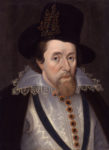
    This month’s joint episode with Tudor Times is about their Person of the Month, James I. Here are the resources mentioned.

    Remember, if you like this show, there are two main ways you can support it. First (and free!) you can leave a review on iTunes. It really helps new people discover the show. Second, you can support the show financially by becoming a patron on Patreon for as little as $1 episode. Also, you can buy one of my journals, planners, or virtual tours!

    TRANSCRIPT

    Heather Teysko: Hello and welcome to the Renaissance English History Podcast. I’m your host Heather Teysko, and I’m a storyteller who makes history accessible because I believe it’s a pathway to understanding who we are, our place in the universe and our connection to our own humanity. This is episode 49. It’s another joint episode with Melita Thomas of Tudor Times. This is the fourth joint episode that we’ve done together, and I’m so excited to do a lot more original content with them.

    Just a quick note that the Renaissance English History podcast is a proud member of the Agora Podcast Network. The Agora Podcast of the month this month is the History of China by Chris Stewart. You can check it out and learn more at the historyofchina.wordpress.com or look it up on iTunes, or Stitcher, or your listening service of choice.

    As always, you can get show notes and more information about the Renaissance English History Podcast at www.englandcast.com where you can also sign up for my mailing list. Mailing list subscribers receive extra MiniCast each month as well as book giveaways, news and lots of other cool stuff. For this particular episode as well, you can also get lots more information on James I at tudortimes.co.uk.

    Moving on from the admin bit, let’s talk about James I now. Introducing Melita. Melita is a co-founder and editor of Tudor Times, a website devoted to Tudor and Stuart history in the period from 1485 to 1625. You can find it at tudortimes.co.uk. Melita who has always been fascinated by history ever since she saw the 1970 series Elizabeth R with Glenda Jackson also contributes articles to BBC History Extra and Britain Magazine.

    Melita, can you tell us a bit about James’s life? I know it was a very full life. Can you just give us the highlights?

    Melita from TT: It certainly was a full life. He’s been rather neglected by historians in the past but his life was absolutely one Hollywood scene after another. The excitement started before he was born. When he was still in the womb, his mother’s apartments were broken into and her secretary was murdered in front of her eyes whilst one of the assassins held a gun to her pregnant belly, so James was already the center of excitement even while he was still a fetus. Fortunately for James and for Mary, he was born healthy although at a later stage in life it was noted that he didn’t walk terribly well, and he had possibly some sort of speech impediment which people have speculated may have been a birth problem related to the difficulties that Mary had when he was actually born.

    Following even on from that early fracas, his mother was deposed when he was about a year old and James became King of Scotland at the age of 13 months. He was unsurprisingly subject to a good deal of controversy in his youth as to whether he ought to be king. Many people wanted his mother restored and there are a number of tussles over who was going to rule Scotland. There was the queen’s party who thought Mary should be restored and the king’s party that wanted James as king under the regency originally of his half-uncle Murray.

    Of the four regents who ruled for James, two were assassinated including his aforementioned uncle, his grandfather. One died possibly of poison, the Earl of Mar who had been his guardian. And, the fourth was eventually executed by James himself. For the first 10 or 12 years of his life there was a civil war in Scotland that effectively the government won but there was always the possibility that it might go the other way.

    James was largely protected from this and he was brought up in a very, very strict educational environment. He was hugely well-educated. He spoke several languages. He could write in Latin. He had a very academic type of education. His chief tutor was a chap called George Buchanan who was also the tutor to the French philosopher, de Montaigne, which is quite an interesting link, and James was encouraged to hone his skills in rhetoric. He also wrote poetry and he wrote a number of books in later life, not particularly long books, but there’s his famous book about witchcraft called Daemonologie. He wrote a book for his son on how a king should rule called the Basilikon Doron, which was later published in several languages, translated into French, Italian, also Welsh interestingly for his Welsh subjects.

    Once he was about 13, James really started to take authority for himself, and he formulated a life plan that he never really deviated from in that he would, I suppose lies is the right word, but dissimulate. He would listen to both sides of the question. Each side thought he agreed with them and then he would just go ahead and do what he’d already planned to do, but he was very good at conciliation and compromise. He disliked violence intensely from this rather worrying youth that he’d had.

    Having started to take power at 13, he was then kidnapped, held by the Earl of Gowrie and his colleagues for about 18 months while he was pretty much forced to rule the country as they required. But, then by rather clever strategians, he managed to escape from Gowrie’s influence and promised that he was going to be a universal king who would rule without faction which he tried to do, not always successfully.

    He married in 1589 to a Danish princess, Anne, and he and Anne had seven children. They were reasonably happy together as arranged marriages go, but there was always a question about whether James certainly had homosexual leanings even if he didn’t actually have homosexual relationships. It’s a bit of a tricky subject that because his fondness for his male favorites was commented on at the time. He would kiss them and be physically affectionate and, yet, his actual statements on the topic of homosexual acts were very, very traditional Calvinist view you might say. He was very anti it. He believed that homosexual acts should be severely punished. Perhaps he didn’t see himself as a lover of men, but he had very warm emotional relationships and, to some extent, a physical relationship with them. It’s quite a conundrum really or perhaps he was just a man who was hugely physically affectionate which he couldn’t indulge in his childhood and it came out in a fondness for other men.

    His overall ambition was always to be king of England. That was what he wanted. This sometimes put him in a bit of moral quandary particularly when his mother had been tried and was going to be executed by the English government. He had little power to actually change what the English government was going to do, but on the other hand he felt obliged to remonstrate and to ask that his mother’s life be spared. The Scots having deposed Mary thought that the English are going to execute her, which perhaps seems a little paradoxical. James was the recipient of a pension from England which was very useful which he didn’t want to lose and also he was a committed Protestant and his mother was a Catholic. He had all sorts of conflicting feelings about the matter.

    He became King of England in 1603 and his view was that the two countries should unite, but he was the only person who had any interest in that idea at all. Even once he became King of England, the plots and the assassination attempts and so forth continued particularly of course the Gunpowder Plot, the most famous plot of all which he was fortunate to escape.

    Was a reasonably successful King of England. He brought peace with Spain after 20 years of war. He had reopened relationships really with Europe. He was less divisive in the Protestant-Catholic divide in Europe than Elizabeth had been, and he established much friendlier relationships with the Catholic countries of Europe than she had done. Although he was in no way going to encourage Catholicism, he was personally inclined to toleration and did not want to get involved in religious persecution.

    He was also successfully had … He left a son. He had an older son who died very sadly to James’s great grief, Henry Frederick, Prince of Wales, but he left a son. He left a daughter who was married to the king of Bohemia. And, of course, he is the ancestor of all subsequent kings and queens of Great Britain.

    Heather Teysko: His early life was so tumultuous, like you said, even before he was born and he didn’t know his father or his mother really. How do you think that affected him later? I know you talked about it a little bit perhaps with his relationships with men. How else did that come out at all or how do you think it would have affected him just this early tumult that he had?

    Melita from TT: I think it made him … Well, I think by nature he was probably a trusting man. But, I think the fear in his childhood, the constant plots, I think that made him untrusting against his nature. I think that explains why on a number of occasions when his friends betrayed him or let him down, he was endlessly forgiving. A lot of plots against him were … Perhaps it was weakness rather than virtue but he seemed always willing to accept that people did love him and did care about him. He’s very insecure emotionally so a good show of loving him or being fond of him was always very welcome.

    He was attached to his wife although they weren’t temperamentally particularly well-suited, and he was very attached to his own children. I think it’s probably made him lonely I suppose and perhaps also encouraged him in his idea of the absolute power of kings which was very contrary to the formal education that he had. George Buchanan, a rather nice quote, when he was a little boy, James was probably eight or nine, Buchanan had beaten him for insubordination, or not doing his Latin homework, or whatever it was. And, the Countess of Mar, he was in the care of the Earl and Countess of Mar, the countess complained that Buchanan had beaten him and said that he should not put his hands on the Lord’s anointed to which Buchanan replied that he had whipped the king’s ass and Lady Mar could kiss it if she felt like it.

    He was certainly not brought up with this idea of absolute power, but it was one he came by perhaps in the first relationship that he developed with somebody who hadn’t been appointed by his guardians. The Duke of Lennox, his cousin, was born and brought up in France, came to Scotland, was a good deal older than James but James completely hero-worshiped him and was very, very willing to listen to ideas about the power of kings perhaps as an antidote to the powerlessness of his childhood.

    Heather Teysko: What would that have been like for him? He was Elizabeth’s presumptive heir, but he was never formally acknowledged as such. It’s a very odd position to be in, isn’t it?

    Melita from TT: Elizabeth was an absolute genius at keeping people dangling, and James was no exemption. You think of all those men she almost married but never did. In a way, James was treated in exactly the same way. She would hint that he was her heir and then add that failure to do exactly what she wanted would mean him being struck off the list. They regularly corresponded. She always took a very dominant role, would criticize his actions, reprove them but then become absolutely enraged if he questioned anything that she did. She wouldn’t let him rest secure so she would toy with other possible options such as the Lady Arbella Stuart who was their mutual cousin, and she was being brought up in England, so every now and then Elizabeth would parade Arbella around just to keep James on his toes.

    The risk for James was also that he became the subject of plotting by some of Elizabeth’s nobles and ministers who were perhaps looking to the future or particularly in the 1590s when Elizabeth was losing her grip on power in some ways because a younger generation didn’t necessarily approved of her foreign policy, particularly in relation to Spain, so men like the Earl of Essex and his sister Lady Penelope Devereux wrote ingratiating letters to James during 1590s assuring him of their loyalty, and that they would support him in his bid for the throne if necessary, all completely treasonous. James was a sensible chap and he didn’t get too involved in that sort of correspondence. He would just politely thank them for their letters and ignore the hint because he was in a difficult position.

    When the plots that James’s mother Mary was accused of, the height in the early 1580s, a thing called the Active Association had been introduced by the English Parliament and that meant that anybody who profited or benefited from the assassination of the queen would be immediately struck out of the succession even if they had nothing to do with it. If James was in any way appearing to encourage anybody to think that Elizabeth should be got of the way, he would automatically be debarred from the throne so he had to be very circumspect.

    Heather Teysko: He must have been so good at just treading around all these different, I don’t know, relationships and how to manage all these different relationships to people. I don’t envy him. Anyway, so tell me a little bit about what he believed, his religious beliefs. You talked about it earlier with his book on witchcraft and his views. It seems like he had some very, like you said, almost Calvinist beliefs, and he obviously was involved with the King James Bible, so can you tell me a little bit about what he believed religiously?

    Melita from TT: James was brought up in the Reformed faith as it was instituted in Scotland by the Confession of Faith which was passed by the Scots Parliament in 1560. It was a Calvinist interpretation of Christianity, and he remained firmly in that form of Protestantism. He was a Calvinist. He defended it with his pen, if not necessarily with his sword. However, within the Church of Scotland, there was a more radical branch which believed that church government should be by presbyteries and superintendents. It’s all rather arcane but the principle was that the elders and ministers of the church should be chosen by the congregations whereas James wanted a very much more traditional type of church structure where the king chose the bishops, and it was imposed from the top, and there was control over the church by the state whereas the general assembly of the Church of Scotland believed that they ought to be effectively independent of the state.

    And, not only that, but the king and the civil authorities should actually be guided, to put it mildly, by the kirk. No self-respecting king was going to be very keen on that idea. There was a longstanding battle between the kirk, as it was called in Scotland, and James as to who’s in charge. This was reflected in England as well towards the end of the 16th century as the puritan branch of the Church of England wanted to move to the model that the Scots Presbyterians had. This was a constant source of conflict.

    He was pretty tolerant of other people’s religions. Catholicism was never prosecuted in Scotland or never persecuted in Scotland the way it was in England. In England, although a number of the nobles were still Catholic and everybody knew they were, they kept pretty quiet about it. In Scotland particularly in the north, in the highlands, Catholicism was stilly pretty widely practiced. But, it was a bone of contention throughout his reign.

    When he became king in England, he had allowed the English Catholics to believe that he would be more tolerant than Elizabeth had been in his favorite trick of allowing people to pretty much believe that he agreed with them even if he didn’t. The fact that he didn’t immediately institute any kind of tolerance was really one of the motivating factors behind the Gunpowder Plot. The Catholics felt that they had been let down, lied to, betrayed and their idea was that James should be overthrown, replace with his daughter as a puppet queen. She was a toddler at the time. That was part of their motivation.

    He always, as I say, wanted the traditional ecclesiastical hierarchy. He succinctly put it as no bishop, no king which of course became true in the days of his son Charles I when Scotland firmly rejected the Episcopalian model.

    But, one of the ideas he had to bring together the various factions was the new translation of the Bible, the King James Authorized Version as we call it now. In 1604, he summoned what was called the Hampton Court Conference to make a new translation of the Bible. There were various different Bibles being used throughout the British Isles. There was the Geneva Bible which was strongly Calvinist in tone. I mentioned the bishops [inaudible 00:21:05]. That had been very popular since the 1560s. There was the Bishops’ Bible which was based on the 1539 Bible but was more or less a translation directly from the Latin without much reference to original sources. And, there was the Douai Bible that was smuggled in by Catholics.

    In 1601, the Scottish General Assembly had moved to the idea of a new translation which they would have had a Presbyterian interpretation and James was eager to avoid that. The Hampton Court Conference was convened to undertake a new translation but to base it on the Bishops’ Bible. It was undertaken by committee and finally published in 1611. Although when I say finally, if you think seven years is not very long when you consider the huge scale of the task. The King James Authorized Version of the Bible is the bestselling book ever published in English and although there have been subsequent later translations and updates, it is still the cornerstone of the traditional Anglican church. So, a great contribution to literature whatever one’s religious views might be on it.

    Heather Teysko: Okay. Well, you mentioned the Gunpowder Plot twice now. You talked about just now the motivations of the plotters. For people who don’t know what the Gunpowder Plot is, which might be people in America who don’t celebrate every November the fireworks, and bonfires, and things like that, can you give me the brief overview of what the Gunpowder Plot is?

    Melita from TT: Yes. We still remember it.

    Heather Teysko: I know we could do lots of episodes on this as well.

    Melita from TT: Remember, remember the fifth of November, gunpowder, treason and plot. As I mentioned before, the Catholic party in England had hoped that with the succession of James there would be more tolerance to their religion. In particular, it was a capital offense to be a priest if you were ordained after the death of Queen Mary in 1558, and it was a capital offense to hear the mass said. There was a huge underground network of people who hid priests, who organized masses, who kept Catholicism alive during the years of Elizabeth’s reign. They hoped that they would be able to come out into the open but that was not James’s decision.

    There was a plot that was developed in the summer of 1605, and if you want to read some detail about this, I can’t recommend highly enough Jessie Childs book God’s Traitors which goes into this in huge detail and explains the religious and political background. The idea was that the young prince has Elizabeth who, as I said, was a few years old at the time would be kidnapped and that the Houses of Parliament or the House of Parliament would be blown up by gunpowder. We shouldn’t imagine Parliament as it is today, the buildings in Westminster Square. Parliamentary meetings usually took place in the Great Hall in Westminster or in the Palace of Westminster itself which burnt in the 19th century.

    The ringleaders were a chap … There was a chap called Robert Catesby. There was Thomas Percy who was a brother or cousin, I can’t remember which, of the Earl of Northumberland and a number of others. There are about eight or 10 of them in total. The most famous one is Guy Fawkes. Although he actually hadn’t been privy to the original plot. He got involved later. Anyway, these young men who were .. They were all cousins and closely related. They came up with this rather ludicrous plot really, and they rented a house next door to where the Parliament was due to sit, and they smuggled in loads and loads of barrels of gunpowder.

    Now, why anybody could think that you could smuggle in loads of barrels of gunpowder and that was a practical proposition, I’m not quite sure. However, they did managed to get some in. And, then, the plan was that Guy Fawkes would hide in the cellars with the gunpowder and set light to it. So far is known, he wasn’t a suicide bomber. The plan was that he would actually get out in time although again with 16th century, 17th century gunpowder that might have been unlikely.

    However, one of the plotters was concerned that this wouldn’t just blow up the king because in those days the king attended Parliament and probably the Prince of Wales. He was about 15 so he was likely to be in attendance in Parliament as well. But, would also blow up Catholic members of Parliament including this particular plotter’s own brother-in-law, Lord Monteagle. He wrote to Monteagle or sent him an anonymous letter so it’s not absolutely certain but this assumed that it was Monteagle’s brother-in-law. Sent him an anonymous letter saying, “Don’t attend Parliament. It’s not going to end well.”

    Anyway, Monteagle, although he was Catholic himself suspected that something was afoot, and he went to James, and said he received this letter and a search was ordered of the cellars underneath Parliament and there was Guy Fawkes found with his barrels of gunpowder.

    The other plotters got wind of the fact that he’d been found and they wrote [inaudible 00:27:28] for various places in the midlands that was safe houses. One of them is Coughton Court. But, they were eventually rounded up and executed. The downside of course was that whatever tolerance James might have been inclined to show was damaged because he then became much more anti-Catholic than he had previously been.

    Heather Teysko: What was it like for him ruling both England and Scotland? I’d like to hear a little bit about what the relationships between the countries were like then and just how things changed under one ruler.

    Melita from TT: From James’s point of view in some ways it was easier to rule England than to rule Scotland partly because England was a lot wealthier so finally he had some money in his pocket. He’d always been very poor and he was notoriously bad with money. Whenever he had it, he spent it. Not so much on himself as on his favorites. Queen Anne was ludicrously extravagant. He had more money and it was also easier in that the noble class which still very independent and Scotland had been more or less beaten into submission by the Tudors and didn’t give James a great deal of trouble.

    The Puritan element in the church which I mentioned before was growing, but it didn’t control the church as it had in Scotland with its uncomfortable ideas about democracy. James himself very much wanted the two countries to be truly united, but he was the only person with any interest in that as a concept. He announced that he will be known as the King of Great Britain and following his succession all of the princely houses of Europe address their letters to the King of Great Britain. There was a good deal of continuity in government in both places. He didn’t try to bring Scottish ministers into office in England nor did he put English men into office in Scotland which would have been very unpopular on both sides.

    He retained Elizabeth’s ministers, particularly Sir Robert Cecil. He instituted a council to govern Scotland and did promise that he would continually visit it although he only actually went back once in his 22 years in England. I think he was probably quite relieved that he had an easy life. The palaces of England were legion compared with the smallish number in Scotland. Many, many members of his court was Scottish and he did bring a whole entourage with him who remained with him so he still thought of himself as Scot in that sense.

    But, at a lower level, the English and the Scottish people did not in any way feel united. They shared a king but that was that. Even the church was different, as I said. The ecclesiastical structure was different. There was a change in the borders where previously there’ve been pretty much permanent low level board of warfare. It changed in that it was no longer state sponsored, but there was still a good deal of lawlessness perpetrated by the reavers as they were called. Interesting book about that. George MacDonald Fraser’s book The Steel Bonnets all about this period of the life in the borders in the early days of James. They were a bloody lot. That’s for sure. But, there was no real meeting of minds that in fact the civil war in the 1640s England and Scotland were at loggerhead. It wasn’t until more than 80 years after James’s death in the days of his great granddaughter Queen Anne that the countries were united under a single parliament.

    Heather Teysko: What about culture and the arts? He was a great fan of pageants, and pageantry, and everything like that, wasn’t he?

    Melita from TT: He was. Particularly his wife Anne of Denmark. She was particularly interested in masquerades, in ballets and that kind of mixing of cultures between dance, and music, and so forth. She’s also very interested in architecture.

    James enjoyed playgoing. Not long after he came to the throne, Shakespeare’s company, which had previously been sponsored by the Lord Chamberlain, became the king’s company and played in front of James on at least 150 occasions. He was also perhaps more interested in literature than he was in music. Unlike all of his Tudor and Stuart relatives, he had no ear for music at all and didn’t care a great deal for dancing although apparently when he was young, he wasn’t bad at it.

    His interest was literature. I mentioned the Daemonologie. That he wrote his book about witchcraft. His book about how people should rule, how kings should rule. He also wrote a number of sonnets, not more than okay. They’re not great poetry but he wrote a number of other things. He wrote a diatribe against tobacco which is quite amusing.

    Heather Teysko: Really?
    Melita from TT: He refers to it as loathsome. Yes, in very disparaging terms.
    Heather Teysko: My goodness.

    Melita from TT: He wrote a number of religious works, interpretations of parts of the Bible and, well, semi-religious, semi-political work. After the Gunpowder Plot, a new oath of allegiance was implemented that James required his subjects to swear to, and this was an oath saying that the pope had no power to depose a secular ruler. This oath caused a good deal of controversy across Europe actually, and there were a number of theologians both Protestant and Catholic who wrote about this oath, and James himself took up the pen to defend it and to make clear that his interpretation of the oath, it wasn’t about the Catholic religion. It was about the power, the secular power of popes over temporal kings. In fact, there were many Catholic kings who were very happy with this philosophy that the pope should not have power to have them deposed. He was quite a nimble writer shall we say.

    Heather Teysko: Interesting. Where else can we go to learn more about James? Obviously he’s the person of the month now so there’s your resources. What other resources can you recommend?

    Melita from TT: He hasn’t been the subject of many biographies. There’s John Matusiak’s book James I: Scotland’s King of England. That’s fairly recent. Matusiak writes in quite an entertaining style. A chap called Robert Stedall has written two books The Challenge to the Crown – Volume I: The Struggle for Influence in the Reign of Mary Queen of Scots 1542-1567, and The Survival of the Crown – Volume II: The Return to Authority of the Scottish Crown following Mary Queen of Scots’ Deposition from the Throne 1567-1603, which look in detail at the period of James’s youth and how we transformed the turbulence in the four regencies of his childhood into a reasonably stable government. Jessie Childs’ God’s Traitors: Terror and Faith in Elizabethan England that I mentioned before which deals with the Gunpowder Plot. Leanda de Lisle covers the English years in a lot of detail in After Elizabeth: The Rise of James of Scotland and the Struggle for the Throne of England. If you’re interested in the witchcraft angle, then Tracy Borman’s book The Witches is good. It looks at a particular witch hunt in England after James became king. Yes, those are all worth a look.

    Heather Teysko: Is there anything else that we should know about James that you’d like to share with us?

    Melita from TT: I think James had been very underrated. From a war-torn country, he created a stable Scottish state. He succeeded peacefully in England. He ended the war with Spain. He stopped the [inaudible 00:36:10]. He made alliances with both Protestant and Catholic countries. He sought compromise and negotiation wherever he could and, as before mentioned, he gave the English language the gift of the Authorized Version, regardless of one’s religious position, a great work of literature. Overall, I would say he had 56 or 57 years of pretty effective kingship.

    Heather Teysko: That’s great. Thank you again so much to Melita Thomas for taking the time to tell us all about James. Please go to their website tudortimes.co.uk for their person of the month information all about James, everything you wanted to know about James and more.

    You can also go to the resources available on the Englandcast site at englandcast.com. Thank you so much for listening. Talk to you soon.
    —
    Remember, if you like this show, there are two main ways you can support it. First (and free!) you can leave a review on iTunes. It really helps new people discover the show. Second, you can support the show financially by becoming a patron on Patreon for as little as $1 episode. Also, you can buy one of my journals, planners, or virtual tours!

  • Bess of Hardwick: An Elizabethan Woman Who Created Her Own Smart Luck

    Bess of HardiwckHistory can often seem intimidating because it seems like only the stories of dead white men.  And there’s a reason for that.  The white men were the ones who kept most of the records, being the ones who were educated and literate, and so they are the ones about whom we know.   I am profoundly grateful to have been born at the period in time in which I was, and I will forever be an ardent feminist simply because, thanks to the women’s movement, I have a choice in how much I reproduce, and how much of my life is spent cleaning up after children.  The sad truth is that men wrote all the books and music, painted all the paintings, and ran the countries because the women were knee deep in housekeeping, and diapers.  Spending all day taking care of a house and negotiating with toddlers wouldn’t leave much mental space in which to do creative work, even if women had been educated.  So finding stories of kickass women during the period about which I am most passionate – the English Renaissance – is always heartening and thrills me a teeny bit.

    One of those women was Bess of Hardwick.  She is often remembered now as a woman who plotted and intrigued her way into becoming one of the highest ranking noblewomen, from a very humble birth.  Of course she would be remembered that way.   Male chroniclers didn’t like badass women.  I’ve been reading a biography of her – Bess of Hardwick: Empire Builder by Mary S. Lovell – and the picture being painted of this woman is one of wit, intelligence, compassion and loyalty.  She did, however, manage to marry 4 different men, each one a higher rank than the last, and being incredibly fertile she married her children off into prosperous families, and so became the matriarch of a huge network of nobles who would claim descent from her.  Along the way she also showed wise business acumen, making building improvements to her homes, and building Hardwick Hall, about which Robert Cecil commented, “Hardwick Hall?  More window than wall!”.


    Modest Beginnings

    She was born into a gentleman’s family, but her father died when she was very young, and her mother remarried.  The family struggled financially along the way, but when she was 12 Bess was sent to be a Lady in Waiting to the Zouche household.  It was a common practice to send daughter’s off this way – they would learn how to act in a noble household, could meet people who could help them rise in the world, and also potentially find a husband.  That’s what happened to Bess, and when she was still in her mid teens she married another gentleman in their household, Robert Barlow.  Poor Robert died the next year, and from her widow’s dower (which she had to fight to make sure she received) she would see her first independent income of 30 pounds a year.

    Her next stop was in the service of the Grey home.  This was a huge step up for her.  Frances Grey was the niece of Henry VIII, and so was in line for the throne.  Her daughter, Lady Jane Grey, would be Queen for Nine Days after the teenaged Edward VI died, and wanted to ensure the Protestant Reformation would continue, fearing that his Catholic older sister, Mary, would turn back all of his reforBess of Hardwickms (which she duly did after she became Queen – poor Lady Jane’s claim was so tenuous compared to Mary’s that there was no way anyone would fight for her, and she was, sadly, executed).  Bess would have known all the Grey girls, and for the rest of her life she would keep a portrait of Lady Jane Grey at her bedside table.

    During this time she met her second husband, Sir William Cavendish, who was nearly 20 years older than she was, and quite wealthy – he had navigated the court politics as one of Thomas Cromwell’s men who worked on the Dissolution of the Monasteries.  They were married for ten years, she had eight living children, and then he died leaving her a very wealthy widow who was still only 30.

    Drama, Widow, Master Builder

    She chose to marry again to Sir William St. Loe, who was a captain of the yeoman guards, and served in Queen Elizabeth’s household.  He died after only six years of marriage, but left everything he had to her in his will.  She was now in her mid 30’s, and incredibly wealthy.  She could have lived very comfortably, but she chose to marry again, to George Talbot, the Earl of Shrewsbury.  He had children the age of hers, and she arranged for two of her children to marry two of his, and then became a Countess herself.

    Then things got dramatic for Bess.  Shrewsbury was chosen as the protector/guard/jailer of Mary Queen of Scots.  While this could have been seen as a position of honor, no one knew it would stretch on for 17 years, and would mean that he was almost as much of a prisoner as she was, seeing as how he couldn’t leave her.  The time guarding Mary pretty much ruined the marriage of the Shrewsbury’s, and it also made poor George Talbot go nearly insane.  He spent considerable amounts of his own money keeping up her household, was constantly worried about every potential threat to release her, and if there were ever rumors of an escape plot suddenly everyone at Court was telling the Queen how much he clearly sympathized with Mary and what a bad job he was doing.

    hardwick hall

    He died in 1590 and she was 63.  She then embarked on her biggest building plan ever – building Hardwick Hall near her childhood home.  It was a home that was designed to entertain royalty (her own granddaughter Arbella Stuart had a claim to the throne) and one of the most revolutionary features was the amount of windows in the home which were manufactured in her own glassworks.

    Bess of Hardwick is an amazing example of a woman who created her own luck.  There was love and affection in all her marriages (except the very first one when she was barely a teenager, and the end of her last one which had been so totally destroyed by the Mary Queen of Scots situation).  But she was smart with the men she chose to love, and when she inherited money she used it wisely.  She was an astute business woman who handled her affairs herself, and she is a wonderful example of a woman who made her story her own rather than just accepting what life had given her.

  • The Week in Books: Mary Queen of Scots wasn’t Actually a Catholic Martyr

    john guyI’ve been working on a podcast about Mary Queen of Scots, which I’ll be recording this week, and as part of that I’ve been reading John Guy’s book, Queen of Scots (available to read on Oyster, too).  Most people who know Elizabethan history are familiar with the story of the tragic Catholic queen, but you don’t really ever look at her life in the context of being, sadly, a product of a very Protestant form of predestination.  She was pretty much destined to have a life full of drama and potential execution, thanks to forces that were both beyond her control (ie her first husband dying) and her naive willingness to trust people and allow herself to be caught up in plots against the Protestant Queen Elizabeth.

    Mary Stuart was born a week before her father James died.  She was the only living child and heir.  Initially, everyone thought it would be in Scotland’s interest to have an alliance with England, and so she was proposed as a bride for King Henry VIII’s son Edward, to the point where a contract was agreed and signed.  But then Mary’s mother, who was French, decided that she really needed to press a French marriage to the Dauphin, Francis, and pulled back out of the contract.  Henry was seriously pissed off and sent an army into Scotland, which is now called The Rough Wooing.   It didn’t work, and the English pulled back, burning some border villages along the way – par for the course with English and Scots relationships.

    When she was five Mary sailed to France without her mother where she was raised with the French royal children, including her future husband.  Mary was always healthy and strong, but Francis was a weak and sickly child.  They wed after Mary had been in France for nearly ten years.  Her mother visited once, and then left to go back to Scotland where she was acting as Regent for the absentee Queen.  Mary never saw her mother again after that one visit.  Her grief doubled when, after only being married to Francis for a year, and still a teenager, he died, leaving her a widow.  She had been the Queen of France for only a year or so, and sailed back to Scotland, truly alone at age 20.

    Mary had two problems that made her life turn out the way it did.  First, she was Catholic on a Protestant island (John Knox was preaching in a newly-converted Scotland, and of course after the death of Mary Tudor, England became solidly Protestant under Elizabeth).  Second, she was Elizabeth’s heir apparent.  And for many Catholics, she was the actual true Queen of England because when Elizabeth was born to Anne Bolyen (Henry’s second wife) his first wife Catherine of Aragon was still alive.  Meaning that to many Catholics, Elizabeth was born out of wedlock, and was a bastard.  Mary was the closest person in line to the throne, being the great granddaughter of Henry VII (she was the granddaughter of Henry VIII’s sister who married into Scotland).

    So as long as Elizabeth was unmarried and childless, Mary was the focus for any Catholic rebellions who would wish to replace Elizabeth on the throne.  And Elizabeth was always nervous about naming an heir – she never named one even before her death, because she knew that once she did, the pressure on that heir would be enormous, and all the focus would shift to them.  Poor Mary was caught in this impossible position of being the heir apparent, but not named, and being the figurehead of a movement she didn’t really even care about.

    Because Mary was incredibly fair when it came to religion.  She recognized that her country was Protestant, and she promoted Protestants equally with Catholics.  She also tried many times to form a relationship with Elizabeth, offering to meet her, and thinking that as they were cousins and Queens on the same island, they should help each other out.  Unfortunately for Mary, Elizabeth’s chief advisor William Cecil, a staunch Protestant who was fearful to the point of paranoia about Catholic plots, continually thwarted any kind of relationship.

    Mary made a mistake in her second marriage.  She chose a Scottish nobleman who was raised in England and also descended from Henry VII, in order to make her dynastic claim that much stronger.  He turned out to be a serious asshole, to the point where he killed her secretary in front of her when she was 6 months pregnant.  She thought that he had tried to kill her by making her miscarry the baby, which most likely would have ended in her death given that it was the 16th century.  A few months later, his house was blown up and she was implicated in his murder.  She married the other chief conspirator of her murder – at the time she may have felt forced into it to bring peace to the warring Scottish nobles, but in the end it made her Protestant nobles revolt against her.

    She had to abdicate in favor of her infant son James, and decided to flee to England where she expected that Elizabeth would help her.  Elizabeth had no such plans, and had herself been stirring up civil unrest in Scotland to keep Mary busy and distracted from her claims to the English throne.  When Mary arrived in England, Elizabeth had her kept under house arrest, a state in which she stayed for 19 years.

    During that time she obviously tried to escape.  She was an anointed Queen effectively being kept a prisoner.  But she allowed herself to become implicated in the plots to help Spain invade England and put a Catholic on the throne, and that was down to too much trust and political naivety.  Cecil and Francis Walsingham, Elizabeth’s spymaster, tightened their grip around Mary and eventually got letters where she discussed Elizabeth’s death.

    She was put on trial and defended herself well despite the fact that the ending was a foregone conclusion.  Mary’s chief problem was that as long as she was alive, she could be used by people who wanted Elizabeth dead, and that just didn’t work for Elizabeth.  She was executed when she was only 44 years old, having spent almost half her life as a prisoner in England.   When she died she wore red, the traditional color for Catholic martyrs.

    Over the years the legend of Mary Queen of Scots spread, and she became famous as a martyr.  In truth, she was just a tragic person who was put into an impossible situation, and didn’t really have the brainpower to navigate her way out.  Making her into a martyr both makes too much and too little out of her situation.  She wasn’t a Catholic martyr.  But she born into a tragic situation; the British Isles just weren’t big enough for two Queens, one of whom was Catholic, and she’s the one who lost.