Kings, Queens and Court

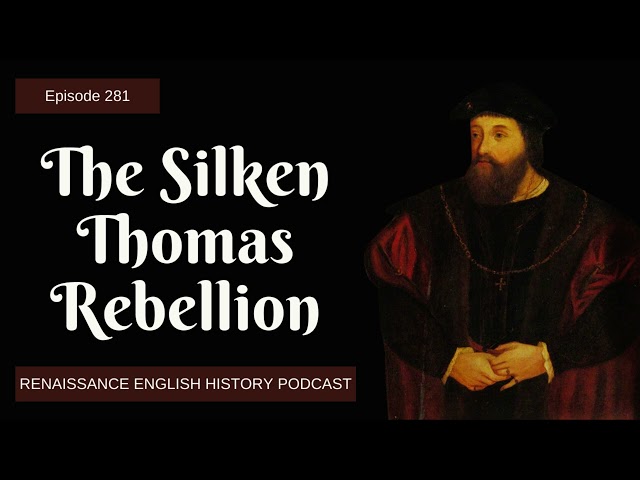
  • The Silken Thomas Rebellion: How One Young Lord Defied Henry VIII and Lost

    The Silken Thomas Rebellion: How One Young Lord Defied Henry VIII and Lost


    The Silken Thomas Rebellion was one of the most dramatic uprisings in Tudor Ireland, marking a turning point in the struggle between the Irish nobility and English rule. In 1534, a young noble named Thomas Fitzgerald—better known as Silken Thomas—boldly renounced his loyalty to Henry VIII, igniting a rebellion that would end in tragedy. Fueled by misinformation, political rivalries, and growing tensions over English dominance, the revolt initially gained momentum but was ultimately crushed with brutal efficiency.

    The execution of Silken Thomas and his family not only dismantled the powerful Fitzgerald dynasty but also paved the way for England’s tightening grip on Ireland. In this deep dive, we explore the causes, battles, and consequences of the Silken Thomas Rebellion, a pivotal moment that shaped Irish history for centuries to come.

    Rough transcript of The Doomed Rebellion of Silken Thomas: How One Young Lord Defied Henry VIII and Lost:

    In the summer of 1534, there was a young Irish noble named Thomas Fitzgerald who stood before an assembly in St. Mary’s Abbey in Dublin and threw down the sort of state, renouncing his loyalty to Henry VIII. He was 21 years old. Thomas, who was nicknamed Silken Thomas for the elaborate silken fringes his followers wore on their helmets, declared open rebellion against the English crown.

    It was a reckless move, but in that moment, he believed he was striking a blow for Ireland, for his family’s legacy, and perhaps even for his own survival. It did not end well. By 1537, Thomas and his five uncles would be executed at Tyburn, the Fitzgerald dynasty would be crushed, and English rule in Ireland would take a new and harsher turn.

    But how did it all unravel so quickly? What led this young Irish Lord to gamble everything against Henry VIII and why did they lose? Today we are going to dive into the dramatic story of the Silken Thomas Rebellion, an uprising born out of misinformation, ambition, and the shifting power dynamics between England and Ireland. Let’s get back to Ireland in the 1530s, where a single decision changed the fate of an entire family.

    The Fitzgeralds and English Rule in Ireland

    To understand why Thomas Fitzgerald’s rebellion was such a seismic moment in Irish history, we need to take a step back and look at the power his family held and the growing tensions that made his revolt almost inevitable. By the early 16th century, Ireland was technically under English rule, but the reality was far messier.

    The English controlled Palke, which was a region around Dublin, operated under direct royal authority, but beyond it, Gaelic lords and powerful Anglo-Irish families like the Fitzgeralds ruled with near-complete autonomy. For decades, the English crown had relied on a policy of appointing the most powerful Irish nobles as Lord Deputy of Ireland, a sort of royal governor, to maintain control without having to exert too much direct effort.

    More often than not, that position fell to the Fitzgeralds, one of the most dominant families in Ireland. Thomas’s father, Gerald Fitzgerald, 9th Earl of Kildare, had been Lord Deputy on and off for much of Henry VII and Henry VIII’s reign. He was a powerful, cunning man who was deeply entrenched in Irish politics, but his influence made him enemies, particularly among Henry VIII’s advisors in England who were increasingly suspicious of the Fitzgeralds’ loyalty.

    Thomas Wolsey, and later Thomas Cromwell, saw Kildare as unreliable, too close to the Irish clans, too independent, possibly even treasonous. Things came to a head in 1534. By this point, Henry VIII was in the middle of his break with Rome, making England’s control over Ireland even more crucial. The last thing Henry wanted was a powerful Irish nobleman who might align himself with Catholic Europe against him.

    On top of that, Kildare had enemies within Ireland itself, rival families like the Butlers, led by Piers Butler, Earl of Ormond, who were eager to see the Fitzgeralds fall. That year, Gerald Fitzgerald was summoned to England, supposedly to answer charges of mismanagement. Whether Henry VIII truly intended to execute him is unclear, but what is certain is that once Kildare was in London, he was stripped of his authority and thrown into the Tower.

    Back in Ireland, Thomas, still in his early twenties, was left in charge as Acting Lord Deputy. And then everything fell out of control. It’s the summer of 1534, Thomas Fitzgerald is in a very precarious position. His father, Gerald Fitzgerald, has been summoned to England under suspicious circumstances.

    Thomas is barely 21 years old and he’s left to govern Ireland in his place. It was a daunting responsibility, but at first Thomas seemed willing to play by the rules. He had been trained for leadership, raised in the world of Anglo-Irish politics, And he knew that his family’s power rested on balancing loyalty to the English crown with the realities of ruling a volatile land.

    The Spark: Misinformation and Rising Tensions

    But then came the rumors, the whispers, that his father had been executed in the Tower of London. It’s unclear exactly how Thomas first heard this supposed news. But in a period where misinformation could spread as fast as a messenger’s horse, it didn’t take long for panic to set in. If the rumors were true, it meant that the Fitzgeralds were finished.

    Gerald Fitzgerald had been the glue holding their influence together, and if Henry had disposed of him, Thomas would likely be next. The logical move would have been to wait for confirmation, to gather intelligence before acting. But Thomas was young and impulsive, and he made a fatal miscalculation.

    On June 11, 1534, he rode into Dublin at the head of 140 horsemen, dressed in full battle attire, and he entered St. Mary’s Abbey, the stronghold of the English administration. Before a stunned audience of officials and noblemen, he dramatically renounced his allegiance to Henry. He declared himself the true ruler of Ireland, proclaiming his defiance of English oppression. Whether he truly believed his father was dead or simply using it as a justification for rebellion is uncertain, but once he had spoken, there was no turning back.

    The rebellion quickly gathered momentum. Many Irish lords, especially those with grievances against English rule, saw an opportunity to shake off foreign control and rally to Thomas’s side. His forces swelled as Gaelic clans joined him, seeing the Fitzgeralds as their best chance to resist Tudor encroachment.

    His followers saw him not just as a noble in revolt, but as a figurehead for Irish independence. And though the rebellion had been sparked by a misunderstanding, it was also fueled by deeper resentments against Henry VIII’s increasing demands, against English administrators who treated Irish lords as second class rulers, and against the creeping influence of the Protestant Reformation.

    But if Thomas expected a quick victory, he had underestimated just how seriously Henry and his advisors would take his challenge. This rebellion was happening at the same time Henry was breaking with the Pope and asserting his authority as the head of the Church of England. From the English perspective, this was a dangerous act of rebellion.

    Escalation: The Rebellion Gains Momentum

    This was more than just some kind of family feud. This had to be crushed and soon. The full weight of the Tudor military power would come bearing down on Ireland. Now at first it seemed like Silken Thomas might actually pull the whole thing off. After declaring his rebellion in June, he launched an assault on Dublin Castle, the administrative heart of English power in Ireland.

    Though he failed to take the castle itself, his forces ravaged the surrounding city, asserting control over much of the Palke, the area around Dublin that was still firmly under English rule. English officials, taken by surprise, were forced to barricade themselves inside the castle, desperately waiting for reinforcements from across the Irish Sea.

    Thomas had the numbers. His forces swelled as Irish lords joined him, many seeing this as their best chance to push back against English control. But his rebellion wasn’t just a clean military campaign. It became a bloody and chaotic conflict, marked by massacres and, of course, always shifting alliances.

    Thomas men slaughtered loyalist settlers and attacked English garrisons, while Henry’s forces, once they arrived, retaliated with equal brutality. Among the most shocking moments came in July 1534, when Thomas forces captured John Alen, the Archbishop of Dublin. Alen had been trying to flee to England, but his ship was forced ashore by bad weather.

    When he was captured, he pleaded for his life, claiming he was only an administrator and not a military threat. It might have saved him, if not for a horrible miscommunication. Thomas allegedly ordered his men not to kill the Archbishop, but by the time the message got through, Alan had already been hacked to death. The murder of a high ranking churchman horrified many and turned the public opinion against Thomas, even among some of his supporters.

    Turning Point: The Arrival of Sir William Skeffington

    The real turning point though came in early 1535, with the arrival of Sir William Skeffington, Henry VIII’s new Lord Deputy of Ireland. Skeffington had been sent to do one thing, crush the rebellion, no matter the cost, and he wasted no time.

    Using heavy artillery, something rarely seen in Irish conflicts at the time, Skeffington began to systematically batter Fitzgerald strongholds. The most significant target was Maynooth Castle, the Fitzgerald’s seat of power and a very formidable fortress. In March 1535, after a short but devastating siege, Maynooth fell to English cannon fire.

    The castle’s defenders, who had believed they would be offered mercy if they surrendered, were executed en masse in what became known as the Maynooth Pardon. The shocking betrayal sent a chilling message. No quarter would be given to rebels. With Maynooth lost and his forces dwindling, Thomas rebellion began to unravel.

    One by one, his allies abandoned him, seeing the writing on the wall. By August of 1535, a little over a year after the whole thing started, Thomas was on the run. His power was broken. Some sources suggest that he might have been betrayed by his own men, others say that he surrendered voluntarily. Either way, he was somehow handed over to the English authorities, believing that Henry VIII might still show him mercy.

    After all, he was still young, a nobleman, and had once been a loyal servant of the crown. Perhaps there was a chance to negotiate. He was wrong. After his surrender in August 1535, he was taken to England in chains and imprisoned in the tower. For nearly two years he lingered there, his fate uncertain.

    Perhaps at some point he believed that Henry might still spare him. After all, noblemen, even rebellious ones, were sometimes ransomed or allowed to live under house arrest. But Henry had no intention of showing mercy. Silken Thomas had defied the crown at a moment when Henry’s was consolidating power as Supreme Head of the Church of England.

    This was also right around the time of the Pilgrimage of Grace, of killing Anne Boleyn. Henry was not in a very merciful mood. He needed to send a message that defying the Tudor state, especially in Ireland, would not be tolerated.

    On February 3rd, 1537, Thomas Fitzgerald, he was only 24 years old, was led to Tyburn, the infamous execution site in London. He was hanged, drawn, and quartered, the brutal punishment reserved for traitors. Normally, noblemen would receive just death by beheading, but no, he received the full horrors of a traitor’s death. But his death was just one part of the Crown’s systemic dismantling of the Fitzgerald family. Henry VIII was determined to wipe out the Fitzgerald lineage entirely.

    Five of Thomas uncles, Sir Richard, Sir John, Sir James, Sir Oliver, and Sir Walter Fitzgerald, were also arrested and executed alongside him. This was super unusual. Even when noble families fell from grace, some members were often spared. But in this case, Henry ensured there would be no Fitzgerald resurgence.

    Aftermath: The Legacy of the Rebellion

    The once mighty dynasty that had ruled Ireland for generations was now shattered. With Thomas dead and his uncles executed, the Fitzgerald lands were confiscated and their allies were either executed, exiled, or forced into submission. The family’s vast network of power, built over centuries, was dismantled almost overnight.

    The rebellion had not only failed, it had given Henry the perfect excuse to tighten his grip on Ireland in a way no English king had done before. For centuries, England had ruled Ireland through powerful Anglo-Irish noble families. Essentially, outsourcing governance to local lords who acted as intermediaries.

    But Thomas Rebellion shattered that model. Henry VIII no longer trusted the great Irish families to keep order. Instead, he began moving to direct rule, a process that would eventually lead to the full Tudor conquest of Ireland. I actually did an episode about maybe 8 or 9 years ago on the Tudors in Ireland. Check that out.

    In 1541, just a few years after Thomas rebellion, Henry declared himself the King of Ireland, replacing the old feudal style Lordship of Ireland. This marked the beginning of a much harsher, more centralized form of English rule, one that would see increased military campaigns, plantation settlements, and the gradual erosion of Irish autonomy.

    Though Silken Thomas rebellion ended in disaster, it was far from the last act of resistance against English rule. If anything, it set the stage for later Irish uprisings, including the Desmond Rebellions of 1569-1573, and then the Nine Years’ War from 1593-1603. The Fitzgerald Rebellion became an early warning sign of the growing tensions between England and Ireland, tensions that would continue for centuries.

    Now, ironically, despite Henry’s ruthless efforts, the Fitzgerald family did not vanish entirely. The last surviving son of Gerald Fitzgerald, 10th Earl of Kildare, escaped execution as a child and eventually returned to Ireland, though his family would never regain the same level of power.

    Today, Silken Thomas is remembered both as a reckless young noble and an early symbol of Irish resistance to English domination. His rebellion may have been doomed from the start, but it did mark a turning point in the long and often bloody history between England and Ireland.

    And with that, we close the chapter on Silken Thomas and the Fitzgerald Rebellion, but if there’s one thing Tudor history teaches us, it’s that no rebellion, no matter how doomed, ever truly fades away. So check out that episode I did on the English in Ireland for more details on how things turned out for the English in Ireland. It’s like very aptly named.

  • Who was Margaret Douglas, and what did she do to anger the King so much?

    Who was Margaret Douglas, and what did she do to anger the King so much?

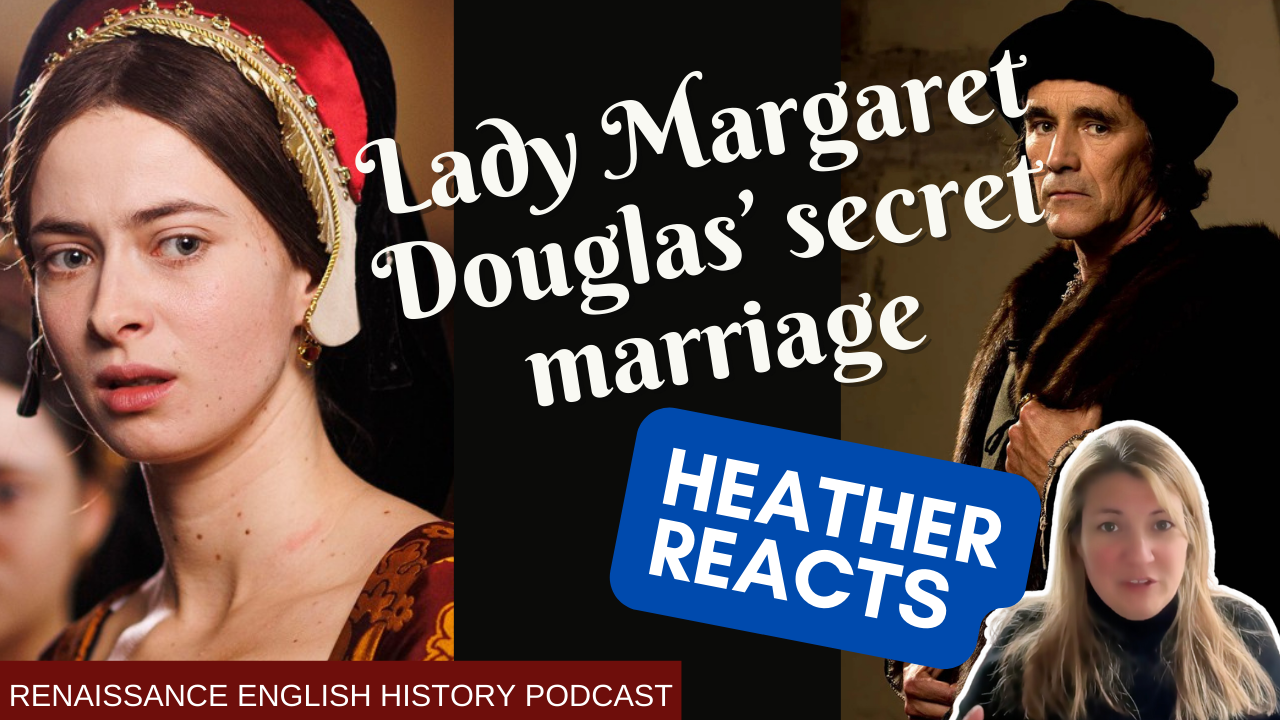
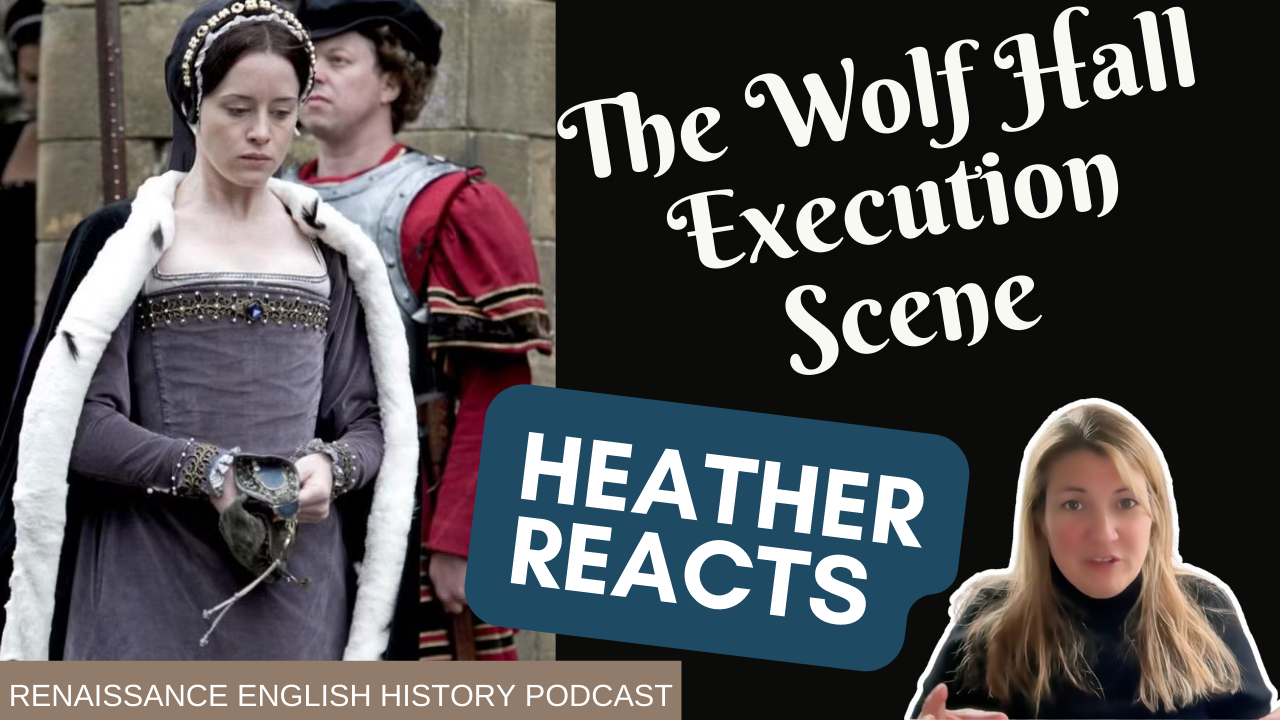
    Well, the second episode of the second season of Wolf Hall, the Mirror and the Light, gets into the scandal of Lady Margaret Douglas’ secret marriage to Lord Thomas Howard. Let’s dig in and look at the truth behind the drama.

    Watch the video, or read a rough transcript below.

    Related Link: Episode 53: Tudor Times on Margaret Tudor

     Hey friend, welcome back to the YouTube channel for the Renaissance English History Podcast. I am your host, Heather. I’ve been podcasting on Tudor England since 2009 with my show, making it the original Tudor History Podcast. This channel is where I put all of my episodes from all of my shows, as well as lots of extra content like this video right here.

    This video today. We are going to talk more about Wolf Hall, the second episode, uh, aired in the UK on Sunday of the Mirror and the Light. I did a video on Monday or Tuesday talking about, uh, was Cromwell really going to marry Princess Mary? Because that’s something that was portrayed, the, the rumor of that was.

    portrayed in the second episode. The other main thing that came in that second episode was we saw Lady Margaret Douglas and her secret marriage and we saw Cromwell interrogating her and the kind of repercussions and fallout from that. So today we’re going to talk about about the truth of what happened with Lady Margaret Douglas and her secret marriage, which is indeed historically accurate.

    Uh, we’re going to talk about how Cromwell might have been involved, what we know about how he might’ve been involved and what was an interpretation, that kind of thing. So let’s get started and dig right in. Before we do that though, if you would like to see more Tudor history in your YouTube feed, why not go ahead and hit subscribe right now so you never miss a video that I put out.

    Okay. I have to put on my glasses to do this so I can see my notes. Ah, age. All right, so let’s talk a little bit about who Lady Margaret Douglas was and this secret marriage that she had. So it’s the summer of 1536. Henry is basking in his new marriage to Jane Seymour and hopeful for his long awaited male heir and scandal erupts in his court.

    His beloved niece, Lady Margaret Douglas, secretly pledged herself to Lord Thomas Howard, a move that set the court ablaze with whispers of treason and ambition.

    This is the story of how Margaret’s love affair nearly toppled her future and the The life of her lover and brought her under the sharp scrutiny of Thomas Cromwell. Someone whose sharp scrutiny you never wanted to attract. So Margaret was born in 1515. She was the daughter of Margaret Tudor, Henry VIII’s older sister, and Archibald Douglas, the Earl of Angus.

    So Margaret Tudor had married into Scotland. Her husband had died and then she remarried Archibald Douglas, Earl of Angus.

    This makes Lady Margaret Douglas very important. Henry’s daughters, Mary and Elizabeth, are still at this point declared illegitimate after his marriages to Catherine of Aragon and Anne Boleyn unraveled. Margaret Douglas was seen as a potential heir to the English throne.

    Uh, she was of the three, of three women there, she was the only one who wasn’t declared illegitimate, so good for her.

    Margaret’s early life had been shaped by the dramatic fallout of her parents turbulent marriage. Her mother had scandalized both England and Scotland by marrying the Earl of Angus, Archibald Douglas, following the death of her first husband, uh, that was James IV , so when James the fourth died, Margaret Douglas is, you know, the Dowager, she’s the regent, but she then remarries , the politics in Scotland were similar to the Tudor court in England. And so that kind of scandalized everybody.

    She had to flee for her safety. Margaret Tudor had, Henry’s sister, had to flee for her safety more than once, often with her young daughter, Lady Margaret Douglas, in tow. Eventually, Margaret was sent to England, Margaret Douglas, The daughter was sent to England. She lived at Scotland Yard. You know, it’s funny because we think of Scotland Yard as where the police are, and no, we’re going to call Scotland Yard.

    But it was actually a royal residence in Westminster named for its association with the Scottish monarchy. So Lady Margaret Douglas was living at Scotland Yard, where she was brought up in, you know, this political upheaval not around her mother, but her uncle, Henry VIII, did dote on her completely, just loved her, loved her, loved her.

    Henry made sure that she was well placed at court. He showered her with gifts and favor, but her position has was always gonna be precarious. Her royal blood came with high expectations, and her actions could have far reaching consequences. In 1536, Margaret fell in love with Lord Thomas Howard. Lord Thomas Howard was a younger son in the powerful Howard family.

    Though Thomas was from one of England’s most noble houses, he was far beneath Margaret in status. He was a younger son. Their engagement was a reckless gamble in the treacherous world of Tudor politics. Margaret, at that point, they would have wanted her for an international marriage. Henry didn’t have tons of kids to marry off and have alliances with.

    So he would’ve wanted to save his niece for, you know, an international marriage, something that could help diplomatically, not just have her marry for love, which that in and of itself was like, why would you do that? The nobility didn’t particularly marry for love. They married for alliances. Um, and you know, then to someone so far beneath her.

    It was pretty scandalous when it happened. The relationship was kept secret, but secrets did not last very long in the Tudor court. When news of the engagement reached the king, he was livid. The implications were both personal and political. With his marriage to Jane Seymour still quite fresh and no male heir yet born, the Tudor succession was fragile and Margaret’s engagement to Thomas Howard could be interpreted as a direct challenge to the throne, particularly since Thomas Howard’s uncle, who is the Duke of Norfolk, was already a pretty high power broker in court.

    The Duke of Norfolk had also been Anne Boleyn’s uncle. So he was really high up there involved in everything and so for Lord Thomas Howard to marry the niece of the king who is in the line of succession, that could show that he maybe had some eyes on the succession himself.

    Now, Thomas Cromwell was the king’s chief minister at this point, and given the nature of how sensitive it was, the ranks of the people involved, he would have played a central role in handling the fallout from the scandal.

    In the series, they show Cromwell interrogating Margaret, showing his kind of dual loyalties. He was completely loyal to the king, but he also privately understood how love had the power to destroy people and, you know, could, could have a power all on its own. Under intense pressure, Margaret admitted her engagement to Thomas, but she denied any treasonous intent.

    Nevertheless, Henry was unforgiving. Both Margaret and Thomas were imprisoned in the Tower of London. This was a chilling reminder of the consequences of defying Henry VIII. An act of attainder was passed against Thomas, accusing him of aspiring to marry Margaret to place himself in line for the throne.

    The act also introduced a new law. No member of the royal family could ever marry without the king’s explicit permission. While Margaret languished in the tower, Thomas Howard fate. was sealed. Though his death sentence was not immediately carried out, he remained imprisoned in very harsh conditions.

    He got ill and he died in the tower in 1537, likely of malnutrition or disease. He was only 26 years old. Margaret’s imprisonment was less severe, but still quite humiliating. After falling ill herself, she was moved to Scion Abbey. Her mother, Margaret Tudor, Henry’s sister, was writing these desperate pleas, asking him to move her, really trying to fight for her, but there wasn’t really anything she could do either.

    By 1537, she was released and was gradually returned to the King’s good graces, though the episode would , leave a shadow over her reputation. This episode did harden Margaret Douglas, and in later years, she would become a very shrewd political operator, very, very deeply involved in Tudor succession intrigues. The law forbidding royal marriages without the king’s consent would also have lasting consequences.

    It showed Henry’s determination to control the dynasty and protect his legacy at all costs, even if it meant crushing the romantic aspirations of his own family. Despite the scandal, Margaret Douglas’s life did not end in ruin. She went on to marry Matthew Stuart, the Earl of Lennox, and became the mother of Henry Stuart, Lord Darnley.

    Now, if that name sounds familiar to you, it is because, , Lord Darnley married Mary Queen of Scots, and together they had James VI of Scotland, who then became the future James I of England, who united the crowns of England and Scotland after the death of Elizabeth I.

    Now, how was Thomas Cromwell involved in the interrogation the way they show it in Wolf Hall? The historical records showing Cromwell’s direct involvement in interrogating either Margaret Douglas or Thomas Howard are sparse, but there are enough clues to build a nuanced narrative based on his role as Henry’s chief minister and the way he handled similar cases.

    So here’s what we can reasonably infer or speculate, along with some insights as to whether others in Cromwell’s circle, such as somebody like Richard Rich or Rafe Sadler, might have been involved.

    First, direct interrogations. So there’s no specific evidence in contemporary records that Cromwell personally interrogated either Margaret or Thomas, but it is entirely possible given his position. Cromwell oversaw most major investigations and interrogations on behalf of the king, particularly when they involved very sensitive political issues.

    If the matter was as critical as this, directly tied to the succession and the potential breach of royal authority, Cromwell would likely have been involved. Then there was his role as an intermediary. Cromwell often worked as Henry’s trusted intermediary, handling sensitive matters with discretion. His legal training and methodical nature made him adept at extracting confessions and ensuring that evidence was aligned with the king’s objectives.

    He would likely have conducted interrogators to handle it under his supervision. And then there’s the documentation of evidence. Cromwell was meticulous about recording confessions and correspondence. If he did not personally interrogate Margaret or Thomas, he would have overseen those who did and ensured that their testimonies were well documented in detail to justify the act of attainder against Thomas Howard.

    In terms of the historical and dramatic elements in Wolf Hall, the depiction of his interrogation of Margaret is a dramatic interpretation, of course, but it does align with his known responsibilities. It’s worth noting that Margaret did confess. So if Cromwell or his team interrogated her, they might have framed her relationship as naive rather than treasonous to avoid alienating Henry entirely from his beloved niece.

    And that is how it was framed. Thomas Howard’s confession might have been obtained under duress or through the promise of leniency, though it ultimately did not save him from imprisonment and an act of attainder.

    And then Cromwell’s interrogation style. Historical accounts do show Cromwell as calm and calculating rather than overtly threatening. If he questioned Margaret, he likely appealed to her fear of the King’s wrath and emphasized her precarious position as a royal woman defying the King’s authority.

    So there we have it, my friend, a little bit about Lady Margaret Douglas, her scandalous secret marriage, and how Cromwell might have been involved. I’m really loving Wolf Hall being back on, huh? Are you loving it? I’m totally loving it. It’s, uh, I’ve missed it. Really missed it. All right. Uh, we will leave it there for now.

    Thank you so much for watching. If you want to keep watching Tudor content, here is a video that I did on Lady Margaret Douglas just recently, actually. And here’s a video that YouTube thinks you’ll enjoy. Thank you so much for watching. Remember, you are deeply loved. I’m so glad I share the planet with you.

    Don’t forget to drink your water. Important to stay hydrated, and I will be back very soon. Bye bye.

  • Was Thomas Cromwell seriously interested in Princess Mary?

    Was Thomas Cromwell seriously interested in Princess Mary?

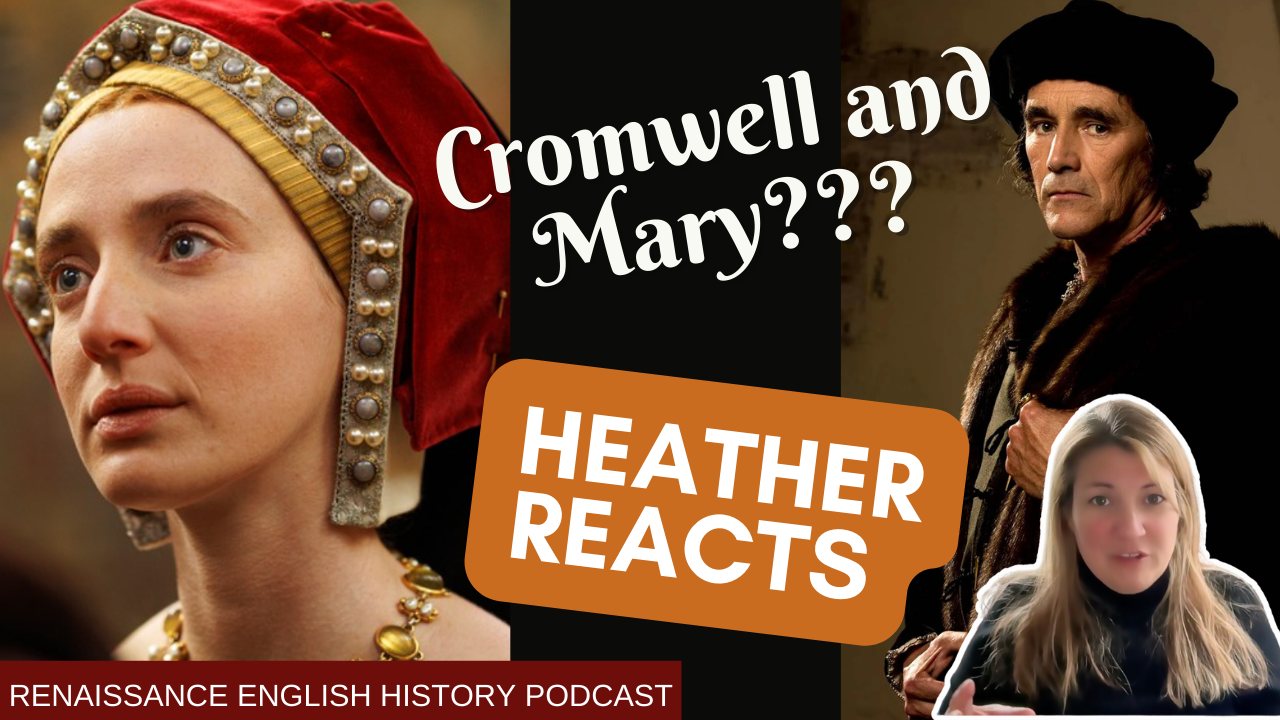
    Well, the second episode of the second season of Wolf Hall, the Mirror and the Light, gets into some potential drama with rumors that Thomas Cromwell was interested in marrying the Princess Mary. Where did that rumor start, and was there any truth to it? Let’s discuss in today’s YouTube video.

    Watch the video, or read a rough transcript below.

    Hey, hey, hey, friend. Welcome to the YouTube channel for the Renaissance English History Podcast. I am your host, Heather. I have been podcasting on Tudor England since all the way back in 2009, making my show, the original Tudor History Podcast. This channel is where I put all of my episodes from all of my shows, as well as lots of extra content like this video right here, you know, right here.

    Today we are going to talk about was Thomas Cromwell ever really seriously thinking about marrying Mary Tudor? Hmm. Let’s discuss.

    So I use Google Analytics on my website, of course, and you know, can see what people are searching for and visiting my, my podcast site. And I noticed that I got a lot of visitors in the last couple of days with the search term was Cromwell going to Mary Mary. That’s interesting, thought I.

    And then I watched Sunday’s Wolf Hall, and I realized that of course there was the rumor that Cromwell was going to marry Princess Mary, and that’s probably where you lovely folk who were visiting my website were coming from. So I decided to, you know, make a video about it, which was quite convenient because I can just go back to that blog article I had written in 2019.

    The blog article was entitled, Was Cromwell Going to Marry Princess Mary? Question mark, exclamation point. So let’s discuss.

    So on the surface, it would appear like, you know, a bit of a weird match, given Cromwell.

    It was a lot older, and also had been working so hard, so diligently against the interest of Princess Mary, uh, working to have Anne Boleyn replace Catherine of Aragon as queen. So you know, it would look like a weird match. But by the summer of 1536, things were actually looking a bit better for Princess Mary.

    Her mother was gone. But so too was Anne Boleyn. So was Henry Fitzroy, Duke of Richmond, who had also died about a month after Anne Boleyn’s execution, her half brother. , there was Princess Elizabeth, and then there was Mary, and there was no Edward yet. So she was, you know, second in line to the throne, really.

    Also, there’s a new queen, Jane Seymour, who really wants to try to work to bring the families together. Cromwell was working to bring Mary back into the fold by having her acknowledge that her parents marriage was illegitimate.

    And the show does, does show, the show shows, uh, Cromwell working on, you know, having Mary sign that document saying that her father was the head of the church and that her parents marriage was invalid.

    After Mary had signed that document, her father welcomed her back into the fold. Now the rumor that there was a potential match between Cromwell and Mary came to us, as so many wonderful juicy rumors do, via Chapuis. He wrote a letter to the French diplomat Thomas Perrineau de Granville on the 23rd of July, 1536.

    And it opens with a pretty funny jab at the English where he says, I have always thought the more these people are pressed, the more they grow stubborn like donkeys. I think that’s kind of true for humanity though, isn’t it?

    The more you’re pressed, the more you kind of dig in. So not sure that that’s just generally English people, but just kind of humans. Anyway, later in the letter, Chapuys says, Of late, Cromwell got a gold ring made, on one side of which is, in relief, the figure of the king and queen, on the other that of the princess, and round about was a writing in Latin, which you will see by the enclosed bill.

    Cromwell meant to make a present of it to the princess, but the king wishes to have the honor of it himself, and Cromwell will have to find other presents. The king is also getting his goldsmith to make a little two headed eagle with plenty of jewels. I know not what he means to do with it. They have begun appointing the household of the princess, and I think she will be magnificently provided for.

    The inscription of the ring said, Obediencia unitatem parit, unitas animae quietem et constantiam. which basically urges her to be humble and obedient to her father. And it went on, you know, to say, be humble and obedient to Queen Jane. This isn’t normally something that one would write in a ring that one was planning to give to one’s father.

    beloved or a person that one wanted to propose to. Um, I think it’s reading a lot into the inscription of a ring. However, rings, of course, then as they are now, are symbols of kind of I don’t know, there’s just something kind of societally that we associate with rings, right? And um, that was true for the tutors as well. So just the idea of giving a ring is quite a personal kind of gift and not just something that you would just give to a random person.

    But the inscription talks about being humble and loyal to your father and to the queen. Not really romantic in nature, right?

    Then there’s also the question of what Henry would have thought about Cromwell marrying the princess. And of course, Cromwell was clever enough to know what Henry would have thought. In the footnotes of Life and Letters of Thomas Cromwell by Roger Bigelow,

    there’s a note that says the episode should have been sufficient to show that even if Cromwell had any idea of marrying the princess, the king’s opposition to the plan would prove insurmountable. The inscription on the ring, moreover, surely indicates that the gift was intended rather as a reminder of the princess to her duty towards her father than as a preliminary to a matrimonial proposal.

    Can you imagine, Henry, if Cromwell, his servant, who came from Putney, had proposed to his daughter? I don’t think that would have gone very well.

    And then there’s also the idea that maybe this wasn’t a ring at all, but there was a problem with the translation and it was actually a metal. So in Dermot McCullough’s biography of Thomas Cromwell called a Thomas Cromwell a revolutionary life. He says that the translation was incorrect. And it had to be some type of metal, like a, um, a metal, which makes sense with that amount of inscription and the detailed carvings.

    I mean, that’s a lot of inscription to put on a ring, isn’t it? Like, how far, Thick was the ring to hold all of it. I didn’t actually read you the whole quote. Let me go back and read you the whole quote. My Latin is, is not very good. So, you know, I’m, I’m gonna butcher it, but it says, the whole quote is, Obedientia Unitatem Parit, Unitas Anime Quietem et Constantiam, Constans Vero Anime Quies Theasaurus, In esti mobilis,

    Requi exemplar obedience. Pat I Naura per at Obed. So that’s a lot. And actually I have a personal funny share about this. When my husband and I were getting married many, many years ago. 19 years ago, 18 years ago, a long time. We were, he got his ring made, uh, and had, uh, an inscription put on it and he was doing it online and he didn’t realize, it just didn’t occur to him.

    He put a lot on his ring. Like, It’s a lot. I forget. He put all this stuff about, you know, we found each other and we’re so in love and now it’s time to start a family and now we’re going to have, you know, our love will bring about children and the magic of family and this new family that we’re building together.

    It went on and on and on. Anyway, so, you know, he’s very happy with it. He sends, he hits submit and away goes the form to get this, uh, engraving on. He gets the ring. And he couldn’t read any of it. And I just laughed. I was looking at it. I was like, didn’t you think about that?

    And he’s like, no, we didn’t. So my point is that if it was a ring, that’s a lot of text for a ring. And I don’t know how that could all fit. So maybe there’s even the idea that it was, it wasn’t a ring at all. It was a metal and there’s just a problem with the translation. Later rumors about Cromwell and Mary would actually come out during Cromwell’s downfall, with when his old friend Thomas Wriothesley who in the show in Wolf Hall calls Call Me, Call Me Risley, turned on him and gave evidence to the council that not only did Cromwell make jokes about Henry’s inability to consummate his marriage with Anne of Cleves, but he also wanted to marry Princess Mary and make himself king.

    That seems kind of out of character to me. Cromwell seems a lot smarter than that, but it also was part of what helped bring him down. Uh, so it doesn’t really matter if it was out of character or not, if people believed it or if they at least pretended to believe it. So there you go.

    So I don’t think that Cromwell ever thought seriously that he could marry Princess Mary. The idea might have struck him for like a second. It might have crossed his mind like, oh, that would be a fun match. And maybe that would be fun. But Do you honestly think that Cromwell would be dumb enough to think that that would work?

    Now, I will say, uh, for Cromwell, he managed to have his son Gregory marry Elizabeth Seymour, who was the younger sister to Queen Jane Seymour, which made Thomas Cromwell the father in law to the sister of the queen, which made him related through marriage to the king. So that was, you know, an exciting marriage for him.

    I think he probably would have been content with that. A blacksmith’s son from Putney. It was blacksmith, right? Because I always confuse him and Cardinal Woolsey because Woolsey was a butcher’s son, right? Or was it the other way around? Anyway, I’m having a lot of brain farts today.

    All right, we will leave it there. Hey, one quick note before I go. Are you looking for a gift for the Tudor file, Tudor Holic in your life, or maybe for yourself? I would refer you to my shop tudor fair.com where we have fun products like this mug, uh, bottle, stainless steel bottle that says in my Tudor era, I really love this.

    I also have this in a T-shirt. Which I wear sometimes too, um, it’s a super pretty design in my Tudor era. And you can stay hydrated because, you know, I’m a big fan of telling you to drink your water so you can drink your water with this. with this mug, cup. Um, and there’s also all kinds of fun other gifts there.

    So, TudorFair. com, you can check that out. And also, I’d remind you about my Yuletide with the Tudors program that starts December 1st in just 12 days, where we’re going to dive deep every day in short videos, 5 to 10 minutes a day, on different holiday traditions and customs, starting all the way with the Romans and going through the 12 days of Christmas.

    It’s going to go till January 6th. We will keep the 12 days of Christmas and we’ll have a call in there, a live Christmas party on zoom with Brigitte Webster from her home, uh, her tutor home, talking about how she keeps the 12 days. She’s a food historian. Uh, she’s amazing. And she lives in a tutor period home.

    So englandcast. com for Yuletide with the tutors. I’ll put a link. somewhere up here. And then tutorfair. com for all your fun tutor merch, tutor swag, tutor merch products. All right, friends, look, if you made it to the end of this video and you enjoyed it, I sure would appreciate a press of that like button.

    It helps to feed the algorithm and get these videos to even more people. And I hope that I earned your subscription to my channel where I put out videos like this on the regular.

    If you want to keep binging Tudor content, here’s a video about Mary’s relationship with Eustace Chapuis that you might enjoy, and here’s one that YouTube thinks you’ll like. so much for watching. Remember, you are deeply loved. I am so glad I share the planet with you, and I will be back soon.

    In the meantime, don’t forget to drink your water. All right, friend. Bye bye.

  • Lesser known Portraits of Henry VIII

    Lesser known Portraits of Henry VIII

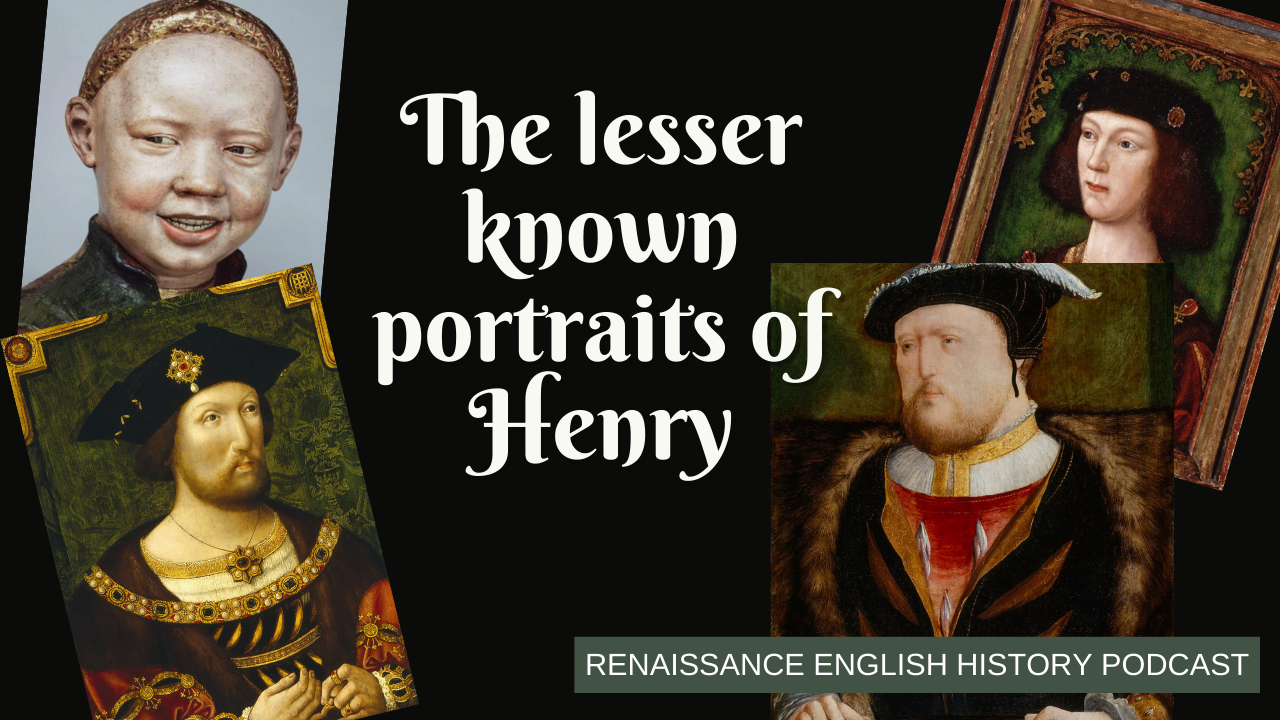
    We all remember Holbein’s famous paintings, but there were other painters working beyond Holbein. Let’s take a look at some of the lesser known portraits of Henry VIII.

    Watch the video, or read a rough transcript below.

    Hey, welcome back to the YouTube channel for the Renaissance English History Podcast. I am your host, Heather. I’ve been podcasting on Tudor England since 2009 with my show, the original Tudor History Podcast.

    This channel is where I put all of my episodes from all of my different shows, as well as lots of extra content like this video right here. Today we are going to talk about some of the lesser known portraits of Henry VIII. So there’s like the famous ones, the Whitehall one, the one, the portrait of Henry with his family.

    There’s, you know, like four or five super famous, well known portraits of Henry. We’re going to look today at some of those. paintings, portraits of Henry from when he was younger, as well as some of the lesser known ones. But first, if you want to see more Tudor history in your YouTube feed, why not go ahead and hit subscribe right now so you never miss a video that I put out.

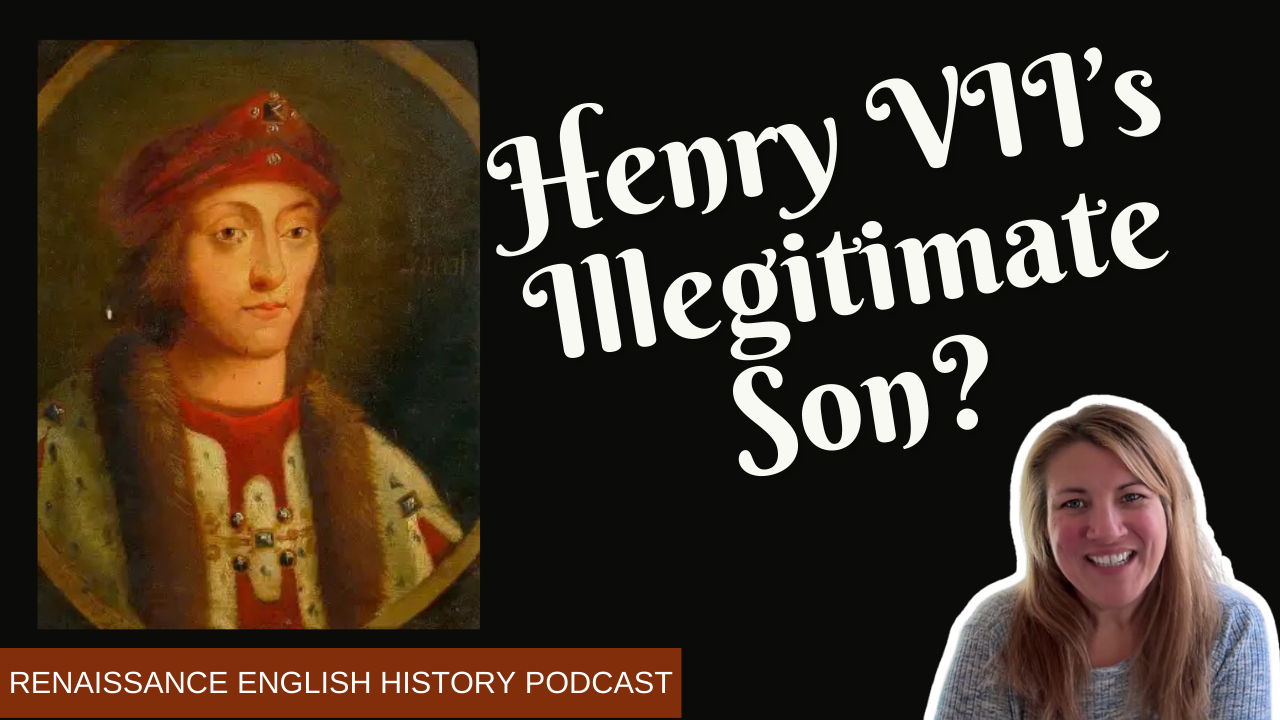
    Alright, let’s get started with the one image that we have of Henry as a child. This is an illuminated manuscript that was given to Henry VII around 1503 1504, and this is the cover of it, or the cover page, and we see Henry receiving the illuminated manuscript, but look in the left hand side.

    There are three children, so that would be Margaret and Mary, and then there on the top you see some red hair, That is young Henry. This was when the family was mourning the death of Elizabeth of York and So this was showing them kind of in mourning and Henry is actually kind of clutching His mother’s bedclothes and sheets, which is very very tragic This is you know an early image of Henry showing Uh, his emotions as a young boy, which I think it’s really quite poignant that, you know, his sisters are together kind of supporting each other.

    And then there’s Henry off to the side, just kind of crying in his mother’s bedclothes. Of course, he was very, very close to his mother, so her death would have hit him hard and did hit him hard.

    Now this is The Bust of a Boy by Guido Mazzoni, and Guido Mazzoni died around 1518. , this is a life size painted and gilded terracotta bust of a young boy laughing with his head turned three quarters to the left. It has been at sometimes thought to be a laughing girl or an elf.

    Or, a young Henry VIII, Prince Henry, when he was seven years old. Its identification as Henry is still a conjecture,

    Its provenance is through the royal family, so it had belonged to the crown, so that is why people think that it was a young Henry VIII. when he was about seven. And Mazzoni had been in London during that time. So, you know, who knows, but I think it’s an interesting thing to, to see Henry having this expression.

    It kind of looks like the young Henry that we imagined. It’s kind of hamming it up, um, quite outgoing. You know, you hear the story about how he was dancing at his brother’s wedding, at Arthur’s wedding. And so I don’t know, I, I like it. I, I’m going to say it is, but it’s conjecture at this point.

    the next one we’re going to look at is this. This is Henry in 1509. So this was right around the time that he became king. He would have been about 18 years old here.

    And this is Henry. in his prime. This was when he married Catherine. This was when he became king, started to really step into his own and become a man. Look at his rings. Look at these jewels around his neck and holding his cloak together. Look at the fur. It’s just really, really stunning.

    So yeah, you don’t really get much of a hint of the tyrant that he would become. This was right when he first became king, young teenager, young teenaged Henry. Now this is Henry as King. This is from about 1520. It’s by an unknown artist in the Netherlands and it lives in the National Portrait Gallery now.

    In the top you can see the Tudor Rose and the Beaufort Portcullis. Just look at him, look at those clothes, look at the backdrop. This is when he was about 30 ish years old, so he was still married to Catherine. He had um, Princess Mary at this point. He hadn’t yet started his affair with Anne Boleyn.

    This would have been him around the time of the Field of Cloth of Gold as well, right around that time.

    And then we’re going to look at two more of Henry, still young. This would have been in his Anne Boleyn stage. Both of these are between 1335 and 1340. They’re both Anglo Netherland artists and they live in the National Portrait Gallery.

    So Henry is starting to bulk up, bulk up, I guess, here by this point. And he is starting to look more like the familiar Henry that we know from the later portraits. This would have been right during his period of executing Anne Boleyn between 1535 and 1540. So executing Anne Boleyn, marrying Jane Seymour, and then eventually Anne of Cleves.

    This is what he would have looked like during that period. I

    think it’s interesting that he still has that kind of medieval hairstyle that he had when he was younger in the 1509 portrait. At least in this painting, I don’t know about in here because his head is covered.

    Of course Holbein, the Holbein images are the most famous ones that we have of Henry, but there were many other artists who painted the King’s portrait before Holbein even came to England, obviously.

    So there you have it. Some of the lesser known portraits of Henry through the years. It’s a little bit shorter of a video today than normal because I had to go to the post office to ship out the first 200 Tudor planners. Like this is the Tudor planner. You can get them on my shop now, uh, at Tudorfair.

    com. I’ll put a link, but this is the 2025 one. You can see it’s a beautiful, beautiful book that looks like an illuminated manuscript. And then inside, this is the weekly layout. You can see there’s like this week in Tudor history, all of that. So it looks historic. And then this is the monthly layout.

    There’s quotes. There’s a Spotify playlist so that you can listen to music while you’re planning. Um, monthly events, all that kind of stuff. Lots of note pages in the back. Ooh, and stickers. Look at these fun stickers. So you can get this at TutorFair. com and I do an Indiegogo every year to pay for the printing costs because I self publish it.

    So I do a crowdfunding every year to pay for the printing costs. So the early people who got theirs, I just shipped the first 200 out and I’m going to ship the next 200 out in a couple more days. Um, and so I was at the post office this morning. I got my cardio in and my strength in. lugging boxes of these into the post office.

    Super fun. I love this time of year. It’s planner time of year. And, uh, anyway, so it’s a little short, little more of a short video than normal, but I think it’s kind of fun to look at these images of Henry before the, uh, the super famous ones that we know of now.

    Huh? So, yay. Thanks for watching you guys. If you made it to the end of this video and you enjoyed it, I sure would appreciate a press of that like button. It helps to feed the algorithm and get our content to even more people. I hope I earned your subscription to my channel where I put out videos like this on the regular.

    If you want to keep binging Tudor content, here’s a Portraits and Propaganda video I did recently, and here’s a video that YouTube thinks you will enjoy.

    Thanks so much for watching. You are deeply loved. I’m so glad I share the planet with you. And don’t forget to drink your water. I have a super festive water cup. I just got it this weekend at Michael’s. It’s so festive. I love it. I love it. It makes me so happy. You have an amazing day. Bye.

  • Edward Seymour: Rise, Power, and Downfall of England’s Lord Protector in Tudor History

    Edward Seymour: Rise, Power, and Downfall of England’s Lord Protector in Tudor History


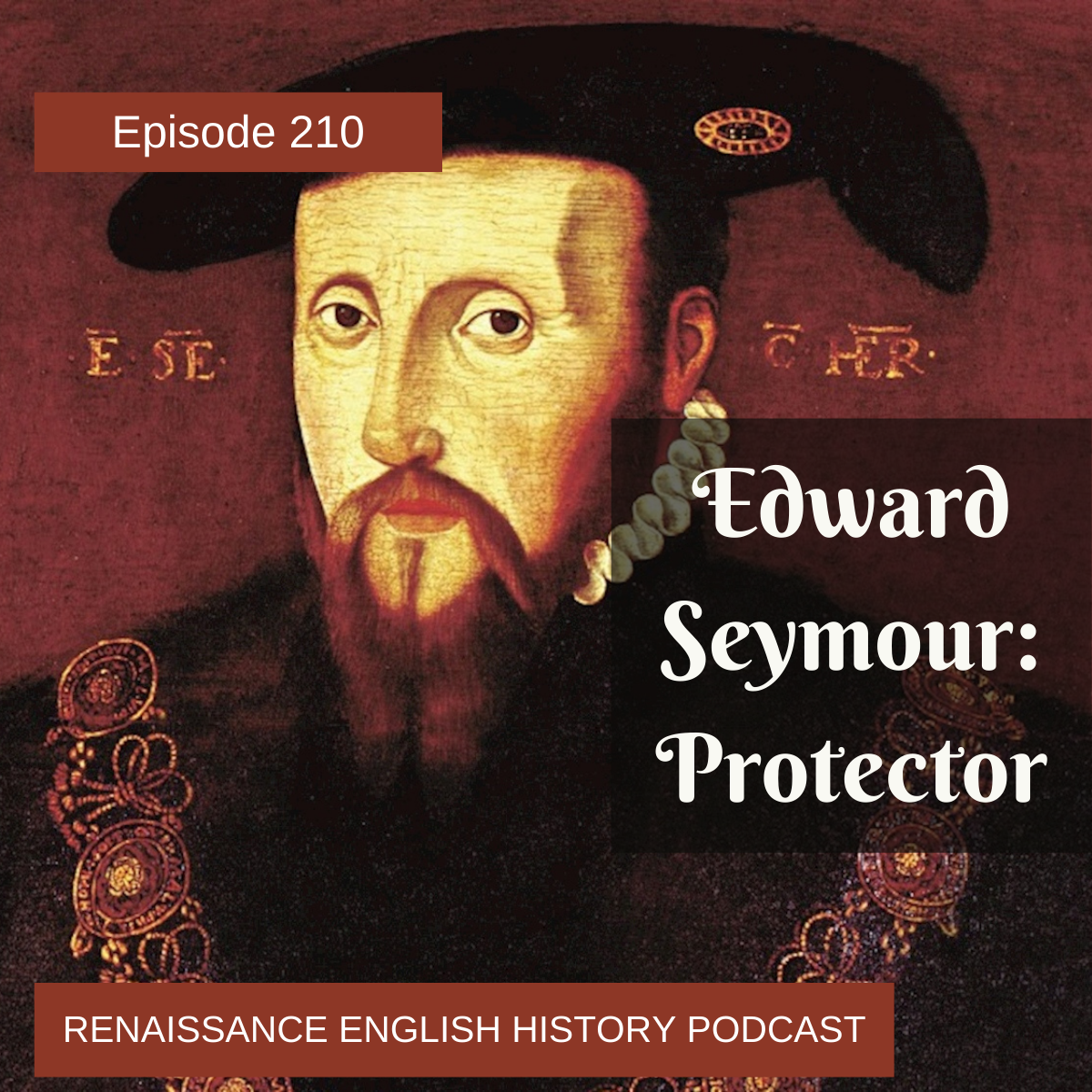
    Edward Seymour rose to power as one of the most influential figures in Tudor England, navigating a court rife with political intrigue to become Lord Protector during the minority of his nephew, Edward VI. As the eldest brother of Jane Seymour, Henry VIII’s third wife, Edward’s position was elevated by both family ties and military accomplishments. Following Henry VIII’s death, Seymour masterfully leveraged alliances and court influence to bypass the regency council outlined in Henry’s will, securing near-royal authority.

    In this episode, we’ll explore Edward Seymour’s calculated rise, his role as Protector, and how his ambition ultimately shaped—and ended—his turbulent legacy.

    A very rough transcript on Episode 210: Edward seymour.

    This is episode 210, and it’s on how Edward Seymour became the protector in England. It involved a lot of political maneuvering and plotting, and we’re going to talk about Edward. And how he became Protector, and then a little bit about his legacy as Protector. Alright, so Edward Seymour, Duke of Somerset, the eldest brother of Jane Seymour, the third wife of Henry VIII, has a significant yet very tumultuous position in English history.

    His life was marked by a rapid ascent to power and eventual tragic downfall, and it epitomizes the volatile and intrigue filled atmosphere of the Tudor court. Following the death of Henry VIII. Edward Seymour navigated the political labyrinth and he became the Lord Protector of England during the minority of his nephew Edward VI.

    Despite Henry’s will not specifying the need for a protector, Seymour’s political acumen and strategic alliances enabled him to consolidate his power. We’re going to talk about Seymour’s life, the intricate political landscape that facilitated his rise, his family ties and conflicts. and the impact of his governance on Tudor England.

    So he was born to Sir John Seymour and Margaret Wentworth around 1500. He was exposed early to a life intertwined with political intrigue and ambition. The Seymour family was old and pretty well established, but right at the time that Edward was coming of age and was starting his political life, there was a huge scandal due to allegations of improper conduct by his father.

    With Edward’s own wife. So Edward’s own wife apparently had a thing going with Edward’s father. Now, how much agency she had in this thing, you know, I couldn’t guess, and it all worked out very badly for her. I actually did a YouTube video on her and, and what happened to her. And, um, there was a child involved and it was all a very sad story.

    And we’re not going to talk about that here. We are going to talk about here is that it left kind of a stain on the family. in the kind of late 1520s, early 1530s, and that needed some astute political maneuvering to restore and elevate the family’s standing. So fortune turned for them when Jane Seymour attracted the attention of Henry VIII, becoming his third queen consort in 1536.

    Her marriage significantly bolstered the status of the Seymour family within the royal court, providing them with unprecedented access to power and influence. This matrimonial alliance was a pivotal moment laying the foundational stones for Edward Seymour’s eventual ascent to the role of Lord Protector.

    Edward’s early years, like any noble young man’s, had a religious education, which equipped him with knowledge and skills essential for navigating the complexities of court politics. He would have been grounded in classical texts, languages, arts, combining that with an understanding of governance and statecraft.

    We don’t know a whole lot about his life early on, but he does come from an ancient family. Like I said, his mother, Marjorie Wentworth, actually is descended from Edward III. And when he was about 14, in 1514, he received an appointment in the household of Mary Tudor, Queen of France. And was enfant des honneurs at her marriage with Louis XII.

    So one kind of wonders if he would have met Anne Boleyn. Obviously he probably would have met Anne Boleyn there and probably been close to her. So that’s an interesting little thing to think about. Edward Seymour’s military achievements also were crucial stepping stones in his ascent to power and political prominence.

    He was involved in military campaigns beginning with his service in the English army during the invasion of France in 1523. His capabilities there did not go unnoticed, enabling him to forge important connections and establish his reputation as a competent and reliable military leader. Later, 20 years later in 1544, During the later stages of Henry VIII’s reign, Seymour played a pivotal role in the successful capture of Bologna, which was a significant military accomplishment during the Italian wars of 1542 to 1546.

    His leadership and strategic acumen were instrumental in this victory, further elevating his status within the military ranks and at court. This campaign was more than a military conquest, it was a showcase of his ability to manage men and resources effectively. Contributing to his image as a capable leader.

    He also actively participated in military campaigns against Scotland, aimed at enforcing the English marriage proposal for young Mary, Queen of Scots, to marry Edward VI, reflecting the larger political and dynastic ambitions of Henry VIII. These military endeavors were often called the rough wooing.

    There were a lot of challenges, but it did give Seymour the platform to demonstrate his military prowess and his strategic thinking. While his military campaigns were characterized by varying degrees of success and failure, they were essential in shaping his political destiny. The exposure to the rigors of warfare, The intricacies of military planning and execution fortified his resolve and honed his leadership skills.

    The recognition and respect garnered from his military exploits facilitated his rise in the Tudor court, paving the way for his eventual appointment as the Lord Protector of England. His political ascension to the role of Lord Protector can be dissected as a series of adept maneuvers, meticulous calculations, and strategic alliances reflective of the elaborate tapestry of the Tudor court politics.

    His military exploits had certainly facilitated a burgeoning reputation, but it was his political sagacity that enabled him to ascend the political ladder with a swiftness that left his contemporaries intrigued and wary. When Henry VIII died in 1547, Edward VI was just nine years old, and he would inherit a kingdom embroiled in religious discord and political instability.

    Henry’s will had delineated a regency council of 16 executors to govern the realm during Edward’s minority, with no clear provisions for a singular protectorate. The absence of a definitive guideline for governance in Edward’s minority left a vacuum, which was fertile ground for an ambitious courtier to sow the seeds of their aspirations.

    Edward Seymour perceived the opportunities inherent in the situation and initiated his play for power. He got support from key members of the council, he exploited his ties to the young Edward VI, his family ties, and he offered prospectus of power and influence. His meticulous orchestration culminated in him being declared the Lord Protector and Governor of the King’s Person.

    only a few days after Henry’s death. It is noteworthy that Edward was not only appointed as Lord Protector, but was also granted almost regal powers. It was an absolutely radical departure from how things had ever been in the past. There was almost absolute authority vested in Edward Seymour, who was, after all, a subject.

    of Edward VI, his nephew, but he actually had very similar powers to an actual king. One of the things that made his ascent successful was his strategic alliance with John Dudley. Now, a couple of weeks ago, we did the episode on Empson and Dudley. So here we have another Dudley popping up. We’ve got John Dudley popping up, another influential member of the Regency Council.

    This alliance was pivotal in consolidating his position, providing the requisite support to override any potential opposition within the council, and there was a little bit, but Dudley’s military experience and political influence complemented Seymour’s ambitions. They crafted a mutually beneficial relationship that was instrumental in establishing and sustaining Seymour’s protectorate.

    However, the significance of royal favor in his political elevation cannot be understated. Edward Seymour was not only the uncle of the young king, but had also won his nephew’s affection and trust. This connection, coupled with the young king’s favor, was a crucial component in validating and solidifying his authority.

    The fact that Edward loved him so much gave him this kind of aura of legitimacy and it gave him a sense of stability which anchored him in this position. Once he was in power, Seymour undertook administrative reforms and fortified his position by granting titles and lands to his supporters. His policies actually leaned towards populism and reflected a genuine concern for social justice and for education.

    It was one of the things that surprised me when you read about Kett’s rebellion that he actually was very much anti landing closures, which is what kind of started that and was something that was hurting the commons a lot. He pursued religious reforms guided by a Protestant vision. He initiated measures to address economic disparities as well.

    But his reign was not devoid of challenges and controversies marked by socioeconomic unrest, military failures, and the pursuit of power by his wife, and also drama. That’s one of the things we really remember about him, the drama with his wife, Anne Stanhope. The marriage between Edward and Anne Stanhope is steeped in political ambition, power plays, and avarice.

    Anne came from an aristocratic background. And she was a formidable character with an insatiable desire for power and influence, which was one of the things that helped fuel her husband. I need to do an episode just on Anne Stanhope, actually. Maybe I’ll, maybe I’ll do a YouTube video on her. She had a sharp intellect and acute awareness of her station’s potential, and she embodied the quintessential ambitious woman navigating the Tudor court’s labyrinth policies.

    Her pursuit of power led to unprecedented frictions within the court, notably the infamous dispute over the Queen’s jewels after Henry died. Anne said that she deserved to have the Queen’s jewels. She laid claim to them, which was opposed by the council and, of course, the Dowager Queen Catherine Parr.

    Anne’s insistence on her perceived rights to the jewels was emblematic of her broader quest for acknowledgment and assertion within the royal hierarchy. Now, of course, one of the things that made this extra tricky is that there was family drama involved, because Catherine Parr had married And Stan Hope’s brother in law, Thomas Seymour, the brother of Edward Seymour.

    Catherine Parr said that the jewels were given to her were gifts from Henry VIII. And this fight was actually one of the things that might have driven apart Edward and Thomas Seymour. Anne’s influence over her husband was palpable. It often manifested through her involvement in political and administrative decisions.

    And she leveraged her proximity to power to fulfill her own ambitions. Nothing wrong with that. I’m not gonna hate on that. Sometimes, however, it was to the detriment of her husband’s political career. It could cause some problems with the council when she was fighting for the right to have the jewels and things like that.

    Of course, a lot of that is due to sexism, too, so we’re not, we’re not gonna get into that. But it wasn’t necessarily the best move on Anne Stanhope’s part. One of the features of Seymour’s governance was his inclination towards populist policies aimed at addressing the economic disparities and social injustices that he saw.

    He actually demonstrated a genuine concern for the plight of common people and he sought to implement reforms to alleviate their suffering. For instance, he wanted to curtail the enclosure policies that were detrimental to the farming communities. He also wanted to implement a law to protect vulnerable rural populace from the landowning gentry.

    But these well intentioned policies often met with resistance. by the lords that would be affected by it the most. And this, of course, would come back to haunt him later. Seymour was a devout Protestant. He played an instrumental role in advancing the Protestant Reformation in England. He championed religious reforms, aligning them with his vision of a Protestant England.

    He facilitated the introduction of the Book of Common Prayer and the enforcement of the Act of Uniformity in 1549. These were critical steps in establishing Protestantism as the state religion. These reforms, however, did not go uncontested, leading to a lot of dissent and upheaval, particularly in the North and the West, exemplified by the Prayer Book Rebellion or the Western Rising, um, and also, I will say that I think this is a bit of a stain on him, this, he presided over the stripping of the altars, which was when they took everything that could be considered Popish, uh, away.

    They smashed stained glass windows, they destroyed choir books, they, uh, destroyed prayer books and altars, anything that seemed Catholic got destroyed. They whitewashed the walls of churches and cathedrals to get rid of the paintings and the murals. It kind of breaks my heart. I mean, I kind of am seeing what he was getting at, and I don’t think there’s any excuse for doing that, and that’s one of the things that I very much dislike about him.

    But that is just me. Edward Seymour, despite all of the controversies, did leave an indelible mark on the governance of Tudor England and of his nephew’s reign. His progressive stance on social justice and education and his commitment to religious reform have earned him a nuanced place in history. His journey, marked by ascendancy, reform, conflict, and his eventual downfall, offers a detailed insight into the complexities and dynamics of power, governance, and reform.

    He, of course, did fall from power. His downfall was not an isolated event, but a culmination of strained alliances, misguided policies, and the inevitable repercussions of his unchecked ambition. His alliance with John Dudley, which was instrumental to his rise to power, began to unravel due to differing visions, political priorities.

    The divergence of their approaches to both domestic and foreign policies sowed the seeds of their discord. They basically just started growing apart. Which then erupted into open conflict. This fracture within the power destabilized the political landscape, and this helped to lead to his fall. He also had a lot of misjudgments in military endeavors, failed campaigns in Scotland, which tarnished his reputation and eroded his political capital.

    He was unable to secure decisive victories, and this exposed him to criticism. There was also rebellions, there was, like I said, the Prayer Book Rebellion, there was Kett’s Rebellion, there were a number of rebellions that cost a lot of money to put down. And people didn’t always like his populist viewpoints, like I said.

    So in 1549, he was arrested, sent to the Tower of London, charged with ambition to usurp the King’s Majesty. John Dudley was the one who was orchestrating much of this political intrigue and accusations. He was now the Duke of Northumberland. All of this culminated in Seymour’s execution in 1552. He was also brought down in part by his brother.

    Thomas Seymour, of course, had married Catherine Parr, had had a dalliance of sorts with Elizabeth. Princess Elizabeth seemed very ambitious. And eventually, possibly tried to kidnap Edward, the young Edward the King, probably, possibly shot his dog. It was all very bad. Was then executed. And of course, this was going to leave a mark on Edward the Protector as well.

    This was his brother doing all of this. So people were kind of beginning to just generally suspect the Seymour brothers. So his downfall, of course, is emblematic of the precarious nature of power in Tudor England. And His rise was marked by strategic brilliance and the zeal for reform, and then his fall was characterized by political miscalculations, betrayals, unfulfilled ambitions, which kind of illustrate the fragile essence of power in Tudor politics.

    His life remains a compelling study of ambition, reform, power, and tragedy in the rich tapestry of England’s history. If you want to dig deeper into Edward Seymour, there’s a couple of books you can check out. Janet Wertman, the fabulous Janet Wertman, who’s been on the show many times, has been to Tudorcon.

    She has a trilogy, The Seymour Saga, which starts with Jane, book two of The Seymour Saga, The Path to Somerset. And then The Boy King is The Seymour Saga, book three. So you can check that out on Amazon. There’s also a biography by Margaret Scard, Edward Seymour, Lord Protector, Tudor king in all but name. So you can check out any of those books to learn more about Edward Seymour.

    I will leave it here for today. Thank you so much for listening. I hope that this kind of piqued your interest into Edward Seymour and you would like to maybe dig deeper into him. He’s a fascinating character. I am looking forward to learning more about him myself. So thank you so much for listening.

    Thank you for your time. I will talk with you soon. Have a fantastic week. Um, yeah, just thanks for listening. All right. Bye bye!

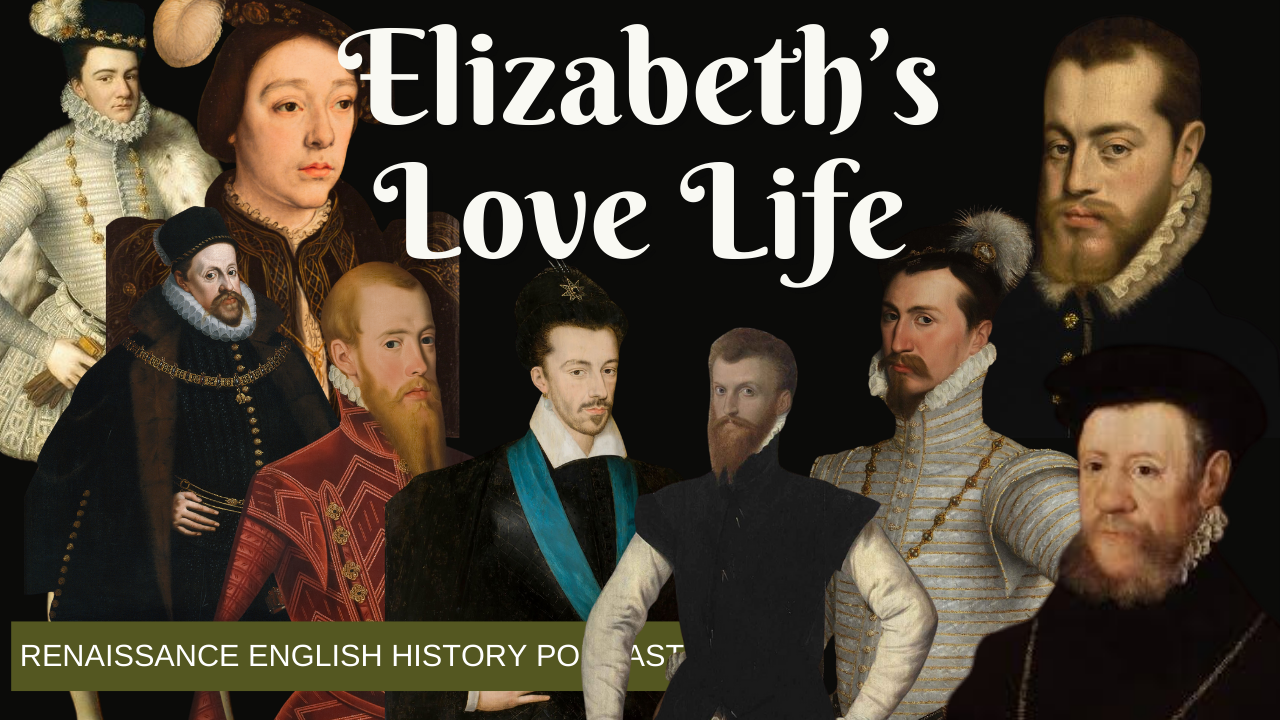
  • Author chat with Carol Ann Lloyd on Elizabeth’s Suitors

    Author chat with Carol Ann Lloyd on Elizabeth’s Suitors

    Elizabeth’s love life is the stuff of dramas and legends. This is Carol Ann Lloyd discussing Elizabeth’s Suitors and her new book: Courting the Virgin Queen; Queen Elizabeth and her Suitors. Patrons and YouTube Channel members have regular Author chats where we talk with authors about their books, their research, and more. Patrons and members are invited to attend live, and then I put the recordings up for all to enjoy.

    Learn more about Carol Ann at https://www.carolannlloyd.com/
    Buy Courting the Virgin Queen on Amazon or wherever you buy your books!

    A Very Rough Transcript of my chat with Carol Ann Lloyd on Elizabeth’s Suitors.

     Hey friend, welcome back to the YouTube channel for the Renaissance English History Podcast. I am your host, Heather. I have been podcasting on Tudor England since 2009 with the original Tudor History Podcast. This channel is where I put all of my episodes from all of my shows, as well as lots of extra content like this video right here.

    So every month I do author chats for patrons and YouTube members, members of the channel, and patrons, and so you’re gonna see The chat with Carol Ann Lloyd that we had, uh, yesterday. Carol Ann Lloyd is an awesome person. She speaks at TudorCon. She has spoken at every TudorCon since the beginning. She’s written a book called The Tudors by the Numbers.

    That was her first book. And then her new book that’s just come out is called Courting the Virgin Queen. It’s all about all of Elizabeth’s suitors, which is always a popular topic. So in this interview, we talked about a lot of different things. From how it is that a princess in the Tudor period managed to reach the ripe old age of her mid twenties without being married, which was very unusual for that time.

    We also talked about some of the surprising things that Carol Anne found doing her research, some of the surprising suitors. We talked about how Parliament felt about her being single, about Elizabeth being single, Some of the forces pushing Elizabeth towards marriage and then also why Elizabeth was so against marriage, what she thought about marriage, uh, in general, not just the psychology of having seen her mother and her stepmothers die in childbirth, but some of the other things she might’ve been thinking about.

    So enjoy this conversation. If you want to be part of conversations like this live ongoingly, you can either join the YouTube channel here by clicking join this channel. Or you can become a patron on Patreon at, uh, patreon. com slash englandcast. And we try to do monthly chats like this with authors.

    Thank you so very much. Enjoy the chat. Recording in progress. There we go. I always forget to hit record and then like right in the middle. When you wait. Yeah. So yeah, don’t, what did you say? But I’m excited to talk to you about your new book, Courting the Virgin Queen. Um, what led to, what led to this book?

    Cause last year you had the tutors by the numbers, how this one came into being. So, um, there were a couple of things. One was that I had been doing, um, just some work on Elizabeth. I’ve always been really fascinated by Elizabeth and had been posting a lot. Part of the reason I wrote the tutors by numbers is.

    And when I looked at Mary and Elizabeth’s reign together, add those two together, it’s the final 50 years of the Tudor dynasty, which is pretty remarkable. And it’s 42 percent of the Tudor dynasty. So those were the two numbers that propelled me into the numbers. But just looking at these two women and their coronations and everything got me really, you know, digging in with Elizabeth.

    And, um, someone at pen and sword saw me posting a lot about Elizabeth and said, Hey, we’re looking for someone to write about her suitors. Are you interested? And so they did to me. And I was interested because that was one of the things I was looking at. So I kind of chose the images this way. You can see Dudley, who’s, you know, sort of the forever and then the Duke of both Alan Saul and eventually or Frog, um, who’s sort of the final, because her re was pretty much from the day she took the throne and even before, but as Queen from the time she took the throne until well into the 1580s, uh, whether or not she was going to get married was not the question.

    It was always. Whom will she marry? It was always a question of which lucky young man, um, gets the job, or old man as the case may be. So it was, it’s just a really interesting way of looking at fur as a person, as these, um, courtiers and suitors. are sort of swirling around her. Yeah. That’s how I got started.

    So, I want to ask you, just going back, it’s, it’s such an interesting thing, and I know it has to, well, I’ll let you explain why, but that both her and Mary become queen not being married, um, that neither one of them were married by the time they got to, in Mary’s case, what, she was in her thirties, and then in Elizabeth’s case, in her mid twenties.

    Right. and they weren’t married. So was there, well, this is specifically about Elizabeth, so we’ll talk about her. What was the early, what were the early discussions about her being, because that’s very unusual for a princess to not be married by the time she’s in her mid twenties. Yes. So tell me about that.

    Well, it’s really interesting because, um, early in her life, and by early in her life, I mean as a tiny baby, there was a possibility, there was an exploration of her being betrothed to one of the sons of Francis I, who was the, um, representation of the What Henry the eighth wanted. I mean, he really wanted to be best friends with Francis or he wanted to conquer France.

    I mean, he kind of swung back and forth, but in one of those moments where he’s pursuing a relationship with France and getting on Francis’s good side, there was a chance that his son and baby Elizabeth would be married. And at that point, she was a legitimate heir to the throne. And as such, she was a hugely attractive possible bride.

    For royal houses throughout Europe and France in particular at this moment. Now it fell through Henry as always asked for more than half. I mean, he wanted so much that eventually that all fell through, but fast forward, just a couple of years, um, Henry falls out of love with Anne Boleyn. And, um, there’s the whole issue of all these trumped up, I believe charges and she is executed.

    Their marriage is annulled. And so before she’s three. Elizabeth is declared illegitimate and she is officially removed from the line of succession and an illegitimate child of a king who has no chance of inheriting the throne. Is not as attractive as a marriage partner. So even though there are a couple of opportunities before she becomes queen, the possibility of her marrying Thomas Seymour, which I think he was very interested in.

    He didn’t care if she was official or not. He really wanted to marry her. That did not work out as we know, for various reasons. When Mary was queen, uh, Elizabeth did represent a threat to her throne. The Wyatt Rebellion. was about maybe passing over, getting rid of Mary and getting Elizabeth on the throne.

    And so both Mary and Philip, Mary’s husband, thought it might be good to marry Elizabeth off, get her out of the country, married to a Catholic prince. It was, of course, assumed as a woman, she’d go along with that. But Emmanuelle Philbert, the particular choice, would not marry her unless she was recognized as Mary’s heir.

    And Mary didn’t want to recognize her. So for the reality of her being legally illegitimate, she was returned to the line of succession by Henry VIII late in his reign, but was not made legitimate. That illegitimacy did position her as less. Attractive, less potentially powerful, and of course, if Mary had had a child or if Edward earlier on had had a child, she wouldn’t have come to the throne.

    So the further away she fell from the throne, the less attractive she was, and as an illegitimate daughter, the less attractive she was. And that’s really how she ended up still being single. You’re not 25, which in those days for a royal is very unusual. Yeah. Um, I wanted to just go back to, because like you said, uh, Henry had added her back into his will.

    So she was part of the line of succession. So then during the time of Edward’s reign, that makes me question, did Edward ever try to marry her off? I know there was stuff with Mary and the threat. What did Edward think about her? There were some possibilities. Edward’s focused. I think he definitely didn’t plan to die as young as he did.

    Right. Right. I mean, it wasn’t like, and some people feel like. He was sickly his whole life. He wasn’t sickly his whole life. It was actually quite a robust young man. As a child, he was very healthy. He had some bouts of childhood diseases, as we all do, quite frankly. Um, but it’s only at the end of his reign that he becomes so ill.

    So people were expecting him to get married. His great priority continued to be pushing reform. And so I think, had there been a possibility to marry Elizabeth to another country involved in reform, it was just very unusual in Europe, and especially in the Europe royal houses, for there to be other than Catholics.

    And Edward did not want to marry her to a Catholic. And what about anybody who would have been? In England. Like I was thinking with Mary, there was the idea of who, what, one of the Henry pole or what, who was it? Wasn’t there. Yeah. Yeah. And Edward Courtney was a possibility. Um, but Edward and, and really Thomas Seymour was a legitimate possibility.

    If he had not, um, killed the dog. Yeah. And I know, I know Rebecca has a lot of feelings about him not killing the dog. Right. Yeah, an ongoing debate, but he was accused of treason and found guilty of treason and executed. Um, but here’s position as the uncle of the king was actually a very high and before he committed treason, a very, um, attractive position marriage to him would have kept Elizabeth in England, which she wanted.

    That’s where her family, she and Edward were actually pretty close. Um, she had friends in England, her household, all of that. And so it would have been both for both of them, except for the treason, a good marriage. And so yeah, just that one step without might’ve been, it would not have been appealing to Thomas Seymour’s older brother, Edward.

    And I say that because half the men in England were named Edward in this time. King Edward probably would have been happy with that marriage. He was. Um, before the treason fairly close to his uncle Thomas and, um, he was close to Elizabeth. And so without the problem there, that probably would have been something Edward would have felt good about King Edward, um, but it did not because of Edward Seymour, his wanting to hold on to power.

    And Thomas Seymour, I think the younger brother sort of feeling forced to overstep in order to get what he wanted. Right. And treason. All right. And so then we talked about Mary. So then here’s Elizabeth, 25, becomes queen, not married. And I imagine there were a lot of knocks on the door and a lot of, um, letters and ambassadors making advances.

    What was it? Reliefed ones? Well, some of the early and, you know, really interesting, um, one of the things I loved is that Philip of Spain marries husband. Is one of Elizabeth’s early suitors. And that just seems so ridiculous to us. That’s the same Philip who sent the Armada. Yeah. That same Philip, but early on, he realizes that Mary queen of Scots is married to the Dauphin or heir to the French throne.

    And he knows he, you know, if Scotland and France are combined like that, he needs a foothold in England. He doesn’t want to give that up. He has enjoyed being king of England while married to Mary, and that gave him some access to English land and English money and English troops for his wars. And so he wants to carry on with that.

    And writing back and forth to the Count of Feria, his eyes and ears in England, about that, the Count of Feria is the one who says, I believe everything depends upon the husband this woman may take. And so he knows it’s really important. They both feel Elizabeth will be thrilled to marry Philip. He is a king after all, and, um, he is supposedly very good looking.

    I don’t know. Um, but anyway, they are. I Yeah, Mary was wildly in love with him, you know, and, um, Elizabeth had had at least a decent relationship, especially for the end of Mary’s reign, Philip had encouraged Mary to leave the throne to Elizabeth. I mean, that was already the law. Mary really didn’t have a lot of options, but.

    Yeah. Philip felt like he had really helped Elizabeth and expected her to be so grateful she would marry him. Yeah. Elizabeth was not interested in that, but she didn’t want to offend him, so she had to keep people sort of wondering if she might come around and she didn’t say no right away and it was this diplomatic dance.

    She was a master at that, wasn’t she? She was. She was so good at it. Tracy Borman likes to call it her answers answerless. Because she’ll say something. And sometimes you do see the men she’s been talking with writing letters later saying, well, she said something, but when I really thought about it, she really didn’t say anything.

    So they are frustrated with that. But she learned to only say what she wanted people to hear way early on. I mean, she learned to keep her counsel early on. And certainly during Edwards and Mary’s reign, her ability to appear to say things without really giving people any substance. Saved her life. And so she continued to do that.

    So Philip was an early suitor with Mary queen of Scots in France. There were a couple of Scots noblemen that were considered suitors. We always have Robert Dudley. Of course, he’s married when she first comes to the throne. Full technical detail, right? Small detail. But we also have the Earl of Arendelle and William Pickering, English gentlemen that thought she might marry them.

    So there are a number of, she did not ever lack for suitors. And early on there were, as you say, many knocks at the door. And what, as you were researching this book, what was like the most surprising one? Um, I, I’ve been the terrible comes to mind, like who would have imagined that? What are some other kind of surprising suitors that you, or just surprising ideas about these suitors that.

    Well, I mean, one of the things I didn’t realize that there were two Scott suitors that early. And then of course that all falls apart when Mary’s husband dies and she returns to Scotland. Mary Queen of Scots husband dies and she returns to Scotland. But one of the things that did surprise me. Was how often and how directly Parliament brought it up that she needed to get married.

    So even more than the suitors themselves, and we can talk about other suitors. That was also really interesting, but I knew it was political, but how frequently Parliament felt like they had every right. To call upon her to get married and have children. And that they felt like it was totally their business and they were going to tell her what to do.

    And her responses to that, I thought that was fascinating. That was an ongoing relationship, Elizabeth and the house of Lords, Elizabeth and the house of commons, the house of Lords and the house of commons, talking to each other, um, deciding who would present her. With certain, um, things they wanted her to hear, it was just fascinating to see that grew out from the very beginning, right up until the 1580s when there was huge parliamentary debate about whether or not she should marry the Duke of Anjou or, and formerly Al Ansar, um, later in her reign.

    So that was, that was really surprising to me how, uh, how free they felt to tell her what to do. She’s now how much every how now how much of this so there’s kind of two parts to that There’s the fact that there’s a woman and maybe more but I’m thinking right now two parts There’s the fact that she’s a woman and so a woman can’t rule on her own, right?

    But then there’s also the idea of just stability of the realm that they’re probably quite concerned about that so I guess I wonder like What do you think was the main, or was it a combination? What, what was the driving force be behind all of this? Did they have any just justification or were they just being like, well, you’re a woman.

    Of course you need a man. There is part of that. That was a belief, but also she is the last of Henry vii. Children. I mean, it’s surprising for a monarch to see more than one child sit on the throne. Henry VIII is the only one that’s had three children, but we’re out of them. And since neither Edward nor Mary have a child, we’re out of heirs.

    I mean, there are some other relatives, there are cousins, but there is a lot of focus on the dynasty and a child to carry on the Tudor dynasty. And, you know, it’s, we’re not even a century. beyond the Wars of the Roses during the early part of Elizabeth’s reign. And so here is a pretty strong memory of literal civil wars fought over who needs to be the king.

    And we always did use that term next. So there was a lot of concern about that. That was a legitimate, a more legitimate concern for me and my frame of mind. But there was also an idea that a woman was not capable of carrying the heavy burden of ruling as they would call it and needed her husband’s help with that.

    Great. And I’m just thinking about how Henry himself was so concerned with having an heir and like surely. Did Elizabeth herself, did you find in your research, did it ever concern her? Like, I’m just thinking, like, her father did all kinds of crazy stuff to try to get a son. Um, all kinds of in the, uh, whatever.

    And then did she ever, like, what was her frame of mind with all of this? Did she just kind of think, well, I’ll be dead so that you worry about it after I’m gone or? You know, it’s interesting because I certainly think she and Mary, Mary, the first tried very hard and, and convinced herself a couple of times she was pregnant, which I think is an indication of how much she wanted to be.

    I don’t see that with Elizabeth. The comments she makes, she does say to parliament several times, of course, I’ll get married as soon as God tells me to kind of thing. Um, but she makes some pretty specific comments about would I love my winding sheet? In other words, the child would represent in some ways, her death and the idea of being wound up or winding sheet.

    Um, she saw a child. Largely, I don’t know if, if largely is, is too strong the word, but at least in part as a challenge. But think about it. Think about Mary Queen of Scots experience. When the Lords decide that they would rather have baby Prince James. be the monarch than his mother, who’s an adult. Now, she’s an adult who’s made a lot of bad decisions, and we have Darnley dead, and she’s now marrying Bothwell, and so there have been a lot of bad decisions.

    But even so, the preference for a male heir over a woman is really strong. And a son would represent Both a benefit, continuation of the reign, but also a challenge to a female monarch. Henry’s sons, Edward was never a threat to Henry VIII, but Elizabeth believed a son would be a threat to her. And so it was a very mixed feeling about that.

    Gotcha. And I know they’ve done on, you know, there’s been lots of videos and blog posts about how she felt about marriage after seeing what her mother went through, and I bet a lot of Yeah. Stepmother dying in childbirth and the dangers of all of that. Yes. Stepmother, I guess, dying in childbirth and, um, yeah, so she must have had a lot of ambivalence about that.

    But I just like, what was her plan then for it? Because I know even at the very end, she didn’t want to name James until the very, very end. Right. Right. What was, do you know what her plan was? It’s really hard to say what her plan was. The kinds of things she would say is don’t worry, God and I will take care of it kind of thing.

    It’s almost as if she believed she would live forever. And she certainly wanted to portray that the later years where she is wearing these unbelievable outfits and all of this makeup and these wigs and these ruffs that are, you know, standing out to here so they shimmer as she walks. It’s not vanity.

    It’s convincing people that she’s fine and she’s vibrant and she’s healthy. And she was really very healthy right up till the very end. Unlike her father who deteriorated. And unlike even Mary, her sister, who was ill for quite a long time at the end, Elizabeth was really very healthy, and then she got very sick and died fairly quickly.

    But she did not seem to really have a plan for that, or at least she didn’t express it. And she dangled the possibility of naming Mary Queen of Scots as her heir. In exchange for Mary Queen of Scots stopping her own claim to the English throne and stopping her attempts to take the English throne from Elizabeth.

    So it’s possible she believed if she didn’t do anything else, she could get Mary to agree to that and then she could name Mary. I don’t know. It may be that she was just saying that. Neither she nor Mary would take the first step toward that resolution, so it never happened. I don’t know. Um, that may have been part of Elizabeth, but you know, once Mary’s imprisoned, it’s not going to be that.

    So it’s hard to know what she really planned for the future. Yeah. It’s just, I wonder about that sometimes. Cause it seems like that’s one of the very basic kind of responsibilities of a monarch is to figure out your succession plan and so amazing in every other way. Right. And it’s just kind of like, what were you thinking something?

    Were you thinking some fruit, something brilliant that we haven’t. Well, it certainly, I didn’t see any of it and, and fairly early on within, I think four or five years of her taking the throne, she had that terrible bout of smallpox that absolutely could have killed her. Smallpox was usually fatal. It’s very surprising in some ways as sick as she was that she recovered.

    And there were many emergency meetings of the Privy Council and there was total disagreement. About who they thought should succeed her. So it had been a really pressing issue for a long time. And she continued to resist any urge. Not, she didn’t just not get married. She could have still named a successor, even if it was not going to be her child.

    Um, but she refused to even do that. She did not want Focus to leave her and go to somebody else. Yeah. So interesting. And so, okay. Um, well. I I wanna be respectful of your time ’cause I told you it would be about half an hour. And Marie has joined us. Hi Marie. And if Marie has any questions, please feel free to to hop in as well.

    Um, of all of these suitors, there’s like 20 of them, huh? Like, which one do you think she got the closest with? Which one? Um, was it the Duke of Alanon? Anju or do you think that was the closest? Well, it’s har, you know, Dudley’s always there. I don’t think she ever would’ve married. Dudley, um, because that would have so disrupted the whole English system, you know, the whole court system.

    And he was not one of the higher Dukes and all of that, but I think she loved him. I think he was very possibly the love of her life. I think he believed he could eventually convince her, but that did not happen. I think, um, the Duke of Al Nusra and Al Ju, you know, it’s interesting in the fringe. Um, that’s part of your path to becoming the king.

    You know, first you’re Duke of Alsan, then you’re the Duke of Anjou, and then you’re the Dauphin. So these people, um, and they also recycle names. So anyway, um, the Duke of Anjou, her frog, as she called him, I think she really did have a strong affection for him. There was a huge age difference. She was a lot older than he was.

    And she was, despite. Her protestations and her physician’s protestations that she was perfectly capable of having children in her fifties in those days. And I’m not saying today, but that is unlikely. Um, most women. Um, if we’re at the most in there, maybe mid thirties, I mean, you know, fertility really did stop much earlier.

    So grandmother died at age 37 having a plan. I mean, they started earlier and ended earlier in terms of their having children. And so, um, but. He did what no other foreign suitor had done, which is he came to England to court her in person. And that was huge because that defied the protocol completely.

    That was a huge act of respect from him to Elizabeth to come on spec to be evaluated by her as a potential husband. So I think she really appreciated that. I think they had a very friendly relationship. I think they were able to spend time together and really enjoy it. I don’t know that she. ever really thought she would marry him.

    And even that marriage so late lit the council so dramatically because he was a Catholic. By this time, Cecil thought, just marry someone. And William Cecil believed France’s help was essential to England’s survival. Walsingham, one of the other really strong voices who had himself been the ambassador to France during the St.

    Bartholomew’s Day Massacre and seen right outside his window all of that butchery of Protestants and Huguenots, was so determined she not marry a Catholic, so he was the leading voice against it. So even that late in the reign where she’s maybe looking for companionship, the politics were so dramatic.

    That I don’t think she ever could have. There was never a time that the council was 100 percent behind one person. Yeah, it’s interesting. Maybe if they had been, she would have had to do something. But she always managed to, you know, have someone there that the council was split about or that she could cause.

    some discussion or dissension among the council. Yeah. Clever. Clever. Yeah. How did she get along with Catherine de Medici? Just thinking, yeah, these, the letters between them is, is really the only advice or evidence, rather the only evidence we have. And both of these women are strong and opinionated and Really running things.

    Catherine de Medici is not a regnant queen, but she has sons who have taken the throne often as children. And so she is doing a lot of the decision making and ruling Elizabeth and Catherine de Medici’s older and sort of positions herself because she would be Elizabeth’s mother in law, but Elizabeth married her son.

    She kind of positions herself almost as a mother. Elizabeth, I think, although they had on paper and officially and publicly a very respectful relationship, I think Elizabeth always felt like she, as the regnant queen, was the superior position, had the superior position. And it was her kingdom, not her husband’s kingdom of her child’s kingdom.

    It was her kingdom. And she wanted to call the shots. So I do think they had a respectful, at least publicly respectful relationship. But, you know, when the chips were down and it was Catholic versus Protestant, it, it didn’t hold up always, um, that Catherine de Medici really was her ally. Gotcha. Gotcha.

    Just thinking about her potential mother in laws. Yes. Yes. And it’s, it’s so interesting because, of course, initially Catherine de Medici was Mary Queen of Scots, mother in law. And Queen of Scots wanted to stay in France, and once her beloved Francois died, Mary Queen of Scots wanted to stay in France and marry the next son, and Catherine de Medici said no.

    But Catherine de Medici then reached out to Elizabeth, so there’s a lot, I mean, the three of those women, right? And then didn’t Elizabeth want to potentially marry Dudley to marry Queen of Scots, and then their children, and that would be like weird? Really this weird suggestion. No one knows exactly how serious she was.

    The one thing that would have benefited Elizabeth by is it would have taken Mary Queen of Scots out of contention in the marriage market, because if Mary Queen of Scots had managed to succeed in her quest to marry, um, the son of Philip of Spain, it was going to become the King of Spain if he hadn’t died.

    Um, you know, if Mary Queen of Scots had been able to make a marriage like that, it would have been a huge threat to Elizabeth. So I think she thought deadly would. Um, take her out of that marriage market and keep Mary Queen of Scots on Elizabeth’s side. I, but I don’t know that, I mean, I don’t think that was really ever possible and I don’t know how much Elizabeth really liked it or really meant it as a possibility.

    Certainly Mary wasn’t interested, not like Dudley was interested. It is weird. Weird. Wasn’t it? Weird. Weird. Yeah. But I guess when you’re a queen, you, you, you come up with ideas and. Yeah. And, and I, I can’t help but wonder, although officially Elizabeth was very opposed to the Darnley marriage because Henry Lord Darnley was in, further down, but in the English line of succession and he married Mary Queen of Scots without permission and all of that.

    But Elizabeth knew what a weak person and. Just the kind of person Darnley was and how he took down people around him. He just brought them down. And suddenly she allowed him to go to Scotland when he hadn’t been. I just wonder if Elizabeth didn’t think, she’s going to fall for him. And that really neutralized a lot of Mary’s power.

    The relationship with Darnley really, um, really was damaging to Mary. So I just can’t help but wonder if Elizabeth had that in mind too. Maybe that was planned. Yeah. I wonder. If she was rolling the dice. Great. All right. So, Marie, if you have any questions, feel free to hop in or type them or whatever. Um, and in the meantime, where, tell me where people can go to learn more about you.

    You have a podcast, you have books, you have like a whole thing. Tell me about it. Yes. So, um, my podcast is Royals, Rebels, and Romantics. And a couple of times a month, I have some really fun people I’ve been talking to. So I’m really looking forward to sharing some new stuff. We’ve had some great guests.

    It’s just so much fun. I just love talking to people. As you know, Heather, it’s just always so fun to talk to people. Um, you can also find me at carolannlloyd. com is my website. And if you’re interested in asking me any questions or anything, it’s carolann at carolannlloyd. com. That’s really easy. And I am on Instagram and Twitter for the moment and Facebook as at ShakeUpHistory.

    So you can also find me any of those places. Awesome. Thank you so much for joining me. Always such a treat to chat with you, Heather. Always so much fun. I love it. So, thanks so much to Carol Anne for stopping by and having this chat. Remember, if you’d like to be part of live chats like this that happen monthly, you can become a patron on Patreon at patreon.

    com slash englandcast, or you can just click join this channel to join the YouTube channel, and you will get notices of other live chats like this that we do. All right. Thank you so much, friend, for watching. Be sure to check out Carol Anne Shake Up History in all of the places and Carol Anne’s books.

    Thanks. Um, and yeah, thanks so much for watching. Remember, you are deeply loved, I’m so glad I shared the planet with you, and don’t forget to drink your water. All right, friend, I will be back soon. Bye bye.

  • How accurate was Anne Boleyn’s Execution Scene in Wolf Hall?

    How accurate was Anne Boleyn’s Execution Scene in Wolf Hall?

    The second – and final – season of Wolf Hall is back after nine years. But if the first episode is anything to go by, it will have been worth the wait!

    Hillary Mantel’s trilogy tells the story of Thomas Cromwell – one of Henry VIII’s leading advisors, who was also the main architect behind the Dissolution of the Monasteries. The first season focused on his rise, and the political machinations that led to Anne Boleyn becoming Henry’s wife. It ended with Anne’s downfall and execution.

    The Mirror and the Light showed Cromwell’s downfall, and while I don’t know how the series will end, I suspect we’ll see Cromwell’s (spoiler alert!) beheading. To neatly bookend the series then, season two began with a recap of Anne Boleyn’s death.

    Take a look below, and then we’ll discus…

    Traumatized yet? Yeah, me too. So much so, I decided to do an entire video dedicated to the accuracy of the scene. You can watch it below, or read the transcript.

    So let’s get started… how accurate *was* Anne Boleyn’s Execution Scene in Wolf Hall?

     Hey friend, welcome to the YouTube channel for the Renaissance English History Podcast. I am your host, Heather. I’ve been podcasting on Tudor England since 2009, making my show the original Tudor History Podcast. This channel is where I put all of my episodes from all of my different shows, as well as lots of extra content like this video right here.

    So today we are going to talk about Anne Boleyn’s execution scene in Wolf Hall. The second season of Wolf Hall is playing now in the UK. It started on Sunday. It’s been nine years since the first season. Can you even believe that? Nine years. I haven’t aged today. Um, anyway, I think there were a lot of holdups with the pandemic.

    And of course, Hilary Mantel hadn’t yet written the final installment in the trilogy, The Mirror and the Light. And then the pandemic happened. And so it just took a long time to get it out. But, um, It’s on now in the UK. So I watched the first episode on Monday. And it opens with the execution scene that the first season ended with showing Anne’s execution. Of course, the first season was kind of the combination of the first two books in the trilogy and it ended with Anne Boleyn’s execution.

    And then they decided to open the second season with that same scene. So some pieces were re shot, um, but in general, they reused most of the footage. We’re going to talk about, um, What was true from the execution scene and what was not because there were definitely some creative licenses there.

    Also, just to note, I’m not in the UK. You can Google how to watch UK TV not in the UK. That’s all I’m going to say about that. If you would like to see more Tudor history in your YouTube feed, go ahead and subscribe now. So you never miss a video that I put out.

    All right, so Anne Boleyn executed May 19th, 1536, a pivotal turning point in English history. The first time a queen is executed showed how ruthless her husband, Henry VIII, could be. The brutal end if you fell out of power from Henry. The book, Wolf Hall and the series are both known for a lot of attention to detail, really staying true to the history.

    Of course, it is very biased in favor of Thomas Cromwell, but it’s from his perspective, right? So it shows events from his perspective. And, it’s one of the most accurate pieces of historical fiction, as well as being one of the most beautiful pieces of writing ever. There’s a reason why it won so many awards.

    It’s just so beautiful. Um, I love it. I’m a big fan. If you can’t tell. So the execution scene is how season one ended and they recently reintroduced season two with that scene.

    So we’re going to talk today about how closely Wolf Hall aligns with the historical accounts of Anne’s execution, focusing on her final speech, the presence of Thomas Cromwell, the actions of her French executioner, her dress, all of that. One thing too. There are. three main sources that we have for Anne’s execution, where we get our information.

    And of course, those sources are also biased. One of them is from Chapuys, the imperial ambassador who was writing back about what happened. He did not like Anne, but even he in his letters admits that Anne’s ending was unfair and she was probably innocent of what she was accused of. Even with all of his hatred, he definitely hadn’t.

    did not have any kind of soft spot for Anne. So he was probably pretty accurate in his writings, but keeping in mind that he was biased and didn’t like Anne. The other source that we have is John Stowe, who was an antiquarian who was writing decades later, but he had access to people who, had heard about it and had memories of it.

    So he wrote about Anne’s execution. He’s our second source.

    And then the third is Lancelot de Carle. He was a bishop. He was a French scholar and poet, and he was in London in 1536 and saw everything that was happening as well. So he’s our other source. Again, all of these sources are going to have their own biases. So, like anything in history, when you’re reading about it, you’re reading one person’s perspective.

    So in terms of how accurate the scene in Wolf Hall is compared to what was written about it, we’re going to talk about that. But then keep in mind that we don’t even know if those people who were writing about it, if those were completely accurate, right? So there’s like a lot of filling in the blank that we have to do.

    So the first thing we’re going to talk about is her final speech. One of the most documented elements of her execution was her final speech. Stowe, DeCarle, and Chapuis talked about what she said in her, in her speech. This was a very common thing. Obviously, people who were on the scaffold gave a speech.

    There were a couple of reasons for doing that. You wanted to make sure that you were protecting your family because you were worried if you weren’t going to be around anymore, if you said something really bad, , right before you were killed, something against the king, would the king then hurt your family?

    So you were thinking about them and Anne was thinking about her daughter, Elizabeth, in her final speech. She talked about how Henry had been really good to her, how there hadn’t been a better prince anywhere, and she was undeserving of his kindness and all of this. Just praised the heck out of him.

    And she was doing that to protect Elizabeth and to protect Elizabeth’s legacy and her acclaim and all of that kind of stuff.

    Shap wee, which means, Again, staunchly Anne T. Boleyn reported that Anne raised her eyes to heaven, seeking God’s mercy, asking the king for forgiveness, and depicting her as both penitent and quite fearful.

    So in Wolf Hall, they don’t show a final speech like that. Claire Foy’s character is just kind of muttering brief prayers rather than delivering a full address. The original 2015 series did include a more extensive version of her speech, but in this latest installment, the scene is shortened for dramatic effect, I suppose.

    While the absence of her full statement sacrifices some of the history, it does heighten the tension and the immediacy of the moment. So this choice kind of highlights a common dilemma in historical drama, which is the balance between accuracy and the narrative impact.

    One thing that the series did get right is that she looked composed and resolute, but also, praying and, and asking God to, to protect her soul and to receive her soul.

    So my take on whether that part was accurate or not is kind of.

    Now Thomas Cromwell is seen at the execution scene. It’s interesting though, they had to reshoot his part because in the original Wolf Hall from 2015, in that scene, Tom Holland played his son. Tom Holland has now become quite famous and, uh, I don’t know whether there was an issue with his schedule or whatever, but he’s not, he’s been replaced.

    The, the character of Cromwell’s son is now played by another actor. So they had to reshoot the part where Gregory, the son, asks Thomas Cromwell, why does she keep looking up? And it’s a different actor. So they had to reshoot that part.

    Cromwell was at the execution. Uh, he was there with the Duke of Suffolk and other members of Henry’s inner circle. They were there as witnesses.

    None of the sources say anything about how Cromwell appeared or, you know, the inner turmoil that he might have been feeling at the fact that he was bringing Anne down. Uh, when he had also been so pivotal in her rise and now how he was becoming entrapped in all of these different schemes and the royal drama.

    So, uh, Of course, nobody was going to write about that. They, they couldn’t know how he was feeling. So the series does make it look like, he’s a little bit detached, a little bit aloof, but also there’s a lot happening inside his head and you can kind of see this potential. I don’t know. His emotions are definitely there when you’re watching the series.

    How accurate that is, I don’t know. I’m not Thomas Cromwell. But presumably, Hilary Mantel spent a lot of time, uh, communing with Cromwell, one might say, when she was writing Wolf Hall. So I’m gonna trust her, her take on that. Now, one of the most distinctive elements of Anne’s execution was the unusual choice of a French swordsman instead of the traditional axe that the English had always used.

    Supposedly, Henry VIII had granted Anne this mercy, such as it was, recognizing that a sword would result in a quicker, cleaner death than an axe, which could require multiple strokes. As we saw with Margaret Pole, when she was executed, I think it took at least 11 strokes to be finished. So a sword is much quicker, much cleaner.

    Anne’s execution was actually delayed because there was a delay in the French swordsman coming over. Uh, and so she was prepared to die. I think it was the day before and she was all ready and they said, Oh no, it’s not time yet. So then she had a whole other day that she had to wait, which would have been quite, quite terrifying.

    So according to the historical accounts, the swordsman did request Anne’s forgiveness before he executed her, which was also quite common for people to do.

    He also did wear soft shoes. This was another kind of mercy for people to keep people calm. The thought was that if you heard shoes clunking around on the scaffold, it would make people much more tense because they’d be just kind of waiting. And so they wore these soft shoes to kind of muffle the sound so that they wouldn’t be able to hear them.

    Also, the show is accurate in portraying the death the way he apparently had made a noise over on this side and then went, jumped really quickly over to this side because he wanted to get her head to turn. Uh, so he was an expert in what he was doing and, and was able to make the death as quick and, uh, clean as possible.

    So that part is pretty true.

    Now what about Anne’s clothing as shown in the Wolf Hall scene? Accounts of her clothing during her final moment vary, but they do provide some insight into the visual details. John Stowe did not talk about the dress, but other observers said that she wore a black damask gown with a white cape. Also, de Carle said that she wore a white collar and hood, both removed before her execution.

    The blindfold was noted in several sources. According to Chapuis, her ladies helped her cover her hair with a linen cap and placed a blindfold over her eyes just before the sword fell.

    And this is how they show it in Wolf Hall. So that is very accurate. That’s probably what it would have looked like.

    Now, what about the size of the audience in the show? There’s just a lot of close up, so they don’t show a big crowd. So you don’t know exactly how many people they think are there. But in reality, it was a small group. Henry didn’t want this to turn into a mob. He knew Henry knew that this was a really big deal.

    He knew that. This was the first time a queen was being executed and there was the potential for people to protest and for things to get out of hand. So he did keep it quite private.

    He also limited foreigners from attending. Chapuys was lucky that he got to go even though he wasn’t English. They wanted to limit any ability for people to take home accounts to a home country that might be used as propaganda against English.

    And also the date wasn’t publicized, so even prominent people at court probably would have had difficulty arranging attendance, getting there because it wasn’t something that was announced very far in advance.

    Wolf Hall shows this, like I said, they just show a lot of close ups. So you don’t really see a large crowd. It makes it feel like it is quite an intimate experience. And I think visually that contrasts with Anne at her power, when she was surrounded by people who loved her and all of these people who were praising her and saying wonderful things about her.

    And, In her moment of death, she was by herself, largely , with a very small group of people there to witness it.

    And then what they did with her body. Wolf Hall is very accurate, showing Anne’s ladies being quite emotionally shaken, lifting her body and her remains and preparing them for burial. The contemporary accounts say that her ladies in waiting gathered up her body and put her in the chapel of St. Peter Advincula in the tower.

    And that she was buried near her brother George, who had been executed several days earlier.

    The biggest issue that I had with this Scene in the second season is that they juxtaposed Henry the 8th getting married to Jane Seymour with Anne’s execution. So it made it look like it was happening at the same time. And in fact, there was quite an interesting visual, , showing Anne’s clothing being taken off of her, her cape and her luxurious gowns being taken off of her on the scaffold while Henry was getting dressed in gold, , for his wedding.

    People putting clothes on Henry as Anne’s clothes were coming off, which, visually was a really poignant, kind of dramatic scene, But it’s not true. Henry didn’t marry Jane Seymour until May 30th, and during the time that Anne was executed, he was actually spending time on, on the river, on boats in the river, entertaining other ladies, um, he was praising God that he had been rescued from this witch who had bewitched him. There were a lot of things happening, but he was not getting married to Jane Seymour at that time.

    So season two of Wolf Hall makes it look like he was marrying Jane Seymour at the exact moment that Anne was executed, which he wasn’t. So that is one inaccuracy, but I do think it makes for really interesting visual to show these layers being put on Henry as they’re coming off of Anne.

    So there you go. That is my take on the execution scene from The Mirror and the Light. Of course, it’s also how season one ended. So you can, if you’re going back and watching season one, you can check that out. Apparently The Mirror and the Light will be on officially in the U. S. in the spring on PBS. So U.

    S. viewers have to wait till the spring. So thank you so much for watching. We will leave it there. If you made it to the end of this video and you enjoyed it, I sure would appreciate a press of that like button. It helps to feed the algorithm and get our videos to even more people.

    Spread the Tudor love all around. If you want to continue binging Anne Boleyn and Tudor content, here’s a video I did on Anne’s time in the tower. You can check out or here’s a video that YouTube thinks you will enjoy. Thank you so much for being here. Remember you are deeply loved. I am so glad I share the planet with you.

    Don’t forget to drink your water. I’ll be back soon. Bye.

  • Roland de Velville: Henry VII’s Illegitimate Son?

    Roland de Velville: Henry VII’s Illegitimate Son?

    Henry VII isn’t remembered for being a womanizer, but he was a dark horse, and during his time in exile in Brittany there’s no reason to think he didn’t have some flirtations and relationships. So in this youtube video we look at a man I have only just discovered: Roland de Velville, Henry VII’s illegitimate son (?).

    Read on for a rough transcript, or watch the video below!

    Hey friend, welcome back to the YouTube channel for the Renaissance English History Podcast. I am your host Heather. I’ve been podcasting on Tudor England since 2009 with my show making it the original Tudor History Podcast. This channel is where I put all of my episodes from all of my shows as well as lots of extra content like this video right here.

    Today we are talking about a person I only just discovered. Recently, I’ve been podcasting for 15 years on Tudor England, and I only just discovered this person. Some of you probably know him and are gonna be like, Heather, how did you not know this person? I don’t know, but I just discovered him. I thought I would share him with you.

    It is Roland de Velville. He is probably the illegitimate son of Henry VII. So, I think like I was reading some different books that he was mentioned in and I’ve read those books, but it just didn’t click for me. So Henry VII had probably an illegitimate son when he was in exile and he never officially claimed him, but there’s a lot of evidence to support that he was Henry’s illegitimate son.

    So we are going to dig into that. If you would like to see more Tudor history in your YouTube feed, why not go ahead and hit subscribe right now so you never miss a video that I put out. All right, Roland de Velville. His life remains one of the most Fascinating, yet little known stories from the Tudor period.

    Who was Roland de Velville?

    He was born around 1474 in Brittany. de Velville has long been speculated to be the illegitimate son of Henry VII. His background and position at court have sparked intrigue among historians, with debate about his lineage continuing until the present day. 1967, Professor S. B. Crimes published a paper that controversially dismissed de Velville’s royal connection, causing historians to question his place in history. However, more recent analyses have revived the possibility that Roland was indeed Henry VII’s son. In fact, I came across a Facebook post that Alison Weir had done about six months ago, just straight out saying this was Henry’s illegitimate son, like not even a question.

    Anyway, his life at court as a companion and soldier with his close, almost familial relationship to the Tudor kings hints at a unique and probably royal background that warrants further examination.

    So Roland de Velville was born, like I said, in 1474 in Brittany, in a region that was then under the governance of Duke Francis II. His mother’s identity remains a mystery, but it’s thought that she may have been connected to the Counts of Dortal in Nant, potentially placing her within Henry Tudor’s orbit during his time in exile.

    At this time, Henry was not yet a king, but a young, landless noble closely monitored by his Breton host. While in Brittany, he had little hope of ever regaining his titles or his wealth, and his future appeared quite bleak. This context raises the possibility that Henry might have developed a relationship with a Breton noblewoman, leading to Roland’s birth, a theory further supported by their physical proximity in Nantes during this period. Now, Roland did eventually arrive in England, although when is still a mystery. Some accounts say that he arrived as early as 1485 when Henry took the throne. He would have only been about 11 or 10 or 11 by then. Others place him in England by 1494. Regardless of the exact timing, de Velville was firmly settled within the royal household by the early 1490s.

    His first notable appearance came in 1494 when he participated in a joust celebrating the elevation of Henry’s young son, Prince Henry. future Henry VIII, when he became Duke of York. This participation was remarkable, as jousts were exclusive to knights and nobles, an indication of this unspoken recognition that de Velveille had in court.

    During his early years in England, de Velveille lived in the royal apartments in Westminster. Henry This arrangement was unusual for someone without an official title or a known noble lineage, hinting again at special status conferred upon him by the king. Henry VII’s decision to house him within the royal residence raised eyebrows, particularly given the king’s notoriously cautious demeanor.

    Spending. Henry even granted de Velville a pension of 40 marks per year, an uncommon gift from the miserly monarch, who was famously frugal with court expenditures. This financial support along with his prestigious residence indicated that de Velville had a very unique position at court, which went beyond just favoritism

    though he had no formal title beyond knighthood, De Velveel became an unofficial royal companion to Henry VII. He spent much of his time jousting, a passion that made him a skilled soldier and later a respected commander. Beyond the tilt yard, he engaged in hunting and hawking with the king, as well as gambling, pastimes generally reserved for those of high social standing.

    Now, despite his close bond with the king, de Velville never received an elevated title or land grants, which would typically reflect a noble lineage. His knighthood and royal proximity, however, hint at a deeply valued connection with Henry that extended beyond just loyalty.

    So de Velville spent his life at court in a very lively and unconventional role, best described as a royal companion. Unlike other noblemen who might have sought titles, or states, or a firm social position, de Velville seemed content to live a freer and less strict life. structured life. Much of his time was spent indulging in the courtly pastimes of the day.

    He jousted, he gambled, and he drank, sometimes to excess. He was apparently known for his obsessive jousting, and he honed his skills as both a soldier and a commander, spending countless hours practicing in the tilt yard. However, his passion for gambling and less prudent financial habits suggested that he may not have been as driven by long term ambitions as his peer.

    Despite his close relationship with the king, De Velville made little effort to accumulate property or wealth. Unlike other courtiers who climbed the social ladder by marrying advantageously or building estates, De Velville seemed content to live off of his pension and the king’s favor. He never built up a substantial estate, he rarely invested in land, a decision that showed his really kind of carefree, almost adolescent approach to life.

    You know what? It seems like maybe he was the Tudor version of like a beach bum or a hippie. I’m totally okay with it. I’m not going to hate on it. Anyway, in 1509, after Henry VII, his probable father, died, Rowland’s status shifted. Henry VIII appointed him as constable of Bowmary Castle in Anglesey in North Wales, making his first formal position, and it was a very significant one at that.

    This role provided a respectable income, second only to that of Charles Brandon, Duke of Suffolk, in North Wales, but it also established De Velville as a prominent local figure. He spent his later years in Bomari overseeing the castle’s upkeep and maintaining local peace, though he did return to court when summoned.

    This prestigious appointment allowed de Velveel to operate independently of court life, marking his transition from court companion to a trusted official of the crown. Henry VIII’s support for de Velville went beyond that of the initial appointment. When Parliament attempted to suspend his pension, Henry personally intervened, ensuring that the funds continued.

    This reinforcement of de Velville’s status hints at a close bond, perhaps even a sense of family loyalty. An episode in 1517 also further suggests a connection briefly imprisoned for, quote, slandering the king’s council, a very serious offence. His release, however, was conditional upon his remaining near the king, implying that his presence was valued by Henry VIII.

    This was a pretty unusual punishment. So it shows that Henry, you know, probably wanted, wanted to have him around for whatever reason, family loyalty, we don’t know. DeVilleville’s military career is marked by notable campaigns as well. He participated in the 1513 Battle of the Spurs, a victory for Henry VIII’s forces against the French.

    His skills honed through years of jousting and courtly training made him a valuable commander. He was also part of Henry VIII’s royal entourage at the Field of Cloth of Gold in 1520. His presence at key court ceremonies further cemented his role as a trusted courtier.

    He attended the funerals of Henry VII in 1509 and Henry VIII’s young son, Henry, Duke of Cornwall in 1511, signifying his deep connection to the royal family.

    So what are the arguments for him being Henry VII’s son? First, his mother’s likely connection to Breton nobility suggests a plausible context for his relationship with Henry VII and Henry Tudor. Henry, during his years in exile, was frequently housed in or near Nantes, close to where de Velville’s maternal family is believed to have lived.

    The proximity and timing make a romantic liaison between the young landless Henry and a noblewoman in Brittany very feasible. Heraldic clues also support the theory. De Velville wore a coat of arms similar to that of the Coscare family in Brittany, who were of noble blood and known for their emblem of a black boar.

    Additionally, descriptions of his physical appearance add weight to the claim. He was known to be tall and fair, resembling Henry VIII. His physical similarity to the Tudor’s shows potential familial ties, further suggesting a relationship to the king.

    Also, Henry VII wasn’t really known for being a big gift giver to people who weren’t close to him.

    So the idea that he was just randomly giving out money to strange Breton people, it doesn’t really add up to me. So that seems like a pretty strong case for.

    But then in 1967, Professor S. B. Chrimes published a paper dismissing his alleged royal lineage, claiming it was an allegation by an amateur historian. assertion, though, faced significant challenges.

    Research in subsequent decades, including Welsh Bardic poems from de Velville’s era, suggests that the claims of his royal parentage was not simply an invention of later historians. Welsh poets frequently refer to him as of kingly blood, a phrase that implies a royal connection, obviously. These references Combined with newer assessments have called crimes stance into question, reviving the belief that deve vi’s closeness to the Tudor throne may not have been merely coincidental.

    The other question against would be, why didn’t Henry just claim him it, it happened before he was married. It’s not like it was. Before he was married to Elizabeth of York, why didn’t he just claim him as his son? And I don’t have an answer to that. Maybe he wanted the English people to think that he was really, you know, chaste.

    I don’t know. I don’t know why he wouldn’t have claimed him. It wasn’t unusual. Edward IV had illegitimate children. It wasn’t particularly an unusual thing to have. So I’m not sure why he wouldn’t have claimed him, but that is definitely an argument against as well. Roland de Velville died in 1535, uh, but he was still remembered by Henry VIII and people at court. Even years later in 1544, Henry VIII learned that Bomari could no longer raise troops as it had during de Velville’s tenure, and he expressed surprise and said he missed the loss of his trusted constable there.

    This is a rare statement of regret that’s recorded from the often callous king, shows a deep respect that he had for de Velville.

    So what do you think, my friend? It seems like there’s too much happening, too many coincidental gifts and privileges that are just unexplained.

    Seems like a little too much to just be random. So I suspect he probably is a son of Henry VII, but I don’t know why Henry wouldn’t have just said so. What do you think? I would love to know. So leave a comment and let me know what your thoughts are on Roland de Velville. So thank you so much for watching.

    If you made it this far and like this video, I sure would appreciate a press of that like button. It helps to feed the algorithm and get our content to even more people. I hope I earned your subscription to my channel where I put out videos like this on the regular. If you want to keep binging Tudor content, why not check out this recent video I did on Catherine Carey, who was probably Henry VIII’s illegitimate daughter.

    Or here’s a video that YouTube thinks you will enjoy. Thanks so much for watching. Remember, you are deeply loved. I’m so glad I share the planet with you and don’t forget to drink your water. All right. I will be back soon.

  • The Weddings of Henry VIII

    The Weddings of Henry VIII

    Henry VIII had six wives. Which means he had six weddings. What were those weddings like? Let’s dig into it and see in today’s YouTube video on the Six Weddings of Henry VIII.

    Hey friend, welcome to the YouTube channel for the Renaissance English History Podcast. I am your host, Heather. I’ve been podcasting on Tudor England since 2009 with my show, the Original Tudor History Podcast. This channel is where I put all of my episodes from all of my shows, as well as lots of extra content like this video right here.

    Today we are going to talk about the many weddings of Henry VIII. So of course, Henry had six wives. Which means he also had six weddings. So we are going to talk about each of those weddings and, you know, what it was like. I wonder, do you think he ever got bored with getting married after six times? Do you think he thought there was anything special?

    Or was it just kind of like going through the motions? I wonder. Anyway, if you would like to see more Tudor history in your YouTube feed, go ahead and hit subscribe right now so you never miss a video I put out. All right, let’s start with Catherine of Aragon, the chivalric gesture. In early June 1509, young King Henry approached his first marriage with a sense of chivalric duty, casting himself as Catherine of Aragon’s protector and savior.

    Catherine, the Spanish princess who had once been married to Henry’s older brother Arthur, had faced years of uncertainty in England after Arthur’s death. Henry’s decision to marry her felt as much like a knightly quest as a political alliance.

    In a private, almost romantic moment, Henry arrived alone at Catherine’s apartment in Greenwich Palace. Dismissing her attendants, he lifted her from her curtsy. took her hand and declared his love, asking her to be his queen. Catherine, long hoping for such a turn of events, accepted joyfully. They wed on June 11th, the feast day of St.

    Barnabas, in a small and private ceremony within the queen’s closet at Greenwich. William Wareham, the Archbishop of Canterbury, had officiated. Catherine was a vision of elegance, wearing a gown of virginal white with her hair loose under a golden circlet. After the vows, the intimate party moved to the nearby chapel of the observant friars to hear mass.

    Notably absent was the public betting ceremony, which was typically held to confirm a royal marriage’s consummation, though the couple retired privately Catherine’s Swift pregnancy quelled. Any doubts about the union’s legitimacy?

    On June 15th, she made her first appearance as the Queen of England, a role she embraced with dignity despite the tumult that lay ahead.

    Then we have marriage number two, Anne Boleyn, the secret marriage. Henry’s marriage to Anne Boleyn reflected an entirely different spirit. Years of fervent courtship, Anne’s insistence on marriage, and Henry’s break with the Catholic Church had culminated in a union wrapped in secrecy and political defiance.

    Their first ceremony was held in Dover in November of 1532, right after they returned from their trip to France, to Calais, I just did a members video on what went down in Calais with Henry and Anne, so if you join this channel you get access to all of the members videos, including that one.

    So this initial wedding conducted privately while Henry was still technically married to Catherine, was little more than a desperate attempt to legitimize Anne’s standing and any potential children.

    However, with Anne now pregnant, Henry felt the need for a second more formal wedding. On January 25th, 1533, in the early morning hours, Henry and Anne wed again, this time at Whitehall Palace. The officiant was Dr. Roland Lee. You might recognize that name, Roland Lee.

    He was the father of John Dee, Elizabeth’s very famous astronomer, who I’ve also done videos on. The end. Tiffany actually requested a video on Roland Lee, which is on my list to do this week as well, so look at that, things all come together.

    Anyway, Roland Lee was likely informed of the very high stakes and was pregnant now, and this required swift action to secure the child’s legitimacy. Anne wore her hair loose, dressed in luxurious fabric befitting her new status. While Henry radiated a triumphant confidence. The couple kept their marriage hidden for several months until Easter when Anne, loaded with diamonds and other precious stones, made her public debut as queen.

    The secrecy around the wedding, juxtaposed with the grandeur of Anne’s later coronation, underscored the dramatic and ultimately doomed nature of their union. Within three years, Anne would be executed, the first wife to face Henry’s wrath so decisively.

    Marriage number three, Jane Seymour. The reserved yet promising ceremony. [00:05:00] Henry’s third marriage to Jane Seymour had a distinctly solemn tone, underscoring his shift from passionate pursuits to dynastic pragmatism.

    Mere days after Anne’s execution, Henry’s court was buzzing with news of his engagement to Jane.

    Jane was presented as the antithesis of Anne’s fiery character promised quiet obedience, and most importantly, the prospect of a male heir. On May 30th, 1536, Jane and Henry were married in a private ceremony at Whitehall Palace, Archbishop Thomas Kraner officiated in the queen’s closet with only a few close courtier in attendance.

    The simplicity of the ceremony was notable as though it was a reflection of Jane’s reserved nature. After the vows, Jane then took her place under the canopy of a state in the presence chamber, a striking visual, many noted.

    For within the same month, England had witnessed the downfall of one queen, the rise [00:06:00] of another, in bed and honor, A brutal cycle that shocked the court. Jane’s brief tenure as queen would bring the fulfillment of Henry’s longed for son Edward, though her death soon after left Henry in a period of intense mourning.

    Her quiet demeanor and her role as mother to the future king earned her an exalted place in Henry’s memory. She was the wife he chose to be buried beside his true queen in retrospect.

    Then we have Anne of Cleves, the diplomatic disaster. By the time Henry arranged to marry Anne of Cleves, he was deep in political maneuvers. His advisers had arranged to ally England with the Protestant German Duchy of Cleves against the powerful Catholic forces of France and Spain. But for Henry, the marriage was doomed from the moment he met Anne in person.

    Displeased with her appearance, his ego was hurt because she didn’t recognize his courtly chivalric gestures, Henry famously remarked that she looked nothing like her portrait. Despite his reluctance, Henry proceeded with the wedding to uphold the diplomatic ties. On January 6, 1540, at Greenwich Palace, Henry married Anne in a muted, almost resigned ceremony.

    Dressed in an elaborate gown adorned with large pearls, probably from Asia, Anne presented herself with a quiet dignity.

    Henry, however, could not mask his distaste. He muttered complaints about the match throughout the day, saying he felt like he was putting his neck in the yoke. The ceremony itself was subdued with Thomas Cranmer officiating again. When the ceremony concluded, Henry took Anne’s hand and led her to the king’s closet to hear a mass, as was the tradition.

    The marital bed was lavishly decorated with ornate carvings, yet Henry refused to consummate the marriage, claiming he found himself unable to proceed. He confided to his ministers that he abhorred Anne’s physical presence and found her repulsive. Within six months, their marriage was annulled on the grounds of non consummation.

    And Anne, ever pragmatic, accepted this with grace. She received a generous settlement and the honorary title of the king’s beloved sister, ensuring her security. Outliving all of Henry’s wives, Anne ultimately proved herself to be both shrewd and adaptable in the face of royal politics.

    Marriage number five, Catherine Howard, the passionate but doomed affair. After the diplomatic disappointment of Anne of Cleves, Henry turned his attention to Catherine Howard, a lively young woman barely out of her teens. Catherine, the niece of Thomas Howard, Duke of Norfolk, was placed in Henry’s path with the hope that she would bring the family influence at court.

    Of course, they had fallen a bit after Anne Boleyn’s fall. Anne Boleyn was part of the Howard family as well. So they were looking to get themselves back up in Henry’s good graces. Catherine’s beauty and charm captivated the aging king, who saw in her a renewal of the vigor and vitality that he had begun to lose.

    Their marriage took place on July 28, 1540, at Oatland’s Palace, the very day Henry’s former advisor, Thomas Cromwell, was executed, a day filled with starkly contrasting emotions. The wedding was private, with only a small gathering in attendance. Henry was besotted with his young bride, lavished her with gifts, and and make no attempts to hide his infatuation.

    Catherine became a visible figure at court, celebrated for her charm and her vibrant youth. Henry was openly affectionate, displaying a rare ease in her company, and lavished her with gifts. For a time, Catherine appeared every bit the devoted queen. However, she harbored secrets from her past. namely liaisons with other men, which, unbeknownst to Henry, would lead to her downfall.

    In 1541, rumors surfaced about her affairs both before and after her marriage to Henry. When these allegations reached Henry, he was devastated, even claiming he wished to slay her himself in his grief.

    Catherine was arrested and, despite her pleas, was found guilty of adultery. She was executed on February 13th, 1542, marking one of the briefest and most tragic chapters in Henry’s matrimonial history.

    Marriage number six, Catherine Parr. In his final marriage, Henry sought companionship and stability. rather than passion or political advantage. Catherine Parr, a twice widowed noblewoman with a reputation for intelligence and discretion, offered exactly what Henry needed in his declining years.

    Catherine was practical, nurturing, deeply religious, with a strong commitment to the Protestant faith that appealed to Henry’s increasingly reformist leanings. Henry found her presence comforting, and soon she became both his queen and his caregiver, although that whole idea of Catherine as Um, just the nurse.

    She was a lot more than that, right? But she is often remembered as being his caregiver in his decline. On July 12,1543, Henry and Catherine were married at Hampton Court in a private ceremony. Cranmer officiated once again. I wonder if he was getting tired of this. The guest list was intimate, reflecting the subdued tone of Henry’s final union.

    Following the vows, Catherine took her place under the canopy of a state in the presence chamber, a mark of her new status. Unlike Henry’s other queens, Catherine’s role was more than ceremonial.

    She was a confidant, a caretaker, and a trusted regent when he went to war with France. The only other queen to ever be regent was Catherine of Aragon, again when he was at war with France. And Catherine of Aragon led troops, they say, but she was handling things when, uh, the troops went to Scotland and had a major battle there.

    So when Henry embarked on a campaign to France, his final campaign, he appointed Catherine as regent, entrusting her with the governance in his absence, a rare and significant gesture. Catherine’s marriage to Henry was not without its challenges. Her outspoken Protestant beliefs clashed with the conservative factions at court.

    At one point, she narrowly escaped arrest on suspicion of heresy, Yet, she managed to smooth over these tensions remaining by Henry’s side until his death on January 28, 1547. Soon after, Catherine would fulfill her own long held desire to marry Thomas Seymour, Jane Seymour’s brother, whom she had been interested in before her marriage to Henry.

    Tragically, she died the following year after giving birth to her only child, Mary Seymour.

    These final three marriages show Henry’s evolving desires and needs as he aged. Each wedding brought its own set of expectations, challenges, and ultimately a unique role for each wife within the tumultuous world of the Tudor court.

    So before we go, I just want to do something fun. Do you guys know Catherine Holden? She’s an artist who makes amazing drawings. She comes to TudorCon and has a little, uh, not a little, it has a table every year with her, her work. She puts her stuff on, you know, mugs and cards and she has an Etsy shop.

    Anyway, she sent me, she recently did a crowdfunding campaign to make these, uh, Tudor playing cards and she sent me a package with the Tudor playing cards in. And I just wanted to. Open it up, it’s funny because I was showing Hannah, my daughter, uh, the other day and she said, Mommy, you should do an unboxing video the next time you do a YouTube video.

    So I’m not going to do a separate unboxing video for this, but I just wanted to show you. These are the playing cards that Catherine Holman, uh, sent me

    and I will hold them up there. Well, let me take them out of the package first. I didn’t take them out of the package because I wanted to unbox them with you. Um, so these are the playing cards. And they’re just regular, you know, 54 playing cards. Oops. They’re in a, they’re packaged together. I need scissors because they come all.

    In Shrinkwrap, there’s Thomas Tallis, the Joker. I love that because Thomas Tallis, of course, everybody knows I’m deeply into the music of this period. They call him Teflon Tallis because he managed to survive under four Tudor monarchs. And he wrote Protestant music, he wrote Catholic music. He managed to, uh.

    To survive under all that and he wrote the amazing 40 part motet, Spem in Allium, which was a bit of a PR stun because there was another composer, I did a blog post about it recent, not recently, about 10 years ago actually, uh, there was another composer, an Italian I think, who had a, also like a 35 part motet, like 35 lines of music, And was performing at London and some duke, it might have been the Duke of Norfolk, somebody, don’t quote me on that.

    I’ll have to find the article that I wrote because I researched it, um, had said that they wondered whether any English composer could do something the same and Thomas Tallis wrote Spaminalium. So here he is on the Joker. Love that. All right, so, um, these are all the cards, and I will just show you a couple.

    Let me see, here’s an Ace, Elizabeth I, here’s Hampton Court Palace, oh I see, and then here’s Sudley Castle. So it looks like, oh no, um, Ludlow Castle, oh and then there’s Jasper Tudor. I’m trying to see whether they go in any kind of order. Francis Drake, Henry VII. There’s Thomas Howard, Mary Stewart, queen of Scott’s.

    They’re still pretty. Ann of Cleaves, Thomas Cromwell, Ann Bely, and Henry vii as the king of hearts. That’s quite clever. I mean, I don’t know if it’s fitting or not, but Elizabeth first, ACE of Spades. None such palace. So we’ve got a mix of people, Thornbury Castle, St. James’s Palace, Lady Margaret Beaufort, my favorite.

    I love her. I love her so much. There’s Arthur Tudor. Um, so yeah, it’s super, super cool. Oh, and there’s Henry again as the king. Oh, so I guess, oh, look at that. I’m, I’m seeing a pattern. I’m seeing a pattern. Henry’s the king. Always. Elizabeth is the ace, um, and then we’ve got some places in the early, early numbers, um, and then we go to other people.

    So see, I’m starting to see this pattern. And then, yeah, there’s Henry again. See now the other joker here is Thomas Wyatt. Since we had Thomas Tallis. as, there’s Thomas White. Since we had Thomas Tallis as the one joker, I would have put William Byrd as the other joker because those two were partners in a music publishing business.

    They had, had the first, uh, patent. Elizabeth gave Byrd and Tallis, they had a, a business partnership and Elizabeth gave them the first patent to create printed music in England. So that was fun. So I would have made Thomas, uh, William Byrd the other, the other joker to go with Thomas Tallis, but. Thomas Wyatt is, so you’ve got two Thomases as jokers, and um, there you go. Anyway, um, but, oh, but I see because Thomas Wyatt was a poet, Thomas Tallis was a composer, so. Maybe that ties it all together. Or maybe I’m just reading way too much into it. Maybe I’m just reading way too much into it. Anyway, so these I think are gonna be on her Etsy shop.

    I don’t know. She didn’t, she didn’t ask me to do this. This isn’t like a sponsored post or anything. I just wanted to share it with you. Um, and then she also sent me these cool dice, die. What’s the plural of die? It’s like die, right? With, um, the wives because there’s six of them, right? So they’re pretty cool, too.

    So you can check out her shop if you want to, uh, want to see those. And thank you, Catherine, for sending me these. It was very fun. And, uh, my husband, Jonathan, actually really loves playing cards, and he has a lot of decks of playing cards., yeah, so Jonathan will appreciate looking at those. All right, my friend, if you made it to the end of this video and you enjoyed it, I sure would appreciate a press of that like button.

    It helps to feed the algorithm and get this content to even more people. And I hope I earned your subscription to my channel where I put out videos like this on the regular. All right. Thank you so much for listening. Remember, you are deeply loved. I am so glad I shared the planet with you. And don’t forget to drink your water.

    All right, friend. I will be back soon. Bye bye.

  • The many suitors of Elizabeth I

    The many suitors of Elizabeth I

    Who were the suitors of Elizabeth I? Who did Elizabeth consider marrying? Let’s discuss.
    This post is from Heather’s YouTube channel – make sure you subscribe so you never miss videos when they go live!

    Hello and welcome back to the YouTube channel for the Renaissance English History Podcast. I am your host, Heather, and I have been podcasting on Tudor England since 2009, the original Tudor History Podcast.

    This channel is where I put all of my episodes, as well as lots of extra content like this video right here. So today we are talking about the love life of Elizabeth I. The men who were courting Elizabeth. The men who would have liked to have been the King of England.

    If you would like to see more tutor history in your YouTube feed, why not go ahead and hit subscribe right now so that you never miss a video that I put out.

    So Elizabeth I and her love life. This is a topic that gets covered quite a lot. I’ve actually done other videos about Elizabeth and her suitors as well. Um, but it’s one of those subjects that never gets old and it’s always worth going back and revisiting it and looking for other spins you can put on it.

    So we’re going to talk a little bit about the men who were courting Elizabeth today. The men who had hopes of being the future King of England and the way Elizabeth played them off each other. One interesting thing about Elizabeth, of course, maybe one of the most interesting things about her is that she was the first woman to rule without a husband by her side.

    Of course, Mary I was the first queen regnant in England, um, but she got married right away to Philip of Spain. So Elizabeth comes along and she did not get married and she ruled for 45 years without a husband by her side, which was a choice that mystified the political world of her time.

    But Elizabeth’s decision to stay unmarried wasn’t due to lack of offers. Of course, throughout her life, she had no fewer than six. 16 suitors from prominent English noblemen to European princes, all vying for her hand. She knew how to leverage these proposals as political tools. She dangled the possibility of marriage and used it to forge alliances and to gain strategic advantages without ever truly committing.

    While she famously declared herself married to her country, her life, both real and speculative, was the source of endless romantic intrigue.

    So let’s start with her early proposals. Elizabeth’s early years were, of course, very romantic. Quite tumultuous. She was the daughter of Anne Boleyn, whose marriage to Henry sparked England’s break with the Catholic Church. Elizabeth’s legitimacy was always being called into question, not least because her mother was executed for adultery.

    So there was always this question around her legitimacy. Although Henry never questioned it himself, she looked like him, he always claimed her, there was never a question in his mind. But this uncertainty made her less appealing as a match for foreign princes when she was younger, unlike her half sister, Mary, who had been betrothed.

    multiple times before reaching adolescence. Elizabeth, on the other hand, only had a few early proposals. One of the first came when she was just a toddler, just a wee little mite. Henry VIII attempted to secure a match between the one year old Elizabeth and Charles de Valois, the Duke of Angoulême, the youngest son of the French king.

    But the French king refused to recognize Anne as Henry’s lawful wife, and that caused negotiations to fall through. A second attempt came during the reign of her brother, Edward VI, when Elizabeth was considered as a bride for Adolf, the Duke of Holstein Gottorp, a Protestant prince. However, like her earlier engagement, this too failed, leaving Elizabeth’s marriage prospects very uncertain during her early years.

    Then came the scandal of her teenage years when she was living with her stepmother, Catherine Parr, and Tom Seymour. Seymour was ambitious, was unscrupulous, um, was a bit of a cad, seeking ways to gain more influence within the court.

    At the time, Elizabeth was only about 14, Tom Seymour was in his 40s, but that did not stop him. Not only did he make all of those very inappropriate advances towards Elizabeth when she was living there, when she was dressed only in her nightgown and he would come in and tickle her and smack her butt.

    And all of that kind of really gross stuff. Uh, but he also then proposed to her after his wife Catherine Parr had died. So he had proposed marriage to Elizabeth

    And she was able to skillfully get out of that offer. And then Seymour’s political ambition got the best of him. He was arrested for treason and Elizabeth was actually implicated as a potential accomplice. But she was able to use her intelligence, her wit, to get herself out of that muddle.

    Seymour was not so lucky and he was executed in 1549.

    This whole mess with Seymour really influenced Elizabeth’s perception of marriage and power, and it likely contributed to her lifelong distrust of men and her determination to never let a man have any kind of control over her life or her reign.

    So then when Mary was the queen, Elizabeth was the next in line for the throne, and so she became a little bit more of an attractive prospect than when she was second in line, and there was a young king who might still have children, and then there was, Mary who was still young and might have children, so things had been very distant for Elizabeth to potentially be queen That’s just a few years earlier and then Mary becomes Queen.

    She’s older. She’s not having children. Elizabeth is next in line and one of the people who got caught up in that with her was Edward Courtney the Earl of Devon he was a great grandson of Edward IV, and he was seen as a potential match for Elizabeth, linking their Plantagenet blood with her Tudor blood, particularly by the people who opposed Mary’s reign.

    In 1554, he became embroiled in Wyatt’s Rebellion, which was a plot aimed at overthrowing Mary and placing Elizabeth on the throne next to Edward Courtney.

    The rebellion was crushed, but both Courtney and Elizabeth were implicated, and Elizabeth was imprisoned in the Tower of London under suspicion of conspiracy. Courtney was eventually banished to Venice. Elizabeth’s involvement was never proven, and she was released after intense questioning. However, again, the event cast a long shadow over her marriage prospects, and she was viewed with suspicion by both Mary’s supporters and foreign suitors alike.

    Of all of Elizabeth’s suitors, Robert Dudley, Earl of Leicester, was by far the most significant and closest to her heart. Her true love, Robert Dudley. Dudley and Elizabeth had known each other since childhood. Their connection was deep and enduring. When Elizabeth became Queen, Dudley quickly rose in prominence, earning positions of power and privilege, including the Master of the Horse, a role that kept him very close to her.

    to her. , as master of the horse, he was helping her when she would get up on the horse, for example. So there was a lot of like touching involved.

    It was a role that you would only want someone that you were very comfortable with to have. Rumors of a romantic relationship between Elizabeth and Dudley began circulating almost immediately, fueled by the fact that he was nearly always by her side.

    There was a problem, of course, though, and that was Dudley was married. His wife, Amy, did not live at court. She lived further away. There were rumors that she was sick and that maybe Dudley would be able to extricate himself early. from his marriage. But then in 1560, Amy died under very mysterious circumstances.

    Jill McCracken did a talk about that at TudorCon this year, the whodunit of Amy Robsart. I’ll have to find his related video and link to it. Um, anyway, the official inquest found the death was accidental, but there were rumors this ruined any opportunity Elizabeth was ever going to have to marry Dudley.

    Despite the scandal, Elizabeth would eventually keep Dudley close. She sent him away at first, but then she brought him back. But she realized she was never going to be able to marry him. Not just because of the suspicion over Dudley. what happened to Amy, but also because of the balance of power within the English nobility.

    If she was going to show favoritism to one, it was all such a delicate balance of power. It was going to get all messed up. If she would show favoritism to Dudley, all the different factions would just, it would turn into a mess. People would be very angry. Nobles would be upset. It wouldn’t be good, but their bond remained strong.

    And Elizabeth hinted that if she ever were to marry, it would be Dudley. At one point, she even proposed a potential solution which caught everybody off guard. The idea that Robert Dudley might marry Mary, Queen of Scots, because then their children could inherit the English and Scottish crowns.

    Both Dudley and Mary. and Mary thought that was weird and were resistant to the idea. I guess she thought that Mary would come to England then and they would all live together and be a happy family. Um, the plan never came to any kind of fruition.

    But Dudley of course would stay Elizabeth’s closest confidant and the one man who perhaps had a claim to her heart. Let’s talk about foreign suitors now.

    One of the most significant foreign suitors to pursue Elizabeth was Philip II of Spain, who had previously been married to Elizabeth’s half sister, Mary. After Mary’s death in 1558, Philip quickly proposed to the new queen, hoping to maintain his influence there. over England and to continue pushing for the country’s return to Catholicism.

    Now, interestingly, Philip had actually been a supporter of Elizabeth during Mary’s reign. He tried really hard to stay on her good side. He always wanted to keep her safe, even when Mary was uncertain about things. Mary actually might have done more to hurt Elizabeth, to make life difficult for Elizabeth, but Philip realized that they were never going to have any children. She was going to be the next in line, and he really wanted to stay on her good side.

    But Elizabeth turned him down.

    Not only did she realize how unpopular he was, he was deeply resented in England, but he was also her brother in law, and accepting his hand would have been accepting a man that she knew was going to try to dominate her and her country. She didn’t want to have any part of that, so she very tactfully declined.

    That would set the stage for the future rivalry that would, of course, lead to the Armada 30 years later. Crazy how that works.

    Next in line was Archduke Charles of Austria, a candidate promoted by the Holy Roman Emperor for Dan I. Negotiations between Charles and Elizabeth continued for years, but the match was doomed from the start because of religious differences. Charles was Catholic, and one of the key stipulations from his father was that Elizabeth would have to declare Charles her heir if they remained childless.

    These terms with the tensions going on in England between the Protestants and the Catholics, um, made the match really impossible for Elizabeth. Despite some really important political advantages, she ultimately turned down the proposal, unwilling to risk England’s religious stability.

    Then there was Eric XIV of Sweden, another royal who vied for Elizabeth’s hand. His courtship was one of the most persistent. Before either of them had become monarchs, even before he ascended to the Swedish throne, he had expressed interest in Elizabeth.

    And once he became king, he continued to shower her with lavish gifts and love letters. But he also displayed some really erratic behavior, some Pretty important mental instability, and there was political instability going on in Sweden at the time, and that made the match undesirable for Elisabeth.

    Eric himself came to a very grisly end. He tried to imprison a very powerful noble family in Sweden, alienating the Swedish nobility.

    He was then imprisoned by his brother, later died likely of poisoning. So his end was not so good, so good job on Elizabeth for turning that one down.

    One of the more awkward suitors was Henri III of France, who as a younger prince had shown little interest in Elizabeth.

    His mother, Catherine de Medici, had promoted the match, but Henri, known for his vanity and his sharp tongue, reportedly made disparaging comments about Elizabeth’s age and appearance. The rude remarks effectively killed any serious consideration of a match between them, though Elizabeth entertained his suit briefly just to antagonize Philip in Spain.

    The most serious foreign suitor was François, the Duke of Anjou, the youngest son of Catherine de Medici. There was a 22 year age gap between them, but despite that, they actually developed a very close bond. Elizabeth even came up with a nickname for him, which she only did with her favorites. She called him her father.

    Frog. Unlike other suitors, Francois actually came to England to woo Elizabeth in person. At one point, she even gave him a ring potentially signaling an engagement, but the match was very controversial. Francois was Catholic and public opinion in England was fiercely against it. There were pamphlets circulated condemning the marriage and Elizabeth eventually broke it off despite her emotional attachment to Francois.

    When he did leave England and went back to France, she was actually A little bit heartbroken. She had a little bit of a broken heart when he left, which, uh, very sad.

    And this was one of the last serious proposals that she considered.

    There were a couple of English suitors. Among them was Sir William Pickering, who was briefly considered for a potential match.

    He was a tall and handsome diplomat. He was highly regarded at court. court known for his charm. For a time, foreign ambassadors speculated that Elizabeth might marry him, but their flirtation never materialized into anything serious. After a brief period of anticipation, Pickering returned to Yorkshire, and the possibility of marriage quietly faded away.

    Then there was Henry FitzAlan, the Earl of Arundel, another suitor who invested heavily in trying to win Elizabeth’s hand. There was a huge age gap, and he was Catholic, but he spent vast sums entertaining the Queen and presented himself as a serious contender.

    Elizabeth, however, did not trust Arundel. She sensed his ambition. She kept him at court for times to keep an eye on him, but she eventually distanced herself from him. Years later, Arundel would become embroiled in a plot to assassinate Elizabeth, leading to his downfall and house arrest, where he died at the age of 67.

    As Elizabeth aged, her declaration of being married to her kingdom became more than just a political statement. It became part of her public persona. A cult of virginity formed around her, likening her to the Virgin Mary, symbolizing purity and devotion to her people. Despite the many suitors who courted her, Elizabeth steadfastly maintained that she had never married or had ever had any kind of intimate relations, even with Robert Dudley, her true love.

    Rumors persisted, however, particularly surrounding her relationship with Dudley. I just did a video on the secret pregnancies that people suspected of her with Dudley. Elizabeth’s refusal to marry had a significant impact on the politics of the time. It kept foreign powers guessing, preserving her autonomy, and protected England from potential political domination by a foreign prince or an English nobleman.

    By refusing to marry, Elizabeth retained full control of her reign and safeguarded her legacy as one of England’s greatest monarchs. So we will leave it there.

    Thank you so much for watching. If you made it to this point in the video and you liked it, I sure would appreciate a press of that like button. It helps to feed the algorithm and get my content to even more people. And I hope I earned your subscription to my channel, where I put out videos like this on the regular. If you want to keep watching Tudor content, why not check out this video on Cecilia Vassa? She was one of the noble women in the retinue that Eric of Sweden sent to woo Elizabeth. Or you can check out this video that YouTube thinks you will enjoy. Thank you so much. Have an amazing day and I will talk to you soon.