Francis Lovell is one of the most intriguing yet lesser-known figures in English history. Often remembered as the loyal companion to Richard III, Lovell played a pivotal role during the Wars of the Roses, especially in the aftermath of the Battle of Stoke Field. His unwavering loyalty to the Yorkist cause led him to fight alongside Richard III and later attempt to reclaim the throne for his fallen king.
Lovell’s mysterious disappearance after the defeat at Stoke Field has only added to his legend, with theories suggesting everything from a quiet death in hiding to a secret life in Scotland. Today, his legacy lives on in both historical texts and fiction, where Francis Lovell continues to captivate readers with his loyalty, bravery, and enigmatic fate.
Discover more about Francis Lovell, a man who refused to give up on a lost cause, and explore his intriguing story through historical fiction like The Last Daughter of York by Nicola Cornick.
Transcript of The Loyal Dog of Richard III: What Happened to Francis Lovell?
Today, we are going to talk about Francis Lovell. He’s a figure that we don’t hear a lot about, but he is remembered as having been the loyal dog of Richard III. He makes appearances in historical fiction books from time to time, especially during the rebellion of Lambert Simnel. So he shows up there. We’re going to talk about this mysterious character.
In 1708, workers renovating the old manor house at Minster Lovell in Oxfordshire discovered a skeleton hidden behind a wall. There were no markings, no coffin—just a man in a secret chamber, long-forgotten. Local legend immediately whispered the name Francis Lovell. A Yorkist who had vanished after the Battle of Stoke Field two centuries earlier—had the last dog of Richard III died alone, starving in the dark? Let’s rewind.
Francis Lovell was born around 1456 into a noble family with deep ties to the northern aristocracy. He inherited the title Baron Lovell and Baron Holland at the age of about eight years old after the death of his father.
As a royal ward, he landed in the care of none other than Richard Neville, the Kingmaker. It was likely here that he first crossed paths with the young Richard, Duke of Gloucester. That friendship would become the defining relationship of his entire life.
Lovell married Anne FitzHugh—another Neville connection—and eventually inherited a large estate from his grandmother. By the early 1470s, he was one of the wealthiest men in the kingdom who didn’t hold a dukedom.
If Richard III had a best friend, it was Lovell. By 1482, Lovell had served with Richard in the Scottish campaigns and was knighted for his role. When Richard took the throne in 1483, Lovell was all in.
He carried the sword of state at the coronation, and his wife Anne walked in the queen’s procession. He was made Lord Chamberlain, Chief Butler, and a Knight of the Garter. But all that loyalty earned him notoriety too. A Tudor lampoon posted at St. Paul’s Cathedral mocked Richard’s inner circle:
“The Cat, the Rat, and Lovell our Dog, ruleth all England under a Hog.”
Lovell was the dog, symbolized by his family’s silver wolf—fiercely loyal, but not blind. When trouble stirred, like Buckingham’s Rebellion later that year, it was Lovell who helped Richard stamp it out.
By 1485, Francis Lovell was tasked with defending England’s southern coast from invasion. But Henry Tudor, a clever man, landed in Wales instead at the Battle of Bosworth in August. Lovell almost certainly fought alongside Richard III, though no chronicler actually mentions him by name. That’s never a good sign for your legacy.
Two lists of the dead even include him, but Lovell wasn’t dead. He had escaped. He fled to sanctuary at Colchester, then slipped away again. By early 1486, Lovell was orchestrating a fresh rebellion in Yorkshire. His aim was to capture or possibly assassinate Henry VII, who was planning a progress there.
Now, he failed badly. He tried again alone in York. He failed again. This man is like the epitome of, “If at first you don’t succeed, try, try again,” right? It’s like you only fail when you stop trying. He just never stopped trying. By this point, though, he had nowhere left to turn, so he escaped to the continent. Finding shelter with Margaret of York, Edward IV’s sister, a staunch Yorkist who had no intention of giving up the fight to the Tudors, that’s where his story escalates.
Lovell played a central role in the next major Yorkist scheme: the Lambert Simnel affair. A boy was paraded as Edward IV, allegedly the son of the Duke of Clarence. Lovell backed the plan alongside John de la Pole, Earl of Lincoln, and sailed with Simnel to Ireland. There, the child was crowned in Dublin Cathedral.
The invasion force landed in England and met Henry’s army at Stoke Field in 1487. It was June of 1487. It was a brutal clash. Arguably, this was actually the final battle of the Wars of the Roses.
Lincoln was killed. Lovell was last seen fleeing the battlefield. And then, nothing. A Scottish safe conduct was issued for Lovell in 1488, but there’s no record he ever arrived. One story claimed that he lived out his days in secret, maybe even in Scotland. Another claimed he died trying to escape Stoke and was quietly buried at Gedling Church near the battlefield.
A final story, the most dramatic, says that he returned to Minster Lovell, hid in his secret chamber, and died there in solitude. Romantic? Very plausible, eh? Not really.
Francis Lovell was loyal until the very end. He was a soldier, a friend, a rebel, and finally, a mystery—a history’s mystery. A man who clung to a lost cause long after most had let it go. The dog who vanished without a trace.
If you really want to dig into Francis Lovell’s story even more through historical fiction, he plays a central role in the book. It’s a historical fiction time slip, so there’s time travel involved. I love the books by Nicola Cornick. They’re so good. The Last Daughter of York deals with Francis Lovell, so definitely check that out if you want to dive deeper into his story.
Bessie Blount & Henry FitzRoy may not be names as instantly recognizable as Anne Boleyn or Queen Elizabeth I, but their story holds a unique and revealing place in Tudor history. Long before Henry VIII’s famous six wives and his dramatic break from Rome, there was Bessie Blount—a royal mistress who bore the king his only acknowledged illegitimate child. Their son, Henry FitzRoy, was not just a symbol of Henry’s virility, but a potential heir to the throne at a time when the Tudor dynasty desperately needed one.
In this deep dive, we’ll explore who Bessie Blount really was, how her relationship with the king unfolded, and why the short life of Henry FitzRoy continues to intrigue historians and royal watchers alike.
Transcript of Bessie Blount & Henry FitzRoy: The Mistress Who Gave Henry VIII a Son
When we talk about the women in Henry VIII’s life, it’s usually the queens who dominate the conversation—Catherine, Anne, Jane, Anne, Catherine—all of the six. But before the annulments and the executions, before Henry broke with Rome and upended the religious landscape of England, there was another woman who played a quiet but significant role in his personal history. Her name was Bessie Blount.
She wasn’t a queen. She wasn’t even part of the powerful aristocracy. But she holds a unique place in Tudor history because she gave Henry something that none of his wives, up to that point, had managed to deliver: a healthy son.
Today, we’re going to look at the real story of Bessie Blount and her son, Henry FitzRoy—the king’s only acknowledged illegitimate child. No myths, no drama—just the facts about who she was, how she came to Henry’s attention, what happened after their affair, and why her son, though born out of wedlock, came closer than anyone else in Henry’s early reign to securing the Tudor line.
Bessie Blunt’s Early Life and Court Arrival
Elizabeth Blount, known familiarly as Bessie, was born around 1498 in Kinlet, Shropshire, to Sir John Blount and Katherine Peshall. The Blount family were part of the landed gentry—a class just below the nobility.
They were well established in their region and had strong Yorkist ties. Though they were not members of the high aristocracy, the Blounts were influential enough to position their children for advancement, especially with the rise of the Tudor dynasty.
As the eldest of several siblings, Bessie was raised with the kind of education expected of a gentry daughter with courtly ambitions. She would have been taught music, dancing, needlework, reading, and the basic etiquette of court life, alongside religious instruction.
Her mother, Katherine, came from the Peshall family—also of gentry rank—and likely ensured that Bessie was trained in the qualities most admired in Tudor women: especially piety, modesty, and grace. Though, as we will see, Bessie’s charm went far beyond the conventional.
By around 1513, she was likely in her mid-teens. Bessie arrived at court as a maid-of-honour to Queen Katherine of Aragon—a highly prestigious position. It placed her directly within the queen’s household and daily orbit: helping to dress her, attending prayers, and participating in court entertainments. It also would have placed her in close proximity to the king himself.
Court life under Henry VIII was glittering and energetic. This was still the early part of Henry’s reign, when he was the athletic, charismatic young prince. Bessie would have danced in masques, appeared at feasts, and moved through rooms filled with music, poetry, and courtly flirtation. For a young woman from rural gentry, this was a world of endless opportunity—but also great risk. It was here, in this swirl of ceremony and flirtation, that Bessie first caught the king’s eye.
Affair with Henry VIII and Birth of Henry Fitzroy
We don’t know the precise moment when Bessie became Henry’s mistress. Like many royal affairs, it wasn’t formally announced or recorded. Signs suggest that the relationship began around 1515 or 1516, during one of Queen Katherine’s pregnancies.
This was a period when Henry often took mistresses, following the custom of abstaining from marital relations during gestation. It was seen as bad luck—and even dangerous—for the king to have relations with the queen while she was pregnant.
Bessie’s role as a maid-of-honour gave her constant proximity to both the queen and the king. She would have participated in the elaborate entertainments that Henry so loved. These were spaces where flirtation flourished, and where a young, witty, musically gifted woman like Bessie could shine.
By all accounts, Bessie was attractive and well-mannered, with the kind of graceful presence that stood out at court. We don’t have any surviving portraits of her. The only confirmed likeness is a stylized brass on the tomb monument of her parents. Contemporary descriptions suggest she conformed to the Tudor standard of beauty: she was fair and poised.
Henry was in his mid-twenties at this point. He was still the athletic, charismatic king of legend—muscular, handsome, and charming. Their relationship likely followed the typical form of Tudor courtship: gifts, compliments, and private encounters facilitated by trusted courtiers.
William Compton, one of the king’s close companions, is often suggested as the go-between. Discretion would have been essential. Unlike later affairs that stirred controversy—most famously with Anne Boleyn—this liaison was quiet and even understated. There’s little indication that Bessie received lavish gifts or titles during the affair itself. Her family did benefit, particularly her father, who received various grants and appointments around this time.
But Bessie herself remained largely in the background. It’s a reminder that royal mistresses in England didn’t have the formal status they might have enjoyed at, say, the French court. They were tolerated, not celebrated.
And yet, in 1519, this private relationship suddenly became very, very public. Bessie was pregnant, and this time, the king would not deny paternity. The child born of this relationship would go on to become one of the most significant figures of Henry’s early reign—not just a symbol of Henry’s virility, but a potential dynastic solution.
It’s through the birth of that child—a son, Henry FitzRoy—that we know for certain the affair took place. In an age obsessed with bloodlines, the existence of a living, healthy son changed everything for Henry.
On June 15, 1519, Bessie Blount gave birth to a healthy baby boy. The child was named Henry after his father and given the surname FitzRoy, which literally means “son of the king.” It was an unmistakable public statement. While Henry VIII had likely fathered other illegitimate children—we’ve talked about Catherine Carey, for example—this was the only one he formally acknowledged.
In the context of the Tudor court, this was extraordinary. English kings rarely admitted to their illegitimate offspring, let alone celebrated them. FitzRoy’s birth, however, came at a critical moment. Queen Katherine had given birth to multiple children, but only one—Princess Mary—had survived.
Henry was growing increasingly anxious about the future of his dynasty. A living, healthy boy—even one born outside of marriage—was proof that the fault did not lie with him. Bessie, now the mother of a royal son, disappeared quietly from court. It was expected that women in her position would retreat from public life after bearing a child for the king.
Henry FitzRoy’s Upbringing and Titles
She likely gave birth at the Augustinian Priory of St. Lawrence at Blackmore in Essex, a quiet religious house far from the scrutiny of London and one that had connections to Cardinal Wolsey, who may have helped manage the arrangements.
After the birth, Henry was removed from Bessie’s care and placed into a noble household with wet nurses, tutors, and attendants to raise him. This was standard practice for elite children in Tudor England, especially those with political value. While Bessie had brought the child into the world, she wouldn’t be a central figure in his upbringing.
Henry’s reaction to the birth was measured but still significant. He didn’t legitimize the boy—doing so would have complicated his marriage and the succession—but he made sure that FitzRoy was cared for, respected, and kept close. It’s likely that he visited the child during progresses and received updates on his health and education.
As for Bessie, there was no dramatic scandal, no royal disgrace. Her withdrawal from court life was handled with discretion. She wouldn’t become another royal mistress lingering in the shadows. Instead, her story took a new turn—one that led to a respectable marriage, a quiet country life, and, surprisingly, continued royal favor. But we’ll come to that.
First, let’s talk about the boy she bore, and the possibility—however brief—that he might one day have worn the crown. From the moment he was acknowledged by his father, Henry FitzRoy’s life was shaped not just as the son of a courtier or a mistress, but as the only male child that Henry VIII could call his own.
Though illegitimate, he was raised with the deference and ceremony of a prince, and his upbringing was carefully managed—likely under the oversight of Cardinal Wolsey. He was surrounded by handpicked tutors, servants, and companions.
In 1525, when he was only six years old, he was granted the titles Duke of Richmond and Somerset—an unprecedented move for an illegitimate royal child. These were not honorary appointments; they came with real land, real income, and real political visibility. He was also made Lord Admiral of England and Lord Lieutenant of Ireland. These were roles traditionally held by the heir to the throne.
At the time, Princess Mary was the only legitimate child that Henry VIII had—but she was a girl, and in the Tudor world, that mattered deeply. Henry had no son to carry the dynasty forward. In FitzRoy, he saw proof that he could father a healthy male heir—just not, it seemed, with Queen Katherine.
The fact that FitzRoy was illegitimate didn’t remove him from Henry’s consideration as a potential solution. FitzRoy’s elevation caused a stir. Foreign ambassadors took note, speculating that Henry might legitimize the boy and name him heir. And indeed, there were precedents for doing just that. For example, the Beaufort family—from whom both Henry and the Tudors descended—had been legitimized bastards.
FitzRoy was given a household of his own, modeled on the structure of the royal household. He spent time at court, accompanied his father on progresses, and was widely treated as a royal prince in everything but name.
In 1533, he was married to Mary Howard, the daughter of the Duke of Norfolk. It was a high-status match, unconsummated due to his youth, but one that cemented his role in court politics.
Though Bessie Blount had given birth to him, she did not raise him. There’s little indication that she played any role in his day-to-day life. FitzRoy was a ward of the state—groomed, educated, and moved like a chess piece within Henry’s dynastic strategy. For a time, it seemed that he might be next in line to rule England.
In 1525, when he was made Duke of Richmond, ambassadors speculated that Henry was preparing to go even further—to legitimize him and declare him his heir. This wasn’t an outlandish idea. The Tudors themselves owed their claim to a line of legitimized bastards.
The Beaufort family descended from John of Gaunt and Katherine Swynford. Henry VII, who valued precedent when it suited him, would have known this history well. But he never took that step. FitzRoy remained illegitimate, however princely his treatment.
There are a few likely reasons. First, declaring a bastard his heir would have required a significant break with both tradition and Parliament. Second, as long as Henry believed he might still father a legitimate son—first with Katherine, and later with Anne—he may have viewed FitzRoy as a backup rather than the solution.
Henry’s actions showed clear intention: by marrying FitzRoy into the Howard family, bringing him to court, and assigning him ceremonial authority over Ireland and the Navy, he kept the boy in public view.
Then, in 1536—just weeks after Anne’s execution and the death of Katherine of Aragon—FitzRoy fell ill, and he died that July, likely of tuberculosis. He was only 17 years old. With him, one of Henry’s most promising dynastic alternatives vanished.
After the birth of Henry FitzRoy, Bessie Blount left court entirely. This wasn’t a punishment or disgrace—it was protocol. A mistress who bore the king a child had fulfilled her role; she wasn’t expected to linger. Instead, arrangements were made to secure her future with dignity and distance.
Bessie Blunt’s Later Life and Legacy
So in 1522, three years after FitzRoy’s birth, Bessie married Gilbert Tailboys, a landowner of noble lineage. The marriage was advantageous for both parties: Gilbert gained a well-connected wife with royal associations, and Bessie gained a respectable husband, a new household, and a safe exit from court. There’s no evidence that the match was anything but amicable, and it may well have even been affectionate. The couple had at least three children together, including a son, George, who later inherited the title of Baron.
Henry VIII helped facilitate the marriage, ensuring that Bessie and Gilbert were granted lands and manors through a special act of Parliament. These grants ensured that Bessie would be financially secure for the rest of her life.
Even after the affair ended, the relationship between Bessie and the king seems to have remained cordial. She continued to receive generous New Year’s gifts from Henry—more lavish than one might expect for a former mistress who had moved on from court life. These small details suggest that Henry regarded her with some measure of respect and care—perhaps more so than many of his later partners.
Gilbert died in 1530, leaving Bessie a wealthy widow in her early thirties. She remarried not long after, this time to Edward Clinton, a rising figure at court who would later become the Earl of Lincoln. The second marriage also appears to have been stable and well-matched, producing three daughters.
Bessie died in 1539, likely in her early forties. The cause of death is not recorded, but it may have been related to childbirth. No grave survives, and she left no personal correspondence—but through her children, and especially through her royal son, she left a lasting, if quiet, mark on Tudor England.
So what happened with her other children, then, we might wonder? Well, she had a son, George, born around 1523, and he sadly died in 1540—the same year that Bessie died. Then she had another son, Robert, who became the third Baron. He also died young, around age 14, only two years after his brother. The two of them didn’t have any children—obviously, they both died very young.
Then she had a daughter, Elizabeth, who became a baroness. She inherited the barony in her own right and married twice. And there’s actually an interesting connection that comes from that. Her second marriage was to Ambrose Dudley, who was the brother of Robert Dudley, Earl of Leicester, and Queen Elizabeth I’s favorite.
So that’s an interesting connection, because Elizabeth I was in love with Robert Dudley—and Robert Dudley was Elizabeth Tailboys’ brother-in-law. Elizabeth Tailboys was the daughter of Elizabeth Blount, who had been Elizabeth I’s father’s mistress. Everything comes full circle. Everybody’s related, everybody’s mixed together—you really do need charts to figure it all out.
She had a complex relationship with her first husband, Thomas Wymbish. There are actually records of a court case in which she successfully argued for her own title and rights independently of him. So she was an interesting one as well.
With Bessie Blount’s second marriage to Edward Clinton, she had three daughters: Bridget, Katherine, and Margaret. Bridget and Katherine both got married. Katherine actually rose into the English nobility.
Less is known about Margaret—some records suggest that she probably died young or may have remained unmarried, as there don’t seem to be any known descendants. The line seems to dry up at that point. That’s a little bit about Bessie Blount’s legitimate children.
Now, Bessie Blount’s story is quiet—but it’s not insignificant. She occupied a space that few others did: the king’s mistress, the mother of a publicly acknowledged son, and briefly, the woman who gave Henry VIII a glimpse of the male heir he so desperately wanted.
She didn’t seem to seek power. She didn’t make a dramatic exit. She never wore a crown, and her son never ruled. But for a few short years, Bessie Blount held something rarer than either: the king’s open acknowledgment. So there you go, my friend—a little bit about Bessie Blount and Henry FitzRoy.
I sometimes think about that summer of 1536 for Henry VIII and how horrible that must have been for him—especially if you can have a little bit of empathy and consider that there was part of him that had actually convinced himself that Anne Boleyn was a threat to both him and Henry FitzRoy. There are stories of him saying how lucky it was that FitzRoy had survived while being around “this witch,” who could have potentially cast spells on him and things like that.
So to lose FitzRoy just two months after executing Anne… the whole thing is just very, very sad on so many levels. And it makes you feel sorry for Henry—for like a teeny, tiny little bit of time. You just kind of think: how very sad that must have been for him, to lose the one son who had meant so much to him.
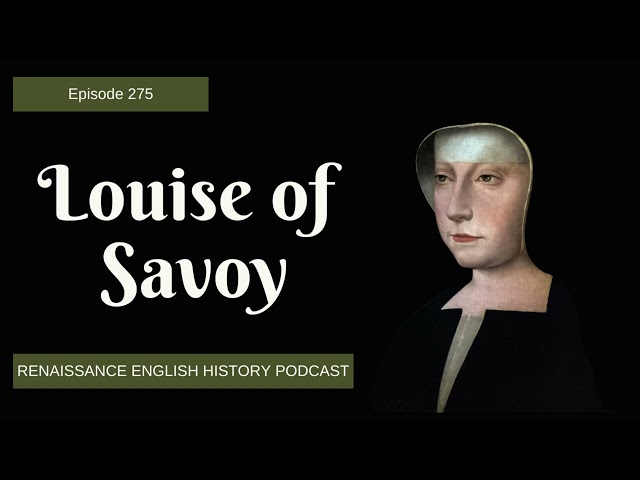
Louise of Savoy was one of the most influential women of Renaissance France, yet her name is often overshadowed by the powerful men around her—most notably her son, King Francis I. Far more than a royal mother, Louise of Savoy was a brilliant political strategist, skilled diplomat, and cultural patron who helped shape the course of French history. From her early years at court under the formidable Anne of Beaujeu to her role as regent during one of France’s most turbulent periods, Louise’s life was marked by ambition, resilience, and an unshakable vision for her family’s future.
In this episode, we’re diving deep into the extraordinary story of Louise of Savoy—a woman whose legacy deserves far more recognition than history has given her.
Transcript of Louise of Savoy: The Woman Who Shaped Renaissance France
Today we are going to talk about Louise of Savoy, an overlooked matriarch of Renaissance France.
I’ve been getting into Renaissance European women of late—if you can’t tell by the direction of this podcast. I’ve been reading—or I just got and have been referencing—Amy Licence’s The Sixteenth Century in 100 Women. There’s also Sylvia Barbara Soberton’s The Golden Age Ladies. Both are really interesting, and I’ve been going through them, reading about a different woman each day. It’s made me want to do more episodes about them, so that’s where this is coming from. I’m on a kick of expanding the net a little bit.
Imagine standing at the crossroads of history, where wars, alliances, and cultural revolutions collide. At that intersection stood Louise of Savoy, a woman whose name might not roll off your tongue as quickly as that of her son, Francis I, but who was unquestionably one of the great architects of Renaissance France.
Her life was a masterclass in survival, ambition, and the art of making the impossible happen. Born into a world that dismissed women as little more than pawns in the dynastic game, Louise of Savoy refused to play by those rules. Instead, she rewrote them.
Her story is more than a mother’s love for her son. It’s about a woman who saw a bigger picture—who dared to dream of power not for its own sake, but for what it could accomplish. How does a girl born into relative obscurity rise to become the power behind the throne of one of France’s most iconic kings? Let’s dive into her story, beginning at a small estate in Pont-d’Ain, where a baby girl was born who would change the course of European history.
Early Life and Upbringing
Louise of Savoy entered the world on September 11, 1476. Her arrival wasn’t met with trumpets or fanfare. She was just another noble daughter born into a system that valued sons as heirs and daughters as marital bargaining chips.
Her parents, Philip, Count of Bresse, and Margaret of Bourbon, didn’t leave behind gushing records about her birth. Why would they? She wasn’t a boy. A son might have secured alliances or strengthened their family’s position. A daughter? Well, she was a future dowry repayment—nothing more.
Louise’s life took a sharp turn when she was only eleven. Her mother died, likely of consumption. And her father—a man better known for his gambling and debts than his parenting skills—wasn’t exactly “Father of the Year” material. With Philip off chasing opportunities on the continent, young Louise needed a new home.
Enter Anne of Beaujeu, the formidable sister of Charles VIII, who had been running France as regent since the death of their father, Louis XI. If Louise’s early years had been marked by uncertainty, her time under Anne’s roof was a crash course in courtly survival.
Anne of Beaujeu was a political force of nature. She was known for her sharp wit and even sharper instincts. Anne became a mentor of sorts to Louise, teaching her not only etiquette and courtly life, but how to navigate politically in a world dominated by men.
Anne didn’t coddle her charges—she prepared them for the brutal realities of royal ambition. Louise learned quickly. She absorbed lessons about power, diplomacy, social dynamics, and the importance of appearances. For all her wealth and status, Louise couldn’t rely on privilege alone. She had to be both clever and observant.
But life under Anne wasn’t all politics. Louise was also exposed to the grandeur and cultural refinement of the French court. Anne, despite her fierce demeanor, valued education and refinement, and she made sure that Louise was steeped in both.
Yet there was a tension in Louise’s young life—a constant reminder that her value, no matter how smart or capable she was, would ultimately be judged by her ability to secure a good marriage and produce sons. This lesson, harsh as it was, stuck with her. If Louise couldn’t escape the system, she would learn to master it.
By the time Louise left Anne’s care, she wasn’t just a girl from a noble family. She was a young woman with a razor-sharp understanding of power and an unshakable determination to secure her place in a world that seemed designed to keep her down. Little did anyone know, the lessons she absorbed during these formative years would lay the groundwork for one of the most remarkable political careers of the time.
Marriage and Early Adulthood
At the age of twelve, Louise of Savoy’s life took another dramatic turn when she was married to Charles, Count of Angoulême. It was a common fate for noble girls of her time—barely out of childhood and thrust into the adult world of marriage, alliances, and expectations.
For Louise, the transition was terrifying. She wasn’t marrying a boy her own age, but a man seventeen years her senior—someone she had little control over and no experience dealing with.
Louise’s letters from this period reveal a young girl grappling with anxieties far beyond her years. In one note, she confided to her father her fears about her new life: “I do not know whether I shall please him or whether I shall fail in what is expected of me.”
Her concerns extended to her new role as the lady of the Angoulême household, where every gesture and word would be scrutinized. She was acutely aware that her success or failure would reflect not just on her, but on her entire family.
Her early years as a bride were shaped by the challenges of adapting to court life. The Angoulême court was smaller and less prestigious than the royal one she had experienced under Anne of Beaujeu, but it was no less political.
Louise observed the dynamics between nobles and their retainers, noting how power was wielded through subtle gestures, strategic alliances, and whispered words in shadowed corners.
Despite her youth, Louise began to develop the keen political instincts that would later define her. She learned to watch and to listen, absorbing the strategies of those around her. It wasn’t long before she started forming her own ideas about how power could be wielded—not through brute force, but through the careful manipulation of relationships and opportunities.
Yet life with Charles wasn’t all strategy and observation. While their marriage had been arranged for political convenience, it appears to have been a generally amicable one. Charles wasn’t an ambitious man. He was kind to Louise, and their relationship, while certainly not passionate, offered her some stability.
Stability, though, wasn’t enough for Louise. She had ambitions for herself and her children that far outstripped her husband’s modest aspirations. In those early years, as she adjusted to married life, Louise was already laying the foundation for a future in which she and her family would rise far above the limited world she had been born into.
Motherhood and Ambitions
In 1494, Louise gave birth to her firstborn, a son. She named him Francis. It was a moment of overwhelming joy and relief for a young mother who understood all too well the stakes of producing a male heir. The arrival of Francis cemented her position in the Angoulême family and set her dreams into motion.
Just two years later, she welcomed her daughter, Margaret—a brilliant child who would grow up to be one of the most accomplished women of her time.Yet from the very beginning, Louise’s focus was on Francis. To her, he was the key to a future far grander than anyone could have imagined.
Legend has it that shortly after Francis’ birth, the Italian hermit and mystic Francis of Paola—known for his prophetic abilities—visited Louise. The hermit made an extraordinary prediction: her son would one day become King of France.
It was a bold claim, considering Francis was not directly in line for the throne. But for Louise, it was more than a prophecy—it was a mission. From that moment on, every decision she made was calculated to prepare Francis for a destiny she believed was preordained.
Louise’s maternal ambitions shaped every aspect of her son’s upbringing. Unlike many noblewomen of her time, she didn’t delegate his care entirely to wet nurses or tutors. She was deeply involved in his education, ensuring he was not only skilled in the arts of war and diplomacy, but also steeped in the cultural and intellectual currents of the Renaissance.
She surrounded him with the best minds she could find, emphasizing the importance of knowledge, charm, and charisma—qualities that would make him stand out not just as a nobleman, but as a leader. Her dreams for Francis were inextricably linked to her own understanding of power. She saw the fractures in the Valois dynasty and understood that opportunities often arose from chaos.
Louise nurtured her son and taught him to seize opportunities when they came. She imbued him with her own unyielding confidence and ambition, whispering in his ear that he was destined for greatness.
In 1496, tragedy struck Louise of Savoy’s life when her husband Charles died after a lingering illness. She was just 19 years old, with two small children. Margaret was still an infant, and Francis was about two years old. Widows in Louise’s position often found themselves at the mercy of their extended families. But Louise was not one to simply fade into the background.
She transformed her grief into determination, dedicating herself to ensuring her children’s survival and success. Without a husband to shield her or champion her children’s claims, Louise had to rely on her own wits and resourcefulness. The Angoulême family was not particularly powerful, and Francis’ claim to the French throne was tenuous at best. Yet Louise saw potential where others saw limitations.
She secured her family’s position by forging alliances with influential figures at court, displaying a sharp sense of strategy that rivaled any seasoned politician. She cultivated relationships with key nobles and carefully avoided alienating her late husband’s rivals.
A pivotal figure in her strategy was Louis XII. When he ascended to the throne in 1498, Louise found herself in a delicate but potentially advantageous position. Louis was childless and had no male heir, which meant that her son—though not an immediate contender—was still part of the extended Valois family tree.
Louise positioned herself as a loyal ally to the king. She ensured that Francis grew up at the royal court, where his charm and intelligence could capture the attention of those who mattered. Louise understood that she couldn’t rely on bloodline alone to secure her son’s future. She worked tirelessly to build a network of supporters who could champion Francis’s cause when the time came.
Every decision she made was driven by the goal of elevating her son to the throne. And as she maneuvered through court life, Louise’s reputation as a shrewd and unyielding strategist began to take shape.
Regency and Influence
It all paid off when, on January 1st, 1515, Francis ascended to the throne—fulfilling the prophecy. Louis XII died without a male heir, and the crown passed to Francis, who was the closest male relative in the Valois line.
One interesting thing about French succession is that France operated under Salic law, which restricted inheritance to male descendants only. And while Francis and Louis XII weren’t especially close relatives—they were first cousins once removed—Francis was the closest eligible male heir because women could not inherit.
As Francis stepped into his role as king, Louise became his most trusted advisor. Their relationship was unusually close for a monarch and his mother. It reminds me of Henry VII and Margaret Beaufort. Louise of Savoy, like Margaret, was very young when she had her son—another parallel. And just as Henry VII’s father was Henry VI, Francis’s father was also a figure of modest political power, making their rise to the throne even more remarkable.
Francis openly acknowledged Louise as la mère du roi et du royaume—the mother of the king and of the kingdom. When he embarked on an ambitious military campaign in Italy, Louise took on the role of regent, wielding power with remarkable skill. She managed the kingdom’s finances, quelled rebellions, and maintained the fragile balance of power among the nobility.
Her most significant test came during the 1525 Battle of Pavia, when Francis was captured by the Spanish. While others panicked, Louise acted decisively. She negotiated with Charles V to secure her son’s release and preserved the stability of the French crown.
Louise’s influence extended far beyond politics, of course. She was a passionate patron of the arts and ushered in what many consider to be the golden age of the French Renaissance. Under her guidance, the court of France became a hub of cultural and intellectual activity. Louise encouraged her son to invite luminaries like Leonardo da Vinci to France, cementing the country’s reputation as a center of artistic innovation. She also supported lesser-known artists, poets, and scholars, recognizing the power of culture to bolster her son’s reign.
Some of her battles were deeply personal. Chief among her rivals was Anne of Brittany. Anne is fascinating—she became queen to two French kings. First, she was married to Charles VIII, which united Brittany and France, although she struggled to keep Brittany independent. After Charles died, she married his successor, Louis XII of France.
So during the time when Louise was at court and raising Francis there, Anne was married to Louis XII. There was always the possibility that Anne and Louis could have a son—something that would have knocked Francis out of the line of succession entirely. They did have children, but only two survived to adulthood, and both were girls.
The fact that Anne had only daughters while Francis was rising under Louise’s tutelage created tension—especially over who Anne’s daughters might marry. Anne was fiercely protective of her daughters, particularly Claude, who was the heir to Brittany. Anne hoped to marry Claude to Charles V, the young Habsburg prince, which would have strengthened Brittany’s ties outside of France.
But Louise of Savoy had a different plan: she wanted her son to marry Claude, ensuring that Brittany would be absorbed fully into the French crown, and clearly signaling that Francis was Louis XII’s heir. After all, if Francis married the king’s daughter, it reinforced the legitimacy of his succession—especially in the absence of any surviving sons.
In the end, Louise’s ambitions prevailed. Francis married Claude in 1514, so that when Louis XII died, Francis was the obvious heir. His succession posed no challenge or dispute.
The two women—Anne and Louise—clashed over everything from marriages to court appointments. But Louise knew how to pick her battles. She avoided open confrontation with Anne, choosing instead to work behind the scenes, leveraging her alliances and outmaneuvering her rival. In the long game of court politics, Louise of Savoy came out ahead.
Legacy and Conclusion
She passed away on September 22, 1531, leaving behind a legacy that shaped not only the reign of Francis I but also the course of French history. Louise was never a queen, but she wielded power and influence that rivaled any crowned ruler of her time.
As regent, she proved her political acumen during some of the most precarious moments in French history. Her negotiation skills—especially when securing her son’s release from captivity—demonstrated her ability to navigate European diplomacy. She stabilized the French crown in times of upheaval and uncertainty.
Her contributions to the arts and culture left a lasting mark on the Renaissance. Without her foresight and support, figures like Leonardo da Vinci might never have made their way to France, and the French Renaissance might have been a shadow of what it became.
Perhaps her greatest legacy lies in the lessons she passed on to her children. Francis’s confidence, charm, and boldness were all reflections of his mother’s teaching. Marguerite of Navarre, Louise’s daughter, would go on to become a celebrated writer and intellectual—often credited as one of the first modern feminists.
Louise might not be remembered as widely as her son or daughter, but her story is one of remarkable perseverance and influence. From a young widow with few resources to the architect of a dynasty, she played her part with courage and brilliance. Her life reminds us that behind every throne, there is often a figure whose strength and vision make the impossible possible.
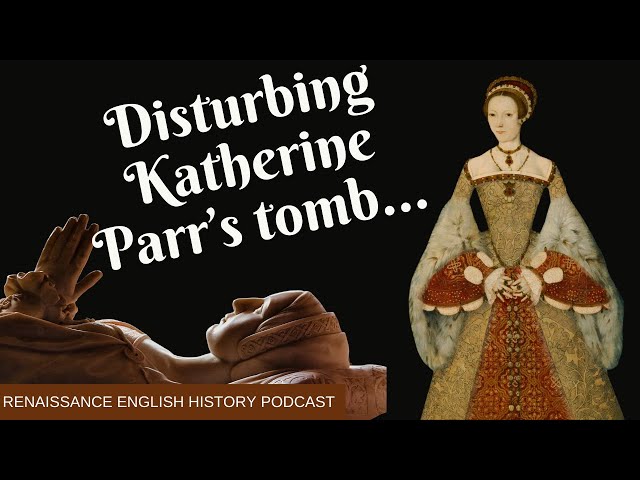
Katherine Parr’s Posthumous Horror is one of the most unsettling and overlooked tales in Tudor history. Though she survived Henry VIII—becoming the only one of his six wives to do so—her tragic fate didn’t end with her death. After dying from childbirth complications in 1548, Parr was hastily buried at Sudeley Castle.
But centuries later, her peace was shattered when her coffin was rediscovered—and repeatedly disturbed—by curious onlookers, souvenir hunters, and even grave robbers. From macabre exhumations to shocking abuse of her remains, the story of what happened to Katherine Parr’s body after death is as haunting as it is fascinating.
Transcript of The Disturbing Fate of Katherine Parr’s Body
Today we are going to talk a little bit about the shocking afterlife of Katherine Parr. Katherine Parr did not rest in peace. And we’re going to talk a little bit about what happened with her remains, which is a fascinating story, if a bit macabre.
Katherine Parr famously survived marriage to a King, notorious for discarding spouses by execution or divorce, but Katherine’s survival did not spare her tragedy. Just over a year after Henry’s death, she herself died from childbirth complications at Sudeley Castle with her daughter Mary Seymour that she had with Thomas Seymour.
Hurriedly buried, Katherine might have expected a peaceful rest, but history as it so often does, had some other ideas. Instead, her remains became part of a chilling centuries-long saga of macabre discoveries, disturbing exhumations and Victorian-era souvenir hunters. Katherine Parr’s afterlife is one of Tudor England’s most bizarre and unsettling tales.
So on August 30, 1548, Katherine Parr gave birth to a daughter, Mary Seymour at Sudeley Castle. Joy turned swiftly to tragedy when Katherine contracted purple fever, a deadly infection common in childbirth. Within days, the vibrant former queen was delirious, accusing her ambitious husband, Thomas Seymour of neglect and cruelty.
Katherine died early in the morning on September 5, 1548. Her burial held the very same day, lacked any kind of royal ceremony or grandeur. There was no solemn procession, funeral effigy, nor lying in state, surrounded by mourners and candles.
Instead, Katherine was hastily wrapped in waxed linen, sealed in a lead coffin, and quietly interred at Sudeley Castle’s Chapel. With startling speed, the memories of Henry VIII’s last queen faded into obscurity. After the English Civil War, the chapel crumbled, leaving Katherine’s resting place forgotten beneath ivy and rubble until curiosity got the better of history.
In the summer of 1782, local resident John Lucas stumbled upon Katherine Parr’s lost Tomb at Sudeley, finding her coffin buried just two feet beneath the chapel floor. He couldn’t resist peeking inside. When Lucas pried opened the coffin, he made a stunning discovery.
Katherine’s body appeared almost perfectly preserved with skin, still white and moist as if she had died just days ago rather than two centuries before. Unable to leave this eerie miracle undisturbed, Lucas took macabre souvenirs, snipping locks of Katherine’s hair plucking fabric from her gown, even pulling a tooth from the late Queen’s mouth. It’s upsetting.
Tragically, his curiosity came at a high cost. By opening the coffin, he inadvertently let air into the sealed tomb, rapidly accelerating decay. His discovery soon drew even more attention to Katherine’s resting place, beginning decades of grizzly invasions into the Queen’s afterlife. Unfortunately, the curiosity sparked by Lucas’s discovery attracted an unsettling parade of visitors eager to glimpse the former queen.
In 1783, just a year later, castle steward of Lord Rivers reopened her coffin meticulously, noting her fine clothing, delicate proportions, and traces of her once celebrated beauty. Each intrusion sped up the decay and soon her remains became less a historical wonder and more a morbid spectacle.
Most shocking violation came in the 1790s when drunken grave diggers hired to rebury Katherine securely, grotesquely abused her corpse. Reportedly, they removed her body from its coffin, danced with her skeleton remains, tore out some hair and teeth as gruesome souvenirs, and then buried her upside down.
Katherine, once England’s dignified queen became a macabre Victorian novelty victim to a strange cultural obsession with Tudor relics. Her sacred resting place turned into a grim tourist attraction, visited more out of horrified fascination than any kind of genuine respect.
Finally, in 1817, a local rector determined to put an end to Katherine’s posthumous ordeal, so this is 20 some odd years, 20, 30 years after the initial discovery, they had to search again.
People had forgotten where she’d been buried, so they finally found her reduced largely to bones at this point, her remains and she was buried upside down in a makeshift grave. Remarkably, an ivy wreath had naturally grown around her skull, forming an eerie green crown.
In 1861, Katherine was at last, laid to rest properly, reinterred in a beautiful neogothic tomb within the restored St. Mary’s Chapel at Sudeley. Here, beneath an elegantly carved marble effigy, Katherine’s tumultuous afterlife came to a peaceful close.
Her once magnificent form had become mere dust. Yet she finally received the dignity denied to her for centuries. Today, visitors at Sudeley can pay respects at her tomb, marvel at her writings and think about a Queen whose extraordinary life and even more extraordinary posthumous afterlife embodies the enduring fascination and occasional cruelty of history itself. So there we go. Poor Katherine Parr. She couldn’t even rest in peace. This is why we can’t have nice things. It’s unfortunate for Katherine, but interesting nonetheless.
Henry VIII vs daughter Mary was more than a family disagreement—it was a dangerous standoff with life-or-death stakes. In 1536, Mary Tudor refused to acknowledge her father’s authority as Supreme Head of the Church of England, defying both royal will and religious reform. Her refusal to sign the Oath of Supremacy put her in the same perilous position as others who had gone to the scaffold for less. Once his cherished daughter, Mary had become a political liability.
This episode explores just how close Henry came to executing his own child—and why Mary ultimately chose submission over martyrdom.
Transcription of Henry VIII vs. Mary: How Close Did He Come to Executing Her?
Something exciting is happening, which is that Wolf Hall: The Mirror and the Light is on in the US, finally. So I actually did back in November and December when it was on in the UK, I did a series of reaction videos and breakdowns and things like that.
But I’m gonna do another set looking at different topics just because it is so popular. I’m watching it again. It’s so amazing. Just like the books, everything about Wolf Hall is just the best.
When I was doing this first video reaction back in November, which seemed like such a long time ago, I looked at the execution scene of Anne Boleyn and how realistic was it.
I had this whole issue around them showing that Henry was getting married to Jane at the exact same time. I get it was for dramatic effect, but it was bad enough as it was. You didn’t have to make it exactly at the same time. Anyway, today I’m gonna talk about something different.
Which is the relationship between Henry and Mary, his daughter, and whether or not there was really any threat to Mary Tudor. So would Henry VIII really have killed his own daughter?
So in 1536 when the series starts, Mary Tudor was isolated. She was out of favor. She was refusing to take the Oath of Supremacy that named her father as the Head of the Church.
After Anne Boleyn‘s fall, Mary had hoped for reconciliation, but instead things actually wound up getting even more dangerous for her. So how close did she come to execution and would Henry have actually done it? Let’s discuss.
So Mary had suffered deeply duringAnne Boleyn’s rise. She’d been declared illegitimate, she’d been stripped off of her household. She was forcibly separated from her mother. Anne’s execution in May of 1536 seemed like it might change everything. Mary hoped that Henry would soften, maybe even restore her to the line of succession.
And certainly there were those, like the show shows, the Pole family who was hoping as well that she would get restored. But instead, Thomas Cromwell stepped in. He made it clear if Mary wanted peace, she’d have to submit not just to her father, but to his new role as the Supreme Head of the Church of England.
The political had become personal and Cromwell’s pressure campaign would push her to the brink. The Oath of Supremacy wasn’t just a signature, and this is what Bishop Fisher and Thomas More had found out. It was a renunciation, and that’s why they could not sign it in good conscience.
By taking the Oath of Supremacy, Mary would have had to deny the Pope’s authority and acknowledge Henry as the Head of the Church, and even worse, accept that her parents’ marriage had never been valid.
That meant calling herself a bastard, which for a devout Catholic, for the daughter of Katherine of Aragon, this wasn’t just painful, this was perilous to her spirit. To her, the Pope was God’s voice on earth. Signing the oath would be a betrayal of her conscience and her faith and her mother’s memory.
For a time, Mary refused and that refusal put her life in danger. Cromwell didn’t rely on subtlety. Mary was placed under a tight watch, denied visits from friends and allies, and bombarded with letters, insisting that she submit.
Some were laced with direct threats. If she refused, she could be tried for treason. And in 1536, treason meant death. Henry had already executed Thomas More and Bishop Fisher for refusing the same oath.
Anne Boleyn, his wife, had gone to the block just weeks earlier. Mary knew full well what her father was capable of. Cromwell told the Imperial Ambassador Eustace Chapuys that Mary’s stubbornness could cost her life. Was it a bluff? Some historians think so, but to marry isolated and frightened, the threat probably felt very, very real.
And she had every reason to believe that they would follow through. Would Henry have really crossed the line though? Few monarchs ever had, but not none.
Peter the Great of Russia, this was later, but Peter the Great of Russia would famously have his son Alexei, tortured and executed in 1718 for defying him. That was two centuries later, like I said. But it does show that there was sort of an idea that this could be done, that the monarch had to put monarch ideas before family ideas.
And then you look at even just within living memory, whoever killed the Princes in the Tower, if they were killed, I know that’s like its whole thing, but that somebody hurt those boys. Somebody threatened those boys, and I know it wasn’t their father, but it was their uncle, potentially. And I know people have ideas.
Again, I’m not trying to start like a whole Princes in the Tower thing. We have done that on this channel before. That’s not this, but just the idea that the precedent that killing young children, killing people who were innocent, who hadn’t even done anything, much less refusing an oath, it was there.
But in Tudor England, killing your own child would’ve been shocking and unprecedented. Killing your daughter wasn’t just cruel. It was politically dangerous. And in Mary’s case, it would’ve made her a Catholic martyr, infuriated Europe and possibly even triggered a war. But what was Henry even thinking?
Well, by the summer of 1536, he was determined to stamp out any opposition to his supremacy. Mary, once his beloved pearl of the world, which he called her, had become a liability. Her refusal to submit was a challenge to everything that Henry had built. But executing Mary also risked political backlash.
Henry likely saw her as a pawn, not a threat that he needed to eliminate. If she submitted, he won. If she didn’t, he might not flinch, but ideally she would break first. He didn’t need her blood, he needed her obedience. Cromwell’s job was to get it.
Had Henry executed Mary the fallout would’ve been immediate. Her cousin, Charles V ruled the Holy Roman Empire and was still furious about the treatment of Katherine of Aragon. Killing Mary could have sparked a war, or at the very least, drawn England deeper into isolation. Even Henry as bold as he was, had to consider how far he could push before Europe pushed back.
So was the threat real? Almost certainly. Would he have gone through with it? Maybe, but we’ll never know because Mary blinked first. She signed the submission with tears falling down her cheeks, her hand trembling. She saved her own life. It’s one of the few times that Henry didn’t have to choose between power and blood, but make no mistake, he came dangerously close.
So what do you think? Would Henry have actually killed his daughter?
Henry VII and France had an unexpected but strategically crucial alliance that helped shape the future of the English monarchy. While centuries of conflict had defined Anglo-French relations, the late 15th century saw a surprising turn when France provided support to Henry Tudor in his quest for the English throne. This support—offered in the form of funds, troops, and safe harbor—played a vital role in Henry’s successful invasion and ultimate victory over Richard III at the Battle of Bosworth in 1485.
In this post, we’ll explore why France, long an enemy of England, chose to back a Lancastrian exile and how this political gamble paid off in the founding of the Tudor dynasty.
Transcript of Why Did France Support Henry VII? The Secret Diplomacy Behind His Rise to Power:
So today we’re gonna talk about something a little bit different. We’re gonna talk about why France supported Henry Tudor in his bid for the English throne. You might know that when Henry Tudor set sail, he had been living in exile in Brittany, then he went to France. There was all these diplomatic negotiations between England.
Edward IV wanted him back. Richard III wanted him back. He had to flee. Eventually he set sail to claim the throne, and he has the support, not just of those in England, but also of the French. So why did France support him? It seems surprising because. The French and the English had been at odds for centuries.
The Hundred Years’ War was still very fresh in people’s minds. In fact, people didn’t really know that the Hundred Years’ War was over. Henry VI had been fighting the Hundred Years’ War unsuccessfully, lost a lot of land, but there was still ideas that it might be rekindled. Even Henry VII eventually wanted to rekindle the Hundred Years’ War, so it wasn’t clear that it was over.
Henry’s path to the throne was shaped as much by European politics as it was by his own determination to claim the throne. And today we are going to dive into the diplomatic chess game that saw France becoming Henry’s unlikely ally.
We’ll look at how Brittany first provided shelter to him, why France took over that role, and the political calculations that led to French support for Henry’s invasion of England. It’s a story rooted in the final chaotic years of the Wars of the Roses as rival factions vying for the crown and foreign powers eyed opportunities.
Henry Tudor’s Exile in Brittany
So Henry’s journey to the English throne began in Brittany, where he found himself living in exile after the Yorkists defeated his Lancastrian allies. Following the final collapse of the Lancastrian cause in 1471, Henry and his uncle Jasper Tudor fled to the continent seeking safety from Edward, IV’s pursuit.
Brittany under Duke Francis II offered them a refuge. The Duke was sympathetic to the Lancastrian cause, partly because of Margaret Beaufort influencing him, and also partly because Henry’s presence could serve as a valuable diplomatic tool.
Initially, Brittany seemed secure. Duke Francis treated Henry with relative kindness, but Henry was never truly free. The English crown was repeatedly demanding his return. Edward IV was pressuring the Duke to extradite the young Tudor claimant. He wasn’t really a claimant at that point. It was clear that Edward IV had won, the Yorkist had won. Edward IV was young, he was healthy. He had a whole bunch of kids.
There was no concept at this point, that’s something that comes up a lot is that, Margaret Beaufort was scheming all of this time to have Henry be the next king. The Yorkist looked pretty darn secure in the mid-1570s. What they wanted, what Margaret wanted, was security for Henry and to know that he could come back because he did have this Lancastrian blood.
There was a potential claim there, and she wanted to know that if he came back to this very secure Yorkist base, he wasn’t going to be killed. So Brittany played a very careful game during this time. Balancing the demands of the English King with recognizing Henry Tudor’s value as a bargaining chip.
At one point, under immense pressure, Duke Francis appeared ready to hand Henry over. However loyal Breton courtiers, understanding the danger, secretly warned Henry and helped him escape. It’s one of those scenes that when you read historical fiction novels from this time, it’s a very interesting scene, Henry being warned by the courtiers in Brittany and escaping.
He was quickly recaptured though, and this pattern of half-hearted compliance continued as Brittany sought to use Henry without completely surrendering him.
But Brittany’s ability to protect Henry began to falter as the landscape changed. Duke Francis was unwell and he grew increasingly unwell and French ambitions to annex Brittany became more evident. As the Duke’s health was deteriorating, Brittany’s power weakened and the risk of Henry falling into hostile hands grew.
France Steps In: The Political Calculations
It was into this very dangerous situation that France saw an opportunity. And stepped in to claim control of the young exile. So France was starting to see Henry Tudor as a valuable asset. We are now in the mid-1480s, so Edward IV has died. Richard III has seized the throne under highly controversial circumstances.
From France’s perspective, Richard III was not just a usurper, but an unpredictable and potentially hostile ruler. The sudden death of the Princes in the Towerhad tarnished Richard’s reputation. And Charles VIII, who was Louis XI’s successor in France, saw an opportunity to support an alternate claimant whom might be able to destabilize England.
Richard III was aware of Henry’s threat and sought to neutralize him. He sent envoys to Brittany and to France hoping to secure a treaty that would see Henry return to English custody. Richard even dangled the possibility of a trade agreement and political cooperation trying to present himself as a stable monarch.
But France remained unconvinced. From the French perspective, Henry Tudor offered something that Richard III could not, a potential return to a Lancastrian regime that might be more amenable to French interests.
Louis XI had long pursued a policy of weakening England through internal conflict and his successor. Charles sought to continue that plan ensuring that England would remain unstable and an unstable England is less capable of interfering in French interests on the continent.
The Final Push: France’s Active Support
Once Brittany’s position became untenable, they took over moving Henry to their territory. The support moved from passive to active, no longer just harboring Henry, but actively equipping him for an invasion.
France provided financial assistance, troops, and a safe base from which Henry could plan his return to England. This was a strategic decision, not only will this create instability for Richard, it also could foster a potentially more favorable relationship should Henry succeed, which was just a teeny, teeny, teeny, tiny chance back then.
But should a miracle happen and Henry succeed, then there could potentially be a better relationship. Richard became increasingly desperate to secure Henry’s extradition. He knew that as long as Henry remained on the continent with foreign support, his own hold on the English throne would be precarious to say the least.
Disaffected Yorkist were going to Henry and we’re giving him information, were supporting him. Richard needed to stop that, so he dispatched envoys to the French court offering all kinds of incentives to bring Henry back to England. Trade agreements, like we said, even proposing marriage alliances to secure the French goodwill. France was not interested.
Richard’s reputation had taken a hit with the disappearance of his nephews, and the rumors and accusations surrounding their disappearance made Richard a deeply unpopular figure, both domestically and internationally.
For France, this meant that backing Henry was a reasonable risk compared to the volatile and widely disliked Richard. But why did France ultimately take the leap from passive shelter to active support? The answer lies in strategic pragmatism.
Henry represented the opportunity to destabilize England, which had historically posed a threat to French interests. His background also made him a relatively unthreatening figure.
Unlike the Yorkists, his claim to the throne was weaker, rooted in a very tenuous Lancastrian heritage descended from a line that was officially bastardized, on one side, Welsh relatively unknowns. I know in Wales there’s this whole story that there was Kings that he was descended from, but as far as the English were concerned, there wasn’t a very good claim.
France could support him without risking the emergence of a new English powerhouse. Also, Henry had proven himself resilient and cautious during his years in exile. Qualities that made him a potentially pragmatic ally. They thought perhaps if they got Henry in there, if he was successful, he could almost be like a little puppet for them. So their support became increasingly open as Richard’s position grew weaker.
In the summer of 1485, Henry received crucial backing – French funds, troops, and a base from which to launch his invasion. The timing was important. This was after Richard’s wife, Anne Neville had died. The rumors were swirling about his intentions to potentially marry his niece.
Elizabeth of York, who it should be said, was also betrothed to Henry Tudor. The nobility was restless. Rebellion seemed likely. The French court recognized that this was the moment to strike, and Henry was their chosen instrument. When Henry finally set sail from France, it was with the direct endorsement of a foreign power.
This was a really bold and dangerous move. France knew that victory was not very likely, but the potential rewards outweighed the risks. Even if Henry wasn’t successful, this invasion would cause a lot more in stability in England, would set them back, maybe get the Wars of the Roses back fired up again, and distract England distract Richard from doing anything with France for a while.
If Henry succeeded, France would have a grateful ally in the English throne. So either way, it’s a win-win. So in the end, France’s support of Henry Tudor was a calculated strategy rooted in the chaos of the Wars of the Roses and the instability of Richard III’s rule.
Conclusion: The Gamble Pays Off
France had little love for Henry personally, but supporting him offered a way to keep England distracted and divided. As it turned out, the gamble did pay off. Henry’s victory at Bosworth marked the dawn of the Tudor Dynasty.
Now, relations between Henry and France weren’t always as simple as France would’ve liked when they made that initial gamble. France, for example, supported Perkin Warbeck, one of the pretenders to the throne. And things were a little bit tense between Henry and France, despite the French support. But in that initial 1485 gamble, I guess it did pay off for them.
Princes in the Tower remains one of the most enduring and controversial mysteries in English history. In this episode, we explore the case with historian Nathen Amin, featured in the Channel 4 documentary The Princes in the Tower: The New Evidence. Nathen examines newly uncovered records and reconsiders long-accepted accounts, offering a fresh perspective on what may have happened to Edward V and his brother Richard, Duke of York. Whether you’re a Richard III skeptic or supporter, this conversation sheds new light on a centuries-old disappearance that continues to fascinate and divide.
Rough transcript of Unlock ‘The Princes in the Tower: The New Evidence’ | Full Discussion with Historian Nathen Amin
Heather: This episode is the first half of an author chat we did with Nathen Amin. Nathen Amin is a writer, author who’s written several books on Henry Tudor, the House of Beaufort, Henry VIII, and the Tudor Pretenders, Tudor Wales, he’s an amazing historian. He was featured in the recent Channel 4 documentary on the new evidence around the Princes in the Tower. He was part of that that show.
And he’s here to talk about his reading of the evidence and what he thinks about the Princes in the tower. So this is actually the first half of the talk. So thank you to Nathen Amin for coming to the channel. You should definitely buy his books. Check out his books. NathenAmin.com.
I first found Nathen when I was planning the 2017 Tudor Summit, six and a half, almost seven years ago now. And somebody said, you’ve gotta talk to this historian, Nathen Amin. He’s got some new research out on the Beauforts. I was like, “Ooh, I wanna know about that.” And so I met him and he’s just such a lovely person. That Tudor Summit then turned into Tudorcon, so Nathen Amin has been part of it from the start.
Nathen, I’m so glad you’re here. You have written some fantastic books specifically on the pretenders, Tudor Wales and the Beaufort family. Your books are fantastic and you’ve been doing things with me and the Tudorcon and this whole world for a while and I’ve watched you get huge and blow up and it’s just really exciting.
Nathen: Yeah. No problems. Thank you for having me. I think you probably were one of the first people to give me a platform, so I’m always gonna come back to you. Don’t worry.
Heather: So what do you think about this? What’s your response? You were on the documentary. They didn’t give you quite as much face time as I would’ve liked—
Nathen: There seems to be quite a bit of a misunderstanding, I think, amongst some people how documentaries seem to work. So I have tried to do some polls recently to try and give some detail, but we filmed for about 6/7 hours in total. I spent the entire day with the crew and with Rob, in the UK, he’s a celebrity, so that in itself was quite intimidating. He’s my mother’s favorite. My mother’s got bit of a crush on him.
Oh. But I was it was a very big day to meet Dan and be introduced to him. But you spend that much time with somebody, you very quickly build up a really close rapport. Especially when the majority of the day was just me and him walking and talking. Not, not camera, just for so on, and you’re almost, you’re talking to each other.
So on camera it looks like you’re engaged in historical debate, but really you’re just talking to each other as how are you doing? How’s your family? And things like that. So we built up a really good rapport and we did film for about six hours based on everything to do with this case.
Now I did end up with just the one minute and 30 seconds in the documentary. The director did mention that, a lot of what I said had been pulled. That simply is I mean it’s gonna be for two reasons and it’s not really it’s not any various reasons. It’s just that a lot of what I said would’ve unpicked the narrative that documentary trying to go to.
And secondly, there just isn’t enough time to put everyone in. You always film hours worth of material on these documentaries for hopefully a minute, even sometimes you don’t even get in the documentary. I’ve got no issues with what happened. Yeah. It wasn’t my documentary. It wasn’t my narrative to tell.
Heather: All right, so we got that out. What did you think about it? What do you want to tell me? Give me your spiel now.
Nathen: First and foremost, we have to admit that whatever one thinks of Philippa Langley, and a lot of people do have strong opinions of. She’s got her pursuit to exonerate Richard III, which she passionately follows. You cannot ignore her.
Philippa is a big name and a big person in this world. I personally think that she has commendable focus and she’s definitely leaving behind a legacy that most of us would love. On a personal note, I really enjoy her company. I think that’s quite important to get across.
Not many people, not many mainstream historians will agree with me yet, and they certainly haven’t this week. I think it’s important that the study of Richard III and perhaps the revisionist angle, which, I’m on record, I don’t really agree with, I don’t really agree with some of the findings, but I think it is important that they definitely do deserve perhaps a seat at the mainstream table.
Shakespeare, definitely Shakespeare. Shakespeare might have been a monster, but Richard III definitely is not the monster that Shakespeare has written him out to be. Thomas More has a hugely flawed account of him. I don’t think it’s a problem that we now have the odd Ricardian leaning book podcast documentary available.
It can’t all just be a traditional narrative of which I am one. So I think that’s important that to have these documentary. A lot of people criticized it, they destroyed it online and so on. But it wasn’t that long ago that in this country, at least, that Lucy Worsley had a Prince in the Tower documentary that was very much following quite a flawed version of the traditional story.
So she just now equaling up the narrative. So I think it’s good that they’ve done this documentary. It’s good they’ve done this book, which I’ve got to the end. Do I agree with the conclusions? Do I agree with the findings? No surprise, but no, I don’t, but it’s not, I don’t understand why it’s a problem that we’ve got this theories and this version of history thrown into the mix, right?
It’s gotta be expected from their point of view as well. This is gonna be critiqued and has been critiqued quite harshly in many cases. I’ll probably do a book review at some point, so I might throw my thoughts into the mix, but it’s interesting. Anything Prince in the tower that reaches this wide of an audience is brilliant.
In the UK, this documentary got viewed by 1.3 million people. It’s insane that we’ve got a documentary that’s reached that much, that obviously. I don’t think perhaps it’s had the reactions the Ricardians would’ve liked but it’s definitely done wonders for me and my history and my book sales. I’ve gotta be pleased about that. So Go on Philippa.
Heather: Yeah, there’s all opinions, not all, but lots of opinions start out unpopular and you have those discussions and you know a lot. It’s not necessarily all on this side, and it’s not necessarily all Richard III was not a monster.
And he did a lot of really good governance that we were finding out about now, thanks to people like her and Matt and all of that. So there you go. But let’s just talk really quickly about the what you’re talking about this traditional view.
For people who don’t know the traditional view – Richard killed the princes.
Nathen: Yeah, 9th of April 1483. Edward IV dies, he leaves behind two children. Richard III takes custody of the children and suddenly he declared that the children were illegitimate. They’ve been deposed. Richard III takes the crown for himself. Some would say he was offered the crown. The great division in this period. But then by the end of that summer, the princes are placed in the Tower of London and they have disappeared.
Traditional narrative is that they were murdered at the behest of their Uncle Richard and buried beneath the stairway in the Tower of London. Now, that is the hardcore traditional story, and many of us veer off from. Not basic. I don’t think they were buried in the stairwell. I think they were killed and I do think they were thrown in the Thames.
Other people think they weren’t killed at all, or perhaps they were killed by Henry VII, the Duke of Buckingham—
Heather:
—or Margaret Beaufort, she’s also gets thrown in there as well.
Nathen:
I purposely did not mention her name. But yeah, so that is the basic gist of the traditional narrative. And it’s a very compelling argument. Thrown them in the tower and they’ve disappeared.
Heather: And at the time people were wondering what happened to them, right? So if he knew what had happened to them or if he knew that they were alive, one would think he would bring them out and say, they’re here. You can stop talking about what happened to them, because they’re right here.
Nathen: Yeah, so it’s very interesting. So there’s arguments from like a Ricardian viewpoint that Richard III did not display the boys because he’d let them slip away abroad to live out their times or to come back as the pretenders.
Traditionalists would say that the reason he didn’t display the boys is because he’d killed them and therefore he couldn’t display them. Going back to the Ricardian side, surely if you kill the previous king, the whole point is you display it to stop any rebellions. Myself, I believe they were killed during the reign of Richard III, but I believe that they were thrown into the Thames.
So obviously if they’re in the Thames, you can’t take that back. You can’t say. Let’s display the boys. The fact that Richard didn’t display the boys is ultimately what caused them a lot of problems, and it is what caused his downfall.
Henry VII, when he becomes king, he learns a valid lesson there. He does take Edward, Earl of Warwick into custody, but he keeps him, or when a rebellion kicks off later down the line, he’s able to display Edward deal of war to try and take a lot of esteem out of the rebellion.
I personally just think that Richard couldn’t display the boys because they were at the bottom of the river somewhere.
Heather: Why do you think that?
Nathen: I’ll tell you why I think that it’s because I’ve watched so many mafia movies. It’s the obvious thing to do. If you kill somebody, you don’t hang on to the bodies, you don’t bury them in your back garden. You get rid of them.
Now the historical source I have that suggests, a Welsh chronicle was written about 50 years later. So already some people would be saying 50 years later, that’s not near contemporary. Hey, we take what we can get in this period.
But this Welsh chronicle does account for that the boys were put into a chest. They were taken out to a part of the Thames Estuary called the Black Deep which is just where the river starts to meet the ocean. They were thrown overboard and nobody, apart from the guy in charge of that chest knew what was the cargo taken.
It just makes so much sense. Again, look at the modern mafia. They’d bury people in lakes in Nevada and so on. That is exactly what you’re going do and answers why nobody has ever produced any bodies.
I know we have the urns— I find that theory completely discredited. I think it’s so unlikely the bones in the urn are the boys. And I think if we ever do get DNA testing and science is able to actually do this testing, it’s gonna show very quickly that they’re not the boys, but you’re not burying them 10 feet deep in the town of London. It’s quite an absurd, non-realistic theory for me.
Heather: Interesting. Okay, so I know you have your stuff you wanna talk about, but I wanna also ask you about going through the different documents that they lay out in the documentary and what you think of them as sources.
My thing is I was watching it, I just kept thinking yeah, maybe that is from the time period, maybe that is. That maybe it does refer to Richard, the Duke of York, but of course, because he was pretending to be, he’s not gonna then sign it Perkin Warbeck. So the fact that it signed Richard, like that doesn’t tell me any that’s part of the conspiracy.
So I don’t know I wonder what your take on all of these different receipts and the different, the four, I think there were four documents that they lay out. And we can start with the receipt for the mercenaries to be given and then some of the other things later, but overall, what do you think about these things?
Nathen:Dr. Helen Carr did a really good tweet last week where she said something like one of the hardest jobs as a historian is to be aware of your own bias when dealing with evidence. And the first person you need to critique is yourself.
Philippa and the Richard III society, they are obviously not perhaps dealing well with their own bias. They have gone into wanting to find the evidence they’ve gone into wanting to find answers.
But on the other side, I’m a natural skeptic so I’m also dealing with my bias. Anything they presented, I don’t want to believe it. Or somebody is skeptical. So we have deal with all of that, first of all.
I think the Missing Princes Project, I’ve said that they spent seven years of this investigation doing intelligence gathering, and they have now proven that the sons of Edward IV, the princes in the Tower, have survived the reign of Richard III. That is a big, bold statement, and I don’t think it does stand up to scrutiny. My own bias, et cetera, not to stand it.
Yeah, you mentioned that document that’s signed by Richard of York, Richard of England. First and foremost, so I think there were a couple of documents at play. One, we’ve got what they call the Gelderland Document. It is a witness statement that’s presented to show as proof of life that Perkin Warbeck was in fact, Richard of York.
And that’s because this a four page document. Basically a biography. It’s detailing what happened to him, and there is some glaring issues with that. First of all, if you’re telling a lie, if you are being an imposter, if you’re telling a story, you are gonna leave behind a paper trail and you are gonna try and explain exactly why you are this person.
If this is Perkin Warbeck and he’s being asked by his aunt and his supporters in Burgundy to write down his life story, he’s not gonna sign it Perkin, Richard of England aka Perkin, he’s gonna stick to this story. It’s a difficult one because I think this document was rediscovered by a lady called Nathalie Nijman-Bliekendaal.
I’ve met Nathalie, she’s part of the Dutch Research Group, and she’s a fantastic woman who has most of my respect. She’s one of the stars of this process. She’s been working really hard to get and hold these documents, so the document itself is fantastic. It really is, and I was amazed to actually see it on parchment, on screen.
But this isn’t new information. The fact that there’s a document given, a biography of somebody in the name Richard of England, we already knew that because at the same time period, we have already the Dendermonde Letter, which I’ve written about extensively in my book, which came out a couple of years ago. It’s just a biography.
Now, this new letter, the Gelderland document is a little bit more detailed and it has a few more names which is definitely interesting ’cause now we can go down and try and look. To find out who some of these people are involved in it. But at the end of the day, it still isn’t proof of life that Richard of England, Richard of York, was signing this letter.
It’s just that we know that somebody who wanted us to believe they were, that person has signed that letter. The fact you have a letter that says Richard of England, which they’re passing off as Proof of Life.
In 1991, Diana Kleyn wrote a book literally called Richard of England with a signature on the front of the book. So again, it’s not new information. It’s definitely not proof of life. We have to question the story told anyway by Perkin Warbeck/Richard in the story.
Why was he allowed to leave the Tower of London? Why would Richard III let his nephews leave the Tower of London from a security perspective? That makes no sense. ’cause then he wouldn’t be able to control the boys. He wouldn’t be able to prevent them from becoming a focus of rebellion or present them when accusations grew louder.
You keep hold of them and chuck them in the tower until the end of their lives It’s fascinating. There’s new evidence that gives us the names involved, Lord John Howard, Henry Percy and Thomas Percy. But by the time this document is written in 1493, all are dead conveniently so. They can’t be questioned.
Similar to the people involved in the famous “pre-contract story” that says that their father was married before he married their mother. All the people involved in that were conveniently dead. But more importantly for me, the story is that Perkin Warbeck/ Richard claims in this document that they were taken out of the town of London and sent to France to live. Now, why the hell would Richard III send two of his nephews to his enemy to live amongst his enemy when they were already plotting to send another pretender back named Henry Tudor?
If the French know that they have two Yorkist princes living amongst them, they wouldn’t have sent Henry Tudor across the water to invade. They would’ve gone “Let’s just use the real princes.” So I think that document which is issued with the claim of it being decisive evidence, is not decisive at all. We just know somebody signed the letter called Richard of England.
Heather: Yeah. So one thing that I just came into my head, like a Ricardian might say he’d already made them illegitimate so he didn’t necessarily need to kill them. So that’s why maybe he would let them go. How would you answer that?
Nathen: Very simply, when you’re made illegitimate, it’s just a piece of paper. It means nothing. It could be reversed by any parliament. During the 15th century, we had Henry IV, Edward IV, Henry VI the second time around, and Henry VII all become kings while subject to a parliamentary attainder.
They simply became kings and then reversed documents and obviously as shown look how easy Henry VII ultimately reversed the princes illegitimacy. That is irrelevant. It doesn’t matter. They were, regardless of whether he made them illegitimate or not, they were always gonna be a threat to Richard III, and it’s one of the things I hate the most. This discussion is that they were not a threat because of this illegitimacy. It’s nonsense.
Heather:
Elizabeth I was illegitimate. Mary I was illegitimate.
Nathen:
Oh, there we go. Yeah. But I never say that because they’re going past my time. But yeah, exactly. It doesn’t matter, basically.
Heather: Yeah. Okay. I just wanted to put that out there ’cause I could imagine somebody saying that in their head.
And then there was this receipt that was another piece of evidence that was given. And that then leads into the coronation in Dublin, which I was really confused about because I thought Lambert Simnel was pretending to be Edward VI and that’s like why Henry brought him.
I’m really like confused about that whole timeline because they seem to make it seem as if it was Edward the Prince. And I thought it was Edward, Earl of Warwick. Yeah. Can you set me straight on that?
Nathen: I’ll try to. Okay, so first of all, let’s look at this Proof of Life that has been discovered. They call it the Lille Receipt. It’s basically an incredible find by Albert Jan de Rooij from the Dutch Research Group.
It’s exactly what it’s called. It’s a receipt found in Lille dated to I think December 1487. It’s a payment for 400 pikes to be provided for the invasion of Margaret of York’s nephew. And in the receipt that nephew is called the son of King Edward. Now, that would suggest it is Edward, the missing Prince in the Tower.
I believe this document is completely authentic. I believe it’s not a for ending of the kind. And it’s hugely compelling. If you take this document by itself, you’re gonna go that’s surely proof of life that Edward V was living four years after he disappeared.
But first of all, there’s evidence during this time of pretenders, of claimants of the throne being misidentified to make them seem more important. In 1484, Henry Tudor was in France and he was trying to become the King of England. The French wanted to make his claim look more important and better than it was, so they started calling him the son of Henry.
Now Henry Tudor was the nephew, the half-nephew of Henry VI, and he had no blood relation, blood claim through Henry VI. But the French wanted to call him a son of Henry VI ’cause that would make the French give more money and more military to them. But it’s absurd, it’s nonsense. And everybody knew Henry Tudor is not the son of Henry VI.
So they very quickly dropped it. It was ridiculous. Could something similar have been happening? There is clearly an imposter or somebody in Burgundy at this time wanting to invade England or his supporters are putting him forward invading England, would it have been better for them to have called him Edward V, the son of King Edward, rather than one of his other nephew?
So I think the little receipt is brilliant. It’s compelling, but it could be explained away very simply. Now, the major reason it can be explained away is because of the context of this period. Which brings us round to why you are confused about what’s taking place in Dublin.
So the Lambert Simnel affair, the Lambert Simnel invasion, the judicial story, which I still think stands, is that Henry VII has a legitimate Yorkish prince in the Tower, Earl of Warwick, a cousin of the Princes in the Tower.
Now in 1486, there is a small rebellion against Henry VII led by the Stafford brothers, and they are going around waving the Warwick family banner. And they’re chanting Warwick in the streets, but nobody joins them. Nobody’s interested. They haven’t got a leader, they haven’t got a figurehead Warwick in the Tower of London. The rebellion fell apart.
A couple months later in 1487, there are now rumors that this conspiracy started up again. That there are people attacking some of Henry VII’s men. Servants in the streets caught shouting out the name Warwick, Warwick, Warwick! And now after a hundred years that this conspiracy actually does have a boy at the head of it who’s claiming to be the Earl of Warwick. So that’s that.
First of all, we have evidence during the time of how potent the Warwick name was. The conspiracy now leaves Oxford and it crosses over to Ireland and Dublin, specifically. Why Dublin? The Earl of Warwick’s father, the Duke of Clarence, the idiot allegedly got drowned in some wine, he was born in Dublin.
So when a rebellion as a conspiracy turns up in Dublin, and they say to the Irish, we have the son of your Clarence. He has the real claim to the English throne. the real. The Irish very quickly go, we’re all in. We’re gonna go crown him. Of course, we love Warwick. We love Clarence. We’re gonna take down the English King.
Going back to London, Henry VII parades the real Warwick around London. He goes around to all of his men. He takes him to St. Paul’s Cathedral and he goes, behold, this is Warwick. So the conspiracy falls apart in England straight away, but it doesn’t in Ireland.
So a few things at play here. Why the hell is Henry VII parading the real Warwick? If we’re now supposed to believe that this imposter boy was not pretending to be Edward of Warwick, he actually was Edward the V.
That doesn’t make any sense ’cause why parade Warwick? Why do we have English sources at the time and Flemish sources abroad all saying that this conspiracy was in the name of a son of Clarence. Why do we have no other evidence whatsoever apart from this receipt to show that this conspiracy was in the name of Edward V, not Edward of Warwick.
And finally we’re asked, why would the Irish crown a boy at Ireland, which is surely a great crime against their religion to crown an imposter? Not if they generally believed that they did have a real prince amongst them. Of course they would do everything by the religious rituals of the day.
I just, there’s too much context around this time that this was all a conspiracy in favor of Edward of Warwick and not Edward V. The receipt has its worth a little bit and does give this theory more legs but it’s definitely not proof of life. It’s definitely not compelling, decisive evidence that settles the case. Nowhere near.
Heather: Also, could it have been a typo? Like I’m thinking who wrote this? It’s an accountant, it’s a person in accounts, maybe. I could imagine them sitting there at their desk with their pen or their scroll obviously, and being told, okay, write this receipt out for this and it’s for this, and Okay, I’ll write a receipt. And not even necessarily knowing, is that a thing that could have happened?
Nathen: Yeah. I don’t see why, very famously Margaret Beaufort when recording the date of birth of one of her grandchildren the future Henry VIII of in her book of hours, she got the year date wrong.
These people get things wrong and they don’t have tip backs, they don’t have erasers. It’s a lot more difficult for them to erase it. It could just be a misunderstanding. It could be what I said earlier that they were actually trying to bolster the imposter’s claim by saying he was Edward V.
We simply don’t know, which means it’s not proof of life. It means it’s not decisive if all of these things can be explained away. I think for this theory, it takes a lot of faith to believe that Edward V survived 1483.
He existed for a couple of years abroad. He managed to go to Ireland in 1487. He invaded England at roughly around 16 years old at this point. And then we’re asked to believe that he fought at the Battle of Oakfield in 1487 against Henry Tudor’s army.
And one of two things seemed to have happened according to the theory. One, he was killed and then replaced with a little imposter boy who is taken to London and we are told this is Lambert Simnel, now go and work in the royal kitchens.
Or he was allowed to live out his days in Somerset as a chap called John Evans which is one of the other latest theories of his survival. They’re asking us to believe a lot there. Doesn’t mean it couldn’t potentially have happened, but surely the most obvious thing that happened is the traditional story, which is there was an imposter boy created to pretend to be the Earl of Warwick who was in the Tower of London and was real York heir.
Heather: I just wonder, can you tell me why you think this moves people so much, so long after the amount of years. The emotion that people have invested in this, why do you think that is?
Nathen: Nobody wants to believe that children were murdered. Obviously the whole Richard III thing is very emotive. First and foremost, I think that Richard III, Ricardans, et cetera, has been driven mainly by people being attracted to an underdog of history.
Which is ironic because the real Richard III was anything but an underdog during the time. But, people have their interest in Richard III for their own reasons, and obviously it extends to the case of Princes in the Tower. It’s a who done it, it’s a murder mystery. It’s the greatest mystery we have. It’s up there with Jack Ripper, JFK, etc.
It’s a royal conspiracy, who done it. Involving children, it’s always going to move people, it’s always gonna attract people with theories. In modern times in Britain, we did have the disappearance of a little girl called Madeleine McCann and to this day, we don’t know what happened to her.
There’s still a lot of theories, a lot of research, fake sightings and false sightings regarding t he little girl. We simply don’t know what happened to her. It’s a bit of a cold case itself. This is just adding all of the elements of history, emotion.
It’s never gonna be solved. Regardless of what we wanna call this latest revelation, it’s not ever gonna be solved which is only gonna ever fuel the discussion. It’s why we’re talking about it now.
Heather: For sure. Okay, so you have a really great book on the Tudor Pretenders, all of your books are great, but where else can people read your books? Tell me, plug your books.
Nathen: Plug my books. Okay. Currently, I think Henry VII and the Tudor Pretendersis the book that’s at the moment getting bit of the attention. I do know for the American listeners, it’s on the Barnes and Noble website, so I think it can be delivered within America.
Heather: —And it’s on Amazon.
Nathen: And it’s on amazon. Bookshop.org. And it has a be a bit of a stock issue at the moment. So if you look at Amazon and it’s not there, please don’t give up. Please do go to an alternative website and continue your pursuit of my what did you call it? Wonderful book.
And like I said, my book has caught a lot of interest at the moment because my job in that book is not to tell you if Warbeck and Simnel are real or not. I have my own opinions and I put across the case but it’s not my job to really tell you who they were in this book. It is to tell you what happened.
It is a tale from 1483 to the end of Henry VII’s life. It features invasions, conspiracies, murder, heartbreak. It’s got everything. ’cause a hell of a lot of things happened during that 20-year period. And it’s just a fascinating story. There were invasions, there were battles. It features the whole Margaret of York and Warbeck over in Austria trying to get the support of Maximillian and so on.
I’m trying to picture it at the moment, you should definitely read Philippa Langley’s book. I think it’s an admirable read. I’m definitely impressed by how methodical it is and the chronological layering out of sources.
As a study guide, her book is invaluable. To understand your own argument, you have to read widely and scrutinize accounts that hold a positive view. So I’m saying at the moment, by all means, everyone should read Philippa Langley’s book. You should also read my book. If you are anti-Ricardian read Philipppa’s Langley’s book. If you are anti-traditional narrative, read my book, read them both.
They’re gonna compliment each other greatly. And for that matter, Matthew Lewis’s book The Survival of the Princes in the Tower or in fact all of the books about the Princes in the Tower, you’ve got to read them all. You can’t just read one book and think that’s done. Read widely, confront your bias, expand your knowledge, and hopefully I’ll make some money to feed my cats.
Heather: Yeah, you got it. All right. We have one chat here by Mary. Hi Mary. She said, “Nathen, I read both of your books. They were great. Any new book in the future?”
Nathen: Yeah. I finished my next book which at the moment might be my last book, I’m in a semi-retirement at the moment. I’ve run out of things to write about. It’s called Son of Prophecy: The Rise of Henry Tudor. It will, again cover the Princes of the Tower. It’s basically a 300-year epic covering the Welsh Tudor family’s rise, from being Welsh rebels to English kings. If you like my House of Beaufort book, it’s same deal but just the other side of the family tree.
And I think it’s good. Awesome. It’s covering Owen Tudor, the Welsh man who got a Queen, Jasper Tudor, Wars of the Roses, Henry Tudor’s time in France in exile and how the hell did he become King of England. Yeah I think it’s gonna be a good one. In theory, all three of my books will then end up as being a bit of an unofficial trilogy. I’ve got the Beaufort family, I’ve got the Welsh Tudors, and then I’ve got Henry VII’s reign in the middle.
The fertility crisis of Renaissance kings was a defining challenge that shaped the course of European history. Monarchs like Henry VIII faced immense pressure to produce male heirs, ensuring the stability of their dynasties. With limited medical knowledge and deep-rooted beliefs about fertility, these rulers often blamed their wives for childlessness, leading to a cycle of annulments, political alliances, and religious upheaval.
The desperate pursuit of succession exposed the fragility of royal power, influencing not only personal lives but also national policies. Understanding the fertility crisis of Renaissance kings provides valuable insight into the societal norms, medical misconceptions, and political turmoil of the era.
Rough transcript of Henry VIII Wasn’t Alone: The Fertility Crisis of Renaissance Kings
Today we’re gonna talk about something a little different, and that is the fertility issues of kings in the 16th century and late 15th century. This is something that we think about Henry VIII and his need for a male heir, obviously, and how he broke apart the church and everything like that.
But Henry was not unique in his fertility challenges. Kings across Europe were dealing with fertility issues. Some had much potentially worse consequences, like in France, which we’re gonna talk about a lot because they had Salic law, which meant that legally a woman could not inherit.
It wasn’t like in England where it was just precedent, but it was actually legal in France that a woman could not inherit the throne. So there was a lot more pressure on women on Queens and on men to have heirs on Kings to have heirs. We’re gonna talk about that.
So Henry VIII is famous of course, for marrying six times in his quest for a male heir. In the 1500’s, a King’s legacy depended on leaving a son to carry the dynasty and Henry’s obsessive drive for a son even breaking from the Catholic church to divorce and remarry is legendary, but his fears were not unique.
Across Renaissance Europe, monarchs, fretted over fertility and succession. In particular, French kings, like I said, faced intense pressure under Salic law, which barred women from inheriting the throne. Failing to produce the son could plunge a kingdom into crisis.
This episode we’ll talk about how royal fertility struggles were a recurring theme for European kings, not just Henry VIII’s personal drama and how the stakes were especially high in France. So in France, Salic law shaped royal succession for centuries. This rule was rooted in an old Frankish code and it excluded women, and those descended through the female line from the French throne.
French Royal Succession and Salic Law
While kingdoms like England or Spain until the 18th century could accept a daughter if no sons were available, France had no such fallback. A French king had to have a son or else a more distant male relative would inherit, potentially igniting conflict.
For example, when King Charles IV died in 1328, leaving only a daughter, French nobles invoked the principle that a woman could not succeed passing the crown to a cousin Philip of Valois over the claim of Charles’s nephew King Edward III of England, who was via the female line. And thus began the Hundred Years’ War, which showed how the lack of a male heir could spark decades of war over the French crown.
Fast forward to the late 16th century and the same anxiety loomed. By 1584, the French Valois dynasty had no surviving son, meaning that the Protestant Henry of Navarre was heir presumptive under Salic law. A prospect so contentious that it fueled the final war of the three Henrys in the French wars of religion.
The Salic law made succession a high-stakes affair in France, heightening the pressure on kings to produce sons to avert disputes and maintain stability. Louis XII of France offers a vivid example of these pressures in action. Louis came to the throne in 1498 with one glaring problem. He had no children from his marriage to Joan of France.
Louis XII and Anne of Brittany’s Tragic Struggles
Desperate to secure an heir and the political prize of Brittany, Louis persuaded Pope Alexander VI to annul that marriage so that he could wed Anne of Brittany, the widowed queen of his predecessor. Anne was a valuable bride. She was the Duchess of Brittany, but more importantly, all hopes for a male heir now rested on her.
Anne of Brittany was still only in her twenties, and she embarked on a relentless cycle of pregnancies in pursuit of a dauphin. She conceived easily and frequently, but heartbreak followed time and time again.
Contemporary accounts note that Anne was pregnant at least 11 times. God bless her. Yet only two daughters survived to adulthood, just tragic. She and Louis lost multiple infants, including at least three newborn sons who died shortly afterbirth or were stillborn. It, of course, sounds a lot like Katherine of Aragon, huh?
Each tragedy was not only a personal loss, but also a political blow. The King’s mother-in-law, Louise of Savoy, also Anne of Brittany’s mother had a vested interest in this. Her own son, Francis of Angoulême, stood next in line if Louis died without male issue. Rumors swirled that Louise rejoiced at Anne’s misfortunes and even resorted to witchcraft to eliminate Anne’s sons.
I highly doubt that she would wish that on her daughter such personal tragedy. So that’s likely apocryphal. But it does show how dynastic stakes turned the royal nursery into a political battlefield.
When Anne’s final pregnancies yielded no surviving sons. The political fallout was significant. Brittany remained united with France through Anne’s daughters. The elder Claude married the heir Francis, but Louis VII would die in 1515 without a male heir ending his line. The crown passed to his cousin as Francis I showing how Salic law shunted the throne to a new branch when the male line failed.
Louis and Anne’s saga shows the immense pressure on Queens to bear sons and the national anxiety that swelled with each failed attempt. We think about Katherine Aragon and Anne Boleyn and you know that there’s been so many books written about Henry VIII and his blood type and did this cause it and what caused it, and it’s just really interesting that this is something that affected kings in other places as well. So imagine that Anne of Brittany, all of those pregnancies, just heartbreaking.
Catherine de’ Medici’s Fertility Journey
If Louis XII’s story highlighted the difficulty of having a son, the saga of Catherine de’ Medici shows that even having many sons was no guarantee of dynastic security. Catherine was, of course, an Italian noble woman, married to the future Henry II of France in 1533.
For the first 10 years of their marriage, Catherine failed to conceive, a very dangerous situation for a queen. By 1536, Henry had become heir to the throne, making Catherine’s childlessness a pressing issue. People whispered that the marriage might be annulled due to her infertility, and some at court advised that Henry repudiate Catherine to secure an heir.
Indeed, the penalty for a barren queen in that era could be annulment or banishment to a convent, for example, which is why I did an episode years ago on the precedent for divorce from Henry VIII and Katherine of Aragon. Given everything that was going on in France, Henry probably thought it was gonna be super easy to get an annulment. Of course it wasn’t. But this shows that Queens in France especially had a really precarious position there.
So Catherine’s position grew so precarious that she resorted to every known fertility trick in the book, she applied folk remedies like placing cow dung and powdered stags’ antlers on her source of life. And even drank mules’ urine in hopes of curing her barrenness.
The pressure wasn’t solely on Catherine either. To test the issue, Henry took a mistress who promptly bore him an illegitimate daughter in 1538, proving that Henry was fertile and intensifying the blame on Catherine. Does this sound familiar with Henry VIII and Henry Fitzroy? Right. So many parallels.
Miraculously, Catherine’s fortunes turned. In January 1544, she finally gave birth to a son, the future Francis II. Once that first hurdle was cleared, more children followed in quick succession. Guided by the royal physician Jean Fernel, who reportedly identified subtle anatomical issues and offered advice, though he denied it later.
Catherine went on to bear 10 children, of whom seven, including three sons, survived infancy. By 1559, when Henry II died in a jousting accident, Catherine had provided three young kings, Francis II, Charles I, and Henry III and two daughters who became Queens. It seemed the Valois dynasty was secure with heirs to spare.
Catherine as Queen Mother would even be hailed as the most important woman in Europe for her role in preserving the Valois line during the tumultuous Wars of Religion. However, history is nothing if not ironic, and this played out. Despite Catherine’s remarkable brood of sons, not one produced a male heir of his own.
Her eldest Francis II died in 1560 at age 16, childless. The second Charles I died in 1574, leaving only a daughter by 1584. Catherine’s youngest son, Henry III, had no heir and his last brother had died, a devastating blow. Catherine described as “living long enough to see so many people die before me”.
Under Salic law, the heir presumptive now became the head of the Bourbon branch, Henry of Navarre, the future Henry IV. This succession complicated by Henry of Navarre’s Protestant faith ignited a political and religious crisis. The Catholic League refused to accept a Protestant king leading to renewed civil war. Henry III was assassinated in 1589, and this was after he had named Navarre as his successor and this left France in a succession war until Navarre agreed to convert to Catholicism.
Thus, having many sons did not prevent a succession crisis. It merely postponed it. Catherine’s initial infertility almost cost her her crown, and decades later, the extinction of her male line plunged France into turmoil. Her story shows both sides of fertility anxieties, the desperation to have an heir and the cruel reality that even a quiver full of sons could still end in dynastic failure.
These royal struggles occurred in a time of limited medical understanding. Renaissance medical beliefs about fertility were riddled with misconceptions, often placing the blame squarely and unfairly on the woman. When couples failed to conceive, a queen who did not produce children was typically labeled barren, and its seldom occurred to contemporaries that the king could be the infertile party.
In Catherine de’ Medici’s case, modern analyses suggest that Henry II may have had a condition called hypospadias impairing conception, but in the 16th century, Catherine bore the brunt of the blame. Royal couples under pressure would try a mix of folk remedies, religious interventions, and early medical advice to overcome fertility. We’ve seen how Catherine de’ Medici tried exotic concoctions like animal dung, and urine tonics, etc
Likewise, many believed in the power of prayer and pilgrimage. Kings and queens would implore patron saints for an heir, donate to shrines or wear charms, thought to enhance fertility. For example, Katherine of Aragon undertook pilgrimages to pray for sons, and similarly, French royals invoked saints like Saint Anne, the Virgin Mary’s mother for help in conceiving royal physicians, began to play an increasingly important role.
Though their treatments were hit or miss, the doctors would examine the king and queen for physical problems, often very cautiously given the sensitivity of questioning a monarch’s virility, and recommend adjustments. In the one example of Catherine de Medici, her doctor Fernel possibly advised the royal couple on a different sexual technique or position to compensate for Henry’s issue. After observing slight abnormalities in their anatomy, whether by luck or Fernel’s counsel, Catherine of course, conceived shortly thereafter.
Physicians also monitored pregnancies and advised on diet and regimen, but they had no real tools to treat recurrent miscarriages or genetic issues. Often the diagnosis for repeated failure was simply God’s will. This led to quasi-spiritual remedies.
Kings would issue extra alms or consult astrologers and soothsayers for good times to conceive. Queens might be put on bedrest, engage in ritual fasts or feasts, thought to improve womb warmth or partake in the era’s version of fertility. Diets with dishes like rabbit or special herbs believed to stimulate conception.
Remember, this was also during a period when it was forbidden to have sexual intercourse on certain religious days, so, during lent, during fast days. So we now understand ovulation and timing, everything like that, but they of course didn’t.
And so knocking out a third of the days when you could even try certainly wasn’t helping the intense scrutiny of queens was a constant. Their bodies were effectively considered state property closely watched for any sign of pregnancy. Courtiers studied a queen’s complexion, her appetite, even her urine for clues.
False pregnancies or miscarriages weren’t just personal tragedies, but they were public events whispered about in every court in Europe. So royal couples tried everything that their world offered, science, superstition, and prayer under immense pressure to produce heirs. And when those efforts failed, it was usually the queen who is judged harshly.
Philip II of Spain’s Marital Endeavors
Royal fertility woes were a pan-European phenomenon. Other monarchs watched the dramas in England and France and knew “There, but for the grace of God go I“. In Spain, for example, Philip II Henry VIII’s contemporary later husband of Mary I injured his own long quest for a male heir.
Philip married four times in pursuit of securing the Habsburg lineage in Spain. Despite siring children, he suffered heartbreak and anxiety over the succession for decades. His first wife, Maria of Portugal, bore him one son, Don Carlos, but died in childbirth. That son was sickly and died young.
His second marriage to Mary Tudor produced no children. A third wife gave him only daughters and died at age 23 after miscarriages and a premature birth. When his only male heir Don Carlos died young in 1568, Philip urgently arranged for a fourth marriage, this time to his niece Anna of Austria, explicitly to beget a son. Courtiers, joked quietly that the 41-year-old king visited his 20-year-old bride’s bed chamber with tireless determination.
The effort paid off, but only after multiple tragedies. Anna bore four children who died in infancy, three sons and a daughter before finally giving birth to the future Philip III. In 1578, Philip II at last secure in his succession, famously said that he would not marry again after Anna’s death. The stress of these dynastic stakes had taken a toll. So despite four wives and eight children, Philip was plagued with concern for the succession for most of his reign.
Habsburg Succession Challenges
Meanwhile, in the Holy Roman Empire, the Habsburg emperors also faced succession anxieties. Maximilian I who straddled the late 15th and early 16th centuries had early success in producing an heir. His son, Philip was known as Philip the Fair, but fate intervened cruelly.
Maximilian’s beloved first wife Mary of Burgundy, died young and his attempts at remarriage, including a union with Bianca Sforza, yielded no further legitimate children. The future of the Hapsburg Dynasty came to rest entirely on Philip.
When Philip the Fair died unexpectedly at age 28 in 1506, Maximilian was left with two very young Hapsburg grandchildren, Philip’s children who would become the emperor, Charles V and Archduke Ferdinand.
During those years, the aging Maximilian fretted that the glory of his lineage might unravel. He even attempted to secure rights for his daughter, Philip’s sister, Margaret of Austria, to act as Regent, and he negotiated marriages that would protect his grandchildren’s inheritance.
Ultimately, the Hapsburg legacy injured through Charles V, but Maximilian’s late life is a formidable empire scouring Europe for reliances and guardianships to safeguard his bloodline. Acutely aware that one twist of fate could extinguish his entire house. Similarly, a century later, Maximilian II and others would face pressure to produce multiple sons to split vast realms, or continue elective titles in smaller kingdoms too.
Broader European Succession Crises
Such issues arose the Kings of Poland, Lithuania, for example, frequently died without sons leading to elections and foreign candidates vying for the crown in Scotland. King James V’s death in 1542 left an infant, queen Mary, Queen of Scotson the throne, triggering power struggles and regencies time and again across Europe.
The lack of a male heir was a catalyst for diplomatic scrambling. Marriages were arranged, treaties struck or broken. Sometimes thrones were even offered to distant relatives to avoid falling into rival hands. The broader lesson is that Henry VIII’s concerns were shared by his peers from Spain to the Empire succession anxieties shaped royal behavior led to multiple marriages and influenced international politics throughout the Renaissance.
When royal fertility failed, the consequences could be dire for kingdoms, often leading to instability or war. We’ve already seen how France’s lack of a male heir in 1328 sparked the Hundred Years’ War as the English and French royal families battled over the succession. Similarly, the end of the Valois line in 1589 plunged France into a succession crisis amid its civil wars.
These are dramatic examples, but there were many other instances in which an heir shortage upended the political order. A monarch’s death without a son or a clear successor was one of the most dangerous moments a realm could face. It opened the door to rival claimants power, hungry nobles, and foreign intervention.
Some succession crises were resolved peacefully, but not without anxiety. England itself avoided war when Henry VIII died, leaving a young son, Edward VI and two daughters. But after Edward’s early death, a brief dispute, the attempt to put Lady Jane Grey on the throne over Mary Tudor showed how quickly factions could mobilize when the succession was in question.
England had fresh memories of the Wars of the Roses in the 15th century. A civil war fueled in part by questions of legitimacy and rival claims. When the lines of succession grew tangled, that Civil War taught the Tudors that uncertain succession could mean national catastrophe.
This specter haunted Henry VIII and explains much of his obsession with securing a male heir. He feared a repeat of the dynastic warfare that had brought his father to power. In Spain later on, the lack of a male heir to King Charles II in 1700 would ignite the massive war of Spanish succession.
Earlier, a 16th century example in Eastern Europe, the Jagiellonian dynasty in Poland and Hungary ran into succession troubles when Kings died without sons leading to those crowns, passing to the Hapsburgs and sparking conflicts over the inheritance of Hungary.
Often these dynastic crises forced shifting alliances and diplomatic maneuvers. Other powers would endorse one claimant or another using succession disputes as an opportunity to expand their influence. For instance, during France’s Wars of Religion, Spain’s Philip II supported the Catholic League against Henry of Navarre in hopes of preventing a Protestant on the French throne.
Some even touted Philip’s daughter, the Infanta Isabella, as a candidate since she was the granddaughter of Henry II, only to be disqualified by Salic law. The resolution of that crisis, Henry of Navarre’s, eventual kingship as Henry IV required not just military victory, but also careful political compromise, Henry’s conversion to Catholicism to be accepted.
In other cases, personal unions of crowns were broken or formed depending on heir availability. The union of Castile and Aragon under Ferdinand and Isabella, for example, nearly fell apart when their only son died. It was preserved through their daughter, Joanna, but of course she is known as Joanna The Mad and was seen as not capable of governing, and that led to Habsburg rule in Spain.
In the Holy Roman Empire, the elective nature meant that if an emperor had no son, the empire could elect a different dynasty. A scenario that the Hapsburgs staved off by diligently producing heirs or arranging for the election of a relative like Maximilian did for his grandson, Charles V.
So fertility failures had massive political ripples. A king’s bedroom and the nursery might determine whether kingdoms emerged, wars erupted or dynasties changed. Behind grand political events were often very personal, tragic stories of marriages, miscarriages, and infant losses. When those personal struggles went badly, they could destabilize nations.
European history is dotted with regencies successions and conflicts. All trace back to fundamental uncertainty of reproduction in an age before modern medicine. Monarchs and their ministers were keenly aware of this uncertainty, which is why so much statecraft, marriages, treaties, even divorce, centered on the need for heirs.
Conclusion: A Shared Royal Struggle
The anxiety that Henry VIII felt was shared by his contemporaries and the destinies of nations often hung in the same hope that a healthy prince would be born and survive to adulthood. By looking beyond the infamous story of Henry VIII, we find that the obsession with securing a male heir was a common thread linking Renaissance monarchs.
Henry’s drastic measures, multiple marriages, executions, and a religious schism made his case extreme, but at root, his worries were the same as those of Louis XII, Francis I, Philip II, and so many others. These rulers lived in a world where the death of a king without a son could invite chaos or conquest.
France’s Salic law meant that not having a son was almost unthinkable. A daughter simply would not do, raising the stakes even higher. The examples of France’s Valois dynasty, Spain’s, Hapsburg Kings and the Holy Roman Emperors all show that Henry VIII was far from alone in fearing a succession crisis. In fact, one could argue that Henry was just one player in a broader European drama where every King’s fertility was a matter of state security.
Showing these parallel stories challenges the notion that Henry’s situation was unique across Renaissance Europe. The cradle and the grave were perilously close high infant mortality. Maternal mortality made every royal birth a triumph and every failed pregnancy a source of dread. So when we picture Henry VIII brooding over his lack of a son, we should remember that he was in distinguished if unhappy company. The kings of France, Spain, and the Empire and beyond, all grappled with the same fears.
In the end, the story of Renaissance monarchs is a collective one, a story of dynasties secured and lost in the royal bed chamber of great power hanging on fragile newborn life and of an era when the quest foreign heir was truly a king’s paramount duty and often his deepest sorrow.
So we’ll leave it there, my friend. I wanted to explore that topic just because I just see so much about the idea that Henry was unique, that Henry was the one who was struggling with this issue. And the more you read and you read about these other people, like everybody was struggling with this issue. It’s a very human, human thing to be struggling with.
Marie of Champagne and courtly love’s invention are central to understanding the romantic ideals that shaped medieval European literature. As the daughter of Eleanor of Aquitaine and a prominent cultural patron, Marie de Champagne played a pivotal role in fostering the concept of courtly love, inspiring iconic works like Lancelot, the Knight of the Cart by Chrétien de Troyes. Her court became a hub of literary creativity, where the chivalric ideals of devotion, passion, and noble yearning were celebrated.
Explore how Marie de Champagne’s influence helped define the enduring legacy of courtly love and its impact on romance narratives through the centuries.
Rough transcript of Marie de Champagne & the Invention of Courtly Love: The Medieval Rules of Romance:
Today we are going to talk about Valentine’s related things because it is in fact that time of year the hearts are out, the candles are lit, the roses are out, all of it’s happening and we are going to talk specifically about courtly love.
So I’m going to be releasing on Friday an interview with Sarah Gristwood, who wrote The Tudors in Love, and she talked about courtly love. And she did a patron talk, patron author chat. We do once a month patrons and YouTube members. We have live Zoom chats with authors and historians. And so she did one of those for patrons on Tuesday.
So on Friday, I’m going to be releasing highlights of that talk, but in this episode, we’re going to talk about courtly love and the legacy of Marie of Champagne, Marie de Champagne, courtly love and the legacy of Marie of Champagne.
Valentine’s Day, the annual celebration of romance, grand gestures, and love letters, and there’s another Bridget Jones movie coming out, which just makes me so very happy. I just love Bridget Jones so much. Anyway, seems like there’s always like a Hugh Grant movie that comes out around Valentine’s Day, or at least there was when I was younger now that he’s getting older, it’s shifting, but I think Music and Lyrics came out on Valentine’s Day, and that was actually a Valentine’s Day date that my husband and I went on way back, what was it, like 2008 or something? Huh, it’s been a long time.
Anyway! A new Bridget Jones movie is coming out on the 13th, and it’s not like I’ve been counting down the days or anything, but, I have. Okay, today we associate Valentine’s Day with chocolates, roses, and the idea that love should be passionate, overwhelming, and, if Hollywood is to be believed, perhaps even a little bit dramatic.
But where do these ideas actually come from? Why do we expect love to be all consuming, something to be fought for and even suffered for? The answer, in a large part, lies in a literary tradition shaped over 800 years ago at the court of Marie of Champagne.
Marie of Champagne and the Origins of Courtly Love
In the medieval world, love and marriage weren’t exactly synonymous, particularly among the aristocracy. Marriages were strategic, political, financial. They were entirely practical. A noblewoman’s marriage had little to do with affection, and everything to do with securing land, peace, or influence.
Love, if it existed at all within the marriage, was a happy accident rather than the goal. And yet, at the very same time that arranged marriages were the norm, an alternative vision of love was being developed in literature, one that celebrated longing, suffering, and devotion.
This was the world of courtly love, an elaborate and often contradictory set of ideals that glorified love outside of marriage. The great knightly romances, Lancelot and Guinevere, Tristan and Isolde, emerged from this period where the knight’s devotion to his lady became as central to his identity as the prowess on the battlefield.
And at the heart of this literary revolution was Marie of Champagne. As the daughter of Eleanor of Aquitaine, and the patron of some of the greatest medieval writers including Chrétien de Troyes, she helped transform these romantic ideals into something structured and influential. It was at her court that the concept of chivalric love became formalized, where stories of noble lovers found an eager audience And where even a monk, Andreas Capellanus, would attempt to write down these so called rules of love.
The Paradox and Ideals of Courtly Love
But where did these ideas come from? What did medieval people actually think about them? To understand the origins of courtly love, we have to go back to Marie’s court. And to the stories that reshaped how we think about love itself even 800 years later.
At its core, courtly love was a paradox, an elaborate game of longing, of devotion, and often impossible desire. It was an idealized form of love, usually between a knight and a noble lady, one that followed strict, almost ritualistic rules. Unlike marriage, which was a business transaction arranged for the benefit of families, courtly love was about passion, suffering, and a kind of noble yearning. It wasn’t necessarily even meant to be consummated, but it was expected to be all-consuming.
The knight, driven by devotion to his lady, would prove his love through great deeds, poetic declarations, and unwavering loyalty. This was, of course, completely impractical in a world where noble marriages were arranged before children even reached puberty and where a woman’s primary duty was to produce heirs.
A noblewoman wasn’t meant to choose love. Her role was to secure alliances and to strengthen dynasties. Yet within the literary world of courtly love, she became something else entirely, an unattainable goddess, the object of a knight’s deepest devotion. Someone whose very presence could inspire great acts of valor.
Courtly love wasn’t just about sentiment. It was about proving oneself, often through trials of hardship and suffering. A knight might endure public humiliation for his lady, engage in a dangerous quest in her name, Or even fight in a tournament wearing her token, a scarf or a ribbon tied to his armor.
In Lancelot, the Knight of the Cart, written by Chrétien de Troyes under Marie of Champagne’s patronage, we see one of the most famous examples of this. Lancelot, the model of the chivalric lover, is so devoted to Guinevere that he willingly suffers the ultimate knightly disgrace, riding in a cart, the mode of transport for criminals as he sets out to rescue her.
The fact that he hesitates for even a moment before stepping onto the cart is enough for Guinevere to later chide him, a sign that in the world of courtly love, devotion had to be absolute and immediate. Critian’s Lancelot wasn’t just a story, it helped solidify the ideas of courtly love into a recognizable literary form.
Alongside Tristan and Isolde and the later Roman de la Rose, it shaped the way medieval audiences thought about love, portraying it as a force that could elevate a knight to greatness, but also destroy him.
Lancelot’s love for Guinevere defines him, but it also dooms him, preventing him from ever achieving the Holy Grail in later Arthurian legends. His devotion is total, but it leads him to betrayal of his king, his duty, even his own moral code. The tension between love and duty is one of the hallmarks of courtly love.
Unlike modern romance, which ends in a happily ever after, medieval love stories rarely had satisfying conclusions. The love was either impossible, or tragic, or both. In Tristan and Isolde, the lovers are bound together by love potion but ultimately die for their passion. In the real world, the same aristocrats who delighted in these stories would never have encouraged this kind of behavior in their own families.
But if courtly love was an impractical fantasy, why did it gain such traction? Part of the answer lies in its connection to chivalry. The great knights of the medieval world needed a code beyond just fighting and prowess, something that distinguished them from mere warriors. Courtly love, with its emphasis on refinement, self discipline, and service to a lady, provided that.
A knight wasn’t expected to just be strong, he was also supposed to be courteous. eloquent, and willing to suffer for the sake of love. And of course there was an element of wish fulfillment. Courtly love allowed noble men and women to imagine a world where love had meaning, where devotion mattered, where romance was something grand and noble rather than a political contract. But for all its high ideals, courtly love also had a darker side, one that would become increasingly clear as writers and thinkers began to critique its contradictions.
Marie of Champagne’s Influence and Legacy
Marie of Champagne wasn’t just an aristocratic lady indulging in romantic tales. She was one of the most significant cultural patrons of the 12th century, a woman who actively shaped the way Europe thought about love and chivalry.
She was the daughter of Eleanor of Aquitaine and Louis VII of France. She inherited her mother’s intellect and her fascination with romance. And her court at Champagne became a center for literature and philosophy, a place where the ideals of courtly love were discussed, debated, and ultimately codified.
One of her famous commissions was Lancelot, the Knight of the Cart, written by de Troyes. In this story, we see the classic courtly love dynamic. Lancelot is utterly devoted to Queen Guinevere. He endures humiliation, disgrace, mortal danger to prove his love for her. His willingness to ride in a cart is the ultimate test of devotion.
But, as Chrétien himself notes in the prologue, the story wasn’t entirely his own creation. He said, “The material and manner of the story were given and furnished to me by my Lady of Champagne, for she herself has provided the conception and direction of the work.” This was an astonishing admission.
Chrétien, one of the greatest medieval writers, acknowledges that Marie was not just his patron, but also his guide in shaping the tale. The themes and values in Lancelot reflect a deliberate vision of love, one in which devotion to a lady is essential as part of a knight’s honor. Marie’s influence extended beyond Chrétien.
She was immersed in a literary culture that viewed love as both an art and a discipline. The famous Art of Courtly Love, attributed to Andreas Capellanus, was written under her patronage and set out the rules of love in a structured, almost legalistic way. One of its most famous maxims declares, “marriage is no real excuse for not loving.”
This idea that true love could exist outside of marriage, that it was something nobler and separate. It was a radical idea. It positioned love as an ideal, something that elevated the soul rather than merely serving political or reproductive purposes. The art of courtly love lays out specific guidelines on how a lover should behave, emphasizing patience and suffering and devotion.
A man should wait humbly for his lady’s affection, suffer in silence, and prove his worth through service. Marie’s court was the ideal environment for these ideas to flourish. Champagne at the time was this hub of cultural exchange, a meeting point for poets, troubadours, and scholars. Here, love was dissected as a philosophical concept.
Its meaning was debated in salons much like medieval versions of the Parisian literary circles of later centuries. It was at Marie’s court that famous courts of love were said to have taken place gatherings where noblewomen, presiding as judges, would rule on matters of love and fidelity. Today, scholars debate on how much of this was real and how much was literary invention, but the idea itself still speaks to Marie’s reputation.
In a world where women were expected to be passive, her court became a space where they defined the very rules of romance. As the art of courtly love suggests, it’s a place where women could declare, “A true lover considers nothing good except what he thinks will please his beloved.”
Marie of Champagne’s legacy wasn’t just in the texts that she inspired, it was in the ways that she helped shape the medieval imagination. The image of the suffering knight, the noble but unattainable lady, the idea that love itself was a chivalric quest, all of this can be traced back to her patronage.
At the time, this wasn’t without controversy. Some saw courtly love as a dangerous indulgence, a distraction from the true duties of the nobility. The church also grew increasingly suspicious of a literary culture that seemed to celebrate extramarital devotion. But Marie’s vision endured. The works that she fostered became the foundation for the love stories that still shape our ideas of romance today. Now, I had wondered whether Marie was married and what her relationship was like.
She was married to Henry I, Count of Champagne. She was the daughter of Eleanor of Aquitaine from Eleanor of Aquitaine’s first marriage before she married Henry II of England. She had children with Louis VII. She had a whole life before she, left and married Henry II. So she was one of those children that Eleanor had with Louis.
And she was married, her husband joined the Third Crusade in 1179, and he died in 1181 in the Holy Land, and Marie ruled as the regent of Champagne for their son Henry II for six years, until he came of age.
Now if courtly love had begun as an artistic and poetic tradition, By the late 12th century, it was being transformed into something much more structured, almost a doctrine. The most famous attempt to formalize its principles came from a somewhat unexpected source, a cleric.
Andreas Capellanus was a chaplain at the court of Marie and he wrote De Amore, the art of courtly love, around 1185, quite possibly at Marie’s request. This work took the abstract ideals of courtly love and turned them into a list of rules. A sort of medieval guidebook for lovers.
The irony, of course, is that the codification came from a monk, someone bound to a church that viewed sexuality outside of marriage as sinful, and marriage itself as a sacred duty rather than a romantic union. And yet, De Amore doesn’t just tolerate love outside of marriage, it outright dismisses the idea that true love can exist even within it.
One of its most famous maxims, like I said, is marriage is no real excuse for not loving. For Capellanus, love was an ennobling force, something that existed separately from the mundane duties of marriage, which was primarily a contract for social, political, and economic stability. Love, as imagined in the tradition of Marie’s court, was something higher, something that lifted the soul above petty concerns of dynastic politics.
Cappellanus didn’t stop at broad philosophical ideals. He laid out explicit rules for how a lover should behave. Among them, He who is not jealous cannot love. A true lover considers nothing good except what he thinks will please his beloved. Love is always a stranger in the home of avarice. Real jealousy always increases the feeling of love.
A new love puts an old one to flight. Love can deny nothing to love. Love is always growing or diminishing, and nothing which a lover gets from his beloved is pleasing unless she gives it of her own free will. Love is a certain inborn suffering, derived from the sight of an excessive meditation upon the beauty of the opposite sex, which causes each one to wish above all things.
The embraces of the other and by common desire to carry out all of love’s precepts in the other’s embrace. Ooh, it gets a little steamy in there. Anyway, these rules reinforce the idea of love as an all-consuming passion, something that demands secrecy, devotion, and suffering. A knight in love must endure hardship to prove his worth.
The lover must pine, must struggle, must never take love for granted. And more importantly, love and marriage are fundamentally opposed. One is about duty, the other is about desire. There’s one of the quotes from the story of Lancelot says he suffered as much pain as his body could endure, but love, which guided him, made him insensible to it.
This idea that love must involve suffering, that it’s defined by obstacles and devotion, was one of the defining characteristics of the courtly love tradition. Of course, the world these rules described was not the world that most people actually lived in. The idea that love was this pining passion was at odds with the reality of arranged marriages.
The insistence that true love and marriage were incompatible ignored the fact that many couples did, in fact, develop deep bonds over time. Perhaps most strikingly, these rules positioned women as the gatekeepers of love. Yet in reality, noble women were often pawns in political games married off without much of a choice.
Even Christine de Pizan, writing two centuries later, recognized the hypocrisy in how love was framed in literature versus how women were actually treated. She observed in La Dite de la Rose that the tradition of courtly love often placed impossible expectations on women while simultaneously restricting their real world agency.
But despite these contradictions, the ideals set forth in De Amore and reinforced at Marie’s court endured. The notion that love could and should even be separate from marriage, that it could be secret, passionate, full of suffering, continued to shape European romance for centuries. From Tristan and Isle to Romeo and Juliet, we see echoes of these ideals tragic, obsessive love that defies social constraints.
Critiques and Evolution of Courtly Love
Capellanus himself, however, ends De Amori on a rather abrupt and contradictory note. After spending pages outlining the beauty and importance of love, he suddenly condemns it, declaring that it leads only to ruin and should be avoided. Some scholars argue that this was deliberate satire, perhaps a reflection of the growing tension between secular and religious views on love.
Others suggest it was a strategic move, a way to appease the Church, while still leaving his work open for noble audiences to interpret it how they pleased. Either way, by the time De Amore was circulating in aristocratic courts, the concept of love had been transformed. It was now beyond a poetic idea or a literary convention.
It was a structured philosophy, a set of rules that would influence European literature and culture for generations. For all the influence of courtly love in shaping medieval ideas of romance, it didn’t take long before writers and thinkers started questioning its effects, especially on women.
What had begun as an aristocratic ideal, a supposed elevation of noblewomen into objects of adoration, increasingly looked like an elaborate rhetorical game that gave men all the power and left women with little agency beyond their role as muses and passive recipients of devotion.
One of the most vocal critics of the courtly love tradition was Christine de Pizan, an extraordinary writer of the late 14th and early 15th century, who became one of the first professional female writers in Europe. Her book of the City of Ladies dismantles the notion that women were mere objects of desire or prizes for men to win.
Instead, she argues that women have their own intellect, virtue, and agency, independent of how men perceive them. In direct contrast to the courtly love tradition, where the lover must suffer, pine, and sometimes deceive to gain his lady, Christine describes an alternative vision of female worth, one that is not dependent on romantic adulation.
Meanwhile, John Gower, a contemporary of Chaucer, took an even more critical stance in his Confessio Amontis. He explored the dangers of love in excess, portraying it not as noble or an ennobling force but as something that could become obsessive, destructive, and even violent, could lead to deceit, betrayal, and ultimately ruin. His verse plays on the paradox of courtly love, that it claims to elevate women while actually reducing them to passive figures. entirely dependent on male desire.
By the late medieval period, the grand ideals of courtly love were already beginning to be satirized and mocked. One of the most famous examples is the Roman de la Rose, which begins as a conventional courtly love allegory, But in its later sections, devolves into a cynical, misogynistic text portraying women as manipulative and deceitful.
The disillusionment was also shaped by historical events. The Tour de Nestle affair in the early 14th century, in which the daughters-in-law of Philip IV of France were accused of adultery and subjected to brutal punishment, marked a turning point. It exposed the hypocrisy of the chivalric world. Where noble ladies were supposed to inspire perfect love, yet in reality were subject to intense scrutiny, control, and, if they stepped outside expected norms, cruel retribution.
Courtly Love’s Enduring Influence
For all the ways in which courtly love was critiqued, parodied, and even abandoned in later medieval literature, its influence didn’t disappear, instead it evolved, shaping ideas of romance well beyond the Middle Ages. By the Renaissance, the language and rituals of courtly love had embedded themselves in literature, court culture, and even political maneuvering, most famously in the Tudor court.
And that’s what Sarah Gristwood writes about in her book, The Tudors in Love. And it looks at how courtly love influenced the 16th century and the Tudor period. And it’s super, super interesting. So you should totally get that book. Anyway, one clear example of courtly love’s influence can be seen in Shakespeare’s works, where knights and nobles continue to pine for unattainable women, engage in poetic professions of devotion, and suffer in love as a mark of its sincerity.
There’s Romeo and Juliet, which takes the ideal of a passionate forbidden love and intensifies it to a tragic extreme. There’s Twelfth Night, playing on a courtly lover’s suffering through the character of Orsino who wallows in unfulfilled longing. The very notion that love should involve dramatic tests and trials, whether duels, disguises, or desperate gestures. owes much to the courtly love tradition.
Even beyond fiction, the Renaissance world saw real figures adopting the language of courtly love in their own relationships. For example, Henry VIII‘s love letters to Anne Boleyn are laced with the conventions of the courtly lover. He casts himself as her devoted servant, pledging loyalty and enduring suffering in the hopes of earning her affection.
In one letter, he laments his separation from her. “My own sweetheart, this shall be to advertise to you of the great loneliness that I find since your departing. I think it long since I heard from you.” This kind of lovesick longing, framed as both emotional pain and proof of true devotion, was straight out of the courtly love playbook.
Courtly love also helped to shape the ways in which love was commemorated. The traditions of Valentine’s Day, writing love poetry, offering tokens of affection, and engaging in romantic rituals owe much to the medieval chivalric customs. Chaucer’s Parlement of Foules, written in the late 14th century, links Valentine’s Day with the choosing of a mate, popularizing the connection between the saint and romantic love.
The idea of Valentines as messages of love exchanged in honor of a beloved, developed further in the courtly tradition, and persists even to this day. Beyond literature and historical figures, courtly love’s core themes, like forbidden love, grand romantic gestures, the idea that true love must be proven throughout devotion and hardship, still shape modern romantic narratives.
Whether it’s in classic romance novels, period dramas, Bridget Jones, the echoes of knights pining for their ladies, and risking all for love continues to captivate audiences, from Pride and Prejudice to Titanic, these tropes of longing, obstacles, and grand declarations can all be traced back to the medieval courts where these ideas first flourished.
In the end, while few today would embrace the strict rules of courtly love, its legacy is undeniable. The way we tell love stories, celebrate romance, and even imagine what makes love true owes much to the literary tradition that began centuries ago at the courts of Marie of Champagne and Eleanor of Aquitaine. The ideals of passion, devotion, and the trials of love are in many ways still very much alive, especially on Valentine’s Day.
The fall of Thomas More is one of the most dramatic and tragic episodes of the Tudor era. Once a trusted advisor and close companion to Henry VIII, More’s steadfast loyalty to the Catholic Church ultimately led to his downfall. As the king sought to break from Rome and establish his supremacy over the Church of England, More’s refusal to compromise his beliefs sealed his fate.
His story is a cautionary tale of loyalty, power, and conviction in the face of absolute monarchy. But was he a principled martyr or a rigid idealist? This deep dive into the fall of Thomas More explores the man behind the legend and the fateful choices that led to his execution.
Rough transcript of The Fall of Thomas More: Henry VIII’s Friend Turned Traitor?
Today, we’re going to talk about the downfall of Thomas More. There are a lot of opinions about Thomas More. Some people consider him to be a martyr. Other people think he was stubborn and doesn’t deserve to be so venerated. So we’re going to talk today about Thomas More’s relationship with Henry, how deep it went, and what went so horribly wrong. So let’s discuss.
Thomas More and Henry VIII were once the closest of companions. They were bound by a shared love of learning, theology, and sharp debate. More was no ordinary courtier. He was one of the most brilliant minds of his age, a lawyer, philosopher, and statesman whose intellect Henry both admired and respected.
They exchanged letters. They engaged in lively theological discussions. Henry invited More to spend time with him at court. He relished the company of a man whose wisdom he trusted. More, for his part, saw himself as a loyal subject, bound by duty to serve the king while staying true to his principles.
But loyalty to Henry VIII was a dangerous thing. It was expected to be absolute. Unwavering and, above all, adaptable, Henry’s needs would change and those who failed to change with them, who clung to their own beliefs rather than bending to the king’s will, were discarded, often violently. Thomas More believed an unshakable truth rooted in the authority of the Church and the Pope.
Henry, however, believed in his own supremacy. Particularly, when the Pope refused to annul his first marriage. At first, Thomas More tried to walk a careful line, staying silent rather than opposing Henry’s break with Rome outright, but silence was not enough.
In 1534, Henry demanded that all of his subjects swear an oath recognizing him as the supreme head of the Church of England. More refused. That refusal, more than anything else, sealed his fate. Henry had once called More a friend. Now, he called him a traitor, and for that, More would pay with his life. Let’s talk about Thomas More. Thomas More was not born into nobility, but his intellect, his deep religious convictions set him apart from an early age.
Thomas More’s Early Life and Education
He was born in 1478, the son of a successful London lawyer. He received an excellent education first at St. Anthony’s School, and then he went to Oxford. It was there that he developed a passion for classical learning, philosophy, and theology, subjects that would define his life. His father insisted that he train in law, and though More followed that path, his interest remained broad.
More’s devout Catholicism wasn’t just a private matter, it shaped his entire worldview. As a young man, he actually even considered joining the priesthood. He spent time with the Carthusian monks and he adopted some of their rigorous spiritual discipline. Though he ultimately chose to pursue a legal and political career, he did remain deeply pious.
He attended mass daily. He also wore a hair shirt as an act of penance. His faith wasn’t something that he took lightly. It was the foundation of his identity. Even before Henry became king, More had ties to the royal family. He was already an esteemed, well respected lawyer and scholar when he first encountered the young Prince Henry, who was himself being raised with a humanist education that emphasized the classical learning in theology and statecraft.
More wasn’t his official tutor. That role belonged to men like John Skelton and John Skelton, Lord Mountjoy. We did an episode years ago on Tudor tutors. The tutors of the Tudors. I should go back and revisit that. Anyway, he was part of the circle of intellectuals, though, that surrounded Henry’s education.
The prince, with his sharp mind and deep interest in theology, was naturally drawn to More’s wit, wisdom, and humanist ideals. When Henry unexpectedly became the heir to the throne in 1502, after the death of his older brother, Arthur, More may have played a role in shaping the prince’s understanding of governance and philosophy.
By the time Henry ascended to the throne in 1509, Thomas More was already one of the kingdom’s most respected thinkers. It was during these early years that More’s influence was at its peak. He and Henry shared their love of learning, and More encouraged the king’s early reputation as a scholar ruler.
At this point, Henry was still a fierce defender of Catholicism. More undoubtedly would have reinforced the young king’s belief in papal authority and the importance of church doctrine. Ironically, the very beliefs that would later put them at odds when Henry sought to break from Rome. Henry often sought out More for discussions on governance, philosophy, and in 1518 he brought More into royal service as a member of his Privy Council.
From there, More’s rise was rapid. He was knighted in 1521. He became the Chancellor of the Duchy of Lancaster. In 1529, Henry made a fateful decision. Cardinal Wolsey, of course, had failed to secure the annulment of Henry’s marriage to Katherine of Aragon, and Cardinal Wolsey was on the way out, his star was fading.
More was appointed Lord Chancellor. This was the highest legal office in England. Wolsey had been that before. He was the first layman to hold the position, which showed Henry’s trust in him. But while More was loyal to the king, his greater loyalty was always going to be to the church. And as Henry’s battle with Rome escalated, More found himself in an impossible position.
Conflict with Henry VIII: The Break with Rome
Thomas More had always been a loyal subject, but his loyalty had limits. As Lord Chancellor, he was responsible for enforcing the king’s laws, but when those laws clashed with his faith, he couldn’t compromise. And Henry VIII was no longer simply a king, he was a man who was obsessed with securing his legacy.
His marriage to Katherine of Aragon had not produced a male heir, and he was convinced that his lack of sons was divine punishment. By the late 1520s, he was determined to annul his marriage and take Anne Boleyn as his queen. But the Pope, under pressure from Katherine’s nephew, Charles V, refused to grant the annulment.
More didn’t see this as a marital dispute. This was actually seen as a direct challenge to the authority of the church. Henry thought that he had the right to determine his own affairs, even if it meant breaking with Rome. More was a staunch defender of papal supremacy, and he couldn’t accept this. But, rather than openly defy the king, he chose a path of careful silence.
He didn’t speak against the annulment, but he didn’t support it either. In More’s mind, his silence should have been enough to keep him out of danger. Henry, though, saw this silence as resistance. By 1531, Henry had forced the English clergy to acknowledge him as the supreme head of the Church of England as far as the law of Christ allows.
This wasn’t yet a full break from Rome, but it was a clear step toward Henry asserting his authority over the Church. More was deeply troubled by this shift, but he was still Lord Chancellor, and he tried to get through this without openly defying the king. Then, in 1532, the tension grew when Henry pressured the clergy into accepting the submission of the clergy, which effectively placed the English church under royal control.
This was a direct attack on papal authority, something that More could not support. In May of 1532, More resigned as Lord Chancellor. He cited ill health. In reality, he knew that he could no longer, in good conscience, serve a king who was moving toward a full break with Rome. By stepping down, he hoped to retreat from public life and avoid further conflict.
The Final Stand: Refusal to Swear the Oath
But Henry was not about to let his former friend slip away so easily. More’s quiet refusal to support the king’s religious policies didn’t go unnoticed, and his absence from Anne Boleyn’s coronation in 1533 was a bold, if silent, act of defiance. It was clear that he had chosen his side. Henry was now fully committed to asserting his authority over the church, and he could not tolerate any challenge even from a man he had once trusted.
More had tried to avoid direct confrontation, but Henry’s England had no room for neutrality. And, soon his silence would not be enough to save him. By 1534, Henry had achieved what once had seemed unthinkable. He had broken England away from the authority of Rome and declared himself the supreme head of the Church of England.
With Anne now as his queen and Katherine of Aragon cast aside, Henry was determined to solidify his power and silence any opposition. Parliament passed the Act of Succession, requiring all subjects to recognize Henry’s marriage to Anne. and accept any children that they had as legitimate heirs. But it wasn’t just a statement on succession.
This was an ideological test, a demand for total loyalty. To enforce it, Henry required his subjects to swear an oath, affirming both legitimacy of Anne’s children and his supremacy over the church. The wording was carefully crafted. Swearing the oath meant acknowledging that the Pope had no authority in England.
This was an outright rejection of Rome, and he was making his subjects agree to it. This was where More, who had spent years walking the tightrope between loyalty to the king and loyalty to his faith, could no longer maneuver. When called on to take the oath in April 1534, Thomas More refused. He didn’t openly condemn Henry or his new marriage, but neither would he swear to something that denied the Pope’s authority.
His legal training made him cautious. He avoided outright treasonous speech, knowing that he could be imprisoned or executed Henry’s supremacy. Instead, he simply stayed silent. believing that his lack of affirmation should not be treated as a rebellion. But Henry, of course, saw things quite differently.
Imprisonment and Trial
Silence to him was defiance. If More, one of the most respected legal minds in England, refused the oath, what would stop others from questioning Henry’s authority? More’s refusal was dangerous. It set a precedent. It showed that loyalty to Rome could still exist in England. And on April 17, 1534, Thomas More was arrested and taken to the Tower of London.
At first, he was treated with some leniency. He was allowed visits from his family and access to books. But, as the months passed, his condition worsened. Henry and his ministers, particularly Thomas Cromwell, were determined to break him. More’s family pleaded with him to take the oath, to say the words that could save his life.
But Henry himself may have still hoped for More’s submission. He had once admired the man, and executing him would be a public stain on his reign. But More would not yield. He had given everything in service to Henry, his wisdom, his loyalty, his legal expertise. But he would not give up his conscience.
And for that, he would pay the ultimate price. Locked away in the Tower of London, Thomas More found himself in a grim but strangely familiar position. He had prosecuted men for heresy, seen others sent to their deaths for defying the Church, and now he was the one awaiting a fate decided by a king who had once called him a friend.
But if Henry thought imprisonment would break More’s will, he underestimated the depth of his resolve. Like we said, at first, his imprisonment wasn’t harsh. He was allowed books. He had writing materials. His daughter also visited him, and she pleaded with him to take the oath. He had no illusions about what lay ahead, but he still refused to outright denounce the king.
Instead, he carefully crafted his words, staying just within the legal boundaries to avoid outright treason while holding firm to his principles. More’s letters from the tower reveal his state of mind. He was calm, he was feeling deeply religious, and even slightly, darkly humorous at times. Writing to Margaret, he reassured her that he was at peace with his decision.
And he urged her not to grieve. His faith remained unshaken, and if anything, it seemed to strengthen as his imprisonment stretched on. Meanwhile, Henry VIII hesitated. More’s execution wasn’t a decision that he took lightly. Unlike Anne Boleyn or other perceived enemies, More had been a trusted advisor, an intellectual equal, a man that Henry had genuinely admired.
The King had hoped that More’s imprisonment alone would be enough to force his submission, that he would bend rather than break. Over the course of months, Henry sent envoys to persuade More, offering him multiple chances to swear the oath in private without public humiliation. Each time, More refused.
In June of 1535, Bishop John Fisher, More’s fellow prisoner and a similarly steadfast opponent of Henry’s policies was executed. Fisher’s death was a warning, a signal that Henry’s patience was wearing thin. The king had once been reluctant to execute a cardinal of the church, just as he hesitated to execute More.
But once that first domino fell, the next would soon follow. More knew Fisher’s fate was a harbinger of his own. If Henry was willing to send a bishop to the scaffold, there would be no mercy for him. But he still would not yield. His silence, once his greatest defense, had become his death sentence. The trap had closed, and soon, More would face the final reckoning.
More was brought to trial on July 1, 1535 at Westminster Hall before a jury packed with Boleyn’s father, brother and uncle. The proceedings, of course, were a mere formality. The verdict had already been decided. The main charge was treason. More was accused of denying the king’s supremacy over the church.
But proving this was difficult. More had said nothing that could be used against him. Enter Richard Rich, one of Cromwell’s most ambitious allies. Rich took the stand and testified that during a private conversation in the Tower, More had stated that Parliament had no authority to make Henry the head of the church.
More immediately denied this, declaring that Rich’s testimony was a blatant lie, adding, with biting sarcasm, that he would never have shared such a thought with a man of Rich’s character. But, of course, truth mattered little in a trial where the outcome was already written. Rich’s perjury was enough. The jury, likely under immense pressure, found More guilty of treason.
With the verdict decided, More finally broke his silence. Since he was condemned regardless, he spoke openly at last. No king, he declared, could rightfully claim to be the head of the church. That authority belonged to the Pope alone. He had remained silent not out of uncertainty, but out of prudence. Now, with nothing left to lose, he made his opinion clear.
Execution and Legacy
The sentence was death by hanging, drawing, and quartering, the most brutal punishment for traitors. But Henry, perhaps already uneasy about executing a man he had once held in such high esteem who was loved around the world, commuted the sentence to beheading. Even at the end, More’s execution was made to look like an act of reluctant necessity rather than outright vengeance.
His fate was set. In a matter of days, Thomas More would walk to the scaffold. On the morning of July 6, 1535, Thomas More was led from the Tower of London to Tower Hill, where his execution would take place. The streets were lined with spectators. Some came to mourn, others simply to witness the fall of a man who once was so close to the king.
More was composed and he walked with dignity even as he approached his final moments. According to reports, when he climbed the scaffold, he reassured the executioner, telling him not to fear his task. In a final act of defiant wit, he adjusted his beard a bit before laying his head on the block. He remarked “This hath not offended the king.”
Moments later, with a single stroke of the axe, Thomas More was dead. His execution sent shockwaves through Europe. Charles V, Holy Roman Emperor, was said to be appalled, lamenting that Henry had executed the only man in England worthy of the name of a statesman. Erasmus, More’s longtime friend, mourned the loss deeply, writing that England had killed her wisest man.
The Catholic Church, which had already begun to see More as a symbol of resistance against Henry’s break with Rome, would later canonize him as a saint. But did More see himself as a martyr? He never actively sought death, and he spent much of his time in the Tower trying to walk this tightrope of the legal pitfalls that might condemn him.
Yet when the end became inevitable, he embraced it with the resolve of a man who believed he was dying for his faith. In his final speech, he declared, “I die the king’s good servant, but God’s first.” To the Catholic world, this was proof of his sanctity. To Henry, it was the ultimate defiance. More’s body was buried in an unmarked grave, but his severed head was displayed on London Bridge, a grim warning to others who would challenge the king’s supremacy.
Later, his devoted daughter, Margaret Roper, recovered it and preserved it as a relic. Even in death, More remained a powerful symbol of resistance. Thomas More remains one of history’s most complex figures. To some, he is a saint and a martyr, a man who died for his principles. To others, he was a rigid idealist, unwilling to bend, even when his life was at stake.
His legacy is further complicated by his earlier role as a persecutor of heretics. He was not simply a victim of oppression, but he was also a man willing to enforce his own strict beliefs on others. But regardless of how he is judged, his influence is enduring. His writings, particularly Utopia, are widely studied.
His steadfast resistance to Henry’s religious policies has cemented him as one of the most famous figures of the Reformation, and in 1935 he was finally canonized as a saint, officially recognized as a defender of the faith. In the end, his story was not just a story of a friendship turned fatal, it was a warning of the dangers of unchecked power and the price of unwavering conviction.
We will leave it there for now. Thomas More. What do you think about him? Let me know. Leave me a comment wherever you’re listening to this. I would love to know. I personally have mixed opinions about him. I don’t love how he persecuted others for their beliefs, and he surely shouldn’t have been surprised that came back to haunt him then, given that he had done it himself. Life and people are complicated and we don’t always have to understand them or agree with them to appreciate their story and have empathy.