Kings, Queens and Court

  • The Enigmatic Jewels of Mary, Queen of Scots: Unveiling a Royal Legacy

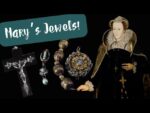
    The Enigmatic Jewels of Mary, Queen of Scots: Unveiling a Royal Legacy

    Today we are talking about the jewels of Mary, Queen of Scots. Mary is a figure shrouded in the midst of history and she remains one of the most compelling and controversial monarchs of the 16th century. She was born into the turbulent world of Tudor and Stuart rivalry. Her life was filled with intrigue, drama and tragedy.

    From her early ascension to the Scottish throne as an infant to her eventual execution by her cousin, Queen Elizabeth I of England. Mary’s story is one of power, betrayal, and unyielding spirit. Central to her legacy beyond the political upheavals and personal trials were her jewels.

    Far more than just adornments, these pieces were emblematic of her royal status, tools of diplomacy, and deeply personal treasures that accompanied her through the highs and lows of her life. We’re going to talk about the glittering story of some of Mary’s jewels, offering a glimpse into her opulent world and the profound sentiment that these gems harbored.

    So in the first part, we’re going to talk about the French connection. The narrative of Mary is inseparably intertwined with France, where she spent her formative years at the dazzling court of the Valois. These years were not just about political grooming, but also about cultivating a refined taste that mirrored the luxurious French court.

    Mary’s collection of jewels is a Testament to this period was both a reflection of her royal stature and a personal indulgence. Among the treasure she acquired was a remarkable pendant crafted by John Mosman and exquisite piece made from Scottish gold symbolizing her connection to her own land while embracing her French influences.

    The French court known for its opulence played a pivotal role in shaping Mary’s aesthetic inclinations. Renowned Parisian jewelers, such as the skilled Robert Mangot and Mathurin Lussault fashioned pieces that were the epitome of Renaissance artistry, blending precious metals and stones with unparalleled craftsmanship. These pieces were not just accessories, but carried with them the stories of love, alliances, and Mary’s own identity as a queen who navigated the complexities of two realms.

    Next, we’re going to talk about jewels that were symbols of her power and diplomacy. Upon her marriage to Francis II, Mary’s jewels transcended personal adornment, becoming potent symbols of power and diplomatic currency.

    The illustrious Egg of Naples, a magnificent Ruby suspended from her necklace was not just a statement of royal opulence, but also a symbol of the interconnected web of European royalty and alliances. This jewel along with others, like the intricately designed broaches, studded with precious stones, served as more than mere embellishments. They were tools of statecraft.

    Mary adeptly used these jewels in diplomatic exchanges, gifting them to forge and strengthen alliances, to reward loyalty or to sway political opinion. Such gestures where language of their own conveying messages of favor, intent, and royal grace. In the intricate dance of Renaissance politics, Mary’s jewels were her silent envoys, weaving together the alliances, intrigues and influences that stretched across the courts of Europe.

    Next up, let’s talk about the Scottish regalia. Returning to Scotland, Mary found herself in a realm of fraught with religious and political strife. A stark contrast to the sheer elegance of the French court. Yet her Jewels has continued to play a crucial role, reflecting her royal authority and resilience amidst the turmoil.

    Pearls emblematic of purity and regal authority featured prominently in her Scottish adornment which echoes the traditional Scottish regalia. These native gems along with other precious stones were not merely decorative. They were a visual assertion of her sovereignty and her divine right to rule amidst the challenges of her reign.

    Mary’s strategic use of her jewels to maintain and display her queenly dignity was a testament to her understanding of the power of royal imagery. Her efforts to sustain the splendor of the monarchy through her personal appearance, even in challenges and times of strife, underscored her spirit, the indomitable spirit of a queen determined to uphold her crown’s honor and legacy.

    Next let’s talk about the period when she was imprisoned and intriguing in England. During her imprisonment in England, Mary’s jewels became poignant symbols of her lost freedom and sovereignty. Some pieces remained with her closely guarded treasures that offered a semblance of past glories and personal solace. Others, however, were lost to the demands of survival, sold or pledged to secure the loyalty of supporters or to fund her cause.

    Among the jewels that retained personal significance during these years where the rings she exchanged with Elizabeth, tokens of the complex bond between these two Queens. These rings often imbued with secret messages and symbols we’re not just personal jewels, but also carried the weight of political intrigue and the fragile hopes of a queen in captivity.

    Now let’s talk about the legacy of Mary’s jewels after her tragic end. Her jewels scattered across the courts and collections of Europe. Each piece carrying a fragment of her story. Some of these precious items have been lost to history, their whereabouts unknown while others are in museums or private collections treasured as rare connections to a queen whose life continues to captivate.

    Let’s talk about some specific jewels that we still have. There’s the Penicuik jewels traditionally believed to belong to Mary. These jewels include a necklace, locket and pendant. Possibly given to one of her ladies-in-waiting, Lady Mowbray. You can still see part of these jewels at the national museum of Scotland.

    Then there’s the Lennox jewel, although not directly owned by Mary, this jewels is intricately connected to her story through her mother-in-law Margaret Douglas, Countess of Lennox. The Lennox jewel is a locket filled with symbolic imagery and inscriptions reflecting the hopes and claims of Mary’s son, James VI to the English throne. This piece is part of the royal collection and is displayed at Holyrood Palace.

    Then there’s the Eglington parure, a necklace traditionally believed to have been a gift from Mary to Mary Seton. This piece was split into two in the 17th century. One part is in the National Museum of Scotland. The other is held by the royal collection at Holyrood Palace.

    And there’s Mary’s rosary and crucifix, which was worn at her execution. These items are said to have been bequeathed to Anne Dacre, Countess of Arundel and are kept at Arundel castle. The rosary and crucifix are significant of course, as they symbolize Mary’s Catholic faith, which played a central role in her life and political narrative.

    The jewels of Mary, Queen of Scots offer us a unique window into her past, bridging centuries and bringing the story of a remarkable woman to life. As we reflect on the enduring legacy of Mary and her jewels, we are reminded of the power of objects to evoke the human stories at the heart of history, connecting us with a vibrant lived experiences of those who came before us.

  • Echoes of Rome in Tudor England: Unveiling a Royal Obsession

    Echoes of Rome in Tudor England: Unveiling a Royal Obsession

    In this episode, we’re gonna have a little bit of fun talking about how often Tudor men thought about the Roman Empire. It actually occurred to me that Henry VIII probably did think about the Roman Empire quite a bit perhaps as much as men today think about the Roman Empire. Because the classics were being rediscovered. There was a lot of emphasis on classical education, on classical medicine, on all of these things that were be being rediscovered.

    In a large part, the Renaissance was that time period about rediscovery of a lot of these texts. It also happened because of the fall of Constantinople in 1453 when these texts were making their way back into Europe, back into the libraries, back into the European courts and universities. People were starting to look at these stuff again for the first time in a thousand years and people were thinking about the Roman Empire quite a bit. So I thought that would be kind of fun to play with and talk about how often Henry VIII might have thought about the Roman Empire.

    Let’s talk about the Roman Empire in the Tudor period. So the Tudor period of course was a time of profound change. One of the most transformative periods in European history begins with Henry VII beating Richard III at Bosworth Field. It goes all the way up to Elizabeth.

    During this period, England experienced significant changes and developments in government, in society, and culture. There was a strong centralized monarchy, the expansion of overseas exploration, flowering of English literature reaching perhaps the pinnacle under Shakespeare, and music and William Byrd and all of that. Plus the Reformation happened which altered England’s landscape religiously forever.

    Today like I said we are going to talk about the Roman Empire. This topic is intriguing not just for the historical connections but also for the light that it sheds on Tudor self-perception and ideology. So the Tudors, like many of their contemporaries in Renaissance Europe, were deeply influenced by the legacy of Rome, the Roman Empire with its grandeur, its achievements in government, law, and culture stood as a towering model of civilization prowess for the Tudors.

    Rome was not just a historical empire. It was a benchmark against which they measured their own societies, government, even their monarchy. Interestingly the Tudor engagement with Rome was not just to mimic it. It was actually more of like a selective adoption. They chose the parts of Roman culture that suited the Tudor needs and aspirations.

    In governance, the Tudors admired and emulated Roman efficiency in administration and law and yet they were cautious not to replicate the imperial autocracy of Rome. Instead, they found a balance or they tried to find a balance between the strong monarchical authority and the traditional English liberties.

    In the realm of religion, the Tudor view of Rome was complex. It was evolving. Initially England under the Tudors was firmly Roman Catholic but then Henry VIII broke with Rome and so a new chapter begun. One that saw the Tudors developing a very distinctly English church, yet still engaging with and reacting to the Roman religious and theological thought.

    Culturally, the influence of Rome was profound. The Renaissance revival of classical learning saw Tudor intellectuals. Artists and writers eagerly absorbing and reinterpreting Roman literature philosophy and art. Roman history and mythology became sources of inspiration for Tudor culture, providing themes and motifs for literature drama and even political discourse.

    The story of Rome and Britain begins in AD 43 when Emperor Claudius launched a successful invasion marking the start of over three centuries or 300 years of Roman rule. This period was transformative for the British Isles. Of course, it brought profound changes in infrastructure, in governance, in culture. This is where I will insert my regular pointless Monty Python quote “What have the Romans ever done for us?”

    Anyway, Roman Britain was a complex frontier province of the Roman Empire characterized by military garrison, Roman towns and a blend of Roman and native traditions. Roman rule introduced a level of urbanization and infrastructure previously unseen in Britain.

    The Romans built a network of roads and connected military sites and facilitated trade and communication across the island. They established new towns, many of which would evolve into major cities like York, Bath, and London. These urban centers were laid out in a distinctly Roman style, with forums, amphitheaters, baths and temples.

    Roman Britain was a time of economic and social development to the introduction of Roman agricultural techniques, crafts, and trade practices led to increased prosperity. The Roman legal system and administrative practices provided a model of governance that had lasting influence particularly in the development of English law and civic administration.

    By 410, Roman rule in England had ended basically. The Empire’s focus shifted to protecting other lands that were more pressing elsewhere. The Roman departure left a power vacuum leading to a period of instability and back and forth with different groups moving. There’s new research showing that maybe it wasn’t necessarily invasions, maybe it was just other types of immigration. Either way, Rome was out, Anglo-Saxons and other groups were in, but the Roman Legacy endured in various forms.

    Fast forward to the Tudor period and the impacts of Roman Britain were still evident. The Roman road network although neglected, continued to be used and formed the basis for new road construction that Henry VIII did. Tudor London was the heart of the Kingdom that was built on the foundations of Roman Londinium. The city’s layout, its streets, even some of its place names can be traced back to Roman origins.

    If you’ve ever read Edward Rutherfurd books that are like stories of a place, but like a biography and it just goes through the history of London. The novel I guess is what it was London, and it starts with even before the Romans came, and it traces London history throughout. It’s just fabulous, it’s so good! Anyway, the chapter on Roman  London was really good. I should go back and read. It’s really long but it’s so worth it. You should totally check it out.

    Moreover the Tudor fascination with antiquity led to a renewed interest in Roman architecture. This is evident in the adoption of classical architectural styles in Tudor building projects elements like columns, arches, the use of symmetry, were derived from Roman models and they represent a departure from the gothic style that was prevalent in medieval England.

    Additionally the Roman impact was intellectual and cultural. The Tudors through the lens of the Renaissance, looked back to Roman Britain with a sense of continuity and heritage. They saw themselves as the heirs to the Roman civilization, a notion that influenced their self-identity and their view of England’s place in the world.

    An example of the architectural changes would be Hampton Court Palace and the old schools quad at Oxford University which display elements like Roman arches and columns which reflect the influence of Roman architectural principles.

    In literature, the Tudor era witnessed a flourishing of English poetry and drama. Much of it inspired by Roman works. Tudor writers drew heavily from Roman authors adopting their themes, styles, and even their narratives. Virgil’s epic poetry, Ovid’s mythological tales, and Cicero’s rhetorical masterpieces were widely read and imitated.

    Thomas Moore‘s “Utopia” a landmark work of Tudor literature was deeply influenced by Roman philosophical ideas particularly those concerning society and governance. Roman influence was also seen in educational and intellectual life. The study of Latin, the language of ancient Rome became an essential part of the curriculum for not just monks but anybody who wanted a good classical education.

    Tudor scholars studied Roman texts not necessarily for their literary value, but also for their insights into history philosophy and rhetoric. The Roman historians Livy and Tacitus were particularly valued for their accounts of the rise and fall of the Roman Republic and Empire, serving as a moral compass and a source of knowledge for the Tudor thinkers.

    Furthermore the Roman ideas of civic virtue and public service began to permeate Tudor society. The concept of a Renaissance man, of someone whose well-versed in art, science, and humanities was modeled after Roman ideals of a well-rounded educated citizen.

    This was exemplified by figures like Walter Raleigh and Francis Drake who in addition to their exploits as explorers, were also patrons of the arts and scholars in their own right. Like I said, the monarchy itself was influenced by Rome. Both Henry VIII and Elizabeth I adopted aspects of Roman imperial imagery to bolster their regal authority. Henry VIII with his ambitious political and military agenda, saw himself as an emperor-like figure. His desire for strong centralized monarchy mirrored the imperial model.

    Henry’s use of Roman symbols and imagery on art and coins was a deliberate strategy to project power and legitimacy. Use of classical motifs in royal portraits, the depiction of the king in a manner reminiscent of Roman emperors, the incorporation of Roman iconography, and coins, and royal seals were all part of this strategy.

    Elizabeth I continued this. She skillfully brought in Roman symbolism to reinforce her status as a powerful almost divine monarch. Her portraits often included classical symbols and allegories positioning her in a lineage of great rulers that hearkened back to ancient Rome. The use of these symbols was a powerful tool in an era where visual imagery was a primary means of communication with a mostly illiterate population that was changing throughout the Reformation.

    In terms of military tactics and organizations, the Tudor period saw significant changes very much influenced by Roman models. The Tudors made efforts to professionalize and modernize their military. It wasn’t just militia based. They had an the establishment of a permanent navy, which while not directly modeled on Roman lines, was influenced by the idea of a standing professional military force, which was a concept central to Roman military power.

    Establishment of the royal Navy can also be seen as part of his broader imperial ambitions similar to the Roman emphasis on military discipline and organization. The Tudor army also saw reforms including the introduction of more effective training and the use of new weapons and tactics. These reforms were not necessarily copied from the Roman practices, but they were influenced by the Renaissance’s broader revival of classical military texts and ideas.

    The legal system saw reforms influenced by Roman law, while English common law remained the foundation, Tudor jurists were increasingly aware of Roman legal principles due to again the Renaissance classical learning. This exposure did not result in the wholesale adoption of Roman law, but it did lead to refinement and development in English legal practices.

    So there we go. Henry VIII and Tudor men, and how often they might have thought about the Roman Empire especially when they were in school, especially when they were in University, they were probably thinking about the Roman Empire an awful lot.

  • The Relationship between Anne Boleyn and Thomas Wolsey

    The Relationship between Anne Boleyn and Thomas Wolsey

    In today’s YouTube video (are you subscribed to me yet? If not, why not?!) we talk about the relationship between Anne Boleyn and Thomas Wolsey.

    Dig deeper in the video:


    And here’s a Rough Transcript of the video looking at the relationship between Anne Boleyn and Cardinal Wolsey:

    [00:00:00] Hi, welcome to the YouTube channel
    for Renaissance English History podcast.

    I have my helper today.

    I’m Hannah.

    She’s my mom.

    I’m her mom.

    And what’s special about today?

    Today’s my birthday.

    Hannah’s perfect.

    And I’m Hannah’s starting to, but currently
    right now, when we are making this video,

    you are probably not watching it right now
    because, I mean, it’s not even out now, but

    right now, mom would still have been an agony.

    No epidural, all natural.

    I was so silly.

    I popped out 20, 25 hours.

    20 hours.

    I’m gonna pop out.

    What time is it now?

    Okay, this is getting way too personal.

    So Hannah, what are we talking about today?

    Let me tell you what we’re talking about.

    Let’s pull up these notes.

    I don’t know what we’re talking about today,
    mom.

    We are talking about the relationship with
    Ian.

    Do you remember who she is?

    She’s right.

    Do you know which one she is?[00:01:00]

    My cheat sheet.

    I was gonna say the third, but you just told
    me that she has the second.

    Yeah, she’s the one that Henry left.

    Yeah.

    Catherine ve gone for.

    So she we’re gonna talk about her relationship
    with Cardinal Woolsey.

    Is that, is she a bird?

    Is she a cardinal?

    No, but you know why they called them that?

    ’cause they had these cardinals hats that
    were red and they wore these red outfits.

    I mean, I think that has to do with it.

    Somebody’s, here’s probably gonna leave me
    a comment and tell me that’s wrong.

    But as far as I know, that’s what it comes
    from.

    He was a religious uh, advisor, but he was
    also Henry’s lord chancellor.

    He was kind of Henry’s right hand man.

    Okay.

    Like Hamilton was Washington’s right hand
    man.

    Cool.

    Real quick before you get into it, yeah.

    Mm-hmm.

    I got this necklace for my birthday and it’s
    in Opal and I’m gonna go watch TV now.

    Okay.

    Well wait, don’t you wanna have me do, if
    you’re new here, very special, warm.

    Welcome to you right there.

    Yeah.

    I’m your host, Heather.

    This is.

    Tesco, and I’ve been podcasting on Tudor,
    England [00:02:00] since 2009 before you were

    even born child, and that was four years I
    was born.

    It was, this is the channel where I put all
    of my episodes from my theory podcasts, as

    well as loads of extra content.

    Like this video right here.

    And what should they do if they haven’t already?

    Subscribe and smash that like button.

    All right, go.

    Happy birthday.

    Bye.

    All right, so I’m gonna record for a couple
    minutes.

    Okay.

    Before we get started, some of you know that
    I have books.

    I make books.

    I publish books, and this is one of the first
    ones I wrote, sideways and Backwards, A Journey

    Time Travel and Self-Discovery.

    Um, and it’s by me.

    I published it in 2016.

    Anyway, I’m giving out five copies of this
    to subscribers of this channel.

    So if you are not subscribed to this channel
    and you would like a, I’m gonna sign it too,

    I’ll sign it.

    You would like a signed copy of my book.

    Um, it’s [00:03:00] about, I’ll read you the
    back.

    Natasha Delling Court.

    The editor in chief of a large publishing
    company wakes up in the morning after Halloween

    with a massive hangover.

    She also has a huge problem and a compromising
    photo of her from the night before it went

    viral.

    Advised by her company PR to get out of London
    and turn off her phone.

    She takes the train to Cambridge for a weekend
    of self-imposed quiet reflection, determined

    to figure out how her life has gone so sideways
    and how she can start fresh.

    She makes an afternoon pilgrimage to even
    song service at King’s College, an ancient

    chapel in the heart of Cambridge.

    Then things start to get strange.

    Really strange.

    Feeling moved by the music and surroundings.

    She closes her eyes in quiet meditation, and
    then the world gets dark.

    She wakes up in the same place, but a very,
    very different dog.

    So that is our friend Natasha.

    She, uh, goes back in time.

    It’s like a time slip sort of look.

    So I wouldn’t call it, it’s not historical
    fiction, it’s more like yeah, time slip.

    So anyway, if you would like a signed copy,
    just make sure you’re [00:04:00] subscribed

    and at the end of the, at the end of the week,
    Next Monday, August 14th, I’m gonna choose

    five random subscribers and contact them and
    arrange to send them copies of my book.

    All right, cool.

    Let’s get into it.

    In the vibrant tapestry of Tudor history,
    few relationships have influenced England’s

    trajectory as profoundly as the intriguing
    interplay between Ann Belin and Cardinal Thomas

    Woolsey.

    And the captivating lady and waiting who would
    become the second wife of Henry VIII and Woolie,

    the powerful prelate who dominated England’s
    political and religious landscape.

    They were pivotal figures in one of history’s
    most dramatic tales.

    So in this video, we are going to journey
    through the opulent halls of the Tudor Court,

    where ambition, desire, and fate intertwine
    setting the stage for monumental change.

    So let’s start with a background on Thomas
    Woolsey.

    His story [00:05:00] is one of a meteoric
    rise to power from humble beginnings to the

    echelons of England’s elite.

    Born in Ipswich to a butcher and his wife
    Woolsey’s intellect and ambition propelled

    him far beyond the confines of his modest
    upbringing.

    He was educated Oxford.

    He was lauded as a prodigious scholar, earning
    the nickname the Boy Bachelor for his academic

    achievements at the tender age of just 15
    years old.

    But it was in the realm of politics and church
    affairs where Woolsey truly made his mark.

    Henry VIII recognized his talent setting Woolsey
    on a path of increasing prominence.

    By the time young King Henry VIII ascended
    the throne, Woolsey had become an indispensable

    asset.

    Their partnership was founded on mutual respect
    and trust while Henry indulged in the pleasures

    of kingship.

    Woolsey managed the intricacies of governance.

    In essence, he was England’s defacto ruler.

    His positions were manifold.

    He was [00:06:00] the Archbishop of York.

    He was the Lord Chancellor of England, and
    perhaps most significantly he was the papal

    Legate, a direct representative of the Pope
    in Rome.

    This last title granted him unparalleled religious
    authority in second only to the Pope himself.

    Yet with all of his power, he was not immune
    to the shifting sands of court politics.

    Or the whims of a king in search of a male
    heir.

    As the 1520s dawned, a new figure began to
    cast a long shadow over the English court,

    and that would be Anne Bein. Little did Woolsey
    know that his fate and Anne’s ambitions would

    soon become linked.

    Lin’s returned to the court from France in
    the 1520s and the early 1520s was marked by

    grace, intelligence and a distinct French
    flare, a testament to her time spent in the

    courts of Burgundy, the Netherlands, and of
    course France.

    Her European sojourn had shaped her into a
    sophisticated and alluring presence, [00:07:00]

    captivating the attentions of many, including
    a young nobleman named Henry Percy.

    Their budding relationship filled with the
    promise of love was abruptly cut short.

    The general consensus at court was that Woolley
    had played a significant role in ending their

    courtship.

    Cavendish said that Henry himself had ordered,
    it ended because he already was starting to

    feel feelings for Anne.

    Um, Percy already had marriage plans, so you
    know, there was a, a couple of things that

    wasn’t just that Woolsey didn’t like Anne.

    Uh, Anne blamed him for that definitely.

    And her ire with Woolsey began in earnest
    with this intervention.

    She felt wronged her personal life, manipulated
    for political reasons, yet as one door closed,

    another opened, Henry VIII was already getting
    restless in his marriage to Catherine Aragon,

    due to many things, including her inability
    to produce a male air, and he became increasingly

    [00:08:00] enamored with Anne.

    Here Anne, of course, demonstrated her astuteness.

    Unlike her sister, she refused to be a mere
    mistress, subtly asserting her worth and stoking

    the king’s desire even further, as their relationship
    deepened, the pressing matter of Henry’s annulment

    from Catherine became the court’s primary
    preoccupation.

    For Henry the annulment was not just a matter
    of the heart, but also of dynasty.

    His desperation for a male heir coupled with
    his infatuation for Anne, pushed the great

    matter to the forefront of England’s political
    agenda.

    And as the king’s most trusted advisor, Woolsey
    was entrusted with this sensitive task.

    Given Woolsey’s dual role as both the king’s
    chief minister and the Papal Legate, Henry

    assumed that the annulment would be a relatively
    straightforward affair.

    However the process proved anything but simple.

    The Pope was under significant pressure from
    the Holy Roman emperor, Charles the V, who

    was of course Katherine’s nephew and [00:09:00]
    was reluctant to annul the marriage.

    Additionally, the sack of Rome in 1527 by
    Charles’s troops further complicated matters

    as the Pope was virtually a prisoner and couldn’t
    make independent decisions.

    The months turned into years.

    Ann’s patience were thin.

    She had already experienced Woolsey’s interference
    in her relationship with Percy.

    Now she perceived his inability to secure
    the annulment as yet another betrayal.

    While Woolsey genuinely tried to navigate
    the complex web of European politics, his

    efforts were continually thwarted.

    Anne’s growing influence over Henry, combined
    with Woolsey’s perceived failures.

    Set the stage for the inevitable clash.

    Their intertwined destinies would play a decisive
    role in the unfolding drama of the Tudor Court.

    The woman once seen as an unsuitable match
    for Henry Percy was now at the heart of English.

    Political life wielding influenced.

    Few could have predicted Lin’s growing presence
    in Henry’s life had [00:10:00] ramifications

    beyond their intimate relationship.

    It began to permeate the very politics of
    court.

    Anne’s animosity towards Woolsey was of course
    multifaceted.

    She was still upset with him about messing
    up with her romance with Henry Percy, and

    you know, as the annulment dragged on, she
    became ever more convinced that Woolsey was

    actually acting against her.

    She wasn’t alone in her mistrust.

    Court gossip and whisperings of Woolsey’s
    other political adversaries found a willing

    audience in her.

    Together, they painted a portrait of Woolsey
    as a self-serving Prelate, more interested

    in his own power than in the king’s desires.

    Moreover, Ian began introducing Henry to reformist
    religious ideas, subtly challenging Woolsey’s

    staunch Catholic beliefs, the religious divide
    between them further strained their relationship

    with Anne.

    Subtly suggesting that perhaps Woolsey’s loyalty
    to Rome was greater than his loyalty to the

    English crown.

    [00:11:00] By the late 1520s, his star was
    waning.

    His failure to secure the annulment was seen
    not just as a personal failure, but a diplomatic

    and political one as well.

    Henry’s frustrations with him were clear.

    And Anne, with her growing influence over
    the King was well positioned to exacerbate

    these tensions.

    Anne’s alliances within the court played a
    pivotal role.

    She fostered close ties with Woolsey’s political
    enemies, including the Duke of Norfolk and

    the Belin family’s own connections.

    Highlighting his luxurious lifestyle, which
    you know, didn’t seem like that of a prelate

    or a man of God.

    By 1529, the inevitable occurred Woolsey was
    dismissed from his position as Lord Chancellor

    replaced by Sir Thomas Moore, stripped of
    his properties and wealth.

    He was ordered to retire in York, but even
    in his reduced state, his enemies were not

    done.

    In 1530, he was arrested on charges of treason.

    He was supposedly writing letters to Catherine
    Aragon.

    Although he would never stand trial, [00:12:00]
    dying un route to London, Woolsey’s downfall

    was complete.

    Anne’s triumph was clear.

    The man who once stood in her way, both in
    matters of the heart and politics was gone,

    but the English court was a place of shifting
    alliances and tumultuous affairs as Woolsey’s

    Star set.

    Anne’s own fate was on the rise with the challenges
    and triumphs of her own awaiting.

    The intense interplay between Anne and Cardinal
    Woolsey had profound implications for England.

    Woolsey’s downfall not only highlighted the
    volatile nature of court politics, but also

    demonstrated the immense power of an individual,
    in this case, Anne, and the role she could

    have over the Monarch and the nation’s entire
    direction.

    With Woolsey out of the way, the path to Henry’s
    break from the Catholic church became more

    unobstructed and reformist beliefs.

    Her influence over Henry contributed to the
    eventual establishment of the Church of England.

    This monumental shift was not just about Henry’s
    desire for a male heir or his love for [00:13:00]

    Anne.

    It also stemmed from the political and religious
    tensions of the era with figures like Anne

    and Woolsey at the very heart.

    For Anne, her victory over Woolsey was bittersweet.

    She did become Queen of England and give birth
    to Elizabeth the first.

    Her time on the throne was fraught with challenges.

    Her inability to produce a male heir coupled
    with the court intrigues and the fickle nature

    of Henry’s affections would eventually lead
    to her own tragic end.

    The relationship between Anne and Thomas Woolsey
    is a microcosm of broader intrigues passions

    and political maneuverings in the Tudor era.

    Their personal feud reflects the larger struggles
    of the time from the quest for power to the

    religious upheavals that would shape England
    to forced centuries.

    In the annals of history, their names are
    forever intertwined.

    A reminder of a time when love, ambition,
    and destiny emerged in the halls of the Tudor

    Court.

    So thank you so much for watching.

    If you’ve made it to the end of this video
    and enjoyed it, I hope I earned a press of

    that [00:14:00] like button and a subscription
    to my channel where I put out content like

    this almost every day.

    Don’t forget to subscribe.

    So you’re entered into the contest to win
    one of my books, and thank you so, so much

    for watching.

    I just wanna remind you that you are special.

    You are awesome.

    You are deeply, deeply loved.

    Whatever you’re doing right now, you are important
    and I am so glad that you are here, not just

    because you watched my video.

    Thanks so much for watching.

    Have a fantastic day.

  • Historian Tammy Shovelton on the relationships of Elizabeth I

    Over at the Tudor Learning Circle (the social network JUST for Tudor history enthusiasts) we have regular live chats with authors and historians. Tammy Shovelton recently stopped by to chat about the relationships of Elizabeth I.

    In the video we talk about the relationship between Katherine Parr and Elizabeth – and how the Tom Seymour episode could have happened. Then we talk about Essex, and how Elizabeth was what we would call predatory today towards Robert Devereaux. Plus, Robert Dudley.

  • Tony Riches in the Tudor Learning Circle talking about Francis Drake

    Some of you know about my new project, the Tudor Learning Circle. It’s a social media network only for Tudor history. That means there’s no politics and no weird family dramas like there is on other social networks. Refreshing, right? All it is is a place to talk Tudor.

    One thing we do is regular chats with authors and historians. Yesterday Tony Riches dropped by to talk about Francis Drake, and his new book on Francis Drake.

    Buy Tony Rich’s new book on Francis Drake here:

    Drake: Tudor Corsair – get it on Amazon

    Or check out his other books:

    Owen – Book one of the Tudor Trilogy (the very start of the Tudor dynasty) – buy it on Amazon

    Jasper – Book Two of the Tudor Trilogy, tracing the Tudor family as Henry VII comes of age in exile. Buy it on Amazon.

    Henry – the final book of the Tudor Trilogy. Buy it on Amazon here.

  • Nathen Amin and Matthew Lewis on the Battle of Bosworth

    On August 22 we celebrated Bosworth Day with Nathen Amin and Matthew Lewis talking about the battle the brought the Tudors to the world!

    Plus, the call got zoom bombed, so that was something, too.

    It was actually an amazing call, and I learned so much. I had no idea the role that William Stanley played, for example. And I really enjoyed the discussion of how Richard essentially created Henry Tudor. Henry Tudor would have been nothing, had Richard III not deposed the Princes in the Tower.

    Here’s how you can learn more about both Nathen and Matthew

    Nathen’s most recent book is here:


    House of Beaufort
    Buy on Amazon here: https://amzn.to/2QmhBTC

    Or check out Matthew’s book Richard III: Loyalty Binds Me on Amazon here: https://amzn.to/3hCfW84

    Or his book on the Survival of the Princes in the Tower on Amazon here:
    https://amzn.to/31qt1f2

  • Was Thomas Cromwell Going to Marry Princess Mary?!

    Was Thomas Cromwell Going to Marry Princess Mary?!

    I recently came across a few passages talking about a rumor that soon after the fall of Anne Boleyn, Thomas Cromwell was secretly plotting to marry Princess Mary. Could Cromwell have really been contemplating a match with the Princess, against whose interests he had worked so hard for so long?

    In the summer of 1536 things were looking a bit better for Princess Mary. Her mother was gone, but so was Anne Boleyn. Henry Fitzroy, Duke of Richmond, had also left this world soon after Anne Boleyn’s execution. So we have a new queen, Jane Seymour, and Mary and Elizabeth.

    Cromwell was working to bring Mary back into the fold by having her acknowledge that her parents were never truly married, and admitting her own illegitimacy. When she did finally sign the document agreeing that she was illegitimate, her father welcomed her back into the fold.

    The rumor of the potential match comes to us via Chapuys – as so many juicy rumors do – in this letter he wrote to the French diplomat Thomas Perrenot de Granvelle on 23 July 1536. It opens with a wonderful jab at the English: “I have always thought the more these people are pressed the more they grow stubborn like donkeys.”

    But then, later in the letter, he says: “Of late Cromwell got a gold ring made, on one side of which is, in relief, the figure of the King and Queen, on the other that of the Princess; and round about was a writing in Latin, which you will see by the enclosed bill. Cromwell meant to make a present of it to the Princess, but the King wishes to have the honor of it himself, and Cromwell will have to find other presents. The King is also getting his goldsmith to make a little two-headed eagle with plenty of jewels. I know not what he means to do with it. They have begun appointing the household (dresser l’estat) of the Princess, and I think she will be magnificently provided for. London, 23 July 1536.”

    The inscription of the ring says: “Obedientia unitatem parit, Unitas animi quietem et constantiam; Constans vero animi quies thesaurus inestimabilis. Respexit humilitatem Qui in Filio nobis reliquit Perfectum humilitatis exemplar. Factus est obediens Patri, Et ipsa etiam natura parentibus Et patrie obediendum docuit.”

    It urges her to be obedient and humble to her father, and Queen Jane, which isn’t something you would normally write to someone you were courting. Also, that’s a LOT of writing to go on a ring, no?

    Footnote #315 from Life and Letters of Thomas Cromwell, Vol. 1 of 2, by Roger Bigelow Merriman concludes: “The episode should have been sufficient to show that even if Cromwell had any idea of marrying the Princess, the King’s opposition to the plan would prove insurmountable. The inscription on the ring, moreover, surely indicates that the gift was intended rather as a reminder to the Princess of her duty towards her father, than as a preliminary to a matrimonial proposal.

    But more evidence that this wasn’t actually a token of love comes in the Diarmaid MacCulloch biography Thomas Cromwell: A Revolutionary Life where he says that the translation was incorrect (the old manuscript is in Vienna), and it had to be some type of medal. Which makes sense with that amount of inscription and detailed carvings.

    Later rumors of Cromwell and Mary would come out during Cromwell’s downfall when his old friend Thomas Wriothesley turned on him, and gave evidence to the Council that not only did Cromwell make jokes about Henry’s inability to consummate his marriage with Anne of Cleves, but he also wanted to marry Princess Mary and make himself king. Not really the kinds of things you would expect the assiduous Cromwell to do. But it helped bring him down nonetheless.

    So the short answer is no, Cromwell likely wasn’t planning to marry Princess Mary. Maybe the idea hit him for, like, a second. But he married his son into the Seymour family, and so became related to the King that way, and for him, that was enough.

    Read more:
    The original letter is here – scroll down to the 23 July one:
    https://www.british-history.ac.uk/letters-papers-hen8/vol11/pp54-73

    Or read Tracy Borman’s biography: Thomas Cromwell: The Untold Story of Henry VIII’s Most Faithful Servant

  • The Rose in English History

    The Rose in English History

    I am an unashamed fan of The Bachelor franchise. Those weekly cliffhangers that leave you wondering who’s going to get the rose makes me wonder about roses in history. Of course, because I am a history nerd. [Let’s pause to insert a little rant here about Tayshia and JPJ – I mean, am I the only one who was screaming at the TV this week?! – but I’m not going to say much because it probably won’t age well].

    So let’s talk about roses now. The national flower of England is the Tudor Rose, which came from combining the white rose of York with the red rose of Lancaster after the Wars of the Roses. You can find the Tudor rose all over England, including on the backs of many 20p coins. But roses have a long history. Cleopatra carpeted her floor with rose petals in preparation for a tryst with Marc Antony.

    The Virgin Mary is often referred to as a Rose without a thorn, and one of the first medieval Christmas carols we have, There is No Rose, refers to Mary as this precious flower:

    There is no rose of such virtue
    As is the rose that bare Jesu;
    Alleluia.

    For in this rose contained was
    Heaven and earth in little space;
    Res Miranda.

    When Jesus was crucified he was supposedly given a crown of thorns, more of the rose motif.

    Later in the medieval period the rose was the iconic symbol of the beloved lady – or of the prize of her love itself. personification that found its most exquisite representation in the 13th-century French epic poem Le Roman de La Rose, a medieval French allegorical poem. Throughout the poem, Rose is used both as the name of the beloved lady and as a symbol of female sexuality.

    So it made sense for monarchs to embrace the imagery of the rose – the virtue and innocence, the commitment to a higher calling, and the purity.

    Elizabeth I used the rose liberally, playing off the association with the Virgin Mary. Look at this portrait, in which Elizabeth is standing in front of a rose garden, and holding a rose. So many roses!

  • Five Fun Facts about the Battle of Bosworth Field

    Five Fun Facts about the Battle of Bosworth Field

    On August 22 in 1485 an upstart Welshman with a dubious claim to the throne defeated Richard III, who (probably) murdered his nephews, (definitely) usurped the throne, and despite all that was still actually a decent King. We can look back at Bosworth now as the beginning of the Tudor dynasty, but it’s important to keep in mind that for the people living then, it was just another battle in the decades-long family argument that got terribly out of hand. Henry Tudor still had one more battle to fight, Stoke, after Bosworth, and it wasn’t really until Henry VIII was crowned – the first bloodless transfer of power in over 50 years – that England finally got the memo that the Cousin’s War was really over.

    So here are five fun facts about Bosworth Field:

    1. This was Henry’s second attempt at taking England. He had been living in Brittany with his uncle Jasper and other disaffected Yorkists who were frustrated at Richard’s usurpation, and were willing to let family disputes settle in exchange for Henry marrying Elizabeth of York. Henry had tried to sail to England once before but was turned back. This time he landed in Wales on August 7, and marched 200 miles up to the village of Stoke Golding.
    2. This wasn’t actually called Bosworth until over 25 years later. It was a marshy land that would be reclaimed later when England was reclaiming much of its marshland, and for a while it was known as the Battle of Redemore – place where there were lots of reeds.
    3. Richard had a huge army – three times the size of Henry’s. And he was so sure that he would win that he put off leaving his base in Nottingham for an extra day to celebrate a feast day.
    4. Henry didn’t really fight. He was at the back, having never really participated in battle before. Richard, on the other hand, fought bravely. Everyone on both sides agrees to his valor – when he was offered a horse to escape, he refused. Still, that didn’t stop the winning side from stringing his dead body up on a horse and parading it around doing nasty things to it, and then burying it without any honor. Battle is a bitch sometimes.
    5. The Stanleys kind of saved the day for Henry. They had 6,000 men. Richard had about 15,000 and Henry had 5,000. So their force more than doubled Henry’s army. Thomas Lord Stanley was married to Henry’s mother Lady Margaret Beaufort, but his son was being held hostage by Richard to guarantee his good behavior. The Stanley brothers tried to stay out of it until they saw the tide was turning for Henry, and that Henry was in danger of being killed. Then they hopped in, doubled the size of the army, and saved the day.

    There you go – five fun facts on Bosworth you can talk about all day today. Annoy your coworkers, and amaze your friends.

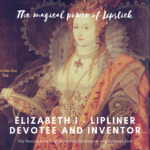
  • Elizabeth I loved her lipstick…

    Elizabeth I loved her lipstick…

    Elizabeth I loved lipstick. For a time it was so popular that you could use it as a cash substitute. And when she died, she had half an inch of the red stuff caked on her lips. But it wasn’t that she wanted to die looking good. She believed – as did many others during the Tudor and Elizabethan periods – that lipstick was magic.

    Many people believed not only that lipstick was magic, but also that it could ward off death. And so, Elizabeth applied more and more lipstick whenever she was sick. The cochineal – expensive dye made from crushed dried beetles native to Mexico – was considered magical and healing, and it was that coloring that helped give lipstick its magic.

    Elizabeth made her own bright red lipstick with a recipe of cochineal, gum Arabic, egg whites, and fig milk. Elizabeth also invented lipliner. She would mix together ground alabaster or plaster of Paris with the color – again, likely cochineal – and rolled the paste into a pencil shape. This then dried in the sun until it was hard.

    Many of Elizabeth’s ladies followed her lead, and wore their own lip coloring. But there was a risk. Those magical powers? They attracted the attention of the church. Early Renaissance paintings sometimes even depicted the devil putting lipstick on women. One of the most frequent sins confessed by women to their priests was their use of lipstick.

    A medieval text also said that using lipstick was a mortal sin unless it was done “to remedy severe disfigurement or so as to be not looked down upon by [one’s] husband.”

    Eventually England’s Parliament passed a law outlawing the use of makeup to deceive a man into marrying a woman – breaking the law was considered witchcraft!

    Listen to more about the Tudors and makeup, and Elizabeth I’s lipstick in this throwback Renaissance English History Podcast episode: Episode 065: Cosmetics and Makeup